April 21, 2020
… All Roads lead to Seattle
 The year was 1962. The space race was a real thing. And Americans everywhere were awed by the spectacle of extra-terrestrial travel to the moon and beyond.
And no event summed up America’s love affair with technology, space, and the future more than the Century 21 Exposition in Seattle which opened on April 21st.
The idea had been hatched seven years earlier. From the Infallible Wikipedia:
“The fair was originally conceived at a Washington Athletic Club luncheon in 1955 to  mark the 50th anniversary of the 1909 Alaska-Yukon-Pacific Exposition , but it soon became clear that that date was too ambitious. With the Space Race underway and Boeing having ‘put Seattle on the map’ as ‘an aerospace city’, a major theme of the fair was to show that ‘the United States was not really ‘behind’ the Soviet Union in the realms of science and space’. As a result, the themes of space, science, and the future completely trumped the earlier conception of a ‘Festival of the [American] West’.”
Science and technology became the primary focus of the fair. Companies from around the U.S. exhibited a variety of ‘future’ products with a push, particularly, focused on the home of the future. For 13 minutes of pure Seattleite amusement, you can take a trip back in time in this video from Bell Telephone touting how easy communication would one day be. Had they only known…
https://ia800300.us.archive.org/31/items/Century21964/Century21964_512kb.mp4
But it was the space race between the United States and the USSR which was the story which coalesced into my hubby’s family lore.
Gherman Titov was a Soviet cosmonaut and the second man to orbit the earth in outer space. Think of him as the Russian equivalent of John Glenn; a hero in his country. HistoryLink.org – a Washington State history site – chronicles that visit:
“May 5 was incredibly hectic at the Century 21 Exposition, thanks to a visit from Russian cosmonaut Major Gherman Titov, who attracted some of the largest crowds the fair had seen since its opening on April 21. At times, the diminutive 5-foot 4-inch Titov found it hard to see anything other than the Space Needle, as taller spectators gathered around him, hoping to glimpse or photograph one of the few men that had been in outer space. Scores of news reporters compounded the crush.
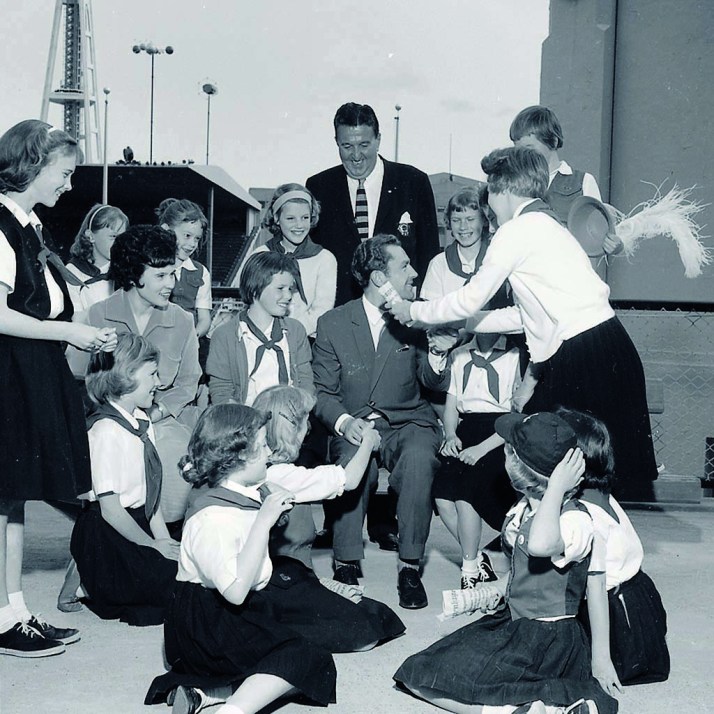
Gherman Titov with a few Camp Fire Girls who were there on May 5, 1962.
The Russian cosmonaut wasn’t the only one to gather crowds. More than 10,000 Camp Fire Girls were on hand to dedicate the World’s Fair flagpoles, funded by candy mint sales. An estimated 20,000 people — more than a quarter of the day’s total attendance of 75,758 — were there to take part in Camp Fire Girl celebrations. Because of the large crowds, Century 21 Exposition manager Ewen Dingwall (1913-1996) announced that starting May 12, the fair would open an hour earlier each day, at 9:00.
Throughout the day Titov signed autograph books and handed out color photos of himself, especially to children. At one point he handed his photo to a baby in a stroller.”
The baby in the stroller? My husband’s younger sister, Liz!
Back in the 1980’s – when I heard this story for the first time – I contacted the Seattle PI and was able to get a photo of Liz with the cosmonaut. We then framed it and gave that to her as a present. Unfortunately, the photo is stowed away in a box in the attic of the family home… and no one is brave enough to navigate the bat guano to go find it. I will be looking through my physical archives to see if I kept a copy.
In speaking with my Mother in Law, Jean, yesterday, she shared the following:
“We were there that day because I took our older daughter’s Campfire Group. We heard the Cosmonaut was on the grounds and we went out of our way to avoid all that, but ran right in to it. He bent down and talked to Liz who was in a stroller. She was little at that time (editor’s note – she was a few days shy of her first birthday). Normally, I would not take that many in a crowd – there were at least 10 Campfire Girls with us.”
My Mother in Law is looking to see if a copy of the newspaper article and photo might be in their file cabinet. Of course Liz remembers nothing of that day.
As I was putting together the story for this week’s blog, I was reminded of how there are days in our lives which become significant but we do not recognize it at the time. Family events like these highlight how crucial it is to stop and reflect on events which impact our lives.
I was six that year and I know that my family traveled to Seattle from Yakima for the event. But I cannot recall what we did or any specifics about it. I do know that the day it opened was my dad’s 39th birthday…now 58 years ago. Just last year on April 21st, all my siblings, their spouses, and two of my nieces, gathered together at the Adult Family Home where my dad had recently moved, to celebrate his 96th birthday. It was a lovely day and perfect weather.
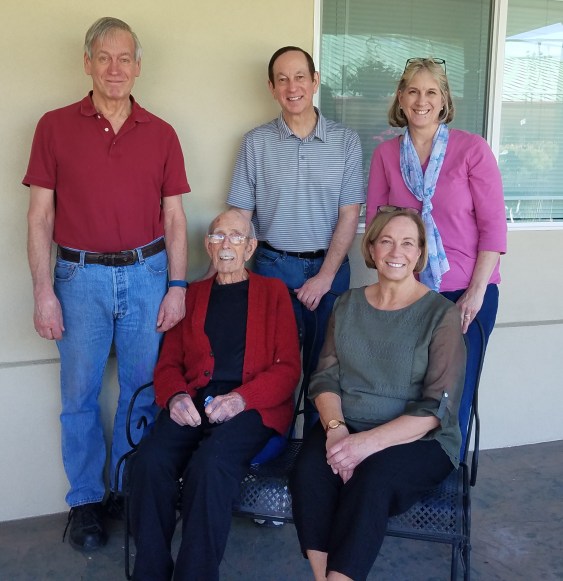
My Dad’s 96th birthday, April 21, 2019, with his four children
Dad had told me that he didn’t want to celebrate his birthday. But my sister and I insisted and promised it would be ‘just’ family. We ignored his protests and proceeded anyway.

Dad (and my sister) with his last birthday cake
Dad rallied for the event and seemed to enjoy the cake, the cards, and a few small presents. Turns out that we were all glad we did. Six months and three days later he was gone.
Carpe Diem!
https://en.wikipedia.org/wiki/Century_21_Exposition
https://www.historylink.org/File/10104
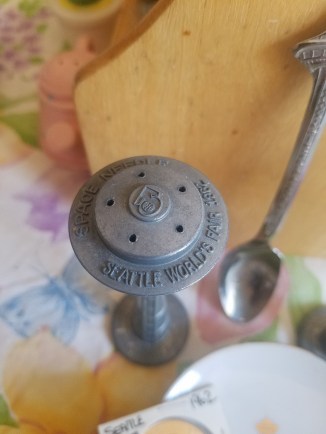
I have a few items of memorabilia from the Century 21 Exposition. My most prized is a pair of aluminum salt and pepper shakers shaped like the Space Needle. The top of one is shown here.
 A harbinger of spring, this particular flower is one of the earliest to appear during the first weeks of March.
 more so, just that her poetry was prose and appears almost an unconscious imitation of the first section of the Homeric Hymn to Demeter (see Greek culture, above). Among their contemporaries, Keats refers to daffodils among those things capable of bringing ‘joy forever’.”


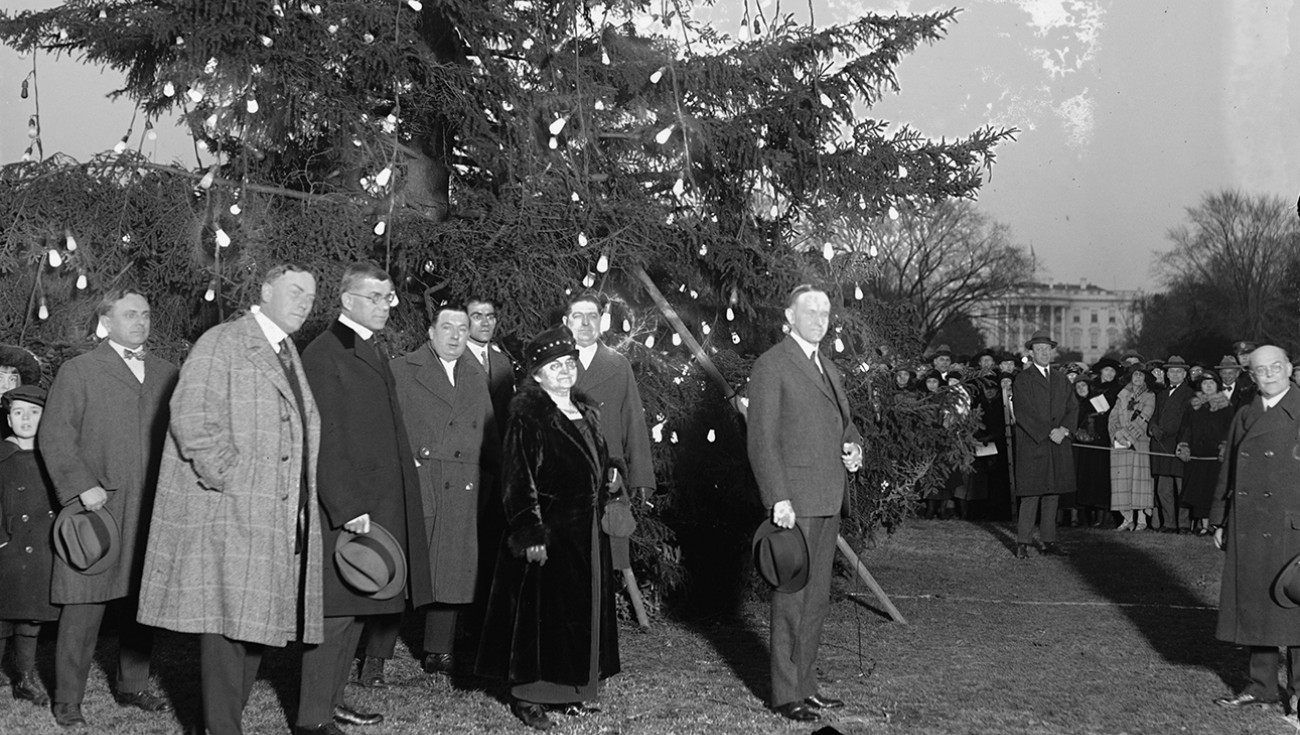
 The following year Coolidge objected to cutting down a tree for the event so a 35 foot tall live Norway Spruce was located and planted in a new location near the Treasury Building. This tree survived until 1929 when it was determined that the plant had been damaged and needed to be replaced. This began a series of live trees being planted, dying, and being replaced until, in 1934, the last tree was cut down in that location.





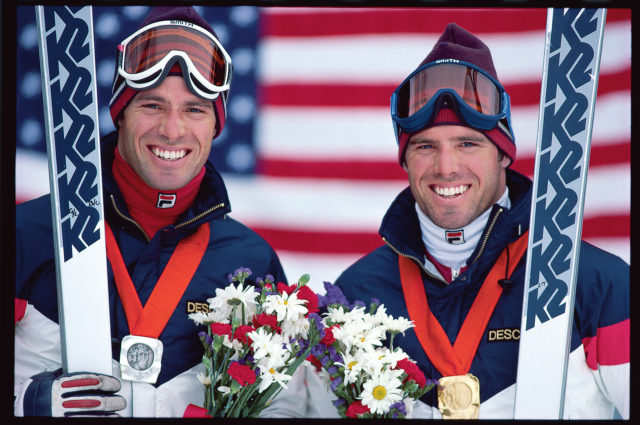 This pair of skiers are, no doubt, the most famous Washingtonians to win Olympic medals. It was on February 19, 1984 when the twin brothers slalomed to gold and silver, being the first siblings to compete and place in the same event.
 The Mahres won two of the five alpine skiing medals taken by Americans, all from the Northwest. Portland’s Bill Johnson (downhill) and Seattle’s Debbie Armstrong also won gold and Christin Cooper of Sun Valley took the silver for an American 1–2 finish in the women’s giant slalom.”
 Her fellow skier asked her if perhaps the black diamond run might be a bit difficult and would she like to try something easier?





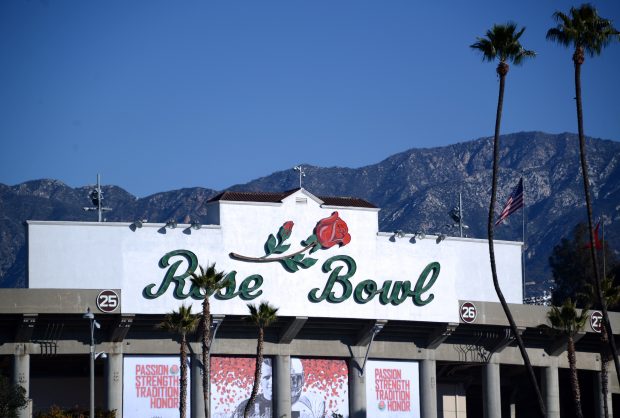 Nicknamed “The Granddaddy of them All” – the annual football contest known as “The Rose Bowl” debuted on this date in 1902.
 For those of us who prefer tradition, today’s matchup of #9 Washington and #6 Ohio State is everything the Rose Bowl is supposed to be. It will be Ohio State’s 15th appearance and Washington’s 16th visit. But the two teams have never met in the Rose Bowl.
 No Rose Bowl Roses were purchased by us that day. But we definitely needed the extra warmth and fortitude provided by the flask she smuggled into the stadium. We were seated in the visitors horseshoe at the far west end of the stadium. The buttressing of our spirits from the extra spirits was required as the Huskies hammered the Cougs 35-15 and USC dispatched the Bruins the next weekend. Washington flew to Southern California and, on January second (the Rose Bowl is played on the second if the first falls on a Sunday), upset heavily favored Michigan 27-20.
 kids most of the time. Hah! My daughter had become obsessed with the Disney animated movie Sleeping Beauty. So most every afternoon I ended up hanging out in the unit while she watched Sleeping Beauty. Unless, of course, she was across the breezeway playing Barbie’s with the cousins. Except on New Year’s Day when Sleeping Beauty was relegated to the back burner and all the guys – Dad, brothers, husband and brother in law – descended upon our unit to watch the #8 WSU Cougs take on #1 Michigan.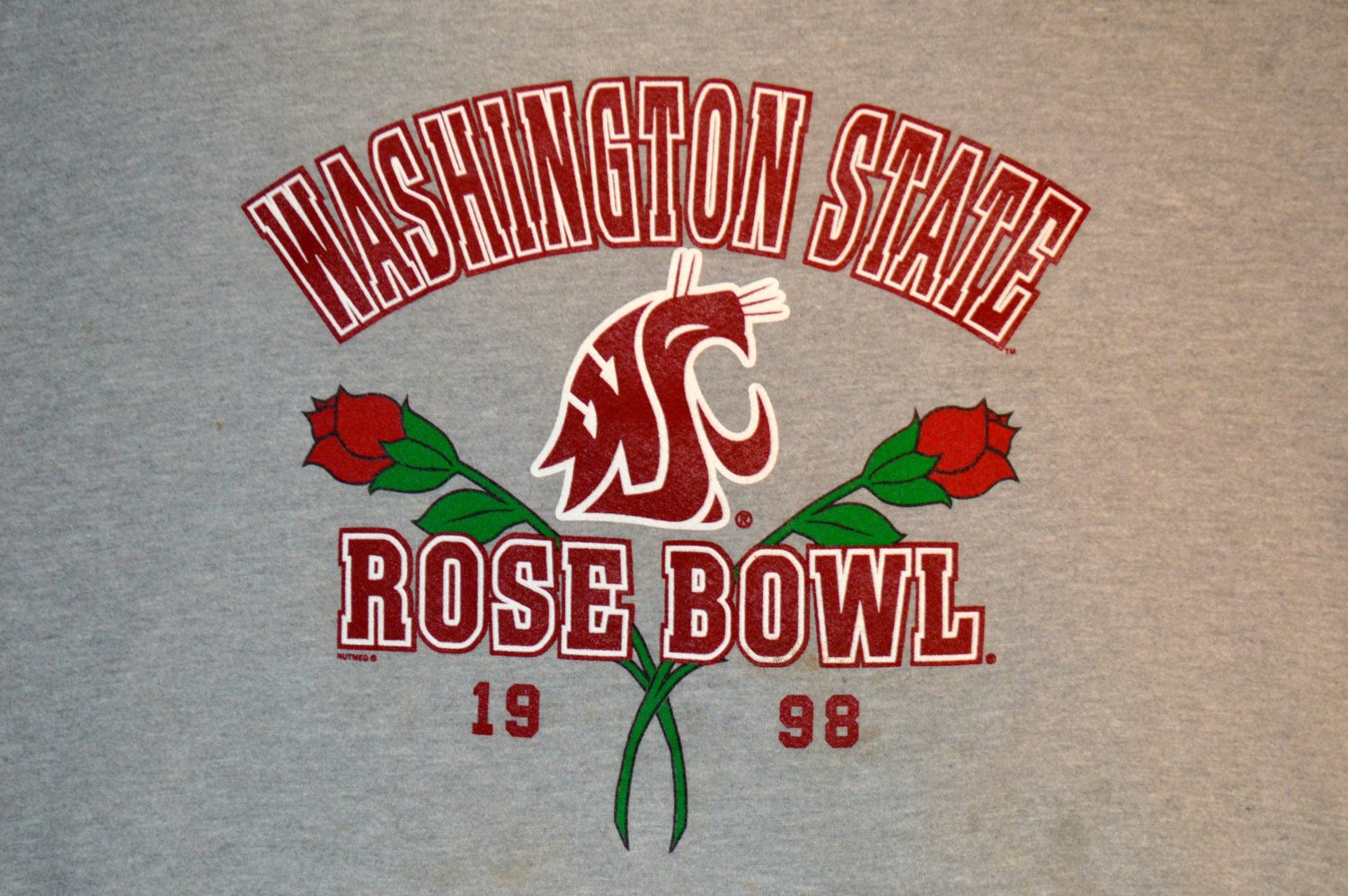
 Today’s historical event really isn’t that much of an event but more an excuse to write about a topic which amuses this author. First of all happy 30th wedding anniversary to Kevin Bacon and Kyra Sedgwick. They were married September 4, 1988. Unlike a great number of Hollywood marriages, their marriage has lasted three decades and, apparently, they’ve only ever been married to each other!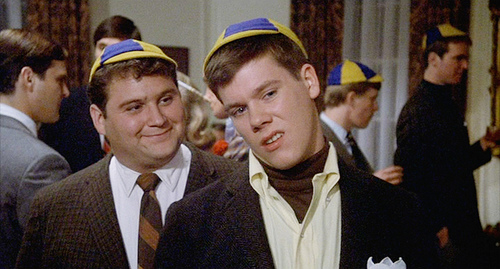
 To find any actor’s ‘Bacon Number’ you can go to this link:


 barbaradevore.com