April 28th
Long before Angry Birds and Candy Crush
A Tuesday Newsday Classic
Decades before anyone had ever uttered the phrases Angry Bird, Temple Run, Word’s with Friends, or Candy Crush, the first wave in digital gaming had arrived in the States from Japan.
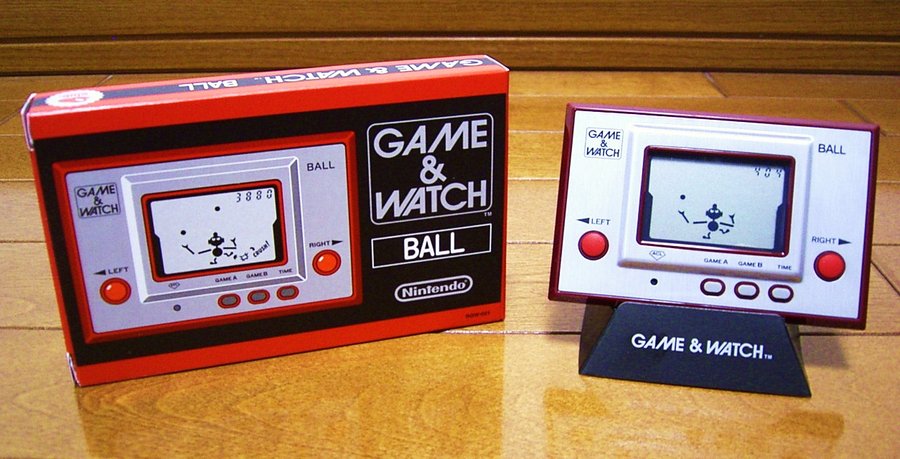
On April 28, 1980, a then unknown manufacturer by the name of Nintendo, launched the first of its 4 ½ by 2 ½ handheld electronic game series in the US. And thus the Game and Watch was born, a precursor to the iPhone and Android games of today.
For less than $20 a consumer was able to buy a device which featured – usually – two different games played by pushing tiny buttons to move items around on the screen. From the Infallible Wikipedia:
“The Game & Watch brand is a series of handheld electronic games produced by Nintendo from 1980 to 1991. Created by game designer Gunpei Yokoi, each Game & Watch features a single game to be played on an LCD screen in addition to a clock, an alarm, or both. It was the earliest Nintendo video game product to gain major success.
The units are based on a 4-bit CPU from the Sharp SM5xx family, that include a small ROM and RAM area and an LCD screen driver circuit, although prior to the emulation in MAME there was a misconception in that every unit used a custom ASIC instead of a proper microcontroller.
The series sold a combined of 43.4 million units worldwide.”
Yokoi is said to have conceived the idea while on a bullet train when he observed a fellow traveler playing with his calculator. He reasoned that a small device which would also serve as a clock and alarm and allow the person to play a game could fill the desire for entertainment when unable to do other things.
In all, there were 59 different titles sold. It wasn’t until Nintendo established offices in the United States when the Game and Watch distribution became more widespread in this country.
Our family were early adopters of Game and Watch for one very good reason: The hubby went to work for Nintendo soon after they established their headquarters in Tukwila, Washington. (Yes, it’s true. Their first Washington address was there and NOT Redmond.)
I don’t know why, exactly, we bought all those Game and Watch games, except that Nintendo had an inventory and there was likely an employee discount. Regardless, soon we had friends and family asking for the games and we obliged.
The first one released was called Ball and featured a character later dubbed “Mr. Game & Watch” who juggled balls. He is according to the Infallible Wikipedia: “a generic amalgam of black, open-mouthed, big-nosed cartoonish stick figure silhouettes.” That first game – and three others released in quick succession – sold fewer than 250,000 games worldwide. Two other early games – Vermin and Fire – each sold about a million.
Which is where we enter the story. At the Nintendo warehouse in Tukwila there must have been stacks and stacks of unsold games. It is likely the first one we ever had was Fire and it was one of my favorites. We referred to the game as ‘Burning Babies.’ Yes, politically incorrect but in those days no one had ever uttered that phrase.
My description of the game Fire: On screen you see a cartoonish ambulance on the right side of the screen and a burning multi-story building on the left. Two Mr. Game and Watch characters carry what looks to be a safety net. Their job is to catch the ‘people’ who are literally leaping from the burning building. It starts out benign enough with one tiny person jumping and you must move the firefighters left and right with their net to stop the jumper from hitting the ground. You must then bounce the burning baby across three sections from the building to the ambulance. As the game progresses, a second jumper leaps soon after the first and you must now figure out which one to catch first. It’s like a bad juggling game where soon there are as many as four jumpers on the screen at once! Drop one and you get a tiny little angel icon indicating a lost life. Truly, you have not known stress until you’re frantically trying to save the tiny burning babies. Oh, and as your score increases, so does the speed with which they jump. Yes, that’s me playing the game in the short video below. Yes, it still is stressful when the babies splat on the ground!
Soon, the hubby was bringing home more Game and Watches. The titles included Parachute, Octopus, Fire Attack, Manhole, and Turtle Bridge. Each one seemed to include violent ends to the poor little electronic people or critters if you didn’t do your job. (Which is the common element for the four listed on the FB page!) These were followed by Nintendo’s own characters of Donkey Kong, Donkey Kong, Jr., and Mario’s Cement Factory, as well as licensed character games featuring such cultural icons as Popeye, Mickey Mouse, and Snoopy.
We gave my mother Snoopy Tennis for Christmas in the early 1980’s. It was the perfect game for her as she was a lifelong tennis player and got a real kick out of the tiny Charlie Brown wielding his tiny tennis racket to serve balls to Snoopy who had to jump up and down tree branches to hit it. If he missed, a happily sleeping Woodstock awoke and squawked about it. In the alarm feature, Lucy and piano player Schroeder make an appearance. The best part is that with Snoopy Tennis no tiny imaginary people died.
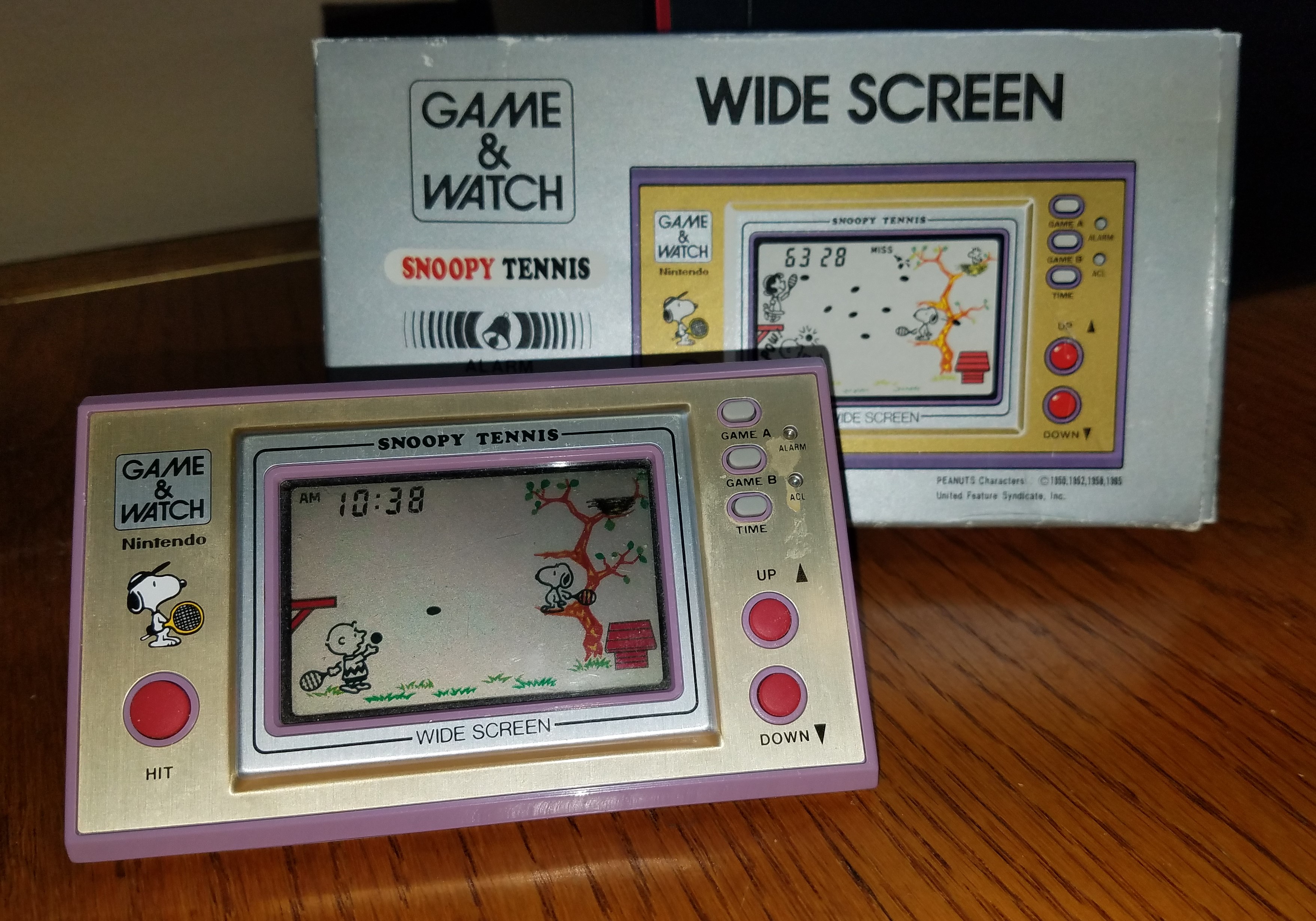
My mother absolutely owned that game. I think her high score was in the ten thousands and, boy, did those tennis balls come fast and furious. She worked those controls like a boss. Everyone who watched her play was awed. At some point her thumbs got too overworked and she had to give up the game. It bubbled up out of a box when we were going through my parents’ house last summer so we now have two of that game. Hers is the one shown here.
I think about how far electronic games have come since then. I prefer games where when I lose, nothing dies. Which is why I love Candy Crush. Having completed over 5000 levels, I’m in rarefied territory and know of only one friend at a higher level. Like my Mom, I kinda own the game. But I think if my Mom had ever played Candy Crush, she would have given me a run for my money.
The links:
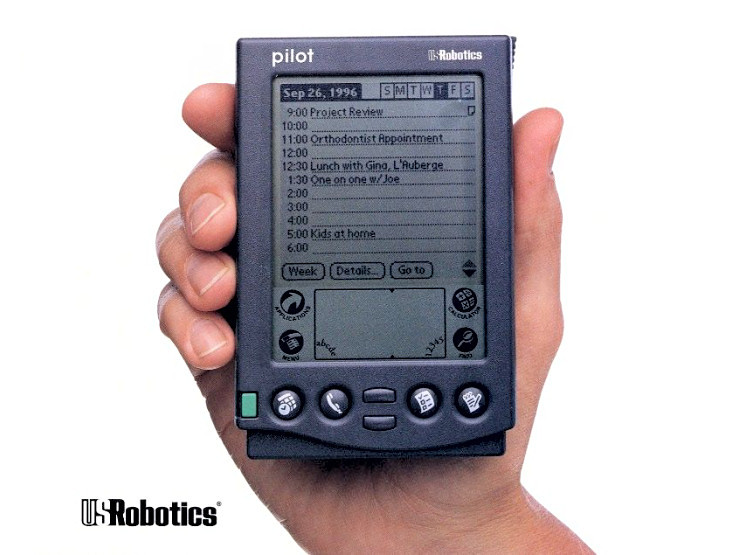 Twenty three years ago, this product was the “be all, end all” in new technology. A year earlier, business people everywhere were snapping these up, sure that they would be the ultimate organization tool. That product was the Palm Pilot – the highly successful Personal Digitial Assistant (PDA) computer you could carry in your pocket.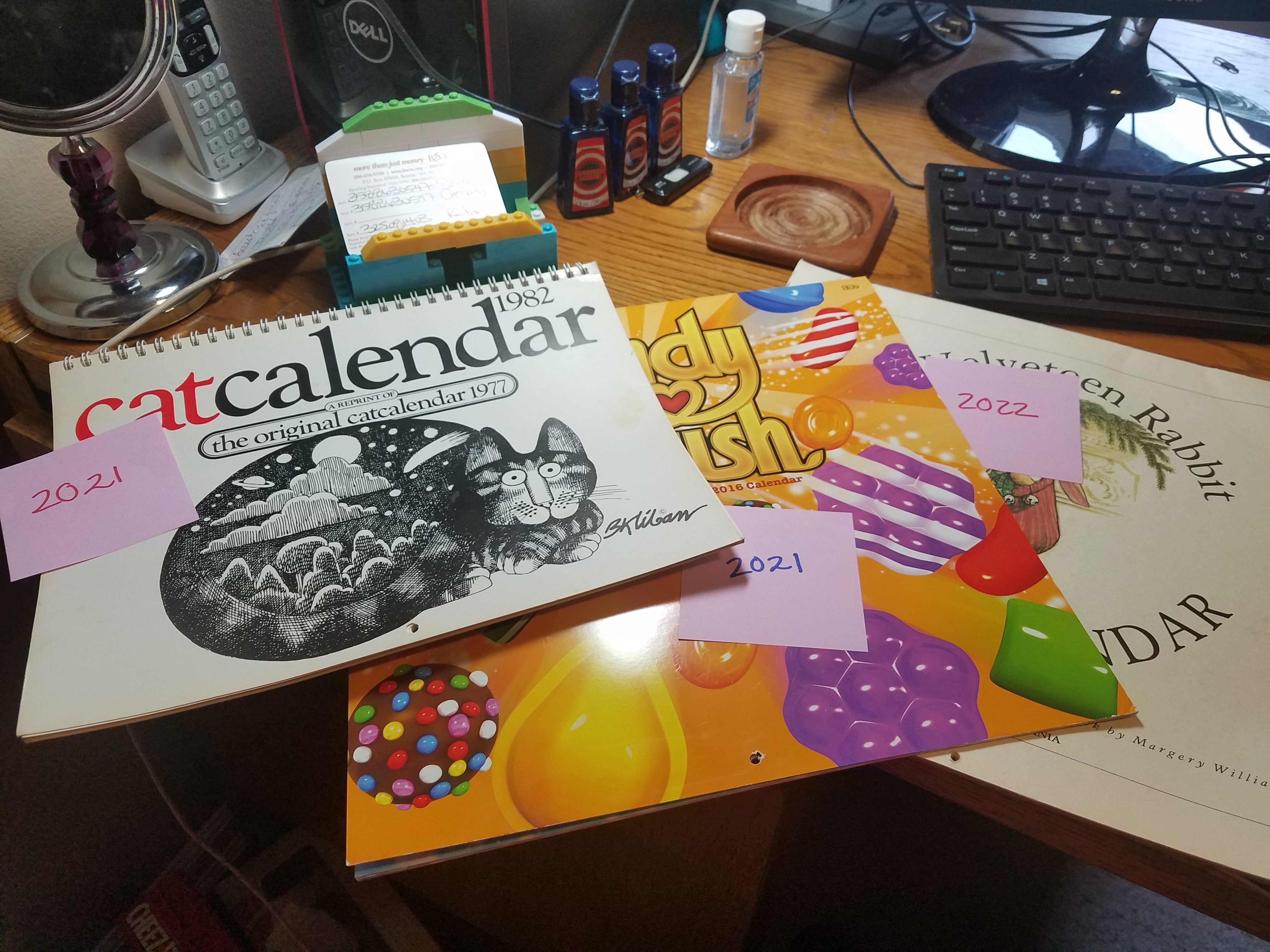
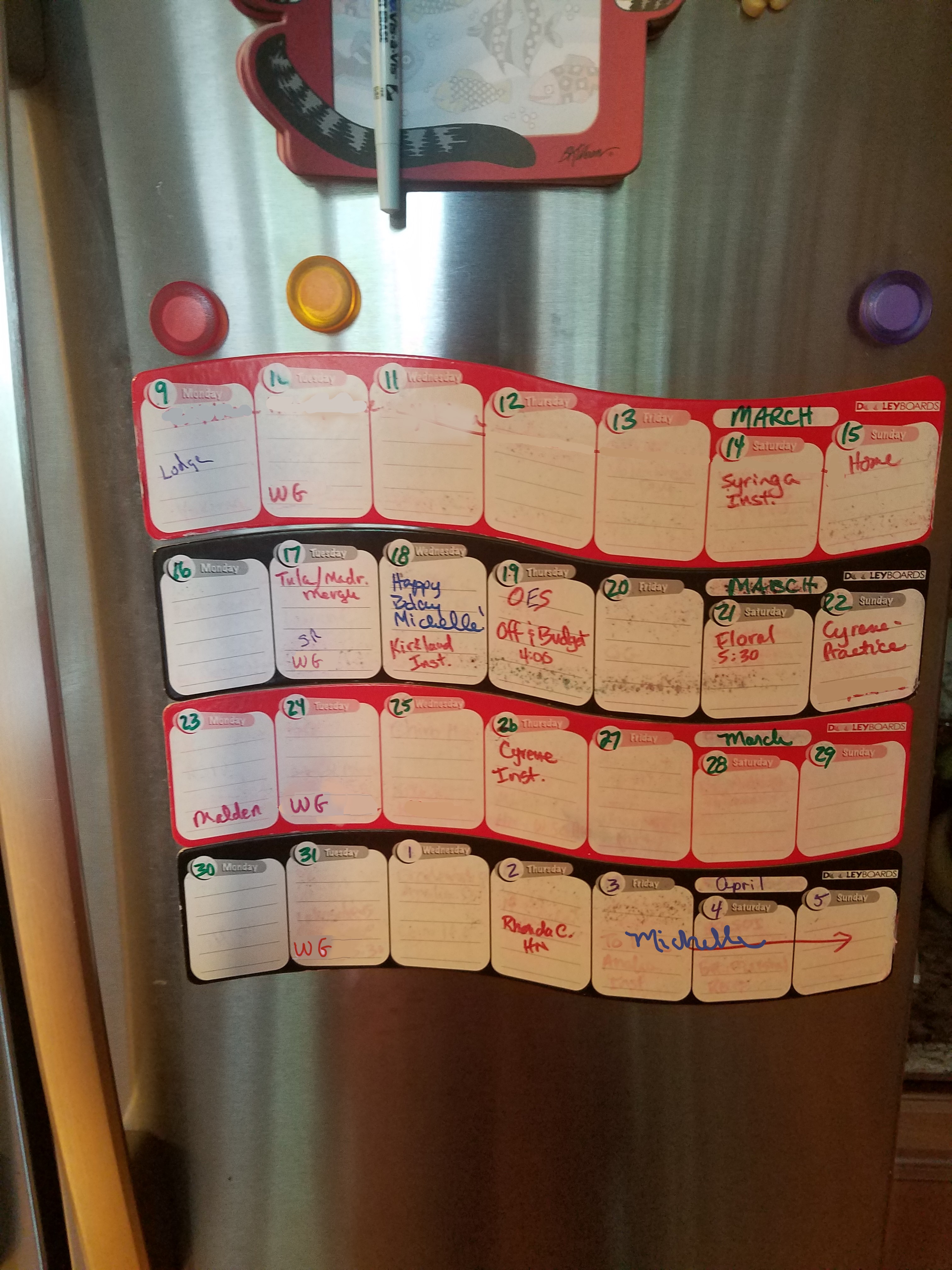
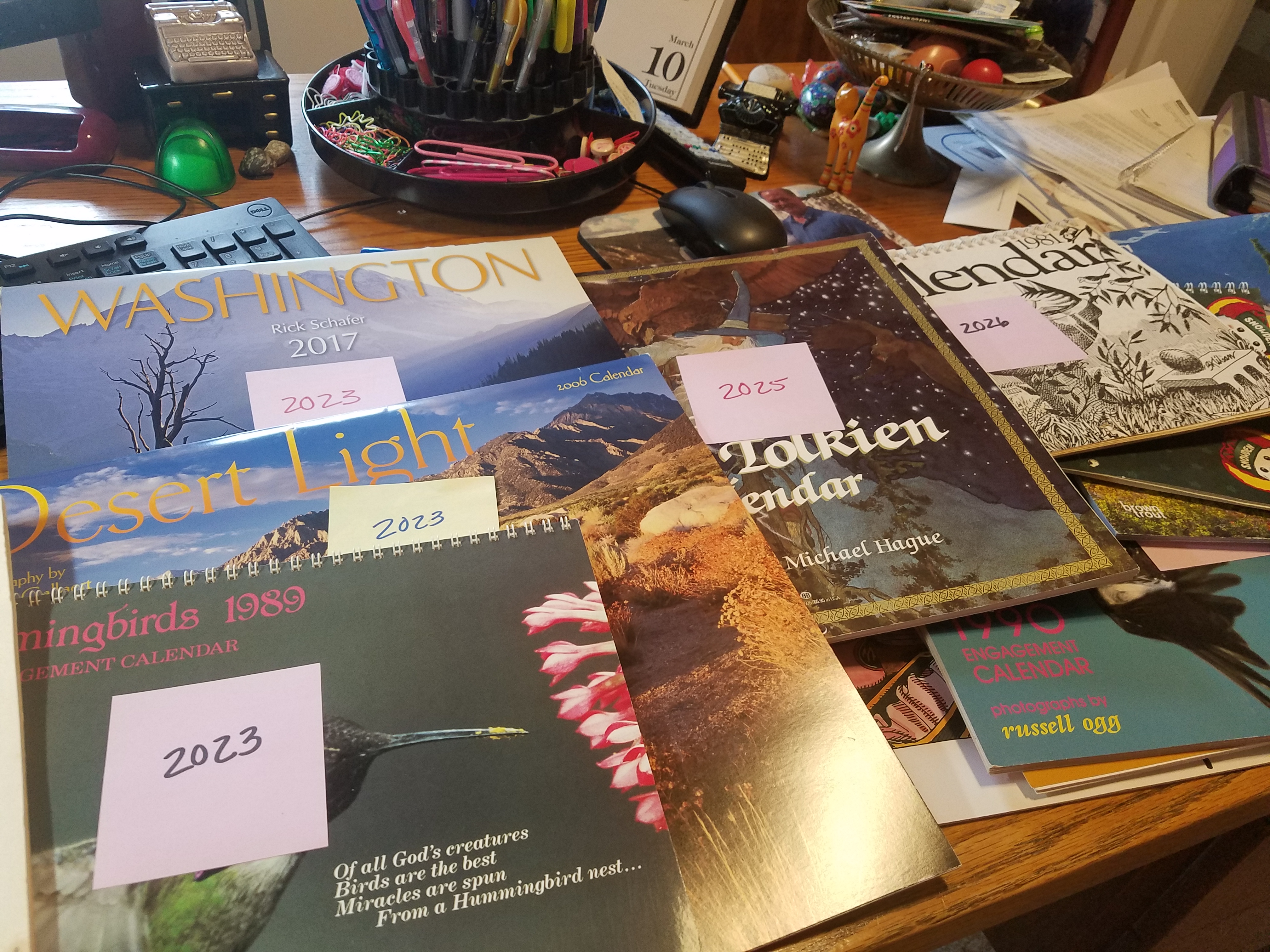 Which I did with my 22 saved wall calendars. I’m all set for 2021, 22, 23, 25, 26, 27, 28, 29 and beyond. This year, however, I had to buy a new paper calendar. Why? Leap year. For 2020, the layout of dates occurs only once every 28 years and there was not a 1992 in my arsenal. But I’m now good for the year 2048 (Note to my children, be sure to put the calendar up on the wall for me in my Senior facility, okay?)
 The last line brings me back to the PSA. From October through December you are much more likely to see deer near or on the road and are much more likely to hit one with your car. The reasons are likely due to mating season and to the need for the animals to forage farther and farther for food to sustain them through the winter.
 “So if you are ever driving and a deer jumps out in front of you, STOP, because they always travel in pairs.”
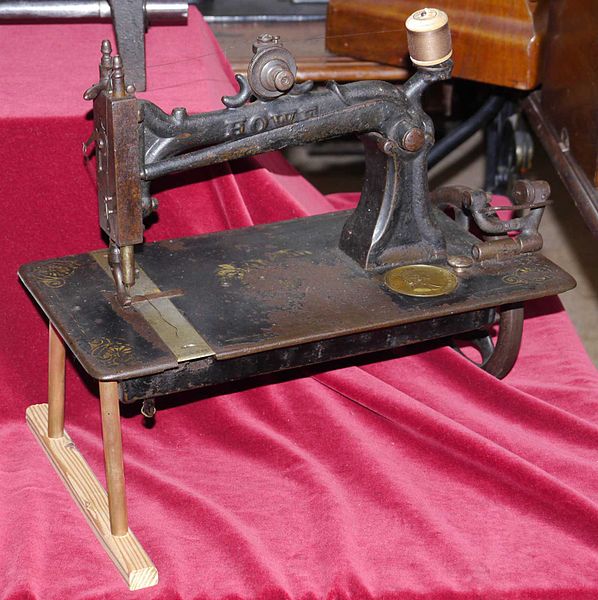 This invention truly revolutionized American life. The sewing machine was granted a patent on September 10, 1846. While most people associate the name Singer with the sewing machine it was actually an inventor by the name of Elias Howe who conceived of and created the first such machine. From the Infallible Wikipedia:
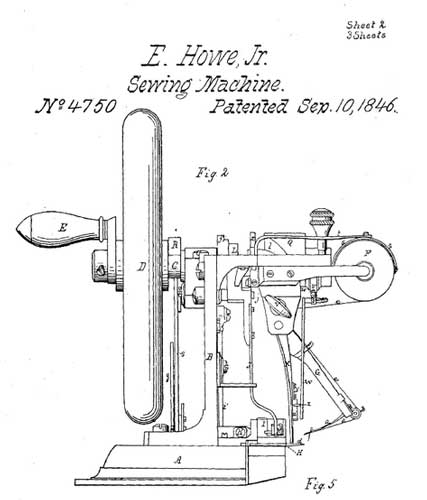 “Despite his (Howe) efforts to sell his machine, other entrepreneurs began manufacturing sewing machines. Howe was forced to defend his patent in a court case that lasted from 1849 to 1854 because he found that Isaac Singer with cooperation from Walter Hunt had perfected a facsimile of his machine and was selling it with the same lockstitch that Howe had invented and patented. He won the dispute and earned considerable royalties from Singer and others for sales of his invention.”
 Our initial project was to sew a basic A-line dress. For those unfamiliar with the term, what that meant was a dress of three pieces: front, and two mirror image back pieces with a zipper down part of the middle. No sleeves, just armholes with armhole facings; darts at the bodice completed the fitting. In all, the pattern consisted of 8 pieces. Five of those pieces were facings around the arms and neck.

 So off we would go to get things. Our back to school supply list included Pee Chee folders, notebook paper, #2 pencils, and BIC pens. That was it.
 Note the words “multiplication table.” This was probably the most valuable thing a Pee Chee provided as we were expected to memorize this table. By the time you got up to the twelves, it got a bit difficult. The handy dandy Pee Chee came to your rescue. Of course our teachers knew this and we had to put our Pee Chee’s away during test time.
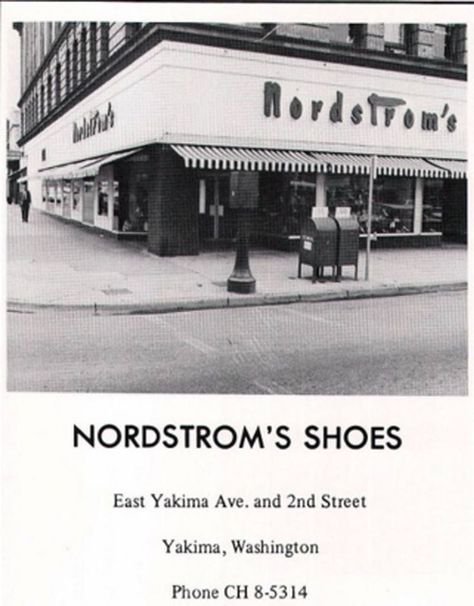 My mother would take me and my sister to Nordstrom’s Shoe store… in the 1960’s in Yakima that’s all it was… a shoe store. We would bypass all the beautiful shiny black patent leather shoes and the cute Mary Janes and go directly to the rack of clunky saddle shoes. There they sat, big, bulky, and ugly. They had brown soles thicker than a slice of French toast. Across their beige bodies was a second strip of stiff brown leather, with laces through the holes, just waiting to cinch your foot into bondage. Heaven forbid that you got shoes which fit… no, they had to be a bit big so you’d grow in to them and not grow out of them before the following June.
 pens of every hue. In fact, just writing about it inspires me to head to my nearest Office Depot Max to see what’s on sale. Unlike saddle shoes, office supplies never go out of fashion!







 Held annually in Eau Claire, Michigan, since 1974, the record ‘spit’ of a cherry pit is 93 ft 6.5 inches. The competition has been dominated by one family with the patriarch, Rick Krause, holding the record for longest spit (over 72 feet) until 1993. Since then, his son, Brian ‘Pellet Gun’ Krause has won 10 times with his record breaking discharge occurring the first week of July in 2003. In recent years Brian’s sons have also competed.
 Sweet cherries are grown most successfully in Washington, Oregon, California, Wisconsin, and Michigan (hence the location of the cherry pit spitting contest). Most sour cherry varieties are grown in Michigan, Utah, New York and Washington.
 Picking cherries requires a delicate method. You must hold the fruit at the very top of the stem (stem less cherries are not saleable in the fresh market) and gently twist so that the stem is removed from the branch without pulling the spur off the tree. Then you place – do NOT drop – the fruit into the bucket. Lather, rinse, repeat. My rough estimates are thus: 80 cherries for a gallon times 4.5 gallons equals 360 cherries for one bucket. It takes a long time to pick 360 cherries plus, with one’s assigned ‘tree’, you also had to climb up 12 to 15 feet while balancing a bucket of heavy fruit.
 Mid-May in the United States is often a dangerous time to be in the central plains. The month is prime tornado season, a month when hundreds of twisters can occur in what is described as an ‘outbreak.’
 By the time we got to the Chicago suburbs we had but one thought: get through as quickly as possible. Chicago is a maze of roads with bypasses for the bypasses for the bypasses… if you’re willing to pay. Were we ever.



 We stayed until it was too dark to really see the bats any longer. Even then we were reluctant to depart. Mark another place off my list of places I’ve always wanted to visit!
