Canning your own food was once the norm
September 22nd
A stroll down most any aisle in a modern grocery store reveals shelf after shelf of this item which is taken for granted in today’s world.
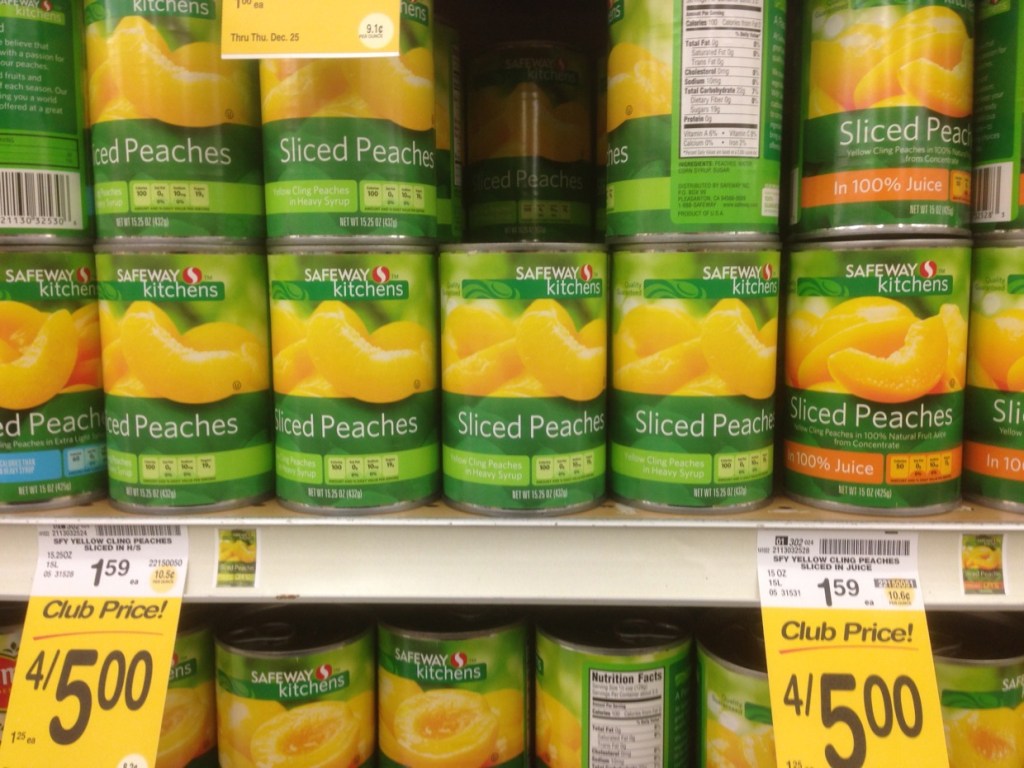
Yet, this method for the preservation of food has only been around for 200 years and, without it, our way of life would not be possible.
The process of canning foods was invented in 1809 by Frenchman Nicholas Appert. Appert – a brewer and confectioner – “observed that food cooked inside a jar did not spoil unless the seals leaked, and developed a method of sealing food in glass jars.”
The French Government was in need of a reliable food source for its troops during the Napoleonic War and had offered a cash reward for anyone who could successfully develop one. Ironically, the war was over before canned foods were available. Regardless, it was an invention whose time had come.
From the Infallible Wikipedia:
“The original fragile and heavy glass containers presented challenges for transportation, and glass jars were largely replaced in commercial canneries with cylindrical tin can or wrought-iron canisters (later shortened to “cans”) following the work of Peter Durand (1810). Cans are cheaper and quicker to make, and much less fragile than glass jars. Glass jars have remained popular for some high-value products and in home canning. Can openers were not invented for another thirty years – at first, soldiers had to cut the cans open with bayonets or smash them open with rocks. Today, tin-coated steel is the material most commonly used. Laminate vacuum pouches are also used for canning, such as used in MREs and Capri Sun drinks.

To prevent the food from being spoiled before and during containment, a number of methods are used: pasteurisation, boiling (and other applications of high temperature over a period of time), refrigeration, freezing, drying, vacuum treatment, antimicrobial agents that are natural to the recipe of the foods being preserved, a sufficient dose of ionizing radiation, submersion in a strong saline solution, acid, base, osmotically extreme (for example very sugary) or other microbially-challenging environments.
Other than sterilization, no method is perfectly dependable as a preservative. For example, the spores of the microorganism Clostridium botulinum (which causes botulism) can be eliminated only at temperatures above the boiling point of water.”
This time of year, with fruits and vegetables in abundance, the industrious individuals who like to do such things might turn their efforts to canning their favorites at home. Caution, of course, is always a necessity to avoid improper methods and exposing themselves and others to botulism.
From the pioneers of the 1800’s to the thrifty housewives of the Great Depression, canning was a necessary activity each summer and fall.
My mother was never one of those. I think she endured more than her share of rugged independence imposed on her by my decidedly pioneer woman-esque grandmother from the late 1920’s until she left for college in the 1940’s. There was, however, one food she adored and canned it every year: peaches.
The Yakima Valley is fertile grounds for fruit orchards, its main crops being cherries, apricots, peaches, plums, pears, and apples. We each have our own favorites. For me, as a child, I have a distinct memory of biting into a fresh peach and declaring to my mother it was ‘my favorite fruit.’ I would say that they now share the ‘favorite’ status with cherries, blueberries, and raspberries.
They were, I’m guessing, my mother’s favorite also. Because it was the ONE thing that she canned every year. When the fuzzy orbs were finally ripe, a flat or two of them would make their way to our house and for one or two hot afternoons, she’d can the peaches.

By the time I was about 10, she discovered that there were a couple of custom canneries in the area where she could take her peaches and let them do the final part of the process. For a few years I was ‘employed’ as one of her helpers and she, my dad, and me and my sister, would go to Toppenish for an afternoon of canning. 32 ounce cans, purchased from the cannery, were supplied to us sterilized and ready to go.
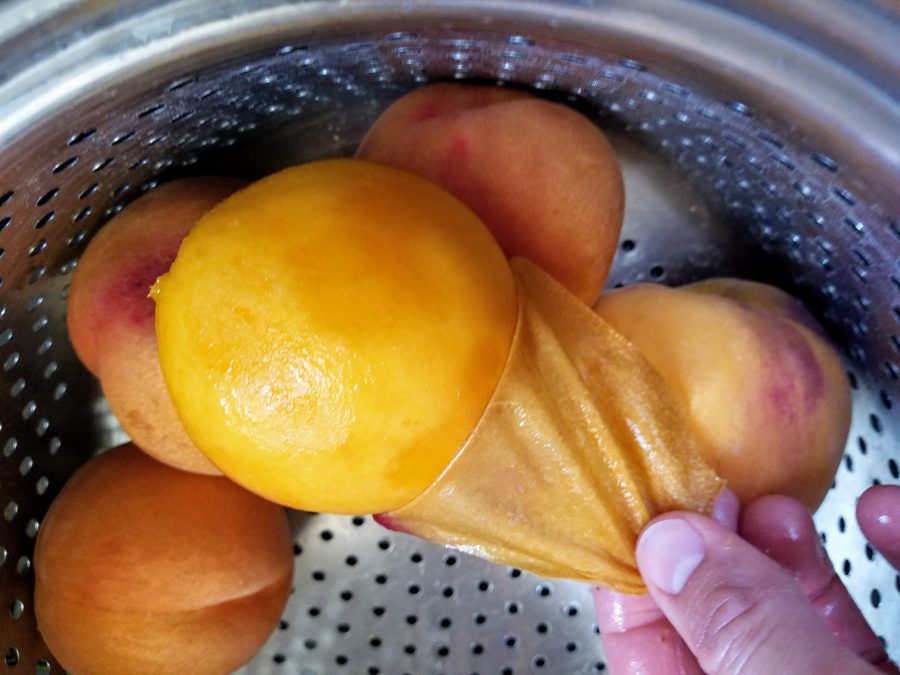
The peaches would be blanched and we would remove the skins, cut them in half, pull out the seed and the roughage in the middle, before sliding the slippery fruit into big tubs. It seems as if my dad was in charge of packing the halves into the cans and my mom would add the requisite sugar. Once a dozen cans were filled it was on to the conveyer belt and off to be cooked and sealed.
A few days later our hard work was rewarded when Mom would arrive home with stacks and stacks of canned peaches in the large tin cans.
Of course one issue was where to store said peaches. Growing up in a late 1950’s, 1300 square foot house (after an addition!) provided no pantry space. So the next best place was in the unused bottom of my older brother’s closet.
The date is September 25, 1970 and I – now age 13 – have spent the entire day at home by myself. My brother, age 17, worked at Safeway and then went out with friends. My sister, age 15, is at an all day event and slumber party. My parents have traveled to Seattle to attend the opera and will not be home until well after midnight.
Somewhere around two in the afternoon I am in my room just sort of hanging out when I hear a loud ‘thump.’ Being home and alone there is a niggle of fear which this noise inspires. So I leave my room and walk the entire interior of the house. Which doesn’t take long since it is a basic 1950’s ranch house and, as I said, only 1300 square feet. The doors are all secure and I can find no evidence of anyone trying to break in.
I return to my room and some time later I hear another ‘thump.’ I am truly mystified. I know it’s coming from somewhere within the house, but cannot figure out where.
By this time there’s another phenomenon in play. There’s a yeasty sort of smell permeating the air, as if someone is baking bread. But, since I do not know how to cook and no one else is home, that is also a mystery.
Fast forward to about midnight. My brother arrives home. I tell him about the two thumps (verified by my Diary entry from the next day, September 26th) but, like me, he’s mystified. A short time later he goes to his room and opens the closet and I think some sort of expletive may have escaped his lips.
Of course I hurry across the hall and peer into the closet. There’s yellow slime on everything and what appears to be a couple of cans of my mom’s precious peaches with their side seams split apart.
The brother – who’s tired after working and then partying – decides the best plan is to shut the closet door and go to bed. Right.
Shortly after, our parents enter the scene and my mom immediately notices the smell. We tell them about the slime, the damaged cans, and the thumps. An evaluation of the canned peaches reveals that almost all are swollen and on the verge of explosion. Its determined by the adults now in charge, that they need to be removed from the closet to the outside. While my parents undertake the duty, I’m in my brother’s room. He’s in bed and I’m standing at the end of it about four feet from the open closet. According to the diary:
“one box was still in there (the closet). I heard a fizzing sound, said ‘oh no’ and a can blew up on us.”
My diary entry does not begin to describe what actually occurred. My brother and I heard the sound at the same moment and locked eyes in mutual understanding of what was about to happen. I dove for the side of the bed away from the open closet while my brother yanked the blankets over his face for protection. The can blew. Little bits of vomited peach rained down on us, splattering the walls and ceiling. And then we started to laugh hysterically.
The last flat of botulism laden peaches were expedited to the back yard where my dad – in some sort of sacrificial midnight ritual worthy of Brits at Stonehenge – used an ice pick and a hammer to puncture each and every can. From each small hole an arcing stream of peach guts formed an impressive pureed rainbow across the crisp, black September night.
My mother never went back to that cannery. She found one in Ellensburg and went there for a few years until they closed down. From then on, canned peaches were purchased from the grocery store shelves. Which is kind of anti-climatic after the great exploding peaches event of 1970.
A couple of useful links:
https://en.wikipedia.org/wiki/Canning
https://visitfarmfreshfun.com/yakima-valley-produce-schedule.asp






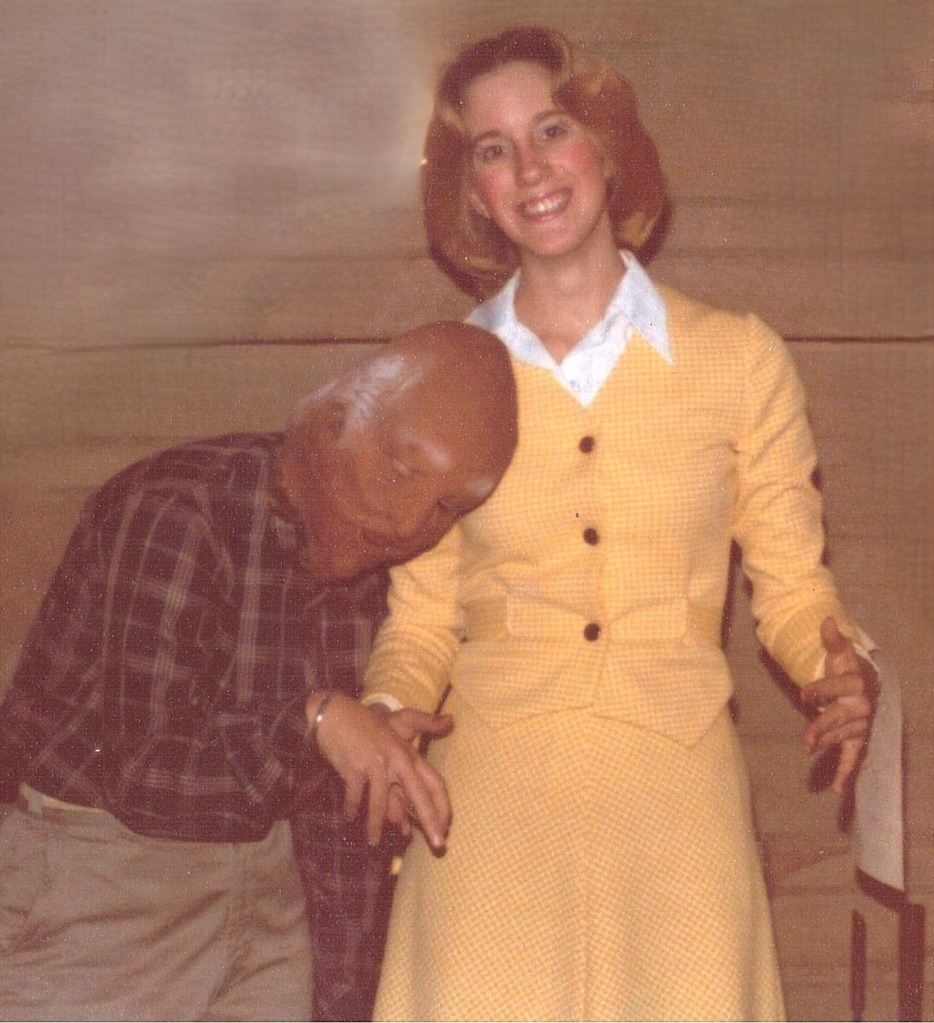
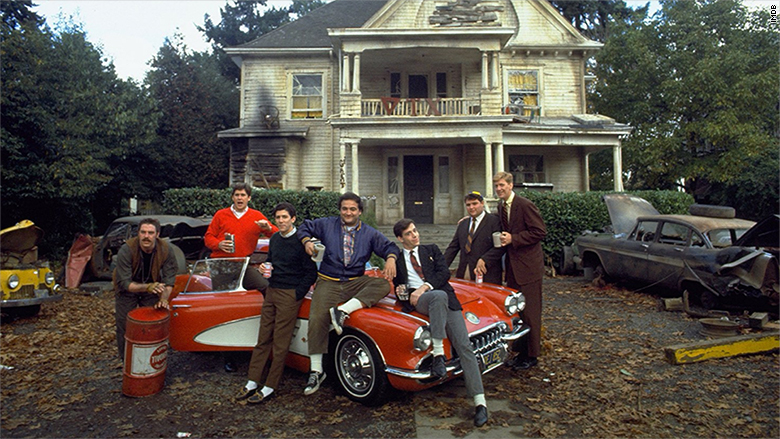 Who’s who in the Facebook Photo (left to right):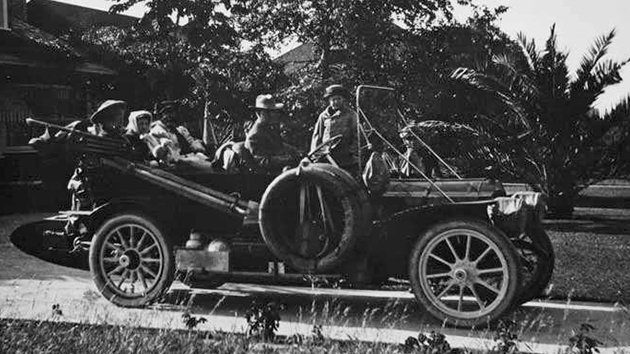
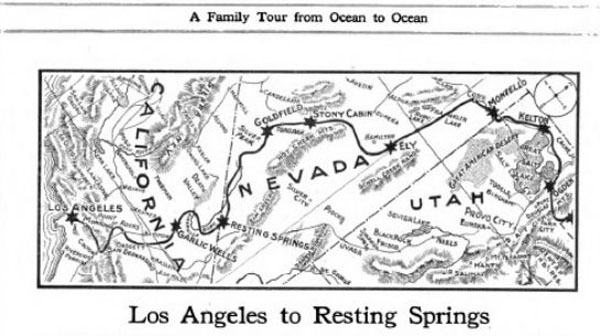 Mr. Murdock – much to the joy of this writer who has a love of such history – recorded their travails on the trail in a short book which I found preserved by the University of Michigan. (see the link below). Alas, the Infallible Wikipedia has not heard of Mr. Murdock. Instead, I enjoyed a delightful read while sitting in a comfortable chair trying hard to imagine all the family and the mechanic – along with an occasional sixth passenger found along the way – experienced.
 As they continued northeast through the Mojave desert and along the southern boundary of Death Valley, they became mired in quicksand, and eventually hit upon the use of heavy rope to create makeshift chains for the tires. This experience helped prepare them for the next day when, as Murdock says in the book, “We soon found that our drift and sand experience at Coyote Lake had been merely a kindergarten for us in the art of tractionless travel.” It took 13 hours to drive 67 miles, many of those “where we again shoveled, groveled, plowed and floundered.”


 A Tuesday Newsday Classic from 2020

 So it’s back to me having to clean the house once again. The hubby pulls out the vacuum when it gets bad. And I’m on constant vigil for signs that the bathrooms need attention. But a funny thing has happened with being forced to stay home. I’ve gotten through a number of boxes of stuff which needed sorting. I’m catching up on some mending projects. I’ve gotten the hubby to take on the task of fixing the barbecue table and plan to have him help me hang a few pictures and a display cabinet I brought back from my Dad’s house.


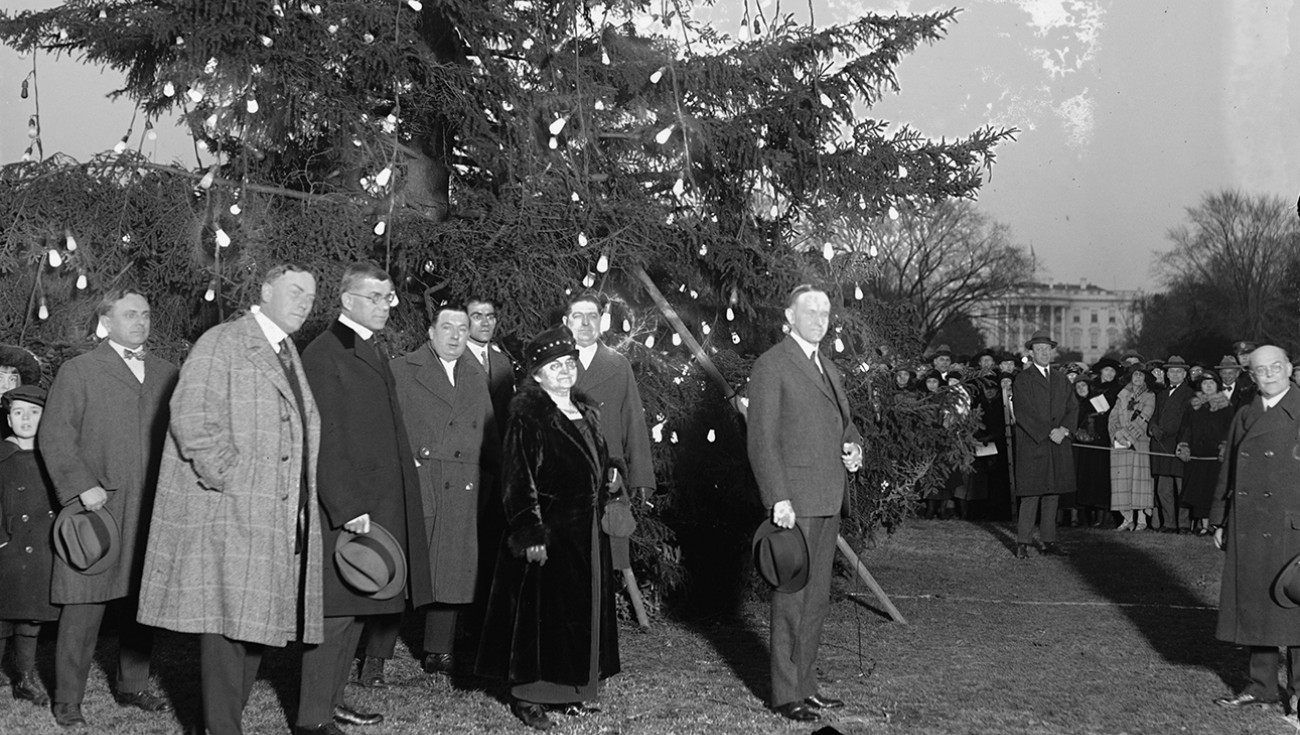
 The following year Coolidge objected to cutting down a tree for the event so a 35 foot tall live Norway Spruce was located and planted in a new location near the Treasury Building. This tree survived until 1929 when it was determined that the plant had been damaged and needed to be replaced. This began a series of live trees being planted, dying, and being replaced until, in 1934, the last tree was cut down in that location.