The Mountain Is Out
March 2, 2021
The Mountain Is Out.
These four words, for anyone who grew up or has lived in the Greater Puget Sound region, mean but one thing: it’s a clear day and from all vantage points, one can see Mount Rainier.

Of all the natural features which define Washington State it is, arguably, Mount Rainier which is most associated with the state. And is it any wonder? At 14,411 feet it is one of the highest peaks in the United States. What gives Mt. Rainier its prominence, literally, is the fact that you can see an uninterrupted 13,210 feet of the volcano, making it the largest mountain in the contiguous 48 United States and the fourth largest mountain on the North American continent.
It was on March 2, 1899, when Mount Rainier National Park was established as the nation’s fourth national park (after Yellowstone, Sequoia, and Yosemite).

The Infallible Wikipedia provides us with some fascinating geologic facts:
“Mount Rainier is a stratovolcano in the Cascade Volcanic Arc that consists of lava flows, debris flows, and pyroclastic ejecta and flows. Its early volcanic deposits are estimated at more than 840,000 years old and are part of the Lily Formation (about 2.9 million to 840,000 years ago). The early deposits formed a ‘proto-Rainier’ or an ancestral cone prior to the present-day cone. The present cone is more than 500,000 years old.
The volcano is highly eroded, with glaciers on its slopes, and appears to be made mostly of andesite. Rainier likely once stood even higher than today at about 16,000 ft (4,900 m) before a major debris avalanche and the resulting Osceola Mudflow approximately 5,000 years ago. In the past, Rainier has had large debris avalanches, and has also produced enormous lahars (volcanic mudflows), due to the large amount of glacial ice present. Its lahars have reached all the way to Puget Sound, a distance of more than 30 mi (48 km).
Around 5,000 years ago, a large chunk of the volcano slid away and that debris avalanche helped to produce the massive Osceola Mudflow, which went all the way to the site of present-day Tacoma and south Seattle. This massive avalanche of rock and ice removed the top 1,600 ft (500 m) of Rainier, bringing its height down to around 14,100 ft (4,300 m). About 530 to 550 years ago, the Electron Mudflow occurred, although this was not as large-scale as the Osceola Mudflow.
After the major collapse approximately 5,000 years ago, subsequent eruptions of lava and tephra built up the modern summit cone until about as recently as 1,000 years ago. As many as 11 Holocene tephra layers have been found.”
In the world of geology, a thousand years is like a blink of the eye. Which is one reason why Mount Rainier is one of 16 mountains worldwide known as ‘Decade Volcanoes.’ To put it succinctly, it means that these volcanoes have given indications that they are likely to erupt AND they are located in areas where an eruption would no doubt result in catastrophic property destruction and/or a large loss of life.
That could mean that we will witness such an eruption of Mt. Rainier in our lifetime or, perhaps, it will be hundreds of years from now.
It’s hard to imagine Mt. Rainier as being any different than how it’s been during my lifetime. I simply cannot recall a time when I did not know of it. Perhaps my earliest memory would be on a trip from Yakima to Long Beach, Washington with my family including my grandmother – my Dad’s mother – in the 1960’s.
The most direct route to the coast was via White Pass which, coincidentally, follows a route just south of the southeast park entrance. And there is this spot on the other side of the summit where you come around the corner and, on a clear day, feel as if you can touch it. Over the years that moment has always been the one which says ‘welcome to Western Washington.’ My grandmother snapped a photo from the back seat of the car. It was only the first of many photos I have of the mountain.
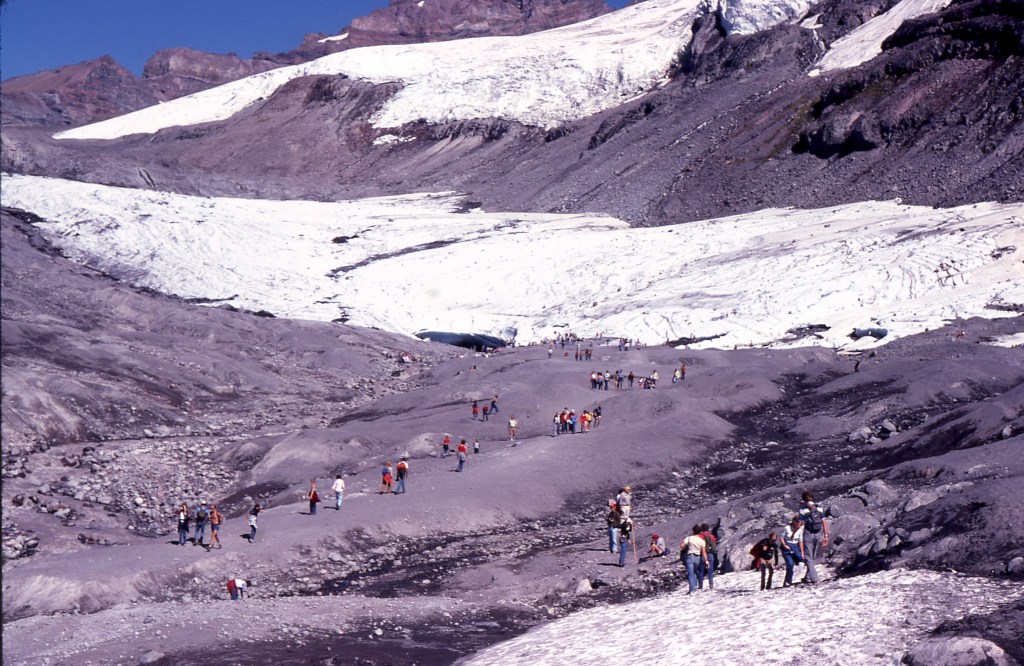
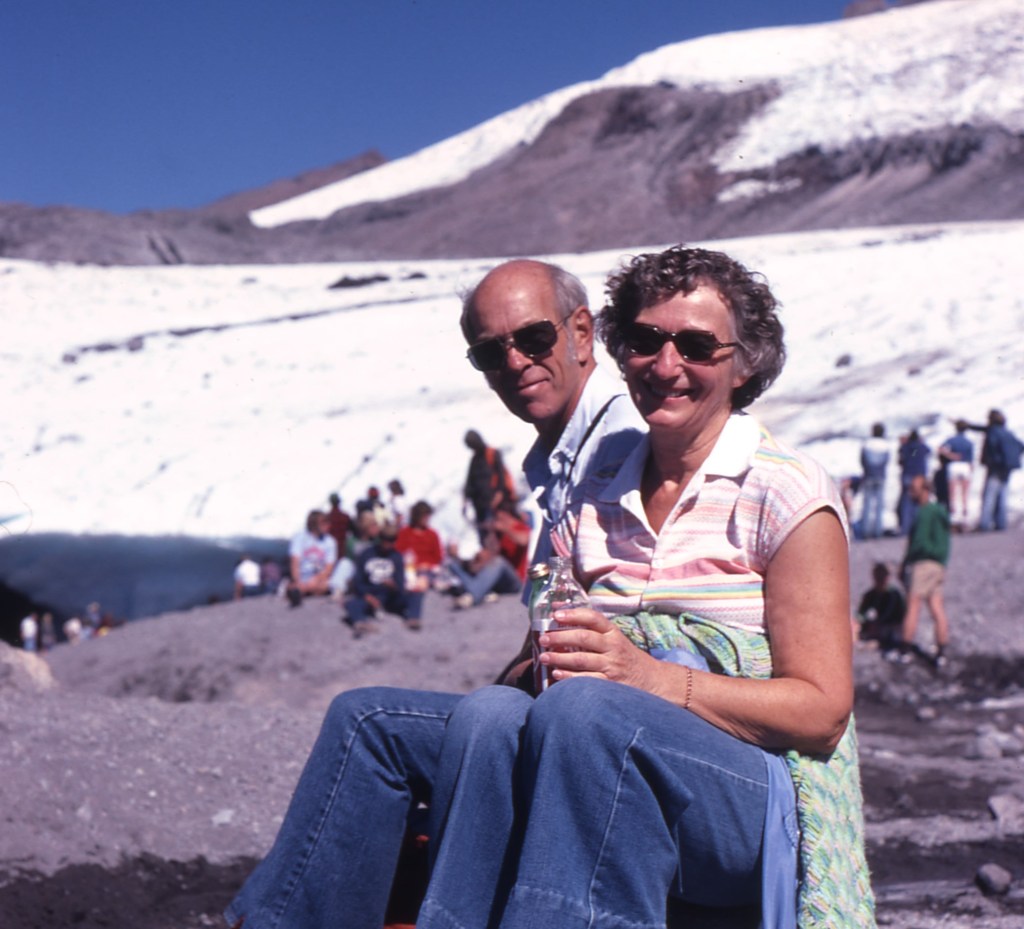
I would venture that I’ve driven through the National Park well over 100 times and have visited both Sunrise and Paradise multiple times. Back in the early 1980’s, the hubby and I – along with my parents – hiked up to the Paradise ice caves. It was a truly ethereal experience to be standing in a blue translucent cave made of ice. Today, they are gone.

As a newspaper reporter in Eatonville in 1979-80, I learned that the folks in Pierce County think of Mount Rainier as ‘theirs.’ Afterall, it was originally named Tahoma or Tacoma by the natives of the area. And it dominates the region.
One summer evening shortly after I moved to Eatonville, I was on the phone with one of the town council members to ask him a few questions about a story I was working on. It was around 8:30 p.m. and getting on towards sunset. We were talking when all of the sudden he says, “Strawberry Ice Cream.”
“Excuse me,” I replied, “What’s this about strawberry ice cream?”
“The mountain,” he replied, “Looks just like strawberry ice cream… and then it will be blueberry.”
And so it did. Although I didn’t have a view from my place of the mountain like he did, it only took a few steps outside my apartment and to the north for me to have a nice view of Pierce county’s ice cream ‘Sundae.’
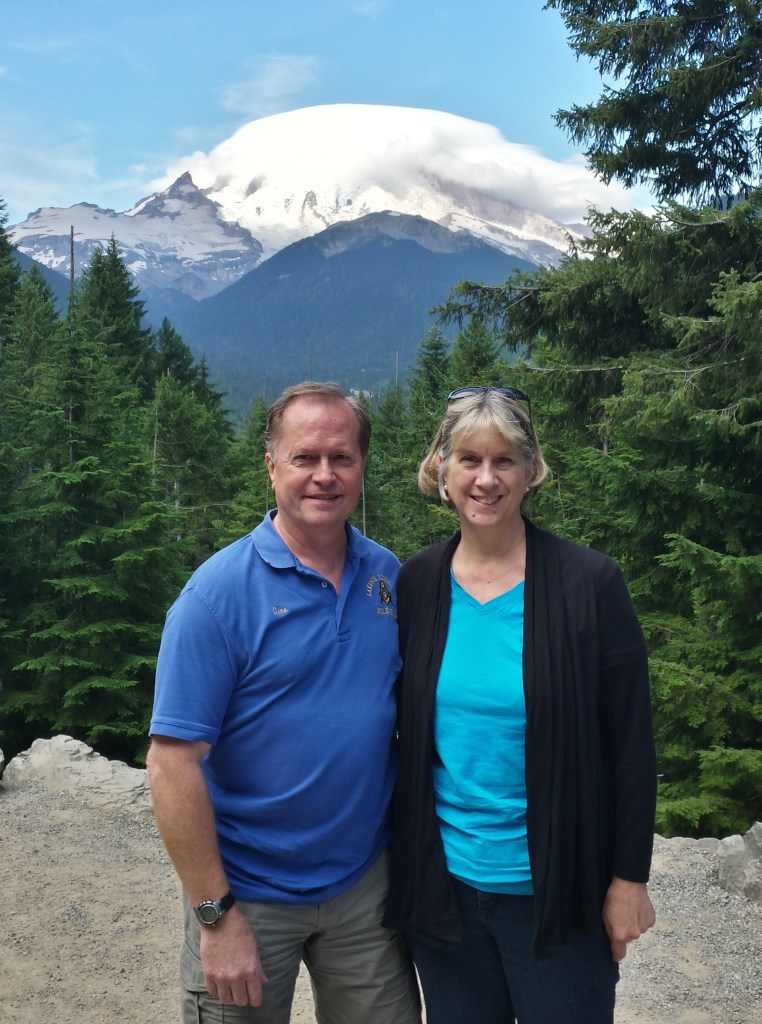
But it was on a trip from Nashville to Seattle a few years ago which reminded me that not everyone understands what an impact Mount Rainier has on those who see and enjoy it regularly. I was seated on the aisle and as we approached Seattle, I knew we would be passing the mountain to the north. As its massive white flanks came into view through one of the windows a row down and across the aisle, I craned my neck for a look. My frustration grew as the couple directly across from me kept their window covering closed. No longer able to hold back I said to them, “You really should open your window. Mount Rainier is right next to us.”
The man slid the opening up and both he and his wife exclaimed over how close and how immense it was.
Then he proceeded to say to me “Are you sure that’s Mount Rainier?”
I suppressed a laugh at the absurdity of the question. It’s easily one of the most recognizable peaks in the world, especially when you are right next to it and its larger than life.
“Trust me,” I replied, “I grew up here and that most definitely is Mount Rainier. Isn’t it nice for the mountain to be out today?”
The links:
 There is a saying that he who gets to the patent office first matters more than who invented it. This is likely true for the invention of radio. Guglielmo Marconi – first to the patent office – filed on June 2, 1896, eclipsing others also working on the budding technology.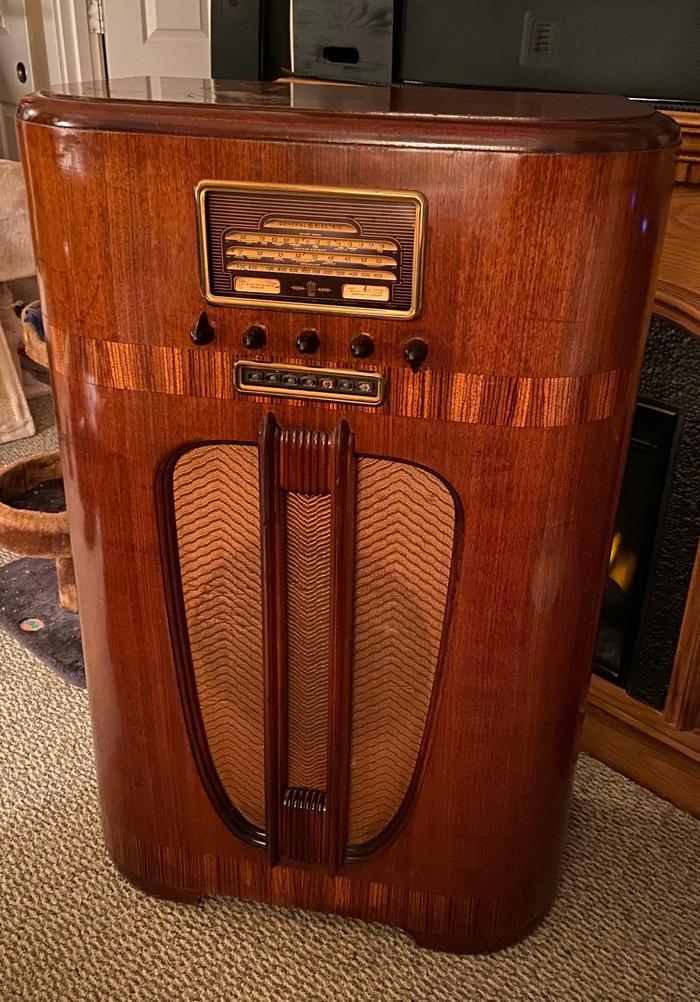


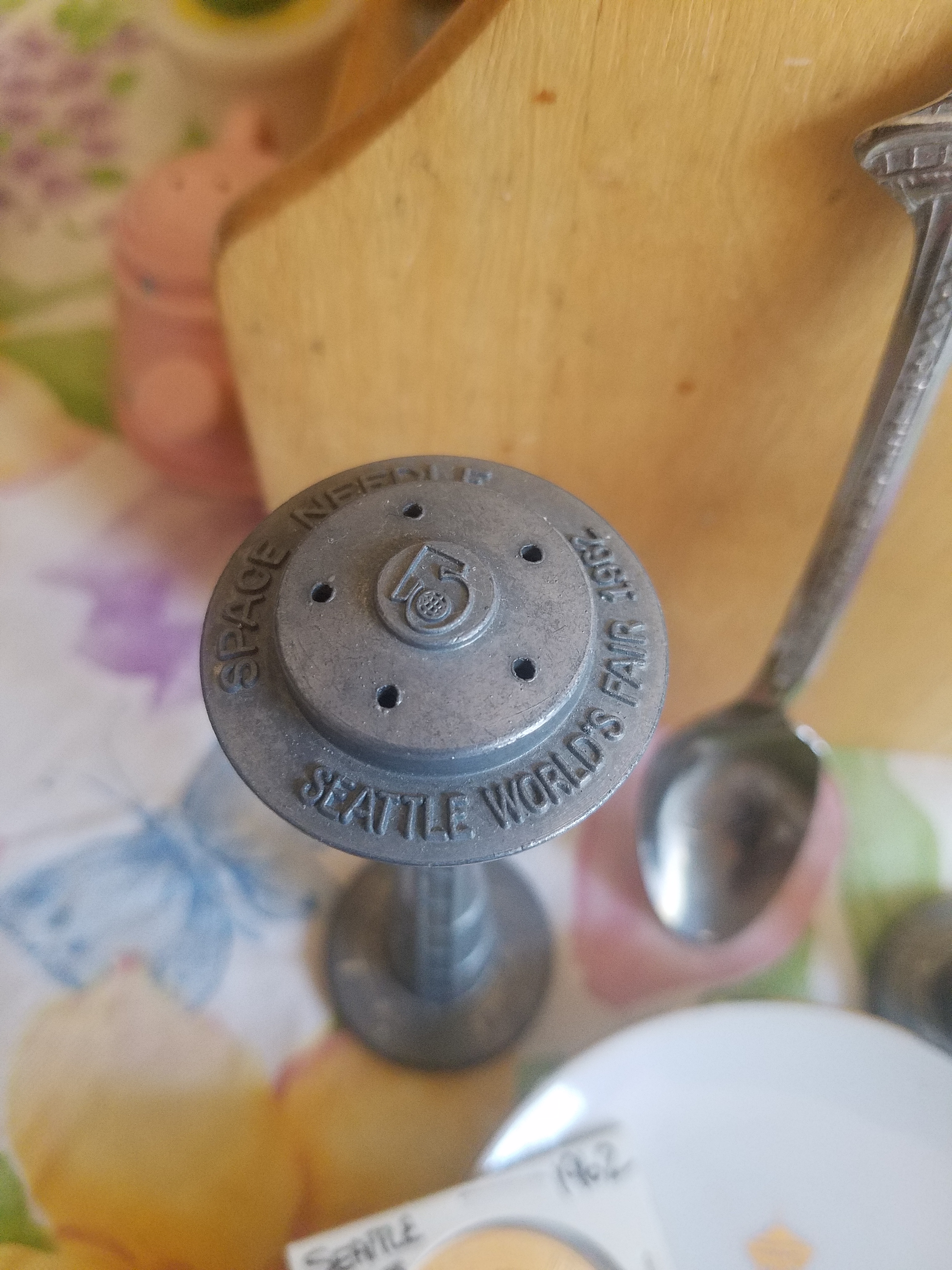
 The year was 1962. The space race was a real thing. And Americans everywhere were awed by the spectacle of extra-terrestrial travel to the moon and beyond.
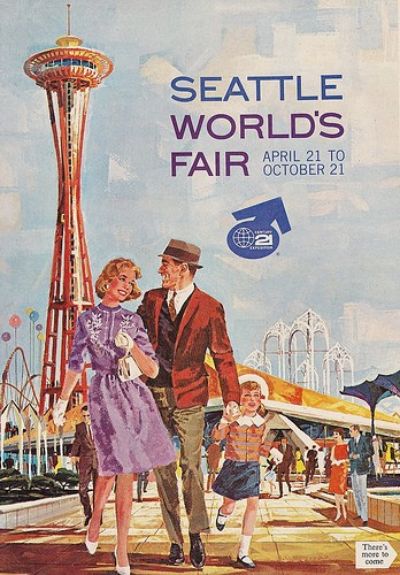 mark the 50th anniversary of the 1909 Alaska-Yukon-Pacific Exposition , but it soon became clear that that date was too ambitious. With the Space Race underway and Boeing having ‘put Seattle on the map’ as ‘an aerospace city’, a major theme of the fair was to show that ‘the United States was not really ‘behind’ the Soviet Union in the realms of science and space’. As a result, the themes of space, science, and the future completely trumped the earlier conception of a ‘Festival of the [American] West’.”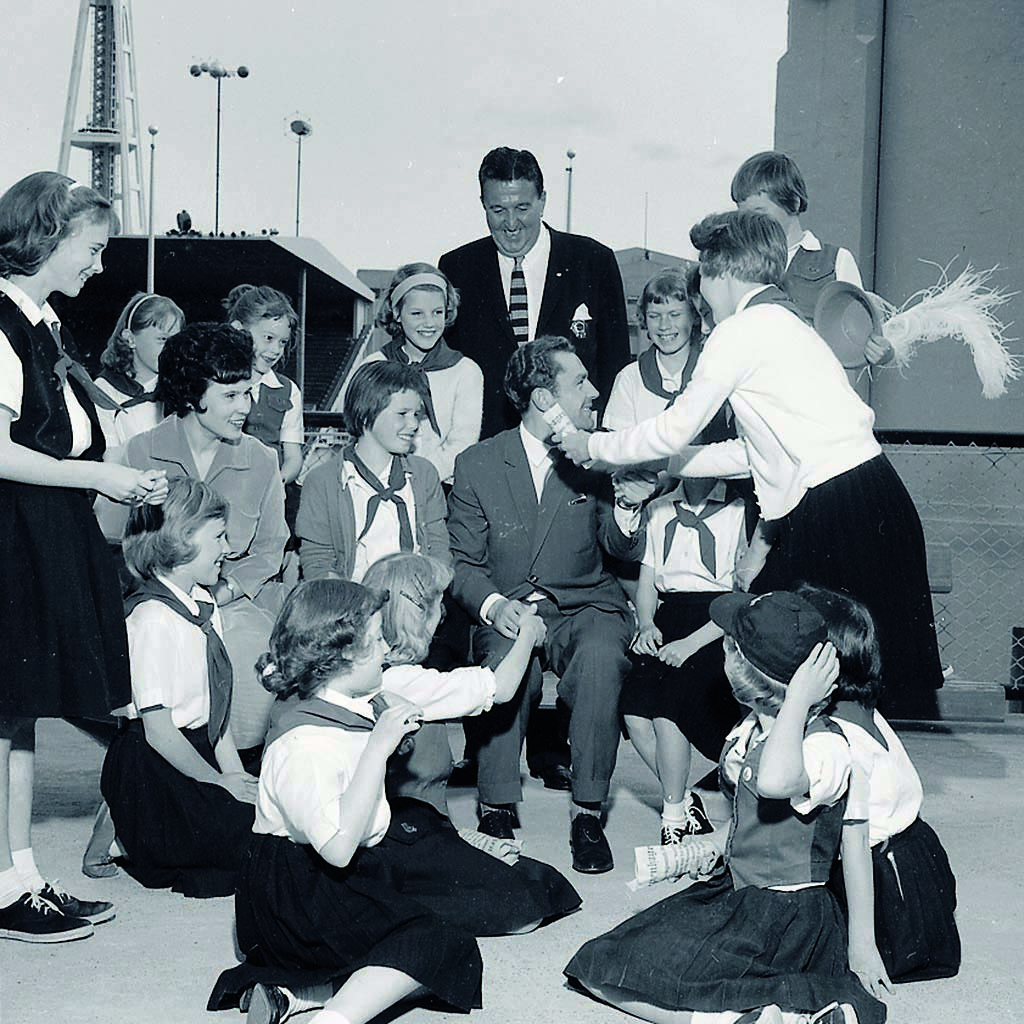

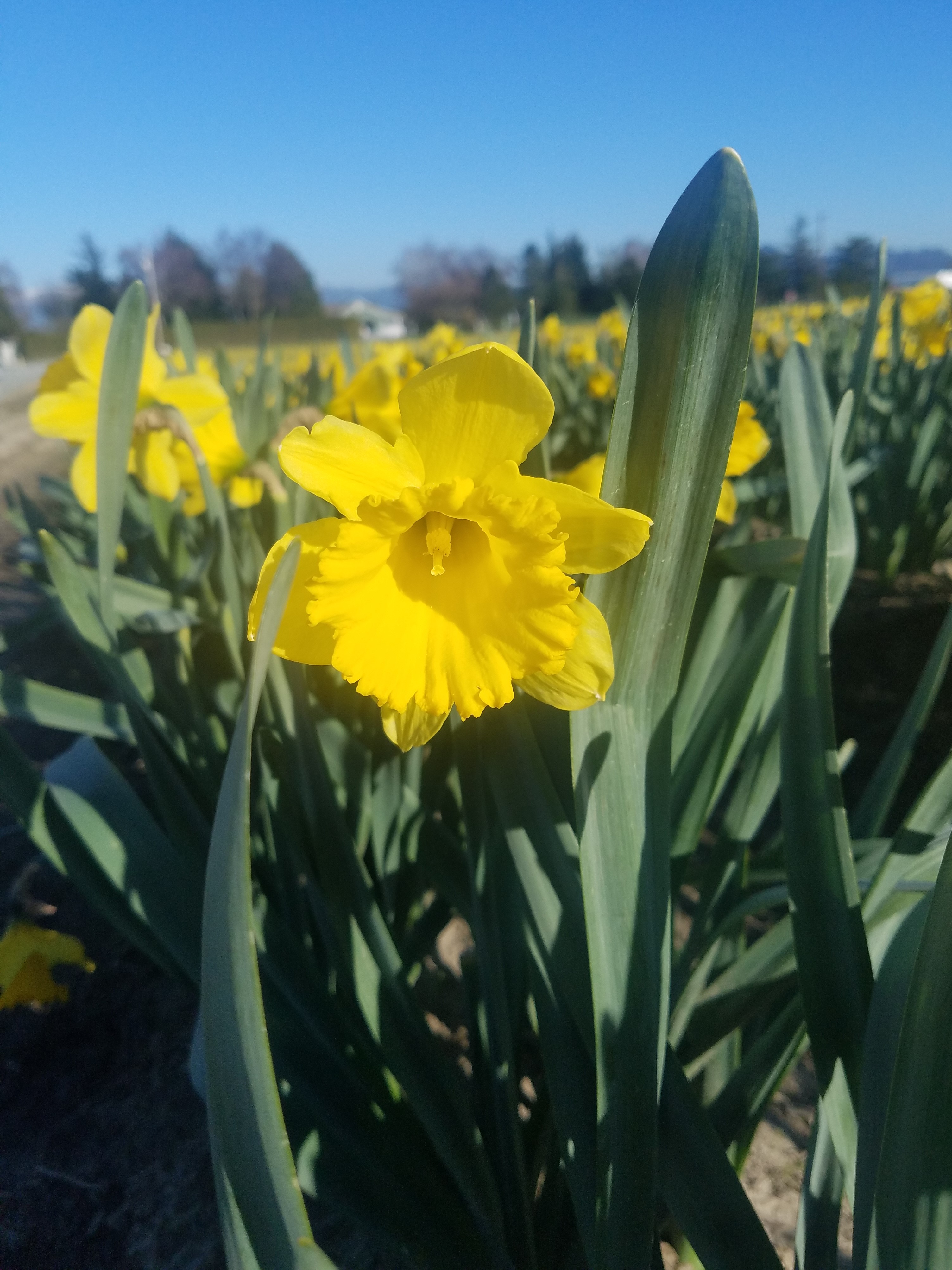 A harbinger of spring, this particular flower is one of the earliest to appear during the first weeks of March.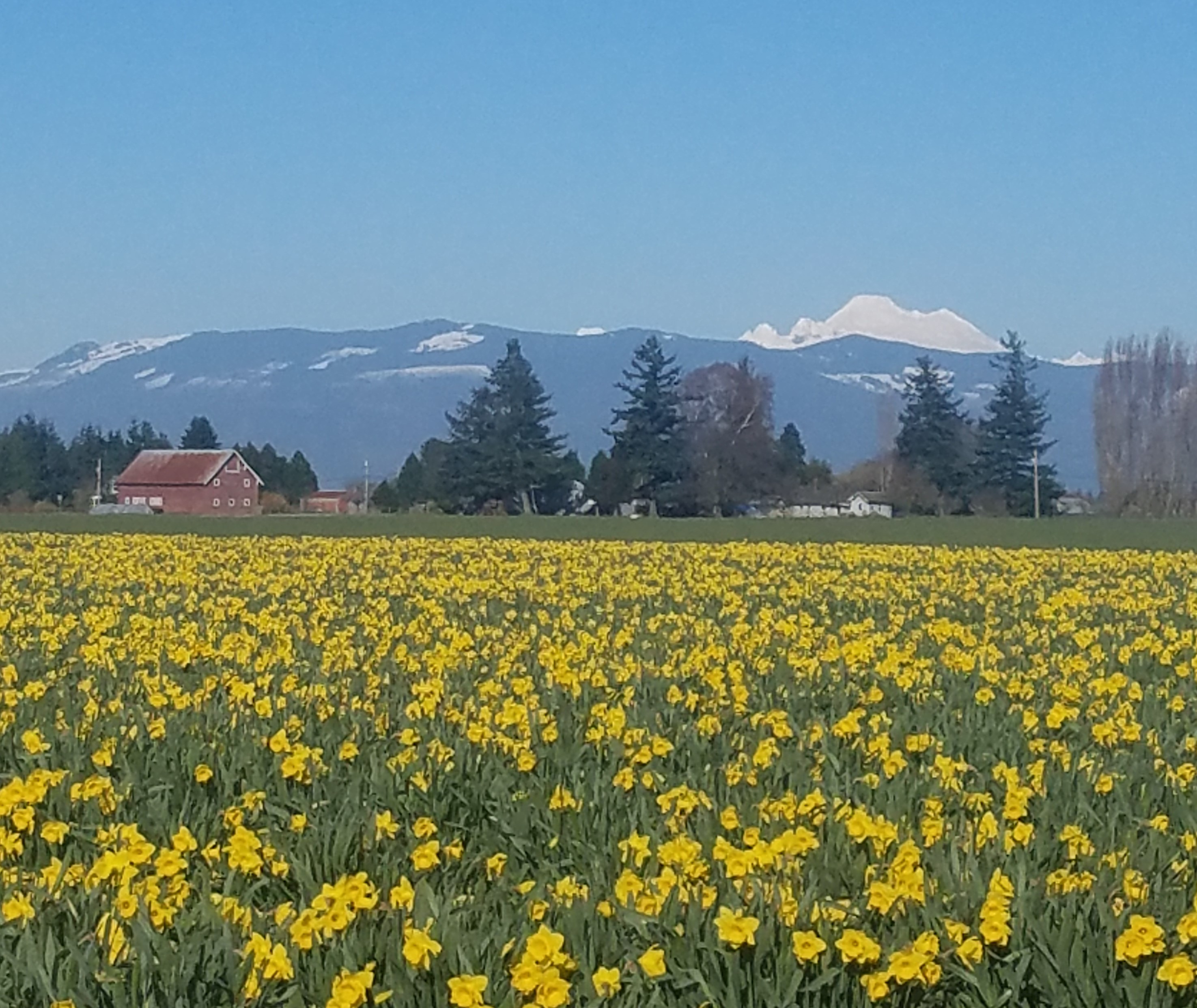
 more so, just that her poetry was prose and appears almost an unconscious imitation of the first section of the Homeric Hymn to Demeter (see Greek culture, above). Among their contemporaries, Keats refers to daffodils among those things capable of bringing ‘joy forever’.”

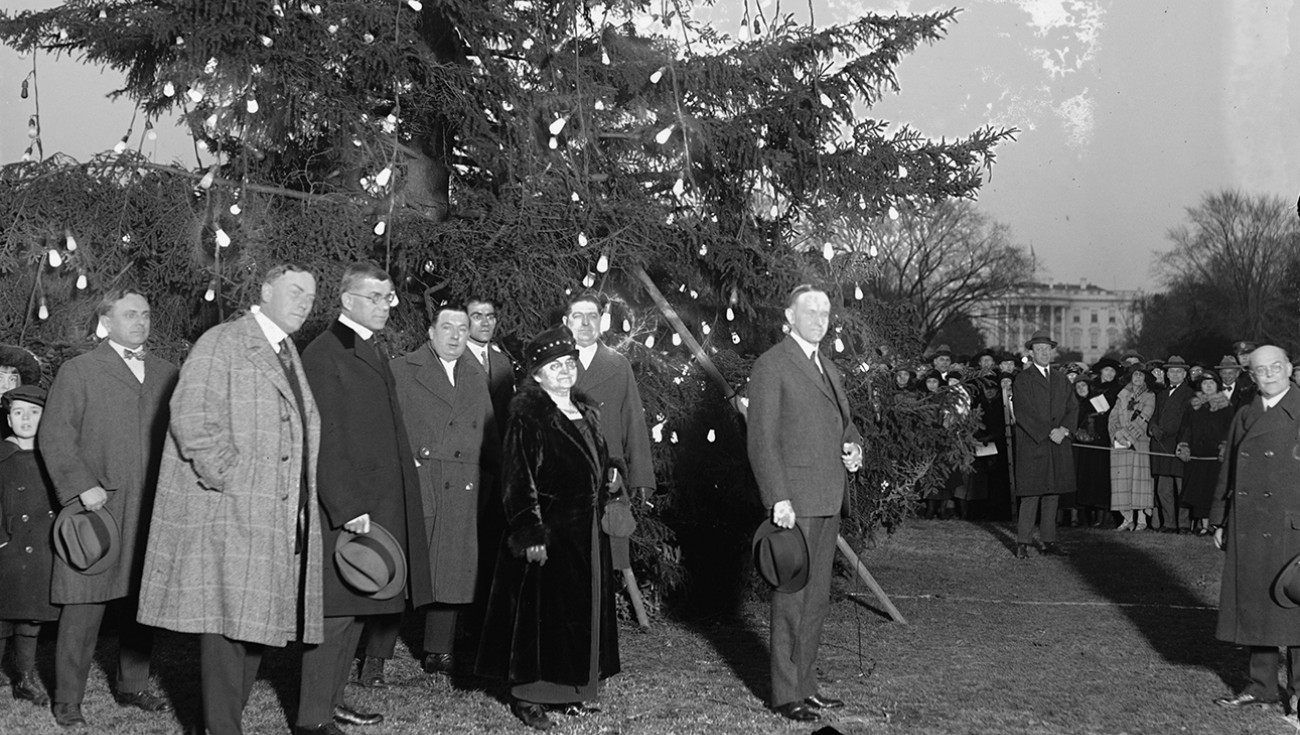
 The following year Coolidge objected to cutting down a tree for the event so a 35 foot tall live Norway Spruce was located and planted in a new location near the Treasury Building. This tree survived until 1929 when it was determined that the plant had been damaged and needed to be replaced. This began a series of live trees being planted, dying, and being replaced until, in 1934, the last tree was cut down in that location.




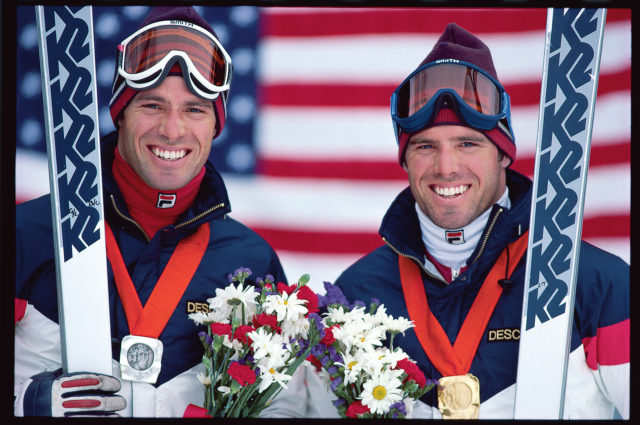 This pair of skiers are, no doubt, the most famous Washingtonians to win Olympic medals. It was on February 19, 1984 when the twin brothers slalomed to gold and silver, being the first siblings to compete and place in the same event.
 The Mahres won two of the five alpine skiing medals taken by Americans, all from the Northwest. Portland’s Bill Johnson (downhill) and Seattle’s Debbie Armstrong also won gold and Christin Cooper of Sun Valley took the silver for an American 1–2 finish in the women’s giant slalom.”
 Her fellow skier asked her if perhaps the black diamond run might be a bit difficult and would she like to try something easier?


 barbaradevore.com