Dog Days and Cat Nights
August 14, 2018
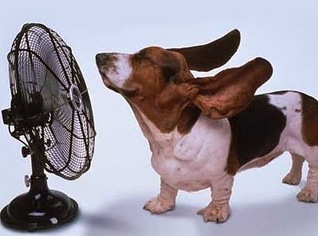 When the heat arrives in July and August each year inevitably someone comments that it is the “Dog Days” of summer. What, exactly, are Dog Days?
It’s actually in reference to the star Sirius which, ancients believed, contributed to the excessive heat beginning in mid-July. Although you can see Sirius – it is the star which is nearest to our solar system – throughout the year, it is in summer when it rises in conjunction with the sun each morning. It is this phenomenon which prompted the term Dog Days. There is some debate as to when Dog Days occur and it depends on who you ask.
From the Infallible Wikipedia:
“Various computations of the dog days have placed their start anywhere from 3 July to 15 August and lasting for anywhere from 30 to 61 days. They may begin or end with the cosmical or heliacal rising of either Sirius in Canis Majoror Procyon (the “Little Dog Star”) in Canis Minor and vary by latitude, not even being visible throughout much of the Southern Hemisphere. Sirius observes a period of almost exactly 365¼ days between risings, keeping it largely consistent with the Julian but not the Gregorian calendar; nonetheless, its dates occur somewhat later in the year over a span of millennia.
In antiquity, the dog days were usually reckoned from the appearance of Siriusaround 19 July (Julian) to relieving rains and cool winds, although Hesiod seems to have counted the worst of summer as the days leading up to Sirius’s reappearance.
In Anglo-Saxon England, the dog days ran from various dates in mid-July to early or mid-September. Canonical “dog daies” were observed from July 7 to September 5 in the 16th-century English liturgies. They were removed from the prayer books at the restoration of the monarchy in 1660 and their term shortened to the time between July 19 and August 20. During the British adoption of the Gregorian calendar in 1752, they were shifted to July 30 to September 7.
Many modern sources in the English-speaking world move this still earlier, from July 3 to August 11, ending rather than beginning with or centering on the reappearance of Sirius to the night sky.”
The star Sirius is the brightest star in our skies as it is a mere 8.7 light years from Earth. It is best observed in the winter as it is seen quite near the very recognizable constellation Orion. Orion dominates the night sky, appearing on the southern horizon. Sirius can be seen just below and to the left of Orion’s ‘belt’.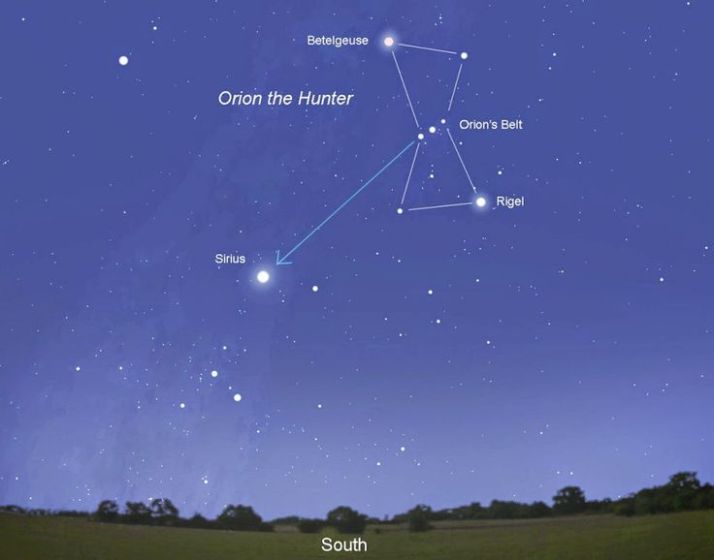
Dog Days are not exclusive to the American experience, however, and on August 16th each year, it is celebrated as follows:
“It is possible that the Roch, the legendary medieval patron saint of dogs celebrated by the Catholic Church on 16 August, owes some of his legacy to the dog days. From the period of his self-proclaimed protectorate over the island, the Danish adventurer Jørgen Jürgensen is remembered in Iceland as Jorgen the Dog-Day King (Icelandic: Jörundur hundadagakonungur).”
I would be remiss if I didn’t also share the legend of Cat Nights. I had never heard of such a celebration until researching for this post. But according to the Old Farmer’s Almanac, they are described thusly:
“The term ‘Cat Nights’ harks back to a rather obscure old Irish legend concerning witches and the belief that a witch could turn herself into a cat eight times, but on the ninth time (August 17), she couldn’t regain her human form. This bit of folklore also gives us the saying, ‘A cat has nine lives.’ Because August is a yowly time for cats, this may have prompted the speculation about witches on the prowl in the first place.”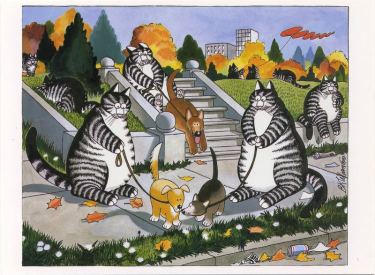
But back to Dog Days. One of my earliest memories is of the very first summer after my family moved to Yakima… must have been late July or August 1962. My mother was insistent that we ‘younger’ children (I turned 5 in 1962) go to bed at 8 p.m. It did not matter that it was still light outside. We went to bed regardless. In the northern hemisphere the sun does not set until well after 9 p.m. that time of year and in Yakima it was closer to 10. We went to bed regardless. And it did not matter that it was uncomfortably hot. We went to bed regardless. It was a few years later when we got air conditioning which finally made the hottest of days bearable.
I vividly recall lying in my bed – which was under a window – and watching the lightweight cotton curtains billowing in the hot wind. Just outside my window I can hear children laughing and playing outside. I thought it was terribly unfair that I had to be in bed, unable to sleep, while the rest of the neighborhood was having fun in our backyard.
I moved away from Yakima in great part to avoid the excessive heat which arrived in mid-July each year and often remained until late August or early September.
Ironically, these past nine years I have found myself back in my hometown to help with my dad (who is now 95).
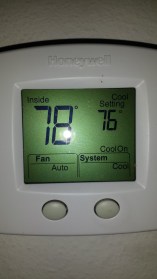 This year and last – as his body fat has diminished – he has a much more difficult time managing his internal temp. He’s frequently cold, even on the very hottest of summer days, and a battle rages over whether the thermostat is set to cooling or heating! Frequently the furnace is running and the indoor temperature is close to 80 degrees. Either my brother (who lives with my dad) or I will switch it to AC only to have dad turn on the furnace. He does this even if the outdoor temp is over 100 degrees. The picture to the left is one I took a few days ago in Yakima, right after switching the thermostat back to cool.
On a recent trip I was lying in bed, trying to go to sleep, and harkened back to 1962… and just like then it was hot and difficult to get comfortable. Of course the reason was because my dad had turned the furnace on!
A couple of links about Dog Days and Cat Nights:
https://en.wikipedia.org/wiki/Dog_days
https://www.almanac.com/fact/cat-nights-begin-the-term-cat-nights-holiday
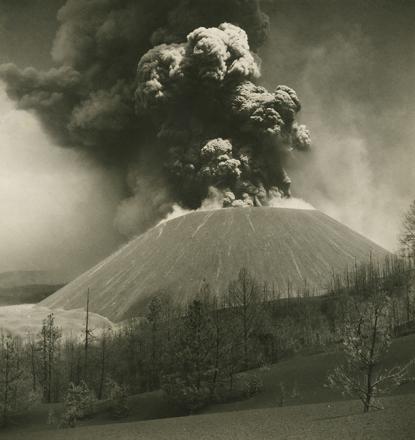 Geologically, nine years is a very short time period. But for farmer Dionisio Pulido of Paricutin, Mexico, the event which began at 4 p.m. on February 20, 1943, forever altered his life.
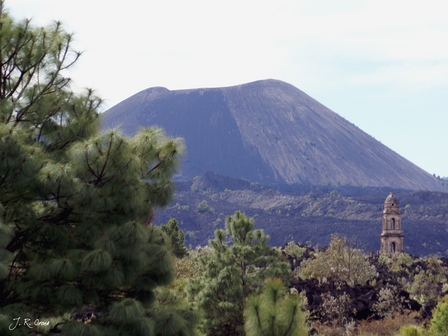 ars. These two wrote detailed descriptions, drew sketches and maps and took samples and thousands of photographs during this time. Many of these are still used today by researchers. Foshag continued to study the volcano until his death in 1956. Between 1943 and 1948, almost fifty scientific articles were published in major journals about the volcano, with even more since. The worldwide effort to study Parícutin increased understanding of volcanism in general but particularly of scoria cone formation.”
 I admit it. I’m a complete nerd when it comes to natural disasters. I’m fascinated by tornadoes and all nature related phenomenon. And while we are mostly able to deal with windstorms, snowstorms and the occasional earthquake here in the Pacific Northwest, it’s impossible to imagine what December 26, 2004 must have been like for the people who experienced a rare mega-thrust earthquake and the devastating tsunami which struck near Sumatra in the Indian Ocean.
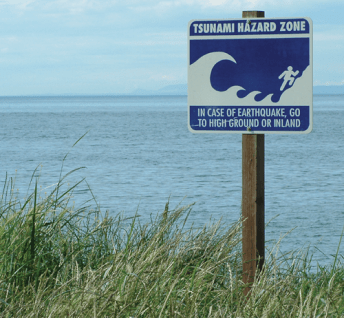 Down at Long Beach, Washington, there are the blue tsunami signs which direct people to routes that would, ostensibly, lead them to higher ground. Recently I saw a program on HGTV where a family was purchasing a vacation home ten miles north in Ocean Park. Personally, I would buy something no more than a mile north of Long Beach; in lesser known Seaview would be better. From that location there is a road which quickly gets you up on top of a rather tall promontory. If, however, one happens to be on the north end of the peninsula when such an earthquake occurs it’s probably best to carry an auto- inflatable rubber boat with you when visiting the coast.
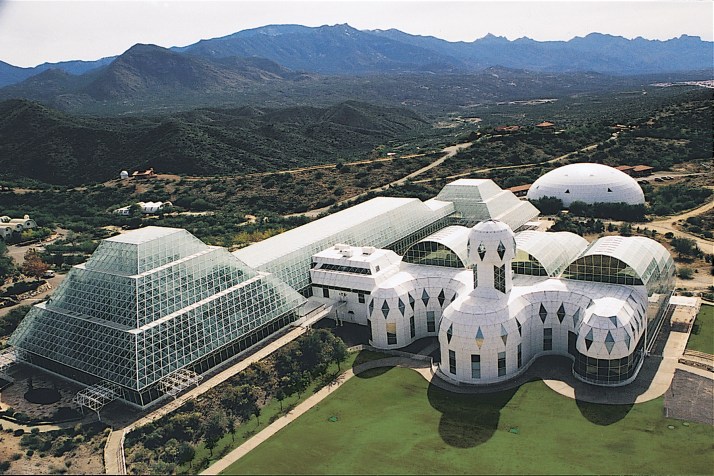 It was the stuff of science fiction when, on September 26, 1991, four women and four men entered the project known as Biosphere 2.
 “Its five biome areas were a 1,900 square meter rainforest, an 850 square meter ocean with a coral reef, a 450 square meter mangrove wetlands, a 1,300 square meter savannah grassland, a 1,400 square meter fog desert, a 2,500 square meter agricultural system, a human habitat, and a below-ground infrastructure. Heating and cooling water circulated through independent piping systems and passive solar input through the glass space frame panels covering most of the facility, and electrical power was supplied into Biosphere 2 from an onsite natural gas energy center.”
 As one can imagine, the project was beset with problems including not enough oxygen, dietary issues and – when one of the biospherians became ill and was removed from the project for a time – if outside intervention was justified. When the first experiment ended on September 26, 1993, plans were already underway for another set of scientists to participate in a second project:
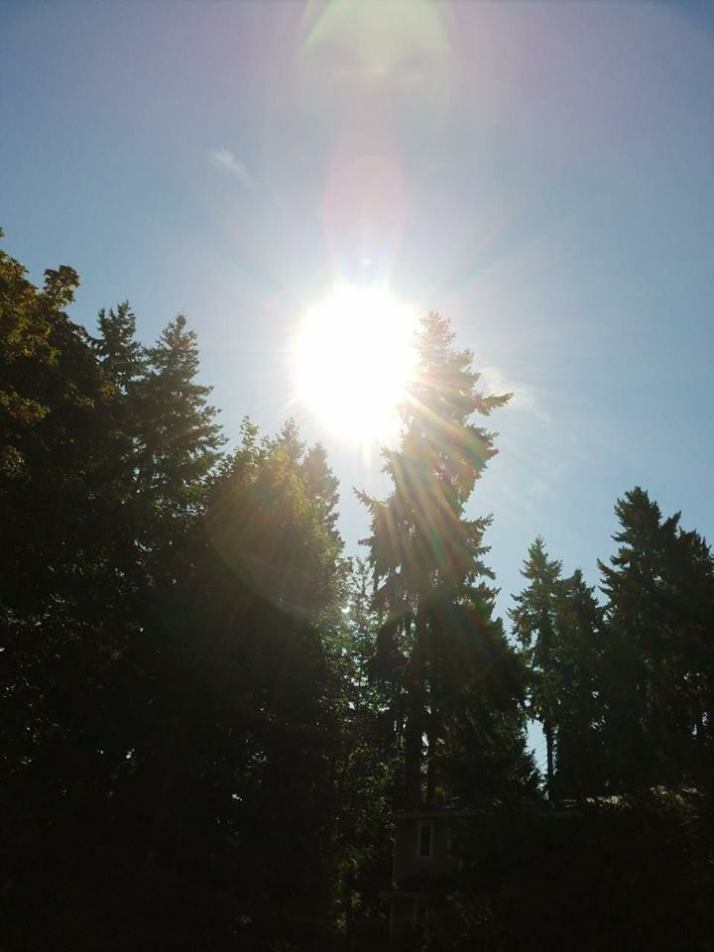 If you happened to miss The Great Solar Eclipse of 2017 on August 21, take heart. Solar eclipses happen once every 18 months or so, on average. And if you want to see one on August 22nd… well, you also missed that opportunity as the last time there was an eclipse on this date was in 1998 and it crossed over the south Pacific.
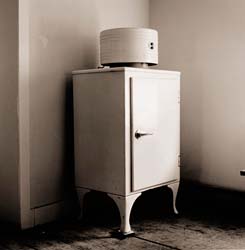 This invention, which was patented on August 8, 1899, ranks right up there with my two most favorite inventions: electricity and flushing toilets.

 you might imagine, gone through some changes over the years. Until 1857 it was composed of one hundred percent copper. The amount of copper was reduced over time in an effort, partially, to keep the amount of copper in it equivalent to the value of the coin. Another reason for less copper was that the metal became a very valuable commodity for the production of weapons.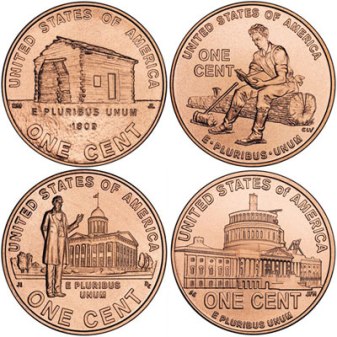
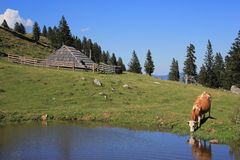 , like some of its calendar counterparts in the fall and winter, is a significant date. Prior to it becoming International Workers Day to honor labor, it was also the date of the ancient celebration of Beltane. This event was one where the women were excited because they could FINALLY get the cows out of the house and drive the beasts to the field. Kind of the equivalent of the mom who tells her kids “Go outside and play!” They followed up this bovine removal by making a huge bonfire and, I would surmise, to burn all the straw that – after many months of being the peasants version of rugs – undoubtedly assaulted the poor woman’s olfactory senses and encouraged the proliferation of vermin.
 A huge outdoor feast was held around the bonfire. We refer to this as ‘camping.’ No doubt the men stood around the fire drinking mead all night and the celebration became rowdier and rowdier. This would, of course, lead to men doing stupid things… like jumping through the fire. From the Infallible Wikipedia:

 barbaradevore.com