Tag Archive | Yakima Washington

Take The Plunge!

The Swimming Pool

July 23, 2019

With the extreme temperatures which have gripped much of the United States the past week, people – especially parents with kids at home – often seek out water as a way to find relief.

It’s appropriate, then, that the first swimming school in the U.S. opened on July 23, 1827, in Boston, Massachusetts. The proprietor, German immigrant Franz Lieber, believed that swimming was a healthy activity necessary to aid a boy’s growth.  Unfortunately, the swimming school failed after two years

public_bath_interior

First public pool in Brookline, Massachusetts

Now I can’t find the reason for this failure except to say that it might have been due to the absence of a heated water holding area where his young charges could safely swim. If those boys were forced to swim in the Charles River, they likely found it somewhat unpleasant. Alas, it was another 60 years before the first public swimming pool opened in nearby Brookline.

Over the years, the swimming pool has become a staple of American life; a desired amenity for traveling Americans and nearly a requirement for suburban homes across the southern half of the nation.

In my research I found some interesting ‘records’ for pools. From the Infallible Wikipedia:

“According to the Guinness World Records, the largest swimming pool in the world is San Alfonso del Mar Seawater pool in Algarrobo, Chile. It is 1,013 m (3,323 ft) long and has an area of 8 ha (20 acres). At its deepest, it is 3.5 m (11 ft) deep. It was completed in December 2006.

The largest indoor wave pool in North America is at the West Edmonton Mall and the largest indoor pool is at the Neutral Buoyancy Lab in the Sonny Carter Training Facility at NASA JSC in Houston.

In 2014, the Y-40 swimming pool at the Hotel Terme Millepini in Padua, Italy became the deepest indoor pool at 42.15 m (138.3 ft), certified by the Guinness Book of World Records. The recreational diving center Nemo 33 near Brussels, Belgium previously held the record (34.5 m (113 ft)) from May 2004 until the Y-40 was completed in June 2014.

Fleishacker pool San Francisco

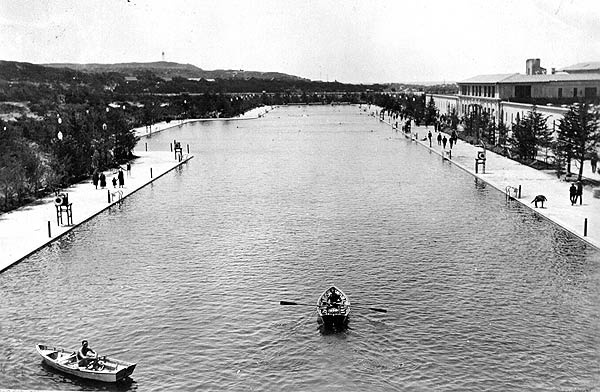
Fleishhacker Pool which was really more of a man made lake complete with boats

The Fleishhacker Pool in San Francisco was the largest heated outdoor swimming pool in the United States. Opened on 23 April 1925, it measured 1,000 by 150 ft (300 by 50 m) and was so large that the lifeguards required kayaks for patrol. It was closed in 1971 due to low patronage.

In Europe, the largest swimming pool opened in 1934 in Elbląg (Poland), providing a water area of 33,500 square metres (361,000 sq ft).

One of the largest swimming pools ever built was reputedly created in Moscow after the Palace of Soviets remained uncompleted. The foundations of the palace were converted into the Moskva Pool open-air swimming pool after the process of de-Stalinisation. However, after the fall of communism, Christ the Saviour Cathedral was re-built on the site between 1995 and 2000; the cathedral had originally been located there.

The highest swimming pool is believed to be in Yangbajain (Tibet, China). This resort is located at 4200 m AMSL and has two indoor swimming pools and one outdoor swimming pool, all filled with water from hot springs.”

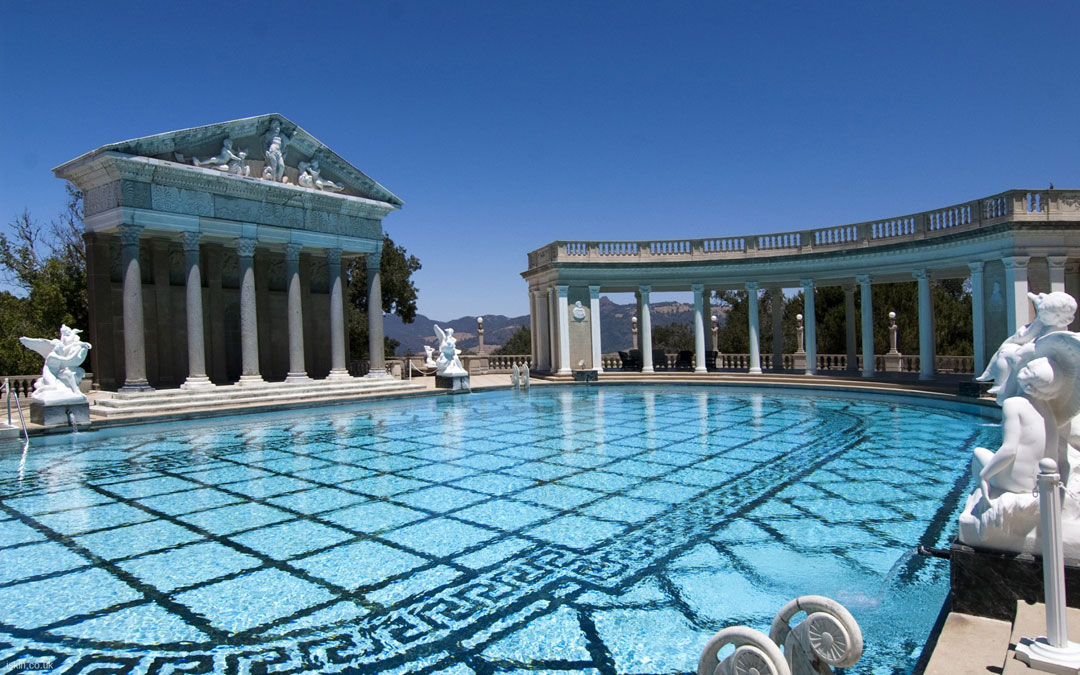
Hearst castle pool

One of the world’s most iconic and beautiful pools located at Hearst Castle in California.

If you want to really indulge in pool envy one needs only to watch the HGTV show “Ultimate Pools” which features beautiful private oases of the rich but not famous.

Having grown up in Yakima, Washington, the hot, dry summers made it a natural spot for pools to proliferate. When my family moved there in the early 1960’s, however, very few families I knew had built in backyard pools. Instead, the first ‘pool’ I recall was about the size of large area rug and constructed of industrial canvas and metal poles. It was no more than 18 inches tall. Once it was filled with icy cold water my sister and I would, on hot days, lay in the shallow water to cool off.

For my 7th birthday a new pool arrived. It was round and about the size of a small bedroom. Its hard plastic walls stood about 3 feet tall and it was definitely an upgrade.  It was during this time, however, that I was introduced to the public swimming pool. The best summer days were those when we got to go down to Franklin Park – about a mile from our house – and pay our 10 cents to swim.

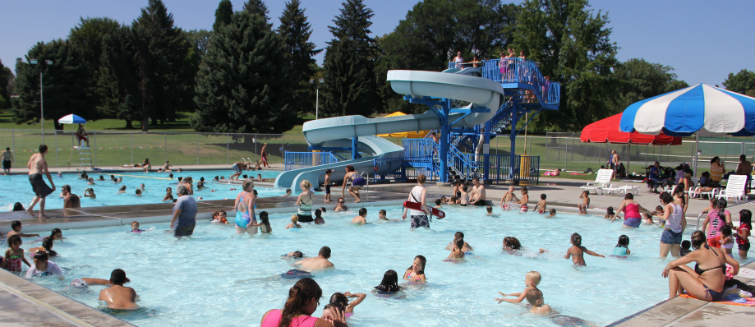
Franklin-pool-1

I was unable to find an historic photo of the death board at Franklin Park. It was located on the other side of the water slide in the original pool. The pool in the foreground was added sometime after 1980.

It seemed as if we were gone all day but I’m pretty certain it was only for a couple of hours. The pool was constructed in an ‘L’ shape with one area being the shallow end and the other being the terrifying end. In the years I went to Franklin pool there was one thing I never did. I never jumped off the high dive board. I can still see that board, suspended over the deep end, beckoning me like the death trap I was certain it must be. Yet other, much braver, young souls would scale the ladder, walk the plank, and then plunge 47 feet to their death.  Okay, so maybe it wasn’t 47 feet. More like fifteen. And to the best of my knowledge no one ever died. But I was not taking any chances. Mostly I got cold after a short time swimming and would go hang out in the locker room with the girl who worked there. I remember her name was Nancy and she was in high school and very kind to this annoying child.

It was in the summer of 1973, however, that things really changed. That was the year my parents decided to put a pool in the backyard of our home. What an exciting summer that was. One morning a crew arrived with backhoes and soon there was a huge hole behind our house. For several weeks we watched the daily progress until one day in late summer the pool was complete and the hoses began to flow.

That pool was the dream of every teenage girl. A diving board was set just above the water so no death defying plunges were required; and it featured a curved water slide that flung the rider into the pool.

Pete demonstrating the water slide September 1973

My brother demonstrating proper use of the water slide. September 1973

As for me, I still got cold far too easily and discovered that the best way to ‘swim’ was with the aid of an air mattress. Hours were spent each of the next several summers floating on my conveyance about the pool, getting in the water when I got too hot, but would soon return to the lazy comfort of my air mattress.

Barb 1973 during pool construction

16 year old me out investigating the pool construction site August 1973. They had to remove a deck at the side of the house to access the yard. (behind me)

Eventually the upkeep of the pool became too much and was one of the factors which prompted our parents to sell the house and move in 1984. What great memories I have of those summers in the 1970’s and the hours spent afloat on that pool. When we are young we often don’t appreciate something so special. Ah, to be 16 again with nary a care in the world and a pool to call my own!

As always a couple of links:

https://en.wikipedia.org/wiki/Swimming_pool

Pool envy:

https://www.hgtv.com/shows/ultimate-pools

History of pools:

https://www.swimmingpool.com/pool-living/pool-history-facts-and-terms/history-pools

…The Mahre Brothers

Olympic Champions with Silver & Gold

February 19, 2019

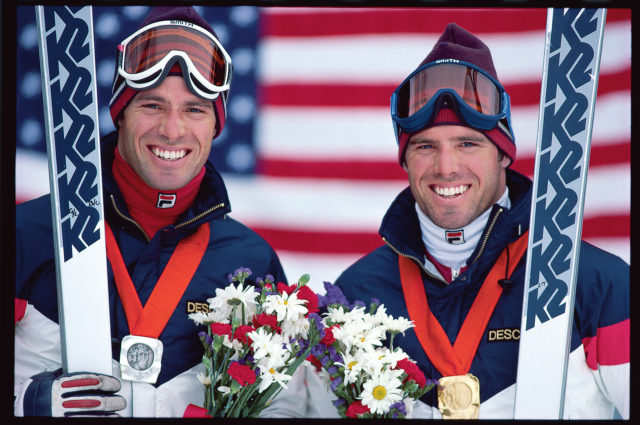
Phil and Steve Mahre. PHOTO: Lori Adamski-PeekThis pair of skiers are, no doubt, the most famous Washingtonians to win Olympic medals. It was on February 19, 1984 when the twin brothers slalomed to gold and silver, being the first siblings to compete and place in the same event.

Phil and Steve Mahre were born on May 10, 1957, in Yakima, Washington.  They grew up at White Pass which, as fate would have it, tends to be buried under snow some six months each year. It was there they learned to ski. And learn they did. Phil – the oldest of the two by four minutes – won 27 World cup races during his career, the fourth highest number for an American.

It was, however, the dramatic competition in Sarajevo which cemented the twin’s legacy and also focused attention on the Pacific Northwest. From the Infallible Wikipedia:

“At the 1984 Winter Olympics in Sarajevo, Mahre again medaled in the slalom, this time taking the gold while Steve won the silver for a Mahre twin 1–2 sweep. Steve had led the first of two runs, skiing flawlessly and building a large half-second lead over Swede Jonas Nilsson with Phil in third place, another two-tenths back. Phil skied a fine second run to grab the lead, then Nilsson skied next and faltered, dropping out of the medals. Steve skied down last, needing only a solid run to take the gold, but a series of mistakes dropped him into second place, and Phil became the Olympic champion. Meanwhile, unknown to the racers, Phil’s wife Holly had given birth to their second child, a son, in Arizona an hour before the race started. Phil did not find out about it until a TV interview after the race.

phil-mahre-vault-slalom-sarajevo-olympics.jpgThe Mahres won two of the five alpine skiing medals taken by Americans, all from the Northwest. Portland’s Bill Johnson (downhill) and Seattle’s Debbie Armstrong also won gold and Christin Cooper of Sun Valley took the silver for an American 1–2 finish in the women’s giant slalom.”

It was probably around 1974 when I first heard about the Mahre brothers. I had friends who went to school in Naches with the brothers. It was fun over the next nine years to follow their career and cheer for them in the Olympics. It was shortly after the 1984 gold-silver win when the brothers retired from competitive skiing, their spot in the history books cemented.

As I was working on this article I was reminded of a story told by a gal who grew up in Wenatchee and learned to ski at Mission Ridge. Rosemary was a few years older than I but we both worked in the telemarketing cube farm for Microsoft in the winter of 1983. She and I covered the west coast, me California and she the Pacific Northwest. What I most recall about her were her stories. It was always fun to listen to her tales of adventure as a single woman. And she was fearless. Despite the many things she had done, her persona was that of an airhead. Personally, I think it was all an act which she used to disarm people.

In the winter of 1983, Rosemary decided to join a Microsoft group that skied together. The ensemble consisted of a half dozen software programmers and her, the lone female. On one particular Monday in late January or February, she came in to work and related to me that she had gone skiing with the guys for the first time. She had ridden the lift to the top with one of the programmers and when they skied off the chair, the pair found themselves at the top of a slope filled with moguls.

the_mogulsHer fellow skier asked her if perhaps the black diamond run might be a bit difficult and would she like to try something easier?
“Oh no. I think I can handle it,” she replied, then said to him “Why don’t you go first.”

Which he did. And barely managed to stay upright as he picked his way down the bumpy slope. What happened next, according to Rosemary’s story, was epic. She adjusted her goggles, took firm control of her ski poles, and flew down the hill, attacking the moguls like a boss.

Her partner, still staring at her open mouthed as she swept up next to him at the bottom, managed to ask, “Where did you learn to ski like that?”

To which she replied “I was on the 1968 Olympic B team.”

Oh yes, there was so much more to Rosemary than met the eye.

Despite having grown up an hour’s drive from White Pass, I did not learn to ski until I was in my mid-20’s. In fact I took my first ski lessons in the early 1980’s. The hubby and I – along with his sister and Mom – spent several days at Whistler during the 1984 Olympics watching the events in Sarajevo in the evenings at a pub, cheering on the Mahre’s  and the rest of the American’s in their quest for gold.

While I never once came close to skiing like either Phil or Steve Mahre or my co-worker Rosemary, I did have an appreciation and awe of what they could do with a pair of boards and a couple of sticks in the snow. I felt an incredible pride when, in February 1984, the twins from little ole Yakima, Washington, won Olympic silver and gold.

As always, a few links of interest:

https://www.seattlepi.com/sports/article/Where-Are-They-Now-Phil-Mahre-1984-Gold-Medalist-1195145.php

https://en.wikipedia.org/wiki/Phil_Mahre

https://en.wikipedia.org/wiki/Alpine_skiing_at_the_1984_Winter_Olympics

Ted Ligety won two gold medals, 8 years apart… his 2014 Medal was also won on February 19! Although Bill Johnson also won gold in 1984, his medal was won on February 15, four days earlier than Phil Mahre.

… Barnum’s Animal Crackers

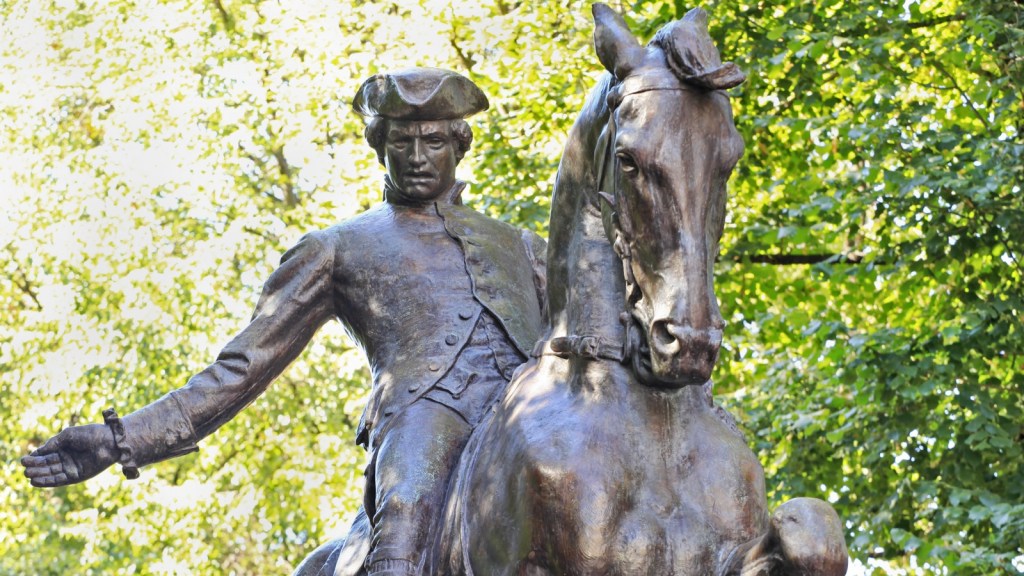
Statue of Paul Revere in Boston

… on the porch

April 18, 2023

This is an update to a Tuesday Newsday Classic from April 18, 2017

April 18th… it conjures up that most famous poem by Longfellow which begins…

“Listen my children and you shall hear
Of the midnight ride of Paul Revere,
On the eighteenth of April, in Seventy-five;
Hardly a man is now alive
Who remembers that famous day and year.”

But that’s not the important topic this week. Nor is our topic the catastrophic earthquake which all but destroyed San Francisco on April 18, 1906.

No, today we honor the Animal Cracker. Yes, April 18 IS “National Animal Cracker Day.”

The crackers were first imported to the United States from England in the late 19th Century. They proved so popular that Stauffer’s Biscuit Company began production in York, Pennsylvania in 1871. It was in 1902 when they became known as ‘Barnum’s Animals’ and were packaged in the circus themed boxes which are so recognizable. Just prior to Christmas that year a string was added to the box so the cookies could be hung on a tree. Now, over 100 years later, the boxes still retain the string but I doubt many know why there is a string!

Some other interesting facts from the Infallible Wikipedia:

animal crackers“Barnum’s Animals Crackers are all produced in the Fair Lawn, New Jersey, bakery by Nabisco Brands. More than 40 million packages of Barnum’s Animals Crackers are sold each year, both in the United States and exported to 17 countries worldwide. The cookies are baked in a 300-foot (91 m)-long traveling band oven. They are in the oven for about four minutes and are baked at the rate of 12,000 per minute. About 15,000 cartons and 330,000 cookies are produced in a single shift, using some 30 miles of string on the packages. This runs to nearly 8,000 miles (13,000 km) of string a year. Those bright circus boxes are produced in three colors – red, blue, and yellow – with different variety of animals on each.”

I know all of you would be disappointed if I didn’t share some personal anecdote which relates to our topic. So with apologies to Longfellow, here it goes:

Listen my readers and you shall hear
of the midnight antics from Senior year…
It cost but a quarter for of box of treats,
Yes Animal Crackers for boys that were neat.
Up to the front porch of our desire’s house
My friend Snide and I always sly as a mouse.
A poem attached to each as a clue
Just “who,” it asked, “left these cookies for you?”
The unlucky ones found bushes and trees
Draped with rolls and rolls of contraband TP
Animal Crackers, though, were more easily bought,
Since, heaven forbid, we didn’t want to get caught.

The animal crackers caper was a one year thing for me. The summer before senior year I had been dating a guy, but he had gone away to college in September of 1974. There were some letters exchanged, but it became obvious that the relationship was all but over. So, along with a few select friends, we had lots of free time on Friday and Saturday nights, especially since we were not the party hardy kind of girls.

There was this one guy from choir that I was maybe, sorta interested in. But I doubt he knew I existed.

To be sure, I’m not sure exactly how the whole animal crackers thing started. What I do know is that Toilet Papering houses was all the rage in the 1970’s but it was also a messy thing AND you were likely to get caught. There was another challenge in that local stores would not sell large quantities of it to teenagers, so obtaining it was problematic. Did I mention getting caught was not on my list of good ideas? Did I mention that I DID get caught once which was motivation to not have it happen again?

So instead of TP, we found the boxes of Animal Crackers at the 7-11 on 16th and Summitview Avenues in Yakima. We would then write out the poems on paper and tape them to the boxes. Finally, under cover of dark, we would drive to the street where the guy we liked lived, park a half a block away, and then sneak up to the porch to leave the cookies. We did NOT ring the doorbells or make any noise whatsoever. 

To this day I have no idea if these guys ever figured out who left the boxes. That’s not entirely true. In the spring of my senior year, having never gotten any traction with Choir Guy #1, I left cookies one night for a new one – Choir Guy #2 – who I had actually gotten to know during practice for the annual musical. I’m pretty sure HE knew who left the cookies. We ended up dating for two years. So apparently the great Animal Crackers caper worked at least once. And all for a quarter and a little creativity

For those who want to know more about these tasty treats I direct you to: https://en.wikipedia.org/wiki/Animal_cracker

Eisenhower High School’s Football coach lived just up the street from us… and was frequently adorned with TP from loving students. Photo of his house from the 1972 Reveille Year Book.

It’s A Hullabaloo!

April 11, 2023

Hullabaloo

This is an update to a Classic Tuesday Newsday from April 11, 2017

Last week I shared the amazing feat of the Beatles and their five songs at number one through five on April 4, 1964. Well this week we are going to go forward two years to April 11, 1966. It was on this date that the last episode of the TV program ‘Hullabaloo’ aired. What? You’ve never heard of Hullabaloo? Neither had I but here’s what I learned from the always Infallible Wikipedia:

“Hullabaloo was an American musical variety series that ran on NBC from January 12, 1965, through April 11, 1966 (with repeats to August 1966). Similar to ABC’s Shindig! and in contrast to American Bandstand, it aired in prime time.

Directed by Steve Binder, who went on to direct Elvis Presley’s 1968 ‘comeback’ special, Hullabaloo served as a big-budget, quality showcase for the leading pop acts of the day, and was also competition for another like-minded television showcase, ABC’s Shindig! A different host presided each week—among these were Sammy Davis, Jr., Jerry Lewis, Gary Lewis, Petula Clark, Paul Anka, Liza Minnelli, Jack Jones, David McCallum and Frankie Avalon—singing a couple of his or her own hits and introducing the different acts. Chart-topping acts who performed on the show included Simon and Garfunkel, the Mamas & the Papas, Dionne Warwick, Gary Lewis and the Playboys, the Lovin’ Spoonful, the Rolling Stones, the Yardbirds, Sonny & Cher, the Supremes, Herman’s Hermits, Frankie Valli and the Four Seasons, the Animals, Roy Orbison and Marianne Faithfull.”

I can guaran-darn-tee that my mother would have had that TV off in a heartbeat if this program came on. Of course my mother also banned us kids from seeing Gunsmoke and the Monkees (which, ironically, was the show that took over the time slot vacated by Hullabaloo).

My mother’s philosophy was that impressionable young minds needed to be protected from such decadence. Dancing like this, as a friend of mine commented recently, was not tolerated in the early 1960’s. And those who did dance in such ways must have been ‘those kind of girls.’ In some ways my mother was a feminist in that she objected to women being judged upon their looks and their bodies and certainly would have found this display quite inappropriate. By today’s standards, this compilation is rather tame.

Which got me to thinking about my own experience with dancing. Up until I joined the Rainbow Girls in 1971, I had maybe only ever been to one ‘dance’ – which would have been at Wilson Junior High School. Now, to call it a dance was really a misnomer. More like an excuse for the young teenagers to hang out in the cafeteria after school with the girls clustered on one side of the room and the boys on the other while loud music played. Occasionally some boy would cross the invisible line, a warrior marching bravely to battle, and ask a girl to dance. Mostly, however, the boys remained on their side and the girls on theirs.

But, back to the Rainbow Girls. Our group, called an Assembly, boasted over 70 members in the 1970’s and once every four months a new set of officers would be installed. This was, of course, cause for a celebration and the party afterwards was crowded and ALWAYS included a dance which featured, for several years, a live local band.

Unlike that first Junior High experience, people actually danced at these things! Well, at least the older girls seemed to while us younger ones hung out in a group we dubbed ‘The Wallflowers.’ But that was, not apparently, entirely accurate as my diary from May 29, 1971, chronicles my first Rainbow dance ever:

“…the best part (of the installation) was the dance. A.L. asked me to dance a fast dance which wasn’t that fun. Well we (who ‘we’ is I have no idea) were talking to ‘Becky’ and she decided to get somebody to ask one of five girls to dance. Well, BB asked ‘Sally’ and his friend asked me.”

I go on to write that the particular song turned out to be a slow one. And there was nothing WORSE than slow dancing with some guy you had never met. The whole experience apparently left my stomach in knots.

Okay, so maybe there was something worse. And that would have been the time I was dancing with a guy – initials of DW – who I had a bit of crush on. It was a slow dance which, when you have a bit of a crush on a guy, is a good thing. A slow dance, in the 1970’s, often meant that you had your arms around each other, eyes closed, and were swaying together to the music. All very romantic. That is until the moment when someone taps you on the nose.

That someone turned out to be my Dad who happened to waltz (literally) by with my Mom since they were chaperones! Talk about embarrassing. That event is etched in my memory. My parents are both laughing as they continue waltzing past. I was mortified but I think “DW” thought it was funny.

There were many, many more dances over the years which followed but there was something special about those first few. It was definitely a Hullabaloo!


What dances in the 1970’s looked like for teenagers. From the 1974 tolo dance as pictured in the Eisenhower HS Reveille yearbook.

Streaking!

They Call Him The Streak

March 28, 2023

Ray-Stevens-The-Streak-1974.jpgA cultural phenomenon swept through the United States in the spring of 1974, exposing the public to, uh, ‘things’ never before seen. I’m talking, of course, about ‘streaking.’

On March 28 of that year, one of the writers for the Tonight Show stripped down and streaked on air much to the surprise of host Johnny Carson.

http://www.washingtonexaminer.com/crime-history-streaker-flashes-tonight-show-host-johnny-carson/article/412541

This was not the first or the last incident and it may have been connected to the release
the previous day (March 27) of Ray Steven’s hit record “The Streak.” The song reached number one on the charts in May 1974 and remained there for three weeks.

Twickenham_Streaker

Famous photo of the ‘Twickenham Streaker’ from April 20, 1974

Streaking took place at the Academy Awards, on college campuses, and at sporting events for several months. The record for simultaneous streaking was set at the University of Georgia when 1,543 students disrobed on March 7, 1974. By summer, however, the novelty was gone and streaking ran off into pop culture history.

Of course The Infallible Wikipedia has laid itself, um, bare, in sharing information:

“The high point of streaking’s pop culture significance was in 1974, when thousands of streaks took place around the world. A wide range of novelty products were produced to cash in on the fad, from buttons and patches to a wristwatch featuring a streaking Richard Nixon, in pink underwear that said ‘too shy to streak.’

Perhaps the most widely seen streaker in history was 34-year-old Robert Opel, who streaked across the stage of The Dorothy Chandler Pavilion in Los Angeles flashing a peace sign on national US television at the 46th Academy Awards in 1974. Bemused host David Niven quipped, ‘Isn’t it fascinating to think that probably the only laugh that man will ever get in his life is by stripping off and showing his shortcomings?’ Later, evidence arose suggesting that Opel’s appearance was facilitated as a publicity stunt by the show’s producer Jack Haley Jr. Robert Metzler, the show’s business manager, believed that the incident had been planned in some way; during the dress rehearsal Niven had asked Metzler’s wife to borrow a pen so he could write down the famous line, which was thus not the ad-lib it appeared to be.”

Of course, Ray Steven’s song lives on as a reminder of far more fun and innocent times in the spring of 1974. Here’s the YouTube video for all to enjoy!


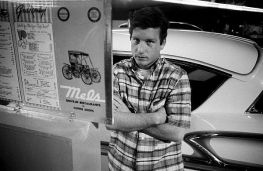
Eisenhower Senior High School in Yakima – where I was a student at the time – was not immune from the phenomenon. I have a distinct memory of the school being all abuzz with talk that Mel C. had streaked during PE class! Mel was quite the character and of all the students in the school, he was absolutely the one to buck convention and go buck naked.

I knew Mel because, like me, he was on the Reveille staff. Between Mort, the editor in chief, the assistant editor, Dick, and Mel, the copy editor, yearbook class was never boring. Like the time Dick climbed out of one of the second floor windows onto a flat roof adjacent to the room, taking a desk and chair with him, and then sitting outside at the desk. It was Mel who locked him out there. The sarcastic wit and barbs never ceased with that trio.

Our adviser, Mrs. Scholl, seemed to enjoy the guys’ shenanigans and they never got in trouble. But in looking at the annual, not a single photo or reference exists to chronicle the day Mel C. streaked at Eisenhower High School in the spring of 1974. Either the event was a bridge too far for the administration or, since not everyone carried cameras with them all the time, it was not chronicled. What a loss. I think every student there wanted to see that.

https://en.wikipedia.org/wiki/Streaking

Most of the 1974 yearbook staff. Mel C., Ike’s first, and likely only, Streaker is in the cowboy hat. Mrs. Scholl, our adviser, is the woman with the bun hairdo. To the left of her is Mort, right behind her is Dick W. This author is at the left side of the photo, sitting behind the gal with the plaid pants.

This article is a reprint of one which was published six years ago on March 28, 2017. The story from my high school days has been expanded.