One of the joys of being an author is in the inventing of fictional worlds in real places. When I started thinking about this story this is what went through my head:
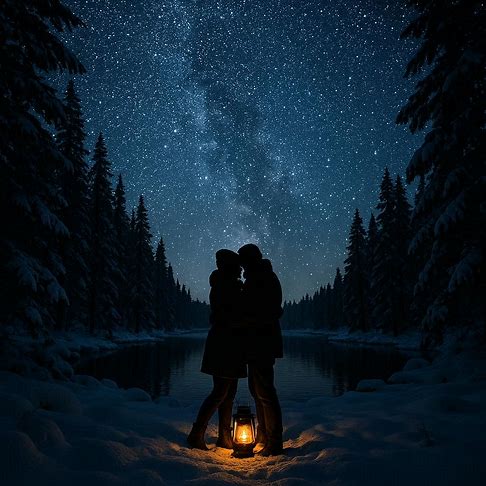
Nicole’s journey took her into the mountains of Montana on the winter solstice.
“What If?” I mused, a young man wanted to break out on his own and move to a place where he knew no one and just started his life over? I know! He answers an ad in a magazine and a few months later he’s living in the boondocks of Montana or Idaho or some other remote western state.
Oh yeah, he also needs to have a tie in to The Darling of Delta Rho Chi, since it needs to be part of series. Sam Paxton is the obvious choice. A young man living in the shadow of his older half-sister, Riley, who we met in book one.
Next, I needed a heroine; a heroine suffering from a calamitous event … who has a very good reason to drive all the way from the Gamma Alpha Beta house at the University of Washington to the boondocks of, er, someplace. Let’s call her Nicole.
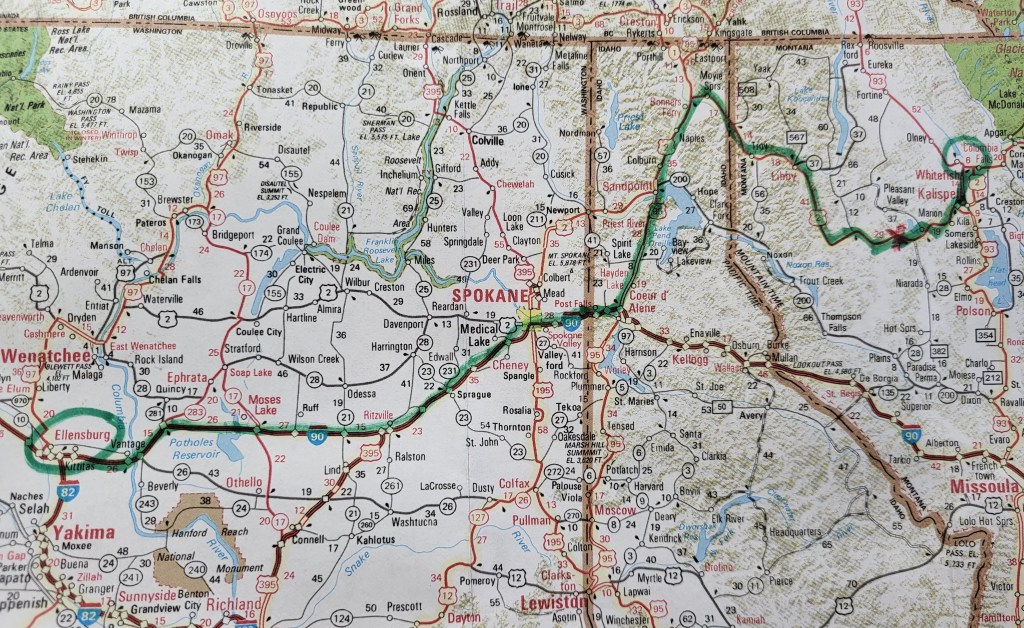
Nicole’s intended journey that fateful December day from Ellensburg to Big Mountain. She ends up stranded at the red ‘X.’
Out came the maps. Being that the story is set in December and during Christmas break, Nicole needed a hometown someplace in Washington. I picked Ellensburg. It’s a nice town and one I was familiar with, having grown up in nearby Yakima. From there she could travel eastward to the mystery destination. What about Sun Valley, Idaho? I soon learned it was over 500 miles and 8 plus hours of travel from the heroine’s hometown. Plus, I knew Nicole’s parents would NEVER agree to that trip.
I Googled ski resorts in Montana and up popped quite a few. Red Lodge was 716 miles east of Ellensburg and Big Sky was 604. Whitefish, at 425 miles, seemed just far enough to make it difficult for Nicole to get home but still had the elements needed to make it work.
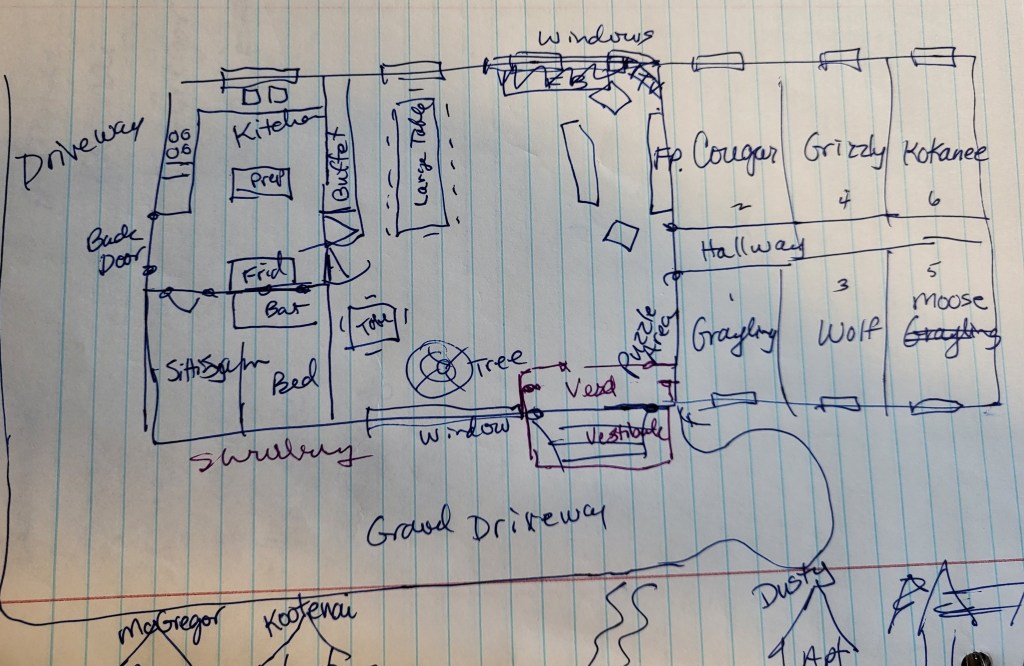
When I was 12 years old I became obsessed with designing the layout of houses. I used graph paper and would spend hours drawing them. This is my rough layout of the fictional Malloy’s Lakeside Lodge.
As the story took shape, more research was needed. Like knowing the specific weather on specific days. What was the layout of the lodge? Where could that lodge be located? What was the floor plan of Nicole’s family home?
All those details are, to me, part of the fun of story creation and I hope that you, my readers, will enjoy being immersed in the fictional world of Sam, Nicole, Dusty, and Beej! – Barbara DeVore
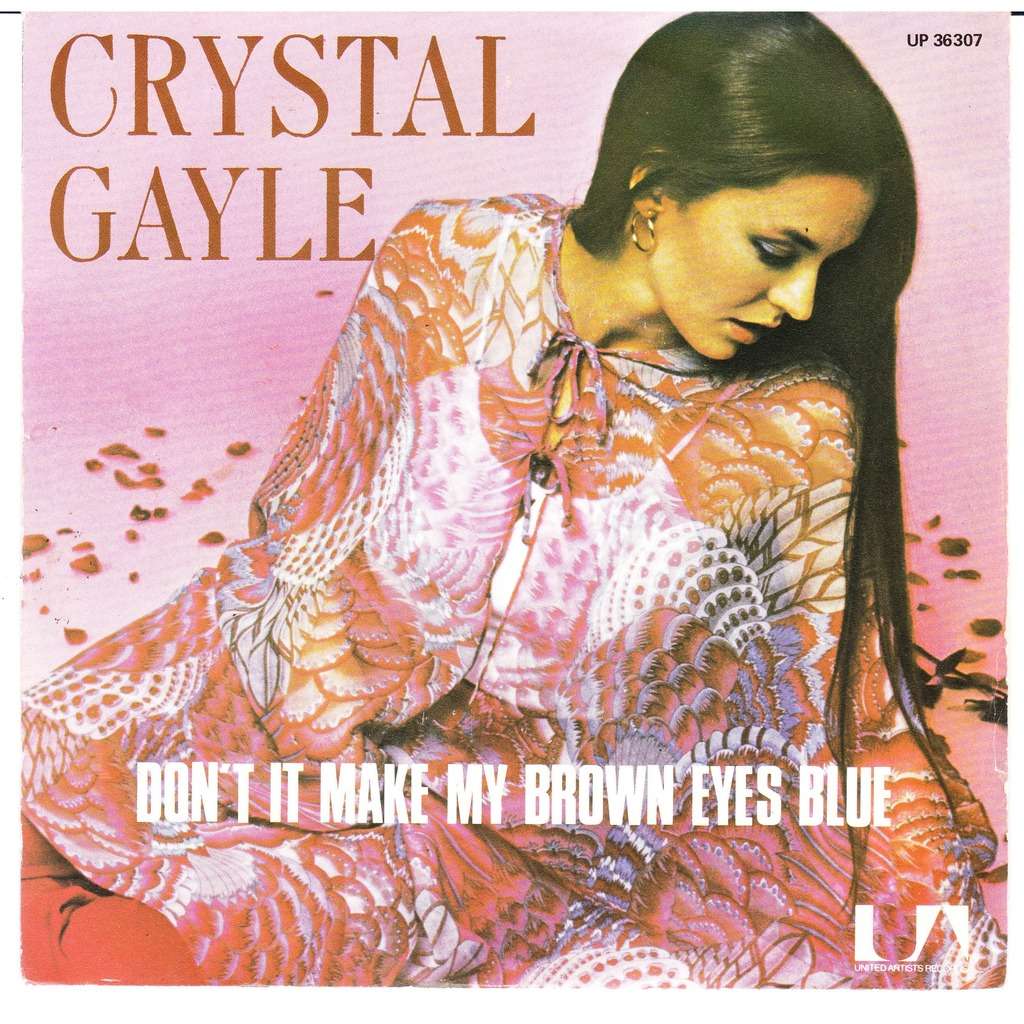
This song, released in June 1977, was one of those rare pieces which successfully crossed over from country to pop. It was number one on the country chart for five weeks in the summer of 1977 and peaked at number two on the Billboard Hot 100 chart in late November 1977. It was kept from the top position by Debby Boone’s You Light Up My Life (YLUML). As I wrote in my blog about that song, there were any number of infinitely better songs during the number one run of YLUML, including this one. https://barbaradevore.com/2024/11/19/you-light-up-my-life-2/
Don’t It Make My Brown Eyes Blue catapulted artist Crystal Gale into stardom and she had a series of commercially successful songs which followed.
The Infallible Wikipedia shares:
“In 1975, ‘Wrong Road Again’ became Gayle’s first major hit. However, it was in 1977 when Gayle achieved her biggest success with ‘Don’t It Make My Brown Eyes Blue’. The single topped the Billboard country chart, crossed over to the top five of the Billboard Hot 100 and became a major international hit.
Gayle continued having success from the late 1970s and through late 1980s. Her biggest hits included ‘Ready for the Times to Get Better’ (1977), ‘Talking in Your Sleep’ (1978), ‘Half the Way’ (1979) and ‘You and I’ (1982).”
Don’t It Make My Brown Eyes Blue is one of those songs which has gained in popularity and critical acclaim over time. Also from the Infallible Wikipedia:
“The song became Gayle’s signature piece throughout her career. In 1978, the song won Gayle a Grammy Award for Best Female Country Vocal Performance. In 1999, the song was recognized by ASCAP as one of the ten most-performed songs of the 20th century. (snip)
In 2024, Rolling Stone ranked the song at #109 on its 200 Greatest Country Songs of All Time ranking.”
I had not intended to feature this as today’s Tuesday Newsday topic. But sometimes things just sort of take a serendipitous route. Yesterday, while on our way to Seattle, the hubby, my son, and me were driving south on I-5 from Mount Vernon and my son – who has been visiting for the past week – commented about the low cloud ceiling and gray skies and how, since it was the first full day of summer, shouldn’t be happening. I think he’s forgotten what it’s like here since he lives in Guadalajara, Mexico, and he’s acclimated to the sunny and hot climate.
Being that it was June 22 and one of the longest days of the year, one might think it should be sunny and bright. But nope. Over the weekend we got a ‘welcome to summer’ soaking from Mother Nature.
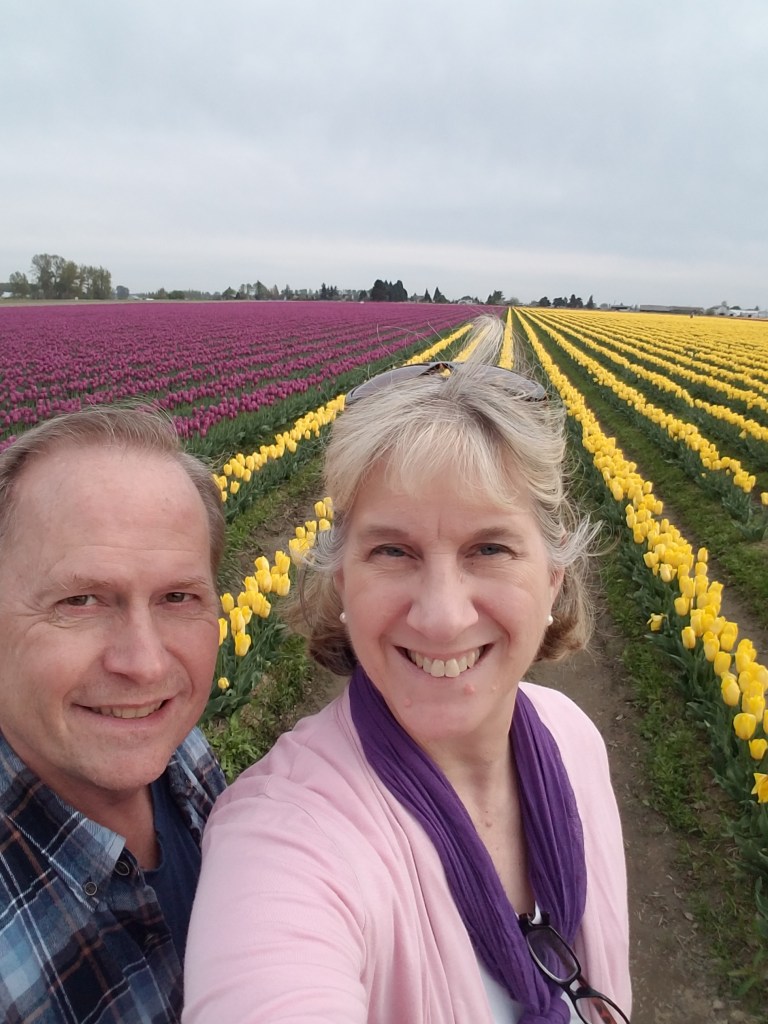
As we approach the Stillaguamish River, the cloud cover has now lifted and is several hundred feet higher. Of course I do what any self-respecting, blue-eyed, Western Washingtonian would do, I put on my sunglasses.
Just like my hubby and son did. Or not. Why? Because they do not have blue eyes.
Of course, that sends me down the rabbit hole of mental gymnastics and I start thinking about blue eyes vs. brown eyes and that then led me to start humming today’s featured song. See how easy that was?
But back to the brown vs. blue eyes and the problem blue eyed people have: light sensitivity.
According to Health.com:
“Several studies have found that people with light-colored eyes are more sensitive to the effects of light than people with dark-colored eyes. Researchers speculate this may be due to lower amounts of melanin (pigment) in light-colored eyes. Less melanin in the eyes may increase their susceptibility to the negative effects of sun and light exposure.”
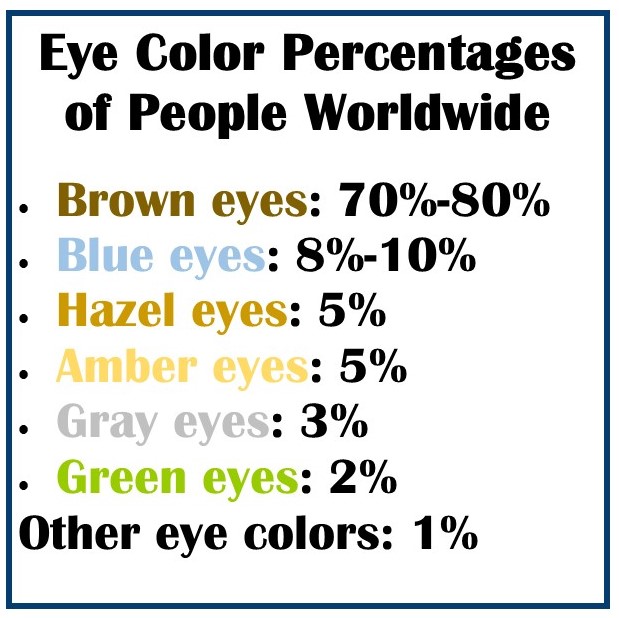
My son has teased me over the years about being a ‘blue-eyed freak.’ He’s not totally wrong. People with blue eyes make up only 8 to 10 percent of the human population as shown in the chart to the right:
Those of us who have blue eyes can trace the majority of our ancestry to northern European and Scandinavian countries. Finland, according to one report I saw, leads the world with a whopping 89 percent of its population boasting blue eyes.
I took a peek at my DNA results and learned that of the top 10 countries with the highest percentage of people with blue eyes, I match to seven of those countries – which makes up 93 percent of my DNA – including Finland with 13 percent of the total.
But back to the light problem. From the time I was a little girl, bright lights have always made me squint or even close my eyes. Bright lights when my eyes have adjusted to the darkness are just downright painful.
The hubby calls me a ‘darkie’ because I often move about the house without turning on lights. The way our lower level is set up is that we have a closet across from the bathroom near our bedroom. That closet has a motion-detecting light that is designed to turn on when one enters the closet. But sometimes, if you fly too close to the sun – er, opening – it will spring to life, flooding the area with blinding light. Okay, maybe that’s a bit hyperbolic.
Eventually we got a reasonable photo… notice the hubby is unfazed by the light.
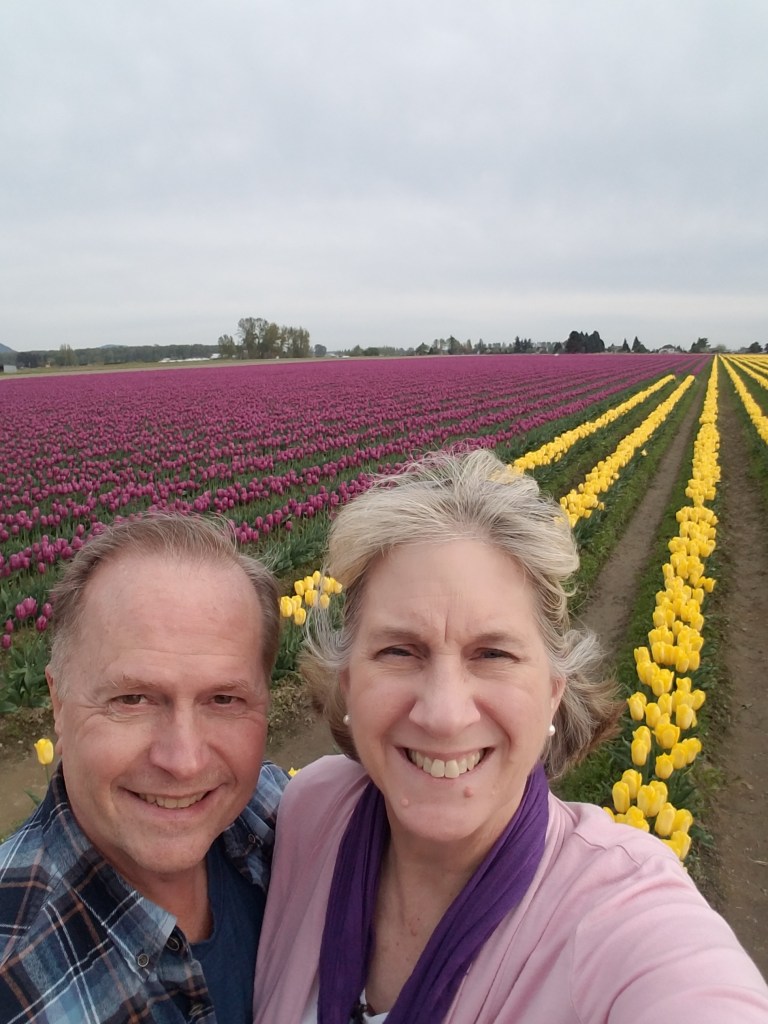
It took several attempts to get photos that day due to my inability to keep from painful squinting…
But I have learned to be very, very careful how I walk past that doorway when I get up in the mornings so as to not trigger the light and cause painful, but temporary, blindness. I keep as close to the wall opposite as possible and slow my gait as I float past, nearly a ghost in the predawn dark.
It’s either that or wear sunglasses at night. But that’s a whole different song for another Tuesday Newsday.
So, I think my mantra, rather than “Don’t It Make My Brown Eye’s Blue” is really, “Don’t it Make my Blue Eyes Squint.” Somehow that’s not nearly as catchy as Crystal Gayle’s 1977 hit song.
I suppose that this Tuesday Newsday topic falls in the category of ‘Geeky Musings’ as I doubt this product, which was patented in 1955, is ever given much – if any – thought for most people. It was on May 13, 1958, when the term ‘Velcro’ was trademarked by its inventor.
Inspired by burrs which clung to his dog, the inventor spent over a decade in search of how to replicate one of nature’s stickiest plants. The Infallible Wikipedia tells us:
“The original hook-and-loop fastener was conceived in 1941 by Swiss engineer George de Mestral, which he named velcro. The idea came to him one day after he returned from a hunting trip with his dog in the Alps. He took a close look at the burs of burdock that kept sticking to his clothes and his dog’s fur. He examined them under a microscope, and noted their hundreds of hooks that caught on anything with a loop, such as clothing, animal fur, or hair.”
What followed was a period of trial and error as he sought to make his tiny hook and eye concept a reality. Also from the Infallible Wikipedia:
“The fastener consisted of two components: a lineal fabric strip with tiny hooks that could ‘mate’ with another fabric strip with smaller loops, attaching temporarily, until pulled apart. Initially made of cotton, which proved impractical, the fastener was eventually constructed with nylon and polyester.
Up close and personal with velcro
De Mestral gave the name Velcro, a portmanteau of the French words velours (‘velvet’) and crochet (‘hook’), to his invention, as well as to the Swiss company he founded; Velcro SA.”
At first, the applications for Velcro were astronauts space suits and then for ski clothing. For me, however, Velcro really came into its own when it was incorporated into children’s shoes and clothing. It was, for mothers everywhere, a game changer.
When I was a child there was no greater accomplishment than learning how to tie my shoe laces, or being able to buckle my shoe strap, somewhere around age 4 or 5. My mother mostly put me in slip on tennis shoes, thus avoiding the tedious task of tying and then re-tying the laces of shoes on small children.
Even small girls can enjoy Adidas shoes with velcro fasteners
As I was contemplating Velcro, I could not recall any exact moment or time when it came into my conscious, although it was probably when my children were babies. While the first shoes my son had when he started to walk did have laces, my daughters footwear featured a hook and loop fastener. At some point both my children learned to tie their laces but nowadays I do wonder if that is a skill which has been lost with the proliferation of Velcro fastened shoes.
David Letterman attached to a wall with the aid of Velcro.
The first shoes I recall having Velcro were a pair of black Skechers in a ‘Mary Jane’ style. Instead of a buckle on the narrow strap, it was secured with Velcro. Which worked fine for a time, but eventually it started to fail as the Velcro lost its stickiness. The technology from those early 2000’s pair of shoes to now has been greatly improved. I easily have a half dozen pairs of sandals, particularly, which all have Velcro straps and none have the failure problem like those early Skechers.
Of course, Velcro is not just for shoes. As I look around my house I find it in a variety of applications. Like the narrow strips I have in my office to control unruly cords. Or the ones which hold our Good-To-Go pass to the windshield of our vehicle. There’s Velcro on the pockets of bags and cases which I use daily. I have a Ziplock bag full of hook and loop fasteners in various colors and sizes as one never knows when they will be needed.
Taking outdoor inflatibles to a new level with velcro ‘barfly’ suits
Back in the 80’s a phenomenon known as ‘Velcroing’ became popular when late night TV personality David Letterman featured it on his program. The concept was simple, a person wears clothing with one side of the Velcro facing out and then using a trampoline jumps up onto a wall with the other half of the Velcro connection and becomes attached to the wall some 10 to 15 feet high.
It has since become entertainment for parties and in drinking establishments and is known, colloquially, as “Bar Fly” or “human wall jumping.” What could possibly go wrong? But leave it to people to always come up with new and innovative ways to use a product, especially one like Velcro which has stuck around for 70 years and shows no sign of loosening its grip anytime soon.
So cheers to George de Mestral whose curiosity and dogged persistence led to the invention of Velcro, a creation we might be able to live without, but should be thankful we don’t have to.
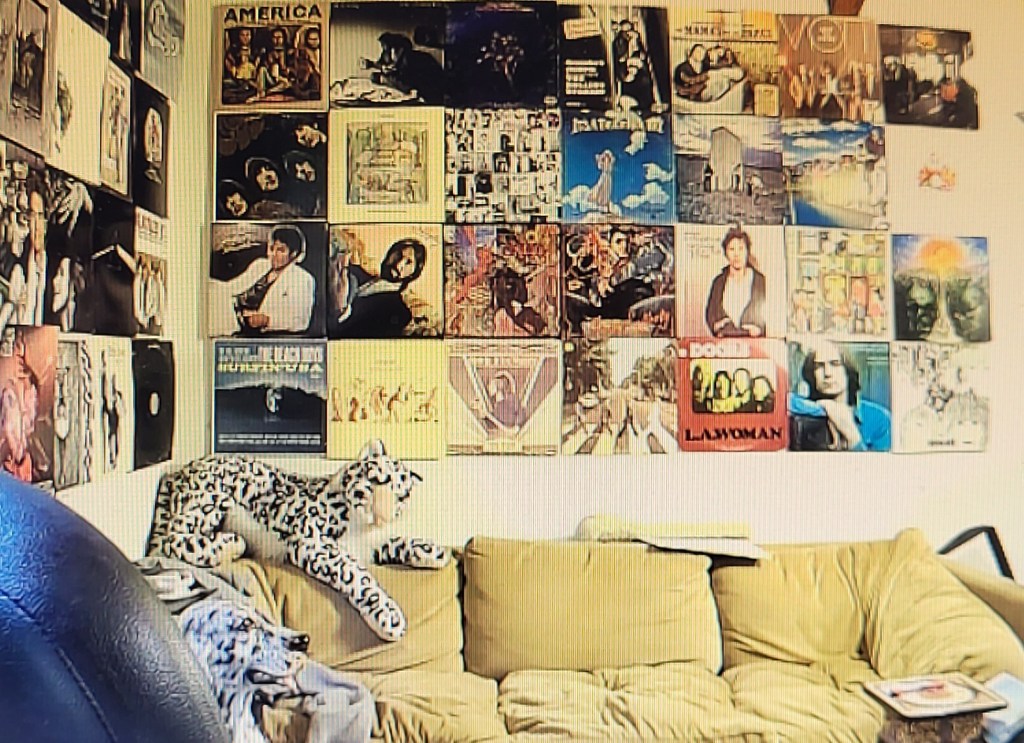
My friend Roger shared that he used Velcro to attach his vinyl album collection to the wall of his office. Very creative!
You’d pretty much have to be living on an island far from civilization to NOT know that today is April Fool’s Day. It’s celebrated each year on April 1st.
The day has murky beginnings which date back hundreds of years. Some say that Geoffrey Chaucer, in the unreadable ‘Canterbury Tales’, makes reference to the day. But that’s disputed. In 1508 some obscure French poet I’ve never heard of wrote about ‘poisson d’avril’ – translated ‘April’s Fish’ – which apparently doesn’t mean fish but ‘fool.’ Yet another theory is that at one time the new year was marked as being on March 25th but was then changed to January 1st (Actually March 25th makes more sense what with spring, birth, and renewal, but whatever). Those who clung to their old traditions were derided as Fool’s and I guess it took 6 days of their protests against moving New Years before someone decided to take any action.
The previous paragraph is, however, as in depth as I plan to go regarding the origins as, quite honestly, it’s a bit boring for this day devoted to mirth and mischief. Sadly, I found the Infallible Wikipedia article to be deadly serious and who wants that?
Anyway, I had soon climbed down the rabbit hole that is the internet and found a website truly worthy of April Fool’s Day: The Museum of Hoaxes. OMG. I knew I could spend hours reading about all the clever things people have conjured up to fool others. Decisions, decisions. WHICH of the hundreds of hoaxes was worthy of Tuesday Newsday fame? It was a weighty decision.
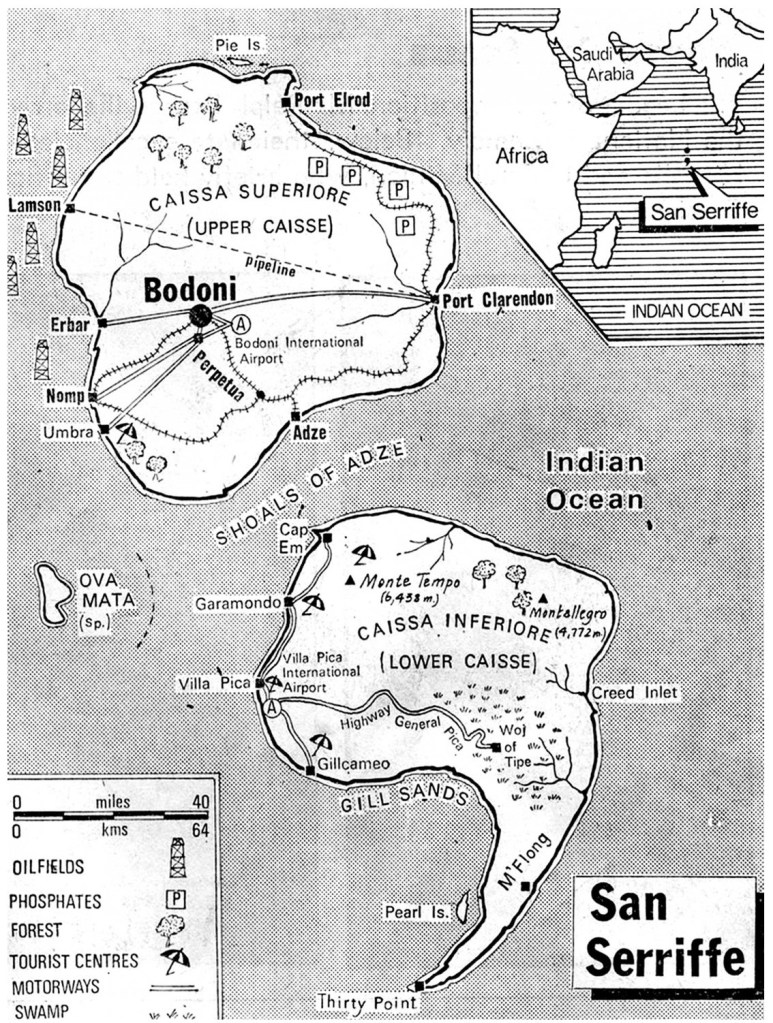
The islands of San Serriffe are a Perpetua(l) delight
Presenting the Island of San Serriffe!
As a writer, word nerd, and someone whose earliest childhood goal was to be able to create programs, newsletters, flyers, etc., the name San Serriffe resonated.
The year was 1977 and the British newspaper, The Guardian, was looking for something fun as a joke for their April Fool’s Day edition. Brainstorming occurred and the results were hilarious. From the hoaxes.org website:
“On April 1, 1977 the British newspaper The Guardian published a seven-page ‘special report’ about San Serriffe, a small republic located in the Indian Ocean consisting of several semi-colon-shaped islands. A series of articles described the geography and culture of this obscure nation.
The report generated a huge response. The Guardian‘s phones rang all day as readers sought more information about the idyllic holiday spot. However, San Serriffe did not actually exist. The report was an elaborate April Fool’s Day joke — one with a typographical twist, since numerous details about the island (such as its name) alluded to printer’s terminology.
The success of this hoax is widely credited with inspiring the British media’s enthusiasm for April Foolery in subsequent years.”
The best part of this story is, for me, the map. These people had waaaaaay too much time on their hands apparently.
The capital of San Serriffe: Bodoni; There’s Monte Tempo and Montallegro; Creed Inlet and Thirty Point; Villa Pica International airport and a beach town named Garamondo. Truly, the map is a font of fun.
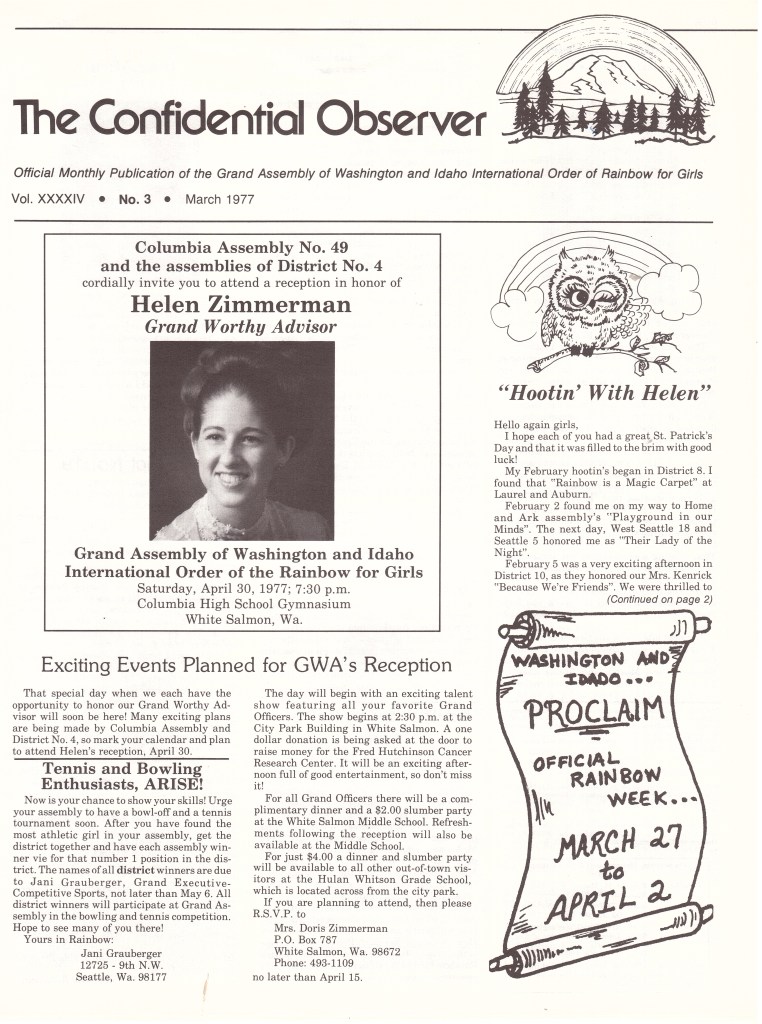
I’m a bit sad that it took me over 40 years to learn about San Serriffe since, in 1977, I was heavily involved in the world of publishing. I was one of three editors for the weekly Yakima Valley Community College “Galaxy” and also the youth editor of the Washington Idaho Rainbow Girls newsletter titled “The Confidential Observer.”
I was hungry to learn everything there was about journalism, writing, and layout. One of my big passions was experimenting with new fonts. I could not get enough of them!
The adult advisors for the Rainbow Girls publication, I’m certain, had no idea what hit them that year as I shook things up, at least in the world of Fonts. Well, and layout and artwork and, pretty much everything I was capable of changing. The fonts went from Helvetica and Times New Roman to Garamond and Bodoni to name a couple of them.
I changed the mast head; I varied the font sizes; I used boxes around things to emphasize and tried to make it more aesthetically pleasing.
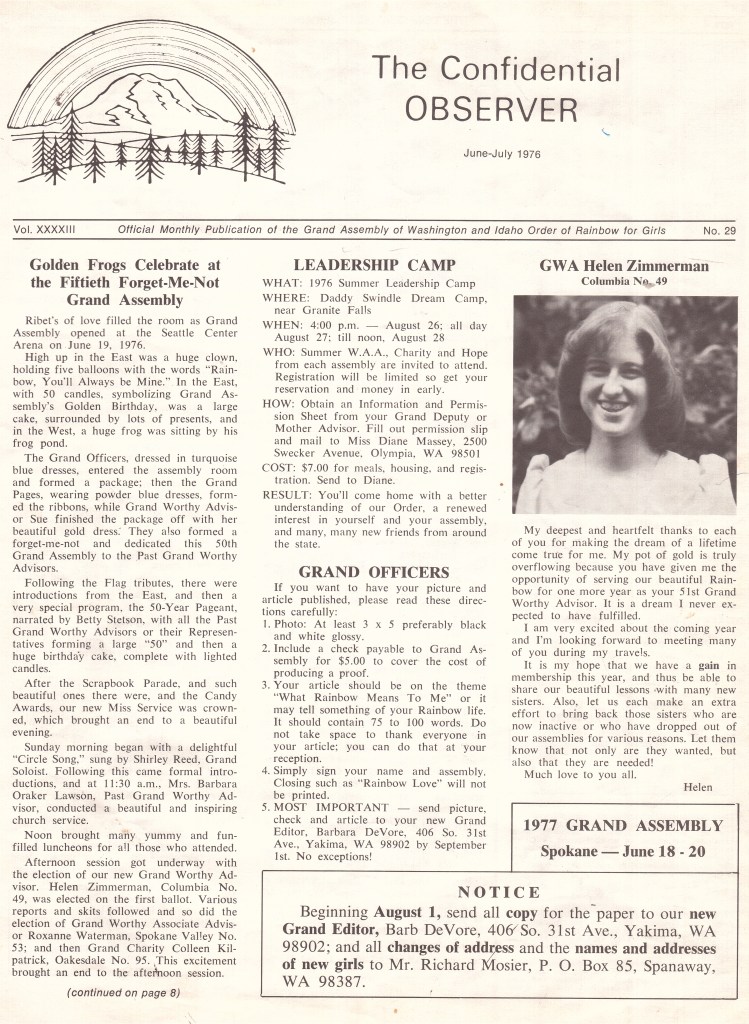
Two versions of the front page of the Rainbow Girls paper. Top is how it looked the issue before I started changing things. Bottom is how it looked six months later.
Now, way back in the dark ages, publication was not a simple thing. First I had to get articles from people from all over the states of Washington and Idaho who mailed them in envelopes. Some of these came handwritten on notebook paper, full of spelling and grammatical errors. I often had to retype and all had to be edited. When that was done I would mail it all from where I lived in Yakima to the printers in Tacoma, who then retyped it (with the fonts I’d chosen) and created galleys to fit our three-column format. These were then returned to me via mail. I would cut – with an exacto knife – the galley articles and glue the proofs on to paper in the correct configuration with everything marked as to where it was supposed to go and then would cross my fingers that they did it right. Spoiler: not always.
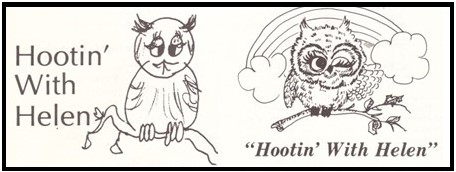
It was the fall of 1976 and the artwork that was to top the column for our state president that year had gotten lost by them. I sent in my package a hastily drawn picture (I’m no artist!) with a note attached saying “this is sort of what the artwork looks like that’s missing” and asking them to look around for it. Instead of reaching out, however, they ‘published’ what I had sent. It was awful and upsetting and bothers me to this day. Eventually, they found the missing clipart.
To this day I cannot fathom any professional printer looking at the owl on the left and thinking that’s what they should print…
With the introduction of the Apple Macintosh and their GUI (Graphical User Interface) layout in the mid-1980’s, I was finally able to create a newsletter on a computer and print it out. It was then I got my first laser printer. It was still a clunky process and the clipart was lacking, but it moved me forward.
Over the years as the GUI technology has improved, my ability to create has expanded. Artificial Intelligence has made it even easier.
So hats off to San Serriffe Island. I found the above picture of the island through an easy Google search, saved it as a jpg, and then printed it on my less than $200 Epson printer. I’m sticking it in a frame and hanging it in my office and will look at it often and cheer the fun of April Fool’s Day and 1977, the year of San Seriffe’s creation.
“I never knew me a better time, and I guess I never will.”
January 30, 2024
A Tuesday Newsday Classic Updated
In the past 50 years there has not been an artist, more than this one, who has provided the soundtrack for our lives. He embodies the concept of be ‘an original’ and has, since the beginning of his long career, gone his own way. In addition to his commercial success, he’s been recognized by his own country and was knighted on January 30, 1998.
The musician: the one, the only, and never imitated, Elton John.
Although he was born Reginald Dwight, he changed his name to Elton John in 1967, after several years in the music industry. From the Infallible Wikipedia:
“In 1967, Dwight answered an advertisement in the British magazine New Musical Express, placed by Ray Williams, then the A&R manager for Liberty Records. At their first meeting, Williams gave Dwight an unopened envelope of lyrics written by Bernie Taupin, who had answered the same ad. Dwight wrote music for the lyrics, and then mailed it to Taupin, beginning a partnership that still continues. When the two first met in 1967, they recorded what would become the first Elton John/Bernie Taupin song: ‘Scarecrow’. Six months later Dwight was going by the name ‘Elton John’ in homage to two members of Bluesology: saxophonist Elton Dean and vocalist Long John Baldry.”
The list of memorable songs written by the duo – and performed by Elton John – is amazing. From his very first top 40 hit – Your Song – and continuing on with hit after hit through the 1970’s and 1980’s, the songs are memorable and often poignant.
Your Song – easily my favorite of all of his songs
Ironically, Elton did not win a solo Grammy Award until 1995… 24 years after his first nomination. The 1995 award was for Best Male Performance for the Song Can You Feel the Love Tonight? from the Disney hit movie The Lion King. In all, he has been nominated for Grammy’s 33 times and won five times.
He was honored with the Grammy Legend Award in 1999, an honor given to the select few whose lifetime achievements are notable.
As a teenager in the 1970’s you could not turn on the radio without hearing many of Elton John’s songs. One song in particular stands out for me. It was December of 1972 and I was a sophomore in high school. And there was a guy – Ron – who was in my French class. New to my high school, his family had moved to Yakima sometime that fall. We soon became friends, chatting before and after class and we went to several Eisenhower High School basketball games together that December.
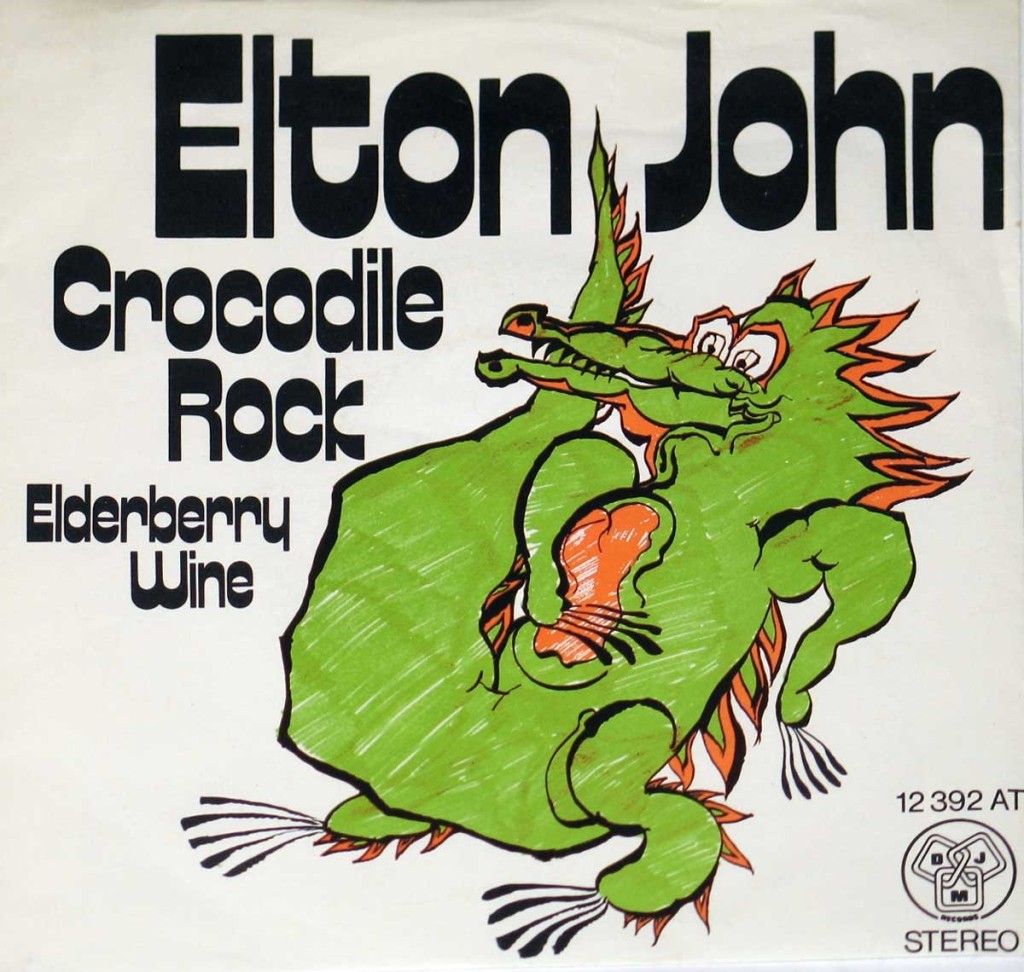
But it was one particular Elton John song which, having been released in the US on November 20, I associate with Ron. Crocodile Rock made the Billboard Hot 100, debuting at number 73. It climbed to #30 by December 18th. Crocodile Rock was Elton John’s first number one hit in the US, staying atop the charts for three consecutive weeks from February 3rd through the 17th in 1973.
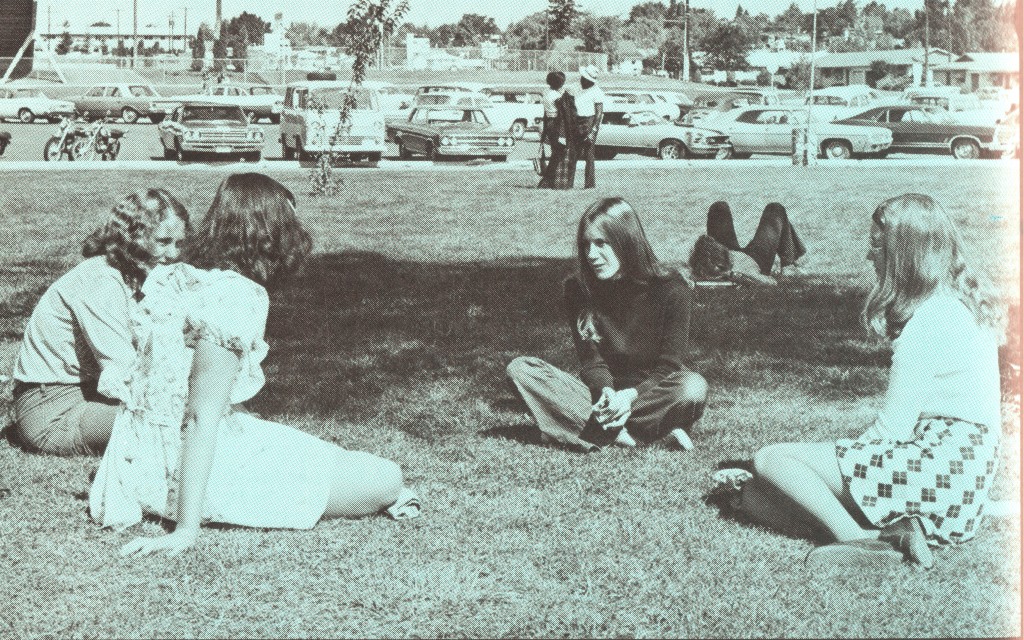
To this day, whenever I hear Crocodile Rock I am immediately transported back to December of 1972. Although the song is about an earlier era, for a 15 year old girl garnering male attention for the first time in her life, the song seemed to encapsulate the fun of life: of going to a Friday night basketball game with a guy I liked, talking with him after class and in the library, getting teased by my friends about my new ‘boyfriend,’ and trying -and pretty much failing – to navigate the choppy waters which are teenage romances.
The author (center facing the camera) early fall of 1972 at Eisenhower High school with my friends Cindy, Daphne, and Kathy. This photo appeared on page 8 of the photo essay section of the 1973 annual.
There is a poignancy to the lyrics when one line proclaims “I never knew me a better time, and I guess I never will.” Somehow this song not only laments the slipping away of the rock and roll of the 1950’s and 60’s but speaks to how quickly the teenage years pass us by and how we simply do not appreciate what a unique and special time they are.
Elton John announced in 2018 that he was doing one ‘last’ tour dubbed ‘Farewell Yellow Brick Road’. From the website:
“These dates mark Elton’s last-ever tour, the end of a half a century on the road for one of pop culture’s most enduring performers. The new stage production will take his fans on a musical and highly visual journey spanning a 50-year career of hits like no one has ever seen before.”
True to his word, it WAS his final tour. But he has written a book – ‘Farewell Yellow Brick Road: Memories of My Life on Tour’ – which is scheduled to be released on September 24, 2024.
For more information about Sir Elton, be sure to check out these links:
327 Tuesday Newsday Articles and 2 published novels
January 9th
The author’s collection of dictionaries. The Webster’s New World Dictionary, third from the left, was often used for playing ‘Dictionary.’
A Tuesday Newsday Classic
Back in the early 1980’s I was introduced to a game my hubby and his family loved to play. There was no game board or markers to move around. Instead it required a dictionary, a piece of paper for each player, and a pen. They called the game Dictionary.
A search of the internet reveals, from the Infallible Wikipedia, that the genre is more commonly known by another name: Fictionary. In the years since being introduced to this delightful pastime there have been actual games developed and sold. As noted by the Infallible Wikipedia:
“The board games Balderdash, Dictionary Dabble, Flummoxed, and Weird Wordz are based on Fictionary. In one round of the board game Derivation, players describe or fabricate a word’s etymology; players who provide a correct etymology receive one point for doing so, but their entries are then removed from play, and they lose their chance to receive multiple points by drawing multiple votes from other players. Similarly, in the board game Wise and Otherwise, the Picker randomly chooses a quotation and reads the beginning, and other players try to create realistic endings to the quotation.”
It’s amazing what interesting words one can find when perusing a dictionary.
While these games have been successful, I rather like how we played it: Get a group of people together (the more the better) and then pick one person each round who looks through the dictionary until they find a sufficiently obscure word. They then announce the word to the group and each person has to come up with a definition for that word. The chooser writes down the REAL definition.
Once everyone has written his or her definition, the papers are passed to the person who picked the word and they read each entry aloud, being sure to hide the papers from others. Each participant then decides which might be the real meaning of the word. Those who guess correctly get one point. The chooser gets one point for every incorrect guess.
Now, I’m sure you are wondering what this has to do with the title of this week’s Tuesday Newsday, Coddiwomple. Up until the hubby and I were driving home from Yakima on New Year’s Day this year I had never heard of Coddiwomple. But it immediately made me think of playing Dictionary and probably the most favorite word I ever found and used which is ‘gardyloo.’
The hubby had read an article on the term Coddiwomple and shared it with me. What I learned, from author and philosopher David Marlowe – who coined the term – is this:
I was immediately struck by the rhythm of the word and how it seems to fit its definition. Of course the purpose of the word is to help people stop and contemplate what, exactly, they are each trying to accomplish in life.
It was on this date in 2017 when I wrote my first Tuesday Newsday article. At that time I had no idea where I was going with it; only that, via a very decidedly Coddiwomple experience, I had been nudged to take the path of starting a website for ‘someday.’
That ‘someday’ was aimed for that moment, in the murky future, when I would have a book published and be able to share it on my website.
And thus began a Coddiwomple journey toward a vague destination. My first Tuesday Newsday was all about one of my favorite musical artists, Jim Croce.
Of course I screwed it up a bit on that first go round – being unfamiliar with WordPress and how it all worked – and accidently posted it on Wednesday, January 10th instead of that Tuesday, January 9th. So I ended up with TWO articles about Jim Croce a year apart, with the other one on January 11th the following year. (here’s the link to both which I combined into one for ONLY January 10th): https://barbaradevore.com/2017/01/10/jim-croce/)
But that was okay because, well, Jim Croce. One of his best songs… and so bittersweet.
What I did know after that first post is that in addition to the fiction stories which invade my brain and compel me to write, I had a whole lot of personal stories which came pouring forth.
Some have been funny, some philosophical; they range from recounting early childhood memories to recent impactful events. They cover music, TV, movies, nature, history, geeky musings, and cultural references. War and politics are never included.
But what do any of these ramblings have to do with traveling purposefully toward a vague destination?
For me, no matter what think I chose to do, it is the desire to fully embrace each experience in life. New opportunities frequently present themselves and, as someone who probably has undiagnosed ADHD, I am often distracted by such shiny objects.
Yet, as I have matured, I’ve come to understand a universal truth: our most precious commodity is TIME. I’ve become quite protective of my time. And the one thing in life which is elemental to who I am and where I want to spend my time is writing. It’s been that way since I first put a piece of chalk to a chalkboard desk I received as a Christmas present at age three when my family still lived in Clarkston, Washington.
The author, age 3, with her chalk board. Captured with a cell phone camera from the home movies my dad took.
So now I begin year nine of my blog in basically the same way as I did in 2017, traveling in a purposeful manner toward a vague destination. Coddiwomple.
Now, if you’ll excuse me I need to go write Nicole out of the entanglement in which she finds herself. Who will she choose: Nathan, Sam, or ???. And how will her parents react? I’m not sure she has quite embraced Coddiwomple but then again she’s only 21 and has a lifetime ahead of her.
Sneak preview of just a bit of the cover art for ‘Rivals’!
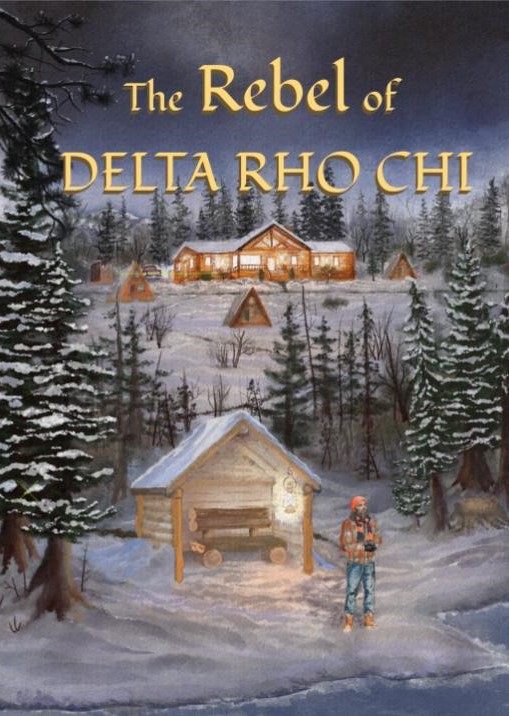
Well, that was LAST year’s dilemma. Since then, Nicole and company made their appearance with the publication of “The Rebel of Delta Rho Chi” on September 16, 2025. Now I’m thick in the lives of Kara, Brooke, Jason, and Erik who, as early twenty college students, are challenged to figure out the eternal question, “Who am I and what am I doing here?” I think they’ll get there but currently things are a bit messy in “The Rivals of Delta Rho Chi.” Look for their story this summer.
Finally, for those who have read all the way to the bottom, here’s your reward. Gardyloo is, according to Dictionary.com, “a cry formerly used in Scotland to warn pedestrians when slops were about to be thrown from an upstairs window.” Oh those crazy Scots. You’re welcome. Of course if you looked closely at the photos, you already knew the definition.









 barbaradevore.com