But, oh, those summer nights…
June 16, 2020
On June 16, 1978, this iconic American film burst onto the scene and soon held the record – for the next 15 years – as the highest grossing film of all time. It hearkened back to a more youthful time of the 1950’s but with a 1970’s twist: innocence was but an illusion and that inside every sweet girl was a naughty one wanting to break out. That movie was Grease which starred John Travolta as Danny Zuko, king of the greasers, and Olivia Newton-John as the naïve Sandy.
The movie was based on the 1971 Broadway musical of the same name and, as such, had a fantasy sort of feel to many of its scenes, especially the musical numbers Grease Lightning, Beauty School Dropout, and We Go Together. The thin plot line is held up by incredible music and the star performance of Travolta.
Review of the film from that time ranged from those who loved it to others who were not as impressed. From the Infallible Wikipedia:
“Gene Siskel gave the film three stars out of four, calling it ‘exciting only when John Travolta is on the screen’ but still recommending it to viewers, adding, ‘Four of its musical numbers are genuine showstoppers that should bring applause.’ Variety praised the ‘zesty choreography and very excellent new plus revived music’, and thought Travolta and Newton-John ‘play together quite well.’ Charles Champlin of the Los Angeles Times was negative, writing, ‘I didn’t see ‘Grease’ onstage, but on the testimony of this strident, cluttered, uninvolving and unattractive movie, it is the ’50s—maybe the last innocent decade allowed to us—played back through a grotesquely distorting ’70s consciousness.’ Gary Arnold of The Washington Post also panned the film, writing, ‘Despite the obvious attempts to recall bits from Stanley Donen musicals or Elvis Presley musicals or Frankie-and-Annette musicals, the spirit is closer to the New Tastelessness exemplified by Ken Russell, minus Russell’s slick visual style … I’ve never seen an uglier large-scale musical.’ David Ansen of Newsweek wrote, ‘Too often, ‘Grease’ is simply mediocre, full of broad high-school humor, flat dramatic scenes and lethargic pacing. Fortunately, there’s nothing flat about John Travolta … Travolta can’t dominate this movie as he did ‘Fever,’ but when he’s on screen you can’t watch anyone else.’”
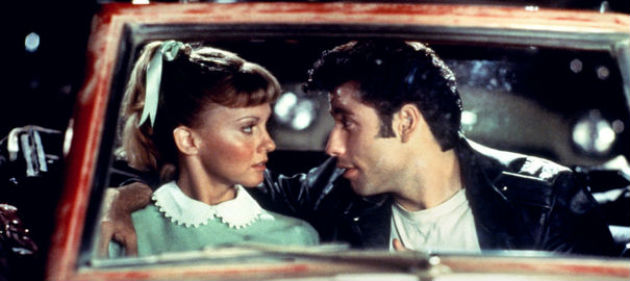 Even now, 42 years after its release, Grease enjoys a true fan following. It’s been released in various home video formats over the years, the most recent in 2018 on Blu-Ray DVD for its 40th anniversary.
I’ve seen the movie a number of times but did not see it during its original release. I’m not quite sure what, exactly, I was doing in the summer of 1978 except that it was the year I turned 21 and, really, going to see a musical based on high school students in the 1950’s was not all that cool. Or so I thought. When I did finally see it I was sad I’d missed out that summer.
In thinking about the plot from a writer’s perspective, however, I’ve always had a problem with the final scene of the movie. Sandy’s character – as I wrote above – was of a naïve and innocent teenager. When she gets involved with the Pink Ladies – a group of young women of questionable characters – it doesn’t ring true. Where were Sandy’s parents to put the brakes on her going to a slumber party with these girls? And one look at Danny and her parents – based on her persona – would have been pulling her out of Rydell High.
Despite these obvious disconnects with real life, in the final scene of the end of the year school carnival, we see Danny has now toned down his greaser persona to try and prove to Sandy that he’s the guy for her. Throughout the movie, Danny’s character is portrayed as complex and we suspect that he became a greaser tough guy simply for social status and not because that’s who he truly is.
When Sandy emerges in the final scene, however, she’s suddenly become this black leather clad sexy siren that smokes and is aggressive and suggestive. There is nothing in her character development previously introduced which portends that she is capable of such a transformation.
In the world of a story-teller, this is a big no-no as the reader – or in this case the viewer – feels like they’ve been misled. These inconsistencies are often referred to as ‘plot holes’ and are similar to driving over a pothole on a road in that it can jar you out of the story. Such is the case for this – and several other – scenes in Grease.
With this musical, then, there really is only one thing to do. Ignore the plot and character problems and just enjoy the multitude of toe-tapping, memorable tunes. Think of Grease like a 1950’s root beer float: a fizzy mix of soda and ice cream, but the top two inches are all empty – but tasty – foam; a perfect treat for a summer’s night when you want to immerse yourself in something fun and frivolous.
A link or two:
https://en.wikipedia.org/wiki/Grease_(film)
https://screencraft.org/2018/03/09/do-you-know-the-five-different-types-of-plot-holes/
 Oklahoma! was a smashing success as both a stage production and also as a 1955 movie. From the Infallible Wikipedia:


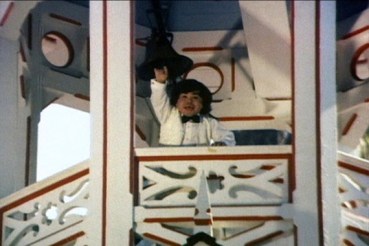

 This philosophy by the late Fred Rogers guided his unlikely career as TV personality and the creator and host of Mister Roger’s Neighborhood (MRN). It premiered on October 15, 1962 as a regional show on CBC Television (out of Toronto, Canada). In 1966 he moved the program to Philadelphia. A year later, with funding from Sears Roebuck, it was nationally syndicated.


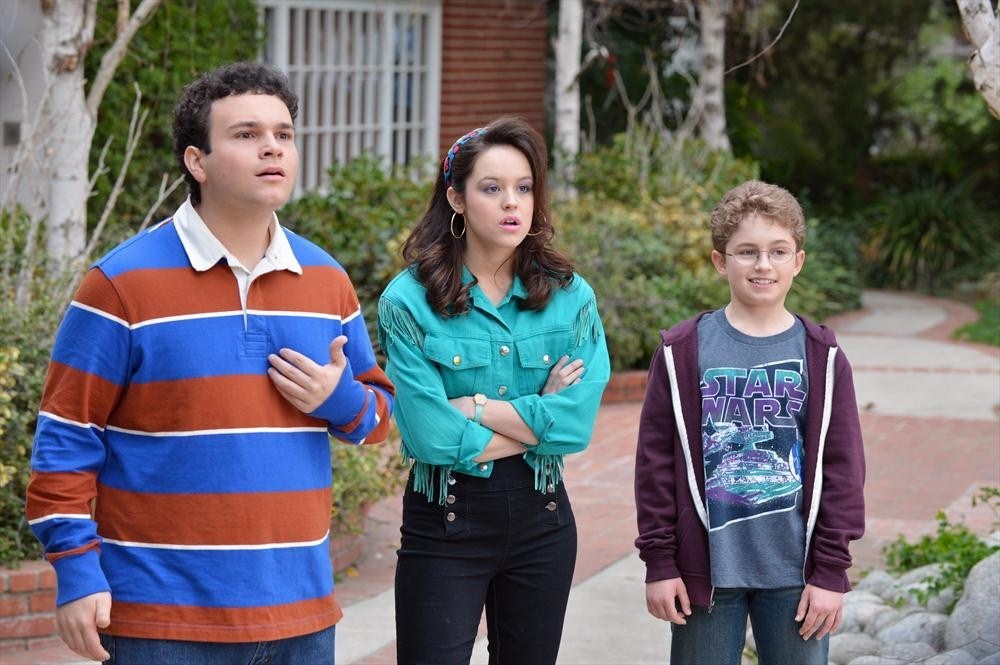


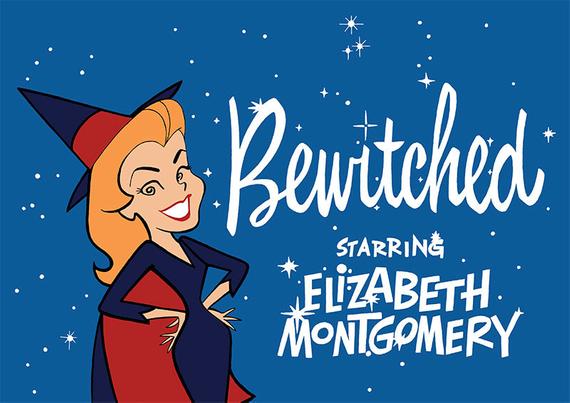 From the moment this TV show premiered, on September 17, 1964, a spell was cast over the American public and everyone fell in love with a beautiful witch named Samantha.
 Of course that’s not quite how it worked out. Week after week we were given a glimpse into the life and marriage of Darren and Samantha Stevens who, with interference from her mother Endora and a wide cast of other relatives, seemed to stir up trouble for poor Darren. Add to that mix the nosy neighbor, Gladys Kravitz, and Darren’s demanding boss, Larry Tate, and you had the recipe for a sitcom which aired for the next eight years.
 But my favorite character on the show had to have been the ever vigilant neighbor Gladys. The woman epitomized the term busy body and was often seen skulking around the Steven’s house. She would climb into the shrubbery and peer through windows, certain that all sorts of strange things were going on inside. Of course she was right but she never succeeded in convincing her disinterested husband, Abner, or the occasional law enforcement officer she would call, of the shenanigans which took place.
 Unlike most of the musical films of the previous decades, this one was aimed at children. It introduced new words into our collective vocabulary and catapulted its two stars into the stratosphere. Children everywhere wanted a nanny just like Mary Poppins and her chimney sweep friend Bert.
 With two academy awards and five total Best Actor nominations to his name, this performer is considered one of – if not the – best of his generation. Yet, while in school, he was a self identified geek, extremely shy, unpopular, and average looking. He, however, has more than made up for his rocky start. Happy 63rd birthday to Tom Hanks.
 More leading roles followed. He was nominated for his first Academy Award for his portrayal of a 12 year old boy who is transformed into an adult in the comedy Big. The true date of his stardom can be set as 1993 with the blockbuster film Sleepless in Seattle, followed immediately by his performance as a man dying of AIDS in the dramatic movie Philadelphia.
 In the subsequent years Hanks has been involved with innumerable projects both in front of and behind the camera as director and as a voice actor. One of his more memorable and enduring roles is that of Sheriff Woody in Toy Story and its sequels.
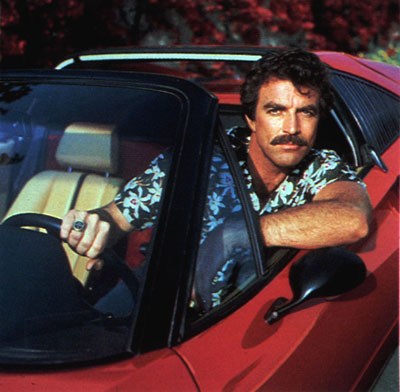 Women of the 1980’s loved his impish smile, his seemingly carefree attitude, and the fact that he lived in Hawaii and got to drive a red Ferrari. His name: Thomas Magnum. It was on December 11, 1980, when the world got their first glimpse of Magnum PI and the show was an instant hit.
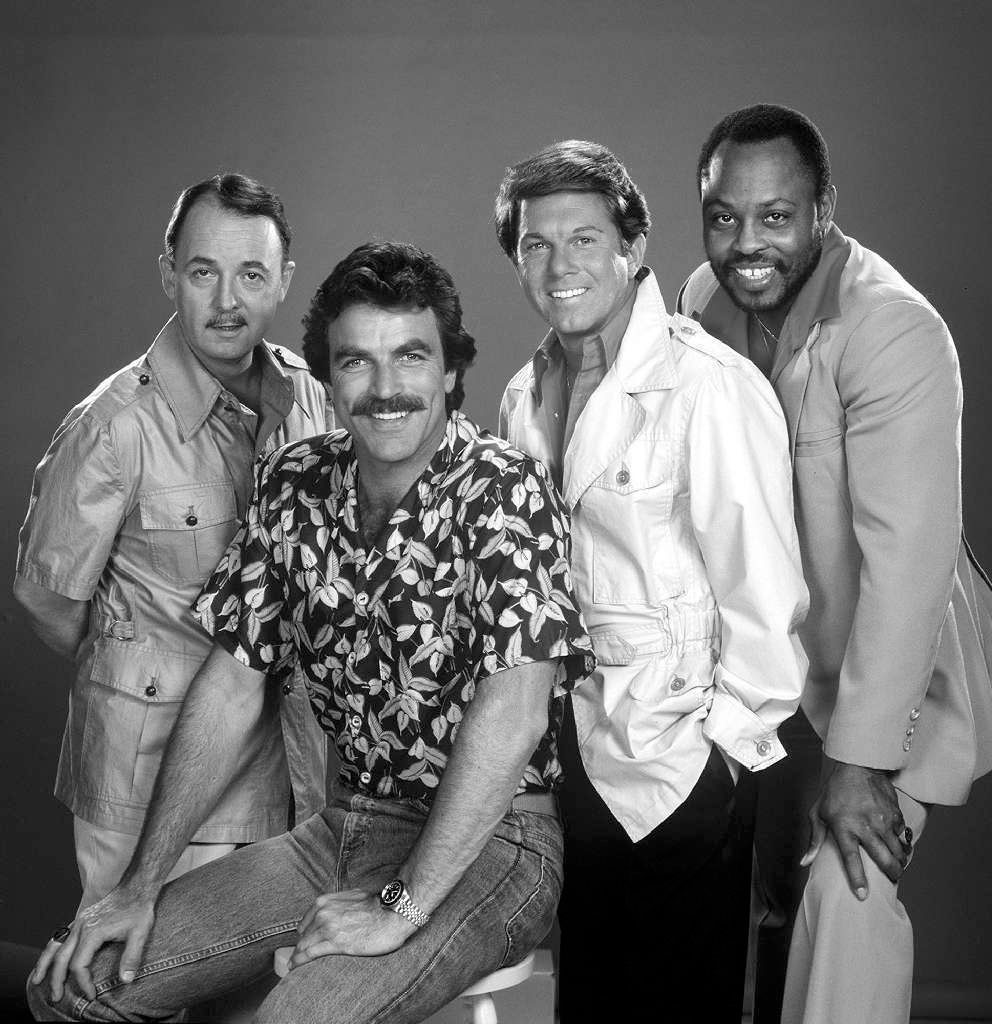 No doubt the show was a hit due, in part, to the casting of the additional regular characters: bartender Rick and helicopter pilot T.C. who are Magnum’s pals, and the never ending appearances of celebrities of the era. But the real magic was between Magnum and Higgins.
 The next night one of the local news stations interviewed Selleck who WAS in Seattle filming the made for TV movie “Divorce Wars” with Jane Curtin. In the interview the topic of fame and recognition came up and Selleck said he liked when people obviously knew who he was but appreciated not being accosted by fans.
 barbaradevore.com