38 Years of continual construction
June 30, 2020
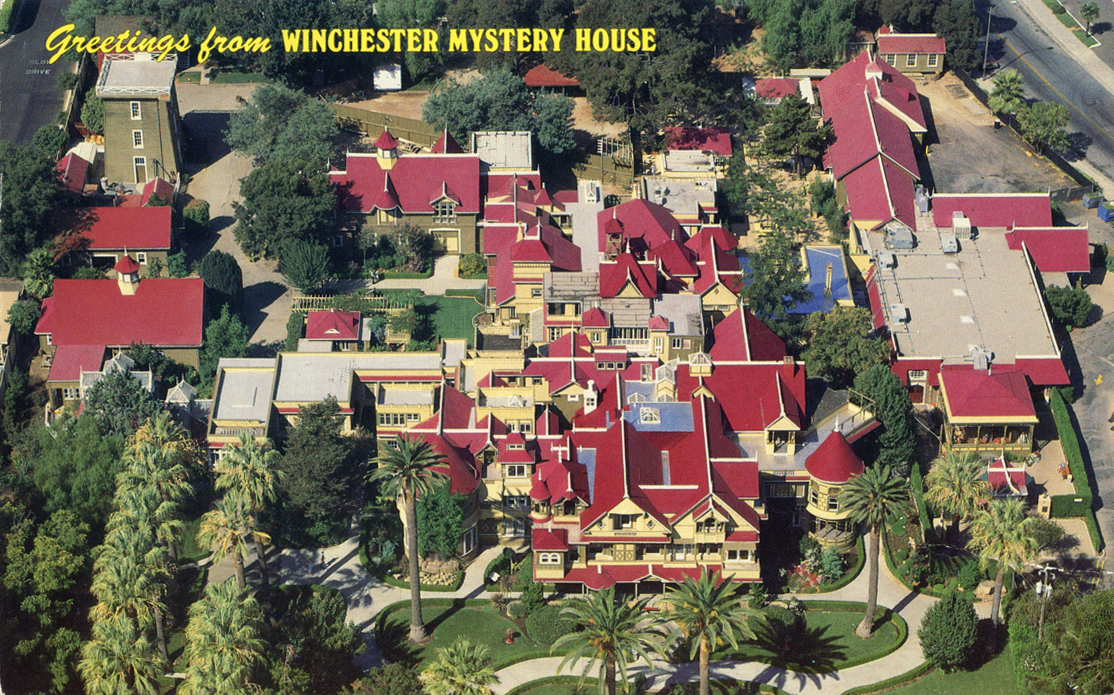
The sprawling footprint of the Winchester Mystery House, San Jose, California
By the time the last hammer was silenced in 1922, this house comprised a 24,000 sq. ft. “foot print” which had been added one room at a time over the course of 38 years. It was a short nine months later, on June 30, 1923, when the house opened for its first tours. The Winchester Mystery house – as it known – is a fascinating place to visit. And the story behind its genesis is the stuff of novels.
Sarah Winchester was the heiress to the Winchester Repeating Arms Company. Her husband, William, had died in 1881 of tuberculosis. Sarah, then age 42, had lost her only child 15 years earlier just six weeks after the baby’s birth; she came to believe that the tragedies which had befallen her were due to the immorality associated with the guns manufactured by Winchester Arms. Like so many of that age, she consulted a psychic who told her to leave Connecticut and go west. Her mission, she came to believe, was to spend the rest of her life spending her considerable fortune to build a house to atone for husband’s company.

Sarah Winchester
She purchased an 8 room house located on a sprawling farm in the Santa Clara valley of California in 1884; she immediately hired workers to transform the structure into a Victorian mansion. No architect was ever engaged and no blueprint ever produced. It was Sarah who designed and added the rooms. From the Infallible Wikipedia:
“There are roughly 161 rooms, including 40 bedrooms, 2 ballrooms (one completed and one unfinished) as well as 47 fireplaces, over 10,000 panes of glass, 17 chimneys (with evidence of two others), two basement levels and three elevators. Winchester’s property was about 162 acres (66 ha) at one time, but the estate has since been reduced to 4.5 acres (1.8 ha) – the minimum necessary to contain the house and nearby outbuildings. It has gold and silver chandeliers, hand-inlaid parquet floors and trim, and a vast array of colors and materials. Due to Mrs. Winchester’s debilitating arthritis, special ‘easy riser’ stairways were installed as a replacement for her original steep construction. This allowed her to move about her home freely as she was only able to raise each foot a few inches. There was only one working toilet for Winchester; it has been said that ‘all other restrooms were decoys to confuse spirits’ and that this is also ‘the reason why she slept in a different room each night’. The home’s conveniences were rare at the time of its construction. These included steam and forced-air heating, modern indoor toilets and plumbing, push-button gas lights, and Mrs. Winchester’s personal (and only) hot shower from indoor plumbing. There are also three elevators, including an Otis electric and one of which was powered by a rare horizontal hydraulic elevator piston. Most elevator pistons are vertical to save space, but Winchester preferred the improved functionality of the horizontal configuration.”

Front entry to the estate
Upon Sarah Winchester’s death September 5, 1922, the property and all her belongings were inherited by her niece and personal secretary who took what they wanted and sold the remaining furniture in an estate sale. The house was considered mostly worthless due to damage sustained during the 1906 San Francisco quake and considered unsellable due to the size and nature of the house.
A local investor, however, purchased it for $139K then leased it to a couple who gave the first tours. That couple, John and Mayme Brown, eventually purchased the house ten years later and it is still owned and operated by their heirs.
 If you are in the bay area and have a few hours, a visit to the Winchester Mystery House is worth the time and money. Our family visit occurred in 1995. For my daughter – who was two that year – the intricacies of the house were lost. My five year old son, however, was enthralled. Around every corner was another oddity – a set of three stair risers leading to a door. Which, when opened, revealed a wall. There were rooms where, when you looked up, you saw windows into more rooms. Stairs which once led to upper floors… those levels long since removed but the stairs remained. Up and down the many staircases the tour went… room, after room, after room.
My son talked about the mystery house for months, intent, I think, on building his own such house. Thankfully, his obsession waned, as we could not afford unending building projects.
Today, my now 30 year old son is more minimalist, recognizing that one does not need a lot of space to comfortably live. At the time of our visit to Sarah’s mansion, we lived in a nearly 4,000 square foot house. The problem with a large house is that soon you are filling that house with stuff. Always more stuff. In the past two years the hubby and I have made a concerted effort to reduce our stuff.
One of the blessings of the extended stay at home orders of the COVID-19 pandemic is that there has been time to focus on reduction. Each week, it seems, another box is sorted and purged, the proverbial grain separated from the chaff.
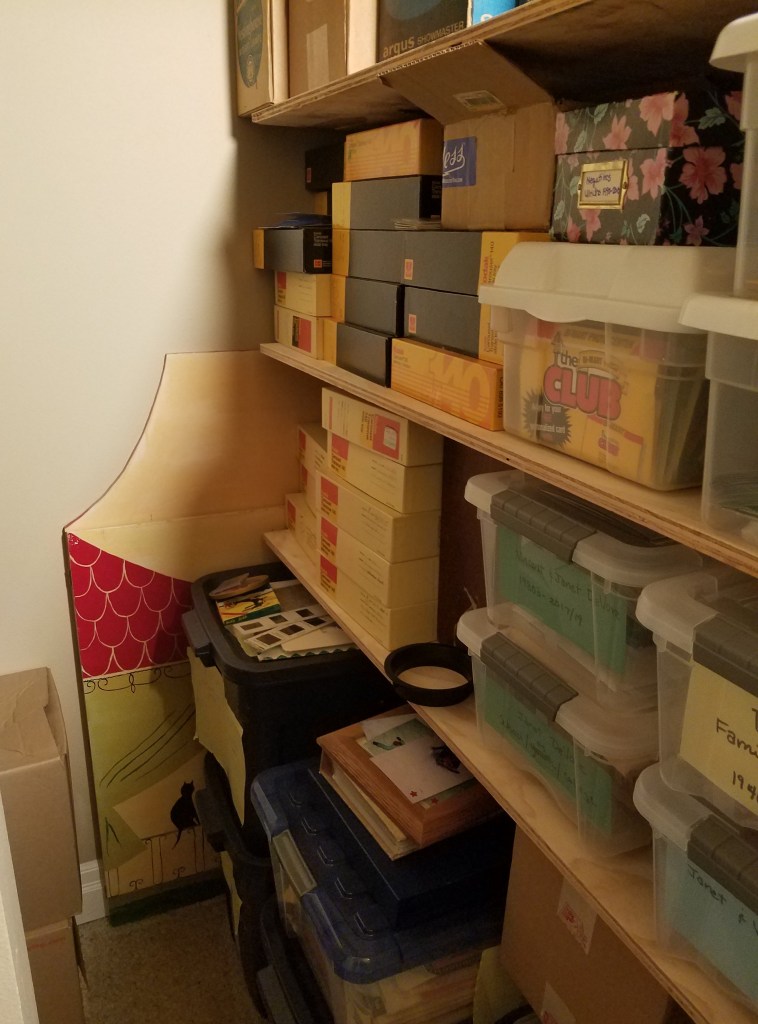
I’m pretty much down to my last big purge: photographs. A couple days ago I ventured in to what I call the “Harry Potter closet” as it is a space under the lower level stairs reminiscent of where the boy wizard lived before discovering his magic powers. Since we moved in it has been the repository for all the bins of family history, the slides of my grandparents as well as our own, 8 and 16 mm movie projectors and reels, VHS and digital camera tapes, and boxes and boxes of photos.

The ‘Harry Potter’ closet after the reorganization. Picture on the left is the entry way. The picture on this right is what’s stored under the stairs behind the wall from the first photo.
Last Saturday much of the contents of the closet were extricated and then organized and stacked back in the closet for the next purge. Sunday, the first bin of photos dating from the 1990’s to the early 2000’s hit the dining room table.
Ironically, in my first sort, I found photos from our 1995 trip to San Jose but not a single picture from the visit to Sarah Winchester’s house. I wonder what happened to those photos? It’s truly a mystery.
A couple of links:
https://en.wikipedia.org/wiki/Winchester_Mystery_House
https://winchestermysteryhouse.com/
- Update June 30, 2022 – The Harry Potter closet got an upgrade! Shelves have been built thanks to the hubby and son. Reorganization has taken place but the ongoing photo project is slow going. A few photos of construction and reorg.



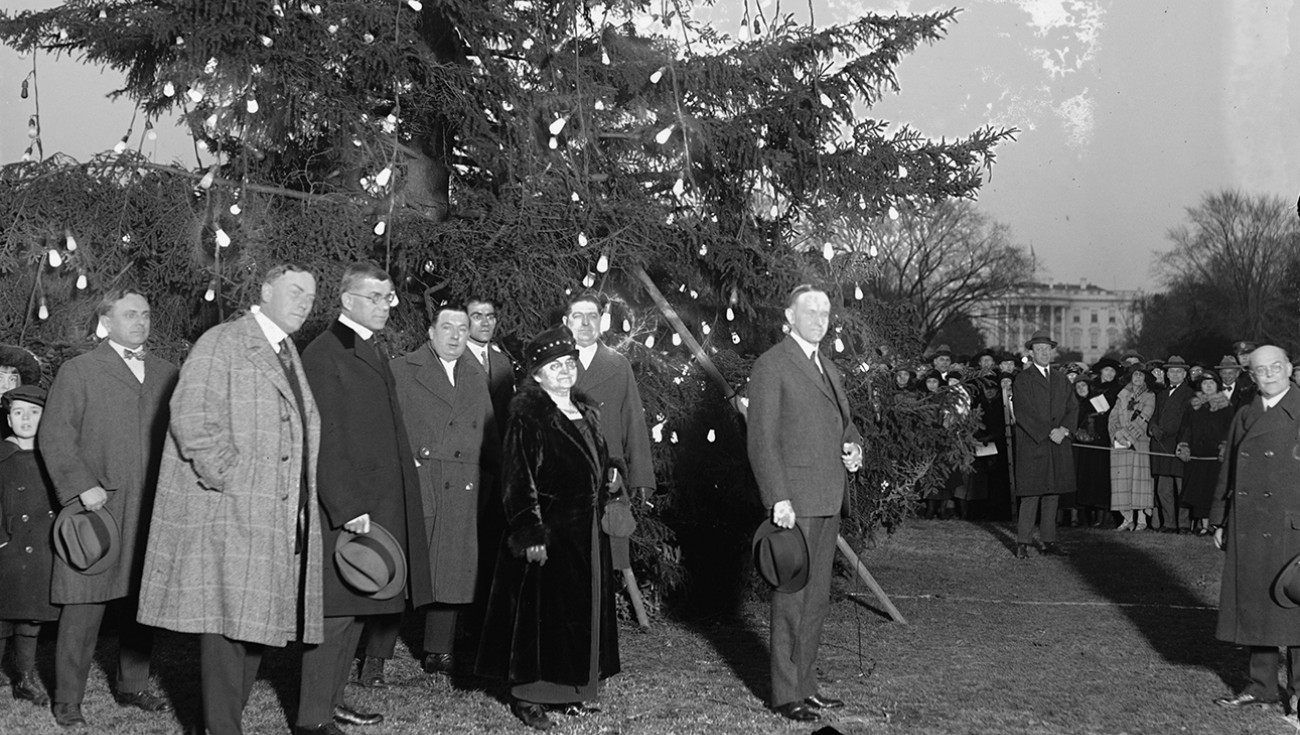
 The following year Coolidge objected to cutting down a tree for the event so a 35 foot tall live Norway Spruce was located and planted in a new location near the Treasury Building. This tree survived until 1929 when it was determined that the plant had been damaged and needed to be replaced. This began a series of live trees being planted, dying, and being replaced until, in 1934, the last tree was cut down in that location.

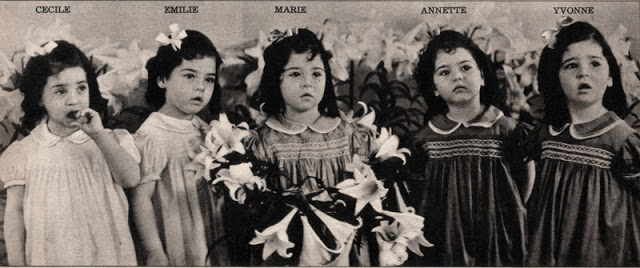 Even without television or the internet, their birth created media frenzy. The Province of Ontario – after four months – placed the quints into a guardianship and removed the girls from their parents. The parents were declared unfit to raise the five girls (but not their other children!).
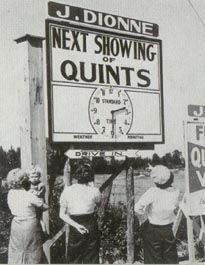 The souvenirs, picturing the five sisters, included autographs and framed photographs, spoons, cups, plates, plaques, candy bars, books, postcards, and dolls. Oliva also sold stones from the Dionne farm that were supposed to have a magical power of fertility. Midwives Madame LeGros and Madame LeBelle also opened their own souvenir and dining stand. The quintuplets brought in more than $50 million in total tourist revenue to Ontario. Quintland became Ontario’s biggest tourist attraction of the era, surpassing the Canadian side of Niagara Falls.”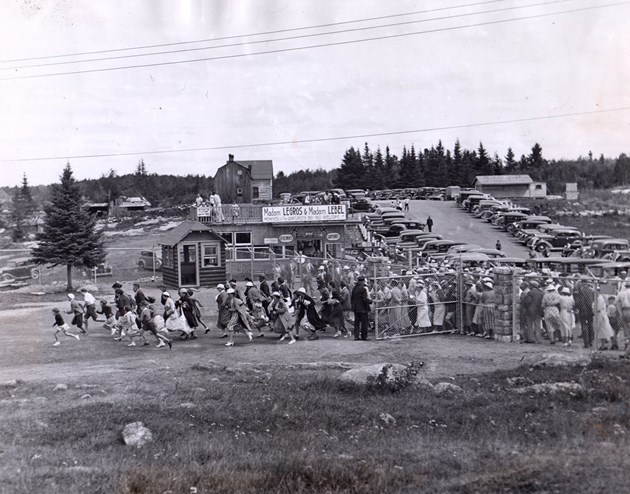
 The Flintstones: Wilma, Betty, Pebbles
 Spice Girls: Sporty, Posh, Ginger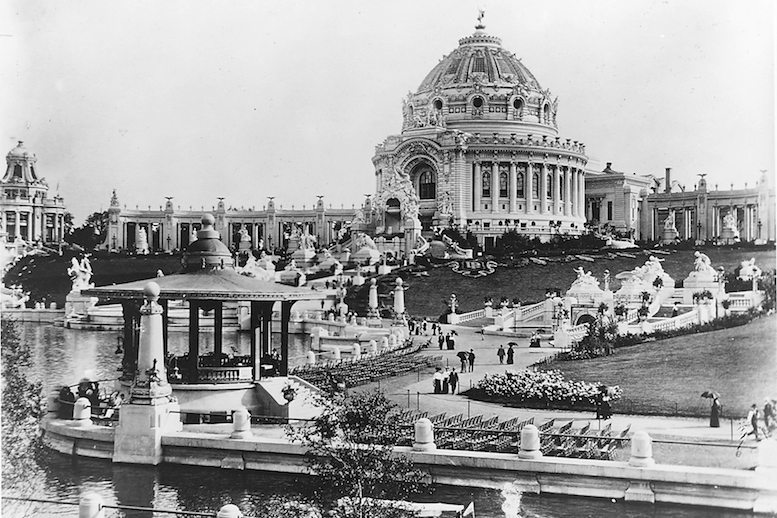
 At the St. Louis World’s Fair in 1904, a Syrian/Lebanese concessionaire named Arnold Fornachou was running an ice cream booth. When he ran short on paper cups, he noticed he was next to a waffle vendor by the name of Ernest Hamwi, who sold Fornachou some of his waffles. Fornachou rolled the waffles into cones to hold the ice cream – and this is believed by some (although there is much dispute) to be the moment where ice-cream cones became mainstream.
 Then, probably in the early 1970’s, my mother came home from the store one day with colored cake cones. In addition to the boring beige, there were the exciting colors of green, pink, and brown. But even more exciting was the ice cream. It was called chocolate marble and it was an instant favorite. Swirled into the vanilla were ribbons of chocolaty fudge. Now that was an ice cream cone.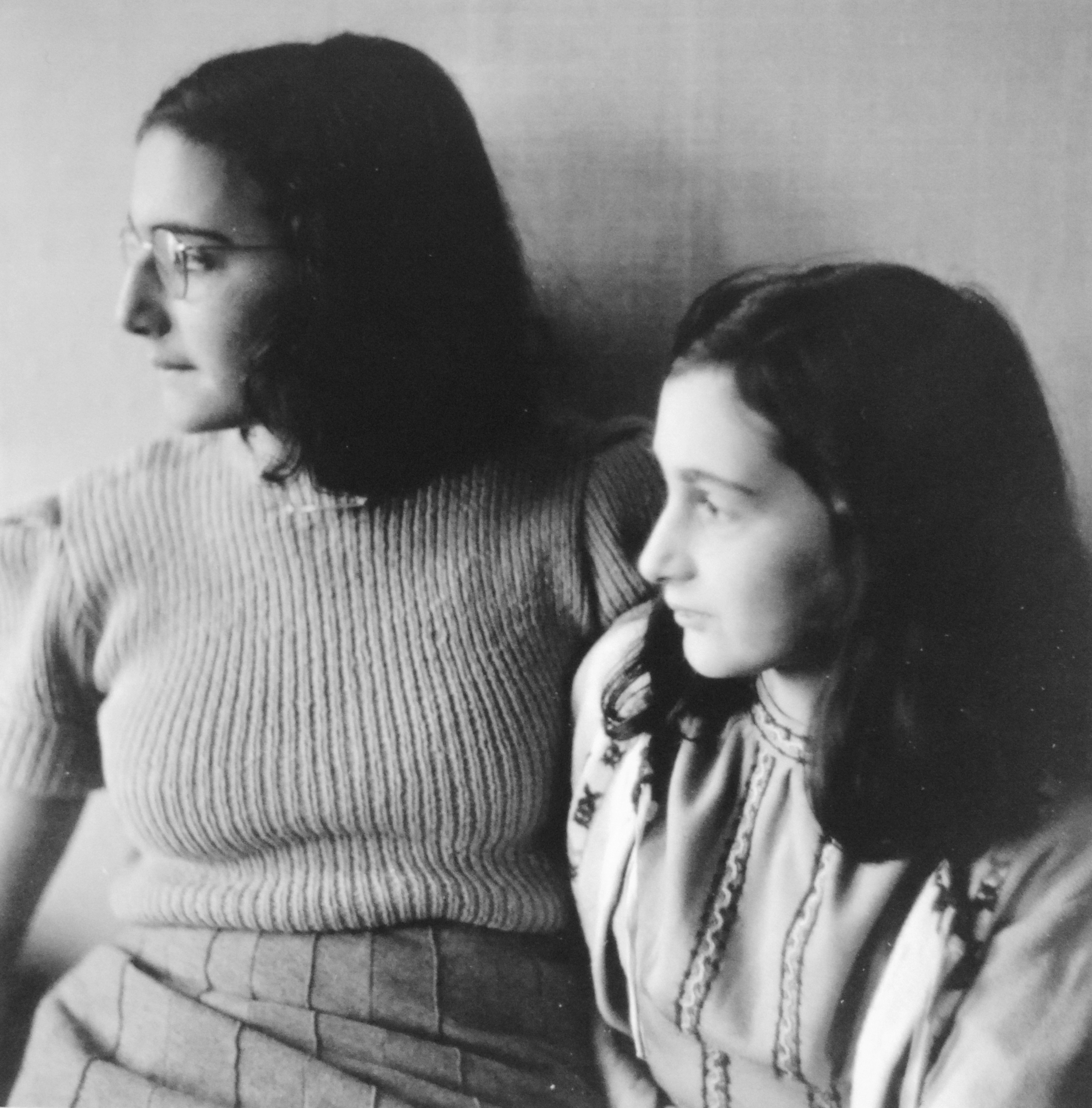
 as one of her presents on June 12, 1942, her 13th birthday. According to the Anne Frank House, the red, checkered autograph book which Anne used as her diary was actually not a surprise, since she had chosen it the day before with her father when browsing a bookstore near her home. She began to write in it on June 14, 1942, two days later.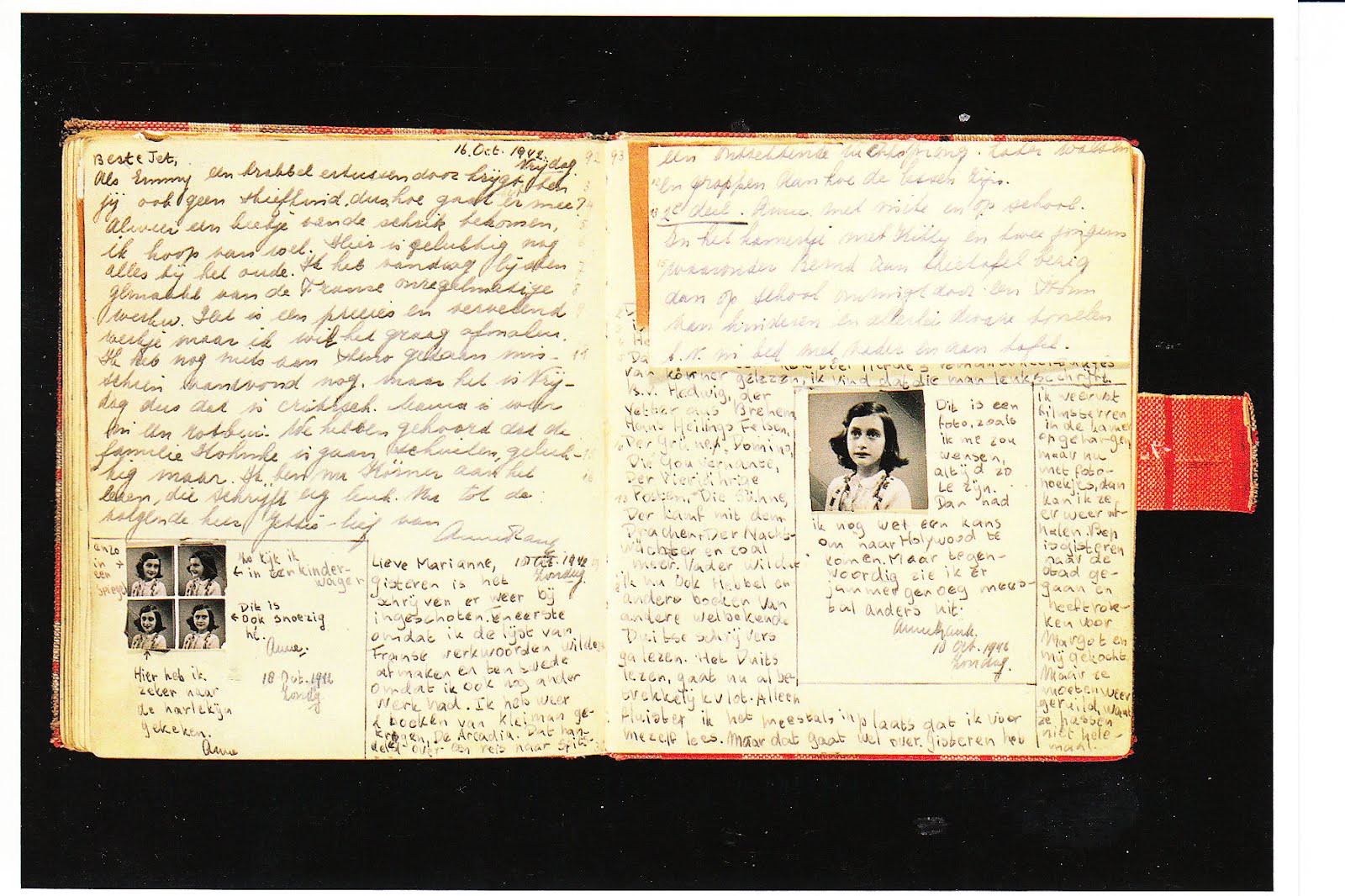





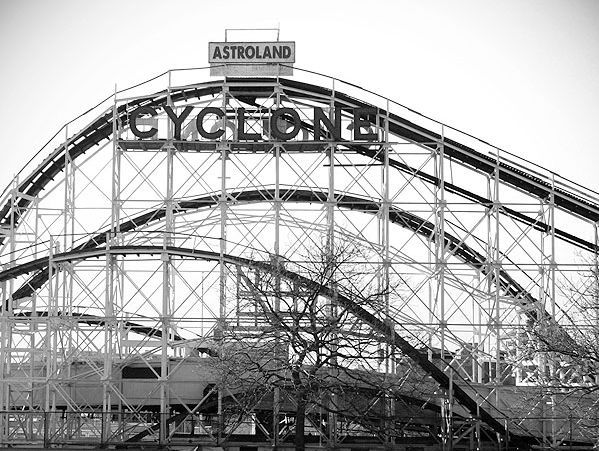 Over the years Coney Island was truly ground zero for amusement rides, especially the roller coaster.
 When you ride the Matterhorn, according to the promotional Disney website, you will:
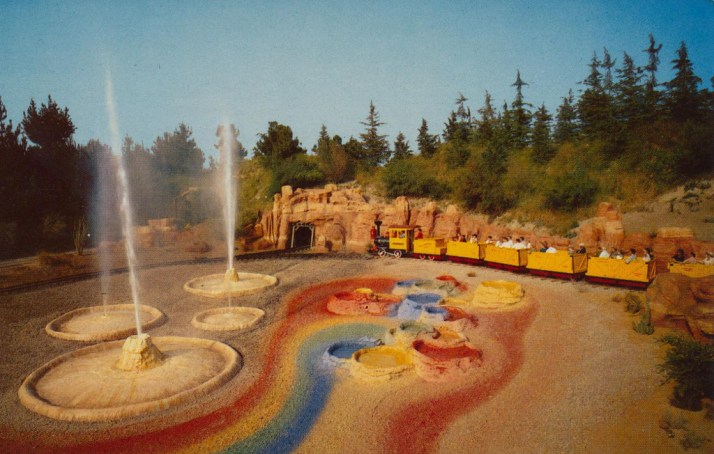 When I first visited Disneyland in the summer of 1970, the ride, called “Mine Train through Nature’s Wonderland,” was a sedate meander through an array of western landscapes including mountains, deserts, and geyser basins. My parents, my sister and I enjoyed the ride at the time, not realizing that it was destined to be re-purposed. The ride was closed in early 1977 and reopened as a roller coaster in September 1979.
 The woman in question was Anastasia Nikolaevna, better known as the Grand Duchess, daughter of the last Russian Tsar Nicholas II. She was born on June 5, 1901.
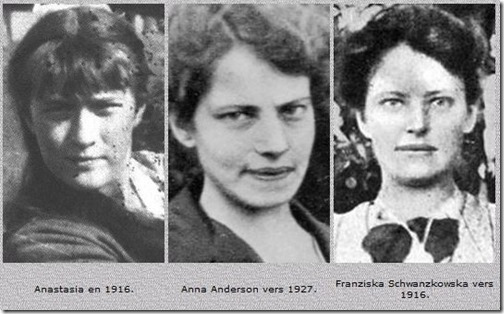 To add to the intrigue, no less than ten women claimed to have been Anastasia. The most famous was a woman by the name of Anna Anderson who insisted she was the Grand Duchess until the day she died.
 And thus ended years of questions and impostors and the mystery of Anastasia turned out not to be a mystery after all.


 barbaradevore.com