I’m a Barbie Girl
March 20, 2018
If you are planning to write a novel set in 2018 then you might consider Michael and Jessica as the names of your main characters. That is if your characters are in their 20’s or 30’s and you want to have their names sound authentic for someone born in the 1980’s or 1990’s.
Last week we discovered that Barbie and Ken were both introduced in the month of March. Barbie in 1959 and Ken in 1961.
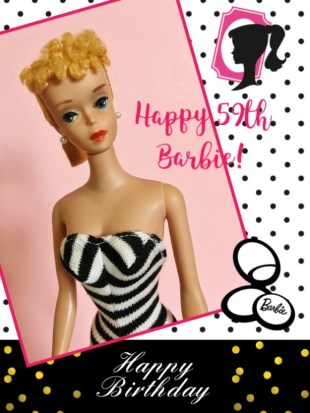 The name Barbara was, at the time, a very popular name. It first hit the top ten names list in 1927 and remained there until 1958, a whopping 31 years. If you expand a bit, the name was a top 20 name for a total of 38 years. Whether one can blame Barbara’s free fall from popularity on the Barbie Doll is debatable. Having the most famous fashion doll in the world bear that name no doubt made more than a few parents reconsider it as a good choice for their daughter. After all, who would want to name their child after a doll? Another factor is that names, particularly girl’s names, tend to be popular for a period of time then are not used for decades.
Ken – or Kenneth – was a solid boy’s name from 1924 until 1964 ranking in the top 20 every year. Because both names are ranked individually, the popularity of the name is artificially reduced. But again, names which are strongly associated with certain people or characters tend to lose popularity. It is possible Ken and Kenneth were the victims of this.
What about our heroine of today, Jessica? She first entered the top 10 in 1976 and remained there until the year 2000. It was the first or second most popular girls name from 1981 until 1997! No wonder everyone probably knows someone named Jessica.
Of course Michael may be the most popular guy’s name ever. It was in 1944 when the name broke into the top 10 and… it’s never left. It occupied the number one spot for an unprecedented 41 years! It’s been so popular that I recall back in the 1980’s you could even buy a black and white generic card which had printed on it “Happy Birthday Mike.” ( I knew this as one of my brothers is named Michael!) It may have run its course, however, since in 2016 it was only the 8th most popular name for boys and may soon exit the top ten.
Now, if you are expecting a baby in the next year and don’t want your child to have the same name as every other Tom, Dick, and, er, Harry, then cross the following names off your list immediately:
| 1 | Noah | Emma |
| 2 | Liam | Olivia |
| 3 | William | Ava |
| 4 | Mason | Sophia |
| 5 | James | Isabella |
These names were the most popular names for babies born in 2016.
For this week’s article I did not plumb the depths of the infallible Wikipedia! But here’s the link to the Social Security Name Index where you can, like me, waste hours of your time ‘research’ what to name your characters.
https://www.ssa.gov/cgi-bin/babyname.cgi
Update: March 2022
Five years later and the list has changed dramatically! Here are the top five names for boys and girls from 2021:
Boys Girls
- Oliver Charlotte
- Declan Aurora
- Theodore Violet
- Jasper Hazel
- Silas Luna
-
 Little girls everywhere loved Barbie. What wasn’t to like? She was pretty, had a great wardrobe, and was the perfect size for small hands. But there was something missing. That something arrived in mid-March 1961: Ken.
 I got my first Barbie Doll for Christmas 1961. Her wardrobe consisted of a bathing suit, a short gold dress, a black evening gown (Solo in the Spotlight!) and a wedding dress. Based on how those clothes ‘survived’ the years I must have played with that doll a lot. The wedding dress, particularly, is mostly a rag but I still have it.
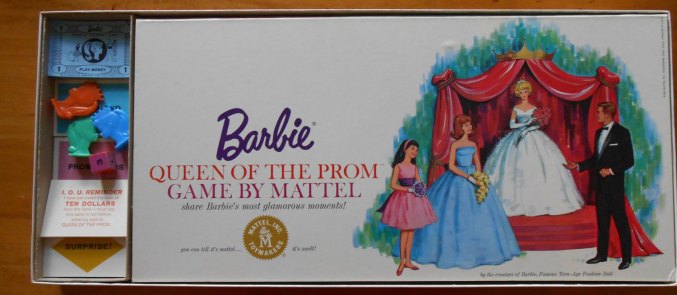 The closest I ever got to having a Ken was when I played the game “Barbie, Queen of the Prom.” In that game you had to navigate the board to collect a prom dress, appropriate accessories and, most important, a date. There were four choices: Ken, Allan, Tom and Poindexter. No one ever wanted Poindexter. Probably because he looked like he was about twelve. By the time I was playing that game, it was the mid-1960’s and Ken’s military crew cut was going out of style. No, the desirable date for Queen of the Prom was Allan, a freckled face red head with a winning smile.
 It’s one of the most grueling races in the world and participants encounter blizzards, white out conditions and temperatures, with wind chills as low as -131 degrees.
 What I determined in the five days I spent there with my two best friends from high school, Cindy and Daphne, were the following:
 I am forever grateful to my two friends for the once in a lifetime event. It was, as the name of the business stated, Just Short of Magic. It was a beautiful, sunny day and the temperature was 10 degrees.
 Although the adventure was only a couple of hours it was, as their business name proclaimed, just short of magic. I relished the rush of cold air, the way the sled flew over the snow, the cacophony of the barking dogs, and the sparkle of the white snow.
 A good editor is the key to making sure whatever is written reads right and, well, doesn’t make ridiculous mistakes. In late February 1997 an American Family Publisher’s Sweepstakes entry was received by the Bushnell Assembly of God Church. It began thus:
 If I had any doubt that my GPS truly was God my disbelief was dispelled about a year and half ago. I was on my way back from Yakima and was driving up I-82 towards Ellensburg. I glanced over at the GPS but what I saw left no doubt that some higher power was in charge. Instead of an elevation of about 2700 feet as expected “God” let me know I was at over… 50,000 feet! As Doc Brown says in Back To The Future “Roads? Where we’re going we don’t need… roads!” Although the photo I snapped was a bit fuzzy, you can clearly see the elevation and God’s instruction that I am to continue to the alley. What alley, I never did find out. This craziness continued until Thorp when, apparently, I was no longer flying and once again on solid pavement.
 The year was 1976 and Olympic fever was in full force that February. There was one person, particularly, everyone was talking about. From her cute, bobbed haircut to her signature skating move, girls everywhere wanted to look like her and boys wanted to date her.
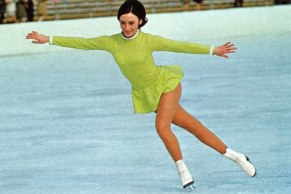 Another Olympic fact, Peggy Fleming was the only US athlete to win a gold medal in the 1968 Olympics. The skating program had been decimated seven years earlier when a fatal plane crash on February 15, 1961, claimed the lives of the entire US skating team and coaches who were en-route to Belgium for an international competition. Also from the infallible Wikipedia: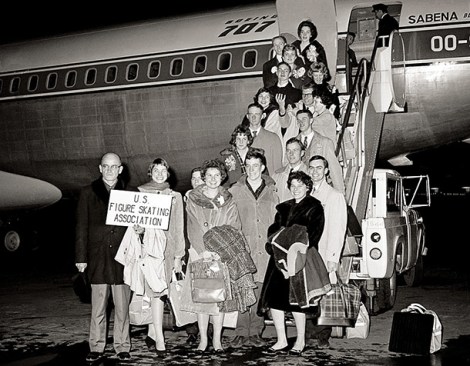
 The moment you draw a Chance card that says “Take A Walk On The Boardwalk” probably one of two things happen:
 “According to an advertisement placed in The Christian Science Monitor, Charles Todd of Philadelphia recalled the day in 1932 when his childhood friend, Esther Jones, and her husband Charles Darrow came to their house for dinner. After the meal, the Todd’s introduced Darrow to The Landlord’s Game, which they then played several times together. At that point the game was entirely new to Darrow, and he asked the Todd’s for a written set of the rules. After that night, Darrow went on to utilize this by distributing the game himself as Monopoly – an act for which the Todd’s refused to speak to Darrow ever again.

 Truly riveting events. Which is why January 16th being “National Nothing” Day seems appropriate.*
 When I was in high school I had a fabulous teacher by the name of Mrs. Renn. Sadly, the year I was in her class she was diagnosed with terminal cancer. But that did not stop her from coming to school every day and imparting her knowledge and wisdom to a bunch of ungrateful teenagers. One day I recall one of the students must have complained about the literature we were discussing and that she was bored. Mrs. Wren didn’t get mad at the student but took the opportunity to impart her philosophy on life. I paraphrase but the message was this “there is no excuse to EVER be bored; if you have your mind, you can always find something interesting to read, or write, or do.”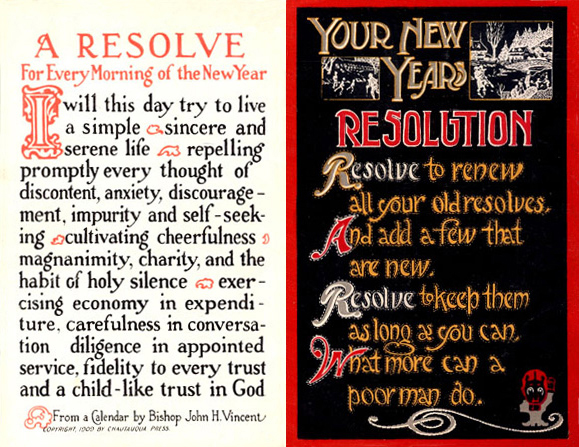
 So here’s a toast to 2018 as a whole blank slate of a year stretches before us. Whatever your goal may be I wish you the : ‘aim’ ‘dedication’ ‘fortitude’ ‘heart’ ‘mettle’ ‘moxie’ and ‘perseverance’ to achieve it. Happy New Year!
 One interesting thing is that a circle was cut from the floor of the Ryman Theater and installed in the center of the new Opry stage. When our family visited Nashville in March 2013 we toured the facility and stood in the famous ‘circle.’ Later that evening we attended a show which featured Craig Morgan as that night’s main act. I was surprised, however, by the number of long time Opry acts which were still being performed including a ‘Minnie Pearl’ impersonator and also Little Jimmy Dickens who, until he died in 2015, was the oldest Opry member.
 If you go to Nashville, a visit to the Grand Ole Opry is a must and very worthwhile.
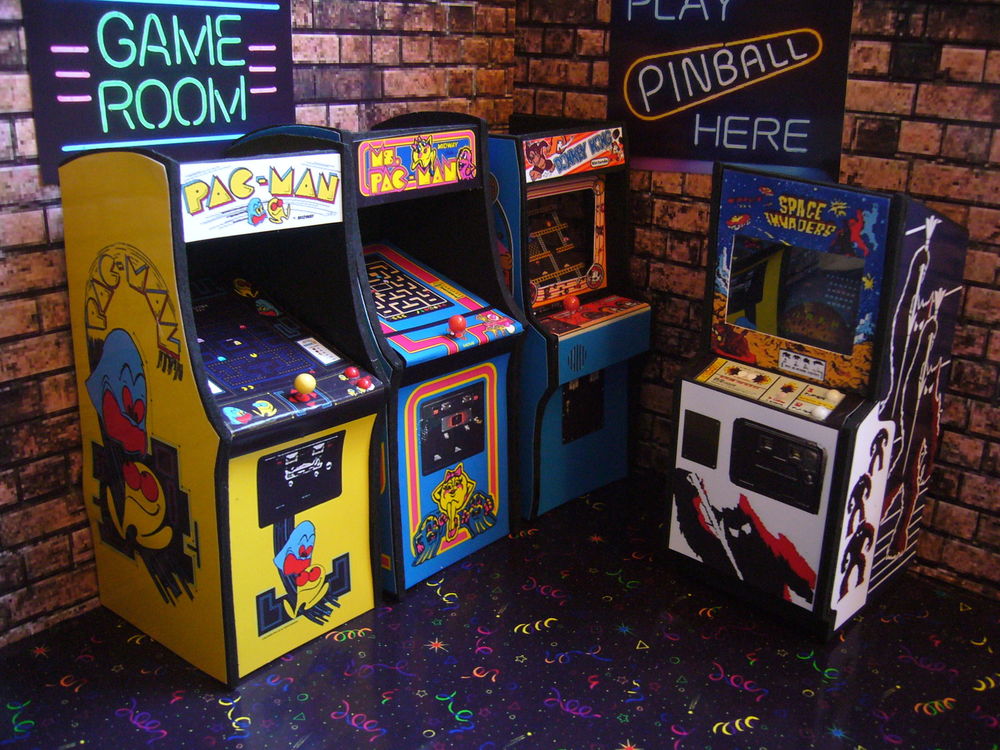 It was in October of 1980 when the United States was truly invaded by the Japanese. We are not talking about military here. No, this invasion featured four ghosts named Inky, Blinky, Pinky, and Clyde and a round yellow fellow with a huge pie shaped mouth dubbed Pac-Man. (There are articles which place the release date on October 10 but that date is disputed)
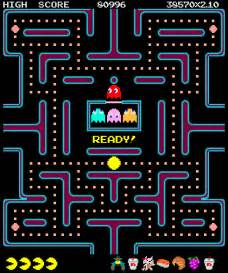 “When Pac-Man was released, the most popular arcade video games were space shooters—in particular, Space Invaders and Asteroids. The most visible minority were sports games that were mostly derivatives of Pong. Pac-Man succeeded by creating a new genre. Pac-Man is often credited with being a landmark in video game history and is among the most famous arcade games of all time. It is also one of the highest-grossing video games of all time, having generated more than $2.5 billion in quarters by the 1990s.
 My hubby was hired by a CPA firm in Burien who had a client that needed an auditor. So they sent him out to do the job and thus began a seven year run with a different Japanese invader: Donkey Kong. While many think of Nintendo as a behemoth company, when Donkey Kong was first being sold into the US market they had six employees: two Seattle based salesmen, the company president, a couple of Japanese developer/engineers, and one American to make the build’s happen.


