The Mountain Is Out
March 2, 2021
The Mountain Is Out.
These four words, for anyone who grew up or has lived in the Greater Puget Sound region, mean but one thing: it’s a clear day and from all vantage points, one can see Mount Rainier.

Of all the natural features which define Washington State it is, arguably, Mount Rainier which is most associated with the state. And is it any wonder? At 14,411 feet it is one of the highest peaks in the United States. What gives Mt. Rainier its prominence, literally, is the fact that you can see an uninterrupted 13,210 feet of the volcano, making it the largest mountain in the contiguous 48 United States and the fourth largest mountain on the North American continent.
It was on March 2, 1899, when Mount Rainier National Park was established as the nation’s fourth national park (after Yellowstone, Sequoia, and Yosemite).

The Infallible Wikipedia provides us with some fascinating geologic facts:
“Mount Rainier is a stratovolcano in the Cascade Volcanic Arc that consists of lava flows, debris flows, and pyroclastic ejecta and flows. Its early volcanic deposits are estimated at more than 840,000 years old and are part of the Lily Formation (about 2.9 million to 840,000 years ago). The early deposits formed a ‘proto-Rainier’ or an ancestral cone prior to the present-day cone. The present cone is more than 500,000 years old.
The volcano is highly eroded, with glaciers on its slopes, and appears to be made mostly of andesite. Rainier likely once stood even higher than today at about 16,000 ft (4,900 m) before a major debris avalanche and the resulting Osceola Mudflow approximately 5,000 years ago. In the past, Rainier has had large debris avalanches, and has also produced enormous lahars (volcanic mudflows), due to the large amount of glacial ice present. Its lahars have reached all the way to Puget Sound, a distance of more than 30 mi (48 km).
Around 5,000 years ago, a large chunk of the volcano slid away and that debris avalanche helped to produce the massive Osceola Mudflow, which went all the way to the site of present-day Tacoma and south Seattle. This massive avalanche of rock and ice removed the top 1,600 ft (500 m) of Rainier, bringing its height down to around 14,100 ft (4,300 m). About 530 to 550 years ago, the Electron Mudflow occurred, although this was not as large-scale as the Osceola Mudflow.
After the major collapse approximately 5,000 years ago, subsequent eruptions of lava and tephra built up the modern summit cone until about as recently as 1,000 years ago. As many as 11 Holocene tephra layers have been found.”
In the world of geology, a thousand years is like a blink of the eye. Which is one reason why Mount Rainier is one of 16 mountains worldwide known as ‘Decade Volcanoes.’ To put it succinctly, it means that these volcanoes have given indications that they are likely to erupt AND they are located in areas where an eruption would no doubt result in catastrophic property destruction and/or a large loss of life.
That could mean that we will witness such an eruption of Mt. Rainier in our lifetime or, perhaps, it will be hundreds of years from now.
It’s hard to imagine Mt. Rainier as being any different than how it’s been during my lifetime. I simply cannot recall a time when I did not know of it. Perhaps my earliest memory would be on a trip from Yakima to Long Beach, Washington with my family including my grandmother – my Dad’s mother – in the 1960’s.
The most direct route to the coast was via White Pass which, coincidentally, follows a route just south of the southeast park entrance. And there is this spot on the other side of the summit where you come around the corner and, on a clear day, feel as if you can touch it. Over the years that moment has always been the one which says ‘welcome to Western Washington.’ My grandmother snapped a photo from the back seat of the car. It was only the first of many photos I have of the mountain.
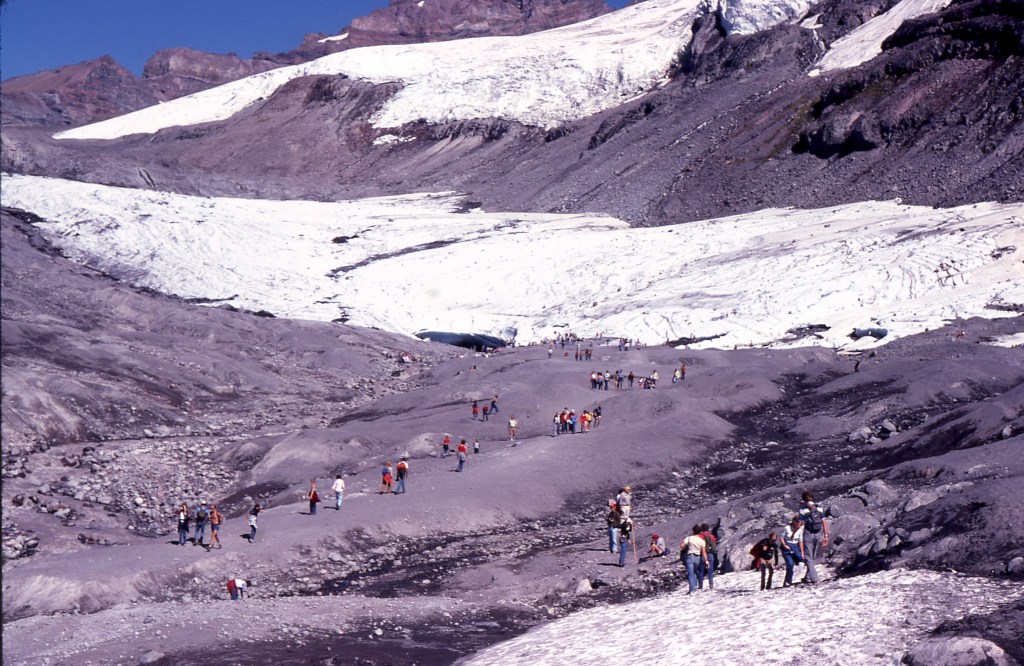
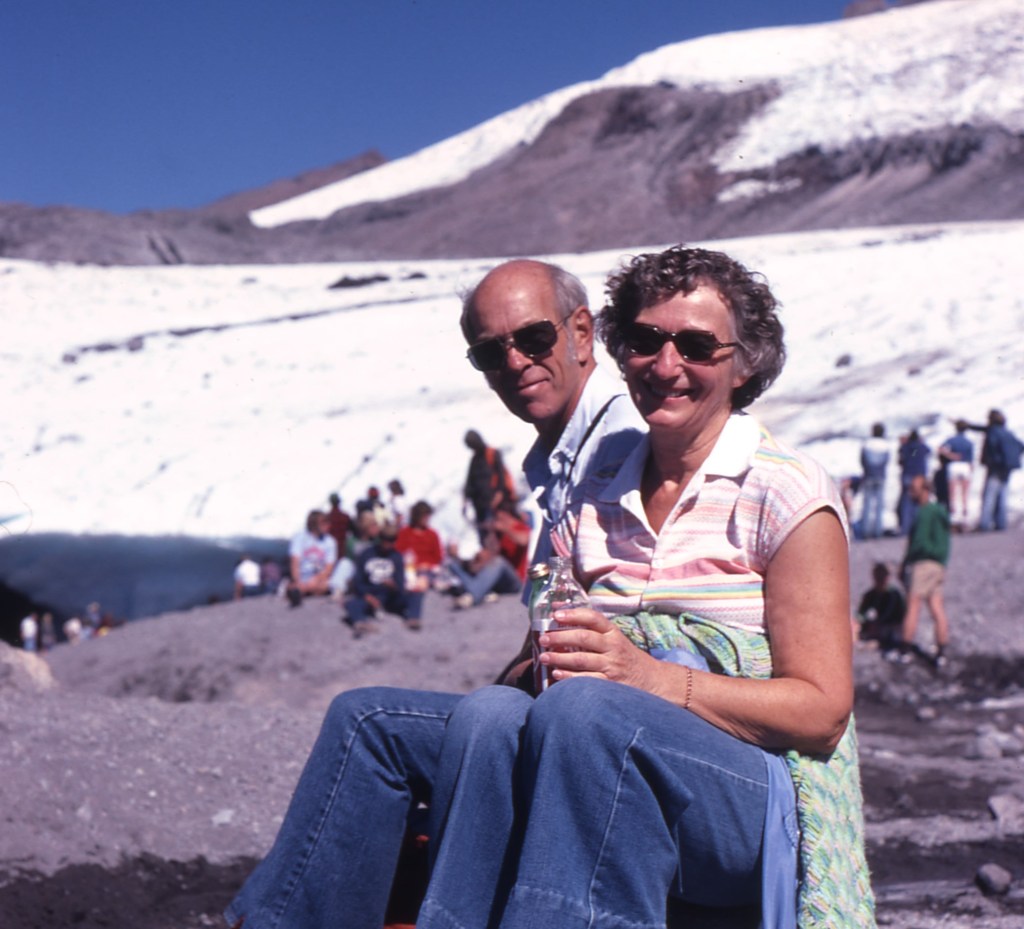
I would venture that I’ve driven through the National Park well over 100 times and have visited both Sunrise and Paradise multiple times. Back in the early 1980’s, the hubby and I – along with my parents – hiked up to the Paradise ice caves. It was a truly ethereal experience to be standing in a blue translucent cave made of ice. Today, they are gone.

As a newspaper reporter in Eatonville in 1979-80, I learned that the folks in Pierce County think of Mount Rainier as ‘theirs.’ Afterall, it was originally named Tahoma or Tacoma by the natives of the area. And it dominates the region.
One summer evening shortly after I moved to Eatonville, I was on the phone with one of the town council members to ask him a few questions about a story I was working on. It was around 8:30 p.m. and getting on towards sunset. We were talking when all of the sudden he says, “Strawberry Ice Cream.”
“Excuse me,” I replied, “What’s this about strawberry ice cream?”
“The mountain,” he replied, “Looks just like strawberry ice cream… and then it will be blueberry.”
And so it did. Although I didn’t have a view from my place of the mountain like he did, it only took a few steps outside my apartment and to the north for me to have a nice view of Pierce county’s ice cream ‘Sundae.’

But it was on a trip from Nashville to Seattle a few years ago which reminded me that not everyone understands what an impact Mount Rainier has on those who see and enjoy it regularly. I was seated on the aisle and as we approached Seattle, I knew we would be passing the mountain to the north. As its massive white flanks came into view through one of the windows a row down and across the aisle, I craned my neck for a look. My frustration grew as the couple directly across from me kept their window covering closed. No longer able to hold back I said to them, “You really should open your window. Mount Rainier is right next to us.”
The man slid the opening up and both he and his wife exclaimed over how close and how immense it was.
Then he proceeded to say to me “Are you sure that’s Mount Rainier?”
I suppressed a laugh at the absurdity of the question. It’s easily one of the most recognizable peaks in the world, especially when you are right next to it and its larger than life.
“Trust me,” I replied, “I grew up here and that most definitely is Mount Rainier. Isn’t it nice for the mountain to be out today?”
The links:



 There is a saying that he who gets to the patent office first matters more than who invented it. This is likely true for the invention of radio. Guglielmo Marconi – first to the patent office – filed on June 2, 1896, eclipsing others also working on the budding technology.


 The Energizer Bunny was also pink but instead of being one of a crowd which outlasts the others, this rabbit had attitude. It wore hip sunglasses. It was hot pink. It moved around the room on blue flip flop sandals. And it had a big ole bass drum with the word “ENERGIZER” emblazoned across the surface. In short, it had important elements of a great advertising campaign in that it was memorable and humorous. The bunny has appeared in over 100 commercials and has been featured on TV shows and in movies.


 So off we would go to get things. Our back to school supply list included Pee Chee folders, notebook paper, #2 pencils, and BIC pens. That was it.
 Note the words “multiplication table.” This was probably the most valuable thing a Pee Chee provided as we were expected to memorize this table. By the time you got up to the twelves, it got a bit difficult. The handy dandy Pee Chee came to your rescue. Of course our teachers knew this and we had to put our Pee Chee’s away during test time.
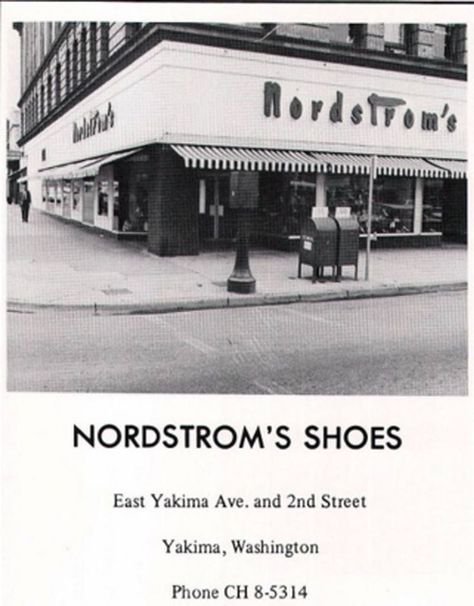 My mother would take me and my sister to Nordstrom’s Shoe store… in the 1960’s in Yakima that’s all it was… a shoe store. We would bypass all the beautiful shiny black patent leather shoes and the cute Mary Janes and go directly to the rack of clunky saddle shoes. There they sat, big, bulky, and ugly. They had brown soles thicker than a slice of French toast. Across their beige bodies was a second strip of stiff brown leather, with laces through the holes, just waiting to cinch your foot into bondage. Heaven forbid that you got shoes which fit… no, they had to be a bit big so you’d grow in to them and not grow out of them before the following June.
 pens of every hue. In fact, just writing about it inspires me to head to my nearest Office Depot Max to see what’s on sale. Unlike saddle shoes, office supplies never go out of fashion!
 Held annually in Eau Claire, Michigan, since 1974, the record ‘spit’ of a cherry pit is 93 ft 6.5 inches. The competition has been dominated by one family with the patriarch, Rick Krause, holding the record for longest spit (over 72 feet) until 1993. Since then, his son, Brian ‘Pellet Gun’ Krause has won 10 times with his record breaking discharge occurring the first week of July in 2003. In recent years Brian’s sons have also competed.
 Sweet cherries are grown most successfully in Washington, Oregon, California, Wisconsin, and Michigan (hence the location of the cherry pit spitting contest). Most sour cherry varieties are grown in Michigan, Utah, New York and Washington.
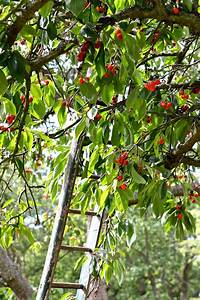 Picking cherries requires a delicate method. You must hold the fruit at the very top of the stem (stem less cherries are not saleable in the fresh market) and gently twist so that the stem is removed from the branch without pulling the spur off the tree. Then you place – do NOT drop – the fruit into the bucket. Lather, rinse, repeat. My rough estimates are thus: 80 cherries for a gallon times 4.5 gallons equals 360 cherries for one bucket. It takes a long time to pick 360 cherries plus, with one’s assigned ‘tree’, you also had to climb up 12 to 15 feet while balancing a bucket of heavy fruit.





 Today’s historical event really isn’t that much of an event but more an excuse to write about a topic which amuses this author. First of all happy 30th wedding anniversary to Kevin Bacon and Kyra Sedgwick. They were married September 4, 1988. Unlike a great number of Hollywood marriages, their marriage has lasted three decades and, apparently, they’ve only ever been married to each other!
 To find any actor’s ‘Bacon Number’ you can go to this link:


 When the heat arrives in July and August each year inevitably someone comments that it is the “Dog Days” of summer. What, exactly, are Dog Days?

 This year and last – as his body fat has diminished – he has a much more difficult time managing his internal temp. He’s frequently cold, even on the very hottest of summer days, and a battle rages over whether the thermostat is set to cooling or heating! Frequently the furnace is running and the indoor temperature is close to 80 degrees. Either my brother (who lives with my dad) or I will switch it to AC only to have dad turn on the furnace. He does this even if the outdoor temp is over 100 degrees. The picture to the left is one I took a few days ago in Yakima, right after switching the thermostat back to cool.
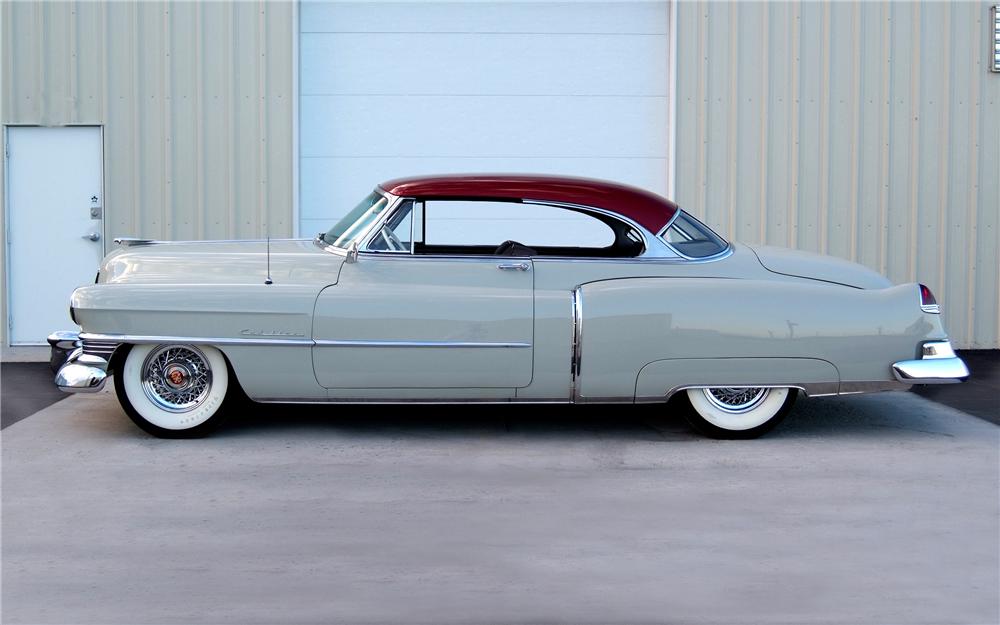 Speaking of which, there were several drive-in movie theaters in my hometown of Yakima, Washington. One evening my sister and I and two of our friends decided to go to the Fruitvale Drive-in (sadly, no longer there). The car my sister drove was a 1950 yellow Cadillac with a red roof; a hand me down from our grandparents. This tank of a car had all the whistles and bells popular in 1950 including a gauge which told you how good your driving was. Ok, not really, it had to do with gas mileage, but as children our grandfather told us it was evaluating his driving with an arrow that point to words like ‘poor’, ‘fair’, ‘good’ and ‘excellent.’ But, most important of all, it featured a movable spotlight affixed to the car just outside the driver’s side window. There was a handle inside the car to control the light.
