Tag Archive | travel

Don’t It Make My Brown Eyes Blue

And a few musings on Blue vs. Brown eyes

June 24th

This song, released in June 1977, was one of those rare pieces which successfully crossed over from country to pop. It was number one on the country chart for five weeks in the summer of 1977 and peaked at number two on the Billboard Hot 100 chart in late November 1977. It was kept from the top position by Debby Boone’s You Light Up My Life (YLUML). As I wrote in my blog about that song, there were any number of infinitely better songs during the number one run of YLUML, including this one. https://barbaradevore.com/2024/11/19/you-light-up-my-life-2/

Don’t It Make My Brown Eyes Blue catapulted artist Crystal Gale into stardom and she had a series of commercially successful songs which followed.

The Infallible Wikipedia shares:

“In 1975, ‘Wrong Road Again’ became Gayle’s first major hit. However, it was in 1977 when Gayle achieved her biggest success with ‘Don’t It Make My Brown Eyes Blue’. The single topped the Billboard country chart, crossed over to the top five of the Billboard Hot 100 and became a major international hit.

Gayle continued having success from the late 1970s and through late 1980s. Her biggest hits included ‘Ready for the Times to Get Better’ (1977), ‘Talking in Your Sleep’ (1978), ‘Half the Way’ (1979) and ‘You and I’ (1982).”

Don’t It Make My Brown Eyes Blue is one of those songs which has gained in popularity and critical acclaim over time. Also from the Infallible Wikipedia:

“The song became Gayle’s signature piece throughout her career. In 1978, the song won Gayle a Grammy Award for Best Female Country Vocal Performance. In 1999, the song was recognized by ASCAP as one of the ten most-performed songs of the 20th century. (snip)

In 2024, Rolling Stone ranked the song at #109 on its 200 Greatest Country Songs of All Time ranking.”

I had not intended to feature this as today’s Tuesday Newsday topic. But sometimes things just sort of take a serendipitous route. Yesterday, while on our way to Seattle, the hubby, my son, and me were driving south on I-5 from Mount Vernon and my son – who has been visiting for the past week – commented about the low cloud ceiling and gray skies and how, since it was the first full day of summer, shouldn’t be happening. I think he’s forgotten what it’s like here since he lives in Guadalajara, Mexico, and he’s acclimated to the sunny and hot climate.

Being that it was June 22 and one of the longest days of the year, one might think it should be sunny and bright. But nope. Over the weekend we got a ‘welcome to summer’ soaking from Mother Nature.

As we approach the Stillaguamish River, the cloud cover has now lifted and is several hundred feet higher. Of course I do what any self-respecting, blue-eyed, Western Washingtonian would do, I put on my sunglasses.

Just like my hubby and son did. Or not. Why? Because they do not have blue eyes.

Of course, that sends me down the rabbit hole of mental gymnastics and I start thinking about blue eyes vs. brown eyes and that then led me to start humming today’s featured song. See how easy that was?

But back to the brown vs. blue eyes and the problem blue eyed people have: light sensitivity.

According to Health.com:

“Several studies have found that people with light-colored eyes are more sensitive to the effects of light than people with dark-colored eyes. Researchers speculate this may be due to lower amounts of melanin (pigment) in light-colored eyes. Less melanin in the eyes may increase their susceptibility to the negative effects of sun and light exposure.”
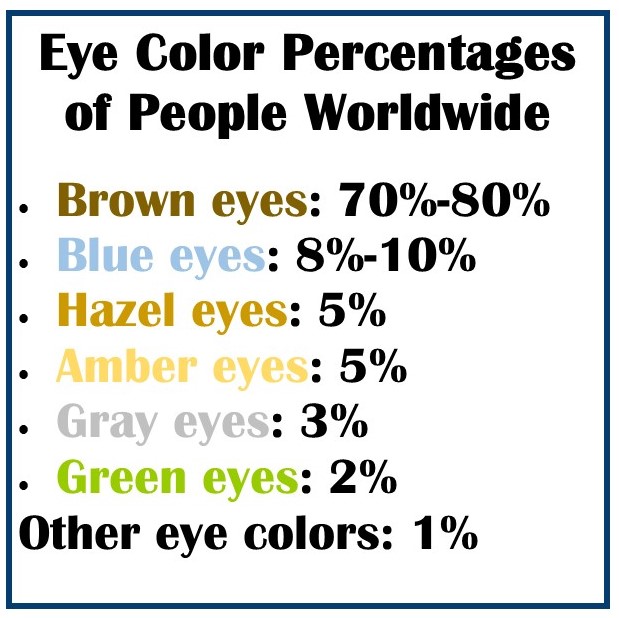
My son has teased me over the years about being a ‘blue-eyed freak.’ He’s not totally wrong. People with blue eyes make up only 8 to 10 percent of the human population as shown in the chart to the right:

Those of us who have blue eyes can trace the majority of our ancestry to northern European and Scandinavian countries. Finland, according to one report I saw, leads the world with a whopping 89 percent of its population boasting blue eyes.

I took a peek at my DNA results and learned that of the top 10 countries with the highest percentage of people with blue eyes, I match to seven of those countries – which makes up 93 percent of my DNA – including Finland with 13 percent of the total.

But back to the light problem. From the time I was a little girl, bright lights have always made me squint or even close my eyes. Bright lights when my eyes have adjusted to the darkness are just downright painful.

The hubby calls me a ‘darkie’ because I often move about the house without turning on lights. The way our lower level is set up is that we have a closet across from the bathroom near our bedroom. That closet has a motion-detecting light that is designed to turn on when one enters the closet. But sometimes, if you fly too close to the sun – er, opening – it will spring to life, flooding the area with blinding light. Okay, maybe that’s a bit hyperbolic.


Eventually we got a reasonable photo… notice the hubby is unfazed by the light.
It took several attempts to get photos that day due to my inability to keep from painful squinting…

But I have learned to be very, very careful how I walk past that doorway when I get up in the mornings so as to not trigger the light and cause painful, but temporary, blindness. I keep as close to the wall opposite as possible and slow my gait as I float past, nearly a ghost in the predawn dark.

It’s either that or wear sunglasses at night. But that’s a whole different song for another Tuesday Newsday.

So, I think my mantra, rather than “Don’t It Make My Brown Eye’s Blue” is really, “Don’t it Make my Blue Eyes Squint.” Somehow that’s not nearly as catchy as Crystal Gayle’s 1977 hit song.

The links:

https://en.wikipedia.org/wiki/Don%27t_It_Make_My_Brown_Eyes_Blue

https://en.wikipedia.org/wiki/Crystal_Gayle

https://en.wikipedia.org/wiki/List_of_Hot_Country_Singles_number_ones_of_1977

https://www.health.com/are-blue-eyes-more-sensitive-to-light-11690558

https://www.insidermonkey.com/blog/top-10-countries-that-have-the-most-blondes-and-blue-eyes-as-a-percentage-of-population-605109/?singlepage=1

https://worldpopulationreview.com/country-rankings/eye-color-percentage-by-country

A Fasten-ating Beginning: Velcro

The Velvet Hook

May 13th

I suppose that this Tuesday Newsday topic falls in the category of ‘Geeky Musings’ as I doubt this product, which was patented in 1955, is ever given much – if any – thought for most people. It was on May 13, 1958, when the term ‘Velcro’ was trademarked by its inventor.

Inspired by burrs which clung to his dog, the inventor spent over a decade in search of how to replicate one of nature’s stickiest plants. The Infallible Wikipedia tells us:

“The original hook-and-loop fastener was conceived in 1941 by Swiss engineer George de Mestral, which he named velcro. The idea came to him one day after he returned from a hunting trip with his dog in the Alps. He took a close look at the burs of burdock that kept sticking to his clothes and his dog’s fur. He examined them under a microscope, and noted their hundreds of hooks that caught on anything with a loop, such as clothing, animal fur, or hair.”

What followed was a period of trial and error as he sought to make his tiny hook and eye concept a reality. Also from the Infallible Wikipedia:

“The fastener consisted of two components: a lineal fabric strip with tiny hooks that could ‘mate’ with another fabric strip with smaller loops, attaching temporarily, until pulled apart. Initially made of cotton, which proved impractical, the fastener was eventually constructed with nylon and polyester.

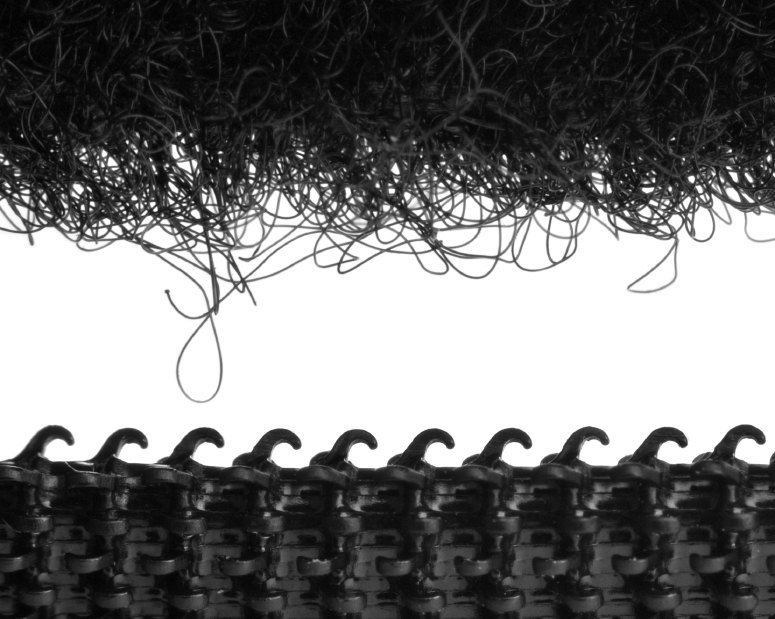
Up close and personal with velcro

De Mestral gave the name Velcro, a portmanteau of the French words velours (‘velvet’) and crochet (‘hook’), to his invention, as well as to the Swiss company he founded; Velcro SA.

At first, the applications for Velcro were astronauts space suits and then for ski clothing. For me, however, Velcro really came into its own when it was incorporated into children’s shoes and clothing. It was, for mothers everywhere, a game changer.

When I was a child there was no greater accomplishment than learning how to tie my shoe laces, or being able to buckle my shoe strap, somewhere around age 4 or 5. My mother mostly put me in slip on tennis shoes, thus avoiding the tedious task of tying and then re-tying the laces of shoes on small children.

Even small girls can enjoy Adidas shoes with velcro fasteners

As I was contemplating Velcro, I could not recall any exact moment or time when it came into my conscious, although it was probably when my children were babies. While the first shoes my son had when he started to walk did have laces, my daughters footwear featured a hook and loop fastener. At some point both my children learned to tie their laces but nowadays I do wonder if that is a skill which has been lost with the proliferation of Velcro fastened shoes.

David Letterman attached to a wall with the aid of Velcro.

The first shoes I recall having Velcro were a pair of black Skechers in a ‘Mary Jane’ style. Instead of a buckle on the narrow strap, it was secured with Velcro. Which worked fine for a time, but eventually it started to fail as the Velcro lost its stickiness. The technology from those early 2000’s pair of shoes to now has been greatly improved. I easily have a half dozen pairs of sandals, particularly, which all have Velcro straps and none have the failure problem like those early Skechers.

Of course, Velcro is not just for shoes. As I look around my house I find it in a variety of applications. Like the narrow strips I have in my office to control unruly cords. Or the ones which hold our Good-To-Go pass to the windshield of our vehicle. There’s Velcro on the pockets of bags and cases which I use daily. I have a Ziplock bag full of hook and loop fasteners in various colors and sizes as one never knows when they will be needed.

Taking outdoor inflatibles to a new level with velcro ‘barfly’ suits

Back in the 80’s a phenomenon known as ‘Velcroing’ became popular when late night TV personality David Letterman featured it on his program. The concept was simple, a person wears clothing with one side of the Velcro facing out and then using a trampoline jumps up onto a wall with the other half of the Velcro connection and becomes attached to the wall some 10 to 15 feet high.

It has since become entertainment for parties and in drinking establishments and is known, colloquially, as “Bar Fly” or “human wall jumping.” What could possibly go wrong? But leave it to people to always come up with new and innovative ways to use a product, especially one like Velcro which has stuck around for 70 years and shows no sign of loosening its grip anytime soon.

So cheers to George de Mestral whose curiosity and dogged persistence led to the invention of Velcro, a creation we might be able to live without, but should be thankful we don’t have to.

My friend Roger shared that he used Velcro to attach his vinyl album collection to the wall of his office. Very creative!

A few links:

https://en.wikipedia.org/wiki/Velcro_Companies

https://en.wikipedia.org/wiki/Hook-and-loop_fastener

https://scholar.lib.vt.edu/VA-news/ROA-Times/issues/1992/rt9201/920127/01250332.htm

https://knockoutentertainments.com/bar-fly/

https://youtu.be/-SGhBvwLGIs?si=0b0EikqUtRW-41k1 (David Letterman show)

A Font of Fun? No Fooling!

April 1st

You’d pretty much have to be living on an island far from civilization to NOT know that today is April Fool’s Day. It’s celebrated each year on April 1st.

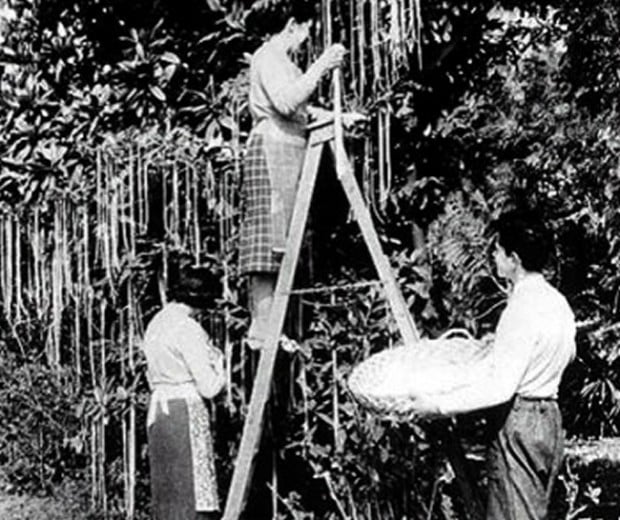
Considered by many as the greatest hoax of all time is this 1957 BBC documentary about harvesting spaghetti from trees. https://en.wikipedia.org/wiki/Spaghetti-tree_hoax

The day has murky beginnings which date back hundreds of years. Some say that Geoffrey Chaucer, in the unreadable ‘Canterbury Tales’, makes reference to the day. But that’s disputed. In 1508 some obscure French poet I’ve never heard of wrote about ‘poisson d’avril’ – translated ‘April’s Fish’ – which apparently doesn’t mean fish but ‘fool.’ Yet another theory is that at one time the new year was marked as being on March 25th but was then changed to January 1st (Actually March 25th makes more sense what with spring, birth, and renewal, but whatever). Those who clung to their old traditions were derided as Fool’s and I guess it took 6 days of their protests against moving New Years before someone decided to take any action.

The previous paragraph is, however, as in depth as I plan to go regarding the origins as, quite honestly, it’s a bit boring for this day devoted to mirth and mischief. Sadly, I found the Infallible Wikipedia article to be deadly serious and who wants that?

Anyway, I had soon climbed down the rabbit hole that is the internet and found a website truly worthy of April Fool’s Day: The Museum of Hoaxes. OMG. I knew I could spend hours reading about all the clever things people have conjured up to fool others. Decisions, decisions. WHICH of the hundreds of hoaxes was worthy of Tuesday Newsday fame? It was a weighty decision.

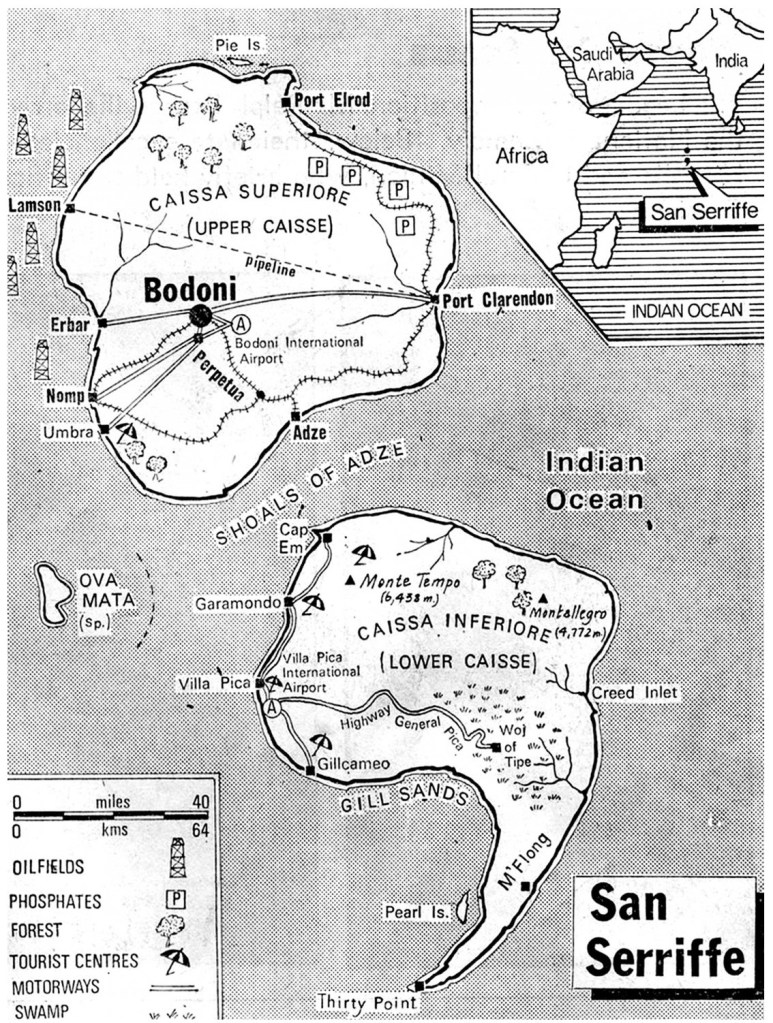
The islands of San Serriffe are a Perpetua(l) delight

Presenting the Island of San Serriffe!

As a writer, word nerd, and someone whose earliest childhood goal was to be able to create programs, newsletters, flyers, etc., the name San Serriffe resonated.

The year was 1977 and the British newspaper, The Guardian, was looking for something fun as a joke for their April Fool’s Day edition. Brainstorming occurred and the results were hilarious. From the hoaxes.org website:

“On April 1, 1977 the British newspaper The Guardian published a seven-page ‘special report’ about San Serriffe, a small republic located in the Indian Ocean consisting of several semi-colon-shaped islands. A series of articles described the geography and culture of this obscure nation.

The report generated a huge response. The Guardian‘s phones rang all day as readers sought more information about the idyllic holiday spot. However, San Serriffe did not actually exist. The report was an elaborate April Fool’s Day joke — one with a typographical twist, since numerous details about the island (such as its name) alluded to printer’s terminology.

The success of this hoax is widely credited with inspiring the British media’s enthusiasm for April Foolery in subsequent years.”

The best part of this story is, for me, the map. These people had waaaaaay too much time on their hands apparently.

The capital of San Serriffe: Bodoni; There’s Monte Tempo and Montallegro; Creed Inlet and Thirty Point; Villa Pica International airport and a beach town named Garamondo. Truly, the map is a font of fun.

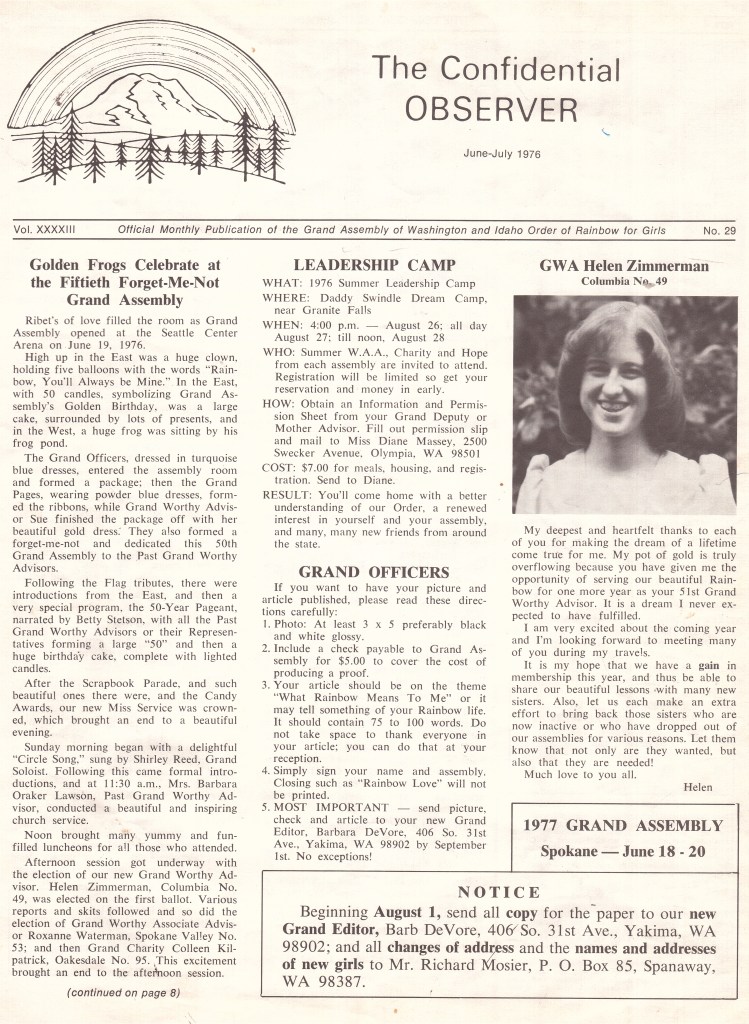
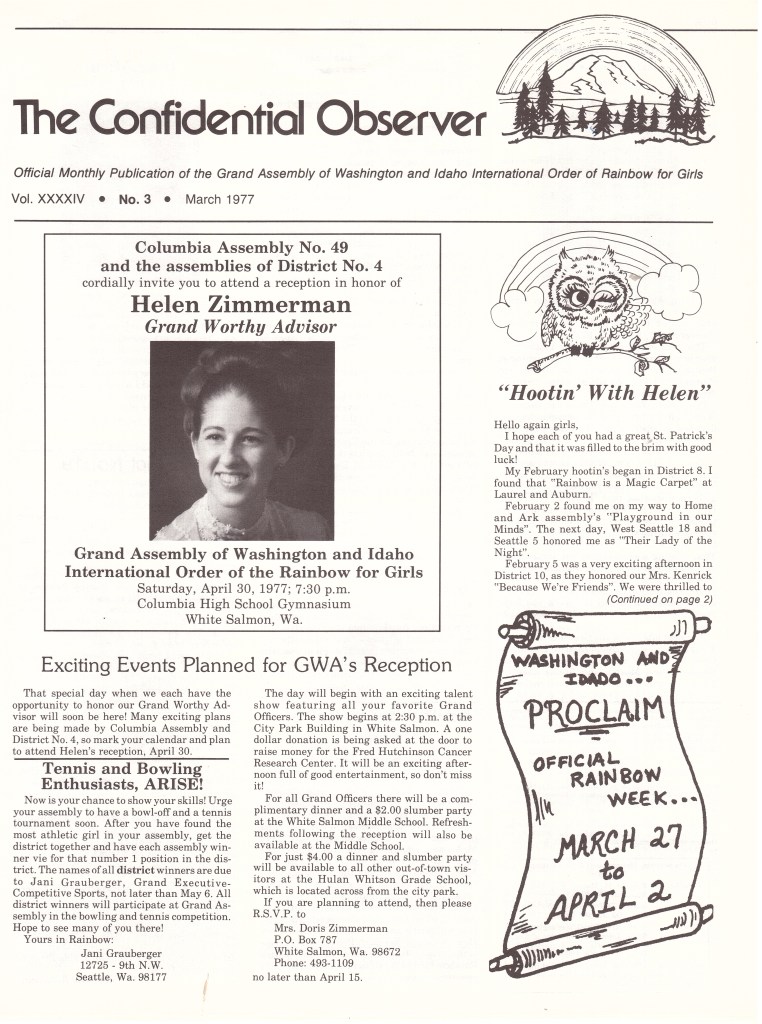
I’m a bit sad that it took me over 40 years to learn about San Serriffe since, in 1977, I was heavily involved in the world of publishing. I was one of three editors for the weekly Yakima Valley Community College “Galaxy” and also the youth editor of the Washington Idaho Rainbow Girls newsletter titled “The Confidential Observer.”

I was hungry to learn everything there was about journalism, writing, and layout. One of my big passions was experimenting with new fonts. I could not get enough of them!

The adult advisors for the Rainbow Girls publication, I’m certain, had no idea what hit them that year as I shook things up, at least in the world of Fonts. Well, and layout and artwork and, pretty much everything I was capable of changing. The fonts went from Helvetica and Times New Roman to Garamond and Bodoni to name a couple of them.

I changed the mast head; I varied the font sizes; I used boxes around things to emphasize and tried to make it more aesthetically pleasing.

Two versions of the front page of the Rainbow Girls paper. Top is how it looked the issue before I started changing things. Bottom is how it looked six months later.

Now, way back in the dark ages, publication was not a simple thing. First I had to get articles from people from all over the states of Washington and Idaho who mailed them in envelopes. Some of these came handwritten on notebook paper, full of spelling and grammatical errors. I often had to retype and all had to be edited. When that was done I would mail it all from where I lived in Yakima to the printers in Tacoma, who then retyped it (with the fonts I’d chosen) and created galleys to fit our three-column format. These were then returned to me via mail. I would cut – with an exacto knife – the galley articles and glue the proofs on to paper in the correct configuration with everything marked as to where it was supposed to go and then would cross my fingers that they did it right. Spoiler: not always.

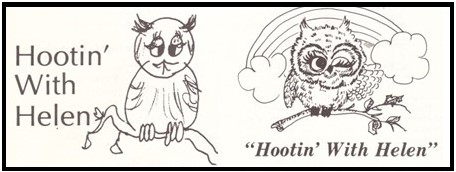
It was the fall of 1976 and the artwork that was to top the column for our state president that year had gotten lost by them. I sent in my package a hastily drawn picture (I’m no artist!) with a note attached saying “this is sort of what the artwork looks like that’s missing” and asking them to look around for it. Instead of reaching out, however, they ‘published’ what I had sent. It was awful and upsetting and bothers me to this day. Eventually, they found the missing clipart.

To this day I cannot fathom any professional printer looking at the owl on the left and thinking that’s what they should print…

With the introduction of the Apple Macintosh and their GUI (Graphical User Interface) layout in the mid-1980’s, I was finally able to create a newsletter on a computer and print it out. It was then I got my first laser printer. It was still a clunky process and the clipart was lacking, but it moved me forward.

Over the years as the GUI technology has improved, my ability to create has expanded. Artificial Intelligence has made it even easier.

So hats off to San Serriffe Island. I found the above picture of the island through an easy Google search, saved it as a jpg, and then printed it on my less than $200 Epson printer. I’m sticking it in a frame and hanging it in my office and will look at it often and cheer the fun of April Fool’s Day and 1977, the year of San Seriffe’s creation.

As always a few links:

https://hoaxes.org/archive/permalink/san_serriffe

https://hoaxes.org/af_database/display/category/guardian

https://en.wikipedia.org/wiki/April_Fools’_Day

The Sigma Kappa Connection

The actual place which inspired the fictional Gamma Alpha Beta Sorority

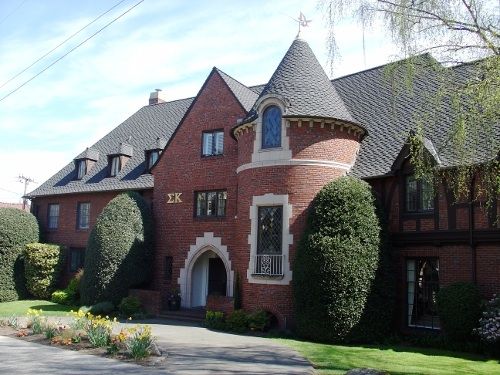
The Sigma Kappa sorority house at the University of Washington is on the National Historic Site.

The Sigma Kappa sorority house at the University of Washington is an enchanted place. The grandeur begins outside the front of the house with its classy brick façade and a stunning mix of Victorian and Tudor architecture. Truly notable is the three-story high round turret.

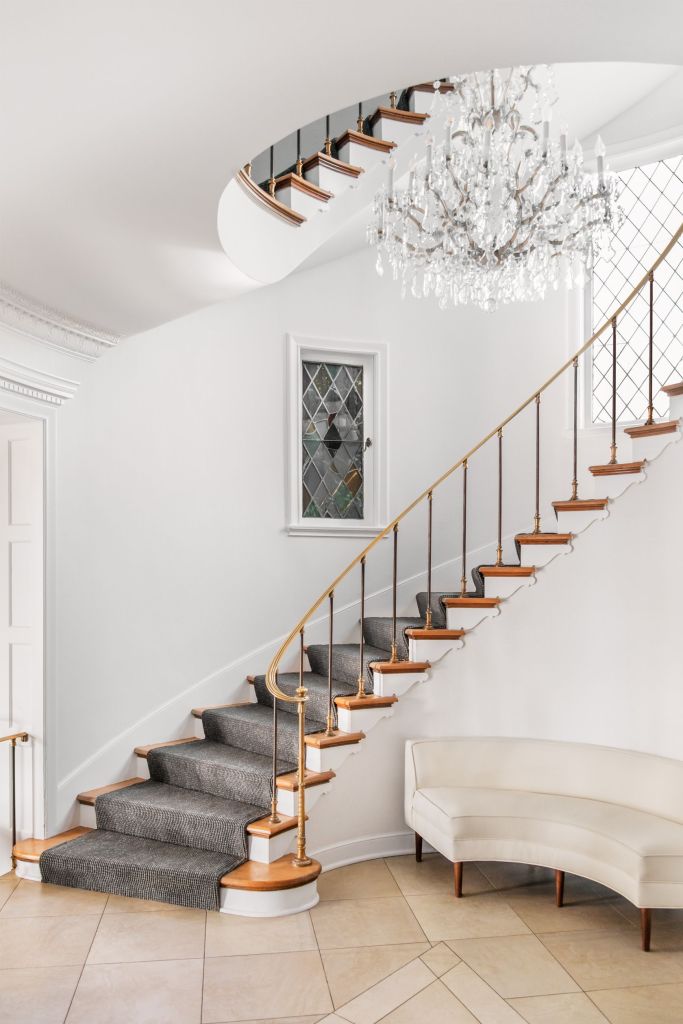
Once inside, the turret does not disappoint with its centerpiece being a wide and sweeping circular staircase which invites all eyes upward towards a magnificent crystal chandelier.

For a starry-eyed child, that staircase invited you into a place of fantasy and daydreams; up the stairs one would climb and promenade down them as if a princess, creating stories in one’s head.

Photo of the staircase as found on Pinterest

My first visit to this magical place was likely in the early summer of 1963. My grandmother, Alma DeVore, had taken a job as the housemother and, with the students gone for the summer, invited my family to come visit her at her new job.

I have no idea how many days we stayed, or if we even slept at the house. My older by two years sister says we stayed nearby at our uncle’s house. I was five at the time and I remember little about the visit to Seattle and the Woodland Park Zoo and more about the Sigma Kappa house.

There was a skybridge which connected the formal living areas to the dining hall and kitchen. In the basement were all sorts of mysterious rooms including one painted bright purple which we were told was the chapter room. Around every nook there was another cranny.

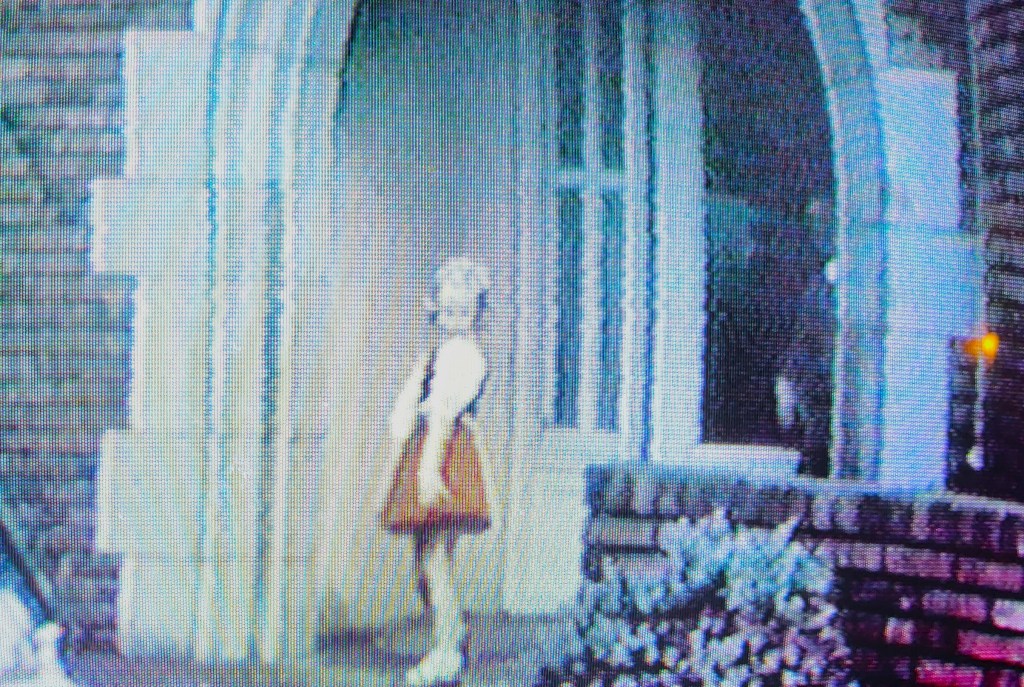
The author captured on a grainy video from 16 mm home movies 1963

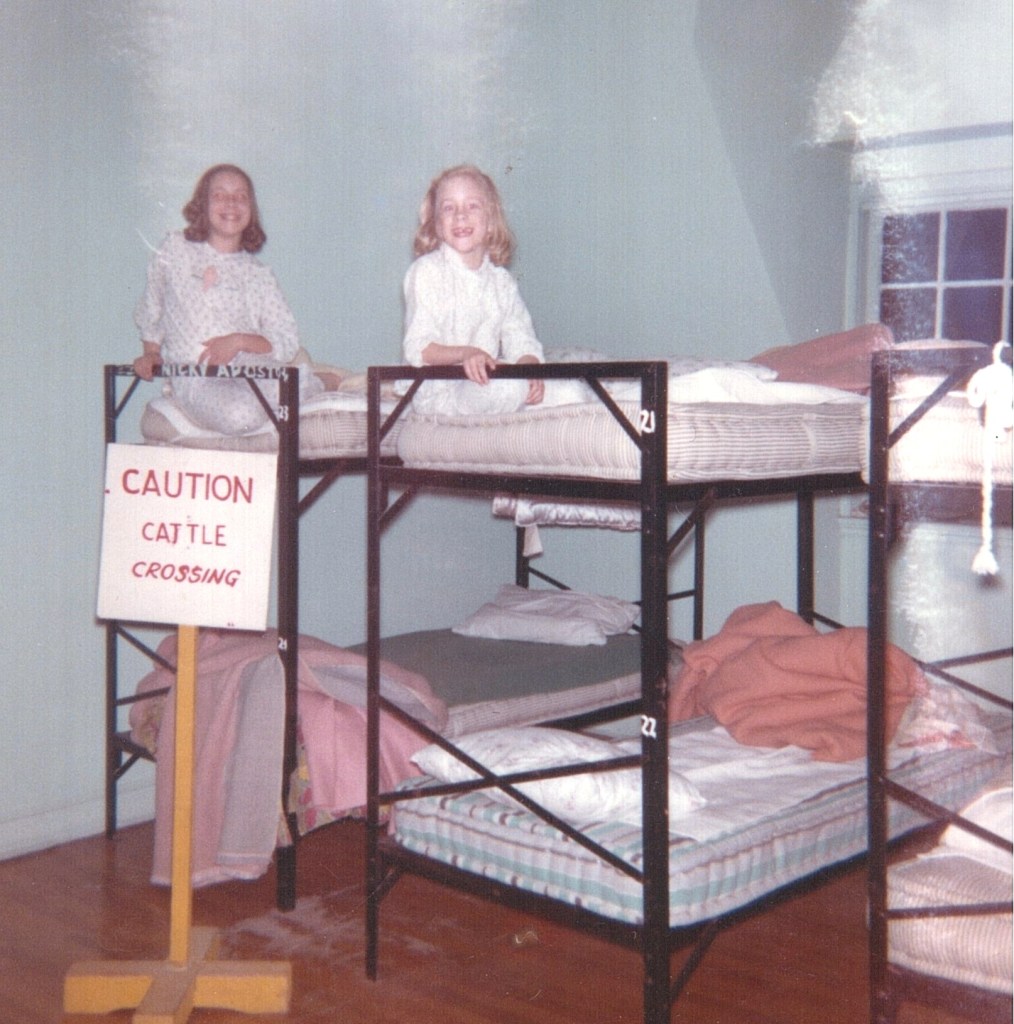
Hallways were lined with closed doors to, undoubtedly, the private rooms of the members. At the very top level was a long sleeping porch with parallel rows of bunk beds where all the members slept. There was a back staircase leading to new and interesting spaces. It was the ultimate place to play hide and seek as you could scurry up one set of stairs and down another and through different corridors.

Through photos and documents which she had kept – and are now in my genealogy collection – I’ve determined that my grandmother must have arrived as the housemother beginning in January of 1963.

In 1946, the opportunities for women to earn a living were limited. On September 17th of that year she found herself a widow. Here she was, 46 years old, and with – at most – a high school education; she had no marketable skills beyond having raised three children: my uncle Lyle, my dad, Vince, and their younger sister, Arlene; and managing her own household.

Fortunately for her, she lived in Walla Walla, Washington at the time and was hired as the housemother for the Tau Kappa Epsilon (TKE) fraternity.

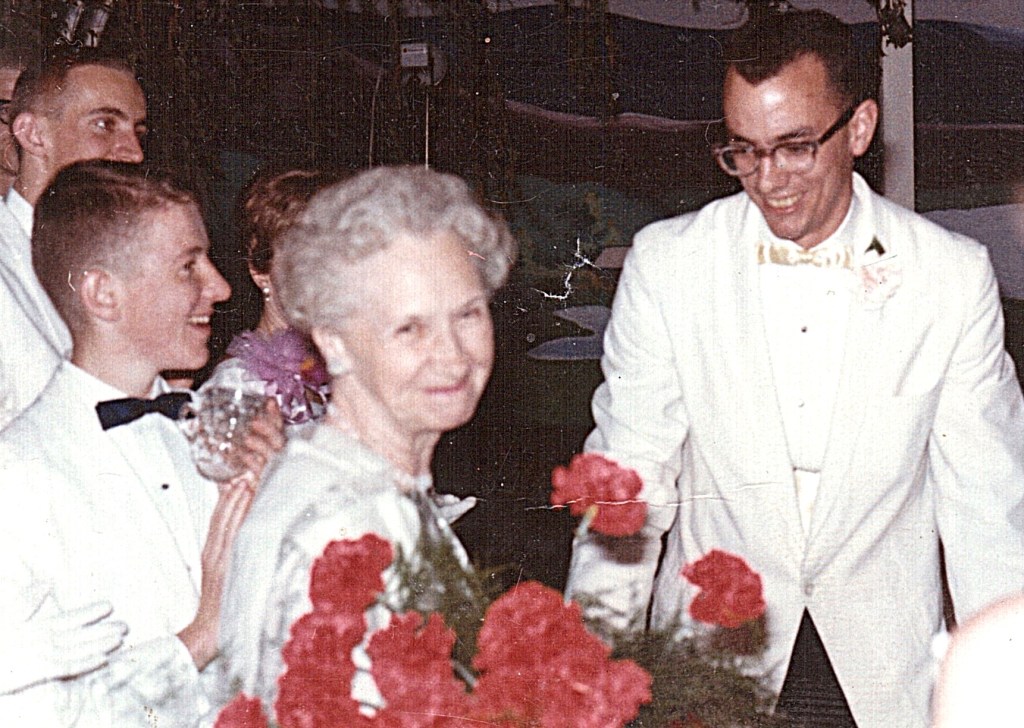
My grandmother with the TKE fraternity members at Whitman College in late 1962 at her Farewell party.

The TKE years were good ones for her from what I’ve been told. She enjoyed the young men who were members and there was a camaraderie with the other housemothers. I can’t say for sure why, exactly, she left Whitman and took the job at the Sigma Kappa house except that it brought her closer to my Uncle Lyle and his family who moved to the Ravenna neighborhood in Seattle in the mid-1950’s. Although my parents lived in Walla Walla after both graduating from Whitman and by oldest brother having been born there, my family had left the community shortly after his birth as my dad had been transferred to Moscow, Idaho with his job at National Cash Register.

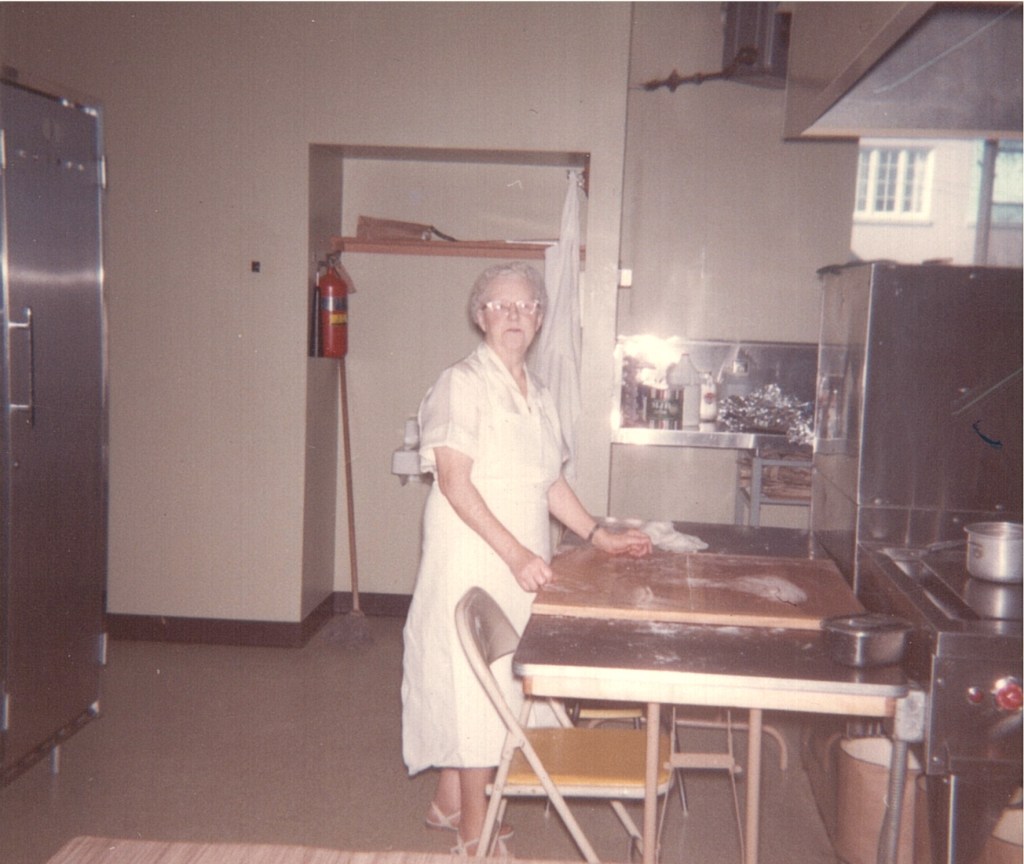
Cook Anna Blomgren in the Sigma Kappa kitchen 1965
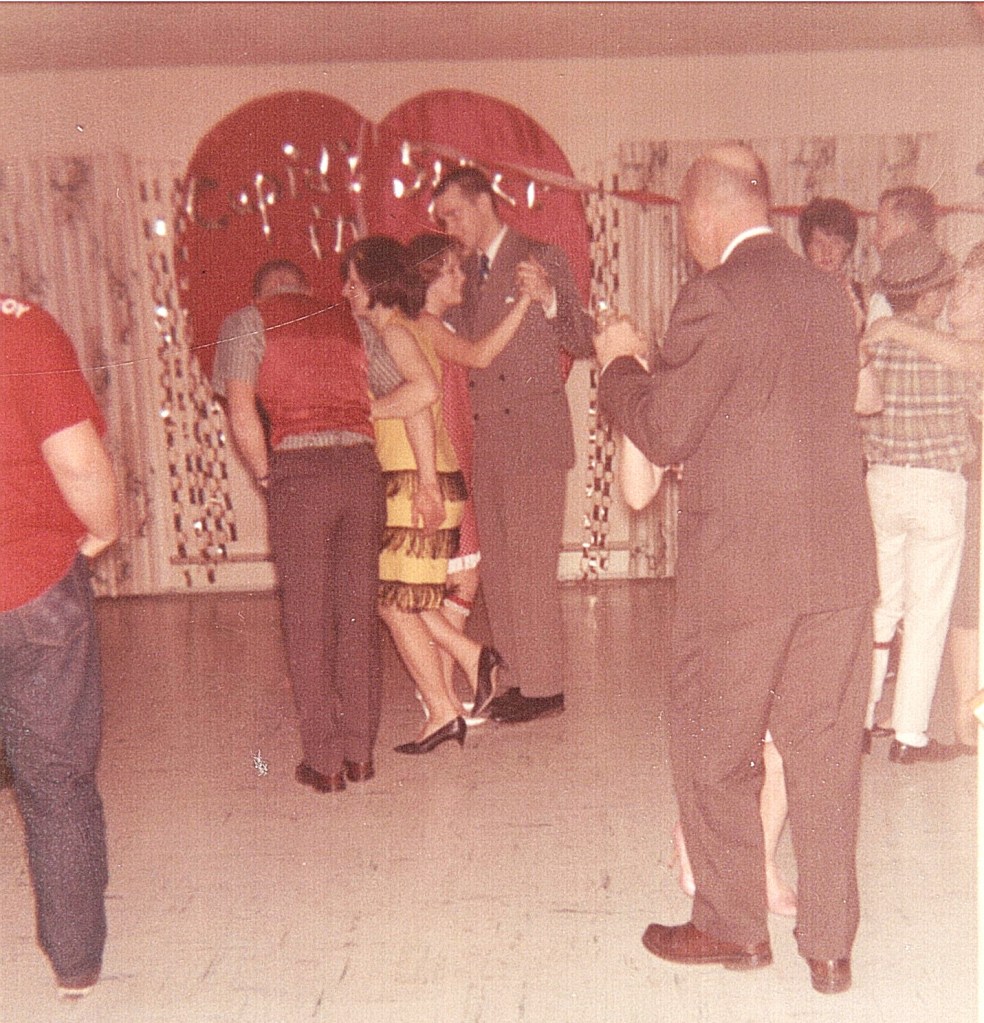
Valentine’s Day ‘Gay 90’s’ shared dance with the Zeta Tau Alpha sorority February 1966

The only other time I know for sure we visited her there is in March 1965. That winter, in Yakima, Washington, where I grew up, the entire town is abuzz. Competing in the State AA Basketball playoffs were our crosstown rivals: D.D. Eisenhower (Ike) and A.C. Davis high schools.

The University of Washington was, I suspect, the best possible choice to be closer to one of her children and family and be able to support herself.

My dad, who had left National Cash Register 1961, returned to college to get a degree in Education, now taught Washington State History to ninth graders. He loved teaching and was invested, particularly, in the local sports community. At the end of the Region 4 semi-final round on March 13th, Ike lost to Davis who was now poised to play at the Seattle Center Coliseum the next Friday.

Although neither of my brothers went with us – my oldest brother attended Ike and would not have anything to do with Davis – my Dad was undeterred and my sister and me – now ages 9 and 7 – were loaded in the 1960 pink Dodge station wagon, and drove with our parents to Seattle on Friday, March 19th.

While I don’t recall a lot of the details, I do know that it was the UW’s Spring break, so the house was empty of sorority girls. And I got to live out every fantasy I had about that house. I was in heaven.

My older sister (left) and me on the Sigma Kappa sleeping porch March 19, 1965.

That evening, while our parents went to the basketball games, my sister and I stayed with our grandmother and even got to sleep on the sleeping porch!

Davis won and would be in the championship game the next evening! Once again, we hung out with grandma while my parents went to the game, my dad thrilled when Davis beat Roosevelt 66-49 for the 1965 AA state basketball championship.

Sometime late that evening, our parents arrived back at the Sigma Kappa House, and put my sister and me to ‘bed’ in the back of the Dodge station wagon. We traveled home that way, snuggled in sleeping bags with our heads on pillows that let us look up at the sky while we drove through the dark mid-March night.

My last memory of that trip is of looking up at the snow falling that night on Snoqualmie Pass, swirling in mesmerizing chaos, with the thick flakes illuminated by car headlights shining through the window behind our heads.

Not the DeVore family car, but ours WAS this same pink color and, apparently, those children also rode without seat belts in the back of the wagon.

My grandmother, born March 15, 1900, seems to have retired at the end of the 1966 academic year. Some 15 years earlier she had bought a house in Spokane. She had it converted to a duplex which she rented out for all those years when she was a housemother! In going through her papers, it was apparent that, despite not having a college degree, she was a determined woman who did not wallow in her grief, but pulled on her work boots to insure her own future. She retired to Spokane and lived in the left half of the duplex, renting the right half out until her much too early death in January 1970.

I have never gone back to the Sigma Kappa house. I think if I did it would seem smaller and less grand than my memories. Instead, it has morphed into the Gamma Alpha Beta sorority, as much a ‘character’ in ‘The Darling of Delta Rho Chi’ as Elise, Riley, Jack, and Virginia.

A few links:

Designation as a National Historic Site:

Have to have one from the Infallible Wikipedia https://en.wikipedia.org/wiki/Sigma_Kappa

A link to the official chapter page: http://washington.sigmakappa.org/

Program from the 1965 State AA basketball championship: https://issuu.com/tacomasportsmuseum/docs/2018.29.02

Article from the Yakima Herald Republic:

My Wawona

Like Yosemite National Park, it’s a treasure

October 1, 2024

A Tuesday Newsday Classic

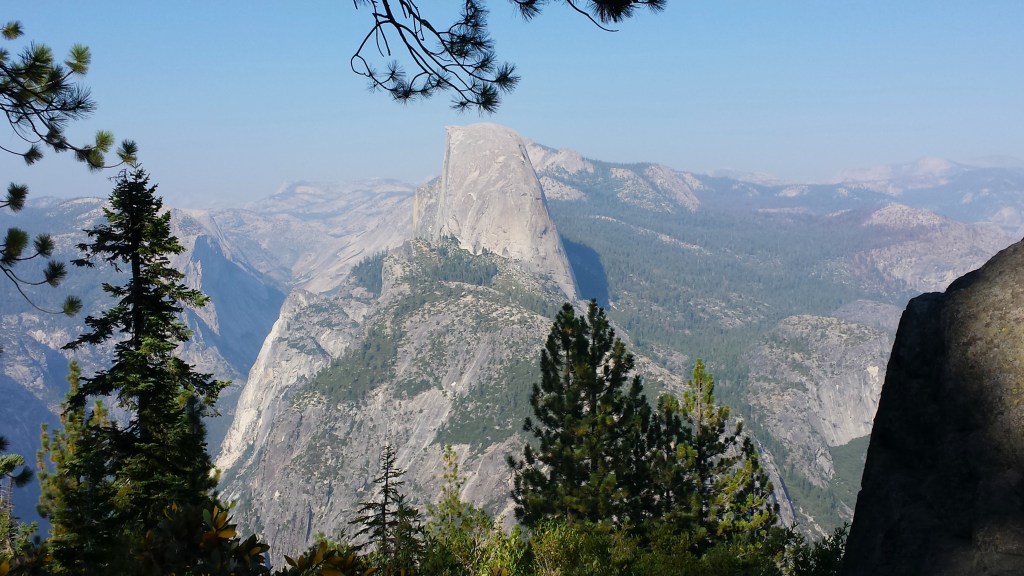
Half Dome, Yosemite National Park, from Glacier Point overlook September 2015

October 1, 1890 marked the official inclusion of this region into the newly formed National Park System. Long before that, however, the Yosemite Valley had inspired the natives who resided in the area as well as the early white settlers.

It was, contrary to popular belief, James Mason Hutchings and artist Thomas Ayres who were the first Americans to tour the area in 1855.

From the Infallible Wikipedia:

“Hutchings and Ayres were responsible for much of the earliest publicity about Yosemite, writing articles and special magazine issues about the Valley. Ayres’ style in art was highly detailed with exaggerated angularity. His works and written accounts were distributed nationally, and an art exhibition of his drawings was held in New York City. Hutchings’ publicity efforts between 1855 and 1860 led to an increase in tourism to Yosemite.”

Although the greater Yosemite area had been set aside by Congress in 1864, the Valley and Mariposa Grove were ceded to California to manage as a state park. The two areas had seen an influx of homesteaders and were being rapidly commercialized as well as being used for the grazing of sheep and cattle; the old growth sequoias were being logged.

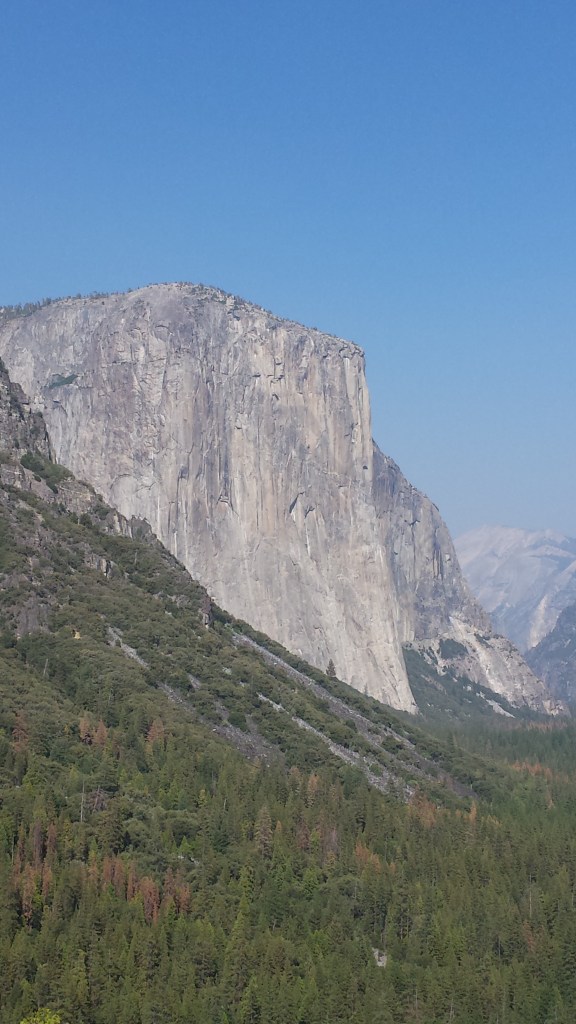
The iconic El Capitan

Most people associate the founding of Yosemite with early environmentalist John Muir. Rightly, he is credited with not only pushing for park expansion but also lobbied for the federal government to take back the iconic valley and grove.

Also from the Infallible Wikipedia:

“It was because of Muir that many National Parks were left untouched, such as Yosemite Valley National Park. One of the most significant camping trips Muir took was in 1903 with then president Theodore Roosevelt. This trip persuaded Roosevelt to return ‘Yosemite Valley and Mariposa Grove to federal protection as part of Yosemite National Park.’”

The years long efforts paid off when, in 1906, Roosevelt signed a bill which stripped the two areas still managed by California from the state and they were returned to the federal government which finally created a unified Yosemite National Park.

One trip to Yosemite is all it takes for a person to understand the grandeur and how special a place it is. From towering El Capitan, to the massive Half Dome, or the fascinating Tuolumne Meadows, Yosemite is a visual feast.

And the hubby and I wondered, when we visited in September 2015, how come it had taken us so long to get there. We arrived on the day after Labor Day which was a good thing as the summer crowds were gone. Reservations are generally required months – if not a year – in advance for the various hotels. I figured we were out of luck but checked anyway as we drove south a few days before our planned stay. What a surprise! There were rooms available at the Wawona Hotel or space in ‘dry’ tents. We opted for the hotel.

It was only after we arrived at the park that it dawned on me that the Wawona Hotel was nowhere near the Yosemite Valley. That day had turned into a driving ordeal. My hubby suffers from vertigo. Being close to any ledge can trigger a sensation of spinning as well as nausea. Knowing this, it was my duty to do the driving so that he could close his eyes as needed when navigating cliff-side roads.

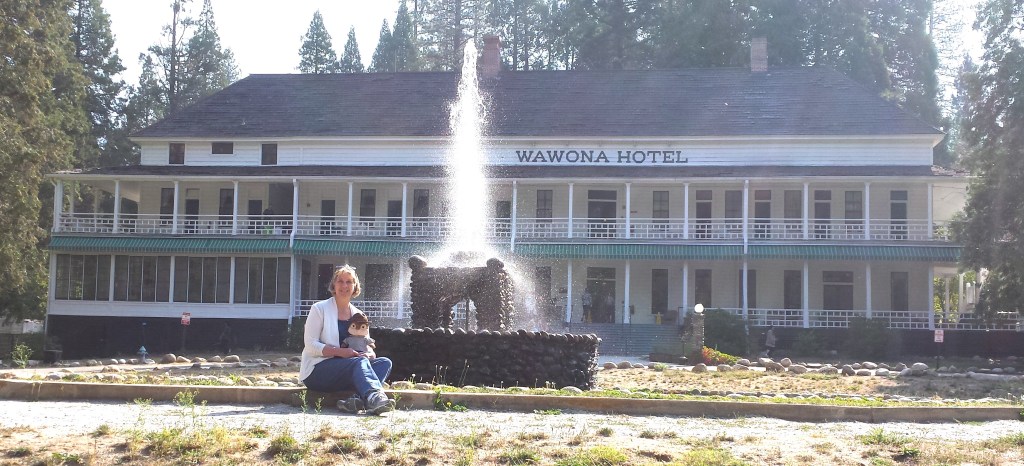
The author, along with Alvin the Chipmunk traveling companion, at the Wawona Sept. 2015

Up, up, up we traveled from the eastern side of the park to the 9,943-foot-high Tioga Pass – the highest mountain pass in California. Come to find out, THAT was the easiest road. From there we wound our way through Yosemite’s high country. Then we had to go down. From Tuolumne Meadows – elevation 8,619 feet – to the Valley floor was a 4,619 foot descent. And all of it seemed to be a series of endless switchbacks and curvy roads carved in to the sides of mountains.

It was with a sense of relief we reached the bottom when it hit me… Wawona was another 30 miles which we had to add to the 230 we’d already traveled that day. No rest for the driver as the road climbed back up the other side through yet another series of switchbacks, cliffs, and amazing vistas.

Now close to sunset, we found the hotel and were charmed at the thought of staying in an 1870’s structure.

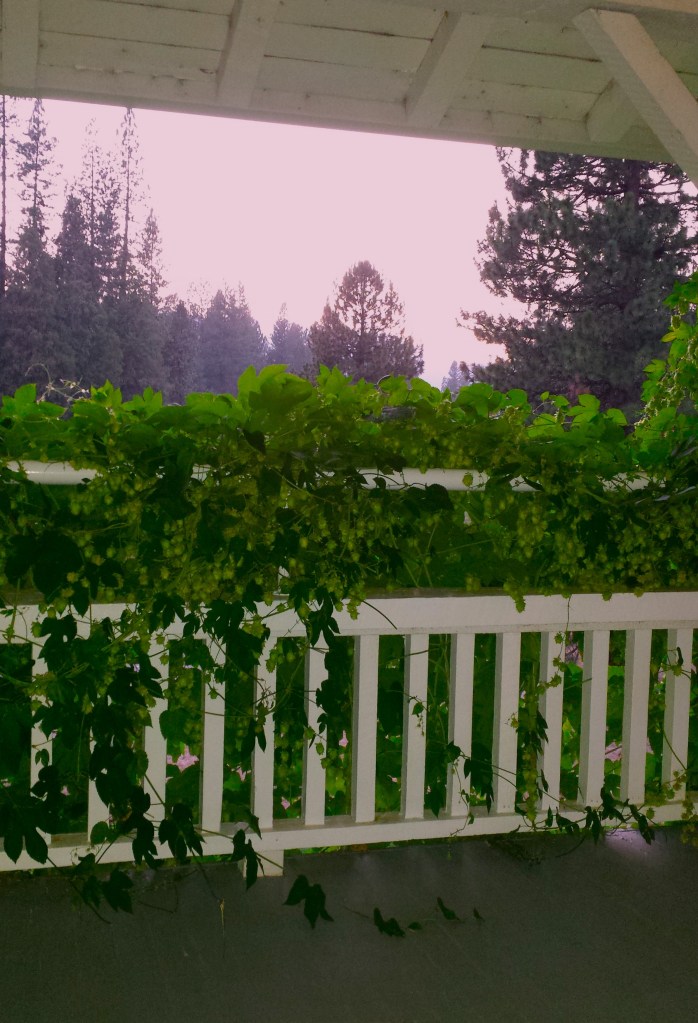
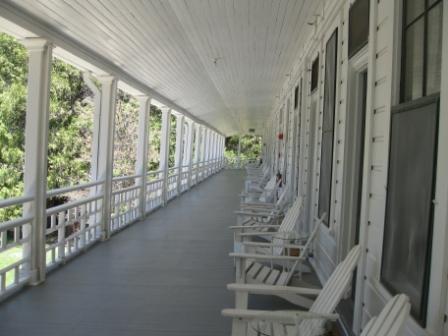
Our room was in the more recently added section… built at the turn of the last century. Located at the far western end of the first floor, the room opened out on to a wide veranda adorned with honeysuckle.

But that’s where the charm ended. The room itself featured a double bed and a twin bed. There was a sink attached to the wall next to the twin bed with a door in the wall next to it. The door, however, was locked.

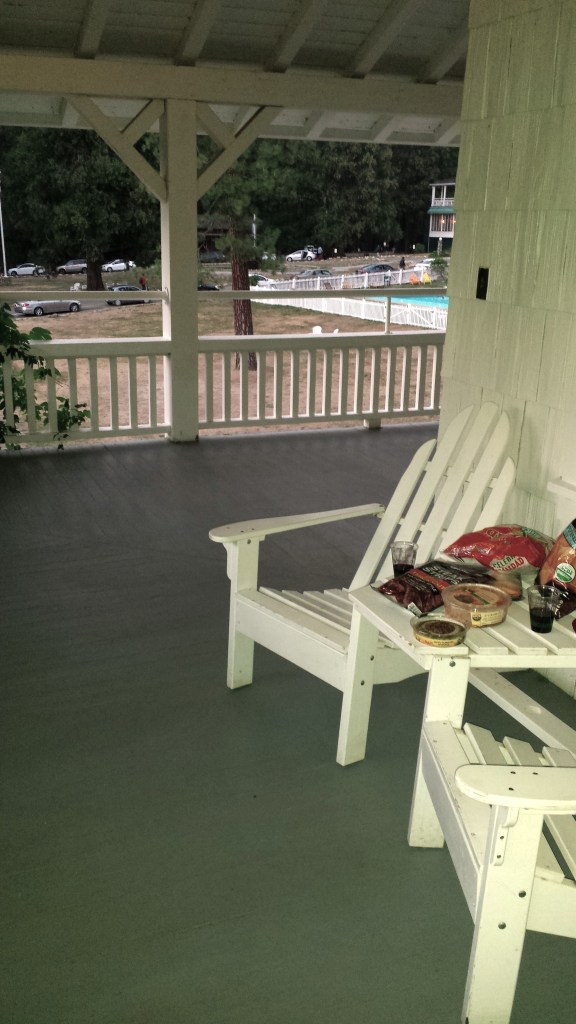
Table for two on the verandah

The room was completed with a small square closet, small dresser and a table and chair. No TV and no phone. But we were up for the adventure and the price – less than $70 a night – was a steal even with having to use the bathroom down the stairs.

As we went to bed that night we could hear, through the thin walls, talking in the room next door; two men were conversing in German. We laughingly dubbed them Hans and Fritz and, although the hubby had taken German in high school, were unable to decipher their conversation.

The next day, after breakfast in the hotel dining room, we headed out for a full day of touring. That evening we bought deli meats, fruits, crackers, and a bottle of wine which we ate and drank while sitting in the Adirondack chairs outside our room on the veranda. A pink and purple sunset was the perfect icing on a wonderful day.

View to the west from the verandah outside our room

Despite the older beds and somewhat rustic accommodations we slept well… that was until about 7:30 the next morning when our German neighbors’ talking awoke us. It was then we discovered where the locked door next to the sink led. When the hotel was built, the rooms all shared Jack and Jill bathrooms. To accommodate a more modern customer the bathrooms had been designated as a private bath for one of the rooms only, and the door to the adjacent room was locked.

We had the room without a private bath. Our German neighbors, Hans and Fritz, had the bathroom. Did I mention that the walls were paper-thin and not insulated?

Soon, some rather unfortunate sounds penetrated into our hearing range. We dressed as quickly as we could and headed to breakfast… and decided that the Germans would hereafter be known as Fritz… and a scatological term which rhymes with Fritz.

Staying at the Wawona harkens back to a different time

Of course the thing one most recalls about any trip are the occurrences which are out of the ordinary. Our stay at the Wawona turned out to be the most memorable part. And we wouldn’t change a thing.

Update 2024: A few weeks ago it was announced that the Wawona Hotel would be closing for an indefinite period of time as they evaluate the structure. The news article said it needs a new roof but with some more in-depth evaluation the repairs could be more extensive.

A couple of websites to visit:
https://en.wikipedia.org/wiki/Yosemite_National_Park
https://en.wikipedia.org/wiki/Wawona_Hotel
For those who want to see the Wawona Hotel’s claim to fame, be sure to check out the movie “36 Hours.”
https://en.wikipedia.org/wiki/36_Hours_(1965_film)

Automate This!

The joys of automation in the ladies room

June 4, 2024

A Tuesday Newsday Classic updated

On June 4, 1973, the US patent for the ATM machine was issued to Don Wetzel, Tom Barnes, and George Chastain.

As with many such inventions, it did not spring spontaneously into use as there were others who had conceived of the idea for at least three decades prior. Cash machines were used in both Japan and Great Britain for nearly a decade before they arrived in the United States.

For the purposes of this article, however, we will go with 1973 as the year this form of automation entered our American lives. From the Infallible Wikipedia:

“After looking firsthand at the experiences in Europe, in 1968 the ATM was pioneered in the U.S. by Donald Wetzel, who was a department head at a company called Docutel. Docutel was a subsidiary of Recognition Equipment Inc of Dallas, Texas, which was producing optical scanning equipment and had instructed Docutel to explore automated baggage handling and automated gasoline pumps.

On September 2, 1969, Chemical Bank installed the first ATM in the U.S. at its branch in Rockville Centre, New York. The first ATMs were designed to dispense a fixed amount of cash when a user inserted a specially coded card.  (snip) In 1995, the Smithsonian National Museum of American History recognised Docutel and Wetzel as the inventors of the networked ATM.

By 1974, Docutel had acquired 70 percent of the U.S. market; but as a result of the early 1970s worldwide recession and its reliance on a single product line, Docutel lost its independence and was forced to merge with the U.S. subsidiary of Olivetti.”

Automation, of course, is not limited to the dispensing of money. It’s everywhere in our world. And nowhere is it more frustrating and confusing than in public restrooms.

When one enters such a place it becomes a midway house of horrors as one never knows what is or is not automated. Like the toilet.

auto flush toilet.jpg
Striking fear into the hearts of women in airports everywhere… the self-flushing toilet

Upon entry into the stall I dread seeing the little black or chrome box with the red light attached to the back of the throne. I don’t know if it’s just me but it seems as if the slightest movement will trigger the flushing mechanism and the toilet turns into an unruly bidet, spraying the unsuspecting (me!) customer with a premature shower of love. Sometimes this occurs multiple times sending this user screaming from the stall.

Now I also don’t know about others but I always (ALWAYS!) wash my hands before I leave the restroom. Having survived the automatic flushing toilet, the next gauntlet is the sink. I am never sure if swiping my hands under the faucet will trigger a flow of water or if I must push on the neck of the faucet or, heaven forbid, use an old-fashioned handle. An automatic faucet is a mystery. What is the exact placement of one’s hands to produce the elusive water? Too high or too low and you get nothing, instead looking like a magician swiping your digits back and forth in an attempt to conjure up the desired fluid.

Need soap? The device on the nearby wall never gives any clue as to how its operated. I stare at it and try to guess. My first attempt is yet another magical wave of my hand. If that does not work then I start pressing on what looks like levers and buttons. The mound of gooey gel on the counter below the machine provides evidence that I am not the first to guess incorrectly how to use it.

Now, with soap in hand and an idea of how to get water to flow, I wash and rinse my hands then turn to the scariest step of all: drying.

modern day stocks
With the power of a jumbo jet your hands are certain to be dry with this torture device.

In some restrooms you have a choice between paper towels and, nowadays, the device where you put your hands down into what looks like modern day stocks. The machine springs to life and blasts out a stream of air produced from the engines of a Boeing 747. Despite my reluctance I slip my hands into the device. I watch in fascinated horror as the skin on them wrinkles and moves like the upper arms on Miss Luhman, an infamous teacher at Nob Hill Elementary in Yakima, who – when she was conducting the entire 4th grade each year for the spring music festival – held every child’s rapt attention, all of us mesmerized by the rhythmic swing of her flapping arms as if she was about to take flight.

Or, heaven forbid, it’s an automatic towel dispenser. Usually there are two such devices, side by side, in the restroom which provides the opportunity to do the paper towel dispenser dance (TM). To operate this device I stand a foot away from the silver boxes, extend my arms straight out, and then move my hands simultaneously in a frenetic motion as though doing that 1960’s dance “The Swim.”

At last – if I’m lucky – two inches of blessed brown paper appears. I tear it off, dry three fingers, then start the dance once again. After three or four rounds of wild gyrations, my hands are dry, I’ve gotten the day’s workout, and I escape still slightly wet in a few places, but mostly unscathed.

Ain’t automation grand?

https://en.wikipedia.org/wiki/Automated_teller_machine

Actual footage of me attempting to get a paper towel from an automatic dispenser. I’m the third girl behind Bobby on the left.

The Artichoke

A culinary delight consumed for centuries

May 28, 2024

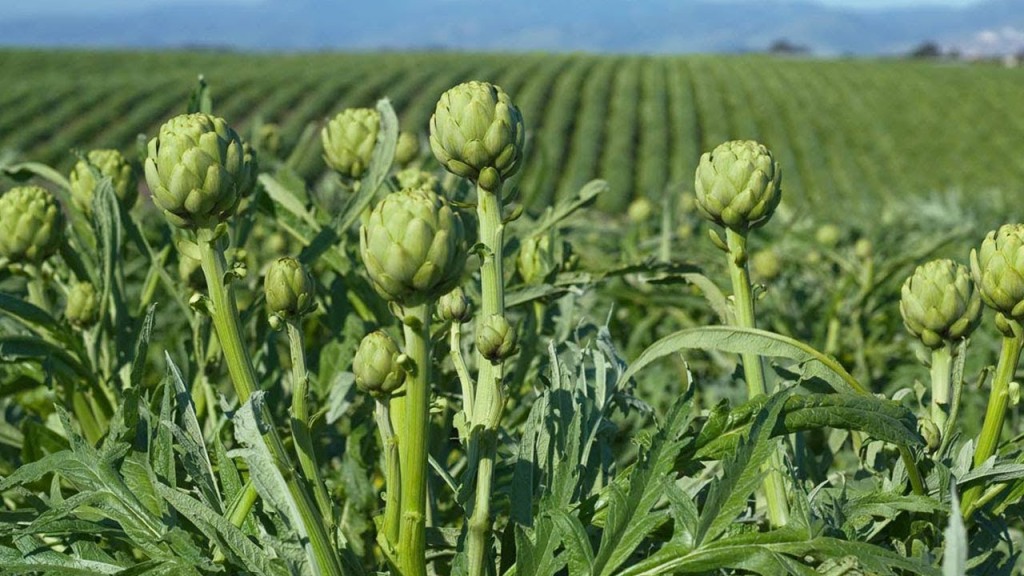
When I think about improbable foods, the artichoke is at the top of my list. Afterall, who would have looked at this thistle and thought, “I wonder if I can eat that without poking holes in my mouth?”

A field of artichokes

Yet, artichokes have been grown and cultivated since at least the eighth century BC.

The Infallible Wikipedia helpfully tells us:

“The (globe) artichoke is a domesticated variety of the wild cardoon (Cynara cardunculus), which is native to the Mediterranean area. There was debate over whether the artichoke was a food among the ancient Greeks and Romans, or whether that cultivar was developed later, with Classical sources referring instead to the wild cardoon. The cardoon is mentioned as a garden plant in the eighth century BCE by Homer and Hesiod.”

Based on further information in the Infallible Wikipedia, I came to the conclusion that the plant was, for centuries, considered a luxury food for royalty and the wealthy. It also developed a reputation as having aphrodisiac qualities.

It was the Dutch who brought them to England where they were successfully grown in Henry VIII’s palace garden in 1530. In the 19th century, immigrants transported the plant to the new world: Louisiana by the French and California by the Spanish.

Despite Henry VIII’s garden, until recently, the artichoke has only been successfully grown in warmer climates. If you look at a latitude map of the world which shows the areas where they cultivated, most are found in about a 350 mile wide band between the 30th and 37th parallels both north and south. Heartier varieties of the plant are being developed with promise of being able to be grown in northern climates.

Also from the Infallible Wikipedia:

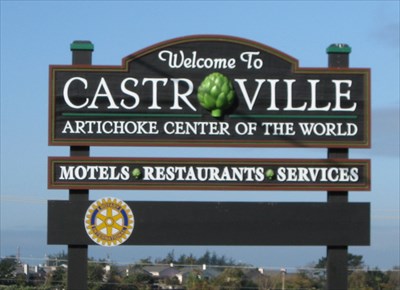
“Cultivation of the globe artichoke is concentrated in the Americas and the countries bordering the Mediterranean basin. The main European producers are Italy, Spain, and France and the main American producers are Argentina, Peru and the United States. In the United States, California provides nearly 100% of the U.S. crop, with about 80% of that being grown in Monterey County; there, Castroville proclaims itself to be “The Artichoke Center of the World” and holds the annual Castroville Artichoke Festival.”

The 2024 poster for the Castroville Artichoke Festival on June 8-9

I’m making a mental note to take in the Artichoke Festival which, apparently, is held the second weekend in June each year. This makes sense since artichoke ‘season’ is from March until June.

My first memory of artichokes is from when I was about six years old. One night when the family (Two parents and four kids ages 6, 8, 10, 15) sat down to dinner and in bowls at my parents’ places – and perhaps my oldest brother’s – were these green vegetable things with prickly ends and tough looking leaves.

Of course it begged the question “What are those?”

“Artichokes,” my mother replied, “but I don’t think you’d like them.”

Now anyone who understands reverse psychology would know that IF she wanted to save money she would have made artichokes for all and forced us to eat them. It likely would have been a one and done. But no. Instead the verbal gauntlet was tossed on the table like an, er, discarded artichoke leaf, and we begged to try the vegetable.

Every one of us liked them. A lot. That might have had something to do with the fact that we were allowed to dip the soft leaf ends in mayonnaise and smother the heart in whatever was left.

Over the years artichokes were a springtime treat for the family. And they still are. I continue to prepare them like my mom did, steamed for up to 40 minutes but instead of mayo, we dip the soft ends and the heart in melted butter.

I also love, love, love, pretty much anything that includes artichokes as an ingredient. Artichokes on pizza, artichokes in dips, or even artichokes preserved in olive oil eaten plain are all favorites.

There was, however, one thing artichoke which wasn’t so great. Back in the 1980’s the hubby and I hosted, for several years, an April Fool’s Day party. We invited family and friends and one main feature of the party was the opportunity for attendees to tell their best joke in hopes of winning the prize.

At the end of the joke telling the judges (that would be me and hubby) would decide – usually based on the groans and reactions from the crowd – as to who had told the ‘best’ joke and who told the ‘worst’ joke. But there was a twist. Since it was April Fool’s Day, the winner of the ‘best’ joke got the worst prize and vice versa.

The competition (it was either 1985 or 1986) was particularly hot this one year and Tom, the younger brother of Paul – who I worked with – came loaded with jokes. Tom told bad joke after bad joke and pretty much earned a lifetime achievement award for his repertoire and the judges decided he was the ‘best’ that night.

Yes, it really exists…

Winner of the worst joke earned a bottle of scotch. Winner of the best joke? A bottle of this exotic liqueur I found called Cynar. For those paying attention you may have seen the word ‘Cynar’ a bit earlier in this article… Cynara cardunculus. Otherwise known as the globe artichoke.

Tom was thrilled to have won and opened his bottle there and then to savor his sweet win. We provided a shot glass and he took a sip… and nearly spit it out. So older brother Paul also tried it, as did several others. All with the same result. Having seen enough I passed on trying Cynar – the artichoke liqueur – and, thankfully, the bottle went home with Tom that night.

When talking with Paul over this past weekend, he reminded me of what happened after. For a time Paul and Tom were roommates and whenever a new, unsuspecting friend would come to their apartment, out would come the bottle of Cynar and they’d lay it on thick. They’d expound on how great it was and they would invite the ‘new guy’ to have some with them. Everyone would get a small glass and then Paul and Tom – and any others who had been previous victims – would raise their glass to drink. But none of them ever did, instead watching the ‘new guy’ take a slug and… nearly spit it out. This was followed with raucous laughter and telling the story of they came to possess the Cynar.

What prompted Paul to share this story with me (He’d shared it years before, but it never gets old) was that he was on a business trip and sitting at a bar recently and happened to look up at the shelf behind the bartender and, lo and behold, there was a bottle of Cynar. I asked him if he ordered a shot but he said he hadn’t. Can’t imagine why.

I suppose one of these days I really should try Cynar. But I think I will look up how, exactly, it should be consumed first. Probably with a whole lot of orange juice or used sparingly in some fruity cocktail.

In honor of the artichoke this week, however, I skipped the Cynar and instead bought a raw one at Freddies for the hubby and me for dinner last night.

As I began preparing it, I thought of my mother and, as I have done hundreds of times, copied how she cooked them: cut them in half, then remove the tiny ‘hairs’ that grow from the heart. I rinsed between the leaves, spreading them out just a bit, then started them to steam in my double boiler pan. Later, as I dipped the tender pieces in butter I gave a salute to the wonderful globe artichoke, always a treat.

And when you are in Castroville be sure to visit the Giant Artichoke…

The links:

https://en.wikipedia.org/wiki/Artichoke

https://en.wikipedia.org/wiki/Castroville,_California

https://en.wikipedia.org/wiki/Cynar

https://www.foodandwine.com/what-is-cynar-6503431

…On the Road to The Little House

Exploring the world of Laura Ingalls Wilder

May 7, 2024

A Tuesday Newsday Classic

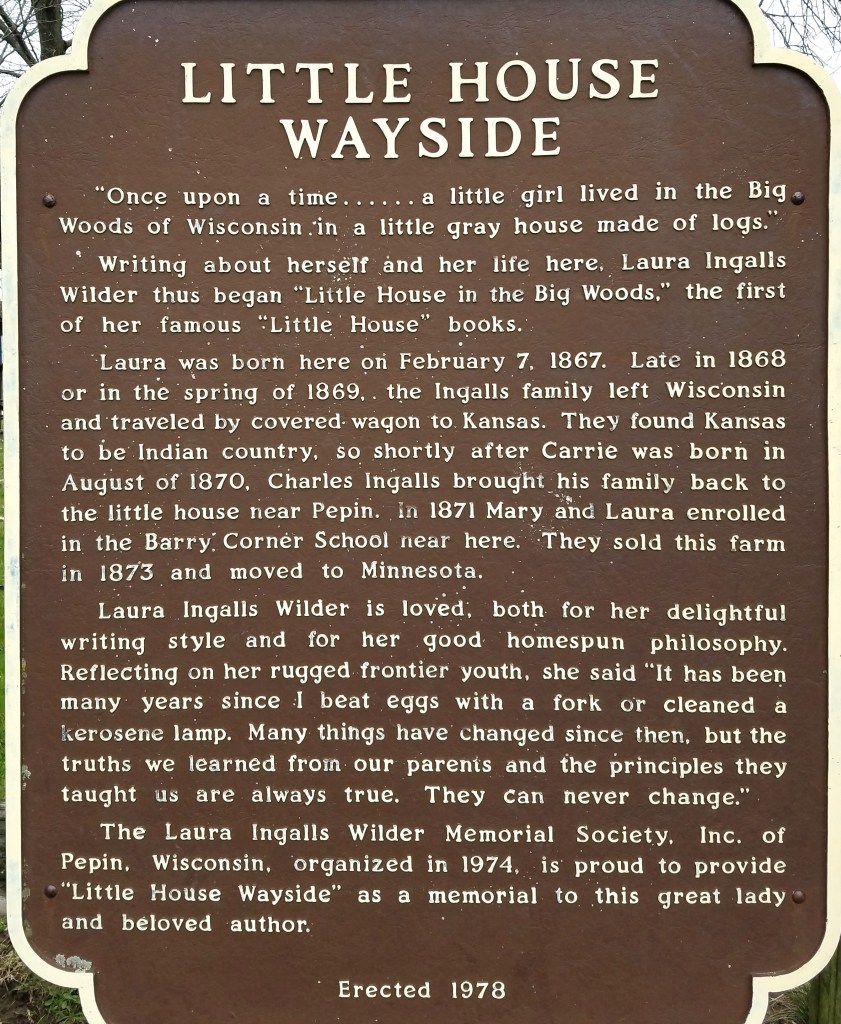
Sign at the “little house” that started it all in Pepin, Wisconsin

Perhaps more than any other books I’ve ever read, this series captured my young imagination and inspired me to want to write and record my world.

The first “Little House” book was published in 1932. Six more followed over the next decade and Laura Ingalls Wilder was propelled from a farmer’s wife to one of the most beloved children’s book authors in history.

As a child I was entranced by the thought of living in a cabin in the big woods of Wisconsin, or in a dugout carved into the banks of Plum Creek in Minnesota, or in a claim shanty on the wind swept prairies of South Dakota. What adventures awaited!

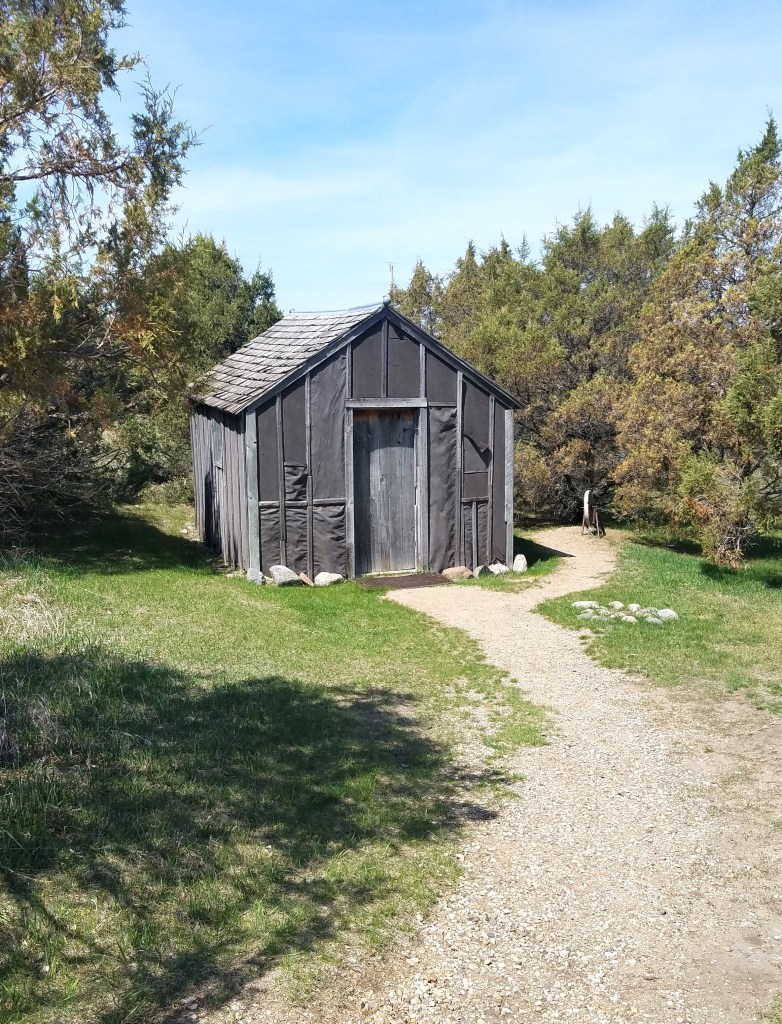
I’ve had as a goal to visit the many homestead sites. In September 2013 I, along with my 20 year old daughter, went to Mansfield, Missouri, and toured the museum and also the house where Laura lived as an adult. This past week was round two when the hubby and me meandered from Wisconsin to South Dakota and traced a portion of the Ingalls family pioneer journey.

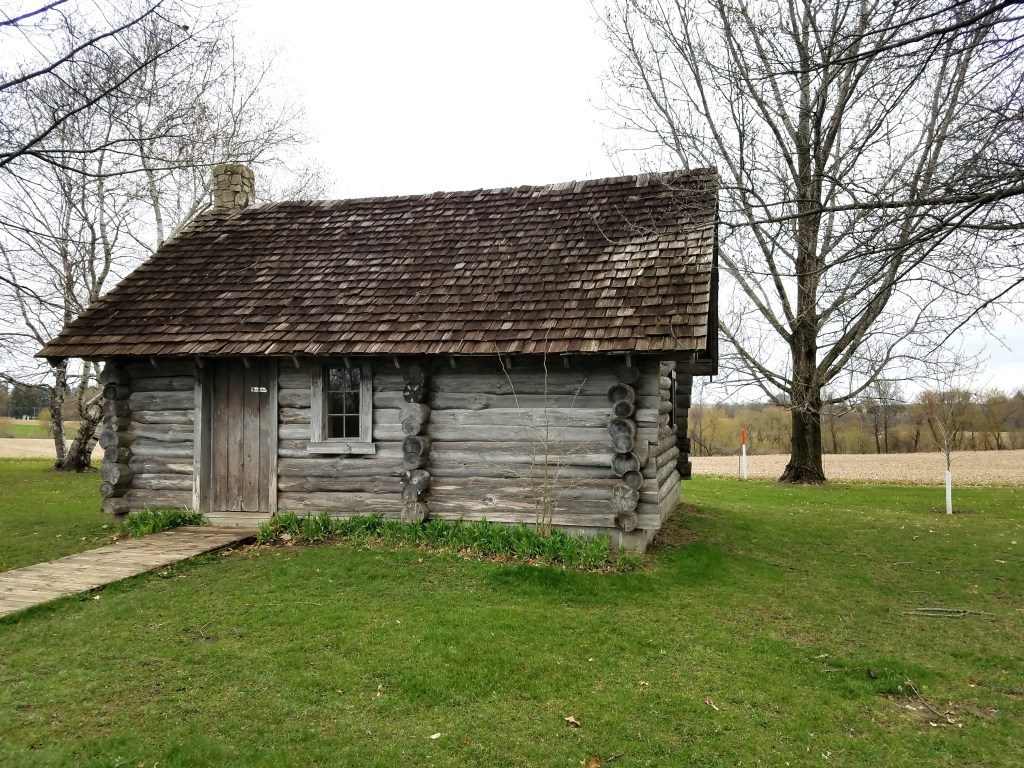
The Little House in the Big Woods in Pepin, Wisconsin

The takeaway for me as an adult – considering it from the perspective of a wife and mother – is how very difficult it must have been, especially for Laura’s mother, Caroline.

Our first stop was in Wisconsin. Although the Ingalls’ cabin is long gone, those who preserved the sites have erected faithful reproductions of the original structures. The little house in Wisconsin was certainly that: little. The main room was no bigger than a small bedroom by today’s standards. For the pioneers, this room was kitchen, dining room, living room, and laundry room (at least half the year). The entire family slept in a room the size of a closet.

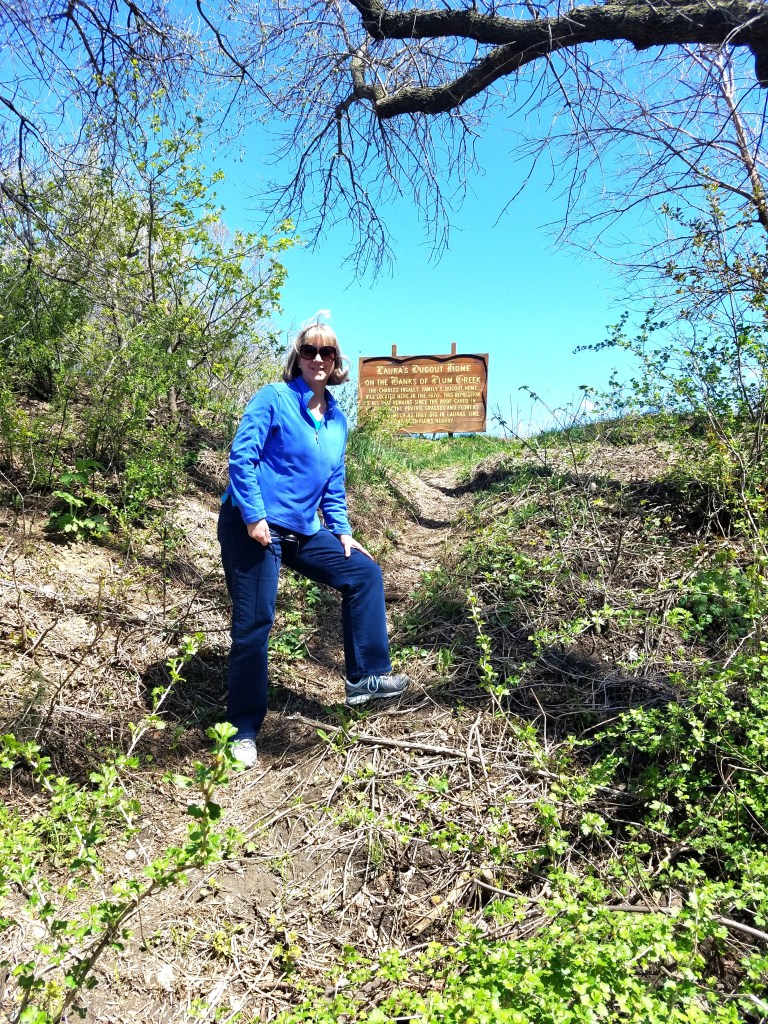
This author standing about where the dugout door was located on Plum Creek, Minnesota.
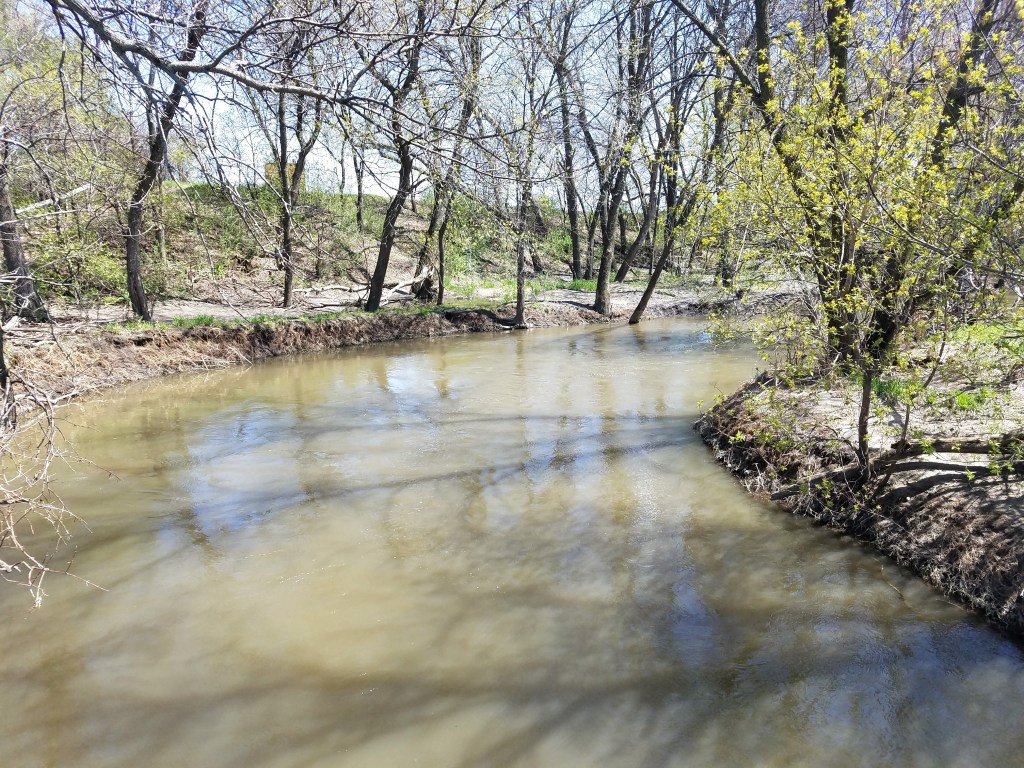
Plum Creek how it looks now
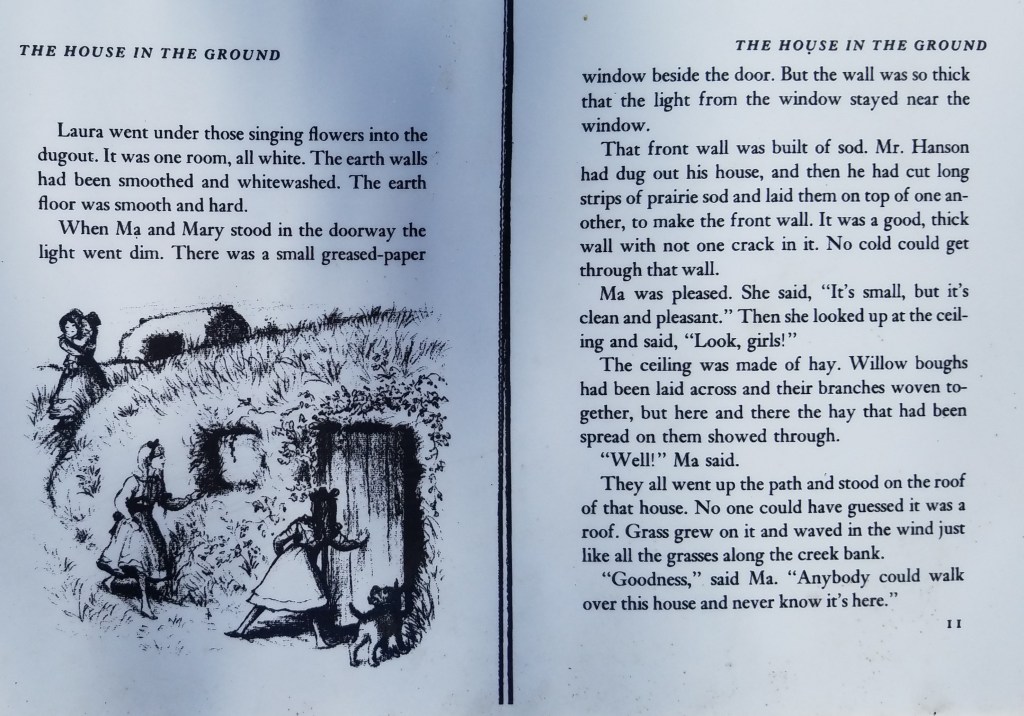
Excerpt from On The Banks of Plum Creek where Laura describes the ‘house.’

It was the next ‘house’, however, that really gave me pause. Laura’s family purchased a farm near Walnut Grove, Minnesota… but there was no ‘house.’ Instead, the family lived for some months in a ten by twelve ‘room’ dug out of a bank above a creek. The actual dugout collapsed years ago, but a reproduction exists in South Dakota. When I walked in to that room two days later I was struck by two things in particular. The first was the smell. It was a combination of earth, mold, and damp. It was depressing and dark. As Laura describes life in the dugout she shares how her mother whitewashed the dirt walls and floor with a lime mixture. I imagine the lime served several purposes including, foremost, pest control and to brighten the room. How hard it must have been for Caroline Ingalls to cook, clean, and care for her children in that tiny, tiny space.

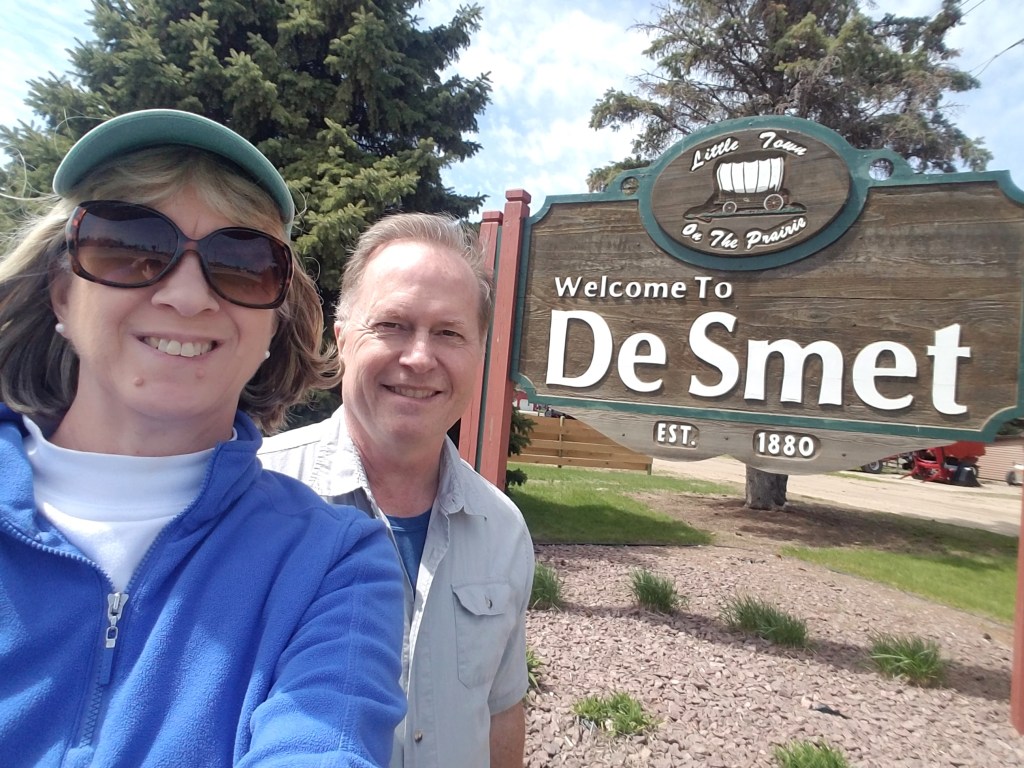
The author and hubby at DeSmet, South Dakota

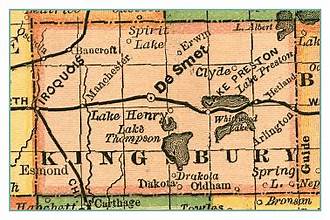
In South Dakota the Ingalls family had to, once again, start from scratch. It was not hard to imagine how alone and desolate Caroline must have felt as one of the first pioneers in DeSmet. Their homestead was 160 acres – one quarter mile square – and it was a half mile south of the town. There were no neighbors, just the wildlife which called the prairie home. The Ingalls claim shanty was just that: a shanty. Unlike the cabin in Pepin, this home was a tiny one room shack with the beds for a family of six in every corner, a stove in the center, and a few chairs and a table. The thin walls not much protection against the persistent winds and cold. Over time the shanty was expanded to include 2 small bedrooms and a 12 by 16 living room.

Replica of the ‘shanty’ where the Ingalls family of six lived the first summer so Pa could ‘claim’ his land.

What resilience these people possessed!

When we stopped at the Ingalls homestead near DeSmet, the woman who owns and runs the property came by to speak to us. I said to her I suspected when the Ingalls family arrived there that Caroline told Charles she was done moving and carving out homes in the wilderness. Our hostess confirmed my supposition. Laura’s parents lived the rest of their lives in that community, eventually moving to a proper house in the town eight years after their arrival.

It is impossible to truly capture these places on paper. But Laura Ingalls Wilder’s narrative description of each location comes close. I felt as if her spirit was there with us in South Dakota, especially, as I mapped out some travels to the spots she describes in her books.

The roiling waters of Lake Henry during the spring perch hatch

It was at Lake Henry when the magic occurred. The hubby and I noticed the water in a nearby slough was roiling. Upon closer examination we discovered hundreds of fish flopping and thrashing about! We walked close to the spectacle, mesmerized by the yellow perch which spawn this time of year once the water raises to a certain temperature.

From there we meandered across the back-roads, and observed white tailed deer, a muskrat which waddled across the road, and hundreds of birds: pelicans, herons, eagles, hawks, geese, and all variety of smaller ones.

We were reluctant to leave but how very glad we were to be able to experience a tiny portion of the Ingalls family journey.

So which of the three ‘little houses’ would have been the best ? Probably the cabin in Wisconsin. As we returned from our adventures I found myself thankful, yet again, for modern amenities: electricity, running water, flushing toilets, refrigeration, automobiles, and airplanes. What a blessed era in which I live.

A few links. First is to my blog article from February 7, 2017 about Laura Ingalls Wilder: https://barbaradevore.com/2017/02/07/laura-ingalls-wilder/

And some links to the various historical sites:   

https://www.lauraingallspepin.com/big-woods-cabin.html

http://walnutgrove.org/ingalls-dugout-site.html

https://www.ingallshomestead.com/history

I know everyone would be disappointed if there was not at least one link to the Infallible Wikipedia:

https://en.wikipedia.org/wiki/Laura_Ingalls_Wilder

A Salute to Red Heads!

Less than 2 percent of all hair colors

April 30, 2024

A display in a store window in Edinburgh in support of “Gingers” everywhere

Most humans have some variation of black or brown hair, followed by blonde and white. The least common color, various shades of red, account for only one to two percent of hair colors and is usually found in people who are genetically connected to the west Eurasian populations.

The country of Ireland, with about 10 percent of its population sporting natural red colored hair, is the highest of any on earth. Edinburgh, Scotland – it turns out – is known as the ‘Red Head’ capital of the world.

According to the Infallible Wikipedia:

“In Scotland, around 6% of the population has red hair, with the highest concentration of red head carriers in the world found in Edinburgh, making it the red head capital of the world.”

During a trip to Edinburgh this past week, I started to notice the incredibly high number of people with red hair and that, of course, made me curious about the hair color.

Of course it is VERY easy to get lost in the weeds on a topic as fascinating as genetics. I admit I have a pretty limited understanding of the topic, having never studied it in depth. But once again the Infallible Wikipedia explains it thus:

“The genetics of red hair appear to be associated with the melanocortin-1 receptor (MC1R), which is found on chromosome 16. In 1995, Valverde, et al. identified alleles on MC1R associated with red hair. The number of alleles linked to red hair has since been expanded by other authors, and these variants are now identified as the RHC (Red Hair colour) alleles.”

Apparently the selection of this genetic trait can be traced back to between 20,000 and 100,000 years ago and to regions with limited sunlight. Because the non-tanning skin associated with red hair can absorb more sunlight it was advantageous genetically for the health of the population.

Like blue eyes, the red hair gene is recessive which means that both parents must contribute the MC1R gene to their offspring for the baby to have red hair.

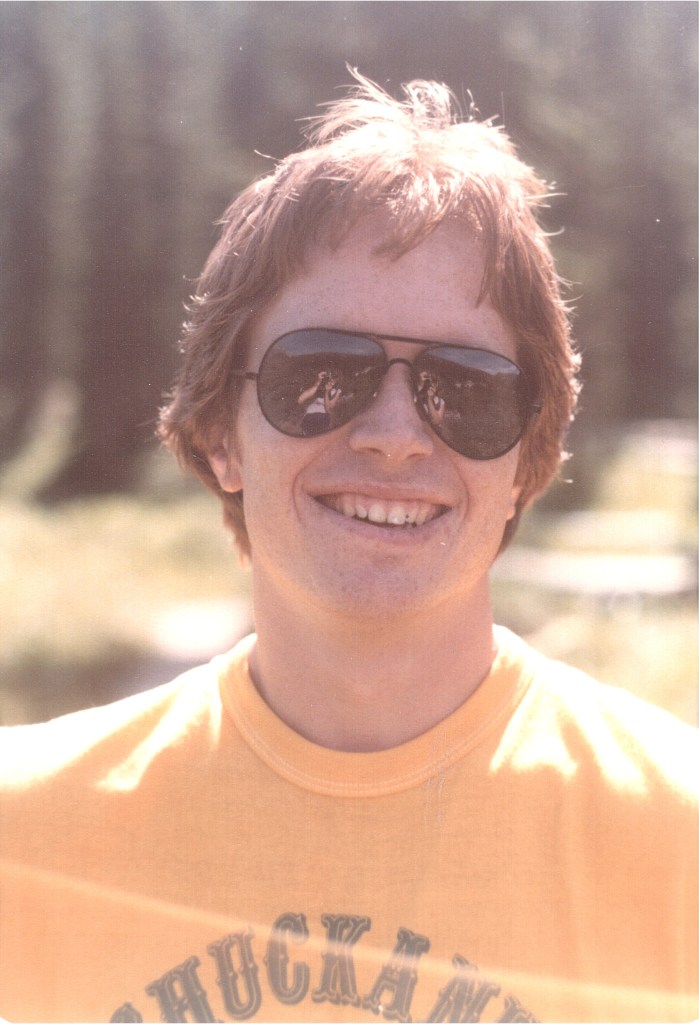
The hubby with his red hair, 1979

I never gave it much thought growing up. My family all had blue eyes with the exception of my sister whose eyes were green. It all seemed normal to me. I can remember one boy in elementary school with vibrant red hair and heavy freckles. It was just who he was. Again, normal to me.

Even when I met my hubby – who was at the time a red head – I thought nothing of it, not understanding how rare his hair color was!

My oldest has brown hair and eyes (getting a brown from his father and blue from me) and our youngest was born quite blonde with blue eyes. So obviously there are some nice recessive genes lurking about between the hubby (whose eyes are brown) and me.

When pregnant with my first child I thought it would be really cool to have a red headed baby. Alas, I do NOT have the MC1R gene and THAT is a requirement.

But the hubby confirmed for me earlier today while we were walking about Edinburgh and discussing the topic that he had, in fact, been teased a lot about his red hair as a kid. Children do have a way of exploiting anything which makes another child different and, for the hubby, it was his red hair.

In looking at his genetics it’s no wonder he got the RHC. His mother was a natural strawberry blonde when she was young (THE rarest of all hair colors) and his paternal grandmother had carrot colored red hair. Of his siblings he is the only one who is a true red head.

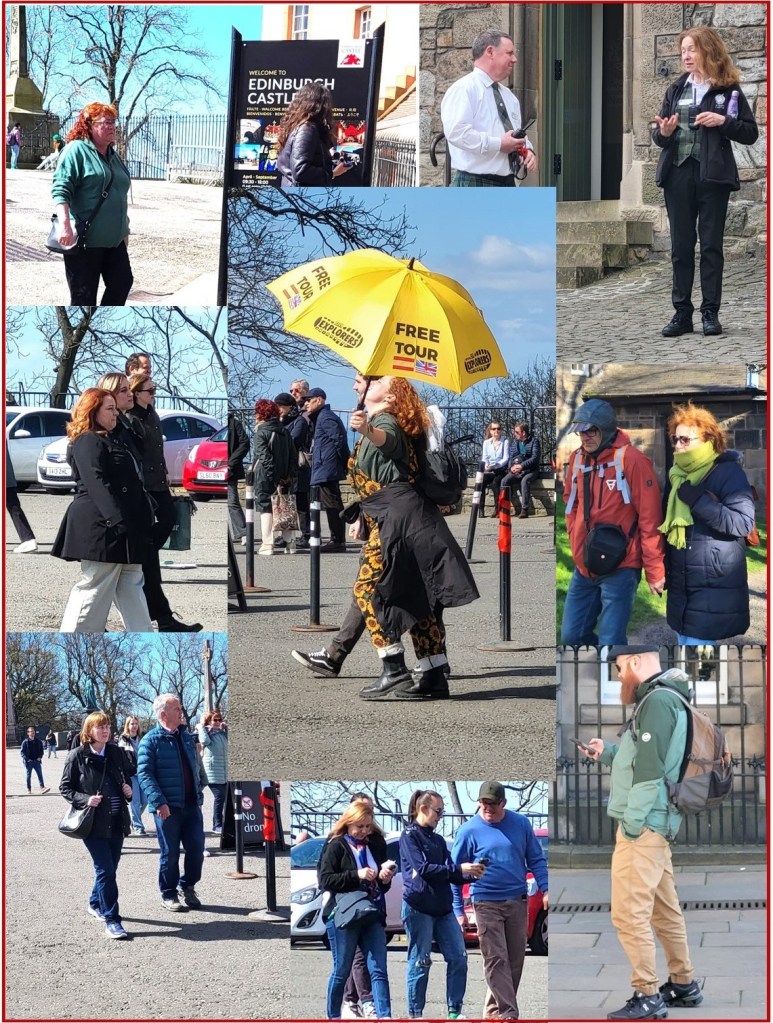
But back to our wanderings around Edinburgh. I started randomly snapping photos of the red heads I spied and it really put the camera to work. In about a 10 minute time period, up at the castle entrance, I took photos of 11 red heads! But I also started noticing in my pictures from the week that the red heads were everywhere.

The random redheads I found on a lovely – and apparently somewhat unusual – sunny day in late April in Edinburgh. I especially love the photo in the middle as she revels in the sunshine even while using the large umbrella to protect her skin.

Somehow the sheer number of all those red heads in Edinburgh served to add to the surreal feel of the place. It’s been inhabited for thousands of years and the streets feel as though they are from a movie set. The presence of the red heads, like the city itself, provides a certain vibrance and fiery determination to the Scottish people.

It wasn’t until I started seeing all the red heads that I understood WHY JK Rowling created the Weasley family… all with red hair. Living and writing in Edinburgh, she was surrounded by them and has even sported red hair herself from time to time.

For someone whose ancestors came to America from before its founding until the late 1800’s, there’s a certain pride in knowing that one line of my people once trod the ground in Scotland. According to my Ancestry DNA profile I sport a whopping six percent of Scottish blood, traceable back to 1766 when my fourth great-grandfather, Joseph Simons, was born in Connecticut. His father had been the emigrating ancestor but, alas, his identity and the reasons for emigrating are, for now, lost to history. What we do know is that the first wave of Scottish emigrants came to America beginning in 1763 following defeat at the Battle of Culloden in 1746 and the societal upheaval which took place after.
Regarding the hubby, he has a bit more Scot in him than I do with 10 percent. The red hair on his mother’s side is bolstered by her 28 percent Scottish and Irish heritage. From his paternal grandmother, who was fiercely German apparently, came the rest where some 5 percent of the population sports the red.

I suppose what all this does for us melting pot Americans is give us a brief glimpse into what it might be like to be solely identified as Scottish, or Irish, or English. And although I don’t have the red hair or, particularly, Scottish features, it was fun to buy a Fraser tartan scarf as my Simon family is part of that clan.

As always a few wee links:

https://www.eupedia.com/genetics/origins_of_red_hair.shtml

https://www.theguardian.com/politics/2013/nov/25/mapping-redheads-which-country-has-the-most

https://en.wikipedia.org/wiki/History_of_Edinburgh

https://en.wikipedia.org/wiki/Red_hair

Paricutin Volcano

Sometimes a volcano blooms overnight

February 20, 2024
A Tuesday Newsday Classic Updated
Geologically, nine years is a very short time period. But for farmer Dionisio Pulido of Paricutin, Mexico, the event which began at 4 p.m. on February 20, 1943, forever altered his life in a matter of moments.

Paricutin Volcano shortly after it first started erupting

As he is quoted in the Infallible Wikipedia:

“‘At 4 p.m., I left my wife to set fire to a pile of branches when I noticed that a crack, which was situated on one of the knolls of my farm, had opened . . . and I saw that it was a kind of fissure that had a depth of only half a meter. I set about to ignite the branches again when I felt a thunder, the trees trembled, and I turned to speak to Paula; and it was then I saw how, in the hole, the ground swelled and raised itself  2 or 2.5 meters high, and a kind of smoke or fine dust – grey, like ashes – began to rise up in a portion of the crack that I had not previously seen . . . Immediately more smoke began to rise with a hiss or whistle, loud and continuous; and there was a smell of sulfur.’

“He tried to find his family and oxen but they had disappeared so he rode his horse to town where he found his family and friends, happy to see him alive. The volcano grew fast and furiously after this. Celedonio Gutierrez, who witnessed the eruption on the first night reported:

‘…when night began to fall, we heard noises like the surge of the sea, and red flames of fire rose into the darkened sky, some rising 800 meters or more into the air, that burst like golden marigolds, and a rain like artificial fire fell to the ground.’”

And thus began an eruption which provided scientists an opportunity to study and record how a volcano is formed. During this time the volcano not only destroyed Pulido’s farm but forced the permanent evacuation of two towns, caused the deaths of three people (but not the farmer!), grew to 1,341 feet, and allowed scientists to witness the entire life cycle of a volcano.

Paricutin as it is today

Also from the Infallible Wikipedia:

“The importance of the Parícutin eruption was that it was the first time that volcanologists were able to fully document the entire life cycle of a volcano. The event brought geologists from all over the world,  but the principal researchers were William F. Foshag of the Smithsonian Institution and Dr. Jenaro Gonzalez Reyna from the Mexican government, who came about a month after the eruption started and stayed for several years. These two wrote detailed descriptions, drew sketches and maps and took samples and thousands of photographs during this time. Many of these are still used today by researchers. Foshag continued to study the volcano until his death in 1956. Between 1943 and 1948, almost fifty scientific articles were published in major journals about the volcano, with even more since. The worldwide effort to study Parícutin increased understanding of volcanism in general but particularly of scoria cone formation.”

It was quite likely I saw this documentary as a child and it was this that first sparked my interest in volcanoes. Some might call it an unhealthy obsession. But whatever it is I have a distinct memory of sitting in a darkened classroom and learning about this volcano.

Back in the 1960’s, every elementary school had an AV – that is Audio Visual – component. Manned by the kids who, today, rule the tech world, it was an unglamorous job (sort of like being a crossing guard or a hall monitor) which required said geeky boy (it was all boys at the time – just the way it was) to wheel the tall carts into classrooms and get it set up so the class could watch whatever educational program our teacher managed to snag so she (or he) could get a few minutes of down time. To be fair, WE unruly students loved those days also. But I digress.

Atop the cart which we had at Nob Hill Elementary in Yakima was a black and white TV connected by wires to a very crude version of video equipment. Once it was set up, off would go the lights and some item of interest would flicker to life.

While I couldn’t find a photo of the carts, we were all familiar with projectors that looked like this

As a child seeing a volcano literally grow out of the ground where it had just been a field was terrifying. Could that happen in MY backyard? Being that my natural state was to worry about such things I’m pretty certain I became quite concerned for my home. No doubt we learned about other deadly volcanoes: Mount Vesuvius, of course, and the most fascinating of all Krakatoa. Oh, and did I mention that on nice days I’d often see Mt. Adams – one of five Washington State volcanoes – off in the distance?

Of course my mother no doubt assured me that Mt. Adams was a dormant volcano and that Yakima was not prone to sudden volcanic eruptions and my family continued to live in blissful calm. It was only later in a college geology class that I learned Yakima sits on top of what is known as the Columbia River Basalt Group, which was a series of volcanic flows, that eventually covered about 81,000 square miles AND had depths up to 5,900 feet. That’s a whole lot of basalt which no one can take for granite… it was a gneiss fact to know.

Of course that was millions and millions of year prior, so of course there was no danger. Well, that was until May 18, 1980… when THAT myth was blown to pieces. I might have covered stubby Mt. St. Helens in another Tuesday Newsday article or two.

Volcan de Colima – aka Volcan de Fuego or the English translation ‘Fire Volcano’. Photo taken by my son in late January.

A couple of years ago our son moved to Guadalajara, Mexico. And until recently I hadn’t thought much about Mexican volcanoes. Of course I did know that the Pacific ring of fire which, in addition to being earthquake prone, also had a few volcanoes…913 to be exact. Whoa.

Mexico, specifically the region which stretches from the Pacific Ocean to the Caribbean Sea which starts near Puerto Vallarta and extends east to Guadalajara and then Mexico City and ending just north of Veracruz, has 23 of these volcanoes in a region known as the Trans-Mexican Volcanic belt.

So now I have new volcanoes to worry about. Of course I shouldn’t be concerned that Volcan de Colima, also known as Volcan de Fuego, is a mere 78 miles from where my son now lives. Or that Volcan de Fuego erupted as recently as January 2017. Or that our son went hiking on neighboring volcano Nevado de Colima – which is 3 miles north of Volcan de Fuego – in January of this year. I’m sure there’s nothing to worry about!

A map showing the location of the 23 volcanoes which define the Trans-Mexico Volcanic Belt
My son on his recent hike to Volcan Nevado de Colima in front of the ‘you have arrived’ sign

For reference, Paracutin is much, much further away from Guadalajara, more like 150 miles how the crow flies. The next time I’m in Mexico I plan to take a much closer look at the landscape to see how many of Mexico’ volcanoes I can identify.

For those who want to learn more:

https://en.wikipedia.org/wiki/Par%C3%ADcutin

Not sure if this is the video I saw but the music alone is enough to instill terror into a child….

And a few more articles and linkes about one of my favorite topics:

https://en.wikipedia.org/wiki/Columbia_River_Basalt_Group

https://en.wikipedia.org/wiki/Volc%C3%A1n_de_Colima

https://en.wikipedia.org/wiki/Volc%C3%A1n_Nevado_de_Colima_National_Park

https://en.wikipedia.org/wiki/Ring_of_Fire