Tag Archive | Laura Ingalls Wilder

…On the Road to The Little House

Exploring the world of Laura Ingalls Wilder

May 7, 2024

A Tuesday Newsday Classic
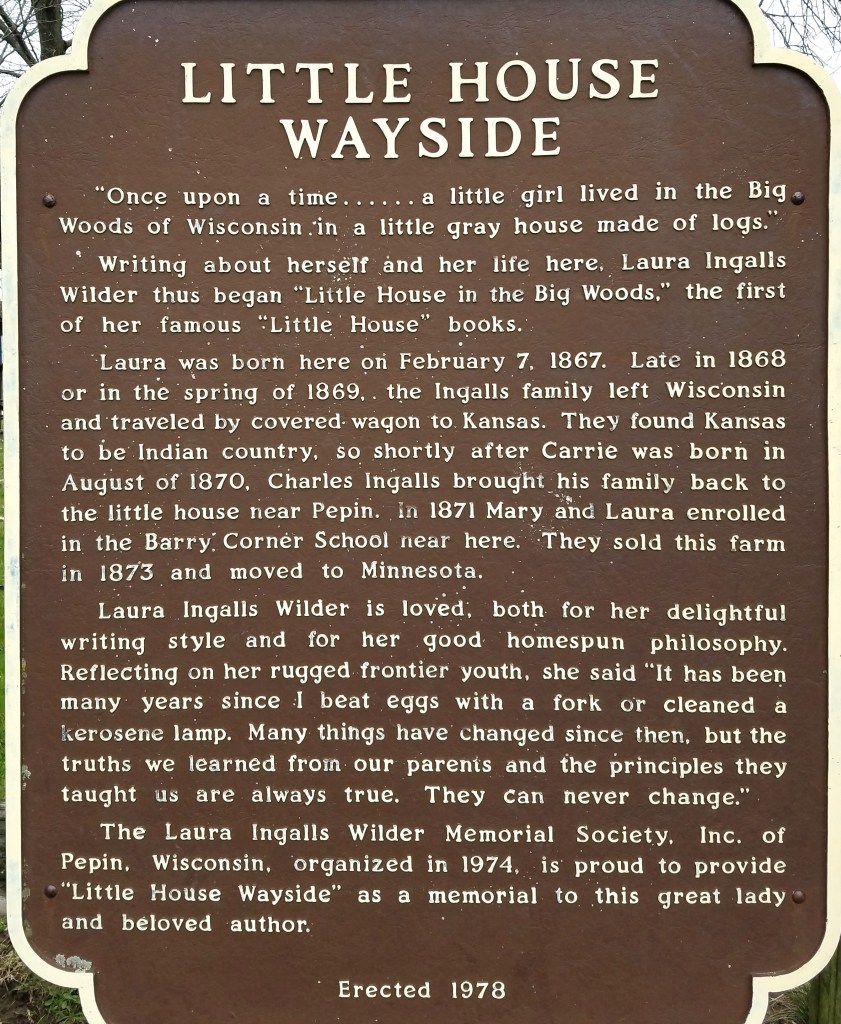
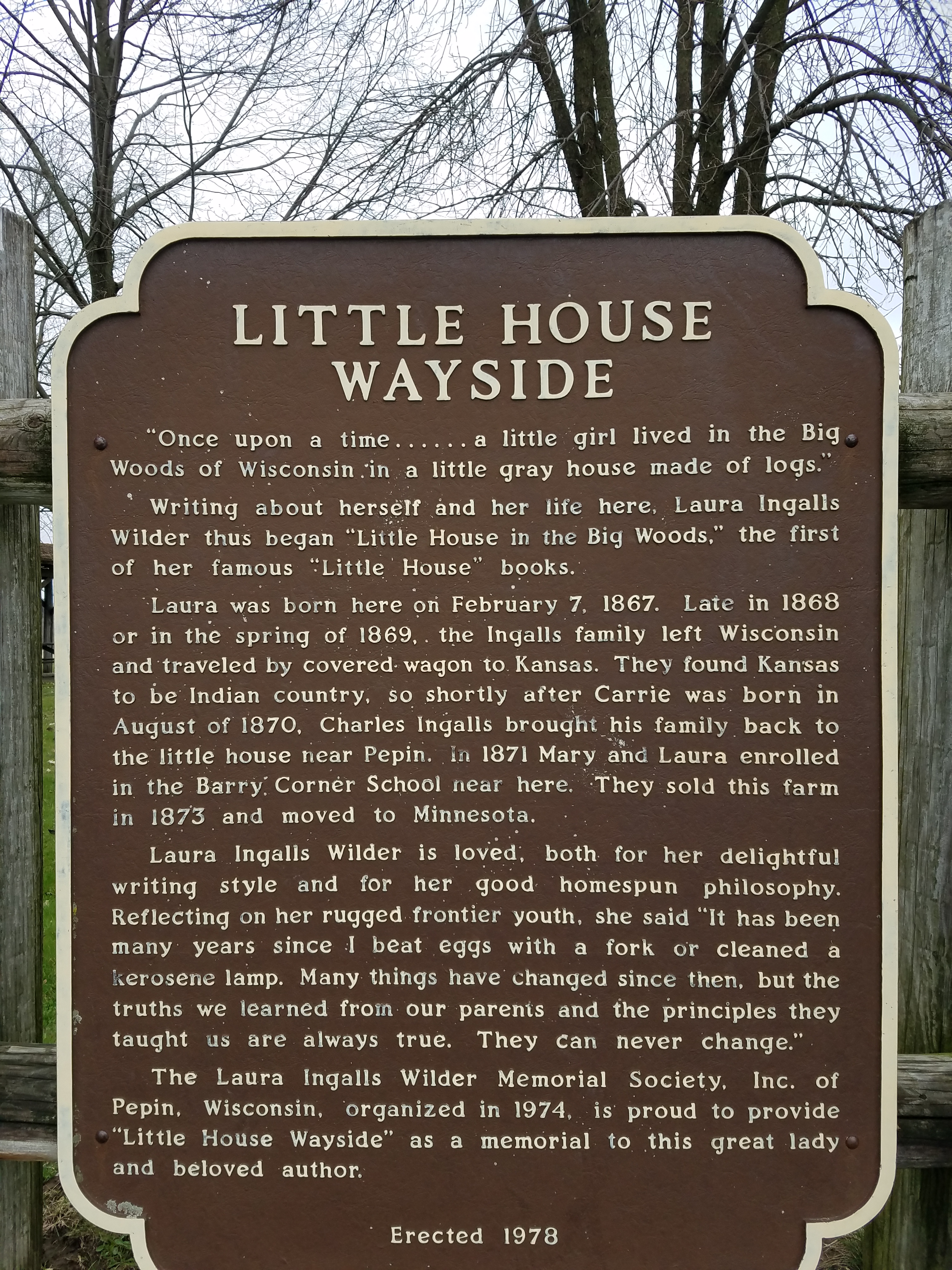
Sign at the “little house” that started it all in Pepin, Wisconsin

Perhaps more than any other books I’ve ever read, this series captured my young imagination and inspired me to want to write and record my world.

The first “Little House” book was published in 1932. Six more followed over the next decade and Laura Ingalls Wilder was propelled from a farmer’s wife to one of the most beloved children’s book authors in history.

As a child I was entranced by the thought of living in a cabin in the big woods of Wisconsin, or in a dugout carved into the banks of Plum Creek in Minnesota, or in a claim shanty on the wind swept prairies of South Dakota. What adventures awaited!

I’ve had as a goal to visit the many homestead sites. In September 2013 I, along with my 20 year old daughter, went to Mansfield, Missouri, and toured the museum and also the house where Laura lived as an adult. This past week was round two when the hubby and me meandered from Wisconsin to South Dakota and traced a portion of the Ingalls family pioneer journey.
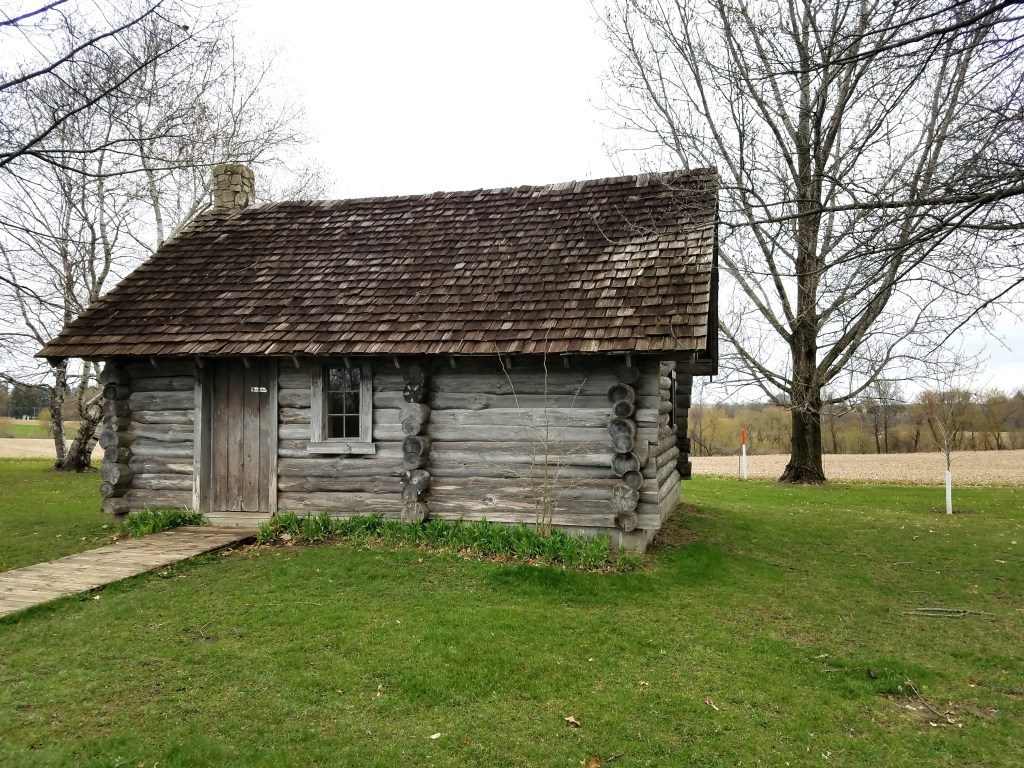
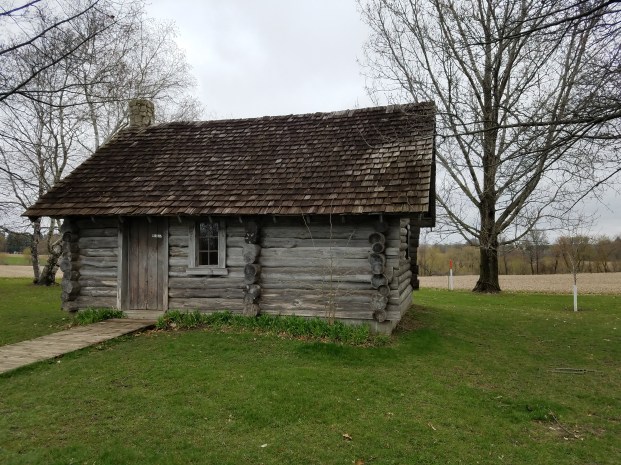
The Little House in the Big Woods in Pepin, Wisconsin

The takeaway for me as an adult – considering it from the perspective of a wife and mother – is how very difficult it must have been, especially for Laura’s mother, Caroline.

Our first stop was in Wisconsin. Although the Ingalls’ cabin is long gone, those who preserved the sites have erected faithful reproductions of the original structures. The little house in Wisconsin was certainly that: little. The main room was no bigger than a small bedroom by today’s standards. For the pioneers, this room was kitchen, dining room, living room, and laundry room (at least half the year). The entire family slept in a room the size of a closet.
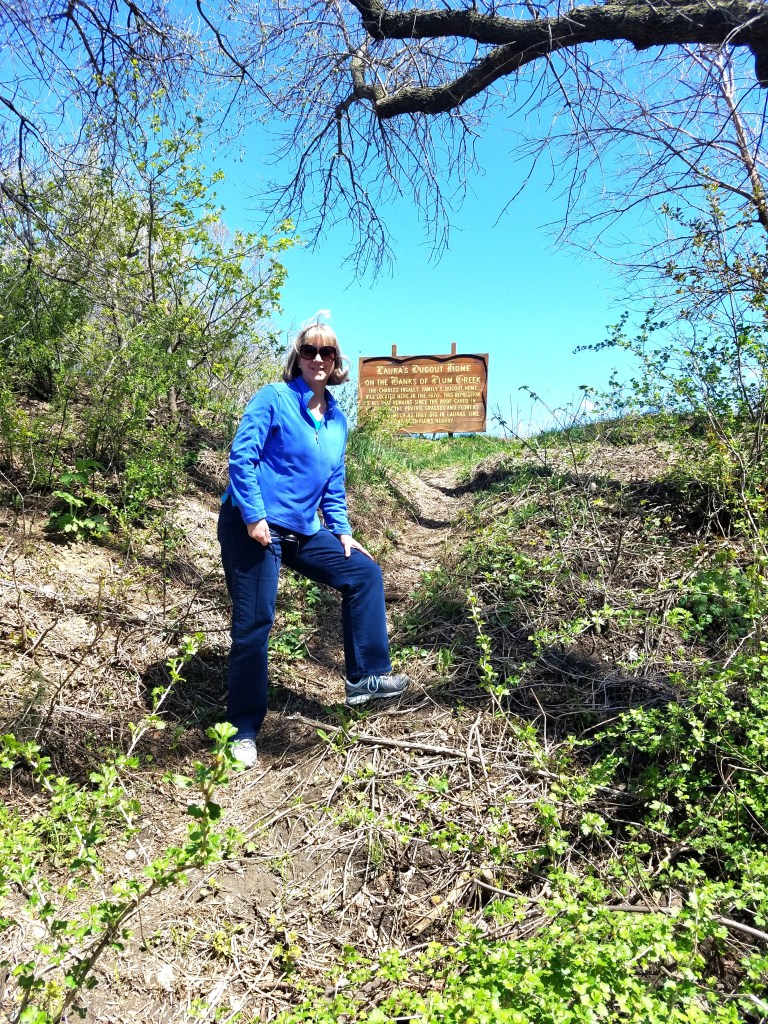
This author standing about where the dugout door was located on Plum Creek, Minnesota.
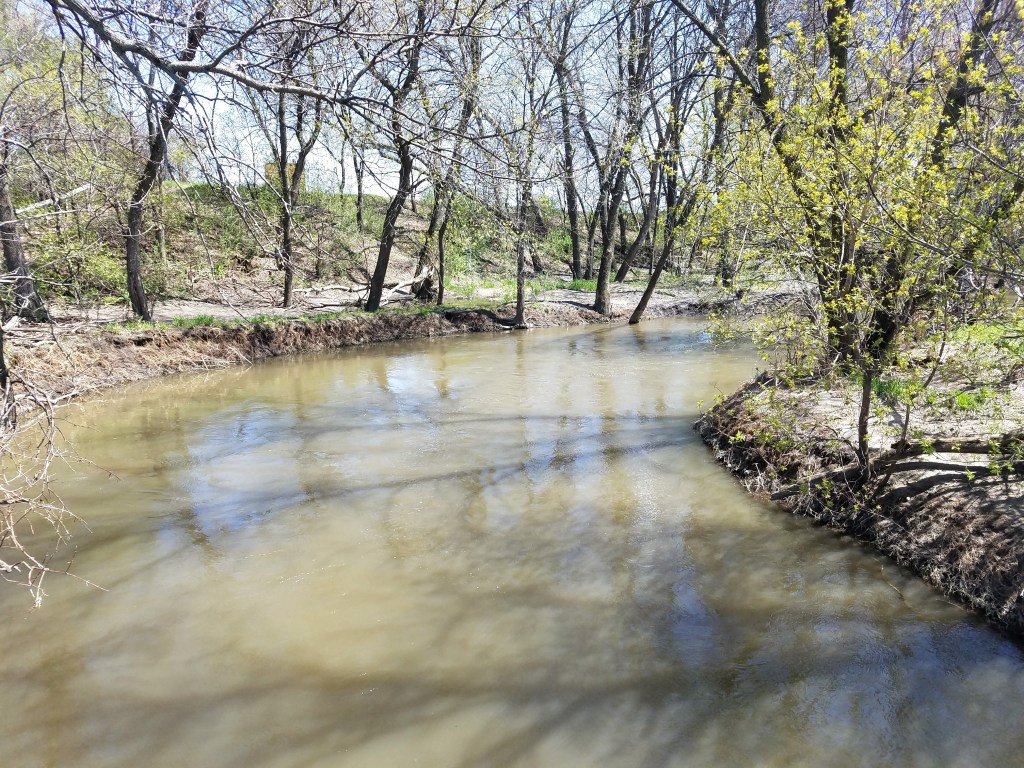
Plum Creek how it looks now
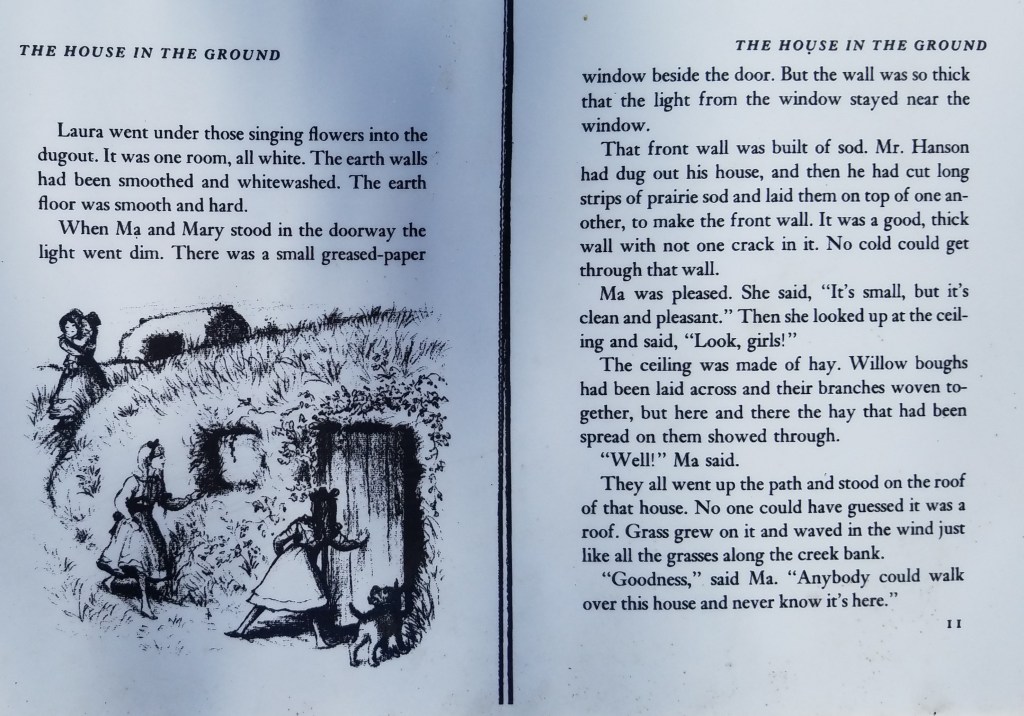
Excerpt from On The Banks of Plum Creek where Laura describes the ‘house.’

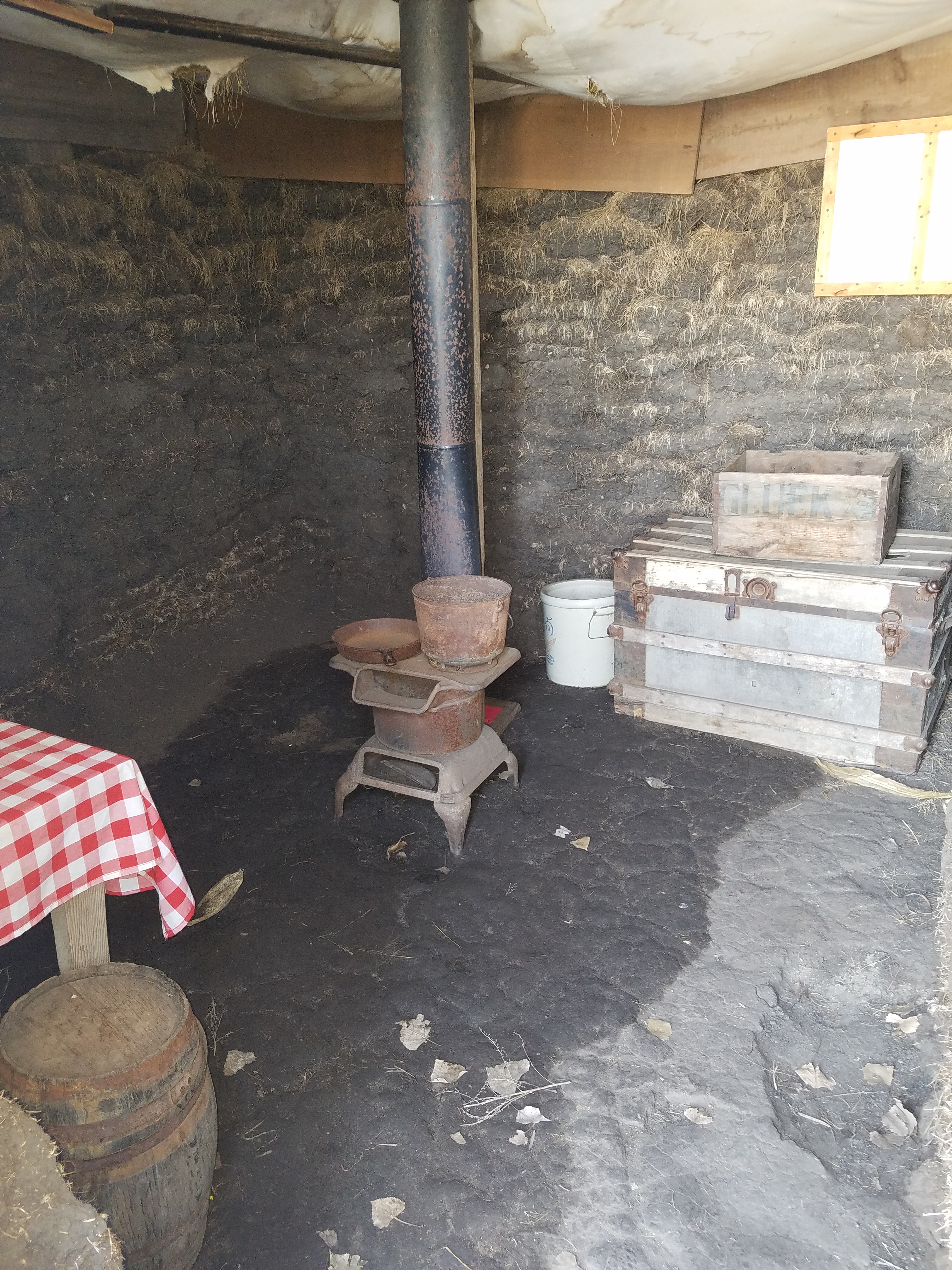
It was the next ‘house’, however, that really gave me pause. Laura’s family purchased a farm near Walnut Grove, Minnesota… but there was no ‘house.’ Instead, the family lived for some months in a ten by twelve ‘room’ dug out of a bank above a creek. The actual dugout collapsed years ago, but a reproduction exists in South Dakota. When I walked in to that room two days later I was struck by two things in particular. The first was the smell. It was a combination of earth, mold, and damp. It was depressing and dark. As Laura describes life in the dugout she shares how her mother whitewashed the dirt walls and floor with a lime mixture. I imagine the lime served several purposes including, foremost, pest control and to brighten the room. How hard it must have been for Caroline Ingalls to cook, clean, and care for her children in that tiny, tiny space.

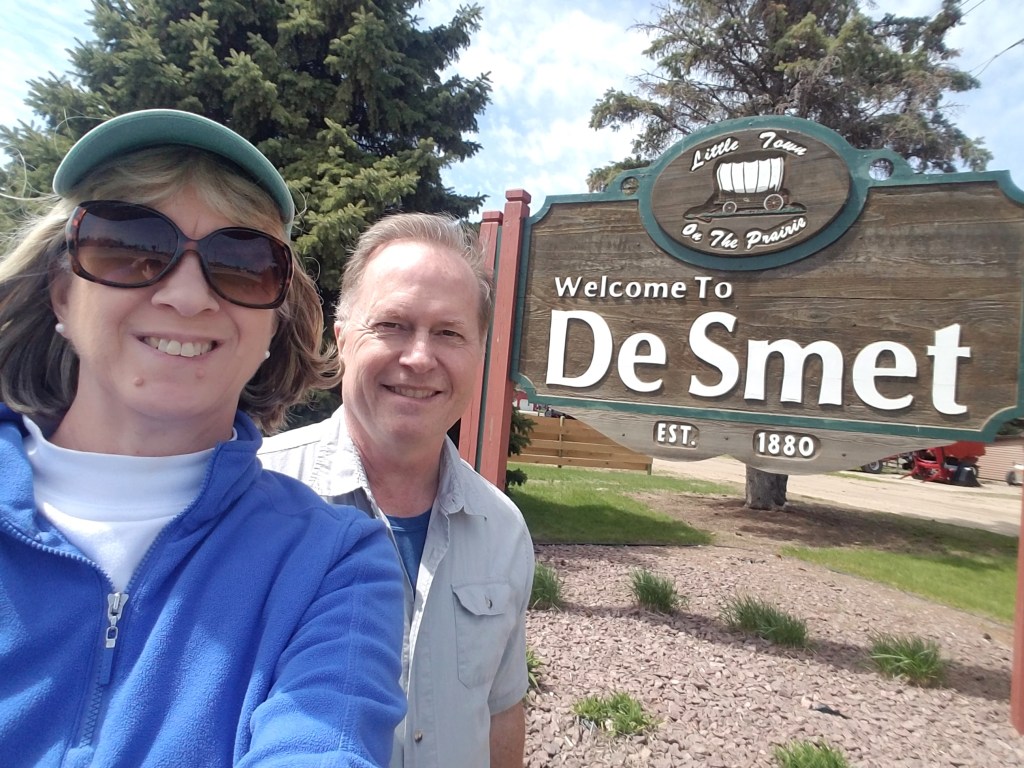
The author and hubby at DeSmet, South Dakota

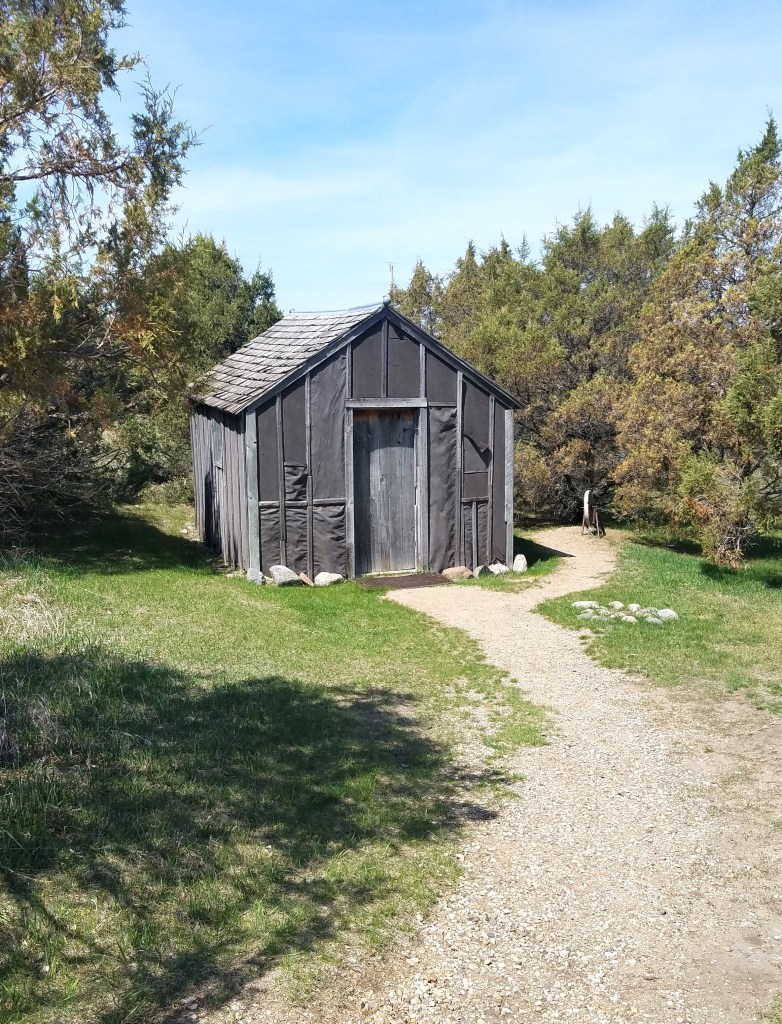
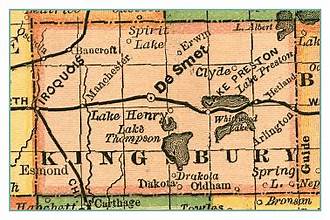
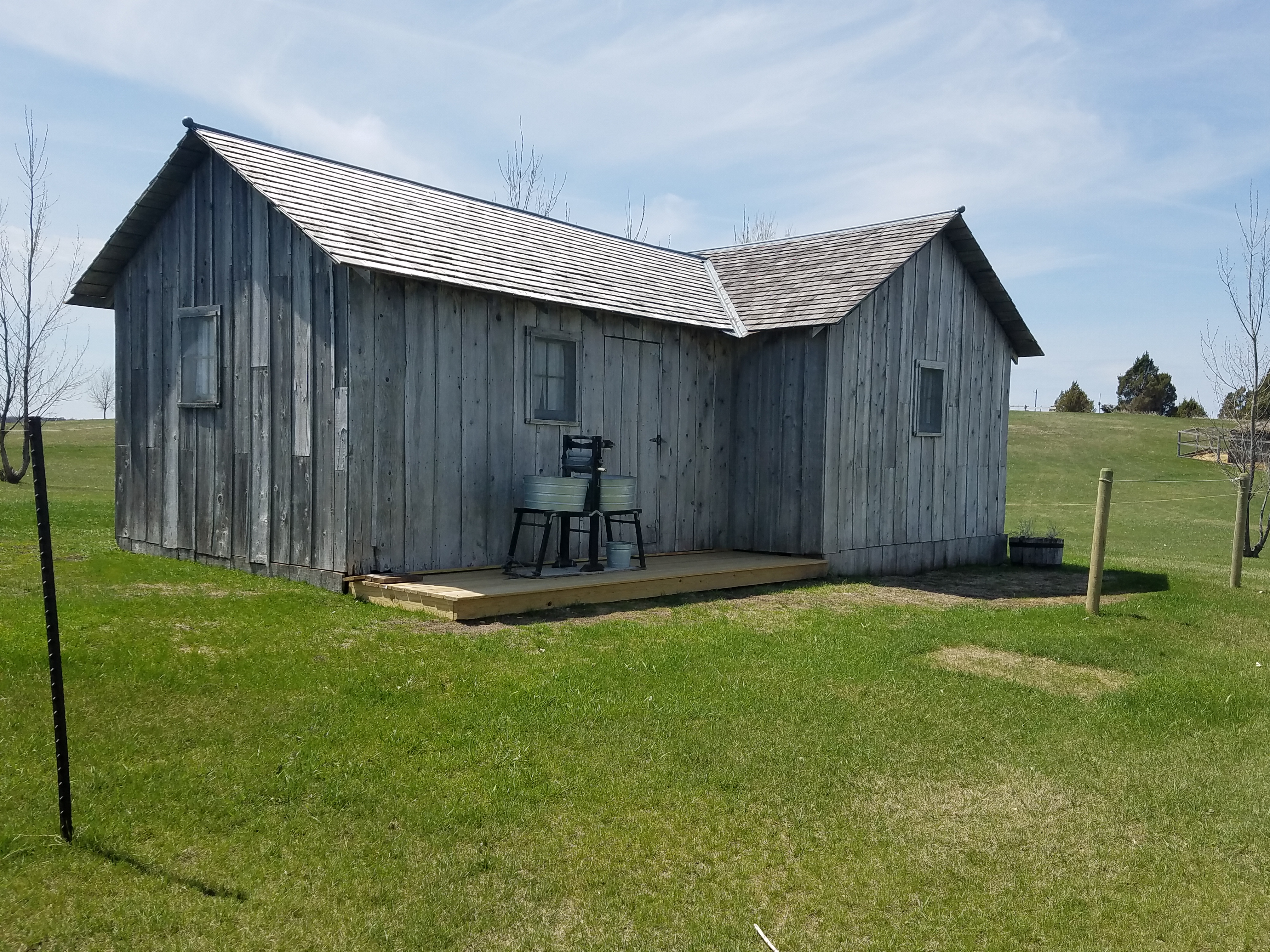
In South Dakota the Ingalls family had to, once again, start from scratch. It was not hard to imagine how alone and desolate Caroline must have felt as one of the first pioneers in DeSmet. Their homestead was 160 acres – one quarter mile square – and it was a half mile south of the town. There were no neighbors, just the wildlife which called the prairie home. The Ingalls claim shanty was just that: a shanty. Unlike the cabin in Pepin, this home was a tiny one room shack with the beds for a family of six in every corner, a stove in the center, and a few chairs and a table. The thin walls not much protection against the persistent winds and cold. Over time the shanty was expanded to include 2 small bedrooms and a 12 by 16 living room.

Replica of the ‘shanty’ where the Ingalls family of six lived the first summer so Pa could ‘claim’ his land.

What resilience these people possessed!

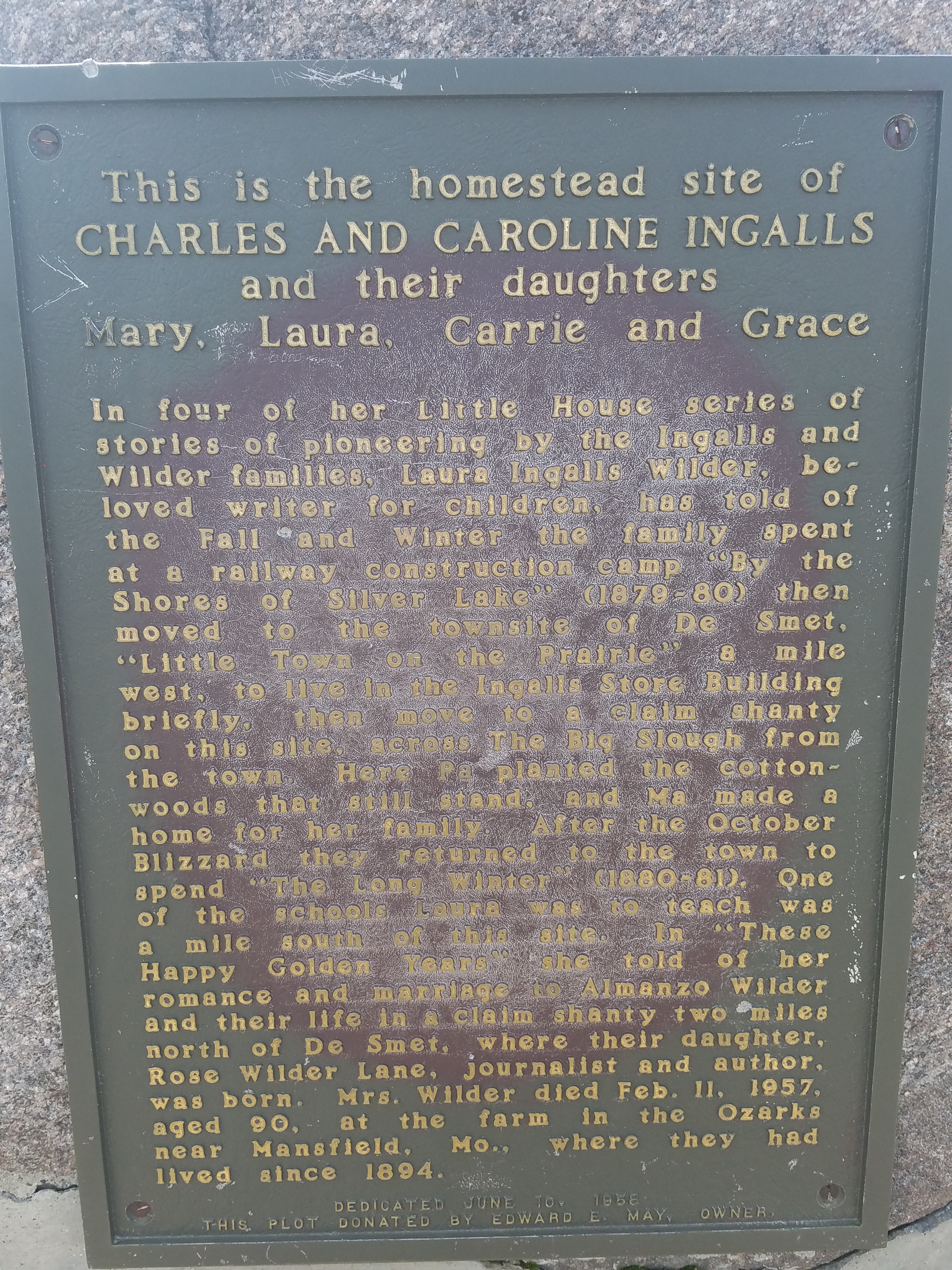
When we stopped at the Ingalls homestead near DeSmet, the woman who owns and runs the property came by to speak to us. I said to her I suspected when the Ingalls family arrived there that Caroline told Charles she was done moving and carving out homes in the wilderness. Our hostess confirmed my supposition. Laura’s parents lived the rest of their lives in that community, eventually moving to a proper house in the town eight years after their arrival.

It is impossible to truly capture these places on paper. But Laura Ingalls Wilder’s narrative description of each location comes close. I felt as if her spirit was there with us in South Dakota, especially, as I mapped out some travels to the spots she describes in her books.

The roiling waters of Lake Henry during the spring perch hatch

It was at Lake Henry when the magic occurred. The hubby and I noticed the water in a nearby slough was roiling. Upon closer examination we discovered hundreds of fish flopping and thrashing about! We walked close to the spectacle, mesmerized by the yellow perch which spawn this time of year once the water raises to a certain temperature.

From there we meandered across the back-roads, and observed white tailed deer, a muskrat which waddled across the road, and hundreds of birds: pelicans, herons, eagles, hawks, geese, and all variety of smaller ones.

We were reluctant to leave but how very glad we were to be able to experience a tiny portion of the Ingalls family journey.

So which of the three ‘little houses’ would have been the best ? Probably the cabin in Wisconsin. As we returned from our adventures I found myself thankful, yet again, for modern amenities: electricity, running water, flushing toilets, refrigeration, automobiles, and airplanes. What a blessed era in which I live.

A few links. First is to my blog article from February 7, 2017 about Laura Ingalls Wilder: https://barbaradevore.com/2017/02/07/laura-ingalls-wilder/

And some links to the various historical sites:   

https://www.lauraingallspepin.com/big-woods-cabin.html

http://walnutgrove.org/ingalls-dugout-site.html

https://www.ingallshomestead.com/history

I know everyone would be disappointed if there was not at least one link to the Infallible Wikipedia:

https://en.wikipedia.org/wiki/Laura_Ingalls_Wilder

Hayride! A fun fall tradition

September 28th

A Tuesday Newsday Classic

Autumn seems to be a season of traditions which celebrate our rural and agricultural heritage. There’s just something about shuffling through a carpet of red, gold, and orange leaves or sipping a cup of apple cider on a blustery day.

One uniquely North American tradition which has been enjoyed for generations now is a hayride. I turn to the Infallible Wikipedia for a more in depth history:

“Hayrides traditionally have been held as celebratory activities, usually in connection to celebration of the autumn harvest. Hayrides originated with farmhands and working farm children riding loaded hay wagons back to the barn for unloading, which was one of the few times during the day one could stop to rest during the frenetic days of the haying season. By the late 19th century and the spread of the railroads, tourism and summer vacations in the country had become popular with urban families, many of whom had read idealized accounts of hayrides in children’s books.

Red Tail Farm in Leavenworth offers hayrides in the autumn.

To capitalize on the demand, local farmers began offering ‘genuine hayrides’ on wagons loaded with hay, since one could make more cash income selling rides to ‘summer people’ than by selling the same wagon-load of hay (although most farmers did both). During this era, farming was transforming from a subsistence system to a cash system, and there were few options for bringing real money into the average farm.

Over time the hayride became a real tradition, although the original concept of riding on top of a load of hay was gradually replaced with a simple ride in a wagon sitting on a layer of hay intended to cushion the ride. This was considered far safer than (if not as fun as) riding perched 15-20 feet on top of a slippery pile of hay on a moving vehicle.”

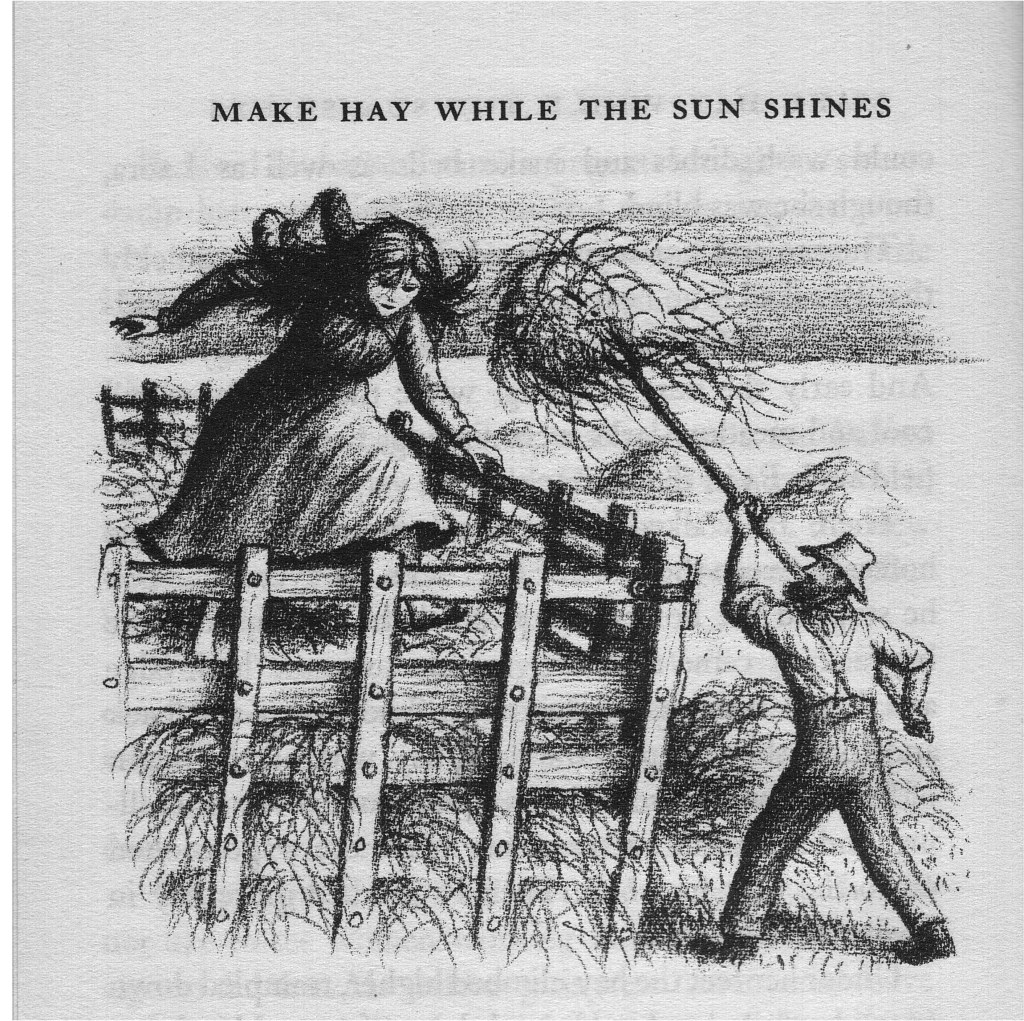
Laura Ingalls Wilder, in her book The Long Winter, describes the work of loading a hay wagon and her ‘ride’ from the fields back to the barn:

“There Pa walked beside the wagon and drove the horses between the rows of haycocks. At every haycock he stopped the horses and pitched the hay up into the hayrack. It came tumbling loosely over the high edge and Laura trampled it down. Up and down and back and forth she trampled the loose hay with all the might of her legs, while the forkfuls kept coming over and falling, and she went on trampling while the wagon jolted on to the next haycock. Then Pa pitched more hay in from the other side.

Under her feet the hay climbed higher, trampled down as solid as hay can be. Up and down, fast and hard, her legs kept going, the length of the hayrack and back, and across the middle. The sunshine was hotter and the smell of the hay rose up sweet and strong. Under her feet it bounced and over the edges of the hayrack it kept coming.

All the time she was rising higher on the trampled-down hay. Her head rose above the edges of the rack and she could have looked at the prairie, if she could have stopped trampling. Then the rack was full of hay and still more came flying up from Pa’s pitchfork.

The illustration of Laura in the haywagon from The Long Winter

Laura was very high up now and the slippery hay was sloping downward around her. She went on trampling carefully. Her face and her neck were wet with sweat and sweat trickled down her back. Her sunbonnet hung by its strings and her braids had come undone. Her long brown hair blew loose in the wind.

Then Pa stepped up on the whiffletrees. He rested one foot on David’s broad hip and clambered up onto the load of hay.

‘You’ve done a good job, Laura,’ he said. ‘You tramped the hay down so well that we’ve got a big load on the wagon.’

Laura rested in the prickly warm hay while Pa drove near to the stable. Then she slid down and sat in the shade of the wagon. Pa pitched down some hay, then climbed down and spread it evenly to make the big, round bottom of a stack. He climbed onto the load and pitched more hay, then climbed down and leveled it on the stack and trampled it down.”

For Laura, that ride on top of the hay wagon was a well deserved and needed break from hard physical labor.

Those of us who grew up in urban or suburban settings will never know how difficult life was for farmers.

For me, a hayride conjures up memories from when I was 14 and 15 years old and the Rainbow Girls – along with the members of the boy’s group DeMolay – looked forward to that day each fall when we met at a farm and all piled into the back of a large farm truck for a ‘hayride.’

Unlike Laura Ingalls Wilder’s ‘hayride,’ ours consisted of bales of hay and a layer of straw on which to sit. We were well enclosed by the sides of the truck and squished together as the vehicle lumbered down the dark back roads of the Yakima Valley. By late September or October, the temperatures in the evenings were down into the 40’s – sometime’s the 30’s – and we were all bundled up in coats, hats, and gloves.

Three things which I most remember about the hayrides:

  • Constant jostling
  • Singing
  • The bonfire and hot dog roast when we arrived at our destination

Sadly, despite keeping a diary for several years as a teenager, the only thing I wrote for 1972 about this event was “Tonight was the hayride. It was fun.” A peek at the weather that day informs us that the high was 63 degrees but the overnight temperature was in the low 30’s. So nice and crisp, exactly how I remember. For a young teenager it was the ultimate fall activity.

Nowadays, being jostled about in the bed of a truck and sitting on hay is, perhaps, not the most fun thing to do on a brisk autumn Saturday night for someone who was a teenager in the 1970’s. But if you happen to get a hankering to go on a hayride, there’s a helpful website appropriately named hayride.com to fulfill that desire. Enjoy!

The links:

https://en.wikipedia.org/wiki/Hayride

https://www.hayrides.com/

On The Road to the Little House

May 7, 2019

Perhaps more than any other books I’ve ever read, this series captured my young imagination and inspired me to want to write and record my world.

The first “Little House” book was published in 1932. Six more followed over the next decade and Laura Ingalls Wilder was propelled from a farmer’s wife to one of the most beloved children’s book authors in history.

As a child I was entranced by the thought of living in a cabin in the big woods of Wisconsin, or in a dugout carved into the banks of Plum Creek in Minnesota, or in a claim shanty on the wind swept prairies of South Dakota. What adventures awaited!

I’ve had as a goal to visit the many homestead sites. In September 2013 I, along with my 20 year old daughter, went to Mansfield, Missouri, and toured the museum and also the house where Laura lived as an adult. This past week was round two as the hubby and I meandered from Wisconsin to South Dakota and traced a portion of the Ingalls family pioneer journey.

The takeaway for me as an adult – considering it from the perspective of a wife and mother – is how very difficult it was, especially for Laura’s mother, Caroline.

20190501_133545.jpg

A cold day in late April at the Little House In The Big Woods

20190501_133037.jpg20190501_133141.jpgOur first stop was in Wisconsin. Although the Ingalls’ cabin is long gone, those who preserved the sites have erected faithful reproductions of the original structures. The little house in Wisconsin was certainly that: little. The main room was no bigger than a small bedroom by today’s standards. For the pioneers, this room was kitchen, dining room, living room, and laundry room (at least half the year). The entire family slept in a room the size of a closet.
20190504_143632

The doorway of the dugout is approximately where the author is standing. (Above) What the inside of the dugout may have looked like. (right)

20190505_122910.jpg20190504_143326

It was the next ‘house’, however, that really gave me pause. Laura’s family purchased a farm near Walnut Grove, Minnesota… but there was no ‘house.’ Instead the family lived for some months in a ten by twelve room dug out of a bank above a creek. The actual dugout collapsed years ago, but a reproduction exists in South Dakota. When I walked in to that room I was struck by two things in particular. The first was the smell. It was a combination of earth, mold and dampness. It was depressing and dark. As Laura describes life in the dugout she tells how her mother whitewashed the dirt walls and floor with  a lime mixture. I imagine the lime served several purposes including pest control and to brighten the room. How hard it must have been for Caroline Ingalls to cook, clean, and care for her children in that tiny, tiny space.
In South Dakota the Ingalls family had to, once again, start from scratch. It was not hard to imagine how alone and desolate Caroline must have felt as one of the first pioneers in DeSmet. Their homestead was 160 acres – one quarter mile square – and it was a half mile south of the town. There were no neighbors, just the wildlife which called the prairie home. The Ingalls claim shanty was just that: a shanty. Unlike the cabin in Pepin, their home was a tiny one room building with the beds for a family of six in every corner, a stove in the center, and a few chairs and a table. The thin walls not much protection against the persistent winds and cold. Over time the shanty was expanded to include 2 small bedrooms and 12 by 16 living room.

20190505_124403.jpg

A reproduction of the claim shanty after 2 additions. The last addition is the 12 x 16 section on the left.

What resilience these people possessed!

When we stopped at the Ingalls homestead near DeSmet, the woman who owns and runs the property came by to speak to us. I said to her I suspected when the Ingalls family arrived there that Caroline told Charles she was done moving and carving out homes in the wilderness. Our hostess confirmed my supposition. Laura’s parents lived the rest of their lives in that community, eventually moving to a proper house in the town eight years after their arrival.

20190505_115005.jpgIt is impossible to truly capture each of these places on paper. But Laura Ingalls Wilder’s narrative description of each location comes close. I felt as if her spirit was there with us in South Dakota, especially, as I mapped out some travels to the spots she describes in her books.

It was at Lake Henry when the magic occurred. The hubby and I noticed the water in a nearby slough was roiling. Upon closer examination we discovered hundreds of fish flopping and thrashing about! We walked close to the spectacle, mesmerized by the yellow perch which spawn this time of year once the water raises to a certain temperature. From there we meandered across the back-roads, and observed white tailed deer, a muskrat which waddled across the road, and hundreds of birds: pelicans, herons, eagles, hawks, geese, and all variety of smaller ones.

We were reluctant to leave but how very glad we were able to experience a tiny portion of the pioneer’s journey.

So which of the three would have been the best? Probably the cabin in Wisconsin. But I am thankful for modern amenities: electricity, running water, flushing toilets, refrigeration, automobiles, and airplanes. What a blessed era in which to live.

A few links. First is to my blog article from February 7, 2017 about Laura Ingalls Wilder: https://barbaradevore.com/2017/02/07/laura-ingalls-wilder/

And some links to the various historical sites:   

 https://www.lauraingallspepin.com/big-woods-cabin.html

http://walnutgrove.org/ingalls-dugout-site.html

https://www.ingallshomestead.com/history

I know everyone would be disappointed if there was not at least one link to the Infallible Wikipedia:

https://en.wikipedia.org/wiki/Laura_Ingalls_Wilder