… Barnum’s Animal Crackers

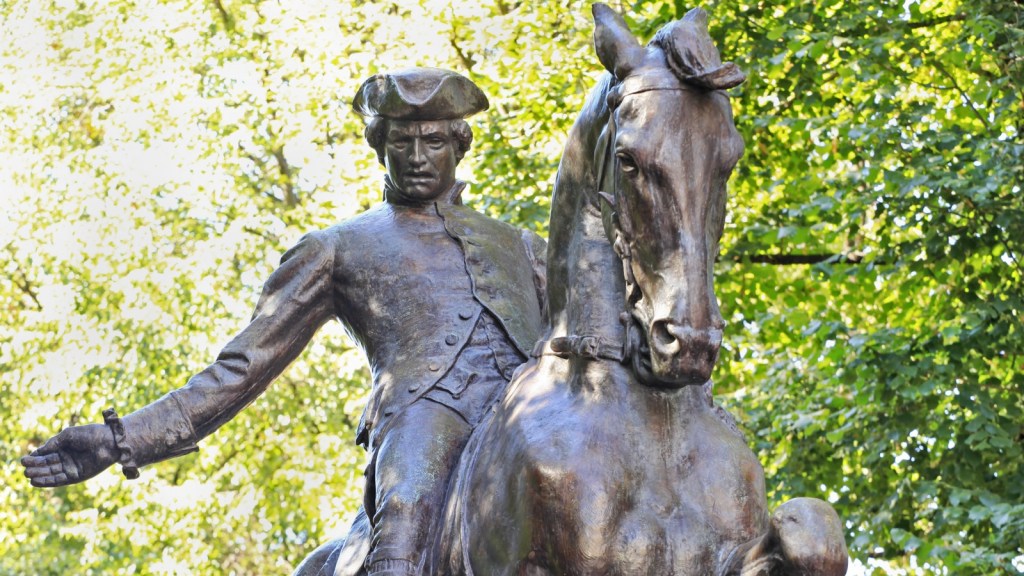
Statue of Paul Revere in Boston

… on the porch

April 18, 2023

This is an update to a Tuesday Newsday Classic from April 18, 2017

April 18th… it conjures up that most famous poem by Longfellow which begins…

“Listen my children and you shall hear
Of the midnight ride of Paul Revere,
On the eighteenth of April, in Seventy-five;
Hardly a man is now alive
Who remembers that famous day and year.”

But that’s not the important topic this week. Nor is our topic the catastrophic earthquake which all but destroyed San Francisco on April 18, 1906.

No, today we honor the Animal Cracker. Yes, April 18 IS “National Animal Cracker Day.”

The crackers were first imported to the United States from England in the late 19th Century. They proved so popular that Stauffer’s Biscuit Company began production in York, Pennsylvania in 1871. It was in 1902 when they became known as ‘Barnum’s Animals’ and were packaged in the circus themed boxes which are so recognizable. Just prior to Christmas that year a string was added to the box so the cookies could be hung on a tree. Now, over 100 years later, the boxes still retain the string but I doubt many know why there is a string!

Some other interesting facts from the Infallible Wikipedia:

animal crackers“Barnum’s Animals Crackers are all produced in the Fair Lawn, New Jersey, bakery by Nabisco Brands. More than 40 million packages of Barnum’s Animals Crackers are sold each year, both in the United States and exported to 17 countries worldwide. The cookies are baked in a 300-foot (91 m)-long traveling band oven. They are in the oven for about four minutes and are baked at the rate of 12,000 per minute. About 15,000 cartons and 330,000 cookies are produced in a single shift, using some 30 miles of string on the packages. This runs to nearly 8,000 miles (13,000 km) of string a year. Those bright circus boxes are produced in three colors – red, blue, and yellow – with different variety of animals on each.”

I know all of you would be disappointed if I didn’t share some personal anecdote which relates to our topic. So with apologies to Longfellow, here it goes:

Listen my readers and you shall hear
of the midnight antics from Senior year…
It cost but a quarter for of box of treats,
Yes Animal Crackers for boys that were neat.
Up to the front porch of our desire’s house
My friend Snide and I always sly as a mouse.
A poem attached to each as a clue
Just “who,” it asked, “left these cookies for you?”
The unlucky ones found bushes and trees
Draped with rolls and rolls of contraband TP
Animal Crackers, though, were more easily bought,
Since, heaven forbid, we didn’t want to get caught.

The animal crackers caper was a one year thing for me. The summer before senior year I had been dating a guy, but he had gone away to college in September of 1974. There were some letters exchanged, but it became obvious that the relationship was all but over. So, along with a few select friends, we had lots of free time on Friday and Saturday nights, especially since we were not the party hardy kind of girls.

There was this one guy from choir that I was maybe, sorta interested in. But I doubt he knew I existed.

To be sure, I’m not sure exactly how the whole animal crackers thing started. What I do know is that Toilet Papering houses was all the rage in the 1970’s but it was also a messy thing AND you were likely to get caught. There was another challenge in that local stores would not sell large quantities of it to teenagers, so obtaining it was problematic. Did I mention getting caught was not on my list of good ideas? Did I mention that I DID get caught once which was motivation to not have it happen again?

So instead of TP, we found the boxes of Animal Crackers at the 7-11 on 16th and Summitview Avenues in Yakima. We would then write out the poems on paper and tape them to the boxes. Finally, under cover of dark, we would drive to the street where the guy we liked lived, park a half a block away, and then sneak up to the porch to leave the cookies. We did NOT ring the doorbells or make any noise whatsoever. 

To this day I have no idea if these guys ever figured out who left the boxes. That’s not entirely true. In the spring of my senior year, having never gotten any traction with Choir Guy #1, I left cookies one night for a new one – Choir Guy #2 – who I had actually gotten to know during practice for the annual musical. I’m pretty sure HE knew who left the cookies. We ended up dating for two years. So apparently the great Animal Crackers caper worked at least once. And all for a quarter and a little creativity

For those who want to know more about these tasty treats I direct you to: https://en.wikipedia.org/wiki/Animal_cracker

Eisenhower High School’s Football coach lived just up the street from us… and was frequently adorned with TP from loving students. Photo of his house from the 1972 Reveille Year Book.

It’s A Hullabaloo!

April 11, 2023

Hullabaloo

This is an update to a Classic Tuesday Newsday from April 11, 2017

Last week I shared the amazing feat of the Beatles and their five songs at number one through five on April 4, 1964. Well this week we are going to go forward two years to April 11, 1966. It was on this date that the last episode of the TV program ‘Hullabaloo’ aired. What? You’ve never heard of Hullabaloo? Neither had I but here’s what I learned from the always Infallible Wikipedia:

“Hullabaloo was an American musical variety series that ran on NBC from January 12, 1965, through April 11, 1966 (with repeats to August 1966). Similar to ABC’s Shindig! and in contrast to American Bandstand, it aired in prime time.

Directed by Steve Binder, who went on to direct Elvis Presley’s 1968 ‘comeback’ special, Hullabaloo served as a big-budget, quality showcase for the leading pop acts of the day, and was also competition for another like-minded television showcase, ABC’s Shindig! A different host presided each week—among these were Sammy Davis, Jr., Jerry Lewis, Gary Lewis, Petula Clark, Paul Anka, Liza Minnelli, Jack Jones, David McCallum and Frankie Avalon—singing a couple of his or her own hits and introducing the different acts. Chart-topping acts who performed on the show included Simon and Garfunkel, the Mamas & the Papas, Dionne Warwick, Gary Lewis and the Playboys, the Lovin’ Spoonful, the Rolling Stones, the Yardbirds, Sonny & Cher, the Supremes, Herman’s Hermits, Frankie Valli and the Four Seasons, the Animals, Roy Orbison and Marianne Faithfull.”

I can guaran-darn-tee that my mother would have had that TV off in a heartbeat if this program came on. Of course my mother also banned us kids from seeing Gunsmoke and the Monkees (which, ironically, was the show that took over the time slot vacated by Hullabaloo).

My mother’s philosophy was that impressionable young minds needed to be protected from such decadence. Dancing like this, as a friend of mine commented recently, was not tolerated in the early 1960’s. And those who did dance in such ways must have been ‘those kind of girls.’ In some ways my mother was a feminist in that she objected to women being judged upon their looks and their bodies and certainly would have found this display quite inappropriate. By today’s standards, this compilation is rather tame.

Which got me to thinking about my own experience with dancing. Up until I joined the Rainbow Girls in 1971, I had maybe only ever been to one ‘dance’ – which would have been at Wilson Junior High School. Now, to call it a dance was really a misnomer. More like an excuse for the young teenagers to hang out in the cafeteria after school with the girls clustered on one side of the room and the boys on the other while loud music played. Occasionally some boy would cross the invisible line, a warrior marching bravely to battle, and ask a girl to dance. Mostly, however, the boys remained on their side and the girls on theirs.

But, back to the Rainbow Girls. Our group, called an Assembly, boasted over 70 members in the 1970’s and once every four months a new set of officers would be installed. This was, of course, cause for a celebration and the party afterwards was crowded and ALWAYS included a dance which featured, for several years, a live local band.

Unlike that first Junior High experience, people actually danced at these things! Well, at least the older girls seemed to while us younger ones hung out in a group we dubbed ‘The Wallflowers.’ But that was, not apparently, entirely accurate as my diary from May 29, 1971, chronicles my first Rainbow dance ever:

“…the best part (of the installation) was the dance. A.L. asked me to dance a fast dance which wasn’t that fun. Well we (who ‘we’ is I have no idea) were talking to ‘Becky’ and she decided to get somebody to ask one of five girls to dance. Well, BB asked ‘Sally’ and his friend asked me.”

I go on to write that the particular song turned out to be a slow one. And there was nothing WORSE than slow dancing with some guy you had never met. The whole experience apparently left my stomach in knots.

Okay, so maybe there was something worse. And that would have been the time I was dancing with a guy – initials of DW – who I had a bit of crush on. It was a slow dance which, when you have a bit of a crush on a guy, is a good thing. A slow dance, in the 1970’s, often meant that you had your arms around each other, eyes closed, and were swaying together to the music. All very romantic. That is until the moment when someone taps you on the nose.

That someone turned out to be my Dad who happened to waltz (literally) by with my Mom since they were chaperones! Talk about embarrassing. That event is etched in my memory. My parents are both laughing as they continue waltzing past. I was mortified but I think “DW” thought it was funny.

There were many, many more dances over the years which followed but there was something special about those first few. It was definitely a Hullabaloo!


What dances in the 1970’s looked like for teenagers. From the 1974 tolo dance as pictured in the Eisenhower HS Reveille yearbook.

The Beatles

The cover of Can’t Buy Me Love

Can’t Buy Me Love

April 4, 2023*

Tune in to any radio station playing oldies and you are certain to hear a song from this one group. Who is it? By now you should all be shouting: The Beatles.

It was on April 4, 1964 that the Beatles accomplished something which no musical group or person either before or after has ever matched.

Imagine Casey Kasem’s voice as you countdown to number one:

  • Falling out of the number two spot to number five this week is “Please, Please Me” by the Beatles!
  • Our next song spent five weeks at number one and is probably this group’s most popular song ever. At number four it’s the Beatles with “I Want To Hold Your Hand.”
  • Relinquishing its spot at number one, this song drops two spots to number three. It’s the Beatles with “She Loves You.”
  • The lead vocalist of our next song was suffering from a cold the day this Isley Brother’s cover was recorded. The song was laid down in just one take and the effects of the cold contribute to the rock and roll sound. Coming in at number two is “Twist and Shout” by the Beatles.
  • Catapulting to the number one position this week from number 27 is none other than The Beatles with “Can’t Buy Me Love.”

It was an unprecedented event. The top five songs on the Billboard Hot 100 were all by The Beatles. Yes, 1964 was the year of the Beatles as explained in this article from the always Infallible Wikipedia:

“The song (Can’t Buy Me Love) was the third of seven songs by the Beatles to hit #1 in a one-year period; an all-time record. In order, these were ‘I Want to Hold Your Hand’, ‘She Loves You’, ‘Can’t Buy Me Love’, ‘Love Me Do’, ‘A Hard Day’s Night’, ‘I Feel Fine’, and ‘Eight Days a Week’. It was also the third of seven songs written by Lennon-McCartney to hit #1 in 1964; that’s an all-time record for writing the most songs to hit #1 in the same calendar year. (see List of Billboard Hot 100 chart achievements and milestones)

Rolling Stone ranked ‘Can’t Buy Me Love’ at No. 295 on their list of the 500 Greatest Songs of All Time. The song spent five consecutive weeks at No. 1. The only Beatles songs to exceed that mark were ‘I Want to Hold Your Hand’ at seven weeks and ‘Hey Jude’ at nine weeks.”

Whether you think their music was genius or formulaic, one thing is certain, they dominated the Billboard Hot 100 charts in the mid-1960’s.

Now I’m positive all of you think I’m going to link to a Beatle’s Song but you’re wrong! The Beatles were such a pop culture sensation that the whole world was abuzz over these four young phenoms from the British Isles. You’ve likely all heard their songs thousands of times but I leave you instead with THIS musical masterpiece which summed up the inter-generational shock-waves they produced.

*UPDATE – This article first ran in 2017. It’s been updated to include the following additional information.

 I admit it. I’m not a big Beatles fan. But thanks to my fellow author, Roger, I have developed an appreciation for just how groundbreaking their music was. If one were to hear it for the first time today you might think it sounds like every song ever produced in the 1960’s. But that wouldn’t be true. What is true is that all THOSE songs came AFTER the Beatles and were the imitations.

Now for a Seattle connection and my ‘six’ degrees of separation to the Beatles. On August 21, 1964 the Beatles stayed at the Edgewater Hotel in Seattle. At the time, almost no one in Seattle wanted anything to do with the headaches that would come with the world’s most famous group and the crowds of teenage girls who swarmed around them… no one except one Don Wright, the man who was the Edgewater’s General Manager.

Many credit is pushing to have the Beatle’s stay at the hotel as the reason why it was not torn down and has, instead, become a Seattle landmark.

Here’s an article from the Seattle Post Intelligencer all about their stay and Mr. Wright’s role:

https://www.seattlepi.com/local/article/Beatles-stay-at-Edgewater-helped-mark-its-place-1305857.php

As far as my connection, in addition to working at the Edgewater, Mr. Wright was also associated with the Order of DeMolay, a youth group for young men. In the 1970’s he was the Executive Director for the group. It was in 1974 when I participated in their ‘Sweetheart’ program and met Don Wright. At the time I had no idea of his connection to the Beatles. So my Bacon Number (https://barbaradevore.com/2018/09/04/the-oracle-of-bacon/) to the Beatles is an impressive ‘two.’

As my faithful readers already know, I save historical documents. These are two of the pages from my 1974 DeMolay Conclave program.

My deepest regards to Don’s youngest daughter who posted about this famous event on her Facebook page a couple years ago. What a treasure these memories are for her and her family! This one’s dedicated to you KWP.

Streaking!

They Call Him The Streak

March 28, 2023

Ray-Stevens-The-Streak-1974.jpgA cultural phenomenon swept through the United States in the spring of 1974, exposing the public to, uh, ‘things’ never before seen. I’m talking, of course, about ‘streaking.’

On March 28 of that year, one of the writers for the Tonight Show stripped down and streaked on air much to the surprise of host Johnny Carson.

http://www.washingtonexaminer.com/crime-history-streaker-flashes-tonight-show-host-johnny-carson/article/412541

This was not the first or the last incident and it may have been connected to the release
the previous day (March 27) of Ray Steven’s hit record “The Streak.” The song reached number one on the charts in May 1974 and remained there for three weeks.

Twickenham_Streaker

Famous photo of the ‘Twickenham Streaker’ from April 20, 1974

Streaking took place at the Academy Awards, on college campuses, and at sporting events for several months. The record for simultaneous streaking was set at the University of Georgia when 1,543 students disrobed on March 7, 1974. By summer, however, the novelty was gone and streaking ran off into pop culture history.

Of course The Infallible Wikipedia has laid itself, um, bare, in sharing information:

“The high point of streaking’s pop culture significance was in 1974, when thousands of streaks took place around the world. A wide range of novelty products were produced to cash in on the fad, from buttons and patches to a wristwatch featuring a streaking Richard Nixon, in pink underwear that said ‘too shy to streak.’

Perhaps the most widely seen streaker in history was 34-year-old Robert Opel, who streaked across the stage of The Dorothy Chandler Pavilion in Los Angeles flashing a peace sign on national US television at the 46th Academy Awards in 1974. Bemused host David Niven quipped, ‘Isn’t it fascinating to think that probably the only laugh that man will ever get in his life is by stripping off and showing his shortcomings?’ Later, evidence arose suggesting that Opel’s appearance was facilitated as a publicity stunt by the show’s producer Jack Haley Jr. Robert Metzler, the show’s business manager, believed that the incident had been planned in some way; during the dress rehearsal Niven had asked Metzler’s wife to borrow a pen so he could write down the famous line, which was thus not the ad-lib it appeared to be.”

Of course, Ray Steven’s song lives on as a reminder of far more fun and innocent times in the spring of 1974. Here’s the YouTube video for all to enjoy!


Eisenhower Senior High School in Yakima – where I was a student at the time – was not immune from the phenomenon. I have a distinct memory of the school being all abuzz with talk that Mel C. had streaked during PE class! Mel was quite the character and of all the students in the school, he was absolutely the one to buck convention and go buck naked.

I knew Mel because, like me, he was on the Reveille staff. Between Mort, the editor in chief, the assistant editor, Dick, and Mel, the copy editor, yearbook class was never boring. Like the time Dick climbed out of one of the second floor windows onto a flat roof adjacent to the room, taking a desk and chair with him, and then sitting outside at the desk. It was Mel who locked him out there. The sarcastic wit and barbs never ceased with that trio.

Our adviser, Mrs. Scholl, seemed to enjoy the guys’ shenanigans and they never got in trouble. But in looking at the annual, not a single photo or reference exists to chronicle the day Mel C. streaked at Eisenhower High School in the spring of 1974. Either the event was a bridge too far for the administration or, since not everyone carried cameras with them all the time, it was not chronicled. What a loss. I think every student there wanted to see that.

https://en.wikipedia.org/wiki/Streaking

Most of the 1974 yearbook staff. Mel C., Ike’s first, and likely only, Streaker is in the cowboy hat. Mrs. Scholl, our adviser, is the woman with the bun hairdo. To the left of her is Mort, right behind her is Dick W. This author is at the left side of the photo, sitting behind the gal with the plaid pants.

This article is a reprint of one which was published six years ago on March 28, 2017. The story from my high school days has been expanded.

Who Shot J.R.?

It was the question everyone was asking

March 21, 2017

It was on March 21, 1980 when the whole world was left asking the question “Who shot J.R.?”

Need I explain further? I doubt it because – unless one was living beneath a rock – the buzz around the water cooler for the next 8 months centered on this popular cultural phenomenon.who shot J.R.

They took bets in Vegas, speculated on radio and TV programs, sold “Who Shot J.R.?” T-shirts, sponsored guessing contests and created a publicity hype never before seen.  Some 83 million people viewed the follow up episode in November that year, more people than voted in the 1980 presidential election! At the time ‘Who done it’ (the reveal) was the most watched TV program in history, only being topped in 1983 by the final episode of MASH.

“In the final scene of the 1979–80 season, J.R. Ewing (Larry Hagman) hears a noise outside his office, walks out to the corridor to look, and is shot twice by an unseen assailant. The episode, titled “A House Divided”, was broadcast on March 20, 1980. Viewers had to wait all summer to learn whether J.R. would survive, and which of his many enemies was responsible.

Ultimately, the person who pulled the trigger was revealed to be Kristin Shepard (Mary Crosby) in the “Who Done It?” episode which aired on November 21, 1980. Kristin was J.R.’s scheming sister-in-law and mistress, who shot him in a fit of anger. J.R. did not press charges, as Kristin claimed she was pregnant with his child as a result of their affair.”

The Infallible Wikipedia – as it is wont to do – has an exhaustive account of the series:

“With its 357 episodes, Dallas remains one of the longest lasting full-hour prime time dramas in American TV history, behind Gunsmoke (635 episodes), Law & Order: Special Victims Unit (525 episodes as of December 2022), Law & Order (475 episodes as of December 2022), Bonanza (430 episodes), and Grey’s Anatomy (406 episodes as of November 2022). Dallas also spawned spin-off series Knots Landing in 1979, which also lasted 14 seasons and a total of 344 episodes.

In 2007, Dallas was included in Time magazine’s list of ‘100 Best TV Shows of All-Time.”

Dallas was ‘must see’ TV in my family’s household and my mother rarely missed an episode. I’d call it a guilty pleasure. When the show premiered in April 1978 I was at the University of Puget Sound. It’s likely that my first exposure was the next month when I returned home for the summer.

It was discussed around the dinner table and my dad liked the idea of being Yakima’s “J.R. Ewing,” managing land holdings and running an oil business. This idea was not without a hint of reality. Property which my grandfather owned and had been gifted to my parents a few years earlier had been of interest to a Canadian Oil company. My dad was already managing the family fruit orchards; when the oil company arrived on the scene, my parents entered into negotiations to give the company drilling rights and a contract was signed. Ultimately their explorations determined that any oil which was there as being too difficult and expensive to extract; our family’s vision of being the next Ewing family evaporated faster than a summer rain squall in Texas. Personally I had a hard time imagining living on a piece of sagebrush covered, rattlesnake inhabited land. But I imagine it would have made for compelling story lines.

As always, you can read more about J.R., Dallas and the reverberations from this seismic TV event on the Infallible Wikipedia. https://en.wikipedia.org/wiki/Who_shot_J.R.%3F

The property near Yakima which had my dad dreaming of being a real life J.R. Ewing

Musings on being a writer

“I write not because I want to but because I am destined to.”― Jules Haigler

An interesting aspect of life is that in order to move forward one must be open to new experiences, expanded knowledge and change. I’ve always been a writer (not the greatest in the world, mind you, but that never deterred me) yet it was about a dozen or so years ago when I realized writing was the ONE thing to which I always returned.

I engaged in a little personal experiment. I went into the library and wandered through the non-fiction stacks. Which books, which topics drew me in? Not the ‘zeros’ or the ‘ones’, ‘twos’ or ‘threes’. It wasn’t until I came to the 808’s when I found my home. I’ve read the book “Self-editing for Fiction Writers” no less than a half dozen times. (808.3) Every time I read it I learn something new and discover ways to improve my writing. The subject matter is of endless interest to me. How does one construct an effective novel? What is an adverb and why are they considered lazy writing? How does one go about turning a gerund into an active verb? Why does any of this matter?

To a writer – an author – this MUST matter because it is at the heart of the craft. Yet, ultimately, it’s about being able to weave an interesting story which captures a reader and compels them to read it until the very end. For me, that will be enough.

884439_1378102442429752_1931651225_o


Barbara DeVore, March 2017

The Ghost In The Little House

Laura Ingalls Wilder

February 7, 2017

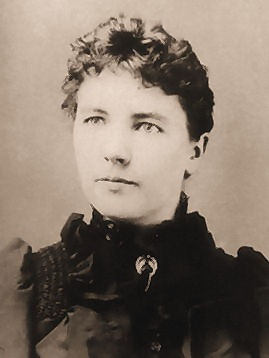
“We who live in quiet placeslaura_ingalls_wilder_cropped_sepia2 have the opportunity to become acquainted with ourselves, to think our own thoughts and live our own lives in a way that is not possible for those keeping up with the crowd.”
She didn’t publish her first novel until she was 65 years old… but she is one of the most beloved authors of children’s book ever. Who is she? None other than Laura Ingalls Wilder (LIW) who was born February 7, 1867.

I discovered the Little House series when in elementary school and was hooked. The strong characters were as real to me as my friends and family; the settings described in such vivid detail that I felt as if I, too, were a pioneer girl living in the big woods of Wisconsin, on the plains of Kansas, or the brutal prairies of South Dakota. In fact, it was my desire to write stories like LIW which motivated me to capture my thoughts on paper.

As a lifelong fan I have read all of her books and also biographies of her life and, I think, the most interesting book of them all called “The Ghost in The Little House.” This book, based on painstaking research, conjectures that LIW did not write independently but had a co-author.

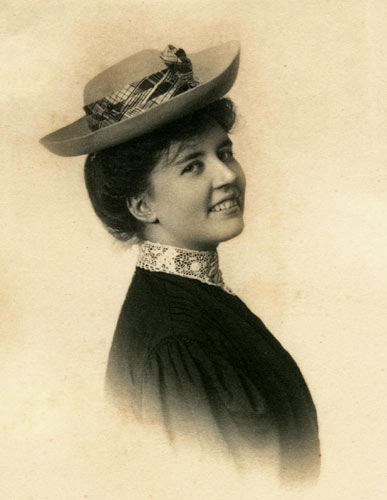
mansfieldrose3Her daughter, Rose Wilder Lane, was a successful novelist prior to the publication of the Little House books and ‘helped’ her mother with her manuscripts. I do believe it was Rose who breathed life into her mother’s characters and took the excellent bones and, as her ghost writer, turned them into compelling fiction. It was Rose who had connections in the publishing industry and it was Rose who spent a year ‘typing’ each of her mother’s handwritten ‘memoirs’, thus turning them into commercially viable fiction.

Here’s a review of the book by William Holtz with his research to support the ghost writer theory:

https://fee.org/articles/book-review-the-ghost-of-the-little-house-a-life-of-rose-wilder-lane-by-william-holtz/

For those who want the full experience, you can (like my daughter and I did on a cross country trip in September 2013) visit the Laura Ingalls Wilder museum in Mansfield,Missouri: http://www.lauraingallswilderhome.com/

There are other museums and home replicas in most all of the locations where the Ingalls family lived. The Mansfield one has the advantage of having many of the original artifacts from Laura’s childhood including her handwritten notebooks.

Note: This was one of my first articles on my blog. Since writing this the hubby and I have visited the LIW homesites in Wisconsin, Minnesota, and South Dakota. You can read that article here: https://barbaradevore.com/2019/05/07/on-the-road-to-the-little-house


Thar’s Gold In Them There Hills

January 24, 2017

It was on January 24, 1848 when James Marshall made a discovery which changed the course of history. It was at a mill on the American River where he noticed something shiny in the water. He immediately shared the news with his partner, John Sutter, and they agreed the find needed to be kept secret. That didn’t pan out, so to speak, and soon some 80,000 men descended upon California in search of gold. While many did make a fortune from the discovery, neither Marshall or Sutter, profited from the find. Marshall experienced multiple business failures and Sutter was forced to turn over his holdings to his son.sutters-mill-1850One can visit Coloma, California, and see the spot where gold was discovered and learn more about this fascinating history at Marshall Gold Discovery State Historical Park. Since my daughter lives ‘above’ this area at the north end of Lake Tahoe I plan to drag the hubby here on our next trip south.As always, a link:

http://www.legendsofamerica.com/ca-jamesmarshall.htmlhttp://www.parks.ca.gov/?page_id=484


Jim Croce

Photographs and Memories

January 10, 2018

There are a handful of musical artists whose star flames brightly for a very short time before they are extinguished.

croce-13tflt2One such artist was Jim Croce.  Born on January 10, 1943, Croce wrote some two dozen songs which resonated with my generation: Time In a Bottle, I Have To Say I Love You in A Song, and I’ve got A Name are but three of the ballads he immortalized which spring immediately to mind.

Croce’s life path was not an easy one. No doubt he was driven to write his music despite gaining little traction with it until 1972 when his songs started to get airtime on commercial radio. His most successful single Bad, Bad Leroy Brown reached Number 1 on the Billboard Charts in July 1973. With that success came a series of appearances and, from all indications, he was on a trajectory to stardom.

From the infallible Wikipedia:

“Croce then began appearing on television, including his national debut on American Bandstand on August 12, 1972, The Tonight Show on August 14, 1972, The Dick Cavett Show on September 20/21 1972, The Helen Reddy Show airing July 19, 1973 and the newly launched The Midnight Special, which he co-hosted airing June 15. From July 16 through August 4, 1973, Croce and (Maury) Muehleisen returned to London and performed on The Old Grey Whistle Test where they sang ‘Lover’s Cross’ and ‘Workin’ at the Car Wash Blues’ from their upcoming album ‘I Got a Name’.”

Croce familyDespite the success he had grown increasingly homesick and wanted to return to San Diego to be with his wife, Ingrid, and their infant son. He wrote a letter to her telling her of his plans to pursue a career as a screen writer rather than a songwriter/musician. She would not receive that letter until after his death.
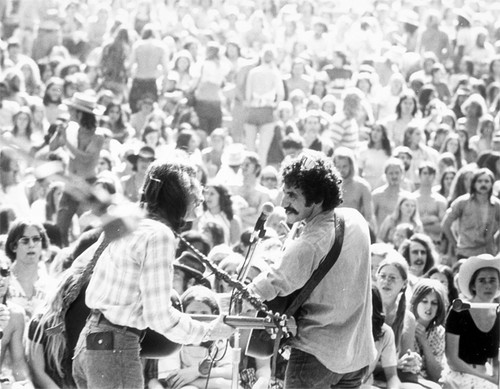
The plane in which he and his band were traveling crashed on takeoff:

“On Thursday, September 20, 1973, during Croce’s Life and Times tour and the day before his ABC single ‘I Got a Name’ was released, Croce and five others died when their chartered Beechcraft E18S crashed into a tree during take-off from the Natchitoches Regional Airport in Natchitoches, Louisiana. Others killed in the crash were pilot Robert N. Elliott, musician Maury Muehleisen, comedian George Stevens, manager and booking agent Kenneth D. Cortose, and road manager Dennis Rast. Croce had just completed a concert at Northwestern State University’s Prather Coliseum in Natchitoches and was flying to Sherman, Texas, for a concert at Austin College. The plane crashed an hour after the concert. Croce was 30 years old.”

croce and muelheisin

One of the things which made Croce unique was that he was truly a storyteller. Each of his songs evoke powerful images of a particular event, person or place. I have often wondered if, had he not died, would he have been able to give up music? I like to think he would have realized his amazing gift and would have continued to write songs for a generation.

Instead, I will have to be satisfied with the songs he left behind. Whenever I drive solo someplace (usually across Snoqualmie Pass to Yakima) I have with me a shoebox full of CD’s. It contains two dozen of my favorite artists and also my next favorite artists. Jim Croce is part of the first group.

When I made the trek yesterday his music was one of the three artists I chose for my travels. In fact, it’s a rare trip when I don’t find myself seeking out at least a few Jim Croce songs.

It’s pretty impossible to pick my favorite of his… so I won’t. But I will share this performance of his.

And as always a link to more information on Wikipedia:

https://en.wikipedia.org/wiki/Jim_Croce

Apparently I like Jim Croce so much that I published the article you just read a year after I also wrote the article below! I’ve left both up as I like both. How to choose between the two?

I’ve Got A Name

January 10, 2017

Welcome to my Blog. Tuesday’s are Writer’s Group day and a couple of years ago I took over as the communications czar for the group. Soon, however, I tired of the boring ‘meeting tomorrow’ sorts of emails and started sending out what I hoped were more interesting reminders.

Each week I scour the internet in search of something that tickles my fancy and piques my interest. Here you might discover some interesting historical event, a cultural connection, a biography for a writer (books, songs, poetry), or some random Geeky musing.

*It seems as if January 10th is the birth date for a whole slew of musical types including Jim CroceFrank Sinatra, Jr., Rod Stewart and Don Fagen (Steely Dan). But when I saw one particular name I decided to write about him. That would be Jim Croce who was born on this date in 1943. Jim Croce is on my top 10 list – maybe even my top five – of favorite musicians.

Like most of my favorites he was, first and foremost, a story teller. His songs run the gamut from humorous to quite introspective. They effectively capture time and place with their vivid imagery and effective metaphors and similes. A master songwriter can distill the human experience down to three minutes and leave all of us wishing for more. Croce did that in his songs.

Tragically, his life ended at age 30 when the private plane he and four others were in, crashed on takeoff in Natchitoches, Louisiana. In a letter to his wife – which she received after his death – he told her he had “decided to quit music and stick to writing short stories and movie scripts as a career, and withdraw from public life.”

I have always wondered if he really would have been able to walk away from the songwriting, though. Of course we will never know which is the real tragedy.

You can visit the Jim Croce website for more information: http://jimcroce.com/ and there’s always the infallible Wikipedia: https://en.wikipedia.org/wiki/Jim_Croce

And, you can listen to the Song referenced in the subject line, I’ve Got A Name, here: