November 21, 2017
From the moment people could harness their imaginations, there has been no greater desire than to be able to soar like birds, high above the ground. Today, of course, we find air travel utilitarian and, perhaps, a bit mundane. But on November 21, 1783, it was anything but mundane when two Frenchmen, Jean-François Pilâtre deRozier and the Marquis d’Arlandes, became the first humans to travel in a ship through the ‘air.’

DeRozier can credibly be dubbed the father of flight. He became interested in chemicals, specifically gases and how they reacted and interacted; he parlayed his obsession to a career as a teacher and scientist and, as such, opened a museum for nobles to come and witness his experiments.
When, in June 1783, he observed a tethered balloon ‘flight’ of a duck, a sheep and a cockerel, his desire to fly was ignited.
From the Infallible Wikipedia:
“After several tethered tests to gain some experience of controlling the balloon, DeRozier and d’Arlandes made their first un-tethered flight in a Montgolfier hot air balloon on 21 November 1783, taking off at around 2 p.m. from the garden of the Château de la Muette in the Bois de Boulogne, in the presence of the King. Their 25-minute flight travelled slowly about 5½ miles (some 9 km) to the southeast, attaining an altitude of 3,000 feet, before returning to the ground at the Butte-aux-Cailles, then on the outskirts of Paris.”
By all accounts, DeRozier was fearless and continued his experiments with what we know as ‘hot air balloons.’ Several successful balloon flights followed and, in June 1785, he took on his most ambitious journey which was to travel from France to England across the English Channel. Because of the distance involved, DeRozier determined that using just hot air (powered by stoves set up in the balloon basket!) would not be enough to make the journey. Instead he developed his own balloon – called the DeRozier Balloon – which was powered by use of hydrogen fuel to heat the air. By all accounts it should have worked. But a sudden change in wind direction pushed the balloon back, and caused it to rapidly deflate. It plummeted 1500 feet to the ground, killing DeRozier and the two others onboard.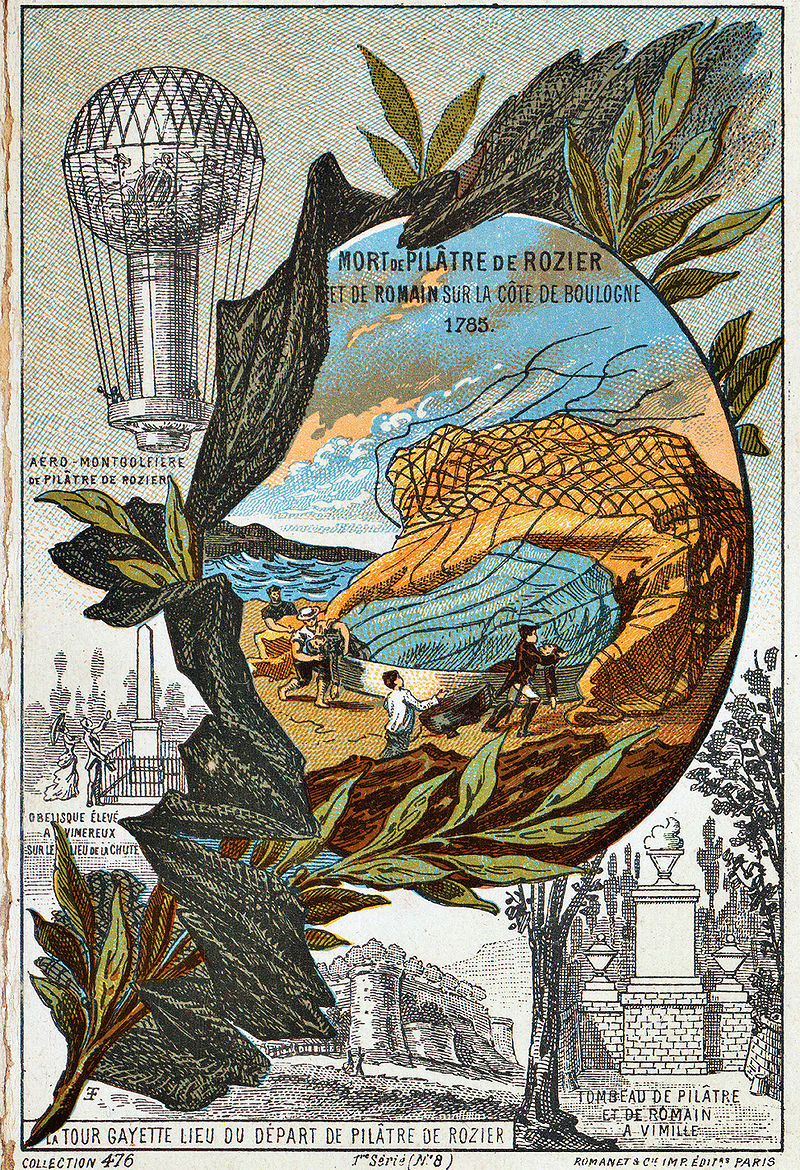
The accident ended the adventurer’s life and research, but the “modern hybrid gas and hot air balloon is named the Rozière balloon after his pioneering design.”
So the next time you fly remember how very far air travel has advanced in just 234 years.
Update November 21, 2020: I was so very fortunate to attend the Albuquerque Balloon Festival in 2018. What an incredible experience! It was a visual feast of balloons. Although I did not get to ride in one, it was fascinating to watch as wave after wave of balloons puffed up to life and lifted into the sky. If you ever have a chance to attend such an event, I highly recommend it.
To read more about DeRozier and balloon flight:
https://en.wikipedia.org/wiki/Jean-Fran%C3%A7ois_Pil%C3%A2tre_de_Rozier
And a general history of Balloon flight: http://bellestar.org/faq/default.html
A link to the Albuquerque Balloon Fiesta: https://balloonfiesta.com/


 That artist: Taylor Swift.

 We spent the night near Coeur d’Alene and the next day stopped at a rest area just east of the Continental Divide on I-90. There in the parking lot was an unmarked tour bus, its darkened windows a detriment to prying eyes. Was Taylor Swift on that bus? I like to think so. It is highly possible as the next stop on her tour was just five days away, September 6th, in Fargo, ND.
 Last week we explored the world of horseracing and author Dick Francis. This week we will be discussing galloping. But unlike how a horse gallops, this galloping took place on November 7, 1940 and has since become a text-book example of what NOT to do when building a bridge.
 Although I was not around in 1940, I was going to school in Tacoma on February 13, 1979 when another bridge met the same fate as Galloping Gertie. It was then when I grasped the power of a Pacific Northwest windstorm. During the night prior to its sinking, sustained winds of 85 mph buffeted the Hood Canal floating bridge . They estimated gusts up to 120 mph (called a ‘hurricane’ most anyplace else as any sustained wind over 72 mph is classified as such) had occurred. The structure was swamped and at 7 a.m. that dark, windy and rainy morning, the bridge sank.
 Fast forward to November of 1990 and yet a third Washington state bridge met a similar doom. We watched in fascinated horror live TV news on the morning of November 25th as the floating bridge – being resurfaced to continue carrying traffic while a new span was constructed – which connected Mercer Island to Seattle was inundated. As my husband no doubt said at the time: “surf’s up!”
 So, instead of a rehash, today’s topic involves one of my favorite authors. Born October 31, 1920, he wrote more than 40 novels in his lifetime. He did not begin his novel writing career until he was 40 years old. All of his books centered around the world of horseracing. That author: Dick Francis.
 My favorite book of his is titled “Straight” and tells the story of a man who inherits his brother’s life when the latter dies in a freak accident. Francis was one of my mother’s favorite authors also. So beloved, in fact, that she collected all of his books which, perhaps, I will inherit one day.
 to get through the event. The store manager brought him one glassful while I was there.
 One such song spent four weeks at number one in October 1982 and, in 2012, made the Recording Industry of America’s list of top songs of the century.
 The song was almost never recorded. According to Mellencamp, he struggled with how to perform the song to achieve the sound he desired. From the Infallible Wikipedia:
 My brother purchased the Videocassette for our family when my children were little. We’ve since upgraded to DVD. Although they enjoyed it, I loved the film from the moment I saw it and often quote from it. A few of my favorites:
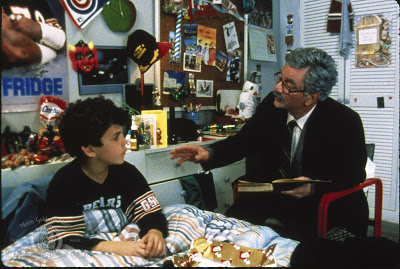 p.s. – This was posted in 2017. Alas, I am unaware of any showings of the film, especially in light of this year’s pandemic lockdowns. But it’s still worth a look on Netflix or other video streaming service. I checked on Amazon Prime Video (which is our service) and found it available to watch for $3.99.
 It was in October of 1980 when the United States was truly invaded by the Japanese. We are not talking about military here. No, this invasion featured four ghosts named Inky, Blinky, Pinky, and Clyde and a round yellow fellow with a huge pie shaped mouth dubbed Pac-Man. (There are articles which place the release date on October 10 but that date is disputed)
 “When Pac-Man was released, the most popular arcade video games were space shooters—in particular, Space Invaders and Asteroids. The most visible minority were sports games that were mostly derivatives of Pong. Pac-Man succeeded by creating a new genre. Pac-Man is often credited with being a landmark in video game history and is among the most famous arcade games of all time. It is also one of the highest-grossing video games of all time, having generated more than $2.5 billion in quarters by the 1990s.
 My hubby was hired by a CPA firm in Burien who had a client that needed an auditor. So they sent him out to do the job and thus began a seven year run with a different Japanese invader: Donkey Kong. While many think of Nintendo as a behemoth company, when Donkey Kong was first being sold into the US market they had six employees: two Seattle based salesmen, the company president, a couple of Japanese developer/engineers, and one American to make the build’s happen.

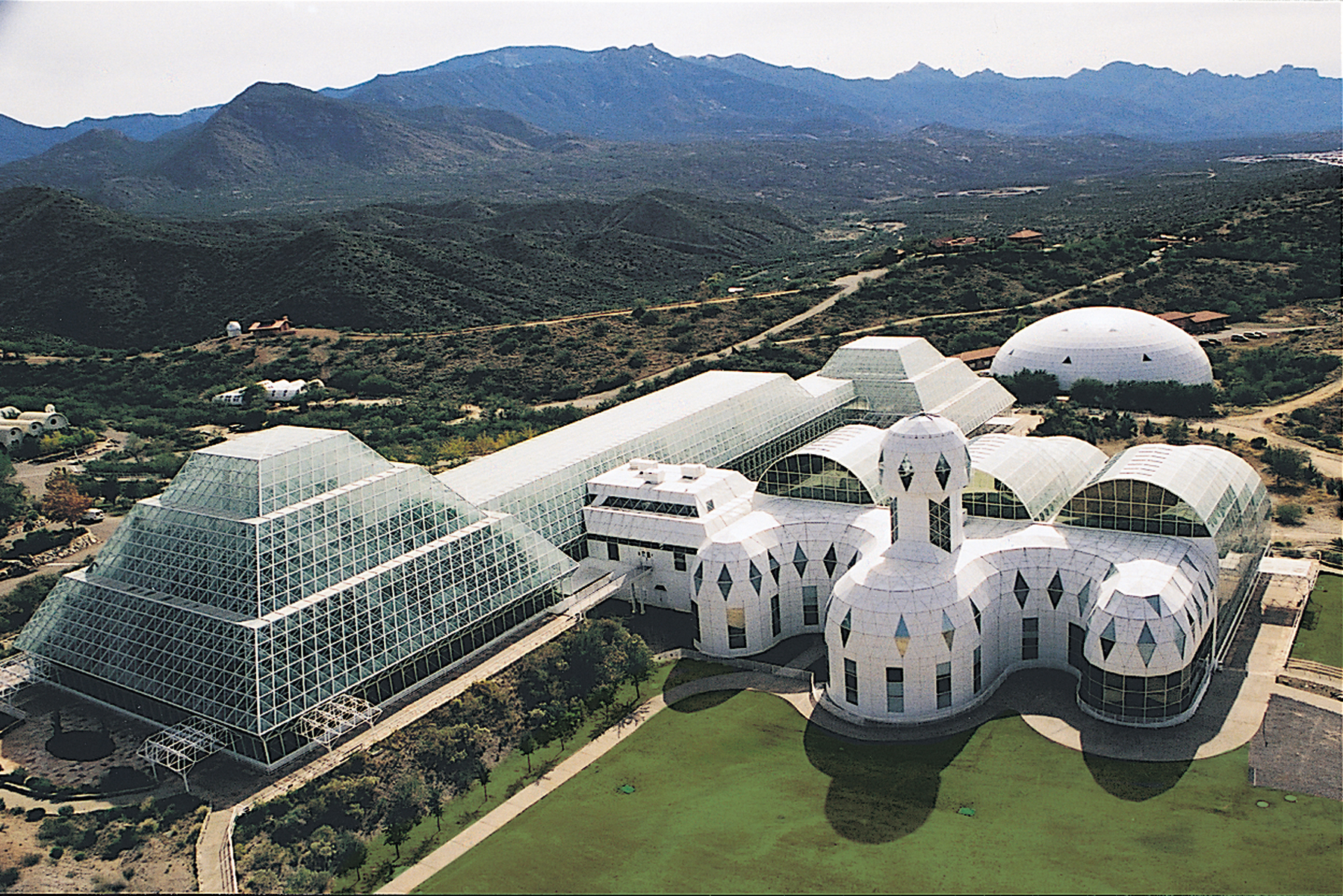 It was the stuff of science fiction when, on September 26, 1991, four women and four men entered the project known as Biosphere 2.
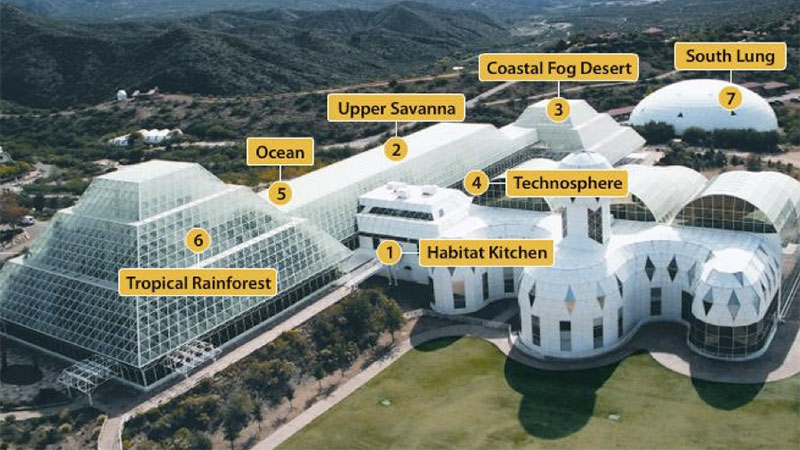 “Its five biome areas were a 1,900 square meter rainforest, an 850 square meter ocean with a coral reef, a 450 square meter mangrove wetlands, a 1,300 square meter savannah grassland, a 1,400 square meter fog desert, a 2,500 square meter agricultural system, a human habitat, and a below-ground infrastructure. Heating and cooling water circulated through independent piping systems and passive solar input through the glass space frame panels covering most of the facility, and electrical power was supplied into Biosphere 2 from an onsite natural gas energy center.”
 As one can imagine, the project was beset with problems including not enough oxygen, dietary issues and – when one of the biospherians became ill and was removed from the project for a time – if outside intervention was justified. When the first experiment ended on September 26, 1993, plans were already underway for another set of scientists to participate in a second project:
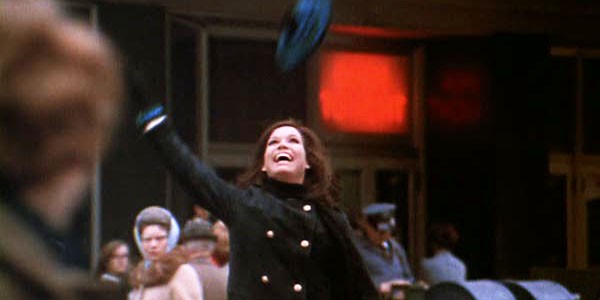 As an impressionable 13 year old on September 19, 1970, the premiere of one particular show – more than any other – no doubt helped to mold who I was and my view of the world.
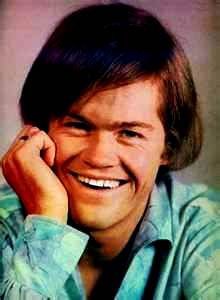
 But back to the critics and how the group came to be. The idea was to put together an American based band of four guys in an attempt to capitalize on, and compete with, the success of the Beatles. The four (pictured here clockwise starting top left – Davy Jones, Micky Dolenz, Peter Tork, and Michael Nesmith – were all musicians and actors. All took themselves seriously in their pursuit of a career. At the time Jones was a somewhat successful actor having played the role of the Artful Dodger in the musical “Oliver” and with his British accent and good looks was already cast for the TV show. An ad was run in the Hollywood Reporter for the rest of the band.
 According to the infallible Wikipedia:
 The boy bands of today have nothing on the Monkees.
 barbaradevore.com