The Ford Pinto
September 11, 2018
By the late 1960’s no doubt those who study demographics had advised US car makers that there was a huge market for smaller, less expensive cars. In the mid 1960’s the first of the Baby Boomers arrived in droves to get their driver’s licenses. Between 1966 and 1975 over 40 million American teens became drivers.
 Ford Motor Company’s response to this demographic phenomenon was the introduction of the Pinto, marketed as “The Little Carefree Car” on September 11, 1970. From the Infallible Wikipedia:
“Initial planning for the Pinto began in the summer of 1967, was recommended by Ford’s Product Planning Committee in December 1968, and was approved by Ford’s Board of Directors in January 1969. Ford President Lee Iacocca wanted a 1971 model that weighed under 2,000 pounds and that would be priced at less than $2,000.”
Over the course of the car’s production lifetime, from 1970 through 1980, there were 3,173,491 Pinto’s built and sold.
The Pinto was not without challenges and a design flaw which could result in an explosion and fire during a rear end collision resulted in very bad publicity for the company based on two very high profile legal cases. Also from the Infallible Wikipedia:
 “In April 1974, the Center for Auto Safety petitioned the National Highway Traffic Safety Administration (NHTSA) to recall Ford Pintos to address fuel system design defects after reports from attorneys of three deaths and four serious injuries in rear-end collisions at moderate speeds. The NHTSA found there was not enough evidence to warrant a defect investigation. In August 1977, Dowie’s ‘Pinto Madness’ article was published a series of accusations against Ford, the Pinto and the NHTSA. These included that Ford knew the Pinto was a ‘firetrap,’ and said that Ford did not implement design changes because Ford’s cost-benefit analysis document showed that paying out millions in damages in lawsuits was more profitable than the design changes. The day after the article’s release consumer advocate Ralph Nader and the author of the Mother Jones article held a news conference in Washington DC on the alleged dangers of the Pinto’s design. On the same day, Nader and the Center for Auto Safety re-submitted their petition to the NHTSA.”
In 1978 there was a nationwide recall of the car which required a polyethylene shield to be installed between the rear end and the gas tank as well as additional work to improve fuel lines and seals.
Despite the efforts of Ford and Chevrolet to stave off the invasion of foreign cars beginning in the late 1960’s, both the Pinto and – Chevy’s answer – the gutless Vega, were abandoned by 1980 as US car makers struggled to compete.
In 1975 Pinto’s, Vega’s and other small cars filled the streets as they were inexpensive options for teens and young adults whose wages from part time work allowed them to own a car. I was such an individual.
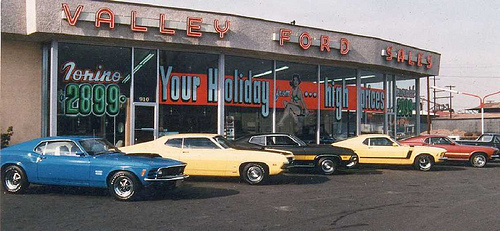
How Valley Ford looked in 1970. I worked in an office just to the left of the door you see in the summer of 1976 when I bought the car.
My first job was as a file clerk for Valley Ford in Yakima where I started working part time in the fall of 1975, earning an amazing $2.10 an hour. I suppose my parents tired of me always having one of their cars (the Mustang!) so when the new car sales manager advocated on my behalf the following summer for a car which they’d gotten at auction, I became the proud owner – and with a monthly payment! – of my very first car: a 1974 Pinto Runabout, dark blue with a white top and sunroof.
As I thought about this article I contemplated what story I would share about my experiences as a Pinto owner for five years. How I killed the engine at every intersection the day I drove it home since I didn’t know how to drive a stick shift? Dragging Yakima Avenue with my friend Daphne and meeting two guys who, if their life depended on it, could not guess what her last name was (It was ‘Guess’)? Or how the car took me all over the state for several years?
Finally, I understood that my Pinto was the one constant during that five year period from teenager to adult. Snippets of memories flood back and I see myself as a barely 20 year old driving to a Rainbow Girls’ camp on Hood Canal singing along with Billy Joel’s ‘She’s Always A Woman To Me’, the freedom of the moment and an open road palpable.

My Pinto parked in the driveway at my parents’ house in Yakima. I had never noticed yet another Pinto across the street.
It was with me when I arrived on the campus of the University of Puget Sound in late August that same year and provided more than a few runs for me and my sorority sisters to Piggly Wiggly for study snacks or out for pizza. I can see it in the parking lot at the Alpha Phi house the Tuesday before Thanksgiving covered by a blanket of snow. A few hours later I had my roommate, a girl I knew from Yakima who also attended UPS, then picked up my ex-boyfriend in Seattle before dropping my roommate off in Kirkland then navigating over Snoqualmie Pass in a snowstorm.
But my favorite memory involving the Pinto occurred May 5, 1979. It was the Saturday before finals week and the campus was going crazy with parties and people letting off steam. I had decided to attend a Rainbow Girls’ reception for a friend of mine over in Gig Harbor. It was about a half hour drive from UPS to Peninsula High School so I took off around 6:15, needing to arrive by 7:00 pm. I made it across the Tacoma Narrows Bridge with no problem but when I got to Gig Harbor I was lost. This was long before the days of GPS; all I had was a paper map and it didn’t provide good detail. Up and down several streets I went and my frustration grew. Finally, I pulled the Pinto to the side of the road, consulted the map, and determined I was hopelessly lost and, best case scenario, even if I could find the high school, I would be late.
Resigned to these facts I decided to forgo the event and return to campus. I pulled back on to the road. Just as I came to the crest of the hill, there’s a full rainbow arched before me. I sigh and think “It’s going to be alright.” Now calm, I descend down to the waterfront of Gig Harbor then turn left when I get to the bottom of the hill. I’m thinking this will put me back on the highway but, when I get to the top of the road, I am literally at the front door of the school. Then the next miracle occurs. There is a car leaving from a parking space right in front of the entrance. I park the Pinto and hurry in, barely getting into the gymnasium before things begin. I see a couple of girls I know and ask if I can sit with them. No room on the bleachers where they sit, they say, but there is a spot on the one below. I find myself sitting next to a guy who I know is dating another of my friends – but she’s a mucky muck and is sitting with a different group of people.
As the meeting goes on I find myself spending more time talking to this guy than paying attention to the meeting. I accidentally knock his coat and camera on the floor. We keep talking. Nearly three hours later, the reception over, I go to visit with a couple other friends and there’s the same guy also talking to one particular gal. My friend – the girl that is – asks me what my phone number is so she can call me. I give it to her but say “I’ll only be there another couple weeks as I’m graduating and going back to Yakima.”
Then I leave. By then it’s about 10 pm and it’s a beautiful night as the earlier showers and clouds have cleared. I walk down the steps towards my Pinto when I hear a voice behind me say “Barb, wait up.”
I turn. It’s the fellow who I’d been sitting next to.
“Did you want me to remember your number?” He asks.
“Do you want to remember my number?” I respond.
“Only if you want me to,” he says.
I repeat the number and say – again – that I’m only there for a short time as well as it being a long distance call for him. He replies that it’s in his budget to make the call and says he will. I get into the Pinto and drive back to campus.
***
The Pinto remained with me through graduation and then when I moved to Eatonville for my first post-college job. It was reconstructed after I hit a deer in the fall of 1979. It moved with me to West Seattle in August 1980 when I got married and ferried me to interviews and then a new job that fall. Then in early 1981, the hubby and I sold it to raise money for the down payment on our first house. And the guy from the reception in Gig Harbor? We celebrated our 38th Wedding Anniversary in August.
 It took some digging but I finally found a few photos. I’m particularly amused by this one of ‘my’ guy giving us a little beefcake with the Pinto in the background. Belatedly, I give thanks for that car and how important it was to me at the time. For five years it was my trusty steed, there for me every step of the way.
As always, a link!
 Today’s historical event really isn’t that much of an event but more an excuse to write about a topic which amuses this author. First of all happy 30th wedding anniversary to Kevin Bacon and Kyra Sedgwick. They were married September 4, 1988. Unlike a great number of Hollywood marriages, their marriage has lasted three decades and, apparently, they’ve only ever been married to each other!
 To find any actor’s ‘Bacon Number’ you can go to this link:

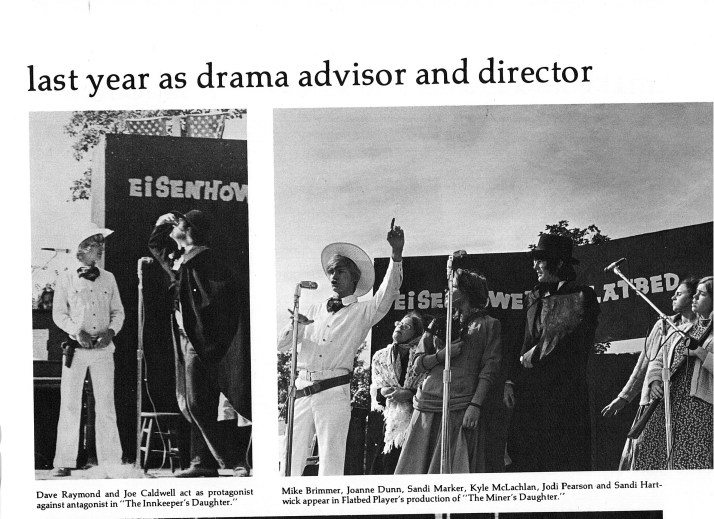


 Sugar. Always remember to put sugar in your pies. And remember to be careful where you go to pick your berries. Mom said.
 This sentiment is most associated with a crotchety old man who, in a moment of exasperation, yells at the kids in his neighborhood.
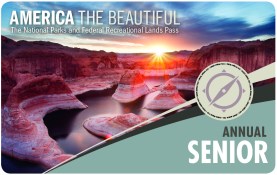 A few days ago, my hubby informed me that the next time we visit a National Park he will be eligible to purchase the “America The Beautiful” pass – a one time purchase admitting him to the NP’s for the rest of his life. Now that’s a Senior Discount worth admitting your age.
 When the heat arrives in July and August each year inevitably someone comments that it is the “Dog Days” of summer. What, exactly, are Dog Days?
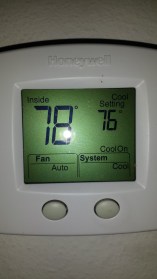 This year and last – as his body fat has diminished – he has a much more difficult time managing his internal temp. He’s frequently cold, even on the very hottest of summer days, and a battle rages over whether the thermostat is set to cooling or heating! Frequently the furnace is running and the indoor temperature is close to 80 degrees. Either my brother (who lives with my dad) or I will switch it to AC only to have dad turn on the furnace. He does this even if the outdoor temp is over 100 degrees. The picture to the left is one I took a few days ago in Yakima, right after switching the thermostat back to cool.
 Now, while I have not been kidnapped in the form of shanghaiing, I did enjoy being in Astoria this past weekend and watching a performance of “Shanghaied In Astoria” – a musical melodrama now in its 35th season.
 So I have a 100 percent success rate for raffles at Shanghaied. What’s not to like?
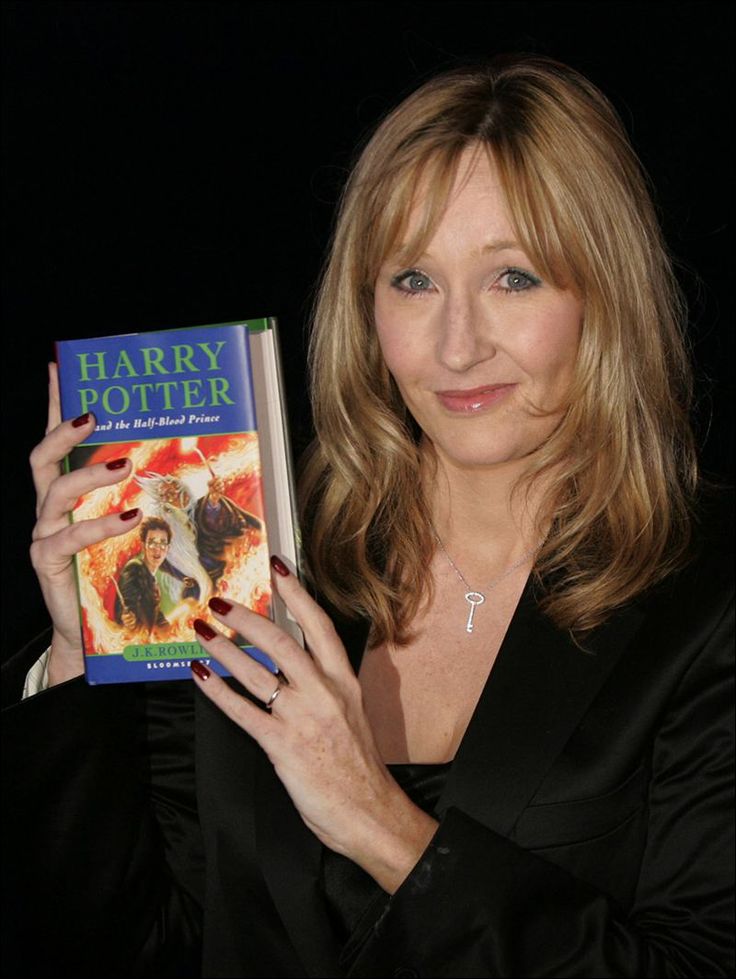 “Born in Yate, Gloucestershire, England, Rowling was working as a researcher and bilingual secretary for Amnesty International when she conceived the idea for the Harry Potter series while on a delayed train from Manchester to London in 1990. (snip)
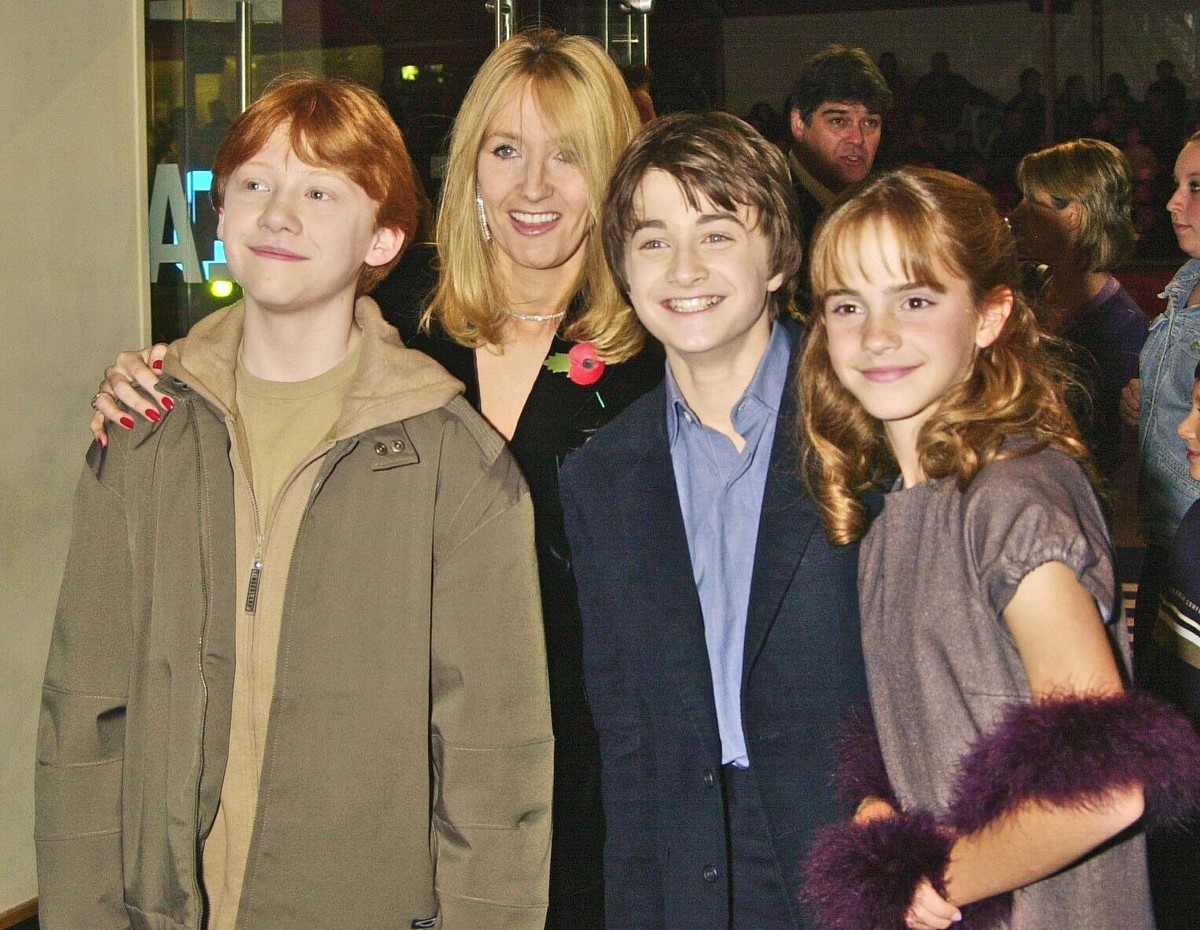 In June 1997, Bloomsbury published Philosopher’s Stone with an initial print run of 1,000 copies, 500 of which were distributed to libraries. Today, such copies are valued between £16,000 ($21,000 US) and £25,000 ($32,000 US). Five months later, the book won its first award, a Nestlé Smarties Book Prize. In February, the novel won the British Book Award for Children’s Book of the Year, and later, the Children’s Book Award. In early 1998, an auction was held in the United States for the rights to publish the novel, and was won by Scholastic Inc., for US $105,000. Rowling said that she ‘nearly died’ when she heard the news. In October 1998, Scholastic published Philosopher’s Stone in the US under the title of Harry Potter and the Sorcerer’s Stone, a change Rowling says she now regrets and would have fought if she had been in a better position at the time.”
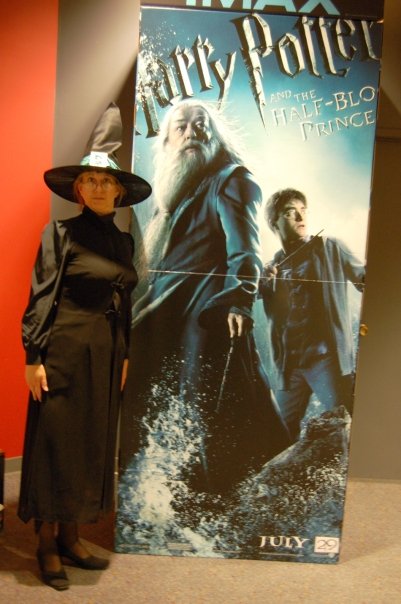 Of course adding movies to the mix only served to enhance the experience. I think the high water mark for me was when, in 2009, Harry Potter and the Half Blood Prince came to the IMAX. I was working with the Rainbow Girls then and we took a group to see the movie. Imagine the girls’ surprise when I arrive for the event dressed up… just like the character Professor McGonagall. I made quite the stir when I walked into the theatre and one patron yelled at me from up above “Good to see you McGonagall!” Guess my costume worked.
 By the middle of the decade, the Beatles were in the rear-view mirror and the hard rock of the late sixties and early seventies had given way to bubblegum and pop. And could there be any better symbols than two sugary treats to describe this song by a group called The Starland Vocal Band?
 In the world of music, Afternoon Delight is what’s known as a ‘One Hit Wonder.’ Although the musicians who made up the group had some success before and after their big song, it was Afternoon Delight which catapulted them to a brief moment of fame.
 At the time, the lyrics were a little bit shocking, especially to the parents of younger Baby Boomers who had pretty much lost control of their children by then. We, thinking we were hip and edgy, embraced the song with a wink and knowing nod because, well, our generation invented it, after all. What could our parents possibly know?
 It is a slogan all Americans of a certain age are familiar with: Things Go Better With Coke. Except for in 1985 when there was a brief period in time when the world shook on its axis and consumers rebelled against what was branded as “New Coke.”
 The game was six hands of cards where you collected, first, two groups of three cards; then a group and a run of four (all the same suit); then two runs. After the halfway point, things got more difficult with needing to acquire two groups and a run, then two runs and a group and, finally, two groups AND two runs plus you had to lay your entire hand down – with no leftovers – to win the round.
 barbaradevore.com