On The Road to the Little House

May 7, 2019

Perhaps more than any other books I’ve ever read, this series captured my young imagination and inspired me to want to write and record my world.

The first “Little House” book was published in 1932. Six more followed over the next decade and Laura Ingalls Wilder was propelled from a farmer’s wife to one of the most beloved children’s book authors in history.

As a child I was entranced by the thought of living in a cabin in the big woods of Wisconsin, or in a dugout carved into the banks of Plum Creek in Minnesota, or in a claim shanty on the wind swept prairies of South Dakota. What adventures awaited!

I’ve had as a goal to visit the many homestead sites. In September 2013 I, along with my 20 year old daughter, went to Mansfield, Missouri, and toured the museum and also the house where Laura lived as an adult. This past week was round two as the hubby and I meandered from Wisconsin to South Dakota and traced a portion of the Ingalls family pioneer journey.

The takeaway for me as an adult – considering it from the perspective of a wife and mother – is how very difficult it was, especially for Laura’s mother, Caroline.
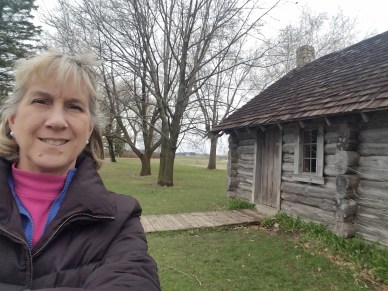
20190501_133545.jpg

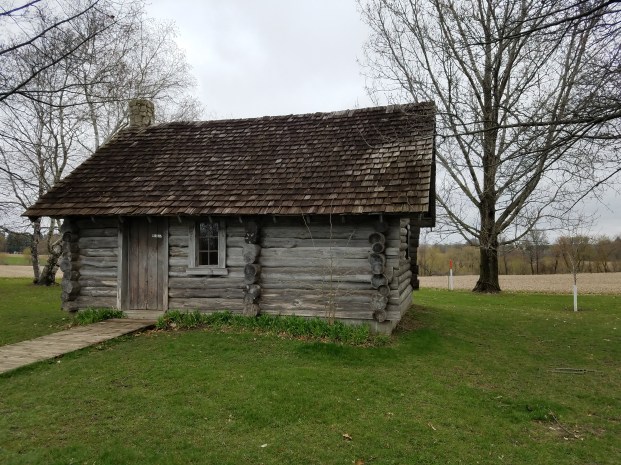
A cold day in late April at the Little House In The Big Woods

20190501_133037.jpg20190501_133141.jpgOur first stop was in Wisconsin. Although the Ingalls’ cabin is long gone, those who preserved the sites have erected faithful reproductions of the original structures. The little house in Wisconsin was certainly that: little. The main room was no bigger than a small bedroom by today’s standards. For the pioneers, this room was kitchen, dining room, living room, and laundry room (at least half the year). The entire family slept in a room the size of a closet.

20190504_143632

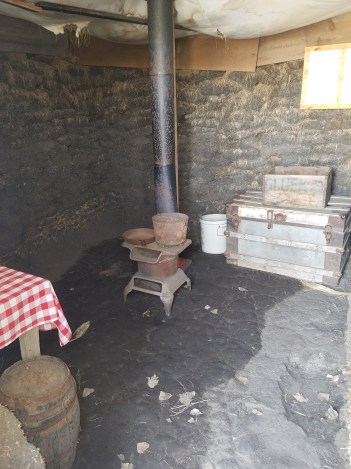
The doorway of the dugout is approximately where the author is standing. (Above) What the inside of the dugout may have looked like. (right)
20190505_122910.jpg20190504_143326

It was the next ‘house’, however, that really gave me pause. Laura’s family purchased a farm near Walnut Grove, Minnesota… but there was no ‘house.’ Instead the family lived for some months in a ten by twelve room dug out of a bank above a creek. The actual dugout collapsed years ago, but a reproduction exists in South Dakota. When I walked in to that room I was struck by two things in particular. The first was the smell. It was a combination of earth, mold and dampness. It was depressing and dark. As Laura describes life in the dugout she tells how her mother whitewashed the dirt walls and floor with  a lime mixture. I imagine the lime served several purposes including pest control and to brighten the room. How hard it must have been for Caroline Ingalls to cook, clean, and care for her children in that tiny, tiny space.

In South Dakota the Ingalls family had to, once again, start from scratch. It was not hard to imagine how alone and desolate Caroline must have felt as one of the first pioneers in DeSmet. Their homestead was 160 acres – one quarter mile square – and it was a half mile south of the town. There were no neighbors, just the wildlife which called the prairie home. The Ingalls claim shanty was just that: a shanty. Unlike the cabin in Pepin, their home was a tiny one room building with the beds for a family of six in every corner, a stove in the center, and a few chairs and a table. The thin walls not much protection against the persistent winds and cold. Over time the shanty was expanded to include 2 small bedrooms and 12 by 16 living room.

20190505_124403.jpg

A reproduction of the claim shanty after 2 additions. The last addition is the 12 x 16 section on the left.

What resilience these people possessed!

When we stopped at the Ingalls homestead near DeSmet, the woman who owns and runs the property came by to speak to us. I said to her I suspected when the Ingalls family arrived there that Caroline told Charles she was done moving and carving out homes in the wilderness. Our hostess confirmed my supposition. Laura’s parents lived the rest of their lives in that community, eventually moving to a proper house in the town eight years after their arrival.

20190505_115005.jpgIt is impossible to truly capture each of these places on paper. But Laura Ingalls Wilder’s narrative description of each location comes close. I felt as if her spirit was there with us in South Dakota, especially, as I mapped out some travels to the spots she describes in her books.

It was at Lake Henry when the magic occurred. The hubby and I noticed the water in a nearby slough was roiling. Upon closer examination we discovered hundreds of fish flopping and thrashing about! We walked close to the spectacle, mesmerized by the yellow perch which spawn this time of year once the water raises to a certain temperature. From there we meandered across the back-roads, and observed white tailed deer, a muskrat which waddled across the road, and hundreds of birds: pelicans, herons, eagles, hawks, geese, and all variety of smaller ones.

We were reluctant to leave but how very glad we were able to experience a tiny portion of the pioneer’s journey.

So which of the three would have been the best? Probably the cabin in Wisconsin. But I am thankful for modern amenities: electricity, running water, flushing toilets, refrigeration, automobiles, and airplanes. What a blessed era in which to live.

A few links. First is to my blog article from February 7, 2017 about Laura Ingalls Wilder: https://barbaradevore.com/2017/02/07/laura-ingalls-wilder/

And some links to the various historical sites:   

 https://www.lauraingallspepin.com/big-woods-cabin.html

http://walnutgrove.org/ingalls-dugout-site.html

https://www.ingallshomestead.com/history

I know everyone would be disappointed if there was not at least one link to the Infallible Wikipedia:

https://en.wikipedia.org/wiki/Laura_Ingalls_Wilder

Meet Me in St. Louis

Meet Me in St. Louis… Meet Me at the Fair

April 30, 2019

Festival Hall St. Louis.jpg

Festival Hall at the 1904 Louisiana Purchase Exposition

The 1904 Louisiana Purchase Exposition – also known as the St. Louis World’s Fair – is considered by some to be the most significant world’s fair ever.  It was an exposition unlike any the world had ever seen and featured pavilions, gardens, electric light displays, and introduced a number of modern marvels. It opened April 30th and ran through December 1st that year; it drew just shy of 20 million people.

Fair goers marveled at communication wonders like the wireless telephone and also an early fax machine. The x-ray machine was introduced at the fair and two other life saving medical inventions were prominently featured: the Finsen light and Infant Incubators. In the world of transportation, air travel and electric streetcars were both highlighted, but it was the first showing of the personal automobile which created the most buzz.

Yet there was one innovation which, more than any others, captured the imagination of a nation and was destined to be steeped in controversy and take on the qualities of an urban legend. The invention: the ice cream cone.

According to the Infallible Wikipedia, here’s the story:

“Edible cones were patented by two entrepreneurs, both Italian, separately in the years 1902 and 1903. Antonio Valvona, an ice cream merchant from Manchester, UK, patented a biscuit cup producing machine in 1902, and in 1903, Italo Marchioni, an italian ice cream salesman, filed for the patent of a machine which made ice cream containers.

Ice_cream___2A.jpgAt the St. Louis World’s Fair in 1904, a Syrian/Lebanese concessionaire named Arnold Fornachou was running an ice cream booth. When he ran short on paper cups, he noticed he was next to a waffle vendor by the name of Ernest Hamwi, who sold Fornachou some of his waffles. Fornachou rolled the waffles into cones to hold the ice cream – and this is believed by some (although there is much dispute) to be the moment where ice-cream cones became mainstream.

Abe Doumar and the Doumar family can also claim credit for the ice cream cone. At the age of 16, Doumar began to sell paperweights and other items. One night, he bought a waffle from another vendor transplanted to Norfolk, Virginia from Ghent in Belgium, Leonidas Kestekidès. Doumar proceeded to roll up the waffle and place a scoop of ice cream on top. He then began selling the cones at the St. Louis Exposition. His “cones” were such a success that he designed a four-iron baking machine and had a foundry make it for him. At the Jamestown Exposition in 1907, he and his brothers sold nearly twenty-three thousand cones. After that, Abe bought a semiautomatic 36-iron machine, which produced 20 cones per minute and opened Doumar’s Drive In in Norfolk, Virginia, which still operates at the same location over 100 years later.

While the Ice Cream cone does not appear to have been ‘invented’ at the fair, it certainly gained a foothold in popular culture. With the advent of electricity, ice cream – once a delicacy only for the wealthy – became a mainstay for the average person; an affordable treat during a Saturday outing.

Over the years, of course, refrigeration – one of the top 3 inventions ever (the other two are electricity and flushing toilets) in my opinion – made it possible for people to have ice cream stored in their freezer at home. The ability to buy the ice cream and commercially made cones at the local grocer completed the deal.

Personally, I love ice cream cones. I will always choose to have my ice cream in a cone if one is available. As a child I recall that my mother used to purchase the cake style cones and we usually had a choice between vanilla, chocolate, and strawberry ice cream.

waflet conesThen, probably in the early 1970’s, my mother came home from the store one day with colored cake cones. In addition to the boring beige, there were the exciting colors of green, pink, and brown. But even more exciting was the ice cream. It was called chocolate marble and it was an instant favorite. Swirled into the vanilla were ribbons of chocolaty fudge. Now that was an ice cream cone.

Over the years I’ve tried various flavors when at an ice cream shop: Blueberry, Huckleberry, Strawberry cheesecake to name a few… and those are all delicious. But nothing can ever beat a Vanilla chocolate swirl waffle cone. It’s the best.

The links for today:

https://en.wikipedia.org/wiki/Ice_cream_cone

https://en.wikipedia.org/wiki/Louisiana_Purchase_Exposition

History of Ice Cream Cone


Not So Anonymous Authors

April 23, 2019

Near and dear to this author’s heart is World Book and Copyright Day – celebrated annually on April 23. Created in 1995 the purpose of the day is to “recognize the scope of books – a link between the past and the future, a bridge between generations and across cultures.”

book wall.jpg

One of the more interesting aspects of World Book day, however, is how the date was chosen and why. The infallible Wikipedia, as it so often does, offers some insight:

“The original idea was of the Valencian writer Vicente Clavel Andrés as a way to honour the author Miguel de Cervantes, first on 7 October, his birth date, then on 23 April, his death date. In 1995 UNESCO decided that the World Book and Copyright Day would be celebrated on 23 April, as the date is also the anniversary of the death of William Shakespeare and Inca Garcilaso de la Vega, as well as that of the birth or death of several other prominent authors. (In a historical coincidence, Shakespeare and Cervantes died on the same date — 23 April 1616 — but not on the same day, as at the time, Spain used the Gregorian calendar and England used the Julian calendar; Shakespeare actually died 10 days after Cervantes died, on 3 May of the Gregorian calendar.)”

shakespeare.jpg            Shakespeare, perhaps more than any person who has ever lived, was the most prolific of authors. He published 37 plays and 154 sonnets and today, 503 years after his death, his plays are still being performed and his written works analyzed and contemplated. Talk about staying power!

Several years ago I read a book which made the claim that every plot line ever imagined was written by Shakespeare. Modern writers, it stated, might as well give it up and quit writing stories since they cannot match Shakespeare.

To me, this was a very sad and cynical thought. Plus it misses the point about the human mind and heart and the individual’s desire – I would argue need – to pursue one’s passions in life.

When I reflect back on my earliest interests, one stands out: the desire to write. What better way to capture thoughts and the emotions of a time and place? I dabbled in fiction writing while in high school and penned a thinly cloaked autobiographical story titled “Another Lunch.” It told the story of Bernice, Deborah, and Cynthia, three friends whose singular focus seemed to be the pursuit of boys.

journal.jpg            I would add to the ‘book’ as new adventures occurred, writing them down over the weekend, then bringing the updated story to school for the ‘real’ Deborah and Cynthia to read. In time some of the ‘boys’ and other peripheral characters – perhaps recognizing themselves in the story – also started to read the book. It was passed around like an annual at graduation for everyone to peruse.

Sadly, “Another Lunch” disappeared in the spring of my Senior year, no doubt lost in the hovel of some student’s bedroom destined to be discarded by an irritated mother who saw it as worthless.

My ‘fiction’ writing lay dormant for years until the day I walked into a novel writing class at Bellevue Community College. Taught by published author Janet Lee Carey, it was structured into two parts. The first was a 45 minute lecture on the elements of writing fiction. The second half was an opportunity for all of us aspiring authors to read a scene or two from our current work in progress.


That very first class I devoured everything which Janet shared as if I was encountering a feast after a years’ long fast. It was what happened in the second part of the class that day which confirmed for me that I was a reluctant writer who had finally found her home.

I listened to the stories which my classmates shared for critique and a voice inside my own head whispered to me, “You can write just as well as them.”

Later that day I started on my first novel, determined to find a way to complete a 90,000 word book – standard length. There was no better feeling than when, months later, I wrote the words “The End.” I had done it! But it was more than that. Writing provided an outlet for the jumble of thoughts which crowd my brain, a virtual sieve to separate the chaff from the grain.

Today I am still compelled to write. In addition to fiction, my Tuesday Newsday blog has taken on a life of its own. Now in the third year, this post is the 106th that I’ve published. For me it doesn’t matter if its novels or short personal essays (such as this one) it’s the writing that matters.

Finally, a nod to my fellow Anonymous Authors, who brighten my Tuesday mornings with their stories, critiques, and friendship: Roger, Jette, Ward, Daphne, Irene, Steve, and May.

A bit of information about World Book and Copyright day:

https://en.wikipedia.org/wiki/World_Book_Day

https://en.unesco.org/commemorations/worldbookday

Skagit Valley Tulip Festival

A Visual Feast each April

April 9, 2019

This annual event has come to define Mount Vernon and the surrounding area. Begun in April 1984, the Skagit Valley Tulip festival cemented Mount Vernon and the surrounding area’s identity as the tulip capital of the nation.

1984 Tulip Festival poster

The first tulip bulbs were brought to the Skagit Valley from Holland in 1906 by Mary Brown Stewart. Soon she had a mail-order bulb business, selling them to garden clubs in New England.  Her son, Sam, joined the operation 20 years later which coincided with a ban by the Federal government on bulbs imported from Holland.

This event triggered many of the bulb growers to send family members to the United States to establish farms. Through trial, error, and success, the bulb growers discovered that the Skagit Valley was a prime bulb growing region, eclipsing Bellingham and Lynden, Washington, where colder winters were not ideal for the plants.

In the late 1940’s, the embargo was lifted and, once again, the Skagit Valley bulb growers were impacted with many of the smaller farmers forced out of business.

Relative late comers William and Helen Roozen, Dutch immigrants, purchased the Washington Bulb Company in 1955.

The Infallible Wikipedia gives a short summation:

“In 1946, William Roozen arrived to the United States, leaving behind a successful bulb-growing business spanning six generations in Holland. After working on several different farms, Roozen started his own in Skagit County in 1950, and in 1955 purchased the Washington Bulb Company, making him the leader among the four flower-growing families in the area, and the Washington Bulb Company the leading grower of tulip, daffodil, and iris bulbs in North America. The farm operates a public display garden and gift shop called Roozengaarde, which, alongside the DeGoede family’s Tulip Town, is a major attraction during the Tulip Festival.

Local tulip growers showcased their bulbs through display gardens for decades prior to the formation of an official festival. The Mount Vernon Chamber of Commerce established the Skagit Valley Tulip Festival as a 3-day event in 1984 to add festivities during the bloom month. The event has since grown to a month-long event and coincides with street fairs, art shows and sporting events.”

31114207_10211536746427457_5992052137578725376_o.jpg

Now in its 36th year, the Tulip Festival, has become one of the most popular events in the state. Weekends in April produce traffic jams in Mount Vernon which rival a bad morning commute in Seattle. The festival organizers estimate that nearly a million people will trek to see the tulips during April. A look at their website, tulipfestival.org, provides a list of hundreds of events throughout Skagit County, helpful ‘bloom’ maps, and lists of where to eat and stay.

The Hubby and I visited the tulip festival offices a couple days ago (I was researching for this article) and the steady stream of people coming in to obtain information was amazing. We were talking with one of the volunteers – a friend we know through a different organization – and he said that there are times when the crowds spill out on the sidewalk.

We left after purchasing three prints of previous years Tulip Festival posters and then headed out on what has become one of the things the Hubby and I ‘do’ together which is drive around the valley.

It was, once again, another magical day. We found a flock of well over a thousand snow geese (they will be gone by mid-May) in a field on Fir Island and were treated to an aerial display which took my breath away. From there we drove up a hill to the west of the flower fields and could see the ribbons of red, yellow, purple, and white cut across the expansive landscape.

We visited a daffodil field which, two weeks ago, had been a cheery harbinger of spring but now the flowers were mostly faded. From there we ventured to ground zero, noting that although there were crowds, they were not yet of the epic proportion expected the next two weekends. The red and yellow tulips were approaching full bloom but the purple, white, pink, and variegated ones were still a week or two away.

Selfie in tulips 2018

The author with tulips in 2018

Daffodil Barb 2019

The author, at the same field, but now daffodils, 2019

Last year we, having just moved in, didn’t visit Roozengaarde or the other large player, Tulip Town. But this year we plan to be ‘tourists’ for a day and visit one or both to get the entire Skagit experience. But not on a weekend. We’re not THAT crazy.

For those who want to come see the tulip fields in bloom, visit the official tulip festival website:

https://tulipfestival.org/

For more information on Washington Bulb company and the Roozen family:

https://www.tulips.com/

A Seattle Times article:

https://www.seattletimes.com/entertainment/events/skagit-valley-tulip-festival-is-starting-to-show-its-flower-power/

And the Infallible Wikipedia:

https://en.wikipedia.org/wiki/Skagit_Valley_Tulip_Festival

The Legacy of Fleetwood Mac’s Rumours Album

I heard some Rumours…

April 2nd

This album sat atop the Billboard charts for 31 non-consecutive weeks in 1977 and early 1978. Its chart dominance began on April 2, 1977 and, according to one of the principles of the group who recorded it, it was “the most important album we ever made.”fleetwood-mac-rumours-album-cover.jpg

The album was Rumours and the group Fleetwood Mac.

Theirs is a story which shows that finding the right blend of talent, relentless commitment, and a lot of hard work, are necessary to make it in the music industry. The Fleetwood Mac story begins in 1967 as explained in the Infallible Wikipedia:

“Fleetwood Mac was founded by guitarist Peter Green, drummer Mick Fleetwood and guitarist Jeremy Spencer. Bassist John McVie completed the lineup for their self-titled debut album. Danny Kirwan joined as a third guitarist in 1968. Keyboardist Christine Perfect, who contributed as a session musician from the second album, married McVie and joined in 1970. At this time it was primarily a British blues band, scoring a UK number one with ‘Albatross’ and had lesser hits with the singles ‘Oh Well’ and ‘Black Magic Woman’. All three guitarists left in succession during the early 1970s, to be replaced by guitarists Bob Welch and Bob Weston and vocalist Dave Walker. By 1974, all three had either departed or been dismissed, leaving the band without a male lead vocalist or guitarist.”

The group was plagued by skullduggery from their manager, drug and alcohol addictions of some band members, departures of multiple guitarists, and an inability to make it big as a British Blues band. Then, in 1974 the band moved to Los Angeles. It was in that moment the magic began to happen. Also from the Infallible Wikipedia:

“After (Bob) Welch announced that he was leaving the band, Fleetwood began searching for a replacement. While Fleetwood was checking out Sound City Studios in Los Angeles, the house engineer, Keith Olsen, played him a track he had recorded in the studio, ‘Frozen Love’, from the album Buckingham Nicks (1973). Fleetwood liked it and was introduced to the guitarist from the band, Lindsey Buckingham, who was at Sound City that day recording demos. Fleetwood asked him to join Fleetwood Mac and Buckingham agreed, on the condition that his music partner and girlfriend, Stevie Nicks, be included. Buckingham and Nicks joined the band on New Year’s Eve 1974, within four weeks of the previous incarnation splitting.”

With the new members in place, the band took to the studio to record their (second!) self titled album, 1975’s “Fleetwood Mac.” It was a commercial success, selling over 7 million copies and featuring the memorable tracks: Over My Head, Say You Love Me (vocals Christine McVie), Rhiannon,  and Landslide (vocals Stevie Nicks).

In many ways, the two women’s distinctive voices came to define the group’s sound and propel their musical style towards mainstream pop.

With the release of Rumours in January 1977 and its subsequent rise to the top of the Billboard album charts, Fleetwood Mac cemented their spot in the Rock and Roll history books. The Infallible Wikipedia gives the details:

“By 1980, 13 million copies of Rumours had been sold worldwide. As of 2013, sales were over 40 million copies. As of May 2016, Rumours has spent 630 weeks in the UK Top 75 album chart and is the 11th best-selling album in UK history and is certified 13× platinum by the British Phonographic Industry, the equivalent of 3.9 million units shipped. The record has received a Diamond Award from the Recording Industry Association of America for a 20× platinum certification or 20 million copies shipped, making it, as of 2012, the joint fifth best-selling album in US history (by number of copies shipped).” (Ed note: it is still, as of 2019, one of the top ten best-selling albums of all time)

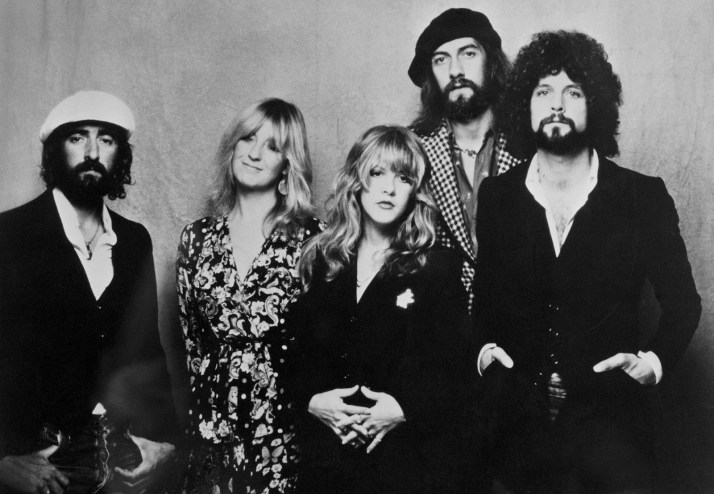
Fleetwood-Mac.jpgAlthough the group has continued to record and perform over the years, with some members leaving, new ones coming in, and then old ones rejoining, those of us of a certain age no doubt think of Fleetwood Mac as the following five individuals who were the group in 1977: Mick Fleetwood, Christine McVie, John McVie, Stevie Nicks and Lindsey Buckingham.

During a foray in to Value Village (a Western Washington thrift store) about a year ago I was – as is my habit – perusing the used CD’s when I spied it: Fleetwood Mac – Greatest Hits. I plucked the CD from the shelf and spirited it home. Last fall when the hubby and I were about to embark on a three week, three thousand mile, road trip, I was forced to reduce down my box of ‘hitchhikers.’ This is what I lovingly call the approximately 25 CD’s which travel with me to Yakima and back every couple of weeks.

The purge process involved looking at every CD we own (who knows 100? 150? 200?) and determining which of the CD’s deserved a place in the box and which had a cut or two to be recorded onto a thumb drive. One by one I evaluated with the thumb drive pile growing ever higher and the box group getting smaller. “Would I,” I asked myself with each CD, ” listen to every song on this?”

There were only a handful which met that standard…  FM’s Greatest Hits was one of them. And so it remains in the box of hitchhikers. My only wish is that “Landslide” had been included on the CD as it is, by far, my favorite of their songs.

For those not familiar with it, here it is. Enjoy!

The FM story is fascinating and far too much to include in my weekly blog. Thankfully Wikipedia provides exhaustive information for those interested:

https://en.wikipedia.org/wiki/Fleetwood_Mac

https://en.wikipedia.org/wiki/List_of_Billboard_200_number-one_albums_of_1977

https://en.wikipedia.org/wiki/Rumours_(album)

When I first posted this a few years ago, I had asked a question on Facebook. Couldn’t now tell you the question, but here is the answer: these five albums stayed at number 1 on the album charts longer than any others since the mid-1950s.

Weeks Album Artist Year(s) Source
54 West Side Story Soundtrack 1962-63 [44]
37 Thriller Michael Jackson 1983–84 [45]
31 Rumours Fleetwood Mac 1977–78 [45]
South Pacific Soundtrack 1958–59 [44]
Calypso Harry Belafonte 1956–57 [44]

Hedonic Escalation

The Perfect Combination

March 19, 2018

salted caramelI can think of nothing which tastes better  and scientific research now backs up my claim.
Termed ‘hedonic escalation’ the research confirms what people experience when they are unable to stop eating a particular food.  This article from the UK Independent – and  not from the Infallible Wikipedia – draws its conclusions from a test conducted at the University of Florida a few years ago:

“Marketing analysts Dr Cammy Crolic and Professor Chris Janiszewski revealed that eating it actually causes a rare phenomenon called ‘hedonic escalation.’

Here, our instinctive brains keep craving more and more with every mouthful as it detects new flavours with each bite.

By contrast, with other foods we tend to experience ‘hedonic adaptation’ – the point where your appetite says you’ve had enough.

‘Hedonic escalation is more likely to occur when a palatable food consists of a complex combination of flavours, and a person is motivated to taste additional flavours on each successive bite,’ the researchers write. ‘Hedonic escalation can also increase consumption and influence food choice.’”

So what is this mystery food? Salted Caramel. Today, March 19, is National Chocolate Caramel day, the perfect day to enjoy two perfect foods together.

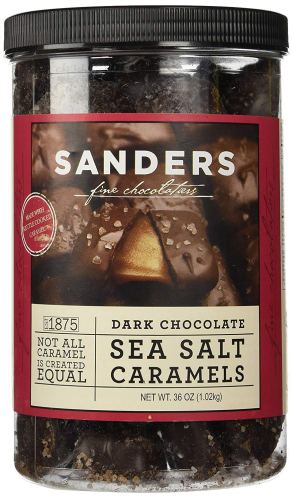
I’ve noticed more and more foods touting the substance in recent years. Last December, during a pre-Christmas shopping trip, I happened upon a jar of Dark Chocolate Sea Salt caramels. Over the past several years I have found that when, given a choice of chocolates, I tended to seek out the ones with caramel. So when I saw this large jar AND it was dark chocolate, I had to have them.

The first bite was wonderful, the second was heaven, and by the time the morsel was consumed I was addicted. But I was good and did not eat the entire jar. In fact I showed amazing discipline, eating one – at most – each day. Soon Christmas was over but the jar of deliciousness remained. And I’d only eat just one on any given day and sometimes none at all. By the time early March rolled around I stared forlornly at the nearly empty vessel. I would miss my Dark Chocolate Sea Salt Caramels because, Costco being Costco, they were, no doubt, only available for the holiday season.

Sanders chocolate.jpgThen one day a miracle occurred. The hubby and I were at Costco (we’re there at least once a week!) and on a whim I haul him over to the candy and chocolate section to see if there was anything else which might fill the void in my life. And then I spied them! A glorious Costco size stack of jar after jar of Sanders Dark Chocolate Sea Salt Caramels beckoned to me. Oh sweet mysteries of life!
Now my biggest fear is that Costco will run out (Under $20 for 36 ounces of wonder). So what I need everyone who reads my blog to do is this: go to Costco today and buy at least one jar. It’s the least you can do to properly celebrate National Chocolate Caramel day. Plus, if I know anything about Costco, the more they sell, the higher the likelihood they will keep them on the shelves forever. Do it for you. Do it for me. Do it for all of America.

A couple of important links:

On Hedonic Escaltion:

https://academic.oup.com/jcr/article-abstract/43/3/388/2199201?redirectedFrom=fulltext

https://www.independent.co.uk/life-style/salted-caramel-not-stop-eating-science-university-florida-hedonic-sugar-fat-a8078296.html

You don’t even have to leave home!:

https://www.costco.com/Sanders-Dark-Chocolate-Sea-Salt-Caramels-36-oz.%2c-2-pack.product.100321779.html

p.s. – I considered writing about the history of chocolate and caramel but tossed that out the window. For those who do not know, Chocolate’s origins can be traced to  MesoAmerica some 1500 years ago. And Caramel? It’s cooked sugar!

Diary of a Young Girl

March 12, 2019

Required reading for all junior high students in the 1970’s, Anne Frank: Diary of a Young Girl, both inspired and dismayed.

anne-and-margot-frank.jpg

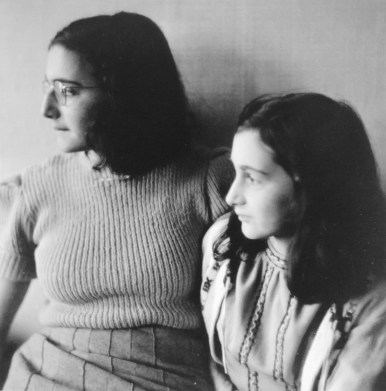
Margot and Anne Frank

Although the exact date of the 15 year old’s death is in question, March 12, 1945, is designated as such.

While I tend to avoid controversial and depressing topics, there is no question that this book ranks within the top tier of the most important works of the 20th century and deserves recognition as such.

Anne Frank lived in the Netherlands on June 12, 1942 – her 13th birthday – along with her parents and sister. It was on that date she was given her first ‘diary.’ From the Infallible Wikipedia:

“During the Nazi occupation of the Netherlands, Anne Frank received a blank diary the diaryas one of her presents on June 12, 1942, her 13th birthday. According to the Anne Frank House, the red, checkered autograph book which Anne used as her diary was actually not a surprise, since she had chosen it the day before with her father when browsing a bookstore near her home. She began to write in it on June 14, 1942, two days later.

On July 5, 1942, Anne’s older sister Margot received an official summons to report to a Nazi work camp in Germany, and on July 6, Margot and Anne went into hiding with their father Otto and mother Edith. They were joined by Hermann van Pels, Otto’s business partner, including his wife Auguste and their teenage son Peter. Their hiding place was in the sealed-off upper rooms of the annex at the back of Otto’s company building in Amsterdam. Otto Frank started his business, named Opekta, in 1933. He was licensed to manufacture and sell pectin, a substance used to make jam. He stopped running his business while everybody was in hiding. But once he returned, he found his employees running it. The rooms that everyone hid in were concealed behind a movable bookcase in the same building as Opekta. Mrs. van Pels’s dentist, Fritz Pfeffer, joined them four months later. In the published version, names were changed: The van Pelses are known as the Van Daans, and Fritz Pfeffer as Albert Dussel. With the assistance of a group of Otto Frank’s trusted colleagues, they remained hidden for two years and one month.”

The family and the others were discovered in August 1944 and taken to concentration camps. It was in the Bergen-Belsan camp where Anne, who contracted Typhus, and her sister both died. Of the hidden group, only Otto Frank survived. Those who concealed the family found and saved her diaries and gave the books to her father. It was he who got them published.interior pages of diary

I can’t say exactly when I was first required to read the book, but no doubt it was in junior high (middle school to Americans under the age of 40). The timing of it coincided with when I became obsessed with keeping a diary. Perhaps I had visions of my musings being enshrined forever in a similar manner. Young teenage girls are, particularly, susceptible to drama and tragedy. Unlike Anne Frank, however, my diary entries included such riveting entries such as this one:

“March 1 (1972)

Well here we go again another month gone by. I’m 14 years, 7 months today. It was strange today we have had about four inches of snow, oh joy! I felt like I was being watched. We had a meeting at Mrs. Hughey’s this evening. We started Co-education volleyball in P.E. but I didn’t take it because I can’t, doctor’s orders. Yea! It can’t be that bad but if you take a look at last year’s diary today, you’d understand!”

Even I, the author of the above passage, have no idea what a couple of the references are about. I do know that playing co-ed volleyball when you have the coordination and look of a newborn colt is about the worse torture you can inflict on a teenage girl. The reason I couldn’t play volleyball is that I was still recovering from a nine day case of the hard measles. (We didn’t have a measles vaccination then… get your kids vaccinated. Trust me on this) While I was sick I lost approximately 10 pounds… weight I already could not afford to lose since I was, according to the identification pages at the front of my diary, 5’7” and 110 pounds. Yes, the colt reference is accurate. And, apparently, getting snow in early March isn’t that uncommon either.

diary-2

This author’s diaries. 1972 is on top.

What I do know is that the keeping of a diary galvanized for me a thing which has been a lifelong passion: to write. My musings – set in an easier time in history – will never carry the same weight and warnings of Anne Frank. I’m okay with that. The five years of books which I still have are reminder enough that being a teenager is an awkward and difficult time in life. Anne Frank’s diaries – despite being written under the most challenging of circumstances – still ring true as to the thoughts and emotions of a girl on the cusp of becoming a woman.

For more about Anne Frank and her diary, a couple of links:

https://en.wikipedia.org/wiki/The_Diary_of_a_Young_Girl

https://en.wikipedia.org/wiki/Anne_Frank


Buying a Stairway To Heaven

March 5, 2019

For many Baby Boomers, there is one song from the 1970’s which seems to define and capture their youth. The song, however, was never released as a single and never hit number one on the Billboard charts. In fact it defied all the ‘rules’ of Top 40 Rock and Roll. It was nearly eight minutes long, unheard of when the average length of a commercial song was about three minutes. It started as an ennui inducing ballad but then morphed to a hard rocking electric guitar solo, but finishes back in ballad form. If, by now, you don’t know the song then you probably missed the 1970’s and have not listened to the radio since.led zeppelin.jpg

Stairway to Heaven was performed live for the very first time on March 5, 1971 at Ulster Hall in Belfast, Ireland.  According to Led Zeppelin bassist John Paul Jones the crowd was “… all bored to tears waiting to hear something they knew.” I have my doubts that his evaluation was entirely accurate. I imagine there were many in the audience that day who instantly knew they were hearing history being made.

In the subsequent years, the song has proven a thoroughbred, consistently among the top contenders on many ‘greatest’ song lists. According to the Infallible Wikipedia:

“‘Stairway to Heaven’ continues to top radio lists of the greatest rock songs, including a 2006 Guitar World readers poll of greatest guitar solos. On the 20th anniversary of the original release of the song, it was announced via U.S. radio sources that the song had logged up an estimated 2,874,000 radio plays – back to back, that would run for 44 years solid. As of 2000, the song had been broadcast on radio over three million times. In 1990 a St. Petersburg, Florida station kicked off its all-Led Zeppelin format by playing ‘Stairway to Heaven’ for 24 hours straight. It is also the biggest-selling single piece of sheet music in rock history, clocking up an average of 15,000 copies yearly. In total, over one million copies have been sold.”

plant page.jpg

Robert Plant, Jimmy Page, and John Bonham

With great success often comes controversy. Such was true for Stairway To Heaven. Two years before the song was written, Led Zeppelin toured a few times with a group called Spirit. And that group performed an original song titled Taurus. As it happens, Taurus’ opening guitar riff began with a descending A minor chord progression. Which is also true of Stairway To Heaven. The similarity spawned a copyright infringement lawsuit in 2014 on behalf of the deceased creator of the Taurus guitar introduction. When the verdict was announced in 2016, it ruled in favor of Led Zeppelin. Essentially, while Stairway to Heaven uses a nearly identical A minor chord progression, theirs went way beyond what Spirit had done, adding an ascending progression from A to B to C and finishing on F sharp which plays simultaneously with the descending A minor progression.

I found the whole thing quite fascinating and enjoyed watching this musician dissect it:

https://youtu.be/PCEg9gMJakU

By 1973, Stairway to Heaven was a staple at every Homecoming, Tolo and Prom. And one you were never quite sure how to dance to. I imagine the guys liked it because they got to slow dance with the girls for a bit… and then break apart for more traditional rock and roll moves.

Personally, I always found it awkward. And then there was the problem of local bands attempting to do justice to the music… and usually butchering it.

No, the best way to enjoy Stairway To Heaven is to simply close one’s eyes, listen to the lyrics sung by Robert Plant, the amazing guitar work of Jimmy Page, and contemplate the concepts. Since it first emerged in our collective consciousness, countless fans have, no doubt, cogitated and considered just exactly what it all means. And that, ultimately, is one of the greatest allures of the song.

As always, a couple links for you:

https://en.wikipedia.org/wiki/Stairway_to_Heaven (the Infallible Wikipedia article)

https://abcnews.go.com/Entertainment/led-zeppelin-wins-copyright-infringement-suit-opening-lick/story?id=40026259 (report on the lawsuit)

Led-Zeppelin-Stairway-To-Heaven


Beware Hitchhikers!

February 26, 2019

When one thinks of the most spectacular places in the world, this location is always near the top of the list.  The nearly 5 million visitors a year who trek to its rim, no doubt, help to confirm this impression.  Tomorrow, February 26, 2019, marks a century since it was designated as the 17th National Park in the United States.  Happy 100th birthday to the Grand Canyon!Grand Canyon retro poster

Its statistics and early history, from the Infallible Wikipedia, are as follows:

“The Grand Canyon  is a steep-sided canyon carved by the Colorado River in Arizona, United States. The Grand Canyon is 277 miles (446 km) long, up to 18 miles (29 km) wide and attains a depth of over a mile (6,093 feet or 1,857 meters).(snip)

… Nearly two billion years of Earth’s geological history have been exposed as the Colorado River and its tributaries cut their channels through layer after layer of rock while the Colorado Plateau was uplifted. While some aspects about the history of incision of the canyon are debated by geologists, several recent studies support the hypothesis that the Colorado River established its course through the area about 5 to 6 million years ago. Since that time, the Colorado River has driven the down-cutting of the tributaries and retreat of the cliffs, simultaneously deepening and widening the canyon.

For thousands of years, the area has been continuously inhabited by Native Americans, who built settlements within the canyon and its many caves. The Pueblo people considered the Grand Canyon a holy site, and made pilgrimages to it. The first European known to have viewed the Grand Canyon was García López de Cárdenas from Spain, who arrived in 1540.”

It’s one thing to read about a place in an article or even to see a program on TV or in a theatre. Only when experienced first hand, however, does the grandeur of The Grand Canyon hit you and inspire you to marvel that such a place could exist.grand canyon sunset

In the one time I visited, I learned a valuable lesson. Do not pick up hitchhikers.

When the Hubby and I visited the Grand Canyon in July 1982 we did just that although we didn’t know it at the time. Our road trip – which took us on an over 3000 mile two week adventure – led us to the north rim of the Grand Canyon. Because we were in the National Forest they allowed you, at that time, to camp outside of developed campgrounds. We found a lovely spot not too far from the Canyon rim, pitched our tent and ‘roughed’ it for the night. There was no picnic table or shelter. It was just us, our Honda Civic wagon, and our tent.

The next morning we were up early with the intention of driving to the South rim to visit the National Park. By this point in our trip, however, we were tired of sleeping on the ground and it was time to head home. So we drove the 215 miles to the visitor center, looked down into the gaping hole that is the Grand Canyon and called it good. Then we drove across Arizona, over the Hoover Dam, and up through Nevada to Las Vegas.

It was close to 8 p.m. and we’d been up since 6 a.m. I lobbied to stay the night in Sin City but the Hubby made a really valid point. It was, literally, still 108 degrees outside and he did NOT want to be driving across the Nevada desert during the heat of the day. So we continued north. The sun set and we switched drivers. I was now at the wheel, speeding across Nevada in the dark. And I was feeling a bit sleepy. Because we were young and foolish we kept driving despite our fatigue. We had the windows rolled down so the relatively cooler air would cool us and keep us awake. This seemed to work pretty well until around 11 p.m. or so when I noticed something was moving on the dashboard. At first I thought it was the rag that the Hubby kept there to wipe the dust and film from the insides of the window. Then, when the ‘rag’ moved again, I screamed and proceeded to stop the car in the middle of US Highway 95. By this time the Hubby, of course, suggested in a rather firm way that perhaps I should pull over to the side of the road. Which I somehow managed to do, despite my fear there was a snake or a giant spider in the car.

Doors flew open. Overhead lights illuminated. There we were, unloading the car in the middle of the night in the Nevada desert. Out came the cooler and the bags of food and clothes. We were about to start on everything stored in back when our hitchhiker revealed his (her?) identity: a deer mouse.deermouse

Around the interior of the car our guest scurried and, we were sure, was more frightened of us beating on the backs of seats, than we were of it. I guess it decided that we were no longer the friendly hosts we had been since he got in while we camped on the north rim of the Grand Canyon some 700 miles earlier. The mouse leaped from the car and scurried across the highway into the night.

The adrenaline rush provided me with an alertness which lasted another hour or so before I needed to sleep. The Hubby took over the wheel once again and he made it until about two a.m. when he parked on the side of the road and we both slept in the seats of the car until sometime after sunrise. Later that day we discovered that our guest had chewed through a sleeve of saltine crackers, gnawing off the corner of every single one. I hope he enjoyed his meal because we threw out the rest. And did I mention we were young and foolish? We did what young and foolish people do – we drove all the way back to Seattle that day. It was an epic road trip.

As always, a couple of links:

https://en.wikipedia.org/wiki/Grand_Canyon

https://www.nps.gov/grca/planyourvisit/index.htm


…The Mahre Brothers

Olympic Champions with Silver & Gold

February 19, 2019

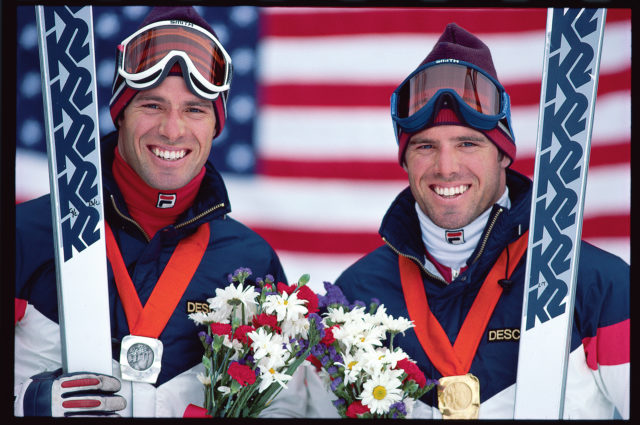
Phil and Steve Mahre. PHOTO: Lori Adamski-PeekThis pair of skiers are, no doubt, the most famous Washingtonians to win Olympic medals. It was on February 19, 1984 when the twin brothers slalomed to gold and silver, being the first siblings to compete and place in the same event.

Phil and Steve Mahre were born on May 10, 1957, in Yakima, Washington.  They grew up at White Pass which, as fate would have it, tends to be buried under snow some six months each year. It was there they learned to ski. And learn they did. Phil – the oldest of the two by four minutes – won 27 World cup races during his career, the fourth highest number for an American.

It was, however, the dramatic competition in Sarajevo which cemented the twin’s legacy and also focused attention on the Pacific Northwest. From the Infallible Wikipedia:

“At the 1984 Winter Olympics in Sarajevo, Mahre again medaled in the slalom, this time taking the gold while Steve won the silver for a Mahre twin 1–2 sweep. Steve had led the first of two runs, skiing flawlessly and building a large half-second lead over Swede Jonas Nilsson with Phil in third place, another two-tenths back. Phil skied a fine second run to grab the lead, then Nilsson skied next and faltered, dropping out of the medals. Steve skied down last, needing only a solid run to take the gold, but a series of mistakes dropped him into second place, and Phil became the Olympic champion. Meanwhile, unknown to the racers, Phil’s wife Holly had given birth to their second child, a son, in Arizona an hour before the race started. Phil did not find out about it until a TV interview after the race.

phil-mahre-vault-slalom-sarajevo-olympics.jpgThe Mahres won two of the five alpine skiing medals taken by Americans, all from the Northwest. Portland’s Bill Johnson (downhill) and Seattle’s Debbie Armstrong also won gold and Christin Cooper of Sun Valley took the silver for an American 1–2 finish in the women’s giant slalom.”

It was probably around 1974 when I first heard about the Mahre brothers. I had friends who went to school in Naches with the brothers. It was fun over the next nine years to follow their career and cheer for them in the Olympics. It was shortly after the 1984 gold-silver win when the brothers retired from competitive skiing, their spot in the history books cemented.

As I was working on this article I was reminded of a story told by a gal who grew up in Wenatchee and learned to ski at Mission Ridge. Rosemary was a few years older than I but we both worked in the telemarketing cube farm for Microsoft in the winter of 1983. She and I covered the west coast, me California and she the Pacific Northwest. What I most recall about her were her stories. It was always fun to listen to her tales of adventure as a single woman. And she was fearless. Despite the many things she had done, her persona was that of an airhead. Personally, I think it was all an act which she used to disarm people.

In the winter of 1983, Rosemary decided to join a Microsoft group that skied together. The ensemble consisted of a half dozen software programmers and her, the lone female. On one particular Monday in late January or February, she came in to work and related to me that she had gone skiing with the guys for the first time. She had ridden the lift to the top with one of the programmers and when they skied off the chair, the pair found themselves at the top of a slope filled with moguls.

the_mogulsHer fellow skier asked her if perhaps the black diamond run might be a bit difficult and would she like to try something easier?

“Oh no. I think I can handle it,” she replied, then said to him “Why don’t you go first.”

Which he did. And barely managed to stay upright as he picked his way down the bumpy slope. What happened next, according to Rosemary’s story, was epic. She adjusted her goggles, took firm control of her ski poles, and flew down the hill, attacking the moguls like a boss.

Her partner, still staring at her open mouthed as she swept up next to him at the bottom, managed to ask, “Where did you learn to ski like that?”

To which she replied “I was on the 1968 Olympic B team.”

Oh yes, there was so much more to Rosemary than met the eye.

Despite having grown up an hour’s drive from White Pass, I did not learn to ski until I was in my mid-20’s. In fact I took my first ski lessons in the early 1980’s. The hubby and I – along with his sister and Mom – spent several days at Whistler during the 1984 Olympics watching the events in Sarajevo in the evenings at a pub, cheering on the Mahre’s  and the rest of the American’s in their quest for gold.

While I never once came close to skiing like either Phil or Steve Mahre or my co-worker Rosemary, I did have an appreciation and awe of what they could do with a pair of boards and a couple of sticks in the snow. I felt an incredible pride when, in February 1984, the twins from little ole Yakima, Washington, won Olympic silver and gold.

As always, a few links of interest:

https://www.seattlepi.com/sports/article/Where-Are-They-Now-Phil-Mahre-1984-Gold-Medalist-1195145.php

https://en.wikipedia.org/wiki/Phil_Mahre

https://en.wikipedia.org/wiki/Alpine_skiing_at_the_1984_Winter_Olympics

Ted Ligety won two gold medals, 8 years apart… his 2014 Medal was also won on February 19! Although Bill Johnson also won gold in 1984, his medal was won on February 15, four days earlier than Phil Mahre.