For kids growing up in the 1950’s and 60’s reading comic books was a universal experience. From Mickey Mouse to Marvel, there was a flavor for everyone. While Marvel comics were not my thing, I did enjoy one comic book series immensely: Archie.
Always a difficult choice for female obsessed Archie: Betty or Veronica?
It was on February 11, 1942, when Archie and his pals got their very own series. From the Infallible Wikipedia:
“Archie (also known as Archie Comics) is an ongoing comic book series featuring the Archie Comics character Archie Andrews. (snip)
Archie first appeared in Pep Comics #22 in 1941 and soon became the most popular character for the comic. Due to his popularity, he was given his own series which debuted in winter 1942 titled Archie Comics. Starting with issue #114, the title was shortened to simply Archie. The series ended with issue #666 (June 2015) to make way for a new series set in Archie Comics’ ‘New Riverdale’.”
Unlike the Superhero comics of the day, Archie featured a popular red-headed teenager who seemed to attract trouble. Most of that trouble was centered on the rivalry between the wholesome Betty Cooper and the privileged Veronica Lodge. Archie – the object of both their affections – is the clueless pawn in their game of romantic chess.
Moose with Miss Grundy
With Archie’s friends: the hapless Jughead Jones, dumb jock Moose Mason, and manipulative Reggie Mantle, added to the mix, the opportunity for the comic’s writers to dream up creative teenager life story lines carried the series for decades.
An additional dozen plus characters also inhabit Riverdale – the fictional Midwest town where Archie lives – and have smaller recurring roles.
The comic book series was published for 73 consecutive years with its final issue in June 2015. It was relaunched that same year and is known as the “New Riverdale.” It sports an updated look with the characters taking on more realistic human features and also, according to the Infallible Wikipedia, “harken back to the comic’s roots by showcasing more edgy and humorous stories as well as present the origins for the character and his friends as well as how the famous love triangle between Archie, Betty, and Veronica began.”
What’s amazing is that the comic book remained as popular as it was for over seven decades. I first discovered it in the mid-1960’s in the stacks of comic books my two older brother’s owned. They had lots of the superhero variety but probably no more than a half dozen Archie’s. But I read every single one of the redheaded hero’s adventures multiple times.
Archie was, however, soon forgotten once I became a teenager myself and then an adult. At least until one day when I was at the store with my ten year old daughter. I happened to look up as we stood in the checkout line and there were the familiar drawings of my old friends Archie, Veronica, and Betty. On a whim I purchased the comic book for my daughter.
She was hooked, often spending some of her allowance money on the magazine. Archie comics were stuffed into her Christmas stocking and purchased for her when she was home sick. I may have even given her a subscription one year for her birthday.
I discovered a dozen of them during the purge process when we moved a couple years ago. Did she want them any longer? Now an adult, the answer was the same as it had been for me: no.
Reggie, Betty, Archie, Veronica, and Jughead
But Archie and gang had been good companions for a few short years. As for the issues we had, they were donated. I imagine some young girl and her parent finding some of those issues and enjoying the adventures of the accident prone, yet lovable, Archie, and it brings a smile to my face.
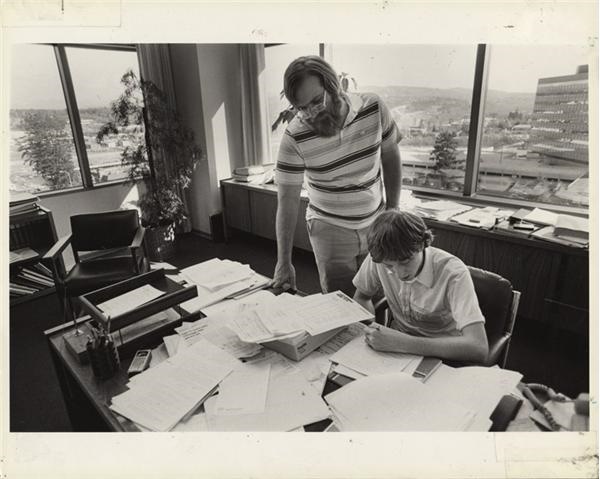
Paul Allen and Bill Gates in the late 1970’s and how I picture both of them in my memory.
When this young man dropped out of college, I’m sure it was a huge disappointment to his family. After all, he’d scored a perfect 1600 on his SAT’s and graduated from the prestigious Lakeside School in Seattle. But the world was changing rapidly in the early to mid-1970’s and he had bigger visions than attending classes and frat parties.
Of course, we all know his story. Along with a close friend, he went on to become a co-founder of one of the world’s most successful computer software development companies: Microsoft.
Early 1980’s Company Logo
But I’m not writing about Bill Gates. This is about Paul Allen, the less ‘famous’ of the Microsoft pair. And without whom Microsoft would never have existed.
If he were alive today, he would be celebrating his 72nd birthday.
According to the Infallible Wikipedia:
“He attended Lakeside School, a private school in Seattle where he befriended Bill Gates, with whom he shared an enthusiasm for computers, and they used Lakeside’s Teletype terminal to develop their programming skills on several time-sharing computer systems. They also used the laboratory of the Computer Science Department of the University of Washington, doing personal research and computer programming; they were banned from the laboratory in 1971 for abuse of their privileges there.
Gates and Allen joined with Ric Weiland and Gates’ childhood best friend and first collaborator, Kent Evans, to form the Lakeside Programing Club and find bugs in Computer Center Corporation’s software, in exchange for extra computer time. In 1972, After Evan’s sudden death due to a mountain climbing accident, Gates turned to Allen for help finishing an automated system of Lakeside’s entire class scheduling procedure. They then formed Traf-O-Data to make traffic counters based on the Intel 8008 processor. According to Allen, he and Gates would go ‘dumpster diving’ in their teenage years for computer program code.
This photo purports to be from 1984. If so, it was likely right after the company moved ‘across’ I-520 to Corporate Campus East. This would have been my final year at Microsoft.
Allen attained a perfect SAT score of 1600 and went to Washington State University, where he joined the Phi Kappa Theta fraternity.”
Allen was hired by Honeywell, located in Boston, as a computer programmer and left WSU. Gates, now attending nearby Harvard, and Allen reconnected. It was Allen who convinced Gates to leave Harvard, move to Albuquerque, New Mexico and form Micro-Soft (To combine the two terms microcomputer and software). In January 1979, the company moved to Bellevue, Washington.
Also from the Infallible Wikipedia:
“The relationship became less close between Allen and Gates as they argued even over small things. Allen effectively left Microsoft in 1982 after being diagnosed with Hodgkin’s lymphoma, though he remained on the board of directors as vice chairman. Gates reportedly asked Allen to give him some of his shares to compensate for the higher amount of work that Gates was doing. According to Allen, Gates said that he ‘did almost everything on BASIC and the company should be split 60–40 in his favor. Allen agreed to this arrangement, which Gates later renegotiated to 64–36. In 1983, Gates tried to buy Allen out at $5 per share, but Allen refused and left the company with his shares intact; this made him a billionaire when Microsoft went public. Gates later repaired his relationship with Allen, and the two men donated $2.2 million to their childhood school Lakeside in 1986. They retained a friendship for the rest of Allen’s life.”
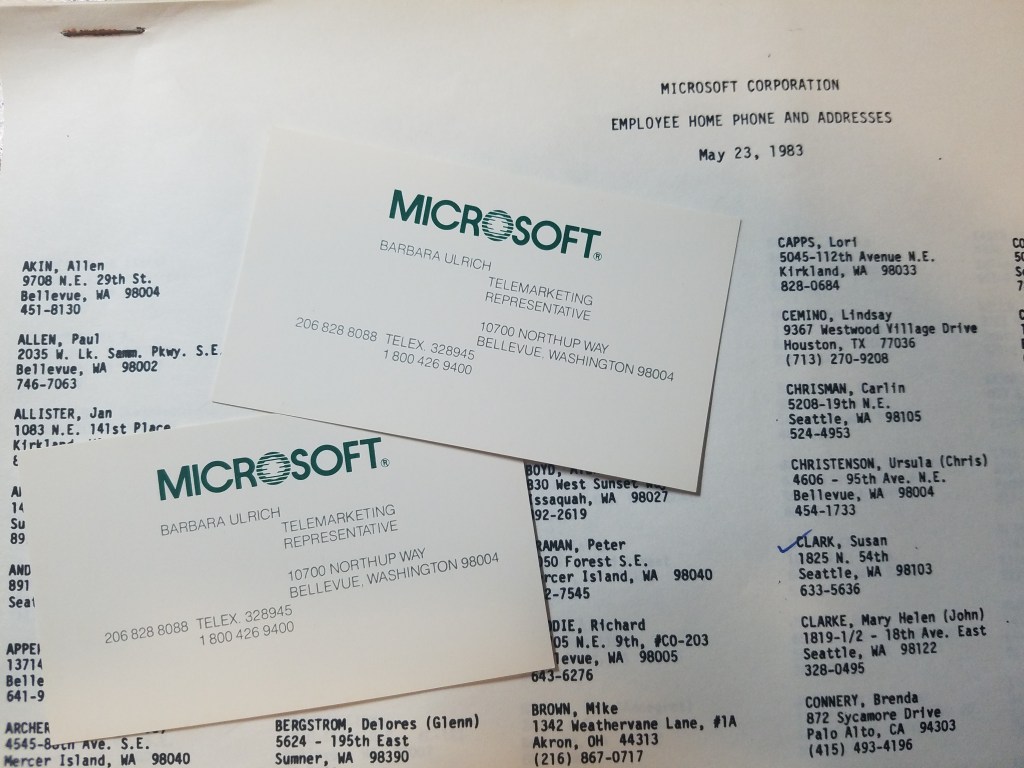
Being that I keep anything which might be historical in nature, I still have several Microsoft employee address lists and a few of my business cards.When I joined the company in early January 1983 there were 205 people at corporate and 21 field sales reps. Which means I was one of the first 250 employees of Microsoft.
Allen went on to do many great things for the world including donating over $2 Billion towards science, technology, education, wildlife conservation, the arts, and community services.
You can read more about Allen’s extraordinary life and find links to his biography here:
In the past eight years of writing my Tuesday Newsday blog I’ve shared only a few stories about my ‘Forest Gump-esque’ experiences at Microsoft. I was hired there in early 1982 as part of a group of three young women who would be launching a retail telemarketing division for the company.
Our trio faced nearly insurmountable odds – which we did not know when we took the jobs – as we were tasked with calling out to every retail store in our region (I had the west coast. The. Entire. West. Coast.), working in conjunction with Microsoft’s field sales reps, to sell such programs as Basic, Fortran, and Cobol compilers, the always popular Flight Simulator and Typing Tutor, and the early spreadsheet program, MultiPlan.
The phone calls were often brutal with the stores’ buyers either not taking our calls or, more often, asking if we sold Lotus 1-2-3, our competitors sizzling hot multi-functional program which dwarfed Microsoft’s Multiplan. Word Processing program? Bah. Didn’t exist then.
There was nothing sleek OR sexy about the early Microsoft products. But they were green…
We worked hard, we played hard, and the burnout rate was high.
I left Microsoft, having experienced that same mentioned burnout, in the fall of 1984 and went to work for another computer company located in Kirkland six weeks later. One day, likely the summer of 1986, my then boss, Tom, took me to lunch for my birthday. We went to a favorite Japanese sushi place in Totem Lake called Izumi.
We sat up at the small sushi bar, the only people in the restaurant when we arrived. We had just gotten our food when a group of 4 or 5 men also arrived, and took a table nearby. I didn’t pay much attention to the group as Tom and I were talking. Tom, being a loud and gregarious individual, dominated the exchange and the room.
Izumi was a favorite where the hubby and me liked to go
Somehow our conversation got on to Microsoft and Tom asked why I had left the company. Before I could answer, I noticed the table of nearby men had gone silent and were all looking at us, and one of them said “I can’t escape it, no matter where I go.” That man was Paul Allen.
Perhaps that moment, more than any other, illuminated how he felt about Microsoft – at least in 1986 when he and Gates were still working to repair their relationship – and summed up for me my Microsoft experience also. For anyone living in the Seattle area, you either worked for, know someone who worked for, or you once worked for, Microsoft. It was inescapable. And not particularly pleasant.
I wanted to say something to Paul Allen that day, but felt that if I had it would have been about as welcome as a drunk fan asking a movie star for an autograph. Instead – as if by mutual agreement – he returned his attention to his group and Tom and I changed our topic.
I left Applied Computer Sciences and the corporate world in the late 1980’s, putting my energies in to raising my kids and doing volunteer work.
If I had any regrets in leaving Microsoft it was, perhaps – unlike Paul Allen – that I was never eligible for stock options, a nice perk that would have made life a bit easier.
I did, however, learn something much more valuable and it is a mantra I’ve carried through my life which goes like this:
Bill Gates and Paul Allen were wildly successful. Microsoft was wildly successful. But just because I worked for the company, however, was not enough to make me wildly successful. It is up to each of us, individually, to follow our own path, pursue our own dreams and interests, and find those things which bring us joy and fulfillment. That, I think, is the true definition of success.
It was a hard lesson but I’m forever thankful for learning it and those brief, brutal, and impactful, Microsoft years.
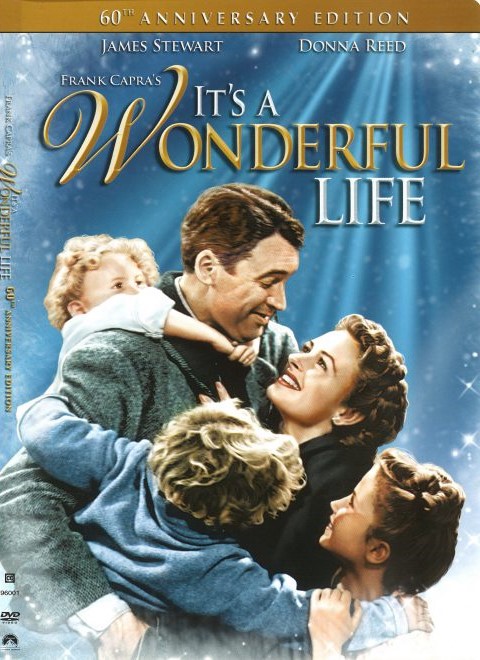
Cover of the 60th Anniversary DVD featuring George and Mary Bailey and three of their children
This film, officially released in theaters on January 7, 1947, was plagued with missteps from the start. Its history of challenges, actually, seem appropriate as it is a film about failure and redemption and has become one of the world’s most beloved Christmas classics. The movie: It’s a Wonderful Life.
Its story begins in 1939 when Philip Van Doren Stern writes a short story he titles The Greatest Gift. Unable to find a publisher, Stern self publishes 200 booklets which he gives as presents to friends during Christmas 1943.
The story ended up being read by Carey Grant who was interested in adapting the story into film with him as the lead. RKO, a movie studio, purchased the rights in April 1944 to do just that. Work commenced on the screenplay. For whatever reasons, Grant went on to other projects and the partially completed script was eventually sold to Frank Capra’s production company in 1945.
Capra – recognizing the potential in the story – hired a writing team to work on the script. But there were problems. From the Infallible Wikipedia:
“Capra salvaged a few scenes from Odets’ earlier screenplay and worked with writers Frances Goodrich and Albert Hackett, Jo Swerling, Michael Wilson, and Dorothy Parker (brought in to ‘polish’ the script), on many drafts of the screenplay.
It was not a harmonious collaboration. Goodrich called Capra ‘that horrid man’ and recalled, ‘He couldn’t wait to get writing it himself.’ Her husband, Albert Hackett, said, ‘We told him what we were going to do, and he said ‘That sounds fine.’ We were trying to move the story along and work it out, and then somebody told us that [Capra] and Jo Swerling were working on it together, and that sort of took the guts out of it. Jo Swerling was a very close friend of ours, and when we heard he was doing this we felt rather bad about it. We were getting near the end and word came that Capra wanted to know how soon we’d be finished. So my wife said, ‘We’re finished right now.’ We quickly wrote out the last scene and we never saw him again after that. He’s a very arrogant son of a bitch.’
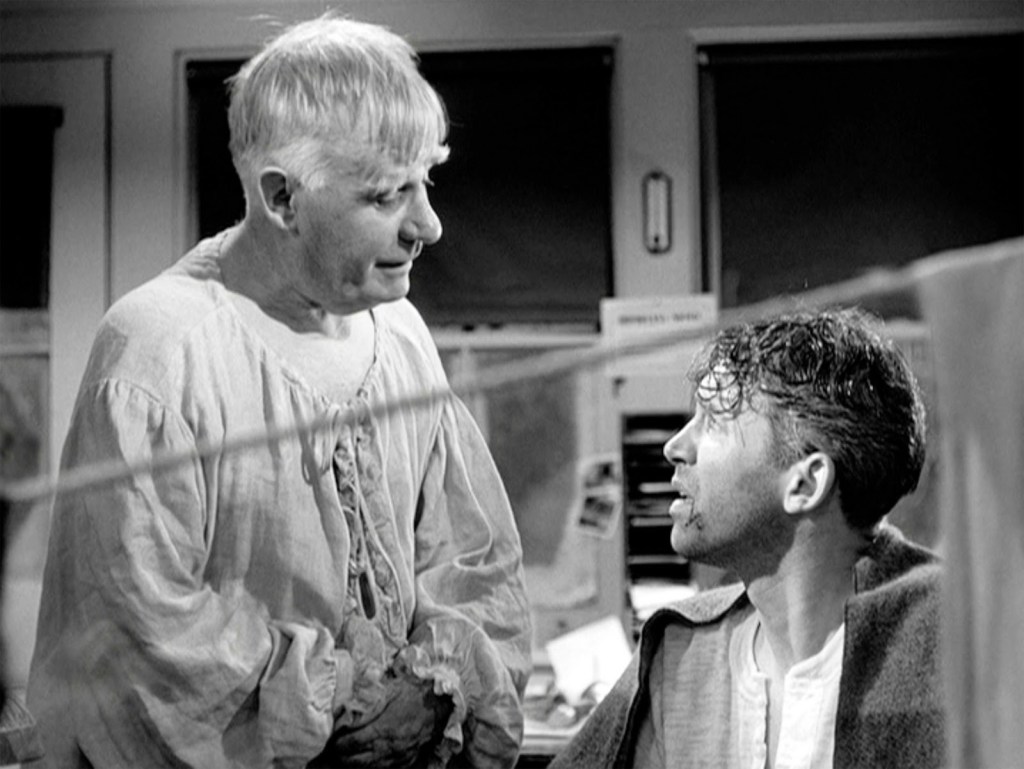
George telling Clarence he wished he’d never been born
Later, a dispute ensued over the writing credits. Capra said, ‘The Screen Writers’ Arbitration committee decided that Hackett and Goodrich, a married writing team, and I should get the credit for the writing. Jo Swerling hasn’t talked to me since. That was five years ago.’ The final screenplay, renamed by Capra It’s a Wonderful Life, was credited to Goodrich, Hackett, and Capra, with ‘additional scenes’ by Jo Swerling.”
In order to make the film ‘Oscar’ eligible it was released at the Globe Theatre in New York on December 20, 1946 rather than wait until early 1947 as originally planned. The change likely cost It’s a Wonderful Life a Best Picture Oscar as the competition for 1946 was much more difficult. Best Picture winner was a movie titled The Lost Weekend, a movie now pretty much lost in time. It’s a Wonderful Life ended up with five nominations including for Best Picture and Best Actor for Jimmy Stewart.
The movie was under water some $525,000 at the box office.
It wasn’t until the late 1970’s when the copyright expired and the movie was ‘discovered.’ Also from the Infallible Wikipedia:
“The film’s elevation to the status of a beloved classic came three decades after its initial release, when it became a television staple during Christmas season in 1976. This came as a welcome surprise to Frank Capra and others involved with its production. ‘It’s the damnedest thing I’ve ever seen’, Capra told The Wall Street Journal in 1984. ‘The film has a life of its own now, and I can look at it like I had nothing to do with it. I’m like a parent whose kid grows up to be President. I’m proud … but it’s the kid who did the work. I didn’t even think of it as a Christmas story when I first ran across it. I just liked the idea.’ In a 1946 interview, Capra described the film’s theme as ‘the individual’s belief in himself’ and that he made it ‘to combat a modern trend toward atheism’.”
The house at 5417 40th Ave SW in Seattle as it looks now. When we moved there the right side of the yard had been dug out and turned into a driveway that heaven help you if you took a wrong step at the top.
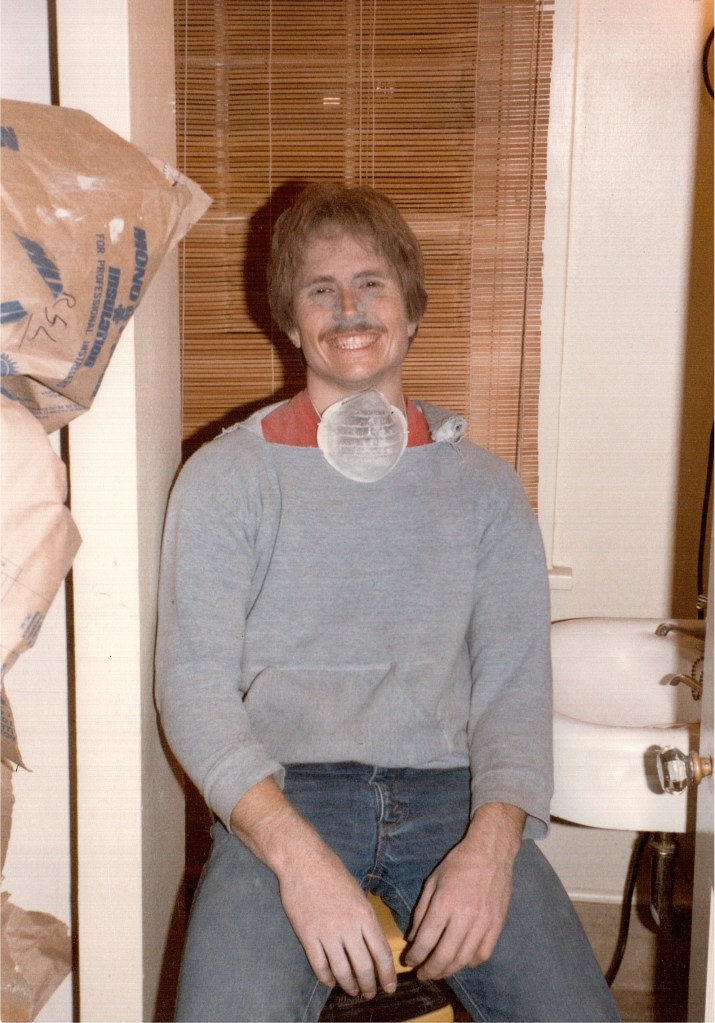
The hubby covered in dust after an evening blowing insulation into the attic
It was in December 1981 when I first saw the movie. The hubby and I had purchased our first house six months earlier. It was a 1910 fixer upper in West Seattle and a hodge-podge of never-ending projects. Our initial weekend in the house involved ripping out pet urine-soaked carpets and removing part of the narrow, with a 90 degree turn staircase, in order to get our queen size bed up to the bedroom. Behind the 1960’s era kitchen cabinets we unearthed a painted over window with the curtain rod still attached to the wall. Unfortunately, the curtains – mostly rags – also still hung there. The fix list went on and on. During the time we owned that house, it was one critical project after another.
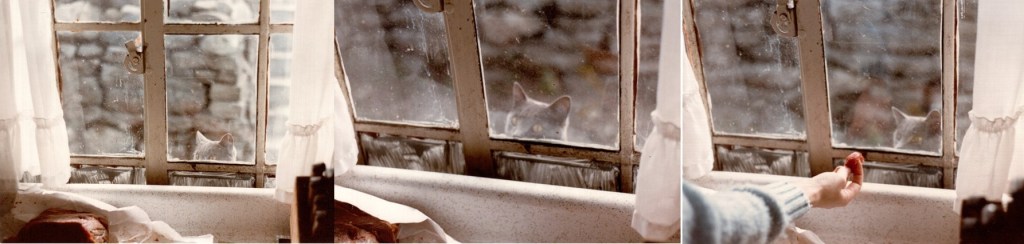
Our cat, Porsche, was peering through the kitchen window watching as I worked with some steak and we inadvertently captured those horrible old windows, painted at the bottom and half covered up by ill-fitting counters.
Forward to the week before Christmas 1981. I was home sick from work with a bad cold, puttering around our drafty old house, doing what I could to get ready for the holiday. I had the TV on to keep me company when this old black and white film appeared.
Within moments I was hooked and soon I gave up my puttering and snuggled up on the couch under a blanket. I watched the whole thing. The already dim afternoon light faded to night just as George Bailey descended into his own winter solstice crisis. There I sat, commiserating with poor George over a house that needed constant fixing and worried about how he was going to find the money that Uncle Billy lost. I could relate as money was tight for a pair of house poor, married barely a year, kids.
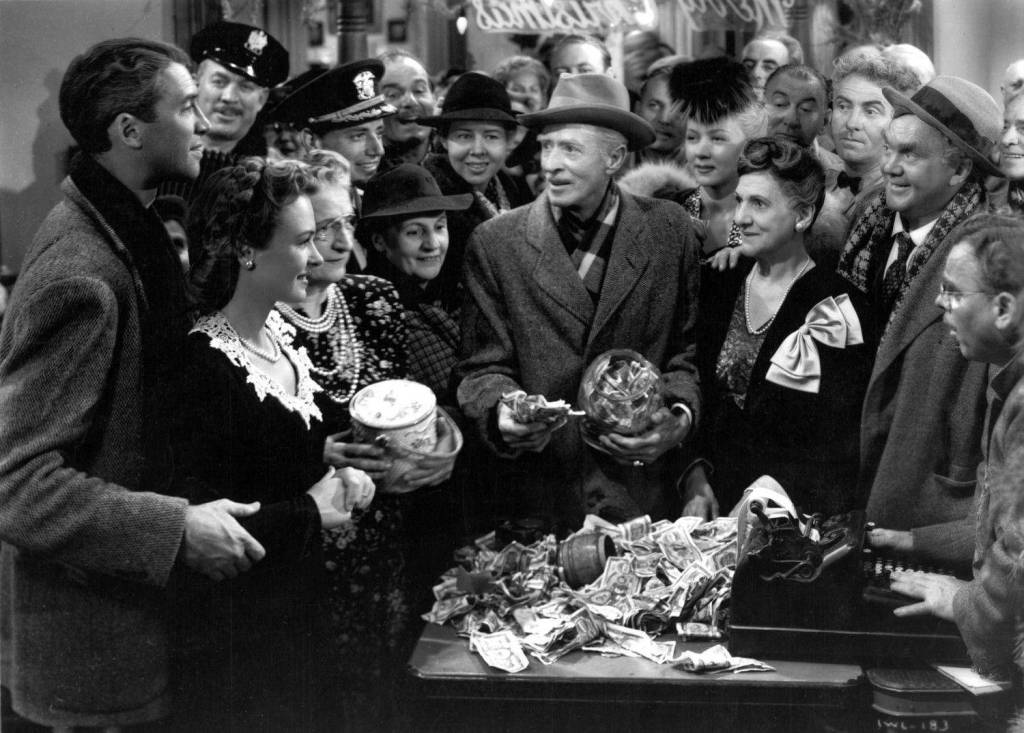
The townspeople of Bedford Falls coming together to help George
There’s a moment in that film which sums it all up. It’s when George arrives back home – alive once again – and hugs the kids but cannot find Mary, his wife. The bank examiners arrive and tell George they are going to arrest him and his response is just the best. He tells them how wonderful it is for no other reason than because he’s alive and that is enough.
Just then, Mary bursts through the door, she and George embrace and he tells her how much he cherishes her. But she has a surprise for him – the community has come to their rescue and raised more than enough money to cover the missing funds.
It’s this scene which had me bawling. What a gift it is to be so loved, so valued, that your friends and family will do anything to ease your burden. Every time I watch It’s A Wonderful Life I hold it together until that scene comes on and George receives a gift from his Guardian Angel, Clarence, with the following sentiment:
“Dear George, remember no man is a failure who has friends. Thanks for the wings, Love Clarence.”
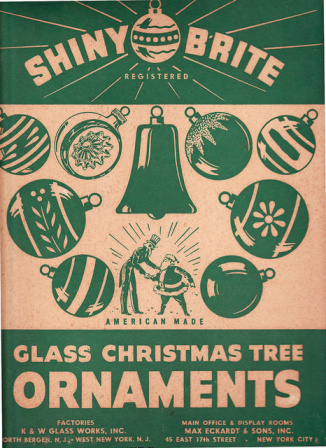
Long before Hallmark introduced their line of annual Christmas ornaments, another American Company had taken the market by storm, selling millions of baubles every year from 1940 to 1962. Marketed as Shiny Brite, the distinctive green boxes which featured Santa Claus shaking Uncle Sam’s hand were a fixture in the average home of the 1950’s and 60’s.
My mother’s Christmas ornaments from the 1950’s and 60’s
The story begins in 1937 with importer Max Eckhardt who, seeing the clouds of war encroaching and feared that his supply line would be cut, went to the Corning Glass company in Pennsylvania and made a deal with them to begin producing ornaments. Thus, was born Shiny Brite. From the Infallible Wikipedia:
“Eckardt had been importing hand-blown glass balls from Germany since around 1907, but had the foresight to anticipate a disruption in his supply from the upcoming war. Corning adapted their process for making light bulbs to making clear glass ornaments, which were then shipped to Eckardt’s factories to be decorated by hand. The fact that Shiny Brite ornaments were an American-made product was stressed as a selling point during World War II.
Dating of the ornaments is often facilitated by studying the hook. The first Shiny Brite ornaments had the traditional metal cap and loop, with the hook attached to the loop, from which the ornament was hung from the tree.
Wartime production necessitated the replacement of the metal cap with a cardboard tab, from which the owner would use yarn or string to hang the ornament. These hangers firmly place the date of manufacture of the ornament to the early 1940s. (snip)
Shiny Brite ornaments were first manufactured at Corning’s plant in Wellsboro, Pennsylvania, and continued there for many decades. During its peak, Shiny Brite also had factories in New Jersey, located in the cities of Hoboken, Irvington, North Bergen, and West New York. The company’s main office and showroom were located at 45 East 17th Street in New York city.
The classic cover of the Shiny Brite box with Uncle Sam shaking Santa’s hand
Shiny Brite’s most popular ornaments have been reissued under the same trademark by Christopher Radko since 2001.”
Although there were other companies which manufactured and sold ornaments in that era, Shiny Brite was by far the largest player.
As a child in the 1960’s I loved the December day when our family’s fresh cut pine tree would be set into its stand in a place of honor. I always watched as my father strung the C-7 bulbs on the branches. It seemed as though it took forever for my mother to declare the moment when the decorations could be hung. Out would come the green Shiny Brite and other boxes, their lids lifted, and one by one the delicate glass ornaments would soon dangle from the branches.
Each year it was as if seeing old friends arrive for the holidays. By the 1980’s – with their children all moved away – my parents quit hanging ornaments on a tree. Instead, they kept an artificial tree – lights already placed on the branches – in their basement storage room. Mid-December my dad would carry it out through the garage and then up the outside stairs and into the living room. Once the lights were plugged in they called it good.
The ornaments of my youth were squirreled away in a box in the storage room where they remained untouched for some 30 years.
In the summer of 2019, as we worked to clean out my parent’s home since my dad now lived in an Adult Family home, my sister and me anxiously awaited the Christmas Box to be unearthed.
My mother’s precious ceramic angels and bells. It was not Christmas until the angels were set on the buffet.
Finally, in late August, that day arrived. The two of us sat on the floor and opened the ornament boxes, each picking out those we wanted to bring to our own homes.
By the time Christmas 2019 was upon us, both my parents were gone and, after my tree was up, I went search of the ornaments. I looked in box after box which had been stored in my garage since summer, but no ornaments.
Finally, after my two days search, I lamented to my son that I could not find them. He, however, said he had seen them and a few minutes later produced a small box from a section of the garage I had missed.
Just like when I was a little girl, I opened the box and said hello to my old friends. But unlike during my childhood, I could not bear to hang them on my tree, fearful one might fall and break. Amazing how something so ordinary and familiar had now become precious and irreplaceable. Instead, I carefully lay the treasured ornaments in a crystal bowl and, along with a pair of ceramic angels and two ceramic bells, set them in a place of honor.
I can only hope that one day my own children might also cherish the heirlooms passed down from generation to generation.
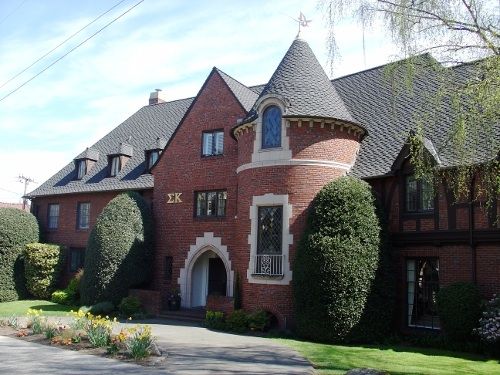
The actual place which inspired the fictional Gamma Alpha Beta Sorority
The Sigma Kappa sorority house at the University of Washington is on the National Historic Site.
The Sigma Kappa sorority house at the University of Washington is an enchanted place. The grandeur begins outside the front of the house with its classy brick façade and a stunning mix of Victorian and Tudor architecture. Truly notable is the three-story high round turret.
Once inside, the turret does not disappoint with its centerpiece being a wide and sweeping circular staircase which invites all eyes upward towards a magnificent crystal chandelier.
For a starry-eyed child, that staircase invited you into a place of fantasy and daydreams; up the stairs one would climb and promenade down them as if a princess, creating stories in one’s head.
Photo of the staircase as found on Pinterest
My first visit to this magical place was likely in the early summer of 1963. My grandmother, Alma DeVore, had taken a job as the housemother and, with the students gone for the summer, invited my family to come visit her at her new job.
I have no idea how many days we stayed, or if we even slept at the house. My older by two years sister says we stayed nearby at our uncle’s house. I was five at the time and I remember little about the visit to Seattle and the Woodland Park Zoo and more about the Sigma Kappa house.
There was a skybridge which connected the formal living areas to the dining hall and kitchen. In the basement were all sorts of mysterious rooms including one painted bright purple which we were told was the chapter room. Around every nook there was another cranny.
The author captured on a grainy video from 16 mm home movies 1963
Hallways were lined with closed doors to, undoubtedly, the private rooms of the members. At the very top level was a long sleeping porch with parallel rows of bunk beds where all the members slept. There was a back staircase leading to new and interesting spaces. It was the ultimate place to play hide and seek as you could scurry up one set of stairs and down another and through different corridors.
Through photos and documents which she had kept – and are now in my genealogy collection – I’ve determined that my grandmother must have arrived as the housemother beginning in January of 1963.
In 1946, the opportunities for women to earn a living were limited. On September 17th of that year she found herself a widow. Here she was, 46 years old, and with – at most – a high school education; she had no marketable skills beyond having raised three children: my uncle Lyle, my dad, Vince, and their younger sister, Arlene; and managing her own household.
Fortunately for her, she lived in Walla Walla, Washington at the time and was hired as the housemother for the Tau Kappa Epsilon (TKE) fraternity.
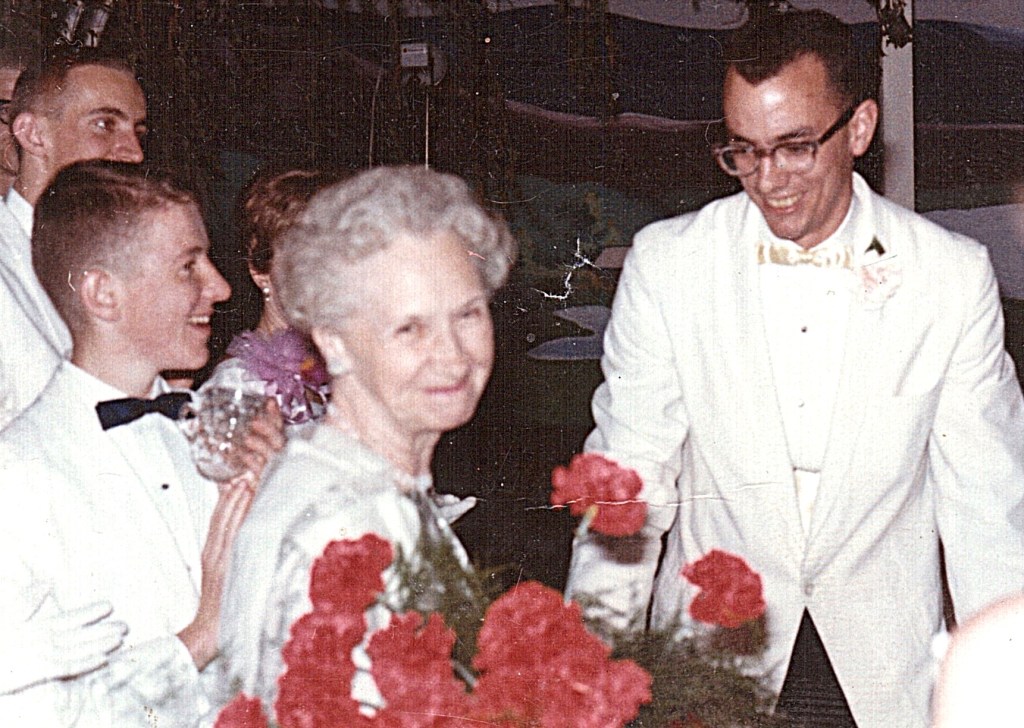
My grandmother with the TKE fraternity members at Whitman College in late 1962 at her Farewell party.
The TKE years were good ones for her from what I’ve been told. She enjoyed the young men who were members and there was a camaraderie with the other housemothers. I can’t say for sure why, exactly, she left Whitman and took the job at the Sigma Kappa house except that it brought her closer to my Uncle Lyle and his family who moved to the Ravenna neighborhood in Seattle in the mid-1950’s. Although my parents lived in Walla Walla after both graduating from Whitman and by oldest brother having been born there, my family had left the community shortly after his birth as my dad had been transferred to Moscow, Idaho with his job at National Cash Register.
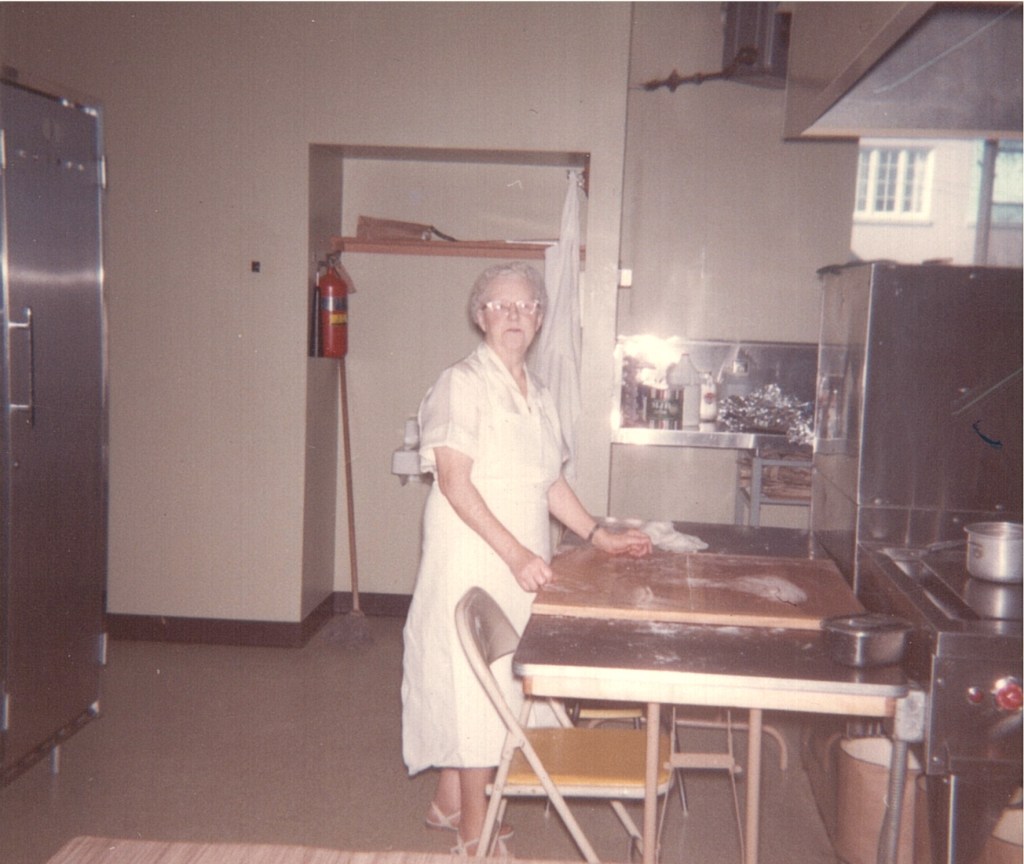
Cook Anna Blomgren in the Sigma Kappa kitchen 1965
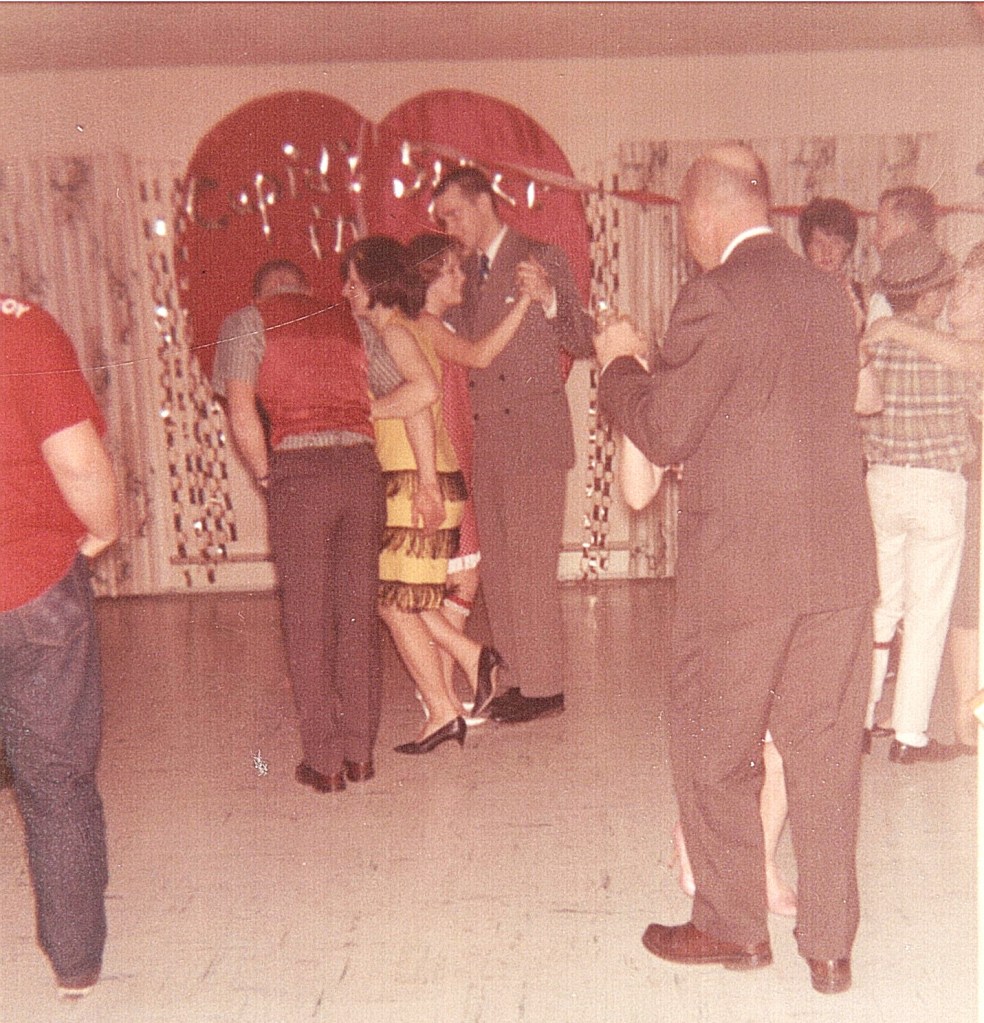
Valentine’s Day ‘Gay 90’s’ shared dance with the Zeta Tau Alpha sorority February 1966
The only other time I know for sure we visited her there is in March 1965. That winter, in Yakima, Washington, where I grew up, the entire town is abuzz. Competing in the State AA Basketball playoffs were our crosstown rivals: D.D. Eisenhower (Ike) and A.C. Davis high schools.
The University of Washington was, I suspect, the best possible choice to be closer to one of her children and family and be able to support herself.
My dad, who had left National Cash Register 1961, returned to college to get a degree in Education, now taught Washington State History to ninth graders. He loved teaching and was invested, particularly, in the local sports community. At the end of the Region 4 semi-final round on March 13th, Ike lost to Davis who was now poised to play at the Seattle Center Coliseum the next Friday.
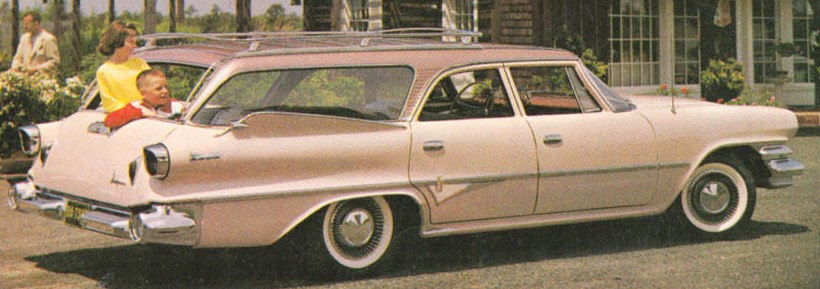
Although neither of my brothers went with us – my oldest brother attended Ike and would not have anything to do with Davis – my Dad was undeterred and my sister and me – now ages 9 and 7 – were loaded in the 1960 pink Dodge station wagon, and drove with our parents to Seattle on Friday, March 19th.
While I don’t recall a lot of the details, I do know that it was the UW’s Spring break, so the house was empty of sorority girls. And I got to live out every fantasy I had about that house. I was in heaven.
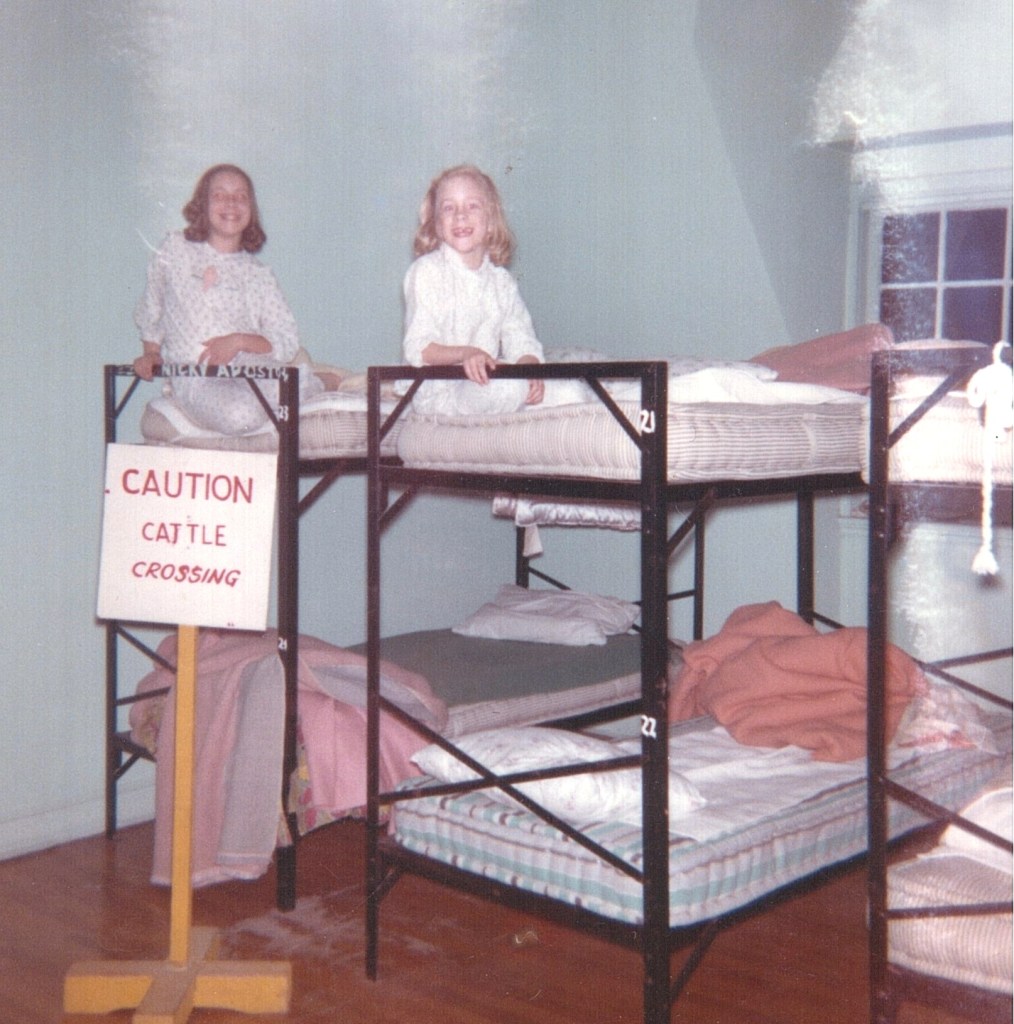
My older sister (left) and me on the Sigma Kappa sleeping porch March 19, 1965.
That evening, while our parents went to the basketball games, my sister and I stayed with our grandmother and even got to sleep on the sleeping porch!
Davis won and would be in the championship game the next evening! Once again, we hung out with grandma while my parents went to the game, my dad thrilled when Davis beat Roosevelt 66-49 for the 1965 AA state basketball championship.
Sometime late that evening, our parents arrived back at the Sigma Kappa House, and put my sister and me to ‘bed’ in the back of the Dodge station wagon. We traveled home that way, snuggled in sleeping bags with our heads on pillows that let us look up at the sky while we drove through the dark mid-March night.
My last memory of that trip is of looking up at the snow falling that night on Snoqualmie Pass, swirling in mesmerizing chaos, with the thick flakes illuminated by car headlights shining through the window behind our heads.
Not the DeVore family car, but ours WAS this same pink color and, apparently, those children also rode without seat belts in the back of the wagon.
My grandmother, born March 15, 1900, seems to have retired at the end of the 1966 academic year. Some 15 years earlier she had bought a house in Spokane. She had it converted to a duplex which she rented out for all those years when she was a housemother! In going through her papers, it was apparent that, despite not having a college degree, she was a determined woman who did not wallow in her grief, but pulled on her work boots to insure her own future. She retired to Spokane and lived in the left half of the duplex, renting the right half out until her much too early death in January 1970.
I have never gone back to the Sigma Kappa house. I think if I did it would seem smaller and less grand than my memories. Instead, it has morphed into the Gamma Alpha Beta sorority, as much a ‘character’ in ‘The Darling of Delta Rho Chi’ as Elise, Riley, Jack, and Virginia.
We know that the Christmas season is upon us when the calendar flips to December and those wonderful holiday songs waft nostalgic from the radio. And no song quite embraces the joyful Noel spirit more than… Grandma Got Run Over By a Reindeer.
The wonders of AI Image creation thanks to Bing.
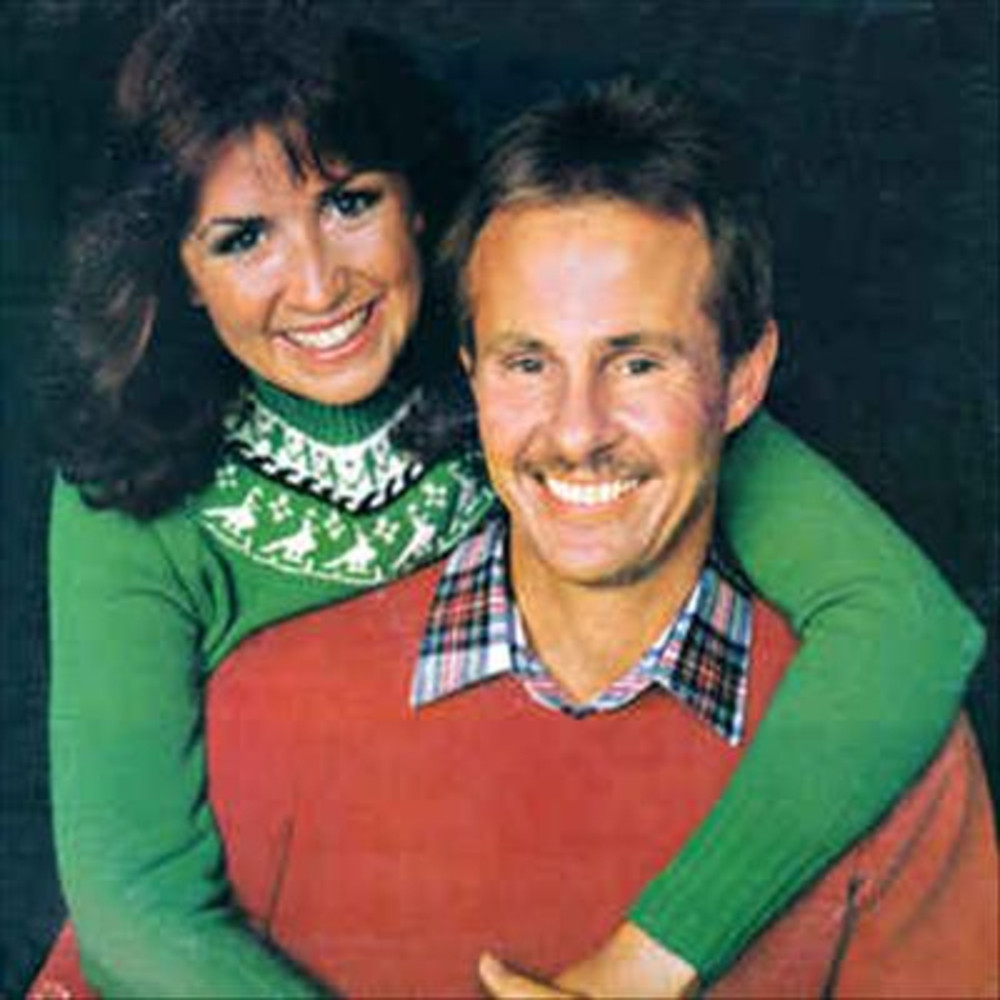
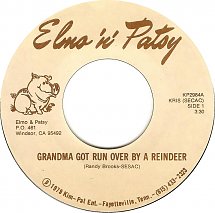
It all began in December 1978 when songwriter/performer Randy Brooks sang the song during a live show at the Hyatt Lake Tahoe with the husband-and-wife duo of Elmo and Patsy Trigg Shropshire. The pair asked for – and received – a tape recording of the song from Brooks after the show. The next year the duo recorded the song and began selling the record during their performances. As much as we can hope this 1979 novelty song will go away it has actually increased in popularity over the years.
From there things spiraled out of control.
By the early 1980’s the song was being played on radio stations during the holiday season. Its popularity on the rise and the records sold out, it has been re-pressed and re-released several times.
The public continues to be split on whether the song is loved or hated. From the Infallible Wikipedia:
“Edison Media Research and Pinnacle Media Worldwide independently survey radio listeners on which Christmas songs they like and dislike. In both surveys, results of which were reported in 2007, the only song that reached the top of both liked and disliked lists was ‘Grandma Got Run Over by a Reindeer.’ Its ‘loved’ ratings in the Edison and Pinnacle polls were relatively high—47 and 32 percent, respectively—but so were the ‘hate’ or ‘dislike’ ratings—17 and 22 percent.
Elmo and Patsy Shropshire
A major Washington, D.C. radio station, WASH (97.1 FM), dropped the song from its playlist. ‘It was too polarizing,’ says Bill Hess, program director. ‘It wasn’t strong, except with a few people, and it had a lot of negatives.’ The song also gained notoriety at Davenport, Iowa radio station WLLR in 1985 when a disc jockey played the song 27 times back-to-back during the morning show before station management was able to stop him. The disc jockey, who was suspended, was reportedly depressed and upset that a co-worker had left employment at the station to work out-of-state.
Shropshire claims it is ‘a beloved holiday favorite.’ The video of the song was ‘a holiday staple on MTV for many seasons.’ It has been ‘incorporated into talking toys and a musical greeting card.’ ‘My royalties are four or five times what they were’ 20 years ago, claims Elmo, who performs the song with his bluegrass group year-round. ‘A lot of younger people say it’s not really Christmas until they hear it.’”
When I first heard it – sometime in the early 80’s – I was amused. It did have a catchy tune and unusual premise. Listening to the lyrics I was appalled by the macabre theme wrapped up in a happy sounding jingle. For me, the song lands firmly in the dislike category and I will switch radio stations whenever it comes on.
For today’s Tuesday Newsday, however, I am taking one for the team so that my loyal readers can know the story behind the worst ‘holiday’ song ever.
Normally, I would put a link to a video up so you can experience the song first hand. Not doing that. Instead, here are the lyrics which do support my supposition that this is NOT a joyful Christmas classic:
Grandma got run over by a reindeer Walking home from our house Christmas eve You can say there’s no such thing as Santa But as for me and grandpa we believe She’d been drinking too much eggnog And we begged her not to go But she forgot her medication And she staggered out the door into the snow When we found her Christmas morning At the scene of the attack She had hoof-prints on her forehead And incriminating Claus marks on her back
Chorus: Grandma got run over by a reindeer Walking home from our house Christmas eve You can say there’s no such thing as Santa But as for me and grandpa we believe
Now we’re all so proud of grandpa He’s been taking this so well See him in there watching football Drinking beer and playing cards with cousin Mel It’s not Christmas without Grandma All the family’s dressed in black And we just can’t help but wonder Should we open up her gifts Or send them back (send them back)
Chorus
Now the goose is on the table And the pudding made of fig And the blue and silver candles That would just have matched the hair on grandma’s wig I’ve warned all my friends and neighbors Better watch out for yourselves They should never give a license To a man who drives a sleigh And plays with elves
Chorus
For those of you who ARE gluttons for punishment and want this ear worm in your head for weeks, here’s the video and, of course, a link to the Infallible Wikipedia article. I’ve also included one about Randy Brooks, the songwriter, as his tales from his childhood and how his family inspired the song is worth a read.
The celebration of harvest by setting aside a day of ‘thanksgiving’ is a tradition long observed by people the world over. Most Americans embrace the idea that the first Thanksgiving was held in Plymouth, Massachusetts, by the pilgrims who settled the wilderness there in 1621.
But a historical look at ‘thanksgiving’ celebrations indicates a more haphazard approach. In fact, colonists in Virginia also held feasts of ‘thanksgiving’ during the early years of European settlements and a number of years before the New England events. In subsequent years such feasts were declared from time to time, occurring whenever it seemed a good idea for a few days of eating and celebration.
It was George Washington, as the first president, who by proclamation made Thursday, November 26, 1789, a ‘National Day of Thanksgiving.’
From the Infallible Wikipedia:
“As President, on October 3, 1789, George Washington made the following proclamation and created the first Thanksgiving Day designated by the national government of the United States of America:
Whereas it is the duty of all Nations to acknowledge the providence of Almighty God, to obey his will, to be grateful for his benefits, and humbly to implore his protection and favor, and whereas both Houses of Congress have by their joint Committee requested me ‘to recommend to the People of the United States a day of public thanksgiving and prayer to be observed by acknowledging with grateful hearts the many signal favors of Almighty God especially by affording them an opportunity peaceably to establish a form of government for their safety and happiness.’
Now therefore I do recommend and assign Thursday the 26th day of November next to be devoted by the People of these States to the service of that great and glorious Being, who is the beneficent Author of all the good that was, that is, or that will be.’”
Although additional ‘days of thanksgiving’ were proclaimed over the years, it was during the Civil War when the last Thursday of November became the traditional celebration date. And, in a coincidence, it was also November 26th for that official celebration.
Controversy arose, however, when – during Franklin Roosevelt’s term as President –there was a ‘fifth’ Thursday. Also from the Infallible Wikipedia:
“On October 6, 1941, both houses of the U.S. Congress passed a joint resolution fixing the traditional last-Thursday date for the holiday beginning in 1942. However, in December of that year the Senate passed an amendment to the resolution that split the difference by requiring that Thanksgiving be observed annually on the fourth Thursday of November, which was usually the last Thursday and sometimes (two years out of seven, on average) the next to last. The amendment also passed the House, and on December 26, 1941, President Roosevelt signed this bill, for the first time making the date of Thanksgiving a matter of federal law and fixing the day as the fourth Thursday of November.
For several years some states continued to observe the last-Thursday date in years with five November Thursdays (the next such year being 1944), with Texas doing so as late as 1956.”
Royal Doulton china similar to my Aunt’s set of dishes
Eventually, however, everyone got on board with the change which, of course, made the planning of parades, retail sales, and football games much easier.
For me, Thanksgiving was always a long-anticipated day. My family moved to Yakima in 1961 and, as a small girl of four years, I had no prior memories of the event. All my recollections are of the two holidays – Thanksgiving and Christmas – being spent at either my family’s house or that of my cousins.
Being that my cousins’ house was a short walk down 31st Avenue, it became tradition that our two families of six each – along with my maternal grandparents – would spend Thanksgiving together.
My uncle owned a piano and organ store for a time. While he didn’t sell these, there was an antique pump organ in their basement.
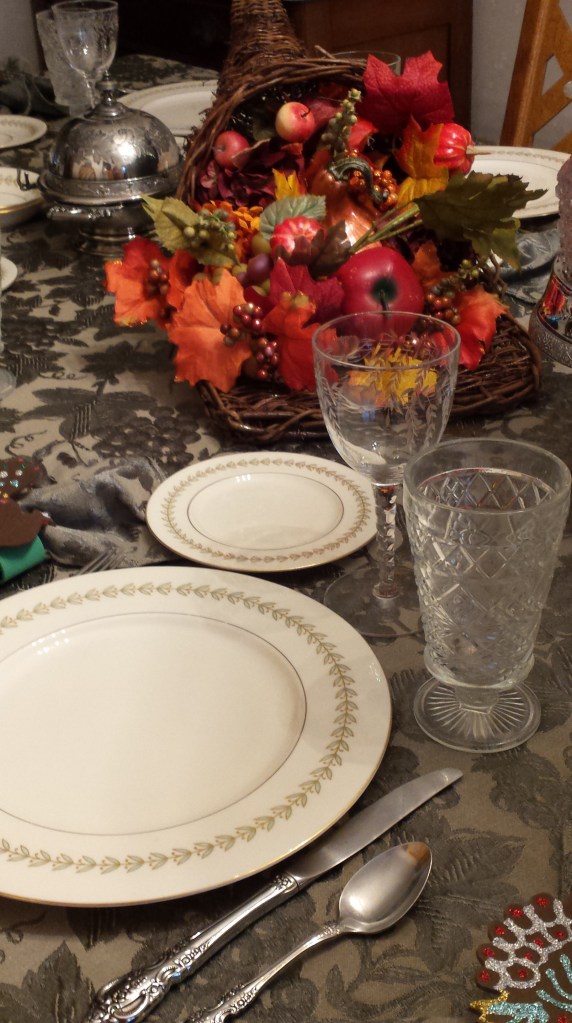
I loved going to their house for the holiday for a number of reasons, the first being that my Aunt Helen set the most gorgeous table. Even as a child I loved china and hers was exquisite. It might have been Royal Doulton Country Roses – or a knockoff – but I recall it was bold, fussy, and beautiful. She had enough place settings to accommodate 14 people but not enough seats at the main table… so the five younger children (2 boys, 3 girls) were relegated to the kitchen table WITH the pocket door closed. It was glorious. Behind that closed door, mischief abounded with my brother – who was four years older than I – the main mischief maker. There were jokes told, inappropriate noises, and much laughter. We thought we were the lucky ones not having to endure the boring adult conversations which seemed to center on who was sick or had died that year.
The third, and my favorite, reason I loved going to the cousins’ house was because of their basement. After dinner (which was ALWAYS served at 1 p.m. and over by 1:45) we were sent downstairs. That basement was the one place in my fastidious Aunt’s house where we could play without concern over too much noise.
In 2018, a year after my mother’s death, we had Thanksgiving in Yakima with my dad. Shown here is my mother’s china which I used to set the table that year.
Oh, the adventures we had! Like the time we set up the Ouija Board and invoked spirits (of the dead relatives discussed at dinner) only to have the basement window bang open at the exact moment of contact. And the time that my sister and cousin Tim put on a play in the basement, complete with a curtain and props, and a surprise ending. My uncle had an old pump organ down there which fascinated me as I pumped the pedals and pulled on knobs to create different sounds as I ‘played’ the instrument. We never ran out of things to do and I was always sad when the hour grew late and we had to return home.
When I think of my many blessings in life, I’m especially thankful for my childhood and those special holidays I spent with my siblings and cousins. At the time I did not appreciate the transitory nature of life and thought it would always be that way.
I’ve come to cherish Thanksgiving and have to say that it’s truly my favorite holiday. At no other time do we pause to give thanks for all our blessings and the people who make our lives richer and better.
On November 19, 1977, this song was in the middle of a 10 week run as the number one song in America. You Light Up My Life was the one and only Top 40 hit from Debbie Boone, daughter of 50’s teen idol Pat Boone. It reached number one on October 15 and stayed in that position through December 23, making it – at the time – the only recording to stay that long in the top spot in Billboard history.
According to the Infallible Wikipedia:
“Besting her chart performance in Billboard, Boone’s ‘You Light Up My Life’ single topped Record World’s Top 100 Singles Chart for an unbroken record of 13 weeks. On Billboard’s chart, Boone was unseated from #1 by the Bee Gees, with ‘How Deep Is Your Love,’ the first of three #1 singles from the ‘Saturday Night Fever’ soundtrack. On Record World’s chart, Boone kept the Bee Gees out of the number-one spot. In Cash Box Magazine, ‘You Light Up My Life’ managed only an eight-week stay at the top of the chart, before being dethroned by Crystal Gayle’s ‘Don’t It Make My Brown Eyes Blue’.
The single, which was certified Platinum by the Recording Industry Association of America (RIAA), also hit #1 on the Adult Contemporary chart and reached #4 on the Country chart. The single peaked at #48 I’m the UK Singles Chart. Boone’s hit single led to her winning the 1978 Grammy Award for Best New Artist, with additional Grammy nominations for Best Pop Vocal Performance, Female and Record of the Year. Boone also won the 1977 American Music Award for Favorite Pop Single.
Decades after its release, the Debby Boone version is still considered one of the top ten Billboard Hot 100 songs of all time. In 2008, it was ranked at #7 on Billboard’s ’Hot 100 All-Time Top Songs’ list (August 1958 – July 2008). An updated version of the all-time list in 2013 ranked the song at #9.
Although it was written by (Joe) Brooks as a love song, the devout Boone interpreted it as inspirational and proclaimed that it was instead God who ‘lit up her life.’”
The song was tainted by controversy, however, as songwriter Brooks apparently did not want to pay the agreed upon amount owed Kasey Cisyk, the artist who sang it for the movie of the same name, and whose version is included on the 1977 soundtrack.
Boone was told, when recording the song for release as a single, exactly how to sing it and her vocals were dubbed onto the original orchestral track.
At the time, I recall that Boone received much derision and the song was labeled as saccharin. In reading what occurred, however, I feel bad for both the women caught up in the controversy. Perhaps Cisyk was denied her shot at a Top 40 career and, perhaps, Boone was lulled into a sense of inevitability that she would become a star like her father. Although in listening to both versions, I think Boone’s is better.
Boone released additional songs into the pop market, but none ever came close to the success of “You Light Up My Life.” Her career eventually led her back to country music – where she had started – and then to work in the Christian music world.
In the fall of 1977, you simply could not avoid the song. It was played hour after hour on the radio. That autumn was one of the most memorable in my life: I was living away from my parents for the first time, having joined the Alpha Phi sorority at the University of Puget Sound. While I did study, I don’t think I was quite as diligent as I should have been. Instead, I was fraternizing with the fraternity boys most every weekend at mixers, and going on dates! I had never in my life garnered quite so much attention from the males of the species.
There was one particularly memorable November day when, literally, I had calls or visits from five guys all of whom I had been on a date with in recent weeks. That day, I could not say for sure the exact date, I had been headed down to the ‘tunnels’ to get my dinner and I decided it was a good idea to jump down the two steps from the door. I jumped a wee bit too high and… nearly gave myself a concussion.
The ‘award’ I was given for my epic self inflicted concussion
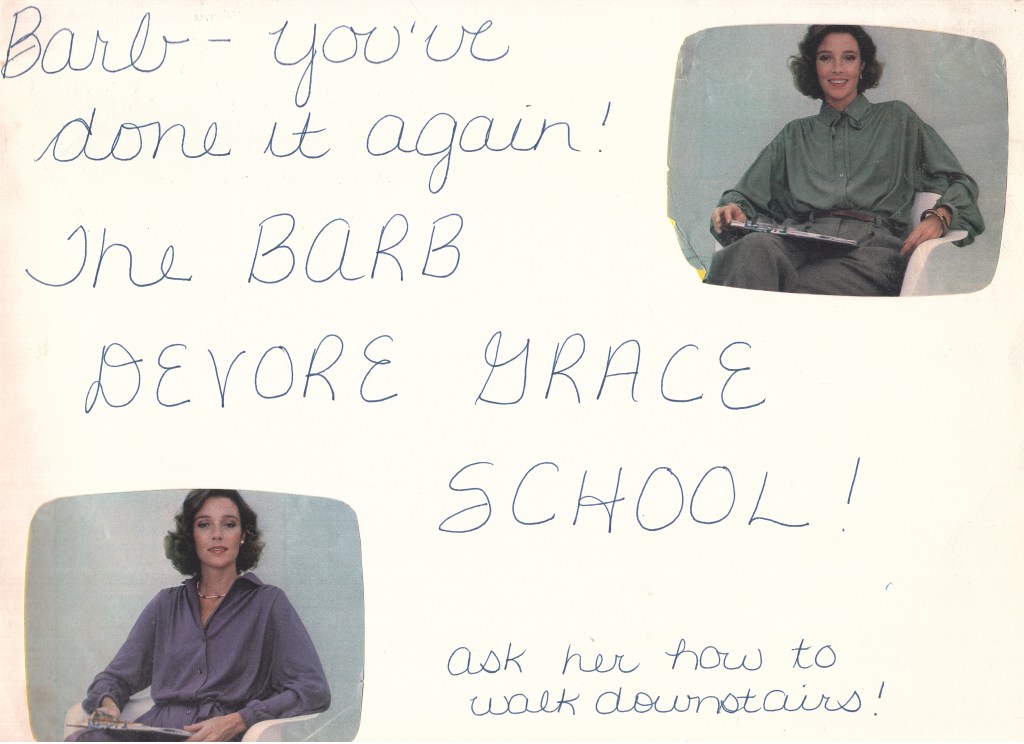
The next Monday at our weekly sorority chapter meeting, I was recognized for my grace (for the stairs) and my charm (for the plethora of phone calls and visits I had). It was what I came to be known for and received endless ribbing about it. Good times.
That era in my life was punctuated by music and whenever I hear “You Light Up My Life” I’m back in the Alpha Phi house and it’s the fall of 1977. There were a few other songs which, in my opinion, were equally as deserving of that number one spot.
These included Billy Joel’s Just The Way You Are – an infinitely better song; Rita Coolidge’s version of We’re All Alone; Carly Simon’s Nobody Does It Better; and Don’t It Make My Brown Eyes Blue by Crystal Gayle. The list of great songs from that year also included big hits – but never number ones – from a whole lot of great bands: Foreigner, Heart, Fleetwood Mac, Styx, Supertramp, and Steely Dan, among others.
And in case you’d like to hear the Casey Cisyk version and really get the worm stuck in your head (it’s been in mine since I wrote this!) here’s that video also. Note that you are seeing Didi Conn on screen – she is doing a lip-sync to Cisyk’s vocals. Enjoy!
With more than 2,000 natural sandstone arches located within, Arches National Park has the highest concentration of these features in the world. Although it had been named a National Monument in 1929, it was on November 12, 1971, when Arches National Park was created.
Situated in eastern Utah, it’s remote location and rugged terrain make getting there a challenge. The Utah park, however, has become a magnet for hikers, climbers, and nature lovers, attracting some 1.6 million visitors in 2018.
According to the Infallible Wikipedia:
“The Arches area was first brought to the attention of the National Park Service by Frank A. Wadleigh, passenger traffic manager of the Denver and Rio Grande Western Railroad. Wadleigh, accompanied by railroad photographer George L. Beam, visited the area in September 1923 at the invitation of Alexander Ringhoffer, a Hungarian-born prospector living in Salt Valley. Ringhoffer had written to the railroad in an effort to interest them in the tourist potential of a scenic area he had discovered the previous year with his two sons and a son-in-law, which he called the Devils Garden (known today as the Klondike Bluffs). Wadleigh was impressed by what Ringhoffer showed him, and suggested to Park Service director Stephen T. Mather that the area be made a national monument.”
Over the years, like so many of our nation’s National Parks, Arches has been loved to the point of fragile features being in danger of destruction. Consequently, there are now bans within the park which make climbing some of the more famous arches illegal.
The hubby and I have visited Arches twice. The first time was in the summer of 1984. We arrived on a hot July day which was not conducive to outdoor activities. Being young and in decent shape, however, we exited the car and hiked in the Windows region of the park.
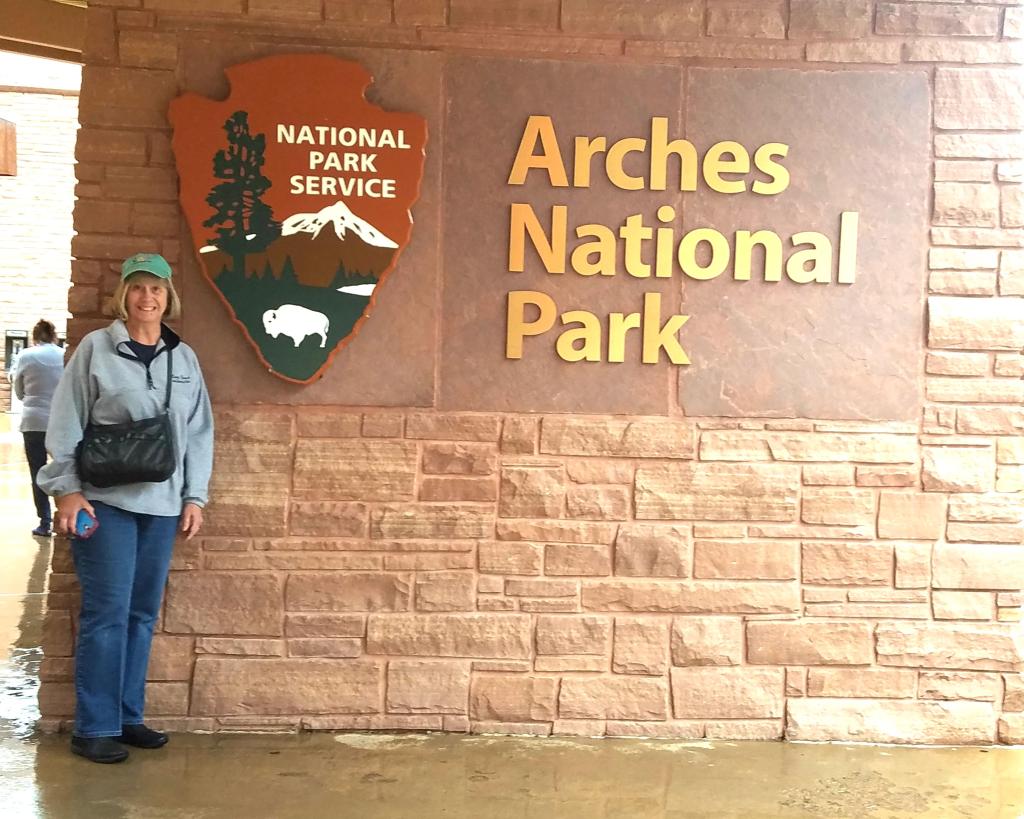
The author on a wet October morning at Arches NP. 2018.
The second trip was in October of 2018 along with hundreds of those 1,599,998 other visitors on a rainy – which is rare since the park gets less than 10 inches of precipitation a year – weekday. What struck me about the differences between those two visits is that the park had been ‘discovered’ in the intervening years. On the first trip we saw maybe a half dozen other cars and some 12 tourists. In 2018, despite the inclement weather and a number of flooded roads, the place was crawling with people. Finding a place to park the car at some of the stops proved challenging.
At Balanced rock. We didn’t stay out long as it was rainy and cold.
Our method of touring, 24 years later, has also changed. In eighty-four, I crammed as many activities into our travels as possible, never allowing nearly enough time to pause and marvel at nature’s grandeur. In 2018, our inclinations to be mountain goats now subdued, getting out and hiking for a mile or two wasn’t happening. Instead, rather than the slap and dash tourists of yesteryear, we stopped frequently and walked short paths to where we could pause and simply appreciate the amazing features; listen for birds and insects; find joy in the moment.
The term ‘Stop and Smell the Roses’ may be cliché, but the idea behind it is solid. Too often we rush to the airport, wait in lines to be stuffed into a plane, then fly to a destination where the modern amenities make our lives easy. There’s nothing easy about getting to Arches or many of Utah’s spectacular landscapes… but it is so very worth the trip.



















 barbaradevore.com