The Energizer Bunny
October 29, 2019
In the world of advertising, this campaign was particularly brilliant. The story begins in 1983 when Duracell featured a dozen stationary, identical light pink bunnies, all battery powered, drumming on snare drums. The announcer intoned that the one with the Duracell battery would last longer. Eventually, all the batteries die with the exception of the one powered by Duracell.
On October 30, 1988, however, a new bunny emerged on the advertising scene and stole the show from Duracell.
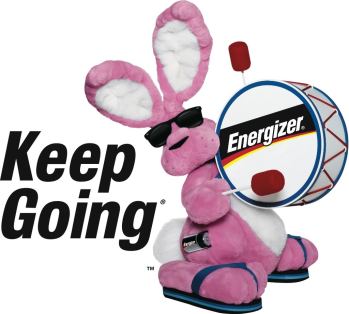 The Energizer Bunny was also pink but instead of being one of a crowd which outlasts the others, this rabbit had attitude. It wore hip sunglasses. It was hot pink. It moved around the room on blue flip flop sandals. And it had a big ole bass drum with the word “ENERGIZER” emblazoned across the surface. In short, it had important elements of a great advertising campaign in that it was memorable and humorous. The bunny has appeared in over 100 commercials and has been featured on TV shows and in movies.
From the Infallible Wikipedia:
“Commercials after the first started out with the Bunny leaving the studio it performed the ‘Drumming Bunny’ ad in, then wandering into the sets of a couple of realistic-looking commercials for fictional products, interrupting them. As the campaign progressed, many of these ads were standalone (for fake products such as ‘Sitagin Hemorrhoid Remedy’, ‘Nasotine Sinus Relief’, ‘TresCafe Coffee’, ‘Alarm’ deodorant soap, etc.) and even a few featured celebrities (such as Lyle Alzado promoting a snack called ‘Pigskins’, and Ted Nugent doing an ad for a Mexican food chain called ‘Cucaracha’) only to have the Bunny march through, beating his drum, because he was ‘still going’ (one infamous commercial was for a fake long-distance telephone company with a couple in the United Kingdom talking to their son, who was supposedly in New York and exclaimed that he ‘sounded like he’s right next door’, and when the Bunny came in, he knocked down the divider to show they really were next to each other). Eventually real-life products and icons would do a crossover with the Energizer Bunny (Michael J. Fox doing a Pepsi ad, and the opening of TV shows such as Alfred Hitchcock Presents and ABC’s Wide World of Sports). The Energizer Bunny has appeared in more than 115 television commercials.”
The Energizer Bunny has come to represent something or someone which keeps going and going, seemingly without end.
In late November 2010 I was in Yakima staying to take care of my parents who were in crisis that week. My mom – who had dementia and mobility issues due to a stroke a year earlier – needed round the clock assistance. Between my Dad, a part time caregiver, plus help from both my sister and me, they had been managing okay.
The Tuesday before Thanksgiving, however, Dad collapsed and was discovered by the caregiver. 9-1-1 was summoned and he spent three days in the hospital. A difficult patient, he convinced the doctor to release him earlier than the Doc thought prudent, and arrived home on Friday, November 26th proclaiming he was just fine.
A little after 10 p.m, he went in to take a shower. I heard him calling for help a few minutes later and rushed in to discover him collapsed on the floor. After many struggles I was able to get him up onto the seat of my mother’s walker, but he was slumped to one side. He objected to the thought of calling 9-1-1 (again!) so I called my sister who, along with her husband, came over. Eventually we did call the medics who arrived and discovered his heart was pounding at about 200 BPM and suggested he go to the hospital.
No way was he agreeing to that and kept insisting that the medics just put him to bed. Which they did. Convinced by the EMT’s that he might not survive the night, my sister and I took turns with an all night vigil.
Around 8 a.m., and with Dad still with us, I was up and out in the kitchen contemplating how to deal with two parents in need of assistance. A noise to my left drew my attention. I looked up and here came my dad, using my mom’s smaller aluminum walker, advancing with purpose and determination and seemingly unfazed by all which had happened. That entire day he moved with frenetic energy, straightening things, switching from one thing to another, hardly sitting down all day.
I described the whole thing to my sister this way: “Dad is like the Energizer Bunny.”
For the next nine years, this has been the way we’ve described our dad. There have been countless episodes of the pounding heart which takes him down for a day or two. When he’s recovered, though, watch out! Because it was always back to Energizer Bunny mode.
Eventually, however, even the strongest, most durable batteries run out of energy. And so it was for my father on October 24. His strong heart – in spite of what I am now certain were Tachycardia events – was the battery which kept him going to the age of 96 and a half.
RIP our Energizer Bunny.


The links:


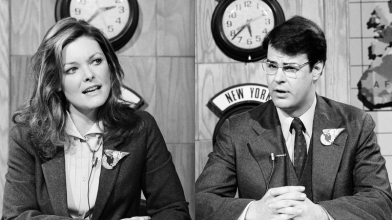

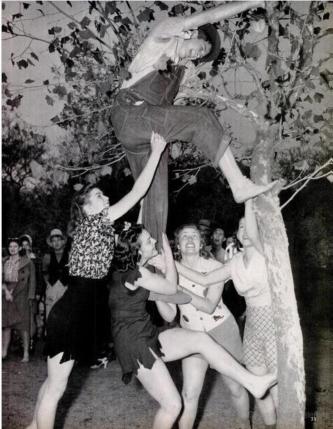
 The origin of Sadie Hawkins Day is, no doubt, an anachronism to the young people of today who would be simultaneously surprised and offended by it. But on November 13, 1937, the event was introduced in a popular comic strip and soon, in the vernacular of today, went viral.





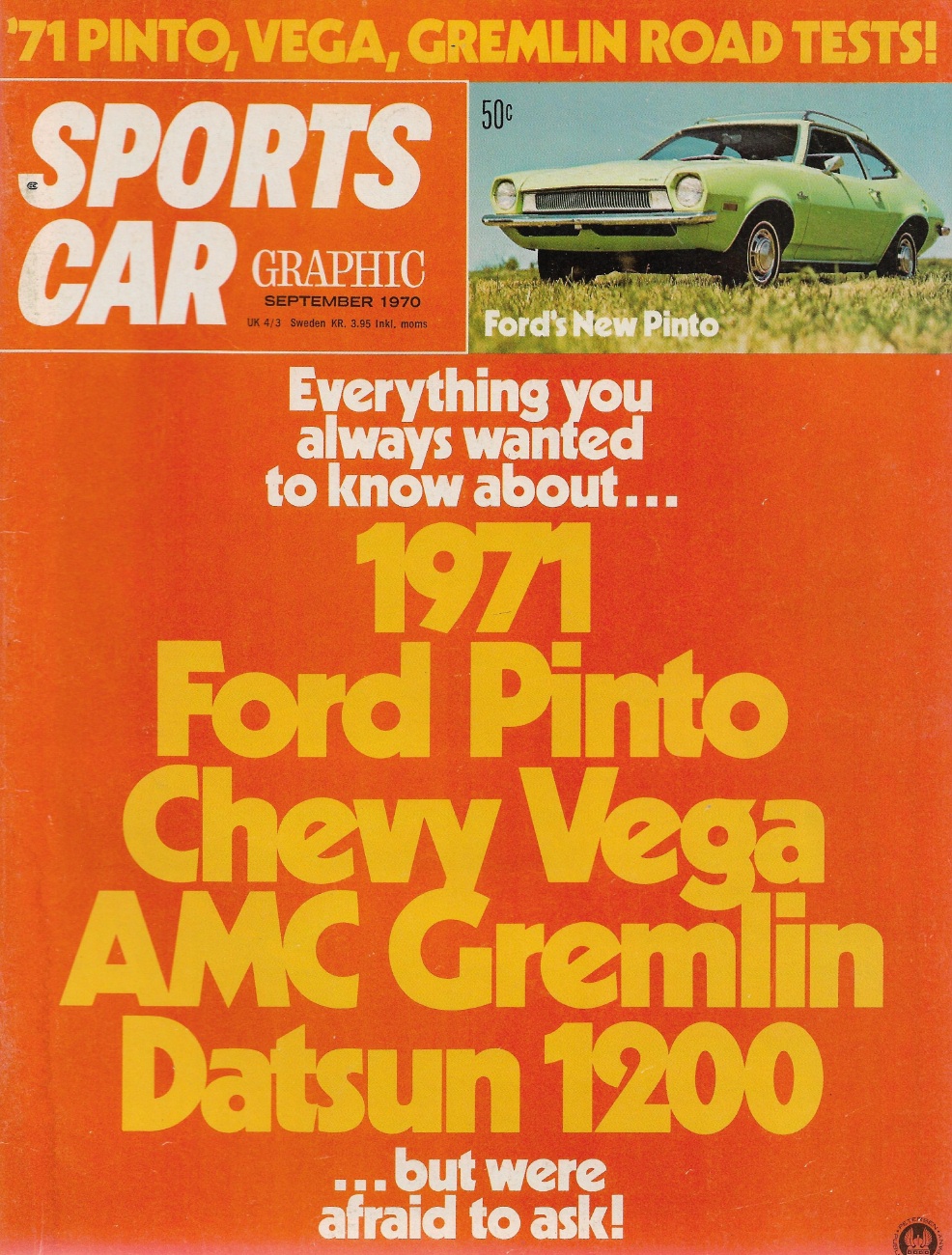
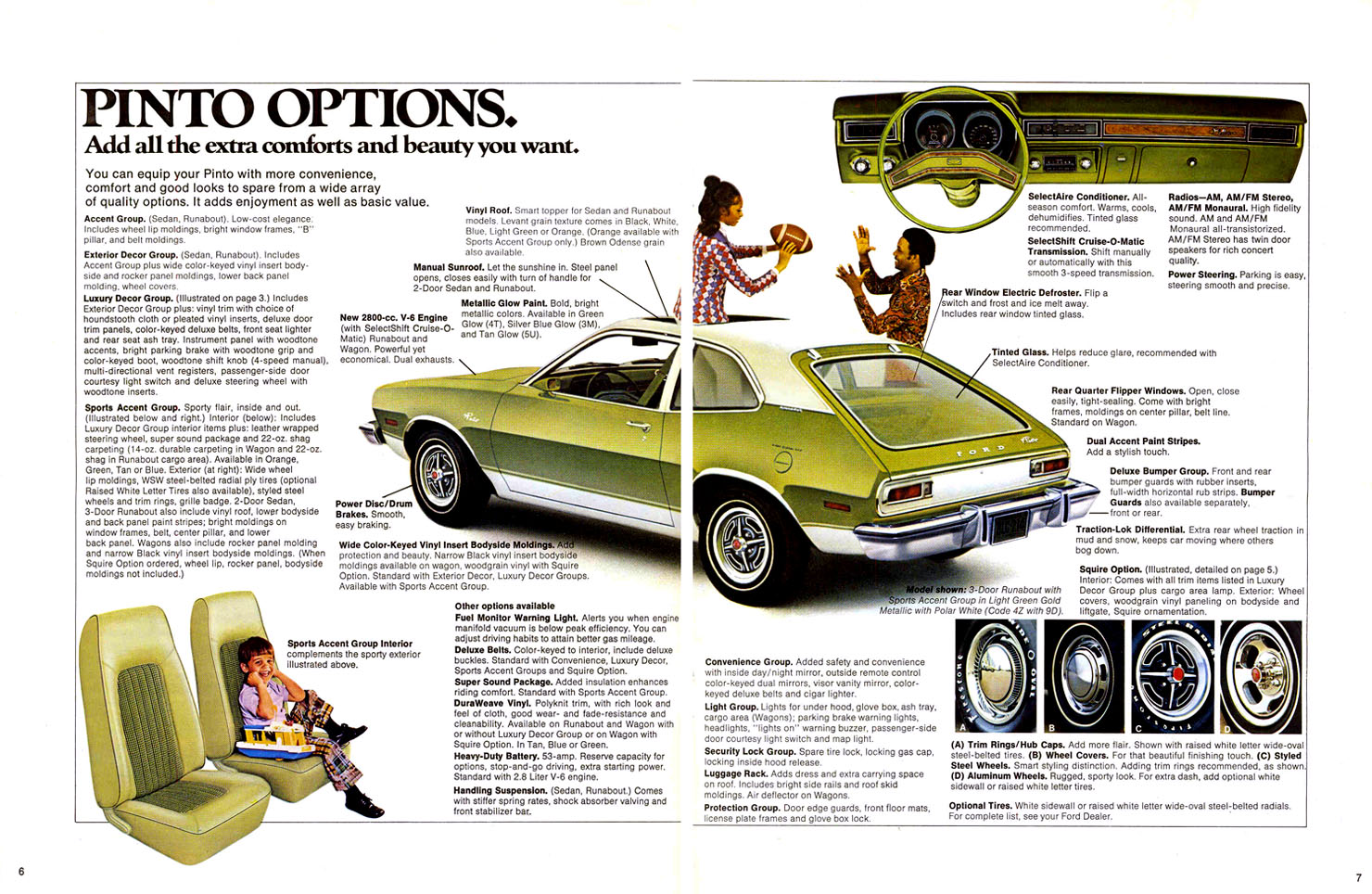 Ford Motor Company’s response to this demographic phenomenon was the introduction of the Pinto, marketed as “The Little Carefree Car” on September 11, 1970. From the Infallible Wikipedia:
 “In April 1974, the Center for Auto Safety petitioned the National Highway Traffic Safety Administration (NHTSA) to recall Ford Pintos to address fuel system design defects after reports from attorneys of three deaths and four serious injuries in rear-end collisions at moderate speeds. The NHTSA found there was not enough evidence to warrant a defect investigation. In August 1977, Dowie’s ‘Pinto Madness’ article was published a series of accusations against Ford, the Pinto and the NHTSA. These included that Ford knew the Pinto was a ‘firetrap,’ and said that Ford did not implement design changes because Ford’s cost-benefit analysis document showed that paying out millions in damages in lawsuits was more profitable than the design changes. The day after the article’s release consumer advocate Ralph Nader and the author of the Mother Jones article held a news conference in Washington DC on the alleged dangers of the Pinto’s design. On the same day, Nader and the Center for Auto Safety re-submitted their petition to the NHTSA.”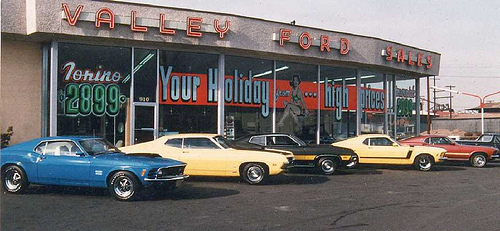
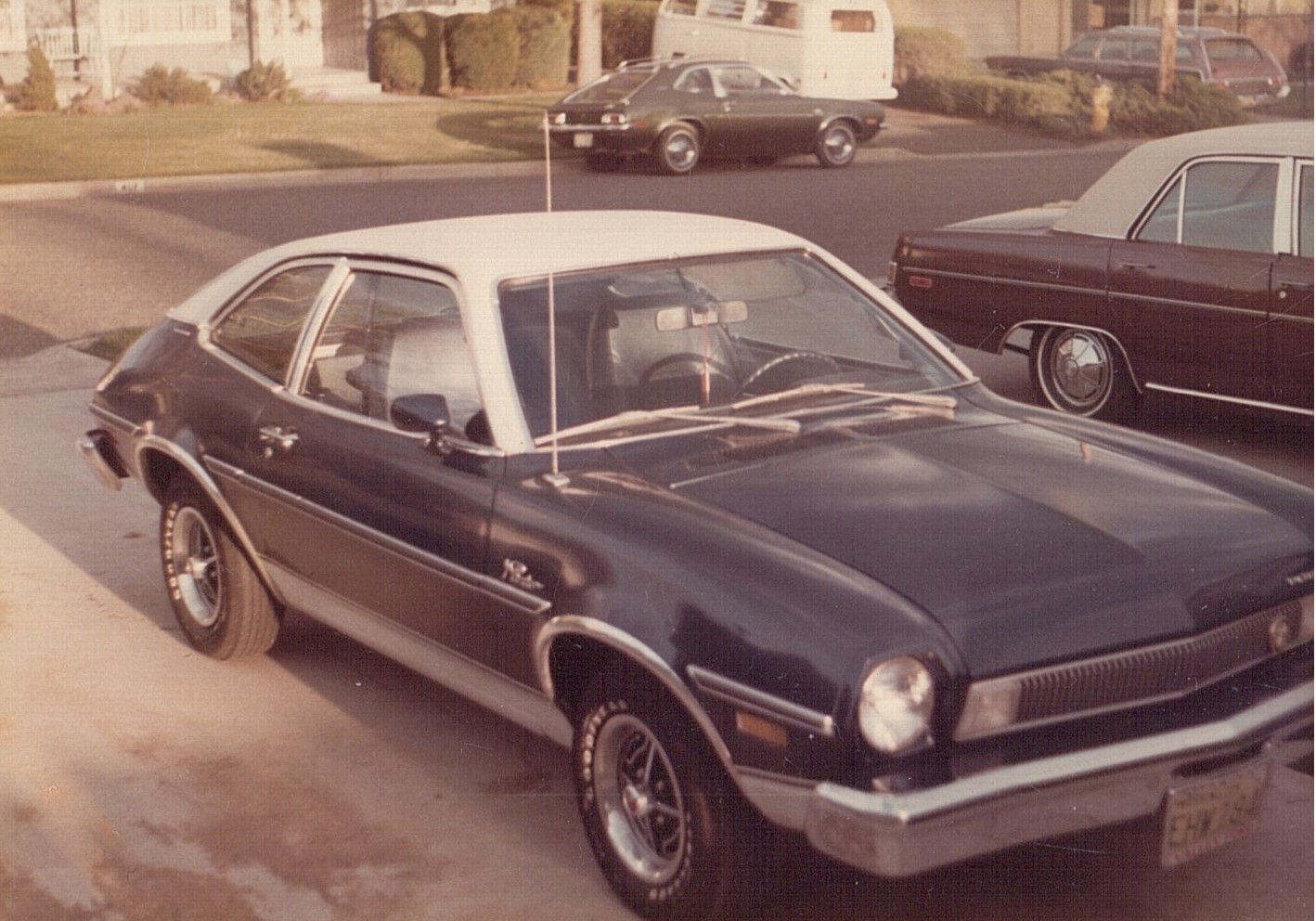
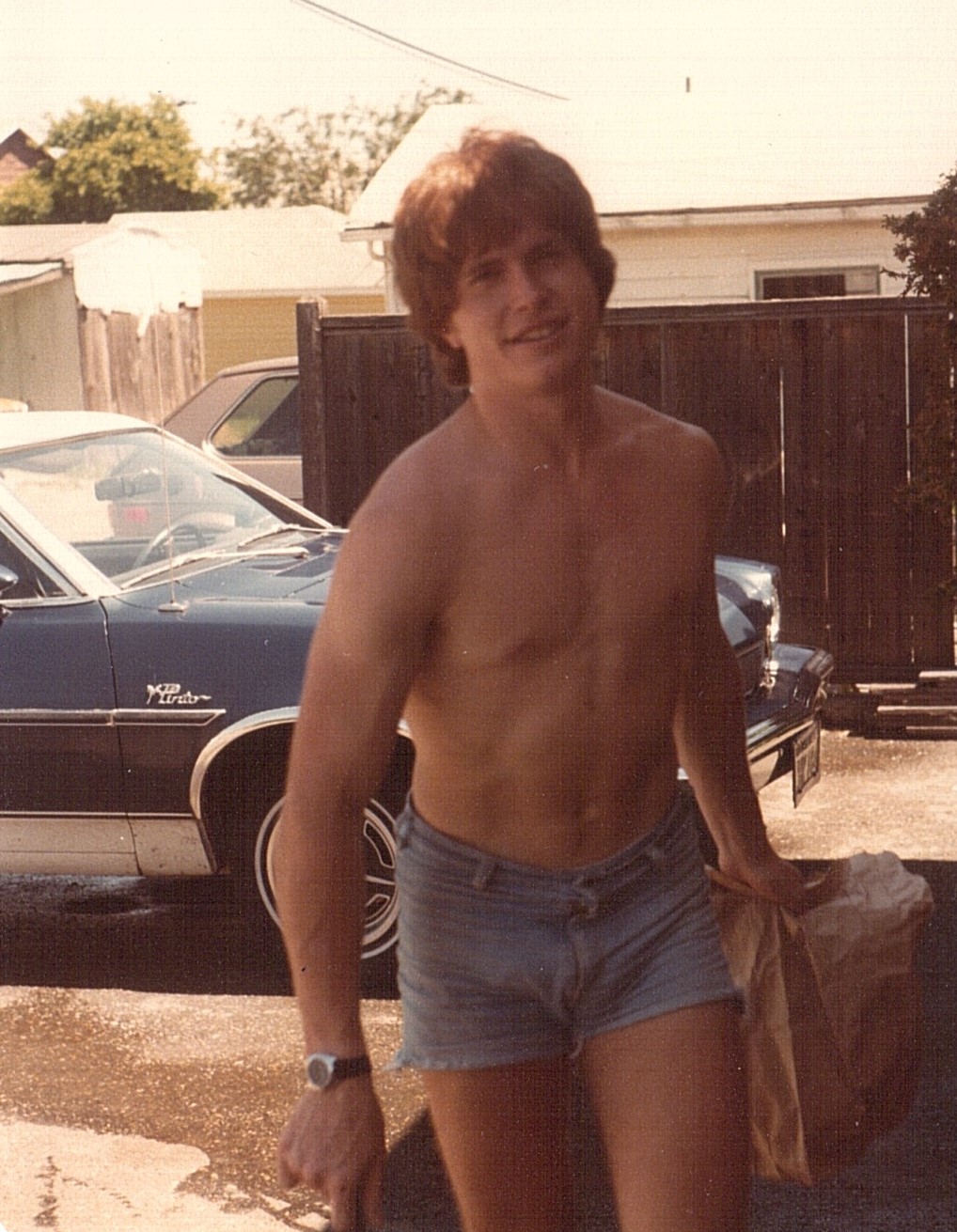 It took some digging but I finally found a few photos. I’m particularly amused by this one of ‘my’ guy giving us a little beefcake with the Pinto in the background. Belatedly, I give thanks for that car and how important it was to me at the time. For five years it was my trusty steed, there for me every step of the way.
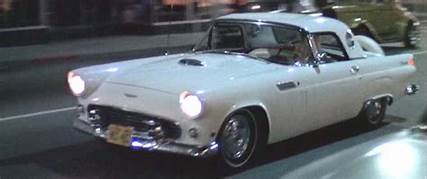 The line “Where were you in ’62?” is in reference to the movie American Graffiti where then unknown actor Richard Dreyfuss becomes obsessed with finding the blonde who is driving the white Thunderbird. He never does but the already iconic Thunderbird is cemented in legend and, for his character, is what defines his final teenage experience.
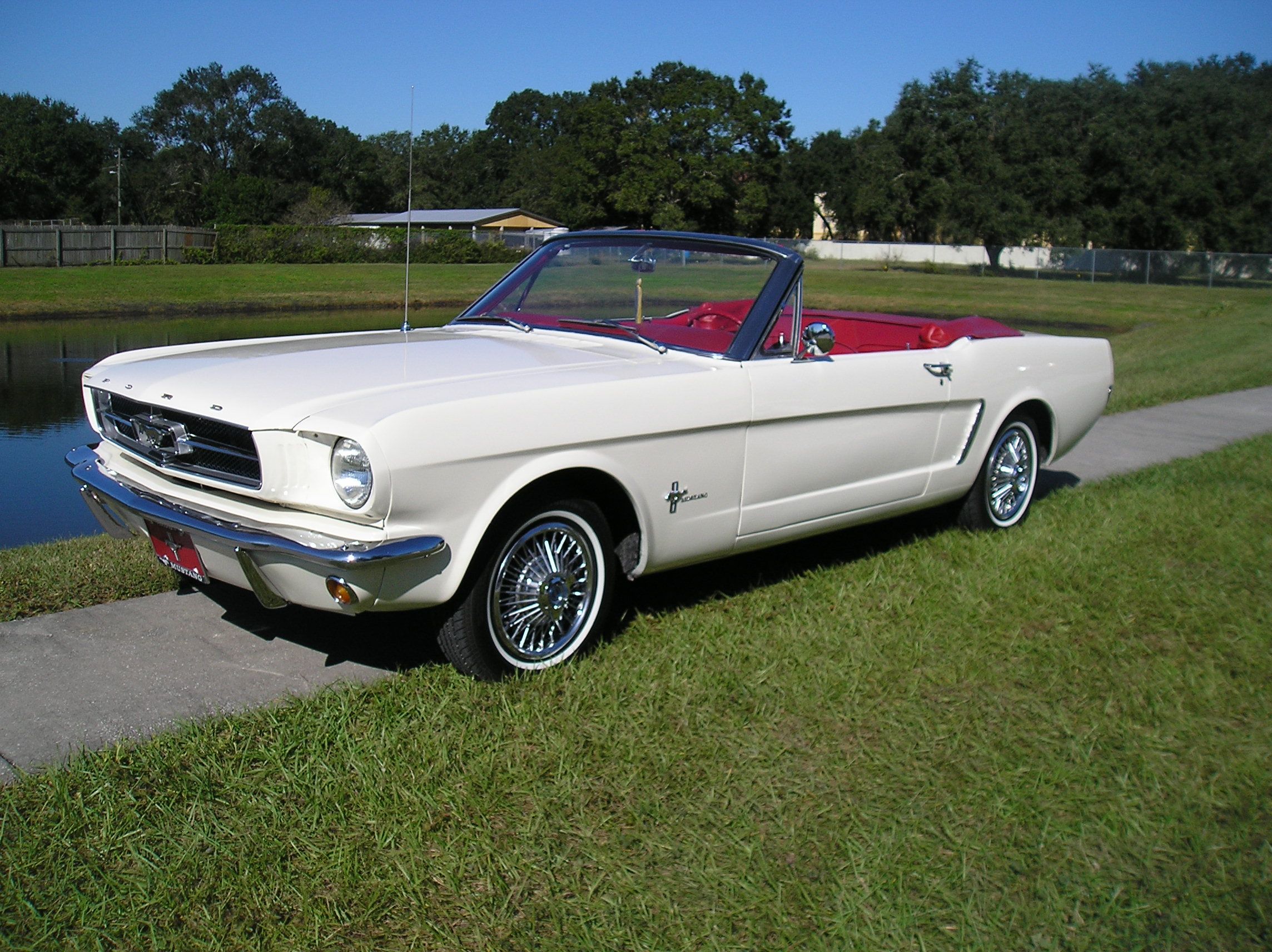 First, a description of the car. It’s a 1964 1/2. White with a black convertible rag top. Red leather seats. Pretty much every teenager’s dream as the coolest car. I know it was mine.
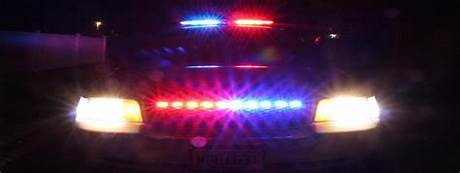 Then, behind me, blue and red lights come on. My heart pounds. Oh crap.
 For more information, here’s the Wikipedia link to the Mustang and, for those who have never seen American Graffiti, it’s a classic movie worth the time it takes to watch.
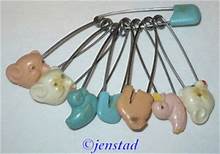 The safety pin was an especially great invention for mothers everywhere to keep the baby’s diaper pinned without stabbing the child. Making a large pin with a cute animal as the protective head has been a popular adaptation for decades.
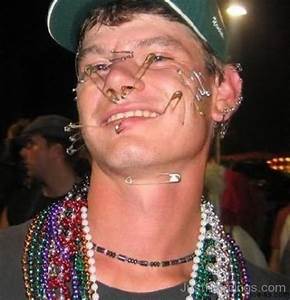 When Punk Rock became a thing in the late 70’s and early 80’s the practice of using a safety pin as a decorative piercing became popular with the musicians and their followers.
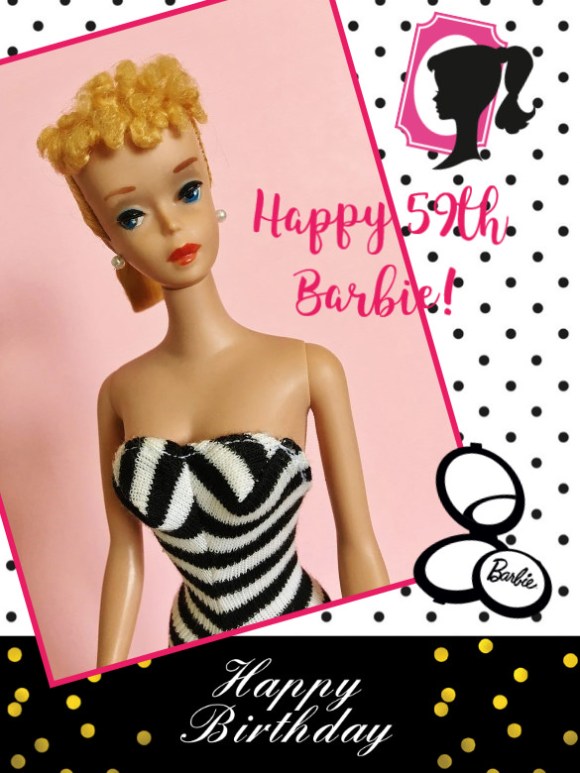 The name Barbara was, at the time, a very popular name. It first hit the top ten names list in 1927 and remained there until 1958, a whopping 31 years. If you expand a bit, the name was a top 20 name for a total of 38 years. Whether one can blame Barbara’s free fall from popularity on the Barbie Doll is debatable. Having the most famous fashion doll in the world bear that name no doubt made more than a few parents reconsider it as a good choice for their daughter. After all, who would want to name their child after a doll? Another factor is that names, particularly girl’s names, tend to be popular for a period of time then are not used for decades.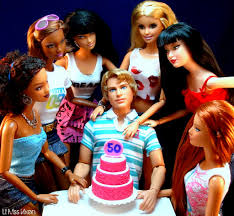
 Little girls everywhere loved Barbie. What wasn’t to like? She was pretty, had a great wardrobe, and was the perfect size for small hands. But there was something missing. That something arrived in mid-March 1961: Ken.
 I got my first Barbie Doll for Christmas 1961. Her wardrobe consisted of a bathing suit, a short gold dress, a black evening gown (Solo in the Spotlight!) and a wedding dress. Based on how those clothes ‘survived’ the years I must have played with that doll a lot. The wedding dress, particularly, is mostly a rag but I still have it.
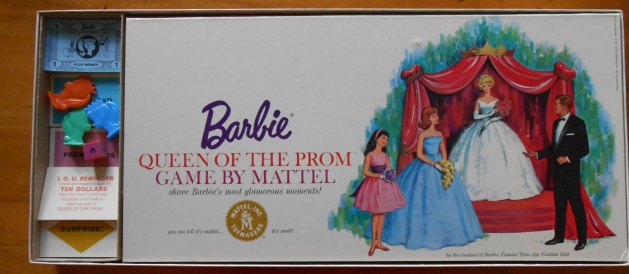 The closest I ever got to having a Ken was when I played the game “Barbie, Queen of the Prom.” In that game you had to navigate the board to collect a prom dress, appropriate accessories and, most important, a date. There were four choices: Ken, Allan, Tom and Poindexter. No one ever wanted Poindexter. Probably because he looked like he was about twelve. By the time I was playing that game, it was the mid-1960’s and Ken’s military crew cut was going out of style. No, the desirable date for Queen of the Prom was Allan, a freckled face red head with a winning smile.
 It’s one of the most grueling races in the world and participants encounter blizzards, white out conditions and temperatures, with wind chills as low as -131 degrees.
 What I determined in the five days I spent there with my two best friends from high school, Cindy and Daphne, were the following:
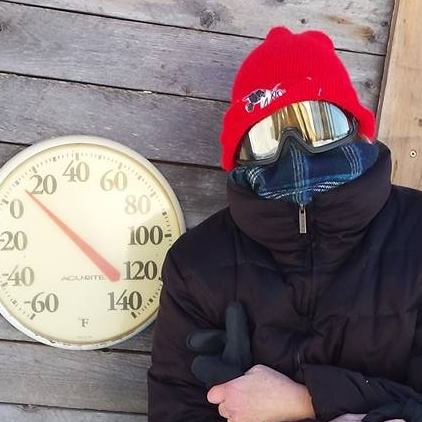 I am forever grateful to my two friends for the once in a lifetime event. It was, as the name of the business stated, Just Short of Magic. It was a beautiful, sunny day and the temperature was 10 degrees.
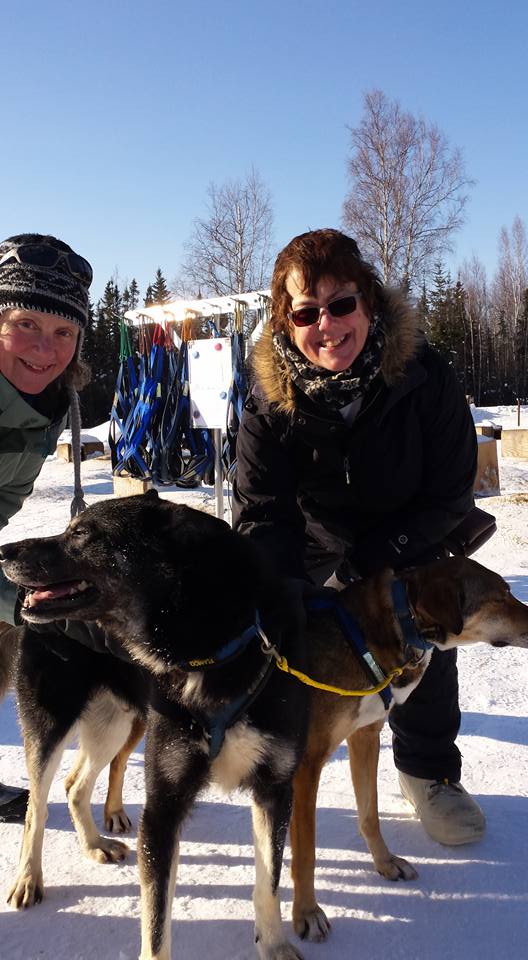 Although the adventure was only a couple of hours it was, as their business name proclaimed, just short of magic. I relished the rush of cold air, the way the sled flew over the snow, the cacophony of the barking dogs, and the sparkle of the white snow.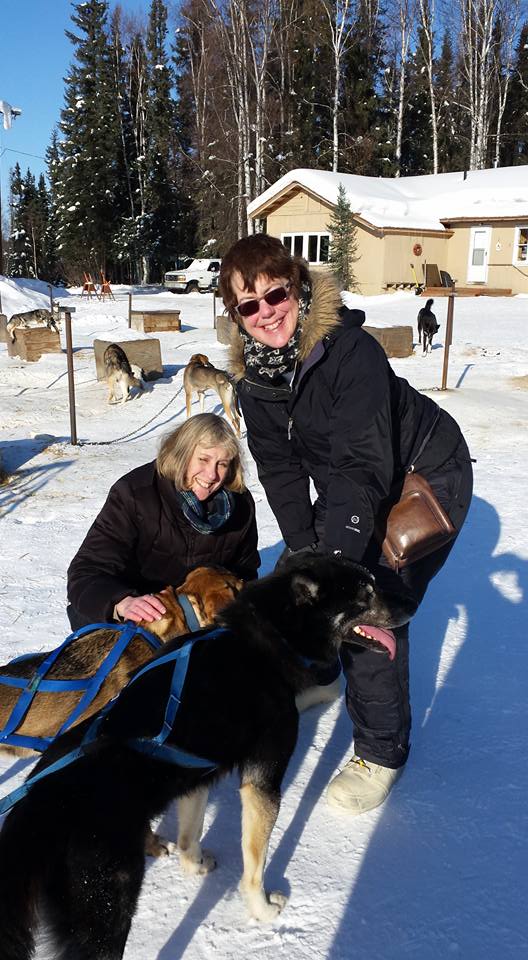
 barbaradevore.com