Archives

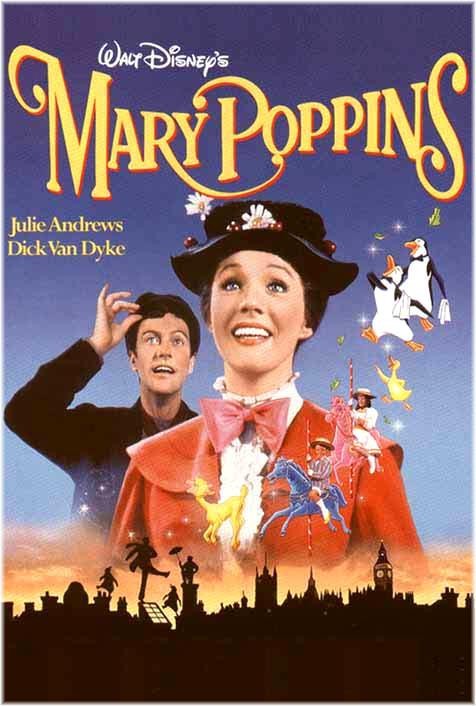
Mary Poppins

Why is using an umbrella to fly not a thing?

August 27, 2024

A Tuesday Newsday Classic

Unlike most of the musical films of the previous decades, this one was aimed at children. It introduced new words into our collective vocabulary and catapulted its two stars into the stratosphere. Children everywhere wanted a nanny just like Mary Poppins and her chimney sweep friend Bert.

Mary Poppins debuted on the silver screen sixty years ago on August 27, 1964, and soon everyone was exclaiming Supercalifragilisticexpialidocious and singing Chim-Chim-Cheree.

The movie was based on a children’s book by P.L. Travers. It was the song writing brothers of Robert and Richard Sherman who created over 30 songs for the movie. Of those, 14 made the final cut.

It was, however, the superb casting, particularly of Julie Andrews and Dick Van Dyke, which provided the magic needed for the story.  Andrews, who was a Broadway actress at the time, transitioned to film and would, the next year, define the iconic Maria Von Trapp in the Sound of Music.

Between the incredible casting, the musical score, and the script, it proved a recipe for success. From the Infallible Wikipedia:

“It received a total of 13 Academy Awards nominations, including Best Picture – a record for any film released by Walt Disney Studios – and won five: Best Actress for Andrews, Best Film Editing, Best Original Music Score, Best Visual Effects, and Best Original Song for ‘Chim Chim Cher-ee’. In 2013, the film was selected for preservation in the United States National Film Registry by the Library of Congress as being ‘culturally, historically, or aesthetically significant’. Mary Poppins is considered Walt Disney’s crowning live-action achievement, and is the only one of his films which earned a Best Picture nomination during his lifetime.”

For a seven-year-old, getting to go to a theater and see a movie was a big deal. Especially when it was the very FIRST movie that seven-year-old had ever seen in a theater.

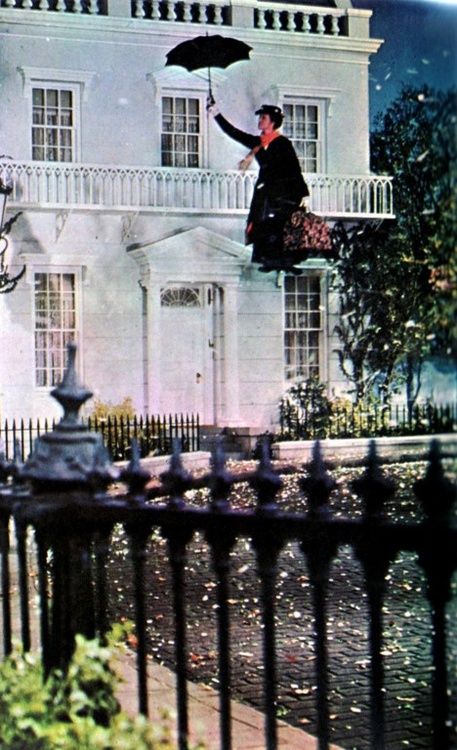
I have a distinct memory of being dropped off at the Capitol Theater in Yakima along with my older siblings to watch the movie. I doubt my then 15 year old brother was thrilled at being the designated baby sitter for the event. Of course that mattered not to me. I was enthralled from the moment Mary Poppins, umbrella unfurled and carpet bag in hand, floated down to the Banks house.

My childhood goal: to fly using an umbrella

In the days, weeks, and months which followed, I strove to be Mary Poppins. If I was outside playing it was with an umbrella in hand, running down the street wishing to be lifted from the ground so that I could float away to magical places. Alas, despite some pretty strong winds at times, my Mary Poppins dreams went unfulfilled although I did manage to get airborne quite often.

After I had children of my own I made it one of my missions to expose them to the cultural phenomenon of Musicals. Although they enjoyed Mary Poppins I do not believe it impacted them quite the same way.

On a trip to Disneyland when my daughter was near the magical age of seven, we were on Main Street early one morning. Across the plaza I spied Mary Poppins. Determined to get her autograph for the daughter’s book, we hurried over.

The daughter proffered the souvenir and asked ‘Mary’ if she would sign it. A nanny’s eye landed on my daughter, said good morning, then proceeded – in character – to instruct the child to stand up straight, feet together, toes turned slightly out, with the admonishment of “spit spot.” Although my daughter was slightly flummoxed by the encounter, I was enchanted.

The whole nanny thing, I decided, might still be a good idea for seven-year-old children although I don’t think it’s a great idea for those same children to take flying leaps into the air in an effort to fly.

 No article is complete without a link to the Infallible Wikipedia:I

https://en.wikipedia.org/wiki/Mary_Poppins_(film)

I suggest you do a search for Mary Poppins “Let’s Go fly a Kite” to see the final scene where Mary flies away. I tried to find a youtube clip but, alas, many are protected. Try these two links: https://youtu.be/BA-g8YYPKVo?si=8lCS4VWswAp0OPvZ

The Rotary Telephone

The only downside was the cord

August 20, 2024

A Tuesday Newsday Classic Updated

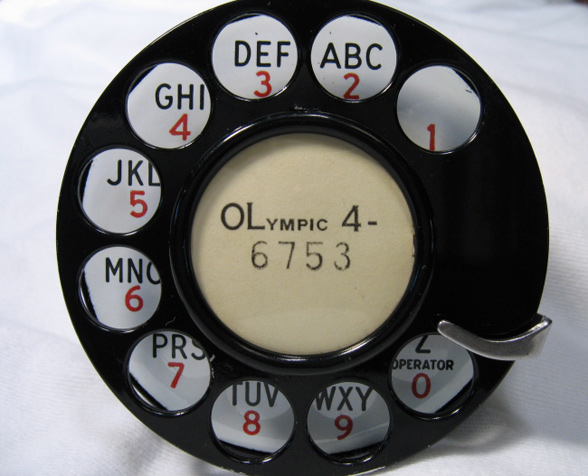
A vintage rotary dial possibly from the state of Washington.

For young people in the 1960’s and 70’s, this device was as essential to teenagers as the smart phones of today.

The difference being that this device was tethered to a specific location and it allowed you to do but one thing: talk.

Nearly every household in middle America had one and, by the early 1960’s, all featured a rotary dial, the patent for which was applied for on August 20, 1896. The device was, of course, the telephone.

It was, however, the addition of the rotary dial which made it possible for the telephone to become a common household essential. As is often the case, controversy surrounded the granting of patents. The first rotary style was developed in 1891. According to the Infallible Wikipedia:

“Almon Brown Strowger was the first to file a patent for a rotary dial on December 21, 1891, which was awarded on November 29, 1892, as U.S. Patent 486,909. The early rotary dials used lugs on a finger plate instead of holes, and the pulse train was generated without the control of spring action or a governor on the forward movement of the wheel, which proved to be difficult to operate correctly.”

It was only a few short years later when three inventors in Kansas – brother’s Charles and Frank Erickson along with their friend Frank Lundquist – provided the refinement needed and the rotary dial with finger holes that we know was invented. Different enough from Strowger’s design, it became the standard. From the historical files of the Kansas Collection:

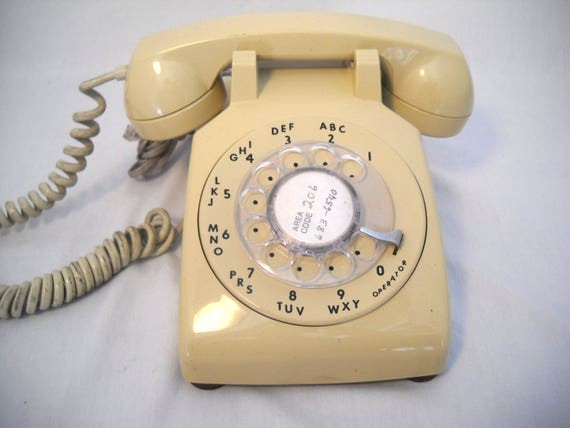
We had a beauty like this one in both the kitchen and my parents bedroom

“The most dramatic contribution of the Ericksons in telephony is associated with the invention and development of the dial telephone. Application for the patent was made by (A.E.) Keith and the Ericksons on August 20, 1896, and Patent No. 597,062 was granted on January 11, 1898. The dial method was based upon a finger wheel dial instead of the push buttons, which were cumbersome and impractical. The dial method, with the switching and trunk systems, provided full access to the vast resources of a telephone exchange. R. B. Hill, an authority in telephony, has described this important development as follows: ‘Dialing a number wound up a spring whose tension, when the finger was withdrawn, caused the dial to return to its normal position. The return rotation was limited to a moderate speed by an escapement mechanism, and, during the return, the required number of circuit interruptions took place to control the movement of the central office apparatus.’”

Telephone numbers in the 1960’s were identified by a combination of letters and numbers. Eight of the finger holes on the phone had 3 letters. My phone number growing up, then, was listed as follows: Glencourt 2-4100, or in its phone book listed form, GL2-4100. Translation for the kids of today: 452-4100. Area Codes were added in 1947 but unlike today were not needed for all calls.

In my household the phone was strategically placed in the kitchen. When it rang, you answered as there was no answering machine. Up until about 1971 the phone was never for me and the conversations were usually brief as the device was a method for setting up an appointment or such other daily business.

With teenagers in the house, however, its use ballooned. My sister used it, especially, for the higher purpose of dialing in to radio stations to make song requests and to try to win things. With transistor radio on one ear and the telephone on the other she’d dial incessantly to be the 10th or 20th or 93rd caller. She seemed to win. A lot.

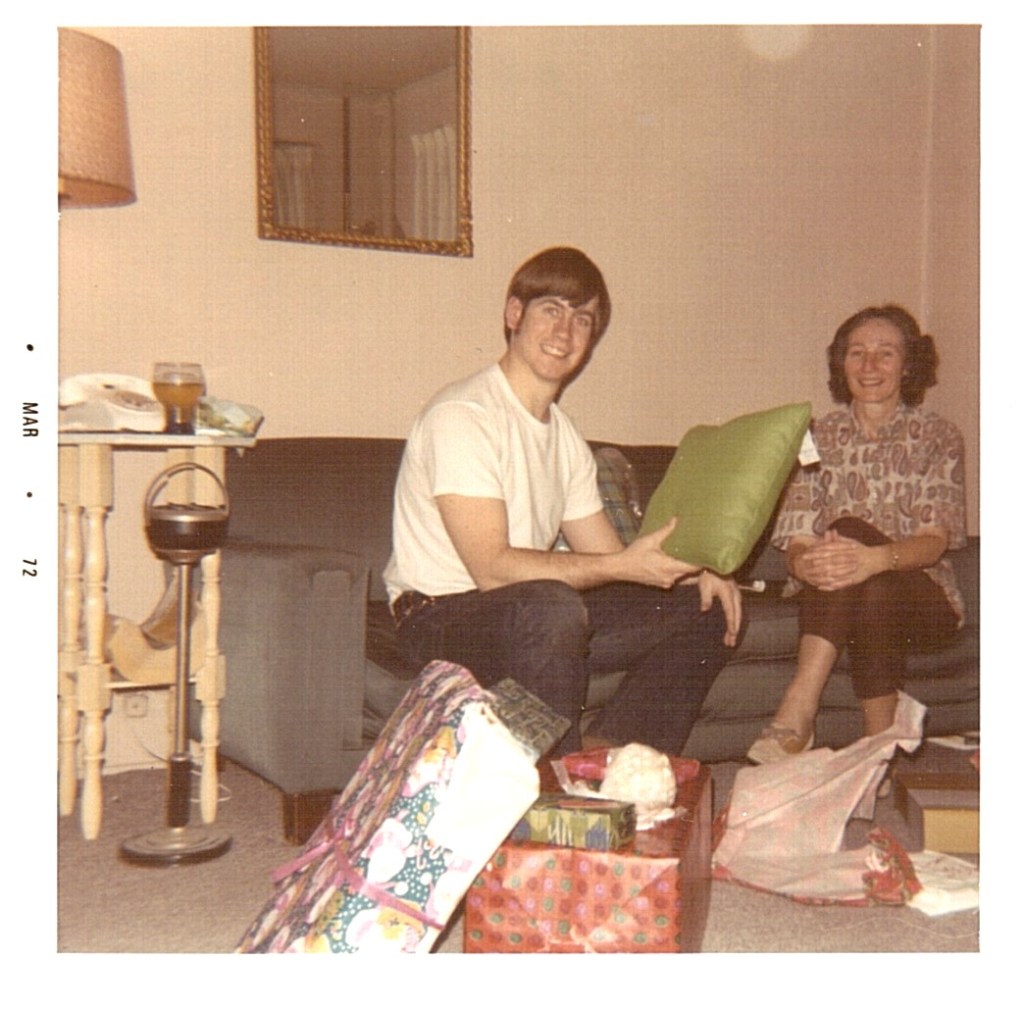
Unlike today, photos of people with phones was uncommon. In going through old photo albums this was the only picture I found with a phone in it. I took this photo at my older brother’s apartment (he was 24) when me and my parents drove to Seattle on December 27, 1971, to bring him Christmas. Mom is on the right. Rotary dial phone is on the left.

My long-suffering parents finally tired of chatty teenagers doing their teenager business in the middle of the family area and a second phone was installed.

This phone was the holy grail of all things teen. Located in my parents’ bedroom it provided the one thing we craved: privacy.

When boys started to call my older sister – and eventually me – we were allowed to use the phone in my parent’s bedroom. There was no chair next to the phone, just the bed and the floor. Many an hour was spent sitting on that floor, back against the bed, talking to the boy of the month… at least until Mom would come in to the room and give us the sign to wrap it up.

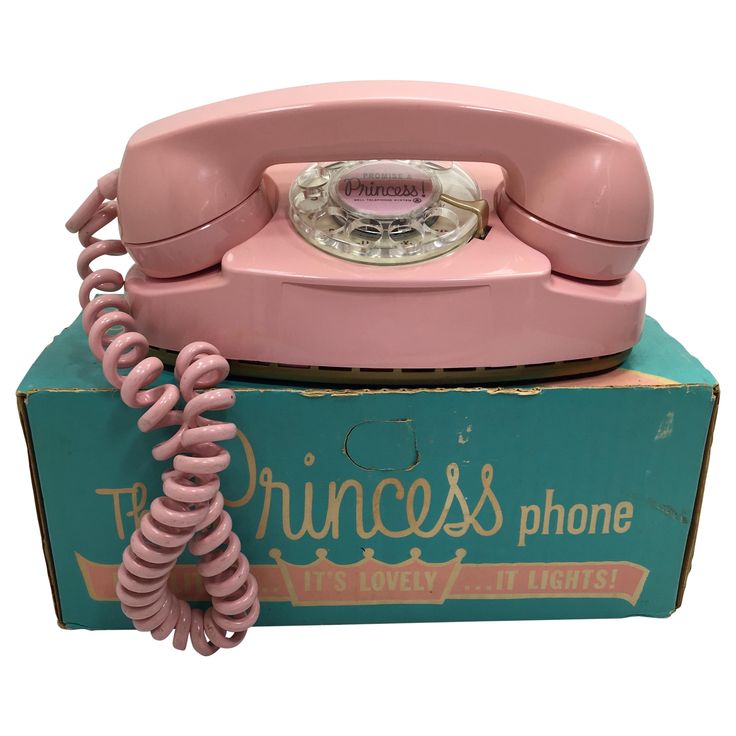
We envied the few friends who had their own phone in their room, usually a princess style and pink or white. What a luxury!

The most envied of all devices: a pink princess phone

When I became a parent and cell phones (before the smart phones took over) were a thing it became very difficult to monitor what the child was doing. No doubt it’s even more difficult now with text messages, unfettered internet access, and apps like Instagram and TikTok. It was much easier for my parents as they could cut the conversation off at any time and when the household went to bed no teen was sneakily talking or texting on the phone.

No doubt my most memorable event with a corded, old-style phone, came in 1992 when my son was two years old. Although cordless phones for use in a house had made some inroads by that time, I found them unreliable and they would often have static and bad reception. So, as a mother with a young child, I had hit on the perfect solution: a phone with a 25-foot-long cord.

It afforded me the ability to talk on the phone while also being able to get to my child anywhere in the kitchen/family room. Which was important since my first born being a VERY curious child required my eternal vigilance as he had a propensity for getting into places and things which he shouldn’t. In fact I discovered, to my great dismay, that there was not a baby lock you could install on a cupboard or drawer which could deter him.

One particular morning, I get a phone call from my best friend in Yakima, Daphne. My son is happily playing and Daphne and I have been chatting for about 10 minutes. I happened to be standing and looking out the window of our dinette area between the kitchen and the family room when all of the sudden the phone line goes dead.

I pull the phone away from my ear and stare at the now silent receiver, wondering what might have happened. Only then did I turn around and standing in front of me, scissors in hand and a cut in half phone cord laying at his feet, is my two-year-old.

A mixture of emotions course through me. Anger at this child who had the audacity to end my phone call but also awe at the problem-solving ability he had just displayed. And, of course, fear at the fact that he had dragged a chair to the kitchen, climbed on it, opened the drawer – with the baby lock on it – and retrieved the tool he understood was needed to complete his mission.

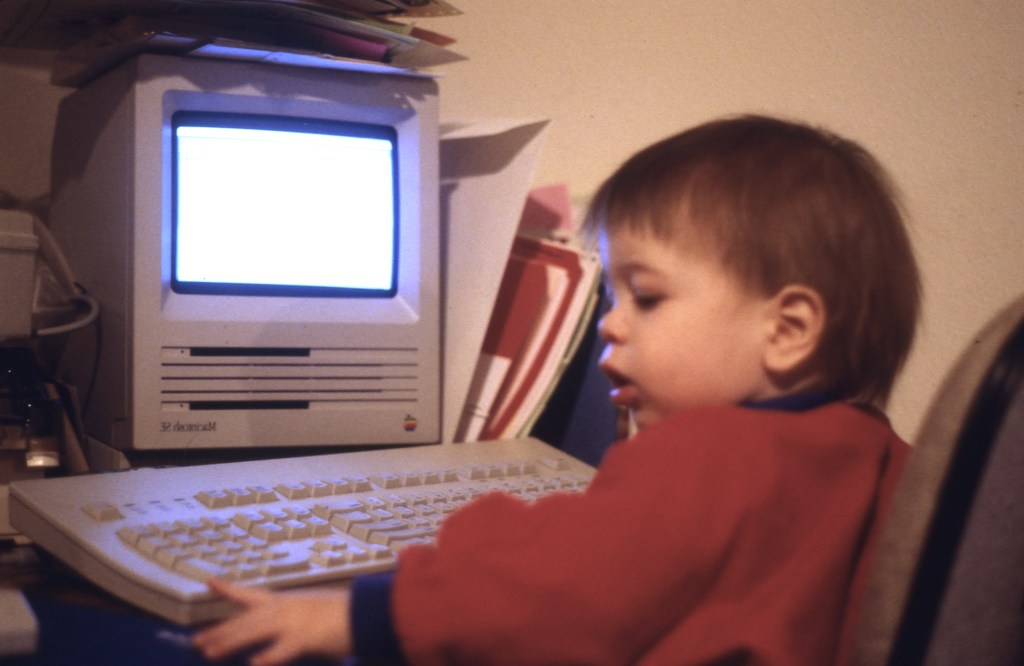
My curious child also learned how to use a computer early when he wasn’t cutting telephone cords.

Trying to reason with a one or two-year old is like trying to reason with a cat and was out of the question so in the end I came down on the side of awe. That was the one and only time he ever cut the phone cord… but there WAS the whole apple incident. That’s a story for another Tuesday Newsday. Eventually the technology improved and the cordless phone became the norm. Nowadays, very few people even have ‘land lines’ and phones are radically different than they were 30 years ago.

But back to the advantage of growing up with a device on which the only thing you could do was talk. I attribute my ability to pick up a phone and call anyone to the training I received as a teenager. Back then the only way anything was going to happen was by grabbing the phone and twisting those 10 little holes to make a call. Ah, the good old days.

A couple of links for those who wish to learn more about phones and the rotary dial:

https://en.wikipedia.org/wiki/Rotary_dial

https://en.wikipedia.org/wiki/Rotary_dial

National Nothing Day

Long celebrated as a day to sit back and relax

January 16, 2024

A Tuesday Newsday Classic updated

January 16th, it turns out, is historically one of the most boring days in history. The tree most exciting things I could find for this date were:

  1. Debut of the Donny and Marie Show in 1976
  2. Cher and Greg Allman’s divorce finalized in 1979
  3. Wayne Newton performs his 25,000th show in Las Vegas in 1996.
From left to right: Wayne Newton, Donny & Marie Osmond, Greg Allman and Cher

Truly riveting events. Which is why January 16th being “National Nothing” Day seems appropriate.*

The day was started in 1972 by San Francisco Examiner columnist Harold Pullman Coffin. The day was created, according to the Infallible Wikipedia as a way:

“…to provide Americans with one National day when they can just sit without celebrating, observing or honoring anything.”

There truly is no lack of irony with what I discovered about this event. Wikipedia’s article is what’s known as an ‘orphan’ with not a single link to anything about this event. Yet the ‘day’ was significant enough to be included in the 1973 printing of Chase’s Calendar of Events (first published in 1957).

For just $103 you can get the paper copy of Chase’s Calendar or go digitally for a mere $97.50

Chase’s Calendar was also started by someone in the newspaper business. Bill Chase worked for the Flint (Michigan) Journal in the library. Hours and Hours of clipping and filing news stories prompted the idea of the publication which, as of 2012, had been updated and produced annually for 55 years.

There are a couple of takeaways from all this. First, is that if you are a writer and love trivial facts there’s probably a book inside of you. It amazes me the things that someone has turned into a book. Second, is that unless I’m sick, I can’t possibly sit and do ‘nothing’ all day. But, of course when one looks at the description of the day it doesn’t literally mean to not do anything.

I can’t think of anything more boring than sitting around and doing ‘nothing.’

When I was in high school I had a fabulous teacher by the name of Mrs. Renn. Sadly, the year I was in her class she was diagnosed with terminal cancer. But that did not stop her from coming to school every day and imparting her knowledge and wisdom to a bunch of ungrateful teenagers. One day I recall one of the students must have complained about the literature we were discussing and that she was bored. Mrs. Renn didn’t get mad at the student but took the opportunity to impart her philosophy on life.

I paraphrase but the message was this “there is no excuse to EVER be bored; if you have your mind, you can always find something interesting to read, or write, or do.”

The impact on me, personally, was huge. I’ve carried that message and that day with me all these years and I’m eternally grateful to Mrs. Renn for giving me wisdom at a time in my life when I needed to hear it.

So my plans for National Nothing Day is to seize the opportunity to use that time to have the very best day possible ‘doing’ all sorts of interesting (to me) things.

Update for 2024: I wrote this article in January 2018 and, since there’s still nothing new to share for January 16th, I’m sharing it again. I will add this. I’m a member of a Facebook Group for alumni from my high school, Eisenhower, in Yakima, Washington.

A random student took this photo of my dad teaching, probably from the late 1960’s to early 1970’s. Dad taught 9th grade Washington State history at Franklin Jr. High school in Yakima, Washington

Recently one of my classmates, Rick C., posted a question to the group: “Nominations are open for BEST (or worst) ADVICE by a staff member. For me Mrs. Renn’s advice immediately came to mind, so I posted pretty the same thing as I did in this 2018 article.  That was just a few days ago. There were many comments, so Rick’s post obviously resonated with many. But his response to what I posted touched my heart:

(Rick C.-Author)

Barbara DeVore  – I totally agree. She was so gentle and thoughtful. You wanted to please her. I credit her for my love of writing.

The only other one I could mention who was on that level, is your dear father from Franklin. I will never forget him! –R

So get out there and do ‘nothing’ spectacularly!

I enjoyed this article about the man who started Chase’s Calendar: http://www.annarbor.com/news/chasing-down-days-ann-arbor-founder-of-chases-calendar-of-events-turns-90/

And the Wikipedia article: https://en.wikipedia.org/wiki/National_Nothing_Day

*Martin Luther King Day (he was born January 15th) was designated as a Federal holiday in 1983 and it was not until the year 2000 when all 50 states observed it. Since it falls on the third Monday in January it has occurred on January 16th five times since its creation (1989, 1995, 2006, 2012, 2017) now making the January 16th designation as “Nothing Day” erroneous some years.

Pac Man Fever

… and the Donkey Kong King of the Arcade

October 10, 2023

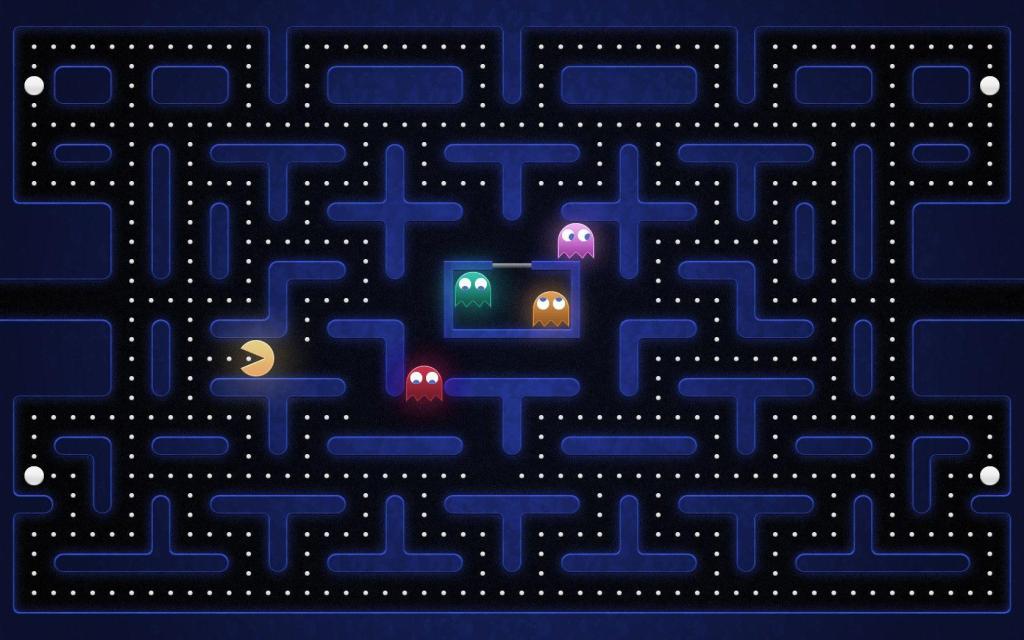
It was in October of 1980 when the United States was truly invaded by the Japanese. We are not talking about the military here. No, the first wave of this invasion featured four ghosts named Inky, Blinky, Pinky, and Clyde and a round yellow fellow with a huge pie shaped mouth dubbed Pac-Man. The game, which had been released in Japan a little over four months earlier, was an instant hit. Young people flocked to arcades and taverns where Pac-Man eagerly gobbled up their quarters.

Staples of the Video Arcade were Pac-Man and Donkey Kong. Ms. Pac-Man – a spin off of PacMan – and the perennial favorite Space Invaders rounded out this game room.

Soon, Pac-Man merchandise flooded America as did other Japanese companies looking to capitalize on Pac-Man fever.

From the Infallible Wikipedia:

 “When Pac-Man was released, the most popular arcade video games were space shooters—in particular, Space Invaders and Asteroids. The most visible minority were sports games that were mostly derivatives of PongPac-Man succeeded by creating a new genre. Pac-Man is often credited with being a landmark in video game history and is among the most famous arcade games of all time. It is also one of the highest-grossing video games of all time, having generated more than $2.5 billion in quarters by the 1990s.

The character has appeared in more than 30 officially licensed game spin-offs, as well as in numerous unauthorized clones and bootlegs.According to the Davie-Brown Index, Pac-Man has the highest brand awareness of any video game character among American consumers, recognized by 94 percent of them. Pac-Man is one of the longest running video game franchises from the golden age of video arcade games. It is part of the collection of the Smithsonian Institution in Washington, D.C. and New York’s Museum of Modern Art.”

There were a number of other Japanese companies which, seeing the success of Pac-Man released arcade games, but there were two companies which dominated the market in 1982: Sega (Pac Man) and Nintendo. While Sega established its US headquarters in Irvine, California, Nintendo first landed in Tukwila, Washington

And that’s where my hubby enters the scene. In 1981 he was hired by a CPA firm in Burien who had a client that needed an auditor. So he was sent out to do the job and thus began a seven year relationship with a different Japanese invader: Donkey Kong.

Iconic characters Donkey Kong and the damsel Pauline.

While many think of Nintendo as a behemoth company, when Donkey Kong was first sold into the US market they had a grand total of six employees: two Seattle based salesmen; the company president (Mr. A – the son in law of Nintendo’s Japanese founder); two Japanese developer/engineers; and one American to assemble and make the arcade games compatible for the US market.

It was in June 1982, as Donkey Kong’s popularity skyrocketed to the top of the arcade market (and made the two US salesmen millionaires), that the hubby was hired as the company’s US controller. Those were crazy days with incredible long hours but also a real sense of family within the fledgling company.

In 1982 we hosted an April Fool’s day party the theme of which was bad jokes and to play video games. The hubby was even able to have a couple of full size arcade games (borrowed from Nintendo) for the attendees to enjoy. We continued this tradition for several years.

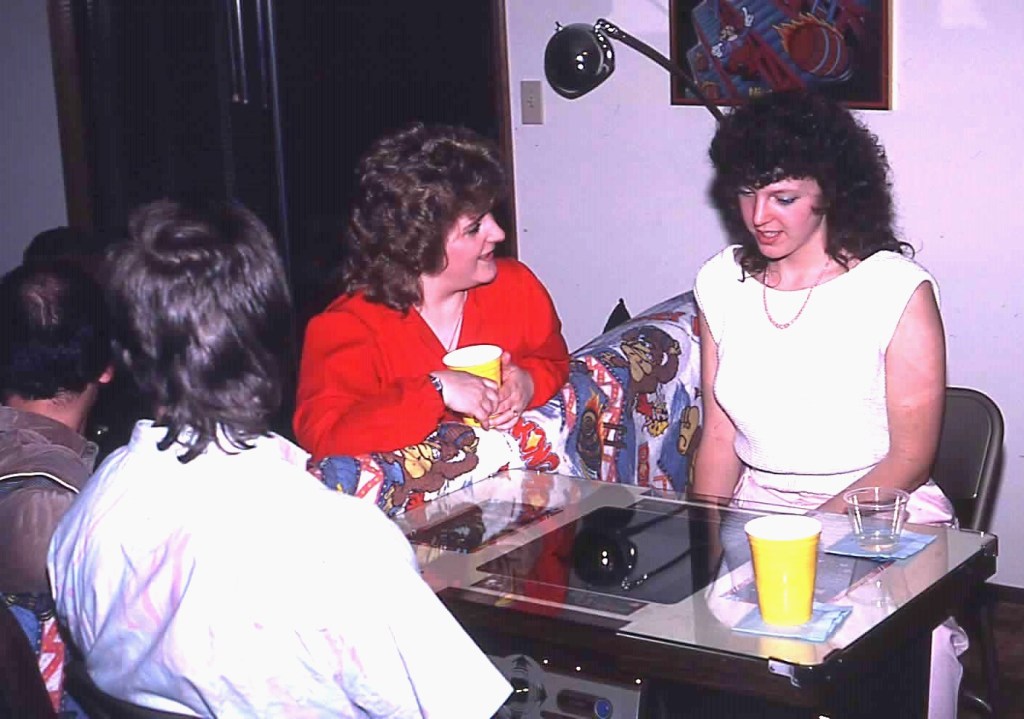
Friends at the 1987 April Fools Day party enjoying a game of Donkey Kong on our Cocktail Table game console. Note the blanket on the back of the couch and the framed DK poster.

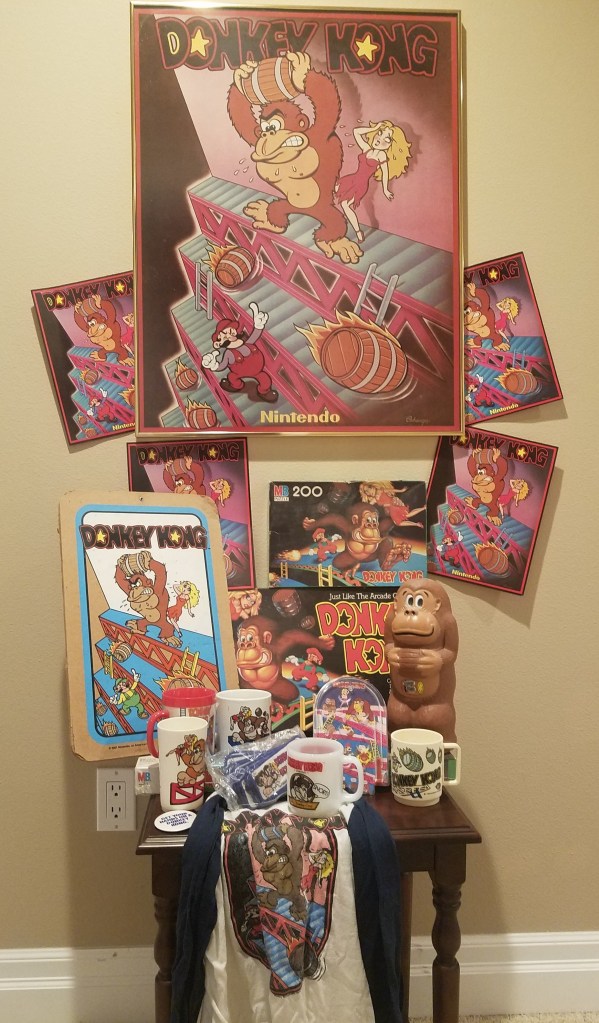
By the time he left the company in the late 1980’s we had acquired a variety of Donkey Kong themed items: mugs, cups, socks, both electronic and board games, shirts, a bulletin board, an aped shaped ‘bank’ and, the most prized possession of all: an electronic cocktail tabletop Donkey Kong game.

Over the years all of the Donkey Kong stuff has moved with us several times. Perhaps the items are worth some money. But that was never the point. More that these things are reminders of that crazy chapter in our lives, some good, some not so good. So I keep them in a cupboard because… well, just because it’s part of our history.

Our Donkey Kong merchandise collection (minus the blanket)

When the daughter and her (then boyfriend) hubby moved back to the PNW in 2020, we gifted them the cocktail table Donkey Kong Game. Of course it came with the stipulation that we could visit it if we were so inclined. But that rarely happens. Our son-in-law does sometimes fire the game up when they have friends over. Unlike the days of Pac-Man and Donkey Kong fever, however, quarters are no longer needed. All you have to do is plug the thing in, press a button, and soon Donkey Kong has abducted the maiden with Mario chasing them up the steel girder, jumping over the never ending barrels.

When the machine comes to life, one is struck by the simplicity of the 40 year old computer graphics, long ago eclipsed by more sophisticated games and machines. Even so, every once in a while it’s fun to escape back to the 1980’s when arcade games were king and the Japanese took the country by storm.

To read more about these two arcade phenomenon’s click here:

https://en.wikipedia.org/wiki/Pac-Man

https://en.wikipedia.org/wiki/Donkey_Kong_(video_game) (there are errors in this not-so Infallible  Wikipedia article. Specifically, Nintendo’s first headquarters were in Tukwila, not Redmond, Washington)

The First Tuesday in September

September 5, 2023

On Saddle Shoes and Pee Chee Folders

A Tuesday Newsday Classic from 2019

The first Tuesday of September was always a day which struck fear in my heart. In fact, no other day of the year caused more anxiety and distress than this one.

The reason, of course, was due to the fact that when I was growing up school always started on this day.

Unlike in today’s world, where we are inundated with back to school ads for supplies and equipment beginning in late July, in the 1960’s and 70’s, we didn’t much think about going back to school. That is until one day in late August my mother would ominously announce that school started the next week.

So off we would go to get things. Our back to school supply list included Pee Chee folders, notebook paper, #2 pencils, and BIC pens. That was it.

For clothing, I was lucky to get one new outfit for the first day of school. And the most evil of all footwear ever invented: saddle shoes.

I’ll get back to those in a bit.  First off, however, I imagine you are wondering about the Pee Chee.  What is a Pee Chee? And why do so many people my age wax so nostalgic over a folded in half piece of cardstock? I knew it deserved Tuesday Newsday status. Since I couldn’t find the official day they were introduced, the first Tuesday in September seemed the perfect date to learn about them. From the Infallible Wikipedia:
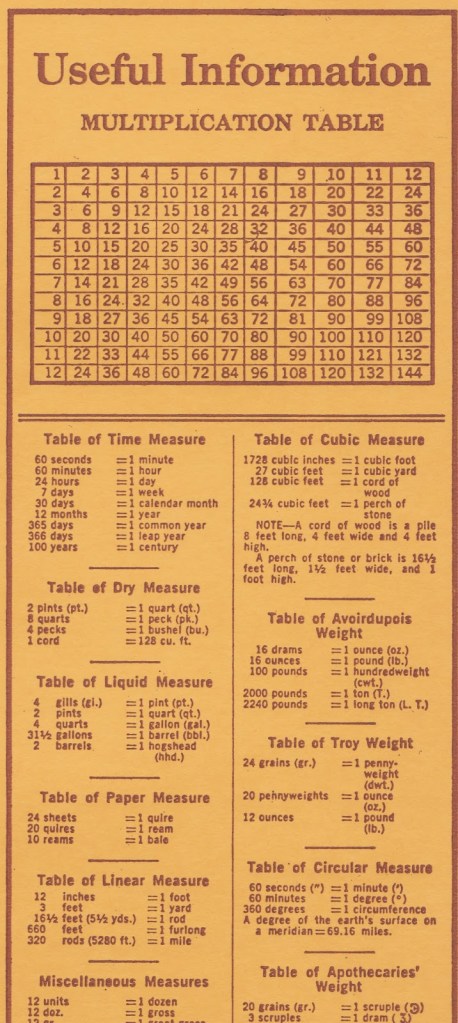
“The yellow Pee-Chee All Season Portfolio was a common American stationery item in the second half of the 20th century, commonly used by students for storing school papers. It was first produced in 1943 by the Western Tablet and Stationery Company of Kalamazoo, Michigan. Pee-Chees were later produced by the Mead Corporation. (snip) These inexpensive folders are made of card stock with two internal pockets for the storage of loose leaf paper. The pockets are printed with a variety of reference information including factors for converting between Imperial and metric measurement units, and a multiplication table. The folders had fallen out of general use by the 2000s, but are available from Mead as of 2014.”

Note the words “multiplication table.” This was probably the most valuable thing a Pee Chee provided as we were expected to memorize this table. By the time you got up to the twelves, it got a bit difficult. The handy dandy Pee Chee came to your rescue. Of course our teachers knew this and we had to put our Pee Chee’s away during test time.
When I walked home from elementary school I only carried a Pee Chee and rarely any books unless it was one checked out from the library. By the time I was in Junior High and High School, books were part of the equation. Along with the Pee Chee of course.

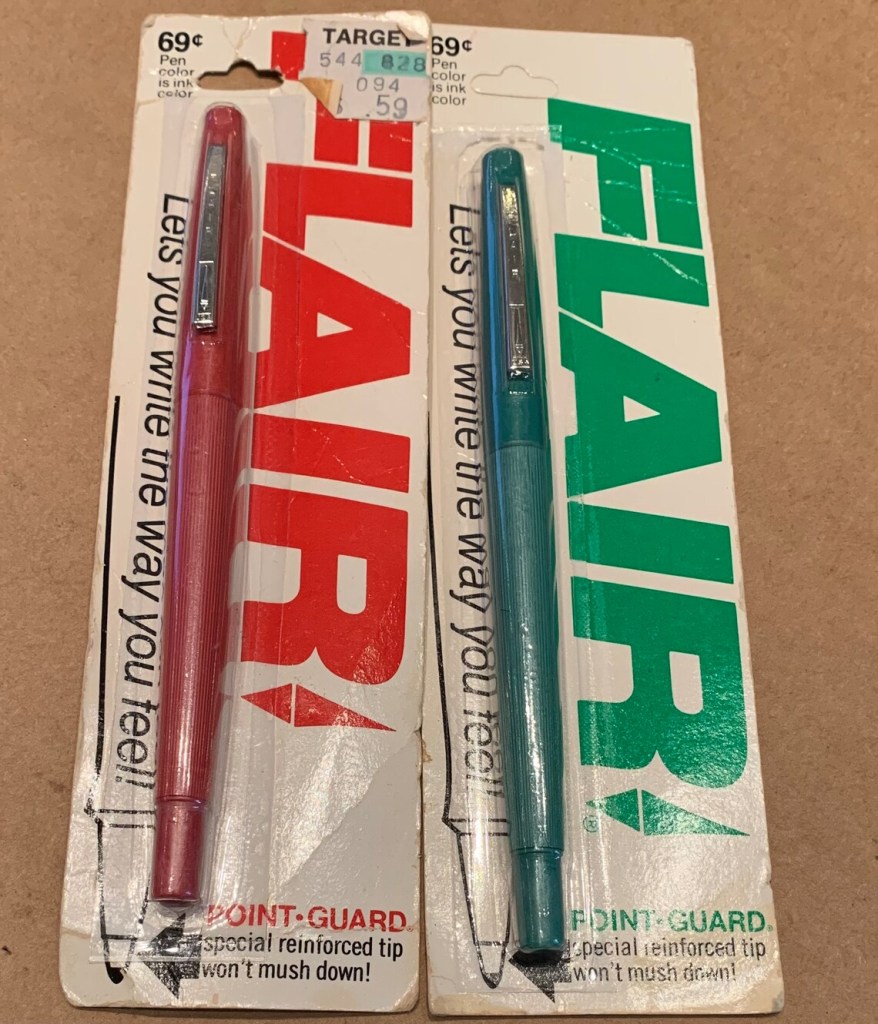
That brand new, unmarked, non-dog-eared Pee Chee was the best part of being forced to go back to school. And paper, pencils and BIC pens, of course. Oooh, and Flair pens starting in Junior High!

The worst part? From first grade through sixth I was subjected to torture by being forced to wear saddle shoes. Whoever invented this shoe should have been required to wear a new pair every week for their entire lives just so they would know what pain they subjected multiple generations of girls to endure.
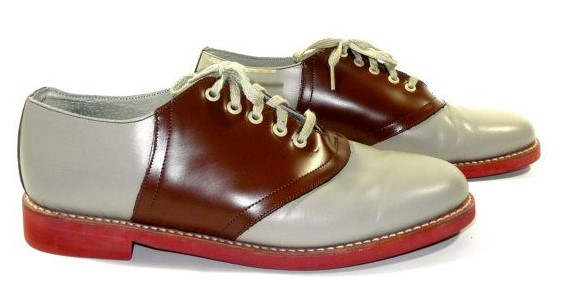
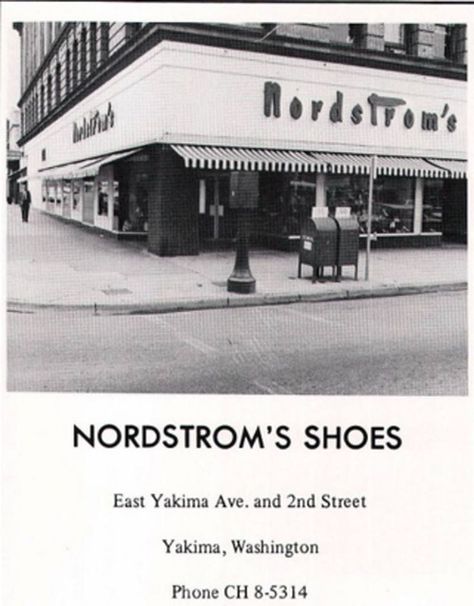
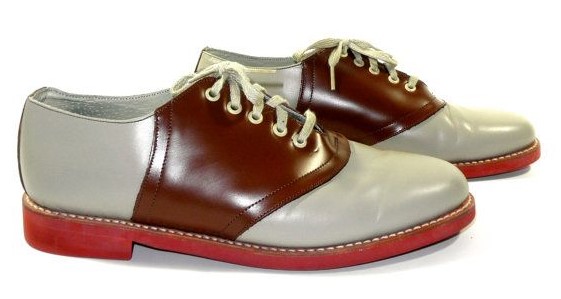
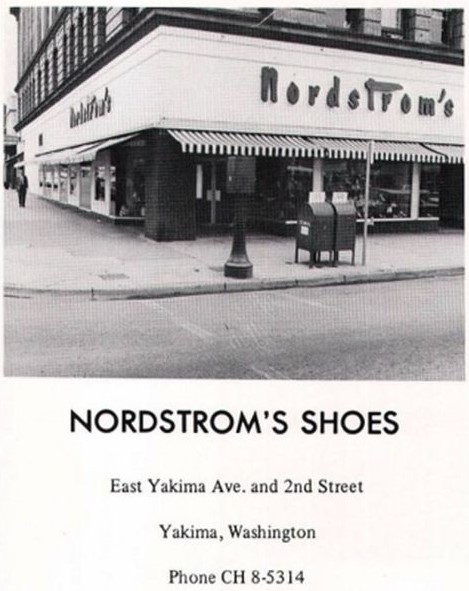
My mother would take me and my sister to Nordstrom’s Shoe store… in the 1960’s in Yakima that’s all it was… a shoe store. We would bypass all the beautiful shiny black patent leather shoes and the cute Mary Janes and go directly to the rack of clunky saddle shoes. There they sat, big, bulky, and ugly. They had brown soles thicker than a slice of French toast. Across their beige bodies was a second strip of stiff brown leather, with laces through the holes, just waiting to cinch your foot into bondage. Heaven forbid that you got shoes which fit… no, they had to be a bit big so you’d grow in to them and not grow out of them before the following June.

The dreaded saddle shoes

We would wear them around the house for several days before school started in a futile effort to ‘break’ them in. It never worked. The first few weeks of school our feet bore witness to the horrors of saddle shoes; oozing red blisters were covered with adhesive tape and we’d limp through the day. Eventually the leather softened and the blisters abated… usually by October. Kids today just don’t realize how lucky they are to have been spared the scourge of saddle shoes.
Even now the first week of September is my least favorite time of the year; despite the fact I do not have to go back to school nor do my children.

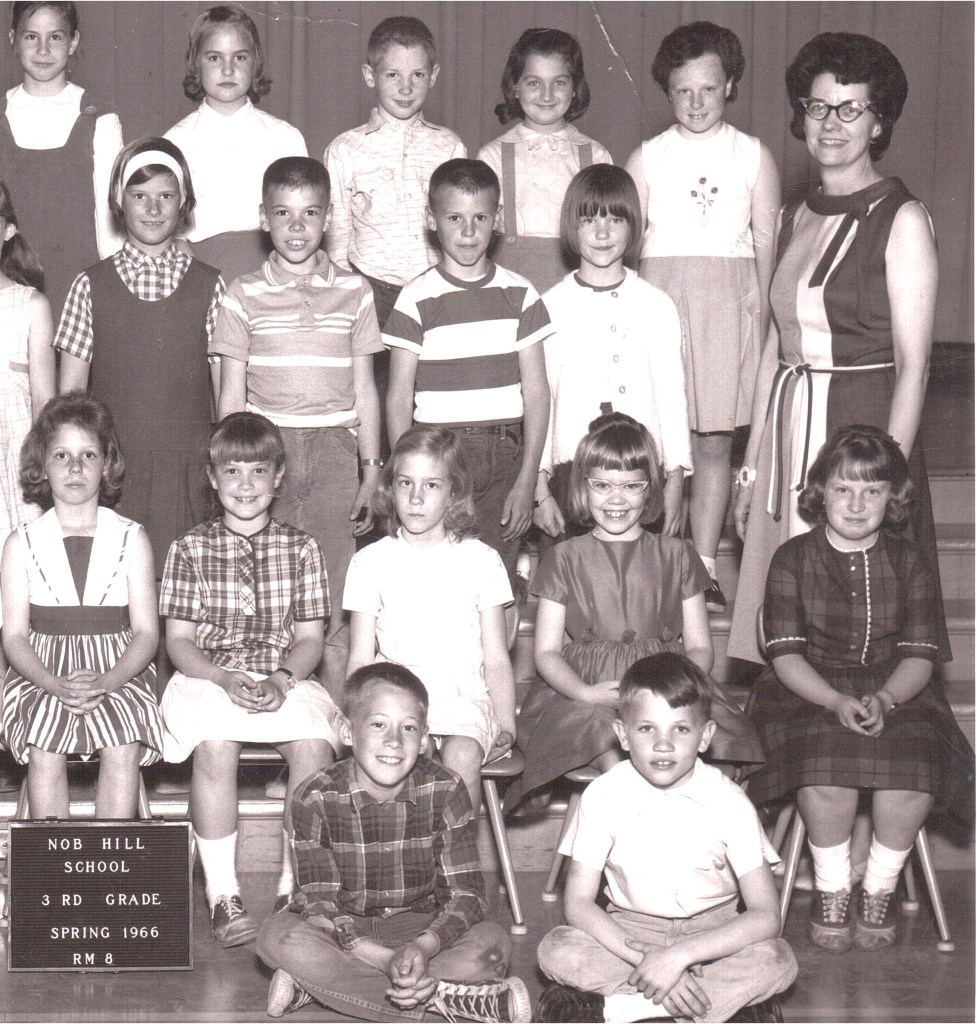
Note the saddle shoes on Marla – the girl in the plaid shirt; and also on Rinda in the plaid dress. The author is to the left of Marla and I wasn’t smiling because my feet probably still hurt even though it was spring. Kelly, on my right, was always happy because she always wore cute patent leather Mary Janes.

I am, however, very, very tempted to go hang out in the office supply store and indulge myself in the smell of paper and ink and the plethora of notebooks, papers, pens, and paperclips. Anyone who has seen my office knows that I have stacks of spiral notebooks, hundreds of colored paperclips (many with decorative tops), and a collection of G-2 pens of every hue. In fact, just writing about it inspires me to head to my nearest Office Depot Max to see what’s on sale. Unlike saddle shoes, office supplies never go out of fashion!

As always a couple of links:

https://en.wikipedia.org/wiki/Pee_Chee_folder

https://en.wikipedia.org/wiki/Saddle_shoe

Yes, it is true. In 1960 Nordstrom’s only sold shoes. The store in Yakima was one of only 8 stores at the time.
https://shop.nordstrom.com/content/company-history

2022 Update: In honor of school starting, I ordered presents for my printers! Yes, shiny new ink cartridges. And, yes, printers as in I have two in my office. One can never have too much ink.

2023 Update: Today feels fully like Fall. But at least I don’t have to wear saddle shoes OR start school. It’s going to be a great year!

Jake The Alligator Man

A Long Beach, Washington Icon since 1967

August 1, 2023

A Tuesday Newsday Classic updated

Happy Birthday to that northwest icon, symbol of blatant commercialism, and resident of Long Beach, Washington… Jake the Alligator Man!

An Alligator Man postcard – one of many such items

How fun it was, on August 1, 2014, to be at Long Beach and join in the parade for Jake’s 75th birthday, be given free cupcakes, and really celebrate this once in a lifetime event.

Or not. As it turns out the town of Long Beach celebrates Jake’s 75th birthday EVERY year and has been doing so for the past 11 years. So maybe it’s really Jake’s 86th birthday? Call me cynical but I’m starting to think that this is all a ploy for tourists to spend more money on Jake gear and at local motels and restaurants.

I’ve also learned that his birthday is not always on August First but seems to coincide with whichever date the first Saturday in August might fall.

Jake’s murky beginnings are just that, murky. What we do know is that Jake was discovered in 1967 at an antique shop in San Francisco. He was adopted by the owners of Marsh’s Free Museum for a mere $750 dollars and has lived in Long Beach ever since.

The creepy two headed calf

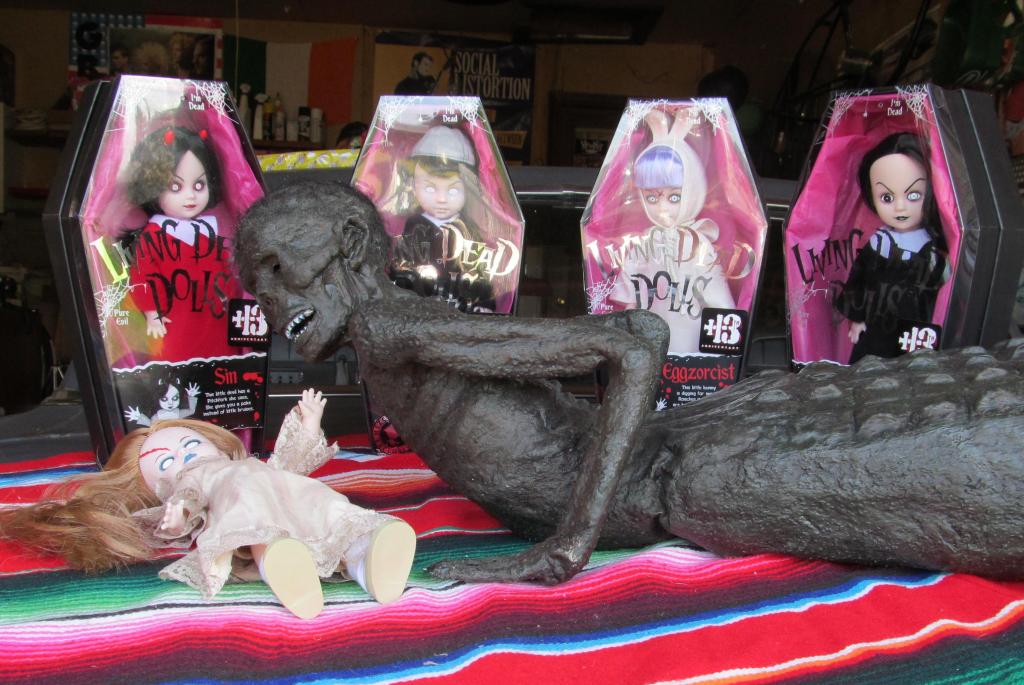
I feel pretty certain that I probably saw Jake that first year as my family spent two weeks every summer on the Peninsula. Shopping at Marsh’s during a Long Beach visit was a must do. Although Jake was once relegated to a dusty corner of Marsh’s Free Museum – along with the two-headed calf and the shrunken head – his celebrity is such that he now has a whole display area with a variety of t-shirts, bumper stickers, posters, key chains and glassware dedicated to the Gatorman. And Creepy Dolls like him also.

The Infallible Wikipedia has done a poor job of telling the whole history of Jake. What’s up with that Infallible One?

Jake communing with an assortment of creepy dolls

So I will skip them this week and instead share the article which catapulted Jake into legend status back in 2008 when that paper of international renown and impeccable credentials – the World Weekly News – published an article titled “Manigator Found.”

Sandy the Creepy doll dons her Jake t-shirt and visits her ‘friend’

“MIAMI, Florida — The discovery of a bizarre half-human, half-alligator in the Florida Everglades has flabbergasted scientists who say the creature is alive, at least moderately intelligent and possibly even a distant ancestor of modern man!

That’s the word from paleontologist Dr. Paul Ledbrader, who studied the creature in his laboratory for almost three hours before state wildlife officials seized the 5-foot, 11-inch, 180-pound beast and airlifted it to a research facility just west of Miami.

Nobody at the state wildlife commission is talking. But Dr. Ledbrader says the U.S. Forest Service sent no fewer than five experts to the facility to study the reptile in the hope of determining exactly where it came from — and what it might be.

‘I know what it isn’t — and that’s an ordinary alligator,’ said Dr. Ledbrader.”

To read more of their amazing discovery and the highly credible, and certainly not made up Dr. Ledbrader, click here:

http://weeklyworldnews.com/headlines/1717/manigator-found/

Be sure to make plans to attend Jake’s 12th annual 75th birthday party in 2018: http://jakethealligatorman.com/

*2020 Update!

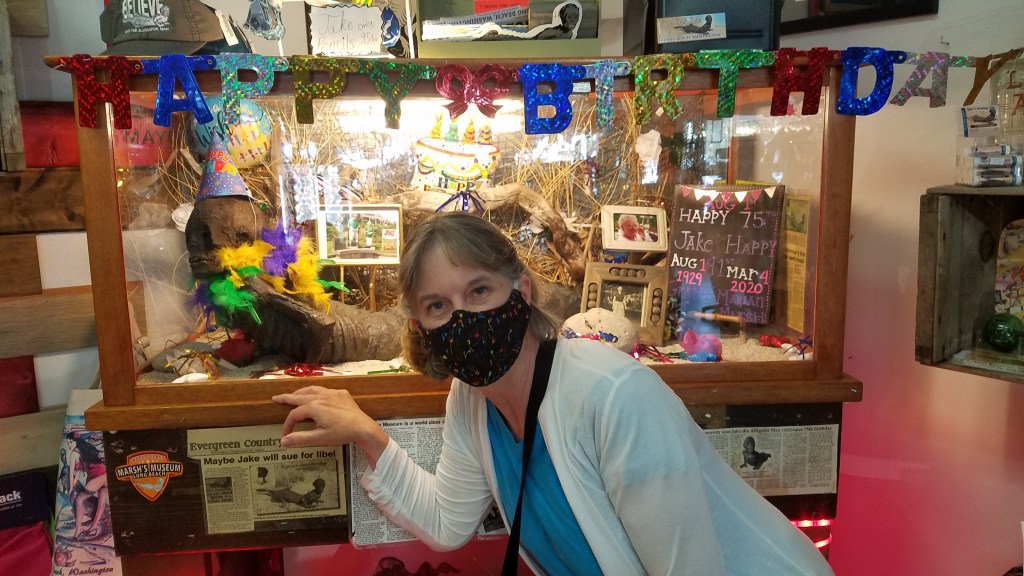
Sadly, Jake’s birthday celebration – once again scheduled for Saturday, August 1st – was cancelled. But that did not stop Mr. Gator from donning a birthday hat, a couple feather boas, and celebrating with friends and fans that just might happen to stop by his house. Of course, HE was NOT socially distancing but this friend was. Perhaps next year. Be sure to mark your calendars for August 7, 2021. It’ll be a party.

The author visiting Jake in 2020

*2021 Update – Jake’s birthday celebration has been cancelled for this year. Man, poor Jake is not feeling the love these days.

*2023 Update – Well, Jake’s celebration SHOULD be on Saturday, August 5. This internet sleuth searched and searched and there was nothing posted regarding Jake’s birthday. So I traveled to Long Beach and to the source, Marsh’s Free Museum, on July 31st and asked the guy behind the counter. This is what I learned! Covid pretty much ended the party as the person who had organized the event each summer left. Alas, no one has taken up the banner and Jake is now living a much quieter life.

https://www.thrillist.com/travel/nation/jake-the-alligator-man-long-beach-washington

Wienermobile!

HotDogging since 1936

July 18, 2023

A 2017 Tuesday Newsday Classic updated

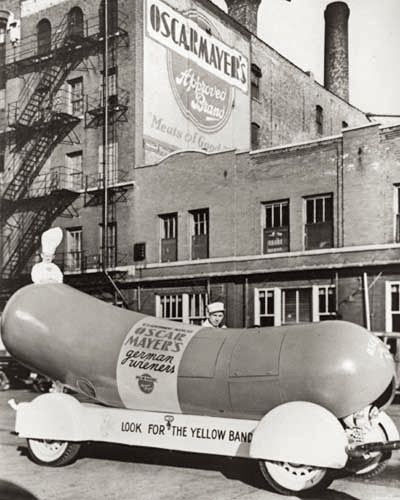
1936 Wienermobile in front of Oscar Mayer building

There cannot be found a more momentous day in history than July 18, 1936. It was on that day when a universally recognized symbol of American marketing debuted.

Yes, we are talking about the day the Wienermobile first rolled out onto the streets of America.

Truly it was a stroke of marketing genius to create a car which looks like a giant hot dog. And no doubt the Oscar Mayer people relish this day in their history.

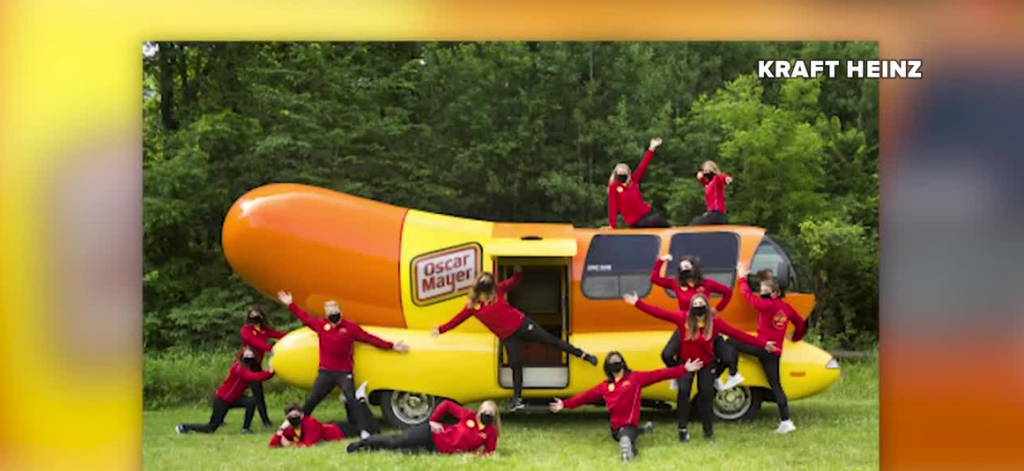
Of course the Wienermobile has evolved over the years. Today, there are eight Wienermobiles and they are assigned regionally throughout the United States. The drivers are known as ‘Hotdoggers’ and to apply to be a Hotdogger you must be a College Senior about to graduate and then commit to one year as a driver. On average some 2000 people a year apply for the job but in the end only 12 are chosen. So it is quite the honor to be a Wienermobile driver.

From the Infallible Wikipedia:

The 1969 version of the Wienermobile.

“The Oscar Mayer Wienermobile has evolved from Carl Mayer’s original 1936 vehicle to the vehicles seen on the road today. Although fuel rationing kept the Wienermobile off the road during World War II, in the 1950s Oscar Mayer and the Gerstenslager Company created several new vehicles using a Dodge chassis or a Willys Jeep chassis. One of these models is on display at the Henry Ford Museum in Dearborn, Michigan. These Wienermobiles were piloted by ‘Little Oscar’ (portrayed by George Molchan) who would visit stores, schools, orphanages, and children’s hospitals and participate in parades and festivals.

In 1969, new Wienermobiles were built on a Chevrolet motor home chassis and featured Ford Thunderbird taillights. The 1969 vehicle was the first Wienermobile to travel outside the United States. In 1976 Plastic Products, Inc., built a fiberglass and styrofoam model, again on a Chevrolet motor home chassis.

Pandemic Era Hotdoggers all masked up and ready to roll

In 1988, Oscar Mayer launched its Hotdogger program, where recent college graduates were hired to drive the Wienermobile through various parts of the nation and abroad. Using a converted Chevrolet van chassis, Stevens Automotive Corporation and noted industrial designer Brooks Stevens built a fleet of six Wienermobiles for the new team of Hotdoggers.”

Introduced in 2017 was the Wienerdrone which can carry one hotdog!

In 1995 the Wienermobile got plumped up as it grew to 27 feet long and 11 feet tall! It was amazing! New versions are not as long but they are taller at 14 feet in height.

Then, on June 26 of 2017, the latest innovations for hot dog delivery were introduced. Yes, it’s true, there is now a Weinerdrone!

Update: July 18, 2023

When the Covid pandemic hit in the spring of 2020, the iconic Wienermobile got parked for a short time but that didn’t stop one Hotdogger whose handle is “Zach N’Cheese” from hatching a grand, memorable, plan that involved the iconic vehicle. On August 26, 2020, he pulled into a parking lot at Yellowstone National Park and there, with the Wienermobile prominently featured, dropped down on one knee and popped the question: ‘Do you prefer beef or turkey franks?’ Just kidding, he asked her to marry him and she said yes.

Hotdogger ‘Zach N’Cheese’ with his very unique proposal

But ‘Zach N’Cheese’s’ story gets even better; turns out that his great grandfather ALSO was a Hotdogger. WBTV out of Charlotte, NC, shared the following:

“Chatham credits his dad, 44-year-old Josh Chatham of Indian Land, with spotting the Wienermobile job application on Facebook. His mom is 44-year-old Mandy Chatham, and his sister is 26-year-old Bethany Singler, both also of Indian Land.

Only when his dad mentioned the job application did it click with Zach Chatham: His great-grandfather, Lon Baisden, now in his 80s and living in Monroe, Ga., had driven the Wienermobile in the 1970s.

‘I said, ‘That’s funny, that’s what Gige (pronounced GEE GEE with a hard ‘g’) did,’‘ he told his dad, referring to his great-grandfather by his nickname.

As a boy, Zach Chatham knew his great-grandfather worked for Oscar Mayer. He’d bring home Oscar Meyer brand toys for him to play with, but Zach Chatham said he didn’t know at the time that Baisden drove the Wienermobile.

Only as Zach Chatham grew older did he learn that, he said, and only when his dad mentioned the job application did it come to mind again.

‘This is a really, really good job,’ Zach Chatham said his dad told him.”

For those who think Zach’s proposal is a good idea, Oscar Mayer does make the Wienermobile available for special occasions. Frankly, it’s a great marketing ploy if a bit cheesy.

I’m sure that after reading this you all will want a hot dog. In the wurst way.

For more information about the iconic Wienermobile, click here:

https://en.wikipedia.org/wiki/Wienermobile

Drive-In Movies

Where shenanigans happened

June 6, 2023

A Tuesday Newsday Classic – updated for your reading pleasure

June 6 is an important day in US History. But since we all learned about D-Day in our US History classes (or you can pick up my friend Irene Fernandes wonderful novel ‘Long Time Passing’ for a firsthand account of a war-bride in England during WWII) I have instead chosen another ground breaking event for the subject this week.

Yes, it was 90 years ago on June 6, 1933, when the first commercially successful drive in movie theatre opened in Pennsauken, New Jersey. The father of the drive in movie was one Richard Hollingshead. From the Infallible Wikipedia:

“Hollingshead conducted outdoor theater tests in his driveway at 212 Thomas Avenue in Riverton. After nailing a screen to trees in his backyard, he set a 1928 Kodak projector on the hood of his car and put a radio behind the screen, testing different sound levels with his car windows down and up. Blocks under vehicles in the driveway enabled him to determine the size and spacing of ramps so all automobiles could have a clear view of the screen. Hollingshead applied for a patent of his invention on August 6, 1932, and he was given U.S. Patent 1,909,537 on May 16, 1933.”

The American public, already in love with the automobile, also loved the drive-in movie. They reached their peak of popularity in the 1950’s and early 1960’s when some 4,000 Drive-ins existed throughout the United States.

Fruitvale Drive in sign

The phenomenon was not without its detractors, however, and drive in movies – which allowed people to view films from the privacy of their car – were labeled ‘passion pits.’ Teenagers, particularly, adored them as it afforded an opportunity to, well, you know.

Speaking of which, there were several drive-in movie theaters in my hometown of Yakima, Washington. One evening my sister and I and two of our friends decided to go to the Fruitvale Drive-in (sadly, no longer there). The tank, er, car my sister drove was a 1950 yellow Cadillac with a red roof; a hand me down from our grandparents.  When the grandparents bought it new it had all the whistles and bells popular in 1950 including a gauge which told you how good your driving was.

Ok, not really, it had to do with gas mileage. I have a distinct memory as a child of about six who was enamored of my grandfather and fascinated with the device in that car. It was a round gauge with an arrow that pointed to words like ‘poor’, ‘fair’, ‘good’ and ‘excellent.’ My grandfather, in his affable way, told me that the gauge let him know how his driving was. We are driving the roads up near their cabin at Rimrock Lake and I’m watching that gauge and announcing every time it changes. Seems like it was often pointing to poor but that didn’t deter grandpa from driving. A few years later he turned the driving over to my grandmother who, apparently, agreed with the device.

The Cadillac featured a vacuum mileage meter similar to this one

That’s just an aside as, most important of all, the Caddy featured a movable spotlight affixed to the car just outside the driver’s side window. There was a handle inside the car to control the light. I guess it was there to find dead things on the side of the road or assist in deer hunting. The more common reason, and a lot more mundane, is that the spotlight allowed the driver to find house numbers at night. Who knew?

But then there was the infamous incident at the Fruitvale Drive In. On this particular night my sister, and her best friend Wendy, were in the front seat and me and my best friend Pam were in the back. For anyone who has ever been to a Drive In, you know that the movie cannot start until dusk at the earliest. While I don’t recall the exact day it was likely July 1972 and the sunset mid month is just before 9 p.m. The movie starts. No idea what movie we watched. Our options were limited as we were all under the age of 17. It must not have been a great movie because our attentions were soon drawn to the activities taking place in the backseat of the car parked in front of us. We watched with intense teenage curiosity as the silhouetted heads of the couple descended lower and lower until they were no longer visible. Now THIS was getting interesting (unlike the movie whose name I forget. A search of PG movies the summer of 1972 turns up a single one that it probably was: ‘The Candidate’ starring Robert Redford.). We, of course, giggled and speculated on WHAT exactly might be going on in that car and then my sister remembered ‘the light.’

My grandfather standing next to his 1950 Cadillac. Photo taken in Golden, British Columbia, 1957

“Do it!” we encouraged. We debated for several minutes as to the advisability of such an action. But eventually peer pressure won out. So she did. A moment later a blaze of floodlight swamped the erstwhile lovers and you never saw feet flail or heads snap up so fast! We descended into paroxysm of laughter. The light was off a moment later but then we worried that we would be in trouble for the illumination during the movie. A few horns honked in objection to the movie being disrupted and we two residents of the back seat ducked down so as not to be seen. Our prank, however, was not exposed and I do believe the lovers in the other car spent the rest of the movie upright. Talk about coyly ‘interrupt-us’.

If you want to know more about the rise and decline of the drive-in movie theater click on this link: https://en.wikipedia.org/wiki/Drive-in_theater

And a couple other links:

https://en.wikipedia.org/wiki/The_Candidate_(1972_film)

Liddle Kiddles

A “Gotta Have It” for little girls in 1966

March 14, 2023

Dolls. As a child, I loved dolls. And I had many of them. Not as many as I would have liked, and I was always angling to find a way to acquire more.

The original 10 Liddle Kiddles. I always wanted No. 3, Calamity Jiddle with her rocking horse.

Enter this tiny doll, introduced by Mattel in 1966, which captured my imagination. The doll series: Liddle Kiddles.

A few days ago I mentioned to the hubby that I was considering writing about Liddle Kiddle dolls for this week’s post. He shook his head and said, “I’ve never heard of them.”

Well, all you Tuesday Newsday readers who are in the same category as the hubby, you are about to learn something new.

We turn to the nearly Infallible Wikipedia to find out more:

Liddle Diddle in the original packaging

“Kiddles were made of soft vinyl with painted facial features and rooted, brushable hair. The first, second, and third series (called ‘bigger bodies’ by collectors) ranged from 2¾ inches to 3½ inches, while the Skediddle Kiddles were 4 inches tall and had a special mechanism inside the body which allowed them to walk, wave, and ride vehicles with the push of a child’s hand. The Kola and Kologne Kiddles were 2 inches, and the mini Jewelry Kiddles were 78–1+116 inches. (snip)

The Holy Grail for children everywhere: The Sears Christmas Catalog

The bigger bodies (the first ten dolls) were designed to resemble typical neighborhood children at play. The name Liddle Kiddles was taken from the words ‘little kid’. Each of the first 24 dolls had detailed clothing and accessories that perfectly matched their theme and size. Wire skeletons inside the vinyl bodies enabled the dolls to be posed and re-posed realistically.

The first series of 9 Liddle Kiddle dolls plus 1 special doll set was available only through the Sears and Roebuck Christmas Catalog (SRCC). It was conceived in 1965 and released to toy shelves in 1966.”

Peter Paniddle with Tinkerbelle, Alligator, and even his shadow

No doubt I got my first Liddle Kiddle that year at Christmas. The SRCC was THE Holy Grail. Forget Google and Amazon, we would pour over the SRCC, creating our Christmas lists and dreaming of those things we hoped to see on Christmas morning.

My mother got the message and the adorable Liddle Diddle was under our tree. To be sure, I would have liked to have gotten every single one of the ten original dolls but, alas, there was only one.

The next year I received my second Liddle Kiddle, Peter Paniddle; part of the Storybook Kiddles series.

Marketing genius at work, appealing to the target audience

Since it was the 1960s and smart phones were not available for entertainment while eating our morning cereal and milk, we had to resort to reading the backs of cereal boxes. Clever product marketing people figured this out and kids everywhere were enticed to pressure their parents into buying more Post Super Sugar Crisp and Alphabits to earn the number of box tops needed to earn ‘free’ giveaways.

Which is how I more than doubled my Liddle Kiddle collection. Sort of. It took seven box tops to get one of three ‘knock off’ dolls being offered. These were StoryKins Doll sets: Cinderella – complete with a pumpkin carriage! Sleeping Beauty- she had her own pink canopy bed! And Goldilocks – with an adorable little bear!

Our family must have eaten a whole bunch of Post Cereal because I did get ALL three sets. I was a determined child.

The poor dolls – both the actual Liddle Kiddles and the StoryKins – were played with all the time. With the exception of the Snow White doll, none of the sets are complete and all are dingy, many with the wires which made it possible for their arms and legs to bend, protruding.

Now, if I was in need of a little cash, a quick look on Ebay reveals that some of these dolls are worth a fair bit. Take Peter Paniddle for instance. He came with the cutest green alligator and a tiny Barbie with Tinkerbelle wings. Just the Tinkerbelle alone sold on Ebay last month for fifty bucks! A set with the pieces I have (sans Peter’s shirt) went for $125.

My authentic Liddle Kiddle collection (left to right) – Peter Paniddle and friends, Funny Bunny, Locket Kiddle, and Liddle Diddle in what’s left of her crib.
The StoryKins Trio offered through Post Cereals: Goldilocks, Cinderella, and Sleeping Beauty

A few years ago my brother found a couple of the StoryKins sets and a Liddle Kiddle doll and bought them for me. So now I have a second Cinderella and carriage, and a second Goldilocks and her bear, and a second Liddle Diddle. I see how this might work. A collector in search of a missing item from one of the sets has to buy several sets to make a complete one. It gets kinda pricey rather quickly.

For me, I love my dolls the way they are: some have pieces of their original clothing missing and now wear a child created shirt or dress. Goldilocks and Cinderella are both missing a shoe. Liddle Diddle’s crib is broken and her blanket is long gone.

Even so, there is a magic when I open the small bin which houses these childhood toys and a small part of me is transported back to those simpler times and I can enjoy my dolls once again.

A couple links:

https://www.fashion-doll-guide.com/Vintage-Little-Kiddles.html

https://en.wikipedia.org/wiki/Liddle_Kiddles

The Valentine Card

A tradition born in Great Britain

February 14, 2023

The earliest Valentines were often hand made of ribbons, lace, and buttons.

Today is, of course, Valentine’s Day. A day when hopes and expectations far exceed reality. When I was in elementary school, Valentine’s Day was probably THE biggest day of the year. We looked forward to getting our red construction paper folders filled with the cute greeting cards from our classmates; the afternoon always meant cupcakes and cookies provided by one of our parents.

It was, however, the introduction of the Valentine’s Card which propelled the holiday to what it is today. From the Infallible Wikipedia:

“In 1797, a British publisher issued The Young Man’s Valentine Writer, which contained scores of suggested sentimental verses for the young lover unable to compose his own. Printers had already begun producing a limited number of cards with verses and sketches, called ‘mechanical valentines.’ Paper Valentines became so popular in England in the early 19th century that they were assembled in factories. Fancy Valentines were made with real lace and ribbons, with paper lace introduced in the mid-19th century.  In 1835, 60,000 Valentine cards were sent by post in the United Kingdom, despite postage being expensive.”

Oh those crazy for love Brits!

Eventually the idea made its way across the Atlantic and sending Valentine’s Day cards became all the rage in the US also. Although the statistics are from a few years ago, it is estimated by the US Greeting Card Association that “approximately 190 million valentines are sent each year in the US. Half of those valentines are given to family members other than husband or wife, usually to children. When the valentine-exchange cards made in school activities are included the figure goes up to 1 billion, and teachers become the people receiving the most valentines.”

That’s a whole lot of paper.

Valentine’s Day at my house when I was growing up consisted of each child getting to purchase a package of Valentine’s to give out in their classroom at school. For several days before the big day, I would painstakingly decide which of the cards (each box usually contained several different sentiments) would be given to which classmate. Their name would be written on the envelope and the card inside signed by me.

Each year I seemed to ‘like’ one of the boys in my class and would obsess over which card to give him.

Finally, on February 14th, we would arrive at school, our fistfuls of valentines in tow, and wait for the announcement from our teacher that it was time to distribute our Valentines.

Up from our seats we would spring and then drop our cards into the folders hung around the room. Sometimes they were taped along the window and at other times at the front of our desks. There was an unwritten rule that if you gave a card to one then you had to give a card to everyone. While this was going on, some dedicated Mom would be there, setting out delicious baked goodies (my mother was often that person!). At last we were allowed to open the swollen folders and read our cards.

A typical ‘kids’ Valentine card. The card is about 2 1/4″ wide and 3 1/4″ high. No idea WHY I had this in my card box but it was there when I needed it for this article.

Now, there were ALWAYS some lame boys who didn’t give out Valentines. Or they might break the rule and give out a few but only to certain people. Undoubtedly it was one of those boys who I had a crush on who either didn’t do it or only gave it to the most popular girl, who wasn’t me. It was usually Kristin. Everybody loved that girl! Which takes us back to how expectations exceed reality.

After school I’d go home to a big family Valentine’s celebration. Or not.

As on any other day, my mother fixed dinner and served it right at six p.m. It was after dinner, however, when my Dad would get up, produce a Valentine’s gift for my mother, and present it with a flourish.

Every year. Not just some years. But every year. Always the same gift.

It would be wrapped but we all knew what it was: a box of Russell Stover’s chocolates.

The 24 oz. box of Russell Stover Assorted Chocolates.

My mother would open it, exclaim how much she liked it, and then would kiss my dad and thank him for it.

Each of us children would be allowed to choose one piece of candy. I hated when I accidentally got the coconut one. Yuck. (Pro-tip: the coconut ones were sometimes hidden as round ones. Best to pick a rectangular one)

That box of candy would last for a week or two with one piece of candy allowed after dinner each day.

Yep. That was it. There were a few Valentine’s Days over the years when I was the recipient of some romantic gesture. But for the most part, once our kids reached elementary school, I simply carried on the tradition of letting my children pick out a package of cards to give to their classmates; I also became the mom who brought the treats. One year I baked heart shaped sugar cookies, frosted them in white, pink, and red frosting and wrote EVERY child’s name on their cookie. Yes, I was that crazy. I also noted that most of the kids didn’t eat their cookie but instead told me they were taking it home to show their Mom. Hah!

Now, I love sugar cookies but unless I have someone who wants to help me decorate them, I don’t do them for all the holidays like I once did. So forget those. And forget Russell Stover’s. The easiest and best Valentine’s gift in my opinion are Sanders Dark Chocolate Sea Salt Caramels (see my story on these here)… or even Dove Dark Chocolates… oh, who am I kidding, OR whatever chocolate. Just so long as there’s no coconut.

The links:

https://en.wikipedia.org/wiki/Valentine’s_Day

https://www.goodhousekeeping.com/holidays/valentines-day-ideas/a26863/valentines-day-facts/