Archives

Quantum Leap: Exploring Time Travel’s Unique Twist

March 25

A Tuesday Newsday Classic Updated

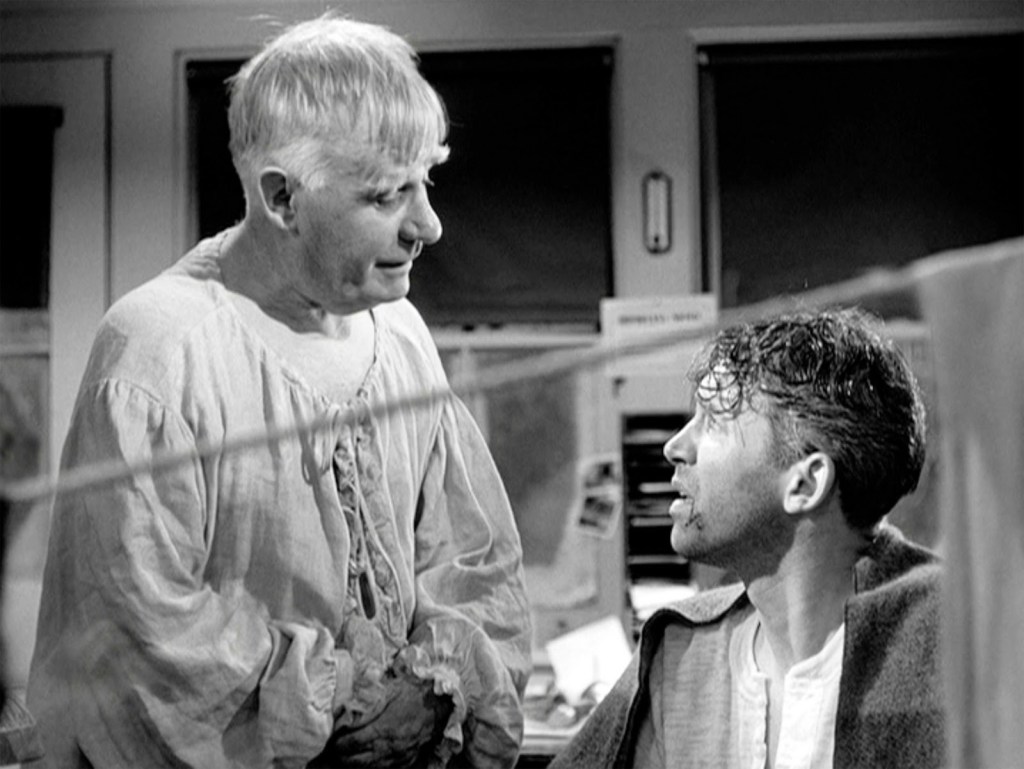
Dr. Sam Beckett and project coordinator, Al Calavicci

“Oh Boy.”

These two little words, uttered on March 25, 1989, launched a TV-show and inspired a cult-like following as viewers were treated to a mind-bending time travel fantasy with a new twist.

The fresh premise of Quantum Leap proffered that time travel is possible… but one can only time travel during the years the particular person is alive. Each person’s life is like a string with a beginning and an end. But if the ends of the string are tied together and the string then bunched up, the theory went, a person could leap from one point on the string to another bouncing from time to time.

The opening segment of each show, From the Infallible Wikipedia, is this:

“Theorizing that one could time travel within his own lifetime, Dr. Sam Beckett led an elite group of scientists into the desert to develop a top-secret project, known as ‘Quantum Leap.’ Pressured to prove his theories or lose funding, Dr. Beckett prematurely stepped into the Project Accelerator–and vanished.

https://www.youtube.com/embed/kf-nvBCTnR0?si=3X21lGIY5MvJmUxh

He awoke to find himself in the past, suffering from partial amnesia and facing a mirror image that was not his own. Fortunately, contact with his own time was maintained through brainwave transmissions with Al, the Project Observer, who appeared in the form of a hologram that only Dr. Beckett could see and hear. Trapped in the past, Dr. Beckett finds himself leaping from life to life, putting things right that once went wrong and hoping each time that his next leap will be the leap home.”

In the five seasons the show was on the air, Dr. Beckett – played by the yummy Scott Bakula – ‘leapt’ into the body of a different person each episode. He was an air force jet pilot, a minor league baseball player, and a prize fighter in the first season. He was young, old, male, female, black, white…
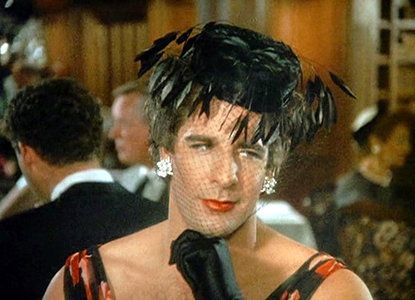
Sam’s first time in a woman’s body as Gloria in 1964

One of the things I loved about the show was its humor and, especially, all the ridiculous ways Scott Bakula had to dress for the series and the personas he assumed. He even wore dresses and high heels, lipstick and eye makeup. It was fun to watch him peer into a mirror and see whose body he now occupied.

Personally, I like the early seasons better than the later ones as his leaps placed him into the bodies of average people with regular struggles. In some later episodes he has brushes with historical figures and the writers/producers take tremendous creative license with past events and blow up their own premises, stretching the bounds of credulity.

Regardless, it was a fun show made all the more enjoyable by the interplay between Bakula and Dean Stockwell who portrays the cigar-wielding Al.

I bought the first season on DVD one year as a birthday gift for my then teenage son. I thought my kids would love the show! Instead, after 15 minutes, they were bored.  I determined that maybe it was a show which an adult audience could appreciate but was over the heads of kids. Or, perhaps, it only resonated with my generation as we could relate to the times and travels of Sam Beckett (born August 8, 1953). Who knows? Now that my kids are adults, they might enjoy it. I’m not sure how well the show has aged or if it’s stuck in the 1990’s.

All five seasons are available on DVD

In 2021, I discovered that Quantum Leap episodes were being run on Xfinity. So the hubby set it to record whenever an episode was aired. It took a while, but all 5 seasons were recorded and I rewatched them. Overall, it was an enjoyable journey although there were a few episodes that tackled some pretty intense topics.

I think one of the best episodes is his leap into his teenage self in the 1960’s. The episode is particularly poignant since he comes armed with knowing, since he comes from years in the future, that neither his father or his older brother are alive in 1989. Who among us wouldn’t love to go back and fix some of the mistakes of the past? Who would not want to go back and try to save a beloved family member?

Ultimately, Sam’s lesson is that while he might not be able to change the past, what he can control is his own interactions with his loved ones, letting them know how he feels about them.

It does show as being available on Peacock/NBC. A fun watch, in my opinion, if you have the time!

A few links:

Al explains string theory time travel:
https://en.wikipedia.org/wiki/Quantum_Leap

https://en.wikipedia.org/wiki/Sam_Beckett

Exploring Romeo and Juliet: A Timeless Love Story

Perhaps Shakespeare’s most famous play

March 11

To try and take on this play is, I would conjecture, pure folly. Afterall, it is probably the most recognized literary work in the world. It is the story of two young lovers who forsake all else to be together. They risk the disapproval of family and friends and, ultimately, meet their demise all because they chose that which was forbidden.

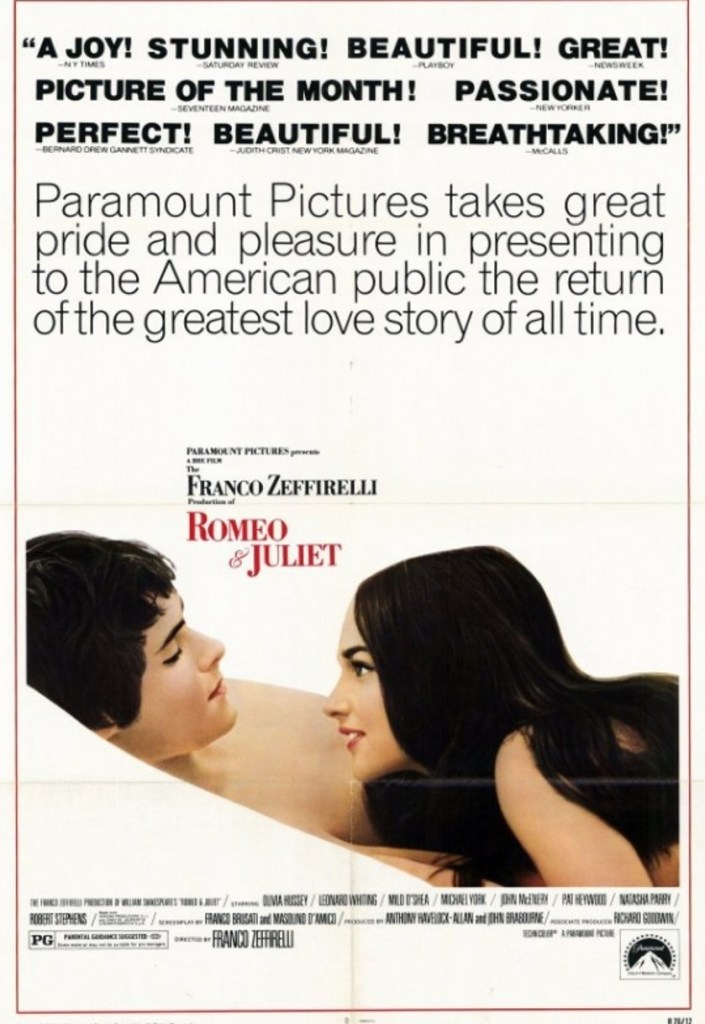
1968 Poster of Romeo and Juliet

“Romeo and Juliet” is William Shakespeare’s most famous works and March 11, 1302, is – according to OnThisDay.com – considered to be the date of the young lover’s marriage.

As is often the case, that is disputed since contextual clues from the play itself place the wedding date as being in mid to late July.

Regardless, today is as good a day as any to feature this iconic work.

For anyone who is unfamiliar with the storyline you can certainly access the Infallible Wikipedia. Which I did only to discover that the article there is 10,604 words long. Egads.

Instead, I found this one paragraph synopsis from the site Shakespeare.org.uk much easier to digest:

“An age-old vendetta between two powerful families erupts into bloodshed. A group of masked Montagues risk further conflict by gatecrashing a Capulet party. A young lovesick Romeo Montague falls instantly in love with Juliet Capulet, who is due to marry her father’s choice, the County Paris. With the help of Juliet’s nurse, the women arrange for the couple to marry the next day, but Romeo’s attempt to halt a street fight leads to the death of Juliet’s own cousin, Tybalt, for which Romeo is banished. In a desperate attempt to be reunited with Romeo, Juliet follows the Friar’s plot and fakes her own death. The message fails to reach Romeo, and believing Juliet dead, he takes his life in her tomb. Juliet wakes to find Romeo’s corpse beside her and kills herself. The grieving family agree to end their feud.”

But, honestly, only if you lived as a hermit in a rock cave on a remote island in the south Pacific would you NOT know about Romeo and Juliet (R&J).

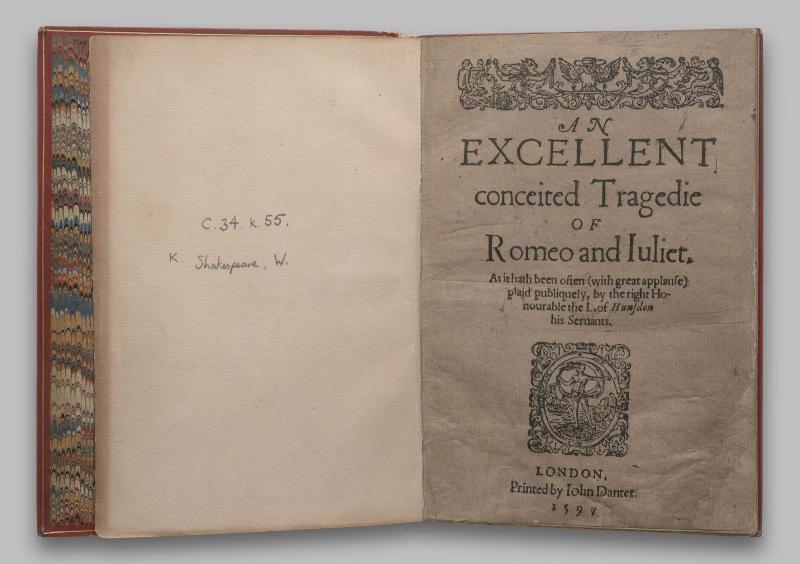
First edition Romeo and Juliet

When I started thinking about R&J, my mind drifted back to the early 1970’s and my experience at Wilson Junior High School in Yakima, Washington.

Wilson Junior High teachers 1971

It was there that I was introduced to R&J. At the time I had no appreciation for Shakespearean literature or for the incredible foundation which was given me by a trio of dedicated Jr. High English teachers.  For my entire 8th grade year, my English teacher was Mr. Albrecht. To us students he seemed quite mature. When, in fact, he was the ripe old age of 27 that first year. We respected him because he treated us as intelligent people regardless of our limited years on earth; he rewarded those who worked hard and did their best.

The next year my English class experience was split into two segments. For the fall/winter semester I drew the formidable grammar teacher, Mrs. Eglin. I think she likely made students rip out their hair and cry at times. But, by God, you were going to learn: all the parts of grammar, how to diagram a sentence, and how to construct a proper paragraph. It was in her class that I discovered the evils of dangling participles, all about verbs, adverbs, nouns (both proper and pro-), adjectives, and every other part of speech. In other words, I learned how to write the correct way. She made me think about my writing in ways I’d never considered. I might not have always followed her methods, and I’m not perfect, but not for lack of instruction on Mrs. Eglin’s part.

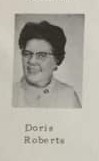
Mrs. Roberts 1971 yearbook photo

In the second half of the year, I had an even more demanding teacher – which I hadn’t thought possible after being with Mrs. Eglin – Mrs. Roberts. First name Doris. Which is telling. No one in my age demographic, or even a few years older, was named Doris. The name had, however, been the 8th most popular name for girls in the 1920’s. Mrs. Roberts was born in 1922 and was an ancient 50 that year. Ah perspective.

Mrs. Roberts assigned us every classical piece of literature she could find and we explored such themes as ‘man’s inhumanity to man’, ethics, morality, death and dying, cruelty, poverty… yes, we read some very dark stories. Like “Flowers for Algernon”, “The Grapes of Wrath”, “Fahrenheit 451”, and “Romeo and Juliet”.

The clever thing which this band of teachers managed to accomplish was to make the course work relevant to the teenagers of the day. Somehow, they convinced the administration that it was educational to load some 250 ninth graders into school busses and send them to the movie theatre to see films based on what we were reading.

Pretty much how teenagers dressed in 1971-72. Found this photo on Pinterest.

Spoiler alert: it worked.

Of course, we kids thought we’d gotten a free pass for the day. Personally, I returned from those outings thinking about the films but also contemplating the books we read and then writing papers on the theme we thought was the best fit.

Sometime in the fall of 1971 I’m pretty certain we were whisked away in the busses to see the 1968 film version of Romeo and Juliet with Leonard Whiting and Olivia Hussey. Such clever English teachers, using the pop culture of the day to get us to learn. I did find a reference in my 1972 diary for both “Farenheit 451” and “Mary, Queen of Scots.” Sadly, my diary from 1971 does not seem to exist any longer, which surprises me as I was a faithful diary writer.

Now a few fun facts. I was able to find 49 times R&J was made into a movie in the Shakespearean tradition (from 1908-2021); an additional 118 films were produced which adapted the works in modern ways or with odd twists (like the truly bizarre 2011 Gnomeo and Juliet); there are also a few films which utilize R&J’s overarching theme in some new way (like the charming 2019 movie “Letters from Juliet”).

I owe a lot to my Junior High School English teachers for the great foundation they laid. It was the gift that has continued to give and bless me.

As always a few links:

https://www.onthisday.com/weddings/march/11

https://en.wikipedia.org/wiki/Romeo_and_Juliet

https://www.shakespeare.org.uk/explore-shakespeare/shakespedia/shakespeares-plays/romeo-and-juliet/#:~:text=An%20age-old%20vendetta%20between%20two%20powerful%20families%20erupts,to%20marry%20her%20father%E2%80%99s%20choice%2C%20the%20County%20Paris.

World’s Most Popular Song? The Story of ‘Happy Birthday’

Everyone’s sung it at least once!

March 4

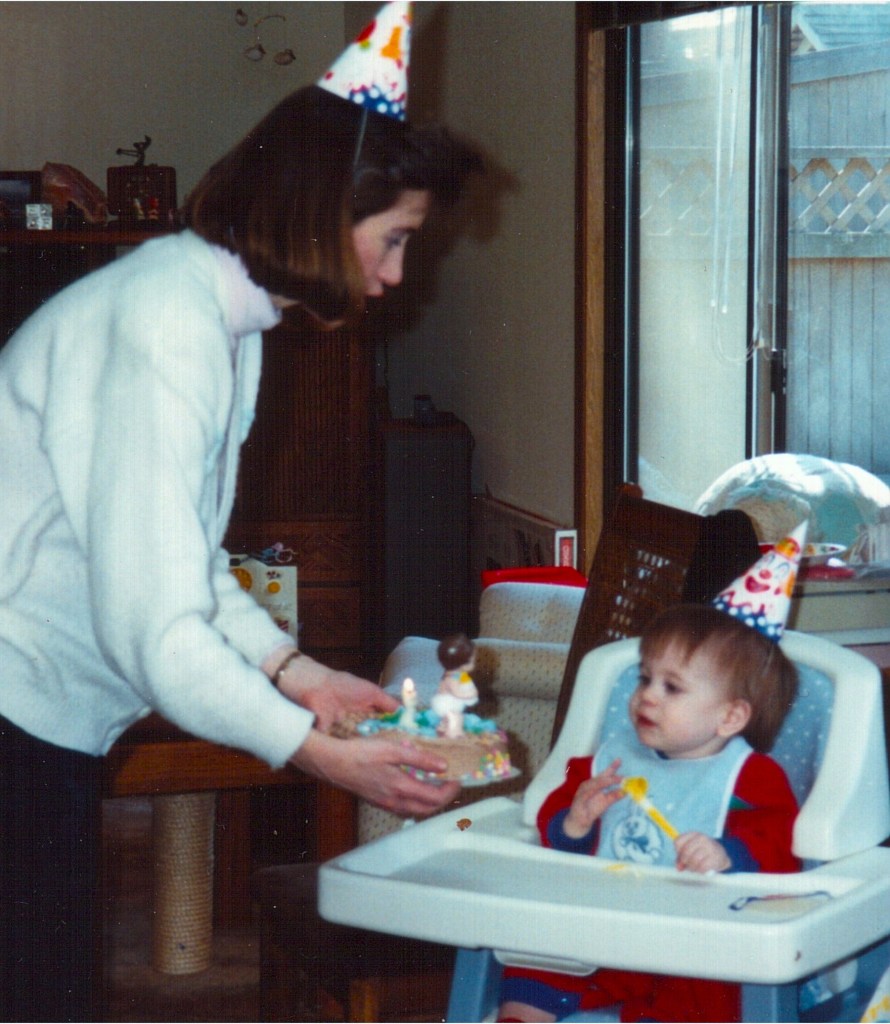
My son’s first birthday… and singing Happy Birthday to You.

This song, arguably the most popular one ever written, never reached number one the Billboard Hot 100 and was never nominated for a Grammy Award. In fact, no one is 100 percent certain as to the origin of the tune or the lyrics. Yet today pretty much every American aged 5 and over has sung it many, many times and it remains a cultural icon.

The song? “Happy Birthday To You.”

It was on March 4, 1924, when the song was published in a songbook by Claydon Sunny (Clayton F. Summy Publications) at the behest of Jessica Hill, the younger sister of kindergarten teachers Patty and Mildred Hill.

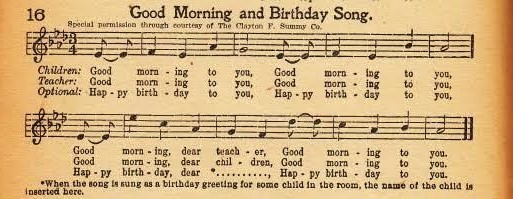
The song has its origins in the late 1800’s when the two sisters composed an easy to learn song for their classroom titled “Good Morning To You.” It is speculated that the sisters put the song together based on several other children’s song melodies, popular at the time.

The lyrics were thus: “Good morning to you, good morning to you, good morning, dear children, good morning to all.”

So far, so good as it was just a couple of Louisville, Kentucky, kindergarten teachers using a cheery song to greet young children each day.

In 1893 the sisters, with their pioneering ideas on early childhood education, published the song in a book titled “Song Stories For Kindergarten.” No one can say for sure ‘when’ the birthday lyrics were substituted but there is evidence that they were first published in 1912. It was, however, Claydon Sunny’s publication which set the song up for copyright challenges which persisted for decades.

As you might expect, the Infallible Wikipedia fills in the details:

“The Summy Company registered a copyright in 1935, crediting authors Preston Ware Orem and Mrs. R. R. Forman. In 1988, Warner/Chappell Music purchased the company owning the copyright for US$25 million, with the value of ‘Happy Birthday’ estimated at US$5 million. Warner claimed that the United States copyright would not expire until 2030 and that unauthorized public performances of the song were illegal unless royalties were paid. In February 2010, the royalty for a single use was US$700. By one estimate, the song is the highest-earning single song in history. In the European Union, the copyright for the song expired on January 1, 2017.

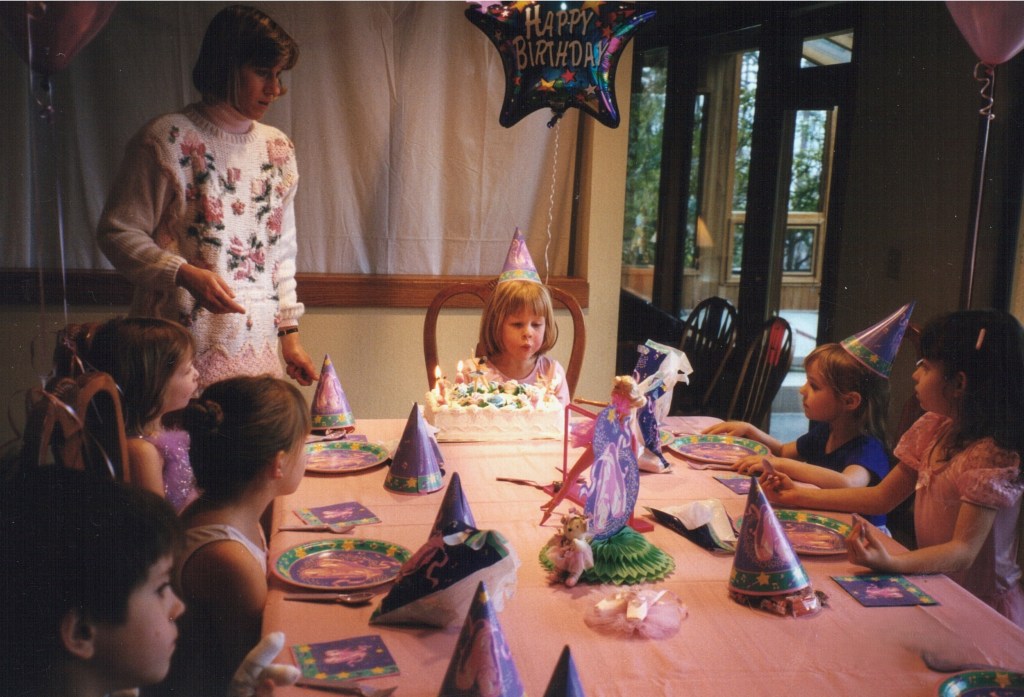
My daughter’s Ballerina themed 5th birthday party

The American copyright status of ‘Happy Birthday to You’ began to draw more attention with the passage of the Copyright Term Extension Act in 1998. The Supreme Court upheld the Act in Eldred v. Ashcroft in 2003, and Associate Justice Stephen Breyer specifically mentioned ‘Happy Birthday to You’ in his dissenting opinion. American law professor Robert Brauneis extensively researched the song and concluded in 2010 ‘it is almost certainly no longer under copyright.’ Good Morning to You Productions sued Warner/Chappell for falsely claiming copyright to the song in 2013. In September 2015, a federal judge declared that the Warner/Chappell copyright claim was invalid, ruling that the copyright registration applied only to a specific piano arrangement of the song and not to its lyrics and melody. In 2016, Warner/Chappell settled for $14 million, and the court declared that ‘Happy Birthday to You’ was in the public domain.”

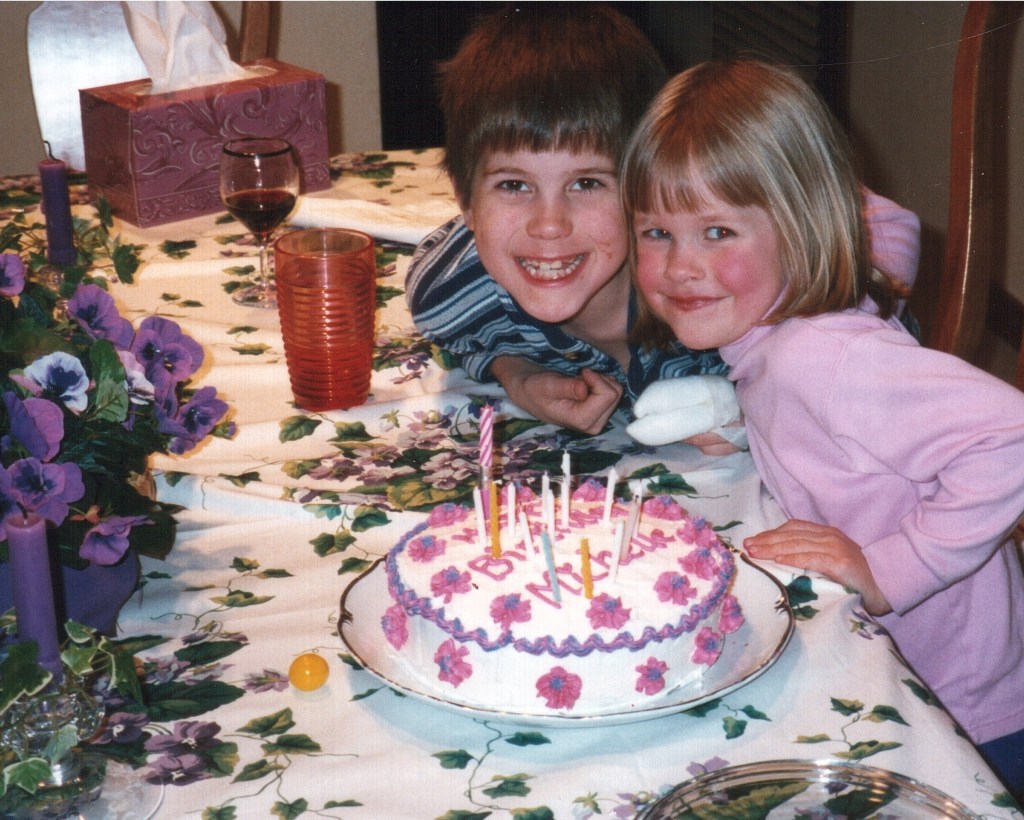
I love this photo of my children taken on my daughter’s birthday circa 1997

Like pretty much everyone reading this, I cannot recall a time when I did NOT know this song. When my family inherited my grandmother’s piano – I was 7 or 8 – and I first sat down to experiment, this was likely the first tune I was able to pick out with the keys.

Some of my earliest memories are of my mother bringing out a birthday cake for one of her four children, candles ablaze, and her leading everyone in singing ‘Happy Birthday To You.” She would enter the dining room from the kitchen, bearing her signature chocolate cake covered in white frosting, with “Happy Birthday” written in either blue or green icing. This was followed by the birthday child blowing out the candles and making a secret wish.

The now 101-year long tradition (or longer) of singing happy birthday has been carried on for generations and, as soon as its discovered that it’s someone’s special day, a group of people will nearly always sing the song.

A moment in time…It was my mother’s 32nd birthday. I’m not quite sure ‘who’ took this photo. Likely my grandmother who often came to help with the four of us. I’m not pictured as I was only three months old at the time. My siblings, ages 9, 4, and 2 are also pictured.

As I was researching for this article, I wandered off into the weeds, perusing various YouTube videos of people singing/playing ‘Happy Birthday.’ And then I saw it. A nine-minute video of pianist Victor Borge having fun with the song in the style of about 10 different classic composers. The link:

https://www.youtube.com/embed/hkkHz8xq7lE?si=UBogXMHjmkPc4qZk

This was familiar, I thought. And then I recalled I had experienced Victor Borge perform at the Capitol Theatre in Yakima when I was a teenager. Sure enough, on March 31, 1973 – together with my parents and my sister – we attended his concert. According to what I wrote in my diary “It was a very good show. I enjoyed it.” Not exactly an expansive review but I was 15 and, perhaps, did not appreciate that moment in time. To this day, however, I can see him on that stage, regaling the audience with his comedic take on classical music. I am positive he performed ‘Happy Birthday’ similarly to what is shown in the attached video.  Enjoy!

My dad’s birthday circa 1997 pictured with his two youngest granddaughters.

Yet, when I think about “Happy Birthday To You” I am amazed at the cultural reach of such a simple tune and lyrics with humble beginnings.

So, there you have it. No more copyright infringements or companies claiming the song belongs to them. You are free to sing “Happy Birthday to You” anywhere and everywhere without having to worry about paying royalties or getting sued. Ultimately, the song has returned to its roots, as a simple and positive way to give glad tidings and, perhaps, brighten someone’ day if only for a few minutes. Just the way I imagine Patty and Mildred Hill would have wanted it.

A few links:

https://en.wikipedia.org/wiki/Happy_Birthday_to_You

https://en.wikipedia.org/wiki/Victor_Borge

https://en.wikipedia.org/wiki/Capitol_Theatre_(Yakima,_Washington)

The Great Planet Debate: Pluto’s Plight

February 18, 2020

What the heck does Bubble Tape have to do with it?

If ever you want to start an argument, be sure to bring up this topic. No, I’m not talking about politics. Or whether Tom Brady really cheated during “Deflategate.” The topic which really gets people animated is whether Pluto is or is not a planet.

maxresdefault

Our NOT ninth planet, Pluto

It was on February 18, 1930, when astronomer Clyde Tombaugh announced the confirmation of a planet just beyond Neptune. The solar system got its ninth and school children everywhere were soon making models of the sun surrounded by Mercury, Venus, Earth, Mars, Jupiter, Saturn, Uranus, Neptune, and Pluto.

The real story began a number of years earlier. According to the Infallible Wikipedia:

“In 1906, Percival Lowell—a wealthy Bostonian who had founded Lowell Observatory in Flagstaff, Arizona, in 1894—started an extensive project in search of a possible ninth planet, which he termed ‘Planet X‘. By 1909, Lowell and William H. Pickering had suggested several possible celestial coordinates for such a planet. Lowell and his observatory conducted his search until his death in 1916, but to no avail. Unknown to Lowell, his surveys had captured two faint images of Pluto on March 19 and April 7, 1915, but they were not recognized for what they were. (snip)

Tombaugh’s task was to systematically image the night sky in pairs of photographs, then examine each pair and determine whether any objects had shifted position. Using a blink comparator, he rapidly shifted back and forth between views of each of the plates to create the illusion of movement of any objects that had changed position or appearance between photographs. On February 18, 1930, after nearly a year of searching, Tombaugh discovered a possible moving object on photographic plates taken on January 23 and 29. A lesser-quality photograph taken on January 21 helped confirm the movement. After the observatory obtained further confirmatory photographs, news of the discovery was telegraphed to the Harvard College Observatory on March 13, 1930. Pluto has yet to complete a full orbit of the Sun since its discovery, as one Plutonian year is 247.68 years long.”

For the putative ninth planet, however, controversy was ever present. Despite the initial excitement at the evidence of its existence, the questions soon arose: was it truly a planet, or was it a Neptunium moon gone astray?

For years scientists sought out photographic evidence of the planet, made possible as telescopes were improved.  Then in August 2006, the International Astronomical Union (IAU) decided to officially define what makes a planet in our solar system a planet. Their three criteria are:

  1. The object must be in orbit around the Sun.
  2. The object must be massive enough to be rounded by its own gravity. More specifically, its own gravity should pull it into a shape defined by hydrostatic equilibrium.
  3. It must have cleared the neighborhood around its orbit.

k-belt1

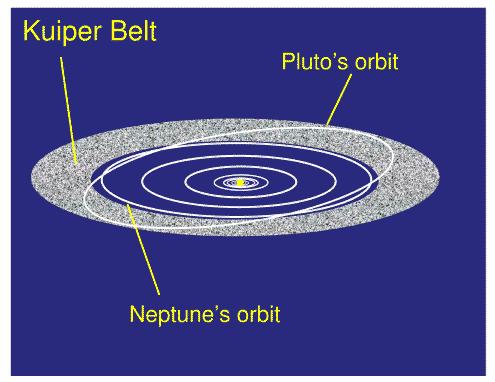
It is the third criteria which caused Pluto a problem. The object exists as part of the Kuiper Belt, an astronomical conglomeration of ice fragments which – like planets – are in orbit around the sun. It is here where Pluto exists.

Over the years, scientists have identified other planet like objects which, like Pluto, circle the sun from within the Kuiper Belt. Along with Pluto are other large spheres. Were these also planets?

The answer came back ‘no.’ Also from the Infallible Wikipedia:

“The IAU further decided that bodies that, like Pluto, meet criteria 1 and 2, but do not meet criterion 3 would be called dwarf planets. In September 2006, the IAU included Pluto, and Eris and its moon Dysnomia, in their Minor Planet Catalogue, giving them the official minor planet designations “(134340) Pluto’, ‘(136199) Eris’, and ‘(136199) Eris I Dysnomia’. Had Pluto been included upon its discovery in 1930, it would have likely been designated 1164, following 1163 Saga, which was discovered a month earlier.

kbos

There has been some resistance within the astronomical community toward the reclassification. Alan Stern, principal investigator with NASA’s New Horizons mission to Pluto, derided the IAU resolution, stating that ‘the definition stinks, for technical reasons’. Stern contended that, by the terms of the new definition, Earth, Mars, Jupiter, and Neptune, all of which share their orbits with asteroids, would be excluded. He argued that all big spherical moons, including the Moon, should likewise be considered planets. He also stated that because less than five percent of astronomers voted for it, the decision was not representative of the entire astronomical community. Marc W. Buie, then at the Lowell Observatory petitioned against the definition. Others have supported the IAU. Mike Brown, the astronomer who discovered Eris, said ‘through this whole crazy circus-like procedure, somehow the right answer was stumbled on. It’s been a long time coming. Science is self-correcting eventually, even when strong emotions are involved.”

And so it remains. Pluto is no longer considered the ninth planet in our solar system. But don’t tell that to Pluto lovers.

Of course, anyone who grew up in the 1930’s through to the early 2000’s, may be hard to convince. In the last blissful year of Pluto being a planet, my daughter was in 7th grade. Like generations of students before her she was to build a model of the solar system using some unique material to do so. Since she was between rounds of braces the material she opted to use was the ONE thing she loved more than anything else at that time: Bubble Tape chewing gum.

In her mind, I’m positive, what better way to fulfill her Bubble Tape habit – AND have Mom and Dad pay for it – than to build a solar model out of gum? Over many weeks she chewed gum and saved it. Then chewed more and saved it. Soon massive amounts of masticated Bubble Tape began to be shaped into sun and planets. A plywood board was acquired, painted black, and marker lines put down showing the planets and their orbit. The Sun, Mercury, Venus, Earth and Mars proved simple. Planet by planet the sticky blobs were shaped into tiny little spheres and glued to the board.

When it dawned on her the amount of gum it would take to complete the model it was back to the store for more Bubble Tape. She chewed until her jaw hurt to create Jupiter, Saturn, and Neptune. By the end of the project I believe she would have been relieved had Pluto NOT been a planet.

At last the day arrived and I helped her carry the massive solar masterpiece to class. I can still see the look on her teacher’s face when she realized it was created from chewed gum. She declared it the most unique material she had ever seen for a solar system project.

My daughter’s sore jaw and unique gambit paid off as she was awarded an “A.” And although she continued to chew Bubble Tape occasionally, her obsession ended with the creation of her solar system model.

child's 3D solar system

This is NOT my daughter’s solar system project. Try to imagine this made out of gross globs of chewed gum and you would have it… Alas, no photographic evidence exists as we lost all photos I had of it in a computer hard drive crash in 2006

So be sure to share Pluto’s story and ask the question: Is Pluto our ninth planet? You’re sure to have a lively debate.

A couple of links: https://en.wikipedia.org/wiki/Pluto

https://en.wikipedia.org/wiki/Kuiper_belt


Although Bubble Tape comes in many flavors and colors, my daughter’s favorite was the pink.

The Enduring Charm of Archie Comics

February 11

Beloved Comic Book Character

A Tuesday Newsday Classic

For kids growing up in the 1950’s and 60’s reading comic books was a universal experience.  From Mickey Mouse to Marvel, there was a flavor for everyone.  While Marvel comics were not my thing, I did enjoy one comic book series immensely: Archie.

708641

Always a difficult choice for female obsessed Archie: Betty or Veronica?

It was on February 11, 1942, when Archie and his pals got their very own series.  From the Infallible Wikipedia:

“Archie (also known as Archie Comics) is an ongoing comic book series featuring the Archie Comics character Archie Andrews. (snip)

Archie first appeared in Pep Comics #22 in 1941 and soon became the most popular character for the comic. Due to his popularity, he was given his own series which debuted in winter 1942 titled Archie Comics. Starting with issue #114, the title was shortened to simply Archie. The series ended with issue #666 (June 2015) to make way for a new series set in Archie Comics’ ‘New Riverdale’.”

Unlike the Superhero comics of the day, Archie featured a popular red-headed teenager who seemed to attract trouble. Most of that trouble was centered on the rivalry between the wholesome Betty Cooper and the privileged Veronica Lodge. Archie – the object of both their affections – is the clueless pawn in their game of romantic chess.

136-1

Moose with Miss Grundy

With Archie’s friends: the hapless Jughead Jones, dumb jock Moose Mason, and manipulative Reggie Mantle, added to the mix, the opportunity for the comic’s writers to dream up creative teenager life story lines carried the series for decades.

An additional dozen plus characters also inhabit Riverdale – the fictional Midwest town where Archie lives – and have smaller recurring roles.

The comic book series was published for 73 consecutive years with its final issue in June 2015. It was relaunched that same year and is known as the “New Riverdale.” It sports an updated look with the characters taking on more realistic human features and also, according to the Infallible Wikipedia, “harken back to the comic’s roots by showcasing more edgy and humorous stories as well as present the origins for the character and his friends as well as how the famous love triangle between Archie, Betty, and Veronica began.”

What’s amazing is that the comic book remained as popular as it was for over seven decades. I first discovered it in the mid-1960’s in the stacks of comic books my two older brother’s owned. They had lots of the superhero variety but probably no more than a half dozen Archie’s. But I read every single one of the redheaded hero’s adventures multiple times.

Archie was, however, soon forgotten once I became a teenager myself and then an adult. At least until one day when I was at the store with my ten year old daughter. I happened to look up as we stood in the checkout line and there were the familiar drawings of my old friends Archie, Veronica, and Betty. On a whim I purchased the comic book for my daughter.

She was hooked, often spending some of her allowance money on the magazine. Archie comics were stuffed into her Christmas stocking and purchased for her when she was home sick. I may have even given her a subscription one year for her birthday.

I discovered a dozen of them during the purge process when we moved a couple years ago. Did she want them any longer? Now an adult, the answer was the same as it had been for me: no.

archie_gang

Reggie, Betty, Archie, Veronica, and Jughead

But Archie and gang had been good companions for a few short years. As for the issues we had, they were donated. I imagine some young girl and her parent finding some of those issues and enjoying the adventures of the accident prone, yet lovable, Archie, and it brings a smile to my face.

As always, a link or two:

https://en.wikipedia.org/wiki/Archie_(comic_book)

https://en.wikipedia.org/wiki/List_of_Archie_Comics_characters

https://en.wikipedia.org/wiki/Archie_Comics

And the official Archie website:

http://archiecomics.com/

Microsoft Millionaires

My ‘Forrest Gump-esque’ experience in the 1980’s

January 21, 2025

A Tuesday Newsday Classic Updated

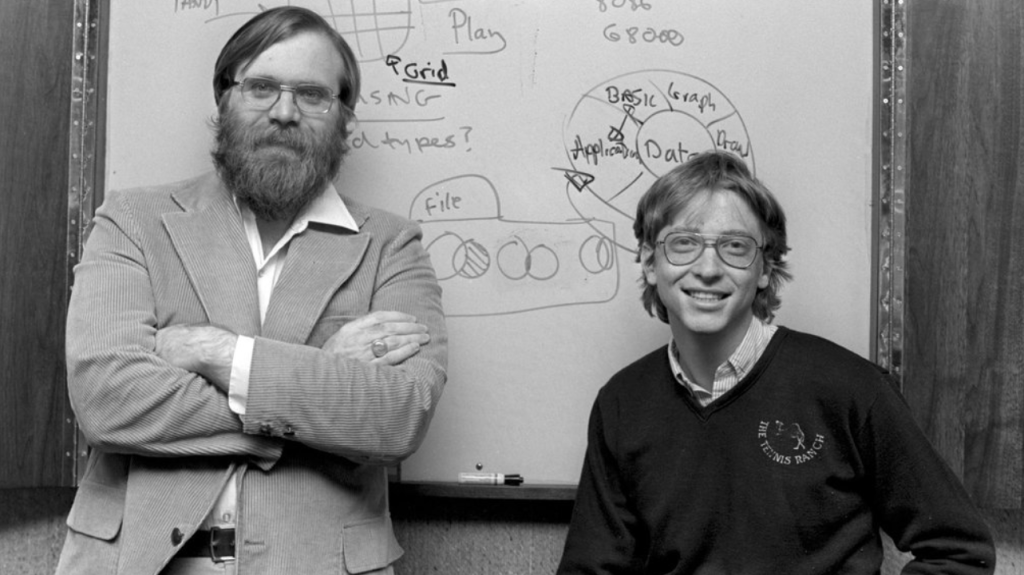
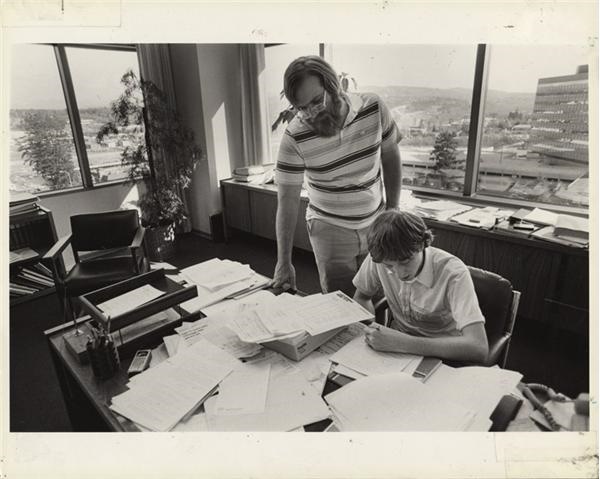
Paul Allen and Bill Gates in the late 1970’s and how I picture both of them in my memory.

When this young man dropped out of college, I’m sure it was a huge disappointment to his family. After all, he’d scored a perfect 1600 on his SAT’s and graduated from the prestigious Lakeside School in Seattle. But the world was changing rapidly in the early to mid-1970’s and he had bigger visions than attending classes and frat parties.

Of course, we all know his story. Along with a close friend, he went on to become a co-founder of one of the world’s most successful computer software development companies: Microsoft.

Early 1980’s Company Logo

But I’m not writing about Bill Gates. This is about Paul Allen, the less ‘famous’ of the Microsoft pair. And without whom Microsoft would never have existed.

If he were alive today, he would be celebrating his 72nd birthday.

According to the Infallible Wikipedia:

“He attended Lakeside School, a private school in Seattle where he befriended Bill Gates, with whom he shared an enthusiasm for computers, and they used Lakeside’s Teletype terminal to develop their programming skills on several time-sharing computer systems. They also used the laboratory of the Computer Science Department of the University of Washington, doing personal research and computer programming; they were banned from the laboratory in 1971 for abuse of their privileges there.

Gates and Allen joined with Ric Weiland and Gates’ childhood best friend and first collaborator, Kent Evans, to form the Lakeside Programing Club and find bugs in Computer Center Corporation’s software, in exchange for extra computer time. In 1972, After Evan’s sudden death due to a mountain climbing accident, Gates turned to Allen for help finishing an automated system of Lakeside’s entire class scheduling procedure. They then formed Traf-O-Data to make traffic counters based on the Intel 8008 processor. According to Allen, he and Gates would go ‘dumpster diving’ in their teenage years for computer program code.

This photo purports to be from 1984. If so, it was likely right after the company moved ‘across’ I-520 to Corporate Campus East. This would have been my final year at Microsoft.

Allen attained a perfect SAT score of 1600 and went to Washington State University, where he joined the Phi Kappa Theta fraternity.”

Allen was hired by Honeywell, located in Boston, as a computer programmer and left WSU. Gates, now attending nearby Harvard, and Allen reconnected. It was Allen who convinced Gates to leave Harvard, move to Albuquerque, New Mexico and form Micro-Soft (To combine the two terms microcomputer and software). In January 1979, the company moved to Bellevue, Washington.

Also from the Infallible Wikipedia:

“The relationship became less close between Allen and Gates as they argued even over small things. Allen effectively left Microsoft in 1982 after being diagnosed with Hodgkin’s lymphoma, though he remained on the board of directors as vice chairman. Gates reportedly asked Allen to give him some of his shares to compensate for the higher amount of work that Gates was doing. According to Allen, Gates said that he ‘did almost everything on BASIC and the company should be split 60–40 in his favor. Allen agreed to this arrangement, which Gates later renegotiated to 64–36. In 1983, Gates tried to buy Allen out at $5 per share, but Allen refused and left the company with his shares intact; this made him a billionaire when Microsoft went public. Gates later repaired his relationship with Allen, and the two men donated $2.2 million to their childhood school Lakeside in 1986. They retained a friendship for the rest of Allen’s life.”

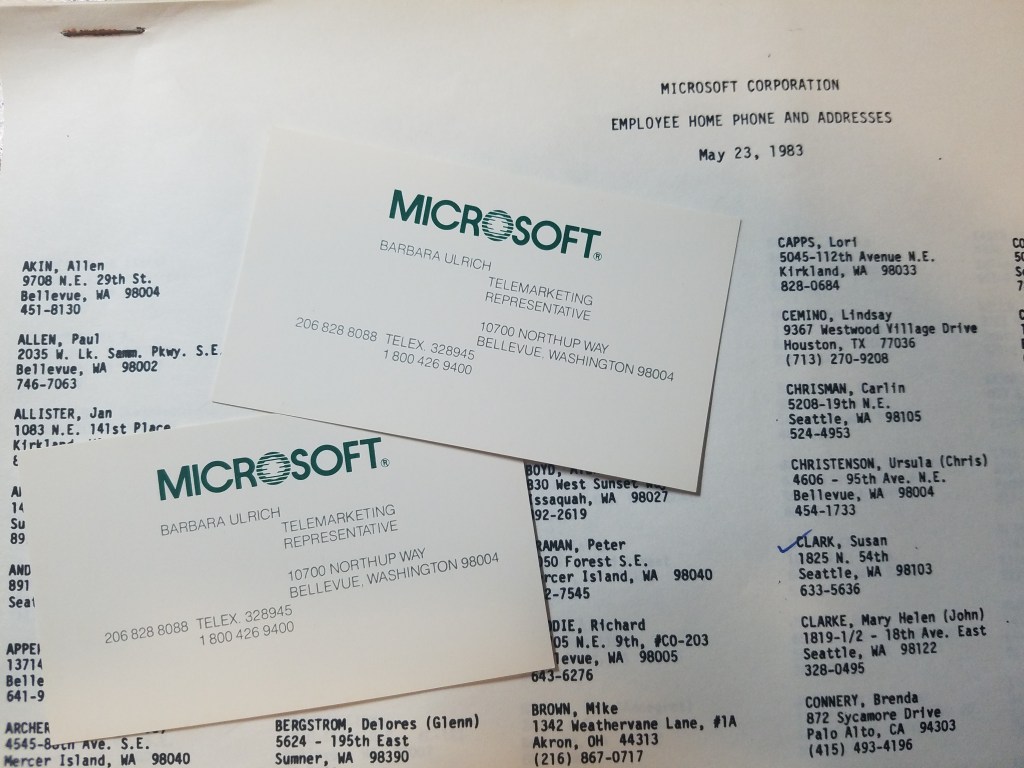
Being that I keep anything which might be historical in nature, I still have several Microsoft employee address lists and a few of my business cards. When I joined the company in early January 1983 there were 205 people at corporate and 21 field sales reps. Which means I was one of the first 250 employees of Microsoft.

Allen went on to do many great things for the world including donating over $2 Billion towards science, technology, education, wildlife conservation, the arts, and community services.

You can read more about Allen’s extraordinary life and find links to his biography here:

https://en.wikipedia.org/wiki/Paul_Allen

In the past eight years of writing my Tuesday Newsday blog I’ve shared only a few stories about my ‘Forest Gump-esque’ experiences at Microsoft. I was hired there in early 1982 as part of a group of three young women who would be launching a retail telemarketing division for the company.

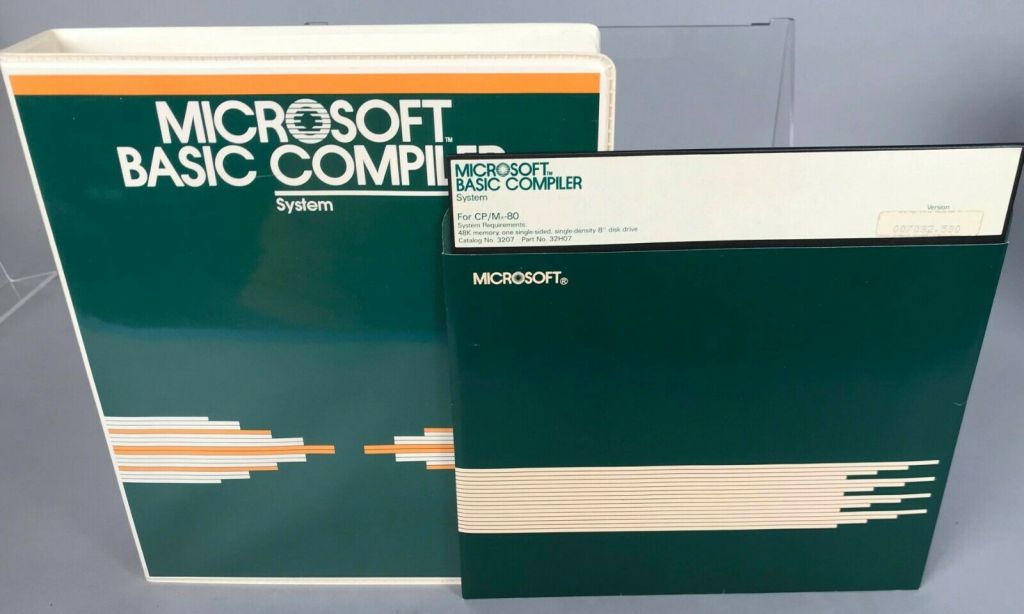
Our trio faced nearly insurmountable odds – which we did not know when we took the jobs – as we were tasked with calling out to every retail store in our region (I had the west coast. The. Entire. West. Coast.), working in conjunction with Microsoft’s field sales reps, to sell such programs as Basic, Fortran, and Cobol compilers, the always popular Flight Simulator and Typing Tutor, and the early spreadsheet program, MultiPlan.

The phone calls were often brutal with the stores’ buyers either not taking our calls or, more often, asking if we sold Lotus 1-2-3, our competitors sizzling hot multi-functional program which dwarfed Microsoft’s Multiplan. Word Processing program? Bah. Didn’t exist then.

There was nothing sleek OR sexy about the early Microsoft products. But they were green…

We worked hard, we played hard, and the burnout rate was high.

I left Microsoft, having experienced that same mentioned burnout, in the fall of 1984 and went to work for another computer company located in Kirkland six weeks later. One day, likely the summer of 1986, my then boss, Tom, took me to lunch for my birthday. We went to a favorite Japanese sushi place in Totem Lake called Izumi.

We sat up at the small sushi bar, the only people in the restaurant when we arrived. We had just gotten our food when a group of 4 or 5 men also arrived, and took a table nearby. I didn’t pay much attention to the group as Tom and I were talking. Tom, being a loud and gregarious individual, dominated the exchange and the room.

Izumi was a favorite where the hubby and me liked to go

Somehow our conversation got on to Microsoft and Tom asked why I had left the company. Before I could answer, I noticed the table of nearby men had gone silent and were all looking at us, and one of them said “I can’t escape it, no matter where I go.” That man was Paul Allen.

Perhaps that moment, more than any other, illuminated how he felt about Microsoft – at least in 1986 when he and Gates were still working to repair their relationship – and summed up for me my Microsoft experience also. For anyone living in the Seattle area, you either worked for, know someone who worked for, or you once worked for, Microsoft. It was inescapable. And not particularly pleasant.

I wanted to say something to Paul Allen that day, but felt that if I had it would have been about as welcome as a drunk fan asking a movie star for an autograph. Instead – as if by mutual agreement – he returned his attention to his group and Tom and I changed our topic.

I left Applied Computer Sciences and the corporate world in the late 1980’s, putting my energies in to raising my kids and doing volunteer work.

If I had any regrets in leaving Microsoft it was, perhaps – unlike Paul Allen – that I was never eligible for stock options, a nice perk that would have made life a bit easier.

I did, however, learn something much more valuable and it is a mantra I’ve carried through my life which goes like this:

Bill Gates and Paul Allen were wildly successful. Microsoft was wildly successful. But just because I worked for the company, however, was not enough to make me wildly successful. It is up to each of us, individually, to follow our own path, pursue our own dreams and interests, and find those things which bring us joy and fulfillment. That, I think, is the true definition of success.

It was a hard lesson but I’m forever thankful for learning it and those brief, brutal, and impactful, Microsoft years.

https://en.wikipedia.org/wiki/Paul_Allen

https://en.wikipedia.org/wiki/Microsoft

The Energizer Bunny

Still Going…

October 29, 2024

A Tuesday Newsday Classic Updated

In the world of advertising, this campaign was particularly brilliant. The story begins in 1983 when Duracell featured a dozen stationary, identical light pink bunnies, all battery powered, drumming on snare drums. The announcer intoned that the one with the Duracell battery would last longer. Eventually, all the batteries die with the exception of the one powered by Duracell.

On October 30, 1988, however, a new bunny emerged on the advertising scene and stole the show from Duracell.

The Energizer Bunny was also pink but instead of being one of a crowd which outlasts the others, this rabbit had attitude. It wore hip sunglasses. It was hot pink. It moved around the room on blue flip flop sandals. And it had a big ole bass drum with the word “ENERGIZER” emblazoned across the surface. In short, it had important elements of a great advertising campaign in that it was memorable and humorous. The bunny has appeared in over 100 commercials and has been featured on TV shows and in movies.

From the Infallible Wikipedia:

“Commercials after the first started out with the Bunny leaving the studio it performed the ‘Drumming Bunny’ ad in, then wandering into the sets of a couple of realistic-looking commercials for fictional products, interrupting them. As the campaign progressed, many of these ads were standalone (for fake products such as ‘Sitagin Hemorrhoid Remedy’, ‘Nasotine Sinus Relief’, ‘TresCafe Coffee’, ‘Alarm’ deodorant soap, etc.) (snip) only to have the Bunny march through, beating his drum, because he was ‘still going’. Eventually real-life products and icons would do a crossover with the Energizer Bunny (Michael J. Fox doing a Pepsi ad, and the opening of TV shows such as Alfred Hitchcock Presents and ABC’s Wide World of Sports). The Energizer Bunny has appeared in more than 115 television commercials.”

A fun look at how the Energizer Bunny got a makeover in the 2000’s

The Energizer Bunny has come to represent something or someone which keeps going and going, seemingly without end.

In late November 2010 I was in Yakima staying to take care of my parents who were in crisis that week. My mom – who had dementia and mobility issues due to a stroke a year earlier – needed round the clock assistance. Between my dad, a part time caregiver, plus help from both my sister and me, they had been managing okay.

Dad and Mom in 2015. By then my mother lived at Apple Creek Adult Family home. Always devoted, my father visited her every day, usually twice a day.

The Tuesday before Thanksgiving, however, Dad collapsed and was discovered by the caregiver. 9-1-1 was summoned and he spent three days in the hospital. A difficult patient, he convinced the doctor to release him earlier than the Doc thought prudent, and arrived home on Friday, November 26th proclaiming he was just fine.

A little after 10 p.m., he went in to take a shower. I heard him calling for help a few minutes later and rushed in to discover him collapsed on the floor. After many struggles I was able to get him up onto the seat of my mother’s walker, but he was slumped to one side. He objected to the thought of calling 9-1-1 (again!) so I called my sister who, along with her husband, came over. Eventually we did call the medics who arrived and discovered his heart was pounding at about 200 BPM and suggested he go to the hospital.

No way was he agreeing to that and kept insisting that the medics just put him to bed. Which they did. Convinced by the EMT’s that he might not survive the night, my sister and me took turns with an all-night vigil.

Dad didn’t like using a walker, but he had places to go and using it was better than falling. Pictured here on his 96th birthday in 2019 with my brother.

Around 8 a.m., and with Dad still with us, I was up and out in the kitchen contemplating how to cope with two parents in need of assistance. A noise to my left drew my attention. I looked up and here came my dad, using my mom’s smaller aluminum walker, advancing with purpose and determination and seemingly unfazed by all which had happened. That entire day he moved with frenetic energy, straightening things, switching from one thing to another, hardly sitting down all day.

I described the whole thing to my sister this way: “Dad is like the Energizer Bunny.”

For the next nine years, this has been the way we’ve described our dad. There have been countless episodes of the pounding heart which takes him down for a day or two. When he’s recovered, though, watch out! Because it was always back to Energizer Bunny mode.

Eventually, however, even the strongest, most durable batteries run out of energy. And so it was for my father on October 24, 2019. His strong heart – in spite of what I am now certain were Tachycardia events – was the battery which kept him going to the age of 96 and a half.

It’s hard to believe that it’s been five years since we said goodbye to our Energizer Bunny. My sister, brothers, and me, often find ourselves reminiscing and laughing over the many stories of our dad – who we also refer to as “hell or high-water Vince.” He was truly one of a kind, nearly impossible to manage, but never boring.

When Covid shut down the world in 2020, I was glad my dad was no longer here. He never would have been able to stand the social distancing, the masks, or – most of all – the forced isolation.

During the year following his death, there were events and moments when we felt as if his spirit was still with us. From the time in August of 2020 when we saw his beloved Mustang a half mile from my sister’s house (EEE 161 Rides Again https://barbaradevore.com/2021/03/09/eee-161-rides-again/) to the next day when visiting the cemetery – after looking at headstones for several hours – and being hit by a literal whirlwind as we were deciding what color granite to choose; it felt as if he still had a hand in our lives and decisions.

When the internment business was finally able to be completed – with the installation of his and our mother’s headstones – on October 24, 2020, things have been much quieter. I think, perhaps, he was pleased with how we honored them both.

The links:

https://en.wikipedia.org/wiki/Energizer_Bunny

https://www.shawandsons.com/obituary/vincent-devore

What If…

…is the essence of every story an author writes.

October 22, 2024

Whenever I set out to write a novel, I always start with the words ‘What If?” I cannot speak for other authors, only myself, but I can imagine a couple of other authors who might have done just that.

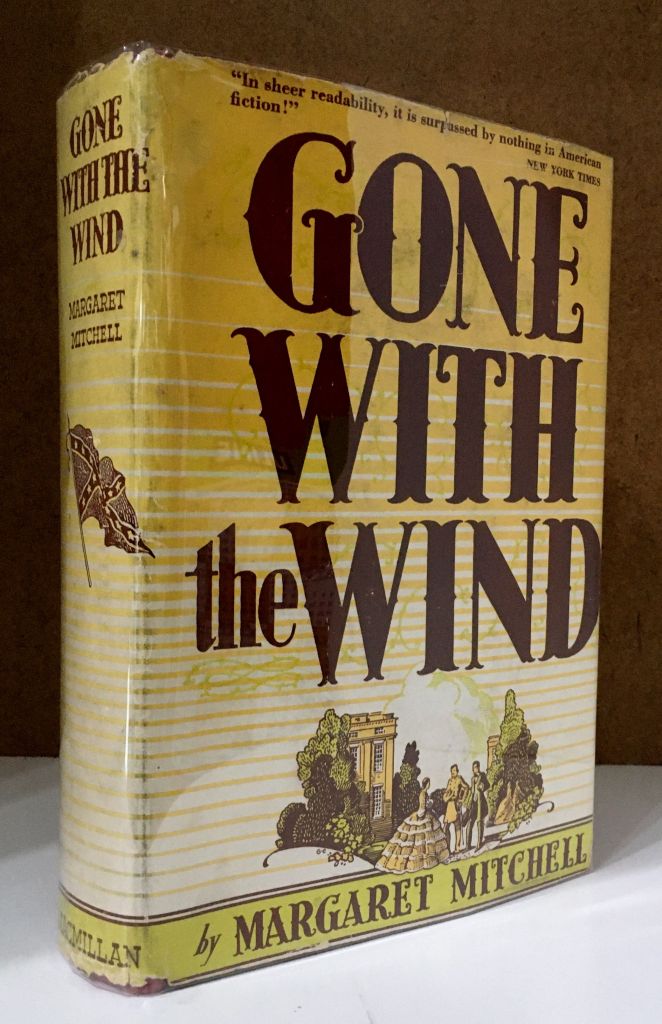
For example, “What if a woman, whose home is nearly destroyed by an invading army, uses her feminine wiles to seduce a rogue of a man who she thinks can save her?” That just might have been the question Margaret Mitchell asked when she wrote Gone With The Wind.

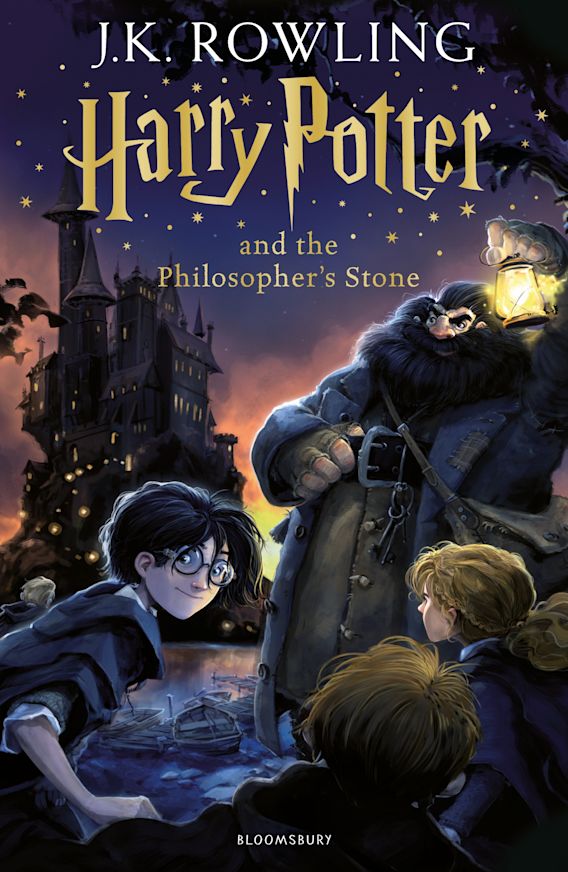
Or, try this one, “What if a young orphan is invited to attend a school because he possesses skills and abilities he doesn’t realize he has? And then he enters a world where wonderful and frightening things happen to him?”  This would be a very broad overview of Harry Potter’s world.

Over ten years ago, I posited the following ‘What If?”

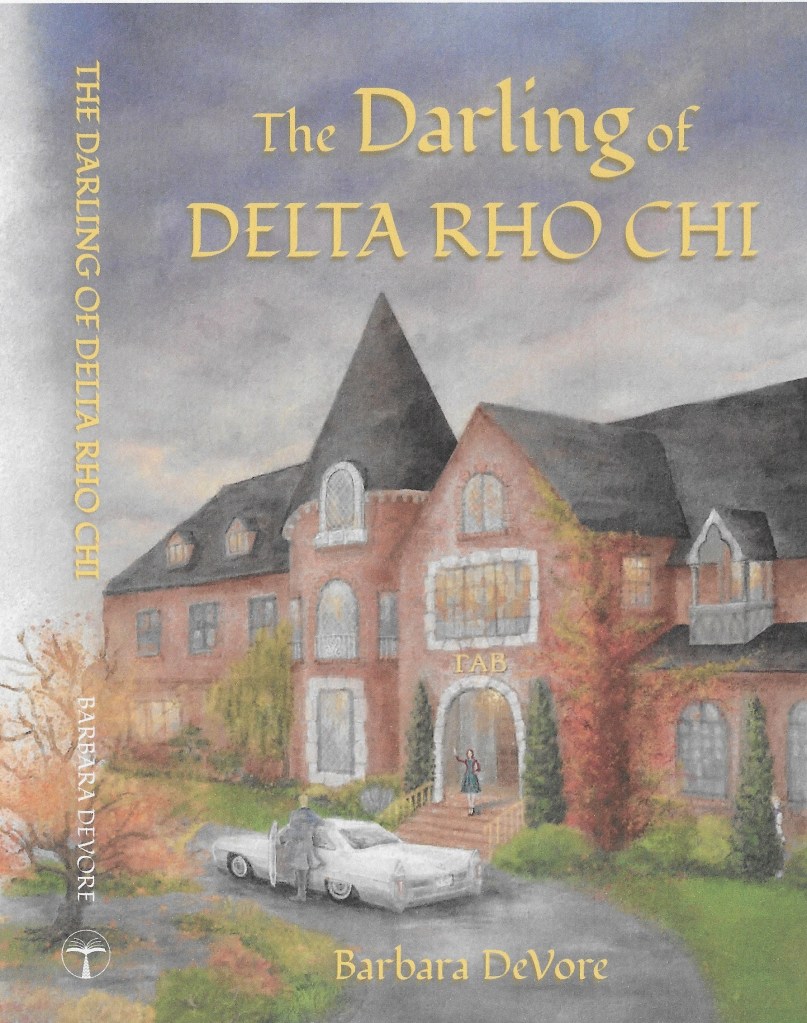
‘What if’ a widow were to become a housemother for a sorority in the 1960’s?’

Since this really happened to my grandmother, Alma Beatrice DeVore, it wasn’t a big stretch to imagine that scenario. But beyond the fact that this was my grandmother’s career from her late forties and into her early sixties, the similarities to the world I’ve built for the Gamma Alpha Beta’s and the Delta Rho Chi’s ends there.

In ‘The Darling of Delta Rho Chi’ we meet Elise Ellingson (in tribute to my grandmother whose maiden name was Ellingson!), a 37 year old widow who finds the job of housemother daunting. Not only is Elise a widow, but she’s never been a mother and is ill-equipped to provide guidance and counsel to the young sorority women given to her care. Enter 18-year-old Riley Paxton, a handful of a girl whose behavior forces her father, Jack, to arrive on the scene to rescue his daughter from the rigid and dictatorial housemother.

None of that happened to my grandmother, who as far as I know, never got romantically involved with a parent nor did she have such a difficult charge in her house. All similarities to real life ended when I started to type the first lines of the story.

Writing a full length novel is one thing. Seeing it through multiple edits, deciding on a publisher, rewrites, perfecting the copy for the back cover, finding someone to bring your vision of the cover art to life, obsessing over the minutiae of a very brief pitch to grab potential readers’ interest on Amazon, and on and on and on, takes a level of dedication you only understand once you’ve done it.

Which brings me to this day. I am thrilled to report that ‘The Darling of Delta Rho Chi’ – the first of a four book series about the men and women who belong to the fictional Greek society world at the University of Washington – is a mere weeks away from birth!

Look for a link very soon on my blog. Who knows, with any luck, the books and the author just end up on the Infallible Wikipedia one day.

The Sewing Machine

An invaluable invention which changed women’s lives

September 10, 2024

A Tuesday Newsday Classic

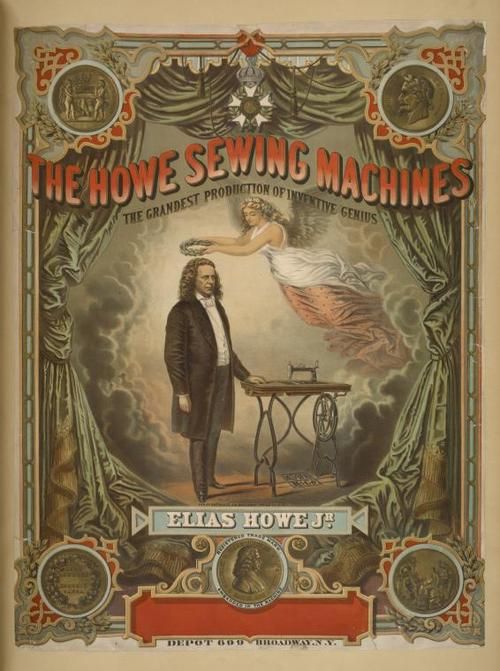
This invention truly revolutionized American life. The sewing machine was granted a patent on September 10, 1846. While most people associate the name Singer with the sewing machine it was actually an inventor by the name of Elias Howe who conceived of and created the first such machine. From the Infallible Wikipedia:

“He almost beggared himself before he discovered where the eye of the needle of the sewing machine should be located. It is probable that there are very few people who know how it came about. His original idea was to follow the model of the ordinary needle, and have the eye at the heel. It never occurred to him that it should be placed near the point, and he might have failed altogether if he had not dreamed he was building a sewing machine for a savage king in a strange country. Just as in his actual working experience, he was perplexed about the needle’s eye. He thought the king gave him twenty-four hours in which to complete the machine and make it sew. If not finished in that time death was to be the punishment. Howe worked and worked, and puzzled, and finally gave it up. Then he thought he was taken out to be executed. He noticed that the warriors carried spears that were pierced near the head. Instantly came the solution of the difficulty, and while the inventor was begging for time, he awoke. It was 4 o’clock in the morning. He jumped out of bed, ran to his workshop, and by 9, a needle with an eye at the point had been rudely modeled. After that it was easy. That is the true story of an important incident in the invention of the sewing machine.”

Alas, Elias Howe had competition in the development of the sewing machine and another, much more recognized name, came to dominate the industry. Also from the Infallible Wikipedia:

“Despite his (Howe) efforts to sell his machine, other entrepreneurs began manufacturing sewing machines. Howe was forced to defend his patent in a court case that lasted from 1849 to 1854 because he found that Isaac Singer with cooperation from Walter Hunt had perfected a facsimile of his machine and was selling it with the same lockstitch that Howe had invented and patented. He won the dispute and earned considerable royalties from Singer and others for sales of his invention.”

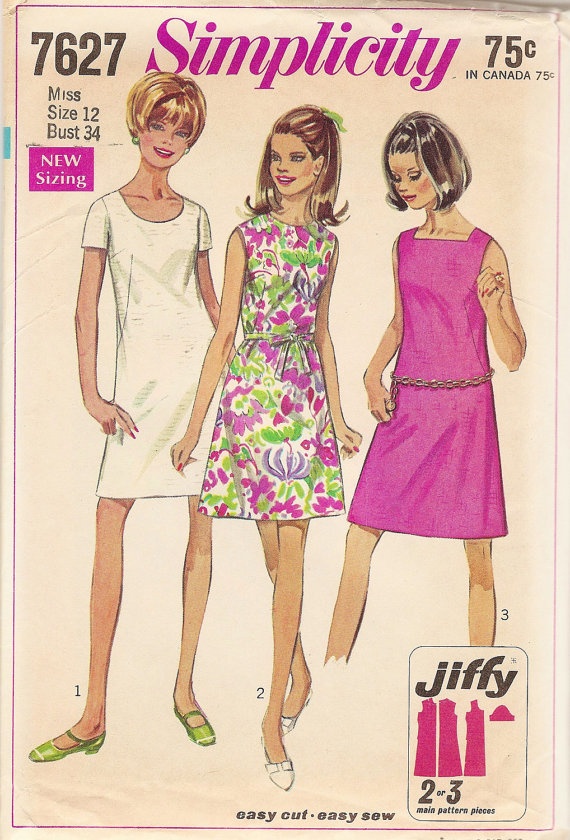
An A-line pattern that beginning seamstresses could master as they learned to sew.

Howe, like Singer, ended up a multimillionaire.

Before this society altering machine was invented, it took some 14 hours for a person – usually a woman – laboring at home and sewing each seam by hand to make a shirt. Those hours were invested after all other chores were done: cooking, cleaning, washing, and child care. The sewing machine, which at first was used in factories, eventually made its way to the home allowing women to sew stronger, better garments, and saving hundreds of hours of valuable time.

For me, my relationship with the sewing machine is a love/hate affair. When in Junior High I took Home Economics classes which, at Wilson Junior High in Yakima, were split into two segments. One was to learn all the skills needed to cook. The other was to learn how to sew. I was in eighth grade in the sewing segment when I received my first lessons.

Our initial project was to sew a basic A-line dress. For those unfamiliar with the term, what that meant was a dress of three pieces: front, and two mirror image back pieces with a zipper down the middle. No sleeves, just armholes with armhole facings; darts at the bodice completed the fitting. In all, the pattern consisted of 8 pieces. Five of those pieces were facings around the arms and neck.

Our teacher sent us out on the mission to purchase material for our dresses. I acquired a very loud, very late 1960’s/early 1970’s fabric, with colorful and bold flowers on a white background. Day by day we labored. One day the pattern pieces had to be carefully laid out and pinned down, paying attention to concepts such as grain lines as we learned how to ‘read’ the pattern. The next step, after our teacher approved our work, was to cut the fabric, making sure to follow the printed lines of the pattern and the little tabs to be matched. Day by day we succeeded in sewing together our creation. We learned the proper way to sew darts (the dress had four of them), install a zipper, finish edges, tack down the facings, and to sew (by hand) a hem.

Typical of Popular fabrics designs from the early 1970’s

When my dress was complete that fall I was excited to wear it… only to discover that due to my physical similarity to a long-legged colt, the length of the dress was such that all anyone noticed were my knock-kneed legs extending a mile from the hem to the floor.

This might have been due to the fact that the mini skirt was the dominant fashion in the late 1960’s. Or it might have been that between my 8th and 9th grade years of school I grew, literally, six inches in height. From the time I started the dress to when it was finished, I had gained most of this height.

But I was not discouraged as I had discovered I now possessed a valuable ability. Soon I had a bit of a cottage industry going. As a member of the Rainbow Girls the need for custom dresses for its members provided clients. The very first dress I made for someone else was for my friend, Wende, who paid me $15 to sew a dress.

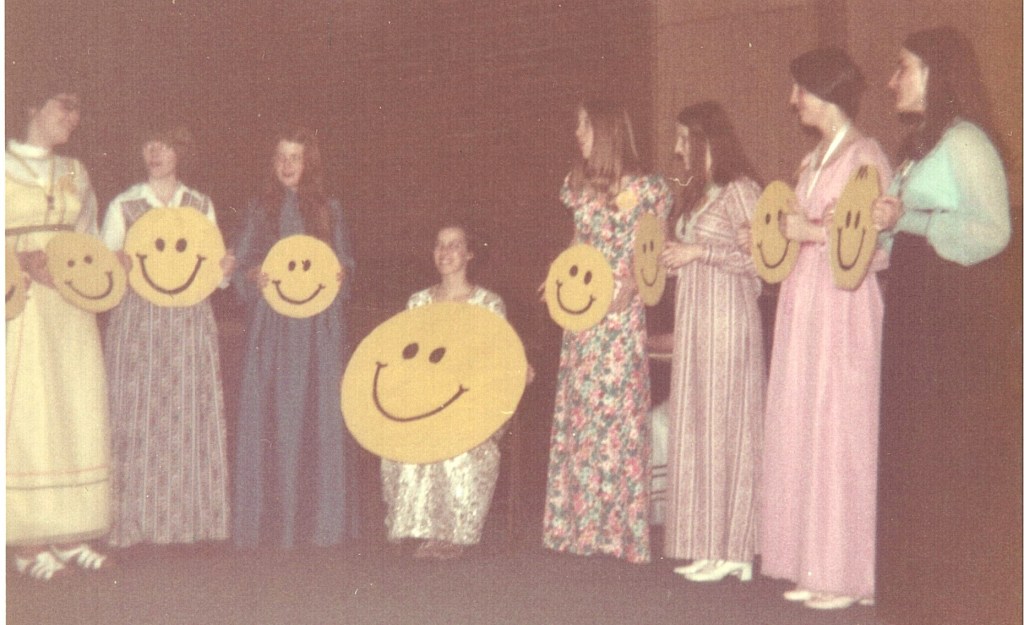
March 1972. This was taken at a Rainbow Girls meeting in Yakima. I’m standing immediately to the right of the girl seated and wearing a dress I sewed using popular bright floral colors. I wrote in my diary that day “I wore my new formal that I made and everyone seemed to like it.
.

Over the years knowing how to sew has come in handy. I can mend pretty much anything and can create clothing. I’ve made costumes for my children, dresses for countless Rainbow girls, and my most recent project (in 2019) of sewing 21 identical aprons for gifts.

The most painful experience occurred, however, in January 2010. Sewing is, despite Mr. Howe’s invention, a time consuming process.

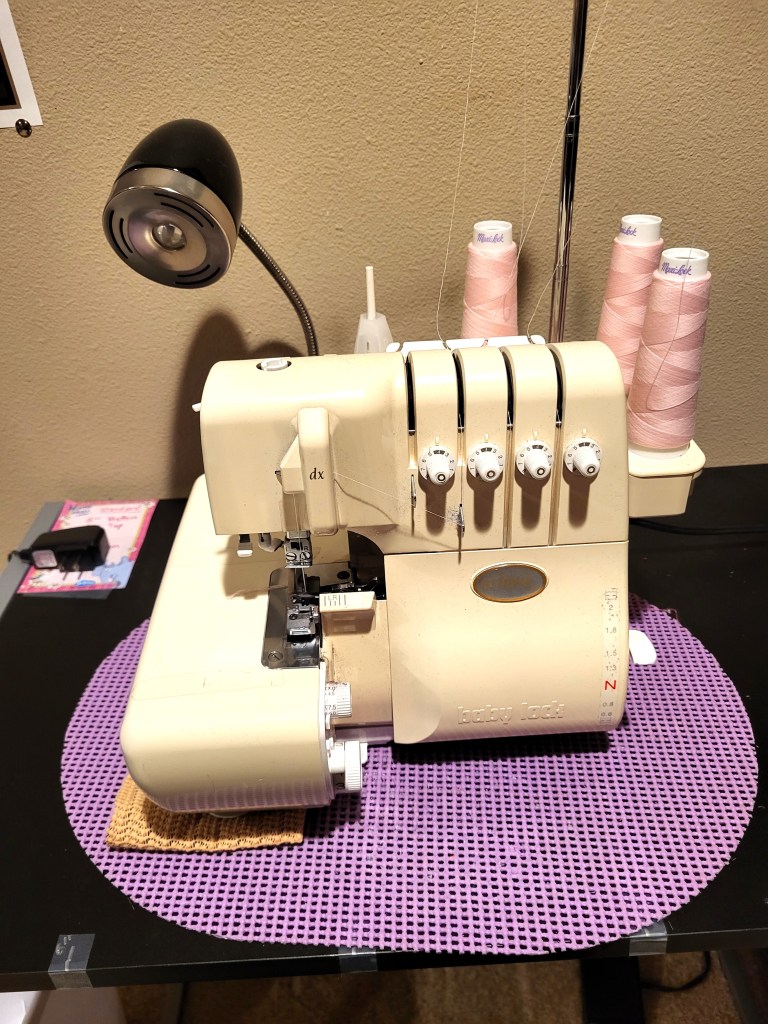
My Baby Lock serger – a Christmas present to myself – purchased in early 2010 and still being used.

Enter into my world the serger. Improving on the functionality of the sewing machine, a serger completely binds a seam, cutting and simultaneously sewing together two pieces of fabric into a never to be undone union. The addition of the serger was a miracle for me. Seams which before had taken 20 minutes each now required but a few minutes.

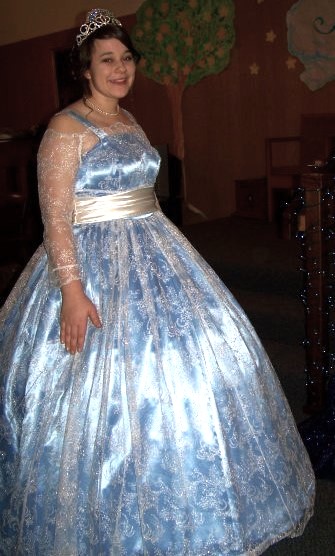
Until. Until I was sewing my first project using the serger in January 2010. It was to be a rather delicate and beautiful blue dress using a pattern in the same style as the wedding dress worn by Kate Middleton for her marriage to Prince William. There was lace. There was satin. It was going to be stunning. I was happily serging the seams in anticipation of the dress being completed when my foot slipped on the pedal and the serger went one stitch too far. I looked down at the garment and there, in the nearly completed dress, was a perfect cut into the midriff in the shape of a small upside-down V.

I stared in horror at the incision and wondered how to fix the mistake. Could I bind the edge to repair it? Could I tuck in under?

The reality of the situation hit me. There was no way to ‘fix’ the mistake. The dress would have to be taken apart, a complete new section cut out and replacing the irreparably damaged midriff piece.

The dress which the serger attacked…

The memory of that day is forever seared into my brain. I continued to study the ruined bodice for what seemed like several minutes. At last I stood. I turned off the machine. I left the dress right where it was, a testament to the old adage “A stitch in time saves nine.”  I left my sewing room for the rest of day, literally sick over the fact that I would have to recreate the destroyed section, learning in that moment that a serger was but a tool which, if not used correctly, was no more useful than any other tool in the wrong hands.

The next day I returned to the sewing room, cut out the new section and was able to recreate the damaged piece. My mistake had added a couple of hours to the project. The dress? It turned out beautifully, a true masterpiece on the lovely young woman who wore it. Because I knew that sometimes ‘things happened’, I had enough extra material to fix what had been so easily destroyed.

As for me, sewing is something I do because it serves an end, but it’s not my life’s passion. My passion is this: writing.

I do find, however, that when my brain is tired from the creative process of writing, sewing can provide a comfort in the sheer rote of its methods. Seams are seams. There are only so many ways to put a garment together and once you master that you can make pretty much anything so long as you respect the machines which make it possible.

But writing… well, that taps into my creative mind as I’m always looking for new and different ways to share ancient truths.

So I leave the sewing to those whose passion it is. Artistry comes in many forms.  Except for an occasional project, my 10 hour sewing days are behind me and I’ve closed the shop.

I also think it’s time to bring back Home Ec. classes like sewing. We’ve now raised a couple generations of people, the majority of whom seem to lack basic life skills. Being able to sew a seam, and put up a hem is just one example of valuable ability. Cooking, carpentry, and mechanical aptitude should be added to that list also.

So I salute Elias Howe and his vision for the modern sewing machine. It truly changed the life of women.

The Infallible Links:

https://en.wikipedia.org/wiki/Sewing_machine

https://en.wikipedia.org/wiki/Elias_Howe

The First Tuesday in September

Pee Chees, Saddle Shoes, and Fear

September 3, 2024

A Tuesday Newsday Classic

The first Tuesday of September was always a day which struck fear in my heart. In fact, no other day of the year caused more anxiety and distress than this one.

The reason, of course, was due to the fact that when I was growing up school always started on this day.

The ubiquitous Pee-Chee – an indispensible back to school item

Unlike in today’s world, where we are inundated with back-to-school ads for supplies and equipment beginning in late July, in the 1960’s and 70’s, we didn’t much think about going back to school. That was until one day in late August my mother would ominously announce that school started the next week.

So off we would go to get things. Our back-to-school supply list included Pee Chee folders, notebook paper, #2 pencils, and BIC pens. That was it.

For clothing, I was lucky to get one new outfit for the first day of school. And the most evil of all footwear ever invented: saddle shoes.

I’ll get back to those in a bit.  First off, however, I imagine you are wondering about the Pee Chee.  What is a Pee Chee? And why do so many people my age wax nostalgic over a folded in half piece of cardstock? I knew it deserved Tuesday Newsday status. Since I couldn’t find the official day they were introduced, the first Tuesday in September seemed the perfect opportunity to learn about them. From the Infallible Wikipedia:

How we learned our multiplication tables and other useful information

“The yellow Pee-Chee All Season Portfolio was a common American stationery item in the second half of the 20th century, commonly used by students for storing school papers. It was first produced in 1943 by the Western Tablet and Stationery Company of Kalamazoo, Michigan. Pee-Chees were later produced by the Mead Corporation. (snip) These inexpensive folders are made of card stock with two internal pockets for the storage of loose-leaf paper. The pockets are printed with a variety of reference information including factors for converting between Imperial and metric measurement units, and a multiplication table. The folders had fallen out of general use by the 2000s, but are available from Mead as of 2014.”

Note the words “multiplication table.” This was probably the most valuable thing a Pee Chee provided as we were expected to memorize this table. By the time you arrived at the twelves, it got a bit difficult. The handy dandy Pee Chee came to your rescue. Of course, our teachers knew this and we had to put our Pee Chee’s away during test time.

One of the eight Nordstrom shoe stores in the 1960’s

Every day, when I walked home from elementary school, I only carried a Pee Chee and rarely any books unless it was one checked out from the school library. By the time I was in Junior High and High School, books were part of the equation. Along with the Pee Chee of course.

That brand new, unmarked, non-dog-eared Pee Chee was the best part of being forced to go back to school. And paper, pencils and BIC pens, of course. The best addition were colored Flair pens starting in Junior High! My favorite was the green one.

But the worst part? From first grade through sixth I was subjected to torture by being forced to wear saddle shoes. Whoever invented this shoe should have been required to wear a new pair every week for their entire lives just so they would know what pain they subjected multiple generations of girls to endure.

The evil saddle shoe…

My mother would take me and my sister to Nordstrom’s Shoe store… in the 1960’s in Yakima that’s all it was… a shoe store. We would bypass all the beautiful shiny black patent leather shoes and the cute Mary Janes and go directly to the rack of clunky saddle shoes. There they sat, big, bulky, and ugly. They had brown soles thicker than a slice of French toast. Across their beige bodies was a second strip of stiff brown leather, with laces through the holes, just waiting to cinch your foot into bondage. Heaven forbid that you got shoes which fit… no, they had to be a bit big so you’d grow in to them and not grow out of them before the following June.

We would wear them around the house for several days before school started in a futile effort to ‘break’ them in. It never worked. The first few weeks of school our feet bore witness to the horrors of saddle shoes; oozing red blisters were covered with adhesive tape and we’d limp through the day. Eventually the leather softened and the blisters abated… usually by October. Kids today just don’t realize how lucky they are to have been spared the scourge of saddle shoes.

Note the saddle shoes on the two girls seated, Marla on the left and Rinda on the far right. This author is next to Marla undoubtedly also wearing saddle shoes. The girl in the glasses next to me? That was Kelly who NEVER had saddle shoes but always cute black patten leather shoes.
Flair pens were IT! Especially the green ones.

Even now the first week of September is my least favorite time of the year; despite the fact I do not have to go back to school nor do my children.

I am, however, very, very tempted to go hang out in the office supply store and indulge myself in the smell of paper and ink and the plethora of notebooks, papers, pens, and paperclips. Anyone who has seen my office knows that I have stacks of spiral notebooks, hundreds of colored paperclips (many with decorative tops), and a collection of G-2 pens of every hue. In fact, just writing about it inspires me to head to my nearest Office Depot Max to see what’s on sale. Unlike saddle shoes, office supplies never go out of fashion!

As always a couple of links:

https://en.wikipedia.org/wiki/Pee_Chee_folder

https://en.wikipedia.org/wiki/Saddle_shoe

Yes, it is true. In 1960 Nordstrom’s only sold shoes. The store in Yakima was one of only 8 stores at the time.

https://shop.nordstrom.com/content/company-history