Tag Archive | Yakima Washington

Root Beer: an American Original

A Tasty Treat on a Summer afternoon

June 17th
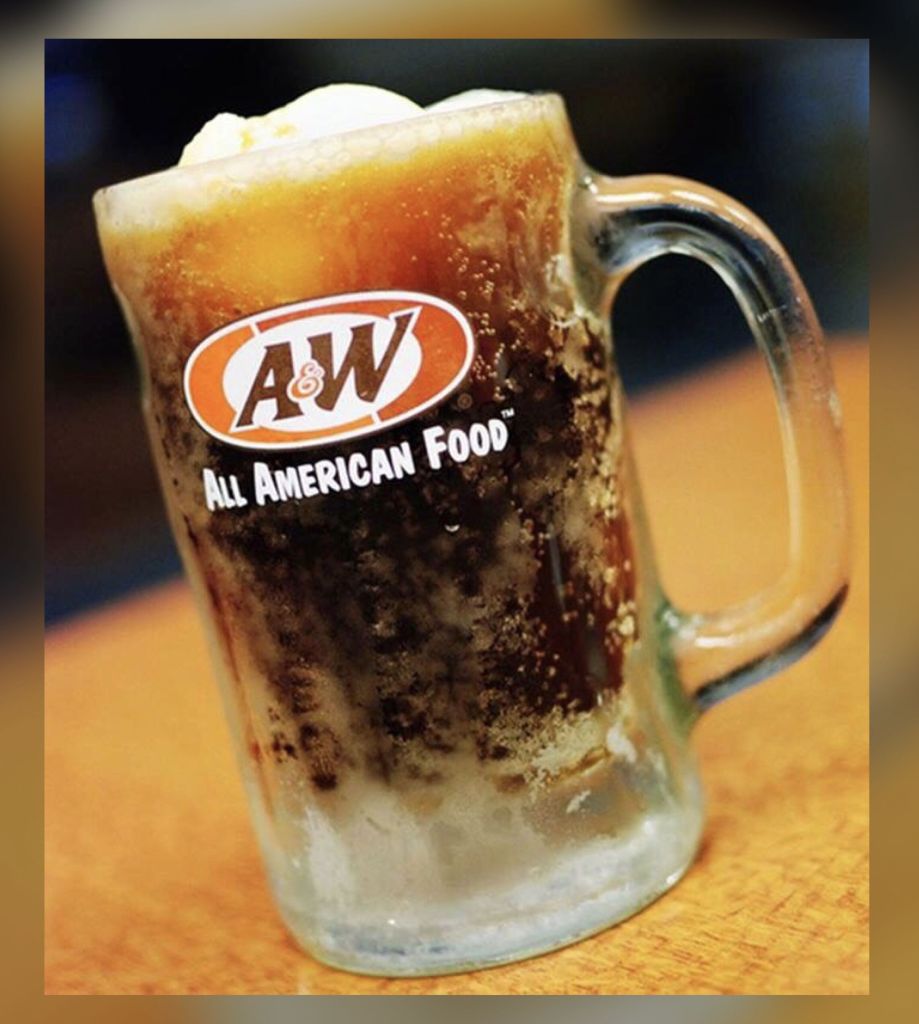
When I think back to the 1960’s and 1970’s, there is not – in my opinion – a better symbol of American culture than the A&W Root Beer stand.

It’s appropriate to write about it this week as June 17th is National Root Beer Day. I’m certain we can have a debate as to ‘which’ root beer brand is best: Hires, Barq’s, A&W, or, perhaps, a newer competitor like Mug. For me, it’s always been A&W. I suppose that is because it was THE root beer which my family always drank.

As expected, the Infallible Wikipedia expounds on the topic of Root Beer:
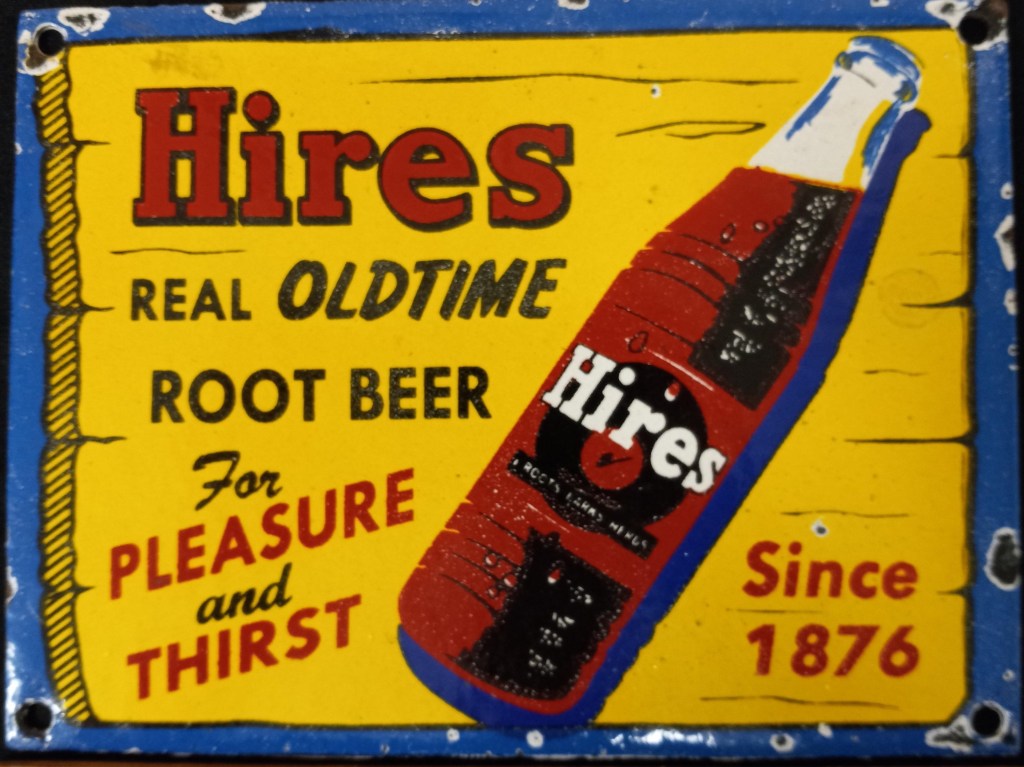
The original commercial root beer was Hires which often advertised its product as a health tonic.

“Root beer has been drunk in the United States since at least the eighteenth century. It has been sold in confectionery stores since at least the 1840s, and written recipes for root beer have been documented since the 1830s. In the nineteenth century, it was often consumed hot and was often used with medicinal intent. It was combined with soda as early as the 1850s; at that time it was sold as a syrup rather than a ready-made beverage.

Beyond its aromatic qualities, the medicinal benefits of sassafras were well known to both Native Americans and Europeans, and druggists began marketing root beer for its medicinal qualities. (Snip)

Safrole, the aromatic oil found in sassafras roots and bark that gave traditional root beer its distinctive flavor, was banned in commercially mass-produced foods and drugs by the FDA in 1960. Laboratory animals that were given oral doses of sassafras tea or sassafras oil that contained large doses of safrole developed permanent liver damage or various types of cancer.”

The article does give more detail about Charles Elmer Hires who was a pioneer in the commercial production and also mention’s Barq’s – developed by the Coca-Cola company.

But it was Roy Allen who opened the first root beer stand in 1919 in Lodi, California. It was a hit and four years later, in 1923, he teamed up with Frank Wright and they opened the first A&W drive-in restaurant in Sacramento. The Infallible Wikipedia tells us:
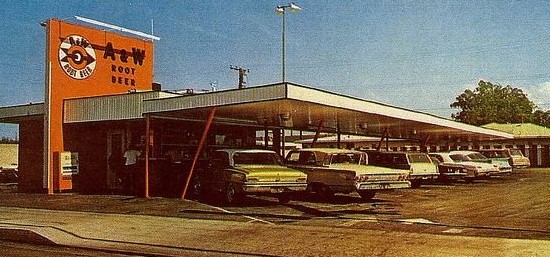
An A&W Root Beer drive in from the late 1950’s/early 1960’s. Not the one in Yakima but ours was similarly laid out.

“Curbside service was provided by tray boys and tray girls. In 1924, Allen purchased Frank Wright’s stake in the business. In 1925, Allen began franchising the root beer, while the franchisee added the other menu items and operated at their discretion. Most of the restaurants that opened under this scheme were on the highways of the Central Valley region, mainly for travelers. This may have arguably been the first successful food-franchising operation.”

Fast forward to the 1960’s, it is at the corner of 10th Avenue and Nob Hill Boulevard in Yakima, Washington, where my family went during those very rare times when we frequented any sort of restaurant – fast food OR sit down. It was always a treat to get to go to A&W and pull into a slot under the shaded carport style ‘drive in.’ Occasionally my parents would buy us food, but mostly it was just for the root beer.

My dad would turn on the head lights of the car and soon a perky teenage girl would be at his window to attach the tray holder. We’d wait with great anticipation until a short time later, she would reappear – the tray laden with the thick frosty mugs of root beer. Soon they were passed around the car and nothing ever tasted so good on a hot summer’s evening.
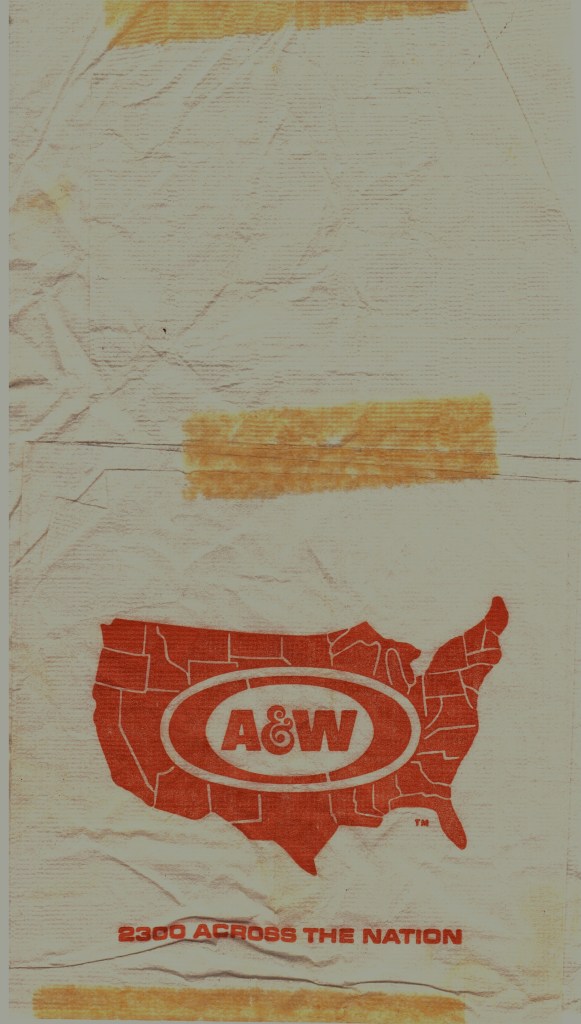
Who actually saves a 1972 napkin from A&W and stows it away in her teenage scrapbook? Oh, yeah, that would be the author. Unbelievable but true.

Sometimes – especially for the Fourth of July – my dad would come home with a giant glass jug full of A&W root beer and a five-gallon tub of vanilla ice cream. When the family was finished with the sparklers, pinwheels, and other small fireworks assortment, it was time for Root Beer floats.

Dad used to bring home a jug of root beer on the 4th of July similar to this one, no doubt.

Those were equally as good and a treat the family looked forward to every Independence Day.

At the time, I did not – of course – appreciate these special moments. It was, after all, what was normal for my family. I believe it was the summer of 1974 when I went to the drive-in on 10th & Nob Hill for the last time.

My brother – age 21 that year – was home from college and it fell to him and me to drive to A&W to buy the requisite jug of root beer for the Fourth of July floats. Being that he was immortal (a belief which tends to most affect young men ages 16 to 25 – a phenomenon the hubby and I refer to as being “nineteen and immortal”) he had purchased a rather fun car to drive and drive fast: a 1974 yellow Fiat X1/9.

Being that I was a teenage girl, there was a thrill to riding in a fast car even if it was with my older – and much cooler than me – brother. I did not think I was immortal but I was willing to take risks.

I climbed into the shotgun seat of his car and away we zipped down Tieton Drive. The roof of the car had been stowed in the forward ‘trunk’, the sun shining, and warm summer air surrounded us. We zipped down the hill to 16th, then a right turn and south to Nob Hill, and then left for the final six blocks east to the family favorite A&W. Soon I had the jug of root beer secured at my feet for the return trip.
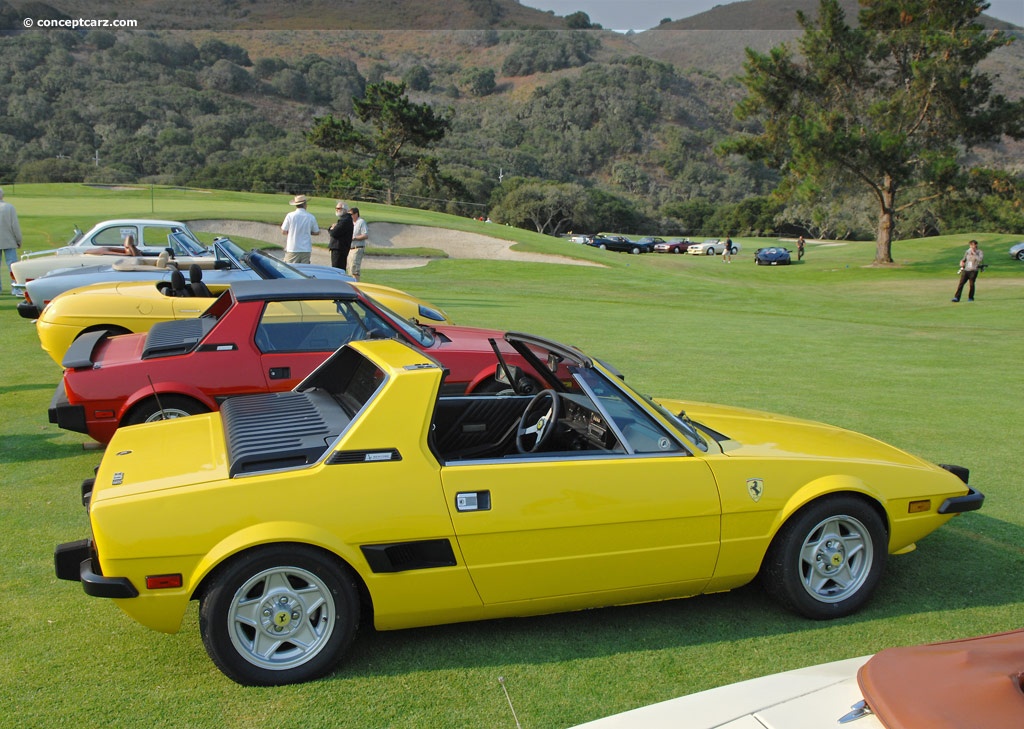
A yellow 1974 Fiat X1/9 like the one my brother owned. The roof was removable and stored in the front compartment as the engine was in the back. Photo from http://www.conceptcarz.com.

We raced home, speeding west up Tieton Drive hill and I swear to this day that my brother never slowed down as the car careened around the corner onto our street. I am certain he hit the gas as we practically flew over the pavement. That moment is etched in my memory, my long blonde hair flying; I’m alternating between laughing and screaming, buckled in for my brother’s version of Mr. Toad’s Wild Ride.

After we were safely parked, I made him carry the root beer into the house as I did not trust my legs, certain they had turned to rubber.

Eventually that A&W location shut down and the era of carhops is all but gone.* Somehow going to a drive-through window just isn’t the same. But even so, when I pour myself a glass of A&W, I’m immediately transported back to a Yakima summer night and I smile when I think about that crazy ride with my crazy brother.

*Burgermaster has five locations in the greater Seattle area and still employs ‘carhops.’

A few links:

https://en.wikipedia.org/wiki/Root_beer

https://en.wikipedia.org/wiki/A%26W_Restaurants

https://en.wikipedia.org/wiki/Fiat_X1/9

The Enduring Legacy of the Piano

May 27th

My grandmother’s 1922 Price & Teeple piano – three generations of owners over 103 years

I hate it when I get a nugget of an idea only to have it lead absolutely nowhere. Such was this week’s Tuesday Newsday nugget which, it turns out, led to an unsolvable mystery. And I do love a good mystery.

It was on this date, May 27, 1796, when James Sylvanus McLean – a resident of New Jersey – was awarded a US patent for “an improvement in piano fortes.”

Realizing I’ve never done a Tuesday Newsday about the instrument known as the piano, I decided it was a worthy topic and eagerly typed ‘piano’ into the Infallible Wikipedia only to be bombarded with every last bit of minutiae one can imagine about the origins of this ancient instrument. But Mr. McLean’s improvement? Lost to history when the US patent office burned in December 1836.

Undeterred, I dug further and wondered what improvements were so significant to warrant a patent? Was it the design of what we think of as the modern upright instrument which made the acquisition of a piano available to an average family? Or perhaps the addition of felt ‘hammers’ that were used to strike the metal strings inside the instrument? Maybe it was the use of wood to create the box where the music is made? Or how the wires are strung? We will never know.

Now for those who don’t KNOW what a piano is, here’s the description from The Infallible Wikipedia:

“A piano is a keyboard instrument that produces sound when its keys are depressed, activating an action mechanism where hammers strike strings. Modern pianos have a row of 88 black and white keys, tuned to a chromatic scale in equal temperament. A musician who specializes in piano is called a pianist.

There are two main types of piano: the grand piano and the upright piano. The grand piano offers better sound and more precise key control, making it the preferred choice when space and budget allow. The grand piano is also considered a necessity in venues hosting skilled pianists. The upright piano is more commonly used because of its smaller size and lower cost.

When a key is depressed, the strings inside are struck by felt-coated wooden hammers. The vibrations are transmitted through a bridge to a soundboard that amplifies the sound by coupling the acoustic energy to the air. When the key is released, a damper stops the string’s vibration, ending the sound. Most notes have three strings, except for the bass, which graduates from one to two. Notes can be sustained when the keys are released by the use of pedals at the base of the instrument, which lift the dampers off the strings. The sustain pedal allows pianists to connect and overlay sound, and achieve expressive and colorful sonority.”

The popularity chart from a 2022 Newsweek article.

Enough of the technical description. What I do know is that the musical instrument we call the piano has been the most popular instrument in the world for centuries, according to multiple articles I found. That said, the debate now rages whether the guitar has overtaken the piano for the top spot. I also found articles to support that conjecture.

But back to the piano. It was sometime in the mid-1960’s when a piano came into my life. Although I was a young child, I remember the day vividly.

My maternal grandmother, Eva, had decided that she no longer wanted the piano which my grandfather, Mike, had bought her when they got married in June 1922. Why this was the case, I don’t know for sure. But once she made her mind up (I attribute that to her ¼ Scottish heritage) it stayed made up.

So my family became the recipients of said piano.

I do recall her being at our house when the instrument arrived and she sat down and reeled off a song from memory! I was awed and knew then that I wanted to play it just like her.

My older brother – in high school at the time – also seemed to have the musical ability and soon he was picking things out on the piano and adding chords, etc. They both made it look so easy.

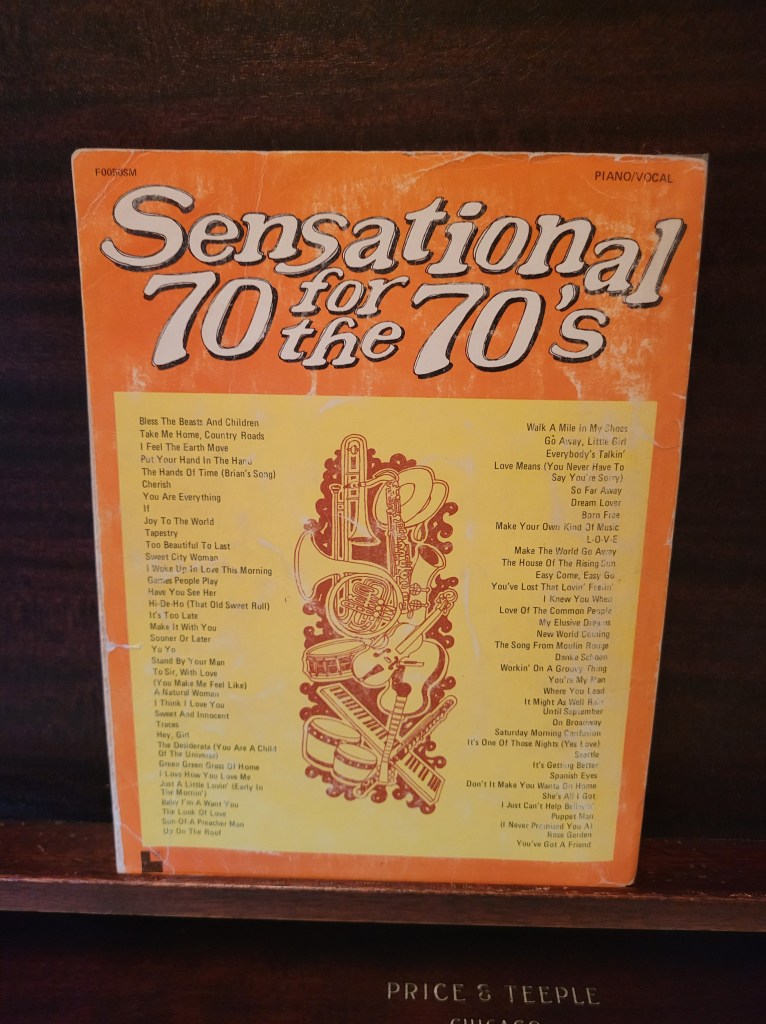
Dog-eared and worn is my Sensational 70 for the 70’s book

Of the four siblings, however, I was the only one who showed the interest and inclination to actually learn how to read music and how to play.

That year my mother signed me up for group lessons which were being taught as summer school classes at Franklin Junior high. I dutifully attended each and every class with one Mr. Lyons, a curmudgeon of a man, who would get so irritated with the ineptitude of the class that, more than once, he’d kick us all out and we’d wander the halls of the building until someone came to pick us up.

This alone would probably deter most 8 and 9-year-olds. But not me. I, apparently, had some of that Scottish stubbornness, and continued to practice and learn.

That fall my mother signed me up for lessons from a good friend of hers, Nancy Mayo. Mrs. Mayo was the pianist for the Bel Canto women’s singing group, a teacher, and a talented musician in her own right. She was the polar opposite of Mr. Lyons, infinitely patient and gentle with her young charges. I know I took lessons from her for a couple of years. I don’t know why I switched to a new teacher, but I did so in Junior high to my final teacher whose name I can no longer recall.

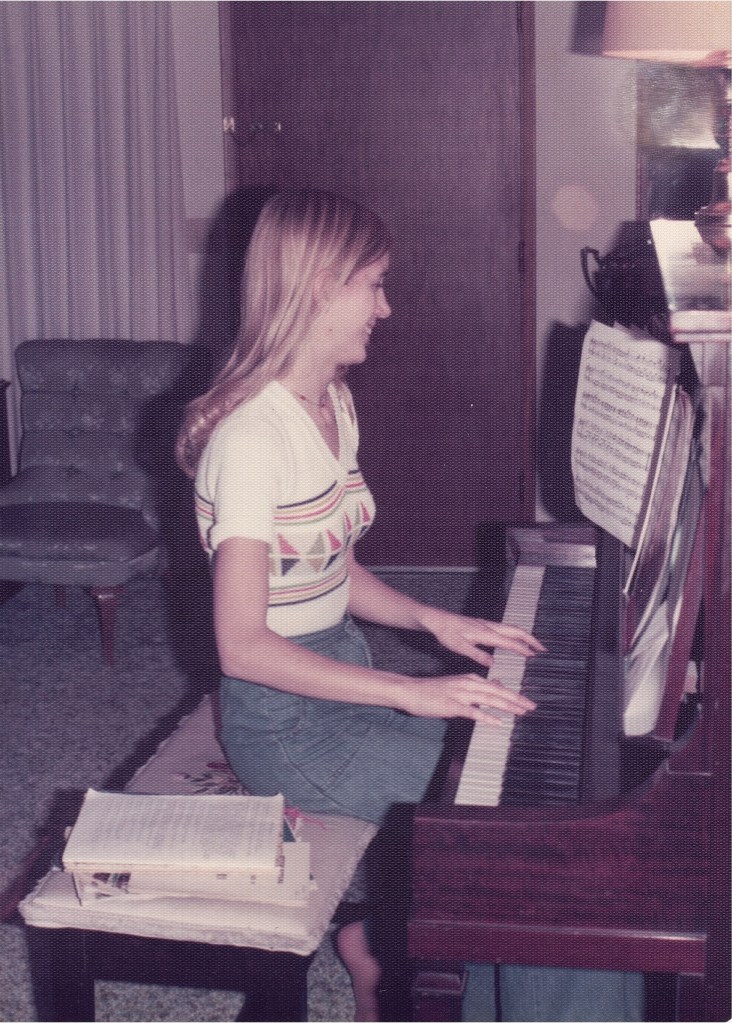
The author about age 16

I took seven years of lessons. When I was in high school, I spent a number of years being the musician for the Yakima Rainbow Girls and actually played in public. I sometimes accompanied people both with voice and other instruments. Somehow I could not memorize a song to save my life. I also was never able to easily change keys as the chords would give me fits. I was a reasonable technician, but a long way from being an artist.

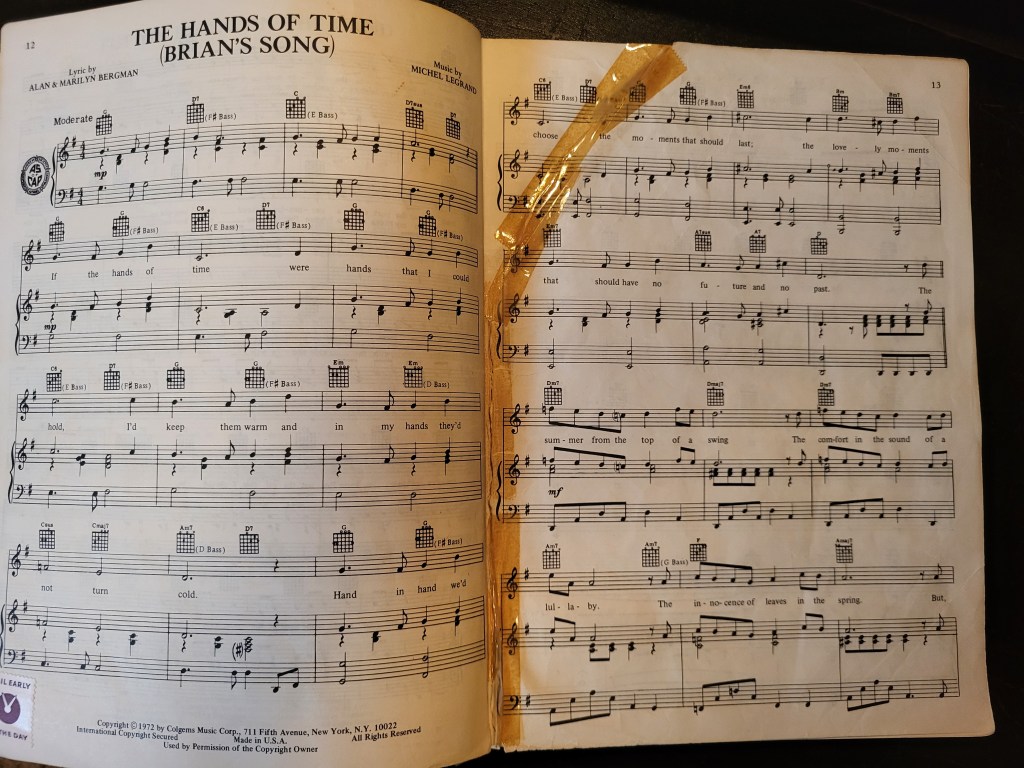
One of my after-school habits, however, was to sit down at the piano and play songs that I loved. I had a song book titled “Sensational 70 for the 70’s’” which had three of my four favorites: The Hands of Time (Brian’s Song), Too Beautiful To Last (Theme from the move Nicholas and Alexandria), and IF (by Bread).

I had a lot of others I played, but those three, plus the love theme from Romeo and Juliet, were always part of my daily concert.

This habit continued through my three years at Eisenhower High School and the two years I lived at home while attending Yakima Valley College. Then, in the fall of 1977, I moved to Tacoma to finish my education at the University of Puget Sound.

Sometime that autumn, when home on a break, I sat down to play the piano and my mother appeared in the living room and said to me that the hardest adjustment for her with me going off to college was the absence of the music in the afternoons.

It was a powerful moment as it was only then that I understood how something I enjoyed as a way for relaxation had become a special thing for my mom; it was how she experienced the empty nest syndrome common once all the children leave home.

No doubt my favorite song of all time to play on the piano as evidenced by the decades old scotch tape holding the pages together

When my parents sold that house in 1984, grandma’s piano came to live at my house. It’s been moved multiple times since and the now 103-year-old instrument definitely needs a tune up. But nowadays, I don’t seem to make the time for playing the piano.

It’s a shame, really. I no longer have delusions of grandeur that I’ll be some fabulous pianist; it’s really more about doing something that would bring me a bit of personal enjoyment.

So here’s to the piano, one of the most enduring and versatile instruments ever invented.

https://en.wikipedia.org/wiki/Piano

https://amis.mircat.org/jamis/1976_005.pdf (The only information I could find on James McLean)

The Evolution of Denim: Cultural Changes Over Time

May 20th

It was on May 20, 1873 when Levi Strauss and Jacob David patented the denim garment which has, arguably, become the most popular type of clothing in the Western hemisphere: jeans.

The iconic Levi Strauss authenticity tag from the official website.

While the actual origins of the garment are unclear, there are records of the fabric and the type of clothing it was made into in Genoa, Italy, and Nimes, France, as early as the 1500’s.

The Infallible Wikipedia shares some history on the origin of the name:

“Research on the trade of jean fabric shows that it emerged in the cities of Genoa, Italy, and Nîmes, France. Gênes, the French word for Genoa, might be the origin of the word ‘jeans‘. In Nîmes, weavers tried to reproduce jean fabric but instead developed a similar twill fabric that became known as denim, ‘de Nîmes’, meaning ‘from Nîmes’. Genoa’s jeans fabric was a fustian textile of ‘medium quality and of reasonable cost’, very similar to cotton corduroy for which Genoa was famous, and was ‘used for work clothes in general’.”

Modern day jeans were popularized as a workman’s garment, specifically miners, at the time it was patented by Davis and Strauss. And they might have remained that way until popular culture got involved. In the 1950’s both Marlon Brando and James Dean donned jeans in two culturally significant movies: The Wild One and Rebel Without a Cause. The two men were both bad boys of the big screen and exuded a ‘coolness’ which rocketed them to popularity with youth.

1965 – all the boys in the front row are wearing jeans with the exception of one. All the girls in dresses. 2nd Grade at Nob Hill Elementary school in Yakima, Washington

By the 1960’s, jeans became a popular garment to wear to school for boys. But not for girls. In fact, girls wore dresses to school. The first time I was ever allowed to wear pants was the winter of 1968-69 and only because of extreme cold temperatures. During the week of January 20-24, the overnight lows in Yakima were in the single and minus digits and the day time highs in the low teens. January 23rd, a Thursday, had a high of only 11 degrees, up from minus 7 degrees overnight. The next week wasn’t much better as the cold persisted PLUS it snowed 10 inches.

In those days, school was not cancelled because of weather. Instead, the Yakima School District very generously gave all the girls permission to wear pants to school. But they could NOT be jeans! A popular style that year were knit stretch pants and I can still see, in my minds eye, what those pants looked like. It was a big, big deal to get to wear pants.

It took quite some time for the weather to moderate that year (in the ‘balmy’ mid-30’s by mid-February), and it was back to dresses worn with socks and the dreaded saddle shoes. (Which I wrote about here https://barbaradevore.com/2024/09/03/the-first-tuesday-in-september-3/)

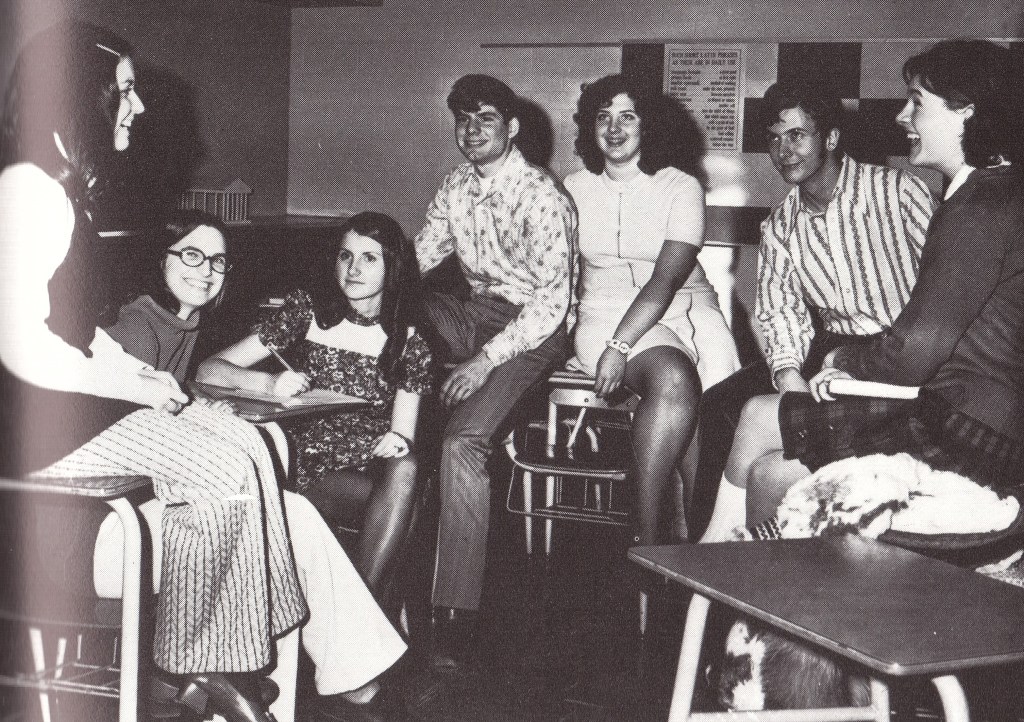
From the 1972 Eisenhower High School Reveille yearbook. A club photo with the guys in in jeans, the girls in dresses except for one, who is wearing fashionable slacks of the day. Yakima, Washington

Then the 1970’s happened. While many people think of the 1960’s as the big social upheaval, the 70’s were the years when all that rebellion was codified. The movement was so huge, that it became a cultural tsunami, washing over every institution we know.

I think it was probably 1971 when girls were allowed to wear pants to school regardless of the weather. But still no jeans that first year. A look through the high school annuals of that era reveal that shift through photos. The 1972 Eisenhower annual shows most girls still wearing dresses to school with a smattering here and there of one in pants and, rarely, jeans.

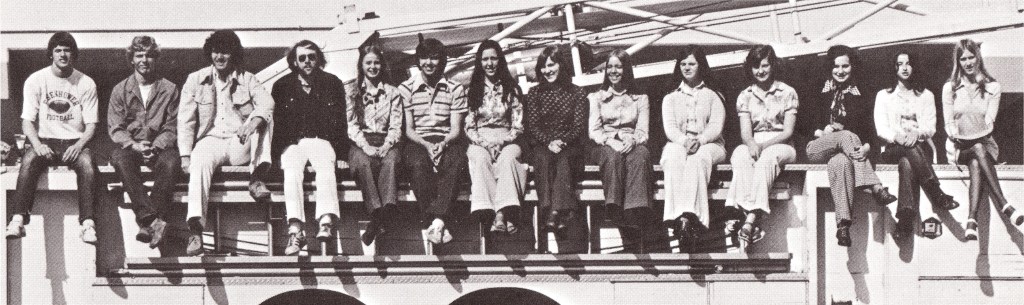
A portion of the 1975 yearbook staff of Eisenhower High school. The girls all in pants, some in jeans, and only one dress. Yakima, Washington

By 1975, easily half to two-thirds of the girls at my school are wearing pants – often jeans – in the day-to-day photos of regular school activities; jeans were the standard for after school clothing.

In today’s world, people wear jeans everywhere; I would posit that pretty much every American teen and adult owns at least one pair, and likely multiple pairs, of jeans.

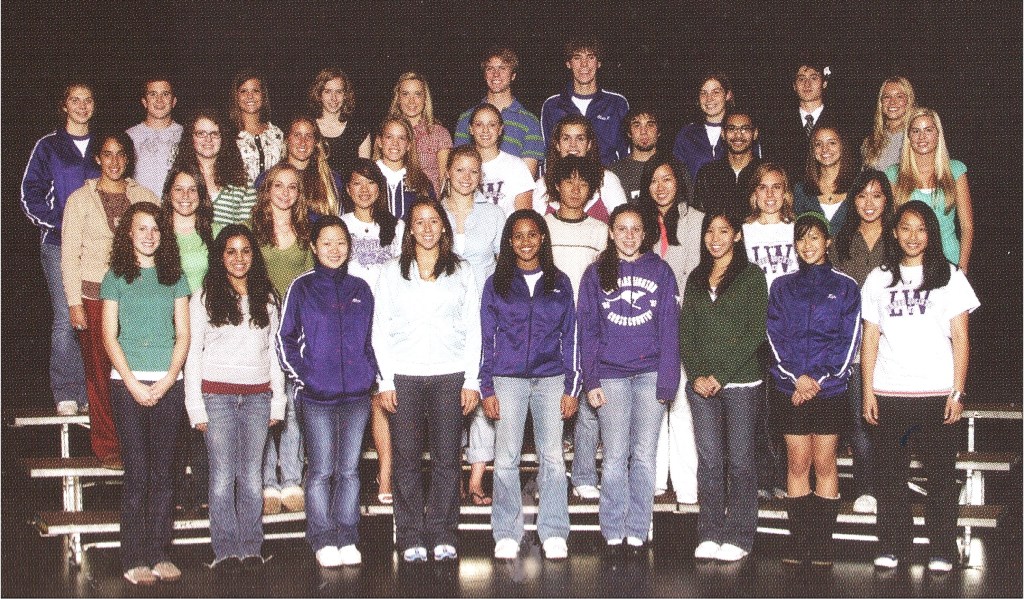
2008 at Lake Washington High School in Kirkland, Washington. A couple of skirts, but most the girls are wearing jeans as their daily ‘go to’ clothing.

I know I have at least three pairs of jeans and two pairs of capri length denim pants that I rotate in my day-to-day wardrobe. I’ve been thinking lately that I really do need another pair. I discovered a Gloria Vanderbilt style that fits well and is comfortable. That is, in my opinion, what the wearing of jeans is all about: comfort. Time to go shopping – on Amazon since I know they have the jeans that fit me – for a new pair of America’s favorite clothing item.

The links:

https://en.wikipedia.org/wiki/Jeans

https://www.smithsonianmag.com/smithsonian-institution/the-origin-of-blue-jeans-89612175/https://www.extremeweatherwatch.com/cities/yakima/year-1969

April 29, 1965: The Day Seattle Shook

April 29th

If you are older than the age of 60 and you have lived in the Pacific Northwest most, if not all, of your life, I simply have to give you this date and time, you will immediately be able to tell me where you were and what you were doing: April 29, 1965, 8:29 a.m.

I can almost hear you exclaiming to your computer: that was the date of the first earthquake you experienced and/or remember.

A number of grocery stores were hard hit during the 1965 earthquake

It was, after all, a pretty significant event. At the time it was the third strongest earthquake since the arrival of European settlers into the area. A quake estimated at magnitude 7.3 occurred in 1872 and another magnitude 7.1 in 1949. The 1965 quake registered 6.5 on the Richter scale.

While the Infallible Wikipedia does offer some information, Historylink.org – which has in depth articles about the Pacific Northwest – shares the following:

“The ground shook for about 45 seconds and was felt over a 190,000 square mile area including all of Washington state, northwest Oregon, southwest corner of British Columbia, north Idaho panhandle. The quake’s epicenter was located near Des Moines, Washington, at 47 degrees, 24 minutes North Latitude and 122 degrees, 24 minutes West Longitude. Total damage is estimated at $12,500,000 (approximately $65,000,000 in 1999), most of it in Seattle. In Olympia, the State Capitol Building was temporarily closed and government departments move to nearby motels while buildings are being repaired.”

The nearest I could come to identifying the epicenter of the quake is 202nd Street SW and Marine View Drive in the Normandy Park neighborhood, not far from Burien and Sea-Tac International airport.

Which becomes an important detail. On April 29, 1965, the hubby’s family lived in West Seattle, about 6 miles north of the epicenter.

For years, family gatherings often included discussion of that day and the months and years leading up to it.

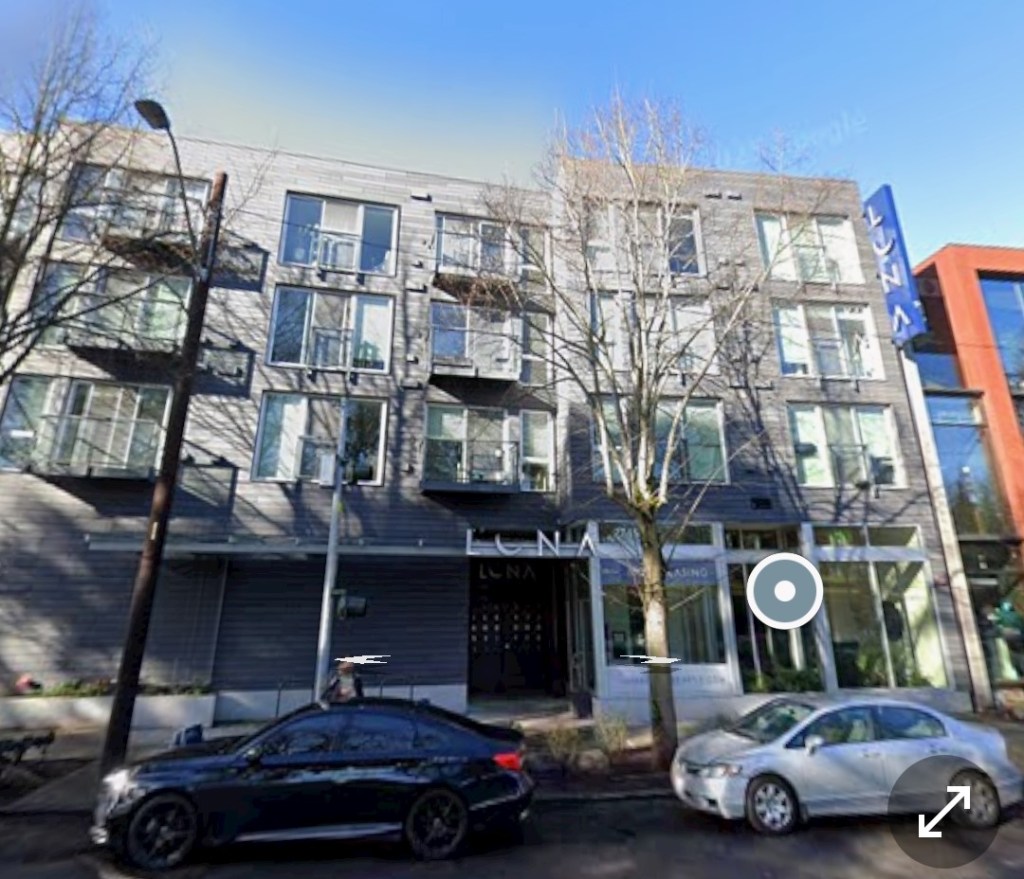
If you were to visit West Seattle today, the LUNA apartments are now located at approximately 2751 California Avenue SW. Up until six months before the April 29, 1965 quake there was a house at that address and it belonged to a trio of women: my hubby’s two Great-Great Aunts – Nelly and Ethel – and his Great Grandmother – Queenie Mae. All three were born in the 1880’s.

From the families collection is this photo of the Miss Burien limited hydroplane as it looked in the summer of 1960. This photo was taken from the house located at 2751 California Avenue SW, directly across from Hiawatha Park in West Seattle.

In the mid-1960’s, Queenie Mae had been deceased for about 8 years, so only Nellie and Ethel still lived in the house and, since they were now in their 70’s, it was decided to sell it. Which they did in the fall of 1964.

Soon the house was razed and a grocery store was erected and had opened, according to family lore, mere weeks before the earthquake hit. The damage to the store was severe.

The hubby recalls visiting the great aunts at that house as a child and every once in a while, the China dishes and tea cups stored in the display cabinet would ‘tinkle’ as if the earth was moving just a bit. Perhaps it was from traffic on California Avenue but the family always claimed that an earthquake fault ran under that house.

April 29th was a Thursday that year and, less than a mile north, the hubby – age 8 – had just gotten his breakfast and was leaving the kitchen, headed for the dining room table.

He was mid-step when the earthquake started and described what happened next:

“My recollection is that I was in the doorway to the living room holding a plate of scrambled eggs. Aunt Nell, who I think must have cooked the food for me, was sitting in the living room on a daybed we used as a couch. I stopped and was looking at her when the initial jolt bounced her up in the air. To this day, that is what I see.”

The spot where the house with the ‘tinkling’ china in the cabinet was once located.

Aunt Nell wasn’t the only one who went airborne as the hubby’s younger sister – who was just two weeks shy of her 4th birthday – was sleeping only to wake up on the floor. As she has always said “my bed threw me on the floor.”

The damage in West Seattle that day was extensive. According to Historylink.org, the worst damage was in West Seattle, Harbor Island, Duwamish River Industrial Area, and South Seattle. 

“In West Seattle a survey was made of damaged chimneys. In a portion of West Seattle out of a total of 5,005 chimneys in 188 city blocks, the earthquake damaged 1,712 chimneys (34 percent of the chimneys). At Alki Beach, a part of West Seattle not surveyed, ‘virtually every chimney was down’ (U.S. Earthquakes 1965 p 98).”

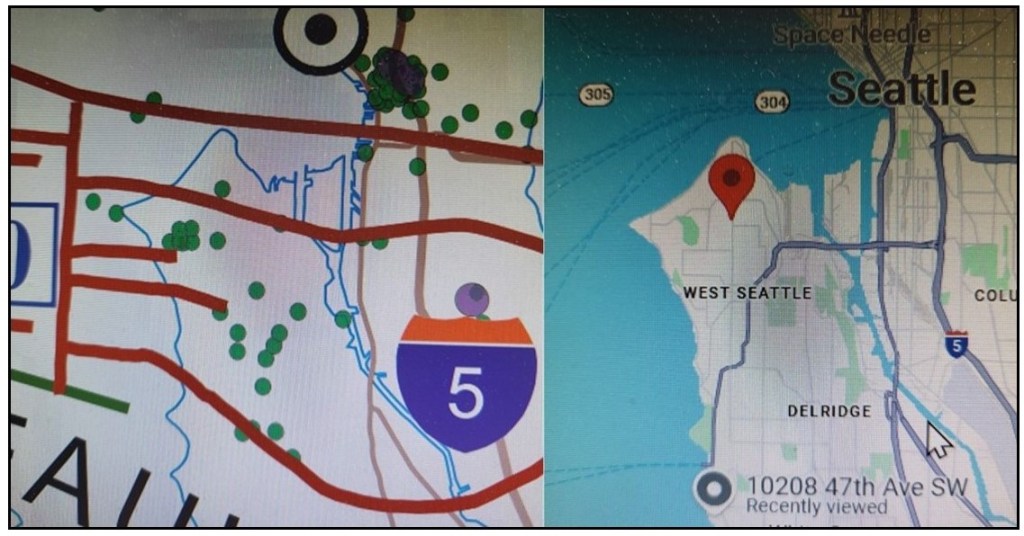
The map on the left shows the fault lines which run under West Seattle. The red marker on the right is the location of the house on California Avenue with the Earthquakes epicenter the gray dot to the south. When the two maps are overlaid, the fault line runs directly under where the house once stood.

The hubby believes he went to school after the earthquake as if nothing significant had just occurred. Oh, how times have changed!

As for the fault line under West Seattle? Yes, it does exist and was mapped in 2014 and when you overlay it onto that location, it runs pretty much under where their house once stood.

So where were you on April 29, 1965? I was in Yakima getting ready for school when that quake struck and our house shook. My mom was brushing my hair and she told me to hang on to the counter. Thankfully, I wasn’t tossed in the air.

The links:

https://www.historylink.org/File/1986

https://en.wikipedia.org/wiki/1965_Puget_Sound_earthquake

https://assets.pnsn.org/HIST_CAT/1965.html

https://www.dnr.wa.gov/publications/ger_ofr2014-05_fault_earthquake_map.pdf?o91ywfh

The Colorful Tradition of Dyeing Easter Eggs

A favorite family activity

April 22

When I typed the word ‘egg’ into the Infallible Wikipedia, it returned Egg, Eggplant, Eggs as Food, Egg decorating in Slavic Culture, Egg Harbor Township in New Jersey, and Eggnog.

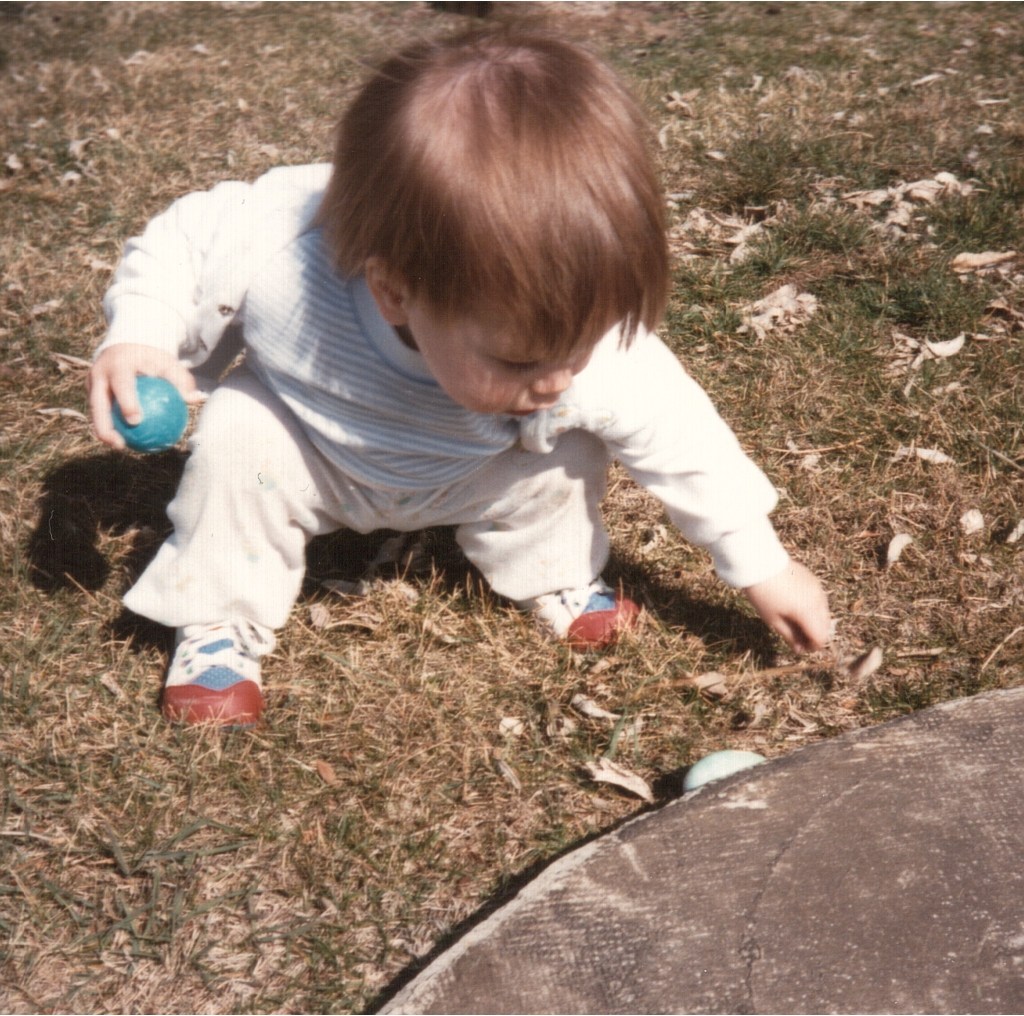
My daughter finding Easter Eggs. April 16, 1995.

While most people likely give little thought to eggs, they have – over the past couple of months – become one of the most talked about things in the United States. I’ve seen posts on Facebook and other social media with people complaining about the egg shortages which have swept the country and, of course, the skyrocketing price of eggs. About a month ago, I even overheard someone asking a Costco employee when they would be getting eggs again (since they were out of eggs that Saturday afternoon).

“Monday morning at ten will be the next delivery.” Guess where I was at ten that Monday morning?

But the egg shortage didn’t hold my interest. Instead, it’s the tradition of dyeing eggs for Easter.

Narrowing my search, I typed in “Easter Eggs.” It returned the one I wanted and yet another set of egg related pages including Easter Eggs in media, an Easter Egg tree, and – I kid you not – an “Easter Egger” – a breed of chicken. Eggs are, it turns out, a very popular topic.

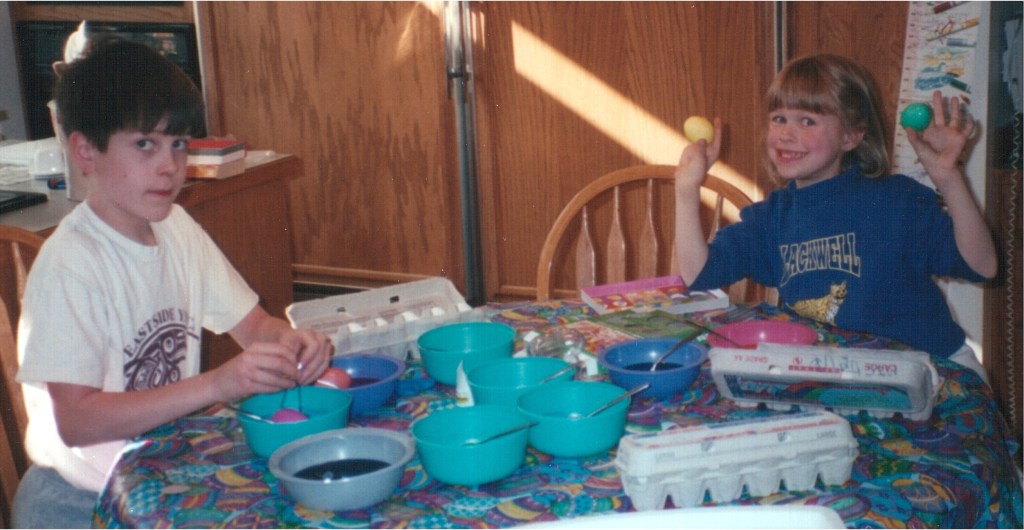
The dyeing of Easter eggs was a big deal for my kids. 1999.

But back to the Easter Egg. The dyeing and decorating of them is a tradition which goes back nearly two thousand years, begun by early Christians in Nicaea around 325 A.D. According to the aforementioned Infallible Wikipedia:

“Eggs in Christianity carry a Trinitarian symbolism as shell, yolk, and albumen are three parts of one egg. According to many sources, the Christian custom of Easter eggs started among the early Christians of Mesopotamia, who stained them with red colouring ‘in memory of the blood of Christ, shed at His crucifixion’. The Christian Church officially adopted the custom, regarding the eggs as a symbol of the resurrection of Jesus, with the Roman Ritual, the first edition of which was published in 1610 but which has texts of much older date, containing among the Easter Blessings of Food, one for eggs, along with those for lamb, bread, and new produce.”

The DeVore siblings showing off their eggs, Easter 1961. (taken from a Super8 movie reel)
The author with her bounty of eggs. Age 3.

While every holiday has something to recommend it, I think the dyeing and hiding of Easter Eggs makes this holiday one of my favorites. There are home movies from when I’m three showing off my Easter eggs at the family home in Clarkston, Washington.  And, again, at various ages after we moved to Yakima. For a few years, we would join our cousins at my grandparent’s cabin up at Rimrock Lake and one year my grandmother hid eight dozen eggs. Yes, that’s right. She hid 96 eggs out in the long grasses. Not all 96 were found. The next year Easter was in late March and as it was too cold to hide them outside, she squirreled the nearly 100 eggs into every nook and cranny of the 1000 square feet available. I’m thinking all eight of us grandchildren were sent upstairs to the sleeping loft while the six adults remained on the first level. Not all of those were found either. At least not until later that spring when the missing eggs started to smell according to family lore.

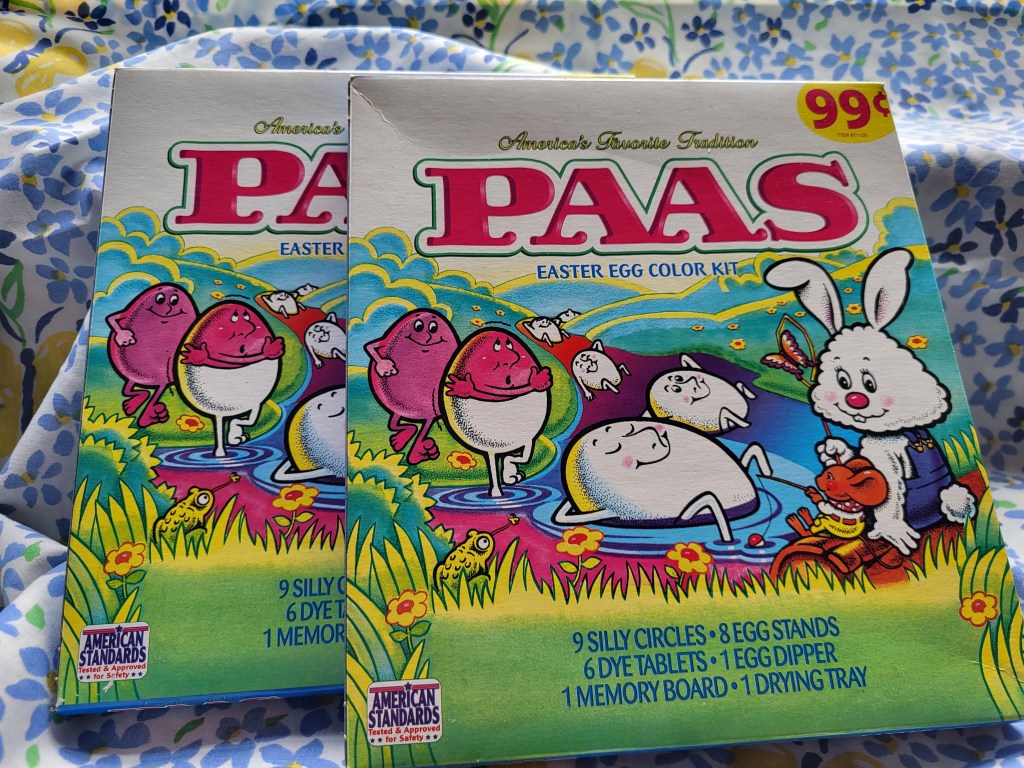
Alas, I grew up and quit dyeing Easter eggs. That was until I had kids of my own. And then it was full steam ahead! Every year I’d buy the PAAS egg tabs and soon had vinegar-based dyes in blue, green, yellow, red, orange, and purple. For a few hours I was transported back to my own childhood and the fun of coloring eggs; passing on the colorful tradition to my own children.

It was always fun to watch their brains at work. How many green ones? How many blue? How do you create one with every color on it? One year I think my son dyed all his eggs some shade of blue, while my daughter wanted the entire rainbow on every one of hers.

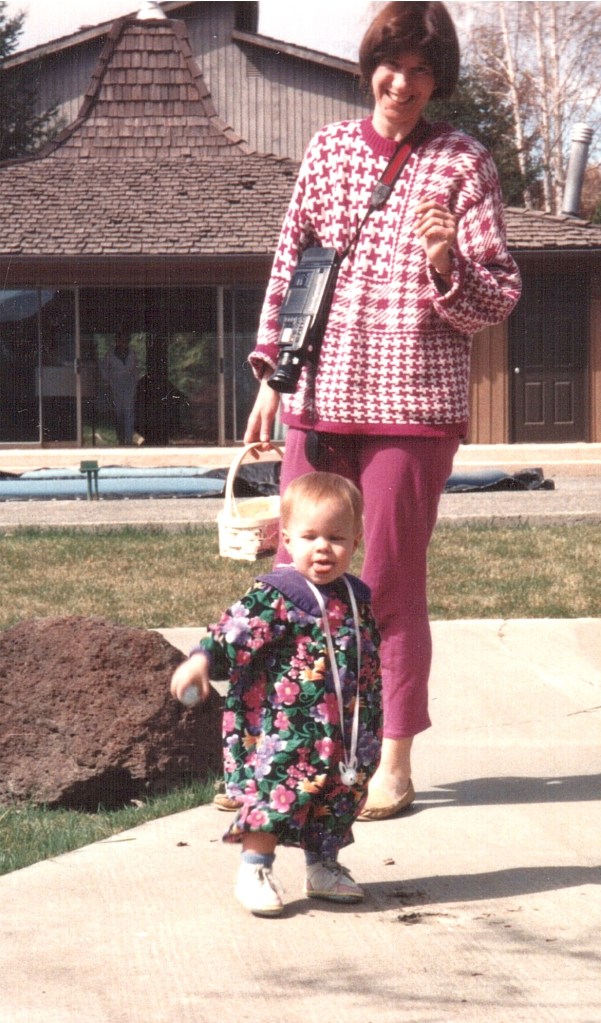
My just turned one year old daughter – under close supervision by me – with her first found Easter egg. 1994
My son, 14 months old, at his first Easter egg hunt. 1991.

As a child, I was much more regimented, making sure that there were two of each color, just in a darker or lighter shade. My mother would indulge me over the weekend, and let me get my box of eggs out of the refrigerator and admire them. At least until Sunday afternoon on Easter day. It was then the first eggs would get peeled, soon to be incorporated into potato salad and devilled eggs. To this day I still love hard boiled eggs and whenever I eat them I am pulled back, for a moment, to my childhood Easters.

But back to the egg hunt. As an adult, I was always able to recall where I had hidden my children’s eggs… well, except for that time when I snuck outside before breakfast to nestle them among the flora only to discover during the course of the hunt forty-five minutes later that the fauna – particularly slugs – love hard boiled eggs too. Who knew?

The links:

https://en.wikipedia.org/wiki/Easter_egg

https://paaseastereggs.com/

A Font of Fun? No Fooling!

April 1st

You’d pretty much have to be living on an island far from civilization to NOT know that today is April Fool’s Day. It’s celebrated each year on April 1st.

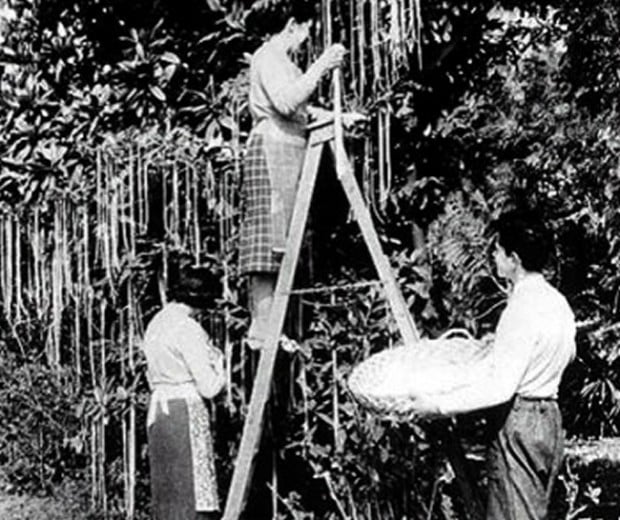
Considered by many as the greatest hoax of all time is this 1957 BBC documentary about harvesting spaghetti from trees. https://en.wikipedia.org/wiki/Spaghetti-tree_hoax

The day has murky beginnings which date back hundreds of years. Some say that Geoffrey Chaucer, in the unreadable ‘Canterbury Tales’, makes reference to the day. But that’s disputed. In 1508 some obscure French poet I’ve never heard of wrote about ‘poisson d’avril’ – translated ‘April’s Fish’ – which apparently doesn’t mean fish but ‘fool.’ Yet another theory is that at one time the new year was marked as being on March 25th but was then changed to January 1st (Actually March 25th makes more sense what with spring, birth, and renewal, but whatever). Those who clung to their old traditions were derided as Fool’s and I guess it took 6 days of their protests against moving New Years before someone decided to take any action.

The previous paragraph is, however, as in depth as I plan to go regarding the origins as, quite honestly, it’s a bit boring for this day devoted to mirth and mischief. Sadly, I found the Infallible Wikipedia article to be deadly serious and who wants that?

Anyway, I had soon climbed down the rabbit hole that is the internet and found a website truly worthy of April Fool’s Day: The Museum of Hoaxes. OMG. I knew I could spend hours reading about all the clever things people have conjured up to fool others. Decisions, decisions. WHICH of the hundreds of hoaxes was worthy of Tuesday Newsday fame? It was a weighty decision.

The islands of San Serriffe are a Perpetua(l) delight

Presenting the Island of San Serriffe!

As a writer, word nerd, and someone whose earliest childhood goal was to be able to create programs, newsletters, flyers, etc., the name San Serriffe resonated.

The year was 1977 and the British newspaper, The Guardian, was looking for something fun as a joke for their April Fool’s Day edition. Brainstorming occurred and the results were hilarious. From the hoaxes.org website:

“On April 1, 1977 the British newspaper The Guardian published a seven-page ‘special report’ about San Serriffe, a small republic located in the Indian Ocean consisting of several semi-colon-shaped islands. A series of articles described the geography and culture of this obscure nation.

The report generated a huge response. The Guardian‘s phones rang all day as readers sought more information about the idyllic holiday spot. However, San Serriffe did not actually exist. The report was an elaborate April Fool’s Day joke — one with a typographical twist, since numerous details about the island (such as its name) alluded to printer’s terminology.

The success of this hoax is widely credited with inspiring the British media’s enthusiasm for April Foolery in subsequent years.”

The best part of this story is, for me, the map. These people had waaaaaay too much time on their hands apparently.

The capital of San Serriffe: Bodoni; There’s Monte Tempo and Montallegro; Creed Inlet and Thirty Point; Villa Pica International airport and a beach town named Garamondo. Truly, the map is a font of fun.

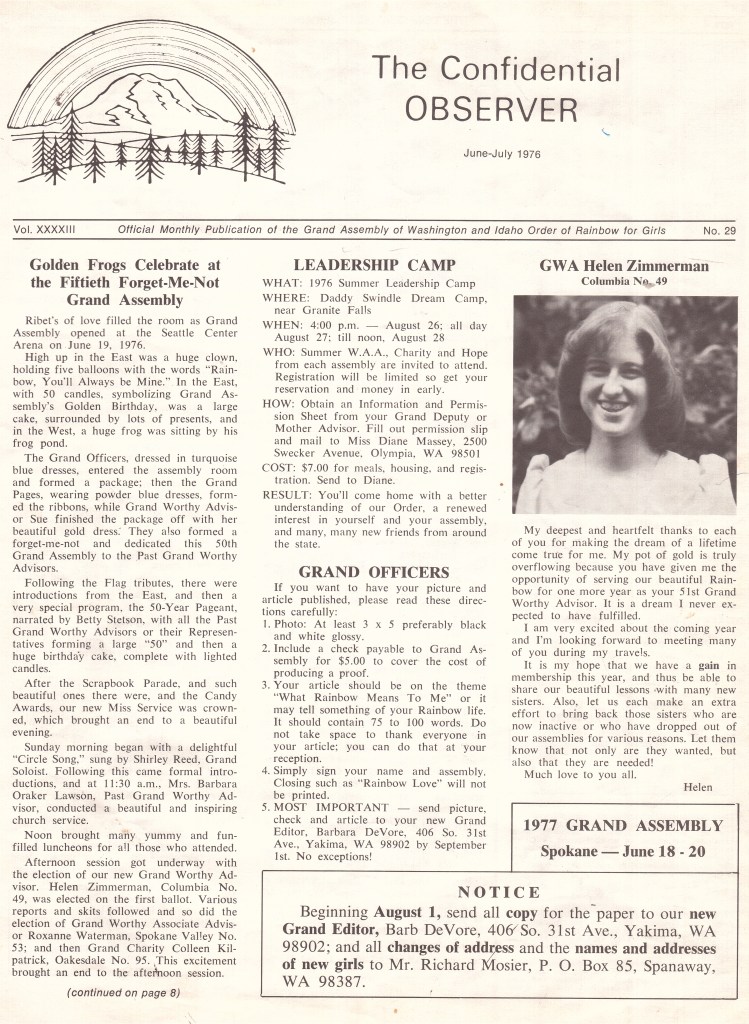
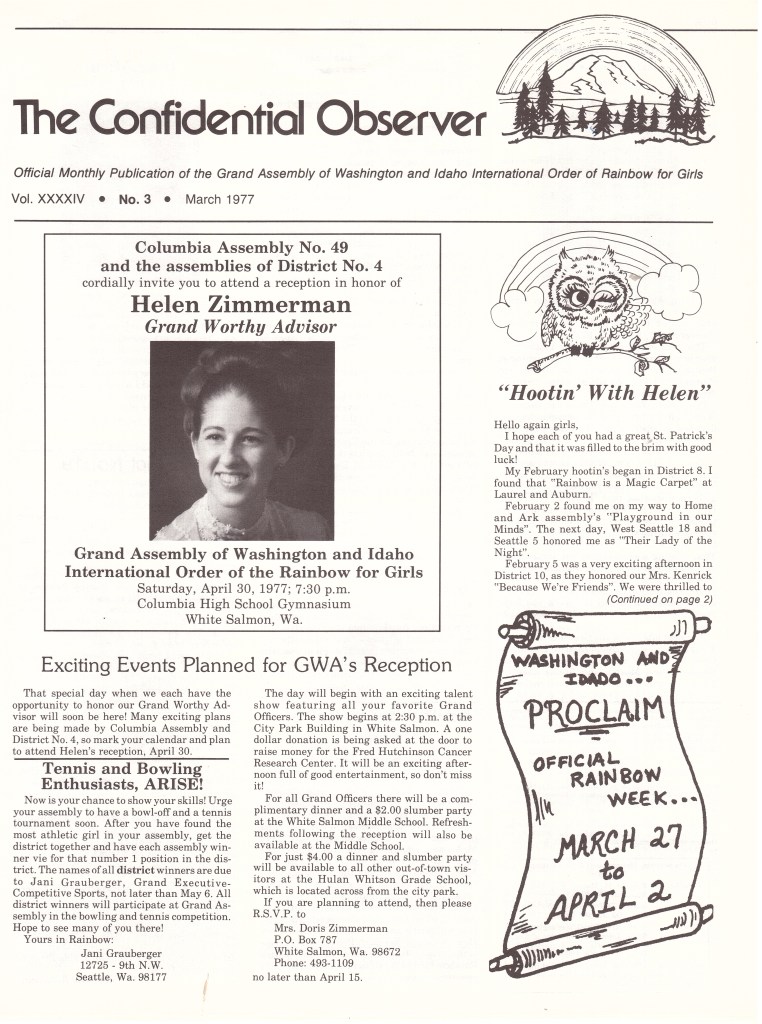
I’m a bit sad that it took me over 40 years to learn about San Serriffe since, in 1977, I was heavily involved in the world of publishing. I was one of three editors for the weekly Yakima Valley Community College “Galaxy” and also the youth editor of the Washington Idaho Rainbow Girls newsletter titled “The Confidential Observer.”

I was hungry to learn everything there was about journalism, writing, and layout. One of my big passions was experimenting with new fonts. I could not get enough of them!

The adult advisors for the Rainbow Girls publication, I’m certain, had no idea what hit them that year as I shook things up, at least in the world of Fonts. Well, and layout and artwork and, pretty much everything I was capable of changing. The fonts went from Helvetica and Times New Roman to Garamond and Bodoni to name a couple of them.

I changed the mast head; I varied the font sizes; I used boxes around things to emphasize and tried to make it more aesthetically pleasing.

Two versions of the front page of the Rainbow Girls paper. Top is how it looked the issue before I started changing things. Bottom is how it looked six months later.

Now, way back in the dark ages, publication was not a simple thing. First I had to get articles from people from all over the states of Washington and Idaho who mailed them in envelopes. Some of these came handwritten on notebook paper, full of spelling and grammatical errors. I often had to retype and all had to be edited. When that was done I would mail it all from where I lived in Yakima to the printers in Tacoma, who then retyped it (with the fonts I’d chosen) and created galleys to fit our three-column format. These were then returned to me via mail. I would cut – with an exacto knife – the galley articles and glue the proofs on to paper in the correct configuration with everything marked as to where it was supposed to go and then would cross my fingers that they did it right. Spoiler: not always.

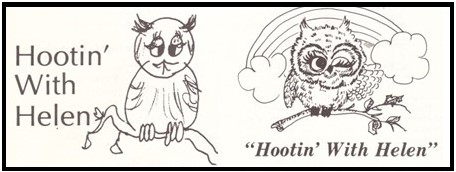
It was the fall of 1976 and the artwork that was to top the column for our state president that year had gotten lost by them. I sent in my package a hastily drawn picture (I’m no artist!) with a note attached saying “this is sort of what the artwork looks like that’s missing” and asking them to look around for it. Instead of reaching out, however, they ‘published’ what I had sent. It was awful and upsetting and bothers me to this day. Eventually, they found the missing clipart.

To this day I cannot fathom any professional printer looking at the owl on the left and thinking that’s what they should print…

With the introduction of the Apple Macintosh and their GUI (Graphical User Interface) layout in the mid-1980’s, I was finally able to create a newsletter on a computer and print it out. It was then I got my first laser printer. It was still a clunky process and the clipart was lacking, but it moved me forward.

Over the years as the GUI technology has improved, my ability to create has expanded. Artificial Intelligence has made it even easier.

So hats off to San Serriffe Island. I found the above picture of the island through an easy Google search, saved it as a jpg, and then printed it on my less than $200 Epson printer. I’m sticking it in a frame and hanging it in my office and will look at it often and cheer the fun of April Fool’s Day and 1977, the year of San Seriffe’s creation.

As always a few links:

https://hoaxes.org/archive/permalink/san_serriffe

https://hoaxes.org/af_database/display/category/guardian

https://en.wikipedia.org/wiki/April_Fools’_Day

Exploring Romeo and Juliet: A Timeless Love Story

Perhaps Shakespeare’s most famous play

March 11

To try and take on this play is, I would conjecture, pure folly. Afterall, it is probably the most recognized literary work in the world. It is the story of two young lovers who forsake all else to be together. They risk the disapproval of family and friends and, ultimately, meet their demise all because they chose that which was forbidden.

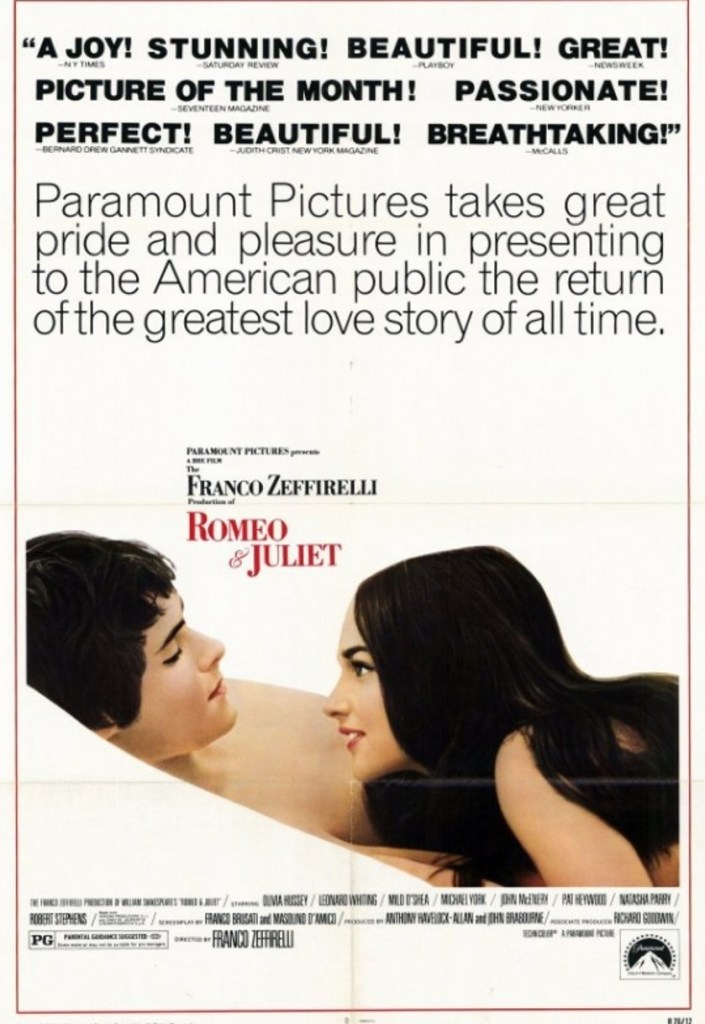
1968 Poster of Romeo and Juliet

“Romeo and Juliet” is William Shakespeare’s most famous works and March 11, 1302, is – according to OnThisDay.com – considered to be the date of the young lover’s marriage.

As is often the case, that is disputed since contextual clues from the play itself place the wedding date as being in mid to late July.

Regardless, today is as good a day as any to feature this iconic work.

For anyone who is unfamiliar with the storyline you can certainly access the Infallible Wikipedia. Which I did only to discover that the article there is 10,604 words long. Egads.

Instead, I found this one paragraph synopsis from the site Shakespeare.org.uk much easier to digest:

“An age-old vendetta between two powerful families erupts into bloodshed. A group of masked Montagues risk further conflict by gatecrashing a Capulet party. A young lovesick Romeo Montague falls instantly in love with Juliet Capulet, who is due to marry her father’s choice, the County Paris. With the help of Juliet’s nurse, the women arrange for the couple to marry the next day, but Romeo’s attempt to halt a street fight leads to the death of Juliet’s own cousin, Tybalt, for which Romeo is banished. In a desperate attempt to be reunited with Romeo, Juliet follows the Friar’s plot and fakes her own death. The message fails to reach Romeo, and believing Juliet dead, he takes his life in her tomb. Juliet wakes to find Romeo’s corpse beside her and kills herself. The grieving family agree to end their feud.”

But, honestly, only if you lived as a hermit in a rock cave on a remote island in the south Pacific would you NOT know about Romeo and Juliet (R&J).

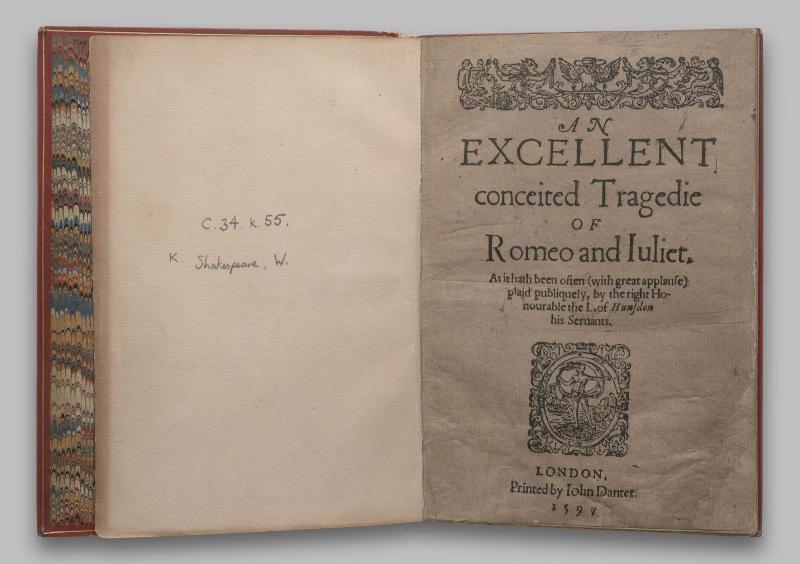
First edition Romeo and Juliet

When I started thinking about R&J, my mind drifted back to the early 1970’s and my experience at Wilson Junior High School in Yakima, Washington.

Wilson Junior High teachers 1971

It was there that I was introduced to R&J. At the time I had no appreciation for Shakespearean literature or for the incredible foundation which was given me by a trio of dedicated Jr. High English teachers.  For my entire 8th grade year, my English teacher was Mr. Albrecht. To us students he seemed quite mature. When, in fact, he was the ripe old age of 27 that first year. We respected him because he treated us as intelligent people regardless of our limited years on earth; he rewarded those who worked hard and did their best.

The next year my English class experience was split into two segments. For the fall/winter semester I drew the formidable grammar teacher, Mrs. Eglin. I think she likely made students rip out their hair and cry at times. But, by God, you were going to learn: all the parts of grammar, how to diagram a sentence, and how to construct a proper paragraph. It was in her class that I discovered the evils of dangling participles, all about verbs, adverbs, nouns (both proper and pro-), adjectives, and every other part of speech. In other words, I learned how to write the correct way. She made me think about my writing in ways I’d never considered. I might not have always followed her methods, and I’m not perfect, but not for lack of instruction on Mrs. Eglin’s part.

Mrs. Roberts 1971 yearbook photo

In the second half of the year, I had an even more demanding teacher – which I hadn’t thought possible after being with Mrs. Eglin – Mrs. Roberts. First name Doris. Which is telling. No one in my age demographic, or even a few years older, was named Doris. The name had, however, been the 8th most popular name for girls in the 1920’s. Mrs. Roberts was born in 1922 and was an ancient 50 that year. Ah perspective.

Mrs. Roberts assigned us every classical piece of literature she could find and we explored such themes as ‘man’s inhumanity to man’, ethics, morality, death and dying, cruelty, poverty… yes, we read some very dark stories. Like “Flowers for Algernon”, “The Grapes of Wrath”, “Fahrenheit 451”, and “Romeo and Juliet”.

The clever thing which this band of teachers managed to accomplish was to make the course work relevant to the teenagers of the day. Somehow, they convinced the administration that it was educational to load some 250 ninth graders into school busses and send them to the movie theatre to see films based on what we were reading.

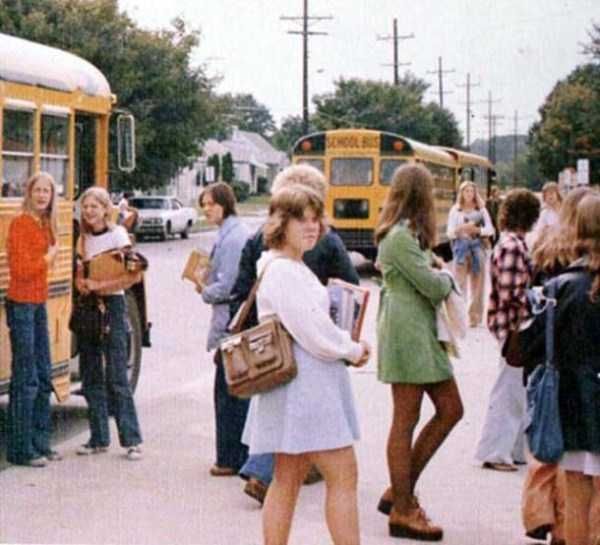
Pretty much how teenagers dressed in 1971-72. Found this photo on Pinterest.

Spoiler alert: it worked.

Of course, we kids thought we’d gotten a free pass for the day. Personally, I returned from those outings thinking about the films but also contemplating the books we read and then writing papers on the theme we thought was the best fit.

Sometime in the fall of 1971 I’m pretty certain we were whisked away in the busses to see the 1968 film version of Romeo and Juliet with Leonard Whiting and Olivia Hussey. Such clever English teachers, using the pop culture of the day to get us to learn. I did find a reference in my 1972 diary for both “Farenheit 451” and “Mary, Queen of Scots.” Sadly, my diary from 1971 does not seem to exist any longer, which surprises me as I was a faithful diary writer.

Now a few fun facts. I was able to find 49 times R&J was made into a movie in the Shakespearean tradition (from 1908-2021); an additional 118 films were produced which adapted the works in modern ways or with odd twists (like the truly bizarre 2011 Gnomeo and Juliet); there are also a few films which utilize R&J’s overarching theme in some new way (like the charming 2019 movie “Letters from Juliet”).

I owe a lot to my Junior High School English teachers for the great foundation they laid. It was the gift that has continued to give and bless me.

As always a few links:

https://www.onthisday.com/weddings/march/11

https://en.wikipedia.org/wiki/Romeo_and_Juliet

https://www.shakespeare.org.uk/explore-shakespeare/shakespedia/shakespeares-plays/romeo-and-juliet/#:~:text=An%20age-old%20vendetta%20between%20two%20powerful%20families%20erupts,to%20marry%20her%20father%E2%80%99s%20choice%2C%20the%20County%20Paris.

World’s Most Popular Song? The Story of ‘Happy Birthday’

Everyone’s sung it at least once!

March 4

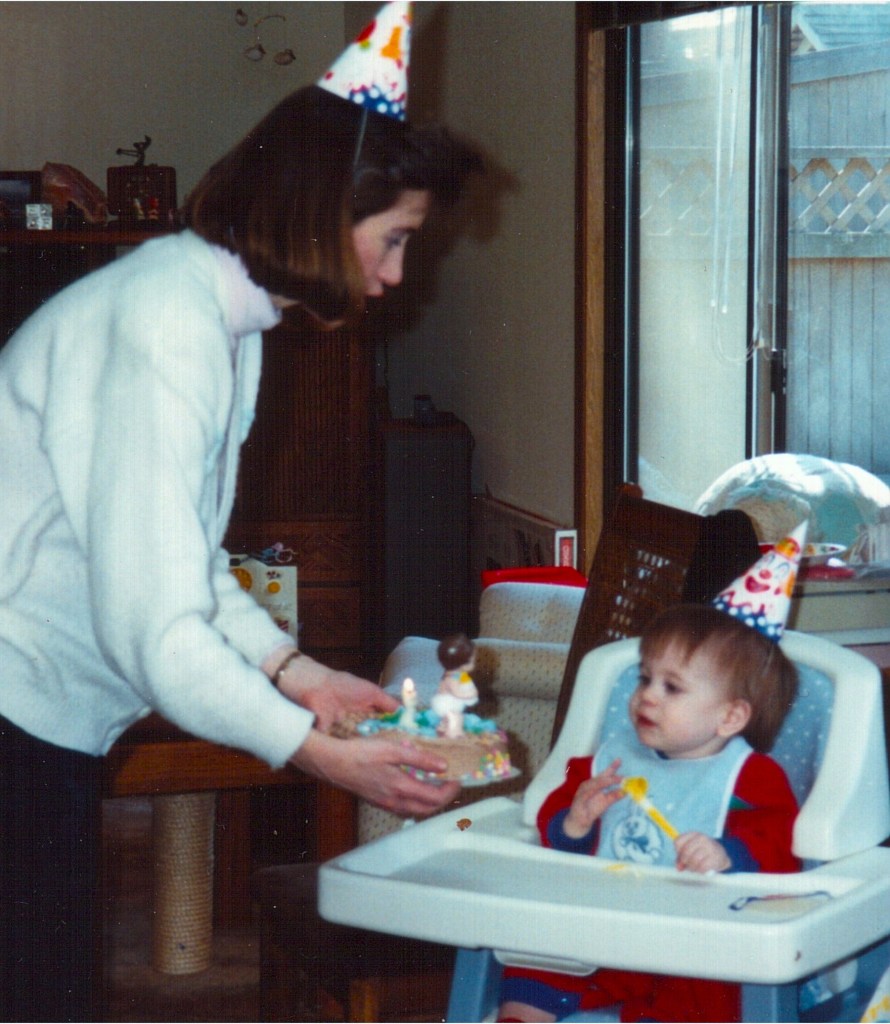
My son’s first birthday… and singing Happy Birthday to You.

This song, arguably the most popular one ever written, never reached number one the Billboard Hot 100 and was never nominated for a Grammy Award. In fact, no one is 100 percent certain as to the origin of the tune or the lyrics. Yet today pretty much every American aged 5 and over has sung it many, many times and it remains a cultural icon.

The song? “Happy Birthday To You.”

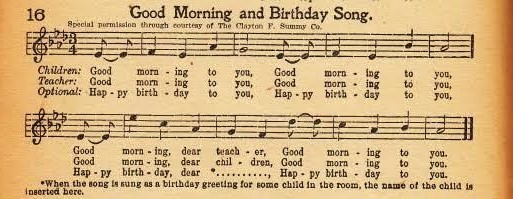
It was on March 4, 1924, when the song was published in a songbook by Claydon Sunny (Clayton F. Summy Publications) at the behest of Jessica Hill, the younger sister of kindergarten teachers Patty and Mildred Hill.

The song has its origins in the late 1800’s when the two sisters composed an easy to learn song for their classroom titled “Good Morning To You.” It is speculated that the sisters put the song together based on several other children’s song melodies, popular at the time.

The lyrics were thus: “Good morning to you, good morning to you, good morning, dear children, good morning to all.”

So far, so good as it was just a couple of Louisville, Kentucky, kindergarten teachers using a cheery song to greet young children each day.

In 1893 the sisters, with their pioneering ideas on early childhood education, published the song in a book titled “Song Stories For Kindergarten.” No one can say for sure ‘when’ the birthday lyrics were substituted but there is evidence that they were first published in 1912. It was, however, Claydon Sunny’s publication which set the song up for copyright challenges which persisted for decades.

As you might expect, the Infallible Wikipedia fills in the details:

“The Summy Company registered a copyright in 1935, crediting authors Preston Ware Orem and Mrs. R. R. Forman. In 1988, Warner/Chappell Music purchased the company owning the copyright for US$25 million, with the value of ‘Happy Birthday’ estimated at US$5 million. Warner claimed that the United States copyright would not expire until 2030 and that unauthorized public performances of the song were illegal unless royalties were paid. In February 2010, the royalty for a single use was US$700. By one estimate, the song is the highest-earning single song in history. In the European Union, the copyright for the song expired on January 1, 2017.

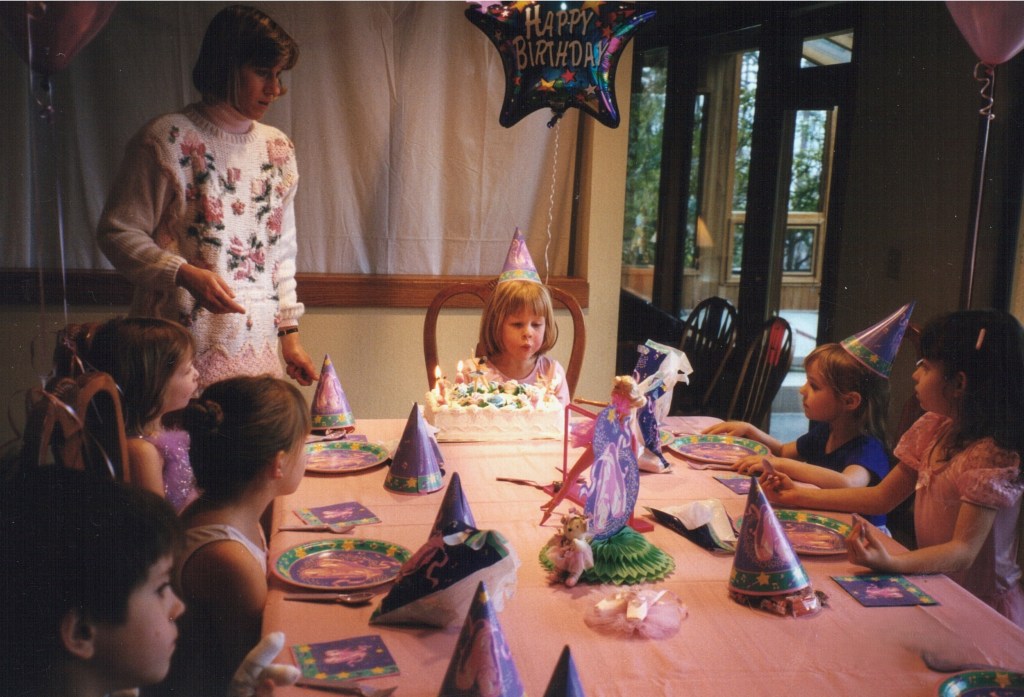
My daughter’s Ballerina themed 5th birthday party

The American copyright status of ‘Happy Birthday to You’ began to draw more attention with the passage of the Copyright Term Extension Act in 1998. The Supreme Court upheld the Act in Eldred v. Ashcroft in 2003, and Associate Justice Stephen Breyer specifically mentioned ‘Happy Birthday to You’ in his dissenting opinion. American law professor Robert Brauneis extensively researched the song and concluded in 2010 ‘it is almost certainly no longer under copyright.’ Good Morning to You Productions sued Warner/Chappell for falsely claiming copyright to the song in 2013. In September 2015, a federal judge declared that the Warner/Chappell copyright claim was invalid, ruling that the copyright registration applied only to a specific piano arrangement of the song and not to its lyrics and melody. In 2016, Warner/Chappell settled for $14 million, and the court declared that ‘Happy Birthday to You’ was in the public domain.”

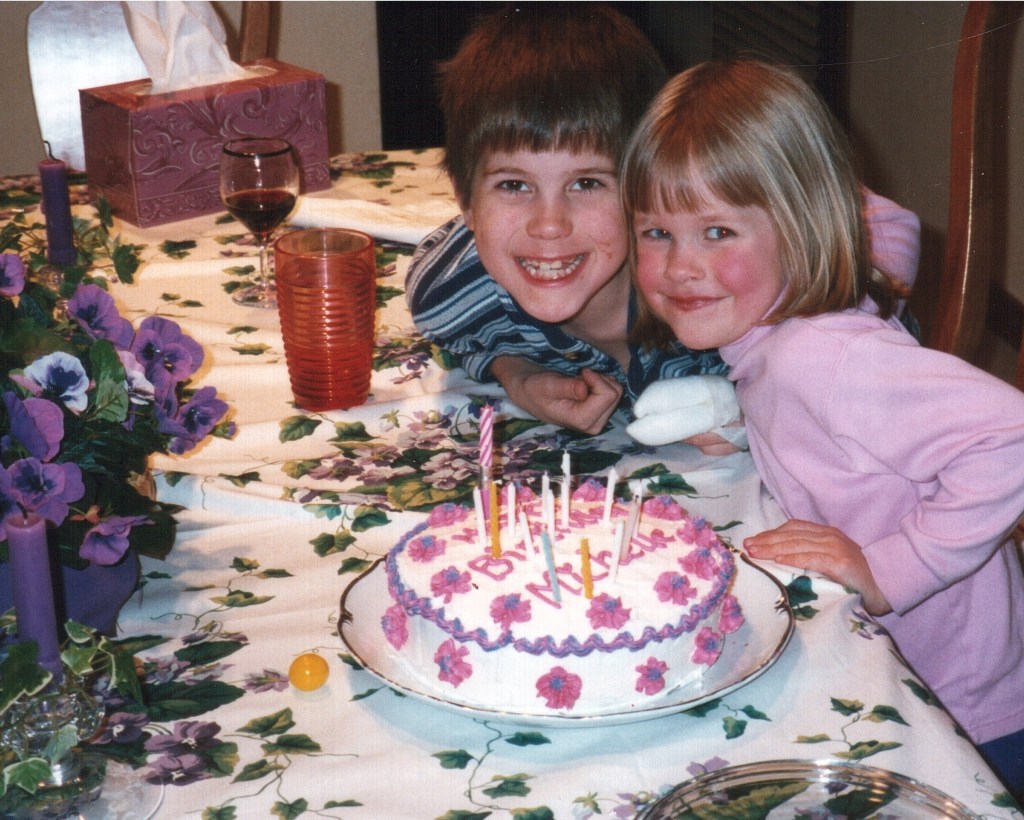
I love this photo of my children taken on my daughter’s birthday circa 1997

Like pretty much everyone reading this, I cannot recall a time when I did NOT know this song. When my family inherited my grandmother’s piano – I was 7 or 8 – and I first sat down to experiment, this was likely the first tune I was able to pick out with the keys.

Some of my earliest memories are of my mother bringing out a birthday cake for one of her four children, candles ablaze, and her leading everyone in singing ‘Happy Birthday To You.” She would enter the dining room from the kitchen, bearing her signature chocolate cake covered in white frosting, with “Happy Birthday” written in either blue or green icing. This was followed by the birthday child blowing out the candles and making a secret wish.

The now 101-year long tradition (or longer) of singing happy birthday has been carried on for generations and, as soon as its discovered that it’s someone’s special day, a group of people will nearly always sing the song.

A moment in time…It was my mother’s 32nd birthday. I’m not quite sure ‘who’ took this photo. Likely my grandmother who often came to help with the four of us. I’m not pictured as I was only three months old at the time. My siblings, ages 9, 4, and 2 are also pictured.

As I was researching for this article, I wandered off into the weeds, perusing various YouTube videos of people singing/playing ‘Happy Birthday.’ And then I saw it. A nine-minute video of pianist Victor Borge having fun with the song in the style of about 10 different classic composers. The link:

https://www.youtube.com/embed/hkkHz8xq7lE?si=UBogXMHjmkPc4qZk

This was familiar, I thought. And then I recalled I had experienced Victor Borge perform at the Capitol Theatre in Yakima when I was a teenager. Sure enough, on March 31, 1973 – together with my parents and my sister – we attended his concert. According to what I wrote in my diary “It was a very good show. I enjoyed it.” Not exactly an expansive review but I was 15 and, perhaps, did not appreciate that moment in time. To this day, however, I can see him on that stage, regaling the audience with his comedic take on classical music. I am positive he performed ‘Happy Birthday’ similarly to what is shown in the attached video.  Enjoy!

My dad’s birthday circa 1997 pictured with his two youngest granddaughters.

Yet, when I think about “Happy Birthday To You” I am amazed at the cultural reach of such a simple tune and lyrics with humble beginnings.

So, there you have it. No more copyright infringements or companies claiming the song belongs to them. You are free to sing “Happy Birthday to You” anywhere and everywhere without having to worry about paying royalties or getting sued. Ultimately, the song has returned to its roots, as a simple and positive way to give glad tidings and, perhaps, brighten someone’ day if only for a few minutes. Just the way I imagine Patty and Mildred Hill would have wanted it.

A few links:

https://en.wikipedia.org/wiki/Happy_Birthday_to_You

https://en.wikipedia.org/wiki/Victor_Borge

https://en.wikipedia.org/wiki/Capitol_Theatre_(Yakima,_Washington)

The Enduring Charm of Archie Comics

February 11

Beloved Comic Book Character

A Tuesday Newsday Classic

For kids growing up in the 1950’s and 60’s reading comic books was a universal experience.  From Mickey Mouse to Marvel, there was a flavor for everyone.  While Marvel comics were not my thing, I did enjoy one comic book series immensely: Archie.

708641

Always a difficult choice for female obsessed Archie: Betty or Veronica?

It was on February 11, 1942, when Archie and his pals got their very own series.  From the Infallible Wikipedia:

“Archie (also known as Archie Comics) is an ongoing comic book series featuring the Archie Comics character Archie Andrews. (snip)

Archie first appeared in Pep Comics #22 in 1941 and soon became the most popular character for the comic. Due to his popularity, he was given his own series which debuted in winter 1942 titled Archie Comics. Starting with issue #114, the title was shortened to simply Archie. The series ended with issue #666 (June 2015) to make way for a new series set in Archie Comics’ ‘New Riverdale’.”

Unlike the Superhero comics of the day, Archie featured a popular red-headed teenager who seemed to attract trouble. Most of that trouble was centered on the rivalry between the wholesome Betty Cooper and the privileged Veronica Lodge. Archie – the object of both their affections – is the clueless pawn in their game of romantic chess.

136-1

Moose with Miss Grundy

With Archie’s friends: the hapless Jughead Jones, dumb jock Moose Mason, and manipulative Reggie Mantle, added to the mix, the opportunity for the comic’s writers to dream up creative teenager life story lines carried the series for decades.

An additional dozen plus characters also inhabit Riverdale – the fictional Midwest town where Archie lives – and have smaller recurring roles.

The comic book series was published for 73 consecutive years with its final issue in June 2015. It was relaunched that same year and is known as the “New Riverdale.” It sports an updated look with the characters taking on more realistic human features and also, according to the Infallible Wikipedia, “harken back to the comic’s roots by showcasing more edgy and humorous stories as well as present the origins for the character and his friends as well as how the famous love triangle between Archie, Betty, and Veronica began.”

What’s amazing is that the comic book remained as popular as it was for over seven decades. I first discovered it in the mid-1960’s in the stacks of comic books my two older brother’s owned. They had lots of the superhero variety but probably no more than a half dozen Archie’s. But I read every single one of the redheaded hero’s adventures multiple times.

Archie was, however, soon forgotten once I became a teenager myself and then an adult. At least until one day when I was at the store with my ten year old daughter. I happened to look up as we stood in the checkout line and there were the familiar drawings of my old friends Archie, Veronica, and Betty. On a whim I purchased the comic book for my daughter.

She was hooked, often spending some of her allowance money on the magazine. Archie comics were stuffed into her Christmas stocking and purchased for her when she was home sick. I may have even given her a subscription one year for her birthday.

I discovered a dozen of them during the purge process when we moved a couple years ago. Did she want them any longer? Now an adult, the answer was the same as it had been for me: no.

archie_gang

Reggie, Betty, Archie, Veronica, and Jughead

But Archie and gang had been good companions for a few short years. As for the issues we had, they were donated. I imagine some young girl and her parent finding some of those issues and enjoying the adventures of the accident prone, yet lovable, Archie, and it brings a smile to my face.

As always, a link or two:

https://en.wikipedia.org/wiki/Archie_(comic_book)

https://en.wikipedia.org/wiki/List_of_Archie_Comics_characters

https://en.wikipedia.org/wiki/Archie_Comics

And the official Archie website:

http://archiecomics.com/

Nostalgic Shiny Brite Christmas Ornaments

Adorning American Christmas Trees since 1937

December 17th

A Tuesday Newsday Classic

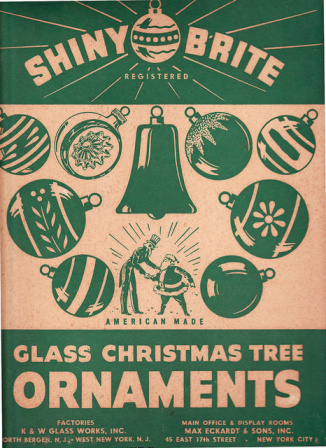
Long before Hallmark introduced their line of annual Christmas ornaments, another American Company had taken the market by storm, selling millions of baubles every year from 1940 to 1962. Marketed as Shiny Brite, the distinctive green boxes which featured Santa Claus shaking Uncle Sam’s hand were a fixture in the average home of the 1950’s and 60’s.

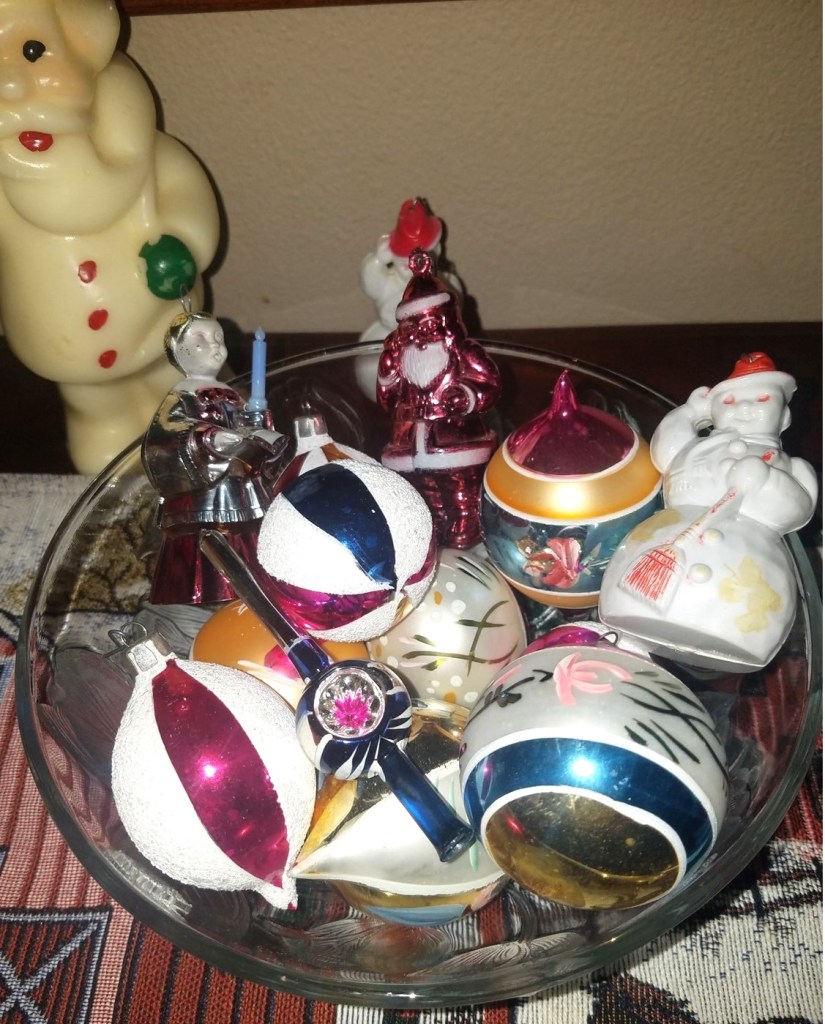
My mother’s Christmas ornaments from the 1950’s and 60’s

The story begins in 1937 with importer Max Eckhardt who, seeing the clouds of war encroaching and feared that his supply line would be cut, went to the Corning Glass company in Pennsylvania and made a deal with them to begin producing ornaments. Thus, was born Shiny Brite. From the Infallible Wikipedia:

“Eckardt had been importing hand-blown glass balls from Germany since around 1907, but had the foresight to anticipate a disruption in his supply from the upcoming war. Corning adapted their process for making light bulbs to making clear glass ornaments, which were then shipped to Eckardt’s factories to be decorated by hand. The fact that Shiny Brite ornaments were an American-made product was stressed as a selling point during World War II.

Dating of the ornaments is often facilitated by studying the hook. The first Shiny Brite ornaments had the traditional metal cap and loop, with the hook attached to the loop, from which the ornament was hung from the tree.

Wartime production necessitated the replacement of the metal cap with a cardboard tab, from which the owner would use yarn or string to hang the ornament. These hangers firmly place the date of manufacture of the ornament to the early 1940s. (snip)

Shiny Brite ornaments were first manufactured at Corning’s plant in Wellsboro, Pennsylvania, and continued there for many decades. During its peak, Shiny Brite also had factories in New Jersey, located in the cities of Hoboken, Irvington, North Bergen, and West New York. The company’s main office and showroom were located at 45 East 17th Street in New York city.

The classic cover of the Shiny Brite box with Uncle Sam shaking Santa’s hand

Shiny Brite’s most popular ornaments have been reissued under the same trademark by Christopher Radko since 2001.”

Although there were other companies which manufactured and sold ornaments in that era, Shiny Brite was by far the largest player.

As a child in the 1960’s I loved the December day when our family’s fresh cut pine tree would be set into its stand in a place of honor. I always watched as my father strung the C-7 bulbs on the branches. It seemed as though it took forever for my mother to declare the moment when the decorations could be hung. Out would come the green Shiny Brite and other boxes, their lids lifted, and one by one the delicate glass ornaments would soon dangle from the branches.

Each year it was as if seeing old friends arrive for the holidays. By the 1980’s – with their children all moved away – my parents quit hanging ornaments on a tree. Instead, they kept an artificial tree – lights already placed on the branches – in their basement storage room. Mid-December my dad would carry it out through the garage and then up the outside stairs and into the living room. Once the lights were plugged in they called it good.

The ornaments of my youth were squirreled away in a box in the storage room where they remained untouched for some 30 years.

In the summer of 2019, as we worked to clean out my parent’s home since my dad now lived in an Adult Family home, my sister and me anxiously awaited the Christmas Box to be unearthed.

My mother’s precious ceramic angels and bells. It was not Christmas until the angels were set on the buffet.

Finally, in late August, that day arrived. The two of us sat on the floor and opened the ornament boxes, each picking out those we wanted to bring to our own homes.

By the time Christmas 2019 was upon us, both my parents were gone and, after my tree was up, I went search of the ornaments. I looked in box after box which had been stored in my garage since summer, but no ornaments.

Finally, after my two days search, I lamented to my son that I could not find them. He, however, said he had seen them and a few minutes later produced a small box from a section of the garage I had missed.

Just like when I was a little girl, I opened the box and said hello to my old friends. But unlike during my childhood, I could not bear to hang them on my tree, fearful one might fall and break. Amazing how something so ordinary and familiar had now become precious and irreplaceable. Instead, I carefully lay the treasured ornaments in a crystal bowl and, along with a pair of ceramic angels and two ceramic bells, set them in a place of honor. 

I can only hope that one day my own children might also cherish the heirlooms passed down from generation to generation.

The links:

https://en.wikipedia.org/wiki/Shiny_Brite

I loved this story about Wellsboro, PA, where Shiny Brite’s were manufactured: https://pawilds.com/wellsboro-the-town-that-saved-christmas/

And a nice story about Shiny Brite: https://www.retrochristmascardcompany.com/the-history-of-shiny-brite-ornaments/