My ‘Forrest Gump-esque’ experience in the 1980’s
January 21, 2025
A Tuesday Newsday Classic Updated
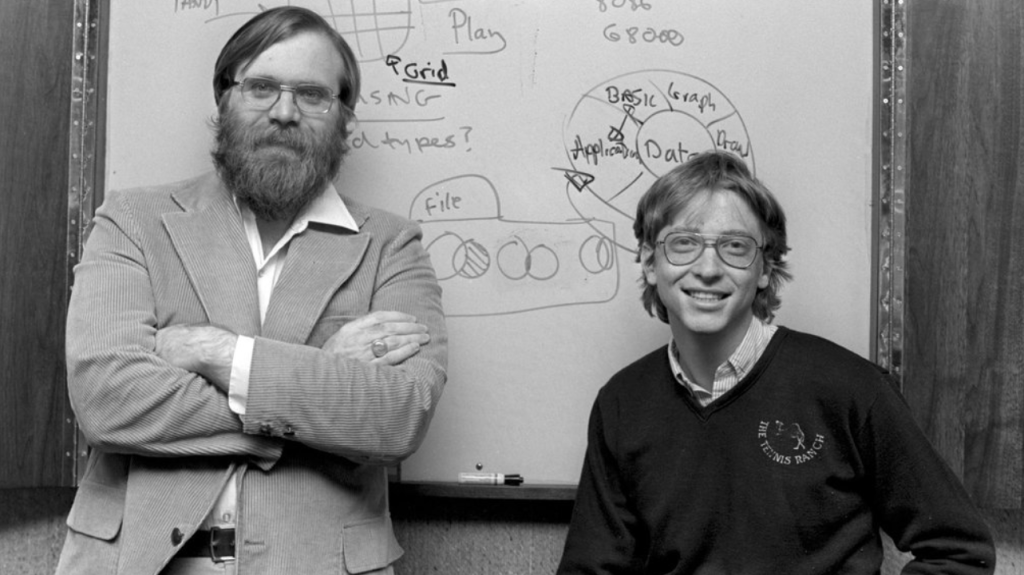
When this young man dropped out of college, I’m sure it was a huge disappointment to his family. After all, he’d scored a perfect 1600 on his SAT’s and graduated from the prestigious Lakeside School in Seattle. But the world was changing rapidly in the early to mid-1970’s and he had bigger visions than attending classes and frat parties.
Of course, we all know his story. Along with a close friend, he went on to become a co-founder of one of the world’s most successful computer software development companies: Microsoft.

But I’m not writing about Bill Gates. This is about Paul Allen, the less ‘famous’ of the Microsoft pair. And without whom Microsoft would never have existed.
If he were alive today, he would be celebrating his 72nd birthday.
According to the Infallible Wikipedia:
“He attended Lakeside School, a private school in Seattle where he befriended Bill Gates, with whom he shared an enthusiasm for computers, and they used Lakeside’s Teletype terminal to develop their programming skills on several time-sharing computer systems. They also used the laboratory of the Computer Science Department of the University of Washington, doing personal research and computer programming; they were banned from the laboratory in 1971 for abuse of their privileges there.
Gates and Allen joined with Ric Weiland and Gates’ childhood best friend and first collaborator, Kent Evans, to form the Lakeside Programing Club and find bugs in Computer Center Corporation’s software, in exchange for extra computer time. In 1972, After Evan’s sudden death due to a mountain climbing accident, Gates turned to Allen for help finishing an automated system of Lakeside’s entire class scheduling procedure. They then formed Traf-O-Data to make traffic counters based on the Intel 8008 processor. According to Allen, he and Gates would go ‘dumpster diving’ in their teenage years for computer program code.
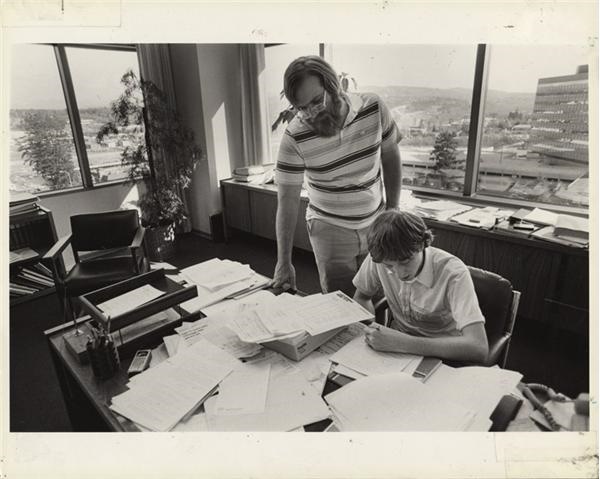
Allen attained a perfect SAT score of 1600 and went to Washington State University, where he joined the Phi Kappa Theta fraternity.”
Allen was hired by Honeywell, located in Boston, as a computer programmer and left WSU. Gates, now attending nearby Harvard, and Allen reconnected. It was Allen who convinced Gates to leave Harvard, move to Albuquerque, New Mexico and form Micro-Soft (To combine the two terms microcomputer and software). In January 1979, the company moved to Bellevue, Washington.
Also from the Infallible Wikipedia:
“The relationship became less close between Allen and Gates as they argued even over small things. Allen effectively left Microsoft in 1982 after being diagnosed with Hodgkin’s lymphoma, though he remained on the board of directors as vice chairman. Gates reportedly asked Allen to give him some of his shares to compensate for the higher amount of work that Gates was doing. According to Allen, Gates said that he ‘did almost everything on BASIC and the company should be split 60–40 in his favor. Allen agreed to this arrangement, which Gates later renegotiated to 64–36. In 1983, Gates tried to buy Allen out at $5 per share, but Allen refused and left the company with his shares intact; this made him a billionaire when Microsoft went public. Gates later repaired his relationship with Allen, and the two men donated $2.2 million to their childhood school Lakeside in 1986. They retained a friendship for the rest of Allen’s life.”
Allen went on to do many great things for the world including donating over $2 Billion towards science, technology, education, wildlife conservation, the arts, and community services.
You can read more about Allen’s extraordinary life and find links to his biography here:
https://en.wikipedia.org/wiki/Paul_Allen
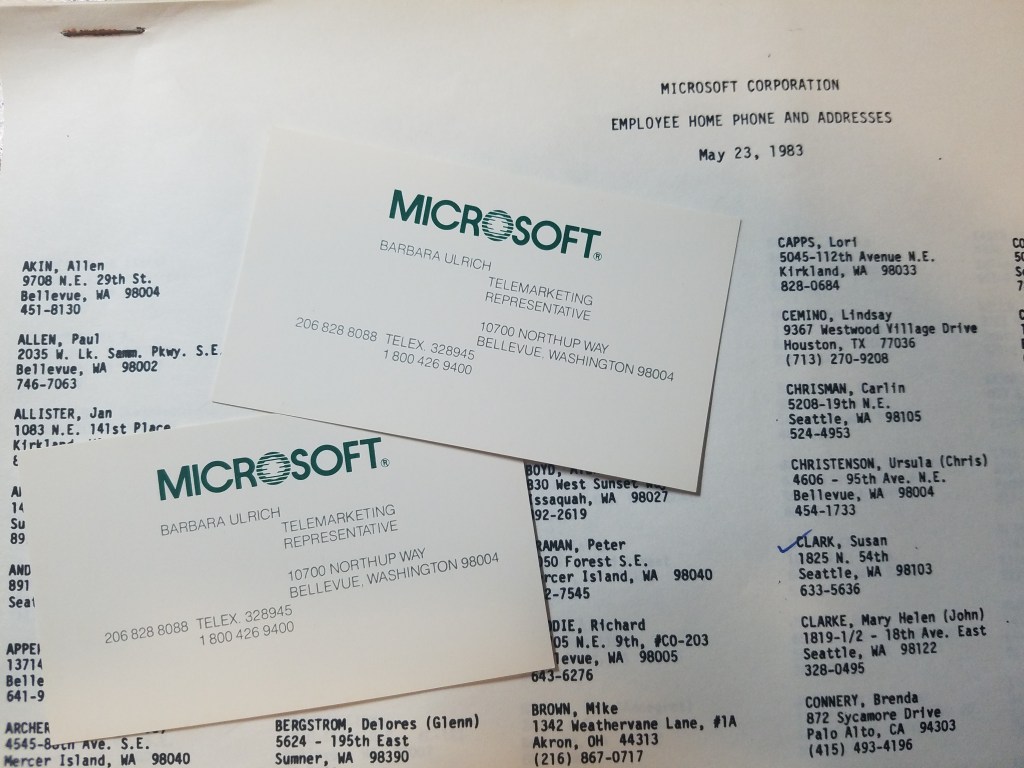
In the past eight years of writing my Tuesday Newsday blog I’ve shared only a few stories about my ‘Forest Gump-esque’ experiences at Microsoft. I was hired there in early 1982 as part of a group of three young women who would be launching a retail telemarketing division for the company.
Our trio faced nearly insurmountable odds – which we did not know when we took the jobs – as we were tasked with calling out to every retail store in our region (I had the west coast. The. Entire. West. Coast.), working in conjunction with Microsoft’s field sales reps, to sell such programs as Basic, Fortran, and Cobol compilers, the always popular Flight Simulator and Typing Tutor, and the early spreadsheet program, MultiPlan.
The phone calls were often brutal with the stores’ buyers either not taking our calls or, more often, asking if we sold Lotus 1-2-3, our competitors sizzling hot multi-functional program which dwarfed Microsoft’s Multiplan. Word Processing program? Bah. Didn’t exist then.
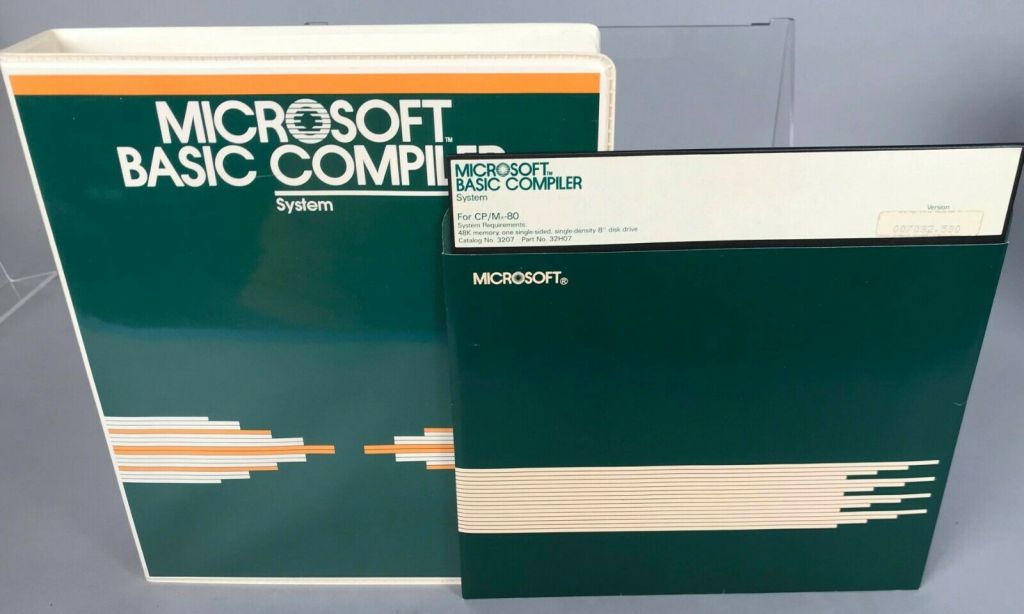
We worked hard, we played hard, and the burnout rate was high.
I left Microsoft, having experienced that same mentioned burnout, in the fall of 1984 and went to work for another computer company located in Kirkland six weeks later. One day, likely the summer of 1986, my then boss, Tom, took me to lunch for my birthday. We went to a favorite Japanese sushi place in Totem Lake called Izumi.
We sat up at the small sushi bar, the only people in the restaurant when we arrived. We had just gotten our food when a group of 4 or 5 men also arrived, and took a table nearby. I didn’t pay much attention to the group as Tom and I were talking. Tom, being a loud and gregarious individual, dominated the exchange and the room.

Somehow our conversation got on to Microsoft and Tom asked why I had left the company. Before I could answer, I noticed the table of nearby men had gone silent and were all looking at us, and one of them said “I can’t escape it, no matter where I go.” That man was Paul Allen.
Perhaps that moment, more than any other, illuminated how he felt about Microsoft – at least in 1986 when he and Gates were still working to repair their relationship – and summed up for me my Microsoft experience also. For anyone living in the Seattle area, you either worked for, know someone who worked for, or you once worked for, Microsoft. It was inescapable. And not particularly pleasant.
I wanted to say something to Paul Allen that day, but felt that if I had it would have been about as welcome as a drunk fan asking a movie star for an autograph. Instead – as if by mutual agreement – he returned his attention to his group and Tom and I changed our topic.
I left Applied Computer Sciences and the corporate world in the late 1980’s, putting my energies in to raising my kids and doing volunteer work.
If I had any regrets in leaving Microsoft it was, perhaps – unlike Paul Allen – that I was never eligible for stock options, a nice perk that would have made life a bit easier.
I did, however, learn something much more valuable and it is a mantra I’ve carried through my life which goes like this:
Bill Gates and Paul Allen were wildly successful. Microsoft was wildly successful. But just because I worked for the company, however, was not enough to make me wildly successful. It is up to each of us, individually, to follow our own path, pursue our own dreams and interests, and find those things which bring us joy and fulfillment. That, I think, is the true definition of success.
It was a hard lesson but I’m forever thankful for learning it and those brief, brutal, and impactful, Microsoft years.



 barbaradevore.com