Tag Archive | 1971

David Gates & Bread

‘The Guitar Man’

October 3, 2023

About six weeks ago I decided I needed to write about this musical group which, in the early 1970’s, was easily one of my top 3 favorites. They first caught my attention with their number one hit, “Make It With You,” in the summer of 1970 and it was one of the first albums I ever purchased. The group: Bread.

Either the first or second album I ever bought… Bread’s ‘Baby I’m A Want You.’ I wore it out.

It was on October 1, 1971, when they released what was to become their second biggest hit “Baby, I’m a Want You.” It would reach number 3 on the Billboard Hot 100 chart. Bread was the creation of David Gates, Jimmy Griffin, and Robb Royer who met in the music scene of Los Angeles in the late 1960’s. The Infallible Wikipedia does, of course, have something to say about the group got its name. As Gates explained in an interview:

“A bread truck came along right at the time we were trying to think of a name. We had been saying, ‘How about bush, telephone pole? Ah, bread truck, bread.’ It began with a B, like the Beatles and the Bee Gees. Bread also had a kind of universal appeal. It could be taken a number of ways. Of course, for the entire first year people called us the Breads.”

“Make it With You” catapulted Bread to the top of the Billboard charts on August 22, 1970. Also from the Infallible Wikipedia:

“For their next single, Bread released a re-recorded version of ‘It Don’t Matter To Me’, a Gates song from their first album. This single was a hit as well, reaching No. 10. Bread began touring and recording their third album, titled Manna (March 1971), which peaked at #21 and included ‘Let Your Love Go’ (which preceded the album’s release and made No. 28) and the Top 5 hit single, ‘If’. As with the first album, songwriting credits were split evenly between Gates and Griffin-Royer.

Royer, after conflicts with other members of the band, left the group in the summer of 1971 after three albums, although he would continue to write with Griffin. (snip)

In January 1972 Bread released Baby I’m-a Want You, their most successful album, peaking at No. 3 on the Billboard 200. The title song was established as a hit in late 1971 before the album was released, also hitting No. 3. Follow-up singles ‘Everything I Own’ and ‘Diary’ also went Top 20.

The next album, Guitar Man, was released ten months later and went to No. 18. The album produced three Top 20 singles, ‘The Guitar Man’ (#11), ‘Sweet Surrender’ (#15), and ‘Aubrey’ (#15), with the first two going to No. 1 on Billboard’s adult contemporary chart.”

Bread is best known for David Gate’s rich vocals singing heartfelt ballads, appealing to the 12 to 17 year old female Baby Boomers of the day; their songs perfect for slow dances at Homecoming and Tolo dances.

A couple of diary entries from 1971 and 1972 confirm the impact this group’s music had on me. On December 31, 1971 I wrote: “This is a list of songs I like…” and I go on to list six songs. ‘Baby I’m a Want You’ made the cut. In my 1972 diary I specifically note the handful of songs I liked best at the end of each month. The two most consistent groups on that list were The Carpenters and Bread.

In June 1973 the group disbanded.

New songs and groups stepped into the void and I didn’t really think about Bread very much. At least until I started researching for this article. Research often leads me down rabbit holes and such was the case with this article. The article about the group soon lead to articles about the group members and I found myself enthralled with learning about the individual who I think was most responsible for Bread’s success: David Gates. I loved his voice the first time I heard it and marveled at his song writing. After the breakup of Bread, Gates went on to have a successful solo career but eventually retired. Unlike so many successful musical artists, Gates remained married to his wife, Rita Jo, who he married in 1959, and together they raised four children.

And then he and Rita moved to the state of Washington and the community of… checks article… Mount Vernon!

What? One of my musical favorites lives less than six miles from me? Now, of course, I find myself scanning the more ‘mature’ gentlemen I see out shopping. Could one of them be David Gates? The Guitar Man?

A half an hour of David Gates talking with fans from Mount Vernon, Washington

Back in 2016 a fan in town organized an event with Gates and his wife. Oh how I wish I had known about that. Even though I didn’t yet live in Mount Vernon, I would have driven there to attend!

Although I still love all their music, It’s ‘The Guitar Man’ which best encapsulates David Gates and Bread for this teenager in 1972. Some of the lyrics:

Yesterday, after I finished writing this article I headed into the dentist’s office to have a crown placed. I had just sat down in the waiting room when I heard it. Soft music coming over the speakers. A moment later I burst out laughing. David Gates singing “The Goodbye Girl” was the selection.

After my appointment I shared the serendipity of hearing “The Goodbye Girl” with Sheryl (she runs the office!) and and then told her about today’s Blog topic. She had two immediate reactions. Her first was to exclaim how much she, too, had loved David Gates and Bread as a teenager and, the second, was complete surprise to learn that Gates is a member of the larger community.

So now there are at least two of us who would love to meet our famous neighbor and hear what he has to say.

Once a fan girl, always a fan girl!

A few links:

https://en.wikipedia.org/wiki/Bread_(band)

https://en.wikipedia.org/wiki/David_Gates

https://en.wikipedia.org/wiki/List_of_Billboard_Easy_Listening_number_ones_of_1971

Fiddler On The Roof

Tradition!

November 3, 2020

Until November 3, 1971, this musical play could only be viewed on Broadway or in a community or school production. With the release of the movie, however, Fiddler On The Roof, cemented its place as one of the best musicals ever.

The 1971 Movie Poster

Prior to being made into a film Fiddler was a Broadway staple. The Infallible Wikipedia sheds a bright spotlight on its history:

“The original Broadway production of the show, which opened in 1964, had the first musical theatre run in history to surpass 3,000 performances. Fiddler held the record for the longest-running Broadway musical for almost 10 years until Grease surpassed its run. The production was extraordinarily profitable and highly acclaimed. It won nine Tony Awards, including best musical, score, book, direction and choreography. It spawned five Broadway revivals and a highly successful 1971 film adaptation and has enjoyed enduring international popularity.”

What’s so captivating about Fiddler is its unique story. The audience – from the first notes of the fiddle’s haunting tunes – is immersed in the pre-Russian revolution community of Anatevka.

Soon the viewer sees the world through the eyes of Tevye, a Jewish peasant ‘blessed’ with five daughters and no sons. Tevye narrates the entire play through words and song in an often humorous yet bittersweet evaluation of his – and his fellow villager’s – life.

What ties it all together, however, is the incredible music. From the foot tapping lament of If I were A Rich Man, to the witty Matchmaker, and the wistful Sunrise, Sunset, each song expertly captures the feeling of a unique time and place in history.

Fiddler – perhaps more than any other musical to grace the silver screen – is a serious film which explores the foibles of human nature and one’s ability to adapt to change.

I know I saw the film in the theater as a teenager and also a production of it at Eisenhower Sr. High (IKE) in Yakima in the spring of 1972. The IKE production, in fact, was the event which inspired my resolve to be in the choir since you had to be in that group if you wanted to perform in the musical.

I was in my ninth grade year – in junior high – when I wrote this diary entry on March 24, 1972:

“I went to ‘Fiddler on the Roof.’ It was very good, we had front row seats and I felt like the lead was singing to us in some parts. It was really neat.”

First of all, a big thank you to my parents for being first in line and purchasing the front row seats. Second, that is not the most eloquent bit of writing, but I’ll forgive my 14 year old self…at least she captured the moments. I bought a book of Fiddler songs on sheet music and learned to play many of them on the piano. I even sang Matchmaker for a talent competition… I no longer recall WHY I thought this was a good idea (it wasn’t) or the specific event… but I was much more fearless then.

A page from the 1972 IKE yearbook, Reveille, of the Fiddler on The Roof production. I wanted to be just like this group, on stage singing in a musical.

Years later, when my kids got to about ages 8 and 11, I hatched an idea. The hubby and I ordered and installed an 8 foot by 8 foot movie screen. A speaker system was set up to create surround sound and thus we created a part time media center in our living room.

This all coincided with my discovery that the King County Library ‘rented’ to anyone who held a library card films on DVD and VHS. And when I say rent, I mean for free. The catch was that you had to put a hold on the movies you wanted and then wait until the email notice arrived advising that a particular one was ready to be picked up. Much less expensive than Blockbuster and with an element of surprise; we never knew which movie would be the one for any particular Saturday night.

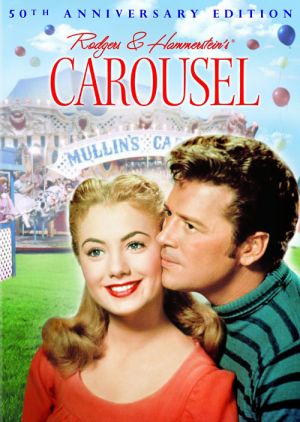
And thus began my mission to introduce my kids to every musical ever produced. My budding film critics soon developed opinions about every selection I brought home. My daughter, for example, declared the musical Carousel as The Worst. Musical. Ever. Personally, I would put it up against The Fantasticks for that title.

The Worst. Musical. Ever.

On the night of Fiddler, the sights and sounds of 1905 Russia filled the room and the whole family was enthralled. For me it was as if visiting with an old friend for a couple of hours. I tamped down my temptation to sing along and once again enjoyed the wonderful story and characters.

Finally, when I had exhausted all the musicals available through the library, I asked my children one day of all those we had watched, which was their favorite? While I don’t recall what my daughter said, my son did not hesitate: Fiddler On The Roof. An opinion he confirmed recently.

As for me and my dream of being in the cast of my high school’s musical… well, that’s a story for next week.

To learn more about the incomparable Fiddler, one needs only to access The Infallible Wikipedia:

https://en.wikipedia.org/wiki/Fiddler_on_the_Roof

https://en.wikipedia.org/wiki/Fiddler_on_the_Roof_(film)

L’Chaim!

Buying a Stairway To Heaven

March 5, 2019

For many Baby Boomers, there is one song from the 1970’s which seems to define and capture their youth. The song, however, was never released as a single and never hit number one on the Billboard charts. In fact it defied all the ‘rules’ of Top 40 Rock and Roll. It was nearly eight minutes long, unheard of when the average length of a commercial song was about three minutes. It started as an ennui inducing ballad but then morphed to a hard rocking electric guitar solo, but finishes back in ballad form. If, by now, you don’t know the song then you probably missed the 1970’s and have not listened to the radio since.led zeppelin.jpg

Stairway to Heaven was performed live for the very first time on March 5, 1971 at Ulster Hall in Belfast, Ireland.  According to Led Zeppelin bassist John Paul Jones the crowd was “… all bored to tears waiting to hear something they knew.” I have my doubts that his evaluation was entirely accurate. I imagine there were many in the audience that day who instantly knew they were hearing history being made.

In the subsequent years, the song has proven a thoroughbred, consistently among the top contenders on many ‘greatest’ song lists. According to the Infallible Wikipedia:

“‘Stairway to Heaven’ continues to top radio lists of the greatest rock songs, including a 2006 Guitar World readers poll of greatest guitar solos. On the 20th anniversary of the original release of the song, it was announced via U.S. radio sources that the song had logged up an estimated 2,874,000 radio plays – back to back, that would run for 44 years solid. As of 2000, the song had been broadcast on radio over three million times. In 1990 a St. Petersburg, Florida station kicked off its all-Led Zeppelin format by playing ‘Stairway to Heaven’ for 24 hours straight. It is also the biggest-selling single piece of sheet music in rock history, clocking up an average of 15,000 copies yearly. In total, over one million copies have been sold.”

plant page.jpg

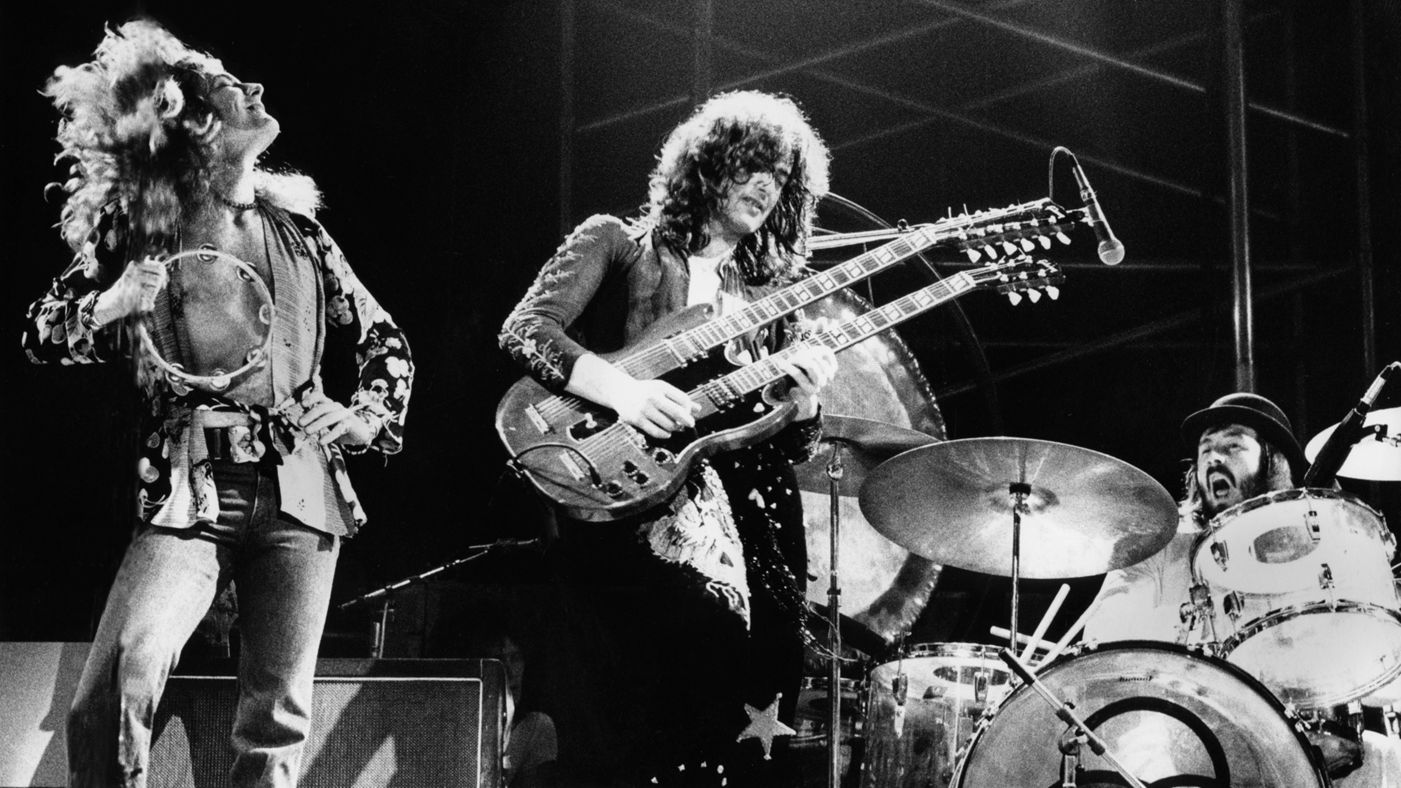
Robert Plant, Jimmy Page, and John Bonham

With great success often comes controversy. Such was true for Stairway To Heaven. Two years before the song was written, Led Zeppelin toured a few times with a group called Spirit. And that group performed an original song titled Taurus. As it happens, Taurus’ opening guitar riff began with a descending A minor chord progression. Which is also true of Stairway To Heaven. The similarity spawned a copyright infringement lawsuit in 2014 on behalf of the deceased creator of the Taurus guitar introduction. When the verdict was announced in 2016, it ruled in favor of Led Zeppelin. Essentially, while Stairway to Heaven uses a nearly identical A minor chord progression, theirs went way beyond what Spirit had done, adding an ascending progression from A to B to C and finishing on F sharp which plays simultaneously with the descending A minor progression.

I found the whole thing quite fascinating and enjoyed watching this musician dissect it:

https://youtu.be/PCEg9gMJakU

By 1973, Stairway to Heaven was a staple at every Homecoming, Tolo and Prom. And one you were never quite sure how to dance to. I imagine the guys liked it because they got to slow dance with the girls for a bit… and then break apart for more traditional rock and roll moves.

Personally, I always found it awkward. And then there was the problem of local bands attempting to do justice to the music… and usually butchering it.

No, the best way to enjoy Stairway To Heaven is to simply close one’s eyes, listen to the lyrics sung by Robert Plant, the amazing guitar work of Jimmy Page, and contemplate the concepts. Since it first emerged in our collective consciousness, countless fans have, no doubt, cogitated and considered just exactly what it all means. And that, ultimately, is one of the greatest allures of the song.

As always, a couple links for you:

https://en.wikipedia.org/wiki/Stairway_to_Heaven (the Infallible Wikipedia article)

https://abcnews.go.com/Entertainment/led-zeppelin-wins-copyright-infringement-suit-opening-lick/story?id=40026259 (report on the lawsuit)

Led-Zeppelin-Stairway-To-Heaven


It’s A Hullabaloo!

April 11, 2023

Hullabaloo

This is an update to a Classic Tuesday Newsday from April 11, 2017

Last week I shared the amazing feat of the Beatles and their five songs at number one through five on April 4, 1964. Well this week we are going to go forward two years to April 11, 1966. It was on this date that the last episode of the TV program ‘Hullabaloo’ aired. What? You’ve never heard of Hullabaloo? Neither had I but here’s what I learned from the always Infallible Wikipedia:

“Hullabaloo was an American musical variety series that ran on NBC from January 12, 1965, through April 11, 1966 (with repeats to August 1966). Similar to ABC’s Shindig! and in contrast to American Bandstand, it aired in prime time.

Directed by Steve Binder, who went on to direct Elvis Presley’s 1968 ‘comeback’ special, Hullabaloo served as a big-budget, quality showcase for the leading pop acts of the day, and was also competition for another like-minded television showcase, ABC’s Shindig! A different host presided each week—among these were Sammy Davis, Jr., Jerry Lewis, Gary Lewis, Petula Clark, Paul Anka, Liza Minnelli, Jack Jones, David McCallum and Frankie Avalon—singing a couple of his or her own hits and introducing the different acts. Chart-topping acts who performed on the show included Simon and Garfunkel, the Mamas & the Papas, Dionne Warwick, Gary Lewis and the Playboys, the Lovin’ Spoonful, the Rolling Stones, the Yardbirds, Sonny & Cher, the Supremes, Herman’s Hermits, Frankie Valli and the Four Seasons, the Animals, Roy Orbison and Marianne Faithfull.”

I can guaran-darn-tee that my mother would have had that TV off in a heartbeat if this program came on. Of course my mother also banned us kids from seeing Gunsmoke and the Monkees (which, ironically, was the show that took over the time slot vacated by Hullabaloo).

My mother’s philosophy was that impressionable young minds needed to be protected from such decadence. Dancing like this, as a friend of mine commented recently, was not tolerated in the early 1960’s. And those who did dance in such ways must have been ‘those kind of girls.’ In some ways my mother was a feminist in that she objected to women being judged upon their looks and their bodies and certainly would have found this display quite inappropriate. By today’s standards, this compilation is rather tame.

Which got me to thinking about my own experience with dancing. Up until I joined the Rainbow Girls in 1971, I had maybe only ever been to one ‘dance’ – which would have been at Wilson Junior High School. Now, to call it a dance was really a misnomer. More like an excuse for the young teenagers to hang out in the cafeteria after school with the girls clustered on one side of the room and the boys on the other while loud music played. Occasionally some boy would cross the invisible line, a warrior marching bravely to battle, and ask a girl to dance. Mostly, however, the boys remained on their side and the girls on theirs.

But, back to the Rainbow Girls. Our group, called an Assembly, boasted over 70 members in the 1970’s and once every four months a new set of officers would be installed. This was, of course, cause for a celebration and the party afterwards was crowded and ALWAYS included a dance which featured, for several years, a live local band.

Unlike that first Junior High experience, people actually danced at these things! Well, at least the older girls seemed to while us younger ones hung out in a group we dubbed ‘The Wallflowers.’ But that was, not apparently, entirely accurate as my diary from May 29, 1971, chronicles my first Rainbow dance ever:

“…the best part (of the installation) was the dance. A.L. asked me to dance a fast dance which wasn’t that fun. Well we (who ‘we’ is I have no idea) were talking to ‘Becky’ and she decided to get somebody to ask one of five girls to dance. Well, BB asked ‘Sally’ and his friend asked me.”

I go on to write that the particular song turned out to be a slow one. And there was nothing WORSE than slow dancing with some guy you had never met. The whole experience apparently left my stomach in knots.

Okay, so maybe there was something worse. And that would have been the time I was dancing with a guy – initials of DW – who I had a bit of crush on. It was a slow dance which, when you have a bit of a crush on a guy, is a good thing. A slow dance, in the 1970’s, often meant that you had your arms around each other, eyes closed, and were swaying together to the music. All very romantic. That is until the moment when someone taps you on the nose.

That someone turned out to be my Dad who happened to waltz (literally) by with my Mom since they were chaperones! Talk about embarrassing. That event is etched in my memory. My parents are both laughing as they continue waltzing past. I was mortified but I think “DW” thought it was funny.

There were many, many more dances over the years which followed but there was something special about those first few. It was definitely a Hullabaloo!


What dances in the 1970’s looked like for teenagers. From the 1974 tolo dance as pictured in the Eisenhower HS Reveille yearbook.