Remembering Cassidymania: David Cassidy’s Impact on Pop Culture

“I Think I Love You!”

November 27, 2018

David Cassidy.jpgFor teenage girls in the early 1970’s, he was the heart-throbiest of heartthrobs. His female fans cried, screamed and swooned. The guys of the era attempted to imitate his hair and his clothes. And on November 27, 1970, his group’s song “I Think I Love You” sat atop the pop charts. The idol: David Cassidy.

His was a meteoric rise fueled, no doubt, by a combination of connections, classic good looks, and the ability to sing. Born in 1950 to actor parents Jack Cassidy and Evelyn Ward, his childhood was unusual in that he was mostly raised by his maternal grandparents while his parents traveled for work.

It was in 1956, at the age of six, two years after his parents’ divorce that he learned of the event! His father remarried that year and it was his father’s second marriage, to Broadway musical phenom Shirley Jones, which became Cassidy’s ticket to worldwide fame.

From the Infallible Wikipedia:

“On January 2, 1969, Cassidy made his professional debut in the Broadway musical The Fig Leaves Are Falling. It closed after four performances, but a casting director saw the show and asked Cassidy to make a screen test. In 1969, he moved to Los Angeles. After signing with Universal Studios in 1969, Cassidy was featured in episodes of the television series IronsideMarcus Welby, M.D.Adam-12 Medical Center and Bonanza.

partridge bus“In 1970, Cassidy took the role of Keith Partridge, son of Shirley Partridge, who was played by Cassidy’s real stepmother and series lead Shirley Jones. The Partridge Family series creator Bernard Slade and producers Paul Junger Witt and Bob Claver did not care whether Cassidy could sing, knowing only that his androgynous good looks would guarantee success. Shortly after production began, though, Cassidy convinced music producer Wes Farrell that he was good enough, and he was promoted to lead singer for the series’ recordings.”

The fever which gripped his fans was dubbed “Cassidymania.” Also from the Infallible Wikipedia:

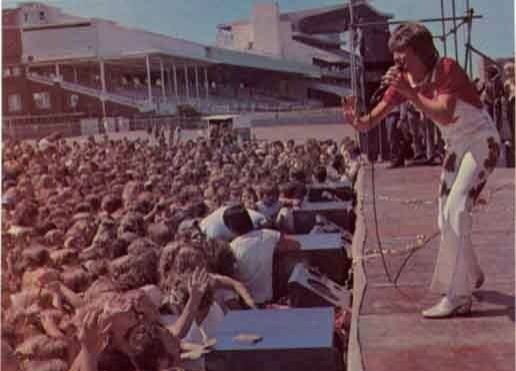
“Ten albums by The Partridge Family and five solo albums were produced during the series, with most selling more than a million copies each. Internationally, Cassidy’s solo career eclipsed the already phenomenal success of The Partridge Family. He became an instant drawing card, with sellout concert successes in major arenas around the world. These concerts produced mass hysteria, resulting in the media coining the term ‘Cassidymania’.
DAVID-IN-CONCERT

For example, he played to two sellout crowds of 56,000 each at the Houston Astrodome in Texas over one weekend in 1972. His concert in New York’s Madison Square Garden sold out in one day and resulted in riots after the show. His concert tours of the United David Cassidy Pop Star At Manchester Airport.Kingdom included sellout concerts at Wembley Stadium in 1973. In Australia in 1974, the mass hysteria was such that calls were made to have him deported from the country, especially after the madness at his 33,000-person audience concert at Melbourne Cricket Ground.”David-Cassidy-at-Radio-Luxembourg

As is always the case, the mania eventually ends, and an aging idol is soon replaced with someone younger. Cassidy, however, continued as a singer/songwriter/actor, with a solid career well into the early 2000’s.

Sadly, he battled a lifelong alcohol addiction and it was this which destroyed his liver. He died on November 21, 2017, awaiting a liver transplant.
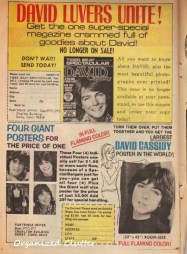
cassidy maniaAs a 13 year old girl in 1970, I was precisely the demographic which was all agog over David Cassidy. I never put up posters on my walls, however, but I did watch the Partridge Family almost every Friday night. And I might have had a teeny bit of a crush on Keith Partridge.

I Think I Love You is one of ‘those’ songs, instantly recognizable from the first chord and the compelling lyrics… Baa-baa-baa-baa, baa baa baa, baaaa… and one that I will forever associate with those awkward teenage years.  In a good way.

For those who have forgotten or never seen any of the 1970’s sitcom or heard the song, enjoy! For the rest of us, it’s a trip down memory lane.

About David Cassidy: https://en.wikipedia.org/wiki/David_Cassidy

About The Partridge Family: https://en.wikipedia.org/wiki/The_Partridge_Family

Saturday Night Live

Still Crazy After All These Years

November 20, 2018

When this TV show hit the airwaves in October 1975, it was considered edgy and pushing the boundaries of societal good taste. For teenagers and twenty-something’s it became ‘must see’ TV. We are, of course, talking about Saturday Night Live which is now in its 44th season.

140207_2721464_Paul_Simon_s_Monologue_Worries_anvver_4

Paul Simon – Still Crazy After All These Years – in the turkey costumer on SNL.

No doubt I watched the November 20, 1976, episode live when singer/songwriter Paul Simon hosted the show and donned a turkey costume for one of the sketches. In the sketch he sings the first five lines of the song:

I met my old lover
On the street last night
She seemed so glad to see me
I just smiled
And we talked about some old times
And we drank ourselves some beers
Still crazy after all these years
Still crazy after all these…

From there he complains about how stupid he feels being dressed up as a turkey, eventually leaves the stage, and has a backstage conversation with Lorne Michaels – SNL’s producer – before the bit is over.

It was things like this which propelled SNL into the pop culture of the 1970’s and soon had young people repeating lines like:

“We’re just two wild and crazy guys!” and “Never mind” and my personal favorite, “Jane, you ignorant sl*t.”

All three of these were repeated multiple times in multiple episodes, as were another dozen characters who said memorable things.

soon-will-be-the-foxes

Two Wild and Crazy guys! – Dan Akroyd and Steve Martin

The first featured Steve Martin and Dan Akroyd who took on the persona of two socially awkward Czechoslovakian brothers, Yortuk and Georg Festrunk, who continually tried to pick up American women. But always failed.

“Never mind” was from the genius of Gilda Radner whose character Emily Litella would pontificate on some subject. From the Infallible Wikipedia:

“Emily Litella is an elderly woman with a hearing problem who appeared 26 times on SNL’s Weekend Update op-ed segment in the late 1970s. Attired in a frumpy dress, sweater and Lisa Loopner glasses, Litella was introduced with professional dignity by the news anchors, who could sometimes be seen cringing slightly in anticipation of the malapropisms they knew would follow. These sketches were, in part, a parody of the Fairness Doctrine, which at the time required broadcasters in the United States to present opposing viewpoints on public issues.

Litella would peer through her bifocal glasses and, in the character’s high-pitched, warbly voice, would read a prepared statement in opposition to an editorial that the TV station had supposedly broadcast. Litella would become increasingly agitated as her statement progressed. Midway in her commentary, it became apparent to the anchor, and the audience, that Litella had misheard or misunderstood the subject of the editorial to which she was responding. A typical example:

‘What is all this fuss I hear about the Supreme Court decision on a ‘deaf’ penalty? It’s terrible! Deaf people have enough problems as it is!’

The news anchor would interrupt Litella to point out her error, along the lines, ‘That’s death penalty, Ms. Litella, not deaf … death.’ Litella would wrinkle her nose, say something like, ‘Oh, that’s very different,’ then meekly turn to the camera and say, smiling, ‘Never mind!’”

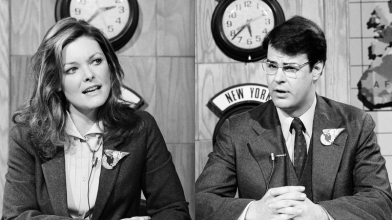
Of course the last one was completely over the top in the 1970’s as saying the word ‘slut’ on TV was just not done. But that’s exactly what Dan Akroyd – in the role of a news anchor – would deadpan to his co-anchor, Jane Curtin, during a segment titled “Point/Counterpoint”. And the audience loved it.

53-46720-akroyd-curtain-1516730738

Point/Counterpoint with Curtin and Akroyd

It was society altering humor which has influenced several generations. I was 18 when it first hit the airwaves. Although I watched at my home in Yakima the first two years I have a distinct memory of hurrying into the TV room at the Alpha Phi house at the University of Puget Sound to watch it while in college from 1977 through 1979. There was always a fairly large group to view it with me.

Nowadays, when I see the program, I find myself shaking my head as what the current generation finds funny no longer resonates with me. Alas, we are all products of our time. I will forever think of Dan Akroyd, Gilda Radner, John Belushi, Jane Curtin, Bill Murray, Garret Morris, and Laraine Newman as the REAL SNL cast!

SNL cast 1975 to 1979

SNL cast member 1976 to 1979, left to right, Garrett Morris, Jane Curtin, John Belushi, Laraine Newman, Dan Akroyd, Gilda Radner and Bill Murray

As I have been known to do with my kids is to provide them with the cultural reference – usually in the form of a video – whenever my husband or I quote something from SNL. A roll of the eyes lets me know that they’re not interested to which I respond “Never mind.”

As always, a few links:
https://www.nbc.com/saturday-night-live/video/paul-simons-monologue-worries/n8639

https://en.wikipedia.org/wiki/Recurring_Saturday_Night_Live_characters_and_sketches_introduced_1977%E2%80%931978

https://en.wikipedia.org/wiki/Emily_Litella

Sadie Hawkins Day

November 13, 2108

Catch and Release?

sadietitleThe origin of Sadie Hawkins Day is, no doubt, an anachronism to the young people of today who would be simultaneously surprised and offended by it. But on November 13, 1937, the event was introduced in a popular comic strip and soon, in the vernacular of today, went viral.

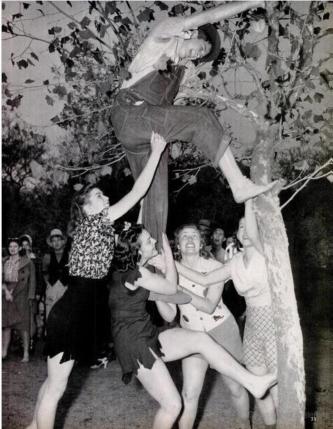
 For those who have never heard the term, it was cartoonist Al Capp who, in his syndicated comic Lil’ Abner, wrote it as a plot-line device.

According to the Infallible Wikipedia:

“In Li’l Abner, Sadie Hawkins was the daughter of one of Dogpatch’s earliest settlers, Hekzebiah Hawkins. The ‘homeliest gal in all them hills,’ she grew frantic waiting for suitors. When she reached the age of 35, still a spinster, her father was worried about Sadie living at home for the rest of her life. In desperation, he called together all the unmarried men of Dogpatch and declared it ‘Sadie Hawkins Day’. A foot race was decreed, with Sadie pursuing the town’s eligible bachelors. She was specifically interested in a handsome boy named Adam who was already in a courtship with a cute girl, Theresa, whose father was the area’s largest potato farmer, Bill Richmand, and, unlike Sadie, had a number of courtship offers. Adam was invited to the race because Miss Theresa and Adam weren’t actually engaged. With matrimony as the consequence of losing the foot race, the bachelors of the town were running for their freedom. Adam scored fourth place out of 10, leaving John Jonston as Sadie’s prize. It is possible that the concept’s origins are in an inversion of the myth of Atalanta, who, reluctant to marry, agreed to wed whoever could outrun her in a footrace.

            ‘When ah fires [my gun], all o’ yo’ kin start a-runnin! When ah fires agin—- after givin’ yo’ a fair start—- Sadie starts a runnin’. Th’ one she ketches’ll be her husbin.’

            The town spinsters decided that this was a good idea, so they made Sadie Hawkins Day a mandatory yearly event, much to the chagrin of Dogpatch’s bachelors. If a woman caught a bachelor and dragged him, kicking and screaming, across the finish line before sundown, by law he had to marry her.”

sadie hawkins cartoon

The 1937 cartoon which started it all.

The idea caught on and, just two years later, an article in Time magazine claimed over 200 Sadie Hawkins dances were being held that year at colleges throughout the United States. By 1952 it was estimated that the annual November event was celebrated in 40,000 venues!

Sadie Hawkins Dance, 1949d

Some late 1940’s Sadie Hawkins costumes

Even today, Sadie Hawkins festivities remain popular in the mid-west and south and women – perhaps still shy about asking a boy out – can feel free to pursue the guy of their dreams on November 13.

When I was a teenager, Tolo was our high school version of Sadie Hawkins Day. Apparently a Tolo Dance is unique to the Pacific Northwest. It was started at the University of Washington by Mortar Board, an all women’s honorary society, known there as the Tolo Club. The first dance held by the Tolo Club was conceived as a fundraiser. Like a Sadie Hawkins Day dance, it was the girls who asked the boys.

But back to high school. There was something frightening about the concept of asking a guy to go out. What if he said ‘no’? What if he told his friends and laughed about you behind your back? What if, what if, what if…

And yet somehow I screwed up the courage to ask one my junior year. His name was Mel, he was a senior, and he was an assistant editor on the yearbook staff. We had worked together on the annual since the beginning of school. I thought he was cute, had a good sense of humor, and would be fun to ask to Tolo.

In those days people didn’t do crazy things to ask someone, you just waited until the person was alone and then swoop in. Perhaps I asked him during class one day. I’m pretty sure I’ve tried to block the incident from my memory because I don’t recall exactly how or when I asked him. All I know is that I did and that he said he would.

When the day of the big event arrived I was a wreck, obsessing over what I had chosen to wear (Don’t judge – all I can say is that double knit was a thing in 1973). And obsessing over what we would talk about all evening and if he really wanted to even go with me.

So we went to Tolo, danced, hung out with Mort (editor of the annual that year) and his date a bit, made small talk, and then Mel took me home. The evening ended with a polite ‘thanks for asking me, I had a good time’ verbal handshake and then he left.

 Afterwards I was determined to not let the less than stellar date affect our friendship in class and things went back to normal. Mel’s most famous moment in high school occurred a few months later in the spring of 1974 when he became the one and only student at Eisenhower High School to – at an after school track meet – participate in the nationwide phenomenon of … streaking! He graduated that June – in cap and gown – and I have never seen him again.

The next year there was no way I going to put myself through another awkward evening. I stayed on the sidelines and have never regretted that decision.

 What the experience of asking Mel to Tolo did for me was two things:

  • First, it made me totally appreciate the challenge for men – at least in my day – of having to read the tea leaves of a woman’s interest levels. It’s darn intimidating to figure out if she’ll say ‘yes’ or ‘no.’
  • Second, from experiences such as that, I gained valuable insight which has made it easier to penetrate the heads of the fictional characters I write. If I can conjure up the way I felt  when I asked someone out or endured an awkward date, then I can imagine a character – male or female – having similar trepidation’s.
sadielife2-life-magazine

Some Sadie Hawkins girls participating in catch and release.

So here’s to Sadie Hawkins day… hope you ladies out there looking to ask that perfect guy out on a date find a keeper. Otherwise, there’s always catch and release.

A couple of links for you:

https://en.wikipedia.org/wiki/Sadie_Hawkins_Day

https://en.wikipedia.org/wiki/Sadie_Hawkins_dance

https://en.wikipedia.org/wiki/Al_Capp

Take It Easy

November 6, 2018

In mid-August 2018, this compilation of 10 ‘greatest hits’ regained its spot as the biggest selling U.S. album ever. Of the ten songs, six were co-written by the duo whose voices brought the tunes to life and propelled the group to international fame. That group is the Eagles and the musicians: Glenn Frey and Don Henley.

Eagles

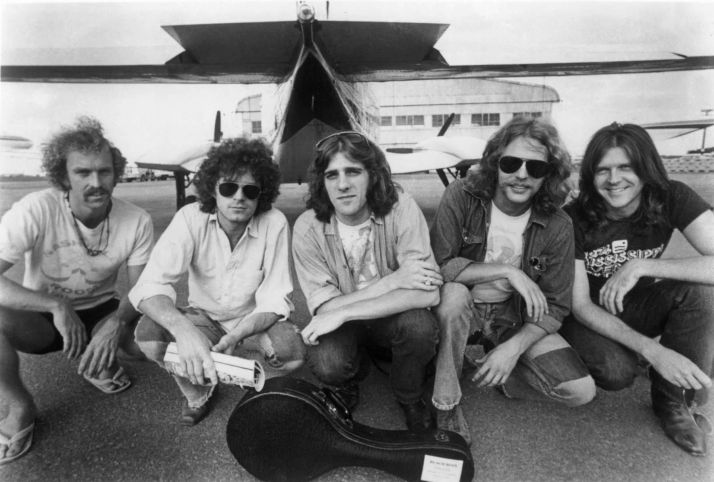
The Eagles circa 1974, left to right : Bernie Leadon, Don Henley, Glenn Frey, Don Felder, and Randy Meisner

November 6, 2018 would have been Frey’s 70th birthday. Frey was born, and grew up, in Detroit. His musical inclinations showed themselves early as he took piano lessons at age five. He later switched to guitar and became a part of the mid-1960’s local rock and roll scene of southern Michigan. It was when he made his way to Southern California where, according to the Infallible Wikipedia:

“Frey met drummer Don Henley in 1970. They were signed to the same label, Amos Records, at that time and both spent time at the Troubadour. When Linda Ronstadt needed a backup band for an upcoming tour, her manager John Boylan hired Frey because he needed someone who could play rhythm guitar and sing. Don Henley was approached by Frey to join Ronstadt. Randy Meisner and Bernie Leadon were also hired, although as the backing band personnel changed through the tour, the four had only played once together at a gig at Disneyland. Frey and Henley decided to form a band together while on the tour, and they were joined by Meisner on bass and Leadon on guitar, banjo, steel guitar, mandolin and dobro, forming the Eagles, with Frey playing guitar and keyboards and Henley playing drums. The band went on to become one of the world’s best-selling groups of all time.”

Eagles greatest hit autographed cover

How great would it be to have an autographed cover of their Greatest Hits album? Wish it were mine!

Commercial success arrived in 1972 with the release of their self-titled album and the single “Take It Easy.” In that song we were introduced to their unique sound and the easy to listen to voice of Frey. It was also one of Frey’s earliest compositions, co-written with Jackson Browne. Also from the Infallible Wikipedia:

“Browne told a version of the story in a radio interview: ‘I knew Glenn Frey from playing these clubs – we kept showing up at the same clubs and singing on the open-mic nights. Glenn happened to come by to say ‘hi,’ and to hang around when I was in the studio, and I showed him the beginnings of that song, and he asked if I was going to put it on my record and I said it wouldn’t be ready in time. He said ‘well, we’ll put it on, we’ll do it,’ ’cause he liked it,” Browne explained. ‘But it wasn’t finished, and he kept after me to finish it, and finally offered to finish it himself. And after a couple of times when I declined to have him finish my song, I said, ‘all right.’ I finally thought, ‘This is ridiculous. Go ahead and finish it. Do it.’ And he finished it in spectacular fashion. And, what’s more, arranged it in a way that was far superior to what I had written.'”

Frey’s talent was indisputable and unstoppable. Along with Henley – and also J.D. Souther and Randy Meisner on two of the songs – he co-wrote the following which are on their Greatest Hits album: Desperado, Tequila Sunrise, Lyin’ Eyes, One of These Nights, Take It To The Limit, and Best of My Love.

In all, Frey co-wrote 35 songs and achieved success as a solo artist after the group took a ‘vacation’ from one another in 1980 until they reunited in 1994.

Their Greatest Hits CD has been a part of my ‘hitchhiker’ collection for the past 10 years now. What, you are no doubt wondering, is the ‘hitchhiker’ collection? When I started making the frequent trips to Yakima to help with my parents, I put together a shoebox of CD’s to listen to while I drove. Over time, CD’s were added or removed depending on my mood. What I discovered is that there were about 10 to 15 CD’s that are never removed. Ever. Chief among them is the Eagles Greatest Hits.

I have been known to post on Facebook that I picked up a hitchhiker to keep me company during the drive. The reactions the first time I posted I had done so were hilarious as people were appalled I would do such a dangerous thing. But soon everyone figured it out and were proffering guesses as to ‘who’ they were. For the Eagles it might read “Glenn and Don got in at Ellensburg and kept me entertained clear to the top of the pass when they got out and Carly hopped in.”

One thing is certain, however, every song on that Eagle’s CD is a winner and it’s nearly impossible to pick a favorite. That said, there is one which I love just a tiny bit more than the others. That would be “Desperado.” What’s your most loved Eagles song?

So as a bonus today you get not one, but two classic hits from the Eagles. Here’s the second one. Enjoy.

As always, a couple of links:

https://en.wikipedia.org/wiki/Take_It_Easy

https://en.wikipedia.org/wiki/Glenn_Frey

WKRP in Cincinnati

… I thought Turkey’s could fly!

October 30, 2018

“As God is my witness, I thought Turkeys could fly.”

And thus ended one of the most memorable TV episodes in history.

wkrpIt was October 30, 1978, and the TV show “WKRP” had been on the air for a mere six weeks. But in that brief time it had become a hit due to the stellar ensemble cast of characters and excellent writing.
The premise of the show is that newly hired program director, Andy Travis (played by Gary Sandy), takes on the challenge of turning around Cincinnati radio station WKRP by changing it from an easy listening to a rock and roll format. Along with disc jockeys Johnny Fever (Howard Hessman) and Venus Flytrap (Tim Reid), he encounters an uphill cultural battle and deals with incompetent management.

Two of the more memorable characters are station manager Arthur ‘Big Guy’ Carlson (Howard Jump) and the milquetoast newsman Les Nessman (Richard Sanders).

A very brief description of the episode from the Infallible Wikipedia:

“Mr. Carlson decides to take a more hands-on managerial approach by doing the greatest Thanksgiving promotion in radio history – dropping live turkeys from a helicopter. Trivia: In 1997 TV Guide ranked this episode at number 40 on its ‘100 Greatest Episodes of All Time’ list. In 2009, it moved to #65. It is based on a real event that happened at WQXI, the station many of the WKRP characters were based on.”

What’s amazing about the October 30th episode, titled ‘Turkey Drop,’ is that the release of the birds – from a helicopter – is never shown. What the viewers saw, however, were the reactions of the cast members to the event as it ‘happened’ in real time. Its classic storytelling as characters stay in character the entire time and the viewer knows without a doubt everything which occurs.

I am including two clips. The first is of Les Nessman in his newsman role reporting live from the scene as the turkeys start falling from the sky. What makes this so very funny is that we also see the staff back at the radio station being appalled at the disaster of the promotion.

Here’s clip one of the turkey drop:

And the classic line:

For those who have the time, watch the entire episode. Even to this day, I laugh whenever I see the second clip which – this time of year – is likely to be several times on social media.

Here’s the entire episode (I apologize for it being backwards – no sooner than these go up and they seem to get taken down):

<div style=”position:relative;padding-bottom:56.25%;height:0;overflow:hidden;”>

</div>

I give credit to my brother for bringing it up the other night; he can confirm that I was truly giddy to think I would get to do my blog about this episode. It was appropriate that he was the one who reminded me of it as he has spent his entire adult life working in radio as a disc jockey. He attests to the fact that radio really is that crazy of a business. He’s been fired from more jobs than most people will ever hold. Why? Because the station decides to change format and, boom, you’re gone because you’re not the sound they want. Or because of budget cuts. Or because the program director simply does not like you. As one program director once said “it would be a great business if it weren’t for the jocks (disc jockeys).” He had a point as most of the DJ’s have strong personalities.

My brother has lived in North Bend, Oregon; Eugene, Oregon; Tacoma; Seattle; Denver; Dallas; and Yakima. He’s called some of the places home more than once. I probably have missed a few but he’s truly lived ‘up and down’ the dial like the show’s theme song says!

Nowadays many of the voices you hear on the radio are recorded earlier and are no longer live; in fact many of them are not even in the same city.

Stations like WKRP rarely exist any longer. Thank goodness they produced the show for four seasons, catching a little piece of Americana for all time. What a treasure.

About the show: https://en.wikipedia.org/wiki/WKRP_in_Cincinnati

Weird Al Yankovic

White & Nerdy

October 23, 2018

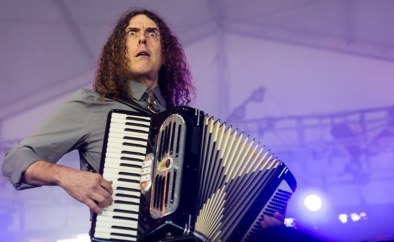
This artist likely could have been a ‘one hit wonder’ – after all who could possibly make it big in American pop culture with their chosen instrument being the accordion?

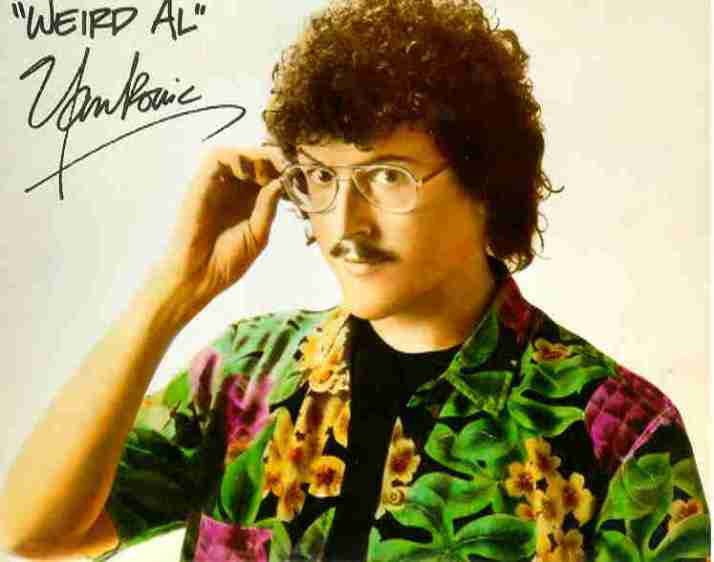
With his strange sense of humor and incredible work ethic, he has instead become a mainstay in the world of novelty songs for more than 30 years. The artist: Al Yankovic or, professionally, Weird Al. weirdal1

An only child who grew up in Lynwood, California, Al celebrates his 59th birthday on October 23.

He credits his father, Nick, for constantly reminding him of the philosophy that “the key to success” was “doing for a living whatever makes you happy.”

It was also his parents who bought him an accordion for his sixth birthday – rather than a guitar – setting the young Al on the road to nerdiness.

It all began in 1976 thanks to the radio DJ known as Dr. Demento. According to the Infallible Wikipedia:

“Yankovic received his first exposure via Southern California and syndicated comedy radio personality Dr. Demento’s radio show, saying ‘If there hadn’t been a Dr. Demento, I’d probably have a real job now.’ In 1976, Dr. Demento spoke at Yankovic’s school where the then-16-year-old Yankovic gave him a homemade tape of original and parody songs performed on the accordion in Yankovic’s bedroom into a ‘cheesy little tape recorder’. The tape’s first song, ‘Belvedere Cruisin’’ – about his family’s Plymouth Belvedere – was played on Demento’s comedy radio show, launching Yankovic’s career. Demento said, ‘’Belvedere Cruising’ might not have been the very best song I ever heard, but it had some clever lines […] I put the tape on the air immediately.’ Yankovic also played at local coffeehouses, accompanied by fellow dorm resident Joel Miller on bongos. Yankovic said:

‘It was sort of like amateur music night, and a lot of people were like wannabe Dan Fogelberg’s. They’d get up on stage with their acoustic guitar and do these lovely ballads. And I would get up with my accordion and play the theme from 2001. And people were kind of shocked that I would be disrupting their mellow Thursday night folk fest.’

During Yankovic’s sophomore year as an architecture student at Cal Poly, he became a disc jockey at KCPR, the university’s radio station. Yankovic said he had originally been nicknamed ‘Weird Al’ by fellow students and ‘took it on professionally’ as his persona for the station. In 1978, he released his first recording (as Alfred Yankovic), ‘Take Me Down’, on the LP, Slo Grown, as a benefit for the Economic Opportunity Commission of San Luis Obispo County. The song mocked famous nearby landmarks such as Bubblegum Alley and the fountain toilets at the Madonna Inn.”

weird al with accordionWith the release of his 2014 album, Mandatory Fun, his published song list stood at 194. A truly huge number which speaks to his endurance as an artist. In fact, Weird Al’s career has outlasted most of the musicians whose song’s he’s parodied.
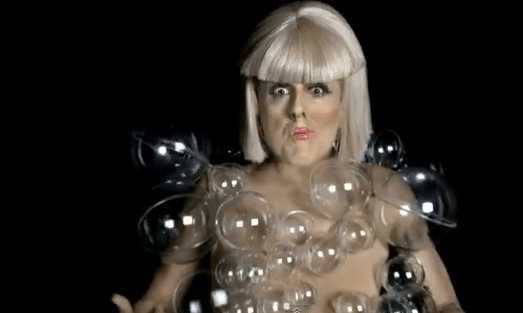
One fact about Weird Al is that he always gets permission from the original artist’s to include their songs in his work. The most notable artist to refuse was Prince. Another whose songs were refused – not by the artist but by the recording label – was Lady Gaga. Weird Al ended up doing two Lady Gaga parodies which were never included on an album but released for free on the internet. Also from the Infallible Wikipedia:

“Yankovic had reported an interest in parodying Lady Gaga’s material, and on April 20 (2011) announced that he had written and recorded a parody of ‘Born This Way’ titled ‘Perform This Way’ , to be the lead single for his new album. However, upon first submitting it to Lady Gaga’s manager for approval (which Yankovic does as a courtesy), he was not given permission to release it commercially. As he had previously done under similar circumstances (with his parody of James Blunt’s ‘You’re Beautiful’ , which was titled ‘You’re Pitiful’), Yankovic then released the song for free on the internet. Soon afterwards, Gaga’s manager admitted that he had denied the parody of his own accord without forwarding the song to his client, and upon seeing it online, Lady Gaga granted permission for the parody. Yankovic has stated that all of his proceeds from the parody and its music video will be donated to the Human Rights Campaign, to support the human rights themes of the original song.”

Wierd Al, Yankovic, sings, Born This Way, Lady Gaga, ugly, face,

Weird Al dressed up for his Lady Gaga spoof.

While I cannot recall exactly when I first heard Weird Al’s songs, I do know what solidified me as a fan:  the song White & Nerdy released in 2006. I’d never heard the song by the original artists (Ridin’ by Chamillionaire and Krayzie Bone)  but White and Nerdy captured the imagination of our whole family. My daughter would sing it around the house, complete with hand motions and facial expressions; my son was amused by the lyrics which included a reference to the game “Dungeons & Dragons” – something he played with his white and nerdy friends. And the video… well, if you see nothing else of Weird Al’s be sure to watch this because it’s hilarious!

Weird Al mania peaked for our family on August 26, 2008 when the four of us (me, hubby, son & daughter) trekked to the Evergreen Fair in Monroe, Washington to see the artist in concert. As it turned out, that August was a rainy, awful mess and the concert was played in a downpour.

But it was all good for us as we had NOT purchased the most expensive seats in the outdoor arena but were up just high enough to have a roof over our seats. There was something ironic – and very appropriate for Weird Al – that we were high and dry while the folks who had forked out the bigger bucks endured the deluge.

The concert was worth it all. Al and his band danced and sang for at least two hours, entertaining the crowd with his manic energy, costume changes, multimedia presentation, and sense of fun.

For me, the best part was the hubby and I getting to cross generational lines with our kids. We all walked away from the concert that night with big smiles and a shared experience. Thanks Weird Al. You’re the best!

As always, a few links. On every album he’s released (except his first) he does a medley of popular songs in Polka style utilizing the accordion. Hilarious. This is the first such release:

https://youtu.be/oS5Dc6u1j8o Polkas on 45

Although this video was not from the ESF in 2008, it does show the energy he brings to a live performance. This was in New Hampshire in 2010.

Of course, no Tuesday Newsday would be complete without a link to the Infallible Wikipedia:

https://en.wikipedia.org/wiki/%22Weird_Al%22_Yankovic#Polka_medleys

Disco Duck

October 16, 2018

In the world of one hit wonders this ‘song’ has quite the interesting history. It was written and recorded in the summer of 1976 by a Memphis disc jockey. And it was the impetus for him being fired from his job. Regardless, the satirical novelty piece went on to become the number one song on the Billboard Hot 100 on October 16 of that year. It’s name: Disco Duck.disco duck

Rick Dees was working at a Memphis radio station when he conceived the concept for the song. At the time, Disco music was just starting to emerge into the mainstream. Prior to then it had been primarily a sound associated with the Disco clubs popular in the northeast United States. By the time the movie ‘Saturday Night Fever’ was released, it was nearly impossible to not at least have heard the term ‘Disco.’

But back to Disco Duck. Dees was motivated to write it based on another novelty song from the 1960’s. According to the Infallible Wikipedia:

dees duck

‘Written by Dees, ‘Disco Duck’ was inspired by a 1960s novelty dance song called ‘The Duck,’ recorded by Jackie Lee (Earl Lee Nelson) in 1965. According to Dees, it took one day to write the song, but three months to convince anyone to perform it.

Combining orchestral disco styles with a Donald Duck–esque voice as the main plot point, the story within ‘Disco Duck’ centers around a man at a dance party who is overcome by the urge to get up and ‘get down’ in a duck-like manner. When the music stops, he sits down, but when he decides to get up and dance again, he finds that everyone in the room is now doing his dance.”

Radio being radio, Dees soon found himself unemployed due to management forbidding him to play the song on their station. Also from the Infallible Wikipedia:

” For all its success, ‘Disco Duck’ was shunned by radio stations where Dees was living in Memphis, including WMPS-AM, the station Dees worked for at the time. Station management forbade Dees from playing the song on his own show and rival stations in the city refused to play it for fear of promoting the competition. When Dees talked about (but did not play) the song on his show one morning, his boss fired him citing conflict of interest. After a brief mandatory hiatus, Dees was hired by station WHBQ-AM, WMPS’s primary competition in Memphis.”

Dees went on tour to promote the song, eventually gathered a group to play it live, and the song was featured in the 1977 hit movie ‘Saturday Night Fever.’

My own memory of this song dates to January of 1978 during the peak of the Disco craze. Disco was THE music of the year. Saturday Night Fever had been released in December 1977 and we were all learning how to dance Disco.

But it was during an annual event for the Greek system at the University of Puget Sound when Disco Duck was forever burned into my brain.

Each January the fraternities and sororities would have a weeklong event which culminated in the initiation of new members to their ranks. The sororities called this “Inspiration Week.” For the guys it was “Hell Week.”

I belonged to one of two sororities which, when the Greek system at UPS saw a decrease in numbers a few years earlier, moved into former fraternity houses smack dab in the middle of ALL the remaining frat’s. This turned out to be a mixed blessing. Unlike the other sororities on campus, we had an actual freestanding house rather than having to live in the dorms. The down side was that we had four frat’s which flanked our house and the boys were, one might say, creative.

Phi Delta ThetaThe frat which impacted us the most were the Phi Delta Theta’s – aka Phi Delt’s (their house pictured above) – whose members included most of the UPS football team as well as a fair number of the wild boys. And during Hell Week they did interesting things.

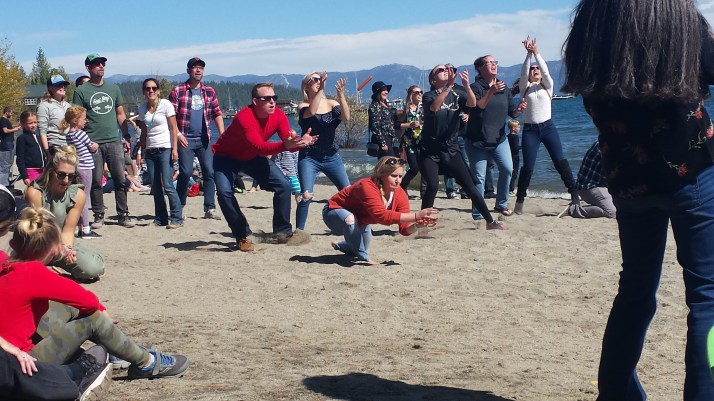
I cannot say from firsthand experience what exactly went on within their walls that week but we did hear gossip as to the activities. It was reported at the time that the soon to be initiated members all lived downstairs in their basement chapter room, sleeping on mattresses on the floor and being subjected to one particular song played over and over and over, night and day. Kind of a sleep deprivation torture.

That song in January 1978 was… Disco Duck.

This part I know to be true as we could hear it thumping through the walls of our sorority at all hours. We were subjected to Disco Duck for the entire week until, I’m certain, not only were THEY sick of the song, but so were all the women in my sorority.

Now all of you may be wondering, ‘Didn’t anyone have to go to classes?” And the answer is ‘no.’ UPS at the time had a month long program known as ‘Winterim’ where every student on campus did an immersion study of one single subject. When January was over there was a week off before the next semester started. It was during this week when the Greek’s had their activities prior to initiations… so the shenanigans were in high supply.

To the best of my knowledge everyone survived Hell week. As far as Disco Duck is concerned I will forever associate it with that place and time… and I will turn it off as soon as the first chords are played. But for all of you I will sacrifice my finer sensibilities. Because YOU need to hear Disco Duck to understand the song and, sort of, the genre which swept the country for a year and half back in the late 1970’s.

A couple of Wikipedia links:

https://en.wikipedia.org/wiki/Disco_Duck

https://en.wikipedia.org/wiki/Disco

The original “Duck” song from 1966:

https://youtu.be/Zu4lb6rXhnw

Oktoberfest

October 2, 2018

Bavarian Beer Bacchanalia

In the category of ‘Any Excuse For A Party’ – Oktoberfest is one of the biggies.

It began in 1810 as a celebration of the wedding of Kronprinz Ludwig and Therese of Saxe-Hildburghausen of Bavaria. According to the Infallible Wikipedia:

munich-oktoberfest-2013-dancing
Traditional Bavarian dancers celebrate Oktoberfest

“The citizens of Munich were invited to attend the festivities held on the fields in front of the city gates to celebrate the royal event. The fields were named Theresienwiese (‘Theresa’s Meadow’) in honour of the Crown Princess, and have kept that name ever since, although the locals have since abbreviated the name simply to the ‘Wiesn’. Horse races, in the tradition of the 15th-century Scharlachrennen (Scarlet Race at Karlstor), were held on 18 October to honor the newlyweds.”

Apparently the citizens of Munich had such a good time that everyone thought it was a splendid idea to do it again the next year… and the next… and pretty much every year for the next 208 years. Also from the Infallible Wikipedia:

20180929_152823.jpg

“Oktoberfest is the world’s largest Volksfest (beer festival and travelling funfair). Held annually in Munich, Bavaria, Germany, it is a 16- to 18-day folk festival running from mid or late September to the first weekend in October, with more than six million people from around the world attending the event every year. (snip) The Oktoberfest is an important part of Bavarian culture, having been held since the year 1810. Other cities across the world also hold Oktoberfest celebrations that are modeled after the original Munich event.”

For many years the festival was held during the first half of October but was moved to the last two weeks of September and culminates the first weekend of October. But there is one caveat: if the first weekend ends on either the first or second, then the festival runs until the third.

The beer served at the Munich festival must conform to a standard known as Reinheitsgebot, and it must be brewed within the city limits of Munich in order to be served at the Munich Oktoberfest. The only breweries which can participate are:

  • Augustiner-Bräu
  • Hacker-Pschorr-Bräu
  • Löwenbräu
  • Paulaner
  • Spatenbräu
  • Staatliches Hofbräu-München

For more information and minutiae than you could ever hope to know, be sure to visit the Wikipedia page linked below.

This past weekend, while in Reno visiting our daughter and her boyfriend, the hubby and I agreed to attend a Lake Tahoe version of Oktoberfest. Held in Tahoe City,  the event featured beer, of course, as well as food and entertainment. There were about a half dozen breweries present. Since I’m not a beer drinker, I was happy to see Barefoot Wines have a booth. We enjoyed a lovely day along the shores of the lake although it was windy.

There was a live band – the Beer Gardeners – who played 60’s and 70’s music. There were also contests including a wiener toss. The game was exactly like a raw egg toss where partners stand across from each other and toss eggs to each other until the egg drops and breaks and the pair is eliminated from the game.

20180929_134425
The competition was fierce at Tahoe City Oktoberfest celebration.

But instead of eggs, they toss their wiener back and forth. About 12 pairs of wiener tossers participated and each time a wiener was successfully caught, the participants would take a step further apart. The game was won when only one pair was left who hadn’t dropped their wiener. Yes, I’ve just used the word wiener five times. Yes I took photos.

wiener toss
The Weiner winners!

But the main reason for the event was to drink beer. As the internet might tell you “Beer Is proof that God loves us and wants us to be happy.” Contrary to popular belief Ben Franklin never said that. It was probably just a marketing ploy for Oktoberfest and another excuse to have a beer.

20180929_145139
No beer for the author… but the wine and giant pretzel were delicious!

Such a fun time!

Survivor

The Tribe Has Spoken…

September 25, 2018

S37 Logo

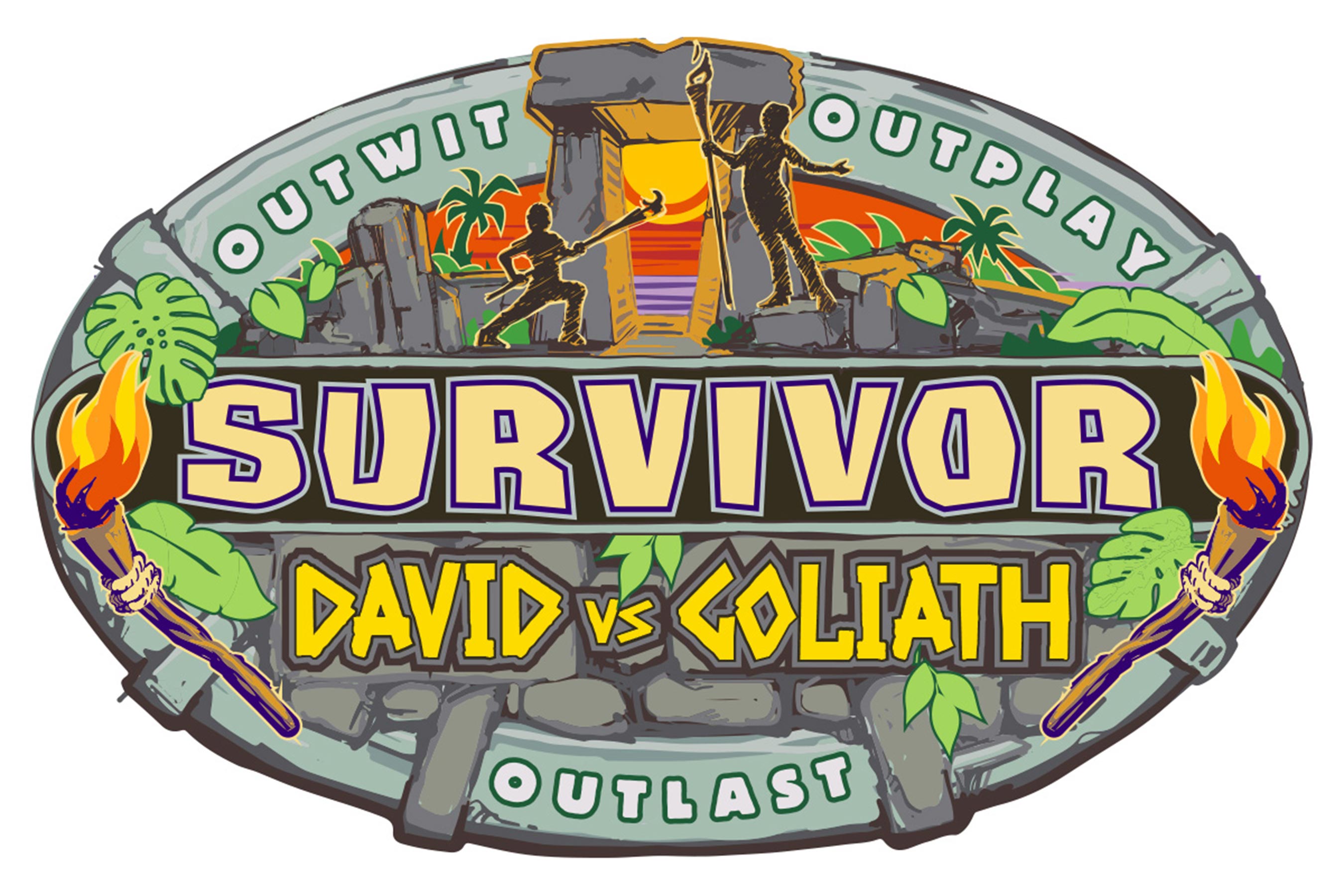
The Logo is updated for each season but always include the tagline: Outwit, Outplay, Outlast. This is for the season which begins on September 26, 2018.

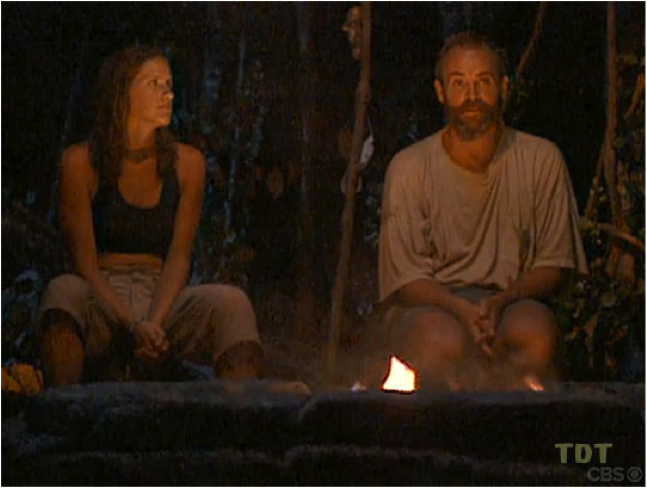
In the year 2000, this program captured the imaginations of millions of American’s and was catapulted to the top of the TV ratings. Now, 18 years later, it remains a perennial favorite for some 10 million viewers. The show: Survivor.

In the course of its 36 ‘seasons’ the program has featured 536 contestants who vie for the one million dollar prize and the coveted title of ‘sole survivor.’ The premise of the show is summed up by the Infallible Wikipedia:

“Sixteen or more players, split between two or more ‘tribes’, are taken to a remote isolated location (usually in a tropical climate) and are forced to live off the land with meager supplies for 39 days (42 in The Australian Outback). Frequent physical and mental challenges are used to pit the teams against each other for rewards, such as food or luxuries, or for ‘immunity’, forcing the other tribe to attend ‘Tribal Council’, where they must vote off one of their tribemates.

20121113-jeff-probst-survivor-philippines-interview

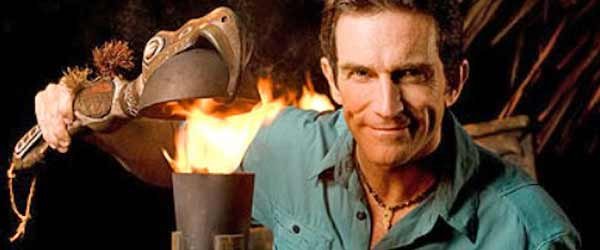
Jeff Probst, host and producer of Survivor. “The Tribe Has Spoken.”

Signaling the halfway point in the game, survivors from both tribes come together to live as one, making it to the ‘merge’. At this point, survivor will compete against each other to win Individual Immunity; winning immunity prevents that player from being voted out at Tribal Council. Most players that are voted out after the merge – form the game’s ‘jury’. Once the group gets down to three people, a final Tribal Council is held where the remaining players plead their case to the jury members. The jury then votes for which player should be considered the ‘Sole Survivor’ and win the show’s grand prize. In all seasons for the United States version, this has included a $1 million prize in addition to the Sole Survivor title; some seasons (particularly earlier seasons) have included additional prizes, such as a car.

The U.S. version has introduced numerous modifications, or ‘twists’, on the core rules in order to keep the players on their toes and to prevent players from relying on strategies that succeeded in prior seasons. These changes have included tribal switches, seasons starting with more than two tribes, the ability to exile a player from a tribe for a short time, hidden immunity idols that players can use to save themselves or others at Tribal Council, special voting powers which can be used to influence the result at Tribal Council, chance to return to regular gameplay after elimination through the ‘Redemption Island’ or ‘The Outcast Tribe’ twists, and a final four fire-making challenge as of season 35.”

This description does not, in my opinion, capture what is so fascinating about Survivor. To me, it is seeing how individual people respond to a difficult environment, difficult people, and difficult physical challenges. It is a great study of human behavior and relationships. It’s impossible to predict just who will successfully navigate each season to emerge the victor.

hatch wigglesworth season 1

Final Tribal Counsel from season one… Kelly Wigglesworth and Richard Hatch.

When the show first started, the producers imagined that a physically strong man would be the most likely winner. The world was shocked, however, when an overweight, 40 something, gay guy, took the title. Viewers were appalled because Richard Hatch had been manipulative, performed poorly in challenges, and offended his fellow contestants. What they all missed was how persuasive he was and his early vision that to win, one needed to build a coalition – which he called an alliance – and carried him to the end.

In the 35 subsequent seasons his methods have worked – sometimes – but not always. Ultimately, a combination of a person’s social skills and their ability to convince a jury that they deserve the title has proved to be more important than prowess at challenges.

It’s this element of the game which I find most intriguing and, despite not always liking the results, I will tune in this Wednesday, September 26, to watch Season 37.

Back in 2000 and 2001 I considered applying to be on the show. But, with elementary aged children at home, it wasn’t an option. In the subsequent years I determined I would not do well being forced to live in deprivation or sleep on a bamboo platform. Although I’m pretty certain I’d be voted out early due to the fact that I’d suck at the physical challenges and my tribe would (accurately) see me as a detriment to winning.

So instead I have enjoyed each season, but especially the ‘Millennials versus GenX’ and ‘Heroes vs. Healers vs. Hustlers.’ Why?

Scan_20180922 (2)

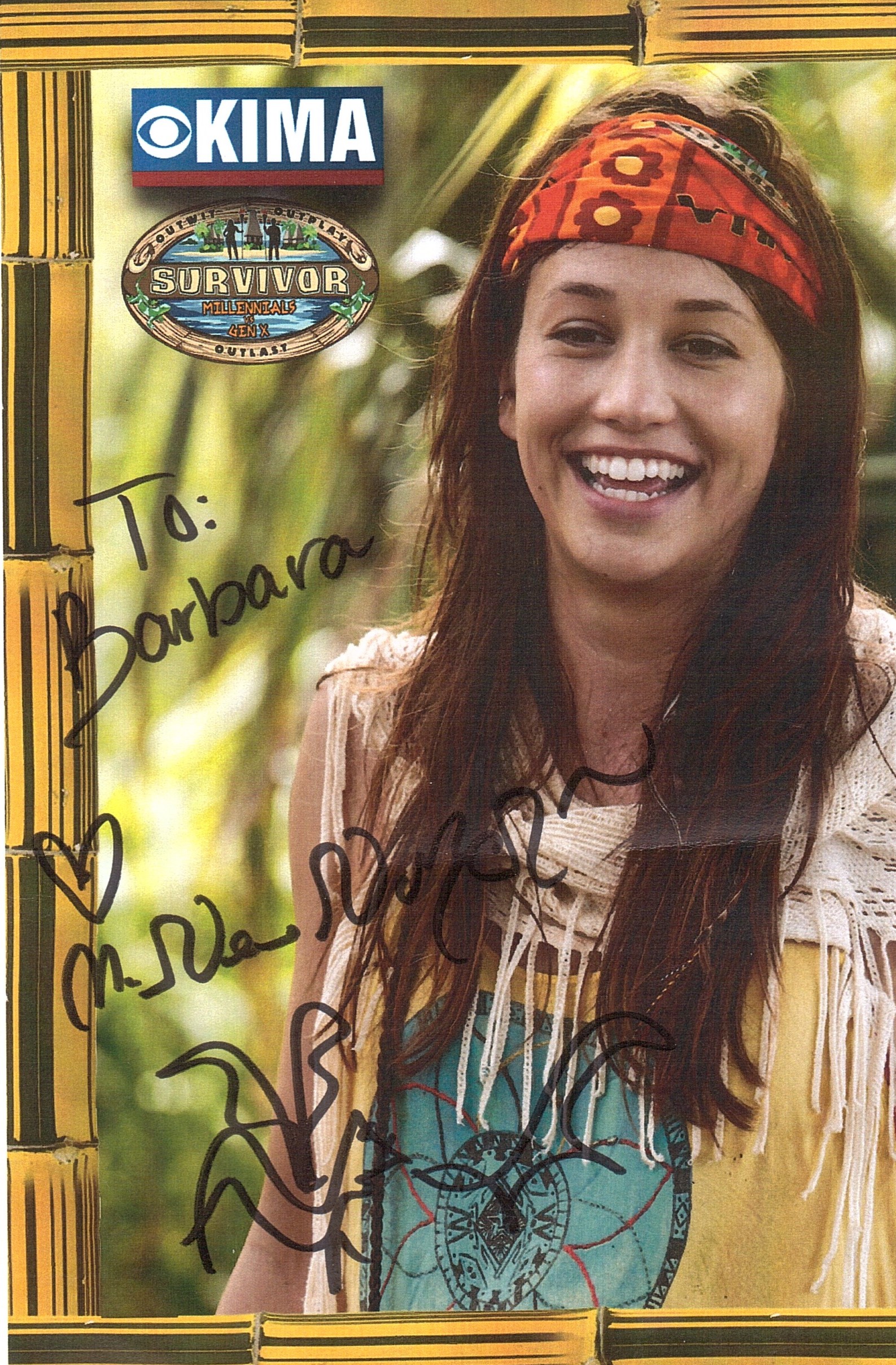
The autographed photo I received from Michelle Schubert in September 2016.

When they announced the participants for the Millennials season a young woman, Michelle Schubert, from my hometown of Yakima, Washington, was on the show. I got to attend the September 2016 premiere at the Capitol Theatre in Yakima, meet her and have all my ‘behind the scenes’ questions answered during Q &A sessions before, during and after each segment of the premiere. It was a bucket list sort of evening for me! Although Michelle didn’t make it to the finals or win, it was fun to root for the hometown favorite who was one of the members of the ‘jury’ that decided the winner.

The next fall I found myself rooting for contestant Ryan Ulrich as I share the same last (married) name. Cousin Ryan, as I called him, DID make the finals but ended up in third place.

Million Dollar Night

“Cousin” Ryan (right) in his final three appearance in 2017. Ben Driebergen, middle, won Season 35 with Chrissy Hofbeck, second, and Ryan Ulrich, third.

If you ever want to have a conversation about Survivor, I consider myself a super-fan, and can discuss any season! If you ask I’ll tell you my favorite winner and the winner I most disliked. I can discuss bad strategy decisions and my theory on how they give a winner’s edit to the person who ultimately prevails. So bring it on. The tribe has spoken.

As always, a couple of links:

https://en.wikipedia.org/wiki/Survivor_(U.S._TV_series)

https://www.cbs.com/shows/survivor/

Most Popular Birthdate

How Do YOU celebrate?

September 18, 2018

One needs only to know a little about human gestation to proffer a guess as to why the most popular dates for babies to be born are in mid-September.

According to the National Center for Health Statistics (NCHS) the most common day for births in 2017 is September 9th. The previous most popular day, from 1973 to 1999 according to a Harvard study, was September 16th.heatmapbirthdays1

In fact, in the 2017 numbers, we discover the most common days to be:

  1. September 9
  2. September 19
  3. September 12
  4. September 17
  5. September 10
  6. July 7
  7. September 20
  8. September 15
  9. September 16
  10. September 18

The Infallible Wikipedia offers the following explanation:

“According to a public database of births, birthdays in the United States are quite evenly distributed for the most part, but there tend to be more births in September and October. This may be because there is a holiday season nine months before (the human gestation period is about nine months), or because the longest nights of the year also occur in the Northern Hemisphere nine months before. However, it appears the holidays have more of an effect on birth rates than the winter: New Zealand, a Southern Hemisphere country, has the same September and October peak with no corresponding peak in March and April. The least common birthdays tend to fall around public holidays, such as Christmas, New Years Day and fixed-date holidays such as July 4 in the US. This is probably due to hospitals and birthing centres not offering labor inductions and elective Cesarean sections on public holidays.

Based on Harvard University research of birth records in the United States between 1973 and 1999, September 16 is the most common birthday in the United States and December 25 the least common birthday (other than February 29, because of leap years). In 2011, October 5 and 6 were reported as the most frequently occurring birthdays.”

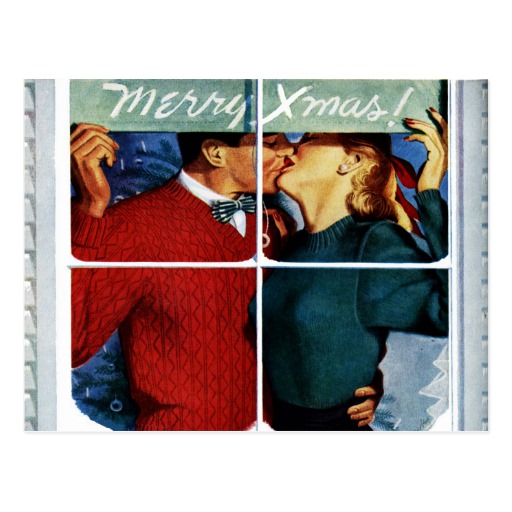
retro_kissing_christmas_couple_postcard-r4661dfa97e2e4cb59c6edd2e92557d9c_vgbaq_8byvr_512It is duly noted that the approximate conception dates for 9 of those 10 dates is between December 17th and December 28th… apparently a lot of people commemorate Christmas and New Years with their own personal celebrations.

Chances are good that you know someone who has a birthday this week. In the past week alone I’ve had Facebook inform me of at least 4 ‘friends’ on every single day with birthdays.

Last year I noted this trend on Facebook and my niece, whose birthday is September 30th, commented that she was teasing one of her friends about being born on the 16th because of ‘when’ she was likely to have been conceived. And then the light went on for my niece… who was a week late… Can you say Happy New Year?!

And, finally, is another friend of mine whose birthday is September 18th. For years, he told me, they would rib their Dad about the link between that date and Christmas. Dad finally had enough and blew up one day, exclaiming, “Okay! It was Christmas Eve! Now drop it.”baby in christmas present

In the world of irony it’s even more delicious that my friend’s daughter was born… on September 18th. Merry Christmas, everyone.

A couple of links to amuse you:

http://thedailyviz.com/2016/09/17/how-common-is-your-birthday-dailyviz/ (a cool interactive map where you can see how popular your birthday is and where it ranks. Mine is the 37th most popular date)

https://en.wikipedia.org/wiki/Birthday (because it’s the Infallible Wikipedia, right?)