Saturday Night Fever

The Bee Gees

February 12, 2019

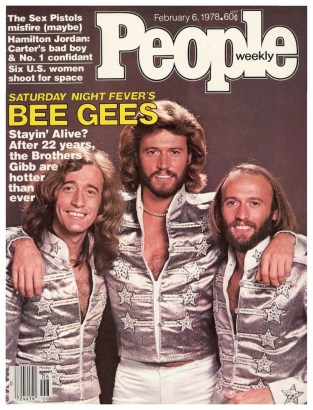
It was this trio’s  sound which came to define a  craze which swept the United States in 1978. By early January the Bee Gees dominated the Billboard charts. They would go on  to have three number one singles that year, solidifying Disco as the ‘sound’.

On February 12th the Bee Gee’s Stayin’ Alive, the song featured in the opening segment of the hit movie Saturday Night Fever, was in the middle of a four week stint at the top.  Two months earlier, on December 17, 1977, the movie captured the attention of the country. Soon guys were donning their own white disco suits and gals strapped on wedgy high heels and wore swingy dresses, flooding dance floors everywhere as they gyrated to the catchy beat.

More than the movie, however, it was the Saturday Night Fever soundtrack that defined the era. From the Infallible Wikipedia:

“It remains the best selling soundtrack of all time with over 45 million units sold. In the United States, the album was certified 16× Platinum for shipments of at least 16 million units. The album stayed atop the album charts for 24 straight weeks from January to July 1978 and stayed on Billboard‘s album charts for 120 weeks until March 1980. In the UK, the album spent 18 consecutive weeks at No. 1. The album epitomized the disco phenomenon on both sides of the Atlantic and was an international sensation. The album has been added to the National Recording Registry in the Library of Congress for being culturally significant.”

Saturday-Night-Fever-Soundtrack-Ristampa-Vinile-lp2.jpgThe Bee Gees, already a successful group, had no small part in the creation of the soundtrack. In all, eight of their original songs are featured. But for the fact that Columbia records refused the producers the rights to use Boz Skaggs song Lowdown, the Bee Gees might never have gotten involved.

Movie producer, Robert Stigwood, contacted Robin Gibb who related the conversation as this:

“We were recording our new album in the north of France. And we’d written about and recorded about four or five songs for the new album when Stigwood rang from LA and said, ‘We’re putting together this little film, low budget, called Tribal Rites of a Saturday Night. Would you have any songs on hand?’, and we said, ‘Look, we can’t, we haven’t any time to sit down and write for a film’. We didn’t know what it was about.”

What happened next is that most of the songs were written in one weekend and the rest, they say, is history.

bee gees 1978.jpgAlthough the Bee Gees may have lost an album that year, their place in the annals of musical legends was solidified.

As a 20 year old college co-ed, I was not immune from the disco craze. A student at the University of Puget Sound in Tacoma, myself and a sorority sister enrolled in a Disco dancing class at Tacoma Community College.

For a number of weeks we attended the class where we learned all the fancy footwork, arm movements and twirls of the dance.  I bought a white dress with a handkerchief hem, donned my white wedge sandals, and was soon going out dancing.

Despite my natural klutziness, I managed to dance with the best of them and, in the process, met a recent alumni from one of the fraternities who turned out to be the best dancer I ever knew. Alan knew every step, every move, and was a great teacher and partner. Dancing with him was magical.

At the time I did not appreciate what a unique time or experience it was. By 1979 Disco had faded due – I think – to the reluctance of the majority of the male population to learn the dances.  It was soon replaced with moon walking and other forms of dance and then, in the late 1980’s, with the phenomenon of country line dancing. And so it goes throughout history.  But for me, whenever I hear Stayin’ Alive or any Bee Gee song of that era, I find myself busting the moves. Just don’t tell my daughter, okay?

A couple of links:

https://en.wikipedia.org/wiki/Saturday_Night_Fever_(soundtrack)

https://en.wikipedia.org/wiki/Bee_Gees

The Great Seattle Snowstorm of 1916: Remembering the Snowpocalypse

No Snow Event has come close in the past 100-plus years

February 5

A Tuesday Newsday Classic Updated

It really should not come as a surprise when snow arrives in the Puget Sound region the first week of February. It could be worse, however, if one looks back in time. The year was 1916 and on February 5th of that year, the Puget Sound region was still reeling from a heavy snowfall which began late on January 31st. It was a 24 hour period from February 1st to 2nd, however, which produced a whopping 21 and half inches of the white stuff. That record snowfall still stands.

union street after 1916 snowstorm

Union Street in Seattle as viewed from 9th Avenue, February 1916. Photo from University of Washington Libraries, Special Collections (link below)

The Infallible Wikipedia gives us but a brief glimpse of that event:

“From January 31 to February 2, 1916, another heavy snow event occurred with 29 in (74 cm) of snow on the ground by the time the event was over.”

However, it does link to a more comprehensive article from HistoryLink.org which, I’ve found over the years, provides excellent coverage of Seattle history minutiae. From the article:

When the big snow of 1916 began to fall on a cold Monday on January 31, 1916, there may have been more cameras than shovels in the hands of amateurs. The flurry of snapshots of our second greatest snowstorm illustrate snow-stopped streetcars, closed schools, closed libraries, closed theaters, closed bridges, a clogged waterfront, collapsed roofs, and — most sensationally — the great dome of St. James Cathedral, which landed in a heap in the nave and choir of the sanctuary. (There were no injuries to persons.)

The unusually cold January already had 23 inches of snow on the ground when, on the last day of the month, it began to fall relentlessly. Between 5 p.m. on Tuesday, February 1 and 5 p.m. on Wednesday, February 2, 21.5 inches accumulated in the Central Business District at the Weather Bureau in the Hoge Building. This remains (in 2002) a record — our largest 24-hour pile.

9th and James 1916 snowstorm

James street as viewed down 9th Avenue. Smith Tower – then the tallest building in Seattle – is on the left. February 1916. Photo from the University of Washington Libraries, Special Collections (link below)

The 1916 snow was a wet snow, and it came to a foul end — a mayhem of mud that mutilated bridges and carried away homes.”

In the category of how quickly we forget, it was in 2017 that the record for snowfall on any February 5th was set when two inches was recorded at Sea-Tac airport. An additional 5.1 inches fell on February 6th for a total of 7.1 inches on these two dates. Then in 2019 and again in 2021, the Puget Sound was hit with two fairly large snow events in February.

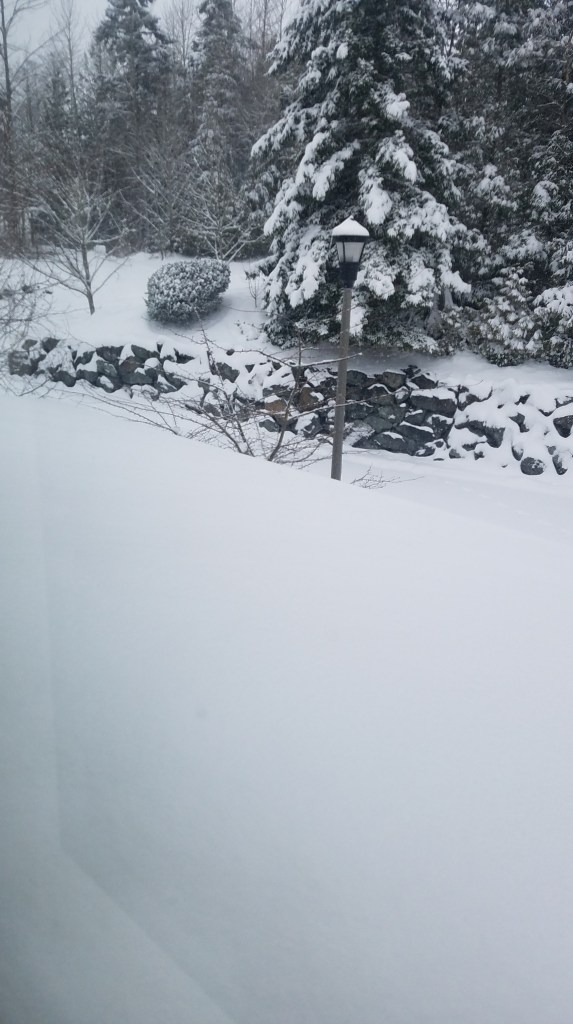
What I wrote on the morning of February 4, 2019: “Since the hubby and I moved north from the greater Seattle area in 2018, I cannot accurately compare the amount of snow from our old house to the one here in Mount Vernon. As of this morning we have between 3 and 4 inches and it is still snowing. The view from my office window – with a little wind in play – gives the appearance of being in a powdery snow globe.”

I cannot complain about Puget Sound snow, however. This region has some of the mildest weather in the world and I think of the white stuff as a wondrous treat to be enjoyed. Ensconced in my warm house with a morning cup of coffee – or later in the day with a mug of hot buttered rum – the beautiful coat of white is a magical event.

Too soon the temperatures will rise, the snow will melt, and we will be back to the brown and green scenery which characterizes a Puget Sound winter. One thing I do know is that within a few short weeks, the plum and cherry tree blossoms will erupt in shades of violet and pink and carpets of purple, yellow and white crocus will spread across the landscape. All we will recall from winter will be a few short days in February when the landscape was transformed into a winter wonderland.

On February 4, 2019, this was the view out my office window. Four days later the Puget Sound region was slammed with over 6 inches more.

Interesting perspective on the February 5/6 2017 event:

http://www.seattleweatherblog.com/snow/biggest-february-snowstorm-generation-wallops-seattle/

An article which highlights the biggest Puget Sound snowstorms:

http://www.historylink.org/File/3681

Some great historic photos of the February 1916 snowstorm:

http://archiveswest.orbiscascade.org/ark:/80444/xv07321

The February 8, 2019 snow event which gave us about six inches.
The February 13, 2021 Snowstorm which dumped just over a foot of snow in Mount Vernon.

A Puzzling Situation

January 29, 2019

January 29th – smack in the middle of winter – is the perfect time to stay indoors and celebrate National Puzzle Day by assembling a centuries old favorite: the jigsaw puzzle.

Peop the puzzler.jpg

A helper joins the puzzle fun.

The first commercial jigsaw puzzles were introduced in the 1700’s in England. They were named as such based on the process used to create them. From the Infallible Wikipedia:

” The engraver and cartographer John Spilsbury, of London, is believed to have produced the first jigsaw puzzle around 1760, using a marquetry saw. Early jigsaws, known as dissections, were produced by mounting maps on sheets of hardwood and cutting along national boundaries, creating a puzzle useful for the teaching of geography. Such ‘dissected maps’ were used to teach the children of King George III and Queen Charlotte by royal governess Lady Charlotte Finch.

Since their inception, jigsaw puzzles have evolved and changed. The original puzzles – made exclusively from wood – were costly and out of reach for the ordinary person. That began to change, however, in the late 1800’s when cardboard puzzles were introduced.

The popularity of the cardboard jigsaw puzzle exploded during the Great Depression as they were relatively inexpensive and could be put together, taken apart, and reassembled innumerable times, thus providing hours of entertainment.

The manufacturing method has improved over the years. Most modern puzzles are cut from paperboard. The process to create a thousand piece puzzle, for example, requires large presses which exert as much as 700 tons of pressure and precision cutting.

Jigsaw puzzles also come in a variety of sizes. A child’s first puzzle is likely to be from four to nine pieces. For something a bit more challenging, an adult can assemble a 300 piece puzzle in an hour or two. A thousand piece puzzle may take numerous sessions over several days.

If you have all winter and unlimited space, then you might want to pick up the 52,110 piece puzzle produced by MartinPuzzle in November 2018. It features a collage of animals and is 274 by 80 inches in size! Or, just short of 23 feet by 7 feet. I don’t know about anyone else, but my dining room table is not that big.

puzzle-50000.jpg

The animal collage puzzle with 52,110 pieces

The 50 pound behemoth is currently on sale for a mere $346… down from its list price of $576. And, if you’re worried about finding the right pieces, it comes in four boxes each containing 28 separate sections of 465 pieces.

playskool-wooden-us-map-2.jpg

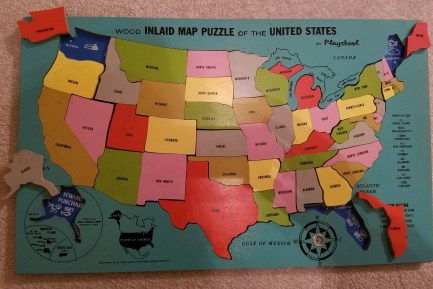
The very first puzzle I remember assembling.

The first puzzle I fell in love with was a 1960’s wooden map of the United States. As a young child I would dump out the pieces and then put all 50 of them back in. While Hawaii was gypped and had no pieces, Michigan was the coolest state as it had two pieces! That puzzle was my primer for memorizing all 50 states and their capital cities.

No doubt my mother noted my interest in puzzles and soon they appeared as birthday and Christmas gifts. I still have  several of the ones I was given.

After my son arrived I introduced him to puzzles while he was still a baby. He, like his mother, was fascinated. By the time he was one and half he was able to put together a 24 piece puzzle! At the time I did not realize that this was unusual baby behavior. But we went with it. Over the years, this activity is one he and I continue to enjoy doing together. At times we engage in ‘competitive’ puzzling where we will race to see who can put in the most pieces. To gain the other’s attention when placing a piece, we might tap our fingers on the puzzle in dramatic fashion. It’s all in good fun and mostly we have developed a cooperative puzzling style. He will work on the main body and I’ll usually put together as much of a section as I can off to the side then, once I’m bored with it, I’ll drag it to its approximate spot and turn it over to him. Then it’s off to a new section for me.

monopoly puzzle.jpgMy favorite puzzles are ones with a central theme and multiple smaller pictures: National Parks, American Presidents, and Board Games are a few which we’ve assembled that come to mind.

My least favorite ones are those which have little visual interest such as those touted as ‘the world’s most difficult’ puzzle as they tend to be quite monochromatic.

I’ve tried to curtail my puzzle ‘habit’ in recent years. But often, when I am near a Goodwill or Value Village store, the temptation is just too great and in I go in search of a ‘new to me’ puzzle to keep me company on a cold winter’s day. It’s the best.

A couple of links about National Puzzle Day and Jigsaw puzzles specifically:

https://nationaltoday.com/national-puzzle-day/

https://en.wikipedia.org/wiki/Jigsaw_puzzle

In case you want to buy the 52,110 piece puzzle:

https://www.mcprint.eu/en/puzzle-shop/puzzle-52110-pieces-the-first-jigsaw-puzzle-that-has-more-than-50000-pieces/?time=1548648257#card

Or for something a bit smaller: https://www.amazon.com/s/?ie=UTF8&keywords=largest+jigsaw+puzzle&tag=geminipcstand-20&index=aps&hvadid=33784252994&hvqmt=p&hvbmt=p&hvdev=c&ref=pd_sl_6sy53x6u1y_p

Mass Ascension…

… Mount Vernon Style

January 15, 2019

Although this particular population group is less than one percent of the species, the spectacle they create each winter in the Skagit Valley is breathtaking.

snow geese mass ascension

The geese depart in mass ascension, wings flapping and outstretched.

The Snow Goose, scientific name Anser caerulescens, is a bird which breeds in the Arctic during summer but migrates south each winter. In the state of Washington flocks of the birds can be found in Snohomish, Island, Skagit, and Whatcom counties as well as on the Oregon border in Clark County.

I went scrambling to find out more information about the Snow Goose after witnessing them last week near Mount Vernon. First the facts about the birds from the Infallible Wikipedia:

“The snow goose has two color plumage morphs, white (snow) or gray/blue (blue), thus the common description as ‘snows’ and ‘blues’. White-morph birds are white except for black wing tips, but blue-morph geese have bluish-grey plumage replacing the white except on the head, neck and tail tip. The immature blue phase is drab or slate-gray with little to no white on the head, neck, or belly. Both snow and blue phases have rose-red feet and legs, and pink bills with black tomia (‘cutting edges’), giving them a black ‘grin patch’. The colors are not as bright on the feet, legs, and bill of immature birds. The head can be stained rusty-brown from minerals in the soil where they feed. They are very vocal and can often be heard from more than a mile away.”

The Infallible Wikipedia also informed me that there are approximately 5 MILLION birds of breeding age which migrate from the Arctic to some 15 distinct areas of the United States each winter.

In the Skagit Valley, according to the Audubon Society, there are upwards of 55,000 snow geese which spend the winter feeding on the decaying plants and roots left in the fertile fields. Additionally, approximately 8,000 Trumpeter and 2,000 Tundra Swans are also found near Mount Vernon.

The hubby and I ventured out last Thursday to see if we could find one of the flocks of the snow geese. In less than 10 miles from our home, we encountered a large group gathered just west of I-5 near Conway. First, a word of caution, DO NOT under any circumstance stop along the Interstate to view the birds, as tempting as it may be. We were along a secondary road but saw a Washington State Patrolman stop to give a freeway bird gawker a bit of friendly advice.

We parked our car but even before we opened one of the doors we heard them: squawking and honking in their unique language. The noise overwhelms and defines the experience.  I had no idea how mesmerizing it would be to watch the birds. From a distance, the geese seemed stationary. As we observed from up close, however, the flock seemed to be marching north, as they pecked at bits of leftover plant materials in the fallow ground. Then, as if by command, they turned and marched south, the strong wind ruffling their feathers and making it difficult to walk.

When, a short distance to the west, a train rumbled by and it’s loud horn sounded, the collective was disturbed and suddenly hundreds of birds fluttered into the air, ascending in a group and spiraling up and off to the west. It was, my hubby claimed as he compared it to the famous Albuquerque Balloon Festival, “Mass Ascension, Mount Vernon style.” The first group was followed by another which was followed by third and yet a fourth after that. Soon, only a small portion of the birds remained. And still we watched.

“Look, over there,” my hubby said some ten minutes later and pointed to the southwest.

Sure enough a dark blotch in the sky grew bigger and then we could make out hundreds of individuals all headed our way. Their arrival was quieter than their departure. Each bird, as it landed among the others, seemed like a graceful ballerina, wings spread to form an umbrella on either side, feet and legs outstretched, as each animal floated to earth.

return of the geese

Like airborne ballerinas they stretch their wings wide to land.

The geese descended in flocks numbering in the hundreds. Wave after wave of the snow geese landed among the group already on the ground with each bird somehow finding a bare plot which they could occupy only to resume their marching up and down the fields.

It was with great reluctance that we departed that afternoon. But the experience only whetted my appetite for more. I have my sights set on next visiting the main area where the Tundra and Trumpeter swans gather at a spot called DeBay Slough just to the northeast of Mount Vernon. After that it may be in search of Eagles whose presence is felt among the geese as the former cull the flocks of the sick and weak. Up the North Cascades Highway (SR 20) at Rockport is the Bald Eagle Interpretive Center, open on weekends for people to learn and to view.

After the Snow Goose encounter I came away with one very clear thought. I now live in a magical place. From the tulip fields in the spring, to the ever changing and interesting Skagit River, to the thousands of birds in the winter, there is no shortage of things to see and do here in Mount Vernon.

I was unable to get my own video’s uploaded but found this one on the internet and, as far as I can tell, this is the same spot where we watched the birds last Thursday.

A bunch of links for those who want to visit and see the birds:

https://en.wikipedia.org/wiki/Snow_goose

http://www.mountvernonchamber.com/visitor-news/bird-watchers-paradise-peak-season-right-now-for-eagles-snow-geese-swans-in-mount-vernon/

https://wdfw.wa.gov/lands/wildlife_areas/skagit/

http://www.seattleaudubon.org/Birdweb/bird/tundra_swan?tab=3

Viewing Sites

Update January 17, 2023 – The snow geese continue to capture my imagination. Shortly after they started arriving this past November myself, along with a couple of friends, ventured out past Conway on Maupin Road and came across a huge flock. The best part was that they were so close that you felt as if you could touch them. At one point, however, we experienced the ‘down’ side of geese watching… when a huge flying formation approached from the north and flew south over the top of the car. The next thing we knew we were under attack as they strafed my car with their bombs! It took some dedication later to clean off the residue of their bombs.

The King of Rock and Roll

January 8, 2019

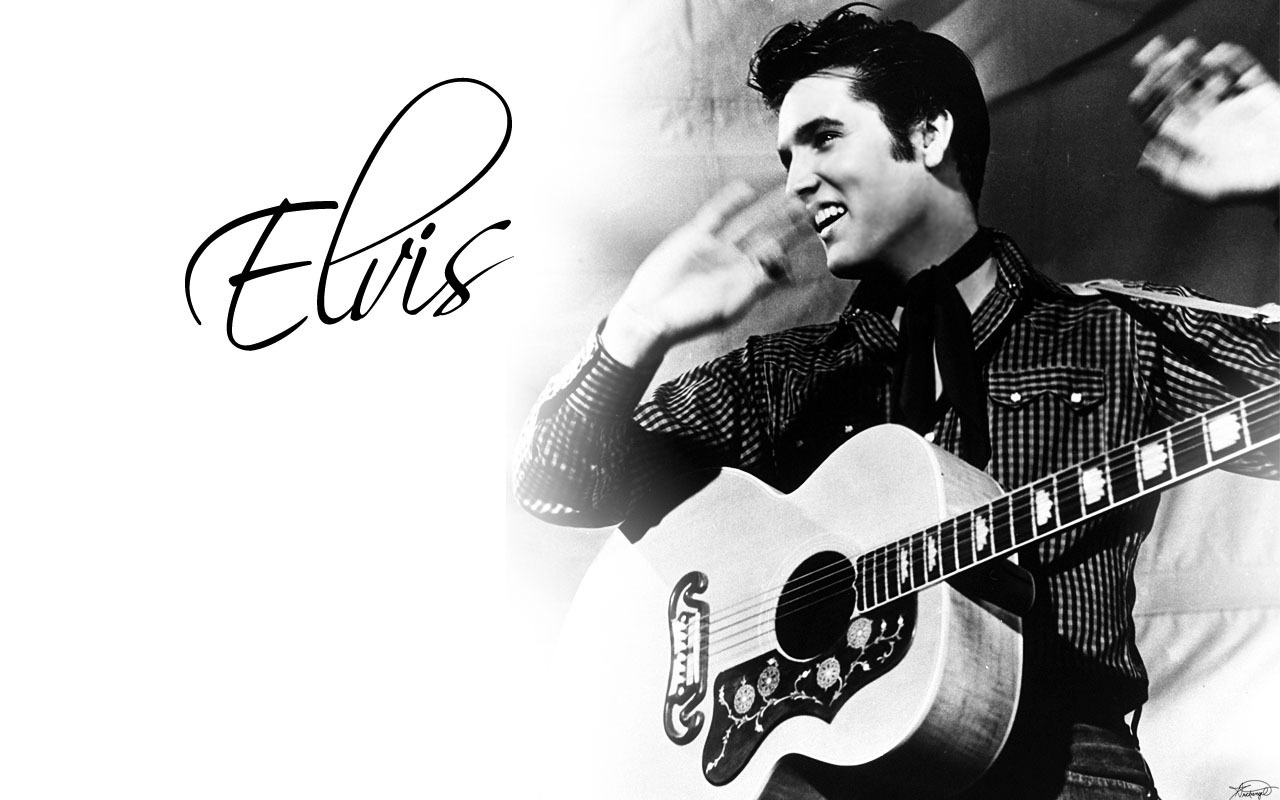
Perhaps more than any other musical artist this star’s rise was in concert with the era of Rock and Roll. There are those who say he defined the sound of the genre. There is no doubt – as his 115 songs which charted on the Billboard 100 prove it – Elvis Presley was “The King of Rock and Roll.”elvis-aaron-presley-lovers-842.jpg

Born on January 8, 1935, he would have been 84 this year.

His story was truly the stuff of fiction. He was born, and spent the first 10 years of his life, in a two room shotgun style house in Tupelo, Mississippi. Interestingly, Elvis was an identical twin but his brother was a stillborn. Although attracted to music from a young age, he suffered from terrible stage fright in the early years. Despite this – and despite being told he had no ability many times – he continued on in pursuit of a career.

There was moderate success. It was during a recording session with Sun Records in August 1953 when the 19 year old’s ‘sound’ was discovered. From the Infallible Wikipedia:

“The session, held the evening of July 5, proved entirely unfruitful until late in the night. As they were about to abort and go home, Presley took his guitar and launched into a 1946 blues number, Arthur Crudup’s ‘That’s All Right’. Moore recalled, ‘All of a sudden, Elvis just started singing this song, jumping around and acting the fool, and then Bill picked up his bass, and he started acting the fool, too, and I started playing with them. Sam, I think, had the door to the control booth open … he stuck his head out and said, ‘What are you doing?’ And we said, ‘We don’t know.’ ‘Well, back up,’ he said, ‘try to find a place to start, and do it again.’‘ Phillips quickly began taping; this was the sound he had been looking for. Three days later, popular Memphis DJ Dewey Phillips played ‘That’s All Right’ on his Red, Hot, and Blue show. Listeners began phoning in, eager to find out who the singer really was. The interest was such that Phillips played the record repeatedly during the remaining two hours of his show. Interviewing Presley on air, Phillips asked him what high school he attended in order to clarify his color for the many callers who had assumed that he was black.”

Elvis’ self titled debut album was released in March 1956 and featured his first big hit, “Heartbreak Hotel.” Because Presley’s sound was so different from any popular music of the day, many radio stations refused to play it, unable to figure out where it fit. But when the teenagers heard it, they would call the stations and request his songs. It was the first rock and roll album to reach number one on the Billboard charts, a position it held for 10 weeks.

What followed for Elvis were television appearances, most filled with controversy in regards to his iconic on-stage gyrations. His suggestive movements were originally prompted by a combination of nervousness on stage and tapping his foot to keep the beat. But Elvis seemed to have an instinct for knowing what his fans wanted and, when they screamed for more, he gave them more. The hullabaloo over his antics only served to bolster his success.

Rather than pen about more of his career – after all there have been hundreds of books and articles written – you can read a synopsis of his life here: https://en.wikipedia.org/wiki/Elvis_Presley

I never saw Elvis in concert. I never bought one of his records. In fact, by the time I was a teenager, he was 35-40 years old and his career was in decline. You can only be a teen idol for so long.

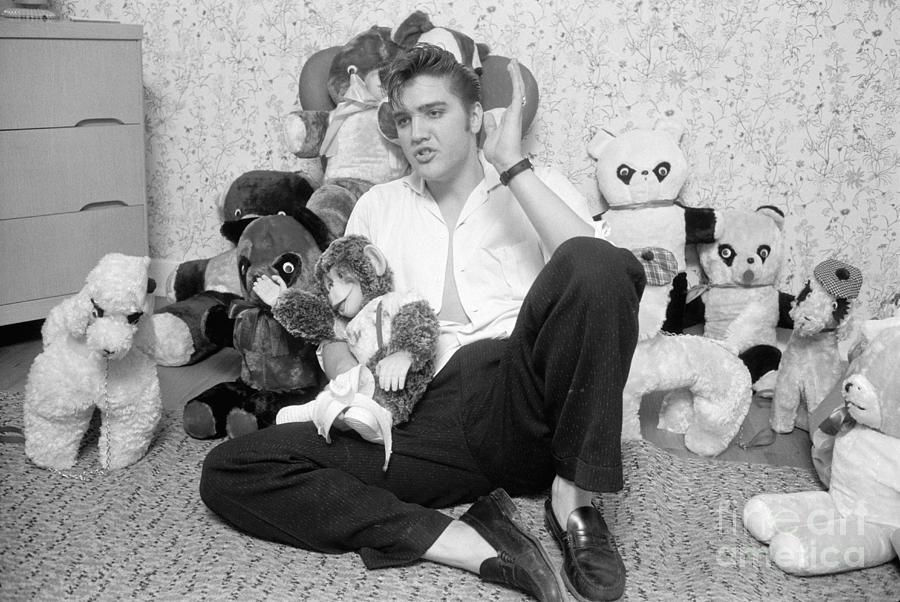
elvis-presley-at-home-with-teddy-bears-1956-phillip-harringtonBut I do have a distinct memory of meeting a man who played with Elvis. By the time I met Punky Caldwell, he and his family were living in Yakima. Punky, unfortunately, was suffering from the complications of diabetes. It was Thanksgiving weekend of 1977, a few months after Elvis’ death. It was a weird night. I had gone with my ex-boyfriend to visit a friend of his from high school – Thelma – and we ended up playing cribbage with her and her mother, Jo. We said hello to Punky. He retired shortly thereafter and then, during the cribbage games, the story of how he had worked with Elvis was told. I guess he must have played with Elvis before Elvis got big. The way I recalled the story is that Jo and Punky went to visit Graceland after Punky no longer played with Elvis, and that there were hundreds of teddy bears everywhere. She commented on the teddy bears to Elvis who offered her one, which she refused. Later, when she and Punky were back at the hotel, a package arrived from Elvis. It was a teddy bear.

Being that I was 20 years old I hadn’t yet emerged from my self-centered cocoon. I’ve always been sorry that I didn’t show more interest in that unique story or to find out how, exactly, the family got from the south to Yakima.

A couple of years later when I worked as the editor/reporter of a small weekly newspaper I discovered I had a talent and a love of writing stories exactly like this; stories about a regular person who, perhaps, has done something extraordinary at one time in their life.

So now the reporter instinct in me kicked in and I have been able to learn more about Punky and his legacy. I know that he mentored young musicians in Yakima, making a real impact on them personally. I spoke with Thelma and the stories she heard growing up were quite different from what I recalled.

Her dad was a talented saxophonist and clarinetist and had his own band in Arkansas in the 1950’s. He played with Elvis before the King made it big, touring as musicians do. Even after Elvis achieved international fame, Punky was one person Elvis always trusted because Punky never wanted anything from him. In fact, after Punky and Jo married and their two daughters were born, he decided his young family needed him home more and decided to cut back on the touring. This was at a time when Elvis’ career was launching out of the stratosphere.

Elvis kept asking him to become a permanent member of his band, but Punky always said no. Finally one day, Elvis sent a gift to Punky; a Cadillac! Immediately Punky determined that he could not keep the car as he would not join the band. According to Thelma (she was only two, so this is the story from her parents) words were exchanged between her parents as to the disposition of the car. In the end, both Punky and Jo drove the car back to Graceland to return it.

Punky, who spent his life in music, lived for a few years in the Midwest before moving to Yakima. He thought Yakima would be a good place to headquarter where he could get to west coast gigs more easily. Sadly,  blues and jazz music – his specialty – were, by the 1970’s, no longer being sought after for live performance.

But the takeaway is this… you never know whose life you may impact and what legacy you will leave. Perhaps you will be as big and as famous as Elvis or perhaps your impact, like Punky, will be on far fewer. Oh but what a difference it can make to those few.

For more on Punky’s life, some photos, and HOW he came to be called Punky, here’s two links:

Caldwell, Walter Garnett “Punky”

https://activerain.com/blogsview/1727482/punky-caldwell-reblogged—c-l-coyle-and-other-band-members-from-searcy-arkansas-

Update on January 8, 2021 – If you’d like to hear some of Punky’s music, this guy randomly picks an album which piques his interest and then folds laundry and listens to it, making comments along the way. I know, it’s a weird set up. But kind of interesting how he is skeptical of Punky’s work at first but comes to appreciate the talent. Enjoy! Also, I guess he liked it enough to do side 2 of the album which was posted on December 17, 2020.

“Rose Bowl Roses!”

January 2, 2019

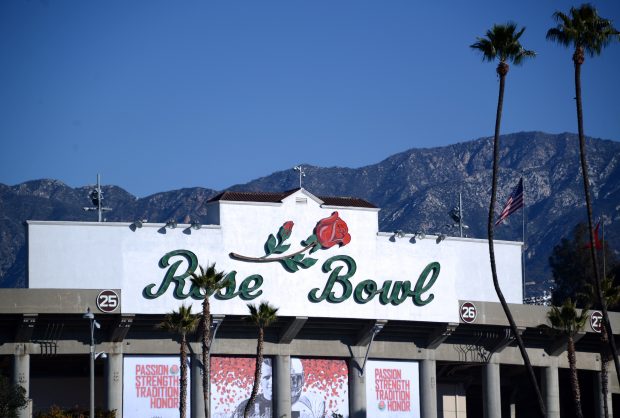
rose bowl.jpgNicknamed “The Granddaddy of them All” – the annual football contest known as “The Rose Bowl” debuted on this date in 1902.

It was a uneven matchup with Michigan defeating Stanford 49-0. Apparently the gridiron battle was devised to help fund the Pasadena Rose Parade. But that first game was such a disaster – Stanford quit after three quarters – that the football game was abandoned for more than a decade. From the Infallible Wikipedia:

“The game was so lopsided that for the next thirteen years, the Tournament of Roses officials ran chariot races, ostrich races, and other various events instead of football. But, on New Year’s Day 1916, football returned to stay as the State College of Washington (now Washington State University) defeated Brown University in the first of what was thereafter an annual tradition.”1916 Rose Bowl

The Rose Bowl,  as many of us knew it in the 1960’s through the 1990’s, wasn’t always a match between the Pac-8 (and then the Pac -10 with the addition of Arizona and Arizona State in 1978) and the Big-10. That tradition began in 1959 after a ‘Pay to Play’ scandal derailed the previous agreement in place since 1947.

And the tradition worked well with the Pac-10 champion meeting the Big 10 winner on New Year’s Day. Then, in 1998, with the creation of the Bowl Championship Series (BCS), things changed. In both 2002 and 2006, the National Championship game was played in Pasadena .  But it was not without controversy. Also from the Infallible Wikipedia:

“The 2002 game served as the BCS championship game between the BCS No. 1–ranked Miami, then a member of the Big East Conference, and the BCS No. 2–ranked Nebraska, then a member of the Big 12 Conference. The Nebraska selection as the BCS No. 2 team was controversial because Oregon was ranked No. 2 in both the AP and Coaches Polls, while Nebraska was ranked No. 4 in both polls and did not play in its conference championship game (No. 3 Colorado, who would play Oregon in that year’s Fiesta Bowl, did and won the Big 12’s automatic bid to the BCS). This prevented a West Coast team playing in the Rose Bowl for the first time, and it also marked the first matchup since 1946 not to feature the traditional pairing of Pac-10 vs. Big Ten teams.”

Since 2014, and the advent of the College Football Playoffs, the Rose Bowl traditions have seen further modifications. Now, every three years, it features one of the two playoff games. In 2015 and again in 2018, there was not a traditional Pac-10/Big-10 matchup.

Huskies vs. Ohio stateFor those of us who prefer tradition, today’s matchup of  #9 Washington and #6 Ohio State is everything the Rose Bowl is supposed to be. It will be Ohio State’s 15th appearance and Washington’s 16th visit. But the two teams have never met in the Rose Bowl.

I have two distinct memories associated with the Rose Bowl. The first occurred at the Apple Cup on November 19, 1977. My sister, then a student at Washington State University, came to Seattle to attend the game and took her sister (I was attending the University of Puget Sound) along. It was a brilliantly sunny, but cold, day. As we approached the stadium there was a tall guy dressed all in black who held long stem red roses in his hand and was shouting “Rose Bowl Roses. Get your Rose Bowl Roses.”

We, of course, were offended by the presumption that the Huskies were going to the Rose Bowl BEFORE the game with WSU was even played! After all, Washington had to beat WSU and USC had to beat UCLA for the Huskies to earn a trip to Pasadena.

2011 04 15 Washington_Huskies_RoseBowl_1978_r1.jpgNo Rose Bowl Roses were purchased by us that day. But we definitely needed the extra warmth and fortitude provided by the flask she smuggled into the stadium. We were seated in the visitors horseshoe at the far west end of the stadium. The buttressing of our spirits from the extra spirits was required as the Huskies hammered the Cougs 35-15 and USC dispatched the Bruins the next weekend. Washington flew to Southern California and, on January second (the Rose Bowl is played on the second if the first falls on a Sunday), upset heavily favored Michigan 27-20.

The other memorable Rose Bowl was 1998. We didn’t need anything warm to drink that day as my family – Parents, siblings, spouses, children, nieces and nephews – spent 10 days in Maui to celebrate our parents’ 50th wedding anniversary. My parents had arranged for condo units for each of us four siblings and our families in the Hale Hui Kai complex. Since my sister and I both had young children (they were ages 4 to 8) we were assigned ground floor units so as not to have to deal with stairs. The down side was that my unit had absolutely no view . Everyone assumed we would be at the beach with our Sleeping_Beauty_poster.jpgkids most of the time. Hah! My daughter had become obsessed with the Disney animated movie Sleeping Beauty. So most every afternoon I ended up hanging out in the unit while she watched Sleeping Beauty. Unless, of course, she was across the breezeway playing Barbie’s with the cousins. Except on New Year’s Day when Sleeping Beauty was relegated to the back burner and all the guys – Dad, brothers, husband and brother in law – descended upon our unit to watch the #8 WSU Cougs take on #1 Michigan.

WSU rosebowl 1998.jpg

Although the Cougars launched a valiant effort in what was their third of four Rose Bowl appearances, they fell to the soon to be crowned national champions 21-16.

And my daughter? A couple of things are no longer true. She’s not obsessed with Sleeping Beauty; she’d be horrified at the thought of spending a Hawaiian vacation holed up in a condo; and if she had friends who started a college football fantasy league she’d participate and soon know everything about the teams and players.

I’ll be rooting for the Huskies (don’t tell the die-hard Coug fans in my family, okay?) to prevail over Ohio State, but I’m really worried about QB Dwayne Haskins and the OS offensive line. Plus with their coach, Urban Meyer, retiring they will be the sentimental pick. Currently Ohio State is favored to win but, who knows, it might just be the Huskies year for an upset. The only thing better would be to spend New Year’s Day on the beaches of Maui.

Of course the Infallible Wikipedia has so much more to share:

https://en.wikipedia.org/wiki/Rose_Bowl_Game

Update: The Huskies lost the 2019 Rose Bowl game, falling to the Buckeyes 28-23. My Dad was happy about this as in his entire life he never once rooted for the Huskies to win…

White Christmas

December 25, 2018

During the course of his life, this songwriter published some 1,500 songs. Twenty five of his songs reached the top of the charts but it was one song in particular which, arguably, is the most popular song ever written. The song? White Christmas. The songwriter? Irving Berlin.

First, about White Christmas. Its inaugural performance occurred on December 25, 1941 during Bing Crosby’s Kraft Music Hall broadcast. The following year, after being released as a single to promote the movie Holiday Inn, it catapulted to the top of the Your Hit Parade music chart and remained popular for decades. From the Infallible Wikipedia:

“In 1942 alone, Crosby’s recording spent eleven weeks on top of the Billboard charts. The original version also hit number one on the Harlem Hit Parade for three weeks, Crosby’s first-ever appearance on the black-oriented chart. Re-released by Decca, the single returned to the No. 1 spot during the holiday seasons of 1945 and 1946 (on the chart dated January 4, 1947), thus becoming the only single with three separate runs at the top of the U.S. charts. The recording became a chart perennial, reappearing annually on the pop chart twenty separate times before Billboard magazine created a distinct Christmas chart for seasonal releases.”

In all, there have been over 500 recorded versions of the song and the Bing Crosby version alone has sold over 50 million copies worldwide. This makes it the most purchased record ever, eclipsing Elton John’s Candle In The Wind tribute to Princess Diana, at 33 million copies, a distant second.

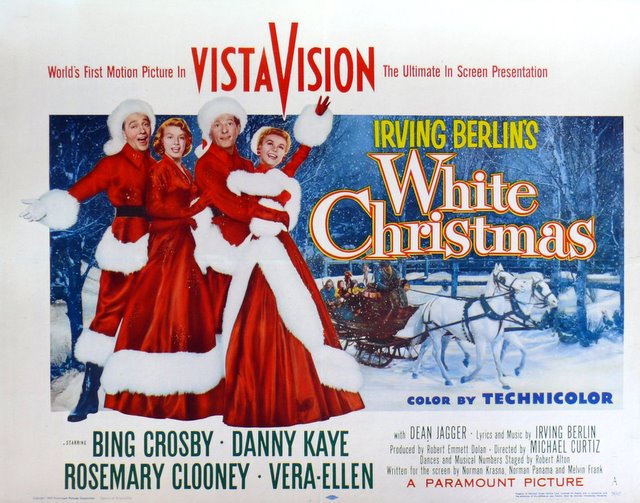
In addition to 1942’s Holiday Inn, it was also showcased in the same titled 1954 movie White Christmas.

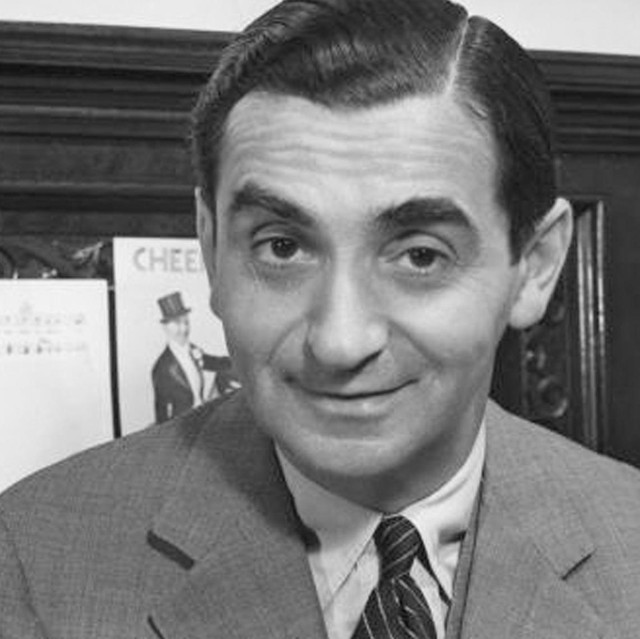
irving berlinNow on to Irving Berlin. Born in Imperial Russia in 1888, his family immigrated to the United States when he was five. His story is a classic rags to riches. The family of 10 lived in the ghettos of New York and a young Berlin quit school at age 13, left home, and took up residence in a lodging house where hundreds of homeless boys lived.

Berlin found himself drawn to the music world and soon began to earn a few coins from performing popular songs of the day in the saloons on the Lower Eastside. Also from the Infallible Wikipedia:

“Berlin learned what kind of songs appealed to audiences, writes (biographer Laurence) Begreen: ‘well-known tunes expressing simple sentiments were the most reliable.’ He soon began plugging songs at Tony Pastor’s Music Hall in Union Square and in 1906, when he was 18, got a job as a singing waiter at the Pelham Cafe in Chinatown. Besides serving drinks, he sang made-up ‘blue’ parodies of hit songs to the delight of customers.

Biographer Charles Hamm writes that in Berlin’s free time after hours, he taught himself to play the piano. Never having lessons, after the bar closed for the night, young Berlin would sit at a piano in the back and begin improvising tunes. His first attempt at actual songwriting was ‘Marie From Sunny Italy,’ written in collaboration with the Pelham’s resident pianist, Mike Nicholson, from which he earned 37 cents in royalties. A spelling error on the sheet music to the published song included the spelling of his name as ‘I. Berlin.’”

He achieved true commercial success with the 1911 song Alexander’s Ragtime Band which inspired a national dance craze. He wrote hundreds of songs by 1918 and in 1919 had his next breakout tune: A Pretty Girl Is Like a Melody.

A string of popular melodies followed and then in 1938 came the release of his biggest hit to date, God Bless America. From the Infallible Wikipedia:

42229 GOD BLESS AM PVG[MECH]“Berlin’s daughter, Mary Ellin Barrett, states that the song was actually ‘very personal’ for her father, and was intended as an expression of his deep gratitude to the nation for merely ‘allowing’ him, an immigrant raised in poverty, to become a successful songwriter. ‘To me,’ said Berlin, God Bless America was not just a song but an expression of my feeling toward the country to which I owe what I have and what I am.’ The Economist magazine writes that ‘Berlin was producing a deep-felt paean to the country that had given him what he would have said was everything.’”

Most fascinating to me is what Berlin himself said about his writer’s work ethic. It’s a philosophy which resonates. One last citation from the Infallible Wikipedia:

“According to Saul Bornstein (a.k.a. Sol Bourne, Saul Bourne), Berlin’s publishing company manager, ‘It was a ritual for Berlin to write a complete song, words and music, every day.’ Berlin has said that he ‘does not believe in inspiration,’ and feels that although he may be gifted in certain areas, his most successful compositions were the ‘result of work.’ He said that he did most of his work under pressure. He would typically begin writing after dinner and continue until 4 or 5 in the morning. ‘Each day I would attend rehearsals,’ he said, ‘and at night write another song and bring it down the next day.’

Not always certain about his own writing abilities, he once asked a songwriter friend, Victor Herbert, whether he should study composition. ‘You have a natural gift for words and music,’ Mr. Herbert told him. ‘Learning theory might help you a little, but it could cramp your style.’ Berlin took his advice.”

In the course of his lifetime – Berlin died on September 22, 1989 at age 101 – he wrote over 1500 songs!  Of course not all of them were published. Berlin, however, should be considered America’s songwriter and generations to come will, no doubt, enjoy many of his songs.

Although I am positive I had heard White Christmas before, my association with the song will forever be from a Christmas day sometime in the mid-1970’s. Our family’s tradition was to have Christmas dinner either at our house or at our cousin’s house. They lived just a block away and that particular year it was at their house. My grandparents were in attendance also and late in the afternoon White Christmas came on the TV. I can still see in my mind’s eye my grandfather sitting in a rocking chair which had been pulled up in front of the TV. The kids: myself, my sister Susan and our cousin’s Susan and Tim, gathered around also to watch.

White-ChristmasI was captivated by the movie and have watched it many times since then. I even have a VHS tape version in my collection. But the thing which most sticks in my mind from that day was how my grandfather, during the final scene when they sing White Christmas, wiped away a couple tears and said “they just don’t make them like that anymore.”

Indeed, Grandpa, they do not. God Bless America and God Bless Irving Berlin. Wonderful Christmas to everyone, and may yours be merry and bright!

What’s a Tuesday Newsday article without a couple links:

https://en.wikipedia.org/wiki/Irving_Berlin

https://en.wikipedia.org/wiki/White_Christmas_(song)

.

Winter Solstice

Midwinter’s Night Dreams

December 18, 2018
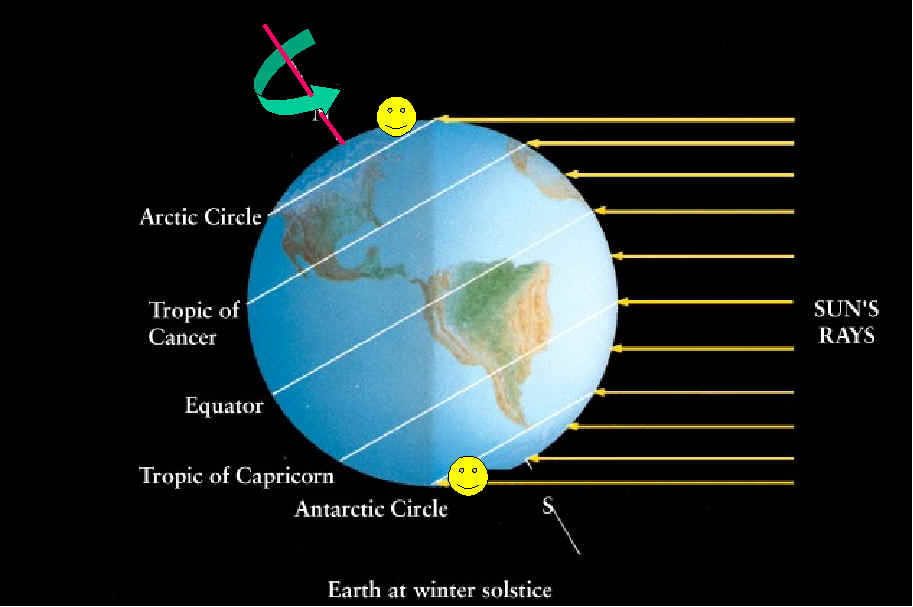
earth at winter solsticeAt 2:23 p.m. on Friday, December 21, 2018, here in the Pacific Northwest, the earth will be tilted furthest away from the sun and we will experience the shortest number of daylight hours in the northern hemisphere annually.

For most of us, we have been taught that it is also the first day of winter. That, however, is disputed. Come to find out, most meteorologists now subscribe to a different theory which places our beginning of winter at the first of December.

Known as meteorological winter, the premise is that northern winters comprise the three coldest – and snowiest – months of the year. Those would be December, January, and February. While I would normally go to the Infallible Wikipedia for citation first, this topic deserves a more scientific site. Here’s what the National Oceanic and Atmospheric Administration (NOAA) has to say:

“Meteorologists and climatologists break the seasons down into groupings of three months based on the annual temperature cycle as well as our calendar. We generally think of winter as the coldest time of the year and summer as the warmest time of the year, with spring and fall being the transition seasons, and that is what the meteorological seasons are based on. Meteorological spring includes March, April, and May; meteorological summer includes June, July, and August; meteorological fall includes September, October, and November; and meteorological winter includes December, January, and February.”
stonehendge solstice

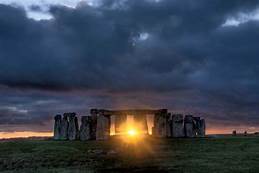
Stonehenge in England. The monument was erected as a way for earlier people to mark the lowest point of the sun each year.

Wait! I said to myself last year when I first learned of this discrepancy. You mean to tell me that WINTER starts on December First – not three weeks later? It was a welcome revelation.

Every fall I find myself missing summer and the longer days of light. I had come to dread winter, counting down the days until the solstice when the number of hours of daylight began to increase once again. But because I thought of winter as starting on the 21st or 22nd, that meant that spring didn’t arrive until March 21st or 22nd.

It never made sense. By September 1, the temperatures have cooled enough at night that I would think “It feels like fall.” Similarly, when December rolls around, it’s consistently 40 degrees and rainy – and quite often we will get a snowfall sometime in the first three weeks of the month.

Yet, with this new information I’ve been able to reset my internal calendar. Now, since I think of December 21/22 as being nearly a month into winter, the season doesn’t seem nearly so long or so bleak. Suddenly, once Christmas and New Year’s Days are over, it’s only two short months until spring arrives, not three. It’s made a huge difference in my outlook.

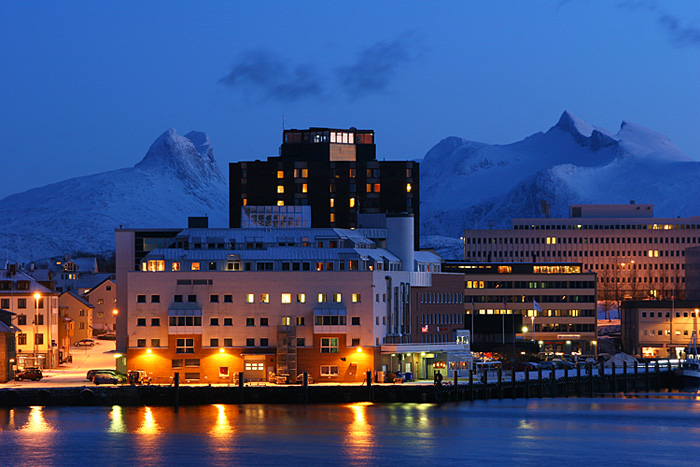
I also remind myself that there are locales where it is much, much worse. I will give thanks that I do not live in Bodo, Norway where, on the solstice, there will be less than one hour of light. A whopping 49 minutes in fact. According to Timeanddate.com:
Bodo Norway

Bodo Norway in winter

“December Solstice (Winter Solstice) is on Friday, December 21, 2018 at 11:22 pm in Bodø. In terms of daylight, this day is 23 hours, 11 minutes shorter than on June Solstice.”

Personally, I think there needs to be a national push to get the official first day of winter/spring/summer/fall changed. We can restore the two solstices to their rightful places as ‘midsummer’ and ‘midwinter’.

This year I’m embracing winter in all its glory. And on December 21st at 2:23 p.m. me, my hubby, and my son, daughter, and daughter’s significant other, will all raise a mug of hot buttered rum and salute the shortest daylight hours of the year at that moment when the earth pauses and the northern hemisphere begins its tilt back towards the sun. Happy winter everyone!

As always, a few links:

https://www.ncei.noaa.gov/news/meteorological-versus-astronomical-seasons

https://en.wikipedia.org/wiki/Winter_solstice

https://www.timeanddate.com/sun/norway/bodo

Midwinter’s Night Dreams

December 18, 2018

earth at winter solsticeAt 2:23 p.m. on Friday, December 21, 2018, here in the Pacific Northwest, the earth will be tilted furthest away from the sun and we will experience the shortest number of daylight hours in the northern hemisphere annually.

For most of us, we have been taught that it is also the first day of winter. That, however, is disputed. Come to find out, most meteorologists now subscribe to a different theory which places our beginning of winter at the first of December.

Known as meteorological winter, the premise is that northern winters comprise the three coldest – and snowiest – months of the year. Those would be December, January, and February. While I would normally go to the Infallible Wikipedia for citation first, this topic deserves a more scientific site. Here’s what the National Oceanic and Atmospheric Administration (NOAA) has to say:

“Meteorologists and climatologists break the seasons down into groupings of three months based on the annual temperature cycle as well as our calendar. We generally think of winter as the coldest time of the year and summer as the warmest time of the year, with spring and fall being the transition seasons, and that is what the meteorological seasons are based on. Meteorological spring includes March, April, and May; meteorological summer includes June, July, and August; meteorological fall includes September, October, and November; and meteorological winter includes December, January, and February.”

stonehendge solstice

Stonehenge in England. The monument was erected as a way for earlier people to mark the lowest point of the sun each year.

Wait! I said to myself last year when I first learned of this discrepancy. You mean to tell me that WINTER starts on December First – not three weeks later? It was a welcome revelation.

Every fall I find myself missing summer and the longer days of light. I had come to dread winter, counting down the days until the solstice when the number of hours of daylight began to increase once again. But because I thought of winter as starting on the 21st or 22nd, that meant that spring didn’t arrive until March 21st or 22nd.

It never made sense. By September 1, the temperatures have cooled enough at night that I would think “It feels like fall.” Similarly, when December rolls around, it’s consistently 40 degrees and rainy – and quite often we will get a snowfall sometime in the first three weeks of the month.

Yet, with this new information I’ve been able to reset my internal calendar. Now, since I think of December 21/22 as being nearly a month into winter, the season doesn’t seem nearly so long or so bleak. Suddenly, once Christmas and New Year’s Days are over, it’s only two short months until spring arrives, not three. It’s made a huge difference in my outlook.

I also remind myself that there are locales where it is much, much worse. I will give thanks that I do not live in Bodo, Norway where, on the solstice, there will be less than one hour of light. A whopping 49 minutes in fact. According to Timeanddate.com:

Bodo Norway

Bodo Norway in winter

“December Solstice (Winter Solstice) is on Friday, December 21, 2018 at 11:22 pm in Bodø. In terms of daylight, this day is 23 hours, 11 minutes shorter than on June Solstice.”

Personally, I think there needs to be a national push to get the official first day of winter/spring/summer/fall changed. We can restore the two solstices to their rightful places as ‘midsummer’ and ‘midwinter’.

This year I’m embracing winter in all its glory. And on December 21st at 2:23 p.m. me, my hubby, and my son, daughter, and daughter’s significant other, will all raise a mug of hot buttered rum and salute the shortest daylight hours of the year at that moment when the earth pauses and the northern hemisphere begins its tilt back towards the sun. Happy winter everyone!

As always, a few links:

https://www.ncei.noaa.gov/news/meteorological-versus-astronomical-seasons

https://en.wikipedia.org/wiki/Winter_solstice

https://www.timeanddate.com/sun/norway/bodo

Update for 2022: the solstice arrives at 1:48 p.m. on Wednesday, December 21st. Be sure to mark your calendars!

Magnum P.I.

A Red Ferrari Is All You Need

December 11, 2018

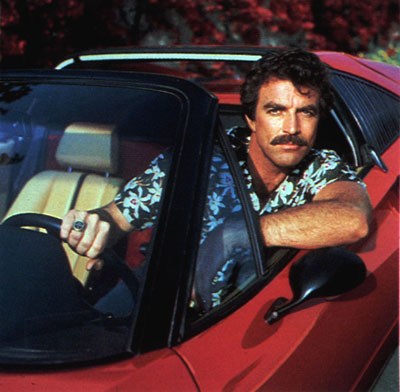
magnum_tom_selleckWomen of the 1980’s loved his impish smile, his seemingly carefree attitude, and the fact that he lived in Hawaii and got to drive a red Ferrari. His name: Thomas Magnum. It was on December 11, 1980, when the world got their first glimpse of Magnum PI and the show was an instant hit.
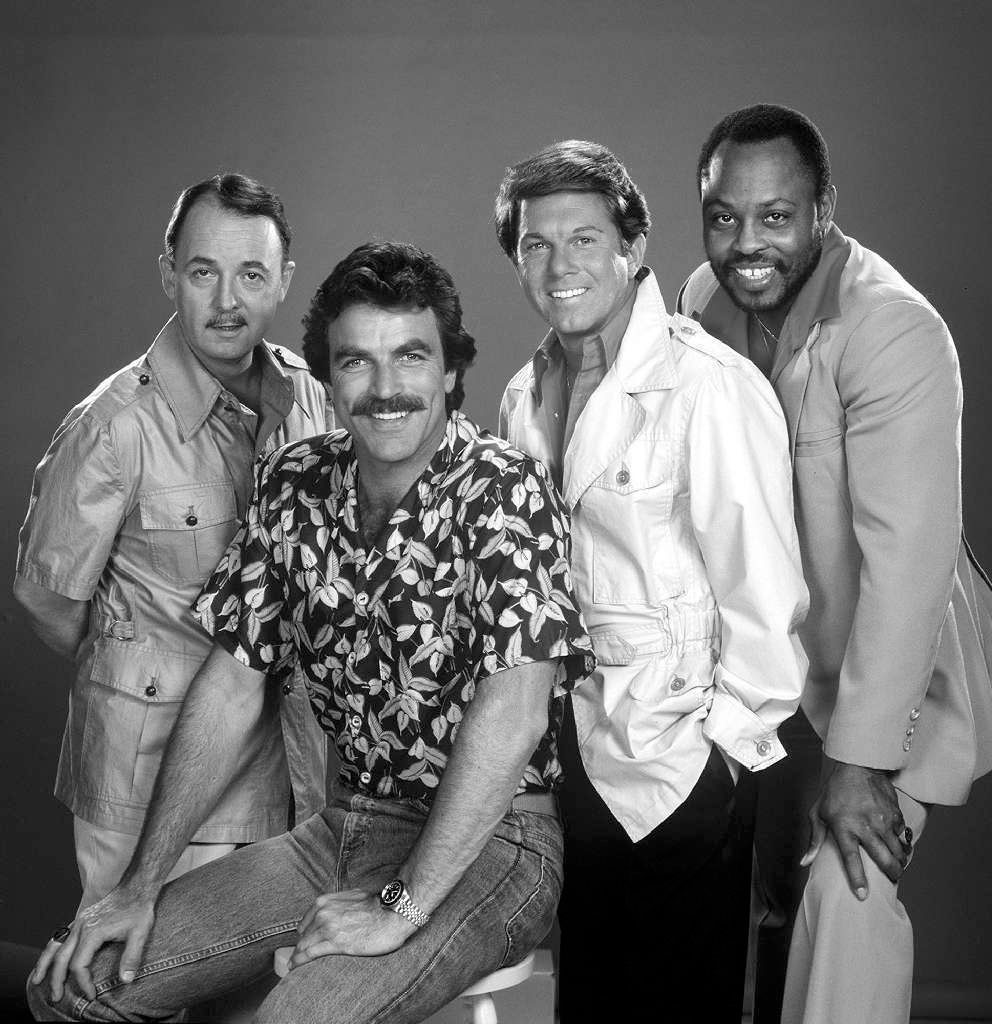
TV viewers tuned in each week to watch Magnum solve a new crime, spar with Higgins, the caretaker of the estate where he lives in the guest house gratis, and drive the red Ferrari all around Oahu at high speeds.

From the Infallible Wikipedia:

“Thomas Sullivan Magnum IV is a private investigator played by Tom Selleck. He resides in the guest house of a 200-acre (81 ha) beachfront estate called Robin’s Nest, in Hawaii, at the invitation of its owner, Robin Masters, the celebrated, but never-seen, author of several dozen lurid novels. Ostensibly this is quid pro quo for Magnum’s services based upon his expertise in security; the pilot and several early episodes suggest Magnum had done Masters a favor of some kind, possibly when Masters hired him for a case. The voice of Robin Masters, heard only in five episodes, was provided by Orson Welles (one last ‘appearance’ was provided by a different actor, Red Crandell).

“Magnum lives a luxurious life on the estate and operates as a P.I. on cases that suit him. The only thorn in the side of his near-perfect lifestyle is Jonathan Quayle Higgins III, played by John Hillerman. An ex-British Army Sergeant Major, he is on the surface a stern, ‘by-the-book’ caretaker of Robin’s Nest, whose strict ways often conflict with Magnum’s more easy-going methods. He patrols Robin’s Nest with his two highly-trained ‘lads’, Doberman Pinschers named Zeus and Apollo. Magnum has free use of the guest house and the car, a Ferrari 308 GTS Quattrovalvole, but as a humorous aside in various episodes, often has to bargain with Higgins for use of estate amenities such as the tennis courts, wine cellar and expensive cameras.”

Tom-Selleck-Cast-of-Magnum-PINo doubt the show was a hit due, in part, to the casting of the additional regular characters: bartender Rick and helicopter pilot T.C. who are Magnum’s pals, and the never ending appearances of celebrities of the era. But the real magic was between Magnum and Higgins.

The show was so popular that both Tom Selleck as Magnum and Tony Hillerman as Higgins, were nominated for Emmy and Golden Globe awards multiple times. Selleck won an Emmy in 1984 and a Golden Globe in 1985. In 1982, Hiller won a Golden Globe; his Emmy was awarded in 1987.

Although the producers purportedly killed Magnum in the final episode of 1987 to end the series, the outcry from distraught fans created enough backlash that the show returned for an eighth and final season in 1988 by bringing Magnum back to life…

Also from the Infallible Wikipedia:

“In what was originally meant to be the final episode of the series, Magnum is critically wounded in a dockside warehouse firefight and ends up in a coma. He ‘wakes up’ in Limbo with Mac but refuses to believe that he is dead, insisting that he is only dreaming, even though no one but Mac can hear or see him. Magnum finally accepts that he is dead, and says his goodbyes. Throughout the episode, John Denver’s song ‘Looking for Space’ plays in its entirety and ends as Magnum walks off into the clouds (the song is replaced by another song in subsequent syndicated broadcasts and video releases, a’la other CBS productions Wiseguy and Birds of Prey).”

I guess they figured if they could sell the concept on the TV show Dallas the previous year then it would work for Magnum PI also.

Both my hubby and I were huge fans of Magnum PI and rarely missed an episode. Of course what wasn’t to like about Tom Selleck? Tall, curly dark hair, good looking, great personality… he had it all.

And then, one day in the summer of 1981, we had a close encounter of the Magnum PI kind.

Since my hubby worked in the Belltown neighborhood in Seattle, we decided to park our car at his office and attend the 1981 Seafair Parade. To get to the parade route we walked up Blanchard Street and had to pass a construction zone as well as several trailers which, I assumed, were being used for offices by the companies at work there.

We came upon a trailer and noticed the door was opening. I looked up just as a gorgeous blonde woman descended the stairs, her male companion right behind her. Hubby and I moved closer to the building on the right and the other couple passed to our left in the opposite direction.

We were not more than a half dozen steps past when the hubby leaned over and whispered to me “that was Magnum P.I.” What!? No way. I craned my neck so hard that I nearly gave myself whiplash. But all I saw was the backside of the couple – the beautiful blonde and the tall guy with dark curly hair – retreating down the sidewalk.

“Why didn’t you say something?!” I accused.

“I nodded at him. He knew I recognized him,” hubby replied. “I think he appreciated that I didn’t make a scene.”

So there we were, close enough to TOUCH Tom Selleck, and I’m noticing his date. Sheesh. How lame can one get?

divorce warsThe next night one of the local news stations interviewed Selleck who WAS in Seattle filming the made for TV movie “Divorce Wars” with Jane Curtin. In the interview the topic of fame and recognition came up and Selleck said he liked when people obviously knew who he was but appreciated not being accosted by fans.

Thanks, honey, for saving me from making an idiot of myself with one of the biggest stars of 1981. I owe you. Something. Not sure what. But something.

A link about the show:

https://en.wikipedia.org/wiki/Magnum,_P.I.

When the Saints Go Marching In

Saint BarbaraThy Name Is Barbara

December 4, 2018

I’m still not sure how I feel about Saint Barbara. It is kind of cool to have a special day and a feast… not everyone has a name associated with a Saint after-all.  December 4th is Saint Barbara’s day. But how it came about is, well, pretty unbelievable.  From the Infallible Wikipedia:

“According to the hagiographies, Barbara, the daughter of a rich pagan named Dioscorus, was carefully guarded by her father who kept her locked up in a tower in order to preserve her from the outside world. Having secretly become a Christian, she rejected an offer of marriage that she received through her father.

“Before going on a journey, her father commanded that a private bath-house be erected for her use near her dwelling, and during his absence, Barbara had three windows put in it, as a symbol of the Holy Trinity, instead of the two originally intended. When her father returned, she acknowledged herself to be a Christian; upon this he drew his sword to kill her, but her prayers created an opening in the tower wall and she was miraculously transported to a mountain gorge, where two shepherds watched their flocks. Dioscorus, in pursuit of his daughter, was rebuffed by the first shepherd, but the second betrayed her. For doing this, he was turned to stone and his flock was changed to locusts.

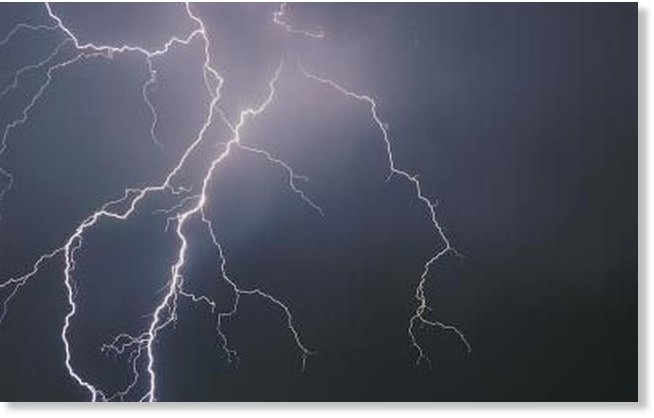
thunder“Dragged before the prefect of the province, Martinianus, who had her cruelly tortured, Barbara held true to her Christian faith. During the night, the dark prison was bathed in light and new miracles occurred. Every morning, her wounds were healed. Torches that were to be used to burn her went out as soon as they came near her. Finally, she was condemned to death by beheading. Her father himself carried out the death-sentence. However, as punishment for this, he was struck by lightning on the way home and his body was consumed by flame. Barbara was buried by a Christian, Valentinus, and her tomb became the site of miracles.”

Because the facts of her story could not be verified, her Sainthood was downgraded in 1969 and the feast day removed from the official calendar. But that does not deter those who wish protection during war and from lightning strikes to offer up a prayer against bad things happening to them. Also from the Infallible Wikipedia:

“Saint Barbara is one of the Fourteen Holy Helpers. Her association with the lightning that killed her father has caused her to be invoked against lightning and fire; by association with explosions, she is also the patron of artillery and mining.”

skyrockets12.jpgI think with a bit of planning, I could turn December 4th into a really cool event day. Have a big feast, set off some fireworks, and tell the story of Saint Barbara. And for good measure if the Gods can provide a thunder and lightning storm that day, even better. So mark it on your calendars for 2019, it will be an explosively good time.

No blog post is complete without a link to the Infallible Wikipedia:

https://en.wikipedia.org/wiki/Saint_Barbara