The Colorful Tradition of Dyeing Easter Eggs

A favorite family activity

April 22

When I typed the word ‘egg’ into the Infallible Wikipedia, it returned Egg, Eggplant, Eggs as Food, Egg decorating in Slavic Culture, Egg Harbor Township in New Jersey, and Eggnog.

My daughter finding Easter Eggs. April 16, 1995.

While most people likely give little thought to eggs, they have – over the past couple of months – become one of the most talked about things in the United States. I’ve seen posts on Facebook and other social media with people complaining about the egg shortages which have swept the country and, of course, the skyrocketing price of eggs. About a month ago, I even overheard someone asking a Costco employee when they would be getting eggs again (since they were out of eggs that Saturday afternoon).

“Monday morning at ten will be the next delivery.” Guess where I was at ten that Monday morning?

But the egg shortage didn’t hold my interest. Instead, it’s the tradition of dyeing eggs for Easter.

Narrowing my search, I typed in “Easter Eggs.” It returned the one I wanted and yet another set of egg related pages including Easter Eggs in media, an Easter Egg tree, and – I kid you not – an “Easter Egger” – a breed of chicken. Eggs are, it turns out, a very popular topic.
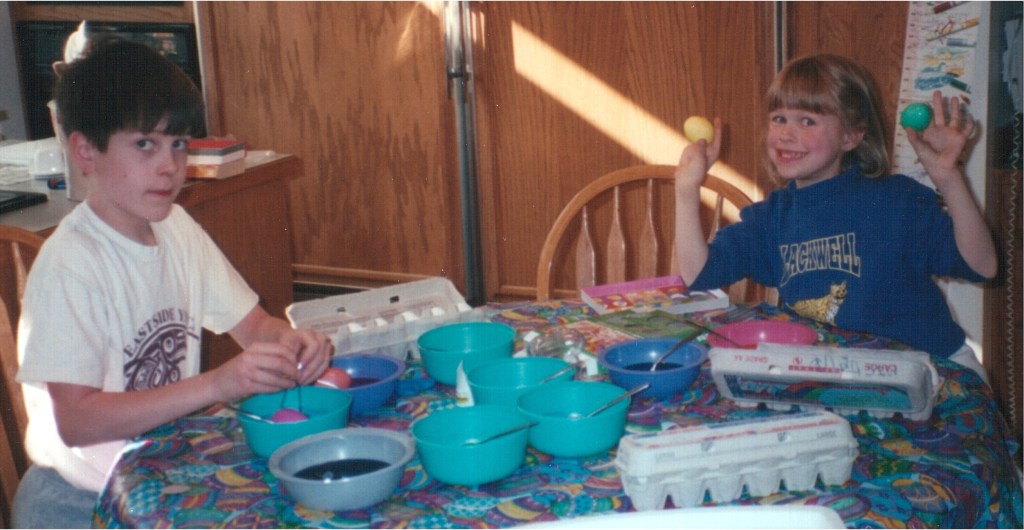
The dyeing of Easter eggs was a big deal for my kids. 1999.

But back to the Easter Egg. The dyeing and decorating of them is a tradition which goes back nearly two thousand years, begun by early Christians in Nicaea around 325 A.D. According to the aforementioned Infallible Wikipedia:

“Eggs in Christianity carry a Trinitarian symbolism as shell, yolk, and albumen are three parts of one egg. According to many sources, the Christian custom of Easter eggs started among the early Christians of Mesopotamia, who stained them with red colouring ‘in memory of the blood of Christ, shed at His crucifixion’. The Christian Church officially adopted the custom, regarding the eggs as a symbol of the resurrection of Jesus, with the Roman Ritual, the first edition of which was published in 1610 but which has texts of much older date, containing among the Easter Blessings of Food, one for eggs, along with those for lamb, bread, and new produce.”


The DeVore siblings showing off their eggs, Easter 1961. (taken from a Super8 movie reel)
The author with her bounty of eggs. Age 3.

While every holiday has something to recommend it, I think the dyeing and hiding of Easter Eggs makes this holiday one of my favorites. There are home movies from when I’m three showing off my Easter eggs at the family home in Clarkston, Washington.  And, again, at various ages after we moved to Yakima. For a few years, we would join our cousins at my grandparent’s cabin up at Rimrock Lake and one year my grandmother hid eight dozen eggs. Yes, that’s right. She hid 96 eggs out in the long grasses. Not all 96 were found. The next year Easter was in late March and as it was too cold to hide them outside, she squirreled the nearly 100 eggs into every nook and cranny of the 1000 square feet available. I’m thinking all eight of us grandchildren were sent upstairs to the sleeping loft while the six adults remained on the first level. Not all of those were found either. At least not until later that spring when the missing eggs started to smell according to family lore.
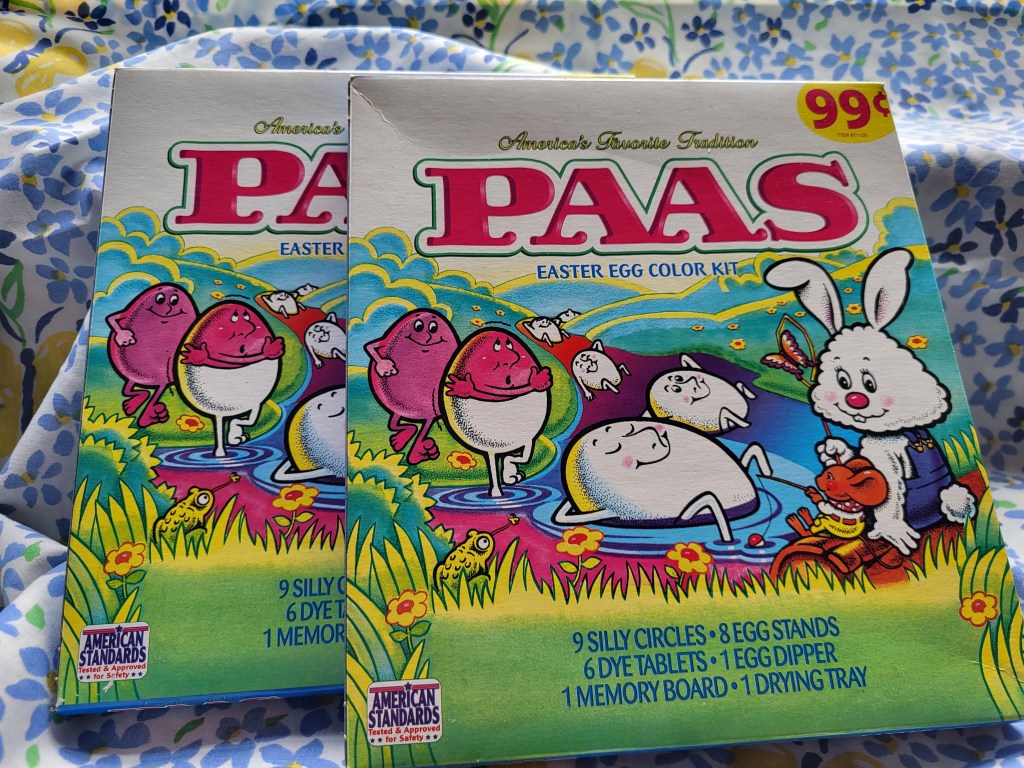
Alas, I grew up and quit dyeing Easter eggs. That was until I had kids of my own. And then it was full steam ahead! Every year I’d buy the PAAS egg tabs and soon had vinegar-based dyes in blue, green, yellow, red, orange, and purple. For a few hours I was transported back to my own childhood and the fun of coloring eggs; passing on the colorful tradition to my own children.

It was always fun to watch their brains at work. How many green ones? How many blue? How do you create one with every color on it? One year I think my son dyed all his eggs some shade of blue, while my daughter wanted the entire rainbow on every one of hers.

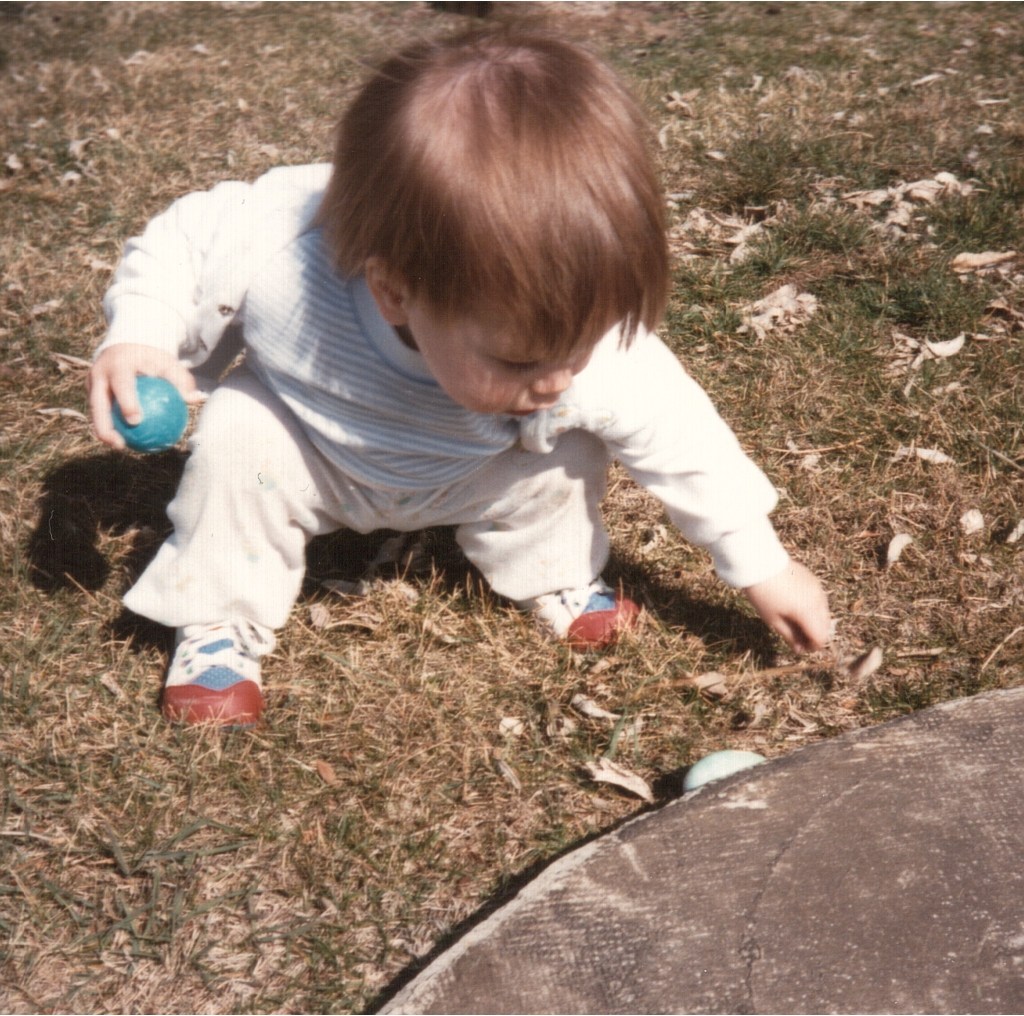
My just turned one year old daughter – under close supervision by me – with her first found Easter egg. 1994
My son, 14 months old, at his first Easter egg hunt. 1991.

As a child, I was much more regimented, making sure that there were two of each color, just in a darker or lighter shade. My mother would indulge me over the weekend, and let me get my box of eggs out of the refrigerator and admire them. At least until Sunday afternoon on Easter day. It was then the first eggs would get peeled, soon to be incorporated into potato salad and devilled eggs. To this day I still love hard boiled eggs and whenever I eat them I am pulled back, for a moment, to my childhood Easters.

But back to the egg hunt. As an adult, I was always able to recall where I had hidden my children’s eggs… well, except for that time when I snuck outside before breakfast to nestle them among the flora only to discover during the course of the hunt forty-five minutes later that the fauna – particularly slugs – love hard boiled eggs too. Who knew?

The links:

https://en.wikipedia.org/wiki/Easter_egg

https://paaseastereggs.com/

Confessions of a former Tax Season widow

April 15th

April 15th is, in the United States, the day Federal Income tax is due from all citizens.

Federal income tax began in 1913, when the 16th amendment to the US Constitution was ratified by Congress and two thirds of the states. It all seems so simple. But of course, it is not. This is the opening paragraph of the veeerrry lengthy Infallible Wikipedia article:

“The United States federal government and most state governments impose an income tax. They are determined by applying a tax rate, which may increase as income increases, to taxable income, which is the total income less allowable deductions. Income is broadly defined. Individuals and corporations are directly taxable, and estates and trusts may be taxable on undistributed income. Partnerships are not taxed (with some exceptions in the case of federal income taxation), but their partners are taxed on their shares of partnership income. Residents and citizens are taxed on worldwide income, while nonresidents are taxed only on income within the jurisdiction. Several types of credits reduce tax, and some types of credits may exceed tax before credits. Most business expenses are deductible. Individuals may deduct certain personal expenses, including home mortgage interest, state taxes, contributions to charity, and some other items. Some deductions are subject to limits, and an Alternative Minimum Tax (AMT) applies at the federal and some state levels.”

More interesting than taxes… a spotted towhee in the rockery I see from my office window.

Got that? Me either. In fact, my eyes glazed over just reading that and I decided that the spotted towhee I spotted in the rockery across the road is much more interesting.

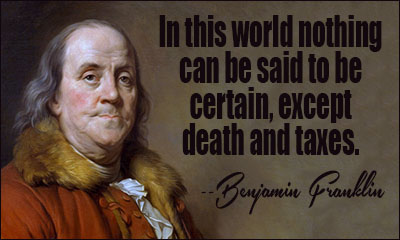
But, as Ben Franklin once famously wrote, the only things certain in life are “death and taxes.”

So, dear readers, if your thing is dissecting the tax code and taking a deep dive into the history of marginal tax rates, or whether or not a progressive tax is even constitutional, knock yourselves out.

I, fortunately, am married to someone who has a four-year degree in accounting. He understands numbers. He understands how finance and taxes work. And for the first couple years we were married, I was an April 15th tax accountant widow.

For those who don’t know what that is, I shall enlighten you. For most Certified Public Accountants (CPA’s) the year is broken up into two parts. There’s tax season and then everything else.

For everything else that means handling mostly business-y type things – quarterly taxes and financial statements. More things that make my eyes glaze over and rollback in my head.

When it’s these types of things, the CPA can expect to get into the office at a reasonable 8 to 9 a.m. and leave at a reasonable 5 to 6 p.m. You know, normal-ish business hours.

But then January happens. When the new year arrives, so do all the various documents from employers which the US Government requires be sent out. These trigger tax season. W-2’s and 1099’s must be sent to employees and independent contractors no later than January 31st. Every year. No exceptions.

On February 1st, if you are married to a practicing CPA, kiss your social life goodbye because weekends become non-existent. Holidays such as Valentine’s Day and President’s Day? Well, you might get them off but plan to snuggle up with your blanket and favorite Hallmark movie or go skiing by yourself because your CPA spouse will be working.

This goes on, of course, until midnight on April 15th since that’s the moment ALL taxes (and extensions if your taxes aren’t yet done) must be postmarked or electronically submitted to the IRS.

But sort of like getting over a bad cold or the flu, recovering from tax season takes some time. By early May, your CPA spouse is probably back to semi-normal hours. Thank goodness the IRS set the taxes due date in April. That way – at least in the northern part of the U.S. – you are not missing out on nice weather.

When I mentioned to the hubby that I would be featuring the Income Tax for today’s Tuesday Newsday he immediately told me about his ‘liberation’ day.

It was fairly early in our marriage, and I never knew about this experience for him until last week. Since graduating from college in 1978, he had worked as a CPA for two different firms in greater Seattle. He worked at Christensen, Schafer, and Husmo (C, S & H), in Burien for a couple of years but made a change to Don Sparling and Co. to gain much needed auditing experience. Everything was great at Sparling until the owner’s nasty divorce derailed the business. The hubby lost his job but, in the spring of 1981, was rehired by C, S & H as they had recently gotten a new client who needed an auditor: Nintendo of America. Experience the husband had recently gained.

In the late spring of 1982 – after being their CPA for a year – Nintendo hired the hubby as their first Controller and he left the world of being a tax accountant.

On April 15, 1983 – a Friday – the high temperature in Seattle was 65 degrees and sunny with a bit of breeze. The perfect sort of day to do a little yard work. Since he was home from work while it was still daylight, he was outside doing yard work (I was probably inside making dinner) when he stopped for a moment and remembered that it was Tax Day. And that he was not going to be burning the midnight oil and felt an incredible sense of relief.

For the rest of his career, he has put his CPA training and math brain to good use whether as a company controller, a consultant, or – currently – with his volunteer work.

As for me, my eyes still glaze over when taxes, marginal rates, and exemptions start being discussed. I do my best to hide it but with little success. It’s probably best for me – and everyone else – that I stick to writing and leave the accounting to the professionals.

For the record, I did send this to the hubby for a bit of fact checking and he liked what I wrote but reminded me – and all of you – of the following: “Very entertaining! If you file for an automatic extension, you have an additional six months to file your return, but you still have to pay your estimated taxes by April 15th.”

So be sure to send the IRS your money TODAY by midnight and I hope everyone has a very happy tax day!

One link with links to the links to the links:
https://en.wikipedia.org/wiki/Income_tax_in_the_United_States

Billy Joel: The Iconic Journey of a Storyteller

The Piano Man

April 8

This song only ever reached number 25 on the Billboard Charts. Yet its one of the most memorable songs of the 1970’s and marked the beginning of one artist’s career which has spanned 50 years.

The song? The iconic “Piano Man.” The artist? Billy Joel.

It was in April of 1974 when “Piano Man” peaked on the charts. It could not even be described as a ‘one-hit wonder’ based on its ranking. By any measure, it should have faded away and been forgotten. Billy Joel, however, possessed the needed ingredients which have defined his long running career: grit, determination, and talent.

Undaunted by the middling success of “Piano Man” he continued to write songs and produce records. Both “Piano Man” and “Captain Jack” – his most successful early 1970’s releases – were an anathema to the music of that era. It was a time when soft rock and bubblegum dominated the pop category. I’m pretty sure no one was quite sure where this storyteller who saw and sang about the seamier side of life fit in.

“The Stranger” album, released in the fall of 1977, changed the public perception of Joel. I attribute it first and foremost to the song “Just the Way You Are.”  Written for his then wife Elizabeth Weber (married in 1974, divorced in 1983), I think it encapsulates a more optimistic look at life and, perhaps, that Joel was in a much happier place at that time as he had hit his stride with his career.

The American public responded. From the Infallible Wikipedia:

“Spending six weeks at No. 2 on the US Billboard 200 chart, The Stranger was Joel’s critical and commercial breakthrough. Four singles were released in the US, all of which became Top 40 hits on the Billboard Hot 100 chart: ‘Just the Way You Are’ (No. 3), ‘Movin’ Out (Anthony’s Song)’, ‘She’s Always a Woman’ (both No. 17), and ‘Only the Good Die Young’ (No. 24). Other songs, such as ‘Scenes from an Italian Restaurant’ and ‘Vienna’, have become staples of his career and are frequently performed in his live shows. The album won two awards at the 21st Annual Grammy Awards in 1979: Record of the Year and Song of the Year for ‘Just the Way You Are’. It remains his best-selling non-compilation album to date and surpassed Simon & Garfunkel’s Bridge over Troubled Water (1970) to become Columbia’s best-selling album release, with more than 10 million units sold worldwide. Rolling Stone magazine ranked the album number 70 on its 2003 list of the ‘500 Greatest Albums of All Time’, repositioned to number 169 in a 2020 revision. In 2008, The Stranger was inducted into the Grammy Hall of Fame.”

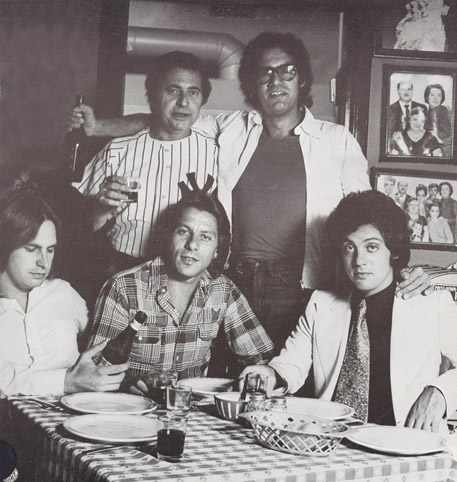
Billy Joel – seated far right – with members of his band at Guidos Italtian Restaurant. This photo was the back cover of the album, The Stranger.

As readers of my blog know, I greatly admire those who can tell a story through song. Joel has done this so very well. Perhaps my favorite of his ‘storytelling’ songs is “Scene’s from an Italian Restaurant.” When I listen to that song, I can visualize a couple of old friends – probably in their early 30’s – meeting up and soon their conversation is reliving the ‘good old days’ with such lyrics as:

Cold beer, hot lights
My sweet romantic teenage nights
.

My favorite part of the song has to be when he starts singing about prom king and queen, Eddie and Brenda, who were once the most popular kids in school. In a few short verses we learn about their marriage, their troubles, their divorce and that:

Brenda and Eddie had it already by the summer of ’75
From the high to the low to the end of the show
For the rest of their lives.

Storytelling at its finest.

It was in May 1984 when I attended my first rock concert. Yes, by then I was in my 20’s. My mother did not approve of rock concerts or anything else which might pollute young and impressionable minds so as a teenager going to such an event was forbidden.

I could have gone to a concert sooner, being that I had been an adult for several years. But after the hubby and I were married in 1980 we didn’t have the resources for such frivolities. Instead, we bought our first house in the spring of 1981 and then lived on rice and beans for the next few years, both of us going to jobs during the day, and fixing the house during the evenings and weekends. Our social life was the hubby playing on recreational soccer team; getting together with friends and family at our home our theirs, and going camping.

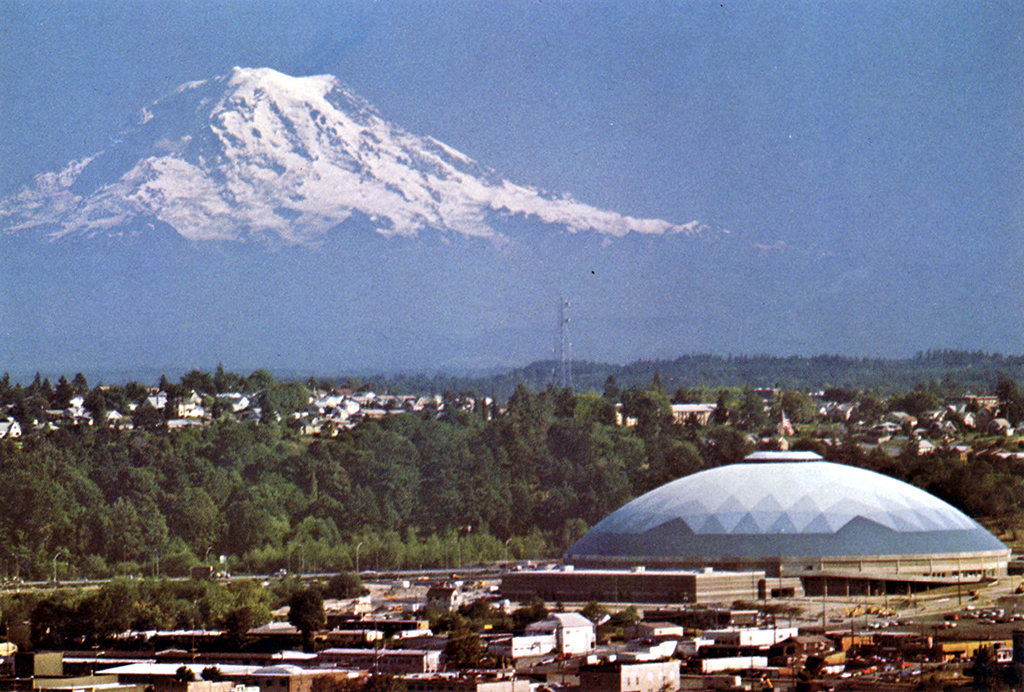
The Tacoma dome circa 1983-84

I can’t say for sure what inspired buying tickets for Billy Joel except that we both liked his music, me probably more than the hubby.

We drove from West Seattle to the Tacoma on Tuesday, May 8th, and joined thousands of our closest friends at the less than one year old Tacoma Dome (Billy Joel was the 9th artist to play there!). When the lights dimmed the arena went silent. In the dark we could see a grand piano slowly turning to the front of the stage, a lone performer sitting at the keyboard.

And then a single chord from the piano in the dark, instantly recognizable as the opening salvo of Joel’s then hit song “Allentown.” The arena erupted in applause. A solo spotlight appeared and shone down on Joel and, in that moment, he captured the room.

For the next couple of hours, we were treated to an energetic concert of old favorites and up and coming hits. It was a magical night and a great first concert.

I felt it was a privilege to have experienced Billy Joel perform live.

Joel was feted with the Kennedy Center honors in 2013. Pictured here with fellow honoree opera singer Martina Arroyo

Thank you, Billy Joel, for capturing the essence of the American experience through your incredible words and music.

There are soooo many links and so much more information I was not able to share in my self-imposed limited space. So here you go for some of the highlights including links to my three most favorite songs from Joel:

https://en.wikipedia.org/wiki/Billy_Joel

https://en.wikipedia.org/wiki/Piano_Man_(Billy_Joel_album)

https://en.wikipedia.org/wiki/The_Stranger_(album)

https://youtu.be/gxEPV4kolz0?si=TsMKJR-FE_lsLB4B (Piano Man)

https://youtu.be/GkuJJsApACc?si=J8-DxfhF7-e9ELU2 (Just The Way You Are)

https://youtu.be/izzM9LXqP-U?si=xlCLpepQV7n9nV7N (Scenes From an Italian Restaurant)

A Font of Fun? No Fooling!

April 1st

You’d pretty much have to be living on an island far from civilization to NOT know that today is April Fool’s Day. It’s celebrated each year on April 1st.

Considered by many as the greatest hoax of all time is this 1957 BBC documentary about harvesting spaghetti from trees. https://en.wikipedia.org/wiki/Spaghetti-tree_hoax

The day has murky beginnings which date back hundreds of years. Some say that Geoffrey Chaucer, in the unreadable ‘Canterbury Tales’, makes reference to the day. But that’s disputed. In 1508 some obscure French poet I’ve never heard of wrote about ‘poisson d’avril’ – translated ‘April’s Fish’ – which apparently doesn’t mean fish but ‘fool.’ Yet another theory is that at one time the new year was marked as being on March 25th but was then changed to January 1st (Actually March 25th makes more sense what with spring, birth, and renewal, but whatever). Those who clung to their old traditions were derided as Fool’s and I guess it took 6 days of their protests against moving New Years before someone decided to take any action.

The previous paragraph is, however, as in depth as I plan to go regarding the origins as, quite honestly, it’s a bit boring for this day devoted to mirth and mischief. Sadly, I found the Infallible Wikipedia article to be deadly serious and who wants that?

Anyway, I had soon climbed down the rabbit hole that is the internet and found a website truly worthy of April Fool’s Day: The Museum of Hoaxes. OMG. I knew I could spend hours reading about all the clever things people have conjured up to fool others. Decisions, decisions. WHICH of the hundreds of hoaxes was worthy of Tuesday Newsday fame? It was a weighty decision.

The islands of San Serriffe are a Perpetua(l) delight

Presenting the Island of San Serriffe!

As a writer, word nerd, and someone whose earliest childhood goal was to be able to create programs, newsletters, flyers, etc., the name San Serriffe resonated.

The year was 1977 and the British newspaper, The Guardian, was looking for something fun as a joke for their April Fool’s Day edition. Brainstorming occurred and the results were hilarious. From the hoaxes.org website:

“On April 1, 1977 the British newspaper The Guardian published a seven-page ‘special report’ about San Serriffe, a small republic located in the Indian Ocean consisting of several semi-colon-shaped islands. A series of articles described the geography and culture of this obscure nation.

The report generated a huge response. The Guardian‘s phones rang all day as readers sought more information about the idyllic holiday spot. However, San Serriffe did not actually exist. The report was an elaborate April Fool’s Day joke — one with a typographical twist, since numerous details about the island (such as its name) alluded to printer’s terminology.

The success of this hoax is widely credited with inspiring the British media’s enthusiasm for April Foolery in subsequent years.”

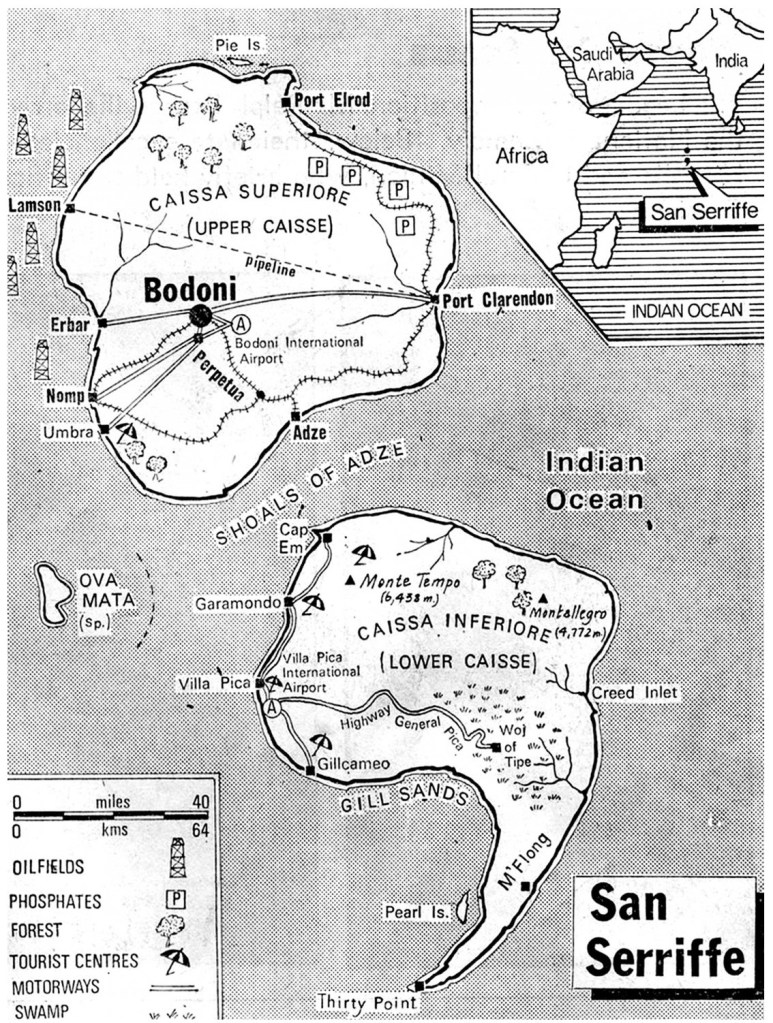
The best part of this story is, for me, the map. These people had waaaaaay too much time on their hands apparently.

The capital of San Serriffe: Bodoni; There’s Monte Tempo and Montallegro; Creed Inlet and Thirty Point; Villa Pica International airport and a beach town named Garamondo. Truly, the map is a font of fun.

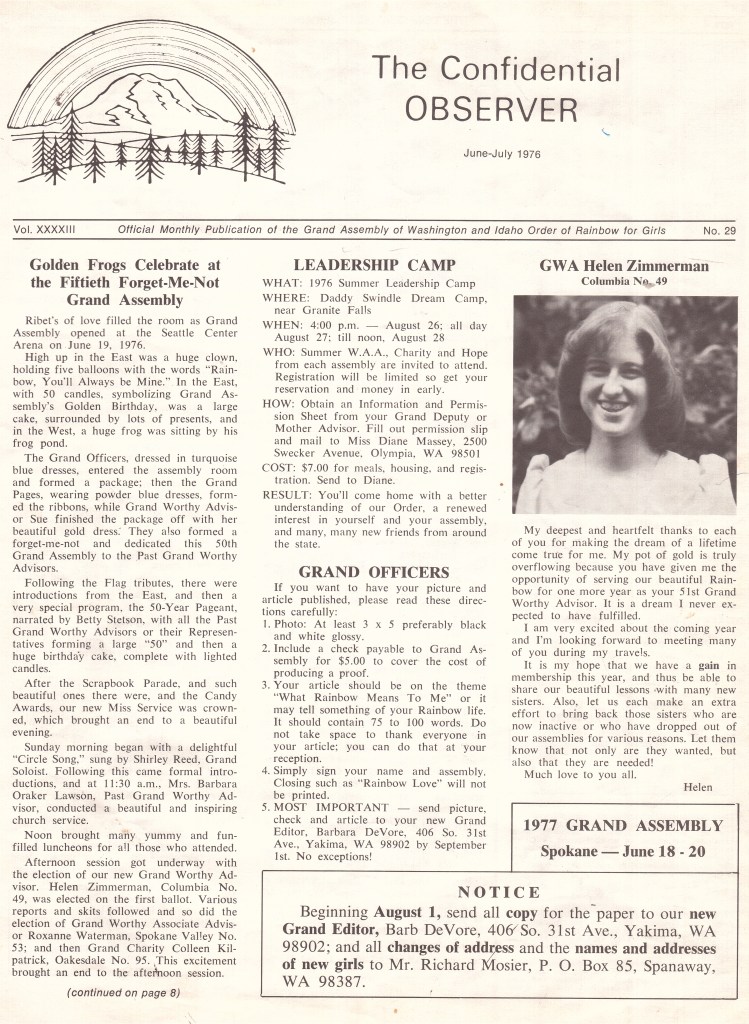
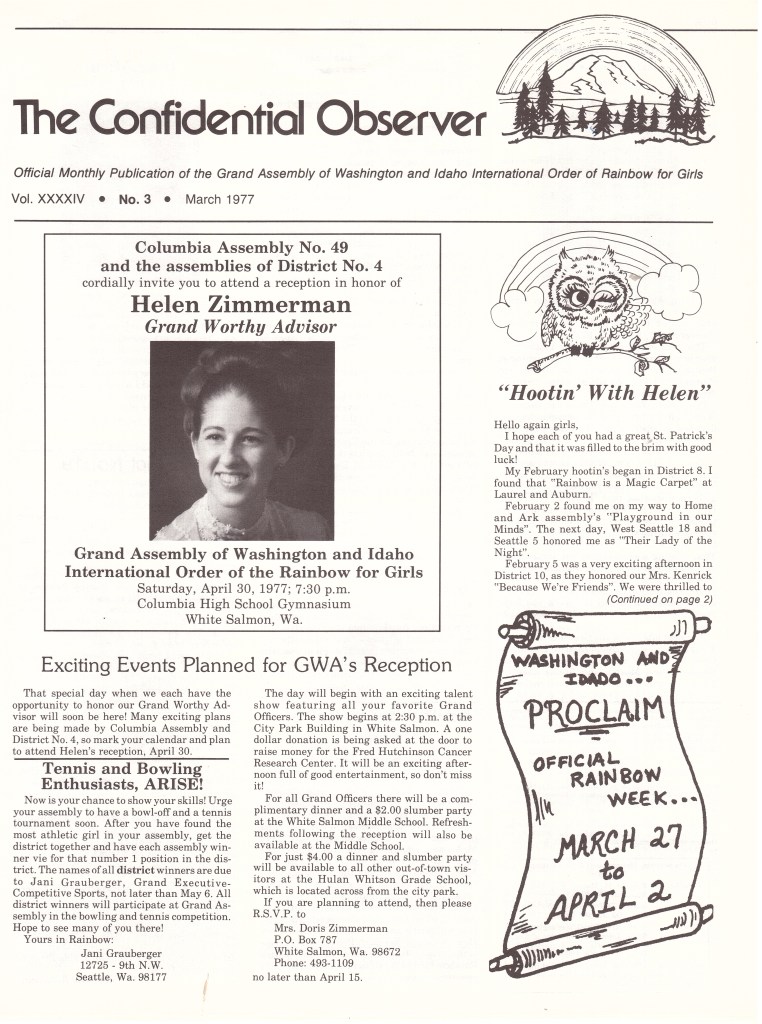
I’m a bit sad that it took me over 40 years to learn about San Serriffe since, in 1977, I was heavily involved in the world of publishing. I was one of three editors for the weekly Yakima Valley Community College “Galaxy” and also the youth editor of the Washington Idaho Rainbow Girls newsletter titled “The Confidential Observer.”

I was hungry to learn everything there was about journalism, writing, and layout. One of my big passions was experimenting with new fonts. I could not get enough of them!

The adult advisors for the Rainbow Girls publication, I’m certain, had no idea what hit them that year as I shook things up, at least in the world of Fonts. Well, and layout and artwork and, pretty much everything I was capable of changing. The fonts went from Helvetica and Times New Roman to Garamond and Bodoni to name a couple of them.

I changed the mast head; I varied the font sizes; I used boxes around things to emphasize and tried to make it more aesthetically pleasing.

Two versions of the front page of the Rainbow Girls paper. Top is how it looked the issue before I started changing things. Bottom is how it looked six months later.

Now, way back in the dark ages, publication was not a simple thing. First I had to get articles from people from all over the states of Washington and Idaho who mailed them in envelopes. Some of these came handwritten on notebook paper, full of spelling and grammatical errors. I often had to retype and all had to be edited. When that was done I would mail it all from where I lived in Yakima to the printers in Tacoma, who then retyped it (with the fonts I’d chosen) and created galleys to fit our three-column format. These were then returned to me via mail. I would cut – with an exacto knife – the galley articles and glue the proofs on to paper in the correct configuration with everything marked as to where it was supposed to go and then would cross my fingers that they did it right. Spoiler: not always.

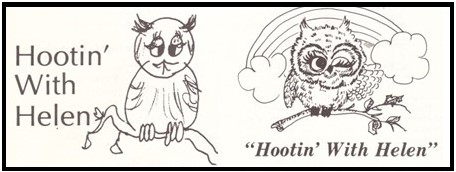
It was the fall of 1976 and the artwork that was to top the column for our state president that year had gotten lost by them. I sent in my package a hastily drawn picture (I’m no artist!) with a note attached saying “this is sort of what the artwork looks like that’s missing” and asking them to look around for it. Instead of reaching out, however, they ‘published’ what I had sent. It was awful and upsetting and bothers me to this day. Eventually, they found the missing clipart.

To this day I cannot fathom any professional printer looking at the owl on the left and thinking that’s what they should print…

With the introduction of the Apple Macintosh and their GUI (Graphical User Interface) layout in the mid-1980’s, I was finally able to create a newsletter on a computer and print it out. It was then I got my first laser printer. It was still a clunky process and the clipart was lacking, but it moved me forward.

Over the years as the GUI technology has improved, my ability to create has expanded. Artificial Intelligence has made it even easier.

So hats off to San Serriffe Island. I found the above picture of the island through an easy Google search, saved it as a jpg, and then printed it on my less than $200 Epson printer. I’m sticking it in a frame and hanging it in my office and will look at it often and cheer the fun of April Fool’s Day and 1977, the year of San Seriffe’s creation.

As always a few links:

https://hoaxes.org/archive/permalink/san_serriffe

https://hoaxes.org/af_database/display/category/guardian

https://en.wikipedia.org/wiki/April_Fools’_Day

Quantum Leap: Exploring Time Travel’s Unique Twist

March 25

A Tuesday Newsday Classic Updated

Dr. Sam Beckett and project coordinator, Al Calavicci

“Oh Boy.”

These two little words, uttered on March 25, 1989, launched a TV-show and inspired a cult-like following as viewers were treated to a mind-bending time travel fantasy with a new twist.

The fresh premise of Quantum Leap proffered that time travel is possible… but one can only time travel during the years the particular person is alive. Each person’s life is like a string with a beginning and an end. But if the ends of the string are tied together and the string then bunched up, the theory went, a person could leap from one point on the string to another bouncing from time to time.

The opening segment of each show, From the Infallible Wikipedia, is this:

“Theorizing that one could time travel within his own lifetime, Dr. Sam Beckett led an elite group of scientists into the desert to develop a top-secret project, known as ‘Quantum Leap.’ Pressured to prove his theories or lose funding, Dr. Beckett prematurely stepped into the Project Accelerator–and vanished.

https://www.youtube.com/embed/kf-nvBCTnR0?si=3X21lGIY5MvJmUxh

He awoke to find himself in the past, suffering from partial amnesia and facing a mirror image that was not his own. Fortunately, contact with his own time was maintained through brainwave transmissions with Al, the Project Observer, who appeared in the form of a hologram that only Dr. Beckett could see and hear. Trapped in the past, Dr. Beckett finds himself leaping from life to life, putting things right that once went wrong and hoping each time that his next leap will be the leap home.”

In the five seasons the show was on the air, Dr. Beckett – played by the yummy Scott Bakula – ‘leapt’ into the body of a different person each episode. He was an air force jet pilot, a minor league baseball player, and a prize fighter in the first season. He was young, old, male, female, black, white…

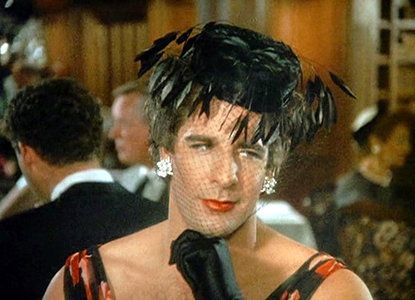
Sam’s first time in a woman’s body as Gloria in 1964

One of the things I loved about the show was its humor and, especially, all the ridiculous ways Scott Bakula had to dress for the series and the personas he assumed. He even wore dresses and high heels, lipstick and eye makeup. It was fun to watch him peer into a mirror and see whose body he now occupied.

Personally, I like the early seasons better than the later ones as his leaps placed him into the bodies of average people with regular struggles. In some later episodes he has brushes with historical figures and the writers/producers take tremendous creative license with past events and blow up their own premises, stretching the bounds of credulity.

Regardless, it was a fun show made all the more enjoyable by the interplay between Bakula and Dean Stockwell who portrays the cigar-wielding Al.

I bought the first season on DVD one year as a birthday gift for my then teenage son. I thought my kids would love the show! Instead, after 15 minutes, they were bored.  I determined that maybe it was a show which an adult audience could appreciate but was over the heads of kids. Or, perhaps, it only resonated with my generation as we could relate to the times and travels of Sam Beckett (born August 8, 1953). Who knows? Now that my kids are adults, they might enjoy it. I’m not sure how well the show has aged or if it’s stuck in the 1990’s.

All five seasons are available on DVD

In 2021, I discovered that Quantum Leap episodes were being run on Xfinity. So the hubby set it to record whenever an episode was aired. It took a while, but all 5 seasons were recorded and I rewatched them. Overall, it was an enjoyable journey although there were a few episodes that tackled some pretty intense topics.

I think one of the best episodes is his leap into his teenage self in the 1960’s. The episode is particularly poignant since he comes armed with knowing, since he comes from years in the future, that neither his father or his older brother are alive in 1989. Who among us wouldn’t love to go back and fix some of the mistakes of the past? Who would not want to go back and try to save a beloved family member?

Ultimately, Sam’s lesson is that while he might not be able to change the past, what he can control is his own interactions with his loved ones, letting them know how he feels about them.

It does show as being available on Peacock/NBC. A fun watch, in my opinion, if you have the time!

A few links:

Al explains string theory time travel:

https://en.wikipedia.org/wiki/Quantum_Leap

https://en.wikipedia.org/wiki/Sam_Beckett

Remakes in Hollywood: Why ‘A Star Is Born’ Endures

Retold for each new generation

March 18

Movie remakes are a Hollywood tradition. Films featuring characters such as Dracula, Frankenstein, and Batman, have been redone numerous times. Robin Hood, Wuthering Heights, and King Kong, also come to mind. Pretty much anything originally written by Jane Austen, Charles Dickens, or William Shakespeare have seen multiple iterations.

One story which has been made into a movie four times now is the iconic “A Star Is Born,” with each version being adapted to reflect the culture of the era.

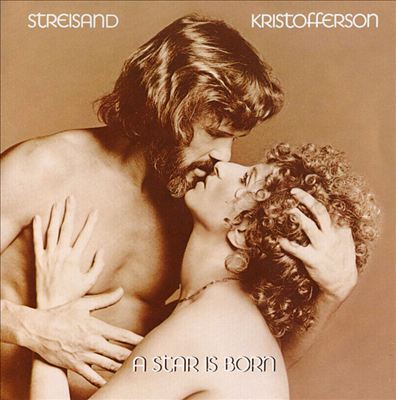
Kristofferson and Streisand December 1976

It was the third week of March 1977 when the song “Evergreen” – from the Barbra Streisand and Kris Kristofferson remake – reached number one on the Billboard Hot 100 charts. It claimed the top spot for three weeks.

The Infallible Wikipedia sheds light on the subject:

“A Star Is Born is a 1976 American musical romantic drama film directed by Frank Pierson, written by Pierson, John Gregory Dunne, and Joan Didion. It stars Barbra Streisand as an unknown singer and Kris Kristofferson as an established rock and roll star. The two fall in love, only to find her career ascending while his goes into decline.

The film premiered at the Mann Village Theater on December 18, 1976, with a wide release by Warner Bros. the following day. A huge box office success, grossing $80 million on a $6 million budget in North America, the film became the 2nd highest-grossing that year. Reviews praised its performances and musical score, but criticized the screenplay and runtime. At the 49th Academy Awards, the film won Best Original Song for its love theme ‘Evergreen’.

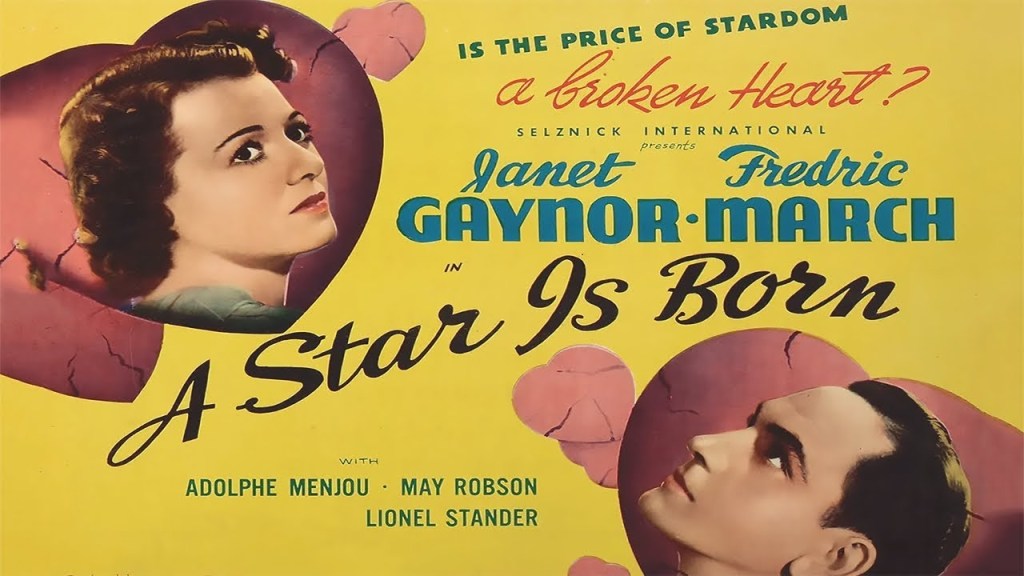
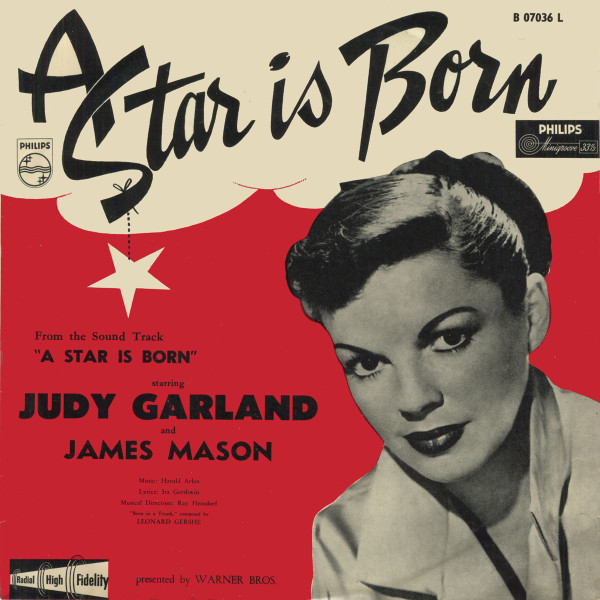
The film is a remake of the 1937 original with Janet Gaynor and Fredric March, notably adapted in 1954 as a musical starring Judy Garland and James Mason; and subsequently again in 2018 with Lady Gaga and Bradley Cooper.”

Although I’ve never seen either the 1937 or 1954 films, I did read the plot summaries and then watched a few clips from the Garland/Mason version. And one thing which comes through in that film – and again in the 1976 production – is that both were reflective of the culture of the time. The style of singing and dancing transports one back to the era of vaudeville style productions.

Poster from the original movie. 1937

Regardless, the main character’s names are the same in the first two films: Esther Victoria Blodgett and Norman Maine. For the 1976 film, the female character’s first name is still Esther but the man’s name is now John. Despite these updates the storyline is pretty much the same. By the time we get to 2018, the names Esther and Norman are long since abandoned for the more modern names Ally and Jack.

In deciding between the 1976 and the 2018 versions, I am torn. I was 19 in 1976 and saw the movie in the theatre at Christmas. I was swept up in the tragedy of the storyline; deep stuff when you are contemplating the meaning of life as millions of other baby boomers were also doing at the time. The movie resonated with my generation and was the second highest grossing film that year. It garnered several Oscar nominations, all for the music, with a win for best original song.

1954 Album cover of the Judy Garland and James Mason movie

Other than that, however, my own attempts to view Barbra Streisand as an ‘up and coming’ star in 1976 was a stretch. She was 34 years old that year and a Bonafide superstar; I’ve never been able to get past that fact.

Fast forward to 2018 and the most recent version of the story. Lady Gaga (aka Stefani Germanotta) at age 32 was somewhat more believable in the leading role. Up until she performed at the 2015 Academy Awards for the Julie Andrews tribute, her undeniable talent had been limited to a younger, edgier population demographic.

In ‘A Star is Born’ I think she successfully shed her over the top ‘Lady Gaga’ persona and her portrayal as a newcomer worked better than it did for either Garland or Streisand. For many people who might have dismissed Lady Gaga, this was their first exposure to Germanotta’s amazing voice.

Regarding age, Janet Gaynor and Judy Garland were 33 and 32 respectively. In Garland’s case she was, like Streisand, a long-established singer, Hollywood star, and a household name.

Germanotta and Cooper. 2018

The four male leads ranged in age from 40 to 45.

As a purely academic exercise, if another ‘remake’ of this movie is ever done, it really should feature an unknown actress/singer in her early 20’s. I think that is a much more believable premise for being ‘discovered,’ and that a ‘washed’ up star in his 40’s would keep the plot interesting, being able to portray the power imbalance and how it shifts with her rising star. Any screenwriter worth their salt could really delve deep into the emotional turmoil of each character which, to me, is the essence of great writing and would add a fresh twist to this classic plot line.

Or, perhaps, just let it go. Four times is probably enough remakes of this dark and depressing story.

Massive links today as embedding videos from YouTube never ends well:

https://en.wikipedia.org/wiki/A_Star_Is_Born_(1937_film)

https://en.wikipedia.org/wiki/A_Star_Is_Born_(1954_film)

https://en.wikipedia.org/wiki/A_Star_Is_Born_(1976_film)

https://en.wikipedia.org/wiki/A_Star_Is_Born_(2018_film)

https://youtu.be/I0f1cMYF91A?si=1lDAXyMm-HRtJAsA (Evergreen)

https://youtu.be/7hiVIixor_Q?si=4hjnneNJtWn_-mta (Shallow)

https://youtu.be/gNDu75gEiIo?si=nrRYYOm6OzZJJbFr ( The Man That Got Away)

https://www.businessinsider.com/most-remade-movies-of-all-time#the-first-king-kong-movie-was-released-in-1933-and-a-new-one-is-planned-for-2020-14

Exploring Romeo and Juliet: A Timeless Love Story

Perhaps Shakespeare’s most famous play

March 11

To try and take on this play is, I would conjecture, pure folly. Afterall, it is probably the most recognized literary work in the world. It is the story of two young lovers who forsake all else to be together. They risk the disapproval of family and friends and, ultimately, meet their demise all because they chose that which was forbidden.

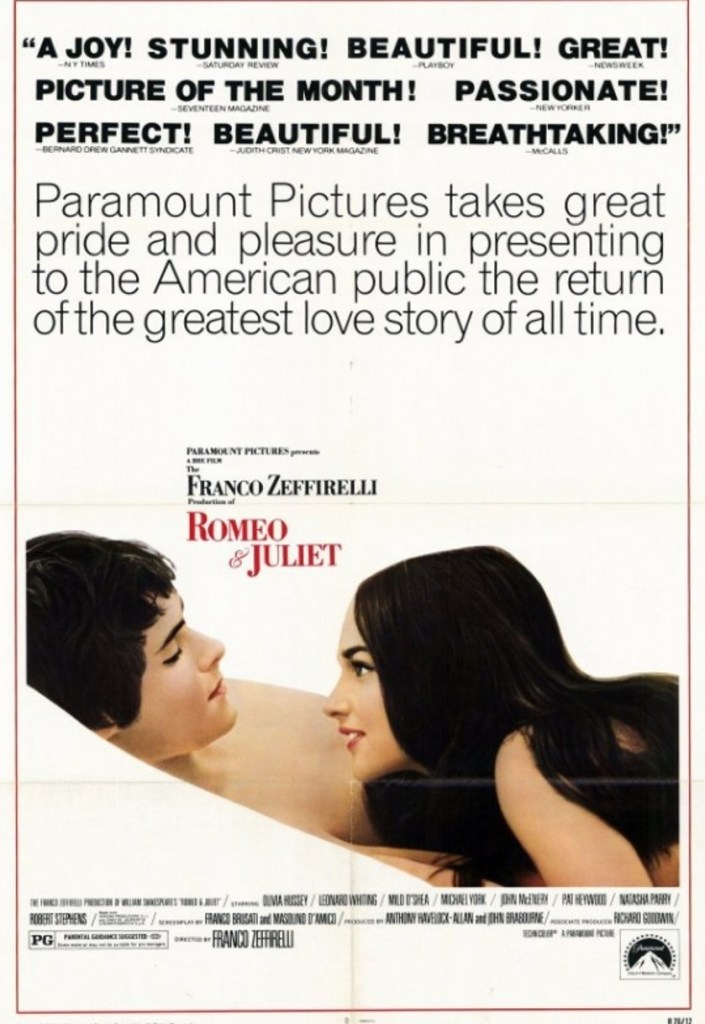
1968 Poster of Romeo and Juliet

“Romeo and Juliet” is William Shakespeare’s most famous works and March 11, 1302, is – according to OnThisDay.com – considered to be the date of the young lover’s marriage.

As is often the case, that is disputed since contextual clues from the play itself place the wedding date as being in mid to late July.

Regardless, today is as good a day as any to feature this iconic work.

For anyone who is unfamiliar with the storyline you can certainly access the Infallible Wikipedia. Which I did only to discover that the article there is 10,604 words long. Egads.

Instead, I found this one paragraph synopsis from the site Shakespeare.org.uk much easier to digest:

“An age-old vendetta between two powerful families erupts into bloodshed. A group of masked Montagues risk further conflict by gatecrashing a Capulet party. A young lovesick Romeo Montague falls instantly in love with Juliet Capulet, who is due to marry her father’s choice, the County Paris. With the help of Juliet’s nurse, the women arrange for the couple to marry the next day, but Romeo’s attempt to halt a street fight leads to the death of Juliet’s own cousin, Tybalt, for which Romeo is banished. In a desperate attempt to be reunited with Romeo, Juliet follows the Friar’s plot and fakes her own death. The message fails to reach Romeo, and believing Juliet dead, he takes his life in her tomb. Juliet wakes to find Romeo’s corpse beside her and kills herself. The grieving family agree to end their feud.”

But, honestly, only if you lived as a hermit in a rock cave on a remote island in the south Pacific would you NOT know about Romeo and Juliet (R&J).

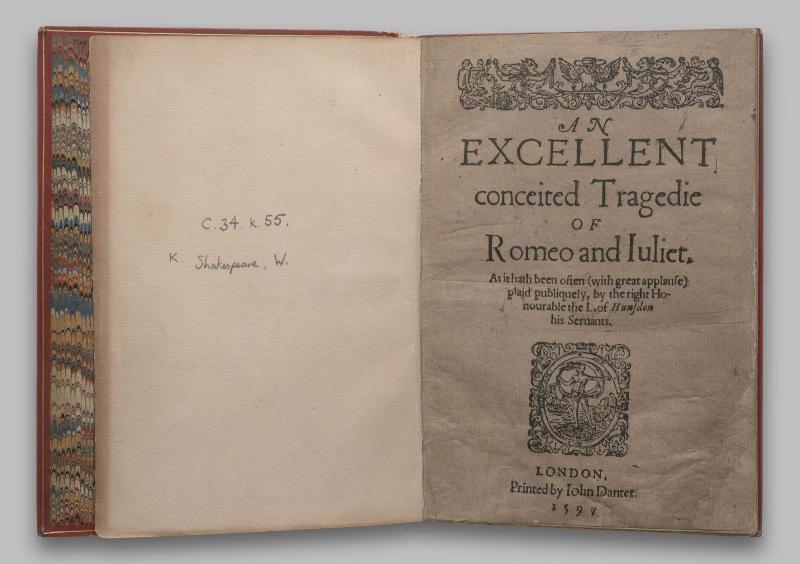
First edition Romeo and Juliet

When I started thinking about R&J, my mind drifted back to the early 1970’s and my experience at Wilson Junior High School in Yakima, Washington.

Wilson Junior High teachers 1971

It was there that I was introduced to R&J. At the time I had no appreciation for Shakespearean literature or for the incredible foundation which was given me by a trio of dedicated Jr. High English teachers.  For my entire 8th grade year, my English teacher was Mr. Albrecht. To us students he seemed quite mature. When, in fact, he was the ripe old age of 27 that first year. We respected him because he treated us as intelligent people regardless of our limited years on earth; he rewarded those who worked hard and did their best.

The next year my English class experience was split into two segments. For the fall/winter semester I drew the formidable grammar teacher, Mrs. Eglin. I think she likely made students rip out their hair and cry at times. But, by God, you were going to learn: all the parts of grammar, how to diagram a sentence, and how to construct a proper paragraph. It was in her class that I discovered the evils of dangling participles, all about verbs, adverbs, nouns (both proper and pro-), adjectives, and every other part of speech. In other words, I learned how to write the correct way. She made me think about my writing in ways I’d never considered. I might not have always followed her methods, and I’m not perfect, but not for lack of instruction on Mrs. Eglin’s part.

Mrs. Roberts 1971 yearbook photo

In the second half of the year, I had an even more demanding teacher – which I hadn’t thought possible after being with Mrs. Eglin – Mrs. Roberts. First name Doris. Which is telling. No one in my age demographic, or even a few years older, was named Doris. The name had, however, been the 8th most popular name for girls in the 1920’s. Mrs. Roberts was born in 1922 and was an ancient 50 that year. Ah perspective.

Mrs. Roberts assigned us every classical piece of literature she could find and we explored such themes as ‘man’s inhumanity to man’, ethics, morality, death and dying, cruelty, poverty… yes, we read some very dark stories. Like “Flowers for Algernon”, “The Grapes of Wrath”, “Fahrenheit 451”, and “Romeo and Juliet”.

The clever thing which this band of teachers managed to accomplish was to make the course work relevant to the teenagers of the day. Somehow, they convinced the administration that it was educational to load some 250 ninth graders into school busses and send them to the movie theatre to see films based on what we were reading.

Pretty much how teenagers dressed in 1971-72. Found this photo on Pinterest.

Spoiler alert: it worked.

Of course, we kids thought we’d gotten a free pass for the day. Personally, I returned from those outings thinking about the films but also contemplating the books we read and then writing papers on the theme we thought was the best fit.

Sometime in the fall of 1971 I’m pretty certain we were whisked away in the busses to see the 1968 film version of Romeo and Juliet with Leonard Whiting and Olivia Hussey. Such clever English teachers, using the pop culture of the day to get us to learn. I did find a reference in my 1972 diary for both “Farenheit 451” and “Mary, Queen of Scots.” Sadly, my diary from 1971 does not seem to exist any longer, which surprises me as I was a faithful diary writer.

Now a few fun facts. I was able to find 49 times R&J was made into a movie in the Shakespearean tradition (from 1908-2021); an additional 118 films were produced which adapted the works in modern ways or with odd twists (like the truly bizarre 2011 Gnomeo and Juliet); there are also a few films which utilize R&J’s overarching theme in some new way (like the charming 2019 movie “Letters from Juliet”).

I owe a lot to my Junior High School English teachers for the great foundation they laid. It was the gift that has continued to give and bless me.

As always a few links:

https://www.onthisday.com/weddings/march/11

https://en.wikipedia.org/wiki/Romeo_and_Juliet

https://www.shakespeare.org.uk/explore-shakespeare/shakespedia/shakespeares-plays/romeo-and-juliet/#:~:text=An%20age-old%20vendetta%20between%20two%20powerful%20families%20erupts,to%20marry%20her%20father%E2%80%99s%20choice%2C%20the%20County%20Paris.

World’s Most Popular Song? The Story of ‘Happy Birthday’

Everyone’s sung it at least once!

March 4

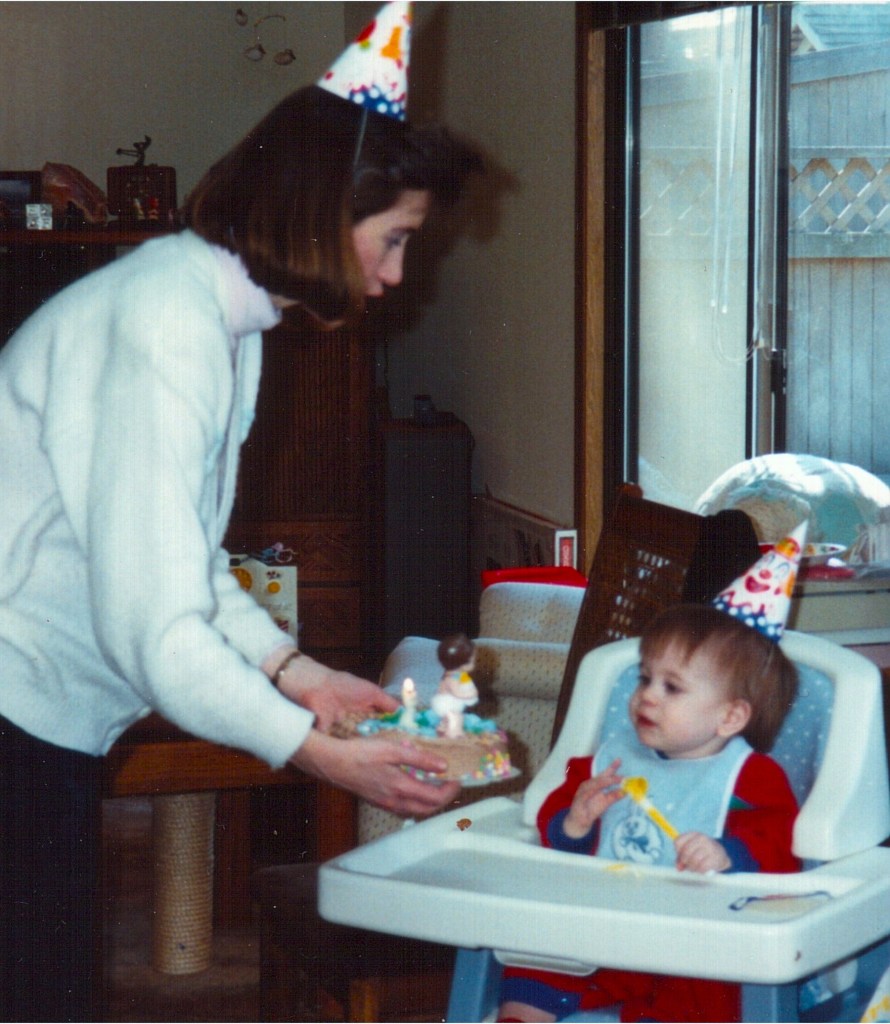
My son’s first birthday… and singing Happy Birthday to You.

This song, arguably the most popular one ever written, never reached number one the Billboard Hot 100 and was never nominated for a Grammy Award. In fact, no one is 100 percent certain as to the origin of the tune or the lyrics. Yet today pretty much every American aged 5 and over has sung it many, many times and it remains a cultural icon.

The song? “Happy Birthday To You.”

It was on March 4, 1924, when the song was published in a songbook by Claydon Sunny (Clayton F. Summy Publications) at the behest of Jessica Hill, the younger sister of kindergarten teachers Patty and Mildred Hill.

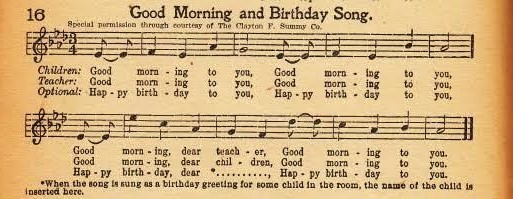
The song has its origins in the late 1800’s when the two sisters composed an easy to learn song for their classroom titled “Good Morning To You.” It is speculated that the sisters put the song together based on several other children’s song melodies, popular at the time.

The lyrics were thus: “Good morning to you, good morning to you, good morning, dear children, good morning to all.”

So far, so good as it was just a couple of Louisville, Kentucky, kindergarten teachers using a cheery song to greet young children each day.

In 1893 the sisters, with their pioneering ideas on early childhood education, published the song in a book titled “Song Stories For Kindergarten.” No one can say for sure ‘when’ the birthday lyrics were substituted but there is evidence that they were first published in 1912. It was, however, Claydon Sunny’s publication which set the song up for copyright challenges which persisted for decades.

As you might expect, the Infallible Wikipedia fills in the details:

“The Summy Company registered a copyright in 1935, crediting authors Preston Ware Orem and Mrs. R. R. Forman. In 1988, Warner/Chappell Music purchased the company owning the copyright for US$25 million, with the value of ‘Happy Birthday’ estimated at US$5 million. Warner claimed that the United States copyright would not expire until 2030 and that unauthorized public performances of the song were illegal unless royalties were paid. In February 2010, the royalty for a single use was US$700. By one estimate, the song is the highest-earning single song in history. In the European Union, the copyright for the song expired on January 1, 2017.

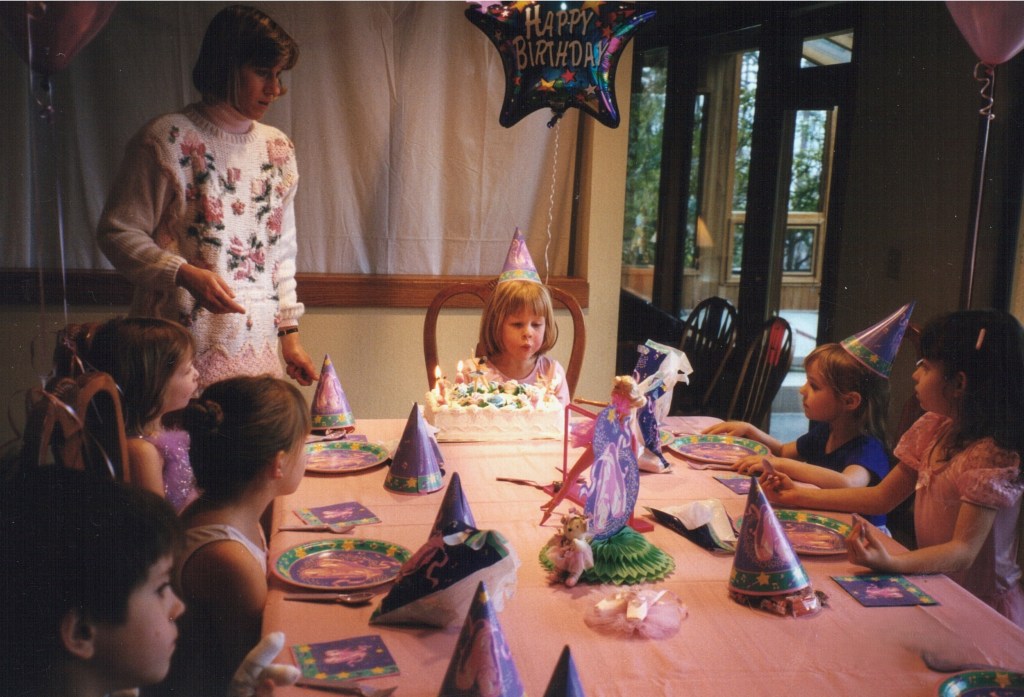
My daughter’s Ballerina themed 5th birthday party

The American copyright status of ‘Happy Birthday to You’ began to draw more attention with the passage of the Copyright Term Extension Act in 1998. The Supreme Court upheld the Act in Eldred v. Ashcroft in 2003, and Associate Justice Stephen Breyer specifically mentioned ‘Happy Birthday to You’ in his dissenting opinion. American law professor Robert Brauneis extensively researched the song and concluded in 2010 ‘it is almost certainly no longer under copyright.’ Good Morning to You Productions sued Warner/Chappell for falsely claiming copyright to the song in 2013. In September 2015, a federal judge declared that the Warner/Chappell copyright claim was invalid, ruling that the copyright registration applied only to a specific piano arrangement of the song and not to its lyrics and melody. In 2016, Warner/Chappell settled for $14 million, and the court declared that ‘Happy Birthday to You’ was in the public domain.”

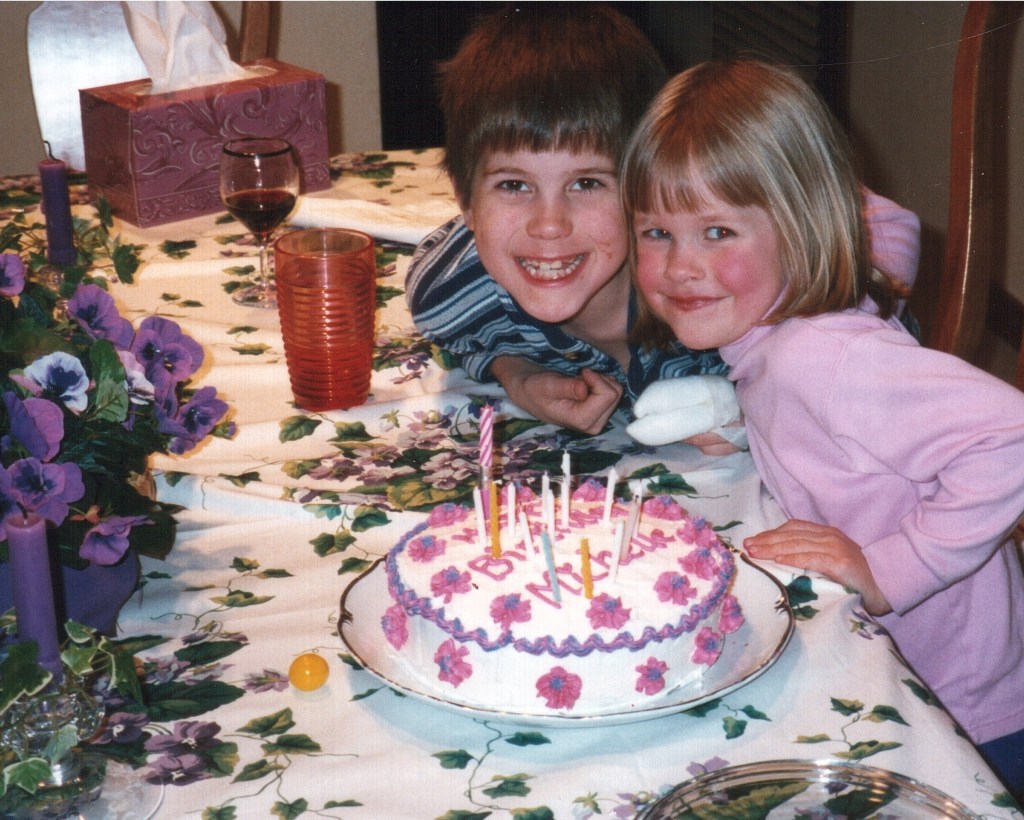
I love this photo of my children taken on my daughter’s birthday circa 1997

Like pretty much everyone reading this, I cannot recall a time when I did NOT know this song. When my family inherited my grandmother’s piano – I was 7 or 8 – and I first sat down to experiment, this was likely the first tune I was able to pick out with the keys.

Some of my earliest memories are of my mother bringing out a birthday cake for one of her four children, candles ablaze, and her leading everyone in singing ‘Happy Birthday To You.” She would enter the dining room from the kitchen, bearing her signature chocolate cake covered in white frosting, with “Happy Birthday” written in either blue or green icing. This was followed by the birthday child blowing out the candles and making a secret wish.

The now 101-year long tradition (or longer) of singing happy birthday has been carried on for generations and, as soon as its discovered that it’s someone’s special day, a group of people will nearly always sing the song.

A moment in time…It was my mother’s 32nd birthday. I’m not quite sure ‘who’ took this photo. Likely my grandmother who often came to help with the four of us. I’m not pictured as I was only three months old at the time. My siblings, ages 9, 4, and 2 are also pictured.

As I was researching for this article, I wandered off into the weeds, perusing various YouTube videos of people singing/playing ‘Happy Birthday.’ And then I saw it. A nine-minute video of pianist Victor Borge having fun with the song in the style of about 10 different classic composers. The link:

https://www.youtube.com/embed/hkkHz8xq7lE?si=UBogXMHjmkPc4qZk

This was familiar, I thought. And then I recalled I had experienced Victor Borge perform at the Capitol Theatre in Yakima when I was a teenager. Sure enough, on March 31, 1973 – together with my parents and my sister – we attended his concert. According to what I wrote in my diary “It was a very good show. I enjoyed it.” Not exactly an expansive review but I was 15 and, perhaps, did not appreciate that moment in time. To this day, however, I can see him on that stage, regaling the audience with his comedic take on classical music. I am positive he performed ‘Happy Birthday’ similarly to what is shown in the attached video.  Enjoy!

My dad’s birthday circa 1997 pictured with his two youngest granddaughters.

Yet, when I think about “Happy Birthday To You” I am amazed at the cultural reach of such a simple tune and lyrics with humble beginnings.

So, there you have it. No more copyright infringements or companies claiming the song belongs to them. You are free to sing “Happy Birthday to You” anywhere and everywhere without having to worry about paying royalties or getting sued. Ultimately, the song has returned to its roots, as a simple and positive way to give glad tidings and, perhaps, brighten someone’ day if only for a few minutes. Just the way I imagine Patty and Mildred Hill would have wanted it.

A few links:

https://en.wikipedia.org/wiki/Happy_Birthday_to_You

https://en.wikipedia.org/wiki/Victor_Borge

https://en.wikipedia.org/wiki/Capitol_Theatre_(Yakima,_Washington)

Manhattan vs. New England: The Great Clam Chowder Debate

February 25

The search for the perfect chowder

A Tuesday Newsday Classic

By the end of February, most people are longing for spring to arrive. Alas, the warmer days still elude in the northern hemisphere. So what better way to celebrate on February 25th than with a steaming bowl of Clam Chowder. Today is National Clam Chowder day.

Clam-Chowder-664In thinking about this particular soup I cannot recall a time when I did not know of it or eat it. Always a staple in my household growing up, my mother used to make it from the frozen razor clams my family dug each summer.


Which got me to wondering, what WAS the history of clam chowder?

As always, the Infallible Wikipedia sheds some light for us:

Clam chowder is any of several chowder soups containing clams and broth. In addition to clams, common ingredients include diced potatoes, onions, and celery. Other vegetables are not typically used, but small carrot strips or a garnish of parsley might occasionally be added primarily for color. A garnish of bay leaves adds both color and flavor. It is believed that clams were used in chowder because of the relative ease of harvesting them. Clam chowder is usually served with saltine crackers or small, hexagonal oyster crackers.

The dish originated in the Eastern United States, but is now commonly served in restaurants throughout the country, particularly on Fridays when American Catholics traditionally abstained from meat. Many regional variations exist, but the two most prevalent are New England or ‘white’ clam chowder and Rhode Island / Manhattan or ‘red’ clam chowder. (snip)

The earliest-established and most popular variety of clam chowder, New England clam chowder, was introduced to the region by French, Nova Scotian, or British settlers, becoming common in the 18th century. The first recipe for another variety, Manhattan clam chowder, known for using tomatoes and its consequently distinctly red coloring, was published before 1919, but it did not take on the current name until 1934. In 1939, the New England state of Maine debated legislation that would outlaw the use of tomatoes in chowder, thereby essentially prohibiting the ‘Manhattan’ form.”

I chuckled to myself when I read that last sentence about Maine considering a way to keep Manhattan chowder out of New England. Having grown up on New England style clam chowder, the red kind does seem a bit blasphemous.

My mother cooked wonderful clam chowder but me, not so much. I have, though, made it one of my fairly recent life’s missions to try clam chowder whenever I find myself in a coastal town which features the soup.

Fannizis Provincetown

Fanizzi’s in Provincetown was, I think, the restaurant where we ate.

While on Cape Cod in 2008 with my hubby, and then 15 year old daughter, we happened into a quaint restaurant in Provincetown and enjoyed steamy bowls  of the nectar on a cool, but clear, early April afternoon.

Provincetown, for those unfamiliar with Massachusetts geography, sits at the very furthest away (by land) part of Cape Cod. It was where the Pilgrims first landed in 1620. Although I can no longer recall the name of the restaurant where we had lunch, it was that trip which began the quest for perfect chowder.

One summer, while on an annual trip to Long Beach Washington with my sister, we went to several local eateries to try the clam chowder. I was surprised when the place where we had always gone turned out to not be my favorite.

castaway-700x555

Not as flashy as Fannizi’s – but their chowder is top rate.

It was on the fourth day – and fourth restaurant – I declared a winner. Castaway’s has been a fixture on Pacific Avenue for years. But I’d never been there. So my sister and I got a high table in the bar rather than wait for seating in the restaurant portion which seems to always be full up. I ordered the clam chowder in a bread bowl.

From the first bite I knew it was a winner. Even better was getting to consume every last drop which the soft interior of the bread bowl had absorbed. It was heavenly.

Now, whenever I am lucky enough to visit the beach, Castaway’s is a required stop for a bowl of their clam chowder.

Writing this article inspired me to look for recipes and, perhaps, try my hand at recreating the very best chowder I can. The following claims to be the BEST clam chowder ever. One of these days I will mosey out to the fresh fish market on Highway 20 (between Burlington and Anacortes) and buy some clams to make the chowder.

The recipe includes butter, half and half, bay leaves, and Tabasco sauce. What’s not to like? Here is the link:

https://www.favfamilyrecipes.com/best-clam-chowder-ever/

And a couple more links on the history and variations of the eponymous clam chowder:

https://en.wikipedia.org/wiki/Clam_chowder

https://nationaldaycalendar.com/national-clam-chowder-day-february-25/

The Great Planet Debate: Pluto’s Plight

February 18, 2020

What the heck does Bubble Tape have to do with it?

If ever you want to start an argument, be sure to bring up this topic. No, I’m not talking about politics. Or whether Tom Brady really cheated during “Deflategate.” The topic which really gets people animated is whether Pluto is or is not a planet.

maxresdefault

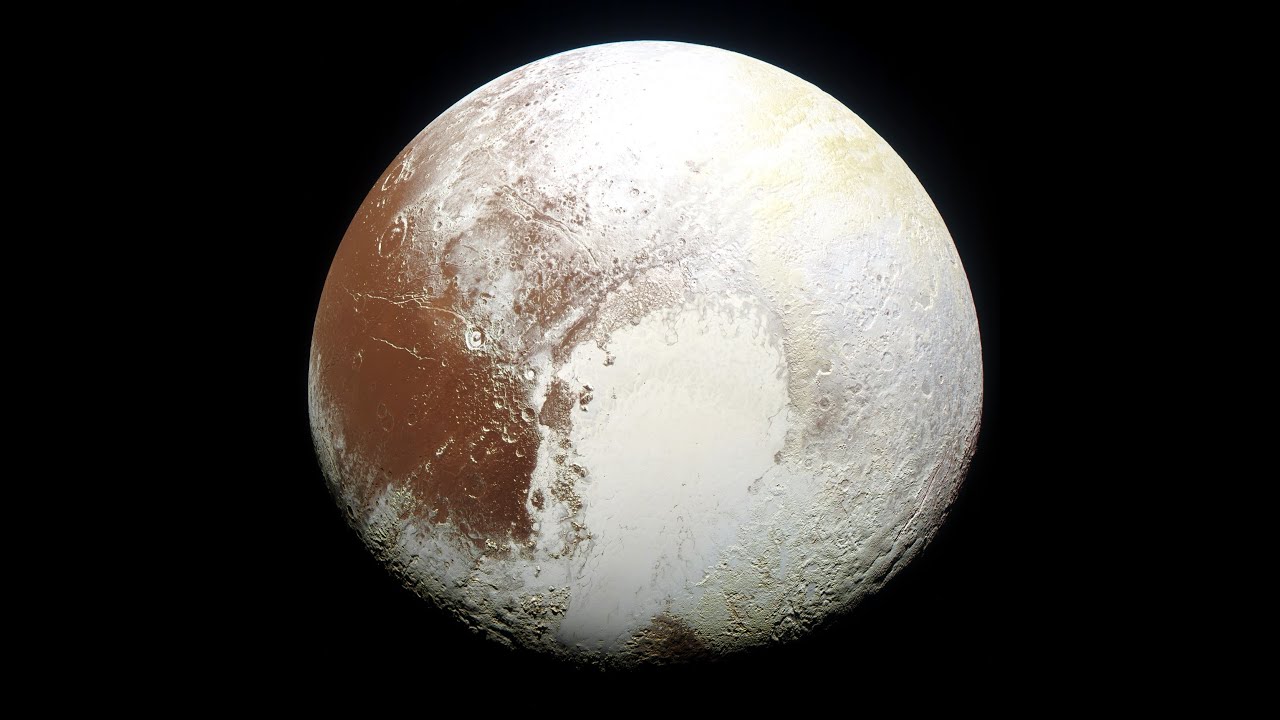
Our NOT ninth planet, Pluto

It was on February 18, 1930, when astronomer Clyde Tombaugh announced the confirmation of a planet just beyond Neptune. The solar system got its ninth and school children everywhere were soon making models of the sun surrounded by Mercury, Venus, Earth, Mars, Jupiter, Saturn, Uranus, Neptune, and Pluto.

The real story began a number of years earlier. According to the Infallible Wikipedia:

“In 1906, Percival Lowell—a wealthy Bostonian who had founded Lowell Observatory in Flagstaff, Arizona, in 1894—started an extensive project in search of a possible ninth planet, which he termed ‘Planet X‘. By 1909, Lowell and William H. Pickering had suggested several possible celestial coordinates for such a planet. Lowell and his observatory conducted his search until his death in 1916, but to no avail. Unknown to Lowell, his surveys had captured two faint images of Pluto on March 19 and April 7, 1915, but they were not recognized for what they were. (snip)

Tombaugh’s task was to systematically image the night sky in pairs of photographs, then examine each pair and determine whether any objects had shifted position. Using a blink comparator, he rapidly shifted back and forth between views of each of the plates to create the illusion of movement of any objects that had changed position or appearance between photographs. On February 18, 1930, after nearly a year of searching, Tombaugh discovered a possible moving object on photographic plates taken on January 23 and 29. A lesser-quality photograph taken on January 21 helped confirm the movement. After the observatory obtained further confirmatory photographs, news of the discovery was telegraphed to the Harvard College Observatory on March 13, 1930. Pluto has yet to complete a full orbit of the Sun since its discovery, as one Plutonian year is 247.68 years long.”

For the putative ninth planet, however, controversy was ever present. Despite the initial excitement at the evidence of its existence, the questions soon arose: was it truly a planet, or was it a Neptunium moon gone astray?

For years scientists sought out photographic evidence of the planet, made possible as telescopes were improved.  Then in August 2006, the International Astronomical Union (IAU) decided to officially define what makes a planet in our solar system a planet. Their three criteria are:

  1. The object must be in orbit around the Sun.
  2. The object must be massive enough to be rounded by its own gravity. More specifically, its own gravity should pull it into a shape defined by hydrostatic equilibrium.
  3. It must have cleared the neighborhood around its orbit.

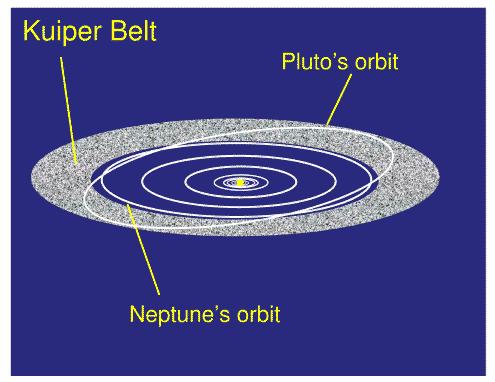
k-belt1

It is the third criteria which caused Pluto a problem. The object exists as part of the Kuiper Belt, an astronomical conglomeration of ice fragments which – like planets – are in orbit around the sun. It is here where Pluto exists.

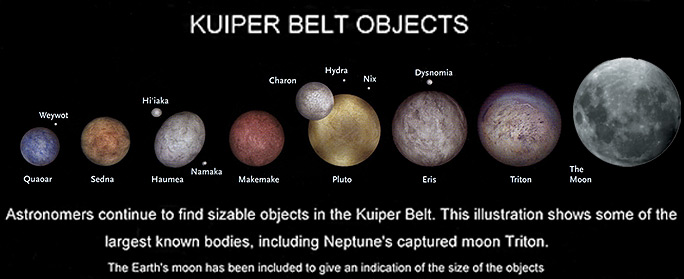
Over the years, scientists have identified other planet like objects which, like Pluto, circle the sun from within the Kuiper Belt. Along with Pluto are other large spheres. Were these also planets?

The answer came back ‘no.’ Also from the Infallible Wikipedia:

“The IAU further decided that bodies that, like Pluto, meet criteria 1 and 2, but do not meet criterion 3 would be called dwarf planets. In September 2006, the IAU included Pluto, and Eris and its moon Dysnomia, in their Minor Planet Catalogue, giving them the official minor planet designations “(134340) Pluto’, ‘(136199) Eris’, and ‘(136199) Eris I Dysnomia’. Had Pluto been included upon its discovery in 1930, it would have likely been designated 1164, following 1163 Saga, which was discovered a month earlier.

kbos

There has been some resistance within the astronomical community toward the reclassification. Alan Stern, principal investigator with NASA’s New Horizons mission to Pluto, derided the IAU resolution, stating that ‘the definition stinks, for technical reasons’. Stern contended that, by the terms of the new definition, Earth, Mars, Jupiter, and Neptune, all of which share their orbits with asteroids, would be excluded. He argued that all big spherical moons, including the Moon, should likewise be considered planets. He also stated that because less than five percent of astronomers voted for it, the decision was not representative of the entire astronomical community. Marc W. Buie, then at the Lowell Observatory petitioned against the definition. Others have supported the IAU. Mike Brown, the astronomer who discovered Eris, said ‘through this whole crazy circus-like procedure, somehow the right answer was stumbled on. It’s been a long time coming. Science is self-correcting eventually, even when strong emotions are involved.”

And so it remains. Pluto is no longer considered the ninth planet in our solar system. But don’t tell that to Pluto lovers.

Of course, anyone who grew up in the 1930’s through to the early 2000’s, may be hard to convince. In the last blissful year of Pluto being a planet, my daughter was in 7th grade. Like generations of students before her she was to build a model of the solar system using some unique material to do so. Since she was between rounds of braces the material she opted to use was the ONE thing she loved more than anything else at that time: Bubble Tape chewing gum.

In her mind, I’m positive, what better way to fulfill her Bubble Tape habit – AND have Mom and Dad pay for it – than to build a solar model out of gum? Over many weeks she chewed gum and saved it. Then chewed more and saved it. Soon massive amounts of masticated Bubble Tape began to be shaped into sun and planets. A plywood board was acquired, painted black, and marker lines put down showing the planets and their orbit. The Sun, Mercury, Venus, Earth and Mars proved simple. Planet by planet the sticky blobs were shaped into tiny little spheres and glued to the board.

When it dawned on her the amount of gum it would take to complete the model it was back to the store for more Bubble Tape. She chewed until her jaw hurt to create Jupiter, Saturn, and Neptune. By the end of the project I believe she would have been relieved had Pluto NOT been a planet.

At last the day arrived and I helped her carry the massive solar masterpiece to class. I can still see the look on her teacher’s face when she realized it was created from chewed gum. She declared it the most unique material she had ever seen for a solar system project.

My daughter’s sore jaw and unique gambit paid off as she was awarded an “A.” And although she continued to chew Bubble Tape occasionally, her obsession ended with the creation of her solar system model.

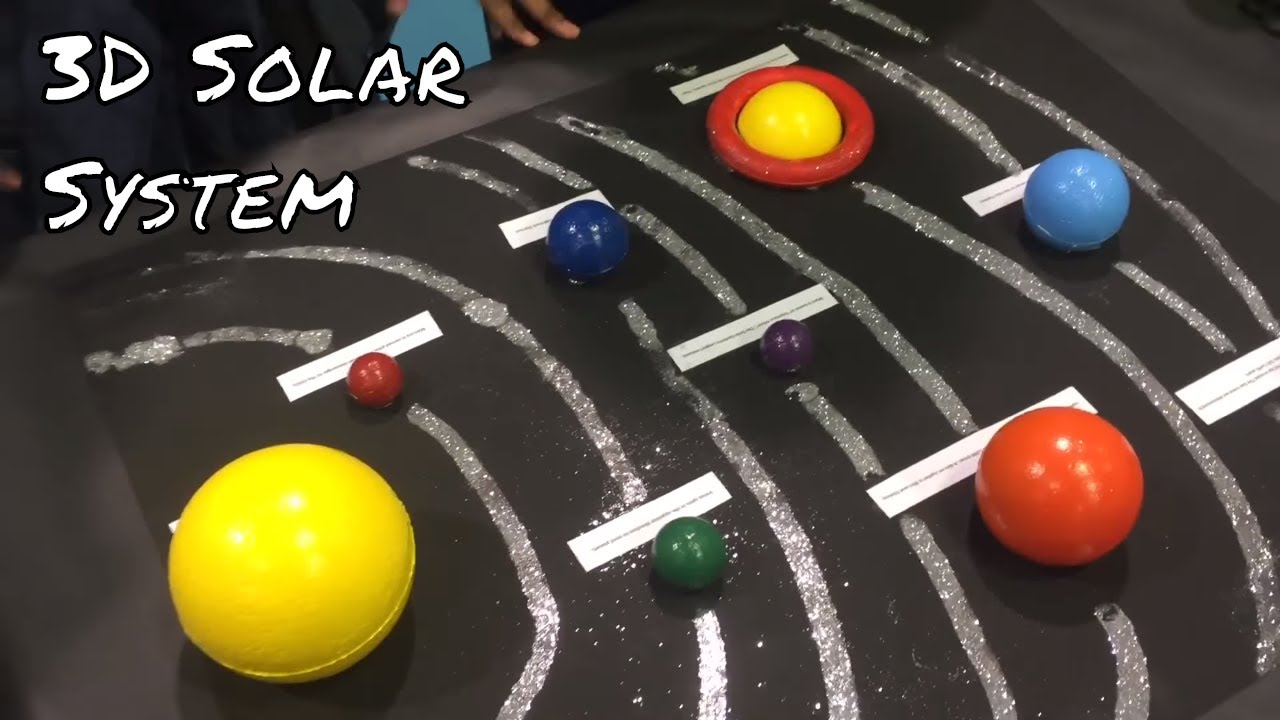
child's 3D solar system

This is NOT my daughter’s solar system project. Try to imagine this made out of gross globs of chewed gum and you would have it… Alas, no photographic evidence exists as we lost all photos I had of it in a computer hard drive crash in 2006

So be sure to share Pluto’s story and ask the question: Is Pluto our ninth planet? You’re sure to have a lively debate.

A couple of links: https://en.wikipedia.org/wiki/Pluto

https://en.wikipedia.org/wiki/Kuiper_belt


Although Bubble Tape comes in many flavors and colors, my daughter’s favorite was the pink.