August 13, 2019
Gone Like The Sand and The Foam
The year was 1979 when this artist entered the American consciousness with a song destined to become a wedding favorite. No doubt he never intended for that to be the case but said of the song, which he wrote while vacationing in Maui, that he was “”lounging in a hammock one night and looking up at the stars. It just seems this song was drifting around the universe, saw me, and decided I’d give it a good home.”
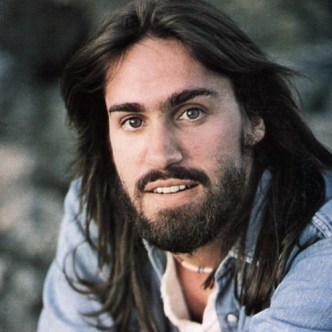 The song was Longer. The artist Dan Fogelberg, who was born on August 13, 1951.
Although Fogelberg had another hit song, Part of the Plan in 1974, it was the song Longer which was his most commercially successful song. It peaked at number 2 on the Billboard Hot 100 in March 1980 and created a fan base of twenty-something young women.
This was due to a number of factors: first, he was an incredible songwriter. His true gift was as a storyteller who could set his tales to music. He encapsulated human emotion into concise, memorable lyrics which managed to tug at one’s heartstrings and, often, produced ennui. His voice possessed qualities which carried the listener to another place and time, evoking sentiment and meaning with his rich vocals. And, because so many of his songs were written from personal experience they were believable and relate-able.
In a short time period after Longer – which did top out at number 1 on the Adult Contemporary charts – a series of memorable hits followed.
According the Infallible Wikipedia:
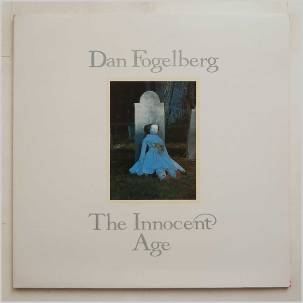 “The Innocent Age, released in October 1981, was Fogelberg’s critical and commercial peak. The double album included four of his biggest hits: “Same Old Lang Syne”, “Hard to Say”, “Leader of the Band”, and “Run for the Roses”. He drew inspiration for The Innocent Age from Thomas Wolfe’s novel Of Time and the River. A 1982 greatest hits album contained two new songs, both of which were released as singles: “Missing You” and “Make Love Stay.” In 1984, he released the album Windows and Walls, containing the singles “The Language of Love” and “Believe in Me.”
While Dan Fogelberg was not a flashy performer, his concerts capitalized on the very qualities I listed above. I was privileged to see him perform live twice. The first time was in 1994 for an acoustic concert at the Paramount in Seattle. It was just Dan and the instruments he played, primarily guitar and piano. He connected with the audience and was passionate about his music but also about his commitment to environmental causes.
The second time was at a Summer Nights at the Pier concert in the early 2000’s. I’m not entirely sure which year it was as he played there in 2000, 2001, and 2002 from what I’ve been able to research.
What I do know is that the hubby and I experienced a magical Seattle evening on Elliott Bay enjoying Dan Fogelberg as he shared his music.
Sadly, he was diagnosed with advance prostate cancer in May 2004 and died on December 16, 2007.
But what gifts he shared with the world. He released 16 studio albums and 21 singles. His greatest success was on the Adult Contemporary charts. Of the 21 singles, four went to number one and a total of 12 were top ten hits.
As one of my favorite ‘hitchhikers’ he often keeps me company in my treks back and forth across the mountains. There are so many great songs that it’s difficult to pick just one. So I’ll pick two instead.
The first one is easy as it was the song of his I fell in love with and that would be Longer. Despite having friends who suggested that having it sung at our wedding would be too predictable (it charted in March 1980 – I was married in August that year), my sis-in-law did a beautiful rendition and the song will forever have a tender spot in my heart.
The second one is also from his Innocent Age album. It was never released as a single (although it was the B-side of Run For The Roses) and, I would guess, most people have never heard it. It is, however, a gorgeous song which showcases his talent. The song is titled The Sand and the Foam and here’s a YouTube link. No flashy video. Just pure, unadulterated music by my favorite artist.
And a couple of links:
 It was during the last week of July 1970 when Close To You topped the Billboard Hot 100 and held the number one position for four weeks. It marked the ascension of The Carpenters as one of the defining musical acts of the early 1970’s.
 This song, which charted as number 1 on the Billboard Hot 100 the third week of July in 1969, stayed in the top spot for six weeks that summer. It portrayed a Dystopian future which, one might argue, was just too downer a message for the ‘make love, not war’ crowd of the decade.
 The song was written by Rick Evans, one half of the duo of (Denny) Zager and Evans. One remarkable fact about the song is that it is the only song (still true 50 years later) which reached number one on both the US and UK music charts.
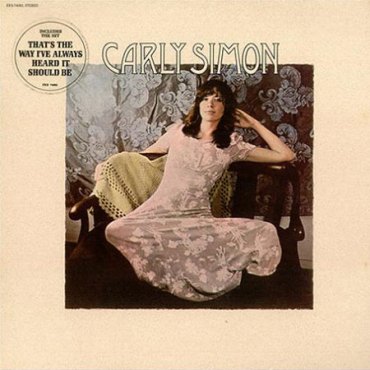 June 25, 2019
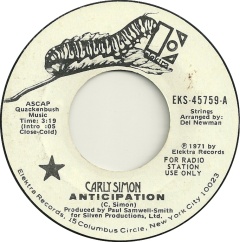 For me it was the song Anticipation which has always garnered a strong emotional response. In fact I found in some of my teenage writings where I had written out all the lyrics to the song and even named the beginnings of one of my early attempts at story telling ‘Anticipation.’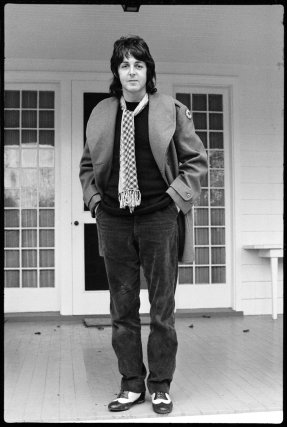
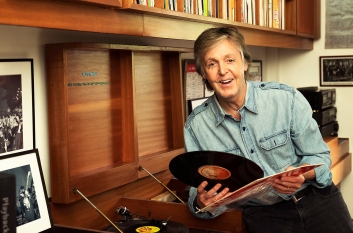
 It was the influence and support of his wife, Linda, which defined the next 25 years of his career. The solo career was short lived. He formed the band Wings along with his wife, ex-Moody Blue’s guitarist Denny Laine, and also drummer Denny Seiwell.

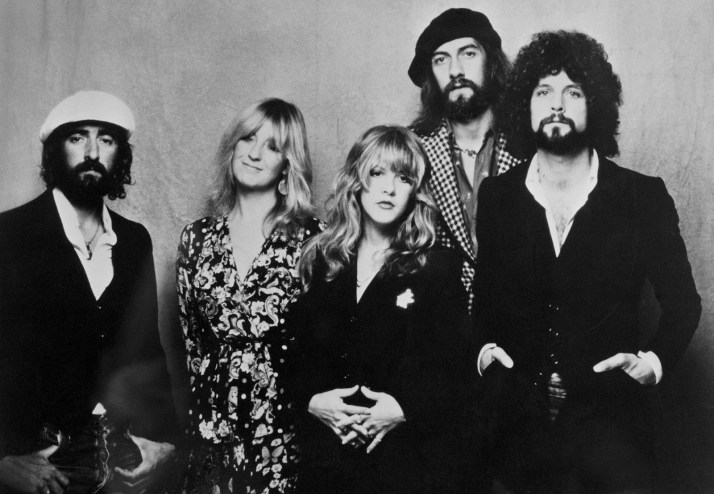 Although the group has continued to record and perform over the years, with some members leaving, new ones coming in, and then old ones rejoining, those of us of a certain age no doubt think of Fleetwood Mac as the following five individuals who were the group in 1977: Mick Fleetwood, Christine McVie, John McVie, Stevie Nicks and Lindsey Buckingham.


 The Bee Gees, already a successful group, had no small part in the creation of the soundtrack. In all, eight of their original songs are featured. But for the fact that Columbia records refused the producers the rights to use Boz Skaggs song Lowdown, the Bee Gees might never have gotten involved.
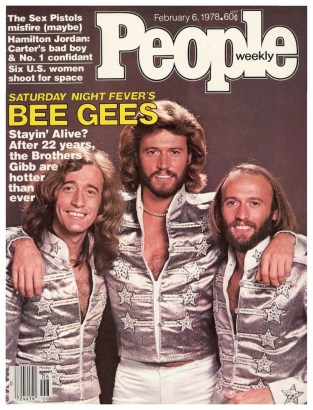 Although the Bee Gees may have lost an album that year, their place in the annals of musical legends was solidified.
 But I do have a distinct memory of meeting a man who played with Elvis. By the time I met Punky Caldwell, he and his family were living in Yakima. Punky, unfortunately, was suffering from the complications of diabetes. It was Thanksgiving weekend of 1977, a few months after Elvis’ death. It was a weird night. I had gone with my ex-boyfriend to visit a friend of his from high school – Thelma – and we ended up playing cribbage with her and her mother, Jo. We said hello to Punky. He retired shortly thereafter and then, during the cribbage games, the story of how he had worked with Elvis was told. I guess he must have played with Elvis before Elvis got big. The way I recalled the story is that Jo and Punky went to visit Graceland after Punky no longer played with Elvis, and that there were hundreds of teddy bears everywhere. She commented on the teddy bears to Elvis who offered her one, which she refused. Later, when she and Punky were back at the hotel, a package arrived from Elvis. It was a teddy bear.
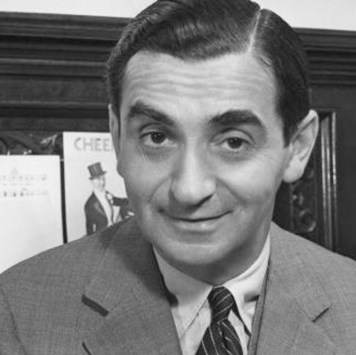 Now on to Irving Berlin. Born in Imperial Russia in 1888, his family immigrated to the United States when he was five. His story is a classic rags to riches. The family of 10 lived in the ghettos of New York and a young Berlin quit school at age 13, left home, and took up residence in a lodging house where hundreds of homeless boys lived.
![42229 GOD BLESS AM PVG[MECH]](https://barbaradevore.com/wp-content/uploads/2018/12/God-bless-america.jpg?w=248&h=331) “Berlin’s daughter, Mary Ellin Barrett, states that the song was actually ‘very personal’ for her father, and was intended as an expression of his deep gratitude to the nation for merely ‘allowing’ him, an immigrant raised in poverty, to become a successful songwriter. ‘To me,’ said Berlin, God Bless America was not just a song but an expression of my feeling toward the country to which I owe what I have and what I am.’ The Economist magazine writes that ‘Berlin was producing a deep-felt paean to the country that had given him what he would have said was everything.’”
“Berlin’s daughter, Mary Ellin Barrett, states that the song was actually ‘very personal’ for her father, and was intended as an expression of his deep gratitude to the nation for merely ‘allowing’ him, an immigrant raised in poverty, to become a successful songwriter. ‘To me,’ said Berlin, God Bless America was not just a song but an expression of my feeling toward the country to which I owe what I have and what I am.’ The Economist magazine writes that ‘Berlin was producing a deep-felt paean to the country that had given him what he would have said was everything.’”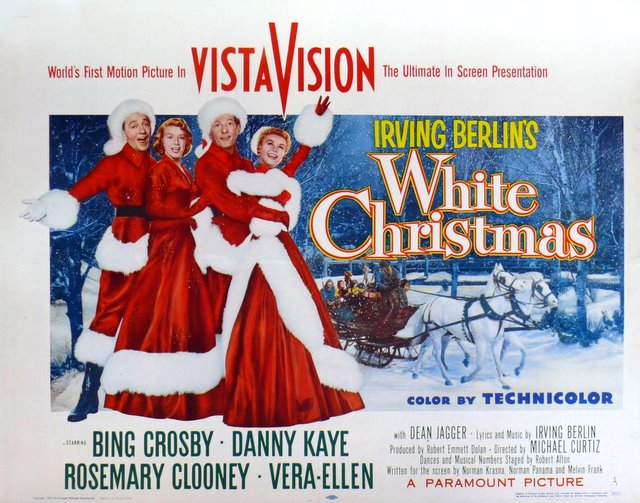 I was captivated by the movie and have watched it many times since then. I even have a VHS tape version in my collection. But the thing which most sticks in my mind from that day was how my grandfather, during the final scene when they sing White Christmas, wiped away a couple tears and said “they just don’t make them like that anymore.”
