Archives

Maybe It’s Only Yesterday…

July 16, 2019

Zager & Evans.jpgThis song, which charted as number 1 on the Billboard Hot 100 the third week of July in 1969, stayed in the top spot for six weeks that summer.  It portrayed a Dystopian future which, one might argue, was just too downer a message for the ‘make love, not war’ crowd of the decade.

In The Year 2525 was destined to become a “one hit wonder.”

When one looks at the events of 1969, is it any surprise this song captured the imagination of a country that a week later witnessed two men walk on the moon? Technology, it seemed, had no limits and it was just a matter of time before robots usurped humans and the reign of homo-sapiens would end.

From the Infallible Wikipedia:

“‘In the Year 2525’ opens with an introductory verse explaining that if humanity has survived to that point, it would witness the subsequent events in the song. Subsequent verses pick up the story at 1,010-year intervals from 3535 to 6565. In each succeeding millennium, life becomes increasingly sedentary and automated: thoughts are pre-programmed into pills for people to consume, machines take over all work, resulting in eyes, teeth, and limbs losing their purposes, and marriage becomes obsolete since children are conceived in test tubes. Then the pattern as well as the music changes, going up a half step in the key of the song (chromatic modulation), after two stanzas, first from A-flat minor, to A minor.

For the final three millennia, now in B flat minor, the tone of the song turns apocalyptic: the year 7510 marks the date by which the Second Coming will have happened, and the Last Judgment occurs one millennium later. By 9595, with the song now in B minor, the Earth becomes completely depleted of resources, potentially resulting in the death of all life.

The song ends in the year 10,000. By that time, humanity has become extinct. But the song notes that in another solar system (or universe), the scenarios told in the song may still be playing out, as the beginning of the song repeats and the recording fades out.

The overriding theme, of a world doomed by its passive acquiescence to and over-dependence on its own overdone technologies, struck a resonant chord in millions of people around the world in the late 1960’s.  The song was #1 on the Billboard Hot 100 singles chart during the Apollo 11 moon landing.”

decca record 2525.jpgThe song was written by Rick Evans, one half of the duo of (Denny) Zager and Evans. One remarkable fact about the song is that it is the only song (still true 50 years later) which reached number one on both the US and UK music charts.

Over the past weekend I had the opportunity to see my two older brothers and asked each separately if they knew what one hit wonder was the number one song for mid July 1969. I expected my brother the disc jockey would get it and he did.

It was my older brother, who turned 21 that summer, who took but a moment to consider the question and responded not with the song title but with the name of the artist. Which is quite rare. So often we know the song but not who recorded it. He waxed poetic for a few minutes about how great the music of the late 1960’s was and what an impression it made on an entire generation.

As for me – not yet really listening to the popular music of the day – the song was inescapable. I know I heard it when it came on the radio as well as when my brother played it on his reel to reel tape deck.  As someone on the verge of her teen years, I spent considerable time contemplating the lyrics and it marked my questioning ‘who am I and what am I doing here?’ The world they imagined for the year 2525 and beyond was not a place I wanted to live and I found it all very depressing.

Fast forward to today and although computers, robots, and drones are now part of our world it would seem as though people spend more time now working on personal care and fitness, unwilling to become the lifeless blobs imagined. And that is a good thing.

As a work of fiction, In the Year 2525, serves as a cautionary tale. But don’t take my word for it… copy the link to your browser, watch the video, and enjoy the trip back to the Year 1969 when earthlings went to the moon and the world paused to imagine the future.

https://en.wikipedia.org/wiki/In_the_Year_2525

https://en.wikipedia.org/wiki/Zager_and_Evans


These Are The Good Old Days

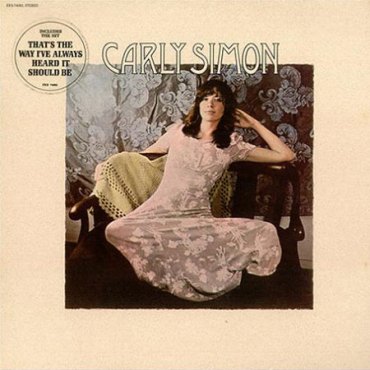
carly simon debut albumJune 25, 2019

Carly Simon

I have been waiting over two years to find a Tuesday on which I can feature this musical artist. As one of my favorite ‘hitchhikers’ when I travel back and forth from Yakima to my home, her lovely contralto voice frequently fills my car with many beloved songs from my teen years. I would argue that nobody does it better than Grammy and Academy Award winner Carly Simon. June 28 is her 74th birthday.

In anticipation of this article, I plugged in her greatest hits CD and imagined I, like Carly, was a legend in my own time, singing in the footlights. Alas, I think anyone listening would have said to me you’re so vain to think your voice could compare to hers.

Ultimately, the right thing to do is tell you all about Simon’s life and her amazing career. By all appearances hers was a storybook existence. The daughter of publisher Richard Simon of Simon and Shuster, she grew up as one of three girls seemingly given every advantage. She was, however, sexually assaulted at age 7 by a teenage friend of the family. The event caused the young Carly to withdraw into herself. From the Infallible Wikipedia:

” ‘It was heinous’, (Simon said) adding, ‘It changed my view about sex for a long time.’ Simon began stuttering severely when she was eight years old. A psychiatrist tried unsuccessfully to cure her stuttering. Instead, Simon turned to singing and songwriting. ‘I felt so strangulated talking that I did the natural thing, which is to write songs, because I could sing without stammering, as all stammerers can.’ Simon attended Riverdale Country School and also (briefly) Sarah Lawrence College, before dropping out to pursue music.”

Additionally, she lost her father who – by all accounts was a mostly absent father – at age 15. She teamed up for a short time with her sister, Lucy, and then with another group. It was her impressive talent which propelled her forward as a solo artist. The self titled debut album, Carly Simon, debuted in March 1971 when she was 26.

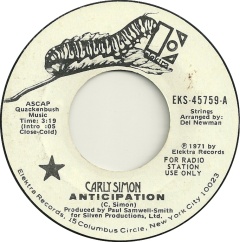
Her first top ten hit, That’s the Way I’ve Always Heard it Should Be, hailed from the album.  Her second album, Anticipation, was released nine months later and the title song made it all the way to number 3 on the charts.

Also from the Infallible Wikipedia:

“Simon scored the biggest success of her career in 1972–73, with ‘You’re So Vain’. It hit No. 1 on the U.S. Pop and Adult Contemporary charts, and sold over a million copies in the United States alone. It was one of the decade’s biggest hits and propelled Simon’s breakthrough album No Secrets to No. 1 on the U.S. album charts, where it stayed for five consecutive weeks. The album achieved Gold status that year, and by its 25th anniversary in 1997 it had been certified Platinum.”

carly-simon-anticipation-1971-7.jpgFor me it was the song Anticipation which has always garnered a strong emotional response. In fact I found in some of my teenage writings where I had written out all the lyrics to the song and even named the beginnings of one of my early attempts at story telling ‘Anticipation.’
Now, decades later, I am always carried back to 1971 and 1972 when I hear that song and the poignant lyrics are as true today as they were then:


We can never know about the days to come
But we think about them anyway
And I wonder if I’m really with you now
Or just chasing after some finer day.

Anticipation, Anticipation
Is making me late
Is keeping me waiting

And I tell you how easy it is to be with you
And how right your arms feel around me.
But I rehearsed those words just late last night
When I was thinking about how right tonight might be.

Anticipation, Anticipation
Is making me late
Is keeping me waiting

And tomorrow we might not be together
I’m no prophet, I don’t know natures way
So I’ll try to see into your eyes right now
And stay right here, ’cause these are the good old days.


The song is pure in thought and sentiment. Cherish today, for tomorrow is not promised. Carly was right. These ARE the good old days.

https://en.wikipedia.org/wiki/Carly_Simon

I Believe In Yesterday

June 18, 2019

Paul McCartney

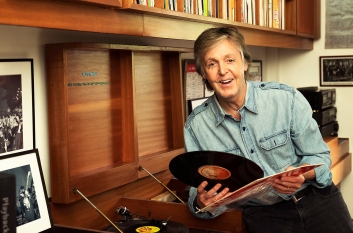
The Infallible Wikipedia article about this artist, born June 18, 1942, is one of the longest I’ve ever seen.  Which might explain why I’ve been reluctant to write about him until now.  No words are capable of capturing his musical greatness or the impact of his compositions. That artist is Paul McCartney.paul-mccartney-twitter-14.jpg

The numbers are staggering: He has written or co-written 32 songs which were number one on the Billboard Hot 100; more than 2200 artists have covered his iconic song “Yesterday”;  has won 18 Grammy Awards; twice inducted in to the Rock and Roll Hall of Fame; is personally worth $1.2 BILLION; and was knighted by the Queen of England in 1997.

McCartney was, of course, one of the four members of the Beatles. But he truly was so much more than that.  He wrote, or co-wrote with John Lennon, the majority of their songs.  From the Infallible Wikipedia:

“At the age of fifteen on 6 July 1957, McCartney met John Lennon and his band, the Quarrymen, at the St Peter’s Church Hall fête in Woolton. The Quarrymen played a mix of rock and roll and skiffle, a type of popular music with jazz, blues and folk influences. Soon afterwards, the members of the band invited McCartney to join as a rhythm guitarist, and he formed a close working relationship with Lennon.”

Three years later the group renamed themselves the Beatles. While the group rocketed to international fame, the relationships between the members were contentious. McCartney was seen as picky and also the one who forced the Beatles to go beyond the simple songs which defined their early work. The three other members all seemed to resent McCartney and how he took control. Finally, in April 1970, McCartney left the group and strode out as a solo artist.

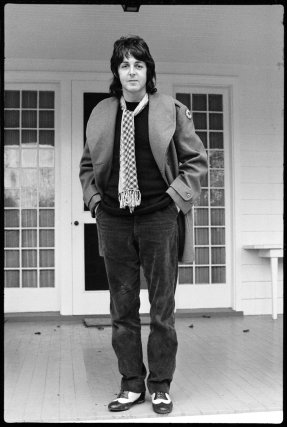
Paul and Linda McCartney.jpgIt was the influence and support of his wife, Linda, which defined the next 25 years of his career. The solo career was short lived. He formed the band Wings along with his wife, ex-Moody Blue’s guitarist Denny Laine, and also drummer Denny Seiwell.
While the band never saw the same level of fan hysteria as the Beatles, Wings achieved enviable success. Also from the Infallible Wikipedia:

“In March 1973, Wings achieved their first US number-one single, ‘My Love‘, included on their second LP, Red Rose Speedway, a US number one and UK top five. McCartney’s collaboration with Linda and former Beatles producer Martin resulted in the song ‘Live and Let Die‘, which was the theme song for the James Bond film of the same name. Nominated for an Academy Award, the song reached number two in the US and number nine in the UK. It also earned Martin a Grammy for his orchestral arrangement. Music professor and author Vincent Benitez described the track as ‘symphonic rock at its best’”Band on the run

More number one hits followed such as “Band on The Run” and “With a Little Luck.”

But, as had happened with the Beatles, disagreements with band members led to the band’s breakup in April 1981.

McCartney has not achieved the same commercial success as with either the Beatles or Wings, but he continues to stretch and grow as an artist, exploring orchestral, classical, and electronica styles in the past quarter century. In September 2018 he released his album, Egypt Station, which became his first album to make it on to the Billboard Hot 200 chart in 36 years. It debuted as number one.paul-mccartney-press-cr-Mary-McCartney-billboard-1548.jpg

Having grown up in the 1960’s with an older brother who adored the Beatles and then ‘discovering’ music on my own in the 1970’s, McCartney was, of course, a household name. Girls of the era often referred to him as the ‘cute’ Beatle. Personally, I’ve never was a huge Beatles or Wings fan, but both group’s music were inescapable.

My favorite story about McCartney occurred during his tenure with Wings. My sister became a Junior High school teacher after she graduated college in 1979. One day she overheard a couple of students discussing the band Wings and one of them said “Did you know Paul McCartney was in another group before Wings?”

My sister had to stop herself from laughing out loud. ‘Another’ group? Like the Beatles? Ah, how quickly one’s fame can flee.

So happy 77th birthday to Paul McCartney.

A link to the exhaustive Wikipedia articles:

https://en.wikipedia.org/wiki/Paul_McCartney

https://en.wikipedia.org/wiki/The_Beatles

https://en.wikipedia.org/wiki/Paul_McCartney_and_Wings

And a youtube link to the iconic ‘Yesterday.”

https://youtu.be/pRTXUZDBBYo

The Legacy of Fleetwood Mac’s Rumours Album

I heard some Rumours…

April 2nd

This album sat atop the Billboard charts for 31 non-consecutive weeks in 1977 and early 1978. Its chart dominance began on April 2, 1977 and, according to one of the principles of the group who recorded it, it was “the most important album we ever made.”fleetwood-mac-rumours-album-cover.jpg

The album was Rumours and the group Fleetwood Mac.

Theirs is a story which shows that finding the right blend of talent, relentless commitment, and a lot of hard work, are necessary to make it in the music industry. The Fleetwood Mac story begins in 1967 as explained in the Infallible Wikipedia:

“Fleetwood Mac was founded by guitarist Peter Green, drummer Mick Fleetwood and guitarist Jeremy Spencer. Bassist John McVie completed the lineup for their self-titled debut album. Danny Kirwan joined as a third guitarist in 1968. Keyboardist Christine Perfect, who contributed as a session musician from the second album, married McVie and joined in 1970. At this time it was primarily a British blues band, scoring a UK number one with ‘Albatross’ and had lesser hits with the singles ‘Oh Well’ and ‘Black Magic Woman’. All three guitarists left in succession during the early 1970s, to be replaced by guitarists Bob Welch and Bob Weston and vocalist Dave Walker. By 1974, all three had either departed or been dismissed, leaving the band without a male lead vocalist or guitarist.”

The group was plagued by skullduggery from their manager, drug and alcohol addictions of some band members, departures of multiple guitarists, and an inability to make it big as a British Blues band. Then, in 1974 the band moved to Los Angeles. It was in that moment the magic began to happen. Also from the Infallible Wikipedia:

“After (Bob) Welch announced that he was leaving the band, Fleetwood began searching for a replacement. While Fleetwood was checking out Sound City Studios in Los Angeles, the house engineer, Keith Olsen, played him a track he had recorded in the studio, ‘Frozen Love’, from the album Buckingham Nicks (1973). Fleetwood liked it and was introduced to the guitarist from the band, Lindsey Buckingham, who was at Sound City that day recording demos. Fleetwood asked him to join Fleetwood Mac and Buckingham agreed, on the condition that his music partner and girlfriend, Stevie Nicks, be included. Buckingham and Nicks joined the band on New Year’s Eve 1974, within four weeks of the previous incarnation splitting.”

With the new members in place, the band took to the studio to record their (second!) self titled album, 1975’s “Fleetwood Mac.” It was a commercial success, selling over 7 million copies and featuring the memorable tracks: Over My Head, Say You Love Me (vocals Christine McVie), Rhiannon,  and Landslide (vocals Stevie Nicks).

In many ways, the two women’s distinctive voices came to define the group’s sound and propel their musical style towards mainstream pop.

With the release of Rumours in January 1977 and its subsequent rise to the top of the Billboard album charts, Fleetwood Mac cemented their spot in the Rock and Roll history books. The Infallible Wikipedia gives the details:

“By 1980, 13 million copies of Rumours had been sold worldwide. As of 2013, sales were over 40 million copies. As of May 2016, Rumours has spent 630 weeks in the UK Top 75 album chart and is the 11th best-selling album in UK history and is certified 13× platinum by the British Phonographic Industry, the equivalent of 3.9 million units shipped. The record has received a Diamond Award from the Recording Industry Association of America for a 20× platinum certification or 20 million copies shipped, making it, as of 2012, the joint fifth best-selling album in US history (by number of copies shipped).” (Ed note: it is still, as of 2019, one of the top ten best-selling albums of all time)

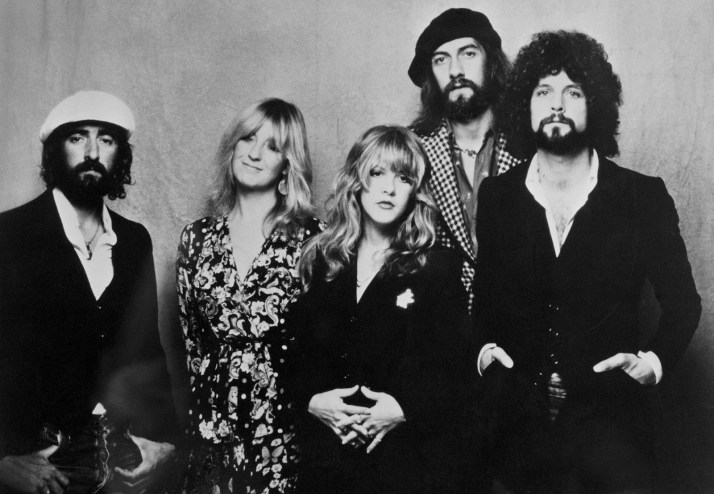
Fleetwood-Mac.jpgAlthough the group has continued to record and perform over the years, with some members leaving, new ones coming in, and then old ones rejoining, those of us of a certain age no doubt think of Fleetwood Mac as the following five individuals who were the group in 1977: Mick Fleetwood, Christine McVie, John McVie, Stevie Nicks and Lindsey Buckingham.

During a foray in to Value Village (a Western Washington thrift store) about a year ago I was – as is my habit – perusing the used CD’s when I spied it: Fleetwood Mac – Greatest Hits. I plucked the CD from the shelf and spirited it home. Last fall when the hubby and I were about to embark on a three week, three thousand mile, road trip, I was forced to reduce down my box of ‘hitchhikers.’ This is what I lovingly call the approximately 25 CD’s which travel with me to Yakima and back every couple of weeks.

The purge process involved looking at every CD we own (who knows 100? 150? 200?) and determining which of the CD’s deserved a place in the box and which had a cut or two to be recorded onto a thumb drive. One by one I evaluated with the thumb drive pile growing ever higher and the box group getting smaller. “Would I,” I asked myself with each CD, ” listen to every song on this?”

There were only a handful which met that standard…  FM’s Greatest Hits was one of them. And so it remains in the box of hitchhikers. My only wish is that “Landslide” had been included on the CD as it is, by far, my favorite of their songs.

For those not familiar with it, here it is. Enjoy!

The FM story is fascinating and far too much to include in my weekly blog. Thankfully Wikipedia provides exhaustive information for those interested:

https://en.wikipedia.org/wiki/Fleetwood_Mac

https://en.wikipedia.org/wiki/List_of_Billboard_200_number-one_albums_of_1977

https://en.wikipedia.org/wiki/Rumours_(album)

When I first posted this a few years ago, I had asked a question on Facebook. Couldn’t now tell you the question, but here is the answer: these five albums stayed at number 1 on the album charts longer than any others since the mid-1950s.

Weeks Album Artist Year(s) Source
54 West Side Story Soundtrack 1962-63 [44]
37 Thriller Michael Jackson 1983–84 [45]
31 Rumours Fleetwood Mac 1977–78 [45]
South Pacific Soundtrack 1958–59 [44]
Calypso Harry Belafonte 1956–57 [44]

Buying a Stairway To Heaven

March 5, 2019

For many Baby Boomers, there is one song from the 1970’s which seems to define and capture their youth. The song, however, was never released as a single and never hit number one on the Billboard charts. In fact it defied all the ‘rules’ of Top 40 Rock and Roll. It was nearly eight minutes long, unheard of when the average length of a commercial song was about three minutes. It started as an ennui inducing ballad but then morphed to a hard rocking electric guitar solo, but finishes back in ballad form. If, by now, you don’t know the song then you probably missed the 1970’s and have not listened to the radio since.led zeppelin.jpg

Stairway to Heaven was performed live for the very first time on March 5, 1971 at Ulster Hall in Belfast, Ireland.  According to Led Zeppelin bassist John Paul Jones the crowd was “… all bored to tears waiting to hear something they knew.” I have my doubts that his evaluation was entirely accurate. I imagine there were many in the audience that day who instantly knew they were hearing history being made.

In the subsequent years, the song has proven a thoroughbred, consistently among the top contenders on many ‘greatest’ song lists. According to the Infallible Wikipedia:

“‘Stairway to Heaven’ continues to top radio lists of the greatest rock songs, including a 2006 Guitar World readers poll of greatest guitar solos. On the 20th anniversary of the original release of the song, it was announced via U.S. radio sources that the song had logged up an estimated 2,874,000 radio plays – back to back, that would run for 44 years solid. As of 2000, the song had been broadcast on radio over three million times. In 1990 a St. Petersburg, Florida station kicked off its all-Led Zeppelin format by playing ‘Stairway to Heaven’ for 24 hours straight. It is also the biggest-selling single piece of sheet music in rock history, clocking up an average of 15,000 copies yearly. In total, over one million copies have been sold.”

plant page.jpg

Robert Plant, Jimmy Page, and John Bonham

With great success often comes controversy. Such was true for Stairway To Heaven. Two years before the song was written, Led Zeppelin toured a few times with a group called Spirit. And that group performed an original song titled Taurus. As it happens, Taurus’ opening guitar riff began with a descending A minor chord progression. Which is also true of Stairway To Heaven. The similarity spawned a copyright infringement lawsuit in 2014 on behalf of the deceased creator of the Taurus guitar introduction. When the verdict was announced in 2016, it ruled in favor of Led Zeppelin. Essentially, while Stairway to Heaven uses a nearly identical A minor chord progression, theirs went way beyond what Spirit had done, adding an ascending progression from A to B to C and finishing on F sharp which plays simultaneously with the descending A minor progression.

I found the whole thing quite fascinating and enjoyed watching this musician dissect it:

https://youtu.be/PCEg9gMJakU

By 1973, Stairway to Heaven was a staple at every Homecoming, Tolo and Prom. And one you were never quite sure how to dance to. I imagine the guys liked it because they got to slow dance with the girls for a bit… and then break apart for more traditional rock and roll moves.

Personally, I always found it awkward. And then there was the problem of local bands attempting to do justice to the music… and usually butchering it.

No, the best way to enjoy Stairway To Heaven is to simply close one’s eyes, listen to the lyrics sung by Robert Plant, the amazing guitar work of Jimmy Page, and contemplate the concepts. Since it first emerged in our collective consciousness, countless fans have, no doubt, cogitated and considered just exactly what it all means. And that, ultimately, is one of the greatest allures of the song.

As always, a couple links for you:

https://en.wikipedia.org/wiki/Stairway_to_Heaven (the Infallible Wikipedia article)

https://abcnews.go.com/Entertainment/led-zeppelin-wins-copyright-infringement-suit-opening-lick/story?id=40026259 (report on the lawsuit)

Led-Zeppelin-Stairway-To-Heaven


Saturday Night Fever

The Bee Gees

February 12, 2019

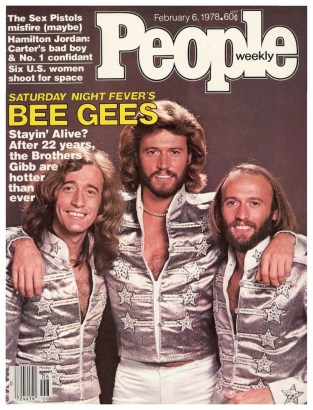
It was this trio’s  sound which came to define a  craze which swept the United States in 1978. By early January the Bee Gees dominated the Billboard charts. They would go on  to have three number one singles that year, solidifying Disco as the ‘sound’.

On February 12th the Bee Gee’s Stayin’ Alive, the song featured in the opening segment of the hit movie Saturday Night Fever, was in the middle of a four week stint at the top.  Two months earlier, on December 17, 1977, the movie captured the attention of the country. Soon guys were donning their own white disco suits and gals strapped on wedgy high heels and wore swingy dresses, flooding dance floors everywhere as they gyrated to the catchy beat.

More than the movie, however, it was the Saturday Night Fever soundtrack that defined the era. From the Infallible Wikipedia:

“It remains the best selling soundtrack of all time with over 45 million units sold. In the United States, the album was certified 16× Platinum for shipments of at least 16 million units. The album stayed atop the album charts for 24 straight weeks from January to July 1978 and stayed on Billboard‘s album charts for 120 weeks until March 1980. In the UK, the album spent 18 consecutive weeks at No. 1. The album epitomized the disco phenomenon on both sides of the Atlantic and was an international sensation. The album has been added to the National Recording Registry in the Library of Congress for being culturally significant.”

Saturday-Night-Fever-Soundtrack-Ristampa-Vinile-lp2.jpgThe Bee Gees, already a successful group, had no small part in the creation of the soundtrack. In all, eight of their original songs are featured. But for the fact that Columbia records refused the producers the rights to use Boz Skaggs song Lowdown, the Bee Gees might never have gotten involved.
Movie producer, Robert Stigwood, contacted Robin Gibb who related the conversation as this:

“We were recording our new album in the north of France. And we’d written about and recorded about four or five songs for the new album when Stigwood rang from LA and said, ‘We’re putting together this little film, low budget, called Tribal Rites of a Saturday Night. Would you have any songs on hand?’, and we said, ‘Look, we can’t, we haven’t any time to sit down and write for a film’. We didn’t know what it was about.”

What happened next is that most of the songs were written in one weekend and the rest, they say, is history.

bee gees 1978.jpgAlthough the Bee Gees may have lost an album that year, their place in the annals of musical legends was solidified.

As a 20 year old college co-ed, I was not immune from the disco craze. A student at the University of Puget Sound in Tacoma, myself and a sorority sister enrolled in a Disco dancing class at Tacoma Community College.

For a number of weeks we attended the class where we learned all the fancy footwork, arm movements and twirls of the dance.  I bought a white dress with a handkerchief hem, donned my white wedge sandals, and was soon going out dancing.

Despite my natural klutziness, I managed to dance with the best of them and, in the process, met a recent alumni from one of the fraternities who turned out to be the best dancer I ever knew. Alan knew every step, every move, and was a great teacher and partner. Dancing with him was magical.

At the time I did not appreciate what a unique time or experience it was. By 1979 Disco had faded due – I think – to the reluctance of the majority of the male population to learn the dances.  It was soon replaced with moon walking and other forms of dance and then, in the late 1980’s, with the phenomenon of country line dancing. And so it goes throughout history.  But for me, whenever I hear Stayin’ Alive or any Bee Gee song of that era, I find myself busting the moves. Just don’t tell my daughter, okay?

A couple of links:

https://en.wikipedia.org/wiki/Saturday_Night_Fever_(soundtrack)

https://en.wikipedia.org/wiki/Bee_Gees

The King of Rock and Roll

January 8, 2019

Perhaps more than any other musical artist this star’s rise was in concert with the era of Rock and Roll. There are those who say he defined the sound of the genre. There is no doubt – as his 115 songs which charted on the Billboard 100 prove it – Elvis Presley was “The King of Rock and Roll.”elvis-aaron-presley-lovers-842.jpg

Born on January 8, 1935, he would have been 84 this year.

His story was truly the stuff of fiction. He was born, and spent the first 10 years of his life, in a two room shotgun style house in Tupelo, Mississippi. Interestingly, Elvis was an identical twin but his brother was a stillborn. Although attracted to music from a young age, he suffered from terrible stage fright in the early years. Despite this – and despite being told he had no ability many times – he continued on in pursuit of a career.

There was moderate success. It was during a recording session with Sun Records in August 1953 when the 19 year old’s ‘sound’ was discovered. From the Infallible Wikipedia:

“The session, held the evening of July 5, proved entirely unfruitful until late in the night. As they were about to abort and go home, Presley took his guitar and launched into a 1946 blues number, Arthur Crudup’s ‘That’s All Right’. Moore recalled, ‘All of a sudden, Elvis just started singing this song, jumping around and acting the fool, and then Bill picked up his bass, and he started acting the fool, too, and I started playing with them. Sam, I think, had the door to the control booth open … he stuck his head out and said, ‘What are you doing?’ And we said, ‘We don’t know.’ ‘Well, back up,’ he said, ‘try to find a place to start, and do it again.’‘ Phillips quickly began taping; this was the sound he had been looking for. Three days later, popular Memphis DJ Dewey Phillips played ‘That’s All Right’ on his Red, Hot, and Blue show. Listeners began phoning in, eager to find out who the singer really was. The interest was such that Phillips played the record repeatedly during the remaining two hours of his show. Interviewing Presley on air, Phillips asked him what high school he attended in order to clarify his color for the many callers who had assumed that he was black.”

Elvis’ self titled debut album was released in March 1956 and featured his first big hit, “Heartbreak Hotel.” Because Presley’s sound was so different from any popular music of the day, many radio stations refused to play it, unable to figure out where it fit. But when the teenagers heard it, they would call the stations and request his songs. It was the first rock and roll album to reach number one on the Billboard charts, a position it held for 10 weeks.

What followed for Elvis were television appearances, most filled with controversy in regards to his iconic on-stage gyrations. His suggestive movements were originally prompted by a combination of nervousness on stage and tapping his foot to keep the beat. But Elvis seemed to have an instinct for knowing what his fans wanted and, when they screamed for more, he gave them more. The hullabaloo over his antics only served to bolster his success.

Rather than pen about more of his career – after all there have been hundreds of books and articles written – you can read a synopsis of his life here: https://en.wikipedia.org/wiki/Elvis_Presley

I never saw Elvis in concert. I never bought one of his records. In fact, by the time I was a teenager, he was 35-40 years old and his career was in decline. You can only be a teen idol for so long.

elvis-presley-at-home-with-teddy-bears-1956-phillip-harringtonBut I do have a distinct memory of meeting a man who played with Elvis. By the time I met Punky Caldwell, he and his family were living in Yakima. Punky, unfortunately, was suffering from the complications of diabetes. It was Thanksgiving weekend of 1977, a few months after Elvis’ death. It was a weird night. I had gone with my ex-boyfriend to visit a friend of his from high school – Thelma – and we ended up playing cribbage with her and her mother, Jo. We said hello to Punky. He retired shortly thereafter and then, during the cribbage games, the story of how he had worked with Elvis was told. I guess he must have played with Elvis before Elvis got big. The way I recalled the story is that Jo and Punky went to visit Graceland after Punky no longer played with Elvis, and that there were hundreds of teddy bears everywhere. She commented on the teddy bears to Elvis who offered her one, which she refused. Later, when she and Punky were back at the hotel, a package arrived from Elvis. It was a teddy bear.
Being that I was 20 years old I hadn’t yet emerged from my self-centered cocoon. I’ve always been sorry that I didn’t show more interest in that unique story or to find out how, exactly, the family got from the south to Yakima.

A couple of years later when I worked as the editor/reporter of a small weekly newspaper I discovered I had a talent and a love of writing stories exactly like this; stories about a regular person who, perhaps, has done something extraordinary at one time in their life.

So now the reporter instinct in me kicked in and I have been able to learn more about Punky and his legacy. I know that he mentored young musicians in Yakima, making a real impact on them personally. I spoke with Thelma and the stories she heard growing up were quite different from what I recalled.

Her dad was a talented saxophonist and clarinetist and had his own band in Arkansas in the 1950’s. He played with Elvis before the King made it big, touring as musicians do. Even after Elvis achieved international fame, Punky was one person Elvis always trusted because Punky never wanted anything from him. In fact, after Punky and Jo married and their two daughters were born, he decided his young family needed him home more and decided to cut back on the touring. This was at a time when Elvis’ career was launching out of the stratosphere.

Elvis kept asking him to become a permanent member of his band, but Punky always said no. Finally one day, Elvis sent a gift to Punky; a Cadillac! Immediately Punky determined that he could not keep the car as he would not join the band. According to Thelma (she was only two, so this is the story from her parents) words were exchanged between her parents as to the disposition of the car. In the end, both Punky and Jo drove the car back to Graceland to return it.

Punky, who spent his life in music, lived for a few years in the Midwest before moving to Yakima. He thought Yakima would be a good place to headquarter where he could get to west coast gigs more easily. Sadly,  blues and jazz music – his specialty – were, by the 1970’s, no longer being sought after for live performance.

But the takeaway is this… you never know whose life you may impact and what legacy you will leave. Perhaps you will be as big and as famous as Elvis or perhaps your impact, like Punky, will be on far fewer. Oh but what a difference it can make to those few.

For more on Punky’s life, some photos, and HOW he came to be called Punky, here’s two links:

Caldwell, Walter Garnett “Punky”

https://activerain.com/blogsview/1727482/punky-caldwell-reblogged—c-l-coyle-and-other-band-members-from-searcy-arkansas-

Update on January 8, 2021 – If you’d like to hear some of Punky’s music, this guy randomly picks an album which piques his interest and then folds laundry and listens to it, making comments along the way. I know, it’s a weird set up. But kind of interesting how he is skeptical of Punky’s work at first but comes to appreciate the talent. Enjoy! Also, I guess he liked it enough to do side 2 of the album which was posted on December 17, 2020.

White Christmas

December 25, 2018

During the course of his life, this songwriter published some 1,500 songs. Twenty five of his songs reached the top of the charts but it was one song in particular which, arguably, is the most popular song ever written. The song? White Christmas. The songwriter? Irving Berlin.

First, about White Christmas. Its inaugural performance occurred on December 25, 1941 during Bing Crosby’s Kraft Music Hall broadcast. The following year, after being released as a single to promote the movie Holiday Inn, it catapulted to the top of the Your Hit Parade music chart and remained popular for decades. From the Infallible Wikipedia:

“In 1942 alone, Crosby’s recording spent eleven weeks on top of the Billboard charts. The original version also hit number one on the Harlem Hit Parade for three weeks, Crosby’s first-ever appearance on the black-oriented chart. Re-released by Decca, the single returned to the No. 1 spot during the holiday seasons of 1945 and 1946 (on the chart dated January 4, 1947), thus becoming the only single with three separate runs at the top of the U.S. charts. The recording became a chart perennial, reappearing annually on the pop chart twenty separate times before Billboard magazine created a distinct Christmas chart for seasonal releases.”

In all, there have been over 500 recorded versions of the song and the Bing Crosby version alone has sold over 50 million copies worldwide. This makes it the most purchased record ever, eclipsing Elton John’s Candle In The Wind tribute to Princess Diana, at 33 million copies, a distant second.

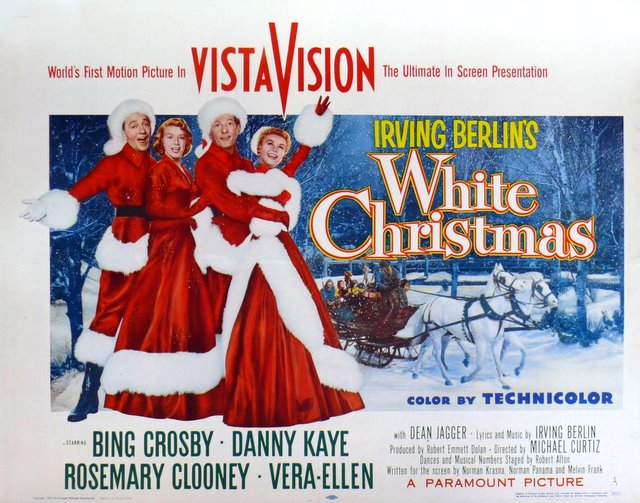
In addition to 1942’s Holiday Inn, it was also showcased in the same titled 1954 movie White Christmas.

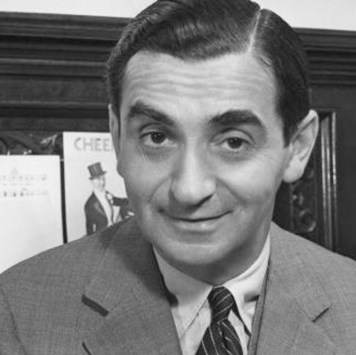
irving berlinNow on to Irving Berlin. Born in Imperial Russia in 1888, his family immigrated to the United States when he was five. His story is a classic rags to riches. The family of 10 lived in the ghettos of New York and a young Berlin quit school at age 13, left home, and took up residence in a lodging house where hundreds of homeless boys lived.

Berlin found himself drawn to the music world and soon began to earn a few coins from performing popular songs of the day in the saloons on the Lower Eastside. Also from the Infallible Wikipedia:

“Berlin learned what kind of songs appealed to audiences, writes (biographer Laurence) Begreen: ‘well-known tunes expressing simple sentiments were the most reliable.’ He soon began plugging songs at Tony Pastor’s Music Hall in Union Square and in 1906, when he was 18, got a job as a singing waiter at the Pelham Cafe in Chinatown. Besides serving drinks, he sang made-up ‘blue’ parodies of hit songs to the delight of customers.

Biographer Charles Hamm writes that in Berlin’s free time after hours, he taught himself to play the piano. Never having lessons, after the bar closed for the night, young Berlin would sit at a piano in the back and begin improvising tunes. His first attempt at actual songwriting was ‘Marie From Sunny Italy,’ written in collaboration with the Pelham’s resident pianist, Mike Nicholson, from which he earned 37 cents in royalties. A spelling error on the sheet music to the published song included the spelling of his name as ‘I. Berlin.’”

He achieved true commercial success with the 1911 song Alexander’s Ragtime Band which inspired a national dance craze. He wrote hundreds of songs by 1918 and in 1919 had his next breakout tune: A Pretty Girl Is Like a Melody.

A string of popular melodies followed and then in 1938 came the release of his biggest hit to date, God Bless America. From the Infallible Wikipedia:

42229 GOD BLESS AM PVG[MECH]“Berlin’s daughter, Mary Ellin Barrett, states that the song was actually ‘very personal’ for her father, and was intended as an expression of his deep gratitude to the nation for merely ‘allowing’ him, an immigrant raised in poverty, to become a successful songwriter. ‘To me,’ said Berlin, God Bless America was not just a song but an expression of my feeling toward the country to which I owe what I have and what I am.’ The Economist magazine writes that ‘Berlin was producing a deep-felt paean to the country that had given him what he would have said was everything.’”
Most fascinating to me is what Berlin himself said about his writer’s work ethic. It’s a philosophy which resonates. One last citation from the Infallible Wikipedia:

“According to Saul Bornstein (a.k.a. Sol Bourne, Saul Bourne), Berlin’s publishing company manager, ‘It was a ritual for Berlin to write a complete song, words and music, every day.’ Berlin has said that he ‘does not believe in inspiration,’ and feels that although he may be gifted in certain areas, his most successful compositions were the ‘result of work.’ He said that he did most of his work under pressure. He would typically begin writing after dinner and continue until 4 or 5 in the morning. ‘Each day I would attend rehearsals,’ he said, ‘and at night write another song and bring it down the next day.’

Not always certain about his own writing abilities, he once asked a songwriter friend, Victor Herbert, whether he should study composition. ‘You have a natural gift for words and music,’ Mr. Herbert told him. ‘Learning theory might help you a little, but it could cramp your style.’ Berlin took his advice.”

In the course of his lifetime – Berlin died on September 22, 1989 at age 101 – he wrote over 1500 songs!  Of course not all of them were published. Berlin, however, should be considered America’s songwriter and generations to come will, no doubt, enjoy many of his songs.

Although I am positive I had heard White Christmas before, my association with the song will forever be from a Christmas day sometime in the mid-1970’s. Our family’s tradition was to have Christmas dinner either at our house or at our cousin’s house. They lived just a block away and that particular year it was at their house. My grandparents were in attendance also and late in the afternoon White Christmas came on the TV. I can still see in my mind’s eye my grandfather sitting in a rocking chair which had been pulled up in front of the TV. The kids: myself, my sister Susan and our cousin’s Susan and Tim, gathered around also to watch.

White-ChristmasI was captivated by the movie and have watched it many times since then. I even have a VHS tape version in my collection. But the thing which most sticks in my mind from that day was how my grandfather, during the final scene when they sing White Christmas, wiped away a couple tears and said “they just don’t make them like that anymore.”

Indeed, Grandpa, they do not. God Bless America and God Bless Irving Berlin. Wonderful Christmas to everyone, and may yours be merry and bright!

What’s a Tuesday Newsday article without a couple links:

https://en.wikipedia.org/wiki/Irving_Berlin

https://en.wikipedia.org/wiki/White_Christmas_(song)

.

Remembering Cassidymania: David Cassidy’s Impact on Pop Culture

“I Think I Love You!”

November 27, 2018

David Cassidy.jpgFor teenage girls in the early 1970’s, he was the heart-throbiest of heartthrobs. His female fans cried, screamed and swooned. The guys of the era attempted to imitate his hair and his clothes. And on November 27, 1970, his group’s song “I Think I Love You” sat atop the pop charts. The idol: David Cassidy.

His was a meteoric rise fueled, no doubt, by a combination of connections, classic good looks, and the ability to sing. Born in 1950 to actor parents Jack Cassidy and Evelyn Ward, his childhood was unusual in that he was mostly raised by his maternal grandparents while his parents traveled for work.

It was in 1956, at the age of six, two years after his parents’ divorce that he learned of the event! His father remarried that year and it was his father’s second marriage, to Broadway musical phenom Shirley Jones, which became Cassidy’s ticket to worldwide fame.

From the Infallible Wikipedia:

“On January 2, 1969, Cassidy made his professional debut in the Broadway musical The Fig Leaves Are Falling. It closed after four performances, but a casting director saw the show and asked Cassidy to make a screen test. In 1969, he moved to Los Angeles. After signing with Universal Studios in 1969, Cassidy was featured in episodes of the television series IronsideMarcus Welby, M.D.Adam-12 Medical Center and Bonanza.

partridge bus“In 1970, Cassidy took the role of Keith Partridge, son of Shirley Partridge, who was played by Cassidy’s real stepmother and series lead Shirley Jones. The Partridge Family series creator Bernard Slade and producers Paul Junger Witt and Bob Claver did not care whether Cassidy could sing, knowing only that his androgynous good looks would guarantee success. Shortly after production began, though, Cassidy convinced music producer Wes Farrell that he was good enough, and he was promoted to lead singer for the series’ recordings.”
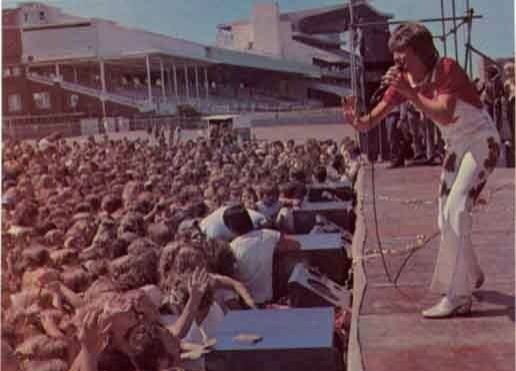
The fever which gripped his fans was dubbed “Cassidymania.” Also from the Infallible Wikipedia:

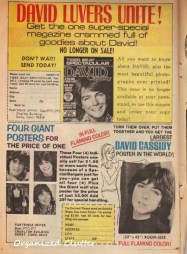
“Ten albums by The Partridge Family and five solo albums were produced during the series, with most selling more than a million copies each. Internationally, Cassidy’s solo career eclipsed the already phenomenal success of The Partridge Family. He became an instant drawing card, with sellout concert successes in major arenas around the world. These concerts produced mass hysteria, resulting in the media coining the term ‘Cassidymania’.

DAVID-IN-CONCERT

For example, he played to two sellout crowds of 56,000 each at the Houston Astrodome in Texas over one weekend in 1972. His concert in New York’s Madison Square Garden sold out in one day and resulted in riots after the show. His concert tours of the United David Cassidy Pop Star At Manchester Airport.Kingdom included sellout concerts at Wembley Stadium in 1973. In Australia in 1974, the mass hysteria was such that calls were made to have him deported from the country, especially after the madness at his 33,000-person audience concert at Melbourne Cricket Ground.”David-Cassidy-at-Radio-Luxembourg

As is always the case, the mania eventually ends, and an aging idol is soon replaced with someone younger. Cassidy, however, continued as a singer/songwriter/actor, with a solid career well into the early 2000’s.

Sadly, he battled a lifelong alcohol addiction and it was this which destroyed his liver. He died on November 21, 2017, awaiting a liver transplant.

cassidy maniaAs a 13 year old girl in 1970, I was precisely the demographic which was all agog over David Cassidy. I never put up posters on my walls, however, but I did watch the Partridge Family almost every Friday night. And I might have had a teeny bit of a crush on Keith Partridge.
I Think I Love You is one of ‘those’ songs, instantly recognizable from the first chord and the compelling lyrics… Baa-baa-baa-baa, baa baa baa, baaaa… and one that I will forever associate with those awkward teenage years.  In a good way.

For those who have forgotten or never seen any of the 1970’s sitcom or heard the song, enjoy! For the rest of us, it’s a trip down memory lane.

About David Cassidy: https://en.wikipedia.org/wiki/David_Cassidy

About The Partridge Family: https://en.wikipedia.org/wiki/The_Partridge_Family

Take It Easy

November 6, 2018

In mid-August 2018, this compilation of 10 ‘greatest hits’ regained its spot as the biggest selling U.S. album ever. Of the ten songs, six were co-written by the duo whose voices brought the tunes to life and propelled the group to international fame. That group is the Eagles and the musicians: Glenn Frey and Don Henley.

Eagles

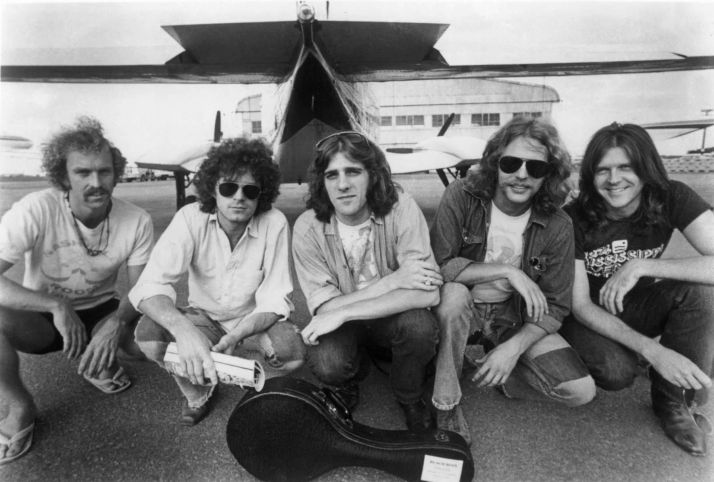
The Eagles circa 1974, left to right : Bernie Leadon, Don Henley, Glenn Frey, Don Felder, and Randy Meisner

November 6, 2018 would have been Frey’s 70th birthday. Frey was born, and grew up, in Detroit. His musical inclinations showed themselves early as he took piano lessons at age five. He later switched to guitar and became a part of the mid-1960’s local rock and roll scene of southern Michigan. It was when he made his way to Southern California where, according to the Infallible Wikipedia:

“Frey met drummer Don Henley in 1970. They were signed to the same label, Amos Records, at that time and both spent time at the Troubadour. When Linda Ronstadt needed a backup band for an upcoming tour, her manager John Boylan hired Frey because he needed someone who could play rhythm guitar and sing. Don Henley was approached by Frey to join Ronstadt. Randy Meisner and Bernie Leadon were also hired, although as the backing band personnel changed through the tour, the four had only played once together at a gig at Disneyland. Frey and Henley decided to form a band together while on the tour, and they were joined by Meisner on bass and Leadon on guitar, banjo, steel guitar, mandolin and dobro, forming the Eagles, with Frey playing guitar and keyboards and Henley playing drums. The band went on to become one of the world’s best-selling groups of all time.”

Eagles greatest hit autographed cover

How great would it be to have an autographed cover of their Greatest Hits album? Wish it were mine!

Commercial success arrived in 1972 with the release of their self-titled album and the single “Take It Easy.” In that song we were introduced to their unique sound and the easy to listen to voice of Frey. It was also one of Frey’s earliest compositions, co-written with Jackson Browne. Also from the Infallible Wikipedia:

“Browne told a version of the story in a radio interview: ‘I knew Glenn Frey from playing these clubs – we kept showing up at the same clubs and singing on the open-mic nights. Glenn happened to come by to say ‘hi,’ and to hang around when I was in the studio, and I showed him the beginnings of that song, and he asked if I was going to put it on my record and I said it wouldn’t be ready in time. He said ‘well, we’ll put it on, we’ll do it,’ ’cause he liked it,” Browne explained. ‘But it wasn’t finished, and he kept after me to finish it, and finally offered to finish it himself. And after a couple of times when I declined to have him finish my song, I said, ‘all right.’ I finally thought, ‘This is ridiculous. Go ahead and finish it. Do it.’ And he finished it in spectacular fashion. And, what’s more, arranged it in a way that was far superior to what I had written.'”

Frey’s talent was indisputable and unstoppable. Along with Henley – and also J.D. Souther and Randy Meisner on two of the songs – he co-wrote the following which are on their Greatest Hits album: Desperado, Tequila Sunrise, Lyin’ Eyes, One of These Nights, Take It To The Limit, and Best of My Love.

In all, Frey co-wrote 35 songs and achieved success as a solo artist after the group took a ‘vacation’ from one another in 1980 until they reunited in 1994.

Their Greatest Hits CD has been a part of my ‘hitchhiker’ collection for the past 10 years now. What, you are no doubt wondering, is the ‘hitchhiker’ collection? When I started making the frequent trips to Yakima to help with my parents, I put together a shoebox of CD’s to listen to while I drove. Over time, CD’s were added or removed depending on my mood. What I discovered is that there were about 10 to 15 CD’s that are never removed. Ever. Chief among them is the Eagles Greatest Hits.

I have been known to post on Facebook that I picked up a hitchhiker to keep me company during the drive. The reactions the first time I posted I had done so were hilarious as people were appalled I would do such a dangerous thing. But soon everyone figured it out and were proffering guesses as to ‘who’ they were. For the Eagles it might read “Glenn and Don got in at Ellensburg and kept me entertained clear to the top of the pass when they got out and Carly hopped in.”

One thing is certain, however, every song on that Eagle’s CD is a winner and it’s nearly impossible to pick a favorite. That said, there is one which I love just a tiny bit more than the others. That would be “Desperado.” What’s your most loved Eagles song?

So as a bonus today you get not one, but two classic hits from the Eagles. Here’s the second one. Enjoy.

As always, a couple of links:

https://en.wikipedia.org/wiki/Take_It_Easy

https://en.wikipedia.org/wiki/Glenn_Frey