Archives

Automate This!

The joys of automation in the ladies room

June 4, 2024

A Tuesday Newsday Classic updated

On June 4, 1973, the US patent for the ATM machine was issued to Don Wetzel, Tom Barnes, and George Chastain.

As with many such inventions, it did not spring spontaneously into use as there were others who had conceived of the idea for at least three decades prior. Cash machines were used in both Japan and Great Britain for nearly a decade before they arrived in the United States.

For the purposes of this article, however, we will go with 1973 as the year this form of automation entered our American lives. From the Infallible Wikipedia:

“After looking firsthand at the experiences in Europe, in 1968 the ATM was pioneered in the U.S. by Donald Wetzel, who was a department head at a company called Docutel. Docutel was a subsidiary of Recognition Equipment Inc of Dallas, Texas, which was producing optical scanning equipment and had instructed Docutel to explore automated baggage handling and automated gasoline pumps.

On September 2, 1969, Chemical Bank installed the first ATM in the U.S. at its branch in Rockville Centre, New York. The first ATMs were designed to dispense a fixed amount of cash when a user inserted a specially coded card.  (snip) In 1995, the Smithsonian National Museum of American History recognised Docutel and Wetzel as the inventors of the networked ATM.

By 1974, Docutel had acquired 70 percent of the U.S. market; but as a result of the early 1970s worldwide recession and its reliance on a single product line, Docutel lost its independence and was forced to merge with the U.S. subsidiary of Olivetti.”

Automation, of course, is not limited to the dispensing of money. It’s everywhere in our world. And nowhere is it more frustrating and confusing than in public restrooms.

When one enters such a place it becomes a midway house of horrors as one never knows what is or is not automated. Like the toilet.

auto flush toilet.jpg
Striking fear into the hearts of women in airports everywhere… the self-flushing toilet

Upon entry into the stall I dread seeing the little black or chrome box with the red light attached to the back of the throne. I don’t know if it’s just me but it seems as if the slightest movement will trigger the flushing mechanism and the toilet turns into an unruly bidet, spraying the unsuspecting (me!) customer with a premature shower of love. Sometimes this occurs multiple times sending this user screaming from the stall.

Now I also don’t know about others but I always (ALWAYS!) wash my hands before I leave the restroom. Having survived the automatic flushing toilet, the next gauntlet is the sink. I am never sure if swiping my hands under the faucet will trigger a flow of water or if I must push on the neck of the faucet or, heaven forbid, use an old-fashioned handle. An automatic faucet is a mystery. What is the exact placement of one’s hands to produce the elusive water? Too high or too low and you get nothing, instead looking like a magician swiping your digits back and forth in an attempt to conjure up the desired fluid.

Need soap? The device on the nearby wall never gives any clue as to how its operated. I stare at it and try to guess. My first attempt is yet another magical wave of my hand. If that does not work then I start pressing on what looks like levers and buttons. The mound of gooey gel on the counter below the machine provides evidence that I am not the first to guess incorrectly how to use it.

Now, with soap in hand and an idea of how to get water to flow, I wash and rinse my hands then turn to the scariest step of all: drying.

modern day stocks
With the power of a jumbo jet your hands are certain to be dry with this torture device.

In some restrooms you have a choice between paper towels and, nowadays, the device where you put your hands down into what looks like modern day stocks. The machine springs to life and blasts out a stream of air produced from the engines of a Boeing 747. Despite my reluctance I slip my hands into the device. I watch in fascinated horror as the skin on them wrinkles and moves like the upper arms on Miss Luhman, an infamous teacher at Nob Hill Elementary in Yakima, who – when she was conducting the entire 4th grade each year for the spring music festival – held every child’s rapt attention, all of us mesmerized by the rhythmic swing of her flapping arms as if she was about to take flight.

Or, heaven forbid, it’s an automatic towel dispenser. Usually there are two such devices, side by side, in the restroom which provides the opportunity to do the paper towel dispenser dance (TM). To operate this device I stand a foot away from the silver boxes, extend my arms straight out, and then move my hands simultaneously in a frenetic motion as though doing that 1960’s dance “The Swim.”

At last – if I’m lucky – two inches of blessed brown paper appears. I tear it off, dry three fingers, then start the dance once again. After three or four rounds of wild gyrations, my hands are dry, I’ve gotten the day’s workout, and I escape still slightly wet in a few places, but mostly unscathed.

Ain’t automation grand?

https://en.wikipedia.org/wiki/Automated_teller_machine
Actual footage of me attempting to get a paper towel from an automatic dispenser. I’m the third girl behind Bobby on the left.

The Artichoke

A culinary delight consumed for centuries

May 28, 2024

When I think about improbable foods, the artichoke is at the top of my list. Afterall, who would have looked at this thistle and thought, “I wonder if I can eat that without poking holes in my mouth?”

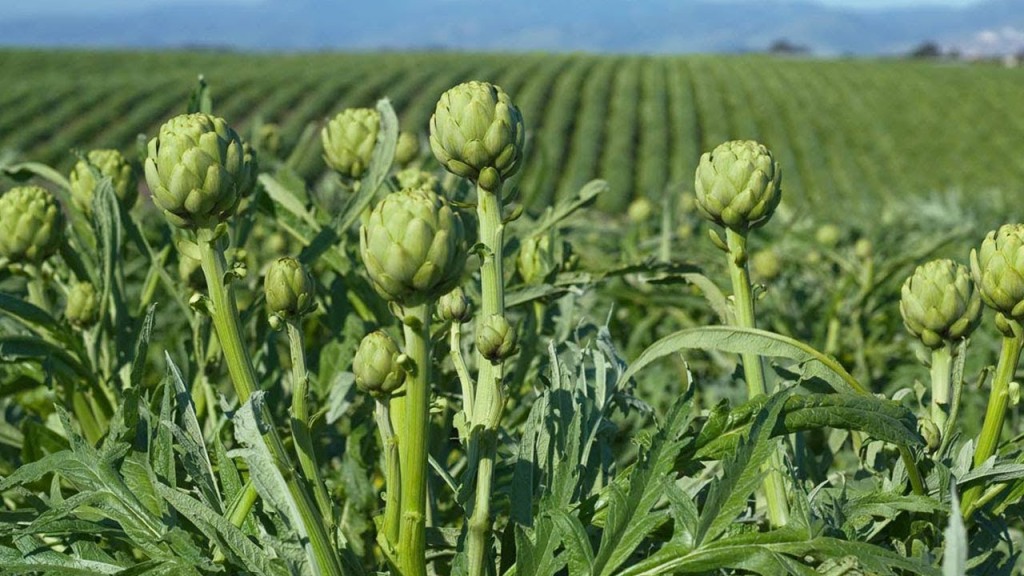
A field of artichokes

Yet, artichokes have been grown and cultivated since at least the eighth century BC.

The Infallible Wikipedia helpfully tells us:

“The (globe) artichoke is a domesticated variety of the wild cardoon (Cynara cardunculus), which is native to the Mediterranean area. There was debate over whether the artichoke was a food among the ancient Greeks and Romans, or whether that cultivar was developed later, with Classical sources referring instead to the wild cardoon. The cardoon is mentioned as a garden plant in the eighth century BCE by Homer and Hesiod.”

Based on further information in the Infallible Wikipedia, I came to the conclusion that the plant was, for centuries, considered a luxury food for royalty and the wealthy. It also developed a reputation as having aphrodisiac qualities.

It was the Dutch who brought them to England where they were successfully grown in Henry VIII’s palace garden in 1530. In the 19th century, immigrants transported the plant to the new world: Louisiana by the French and California by the Spanish.

Despite Henry VIII’s garden, until recently, the artichoke has only been successfully grown in warmer climates. If you look at a latitude map of the world which shows the areas where they cultivated, most are found in about a 350 mile wide band between the 30th and 37th parallels both north and south. Heartier varieties of the plant are being developed with promise of being able to be grown in northern climates.

Also from the Infallible Wikipedia:

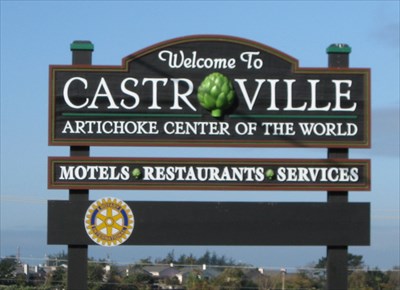
“Cultivation of the globe artichoke is concentrated in the Americas and the countries bordering the Mediterranean basin. The main European producers are Italy, Spain, and France and the main American producers are Argentina, Peru and the United States. In the United States, California provides nearly 100% of the U.S. crop, with about 80% of that being grown in Monterey County; there, Castroville proclaims itself to be “The Artichoke Center of the World” and holds the annual Castroville Artichoke Festival.”

The 2024 poster for the Castroville Artichoke Festival on June 8-9

I’m making a mental note to take in the Artichoke Festival which, apparently, is held the second weekend in June each year. This makes sense since artichoke ‘season’ is from March until June.

My first memory of artichokes is from when I was about six years old. One night when the family (Two parents and four kids ages 6, 8, 10, 15) sat down to dinner and in bowls at my parents’ places – and perhaps my oldest brother’s – were these green vegetable things with prickly ends and tough looking leaves.

Of course it begged the question “What are those?”

“Artichokes,” my mother replied, “but I don’t think you’d like them.”

Now anyone who understands reverse psychology would know that IF she wanted to save money she would have made artichokes for all and forced us to eat them. It likely would have been a one and done. But no. Instead the verbal gauntlet was tossed on the table like an, er, discarded artichoke leaf, and we begged to try the vegetable.

Every one of us liked them. A lot. That might have had something to do with the fact that we were allowed to dip the soft leaf ends in mayonnaise and smother the heart in whatever was left.

Over the years artichokes were a springtime treat for the family. And they still are. I continue to prepare them like my mom did, steamed for up to 40 minutes but instead of mayo, we dip the soft ends and the heart in melted butter.

I also love, love, love, pretty much anything that includes artichokes as an ingredient. Artichokes on pizza, artichokes in dips, or even artichokes preserved in olive oil eaten plain are all favorites.

There was, however, one thing artichoke which wasn’t so great. Back in the 1980’s the hubby and I hosted, for several years, an April Fool’s Day party. We invited family and friends and one main feature of the party was the opportunity for attendees to tell their best joke in hopes of winning the prize.

At the end of the joke telling the judges (that would be me and hubby) would decide – usually based on the groans and reactions from the crowd – as to who had told the ‘best’ joke and who told the ‘worst’ joke. But there was a twist. Since it was April Fool’s Day, the winner of the ‘best’ joke got the worst prize and vice versa.

The competition (it was either 1985 or 1986) was particularly hot this one year and Tom, the younger brother of Paul – who I worked with – came loaded with jokes. Tom told bad joke after bad joke and pretty much earned a lifetime achievement award for his repertoire and the judges decided he was the ‘best’ that night.

Yes, it really exists…

Winner of the worst joke earned a bottle of scotch. Winner of the best joke? A bottle of this exotic liqueur I found called Cynar. For those paying attention you may have seen the word ‘Cynar’ a bit earlier in this article… Cynara cardunculus. Otherwise known as the globe artichoke.

Tom was thrilled to have won and opened his bottle there and then to savor his sweet win. We provided a shot glass and he took a sip… and nearly spit it out. So older brother Paul also tried it, as did several others. All with the same result. Having seen enough I passed on trying Cynar – the artichoke liqueur – and, thankfully, the bottle went home with Tom that night.

When talking with Paul over this past weekend, he reminded me of what happened after. For a time Paul and Tom were roommates and whenever a new, unsuspecting friend would come to their apartment, out would come the bottle of Cynar and they’d lay it on thick. They’d expound on how great it was and they would invite the ‘new guy’ to have some with them. Everyone would get a small glass and then Paul and Tom – and any others who had been previous victims – would raise their glass to drink. But none of them ever did, instead watching the ‘new guy’ take a slug and… nearly spit it out. This was followed with raucous laughter and telling the story of they came to possess the Cynar.

What prompted Paul to share this story with me (He’d shared it years before, but it never gets old) was that he was on a business trip and sitting at a bar recently and happened to look up at the shelf behind the bartender and, lo and behold, there was a bottle of Cynar. I asked him if he ordered a shot but he said he hadn’t. Can’t imagine why.

I suppose one of these days I really should try Cynar. But I think I will look up how, exactly, it should be consumed first. Probably with a whole lot of orange juice or used sparingly in some fruity cocktail.

In honor of the artichoke this week, however, I skipped the Cynar and instead bought a raw one at Freddies for the hubby and me for dinner last night.

As I began preparing it, I thought of my mother and, as I have done hundreds of times, copied how she cooked them: cut them in half, then remove the tiny ‘hairs’ that grow from the heart. I rinsed between the leaves, spreading them out just a bit, then started them to steam in my double boiler pan. Later, as I dipped the tender pieces in butter I gave a salute to the wonderful globe artichoke, always a treat.

And when you are in Castroville be sure to visit the Giant Artichoke…

The links:

https://en.wikipedia.org/wiki/Artichoke

https://en.wikipedia.org/wiki/Castroville,_California

https://en.wikipedia.org/wiki/Cynar

https://www.foodandwine.com/what-is-cynar-6503431

Tornados

There are more tornados in the US than any other country

May 21, 2024

A Tuesday Newsday Classic Updated

Mid-May in the United States is often a dangerous time to be in the central plains. The month is prime tornado season, a month when hundreds of twisters can occur in what is described as an ‘outbreak.’

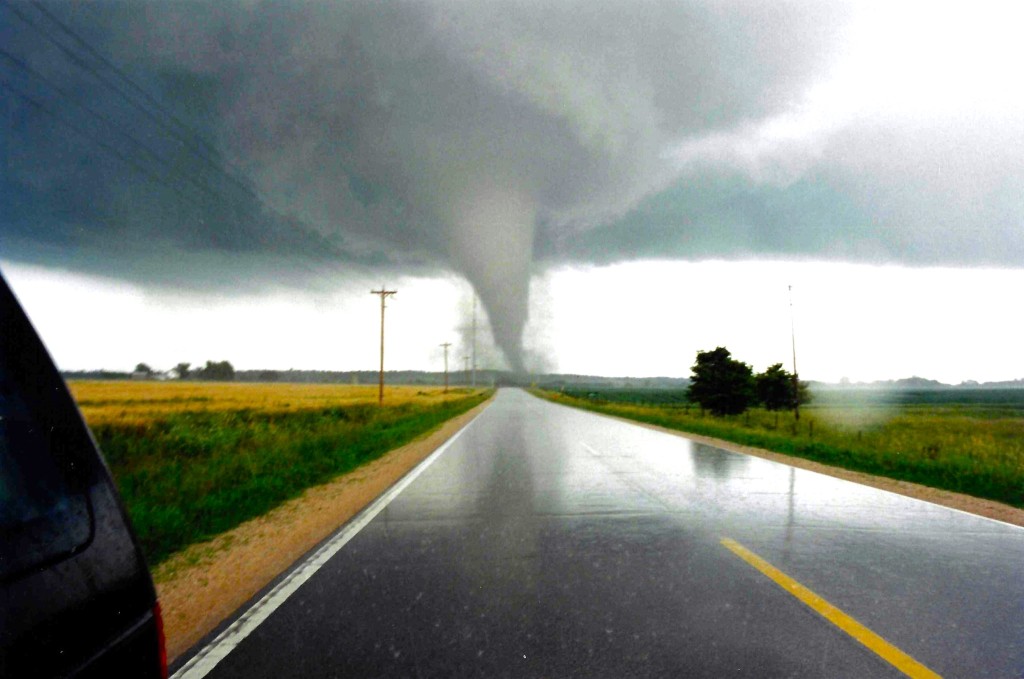
A classic tornado as photographed by Cailyn Lloyd July 18, 1996 near Oakfield, Wisconsin.

While tornado’s have been observed during every month of the year, my research revealed that the third week of May (the 20th to the 27th) has produced a phenomenal number since 1955. In fact, there have been 1,448 recorded U.S. tornadoes on just these eight days!

One of the deadliest and most damaging tornado sequences began on May 21, 2011 and continued for six days. From the Infallible Wikipedia:

“On May 21, a small system of thunderstorms developed in Brown County, Kansas while another system formed to the southeast of Emporia, Kansas. The Brown county system spawned a brief tornado over Topeka, Kansas, causing minor damage. This system also caused significant damage in Oskaloosa, Kansas, and other communities. Meanwhile, the Emporia system spawned an EF3 tornado that struck Reading, Kansas; one person was killed, several others were injured, and at least 20 houses were destroyed. These two systems developed several other tornadoes throughout the evening.

A moderate risk of severe weather was issued for much of the Midwest, as well as further south to Oklahoma for May 22. (snip). Late that afternoon, a large, intense EF5 multiple-vortex tornado left catastrophic destruction in Joplin, Missouri. Causing 158 fatalities, it was the deadliest single tornado in the U.S. since at least 1947.”

A brief clip of the EF5 tornado in Joplin, Missouri, on May 22, 2011

The next day, May 23, tornadic activity continued but was minor compared to Joplin. The sequence was capped by an EF5 tornado in El Reno, Oklahoma on May 24. Also from the Infallible Wikipedia:

“At 12:50 p.m. CDT, the SPC issued a Particularly Dangerous Situation (PDS) tornado watch for parts of central Oklahoma, including Oklahoma City and northern Texas, in effect until 10:00 p.m. CDT. Numerous tornadoes touched down in several regions, with the first activity being in western Oklahoma that afternoon where several very intense tornadoes developed, including another EF5 (the sixth of the year). They did not cause extensive damage in Oklahoma City, but 11 deaths were reported among extensive damage just to the southwest of the OKC metro. Other tornado clusters developed in central Kansas that afternoon and in the Dallas-Fort Worth Metroplex that evening.”

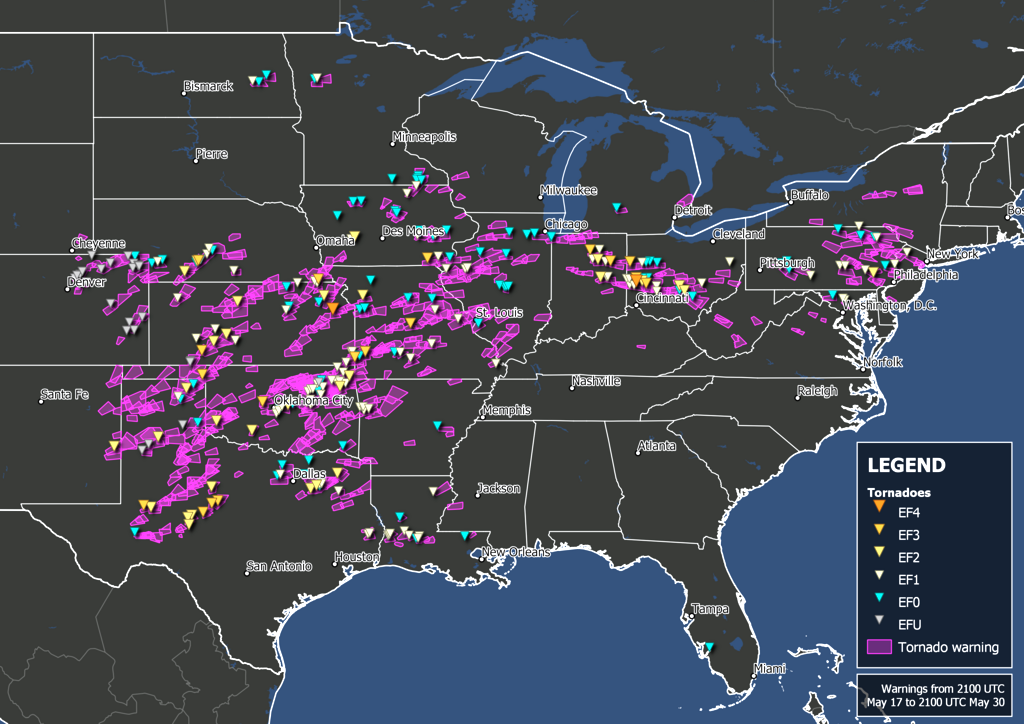
All the recorded tornados during a 14 day period the last 2 weeks of May 2019

As I have watched the tornado activity these past few days (Update 2024: the tornado activity I’m referring to began on May 17, 2019 and continued for 14 days! When the activity finally subsided there had been 400 confirmed tornados, one of which was an EF4, and eight people lost their lives) it prompts a memory of when I drove with my son from Seattle to Nashville from May 9 to12, 2014.

The morning of May 11, Mother’s Day, we arose before daylight. We had spent the night in Mitchell, South Dakota. The previous day I followed the severe weather reports on my brand new android phone. It looked like the central US from northern Iowa through Oklahoma, Kansas and Missouri, would be impacted. That morning we had a choice to make:

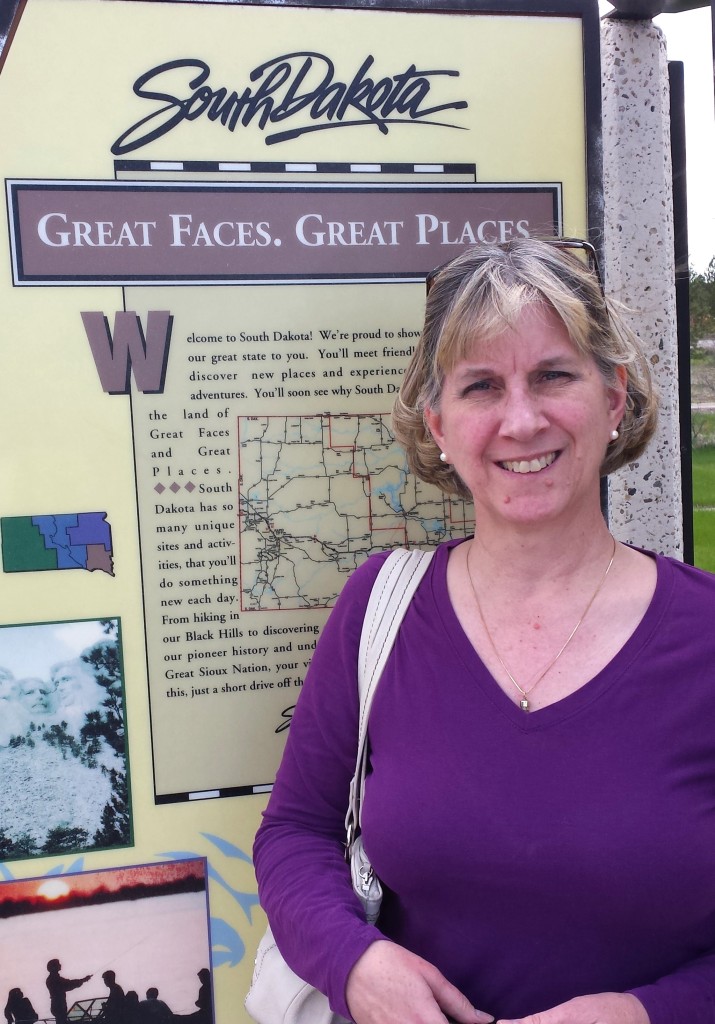
The day before the tornado adventure with my son. We stopped just after entering South Dakota and took each others photo.
The author on May 10, 2014

Head south and risk being in the path of tornadoes or continue along I-90 and hope to skirt the storms by going far to the east before taking I-65 south to Nashville.

What looks like a possible wedge cloud forming in the side view mirror[/caption]

We were up before dawn, racing across Minnesota. By early afternoon we crossed the Mississippi River into Wisconsin. It was when I-90 turned south at Tomah that things started to change.

The sky clouded and the winds picked up. We stopped only for gas breaks, choosing to eat nuts, fruit, and veggie straws in the car.

As a Bona fide National Weather Service junkie, I can tell you there are two colors which strike fear when they appear on the weather map: bright yellow and red. The first means ‘tornado watch.’ The second is ‘tornado’ warning – as in ‘a tornado is on the ground’. I watched the NWS map as county after county in Iowa turned yellow, the storm marching toward Illinois and our location.

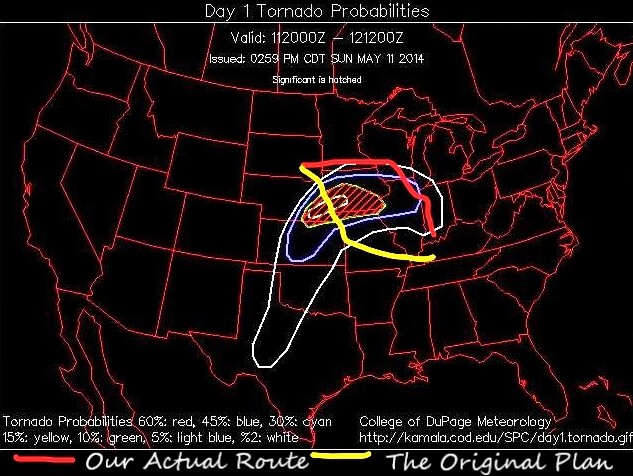
From Mitchell South Dakota our two route choices… we ended up on the red path and encountered some dicey weather.
Approaching one of the many toll booths we used to get through the Chicago area and outrun the storm.

By the time we got to the Chicago suburbs we had but one thought: get through as quickly as possible. Chicago is a maze of roads with bypasses for the bypasses for the bypasses… if you’re willing to pay. Were we ever.

We zigzagged to the southwest, me counting out dollar bills and change to get us through each toll booth. When I could look up from the map my eyes were drawn to the threatening western sky. And the Illinois counties turned yellow on the NWS map. Finally, now a mere 30 miles away from the latest ‘yellow’ county, we could see a black cloud headed directly for Joliet. Could we outrun it? A couple minutes later we turned east and entered Indiana unscathed.

We then turned south once again, making a pit stop at a rest area/park near Rensselaer, Indiana. I was amazed – and said so – that there were people having a picnic there when the weather map indicated that the spot was right in the path of the severe weather.

Handing out fives like they were candy…

By this time the hubby – back home in Kirkland – was tracking the storms on his computer and giving advice. Of course my son and I were driving somewhat blind due to the real-time nature of the event and appreciated the text messages alerting us to the dangers.

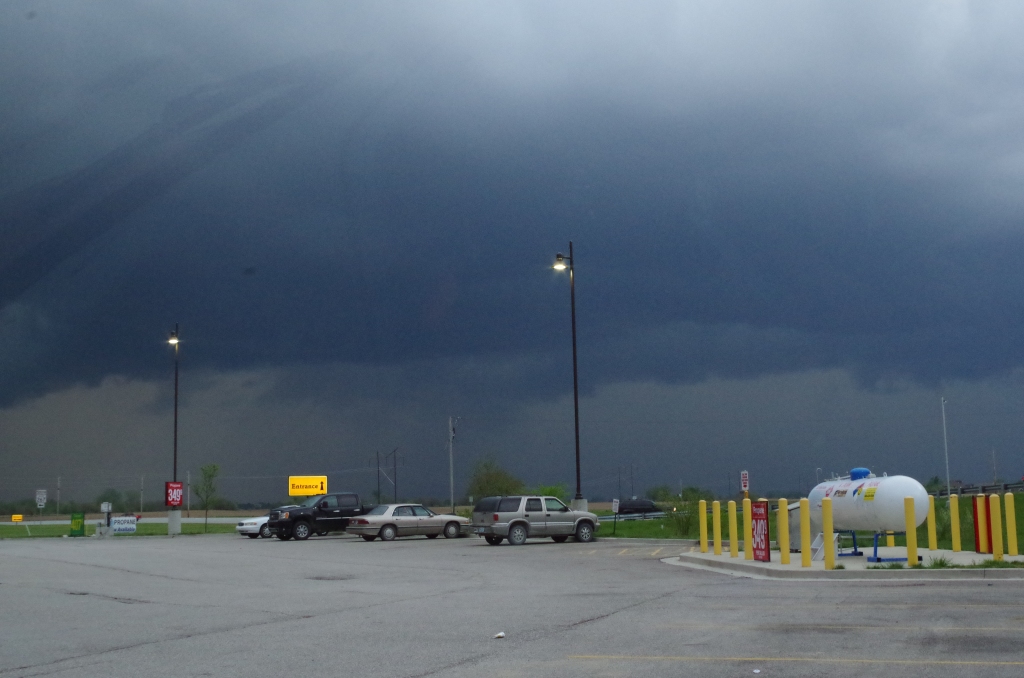
We were about 20 miles from Indianapolis when the hubby advised that there was tornado activity passing through that city. The conditions deteriorated and driving became more treacherous. Not sure what to do, my son took the first exit we came to and we headed north once again. But, we were now informed by the hubby, the system to the north was also a problem, so not to go north. We stopped at a Love’s Travel stop on Indianapolis Road. Perched on a slight rise with a full western view we watched the dark clouds form to our southwest and speculated where the storm would head. We couldn’t continue south and couldn’t go north. We watched for several minutes before I, with growing alarm at the spectacle headed our direction, said to my son, “We can’t stay here.”

How the sky looked at The Love’s Travel Stop at Exit 133 on Interstate 65 18 miles north of Indianapolis late afternoon on Sunday, May 11, 2014.

Back on the road a minute later he headed south…

“What,” I asked, “are you going to do?”

“I’m going to thread the needle.”

And so we did. The rain poured but our short delay was enough time for the worst of the severe weather to pass through Indianapolis. We were now on the backside of the front. By the time we exited the metro area, the weather cleared. About 37 miles later – and well after 8 p.m. and dark – we stopped at a rest area. When we got back to the truck my son asked me if I could drive. He’d done most of the day’s driving, nearly 14 hours behind the wheel… but we were both spent and I was certain it would be folly to continue to Nashville that night.

That hotel in Columbus, Indiana – a lovely little college town – was the best thing we’d seen that day. Not the most interesting, mind you, but definitely the best.

The links:

https://en.wikipedia.org/wiki/Tornado_outbreak_sequence_of_May_21%E2%80%9326,_2011

https://en.wikipedia.org/wiki/Tornadoes_of_2014

https://www.weather.gov/gid/102204

Update May 2022 – I’m including a video posted by storm chaser, Skip Talbot, from May 11, 2014. The tornado on this video didn’t spawn until about 4 p.m. and we would have been into Missouri by then, one can never really know…

Aurora Borealis

A once in a lifetime show

May 14, 2024

Once in a lifetime event… Eaglemont, Mount Vernon, Washington May 10, 2024. Photo by the author.

Known as the Carrington Event, the solar storm of September 1-2, 1859, was the first time scientists had connected a solar flare with the appearance of the aurora borealis.

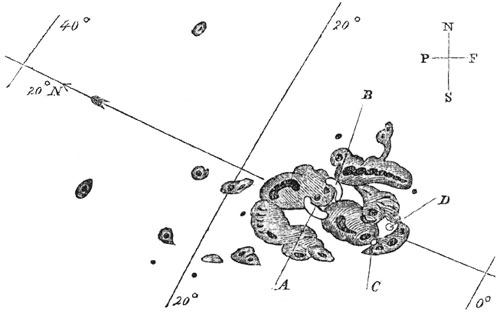
Two British astronomers, Richard Carrington and Richard Hodgson, independently witnessed the huge September 1st solar flare through telescopes and Carrington, after whom the Carrington Event is named, sketched his observations.

Astronomers everywhere were, no doubt, excited by this discovery.

From the Infallible Wikipedia:

“The geomagnetic storm is thought to have been initiated by a major CME (Coronal Mass Ejection) that traveled directly toward Earth, taking 17.6 hours to make the 150-million-kilometre (93-million-mile) journey. Typical CMEs take several days to arrive at Earth, but it is believed that the relatively high speed of this CME was made possible by a prior CME, perhaps the cause of the large aurora event on 29 August that ‘cleared the way’ of ambient solar wind plasma for the Carrington Event.

By Richard Carrington – Page 540 of the Nov-Dec, 2007 issue of American Scientist (volume 95), Public Domain, Link

Just before noon on 1 September 1859, the English amateur astronomers Richard Christopher Carrington and Richard Hodgson independently recorded the earliest observations of a solar flare. Carrington and Hodgson compiled independent reports which were published side by side in Monthly Notices of the Royal Astronomical Society and exhibited their drawings of the event at the November 1859 meeting of the Royal Astronomical Society.

Because of a geomagnetic solar flare effect (a ‘magnetic crochet’) observed in the Kew Observatory magnetometer record by Scottish physicist Balfour Stewart, and a geomagnetic storm observed the following day, Carrington suspected a solar-terrestrial connection. Worldwide reports of the effects of the geomagnetic storm of 1859 were compiled and published by American mathematician Elias Loomis, which support the observations of Carrington and Stewart.”

Up until Friday, May 10, 2024, there had only been ten additional northern light displays which were of a magnitude similar to the 1859 Carrington event. The Infallible Wikipedia continues:

“Another strong solar storm occurred in February 1872. Less severe storms also occurred in 1921 (this was comparable by some measures), 1938, 1941, 1958, 1959 and 1960, when widespread radio disruption was reported. The flares and CMEs of the August 1972 solar storms were similar to the Carrington event in size and magnitude, however unlike the 1859 storms, they did not cause an extreme geomagnetic storm. The March 1989 geomagnetic storm knocked out power across large sections of Quebec, while the 2003 Halloween solar storms registered the most powerful solar explosions ever recorded. On 23 July 2012, a “Carrington-class” solar superstorm (solar flare, CME, solar electromagnetic pulse) was observed, but its trajectory narrowly missed Earth. The May 2024 solar storms are the most recent historic geomagnetic storms, with auroras being sighted as far south as Puerto Rico.”

I cannot recall when, exactly, I first learned that there was such a thing as the Northern Lights. What I do know is that I’ve had a long simmering desire to see them ‘just once’ during my lifetime.

Wings of an angel… Northern Lights May 10, 2024. Photo by the author.

On a trip to Fairbanks, Alaska, in March 2017, I thought for sure that dream would come true. Alas, it did not. There have been other times when there was a possibility but, despite staying up and attempting to see them from time to time, it never happened.

That was true until this past Friday when the weather and solar winds finally aligned.

As a geek who loves anything to do with sciency stuff like stars, eclipses, equinoxes, solstices, snow storms, and windstorms, I’ve covered all of the above in the pages of my Tuesday Newsday blog over the past eight years.

The dancing lights of the Aurora Borealis eluded me but not for lack of paying attention. For years – at least 15 or 20 – I have used Spaceweather.com to follow what’s going on out past this large sphere on which we live.

In the middle of last week, I became aware of a giant sunspot which erupted in several consecutive explosions, hurling CME’s directly at earth. It was, it turned out, the moment I had waited years to occur.

A little before 10 p.m. on May 10th, I checked the Spaceweather.com site and the reports had already begun claiming that people in Florida(!) were seeing the auroras. Even though I had to be up at 5:30 the next morning this was, I was certain, that ‘once in a lifetime’ event.

I am fortunate to live an hour-plus north of the Seattle Metro area and there are dark places not far from my home. I knew where I would go and the hubby and I drove the half mile to the top of Eaglemont Drive in search of the perfect viewing spot.

When we arrived, there was no one else about so we parked next to the golf course driving range and I got out of the car. At first it seemed as if nothing was happening.

Contrary to popular belief, it does NOT rain on the westside of the Cascade mountains every day. May 10th, it turned out, was clear, sunny, and nearly 80 degrees. A truly perfect day in my opinion.

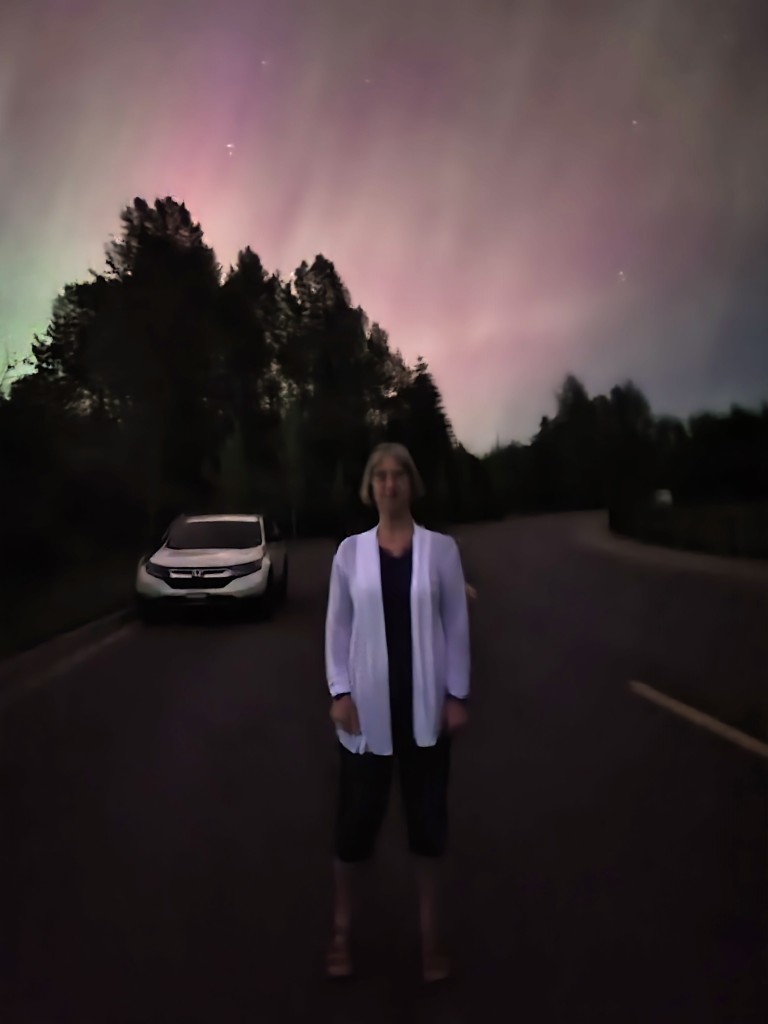
Even the author appears as an apparition with the Auroras erupting behind her.

By ten, of course, the sun had been set for an hour and twenty minutes, so it was dark. Even so, as I looked up I noticed what appeared to be wispy clouds streaking the sky in ribbons from the northeast to the southeast. Since it had been a cloudless day, I wondered, ‘could those clouds be be the solar stream?’

As we looked toward the northeast the sky at the tree line seemed to brighten a bit. My heart quickened. No longer in doubt, I was – finally – seeing the aurora borealis.

It was 10:07 p.m. when I turned on the video on my phone and it captured an almost ghost like apparition of the solar stream as it bounced and danced. At that point the plasma was only gray. A couple minutes later I videoed again and faint pinks and greens now appeared.

Others, having the same idea as me, had started to arrive. Some cars drove past and then, not seeing anything spectacular, would turn and leave. Most parked down by the currently closed clubhouse (as the golf course is up for sale) and we could hear people talking. Around 10:35 another couple pulled up and parked close by and we shared what we knew with them.

The wife said that someone told her to take photos in night mode and that the extra exposure time would bring out the colors. So I did.

If there had been any question before, the photo I got at 10:39 dispelled all doubt that we were witnessing the northern lights.

At 10:45 there was a change in the intensity. As I looked directly overhead there now appeared to be a ‘cross’ in the sky and it was faintly pink, even to the naked eye. The wispy streaks expanded and filled the sky from the middle of the ‘cross’ and then from the eastern horizon to the west and the north to the south.

https://youtube.com/shorts/K-0cowAqjTA?feature=share

All the streams seemed to be converging into that one spot, forming a dome over where we stood. Then, at 10:53 pm, the sky overhead exploded into red and green with bright white sheets of light cascading down on all sides. Every inch of sky was bathed in the glow.

It was impossible to capture all of it on video – nor did I want to. Up until that moment I understood the science… but to experience it as a living human being is quite different. Tears pricked at the back of my eyes and I raised my arms towards the heavens and at what looked like an angel whose head was red and green and whose arms and body were draped with great white, shimmering wings, cast down to embrace me, its whole being surrounding me.

I stood there, enraptured, until the lights began to fade, forever changed by the experience, certain that the science behind the Aurora Borealis will never be able to adequately describe being immersed in it. And if I never see them again, I think that’s okay as I will forever hold the memory of the night I was touched by an angel.

At the height of the geomagnetic storm 10:53 p.m. on Friday, May 10, 2024

www.spaceweather.com

https://en.wikipedia.org/wiki/Carrington_Event

https://en.wikipedia.org/wiki/May_2024_solar_storms

A second video link from that night:

https://youtube.com/shorts/WrVwrAhu87E?si=wGjv3vopFdzaFnqH

A Salute to Red Heads!

Less than 2 percent of all hair colors

April 30, 2024

A display in a store window in Edinburgh in support of “Gingers” everywhere

Most humans have some variation of black or brown hair, followed by blonde and white. The least common color, various shades of red, account for only one to two percent of hair colors and is usually found in people who are genetically connected to the west Eurasian populations.

The country of Ireland, with about 10 percent of its population sporting natural red colored hair, is the highest of any on earth. Edinburgh, Scotland – it turns out – is known as the ‘Red Head’ capital of the world.

According to the Infallible Wikipedia:

“In Scotland, around 6% of the population has red hair, with the highest concentration of red head carriers in the world found in Edinburgh, making it the red head capital of the world.”

During a trip to Edinburgh this past week, I started to notice the incredibly high number of people with red hair and that, of course, made me curious about the hair color.

Of course it is VERY easy to get lost in the weeds on a topic as fascinating as genetics. I admit I have a pretty limited understanding of the topic, having never studied it in depth. But once again the Infallible Wikipedia explains it thus:

“The genetics of red hair appear to be associated with the melanocortin-1 receptor (MC1R), which is found on chromosome 16. In 1995, Valverde, et al. identified alleles on MC1R associated with red hair. The number of alleles linked to red hair has since been expanded by other authors, and these variants are now identified as the RHC (Red Hair colour) alleles.”

Apparently the selection of this genetic trait can be traced back to between 20,000 and 100,000 years ago and to regions with limited sunlight. Because the non-tanning skin associated with red hair can absorb more sunlight it was advantageous genetically for the health of the population.

Like blue eyes, the red hair gene is recessive which means that both parents must contribute the MC1R gene to their offspring for the baby to have red hair.

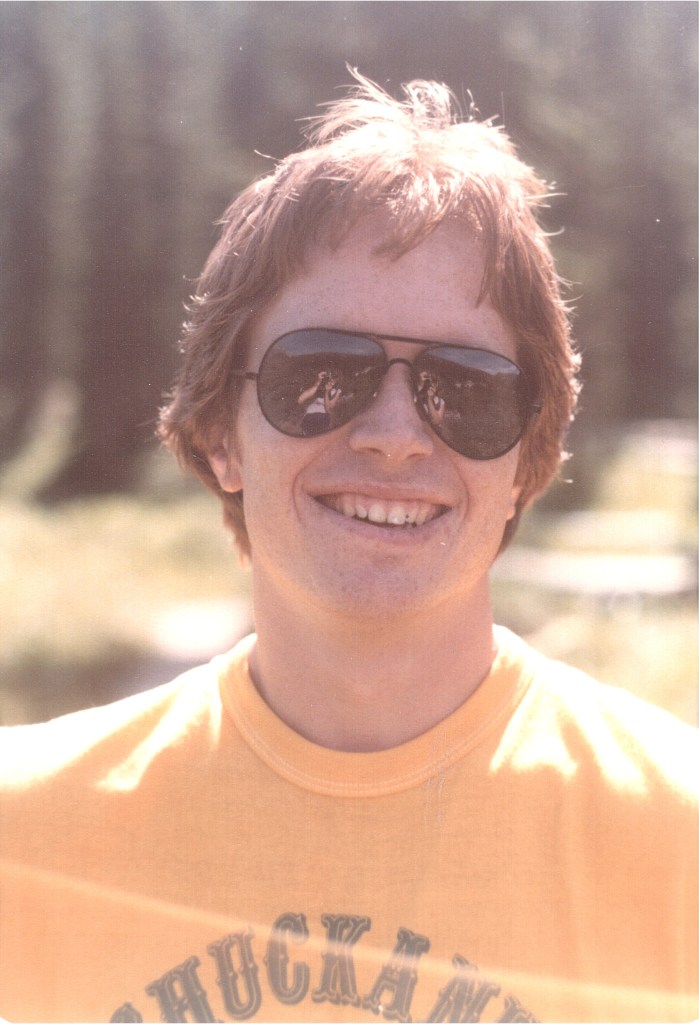
The hubby with his red hair, 1979

I never gave it much thought growing up. My family all had blue eyes with the exception of my sister whose eyes were green. It all seemed normal to me. I can remember one boy in elementary school with vibrant red hair and heavy freckles. It was just who he was. Again, normal to me.

Even when I met my hubby – who was at the time a red head – I thought nothing of it, not understanding how rare his hair color was!

My oldest has brown hair and eyes (getting a brown from his father and blue from me) and our youngest was born quite blonde with blue eyes. So obviously there are some nice recessive genes lurking about between the hubby (whose eyes are brown) and me.

When pregnant with my first child I thought it would be really cool to have a red headed baby. Alas, I do NOT have the MC1R gene and THAT is a requirement.

But the hubby confirmed for me earlier today while we were walking about Edinburgh and discussing the topic that he had, in fact, been teased a lot about his red hair as a kid. Children do have a way of exploiting anything which makes another child different and, for the hubby, it was his red hair.

In looking at his genetics it’s no wonder he got the RHC. His mother was a natural strawberry blonde when she was young (THE rarest of all hair colors) and his paternal grandmother had carrot colored red hair. Of his siblings he is the only one who is a true red head.

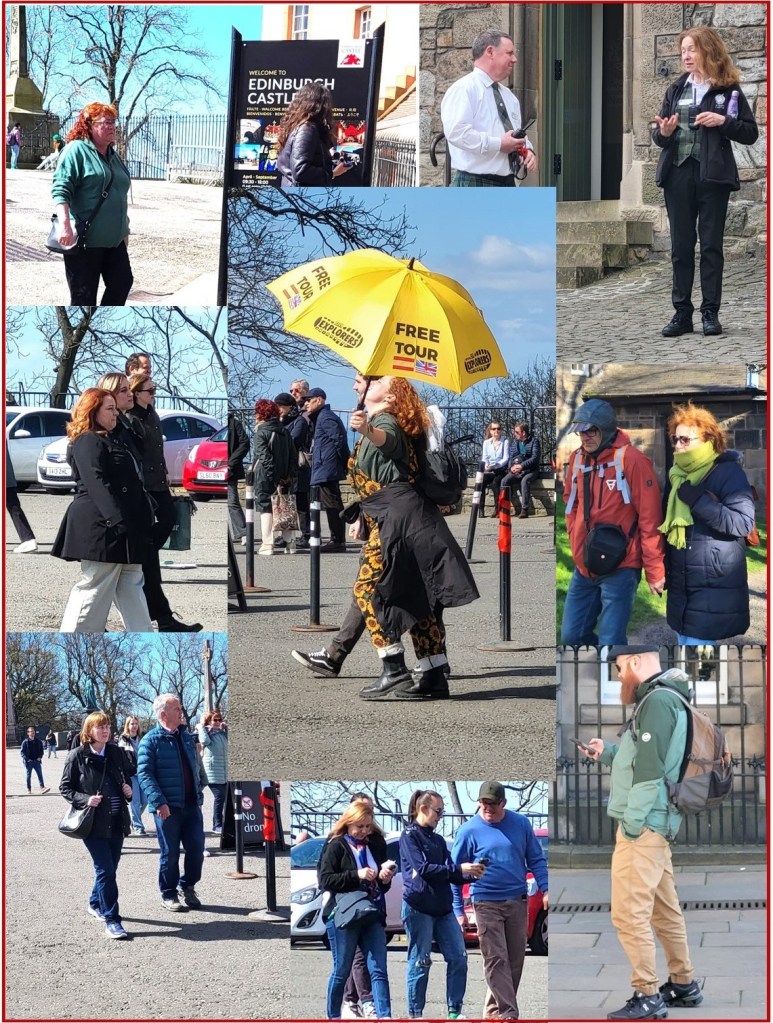
But back to our wanderings around Edinburgh. I started randomly snapping photos of the red heads I spied and it really put the camera to work. In about a 10 minute time period, up at the castle entrance, I took photos of 11 red heads! But I also started noticing in my pictures from the week that the red heads were everywhere.

The random redheads I found on a lovely – and apparently somewhat unusual – sunny day in late April in Edinburgh. I especially love the photo in the middle as she revels in the sunshine even while using the large umbrella to protect her skin.

Somehow the sheer number of all those red heads in Edinburgh served to add to the surreal feel of the place. It’s been inhabited for thousands of years and the streets feel as though they are from a movie set. The presence of the red heads, like the city itself, provides a certain vibrance and fiery determination to the Scottish people.

It wasn’t until I started seeing all the red heads that I understood WHY JK Rowling created the Weasley family… all with red hair. Living and writing in Edinburgh, she was surrounded by them and has even sported red hair herself from time to time.

For someone whose ancestors came to America from before its founding until the late 1800’s, there’s a certain pride in knowing that one line of my people once trod the ground in Scotland. According to my Ancestry DNA profile I sport a whopping six percent of Scottish blood, traceable back to 1766 when my fourth great-grandfather, Joseph Simons, was born in Connecticut. His father had been the emigrating ancestor but, alas, his identity and the reasons for emigrating are, for now, lost to history. What we do know is that the first wave of Scottish emigrants came to America beginning in 1763 following defeat at the Battle of Culloden in 1746 and the societal upheaval which took place after.

Regarding the hubby, he has a bit more Scot in him than I do with 10 percent. The red hair on his mother’s side is bolstered by her 28 percent Scottish and Irish heritage. From his paternal grandmother, who was fiercely German apparently, came the rest where some 5 percent of the population sports the red.

I suppose what all this does for us melting pot Americans is give us a brief glimpse into what it might be like to be solely identified as Scottish, or Irish, or English. And although I don’t have the red hair or, particularly, Scottish features, it was fun to buy a Fraser tartan scarf as my Simon family is part of that clan.

As always a few wee links:

https://www.eupedia.com/genetics/origins_of_red_hair.shtml

https://www.theguardian.com/politics/2013/nov/25/mapping-redheads-which-country-has-the-most

https://en.wikipedia.org/wiki/History_of_Edinburgh

https://en.wikipedia.org/wiki/Red_hair

Easter Confusion

One never quite remembers year to year when it will be

April 16, 2024

Back on April 16, 2019, I posted an article about Easter which, that year, was on April 21st.

I’ve decided – even though Easter was sixteen days ago – to repost the article since I think people sometimes forget how convoluted a formula it takes to figure it out each year and what they can look forward to next year.

Traditional Easter egg dyeing event with my kids which, based on this 1999 photo, would have likely been on April 3rd since Easter was on April 4th that year.

When I was a child and began to understand the concept of time and dates, I was fascinated with how this one holiday could be on a different day – heck, month even – from year to year.

And so I learned that you could figure out the date of Easter with the following:

“The first Sunday following the first full moon after the vernal equinox.”

Even this requires that one knows what a vernal and an equinox might be. 

Vernal is a fancy word for things related to ‘spring’ and an ‘equinox,’ according to Dictionary.com, is “the time when the sun crosses the plane of the earth’s equator, making night and day of approximately equal length all over the earth and occurring about March 21 (vernal equinox, or spring equinox ) and September 22 (autumnal equinox ).”

While all of this is, in today’s world, is seemingly straight forward, for Christians throughout the world – and as early as 325 AD with the first council of Nicea – the date on which Easter is celebrated has been disputed.

According to the Infallible Wikipedia:

“Easter and the holidays that are related to it are moveable feasts which do not fall on a fixed date in the Gregorian or Julian calendars which follow only the cycle of the sun; rather, its date is offset from the date of Passover and is therefore calculated based on a lunisolar calendar similar to the Hebrew calendar. The First Council of Nicaea (325) established two rules, independence of the Jewish calendar and worldwide uniformity, which were the only rules for Easter explicitly laid down by the council. No details for the computation were specified; these were worked out in practice, a process that took centuries and generated a number of controversies. It has come to be the first Sunday after the ecclesiastical full moon that occurs on or soonest after 21 March, but calculations vary.”

The full moon of March 2020 was on the 8th which meant that Easter was on the Sunday after the April full moon, on the 12th. The moonrise that day was spectacular even with using a phone to take this photo.

One might think that setting out a fairly straight forward calculation would end the debate but, over the centuries, it’s become more confusing.

Things really went sideways when, in 1582, Pope Gregory XIII decreed that the Julian calendar was way off and introduced his own calendar. The Gregorian calendar is the one we still use today. I wrote about it here: https://barbaradevore.com/2022/10/11/october-1582/

So what does that have to do with Easter and how to calculate the date? There are people in the world who still – over 400 years later – like the Julian calendar and use it to determine the date on which Easter is celebrated.

There’s also the whole question of the equinox. Back in the fourth century there was no modern science used to calculate the exact moment of the equinox. Instead it was determined based on the above mentioned lunisolar calendar. Which is a fancy way of saying that the people who use such calendars needed a way to adjust the dates based on what was happening around them. Think of it as the spring equinox begins 14 days AFTER the new moon or, approximately, with the full moon of the season.

According to religious rules about Easter, then, the holiday is not truly based on it being on the first Sunday following the full moon after the vernal equinox. No, the calculation is based on it occurring on the first Sunday following the full moon AFTER March 21.

In 2019, Easter fell on April 21. But should it have? The full moon and the vernal equinox both occurred on March 20 – a mere 3 hours and 45 minutes apart – with the equinox crossing the finish line first at 2:58 pm (PDT).  The moon was full at 6:43 p.m. So by scientific calculation, Easter SHOULD have happened on March 24.

Instead, the rule – for those who follow the Gregorian calendar – is to think of March 21 as the hard and fast equinox which places Easter on this coming Sunday. In the Infallible Wikipedia article, there’s an interesting table which shows the calculated dates of Easter for each competing calendar.

Note that in 2019, there is a column for Astronomical Easter giving that year three different dates from which to choose. The chart is also incorrect as we know the scientific full moon occurred on March 20 and not the 21.

And for the record? The most common date for Easter to occur since the inception of the Gregorian calendar through the year 3000 is April 16. You will be happy to note that in four years April 16th is, once again, the date of Easter on both the Gregorian and Julian calendars.

One of these days I’m certain the whole controversy will be settled. In 1997 a movement was afoot to make a change. Also from the Infallible Wikipedia:

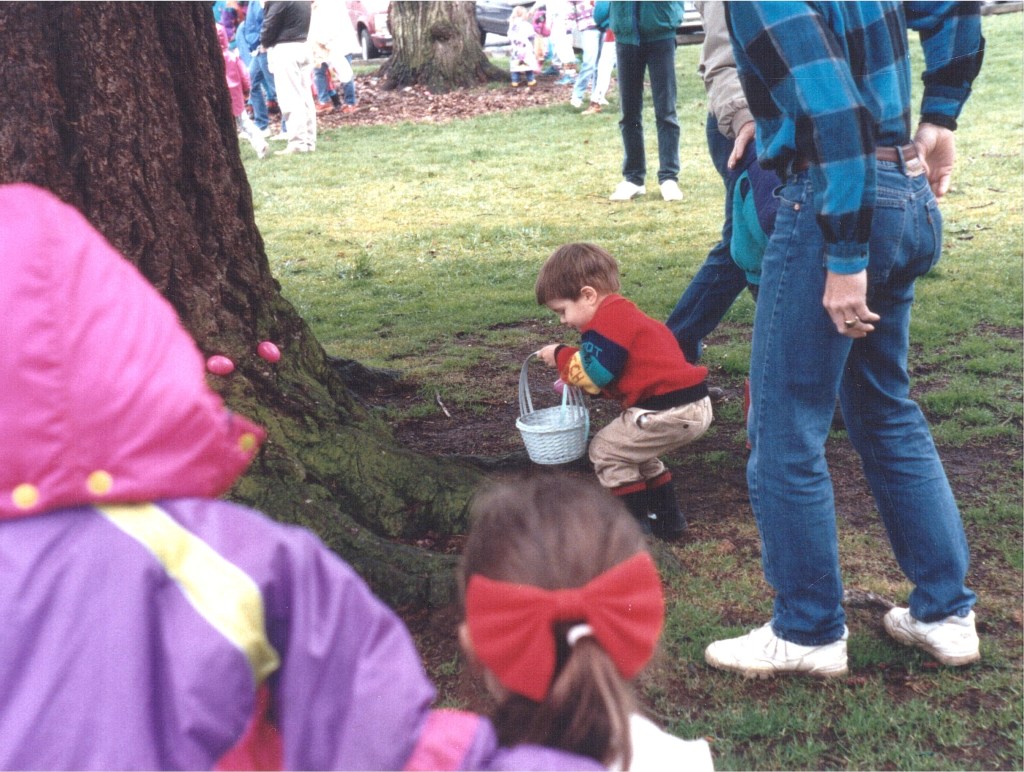
My son, age 1 1/2 at a Timberline neighborhood community Easter egg hunt in 1991. Like this year Easter was on March 31 which explains why everyone is dressed in coats and sweaters for the mid-March hunt.

“At a summit in Aleppo, Syria, in 1997, the World Council of Churches (WCC) proposed a reform in the calculation of Easter which would have replaced the present divergent practices of calculating Easter with modern scientific knowledge taking into account actual astronomical instances of the spring equinox and full moon based on the meridian of Jerusalem, while also following the Council of Nicea position of Easter being on the Sunday following the full moon. The recommended World Council of Churches changes would have sidestepped the calendar issues and eliminated the difference in date between the Eastern and Western churches. The reform was proposed for implementation starting in 2001, but it was not ultimately adopted by any member body.”

And so it goes. All I know is that hunting for Easter Eggs is usually much more pleasant the third weekend of April than it is in late March. But what’s stopping us from boiling a pot of eggs, coloring them, and then hiding them among the grass on our likely too long lawns? Nothing. Think of it as second Easter for when the weather is, we hope, nicer.

The links!

https://en.wikipedia.org/wiki/Easter

https://www.staff.science.uu.nl/~gent0113/easter/easter_text2b.htm

https://en.wikipedia.org/wiki/Lunisolar_calendar

Hedonic Escalation

What is the magic combination?

March 19, 2024

A Tuesday Newsday Classic updated

I can think of nothing which tastes better and scientific study now backs up my claim.

Salted caramel is the number one food that people can’t seem to stop eating.

Termed ‘hedonic escalation’ the research confirms what people experience when they are unable to stop eating a particular food. This article from the UK Independent – and  not from the Infallible Wikipedia – draws its conclusions from a test conducted at the University of Florida a few years ago:

“Marketing analysts Dr. Cammy Crolic and Professor Chris Janiszewski revealed that eating it actually causes a rare phenomenon called ‘hedonic escalation.’

Here, our instinctive brains keep craving more and more with every mouthful as it detects new flavours with each bite.

By contrast, with other foods we tend to experience ‘hedonic adaptation’ – the point where your appetite says you’ve had enough.

‘Hedonic escalation is more likely to occur when a palatable food consists of a complex combination of flavours, and a person is motivated to taste additional flavours on each successive bite,’ the researchers write. ‘Hedonic escalation can also increase consumption and influence food choice.’”

So what is this mystery food?

Salted Caramel.

Today, March 19th, is National Chocolate Caramel day, the perfect day to enjoy two perfect foods together.

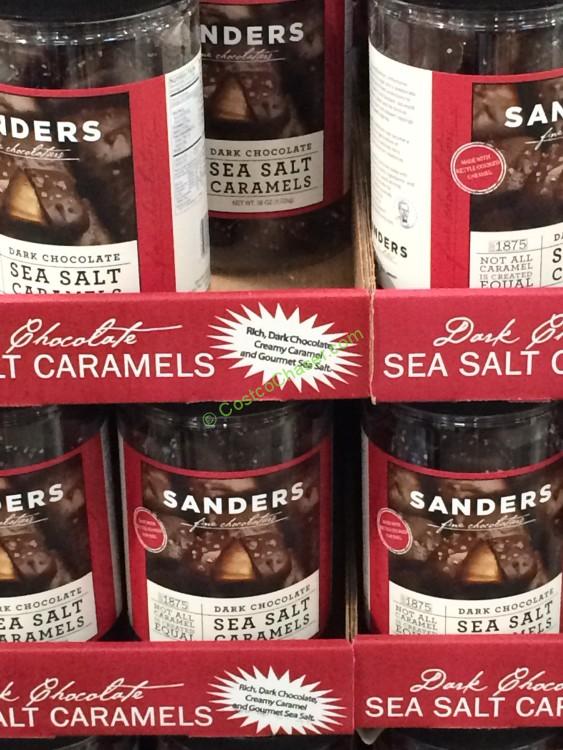
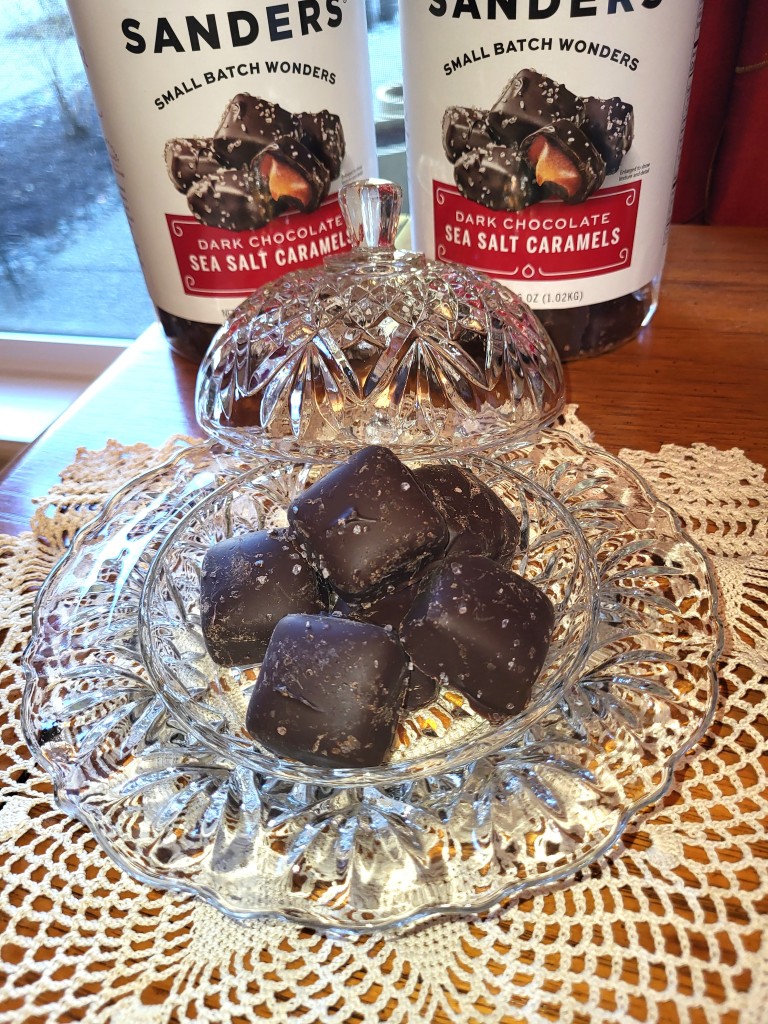
I’ve noticed more and more foods touting the substance in recent years. In December 2018, during a pre-Christmas shopping trip to Costco, I happened upon a jar of Dark Chocolate Sea Salt caramels. Over the past several years I have found that when, given a choice of chocolates, I tended to seek out the dark ones with caramel. So when I saw this large jar AND it was dark chocolate, I had to have them.

A palette of delight awaits at Costco. You can also now buy them online.

Once home, I selected a morsel from the jar and took a bite. The first taste was wonderful, the second was heaven, and by the time the morsel was consumed I was addicted.  Fortunately for me I have pretty good discipline when it comes to eating. So I was good and did not eat the entire jar.

Over the next couple months I showed, in my opinion, amazing restraint.  Each day I would have one; at most. Soon Christmas gave way to January but the jar of deliciousness remained. Committed to the ‘only one a day’ program – and sometimes none – the supply lasted. By the time early March rolled around, however, one day I stared forlornly at the nearly empty vessel

I knew I would miss my Dark Chocolate Sea Salt Caramels because, Costco being Costco they were, no doubt, only available for the holiday season.

Then a couple of days later a miracle occurred. The hubby and I were at Costco (one or the other of us seems to be there at least once a week…) and on a whim I haul him over to the candy and chocolate aisle to see if there was anything else which might fill the void in my life.

 And then I spied them!

A glorious Costco size stack of jar after jar after jar of Sanders Dark Chocolate Sea Salt Caramels beckoned to me. Oh, sweet mysteries of life!

Being that I was obsessed, I shared far and wide – with anyone who would listen about the wonders of this perfect food –  of the joys of hedonic escalation. When I first published this article in March 2019 I imagine I snagged at least a few folks who went in search themselves.

Even so, my biggest fear since 2018 has been that Costco will run out (Regular price is about $18 but you can get your own 36 ounces of wonder for about $14 on sale) or cease to carry this product. Thus far, it has been a perennial selection all seasons of the year. More than a few of my friends and families now also keep it on hand.

My current supply of Sanders Dark Chocolate Sea Salt Caramels. Thanks to the hubby there are two full jars waiting for me when the last of the current jar are gone (sometime this week likely)

But this article is a call to action. What I urge everyone who reads my blog to do is this: go to Costco today and buy at least one jar. It’s the least you can do to properly celebrate National Chocolate Caramel day. Plus, if I know anything about Costco, the more they sell, the higher the likelihood they will keep them on the shelves forever. Do it for you. Do it for me. Do it for all of America.

A couple of important links:

On Hedonic Escalation:

https://academic.oup.com/jcr/article-abstract/43/3/388/2199201?redirectedFrom=fulltext

https://www.independent.co.uk/life-style/salted-caramel-not-stop-eating-science-university-florida-hedonic-sugar-fat-a8078296.html

You don’t even have to leave home! If Amazon or some other retailer is your preferred dealer, a quick internet search reveals many who now sell this product.

https://www.costco.com/Sanders-Dark-Chocolate-Sea-Salt-Caramels-36-oz.%2c-2-pack.product.100321779.html

p.s. – I considered writing about the history of chocolate and caramel but tossed that out the window. For those who do not know, Chocolate’s origins can be traced to MesoAmerica some 1500 years ago.

And Caramel? It’s simply cooked sugar! What’s not to like?

“God, You May Have Already Won’

God shows himself in mysterious ways…

February 27, 2024

A Tuesday Newsday Classic updated

A good editor is the key to making sure whatever is written reads right and, well, doesn’t make ridiculous mistakes. In late February 1997 an American Family Publisher’s Sweepstakes entry was received by the Bushnell Assembly of God Church. It began thus:

“God, we’ve been searching for you”

Apparently when dealing with the topic of God the Infallible Wikipedia is silent. Therefore, I share this brief clip from the Spokesman Review:

Cartoon by Jack Ziegler

“If God were to win, the letter stated, ‘What an incredible fortune there would be for God! Could you imagine the looks you’d get from your neighbors? But don’t just sit there, God.’

Sweepstakes officials did not return several telephone calls for comment Thursday.

(Pastor Bill) Brack said his 140-person congregation is considering whether to mail in the entry. The church could use the money.

And if American Family chooses a different winner?

‘God would be disappointed,’ Brack joked.”

This story reminded me of something similar which I experienced a couple of years ago. Over the course of a ten year period, I made frequent trips from Seattle to Yakima to help with my elderly parents. During that time, I had a 10+ year old Garmin GPS which I liked to turn on and use to give me approximate arrival times, elevation, etc. I would play little games in my brain, estimating what time I would arrive at which city, town or exit along the road.

One da, as I was headed back home, I stopped at the westbound Indian John rest area and, since I hadn’t yet sent my husband an update as to my estimated arrival time (ETA) I tapped out a quick text message just before I backed out of the parking spot and put the car into gear. It wasn’t until I read his reply at my next stop that I realized autocorrect on my phone had done this:

“God says I’ll be home at 4:30”

Apparently the terminology “GPS” didn’t exist in my phone’s spelling brain and switched it to the word “God” instead.

My Garmin GPS on October 29, 2016 somewhere on I-82 between Yakima and Ellensburg

I believe I got back a reply something to the effect of “its good God knows when you’re getting home.”

For several years I sent him messages about my ETA I type in “God” instead of “GPS.” I even referred to my arrival time as “God says” to those who did not know the history. I received more than a few strange looks from time to time. The way I see it is that it’s good to have God giving me travel advice.

If I had any doubt that my GPS truly was God my disbelief was dispelled in late October of 2016. I was on my way back from Yakima and was driving up I-82 towards Ellensburg. I glanced over at the GPS but what I saw left no doubt that some higher power was in charge. Instead of an elevation of about 2700 feet as expected “God” let me know I was at over… 50,000 feet!

As Doc Brown says in Back To The Future “Roads? Where we’re going we don’t need… roads!” Although the photo I snapped was a bit fuzzy, you can clearly see the elevation and God’s direction that I continue to an unpaved road. What road, I never did find out. This craziness continued for about 30 miles until I arrived at Thorp when, apparently, I was no longer flying and once again on solid pavement.

Jane Jetson learns to drive a flying car

To be sure, there were many, many times when I wished for the flying car as imagined in the 1960’s cartoon “The Jetsons.” It would have cut down on many hours of driving back and forth to Yakima. In retrospect – now that both my parents are gone – I have come to appreciate those hours in the car. It served, in both directions, as an opportunity to think about whatever challenges I had going on in my life; I listened to a whole lot of music; and sometimes I would simply work out story plots in my head. There were a few trips when I drove east and it was clearly autumn in the mountains only to return five days later and it was winter. Perhaps God was in charge after all.

To read the entire article on God winning the sweepstakes, here’s the link: http://www.spokesman.com/stories/1997/feb/28/god-you-may-have-won-11-million-sweepstakes/

And, of course, the original movie trailer from the 1977 George Burns and John Denver flick “Oh, God.”

Paricutin Volcano

Sometimes a volcano blooms overnight

February 20, 2024

A Tuesday Newsday Classic Updated

Geologically, nine years is a very short time period. But for farmer Dionisio Pulido of Paricutin, Mexico, the event which began at 4 p.m. on February 20, 1943, forever altered his life in a matter of moments.

Paricutin Volcano shortly after it first started erupting

As he is quoted in the Infallible Wikipedia:

“‘At 4 p.m., I left my wife to set fire to a pile of branches when I noticed that a crack, which was situated on one of the knolls of my farm, had opened . . . and I saw that it was a kind of fissure that had a depth of only half a meter. I set about to ignite the branches again when I felt a thunder, the trees trembled, and I turned to speak to Paula; and it was then I saw how, in the hole, the ground swelled and raised itself  2 or 2.5 meters high, and a kind of smoke or fine dust – grey, like ashes – began to rise up in a portion of the crack that I had not previously seen . . . Immediately more smoke began to rise with a hiss or whistle, loud and continuous; and there was a smell of sulfur.’

“He tried to find his family and oxen but they had disappeared so he rode his horse to town where he found his family and friends, happy to see him alive. The volcano grew fast and furiously after this. Celedonio Gutierrez, who witnessed the eruption on the first night reported:

‘…when night began to fall, we heard noises like the surge of the sea, and red flames of fire rose into the darkened sky, some rising 800 meters or more into the air, that burst like golden marigolds, and a rain like artificial fire fell to the ground.’”

And thus began an eruption which provided scientists an opportunity to study and record how a volcano is formed. During this time the volcano not only destroyed Pulido’s farm but forced the permanent evacuation of two towns, caused the deaths of three people (but not the farmer!), grew to 1,341 feet, and allowed scientists to witness the entire life cycle of a volcano.

Paricutin as it is today

Also from the Infallible Wikipedia:

“The importance of the Parícutin eruption was that it was the first time that volcanologists were able to fully document the entire life cycle of a volcano. The event brought geologists from all over the world,  but the principal researchers were William F. Foshag of the Smithsonian Institution and Dr. Jenaro Gonzalez Reyna from the Mexican government, who came about a month after the eruption started and stayed for several years. These two wrote detailed descriptions, drew sketches and maps and took samples and thousands of photographs during this time. Many of these are still used today by researchers. Foshag continued to study the volcano until his death in 1956. Between 1943 and 1948, almost fifty scientific articles were published in major journals about the volcano, with even more since. The worldwide effort to study Parícutin increased understanding of volcanism in general but particularly of scoria cone formation.”

It was quite likely I saw this documentary as a child and it was this that first sparked my interest in volcanoes. Some might call it an unhealthy obsession. But whatever it is I have a distinct memory of sitting in a darkened classroom and learning about this volcano.

Back in the 1960’s, every elementary school had an AV – that is Audio Visual – component. Manned by the kids who, today, rule the tech world, it was an unglamorous job (sort of like being a crossing guard or a hall monitor) which required said geeky boy (it was all boys at the time – just the way it was) to wheel the tall carts into classrooms and get it set up so the class could watch whatever educational program our teacher managed to snag so she (or he) could get a few minutes of down time. To be fair, WE unruly students loved those days also. But I digress.

Atop the cart which we had at Nob Hill Elementary in Yakima was a black and white TV connected by wires to a very crude version of video equipment. Once it was set up, off would go the lights and some item of interest would flicker to life.

While I couldn’t find a photo of the carts, we were all familiar with projectors that looked like this

As a child seeing a volcano literally grow out of the ground where it had just been a field was terrifying. Could that happen in MY backyard? Being that my natural state was to worry about such things I’m pretty certain I became quite concerned for my home. No doubt we learned about other deadly volcanoes: Mount Vesuvius, of course, and the most fascinating of all Krakatoa. Oh, and did I mention that on nice days I’d often see Mt. Adams – one of five Washington State volcanoes – off in the distance?

Of course my mother no doubt assured me that Mt. Adams was a dormant volcano and that Yakima was not prone to sudden volcanic eruptions and my family continued to live in blissful calm. It was only later in a college geology class that I learned Yakima sits on top of what is known as the Columbia River Basalt Group, which was a series of volcanic flows, that eventually covered about 81,000 square miles AND had depths up to 5,900 feet. That’s a whole lot of basalt which no one can take for granite… it was a gneiss fact to know.

Of course that was millions and millions of year prior, so of course there was no danger. Well, that was until May 18, 1980… when THAT myth was blown to pieces. I might have covered stubby Mt. St. Helens in another Tuesday Newsday article or two.

Volcan de Colima – aka Volcan de Fuego or the English translation ‘Fire Volcano’. Photo taken by my son in late January.

A couple of years ago our son moved to Guadalajara, Mexico. And until recently I hadn’t thought much about Mexican volcanoes. Of course I did know that the Pacific ring of fire which, in addition to being earthquake prone, also had a few volcanoes…913 to be exact. Whoa.

Mexico, specifically the region which stretches from the Pacific Ocean to the Caribbean Sea which starts near Puerto Vallarta and extends east to Guadalajara and then Mexico City and ending just north of Veracruz, has 23 of these volcanoes in a region known as the Trans-Mexican Volcanic belt.

So now I have new volcanoes to worry about. Of course I shouldn’t be concerned that Volcan de Colima, also known as Volcan de Fuego, is a mere 78 miles from where my son now lives. Or that Volcan de Fuego erupted as recently as January 2017. Or that our son went hiking on neighboring volcano Nevado de Colima – which is 3 miles north of Volcan de Fuego – in January of this year. I’m sure there’s nothing to worry about!

A map showing the location of the 23 volcanoes which define the Trans-Mexico Volcanic Belt
My son on his recent hike to Volcan Nevado de Colima in front of the ‘you have arrived’ sign

For reference, Paracutin is much, much further away from Guadalajara, more like 150 miles how the crow flies. The next time I’m in Mexico I plan to take a much closer look at the landscape to see how many of Mexico’ volcanoes I can identify.

For those who want to learn more:

https://en.wikipedia.org/wiki/Par%C3%ADcutin

Not sure if this is the video I saw but the music alone is enough to instill terror into a child….

And a few more articles and linkes about one of my favorite topics:

https://en.wikipedia.org/wiki/Columbia_River_Basalt_Group

https://en.wikipedia.org/wiki/Volc%C3%A1n_de_Colima

https://en.wikipedia.org/wiki/Volc%C3%A1n_Nevado_de_Colima_National_Park

https://en.wikipedia.org/wiki/Ring_of_Fire

All Tortellini All The Time

Navel Gazing in Italy

February 13, 2024

It often amazes me as to ‘what’ things have their own ‘day,’ ‘week,’ or ‘month.’ In the past I’ve written about “National Nothing Day –January 16th,” “National Cleaning Week –March 24th,” and “World Turtle Day – May 23rd,” to name a few.

Photo courtesy of https://www.freeimages.com/

But when my brother shared with me that February 13th is “National Tortellini Day” I knew it had to be the topic of this week’s Tuesday Newsday.

So what is, exactly, a ‘tortellini’? The Infallible Wikipedia does not disappoint:

Tortellini are stuffed pasta originally from the Italian region of Emilia (in particular Bologna and Modena). Traditionally they are stuffed with a mix of meat (pork loin, raw prosciutto, mortadella), Parmesan cheese, egg and nutmeg and served in capon broth (in brodo di cappone).

In the area of origin they are usually sold fresh or home-made. Industrially packaged, dried, refrigerated, or frozen, tortellini appears in many locations around the world, especially where there are large Italian communities.”

Additionally, there is a legend that the pasta was concocted by an innkeeper in the small community of Castelfranco Emilia which is located in the same vicinity as an ancient Roman village in the northern section of Italy near Modena.

As the legend is told the goddess Venus stays at the inn and the innkeeper, so enamored with her beauty, spies on her through the keyhole of the door to her room. Yet, all he can see of Venus is her navel which inspires him to create a pasta in the shape of it. Okay, it is kinda creepy. Oh those crazy Italians!

Apparently, to this day, there is a festival held in Castelfranco Emilia to honor tortellini.

Growing up the only pasta which ever seemed to grace my family’s dinner table was spaghetti. I’m pretty certain that I never ate tortellini until I was in my 30’s – not because I had anything against it, just that it wasn’t on my culinary radar.

That all changed one day in 2012 when, as an adult advisor for the Bellevue Rainbow Girls, I was asked by the Worthy Advisor (President) Janessa if the hubby and I would be willing to make and serve the ‘main’ course for a progressive dinner she was planning.

We agreed and then I asked her if there was any particular food she would like us to prepare. Her response: tortellini.

When I was a Rainbow Girl back in the dark ages we also had ‘progressive’ dinners. What happened is that the girls would travel, usually by cars driven by advisors, to one home for appetizers. After that it might be a salad course, followed by the main course, and concluding with dessert.

In my day these were rather tame affairs with everyone sitting properly at the dining room table at the hosts house and that is, I’m certain, what the girls were expecting that spring day of 2012.

The cover of the 2012 Papa Gino’s Menu

But that is NOT what they got. As the hubby and I contemplated this event we decided to go all in. In our family room I arranged four or five card tables as though in a café and made dark red satin tablecloths to go over them. There were lit pillar candles in the center of each table plus silverware and napkins at each place setting.

In our front hallway I set up a large white board proclaiming that they had arrived at “Papa Gino’s” which served “All Tortellini All The Time.” I created paper menus. But the absolute best part was that the hubby took on the role of the proprietor “Papa Gino” complete with a painted on fake mustache and dressed like we imagined a restaurateur from Italy might appear.

Soon we received word that the girls were leaving their previous stop and would soon arrive. With Papa Gino stationed behind his check in podium, when the door opened there was a look of confusion on the faces of the first group as “Papa” loudly proclaimed in his best ‘worst’ Italian accent, “Welcome to Papa Ginos, how many in your party?”

Oh, but that was not all. From the moment the guests arrived, Papa and the long suffering cook “Mama” bickered with one another. But Papa’s impatience wasn’t confined to Mama, if the guests didn’t answer a question right away, Papa would badger them for an answer. And heaven forbid if they asked for ANYTHING besides tortellini because Papa would shame them and point at the menu suggesting they needed to learn to read as it clearly said “All Tortellini All the Time.”

Both girls and adults were in stitches over the banter that evening and were talking about “Papa Gino’s” for several years.

Back cover of the 2012 menu. I searched and searched for at least one photo I know exists, but alas could not find it! Papa’s identity will remain a mystery.

Fast forward to 2015. In anticipation of my father-in-laws 90th birthday we volunteered to be the hosts. My mother-in-law – having heard the tales of Papa Gino’s previous gig – requested that we present an encore performance. As you wish.

It was a beautiful late September day and my in-laws, three of their children, all six grandchildren, and spouses arrived. Finally, around 5 p.m., everyone was kicked out of the family room, a bed sheet ‘curtain’ was erected and, once again, Papa Gino’s restaurant was brought to life.

Papa was in fine form, showering abuse on his older brother who was attempting, but failing, to pull Papa Gino out of character; Papa suggested to his niece – who, at five months pregnant was the epitome of health and beauty – that perhaps she needed to cut back on the pasta.

Table by table he worked the room, taking orders, engaging the guests, and the gales of laughter told the story of everyone having great fun as if dining at a live performance dinner theatre where Papa taking orders and serving, and with Mama, and their idiot son, Davi, cooking WERE the entertainment.

Papa, Mama, and Davi retired after the 2015 performance but, who knows, they might be willing to reopen… for the right price.

“Right, Papa? Right?”

“Just waiting for you, Mama!”

Davi shrugs.

A few links:

https://en.wikipedia.org/wiki/Tortellini

https://en.wikipedia.org/wiki/Castelfranco_Emilia