Archives

Otis Elevators

‘Get Out’

March 23, 2021

I have buttons but I’m not a shirt
I have doors but I’m not a house
I go up and down but I’m not an umbrella
I need at least two stories but I’m not a book of fairytales
I’m found in tall buildings but I’m not a penthouse

What am I?
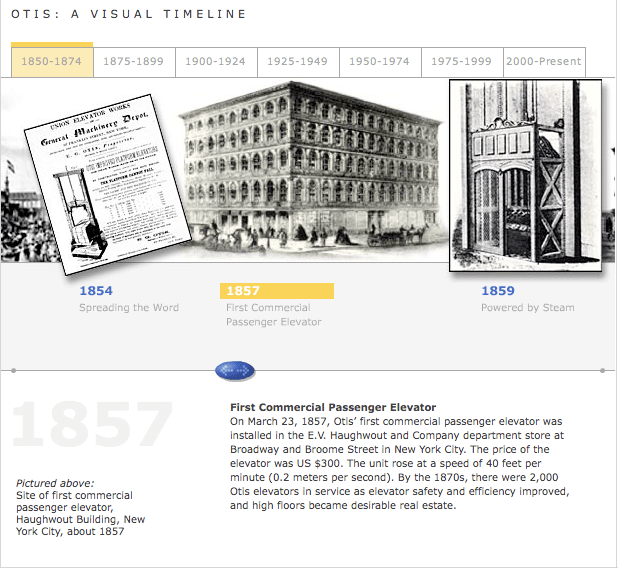
The first commercial Passenger Elevator 1857

I’ll even add one more clue… I was first installed into a commercial building on March 23, 1857.

The answer, of course, is an elevator.

It’s a device which makes high rise buildings possible and literally changed the urban landscape. The story, however, began five years earlier when inventor Elisha Otis developed a freight elevator that remained stable even if its ropes were cut.

The Infallible Wikipedia tells us:

“At the age of 40, while he was cleaning up the factory, he wondered how he could get all the old debris up to the upper levels of the factory. He had heard of hoisting platforms, but these often broke, and he was unwilling to take the risks. He and his sons, who were also tinkerers, designed their own ‘safety elevator’ and tested it successfully. He initially thought so little of it he neither patented it nor requested a bonus from his superiors for it, nor did he try to sell it. After having made several sales, and after the bedstead factory declined, Otis took the opportunity to make an elevator company out of it, initially called Union Elevator Works and later Otis Brothers & Co.

No orders came to him over the next several months, but soon after, the 1853 New York World’s Fair offered a great chance at publicity. At the New York Crystal Palace, Otis amazed a crowd when he ordered the only rope holding the platform on which he was standing cut. The rope was severed by an axeman, and the platform fell only a few inches before coming to a halt. The safety locking mechanism had worked, and people gained greater willingness to ride in traction elevators; these elevators quickly became the type in most common usage and helped make present-day skyscrapers possible.

After the World’s Fair, Otis received continuous orders, doubling each year. He developed different types of engines, like a three-way steam valve engine, which could transition the elevator between up and down, and quickly stop it.”

The Otis Elevator company endures to this day, now a $13 billion a year company which employs some 64,000 people.

As a child, getting to ride on an elevator was an event. Although I cannot recall my very first ride I would venture to guess that it might have been the Space Needle elevator during the 1962 World’s Fair. That elevator is particularly memorable as you get to watch, through the windows, as the world below grow smaller during your 500 foot ascent in just 41 seconds.

Most modern elevators have sleek doors which slide open and close and then almost imperceptibly take you to your destination floor. There are, however, some older elevators which exist that hearken back to a different era when having a job as an elevator operator was a thing. I had the 1940’s experience back in the 1970’s one night at the old Masonic Temple in downtown Tacoma. There for a dance which took place on the fifth floor, I recall stepping up to elevator which was caged behind an accordion grid. When the car arrived and the doors opened, a grumpy looking older man – the operator – opened the grid and motioned us in to the car for our ride to the fifth floor. There was something elegant about that ride; a civility and protocol lost to later generations.

But perhaps the most memorable elevator belongs to the tallest building in Seattle: the Columbia Center.

The Columbia Center, Seattle

Also from the Infallible Wikipedia:

“The 76-story structure is the tallest building in Seattle and the state of Washington, reaching a height of 933 ft (284 m). At the time of its completion, the Columbia Center was the tallest structure on the West Coast; as of 2017 it is the fourth-tallest, behind buildings in Los Angeles and San Francisco.”

The tower, which was completed in 1985, boasts 48 elevators!

The company the hubby worked for in 1989 rented office space on floor 67, just nine floors below the very top of the building. Needless to say, riding one of those 48 elevators was a necessity.

As it turned out, it actually took riding on three different elevators to travel from the garage to floor 67. On any number of occasions when I visited the hubby there, I always enjoyed the dizzying and panoramic views of Elliot Bay to the west from his office.

But it was the elevator ride one day which provided the most amusement. As you might imagine from a building of that size it was easy to get confused as to what floor you were on and where you needed to be to get where you needed to go. Thankfully, a calming elevator voice would announce the floors as you arrived so that you didn’t exit sooner than you should.

We were on the descent to the lobby level this particular day. When the doors opened I startled at the gentle female voice which intoned ‘Get Out.’

Of course we did as directed and then, as we stood outside the elevator, I said to the hubby, “Did the elevator just tell us to ‘Get Out?’”

One of the 48 elevators in the Columbia Center

I think we determined the elevator was announcing the name of the street closest to where we had landed. But it didn’t matter. From that moment on whenever I visited at the Columbia Center I looked forward to the elevator voice as I arrived in the lobby telling me to ‘Get Out.’

It’s become one of our go to phrases whenever we take an elevator, always providing a bit of levity. I have a hard time imagining those old timey operators speaking to a passenger in such a way; on second thought I conjure up the image of that grizzled old guy from the Tacoma Masonic Temple and figure he’d have no problem telling rambunctious twenty year olds precisely that.

Links for your exploring pleasure:

https://www.riddlesandanswers.com/tag/elevator-riddles/#ixzz6prD1Mw4c

https://en.wikipedia.org/wiki/Elisha_Otis

https://en.wikipedia.org/wiki/Masonic_Temple_Building-Temple_Theater#:~:text=The%20Landmark%20Convention%20Center%20in%20Tacoma%2C%20Washington%20%28Historically,the%20National%20Register%20of%20Historic%20Places%20in%201993.

https://en.wikipedia.org/wiki/Columbia_Center

Answer to the FB question: The building pictured is the One World Trade Center in New York city. It requires all 73 of its elevators to reach all 1, 776 feet of height, no doubt.
Scott Hamilton: The Inspiring Journey of an Olympic Champion

King of the Ice

February 16, 2021

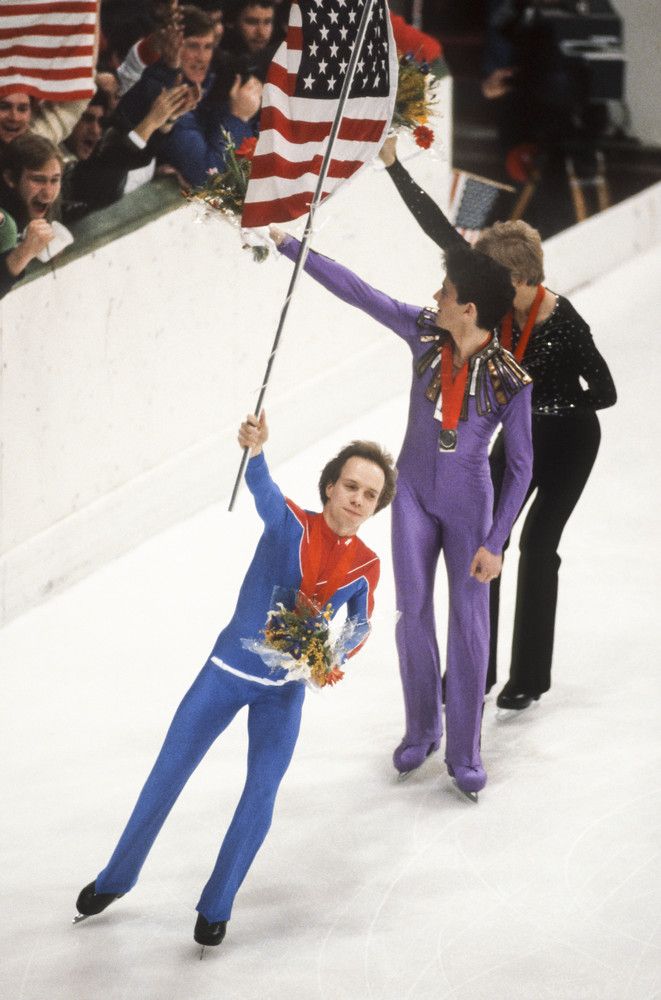
The 1984 Olympic Men’s Skate medalists, left to right: Brian Orser(2nd), Scott Hamilton(1st), Jozef Sabovčík(3rd)

A Tuesday Newsday classic

This 1984 Olympic Gold medalist was, perhaps, the most unlikely of stars to achieve brilliance. To this day he is, however, one of the most popular U.S. men’s figure skaters ever; an individual who is a testament to the power of determination, hard work, and a positive attitude.

It was on February 16, 1984, when 25 year old Scott Hamilton won Olympic Gold at the games in Sarajevo, Yugoslavia (Now Bosnia and Herzegovina)

His skating story began 14 years earlier when he first took to the ice at age 11. Two years later, he was entering skating competitions. For the athletically inclined Hamilton, choosing an appropriate sport was likely a challenge.

When he was two years old he stopped growing. What followed were tests and speculation over why. From the Infallible Wikipedia:

“After numerous tests and several wrong diagnoses (including a diagnosis of cystic fibrosis that gave him just six months to live), the disease began to correct itself. His family physician sent him to Boston Children’s Hospital to see a Dr. Shwachman. He was told the doctor had no idea what was wrong and to go home and stop the diets in order to live a normal life. Years later, it was determined that a congenital brain tumor was the root cause of his childhood illness.”

The impact was huge. During the years of his greatest amateur skating success he was only 5 feet 2 ½ inches tall and weighed 108 pounds. Obviously, playing football or ice hockey was not an option.

Hamilton parlayed his small stature – what many would see as a liability – into his greatest asset. Not only was he was fast on the ice, but he developed his athleticism such that he made the jumps and his intricate footwork look effortless. Although not allowed in competition, his signature back flip at the end of his exhibition routines always brought fans to their feet. Only the strongest and most daring of skaters can successfully execute the move.

When he retired from amateur skating, he was the 1984 reigning world champion in the Men’s division. From there he went on to have a successful professional career and has, arguably, done more to elevate the sport of ice skating than any other individual ever. Also from the Infallible Wikipedia:

“After turning professional, Hamilton toured with the Ice Capades for two years, and then created ‘Scott Hamilton’s American Tour,’ which later was renamed Stars on Ice. He co-founded, co-produced and performed in Stars on Ice for 15 years before retiring from the tour in 2001 (though he still returns for occasional guest performances).

He has been awarded numerous skating honors, including being the first solo male figure skater to be awarded the Jacques Favart Award (in 1988). In 1990 he was inducted into the United States Olympic Hall of Fame.”

His road in life has not been easy. He survived testicular cancer in 1997 only to have a second brain tumor be discovered in 2004. After a successful surgery for the benign tumor, yet a third tumor was found in 2016. So far he’s been successful in shrinking the tumor through dietary changes.

Although I’d watched Olympic figure skating before, it was the 1984 Olympics and Scott Hamilton particularly, which became the impetus for a decade of following the sport. And what better place to be for watching the Olympics than in a magical place such as Whistler.

The hubby and I – along with his sister and mother – had joined a Whatcom Community college group for a weekend skiing sojourn. Yes, I was 26 years old when I took my first lessons… at Whistler. At the end of each day, we’d return to the rental house (a precursor to the AirBnB concept) for food and fellowship and to watch the Olympics. And what an Olympics it was. We rooted for hometown favorites Rosalyn Summers, Phil and Steve Mahre, and Oregonian Bill Johnson.

The memory that sticks with me most is of the hubby and my sister-in-law out at a pub in Whistler Village. The TV is on over the bar and we are watching the events. But we can’t hear the play by play because there is no sound. Instead, dance music is blaring through the bar. And the pair of them – hubby and sister – are ‘dancing’ while sitting in their chairs, and making quite the spectacle. I imagine the pub owners had second thoughts about those chairs as they were on wheels which allowed the chair dancing shenanigans. Shenanigans which, I might add, nearly got us kicked out of that bar.

Home a few days later, I cheered as I watched Scott Hamilton win the Gold medal, the first US man to do so in the Olympics in 24 years.

What followed over the next six years was attending the US National championships at the Tacoma dome in 1987, and seeing “Stars On Ice” at least twice at the Seattle Center Arena. It was during Stars on Ice that we finally saw Hamilton skate in person. It was worth it. What an amazing skater and showman, his performances unforgettable.

I leave you with this from a publication titled ‘CancerTutor.com.’

“Hamilton is a firm believer in ‘getting up’ after the fall. He pointed to a chapter in his book, The Great Eight, titled ‘Fall Down, Get Up, Smile Like Kristi Yamaguchi.’

‘In one of her [skating] programs, she took a hard fall on a really difficult jump — and she got up, went right back to her program like nothing happened. I realized in that moment there’s a life lesson: I’m gonna fall down. I’m gonna make mistakes. But it’s what’s next — it’s how you get up. The more times you get up, the stronger you are.’”

Some links:

https://en.wikipedia.org/wiki/Scott_Hamilton_(figure_skater)

https://www.scotthamilton.com/

Akwa-Skees

Teenage rite of passage

October 27, 2020

As any native Pacific Northwestener knows, boating is a top activity in this region. You can be forgiven if you think that the rainy, gray skies so common here might preclude water activities. But you would be wrong. Westsiders, particularly, are a hardy lot when it comes to aquatic sports. And no sport better epitomizes this than water skiing. It was on October 27, 1925 when the water ski was patented.

Ralph Samuelson, the inventor of water skis

The individual who first donned a pair of ‘skis’ and be pulled behind a boat on the water was one Ralph Samuelson who tried a variety of materials and designs for his devices. It was 1922 when the Minnesotan invented the sport. He spent the next 15 years performing and teaching people how to water ski. But he failed to patent his designs.

The Infallible Wikipedia, however, tells us:

“The first patent for water skis was issued to Fred Waller, of Huntington, NY, on 27 October 1925, for skis he developed independently and marketed as ‘Dolphin Akwa-Skees.’ Waller’s skis were constructed of kiln-dried mahogany, as were some boats at that time. Jack Andresen patented the first trick ski, a shorter, fin-less water ski, in 1940.”

The original Akwa-Skees

There must have been something in the water, so to speak, since on the opposite side of the United States, a Washingtonian had similar ideas. Also from the IW:

“In 1928, Don Ibsen developed his own water skis out in Bellevue, Washington, never having heard of Samuelson or Waller. In 1941, Ibsen founded The Olympic Water Ski Club in Seattle, Washington. It was the first such club in America. Ibsen, a showman and entrepreneur, was one of the earliest manufacturers of water skis and was a leading enthusiast and promoter of the sport. In 1983, he was inducted into the Water Ski Hall of Fame in Winter Haven, Florida.”

It wasn’t until the 1940’s and 50’s, however, before water skiing began to gain popularity with the average person, thanks to a Floridian who took advantage of his state’s abundance of sunshine and water:

“Water skiing gained international attention in the hands of famed promoter, Dick Pope, Sr., often referred to as the ‘Father of American Water Skiing’ and founder of Cypress Gardens in Winter Haven, Florida. Pope cultivated a distinct image for his theme-park, which included countless photographs of the water skiers featured at the park. These photographs began appearing in magazines worldwide in the 1940s and 1950s, helping to bring international attention to the sport for the first time. He was also the first person to complete a jump on water skis, jumping over a wooden ramp in 1928, for a distance of 25 feet. His son, Dick Pope, Jr., is the inventor of bare-foot skiing. Both men are in the Water Ski Hall of Fame. Today, Winter Haven, Florida, with its famous Chain of Lakes, remains an important city for water skiing, with several major ski schools operating there.”

As a teenager in the 1970’s it was likely one was friends with at least one other teenager whose Dad owned a boat. And, with any luck, you got the opportunity to try water skiing. My opportunity arrived in August of 1972 when a large contingent of fellow participants in the Masonic youth groups, descended upon Hood Park at the Snake River near Pasco, Washington.

It was a hot day, perfect for water sports. I watched as kid after kid donned the water skis and, with seemingly little effort, popped up out of the water on the skis and cut and angled their way across the glassy water. Sometime in the early afternoon, my opportunity arrived and one of the dads, as helper for beginners, tossed out instruction after instruction: “Get your tips out of the water… no, no, not that far. Less. Okay, that’s good.” “Lean back and relax… no, no, not that far. A little further forward… oh, NO! Too far.”

My first time ever on water skis… August 12, 1972. Not sure who had my camera but they immortalized that day for me.

And so it went until that moment when he declared I was in the correct position and all I had to do was yell “hit it.”

Which I did. And promptly lurched forward, ending up face down in the Snake River. This went on for hours… okay, probably not hours. It only FELT like hours. I could hear the exasperation in the spotter’s voice. Could hear the frustration of the boat’s motor as it circled back to get into position once more. I just knew that they were thinking ‘how uncoordinated can one teenage girl be.”

About to faceplant in the Snake River. Back of the photo says “try, try, again.’

But I persisted and, finally, after about a half hour of trying the rope grew taut, the ski tips glided up onto the water’s surface and then, miraculously, so did I. I would have jumped for joy except to do so would have landed my sorry behind in the water once again. I would have given thumbs up except to do so would mean I’d lose my already shaky and precarious hold on the tow rope. Instead I hung on for dear life and attempted to enjoy the ride.

In the ensuing years I did have some opportunities to water ski. The year I turned 16 I skied Crescent Lake. Crescent Lake, for those who do not know, is one of the deepest, glacier carved lakes in the United States. At its deepest it is nearly 600 feet. To say the water is cold is like saying Minnesota gets a little snow each winter.

But the real waterskiing adventure was the first year I was dating the hubby. He and his brother had purchased a boat in the spring of 1979 which was named “Beat Boat.” It was purple and it was sleek and fast. Every weekend that summer it was off to water ski, mostly on Lake Washington and Lake Sammamish, or camping and skiing further north at Lake Goodwin.

Beat Boat on Lake Tapps August 1979

While I was never as good as either my hubby or brother-in-law, it was a lot of fun. Mostly I served as the spotter when it wasn’t my turn.

All that fun came to a crashing – literally – halt on Memorial Day 1981. We had been down at Lake Tapps but the weather turned rainy and cold. The decision was made to pack it up and head back to West Seattle where everyone lived. The boat never made it. On a slick corner along West Marginal way, the vehicle and boat carrying trailer behind it jackknifed, sending the beloved purple beat boat skidding across the road, irreparably damaged.

“Hit It!” – the hubby before he was the hubby at Lake Goodwin, 1979

The hubby and I, a few years later, bought a boat for fishing and waterskiing… but it was never quite the same as beat boat. My hubby’s Wiley slalom water-ski has been carted from house to house whenever we moved since, perhaps, it would be used once again. But, alas, it has not; instead it is relegated to a corner of the garage to pay homage to the great American pastime of waterskiing, a reminder that waterskiing is best done when one is young and foolish.

https://en.wikipedia.org/wiki/Water_skiing

Relegated to a corner of the garage

Star Trek: From Cancellation to Cult Classic

To boldly go where no man has gone before

September 8

Space: the final frontier. These are the voyages of the starship Enterprise. Its five-year mission: to explore strange new worlds, to seek out new life and new civilizations, to boldly go where no man has gone before.

And so they did, at least in the world of 1960’s television series. Star Trek – which premiered September 8, 1966 – was a show ahead of its time, and as such, struggled to resonate with the viewing public of the day. More on the reasons why in a bit.

For those unfamiliar with the show, the premise was this: It’s 300 years in the future and the United States has commissioned a large, interstellar spaceship and crew to explore the Milky Way galaxy. Led by a cadre of futuristic cowboy space explorers into a rough and tumble world, the viewer experiences all of the things touted in the opening statement: strange new words, new life forms, and new civilizations.

The crew– save pointy eared Vulcan Mr. Spock – all look exactly like one might expect Americans from that era to appear. The elaborate costuming department, however, created an assortment of aliens such as the fierce and hairy Klingons, the blue skinned Andorians, the pointy eared, unabrow militaristic Romulans, and the fuzzy and rapidly producing Tribbles; it was these and other strange creatures the crew encountered each week.

The primary cast of the original Star Trek.
Front row: Leonard Nimoy, William Shatner, DeForest Kelley.
Second row, George Takei, Nichelle Nichols, Majel Barret, Walter Koenig, James Doohan

The most formidable foe the captain and crew of the USS Enterprise faced, however, were the NBC executives who could not figure out how to promote and market this strange new program. Gene Roddenberry, Star Trek’s creator, did all he could to keep the crew out exploring new worlds, but his earthbound benefactors shut the program down at the end of the third season and 79 episodes.

One might have asked the following question: who was the most likely viewing audience for a cowboy-esque show set in the future? Hint: Probably not the mom’s and dad’s of the day. So if you want to appeal to elementary and junior high kids, when might you air the program? Weeknights from 8:30 to 9:30 might not have been the best time. Certainly not at 10 p.m. on Friday night as it was during its final season.

In spite of the thick headedness of the NBC exec’s, the show acquired a dedicated audience whose demographics surprised the studio. From the Infallible Wikipedia:

“The enthusiasm of Star Trek‘s viewers surprised NBC. The show was unusual in its serious discussion of contemporary societal issues in a futuristic context, unlike Lost in Space which was more campy in nature. The network had already received 29,000 fan letters for the show during its first season, more than for any other except The Monkees. When rumors spread in late 1967 that Star Trek was at risk of cancellation, Roddenberry secretly began and funded an effort by Bjo Trimble, her husband John, and other fans to persuade tens of thousands of viewers to write letters of support to save the program.  Using the 4,000 names on a mailing list for a science-fiction convention, the Trimbles asked fans to write to NBC and ask 10 others to also do so. NBC received almost 116,000 letters for the show between December 1967 and March 1968, including more than 52,000 in February alone; according to an NBC executive, the network received more than one million pieces of mail but only disclosed the 116,000 figure.”

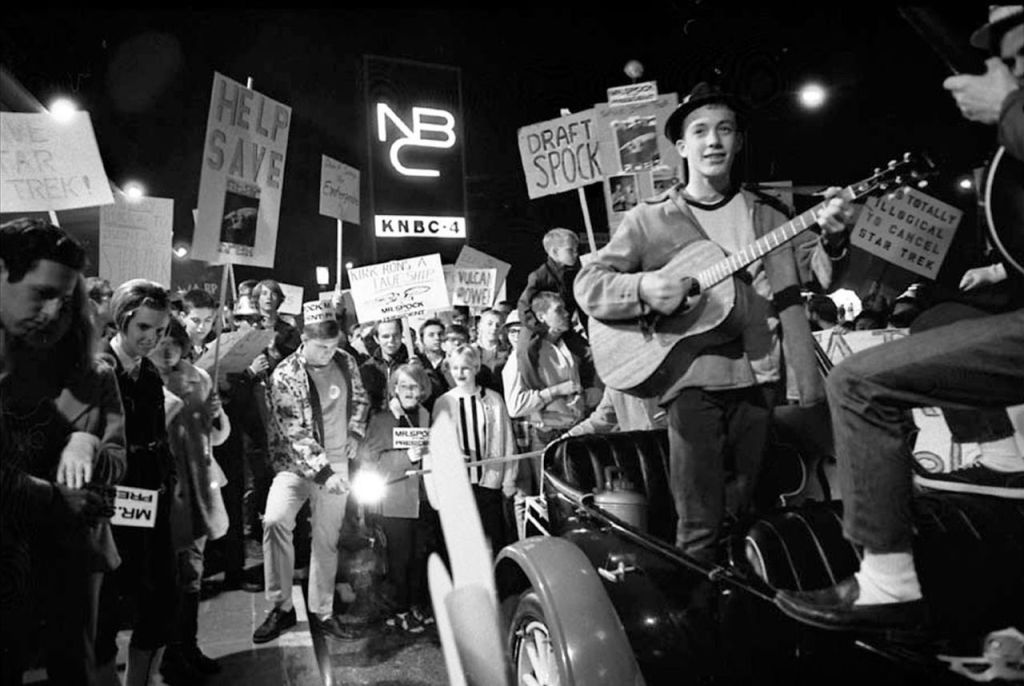
Cal Tech students protest for Star Trek. Photo from archives of the LA Times.

The threat of cancellation inspired fans not only to write letters but some 200 sign carrying CalTech students marched to NBC’s studios in Burbank in 1968; protests appeared in other cities also. New York State Governor Nelson Rockefeller even wrote a letter to the studio. Also, according the Infallible Wikipedia:

“Much of the mail came from doctors, scientists, teachers, and other professional people, and was for the most part literate–and written on good stationery. And if there is anything a network wants almost as much as a high Nielsen ratings, it is the prestige of a show that appeals to the upper middle class and high-brow audiences.”

Alas, the show’s final episode aired in May 1969 and that was the end of it. Or not.

Despite the rule of thumb that a show needed at least four seasons to justify syndication, the show was soon seen during the late afternoon and a whole new demographic was hooked: school age kids. By the early 1970’s it was affecting the culture. Yes, the Infallible Wikipedia once again:

“Fans of the show became increasingly organized, gathering at conventions to trade merchandise, meet actors from the show, and watch screenings of old episodes. Such fans came to be known as “trekkies”, who were noted (and often ridiculed) for their extreme devotion to the show and their encyclopedic knowledge of every episode. Because fans enjoyed re-watching each episode many times, prices for Star Trek rose over time, instead of falling like other syndicated reruns.:  People magazine commented in 1977 that the show “threatens to rerun until the universe crawls back into its little black hole”. By 1986, 17 years after entering syndication, Star Trek was the most popular syndicated series; by 1987, Paramount made $1 million from each episode; and by 1994, the reruns still aired in 94% of the United States.”

Mr. Spock and his famous Vulcan salute.

As a teenager in the 1970’s, Star Trek was part of my daily world. I really had no choice, as my sister – a mere 21 months older than me – was one of those crazed Trekkie’s of the day and the program aired most afternoons. In our household, we frequently flashed the Vulcan hand symbol (middle and ring finger separated to form a “V”) and would intone, “Live long and prosper.” Another favorite was to parrot Dr. McCoy who said – in multiple episodes – “Dammit Jim, I’m a doctor, not a _____________.” This sentence was finished with ‘bricklayer,’ ‘engineer’, and ‘escalator’ to name the most famous ones.

Perhaps my favorite, yet macabre, part of Star Trek, was when the crew would be transported to the surface of some planet. Literally, the landing crew always seemed to be Captain Kirk, First Officer Spock, Dr. McCoy, and at least one or two ‘new’ crew members. Unlike the trio of stars who donned gold or blue uniforms, these hapless souls seemed to always wear red shirts and were always the ones who lost their lives. Which gave Dr. McCoy the opportunity to intone his famous “He’s dead, Jim.”

Now, 54 years later, Star Trek has weathered the test of time. Like the troublesome Tribbles, it’s multiplied way beyond its original 79 episodes. Over the years there have been additional TV series, big budget movies, and cartoon programs; these have captured the imagination of new generations of fans, a cultural phenomenon that lives on… unlike the guys in the red shirts.

 The links:

https://en.wikipedia.org/wiki/Star_Trek%3A_The_Original_Series

https://en.wikipedia.org/wiki/List_of_Star_Trek_races

Celebrating Robert Redford: Hollywood’s Golden Heartthrob

A Movie Star for the Ages

August 18

1973 was a pivotal year for this actor, his role in Butch Cassidy and the Sundance Kid (BC&TSK) catapulted him to the stratosphere of Hollywood stardom. Robert Redford, who turned 37 that year, didn’t look a day over 30 and for women – young and old alike – he became a sex symbol. Happy 89th birthday to, perhaps, the most successful actor of the late 20th century, who was born on August 18, 1936.

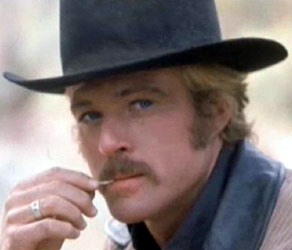
Redford as The Sundance Kid

Prior to his breakout role in BC&TSK, Redford found his first acting roles on Broadway which then led to television. These roles eventually brought him to the big screen with his first significant role as the male lead in the 1967 movie Barefoot in the Park opposite Jane Fonda.

But Redford was not content to be typecast due to his looks, passing up lead roles in both The Graduate and Who’s Afraid of Virginia Woolf. In BC&TSK, however, he found a role which resonated with him and a co-star in Paul Newman which proved to be box office gold.

Over the next several years, Redford had hit after hit. According to the Infallible Wikipedia:

“Starting in 1973, Redford experienced an almost unparalleled four-year run of box office success. The western Jeremiah Johnson’s (1972) box office earnings from early 1973 until it’s second re-release in 1975 would have placed it as the No. 2 highest-grossing film of 1973. The romantic period drama with Barbara Streisand, The Way We Were (1973), was the 11th highest-grossing film of 1973. The crime caper reunion with Paul Newman, The Sting (1973), became the top-grossing film of 1974 and one of the top 20 highest-grossing movies of all time when adjusted for inflation, plus landed Redford the lone nomination of his career for the Academy Award for Best Actor. The romantic drama The Great Gatsby (1974) was the No. 8 highest-grossing film of 1974. As well, 1969’s Butch Cassidy and the Sundance Kid placed as the No. 10 highest-grossing film for 1974 as it was re-released due to the popularity of The Sting. In 1974 Redford became the first performer since Bing Crosby in 1946 to have three films in a year’s top ten grossing titles. Each year between 1974 and 1976, movie exhibitors voted Redford Hollywood’s top box-office star. In 1975, Redford’s hit movies included 1920s aviation drama, The Great Waldo Pepper (1975), and the spy thriller Three Days of the Condor (1975), alongside Faye Dunaway, which finished at Nos. 16 and 17 in box office grosses for 1975, respectively. In 1976 he co-starred with Dustin Hoffman in the No. 2 highest-grossing film for the year, the critically acclaimed All the President’s Men. In 1975, 1977 and 1978, Redford won the Golden Globe for Favourite World Film Star, a popularity-based award that is no longer awarded.”

Paul Newman and Robert Redford in the Academy Award’s 1973 Best Picture “The Sting.”

Of course not all his films were box office winners and, like so many celebrities, age puts certain roles and images out of reach. But Redford was, perhaps, the most committed actor of his generation, turning to directing and producing when acting had all but played out. His most significant achievement post Hollywood heartthrob was in the creation of the Independent movie festival, Sundance.

Held annually near Provo, Utah, the Sundance Film Festival has become the place to launch independent films. In 2008, for example, 125 such films premiered at the festival.

Although Redford officially retired from acting in 2018, there is little doubt that his legacy will be felt for years to come.

It’s so very difficult to pick a favorite Redford role and film. As a romance writer, for me there is perhaps no sadder film than The Way We Were… the 1973 hit with Barbra Streisand. It’s a film which very much influenced me creatively. The storyline was compelling to this angsty 16 year old, rooting for the pair to live happily ever after. That is not how that story ends, however, and somehow I felt sorry for both of the main characters. Redford is outstanding in the role and one believes he is the golden boy Hubbell who wants and needs the perfect life and wife, frustrated by Katie’s strident politicization of everything around her. That said, from a teenagers perspective, he was so very likable, while Streisand was not.

But he was also terrific in All The President’s Men, Three Days of the Condor, and The Electric Horseman.

In the past few years I’ve connected with one of my Dad’s former students, Lisa, on Facebook. The same age as me, she is not at all shy about her lifetime love of Robert Redford. I would bet you a dozen doughnuts by the time you read this, she will have already posted birthday greetings to her high school (and beyond!) crush. And I will, as I have the past several years, give her a bad time about it. I mean, Redford is over 20 years older than either of us… but that doesn’t matter to her. She loves all things Robert Redford.

As for me, I picture Robert Redford in my head during the final scene from The Way We Were. Moments earlier he – along with his new paramour – have a chance meeting with Streisand. He returns to where she is passing out ‘Ban The Bomb’ fliers. From the look on her face, you know she still has a thing for him and why wouldn’t she? He’s devastatingly handsome… a shock of wavy blonde hair down across his forehead, suggestive blue eyes that seem to know it would never work, upturned coat collar, and his square jaw and ever so sardonic slight curve of the mouth. That’s the Robert Redford who captured the hearts of millions of women around the world. And if we had the chance to do it all again, would we? Could we? In a heartthrob’s beat, yes.

A few links:

https://en.wikipedia.org/wiki/Robert_Redford

https://en.wikipedia.org/wiki/Butch_Cassidy_and_the_Sundance_Kid

https://en.wikipedia.org/wiki/The_Way_We_Were

The Great American Road Trip

May 26, 2020

Are We There Yet?

Memorial Day is, in the United States, the unofficial beginning of summer; it’s a time for picnics, camping, and outdoor activities. In many ways, however, it is the quintessential automobile road trip which has come to define the American spirit and quest for adventure and the start of summer.

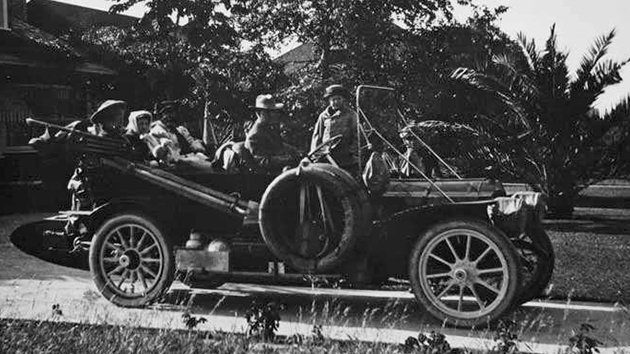
Leaving Pasadena

The Murdock family about to leave Pasadena

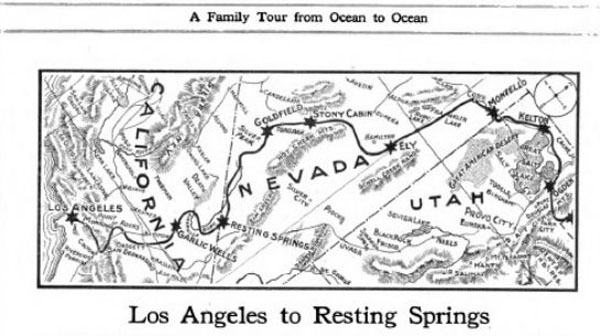
With the advent of cars in the early 1900’s, a few intrepid souls can be credited with establishing that it WAS possible to drive from coast to coast in an automobile. Although not the first to do so, Jacob Murdock, his wife Anna, children Lillian, Alice, and Jacob, Jr., were the first family to embark on such a trip. They, along with their mechanic, Phillip LeMay, departed Los Angeles on April 24, 1908 and arrived in New York City, 32 days, 5 hours, and 25 minutes later on May 26th.

876904lMr. Murdock – much to the joy of this writer who has a love of such history – recorded their travails on the trail in a short book which I found preserved by the University of Michigan. (see the link below). Alas, the Infallible Wikipedia has not heard of Mr. Murdock. Instead, I enjoyed a delightful read while sitting in a comfortable chair trying hard to imagine all the family and the mechanic – along with an occasional sixth passenger found along the way – experienced.

In 1908, paved roads were few, especially through the great American west. Their vehicle was a 1908 “Thirty” Packard with a canvas roof, folding windshield and speedometer. They started in Los Angeles, then followed the path of modern I-15 to Daggett. Those 141 miles were the first day of their journey.

mdp.39015071565041-seq_8As they continued northeast through the Mojave desert and along the southern boundary of Death Valley, they became mired in quicksand, and eventually hit upon the use of heavy rope to create makeshift chains for the tires. This experience helped prepare them for the next day when, as Murdock says in the book, “We soon found that our drift and sand experience at Coyote Lake had been merely a kindergarten for us in the art of tractionless travel.” It took 13 hours to drive 67 miles, many of those “where we again shoveled, groveled, plowed and floundered.”

From there it was northward into Nevada and Utah. They drove around the north end of the Great Salt Lake to Ogden, completing the first leg of their journey, nearly 1000 miles.

I found it interesting to ‘map’ their route. Once they arrived in Wyoming their path was generally along modern day I-80 clear to Iowa before tracking north a bit for a straight line in to Chicago; from there they dropped down into Pennsylvania for a brief stop at their home in Johnstown before completing the trek. On May 26th, they ended their 3,693.8 mile family trip when they arrived on the corner of Broadway and Sixty-first street in New York City.

murdock family new york

The Murdock family on May 26, 1908 upon their arrival in New York City

Along the way they had encountered oppressive heat, a blizzard, and much rain. The tracts they drove on went from sandy, to muddy, to rocky, to impassible in places. They experienced flat tires, mechanical breakdowns, and the car becoming mired in sand and mud. They got lost. While Murdock highlighted these challenges, rarely does he address what riding in that car for eight to fifteen  hours a day was like for the passengers.

Which got me thinking about my first multi-day road trip. It was the summer of 1970 and my parents, my slightly older sister, and I drove from Yakima to California in a 1964 Cadillac Coupe DeVille. My dad had a strong need to connect with his family, having just lost his mother in January. So off we drove to Elk Grove, California, staying in motels along the way and eating most of our meals at Denny’s.

In retrospect, I doubt my parents WANTED to eat every meal at Denny’s. But they had a picky eater along who ordered a French dip sandwich for pretty much every meal. It’s actually surprising that I still like French Dips. I don’t recall much of the scenery along the way. What I do recall is we stayed at my Aunt Arlene and Uncle Dick’s place outside Sacramento and my sister and I got to hang out with my very cool, two years older cousin, Sally. For a couple of days we got to swim in the pool at the apartment complex they managed and do awesome teenage girl stuff like sunbathe and talk about boys.

rawImage

San Francisco’s famous intersection

Our trip next took us to San Francisco where, unfortunately for me, we could not locate a Denny’s. Lunch that day took us to a drive in burger joint in the heart of San Fran (after a ride on the cable cars and navigating Lombard street). As we sat in the car eating our food, either my sister or I noticed the street signs at the intersection: Haight and Ashbury. In 1970 this WAS ground zero for the counter culture movement of the day. It was there I saw my first real hippie.

Further south we continued, arriving in Anaheim where we stayed at the Jolly Roger Inn. The next day we spent at Disneyland. Yes, just one day… enough time in my parents’ book. I know we stood in line a really long time to ride both “Pirates of the Caribbean” (it was the newest attraction then, having opened 3 years earlier) and “The Haunted Mansion.” We also rode on the “Mine Train through Nature’s Wonderland” which was a rather pedestrian trip on a tiny railroad engine through scenes from the American West. It was replaced less than a decade later with one of my favorite roller coasters, “Big Thunder Railroad.”

The perfect pairing

A place for fun and a place to eat!

Along the way, my sister and I were introduced to a bunch of second cousins and our great aunt and after a couple of days, we headed back north, winding our way up the Pacific coast all the way through California and Oregon.

As a young teen, I had zero appreciation for how special that first road trip was. I wish I had been able to drink in all the sights, sounds, and experiences of that time. Alas, as my mother – who was fond of homilies used to opine – ‘youth is wasted on the young.’

There have been many more ‘road trips’ over the years as the hubby and I have made it a mission to travel the vast lands of the United States by car. In other blog posts I have shared some of those adventures (here, here, here, and here) . But it is Jacob Murdock who captures the spirit of the American road trip in this one paragraph:

“If there ever is a national highway from ocean to ocean, the tourist will find many wide perspectives and long, beautifully-colored vistas which are well worth his while. Some of the scenes which we enjoyed were so beautiful that we thought them worth the trouble and hardship to which we had been subject in getting there over districts without any roads at all.”

Indeed, Mr. Murdock. Indeed.

https://babel.hathitrust.org/cgi/pt?id=mdp.39015071565041&view=2up&seq=8

National Cleaning Week

March 24, 2020

Americans spend, on average, six hours a week doing this? With the recent pandemic, however, the amount of time may be even greater. What is it?

Grumpy cat vacuum

Cleaning their house.

The last Sunday in March marks the beginning of National Cleaning Week. While the origins of this week are not entirely clear, the term ’spring cleaning ‘ is common and for our pioneer ancestors involved many back breaking tasks. One was the removing the stuffing of one’s mattresses, washing the cover, and then refilling it.  It does not take much imagination to envision how those beds may have smelled or what sorts of critters also used them when they were only changed every six months.

In fact every inch of the pioneer home was scrubbed into submission with the cleansing of curtains and bed sheets, the scrubbing of all walls and floors, the polishing of stoves, and the cleaning out of drawers and cupboards.

For many people, the task of cleaning is onerous. While a full time, live in housekeeper and even maids was once common for a wealthy household and even upper middle class ones; today’s American middle class has embraced the weekly or every other week, house cleaner. This is especially true for those where a job outside the house takes up the majority of daylight hours or the physical demands of cleaning are not possible.

Rather than quoting from the Infallible Wikipedia, the National Day’s Calendar shares this advice on how to ‘celebrate’ National Cleaning Week:

“Clean. The folks at Home Team have these recommendations to make cleaning week less intimidating: Tackle one room at a time, start from the top and work down, dusting ceiling fans door moldings and window tops. Don’t be afraid to move furniture. Donate to (a) thrift store those things you gather when you clean out closets, basements and storage space.”

Hmmm… that sounds a lot like what the pioneers did. With the exception of thrift stores.

Over the years, I have been lucky enough to have had housekeepers to help me stay on top of cleaning. I’ll never forget the first… the hubby and I had recently purchased a 1910 fixer upper in West Seattle. We were both working full time and this housekeeper was recommended to us.

I imagine this woman took one look at me and thought (not incorrectly) that I was a snotty 24 year old who knew nothing. So she shows up on week one and tells me HER rules. I could live with her rules since I really, really wanted her to clean the house so I didn’t have to. Especially the bathrooms. Did you know that for 52 percent of people that’s the most dreaded task? But I digress.

When she arrives, she is thrilled to learn that we have a cat. His name was Porsche. She immediately picks up Porsche to pet and cuddle him. Then it’s time for me to leave for work, so I put the cat outside. This sparks a conversation as now said housekeeper is upset that Porsche has to be outside for the day. I explain to her that he is the worst thing that ever happened to furniture and point out our badly damaged, and fairly new, couch which has been shredded by cat claws.

I leave for work. When I return later that afternoon, I do discover a cleaned house… and the cat is inside. Upon examination, I also discover that the new housekeeper has given Porsche a pedi.

In a subsequent conversation with her she refused to not cut the cats claws and refused to leave the cat outside per our instructions. I think we had the housekeeper for some three weeks before it was back to no housekeeper.

I’ve had others over the years. My favorite was a woman named Karen who only worked for people who appreciated her. She helped me when my children were little and I just couldn’t keep up with everything. One day she said to me that she liked coming to our house because she felt like her services were very much needed! Hah! Yes, I was truly a horrible housekeeper.

Now that I’m older, I don’t worry quite so much about having the house spotless and neither does my current housekeeper. She is, actually, rather lazy. I never quite know when she might show up and clean the dreaded bathrooms or mop the hardwoods. It’s very hit and miss. Eventually, she gets it done even if she grouses about how her back hurts, or she sits for a while, claiming she needs her frequent breaks.

These past couple of weeks with ‘social distancing’ edicts has really thrown my world into a tizzy. My lazy housekeeper says she won’t come in to clean and has instead declared that she’s staying at her own home to watch Hallmark movies, read trashy romance novels, and eat Bon Bons.

Lazy housekeepingSo it’s back to me having to clean the house once again. The hubby pulls out the vacuum when it gets bad. And I’m on constant vigil for signs that the bathrooms need attention. But a funny thing has happened with being forced to stay home. I’ve gotten through a number of boxes of stuff which needed sorting. I’m catching up on some mending projects. I’ve gotten the hubby to take on the task of fixing the barbecue table and plan to have him help me hang a few pictures and a display cabinet I brought back from my Dad’s house.

All in all, The Great Quarantine of 2020 and National Cleaning Week, have coalesced into the week when – I’m pretty sure – households all across the nation are at the Zenith of being clean.

Cats, however, cannot figure out what the fuss is all about. They wrote the book on social distancing and being clean… experts at staying six feet away, only interacting with their favored family members, and spending hours licking their fur clean. Just don’t trim their nails.

Our most dreaded of cleaning tasks:

  • cleaning the bathroom (52 percent)
  • kitchen cleaning (23 percent)
  • dusting (21 percent)
  • mopping (20 percent)
  • doing the laundry (17 percent)

Remembering Karen Carpenter: The Voice That Captivated a Generation

February 4

Karen Carpenter

A Tuesday Newsday Classic

February 3, 1959. August 16, 1977. December 8, 1980. February 4, 1983. April 5, 1994.

For any person who is a true fan, any one of these dates might invoke an unpleasant memory of the ‘day the music died’ for them. Each date marks the passing of a well loved and famous musical artist. Do you recall where you were and what you were doing on any one of these days?

My brother – who is a disc jockey – still talks about August 16, 1977. The day Elvis died. For Nirvana fans it’s April 5, 1994. Beatles devotees recall December 8, 1980 as a day which shocked the world. And, of course, February 3, 1959, marks the tragic date when Buddy Holly died in a plane crash along with a few others.

Karen Carpenter early 1970s

Karen Carpenter in the early 1970’s

If you don’t recognize February 4, 1983, you can be forgiven. But for me that was the date when the first artist whose voice and music truly captured me, died: Karen Carpenter.

To this day I wonder it was an avoidable outcome if only…  if only her mother had been more loving and less controlling… if only she hadn’t been forced to come out from behind her drums… if only the press had not been so awful to her… if only she could have loved herself the way her fans loved her.

By all accounts, Karen’s life could have become a fairy-tale come true. At the age of nineteen Karen, as one half of The Carpenters, saw their first big hit “Close To You” rocket to the top of the pop charts. Fame and financial success followed with a string of Top Ten records. Concerts, TV specials, and an invitation to the White House were all a part of those heady years.

And yet. Karen was particularly sensitive to body image. From the Infallible Wikipedia:

“Carpenter began dieting while in high school. Under a doctor’s guidance, she began the Stillman diet, eating lean foods, drinking eight glasses of water a day, and avoiding fatty foods. She reduced her weight to 120 pounds and stayed approximately at that weight until around 1973, when the Carpenters’ career reached its peak.  That year, she happened to see a photo of herself taken at a concert in which her outfit made her appear heavy. Carpenter hired a personal trainer who advised her to change her diet. The new diet caused her to build muscle, which made her feel heavier instead of slimmer. Carpenter fired the trainer and began her own weight loss program using exercise equipment and counting calories. She lost about 20 pounds and intended to lose another five pounds. Her eating habits also changed around this time, with Carpenter trying to get food off her plate by offering it to others at the meal as a taste.”

With increased success, came increased pressure to look and be perfect. By most accounts it seems that Karen spent her life trying to gain her mother’s love and approval. Older brother Richard was the focus of the family’s attention. At age 3 he was playing the piano and had been identified as a child prodigy with immense talent. It must have come as a huge shock to her parents when it was Karen and her amazing voice that proved to be the secret to success. Also from the Infallible Wikipedia:

“(Karen) Carpenter had a complicated relationship with her parents. They had hoped that Richard’s musical talents would be recognized and that he would enter the music business, but were not prepared for Karen’s success. She continued to live with them until 1974. In 1976, Carpenter bought two Century City apartments which she combined into one; the doorbell chimed the opening notes of ‘We’ve Only Just Begun’.”

Karen carpenter in grip of her disease

In this photo, you can clearly see that she is not at a healthy weight.

Most of the focus on Anorexia Nervosa came after Karen’s untimely death. In the decades since there has been research and a public push to find solutions for those who are afflicted by the disorder. Karen Carpenter’s struggle has been largely responsible for this.

One of the things I would have loved would have been to attend a Carpenter’s concert. Alas, being only 13 when they hit the top of the charts, it was not going to happen. My mother believed rock and roll concerts (the Carpenters were not exactly rock and roll BTW) were not appropriate places for young women. In fact, the first concert I attended was a decade later, long after the Carpenters were no longer touring.

For several years in the 1970’s, however, I purchased every one of their albums and would listen to Karen’s dulcet tones for hours on end. I loved her voice.

Fast forward to Friday, February 4, 1983. I was working at Microsoft – then located near the Burger Master on Northup Way in Belleuve, Washington – paying more attention to selling computer software and not listening to music for hours each day.

It was payday and at lunchtime one of my fellow Microsofties, Sue C., and me decided to go deposit our paychecks in the bank. We headed to downtown Kirkland, a few miles north. Once our banking was complete, we drove south on Lake Washington Boulevard. We likely had the radio on – background to our chatting – when I heard the announcement “Pop star Karen Carpenter has died.”

I think Sue was behind the wheel and immediately stopped the car as we both exclaimed shock and dismay. How could it be? What I most recall about that day is that it seemed dark to me. In reality, according to the weather history, it was a fairly mild, clear day. But in my mind, it’s dark.

Karen Carpenter was such a part of our growing up experience; she was 32 years old, a mere seven years older than ourselves.

In 1989 I watched with interest the CBS TV movie The Karen Carpenter Story. In the years since her death I had not listened much to The Carpenters. The moment I heard those favorite songs and her voice, however, it was as if I was transported back to the early 1970’s. What a voice. It was filled with emotion and able to convey a sadness that transcended the years. Like so many artists who died young, I wonder what wonderful songs the world missed out on when Karen Carpenter left us on February 4, 1983.

A few links:

https://en.wikipedia.org/wiki/Karen_Carpenter

I couldn’t make up my mind as to which of these two songs to share… so I did both. I think Superstar also captures the depth of whatever pains she felt in life.

Superstar: https://youtu.be/SJmmaIGiGBg

Links to three other posts I’ve made about Karen Carpenter:

Wedding Woes

Just like me, they long to be…

The 100-Year Legacy of the National Christmas Tree

 A 102 Year Tradition

December 24th

2019NCTL_Ceremony.jpg

The 2019 National Christmas Tree

At 3 p.m. on Monday, December 24th, 1923, an American tradition began which continues to this day. That event was the lighting of the first National Christmas tree.

Now, 102 years later, the event occurs earlier in the month – this year on December 4th – as it has since 1954 during a month long event known as the Pageant of Peace. But back to the beginning.

The concept of a National Christmas tree was the idea of Frederick Morris Feiker, an engineer with General Electric. He, along with Vermont US Senator Frank L. Greene, convinced President Calvin Coolidge to light the tree.

Alumni of Middlebury College in Vermont paid for the transport of a 48 foot tall balsam fir to be transported to Washington, D.C. with GE providing 2,500 green, red, and white electric lights.

From the Infallible Wikipedia:

calvin-coolidge-was-the-first-president-to-instate-a-public-christmas-celebration-at-the-white-house-with-the-first-national-chris.jpg

President Calvin Coolidge and dignitaries at the first National Tree Lighting ceremony in 1923

“At 3 p.m. on December 24, 1923, a 100-voice choir from the First Congregational Church assembled on the South Portico of the White House and began a two-hour concert of Christmas carols. At 5 p.m. (dusk) on Christmas Eve, President Coolidge touched a button at the foot of the tree which lit the lights and electric candles adorning the tree, but he did not speak. A searchlight from the nearby Washington Monument was trained on the tree to help illuminate it as well. The Coolidge family invited citizens of the city to sing Christmas carols on the Ellipse after dark. Between 5,000 and 6,000 people thronged the park, joined by 3,000 more people by 9 p.m. The crowds were joined by the Epiphany Church and First Congregational Church choirs, which sang carols, and the Marine Band played Christmas-themed music. The singing ended shortly before midnight. After the white residents of the city had dispersed, African American residents of the city were permitted on the park grounds to see the National Christmas Tree. An outdoor Christian worship service was held, and a mass choir composed of signing groups from area community centers sang more Christmas carols. An illuminated Christian cross was flashed on the Washington Monument, and men dressed as shepherds walked from the National Christmas Tree to the monument.”

300px-US_National_Christmas_Tree_1923The following year Coolidge objected to cutting down a tree for the event so a 35 foot tall live Norway Spruce was located and planted in a new location near the Treasury Building. This tree survived until 1929 when it was determined that the plant had been damaged and needed to be replaced. This began a series of live trees being planted, dying, and being replaced until, in 1934, the last tree was cut down in that location.

In December 1934, the tree and the ceremony were moved to Layfayette park, north of the White House. There it remained for only a few short years before returning to its original site on the Ellipse where it remains to this day. Over the years there have been many, many trees which have served in the role. Additionally, the ceremonies and events associated with it have become quite extensive. If you’d like to read more about its history, here’s the Wikipedia link https://en.wikipedia.org/wiki/National_Christmas_Tree_(United_States) and also the link to the official website https://thenationaltree.org/lighting-ceremony/2019-national-christmas-tree-lighting-ceremony/.

Although I’ve never seen the National Tree, I do love driving around during the Christmas season and viewing all the wonderful outdoor decorations. There is nothing quite so beautiful as a blue spruce or fir tree at night covered with lights AND an inch or two of snow on its branches.

My first memory of such a tree was when I was probably 7 or 8. My bedroom in Yakima faced towards our backyard. Our neighbor, Ray Broten, spent a lot of time keeping his yard beautiful. No matter the season, his was always manicured and trimmed to perfection. That particular December, the spruce tree located in the southwest corner of his backyard cut through the darkness with blue, green, red, and white lights, illuminating my bedroom each night. After I went to bed there was many a time I stole back over to the window and just stood and looked out at his beautiful tree. My favorite nights were when a soft snow was falling, muting the darkness with a blanket of white.

When I got too cold, I’d crawl back in to bed, and as I warmed up and drifted off to sleep, the shine of those lights would bathe the room with a soft glow.

This tradition continued for a number of years until the time I moved away from Yakima. Although those years are long ago, the memory is etched with clarity as Mr. Broten unknowingly created one of my fondest recollections.

May your Christmas also be one of wonderful reminiscences and the creation of new memories. Merry Christmas one and all.

Arches National Park

November 12, 2019

With more than 2000 natural sandstone arches located within, Arches National Park has the highest concentration of these features in the world. Although it had been named a National Monument in 1929, it was on November 12, 1971, when Arches National Park was created.

Windows arches national park.jpg
Situated in eastern Utah, it’s remote location and rugged terrain make getting there a challenge. The Utah park, however, has become a magnet for hikers, climbers, and nature lovers, attracting some 1.6 million visitors in 2018.
According to the Infallible Wikipedia:
“The Arches area was first brought to the attention of the National Park Service by Frank A. Wadleigh, passenger traffic manager of the Denver and Rio Grande Western Railroad. Wadleigh, accompanied by railroad photographer George L. Beam, visited the area in September 1923 at the invitation of Alexander Ringhoffer, a Hungarian-born prospector living in Salt Valley. Ringhoffer had written to the railroad in an effort to interest them in the tourist potential of a scenic area he had discovered the previous year with his two sons and a son-in-law, which he called the Devils Garden (known today as the Klondike Bluffs). Wadleigh was impressed by what Ringhoffer showed him, and suggested to Park Service director Stephen T. Mather that the area be made a national monument.”
Over the years, like so many of our nation’s National Parks, Arches has been loved to the point of fragile features being in danger of destruction. Consequently, there are now bans within the park which make climbing some of the more famous arches illegal.
The hubby and I have had the privilege of visiting Arches twice. The first time was in the summer of 1984. We arrived on a hot July day which was not conducive to outdoor activities. Being young and in decent shape, however, we did exit the car and hiked  in the Windows region of the park.

Balancing rock arches np.jpg

Cold and rainy Thursday October 11, 2018 in Arches NP

The second trip was in October of 2018 along with several hundred of those 1,599,998 other visitors on a rainy – which is rare since the park gets less than 10 inches of precipitation a year – weekday. What struck me about the differences between those two visits is that the park had been ‘discovered’ in the intervening years. On the first trip we saw maybe a half dozen other cars and some 12 tourists.  In 2018, despite the inclement weather and a number of  flooded roads, the place was crawling with people. Finding a place to park the car at some of the stops was a challenge at times.

Our method of touring, 24 years later, has changed. In eighty four, I would cram as many things into our travels as possible, never allowing nearly enough time to pause and marvel at nature’s grandeur. A year ago, our inclinations to be mountain goats now subdued, getting out and hiking for a mile or two wasn’t happening. Instead, rather than the slap and dash tourists of yesteryear, we stopped frequently and walked short paths to where we could stand and simply appreciate the amazing features, listen for birds and insects, and find joy in the moment.
The term ‘Stop and Smell the Roses’ may be cliche, but the idea behind it is solid. Too often we rush to the airport, wait in lines to be crammed into a plane, then fly to a destination where the modern amenities make our lives easy. There’s nothing easy about visiting Arches or many of Utah’s spectacular landscapes… but it is so very worth the trip.