One of the joys of being an author is in the inventing of fictional worlds in real places. When I started thinking about this story this is what went through my head:
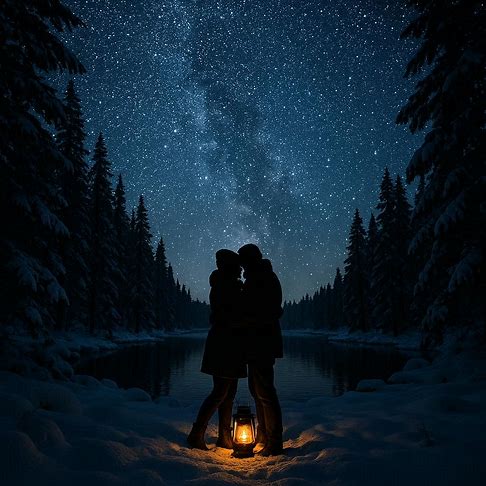
Nicole’s journey took her into the mountains of Montana on the winter solstice.
“What If?” I mused, a young man wanted to break out on his own and move to a place where he knew no one and just started his life over? I know! He answers an ad in a magazine and a few months later he’s living in the boondocks of Montana or Idaho or some other remote western state.
Oh yeah, he also needs to have a tie in to The Darling of Delta Rho Chi, since it needs to be part of series. Sam Paxton is the obvious choice. A young man living in the shadow of his older half-sister, Riley, who we met in book one.
Next, I needed a heroine; a heroine suffering from a calamitous event … who has a very good reason to drive all the way from the Gamma Alpha Beta house at the University of Washington to the boondocks of, er, someplace. Let’s call her Nicole.
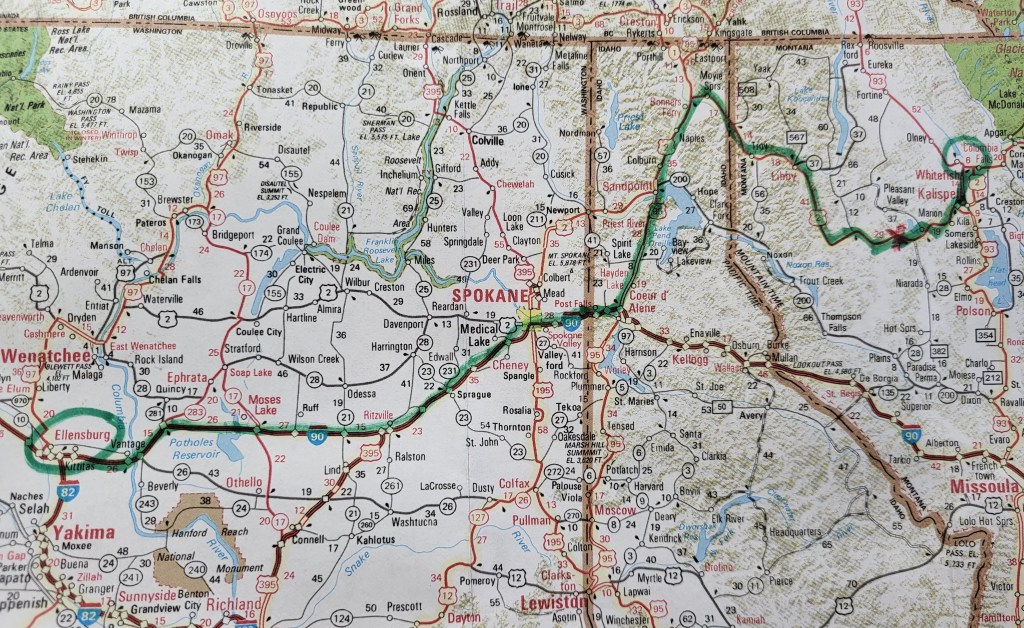
Nicole’s intended journey that fateful December day from Ellensburg to Big Mountain. She ends up stranded at the red ‘X.’
Out came the maps. Being that the story is set in December and during Christmas break, Nicole needed a hometown someplace in Washington. I picked Ellensburg. It’s a nice town and one I was familiar with, having grown up in nearby Yakima. From there she could travel eastward to the mystery destination. What about Sun Valley, Idaho? I soon learned it was over 500 miles and 8 plus hours of travel from the heroine’s hometown. Plus, I knew Nicole’s parents would NEVER agree to that trip.
I Googled ski resorts in Montana and up popped quite a few. Red Lodge was 716 miles east of Ellensburg and Big Sky was 604. Whitefish, at 425 miles, seemed just far enough to make it difficult for Nicole to get home but still had the elements needed to make it work.
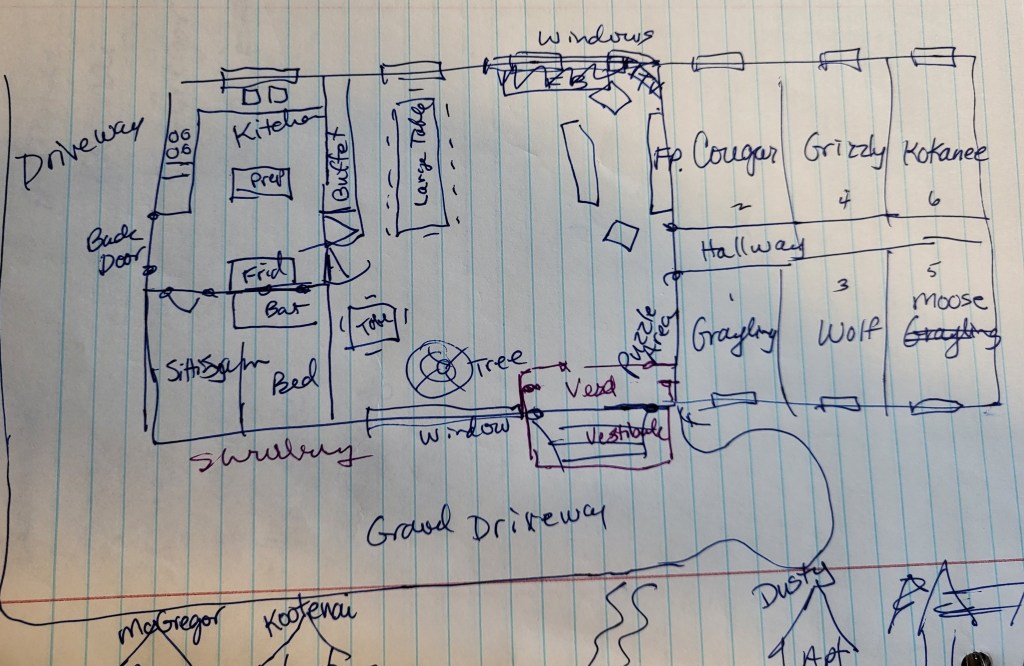
When I was 12 years old I became obsessed with designing the layout of houses. I used graph paper and would spend hours drawing them. This is my rough layout of the fictional Malloy’s Lakeside Lodge.
As the story took shape, more research was needed. Like knowing the specific weather on specific days. What was the layout of the lodge? Where could that lodge be located? What was the floor plan of Nicole’s family home?
All those details are, to me, part of the fun of story creation and I hope that you, my readers, will enjoy being immersed in the fictional world of Sam, Nicole, Dusty, and Beej! – Barbara DeVore
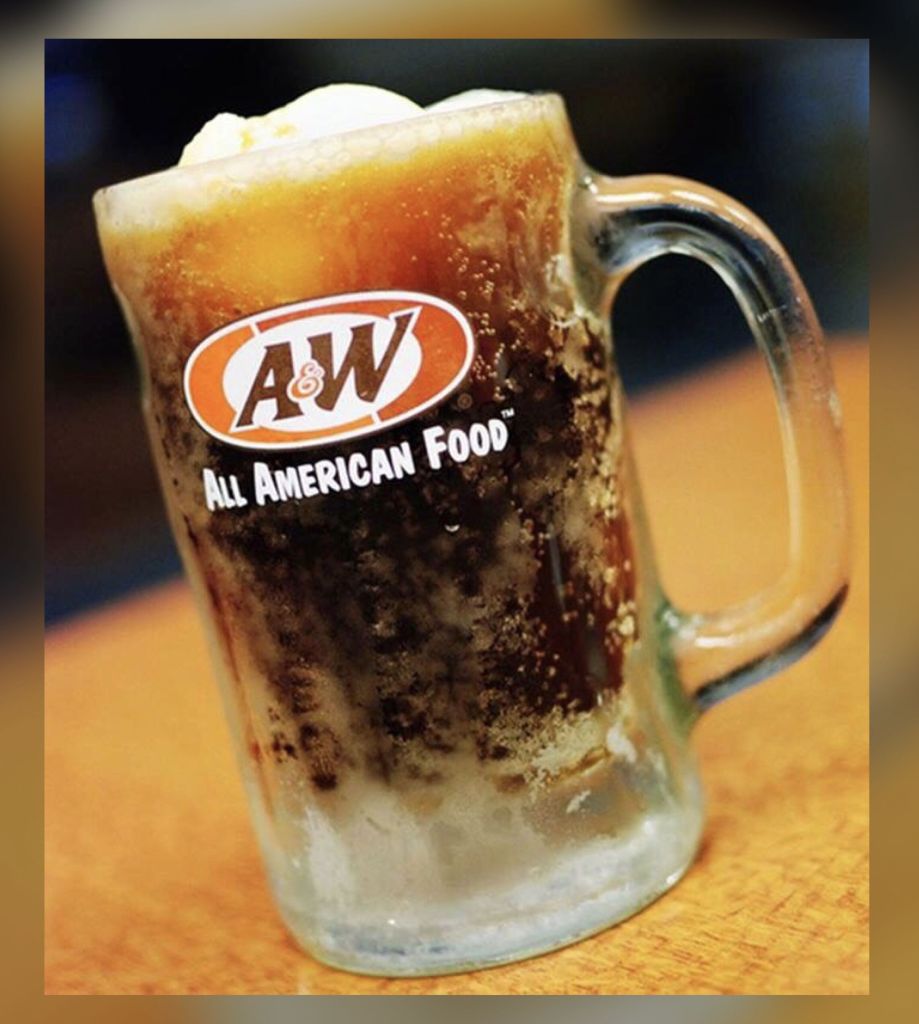
When I think back to the 1960’s and 1970’s, there is not – in my opinion – a better symbol of American culture than the A&W Root Beer stand.
It’s appropriate to write about it this week as June 17th is National Root Beer Day. I’m certain we can have a debate as to ‘which’ root beer brand is best: Hires, Barq’s, A&W, or, perhaps, a newer competitor like Mug. For me, it’s always been A&W. I suppose that is because it was THE root beer which my family always drank.
As expected, the Infallible Wikipedia expounds on the topic of Root Beer:
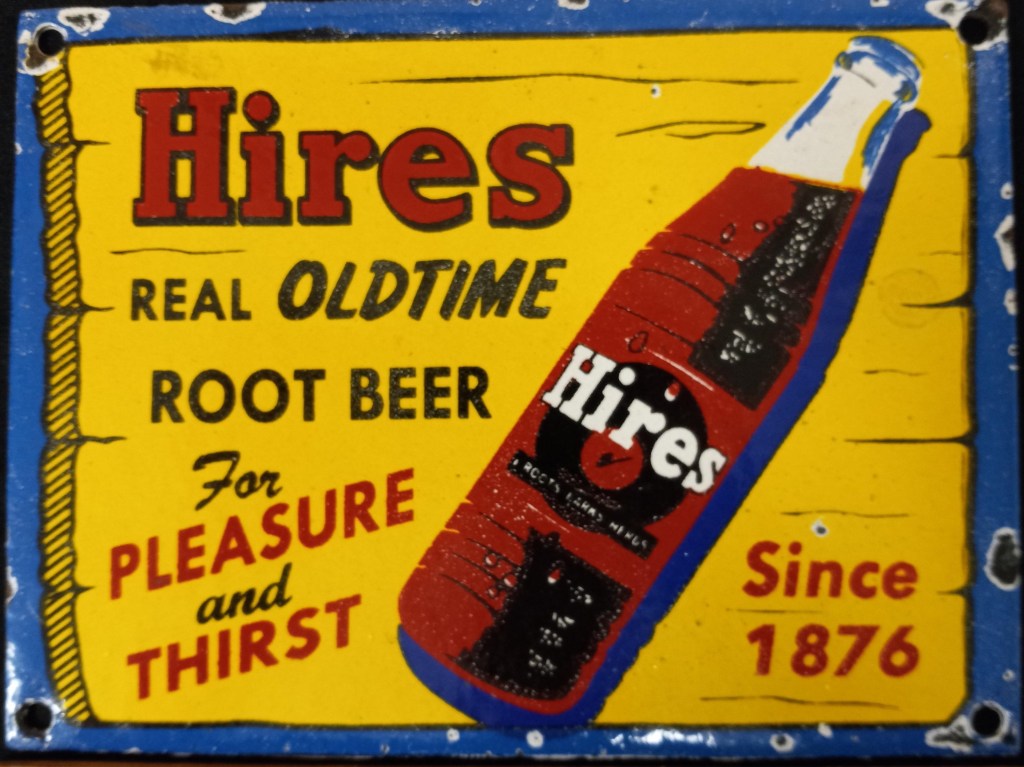
The original commercial root beer was Hires which often advertised its product as a health tonic.
“Root beer has been drunk in the United States since at least the eighteenth century. It has been sold in confectionery stores since at least the 1840s, and written recipes for root beer have been documented since the 1830s. In the nineteenth century, it was often consumed hot and was often used with medicinal intent. It was combined with soda as early as the 1850s; at that time it was sold as a syrup rather than a ready-made beverage.
Beyond its aromatic qualities, the medicinal benefits of sassafras were well known to both Native Americans and Europeans, and druggists began marketing root beer for its medicinal qualities. (Snip)
Safrole, the aromatic oil found in sassafras roots and bark that gave traditional root beer its distinctive flavor, was banned in commercially mass-produced foods and drugs by the FDA in 1960. Laboratory animals that were given oral doses of sassafras tea or sassafras oil that contained large doses of safrole developed permanent liver damage or various types of cancer.”
The article does give more detail about Charles Elmer Hires who was a pioneer in the commercial production and also mention’s Barq’s – developed by the Coca-Cola company.
But it was Roy Allen who opened the first root beer stand in 1919 in Lodi, California. It was a hit and four years later, in 1923, he teamed up with Frank Wright and they opened the first A&W drive-in restaurant in Sacramento. The Infallible Wikipedia tells us:
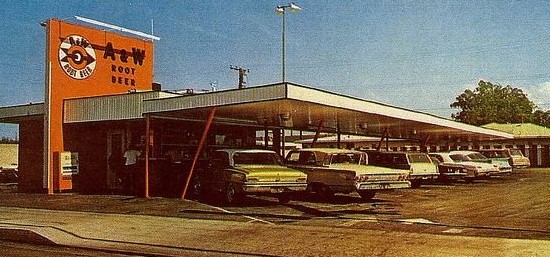
An A&W Root Beer drive in from the late 1950’s/early 1960’s. Not the one in Yakima but ours was similarly laid out.
“Curbside service was provided by tray boys and tray girls. In 1924, Allen purchased Frank Wright’s stake in the business. In 1925, Allen began franchising the root beer, while the franchisee added the other menu items and operated at their discretion. Most of the restaurants that opened under this scheme were on the highways of the Central Valley region, mainly for travelers. This may have arguably been the first successful food-franchising operation.”
Fast forward to the 1960’s, it is at the corner of 10th Avenue and Nob Hill Boulevard in Yakima, Washington, where my family went during those very rare times when we frequented any sort of restaurant – fast food OR sit down. It was always a treat to get to go to A&W and pull into a slot under the shaded carport style ‘drive in.’ Occasionally my parents would buy us food, but mostly it was just for the root beer.
My dad would turn on the head lights of the car and soon a perky teenage girl would be at his window to attach the tray holder. We’d wait with great anticipation until a short time later, she would reappear – the tray laden with the thick frosty mugs of root beer. Soon they were passed around the car and nothing ever tasted so good on a hot summer’s evening.
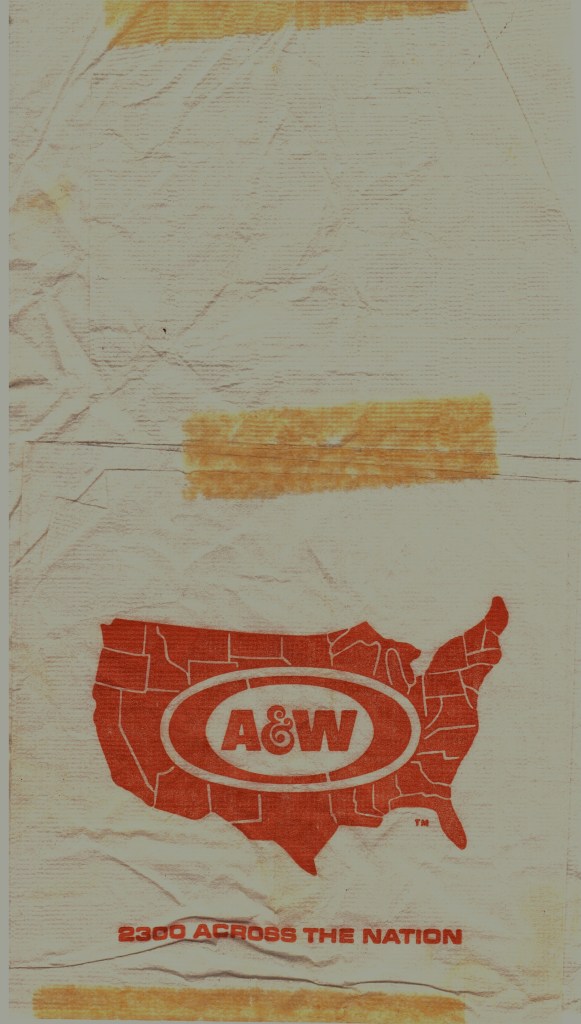
Who actually saves a 1972 napkin from A&W and stows it away in her teenage scrapbook? Oh, yeah, that would be the author. Unbelievable but true.
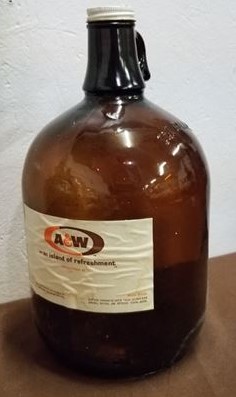
Sometimes – especially for the Fourth of July – my dad would come home with a giant glass jug full of A&W root beer and a five-gallon tub of vanilla ice cream. When the family was finished with the sparklers, pinwheels, and other small fireworks assortment, it was time for Root Beer floats.
Dad used to bring home a jug of root beer on the 4th of July similar to this one, no doubt.
Those were equally as good and a treat the family looked forward to every Independence Day.
At the time, I did not – of course – appreciate these special moments. It was, after all, what was normal for my family. I believe it was the summer of 1974 when I went to the drive-in on 10th & Nob Hill for the last time.
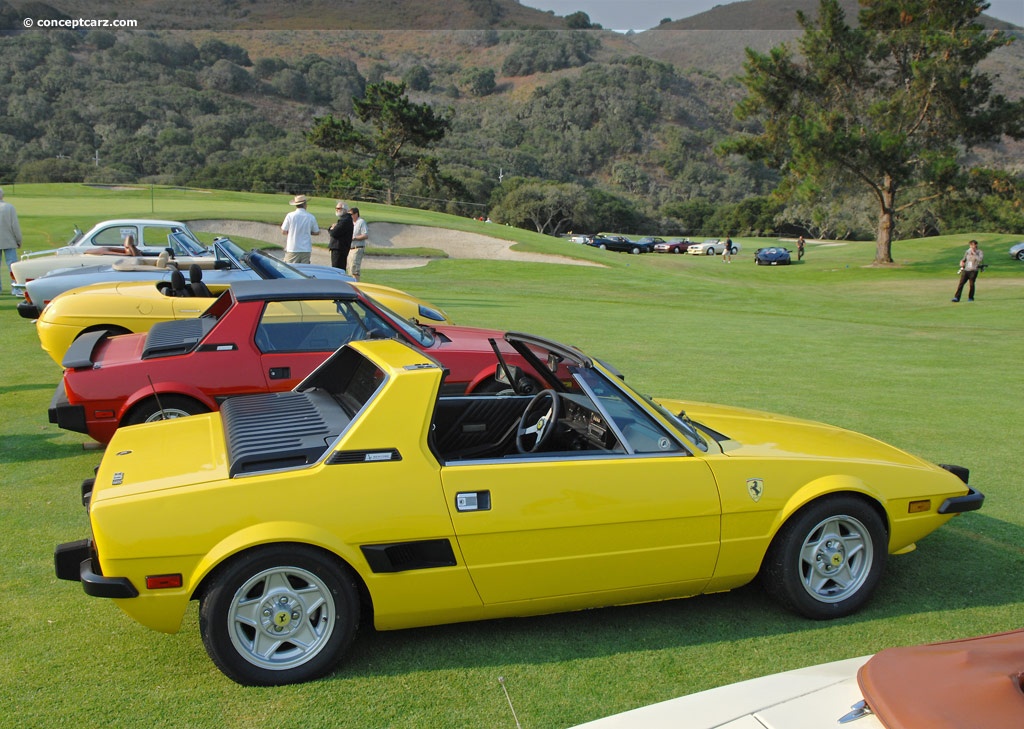
My brother – age 21 that year – was home from college and it fell to him and me to drive to A&W to buy the requisite jug of root beer for the Fourth of July floats. Being that he was immortal (a belief which tends to most affect young men ages 16 to 25 – a phenomenon the hubby and I refer to as being “nineteen and immortal”) he had purchased a rather fun car to drive and drive fast: a 1974 yellow Fiat X1/9.
Being that I was a teenage girl, there was a thrill to riding in a fast car even if it was with my older – and much cooler than me – brother. I did not think I was immortal but I was willing to take risks.
I climbed into the shotgun seat of his car and away we zipped down Tieton Drive. The roof of the car had been stowed in the forward ‘trunk’, the sun shining, and warm summer air surrounded us. We zipped down the hill to 16th, then a right turn and south to Nob Hill, and then left for the final six blocks east to the family favorite A&W. Soon I had the jug of root beer secured at my feet for the return trip.
A yellow 1974 Fiat X1/9 like the one my brother owned. The roof was removable and stored in the front compartment as the engine was in the back. Photo from http://www.conceptcarz.com.
We raced home, speeding west up Tieton Drive hill and I swear to this day that my brother never slowed down as the car careened around the corner onto our street. I am certain he hit the gas as we practically flew over the pavement. That moment is etched in my memory, my long blonde hair flying; I’m alternating between laughing and screaming, buckled in for my brother’s version of Mr. Toad’s Wild Ride.
After we were safely parked, I made him carry the root beer into the house as I did not trust my legs, certain they had turned to rubber.
Eventually that A&W location shut down and the era of carhops is all but gone.* Somehow going to a drive-through window just isn’t the same. But even so, when I pour myself a glass of A&W, I’m immediately transported back to a Yakima summer night and I smile when I think about that crazy ride with my crazy brother.
*Burgermaster has five locations in the greater Seattle area and still employs ‘carhops.’
If you have ever wondered how the marshmallow got its name, just read a bit further as we explore this tasty treat, most associated with being roasted during summer nights around a campfire with friends and family.
The fluffy round white confection made of sugar, water, gelatin, and a coating of cornstarch, is nothing at all like the original marshmallow. For our purposes we will call the original a marsh-mallow, as it is a plant which is native to Europe, North Africa, and Asia. As the name indicates it grows in wetlands and the roots proved to be an effective medicinal for treating coughs and sore throats.
According to the Infallible Wikipedia, there is evidence that the plant was used by ancient Egyptians some 4000 years ago. Now that’s staying power!
The entry tells us:
“Whether used for candy or medicine, the manufacture of marsh-mallows was limited to a small scale. In the early to mid-19th century, the marsh-mallow had made its way to France, where confectioners augmented the plant’s traditional medicinal value. Owners of small confectionary stores would whip the sap from the mallow root into a fluffy candy mold. This candy, called Pâte de Guimauve, was a spongy-soft dessert made from whipping dried marsh-mallow roots with sugar, water, and egg whites. It was sold in bar form as a lozenge.
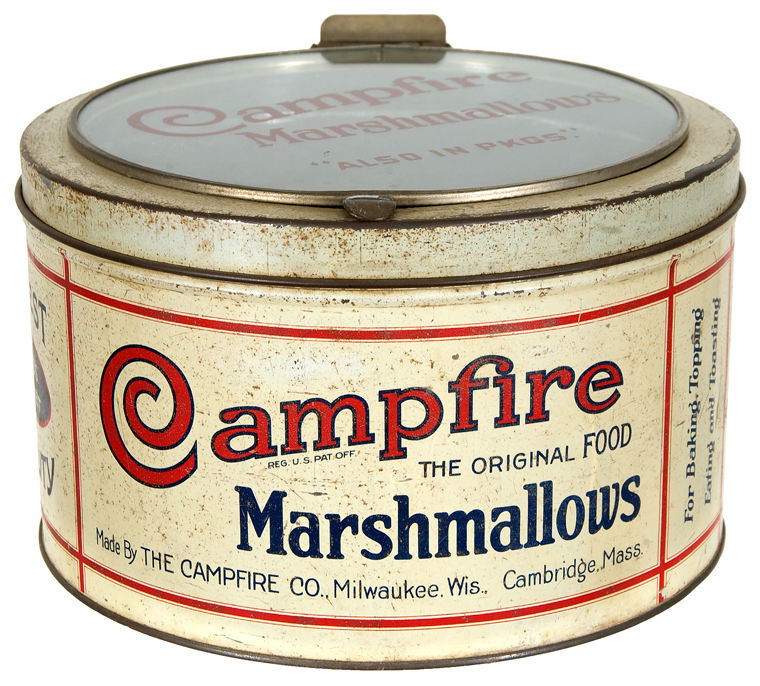
Campfire Marshmallows have been a favorite for over 100 years.
Drying and preparation of the marsh-mallow took one to two days before the final product was produced. In the late 19th century, candy makers started looking for a new process and discovered the starch mogul system, in which trays of modified corn starch had a mold firmly pushed down in them to create cavities within the starch. The cavities were then filled with the whipped marsh-mallow sap mixture and allowed to cool or harden. At the same time, candy makers began to replace the mallow root with gelatin, which created a stable form of marshmallow.”
Eventually, the modified marshmallow – the one which did not contain any of the plant – made its way across the ocean. It was in 1956 when an entrepreneur by name of Alex Doumak invented an extrusion device where the ingredients were sent through a tube and long ropes of marshmallows came out the other end. From there, they were cut in to the fluffy white rounds known as marshmallows.
Our family favorite marshmallows are the Jet-Puffed brand
The Infallible Wikipedia tried to figure out when, exactly, the roasting of marshmallows over a campfire began, but the origins are iffy. They were able to find a reference to it in a New Jersey newspaper from 1892. I imagine it probably started by accident when someone accidentally browned one and thought “Hey, this tastes really good.” Thus, the tradition of roasting marshmallows began.
There are any number of variations on how to use marshmallows: cooks have used them as toppings on Jello, added at the last minute to Thanksgiving sweet potatoes, floating on a steamy mug of hot chocolate, or taking the roasted campfire varieties and sandwiching a couple between two graham cracker squares and a hunk of chocolate.
Marshmallows also find their way into a variety of children’s craft projects such as gingerbread houses and winter snowmen.
I am, however, a traditionalist. While I will have a s’more at a beach or camp fire, I find that I prefer a perfectly toasted marshmallow eaten in a very specific manner.
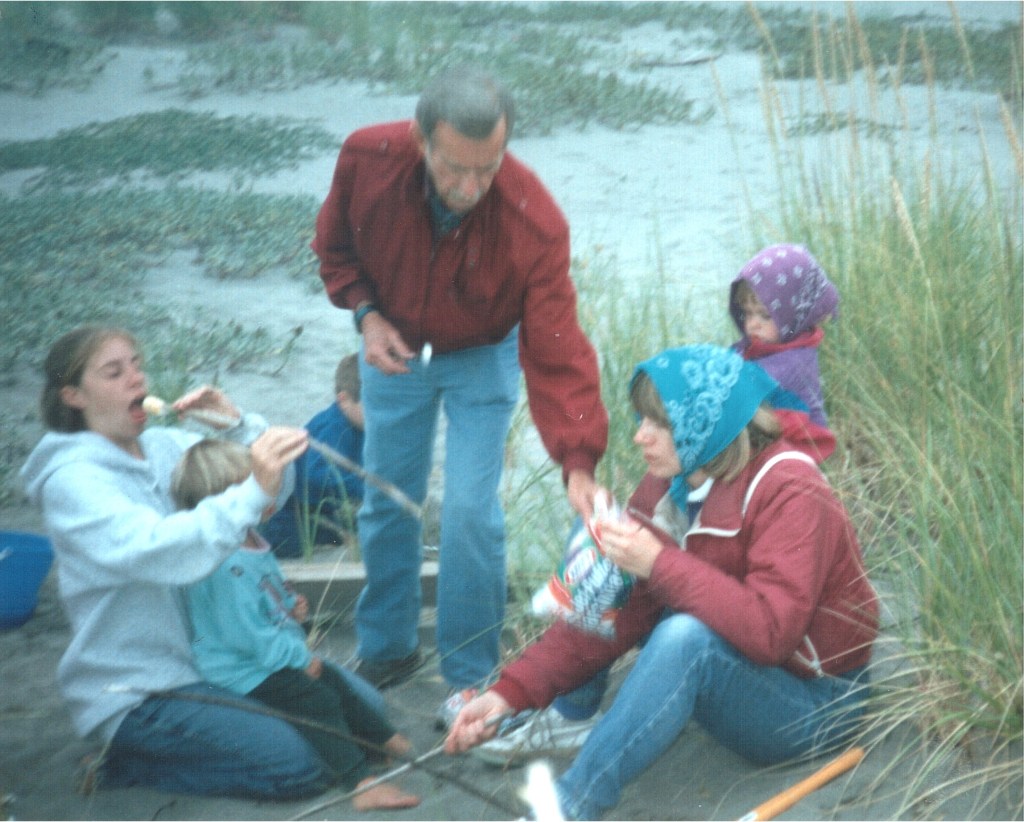
Family at a Long Beach marshmallow roast, circa 1998
Here’s the recipe:
Start a campfire. Let it burn hot for about 45 minutes until coals accumulate at the base. Let the flames die down enough that you can sit about a foot away from the fire. Using a stick you have found, whittle the narrower end into a point with a pocket knife until the white wood shows and the bark is removed (make sure to pick a non-toxic wood!).
Sit on a log, camp chair, or old blanket. Open a bag of 1 inch diameter marshmallows, remove one from the bag, and press it firmly onto the pointed end of the whittled stick.
Study the coals to determine the perfect spot to cook the marshmallow. Turn it so one side is about two to three inches from the hot coals. Hold it next to the coals until the skin starts to turn gold then rotate your stick a quarter turn and toast the second side. Repeat until all sides have been roasted.
Remove the marshmallow and evaluate. If there are white spots, return it to the coal area and give it a couple of seconds to brown.
Finally, tip the head of the marshmallow toward your coals and cook the top until it puffs up and is golden brown.
If you happen to lose control of the cooking process and, heaven forbid, your marshmallow erupts in flame, remove immediately and wave in the air, and then offer it to the lazy person who doesn’t want to cook their own.
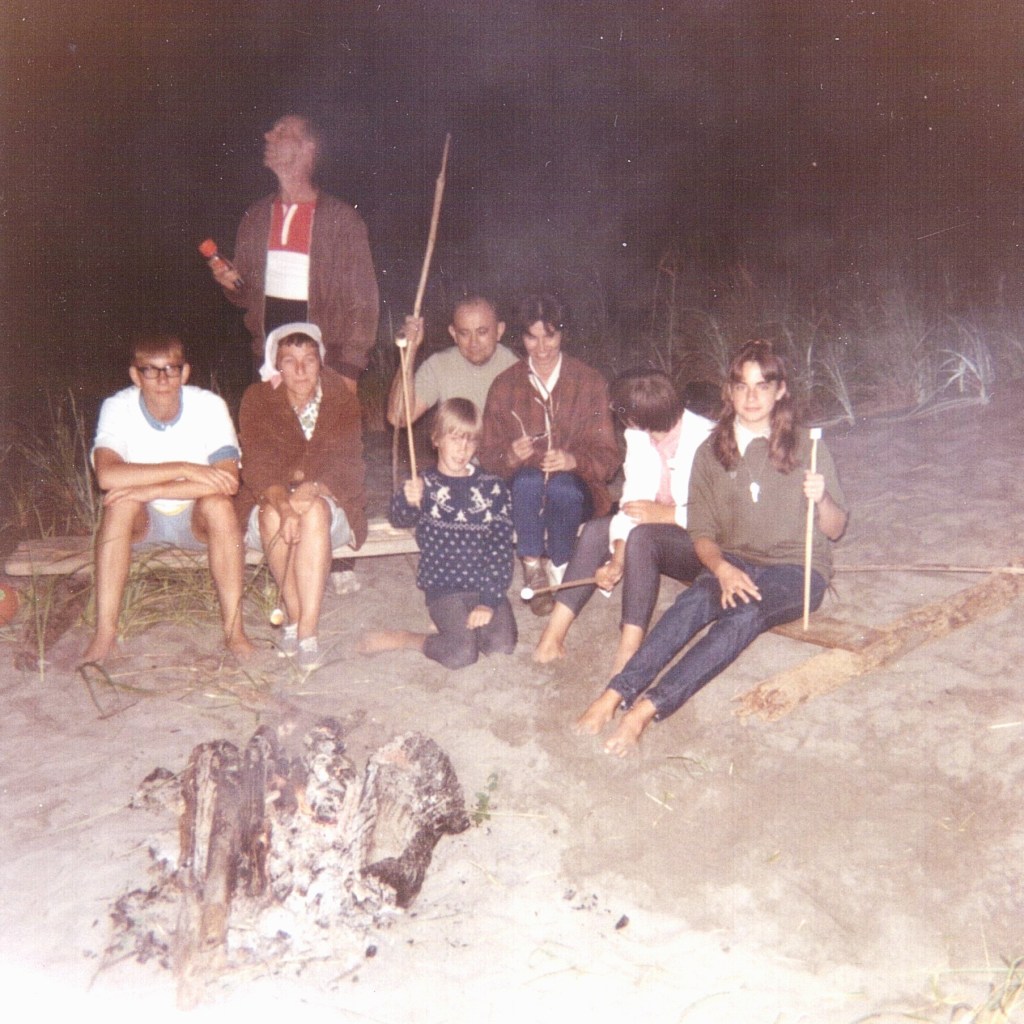
Brother, Mom, Dad, Uncle, Aunt, sister, and cousin – author in the middle wearing the blue ski sweater – enjoying a marshmallow roast at the beach. Photo taken by the author’s grandmother.
Repeat.
When you finally have the perfectly roasted marshmallow, it is time to pull the roasted outer layer up and off the stick, and eat just that thin layer. Once eaten, it is back to the fire to roast the gooey middle and then eat it too.
It’s a funny thing, when I started thinking about this topic, I could not remember a time when roasting marshmallows was not a part of my family’s annual vacation to Long Beach, Washington, for two weeks each summer.
So long as it wasn’t raining, after dinner was finished and everyone was dressed appropriately, we would walk down past the dunes and onto the beach for our nightly fire. In my minds eye I can see my mom in her pedal-pushers, head scarf, jacket, and keds, walking ahead of me (in a single line as the path was narrow), the bag of marshmallows in one hand and a half dozen roasting sticks in the other. My dad would lead the way with newspaper, matches, and a shovel, ready to start the fire.
We kids were assigned the task of searching for pieces of wood to serve as kindling and, if luck was on our side, we’d also retrieve the occasional larger pieces left behind by some other campfire builder from a previous night.
Soon my dad had the fire going and the adults would tend it while the kids built sandcastles or played hide and seek in the nearby dunes.
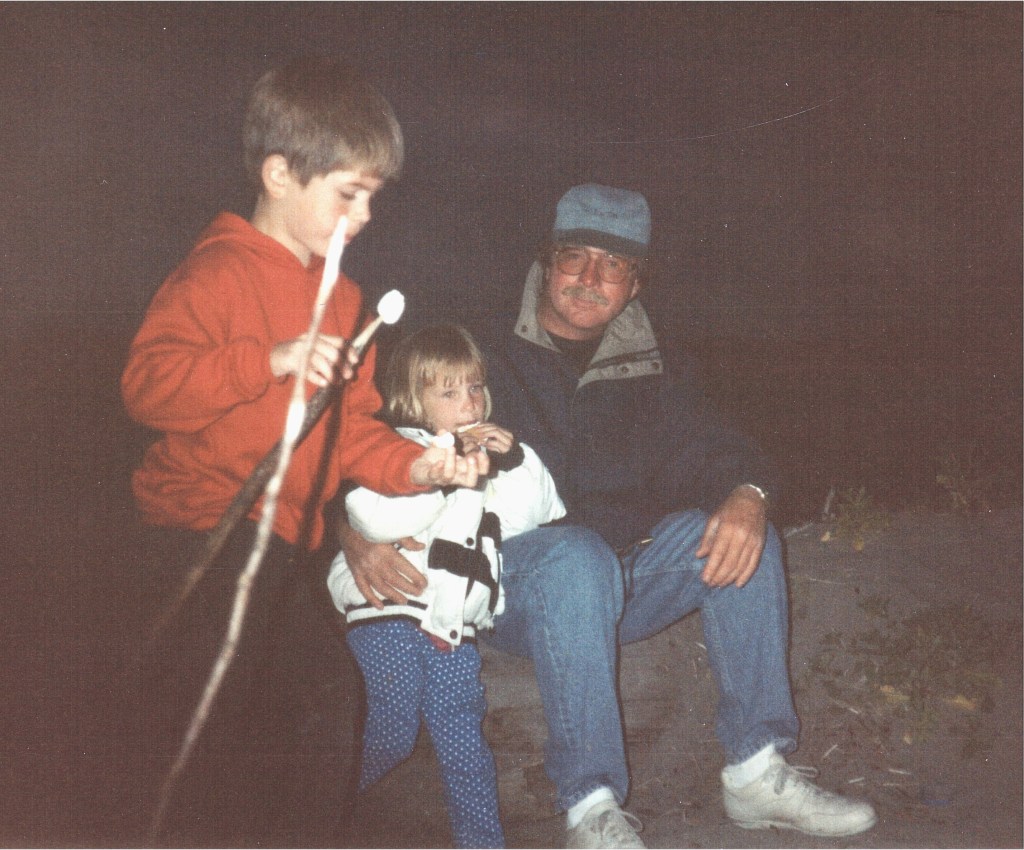
Marshmallow roast 1995. The participants shown are the author, my kids, two of my nieces and my dad – aka Grandpa.
Just as the sky got dusky (in Washington state the sun sets as late as 9:14 p.m. in mid-June making for longer light filled evenings) it was time. We’d all assemble around the fire, jockeying for the best ‘spot’ and my mom would push a marshmallow onto the end of our sticks.
After we had our fill and the sky was fully dark, the uncooked marshmallows would be safely stored in their bag, and then my dad would shovel sand onto the remnants of the beach fire. Soon we reversed our earlier trip, following the beam of the flashlight my dad now held as he led the family back through the night to the rented cabin.
It was the simplest of traditions, but also the best. For the price of a bag of marshmallows everyone was entertained for the evening. No cell phones. No TV. Just two glorious weeks of fun at the beach capped off each night by roasting marshmallows around a fire. It doesn’t get much better than that.
It was on May 20, 1873 when Levi Strauss and Jacob David patented the denim garment which has, arguably, become the most popular type of clothing in the Western hemisphere: jeans.
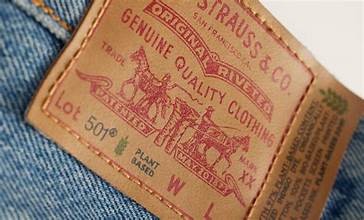
The iconic Levi Strauss authenticity tag from the official website.
While the actual origins of the garment are unclear, there are records of the fabric and the type of clothing it was made into in Genoa, Italy, and Nimes, France, as early as the 1500’s.
The Infallible Wikipedia shares some history on the origin of the name:
“Research on the trade of jean fabric shows that it emerged in the cities of Genoa, Italy, and Nîmes, France. Gênes, the French word for Genoa, might be the origin of the word ‘jeans‘. In Nîmes, weavers tried to reproduce jean fabric but instead developed a similar twill fabric that became known as denim, ‘de Nîmes’, meaning ‘from Nîmes’. Genoa’s jeans fabric was a fustian textile of ‘medium quality and of reasonable cost’, very similar to cotton corduroy for which Genoa was famous, and was ‘used for work clothes in general’.”
Modern day jeans were popularized as a workman’s garment, specifically miners, at the time it was patented by Davis and Strauss. And they might have remained that way until popular culture got involved. In the 1950’s both Marlon Brando and James Dean donned jeans in two culturally significant movies: The Wild One and Rebel Without a Cause. The two men were both bad boys of the big screen and exuded a ‘coolness’ which rocketed them to popularity with youth.
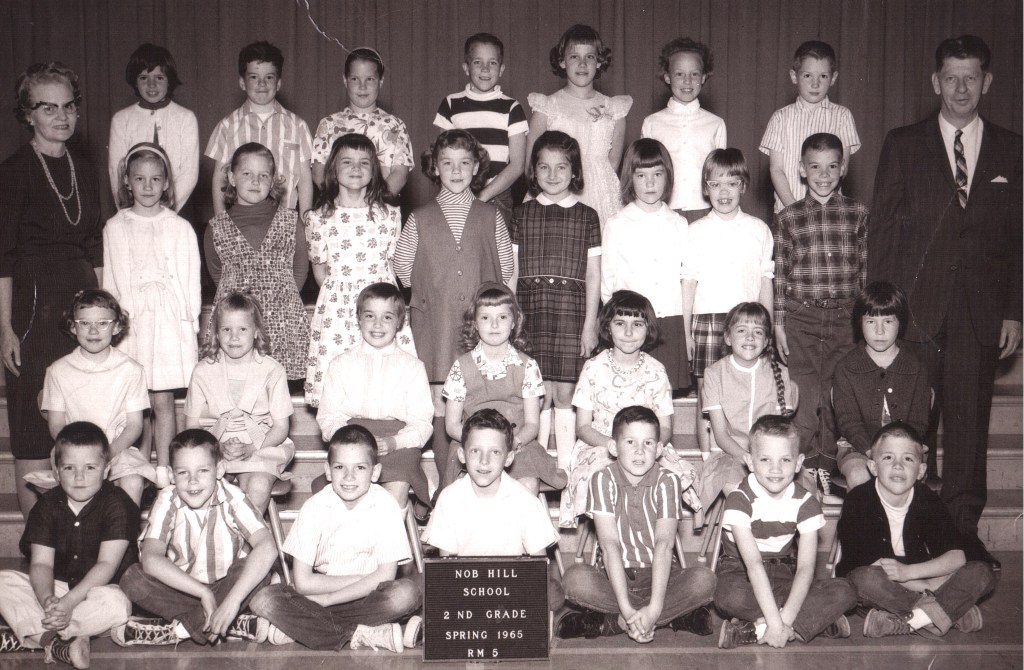
1965 – all the boys in the front row are wearing jeans with the exception of one. All the girls in dresses. 2nd Grade at Nob Hill Elementary school in Yakima, Washington
By the 1960’s, jeans became a popular garment to wear to school for boys. But not for girls. In fact, girls wore dresses to school. The first time I was ever allowed to wear pants was the winter of 1968-69 and only because of extreme cold temperatures. During the week of January 20-24, the overnight lows in Yakima were in the single and minus digits and the day time highs in the low teens. January 23rd, a Thursday, had a high of only 11 degrees, up from minus 7 degrees overnight. The next week wasn’t much better as the cold persisted PLUS it snowed 10 inches.
In those days, school was not cancelled because of weather. Instead, the Yakima School District very generously gave all the girls permission to wear pants to school. But they could NOT be jeans! A popular style that year were knit stretch pants and I can still see, in my minds eye, what those pants looked like. It was a big, big deal to get to wear pants.
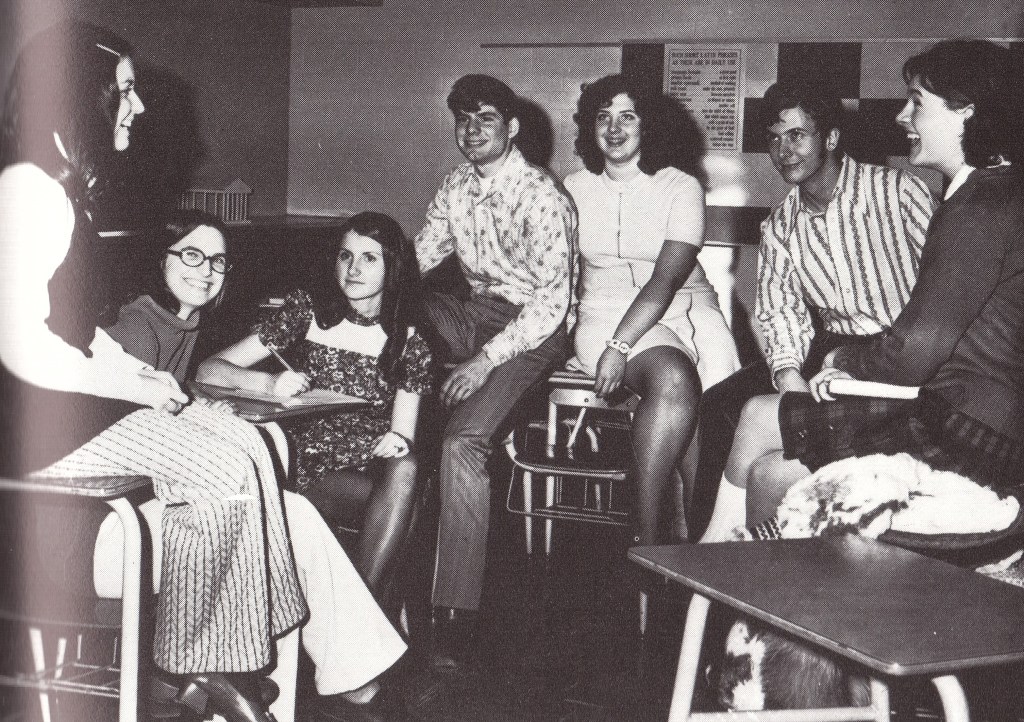
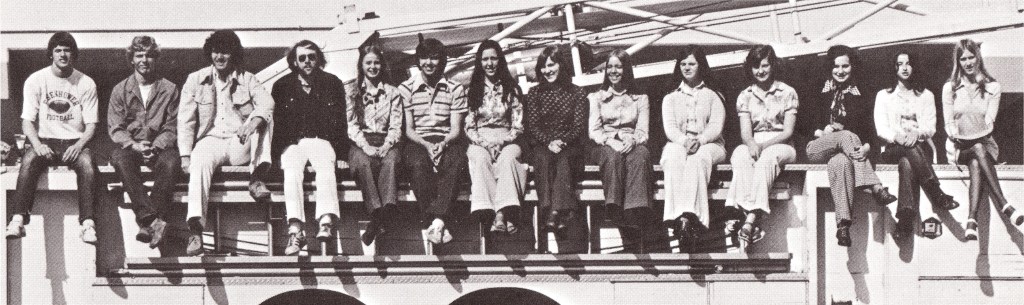
From the 1972 Eisenhower High School Reveille yearbook. A club photo with the guys in in jeans, the girls in dresses except for one, who is wearing fashionable slacks of the day. Yakima, Washington
Then the 1970’s happened. While many people think of the 1960’s as the big social upheaval, the 70’s were the years when all that rebellion was codified. The movement was so huge, that it became a cultural tsunami, washing over every institution we know.
I think it was probably 1971 when girls were allowed to wear pants to school regardless of the weather. But still no jeans that first year. A look through the high school annuals of that era reveal that shift through photos. The 1972 Eisenhower annual shows most girls still wearing dresses to school with a smattering here and there of one in pants and, rarely, jeans.
A portion of the 1975 yearbook staff of Eisenhower High school. The girls all in pants, some in jeans, and only one dress. Yakima, Washington
By 1975, easily half to two-thirds of the girls at my school are wearing pants – often jeans – in the day-to-day photos of regular school activities; jeans were the standard for after school clothing.
In today’s world, people wear jeans everywhere; I would posit that pretty much every American teen and adult owns at least one pair, and likely multiple pairs, of jeans.
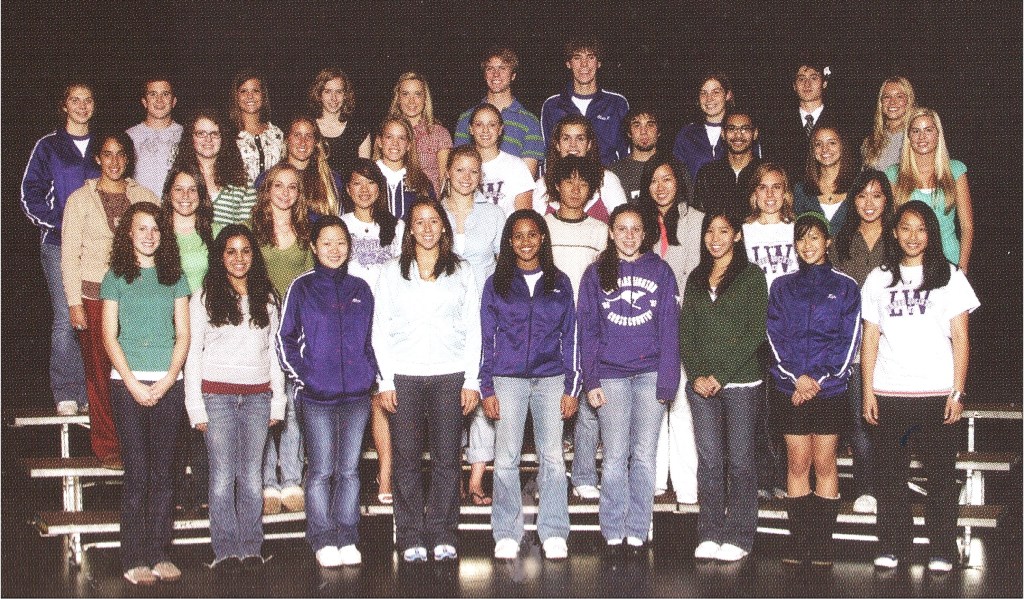
2008 at Lake Washington High School in Kirkland, Washington. A couple of skirts, but most the girls are wearing jeans as their daily ‘go to’ clothing.
I know I have at least three pairs of jeans and two pairs of capri length denim pants that I rotate in my day-to-day wardrobe. I’ve been thinking lately that I really do need another pair. I discovered a Gloria Vanderbilt style that fits well and is comfortable. That is, in my opinion, what the wearing of jeans is all about: comfort. Time to go shopping – on Amazon since I know they have the jeans that fit me – for a new pair of America’s favorite clothing item.
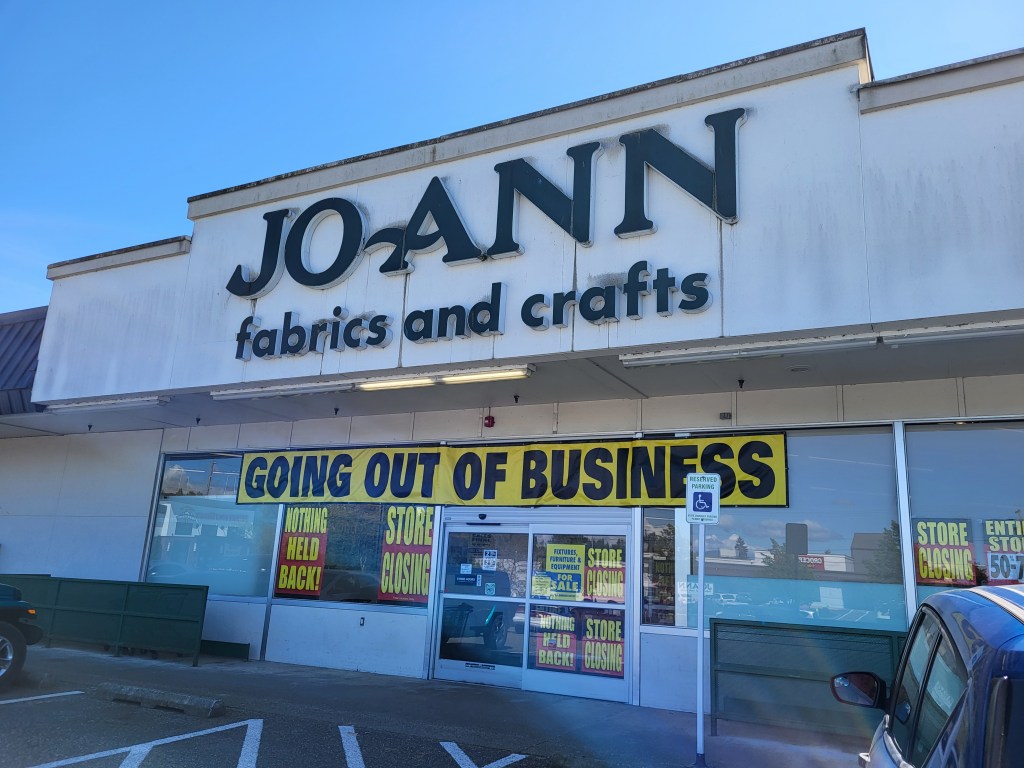
Over the past few months, I have been mourning the end of an era. One day, very soon, Jo-Ann Fabrics will be out of business.
The Mount Vernon, Washington Jo-Ann Fabrics will soon be gone.
The demise of the fabric store giant is, in my opinion, a sign of the times. Like woodshop and home economics, the era of learning how to build a table or sew a garment is no longer something the majority of young people learn.
Certainly, there will still be specialty fabric stores where quilters can go to buy their fabric but, it seems, the days of a high school girl sewing her own homecoming or prom outfit are over.
Jo-Ann Fabrics was founded in 1943. It was a venture for two families and, when they expanded in the early 1960’s, changed the name to Jo-Ann Fabrics. Yes, there is an Infallible Wikipedia page which shares the following:
“German immigrants Hilda and Berthold Reich, Sigmund and Mathilda Rohrbach, and Justin and Alma Zimmerman opened the Cleveland Fabric Shop in Cleveland, Ohio in 1943. After further expansion, the store’s name was changed to Jo-Ann Fabrics in 1963. The store’s name was created by combining the names of the daughters from both families: Joan and Jacqueline Ann.
There were a total of two neon green zippers available for sale last weekend
Jo-Ann Fabrics became a publicly held corporation traded on the American Stock Exchange under the name of Fabri-Centers of America, Inc. in 1969. The company made its first acquisition with the purchase of Cloth World, a 342-store southern company, in 1994. At the time of the acquisition, Fabri-Centers operated 655 stores.”
There are many reasons for the decline of Jo-Ann Fabrics – non-profitable stores, too much debt, inability to find an investor – to name the primary reasons.
But I get back to what I think is the biggest reason: people are simply not learning, or interested in learning, how to sew.
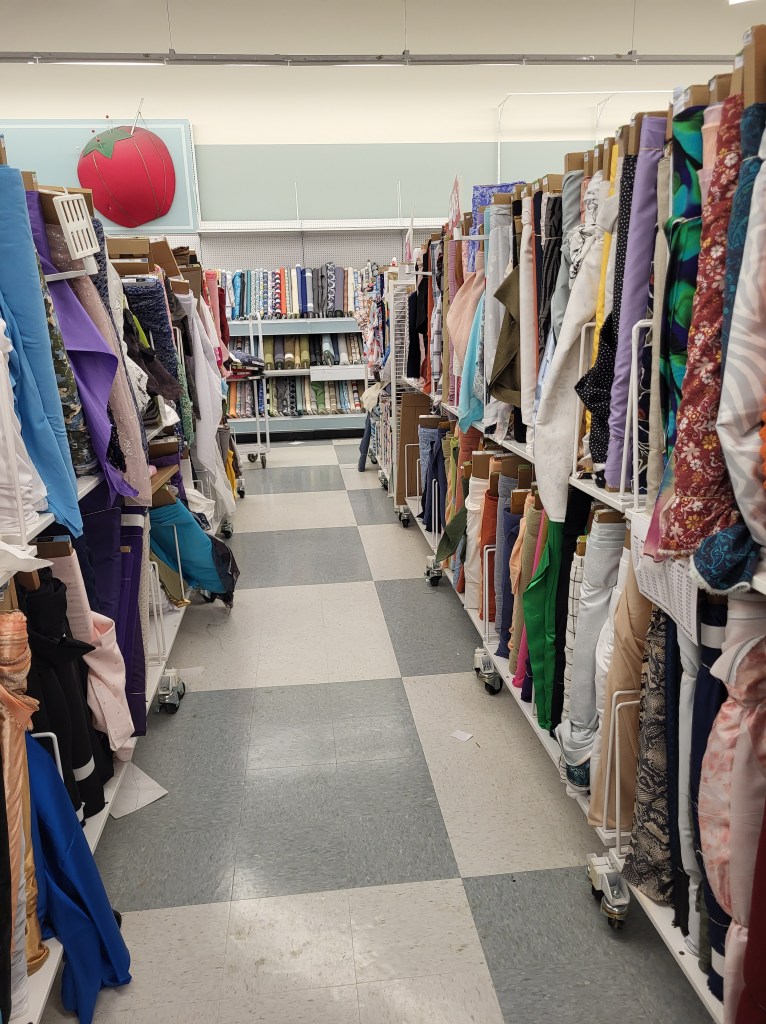
Still quite a bit of fabric to be had.
My seventh grade year I attended Wilson Junior High school (no middle schools in those days!) in Yakima, Washington, and there was no greater shock to my system than having what had been a half mile, approximately 15-minute walk, to Nob Hill Elementary school, to now making a daily 1.3 mile hike each way to my new Junior High.
I pretty much hated it but there was NOT a choice. My mother was not going to be driving me to school every day, so I just had to suck it up.
Another thing I absolutely hate is being late. So every morning – and believe me some of those mornings were dark and cold, sometimes snowy – I would haul my 12- to 14-year-old self out the door to make sure I made it to Wilson on time.
But afternoons were another story. My route home, just in reverse, always – yes ALWAYS – included a stroll through the strip mall where a Safeway was located. The layout of the stores was, actually, pretty clever. You entered at the west end, for example, and could walk through every store and exit on the east end, enjoying heat in the cold months and air conditioning in the warm months. Plus, there were interesting things to see.
So every afternoon I would start with Discount Fabrics on the west, then buy a Big Hunk candy bar or a bag of Corn Nuts at Tieton Village Drugs, make my way through Safeway and, sometimes, go into Wigwam (think Dollar Tree but more eclectic), before continuing on my way home.
Tieton Village Shopping Center as it looks on May 6, 2025. When I was in Junior High, Discount Fabrics was on the far right, then the drug store, Safeway, and Wigwam.
When I was in eighth grade, I took my first Home Economics class and the first half of the year was sewing. When we were assigned the task of getting a yard of fabric because we were going to be making a dress, my world was opened up and suddenly Discount Fabrics became a very important place.
Over the next four years, I spent many hours there looking at, feeling, considering, contemplating, and buying fabric, thread, zippers, and buttons. Except for collecting pens and stationery, there was nothing I loved more than looking at and thinking about fabric. I even considered, when applying for my first job, working in either an office supply store or a fabric store. I ended up as a filing clerk for a Ford dealership which probably saved me spending all my earnings on office supplies or fabric.
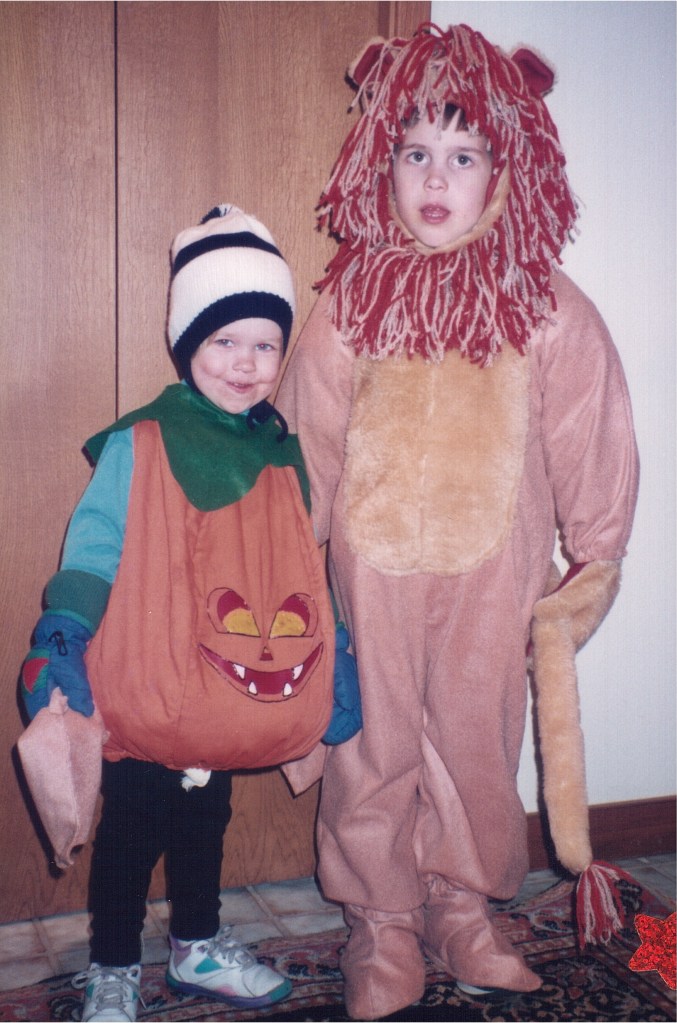
Halloween 1994. I sewed both the lion costume and the pumpkin costume for my kids.
It turned out that I was good at sewing and it filled a creative need. I’ve made tablecloths and placements, sewn children’s costumes, put together bean bags and stuffed animals, made what’s known as a ‘puff’ quilt and tied fleece blankets. And I pretty much never got rid of any of the leftover fabric remnants.
Best of all, there was always a nearby fabric store to feed my version of sourdough starter. When the hubby and I first got married, I was introduced to Hancock Fabrics at the corner of Fauntleroy Way and Alaska street in West Seattle. It was there I bought most of the fabric to make the hubby the aforementioned puff quilt. That quilt took me four years to complete, by the way, but we still have it.
When we moved to what is now Sammamish, the nearest fabric store was Jo-Anns in Bellevue, about a twenty minute drive from our home on the Sammamish plateau. Up until our kids were born, those were the years of making tablecloths, napkins, and placements. I also made an adorable teddy bear themed baby quilt which I gave to my sister-in-law when she was expecting my niece.
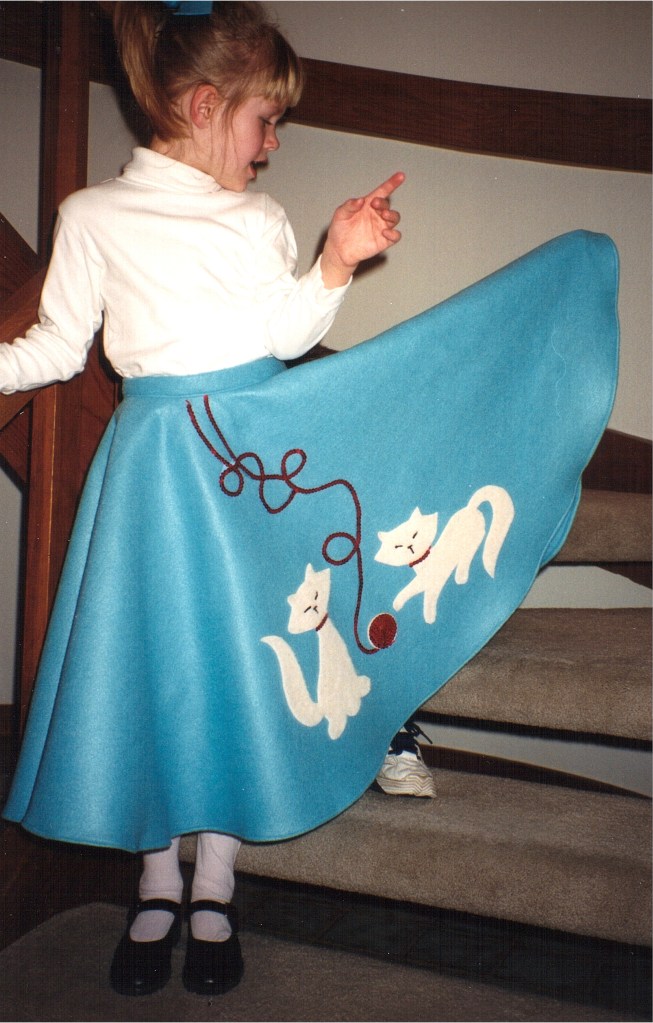
A felt poodle skirt for a father daughter-dance 1998 ish.
In the 1990’s I sewed costumes for my daughter and son, including a princess dress and wizard robes for them to wear at her seventh birthday party, as well as many other garments for school events and Halloween.
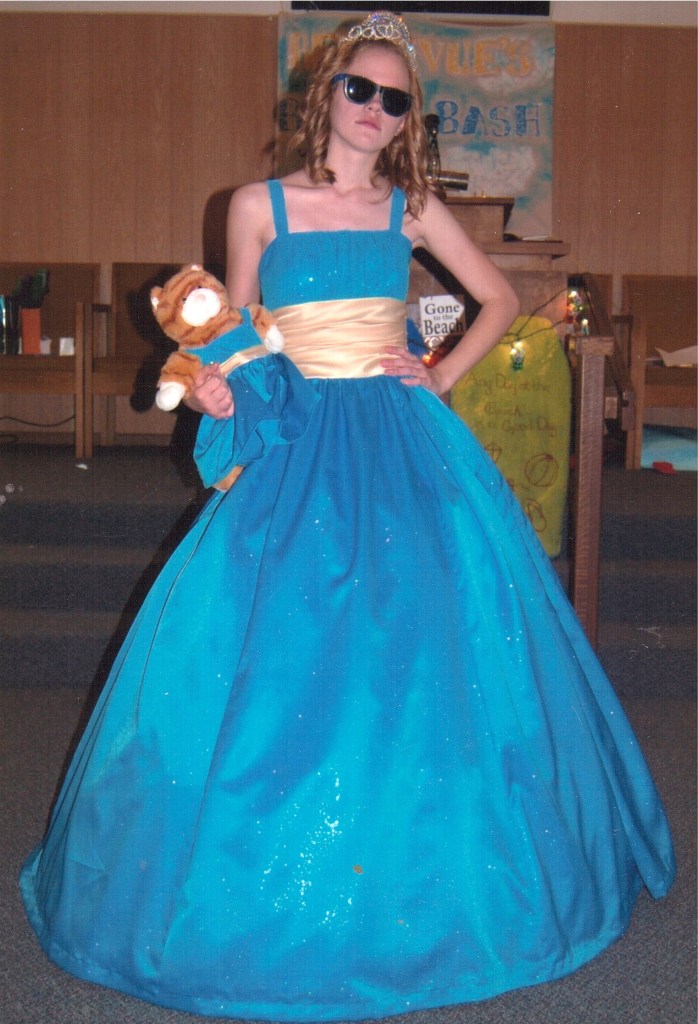
I sewed the dress for my daughter’s installation as the Worthy Advisor of the Rainbow Girls… and the matching one for her ‘mascot.’ 2009.
When we moved to Kirkland in 2004, our house was about a half mile from Hancock Fabrics and, being that the Rainbow Girls I advised needed custom dresses, this marked my peak sewing years. I was at Hancock’s at least twice a week, or so it seemed, for about seven years. The chain went bankrupt in 2016 and it was back to JoAnn’s whenever I needed something.
After our move to Mount Vernon, there were the occasional projects which required a visit to Jo-Anns, a short ten-minute drive. And while I have made the occasional trek there for a project, my days of intense sewing are now past me.
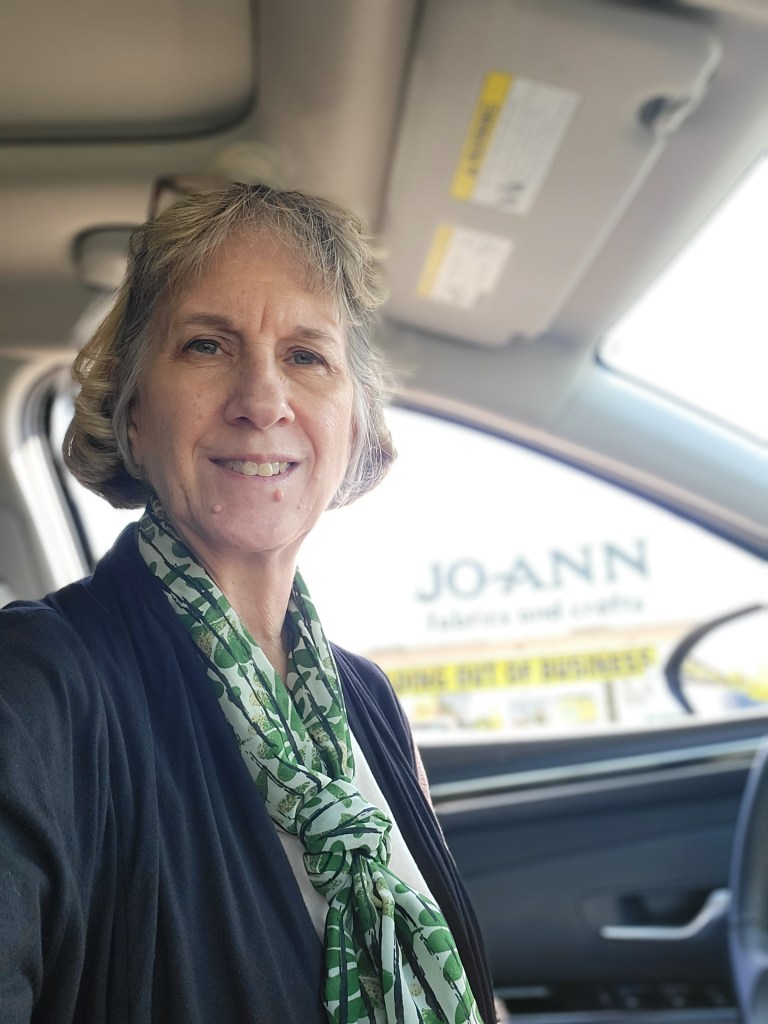
Saying goodbye to an old friend. I’m wearing a scarf I made with material from Jo-Ann’s.
I’ve discovered that sewing had become something I did out of necessity, not because it’s been my true passion. I know people whose passion it is and you can hear it in their voice and see it on their face when they start talking about their projects.
For sure there was always a sense of pride when I finished a beautiful dress. But. There was something else there too. A sense of relief that it was finished. The number of people asking me to sew them a dress got to be so many that I finally had to impose an oath on anyone I DID sew for to promise to never disclose who their seamstress was.
My sewing days are – mostly – over. But for some reason I still have a small stack of Rubbermaid bins with fabric remnants from years of projects. You just never know when some new inspiration will hit and that fabric will come in handy.
April 15th is, in the United States, the day Federal Income tax is due from all citizens.
Federal income tax began in 1913, when the 16th amendment to the US Constitution was ratified by Congress and two thirds of the states. It all seems so simple. But of course, it is not. This is the opening paragraph of the veeerrry lengthy Infallible Wikipedia article:
“The United States federal government and most state governments impose an income tax. They are determined by applying a tax rate, which may increase as income increases, to taxable income, which is the total income less allowable deductions. Income is broadly defined. Individuals and corporations are directly taxable, and estates and trusts may be taxable on undistributed income. Partnerships are not taxed (with some exceptions in the case of federal income taxation), but their partners are taxed on their shares of partnership income. Residents and citizens are taxed on worldwide income, while nonresidents are taxed only on income within the jurisdiction. Several types of credits reduce tax, and some types of credits may exceed tax before credits. Most business expenses are deductible. Individuals may deduct certain personal expenses, including home mortgage interest, state taxes, contributions to charity, and some other items. Some deductions are subject to limits, and an Alternative Minimum Tax (AMT) applies at the federal and some state levels.”
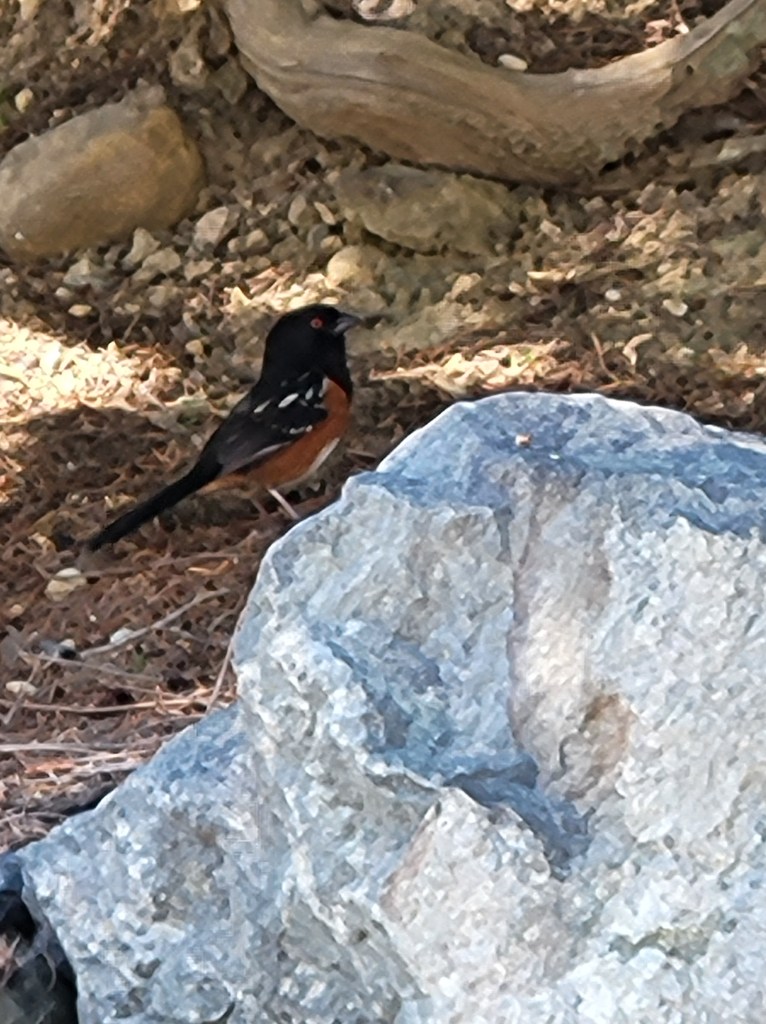
More interesting than taxes… a spotted towhee in the rockery I see from my office window.
Got that? Me either. In fact, my eyes glazed over just reading that and I decided that the spotted towhee I spotted in the rockery across the road is much more interesting.
But, as Ben Franklin once famously wrote, the only things certain in life are “death and taxes.”
So, dear readers, if your thing is dissecting the tax code and taking a deep dive into the history of marginal tax rates, or whether or not a progressive tax is even constitutional, knock yourselves out.
I, fortunately, am married to someone who has a four-year degree in accounting. He understands numbers. He understands how finance and taxes work. And for the first couple years we were married, I was an April 15th tax accountant widow.
For those who don’t know what that is, I shall enlighten you. For most Certified Public Accountants (CPA’s) the year is broken up into two parts. There’s tax season and then everything else.
For everything else that means handling mostly business-y type things – quarterly taxes and financial statements. More things that make my eyes glaze over and rollback in my head.
When it’s these types of things, the CPA can expect to get into the office at a reasonable 8 to 9 a.m. and leave at a reasonable 5 to 6 p.m. You know, normal-ish business hours.
But then January happens. When the new year arrives, so do all the various documents from employers which the US Government requires be sent out. These trigger tax season. W-2’s and 1099’s must be sent to employees and independent contractors no later than January 31st. Every year. No exceptions.
On February 1st, if you are married to a practicing CPA, kiss your social life goodbye because weekends become non-existent. Holidays such as Valentine’s Day and President’s Day? Well, you might get them off but plan to snuggle up with your blanket and favorite Hallmark movie or go skiing by yourself because your CPA spouse will be working.
This goes on, of course, until midnight on April 15th since that’s the moment ALL taxes (and extensions if your taxes aren’t yet done) must be postmarked or electronically submitted to the IRS.
But sort of like getting over a bad cold or the flu, recovering from tax season takes some time. By early May, your CPA spouse is probably back to semi-normal hours. Thank goodness the IRS set the taxes due date in April. That way – at least in the northern part of the U.S. – you are not missing out on nice weather.
When I mentioned to the hubby that I would be featuring the Income Tax for today’s Tuesday Newsday he immediately told me about his ‘liberation’ day.
It was fairly early in our marriage, and I never knew about this experience for him until last week. Since graduating from college in 1978, he had worked as a CPA for two different firms in greater Seattle. He worked at Christensen, Schafer, and Husmo (C, S & H), in Burien for a couple of years but made a change to Don Sparling and Co. to gain much needed auditing experience. Everything was great at Sparling until the owner’s nasty divorce derailed the business. The hubby lost his job but, in the spring of 1981, was rehired by C, S & H as they had recently gotten a new client who needed an auditor: Nintendo of America. Experience the husband had recently gained.
In the late spring of 1982 – after being their CPA for a year – Nintendo hired the hubby as their first Controller and he left the world of being a tax accountant.
On April 15, 1983 – a Friday – the high temperature in Seattle was 65 degrees and sunny with a bit of breeze. The perfect sort of day to do a little yard work. Since he was home from work while it was still daylight, he was outside doing yard work (I was probably inside making dinner) when he stopped for a moment and remembered that it was Tax Day. And that he was not going to be burning the midnight oil and felt an incredible sense of relief.
For the rest of his career, he has put his CPA training and math brain to good use whether as a company controller, a consultant, or – currently – with his volunteer work.
As for me, my eyes still glaze over when taxes, marginal rates, and exemptions start being discussed. I do my best to hide it but with little success. It’s probably best for me – and everyone else – that I stick to writing and leave the accounting to the professionals.
For the record, I did send this to the hubby for a bit of fact checking and he liked what I wrote but reminded me – and all of you – of the following: “Very entertaining! If you file for an automatic extension, you have an additional six months to file your return, but you still have to pay your estimated taxes by April 15th.”
So be sure to send the IRS your money TODAY by midnight and I hope everyone has a very happy tax day!
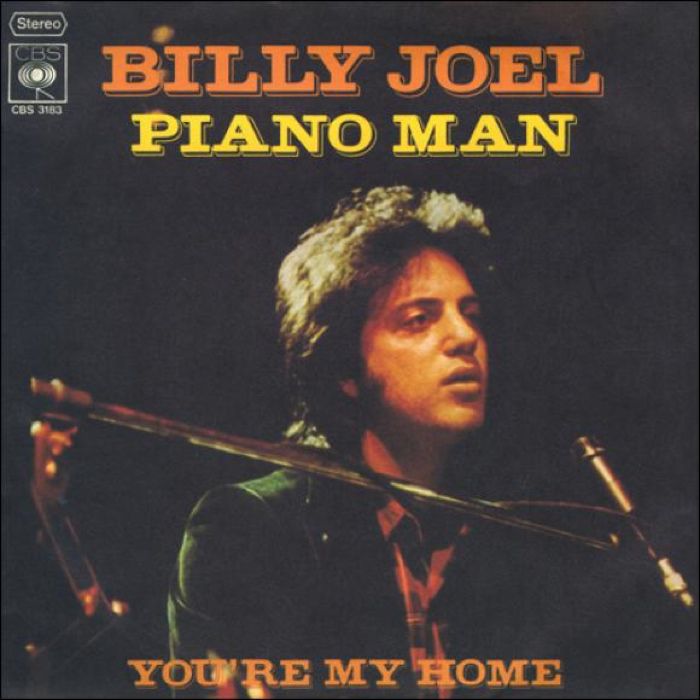
This song only ever reached number 25 on the Billboard Charts. Yet its one of the most memorable songs of the 1970’s and marked the beginning of one artist’s career which has spanned 50 years.
The song? The iconic “Piano Man.” The artist? Billy Joel.
It was in April of 1974 when “Piano Man” peaked on the charts. It could not even be described as a ‘one-hit wonder’ based on its ranking. By any measure, it should have faded away and been forgotten. Billy Joel, however, possessed the needed ingredients which have defined his long running career: grit, determination, and talent.
Undaunted by the middling success of “Piano Man” he continued to write songs and produce records. Both “Piano Man” and “Captain Jack” – his most successful early 1970’s releases – were an anathema to the music of that era. It was a time when soft rock and bubblegum dominated the pop category. I’m pretty sure no one was quite sure where this storyteller who saw and sang about the seamier side of life fit in.
“The Stranger” album, released in the fall of 1977, changed the public perception of Joel. I attribute it first and foremost to the song “Just the Way You Are.” Written for his then wife Elizabeth Weber (married in 1974, divorced in 1983), I think it encapsulates a more optimistic look at life and, perhaps, that Joel was in a much happier place at that time as he had hit his stride with his career.
The American public responded. From the Infallible Wikipedia:
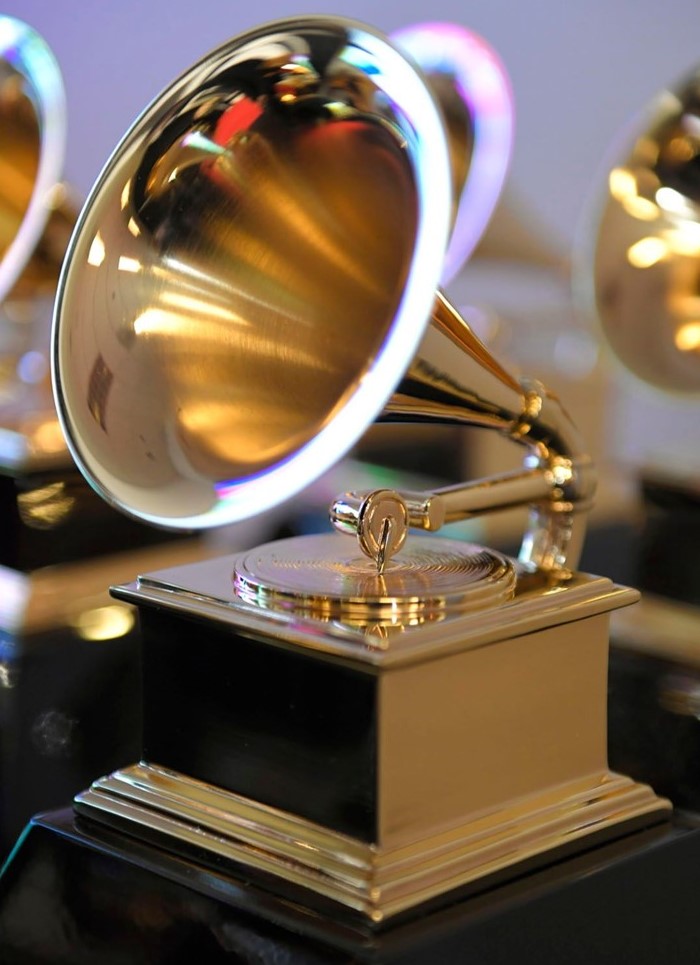
“Spending six weeks at No. 2 on the US Billboard 200 chart, The Stranger was Joel’s critical and commercial breakthrough. Four singles were released in the US, all of which became Top 40 hits on the Billboard Hot 100 chart: ‘Just the Way You Are’ (No. 3), ‘Movin’ Out (Anthony’s Song)’, ‘She’s Always a Woman’ (both No. 17), and ‘Only the Good Die Young’ (No. 24). Other songs, such as ‘Scenes from an Italian Restaurant’ and ‘Vienna’, have become staples of his career and are frequently performed in his live shows. The album won two awards at the 21st Annual Grammy Awards in 1979: Record of the Year and Song of the Year for ‘Just the Way You Are’. It remains his best-selling non-compilation album to date and surpassed Simon & Garfunkel’s Bridge over Troubled Water (1970) to become Columbia’s best-selling album release, with more than 10 million units sold worldwide. Rolling Stone magazine ranked the album number 70 on its 2003 list of the ‘500 Greatest Albums of All Time’, repositioned to number 169 in a 2020 revision. In 2008, The Stranger was inducted into the Grammy Hall of Fame.”
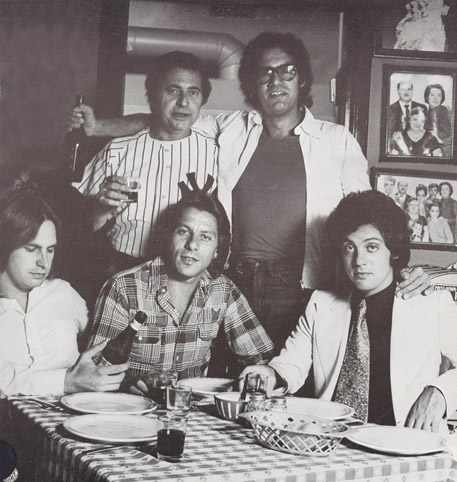
Billy Joel – seated far right – with members of his band at Guidos Italtian Restaurant. This photo was the back cover of the album, The Stranger.
As readers of my blog know, I greatly admire those who can tell a story through song. Joel has done this so very well. Perhaps my favorite of his ‘storytelling’ songs is “Scene’s from an Italian Restaurant.” When I listen to that song, I can visualize a couple of old friends – probably in their early 30’s – meeting up and soon their conversation is reliving the ‘good old days’ with such lyrics as:
Cold beer, hot lights My sweet romantic teenage nights.
My favorite part of the song has to be when he starts singing about prom king and queen, Eddie and Brenda, who were once the most popular kids in school. In a few short verses we learn about their marriage, their troubles, their divorce and that:
Brenda and Eddie had it already by the summer of ’75 From the high to the low to the end of the show For the rest of their lives.
Storytelling at its finest.
It was in May 1984 when I attended my first rock concert. Yes, by then I was in my 20’s. My mother did not approve of rock concerts or anything else which might pollute young and impressionable minds so as a teenager going to such an event was forbidden.
I could have gone to a concert sooner, being that I had been an adult for several years. But after the hubby and I were married in 1980 we didn’t have the resources for such frivolities. Instead, we bought our first house in the spring of 1981 and then lived on rice and beans for the next few years, both of us going to jobs during the day, and fixing the house during the evenings and weekends. Our social life was the hubby playing on recreational soccer team; getting together with friends and family at our home our theirs, and going camping.
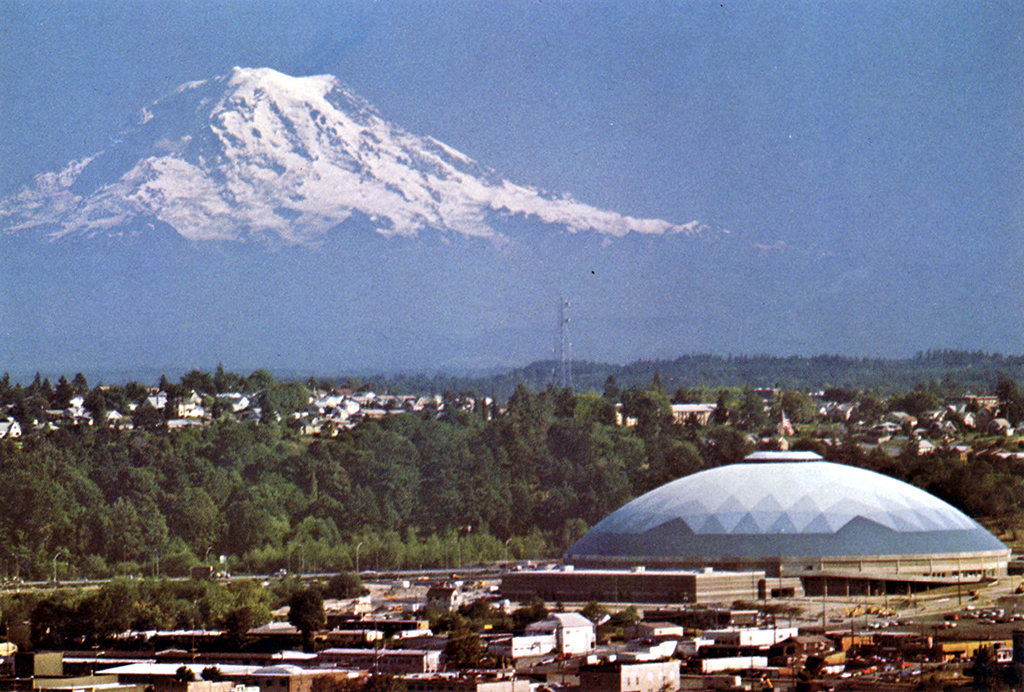
The Tacoma dome circa 1983-84
I can’t say for sure what inspired buying tickets for Billy Joel except that we both liked his music, me probably more than the hubby.
We drove from West Seattle to the Tacoma on Tuesday, May 8th, and joined thousands of our closest friends at the less than one year old Tacoma Dome (Billy Joel was the 9th artist to play there!). When the lights dimmed the arena went silent. In the dark we could see a grand piano slowly turning to the front of the stage, a lone performer sitting at the keyboard.
And then a single chord from the piano in the dark, instantly recognizable as the opening salvo of Joel’s then hit song “Allentown.” The arena erupted in applause. A solo spotlight appeared and shone down on Joel and, in that moment, he captured the room.
For the next couple of hours, we were treated to an energetic concert of old favorites and up and coming hits. It was a magical night and a great first concert.
I felt it was a privilege to have experienced Billy Joel perform live.
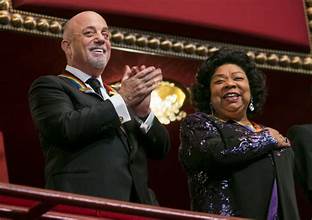
Joel was feted with the Kennedy Center honors in 2013. Pictured here with fellow honoree opera singer Martina Arroyo
Thank you, Billy Joel, for capturing the essence of the American experience through your incredible words and music.
There are soooo many links and so much more information I was not able to share in my self-imposed limited space. So here you go for some of the highlights including links to my three most favorite songs from Joel:
Dr. Sam Beckett and project coordinator, Al Calavicci
“Oh Boy.”
These two little words, uttered on March 25, 1989, launched a TV-show and inspired a cult-like following as viewers were treated to a mind-bending time travel fantasy with a new twist.
The fresh premise of Quantum Leap proffered that time travel is possible… but one can only time travel during the years the particular person is alive. Each person’s life is like a string with a beginning and an end. But if the ends of the string are tied together and the string then bunched up, the theory went, a person could leap from one point on the string to another bouncing from time to time.
The opening segment of each show, From the Infallible Wikipedia, is this:
“Theorizing that one could time travel within his own lifetime, Dr. Sam Beckett led an elite group of scientists into the desert to develop a top-secret project, known as ‘Quantum Leap.’ Pressured to prove his theories or lose funding, Dr. Beckett prematurely stepped into the Project Accelerator–and vanished.
He awoke to find himself in the past, suffering from partial amnesia and facing a mirror image that was not his own. Fortunately, contact with his own time was maintained through brainwave transmissions with Al, the Project Observer, who appeared in the form of a hologram that only Dr. Beckett could see and hear. Trapped in the past, Dr. Beckett finds himself leaping from life to life, putting things right that once went wrong and hoping each time that his next leap will be the leap home.”
In the five seasons the show was on the air, Dr. Beckett – played by the yummy Scott Bakula – ‘leapt’ into the body of a different person each episode. He was an air force jet pilot, a minor league baseball player, and a prize fighter in the first season. He was young, old, male, female, black, white…
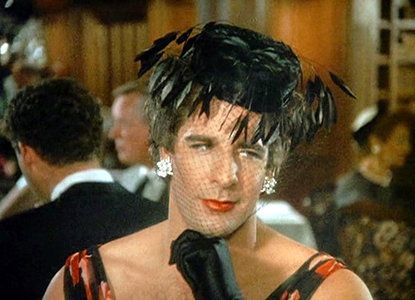
Sam’s first time in a woman’s body as Gloria in 1964
One of the things I loved about the show was its humor and, especially, all the ridiculous ways Scott Bakula had to dress for the series and the personas he assumed. He even wore dresses and high heels, lipstick and eye makeup. It was fun to watch him peer into a mirror and see whose body he now occupied.
Personally, I like the early seasons better than the later ones as his leaps placed him into the bodies of average people with regular struggles. In some later episodes he has brushes with historical figures and the writers/producers take tremendous creative license with past events and blow up their own premises, stretching the bounds of credulity.
Regardless, it was a fun show made all the more enjoyable by the interplay between Bakula and Dean Stockwell who portrays the cigar-wielding Al.
I bought the first season on DVD one year as a birthday gift for my then teenage son. I thought my kids would love the show! Instead, after 15 minutes, they were bored. I determined that maybe it was a show which an adult audience could appreciate but was over the heads of kids. Or, perhaps, it only resonated with my generation as we could relate to the times and travels of Sam Beckett (born August 8, 1953). Who knows? Now that my kids are adults, they might enjoy it. I’m not sure how well the show has aged or if it’s stuck in the 1990’s.
All five seasons are available on DVD
In 2021, I discovered that Quantum Leap episodes were being run on Xfinity. So the hubby set it to record whenever an episode was aired. It took a while, but all 5 seasons were recorded and I rewatched them. Overall, it was an enjoyable journey although there were a few episodes that tackled some pretty intense topics.
I think one of the best episodes is his leap into his teenage self in the 1960’s. The episode is particularly poignant since he comes armed with knowing, since he comes from years in the future, that neither his father or his older brother are alive in 1989. Who among us wouldn’t love to go back and fix some of the mistakes of the past? Who would not want to go back and try to save a beloved family member?
Ultimately, Sam’s lesson is that while he might not be able to change the past, what he can control is his own interactions with his loved ones, letting them know how he feels about them.
It does show as being available on Peacock/NBC. A fun watch, in my opinion, if you have the time!
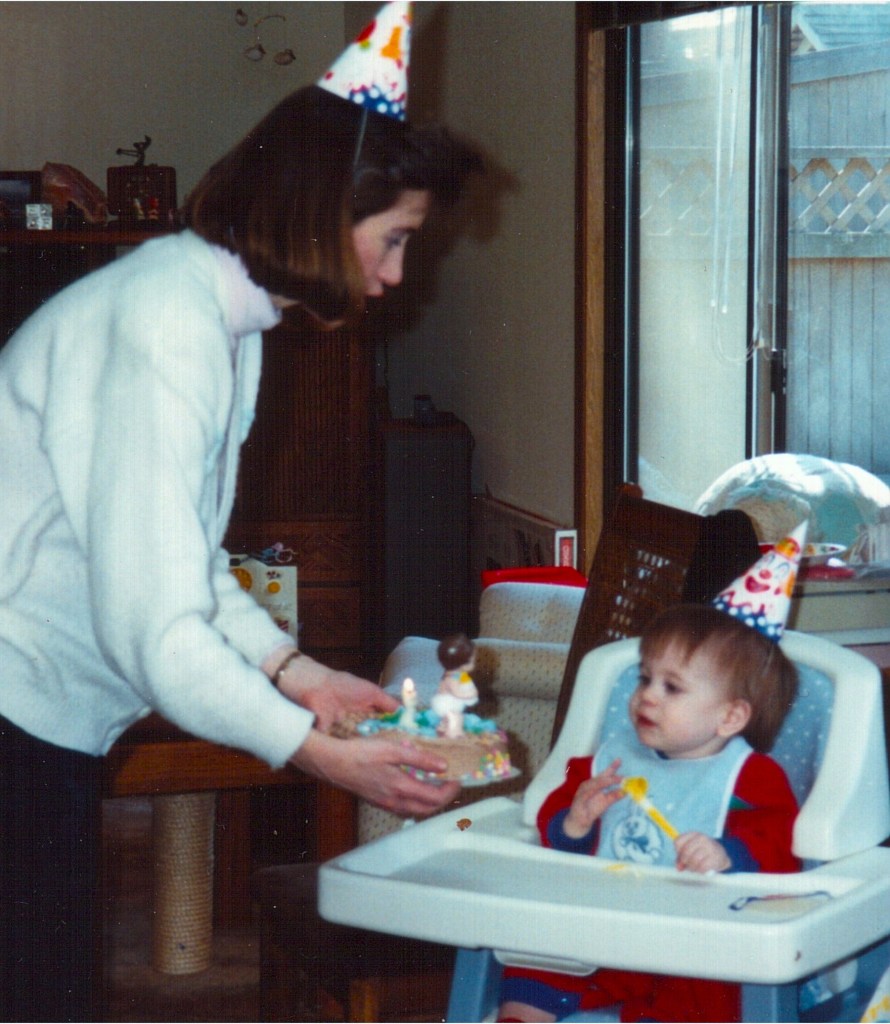
My son’s first birthday… and singing Happy Birthday to You.
This song, arguably the most popular one ever written, never reached number one the Billboard Hot 100 and was never nominated for a Grammy Award. In fact, no one is 100 percent certain as to the origin of the tune or the lyrics. Yet today pretty much every American aged 5 and over has sung it many, many times and it remains a cultural icon.
The song? “Happy Birthday To You.”
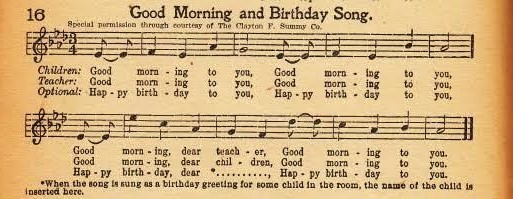
It was on March 4, 1924, when the song was published in a songbook by Claydon Sunny (Clayton F. Summy Publications) at the behest of Jessica Hill, the younger sister of kindergarten teachers Patty and Mildred Hill.
The song has its origins in the late 1800’s when the two sisters composed an easy to learn song for their classroom titled “Good Morning To You.” It is speculated that the sisters put the song together based on several other children’s song melodies, popular at the time.
The lyrics were thus: “Good morning to you, good morning to you, good morning, dear children, good morning to all.”
So far, so good as it was just a couple of Louisville, Kentucky, kindergarten teachers using a cheery song to greet young children each day.
In 1893 the sisters, with their pioneering ideas on early childhood education, published the song in a book titled “Song Stories For Kindergarten.” No one can say for sure ‘when’ the birthday lyrics were substituted but there is evidence that they were first published in 1912. It was, however, Claydon Sunny’s publication which set the song up for copyright challenges which persisted for decades.
As you might expect, the Infallible Wikipedia fills in the details:
“The Summy Company registered a copyright in 1935, crediting authors Preston Ware Orem and Mrs. R. R. Forman. In 1988, Warner/Chappell Music purchased the company owning the copyright for US$25 million, with the value of ‘Happy Birthday’ estimated at US$5 million. Warner claimed that the United States copyright would not expire until 2030 and that unauthorized public performances of the song were illegal unless royalties were paid. In February 2010, the royalty for a single use was US$700. By one estimate, the song is the highest-earning single song in history. In the European Union, the copyright for the song expired on January 1, 2017.
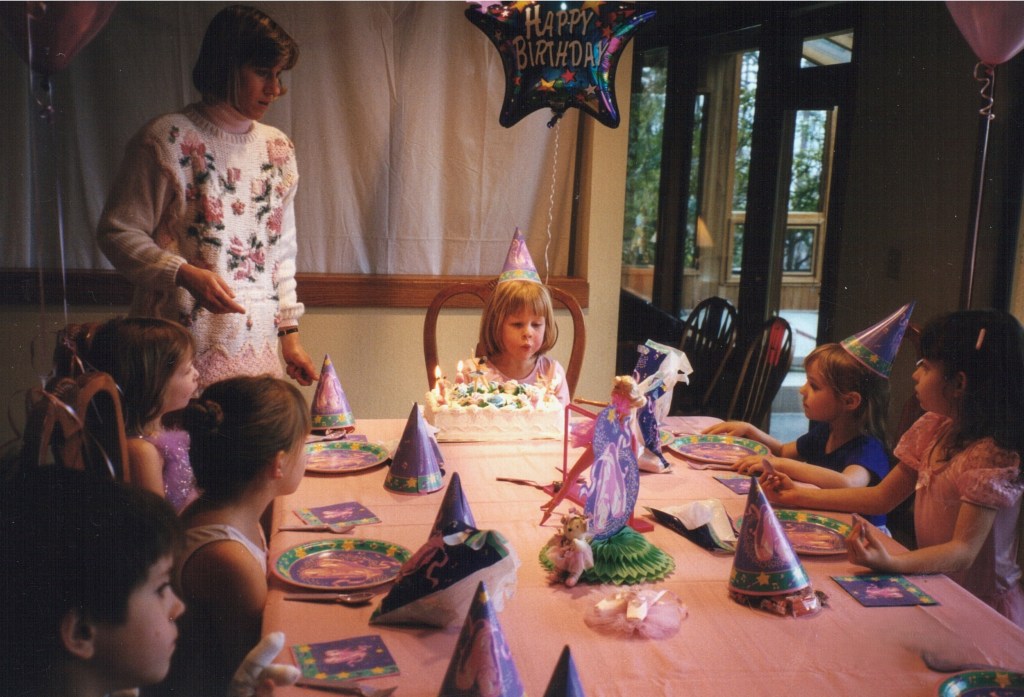
My daughter’s Ballerina themed 5th birthday party
The American copyright status of ‘Happy Birthday to You’ began to draw more attention with the passage of the Copyright Term Extension Act in 1998. The Supreme Court upheld the Act in Eldred v. Ashcroft in 2003, and Associate Justice Stephen Breyer specifically mentioned ‘Happy Birthday to You’ in his dissenting opinion. American law professor Robert Brauneis extensively researched the song and concluded in 2010 ‘it is almost certainly no longer under copyright.’ Good Morning to You Productions sued Warner/Chappell for falsely claiming copyright to the song in 2013. In September 2015, a federal judge declared that the Warner/Chappell copyright claim was invalid, ruling that the copyright registration applied only to a specific piano arrangement of the song and not to its lyrics and melody. In 2016, Warner/Chappell settled for $14 million, and the court declared that ‘Happy Birthday to You’ was in the public domain.”
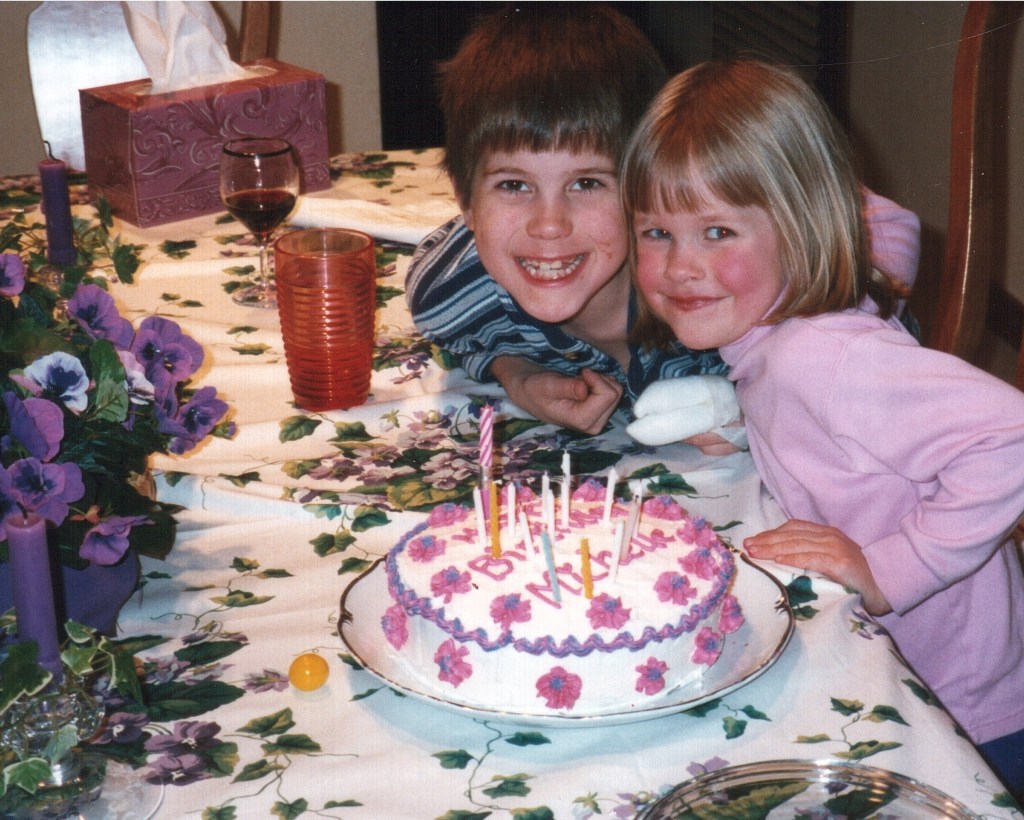
I love this photo of my children taken on my daughter’s birthday circa 1997
Like pretty much everyone reading this, I cannot recall a time when I did NOT know this song. When my family inherited my grandmother’s piano – I was 7 or 8 – and I first sat down to experiment, this was likely the first tune I was able to pick out with the keys.
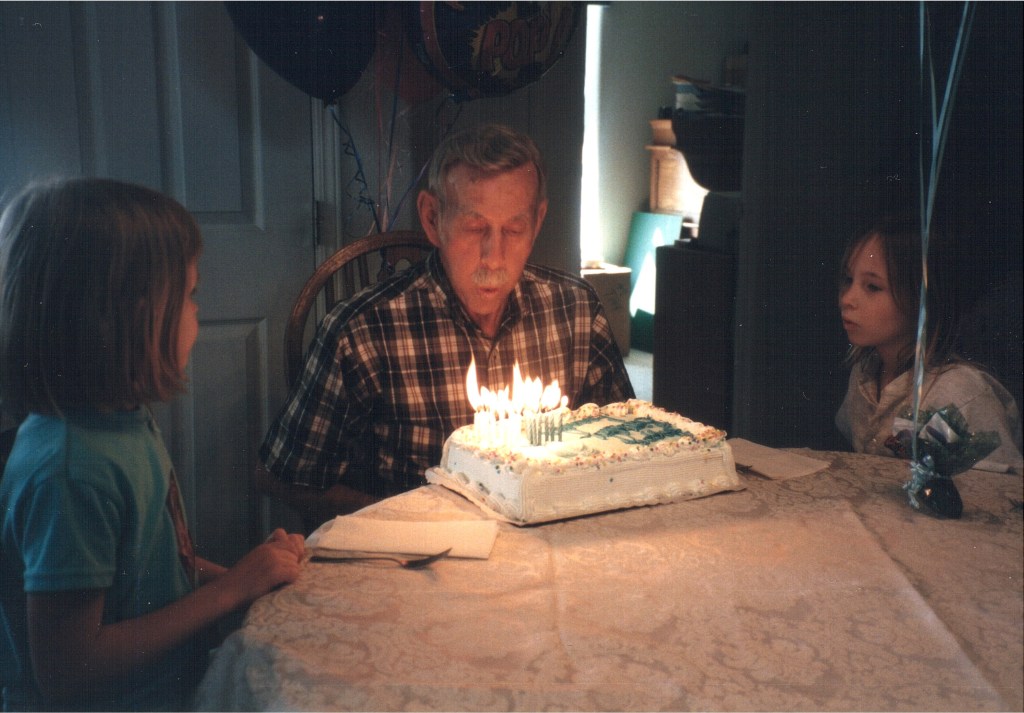
Some of my earliest memories are of my mother bringing out a birthday cake for one of her four children, candles ablaze, and her leading everyone in singing ‘Happy Birthday To You.” She would enter the dining room from the kitchen, bearing her signature chocolate cake covered in white frosting, with “Happy Birthday” written in either blue or green icing. This was followed by the birthday child blowing out the candles and making a secret wish.
The now 101-year long tradition (or longer) of singing happy birthday has been carried on for generations and, as soon as its discovered that it’s someone’s special day, a group of people will nearly always sing the song.
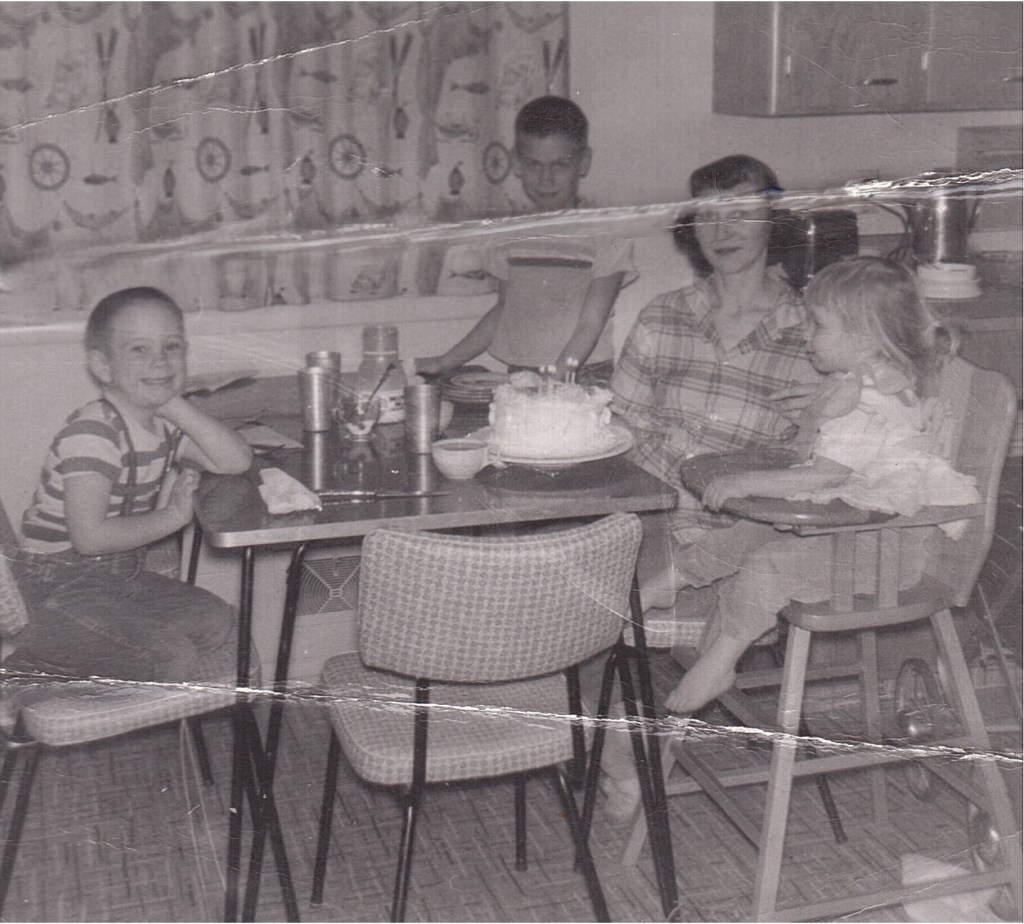
A moment in time…It was my mother’s 32nd birthday. I’m not quite sure ‘who’ took this photo. Likely my grandmother who often came to help with the four of us. I’m not pictured as I was only three months old at the time. My siblings, ages 9, 4, and 2 are also pictured.
As I was researching for this article, I wandered off into the weeds, perusing various YouTube videos of people singing/playing ‘Happy Birthday.’ And then I saw it. A nine-minute video of pianist Victor Borge having fun with the song in the style of about 10 different classic composers. The link:
This was familiar, I thought. And then I recalled I had experienced Victor Borge perform at the Capitol Theatre in Yakima when I was a teenager. Sure enough, on March 31, 1973 – together with my parents and my sister – we attended his concert. According to what I wrote in my diary “It was a very good show. I enjoyed it.” Not exactly an expansive review but I was 15 and, perhaps, did not appreciate that moment in time. To this day, however, I can see him on that stage, regaling the audience with his comedic take on classical music. I am positive he performed ‘Happy Birthday’ similarly to what is shown in the attached video. Enjoy!
My dad’s birthday circa 1997 pictured with his two youngest granddaughters.
Yet, when I think about “Happy Birthday To You” I am amazed at the cultural reach of such a simple tune and lyrics with humble beginnings.
So, there you have it. No more copyright infringements or companies claiming the song belongs to them. You are free to sing “Happy Birthday to You” anywhere and everywhere without having to worry about paying royalties or getting sued. Ultimately, the song has returned to its roots, as a simple and positive way to give glad tidings and, perhaps, brighten someone’ day if only for a few minutes. Just the way I imagine Patty and Mildred Hill would have wanted it.
By the end of February, most people are longing for spring to arrive. Alas, the warmer days still elude in the northern hemisphere. So what better way to celebrate on February 25th than with a steaming bowl of Clam Chowder. Today is National Clam Chowder day.
In thinking about this particular soup I cannot recall a time when I did not know of it or eat it. Always a staple in my household growing up, my mother used to make it from the frozen razor clams my family dug each summer.
Which got me to wondering, what WAS the history of clam chowder?
As always, the Infallible Wikipedia sheds some light for us:
“Clam chowder is any of several chowder soups containing clams and broth. In addition to clams, common ingredients include diced potatoes, onions, and celery. Other vegetables are not typically used, but small carrot strips or a garnish of parsley might occasionally be added primarily for color. A garnish of bay leaves adds both color and flavor. It is believed that clams were used in chowder because of the relative ease of harvesting them. Clam chowder is usually served with saltine crackers or small, hexagonal oyster crackers.
The dish originated in the Eastern United States, but is now commonly served in restaurants throughout the country, particularly on Fridays when American Catholics traditionally abstained from meat. Many regional variations exist, but the two most prevalent are New England or ‘white’ clam chowder and Rhode Island / Manhattan or ‘red’ clam chowder. (snip)
The earliest-established and most popular variety of clam chowder, New England clam chowder, was introduced to the region by French, Nova Scotian, or British settlers, becoming common in the 18th century. The first recipe for another variety, Manhattan clam chowder, known for using tomatoes and its consequently distinctly red coloring, was published before 1919, but it did not take on the current name until 1934. In 1939, the New England state of Maine debated legislation that would outlaw the use of tomatoes in chowder, thereby essentially prohibiting the ‘Manhattan’ form.”
I chuckled to myself when I read that last sentence about Maine considering a way to keep Manhattan chowder out of New England. Having grown up on New England style clam chowder, the red kind does seem a bit blasphemous.
My mother cooked wonderful clam chowder but me, not so much. I have, though, made it one of my fairly recent life’s missions to try clam chowder whenever I find myself in a coastal town which features the soup.
Fanizzi’s in Provincetown was, I think, the restaurant where we ate.
While on Cape Cod in 2008 with my hubby, and then 15 year old daughter, we happened into a quaint restaurant in Provincetown and enjoyed steamy bowls of the nectar on a cool, but clear, early April afternoon.
Provincetown, for those unfamiliar with Massachusetts geography, sits at the very furthest away (by land) part of Cape Cod. It was where the Pilgrims first landed in 1620. Although I can no longer recall the name of the restaurant where we had lunch, it was that trip which began the quest for perfect chowder.
One summer, while on an annual trip to Long Beach Washington with my sister, we went to several local eateries to try the clam chowder. I was surprised when the place where we had always gone turned out to not be my favorite.
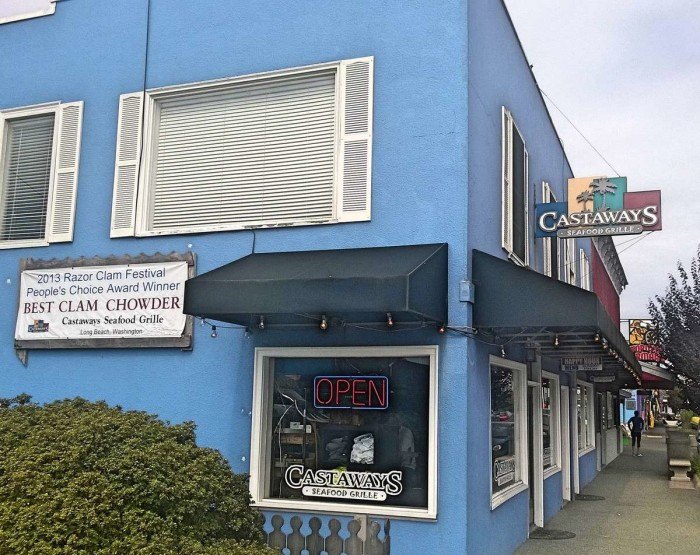
Not as flashy as Fannizi’s – but their chowder is top rate.
It was on the fourth day – and fourth restaurant – I declared a winner. Castaway’s has been a fixture on Pacific Avenue for years. But I’d never been there. So my sister and I got a high table in the bar rather than wait for seating in the restaurant portion which seems to always be full up. I ordered the clam chowder in a bread bowl.
From the first bite I knew it was a winner. Even better was getting to consume every last drop which the soft interior of the bread bowl had absorbed. It was heavenly.
Now, whenever I am lucky enough to visit the beach, Castaway’s is a required stop for a bowl of their clam chowder.
Writing this article inspired me to look for recipes and, perhaps, try my hand at recreating the very best chowder I can. The following claims to be the BEST clam chowder ever. One of these days I will mosey out to the fresh fish market on Highway 20 (between Burlington and Anacortes) and buy some clams to make the chowder.
The recipe includes butter, half and half, bay leaves, and Tabasco sauce. What’s not to like? Here is the link:











 In thinking about this particular soup I cannot recall a time when I did not know of it or eat it. Always a staple in my household growing up, my mother used to make it from the frozen razor clams my family dug each summer.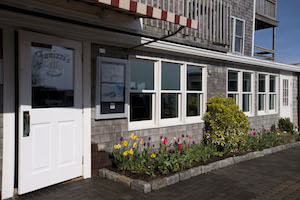
 barbaradevore.com