Tag Archive | University of Puget Sound

The Enduring Legacy of the Piano

May 27th

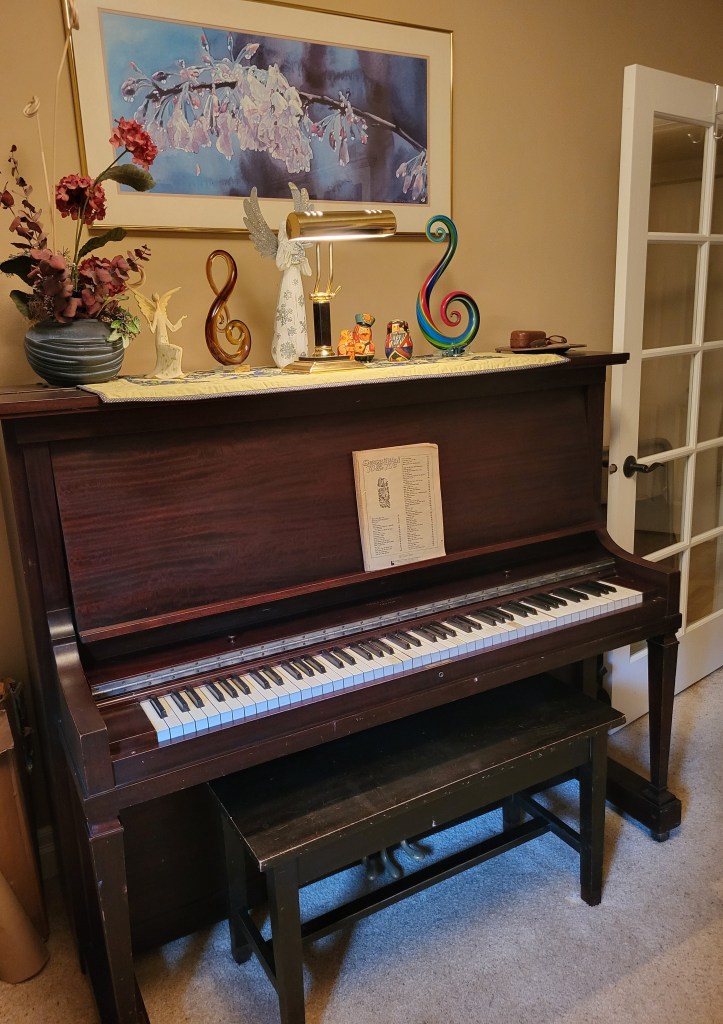
My grandmother’s 1922 Price & Teeple piano – three generations of owners over 103 years

I hate it when I get a nugget of an idea only to have it lead absolutely nowhere. Such was this week’s Tuesday Newsday nugget which, it turns out, led to an unsolvable mystery. And I do love a good mystery.

It was on this date, May 27, 1796, when James Sylvanus McLean – a resident of New Jersey – was awarded a US patent for “an improvement in piano fortes.”

Realizing I’ve never done a Tuesday Newsday about the instrument known as the piano, I decided it was a worthy topic and eagerly typed ‘piano’ into the Infallible Wikipedia only to be bombarded with every last bit of minutiae one can imagine about the origins of this ancient instrument. But Mr. McLean’s improvement? Lost to history when the US patent office burned in December 1836.

Undeterred, I dug further and wondered what improvements were so significant to warrant a patent? Was it the design of what we think of as the modern upright instrument which made the acquisition of a piano available to an average family? Or perhaps the addition of felt ‘hammers’ that were used to strike the metal strings inside the instrument? Maybe it was the use of wood to create the box where the music is made? Or how the wires are strung? We will never know.

Now for those who don’t KNOW what a piano is, here’s the description from The Infallible Wikipedia:

“A piano is a keyboard instrument that produces sound when its keys are depressed, activating an action mechanism where hammers strike strings. Modern pianos have a row of 88 black and white keys, tuned to a chromatic scale in equal temperament. A musician who specializes in piano is called a pianist.

There are two main types of piano: the grand piano and the upright piano. The grand piano offers better sound and more precise key control, making it the preferred choice when space and budget allow. The grand piano is also considered a necessity in venues hosting skilled pianists. The upright piano is more commonly used because of its smaller size and lower cost.

When a key is depressed, the strings inside are struck by felt-coated wooden hammers. The vibrations are transmitted through a bridge to a soundboard that amplifies the sound by coupling the acoustic energy to the air. When the key is released, a damper stops the string’s vibration, ending the sound. Most notes have three strings, except for the bass, which graduates from one to two. Notes can be sustained when the keys are released by the use of pedals at the base of the instrument, which lift the dampers off the strings. The sustain pedal allows pianists to connect and overlay sound, and achieve expressive and colorful sonority.”
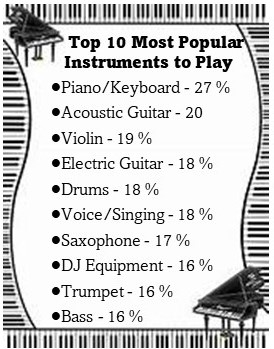
The popularity chart from a 2022 Newsweek article.

Enough of the technical description. What I do know is that the musical instrument we call the piano has been the most popular instrument in the world for centuries, according to multiple articles I found. That said, the debate now rages whether the guitar has overtaken the piano for the top spot. I also found articles to support that conjecture.

But back to the piano. It was sometime in the mid-1960’s when a piano came into my life. Although I was a young child, I remember the day vividly.

My maternal grandmother, Eva, had decided that she no longer wanted the piano which my grandfather, Mike, had bought her when they got married in June 1922. Why this was the case, I don’t know for sure. But once she made her mind up (I attribute that to her ¼ Scottish heritage) it stayed made up.

So my family became the recipients of said piano.

I do recall her being at our house when the instrument arrived and she sat down and reeled off a song from memory! I was awed and knew then that I wanted to play it just like her.

My older brother – in high school at the time – also seemed to have the musical ability and soon he was picking things out on the piano and adding chords, etc. They both made it look so easy.
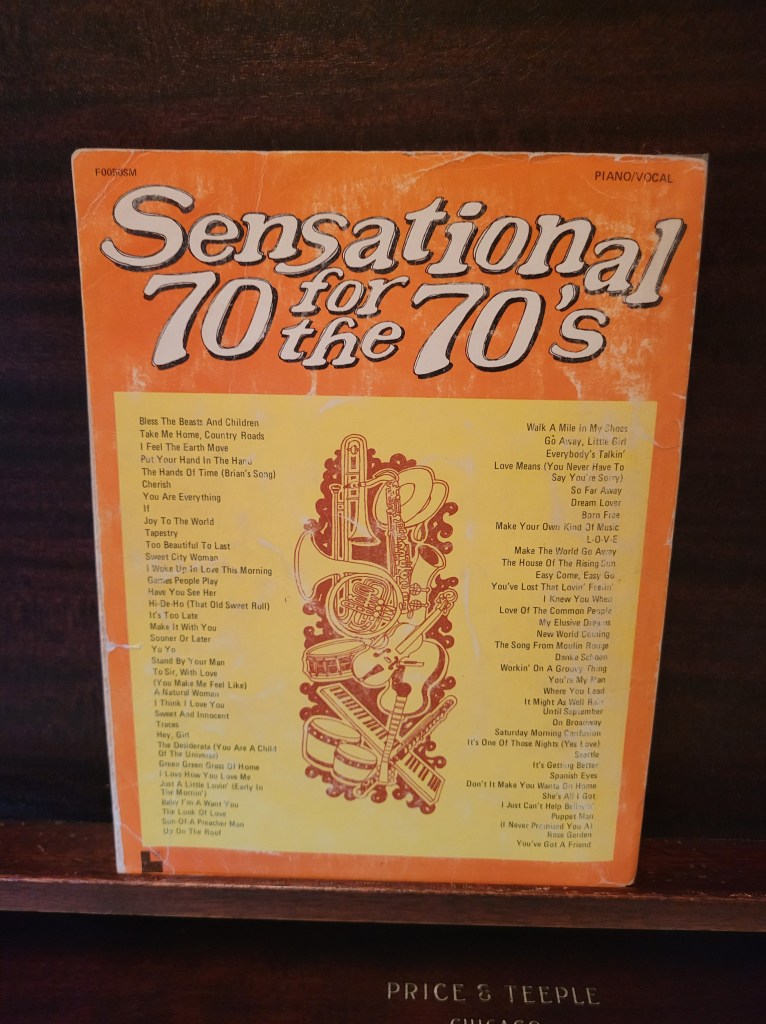
Dog-eared and worn is my Sensational 70 for the 70’s book

Of the four siblings, however, I was the only one who showed the interest and inclination to actually learn how to read music and how to play.

That year my mother signed me up for group lessons which were being taught as summer school classes at Franklin Junior high. I dutifully attended each and every class with one Mr. Lyons, a curmudgeon of a man, who would get so irritated with the ineptitude of the class that, more than once, he’d kick us all out and we’d wander the halls of the building until someone came to pick us up.

This alone would probably deter most 8 and 9-year-olds. But not me. I, apparently, had some of that Scottish stubbornness, and continued to practice and learn.

That fall my mother signed me up for lessons from a good friend of hers, Nancy Mayo. Mrs. Mayo was the pianist for the Bel Canto women’s singing group, a teacher, and a talented musician in her own right. She was the polar opposite of Mr. Lyons, infinitely patient and gentle with her young charges. I know I took lessons from her for a couple of years. I don’t know why I switched to a new teacher, but I did so in Junior high to my final teacher whose name I can no longer recall.
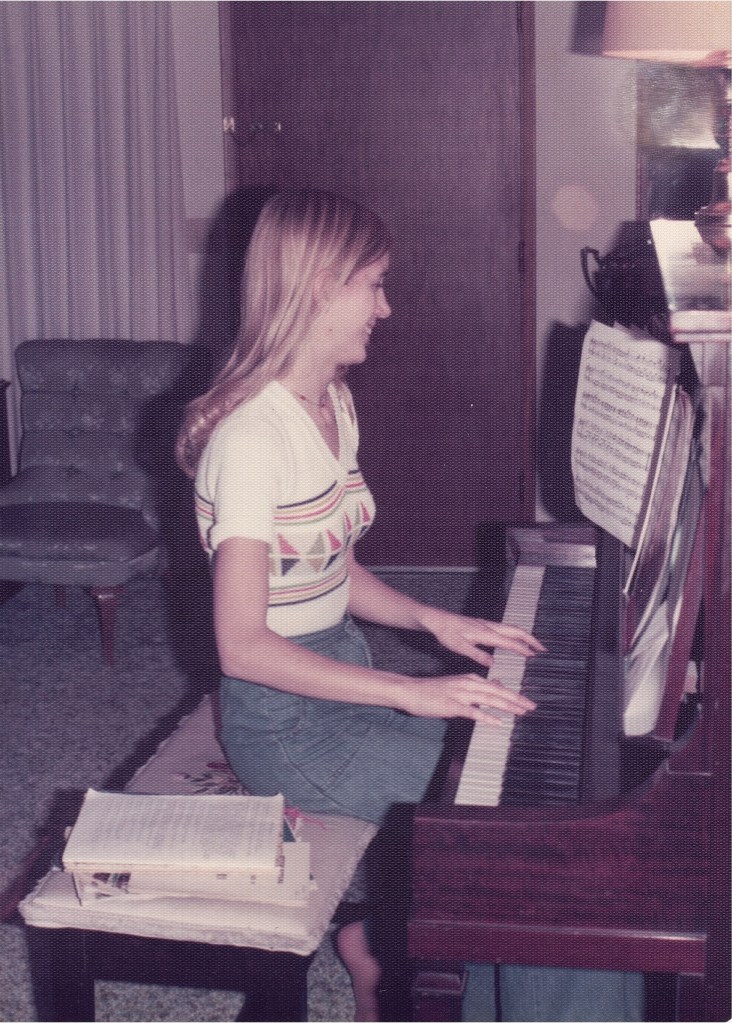
The author about age 16

I took seven years of lessons. When I was in high school, I spent a number of years being the musician for the Yakima Rainbow Girls and actually played in public. I sometimes accompanied people both with voice and other instruments. Somehow I could not memorize a song to save my life. I also was never able to easily change keys as the chords would give me fits. I was a reasonable technician, but a long way from being an artist.

One of my after-school habits, however, was to sit down at the piano and play songs that I loved. I had a song book titled “Sensational 70 for the 70’s’” which had three of my four favorites: The Hands of Time (Brian’s Song), Too Beautiful To Last (Theme from the move Nicholas and Alexandria), and IF (by Bread).

I had a lot of others I played, but those three, plus the love theme from Romeo and Juliet, were always part of my daily concert.

This habit continued through my three years at Eisenhower High School and the two years I lived at home while attending Yakima Valley College. Then, in the fall of 1977, I moved to Tacoma to finish my education at the University of Puget Sound.

Sometime that autumn, when home on a break, I sat down to play the piano and my mother appeared in the living room and said to me that the hardest adjustment for her with me going off to college was the absence of the music in the afternoons.

It was a powerful moment as it was only then that I understood how something I enjoyed as a way for relaxation had become a special thing for my mom; it was how she experienced the empty nest syndrome common once all the children leave home.
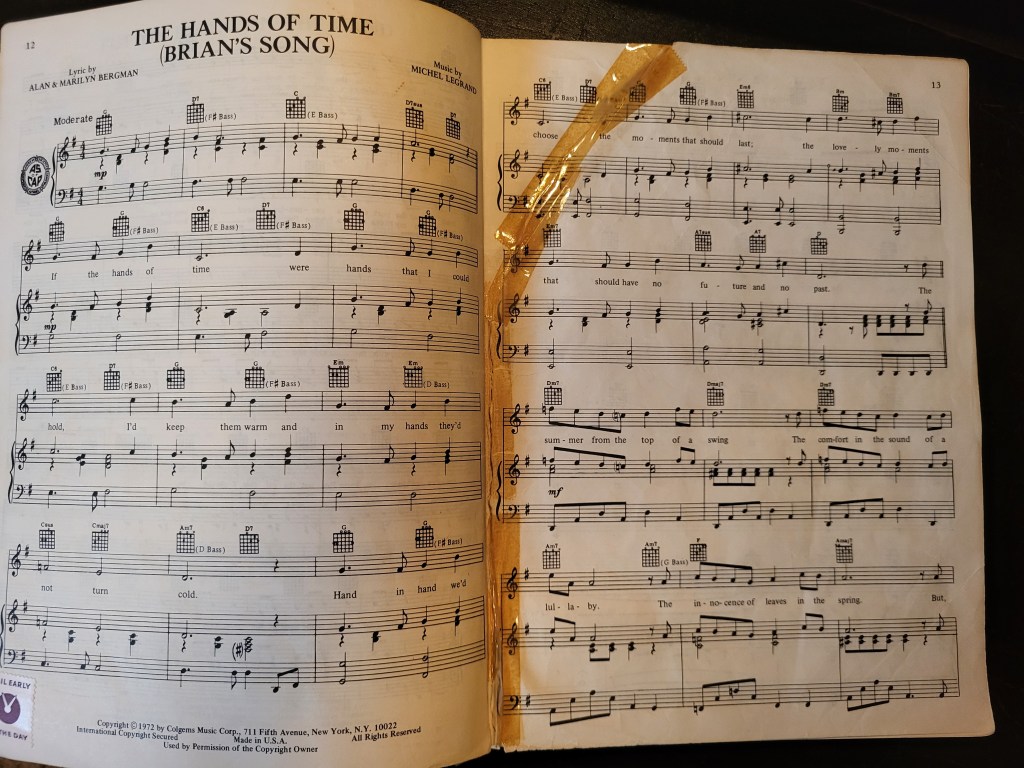
No doubt my favorite song of all time to play on the piano as evidenced by the decades old scotch tape holding the pages together

When my parents sold that house in 1984, grandma’s piano came to live at my house. It’s been moved multiple times since and the now 103-year-old instrument definitely needs a tune up. But nowadays, I don’t seem to make the time for playing the piano.

It’s a shame, really. I no longer have delusions of grandeur that I’ll be some fabulous pianist; it’s really more about doing something that would bring me a bit of personal enjoyment.

So here’s to the piano, one of the most enduring and versatile instruments ever invented.

https://en.wikipedia.org/wiki/Piano

https://amis.mircat.org/jamis/1976_005.pdf (The only information I could find on James McLean)
You Light Up My Life

A mega hit for Debbie Boone

November 19, 2024

A Tuesday Newsday Classic updated

On November 19, 1977, this song was in the middle of a 10 week run as the number one song in America. You Light Up My Life was the one and only Top 40 hit from Debbie Boone, daughter of 50’s teen idol Pat Boone. It reached number one on October 15 and stayed in that position through December 23, making it – at the time – the only recording to stay that long in the top spot in Billboard history.

According to the Infallible Wikipedia:

“Besting her chart performance in Billboard, Boone’s ‘You Light Up My Life’ single topped Record World’s Top 100 Singles Chart for an unbroken record of 13 weeks. On Billboard’s chart, Boone was unseated from #1 by the Bee Gees, with ‘How Deep Is Your Love,’ the first of three #1 singles from the ‘Saturday Night Fever’ soundtrack. On Record World’s chart, Boone kept the Bee Gees out of the number-one spot. In Cash Box Magazine, ‘You Light Up My Life’ managed only an eight-week stay at the top of the chart, before being dethroned by Crystal Gayle’s ‘Don’t It Make My Brown Eyes Blue’.

The single, which was certified Platinum by the Recording Industry Association of America (RIAA), also hit #1 on the Adult Contemporary chart and reached #4 on the Country chart. The single peaked at #48 I’m the UK Singles Chart. Boone’s hit single led to her winning the 1978 Grammy Award for Best New Artist, with additional Grammy nominations for Best Pop Vocal Performance, Female and Record of the Year. Boone also won the 1977 American Music Award for Favorite Pop Single.

Decades after its release, the Debby Boone version is still considered one of the top ten Billboard Hot 100 songs of all time. In 2008, it was ranked at #7 on Billboard’s ’Hot 100 All-Time Top Songs’ list (August 1958 – July 2008). An updated version of the all-time list in 2013 ranked the song at #9.

Although it was written by (Joe) Brooks as a love song, the devout Boone interpreted it as inspirational and proclaimed that it was instead God who ‘lit up her life.’”

The song was tainted by controversy, however, as songwriter Brooks apparently did not want to pay the agreed upon amount owed Kasey Cisyk, the artist who sang it for the movie of the same name, and whose version is included on the 1977 soundtrack.

Boone was told, when recording the song for release as a single, exactly how to sing it and her vocals were dubbed onto the original orchestral track.

At the time, I recall that Boone received much derision and the song was labeled as saccharin. In reading what occurred, however, I feel bad for both the women caught up in the controversy. Perhaps Cisyk was denied her shot at a Top 40 career and, perhaps, Boone was lulled into a sense of inevitability that she would become a star like her father. Although in listening to both versions, I think Boone’s is better.

Boone released additional songs into the pop market, but none ever came close to the success of “You Light Up My Life.” Her career eventually led her back to country music – where she had started – and then to work in the Christian music world.

In the fall of 1977, you simply could not avoid the song. It was played hour after hour on the radio. That autumn was one of the most memorable in my life: I was living away from my parents for the first time, having joined the Alpha Phi sorority at the University of Puget Sound. While I did study, I don’t think I was quite as diligent as I should have been. Instead, I was fraternizing with the fraternity boys most every weekend at mixers, and going on dates! I had never in my life garnered quite so much attention from the males of the species.

There was one particularly memorable November day when, literally, I had calls or visits from five guys all of whom I had been on a date with in recent weeks. That day, I could not say for sure the exact date, I had been headed down to the ‘tunnels’ to get my dinner and I decided it was a good idea to jump down the two steps from the door. I jumped a wee bit too high and… nearly gave myself a concussion.

The ‘award’ I was given for my epic self inflicted concussion

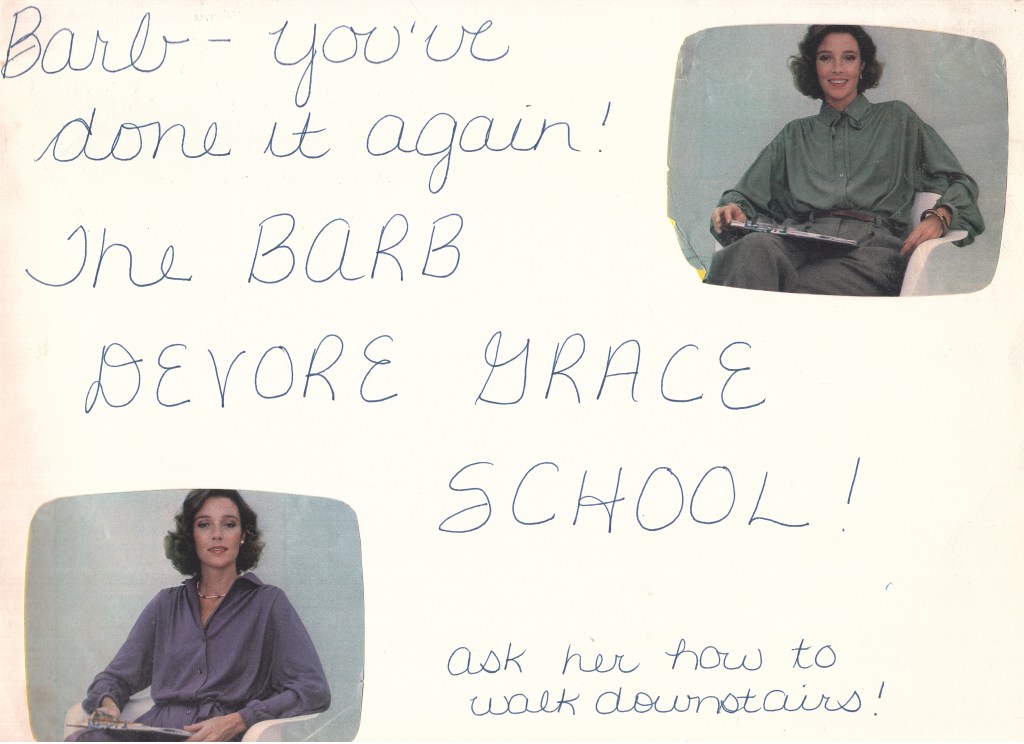
The next Monday at our weekly sorority chapter meeting, I was recognized for my grace (for the stairs) and my charm (for the plethora of phone calls and visits I had). It was what I came to be known for and received endless ribbing about it. Good times.

That era in my life was punctuated by music and whenever I hear “You Light Up My Life” I’m back in the Alpha Phi house and it’s the fall of 1977. There were a few other songs which, in my opinion, were equally as deserving of that number one spot.

These included Billy Joel’s Just The Way You Are – an infinitely better song; Rita Coolidge’s version of We’re All Alone; Carly Simon’s Nobody Does It Better; and Don’t It Make My Brown Eyes Blue by Crystal Gayle. The list of great songs from that year also included big hits – but never number ones – from a whole lot of great bands: Foreigner, Heart, Fleetwood Mac, Styx, Supertramp, and Steely Dan, among others.

And in case you’d like to hear the Casey Cisyk version and really get the worm stuck in your head (it’s been in mine since I wrote this!) here’s that video also. Note that you are seeing Didi Conn on screen – she is doing a lip-sync to Cisyk’s vocals. Enjoy!

The links:

The Darling of Delta Rho Chi

October 27, 2024

There’s a bit of a thrill to do a search on both Amazon and Barnes & Noble and see one’s novel available for presale… it’s a dream a long time in the making! For more information and the links to both click here: https://barbaradevore.com/the-darling-of-delta-rho-chi/.

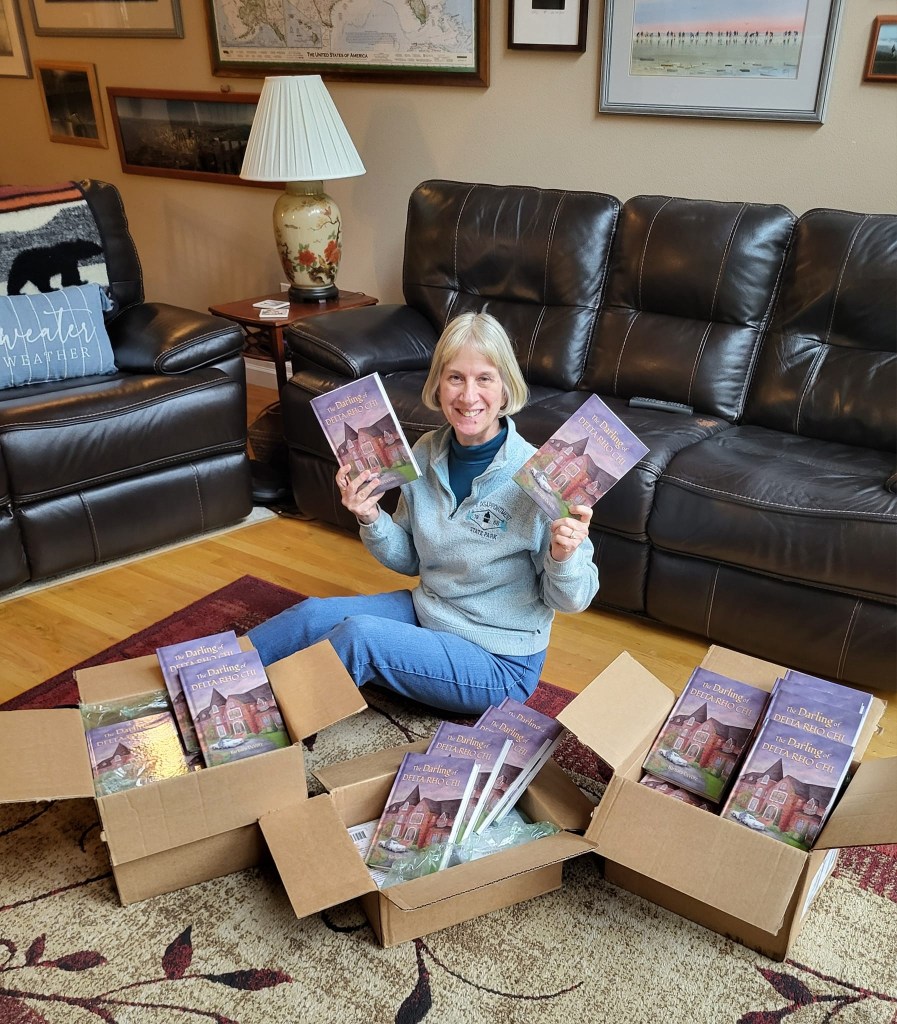
The first order of hardcover books!

November 25, 2024

The long awaited day has arrived! My shipment of hardcover books. One step closer to the launch party.

December 1, 2024

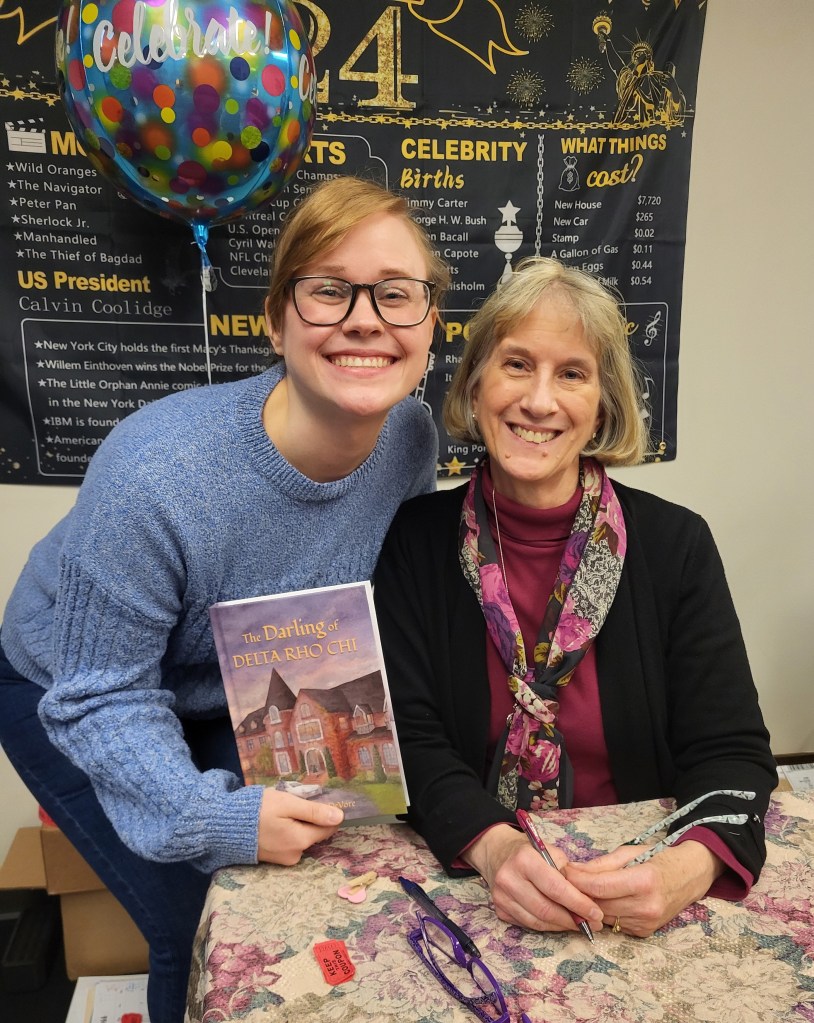
Hosted my Book Launch Party yesterday! Great success. Thank you to all who attended and shared in the celebration. Thank you to all who have purchased books and have left me reviews. My heart swells!

My most recent review on Amazon!

5.0 out of 5 stars Must readReviewed in the United States on November 28, 2024

I absolutely adored this two-for-one father/daughter book. It’s the story of Elise and her sorority troubles, as well as her father Jack finding his way to new love and dreams coming true for both. The characters are well developed, and I became invested in what happened to them. I fully appreciated the place and period accurate references to people and places I remember from living in the state. I felt the author nailed the social mores and values of the time period written about. I thoroughly enjoyed this book.”

January 27, 2025

First of all – thank you to EVERYONE who has ordered The Darling of Delta Rho Chi. I had no idea what this journey would look like. It’s been everything I hoped it would be and more. I’m especially appreciative of the conversations with friends who have sought me out to share with me their impressions of the novel.

A couple of favorite verbal comments:

It’s kinda spicy. I never expected that from you.”

“I stayed up until 2 a.m. finishing it. I never do that.”

“When is the next book coming out?”

And then there was this, the comment which truly floored me:

“Your writing reads a lot like Jodi Picoult.”

For those unfamiliar with Jodi Picoult, I think she is one of the best fiction writers I’ve ever read: carefully crafted characters, compelling story lines, crisp and clean scene setting and descriptions. To be included in the same sentence is humbling, flattering, and brought a lump to my throat.

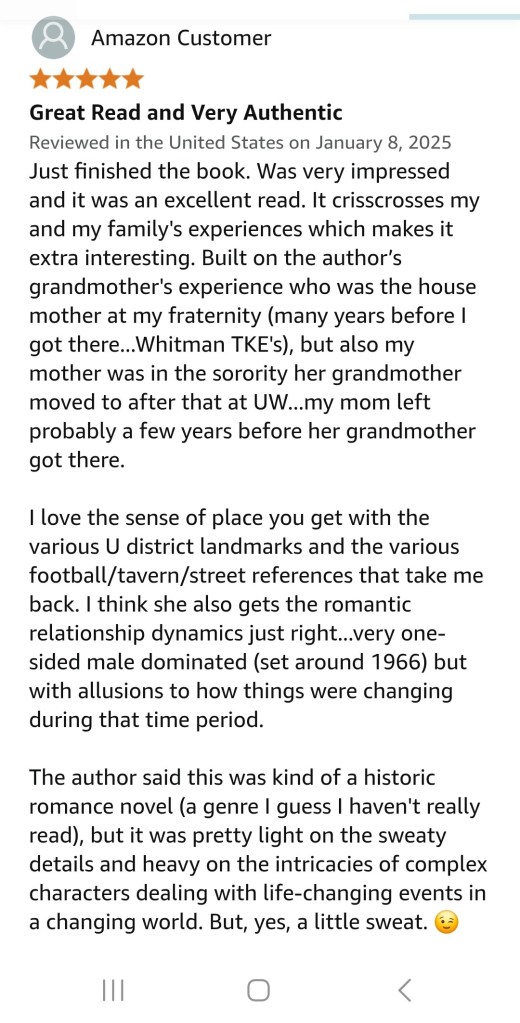
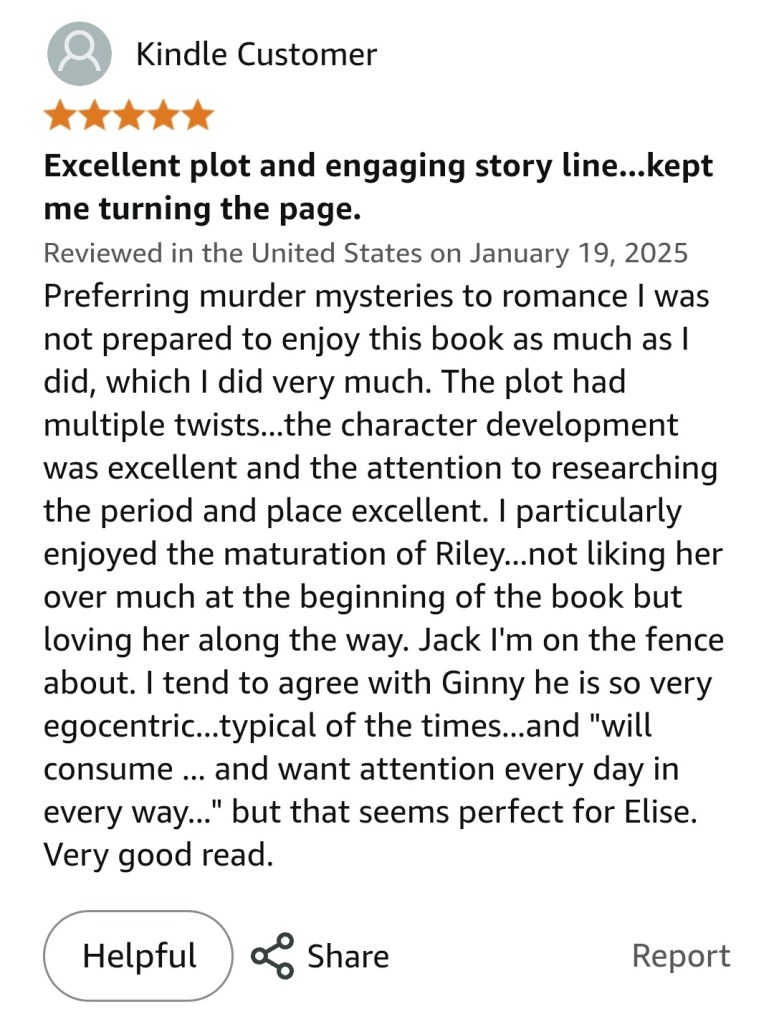
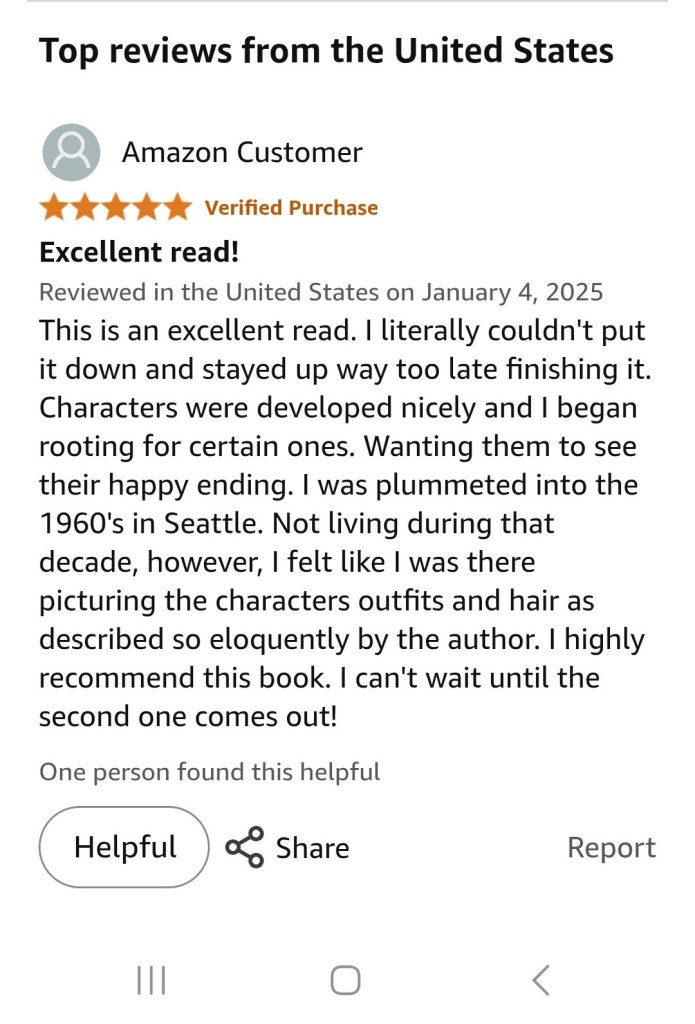
Heartfelt thanks to all who took the time to leave a review, send me a message, or seek me out to tell me what you thought. Here are three recent reviews on Amazon:

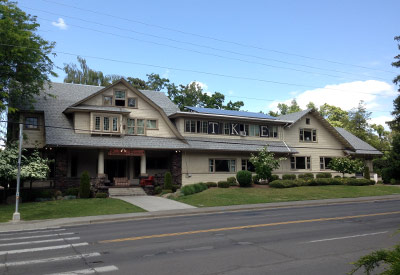
The TKE house at Whitman College

Peak DeVore

Who Am I and Where do I come from?

August 6, 2024

A Tuesday Newsday Classic Updated

As someone born into a family with an uncommon last name, I notice whenever I see that name. Several years ago I wrote about my ignorance of Washington State geology when I admitted I did not realize Glacier Peak was this state’s ‘fifth’ volcano. (You can read all about it at https://barbaradevore.com/2018/06/12/glacier-peak-washington/)

DeVore Peak – Glacier Peak Wilderness, North Cascades, Washington State

Fast forward to August 3, 2019… when I receive the following text from the hubby:

“Just saw on King 5 there is a Devore Creek fire near Stehiken. Comes down from Devore Peak.”

What!?

How is it I never knew of this Devore Peak or Creek? Yet, here it has been, hiding out 20 miles northeast of Glacier Peak, undoubtedly since the time the first settlers imparted their names on things.

From the Infallible Wikipedia:

“Devore Peak is an 8,360+ ft (2,550+ m) mountain summit located in the Glacier Peak Wilderness of the North Cascades in Washington State. The mountain is situated in Chelan County, on land managed by Wenatchee National Forest. Its nearest higher peak is Martin Peak, 3.36 mi (5.41 km) to the southwest, and Tupshin Peak lies 1.55 mi (2.49 km) to the north-northeast. Precipitation runoff from the peak drains to nearby Lake Chelan via tributaries of the Stehekin River.”

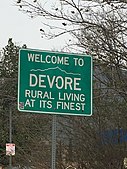
So it got me thinking… where else are things named Devore (or DeVore as my family spells it) that I do not know about?

Of course I know about DeVore, California although I’ve never been there. The town was a stop on historic Route 66. It has since been incorporated into sprawling, 81 square mile, San Bernardino. Much of the DeVore neighborhood was leveled by a wildfire in 2003, with 904 homes destroyed.

If you travel 1,723 miles to the east you will find a dot-on-the-road community in Indiana also named Devore. Originally named Mill Creek, some interloper relative of mine got a post office located there and probably named it after himself.

Lovely little falls in Devore, Indiana

But back to Devore Peak. Despite my extensive internet research, I cannot find any ancestor or relative after whom the mountain is named although I suppose it could be the Reverend John DeVore. He was the first minister to establish a church north of the Columbia River in Steilacoom. From the Washington State History link site:

Monument in Steilacoom, Washington to Reverend John DeVore and the Methodist Church

“(Lafayette)Balch (Steilacoom’s founder) persuaded Reverend John F. DeVore (1817-1889) and his wife Jane Devore (d. 1860) to relocate to Steilacoom in 1853. DeVore built a two-story Methodist Episcopal church that also served as a school and meeting hall. When the church bell, ordered from the East, arrived with a balance due, residents took up a collection. Afterward the bell became town property, used to signal emergencies and public meetings along with the call to worship.”

When a college student, I drove down there one day from nearby University of Puget Sound (which was founded as a Methodist college) and located the marker for Reverend DeVore. Alas, the Reverend is not a direct ancestor and I was never able to establish any relationship.

But it does make one wonder – unless you have a very common last name – how many others share yours?

I found the following information on https://www.mynamestats.com/Last-Names:

  • DEVORE is ranked as the 3,242nd most popular family name in the United States with an estimated population of 12,319.
  • This name is in the 99th percentile, this means that nearly 0% of all the last names are more popular.
  • There are 3.86 people named DEVORE for every 100,000 Americans.
  • This name is most often used as a last name, 99% of the time.
  • Based on US Census Bureau data the estimated population of people named DEVORE is 13,030, the rank is 3,005 and the proportion per 100k Americans named DEVORE is 4.09.

When you consider that there are some 329 million in the country that’s only .004 percent of all people with the same last name. If I extrapolate that even further and Google both my first and last names, there are 128 other people named Barbara DeVore in the U.S. currently.

Growing up I knew of only one other person with the last name DeVore who was not related to our family. That would be the butcher who worked at the Safeway on 36th and Tieton Drive in Yakima. I was always so very amused when I would go to the store with my mother. If the shopping trip involved a visit to the meat counter inevitably the exchange would go something like this:

Butcher: “Good Afternoon, Mrs. DeVore.”

Mom: “Good Afternoon, Mr. Devoir.”

And then they both would laugh.

Yes, Mr. Devoir the butcher spelled it different. But the two of them obviously enjoyed the inside joke of having the ‘same’ last name.

As I was writing this article, I could not think of a single person I’ve met casually with the last name DeVore. Through my genealogy research and DNA matching, I’ve found quite a number of cousins and have enjoyed getting to know many of them on Facebook.

Occasionally I will have someone ask do you know ‘fill-in-the-blank’ DeVore? Often, I am able to say he/she is my second cousin, once removed. But mostly it doesn’t come up.

I rather like the unique name and the mystery of it all. According to a book about the DeVore families compiled by Betty DeVore Mann in 1992, the history of the name is this:

Chateau de Vore near Remalard, France

“There is a small, stately chateau in Normandy, near Alencon and 3 kilometers from Remalard, named Chateau de Vore. The de Vore family left in the 17th century. Several American Devores have interviewed the 2 remaining de Vores in Paris. They knew very little about their ancestry, because their grandfather was the illegitimate son of a wealthy family and he was sent away when he was very young. He carried his mother’s maiden-name. And so the story goes…”

She also adds “the Huguenot Society tells us that Devore is of Huguenot origin. The Huguenots were the French Protestants who were persecuted and made a mass exodus from France between 1550 and 1780.”

When I first submitted my DNA information it stated that I was 3 percent French. Ancestry, however, frequently updates their estimates based on new DNA submissions to see who matches who and my specific French connection has long since disappeared.

When I looked at my most recent results, it suggested that I was 22 percent from England and northwestern Europe. Curious, I located Chateau de Vore in Remalard, France. It is about 85 miles from the Eiffel tower. When I overlaid my DNA profile to the region included as “northwestern Europe” I discovered that Chateau de Vore was within my DNA range. It is not outside the realm of possibility that the family lore just might be right.

For those interested, I covered the topic of DNA for ancestor searches here: https://barbaradevore.com/2022/07/26/ancestor-hunting-dna/

While the DeVore family history will likely remain hidden in the mists of time, the pursuit of it has dogged me since I became old enough to ask “Who am I? And what am I doing here?”

Who knows, maybe there’s an historical novel in there, the intrigue of an illegitimate child who grows to a man. It is the story of a man who must disavow his country for his religion, never able to claim his true heritage, who must establish a new life in a distant land.

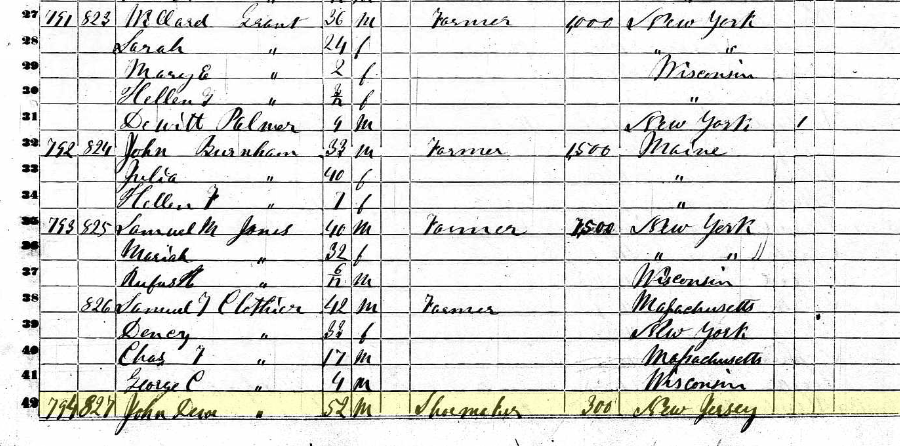
Perhaps not my family’s story… after all I do know that my great-great-great grandfather John DeVore was a shoemaker in Wisconsin in 1850. Not nearly as romantic as a swashbuckling Frenchman, right?

As always, links:

https://en.wikipedia.org/wiki/Devore_Peak

https://en.wikipedia.org/wiki/Devore,_California

https://en.wikipedia.org/wiki/Devore,_Indiana

Tacoma Narrows Bridge

The rise and fall of Galloping Gertie

November 7, 2023

A Tuesday Newsday Classic

Galloping Gertie just before the collapse on November 7, 1940

Last week we explored the world of horseracing and author Dick Francis. This week we will be discussing galloping. But unlike how a horse gallops, this galloping took place on November 7, 1940 and has since become a text-book example of what NOT to do when building a bridge.

It was on this date when the Tacoma Narrows Bridge collapsed and sank. It was dubbed ‘Galloping Gertie’ as even the most gentle of breezes would cause the roadway to sway. I can only imagine the feeling of unease one had when driving over the structure.

For a local newsman it proved terrifying. From the Infallible Wikipedia:

“Leonard Coatsworth, a Tacoma News Tribune editor, was the last person to drive on the bridge:

‘Around me I could hear concrete cracking. I started back to the car to get the dog, but was thrown before I could reach it. The car itself began to slide from side to side on the roadway. I decided the bridge was breaking up and my only hope was to get back to shore.

‘On hands and knees most of the time, I crawled 500 yards or more to the towers… My breath was coming in gasps; my knees were raw and bleeding, my hands bruised and swollen from gripping the concrete curb… Toward the last, I risked rising to my feet and running a few yards at a time… Safely back at the toll plaza, I saw the bridge in its final collapse and saw my car plunge into the Narrows.’”

The bridge had opened only four months earlier! In reading about everything that went wrong the biggest mistake seemed to have been that in a desire to save money on what was perceived as a bridge which would be lightly used, the design was flawed from the beginning.

Ultimately they determined the bridge failure was due to ‘aeroelastic flutter’. Unless, of course, you are an engineer the term means little. The film of the event for us laypeople, however, reveals a structure bucking like an unbroken stallion during its first ride.

The Hood Canal bridge after it sank in February 1979

Although I was not around in 1940, I was attending college in Tacoma on February 13, 1979 when another bridge met the same fate as Galloping Gertie. It was on this day when I truly grasped the power of a Pacific Northwest windstorm. During the night prior to its sinking, sustained winds of 85 mph buffeted the Hood Canal floating bridge. They estimated gusts up to 120 mph (called a ‘hurricane’ most any place else as any sustained wind over 72 mph is classified as such) had occurred. The structure was swamped and at 7 a.m. that dark, windy and rainy morning, the bridge sank.

Fast forward to November of 1990 and yet a third Washington state bridge met a similar doom. We watched in fascinated horror live TV news on the morning of November 25th as the floating bridge – being resurfaced to continue carrying traffic while a new span was constructed – which connected Mercer Island to Seattle was inundated. As my husband no doubt said at the time: “surf’s up!”

In the 30 plus years I’ve lived in Western Washington there are a couple rules you can count on me following. First, I will do anything I can to avoid driving in a windstorm. I’ll drive in rain, snow, sleet, and dark of night but the wind stops me. I’m not talking about a bit of wind but sustained winds over 40 mph.

The I-90 bridge between Mercer Island and Seattle as it sank in November 1990

 Second, I will move to the northeast corner of any structure, especially one with nearby cedar trees. The worst PNW winds almost always blow from the southwest; if a tree is going to come down it will fall from that direction. Plus, cedar trees have very shallow roots and, unless there’s a cluster of them with an intertwined root system, tend to be the trees which come down during the storms. When we lived in Kirkland, my family knew that a heavy wind meant ‘going to the mattresses’ and sleeping on the floor of the living room as far from the trees as possible.

November is definitely the start of windstorm ‘season’ so remember to batten your hatches when the wind blows…and you just might want to avoid driving on bridges.

As always some interesting links PLUS a video from the Washington State History museum which tells the entire Galloping Gertie story.

https://en.wikipedia.org/wiki/Tacoma_Narrows_Bridge_(1940)

https://en.wikipedia.org/wiki/Pacific_Northwest_windstorm

http://www.wsdot.wa.gov/TNBhistory/Connections/connections3.htm

Alpha Phi

Celebrating 150 years of Sorority Life

September 13, 2022

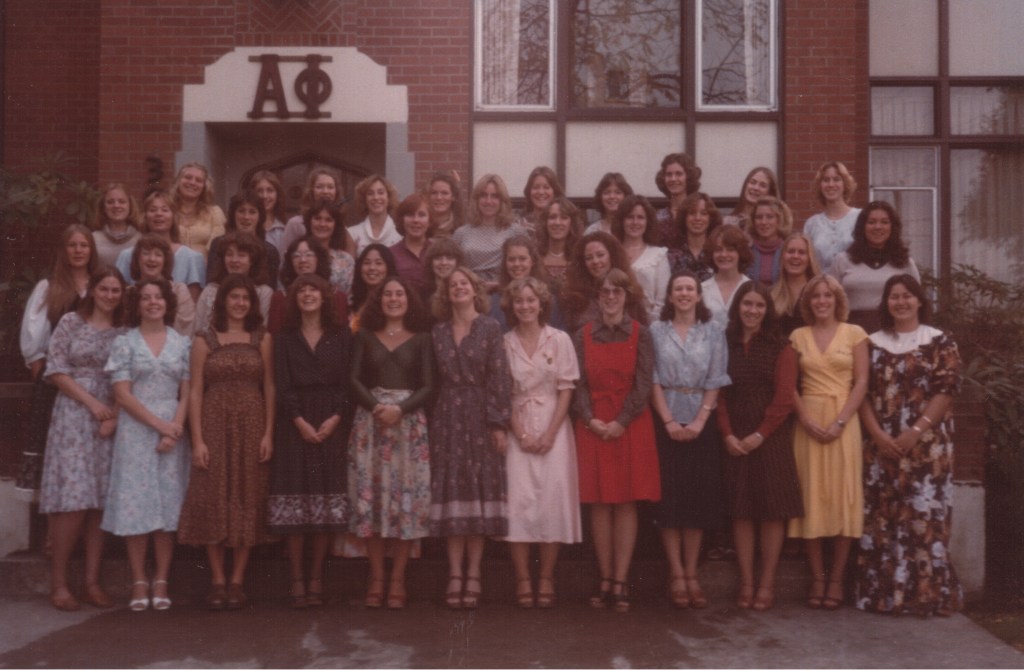
The front of my Alpha Phi Pledge book and a photo of our house at the University of Puget Sound. 1977

The formation of Greek letter societies on college campuses can be traced back to 1776. The idea behind the first such group – Phi Beta Kappa – was to provide a place for like minded individuals in the pursuit of academic excellence. Phi Beta Kappa continues today as a prestigious academic honor society.

Over the next century Fraternities, as they came to be called, were social groups formed for men. It wasn’t until 1870 when the first actual Greek letter group for women was established. That honor goes to Kappa Alpha Theta which was formed in January 1870 at Indiana’s DePauw University; close on their heels was Kappa Kappa Gamma founded in October of the same year at Monmouth College in Illinois.*

Third on that list was Alpha Phi Fraternity, established on September 18, 1872 at Syracuse University in Syracuse, New York.

The term Sorority had not yet been coined to represent the female version of a Fraternity which is why the first three such groups for women were formed as Fraternities.

When I pledged Alpha Phi at the University of Puget Sound in the fall of 1977, I knew little of the Greek organizations. Yes, my mother had been a member of Delta Delta Delta but had talked little of her time in the sorority.

I also knew that my grandmother had been a housemother for the Sigma Kappa sorority on the University of Washington campus in the early to mid-1960’s.

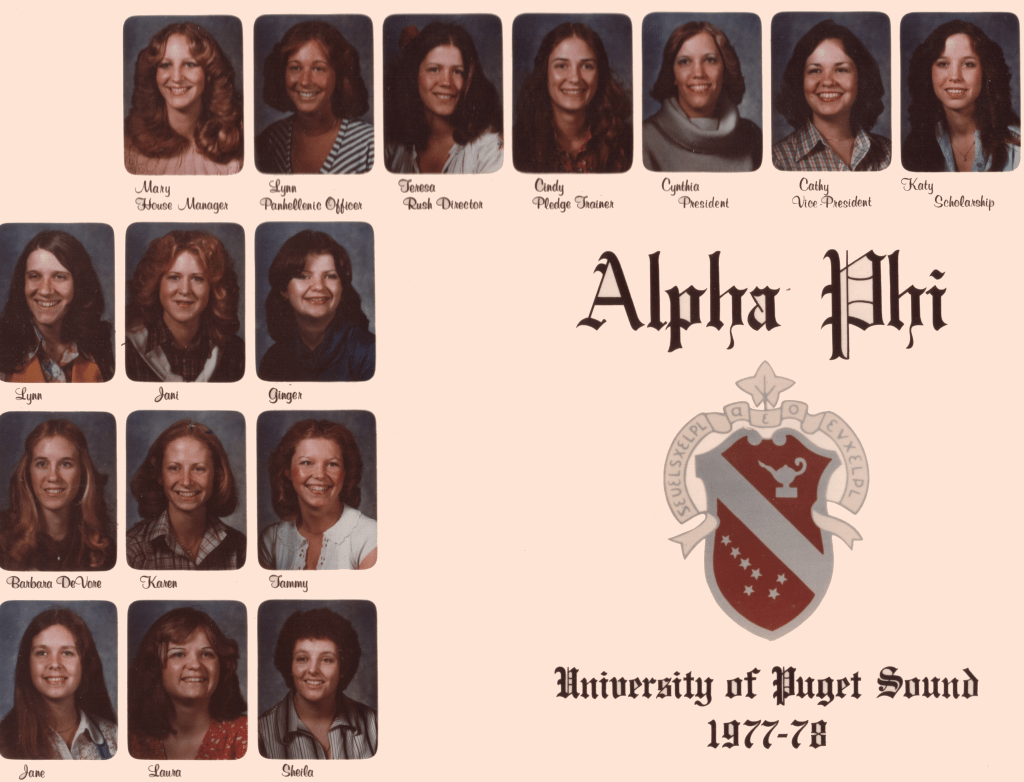
A few of my sorority sisters from the official composite of the members in 1977-78

Knowing this, and having stayed at the Sigma Kappa house a couple of times while my grandmother was there, I had long wished to join a sorority when I attended college. More on that in a bit.

First, the Infallible Wikipedia tells us this about Alpha Phi:

“At the time of the founding there were only 666 women attending Syracuse; ten of them eventually formed Alpha Phi to create an organization ‘on the principles of the promotion of growth in character; unity of feeling, sisterly affection, and social communion among the members.’ Although the actual founding date is September 18, 1872, Alpha Phi has been celebrating their Founders Day on October 10 since 1902, since many colleges and universities were not open for classes in mid-September at that time. Alpha Phi considers itself a women’s fraternity because its founding date predates the invention of the word ‘sorority.’ (snip)

Like many other women’s fraternities, Alpha Phi recognizes multiple types of symbols, with the Ivy Leaf as their primary symbol. The fraternity’s official colors are Bordeaux and silver. The colors were originally blue and gold; however, these colors were similar to those of Delta Upsilon Fraternity so they were changed. The official flowers are the Lily of the Valley and the Forget-me-not. Alpha Phi lists its ideals as ‘Sisterhood, Generosity, Innovation, and Character.’ Alpha Phi’s public motto is ‘union hand in hand’.”

My roomies from my first semester atop the bunk beds: Dee, Susie, and Connie.

All of these things I learned after becoming a pledge. A pledge is someone who commits to joining the organization once they have completed a probationary period. I successfully completed my probation and was initiated into Alpha Phi in January 1978.

The two years I was a member of Alpha Phi were, perhaps, the most influential and memorable times of my life. I loved everything about Sorority life. The Monday night chapter meetings; the Friday and Saturday night functions with the Fraternities; the crazy antics of my roomies; having roomies; living on Greek row.

Unlike most students, I was a junior when I arrived on the UPS campus. I had spent the previous two years at Yakima Valley College (YVC). I discovered, spring of my sophomore year at that institution, that I was a few credits short of what I needed for my AA degree. Having the AA was essential to avoid spending an extra year – and extra money – getting my BA degree.

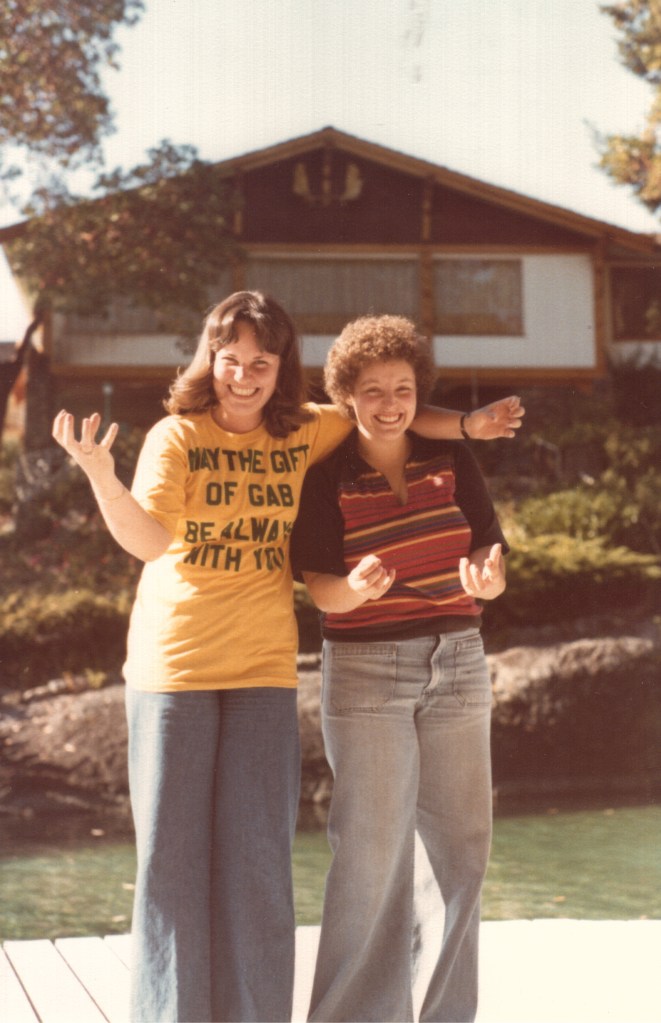
With Roomies Cathy and Sheila at Sheila’s home in Sooke, B.C., summer of 1978

The summer before UPS, I took a Spanish class at YVC to get those credits and ended up meeting a gal name Toni. Unbeknownst to me, Toni was a member of Alpha Phi at UPS and, due to her own issues getting her degree from UPS, had signed up for the YVC class also. I so appreciate Toni as she took the time and effort to write a recommendation for me, paving the way for my membership in Alpha Phi.

I assumed I would join Delta Delta Delta (Tri-Delta) as both my mother and my aunt had been members. There were rules regarding how a ‘legacy’ – someone who had a mother, sister, or grandmother who belonged to a particular sorority – was processed through ‘Rush.’ (Rush was a multi-day process where the Rushees would go, in groups of 25 to 30, to each and every sorority on campus. There you would meet and talk to members of a particular house before being ushered out and then herded to the next house.) Later, I came to understand, the members of each house would meet and decide ‘who’ to invite back the next day as they were limited in the number of young women they could choose.

Not knowing how Rush worked, I found out too late that having letters of reference were essential to receiving an invitation to return. For the second day of Rush, I was asked back to three of the seven Sororities on campus: Tri Delta, Alpha Phi, and Chi Omega. I did not have the recommendations needed for the others.

Undaunted, I show up at the appointed time at each and I think it’s gone pretty well. But, when the dust settled, the Tri-Delts had not invited me back to day three. I learned later that, as a Legacy, you were guaranteed an invite back for day two, but if they invited you back after that they were required to issue you an invitation to join. Being that I was a junior meant I would only be in the sorority for two – rather than four – years. The Tri-Delts were, I think, looking only for freshmen.

Ready for the alumni open house Fall 1978

Although disappointed, I crossed my fingers that the Alpha Phi’s would keep me to the end. While Toni had opened the first door, I was also helped along by Alpha Phi member I knew through the Rainbow Girls. I have no doubt that her influence was a deciding factor in the sorority inviting me to join. Thus I became a proud pledge of Alpha Phi, excited to have the sorority experience.

Alpha Phi’s dressed and ready for a cowboy function with one of the Fraternities

There’s little doubt in my mind that I probably would have been a more serious student had I NOT joined the sorority. But I also believe that one’s lessons in life come in many different forms. For me Alpha Phi was the perfect vehicle for transition from teenager to adult. It became my family. True it was a family of all sisters, but we looked out for each other; we were there to listen to tales of woe in regards to guys. We were there to give each other hugs of encouragement and dry the occasional tears. We had someone to walk to class with and there was always someone to eat a meal with. There were the after lunch TV sessions to watch All My Children and the weekend late night gatherings for Saturday Night Live. There were the runs to the “Pig” – aka Piggly Wiggly grocery store – for snacks; and the occasional pizza outings to Shakey’s. There were dances and social events with the Fraternities.

In the spring of 1979, with graduation looming, some of my sisters would say they couldn’t wait to be done. But not me. I knew I would miss everything about Sorority life and Alpha Phi.

But it wasn’t over; not really. The experiences live on in my memory and, perhaps, one or a dozen of those experiences may have become part of the book series I’m currently prepping for publication.

I owe it all to my sisters and the two magical years I spent with them as a member of the Gamma Zeta chapter of Alpha Phi at the University of Puget Sound.

A few links:

https://en.wikipedia.org/wiki/Alpha_Phi

https://en.wikipedia.org/wiki/Fraternities_and_sororities#Establishment_and_early_history

https://en.wikipedia.org/wiki/University_of_Puget_Sound

*Although both Pi Beta Phi (Pi Phi) and Alpha Delta Phi (ADPi) can claim earlier formation dates than the three listed, neither adopted Greek letter names when created. Pi Phi – originally called I.C. Sorosis – switched to a Greek letter name in 1888, and ADPi – originally the Adelphean Society – in 1905.

Ancestor Hunting

Did I really marry my cousin?

July 19, 2022

Who am I? Where did I come from?

These two age old questions are ones which humans often start asking at a young age.

In the home where I grew up, I became aware – at about age 10 – of an old photo album. Inside the very heavy, olive green velvet book were fragile pages of black and white photos of people who, my mother told me, were my ancestors.

The first family photo album I ever saw. It was full of photos of my great grandmother’s family. Sadly, she did not label many photos so it was up to me to try and figure out who the people were.

It was an odd thought to think that these people – dressed in old fashioned clothes and hairstyles– were related; people of a different place and time.

Thus was born, for me, a lifelong interest in genealogy and a quest to answer those two questions: Who am I? Where did I come from?

When at college at the University of Puget Sound, I took a month long intense study class (the session was called Winterim) in January of 1979 where the focus was only genealogy. With that excellent professor to guide us, class participants traveled to the National Archives at Sand Point in Seattle and pored over microfiche census records, perused the available book collections at the Seattle Public Library, and learned to craft letters to governmental agencies for information. And, of course, got a master’s class as to how to research and document one’s genealogy.

At that time there was no way to access digital databases because they did not exist. All research took excessive amounts of time and travel, often with limited results, and meticulous hand written records.

Then, in 1996, two Provo, Utah, residents changed the world for genealogists everywhere. The Infallible Wikipedia tells us:

“Paul Brent Allen and Dan Taggart, two Brigham Young University graduates, founded Infobases and began offering Latter-day Saints (LDS) publications on floppy disks. In 1988, Allen had worked at Folio Corporation, founded by his brother Curt and his brother-in-law Brad Pelo.

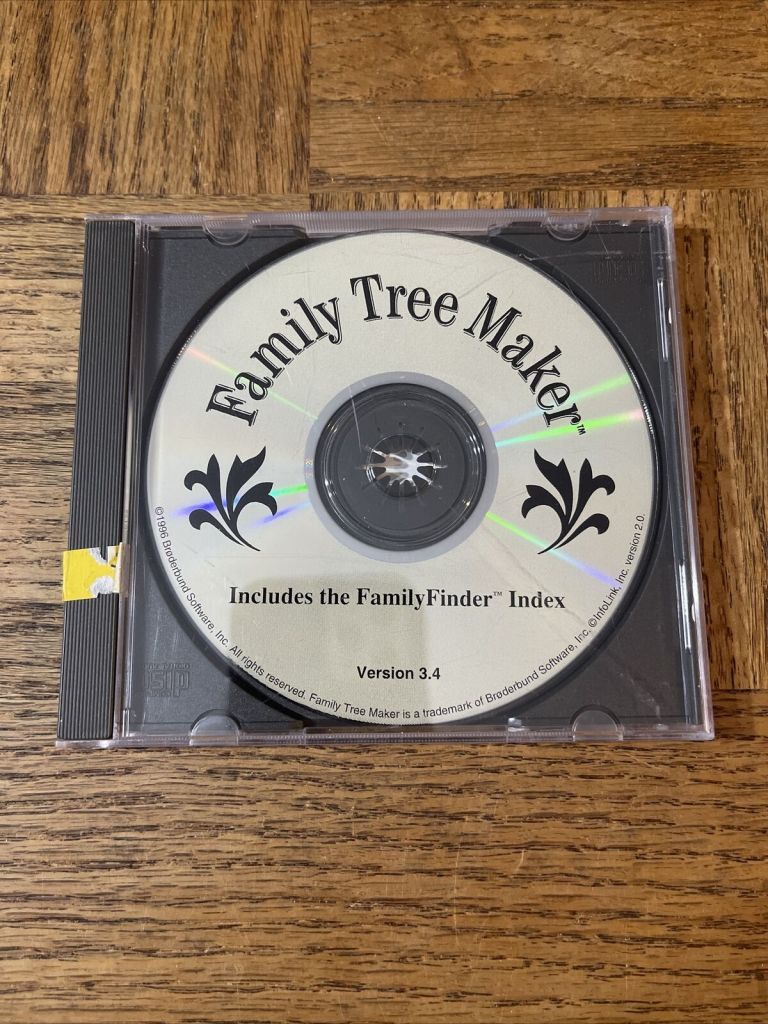
The genealogy program my mother in law purchased.

Infobases’ first products were floppy disks and compact disks sold from the back seat of the founders’ car. In 1994, Infobases was named among Inc. magazine’s 500 fastest-growing companies. Their first offering on CD was the LDS Collectors Edition, released in April 1995, selling for $299.95, which was offered in an online version in August 1995. Ancestry officially went online with the launch of Ancestry.com in 1996.” (The Paul Allen named is not the same one who co-founded Microsoft)

Over the years, there have been numerous entertaining – at least to me – events which have occurred. Which is why this is likely to be a multi-week series of articles.

My mother-in-law spent decades researching her family lines and she, and my father in law, literally travelled in a Fifth wheel travel trailer for ten years all across the United States sightseeing and researching. She had purchased Allen and Taggart’s $300 product and used it daily.

Photo of my great grandmother Rosanna Bell King DeVore and her three sisters, about 1886, taken in Fairmont, Minnesota. The photo is in the album which I still have.

The topic of genealogy has always been one which she and I have enjoyed discussing, ad naseum. Her impressive collection easily involves 50 large notebooks filled with carefully researched documents found throughout the United States as well as many garnered from other researchers who had made the leap ‘across the pond’, so to speak.

One thing she has always been quite proud about is her connection to one family on the first sailing of the Mayflower and the many ancestors who settled in the northeast.

Back in 1996, when she was heavily into the research, I had discovered some of the early ‘on line data bases’ and would frequently go out to Rootsweb to see if any potential relatives had posted something new.

Although I cannot recall the specifics of the event, one day I happened upon a distant relative’s family tree and started clicking backwards. Doing this often provided names and dates for previously unknown ancestors, thus enabling me to expand my family tree.

I was in my father’s line which had me back in Massachusetts. Not quite Mayflower connections, but darn close. It was a day when I ‘jumped the pond’ to England with my ancestor Elizabeth House… whose mother was one Elizabeth Hammond.

An ambitious King relative collected and compiled the family history back in the 1950’s. His work was essential to getting me started in my research.

Hammond? Where had I seen that name recently? Then it hit me. Hammond was one of the names from my mother-in-law’s family which I had seen earlier that day when discussing genealogy with her! Hmmm… I wondered.

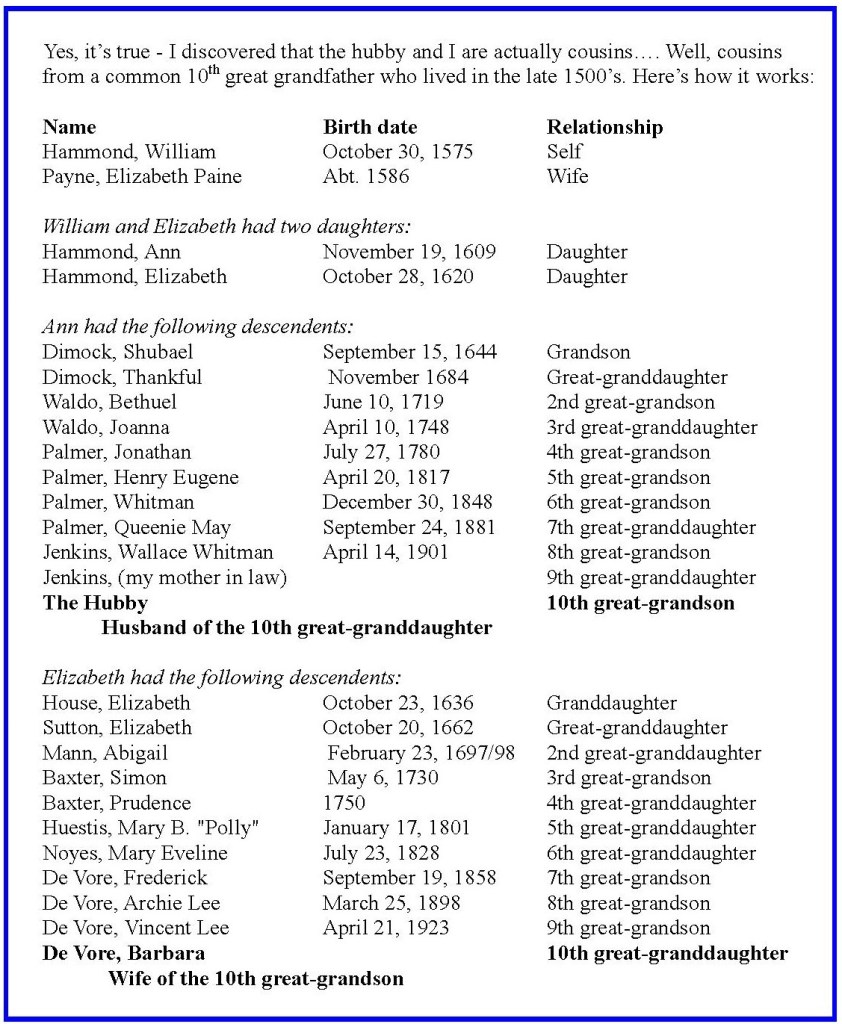
As I had her paper ancestry trees on the desk next to me, I only had to turn a few pages and there was THE  connection. The one which proved that not only were my mother-in-law and I blood related but I had, in fact, married a cousin!

I think I let out a ‘whoop’ of some sort and then turned around to where my Mother-in-law happened to be sitting as she and my father-in-law were visiting, and announced that I’d found the holy grail of connections to prove, once and for all, that we were related.

Which meant, of course, that I had married my cousin (all legal since it was 10 generations back).

The chart I created in 1996 to document how the hubby and I were cousins

My poor daughter – only six that year – got the most confused look on her face when she learned that her Mom and Dad were related to each other which meant, and I quote, “Wait? How can I be related to myself?”

This caused all sorts of amusement for the family and I love to tell people that I’m married to my cousin if only to see the reaction I get.

As for my daughter’s question, the answer is that all of us are likely related to ourselves at some point. It kinda blows the mind, doesn’t it?

I must end, however, with the caveat all genealogists give. It is possible, that somewhere along the way there is an attribution for a person which will turn out to be wrong. Alas, none of us can go talk to the people involved to verify the information. All we can do is look for connections and, nowadays, to see if we have shared DNA to others claiming the same ancestors. But that IS a story for another week.

A link to https://www.ancestry.com/

https://en.wikipedia.org/wiki/Ancestry.com

Popcorn!

February 22, 2022

There are topics which come to my attention from time to time that cause me to say: that just can’t be right.

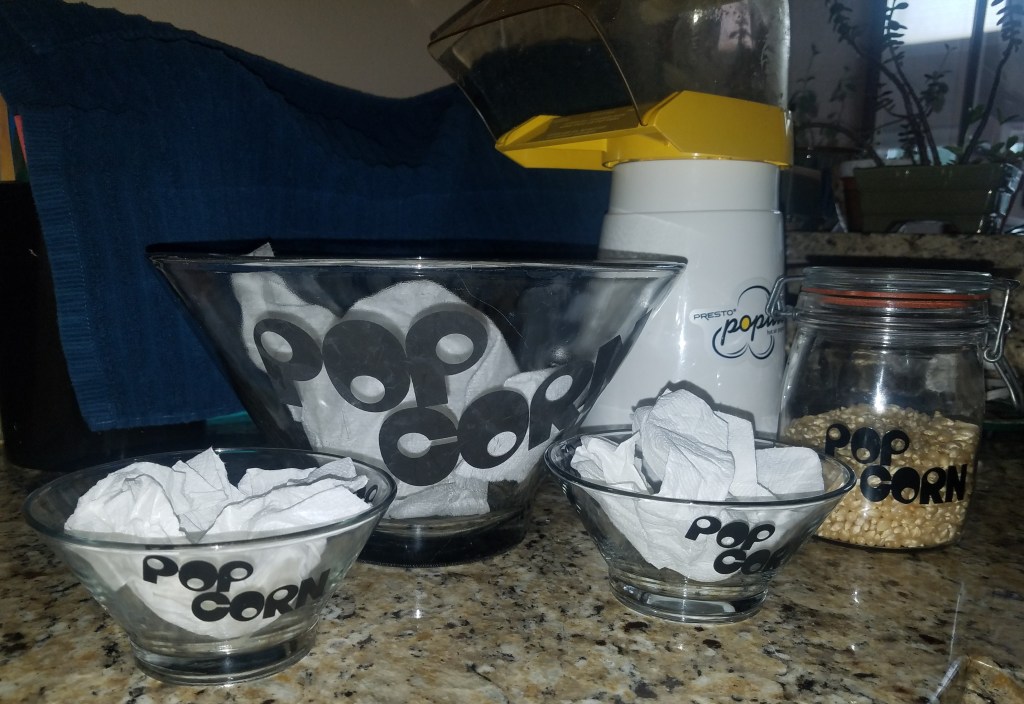
The hubby and I have had this same set of bowls for decades now… and still use them

According to a number of sources on the internet, it was on February 22, 1621, when a Native American by the name of Squanto, at the first Thanksgiving, showed the settlers how to make ‘popcorn’.

Hmmm… wasn’t the first Thanksgiving held in the fall and not February? And did the natives of that region really eat popcorn?

A little refresher. The Pilgrims landed in what is now Plymouth, Massachusetts in November of 1620. For the next year they struggled mightily, enduring hardships and starvation. There was no feast in February 1621. That did not occur until sometime between mid-September and early November 162.

Now on to the second question about the popcorn. According to History.com:

I feel confident that the two groups were not sitting around the campfire enjoying a batch of jiffy pop in February 1621.

Colorful dried corn

“It’s been said that popcorn was part of the first Thanksgiving feast, in Plymouth Colony in 1621. According to myth, Squanto himself taught the Pilgrims to raise and harvest corn, and pop the kernels for a delicious snack. Unfortunately, this story contains more hot air than a large bag of Jiffy Pop. While the early settlers at Plymouth did indeed grow corn, it was of the Northern Flint variety, with delicate kernels that are unsuitable for popping. No contemporary accounts reference eating or making popcorn in that area, and the first mention of popcorn at Thanksgiving doesn’t appear until a fictional work published in 1889, over 200 years later.”

But, the history of popped corn is interesting. A uniquely western hemisphere food, there is evidence that corn has existed and had been used as food for thousands of years.

While the Infallible Wikipedia was silent on the Pilgrims angle, it does share the following:

“Corn was domesticated about 10,000 years ago in what is now Mexico. Archaeologists discovered that people have known about popcorn for thousands of years. Fossil evidence from Peru suggests that corn was popped as early as 4700 BC.

Through the 19th century, popping of the kernels was achieved by hand on stove tops. Kernels were sold on the East Coast of the United States under names such as Pearls or Nonpareil. The term popped corn first appeared in John Russell Bartlett’s 1848 Dictionary of Americanisms. Popcorn is an ingredient in Cracker Jack and, in the early years of the product, it was popped by hand.

Charles Cretors with one of his popcorn machines

Popcorn’s accessibility increased rapidly in the 1890s with Charles Cretors’ invention of the popcorn maker. Cretors, a Chicago candy store owner, had created a number of steam-powered machines for roasting nuts and applied the technology to the corn kernels.

By the turn of the century, Cretors had created and deployed street carts equipped with steam-powered popcorn makers.”

It was, however, during the Great Depression when popcorn consumption really took off. With sugar in short supply and sweets largely unavailable, American’s discovered they could have an inexpensive salty, buttery snack instead. Soon popcorn was sold in movie theatres and people could pop it at home.

Popcorn popularity surged once again in the 1980’s  with the ability to cook the product in microwave ovens. It’s estimated that Americans today consume more than 17 billion quarts of popcorn annually!

Some of my earliest memories center around popcorn. My dad would pop a pan full on most Saturday nights of my childhood; a once a week treat while the family played cards.

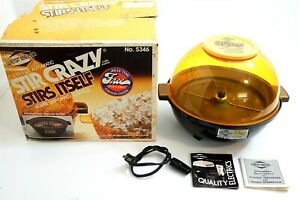
My first popcorn popper was likely a Stir Crazy or similar. You poured a bit of oil on the base and heated it up, then added the popcorn kernels. It was fun to watch the popcorn fill the lid – which you turned over and it became the bowl.

When I went away to college at the University of Puget Sound, I brought with me two ‘appliances.’ One was a small electric kettle and the other was an all in one popcorn popper. Of course I was not the only girl to have one in the sorority, but one could be sure that the smell of the popping corn would be a siren call to others; soon the party would be in my room.

I associate popcorn with the hubby. Not only does he LOVE popcorn, it was the thing we were both eating on the night of our first ever phone call.

The hubby’s older brother, while we were on a waterski trip to Lake Tapps in 1981, decided the hubby was a good ‘target’ for getting popcorned.

In 1979 there were no cell phones. We did not have individual phones in our rooms either. Instead, there was a multi-line phone system in the Alpha Phi sorority where I lived,  and down the hall from my room was ‘the phone room.’ This was a closet size space with a small desk and chair, and the phone for the entire sorority was located there. Additional handsets were located on the second floor and another in the basement. Members took turns being on phone duty in the evenings, answering the calls and then, via intercom, paging those who had a call.

The evening of our first call, I had just finished making a batch of popcorn when the intercom near my room announced, “Call for Barbie D on line 2.” So, with a bowl of popcorn in hand, I made my way to one of the phones. As the conversation got going my new romantic interest and I discovered that we were both enjoying the same snack.

Our mutual love of popcorn has never wavered and we are in agreement that popcorn is best when it has butter drizzled over it and a few turns of the salt grinder on top of that. Sometimes the simplest things are the best.

The links:

https://en.wikipedia.org/wiki/Popcorn

https://www.history.com/news/a-history-of-popcorn

Probably our 4th or 5th popcorn popper. The bowl and popcorn canister we’ve had since the 1980’s. The average American consumes 58 quarts of popcorn a year!

Instant Ramen: A College Staple and Cultural Phenomenon

A once banned food now a beloved Japanese favorite

August 25th

According to one Japanese poll, this food was named as the greatest invention of the 20th century.  Since a package of this costs between 50 cents and a dollar, it’s not only inexpensive, but it is easily one of the most adaptable instant foods you can purchase. Yes, I’m talking about the staple of college dorms everywhere: instant ramen noodles.

It was on August 25, 1958, when the first packages of the instant noodles were sold. But the history of ramen began much earlier.

How the first ramen was packaged, 1958

According to the Infallible Wikipedia:

“Ramen is a Japanese adaptation of Chinese wheat noodles. One theory says that ramen was first introduced to Japan during the 1660s by the Chinese neo-Confucian scholar Zhu Shunsui who served as an advisor to Tokugawa Mitsukuni after he became a refugee in Japan to escape Manchu rule and Mitsukuni became the first Japanese person to eat ramen, although most historians reject this theory as a myth created by the Japanese to embellish the origins of ramen. The more plausible theory is that ramen was introduced by Chinese immigrants in the late 19th or early 20th century at Yokohama Chinatown. According to the record of the Yokohama Ramen Museum, ramen originated in China and made its way over to Japan in 1859. Early versions were wheat noodles in broth topped with Chinese-style roast pork.”

Interestingly, it was in post WWII Japan, when the product really took off. Faced with rice shortages and a disrupted food supply line, inventive Japanese food vendors began making the noodles with cheap wheat purchased on the black market. Despite government attempts to keep vendors from making and selling the dish – they arrested thousands for doing so – it was one of the few things people could find to eat inexpensively. By 1950, the Japanese government relented, thus allowing the wheat noodles to find a place in the rice dominated culture.

In 1958,  Momofuku Ando – the founder of Nissan foods – developed a method by which the noodles were flash cooked, dried, and then sold in small blocks.

Also from the Infallible Wikipedia:

“Instant ramen allowed anyone to make an approximation of this dish simply by adding boiling water.

Beginning in the 1980s, ramen became a Japanese cultural icon and was studied around the world from many perspectives. At the same time, local varieties of ramen were hitting the national market and could even be ordered by their regional names. A ramen museum opened in Yokohama in 1994.

Who wouldn’t want to visit the Ramen museum just to see this giant bowl?

Today ramen is arguably one of Japan’s most popular foods, with Tokyo alone containing around 5,000 ramen shops, and more than 24,000 ramen shops across Japan.”

I became intimately acquainted with ramen soon after setting foot on the campus at the University of Puget Sound in 1977. Every member of my sorority, it seemed, had a small kettle and a stock of ramen packages in a desk drawer. It was one of two foods that seemed to dominate evening study time, the other being popcorn.

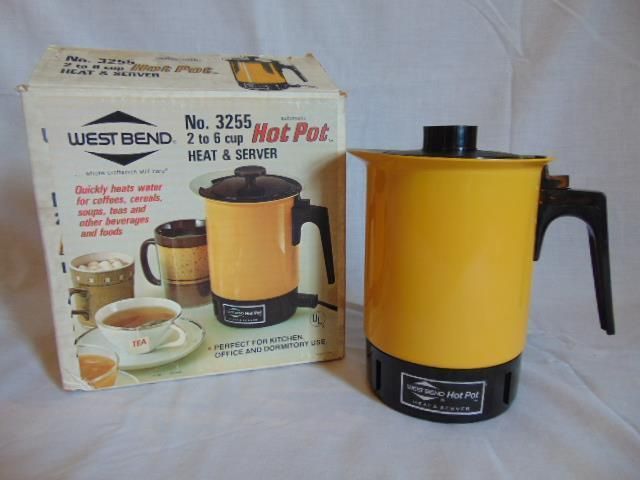
Soon, I too owned a West Bend electric teapot and a stock of ramen packets. I found one ad from 1979 where you could purchase it for a quarter a packet, but I do recall finding the coveted 10 for a dollar sales even into the 1990’s.

I think my pot was green but it might have been this lovely yellow

In my early ramen eating years, I was a purist; I’d boil my water, then drop the dried noodles into the pot and cook until they softened, finally adding the sodium laced flavoring.

After I met the man who would become my hubby, I learned that ramen could be so much more. He elevated ramen to an art form.

In Japan, the traditional way is as a soup of ramen and pork. But in our household, ramen is a vehicle for serving every sort of leftover. All meats can be added to it; stir in an egg for poor man’s egg flower soup. Tomatoes, celery, carrots, onions? All good in ramen. Perhaps the hubby’s favorite thing to add would be canned ‘Vienna’ sausages or hot dogs.

He recalls one college incident which revolved around ramen. Senior year he and two friends rented an apartment; one evening he was making a ramen concoction for his dinner. One of his roomie’s parents arrived on the scene to take their son to dinner. The roomie’s mom – upon seeing the ramen feast being prepared – was so horrified at this being my hubby’s dinner, insisted on taking him to dinner also.

The family ramen legacy was eventually passed to the next generation. Our daughter discovered the joys of ramen when she was an always hungry pre-teen and teen. Instead of asking Mom what was to eat, she learned early that she could fix it herself and probably consumed at least one package of it daily for many years. Cooked or dry did not matter. She loved it either way.

As an adult advisor for the Rainbow Girls, there was a parade of youth who showed up at our house regularly during those years. One girl was such a fixture that she knew exactly where the ramen was kept. Her arrival often meant that her first stop was the pantry where the Costco box of ramen occupied one end of the shelf. A few minutes later, the ramen cooked, we would settle around the table to chat. To this day she claims this as one of her favorite memories of our house.

The ubiquitous Costco 48 pack

The days of teens raiding the cupboards behind us, and my husbands ramen consumption reduced, the last Costco case of the stuff (48 packets – half beef, half chicken) is now gone. In fact, for the first time in the 40 years we’ve been married, there’s not a single package of ramen in the household.
When I inquired as to why, the hubby explained that he intended to get a ‘few’ packages at the grocery store instead of the industrial size Costco case. And there’s that pesky salt thing. One package of ramen is 1600 mg, a whopping 69 percent of the recommended daily salt intake.

Even so, it doesn’t seem right for us not to have a few packets of ramen just in case. Earthquake… Wind Storm… Pandemic…all good reasons to keep some on hand. Adding it to the grocery list. Who am I to argue with those who claim it to be the greatest invention of the 20th Century?

Costco’s supply of ramen takes up almost as much space as the Ramen museum

Yes, there really is a page on Ramen on the Infallible Wikipedia.:

https://en.wikipedia.org/wiki/Ramen

Animal House

July 28, 2020

“Oh Boy! Is This Great!”

Of all the years to be a college co-ed, 1978 was the best.

Culturally, it was the height of the ‘me’ generation’s influence. Commonplace restrictions from previous decades had all but been abandoned, leaving the youth to do the one thing they wanted: have fun.

animal-house-movie-poster-1020258451On July 28, 1978, a movie hit the theaters which encapsulated precisely this attitude, capturing the imagination of a generation. That movie: Animal House.

The idea for the movie came about via National Lampoon, a wildly popular magazine with college students. In fact, the official title of the movie is “National Lampoon’s Animal House.” The plot – to sum it up in a couple sentences is this: “Loser college guys join fraternity where anything goes. Fraternity gets kicked off campus and members, in an effort to save the fraternity, wreak havoc on campus and during the homecoming parade.”

With a budget of only 3 million allocated to its production, the executives at Universal Studios almost didn’t allow it to be made. But the writers were committed to the project, effectively wearing down the studio who basically told them ‘okay, but don’t expect much.’

According to the Infallible Wikipedia:

“National Lampoon’s Animal House is a 1978 American sex comedy film directed by John Landis and written by Harold Ramis, Douglas Kenney and Chris Miller. It stars John Belushi, Peter Riegert, Tim Matheson, John Vernon, Verna Bloom, Thomas Hulce, Stephen Furst, and Donald Sutherland. The film is about a trouble-making fraternity whose members challenge the authority of the dean of the fictional Faber College.

The film was produced by Matty Simmons of National Lampoon and Ivan Reitman for Universal Pictures. It was inspired by stories written by Miller and published in National Lampoon. The stories were based on (Harold) Ramis’s experience in the Zeta Beta Tau fraternity at Washington University in St. Louis, Miller’s Alpha Delta Phi experiences at Dartmouth College in New Hampshire, and producer Reitman’s at McMaster University in Hamilton, Ontario.”

In many ways, the low budget contributed to the film’s success. No one had heard of any of the actors, John Belushi and Donald Sutherland excepted. Rather than turn the film into a showcase for the popular cast of Saturday Night Live as was suggested, it turned out that the ensemble of newcomers brought an element of collegiality to it that made the film unique.

One big hurdle was finding a college willing to allow the movie to be filmed on their campus. One after another turned it down since, after reading the script, determined the publicity would be detrimental to their institution. It was an act of bravery that one administrator finally agreed to it. Also from the Infallible Wikipedia:

“The president of the University of Oregon in Eugene, William Beaty Boyd, had been a senior administrator at the University of California in Berkeley in 1966 when his campus was considered for a location of the film The Graduate. After he consulted with other senior administrative colleagues who advised him to turn it down due to the lack of artistic merit, the college campus scenes set at Berkeley were shot at USC in Los Angeles. The film went on to become a classic, and Boyd was determined not to make the same mistake twice when the producers inquired about filming at Oregon. After consulting with student government leaders and officers of the Pan Hellenic Council, the Director of University Relations advised the president that the script, although raunchy and often tasteless, was a very funny spoof of college life. Boyd even allowed the filmmakers to use his office as Dean Wormer’s.”

ah-party

John ‘Bluto’ Blutarksi leads the way during a Delta House Toga party

Now, I will say, if you’ve never seen the movie you should. As my now adult children know, there are some cultural references one absolutely needs to have. Animal House is such a film. The film is littered with quotable and iconic concepts many of which repeat to this day.

Ever hear of a toga party? You have Animal House to thank.

Double secret probation? Animal House. 

“Was It Over When The Germans Bombed Pearl Harbor? Hell No!” Animal House.

“Fat, Drunk, And Stupid Is No Way To Go Through Life, Son.” Animal House.

Food Fight? Animal House.

That summer, it went on to become the third highest grossing film of 1978 and – in the course of its run – took in a whopping 141.6 million. Not bad for a film which cost under $3 million to make and which the studio execs thought would flop.

When all was said and done, once again from the Infallible Wikipedia:

“In 2001, the United States Library of Congress deemed the film ‘culturally, historically, or aesthetically significant’ and selected it for preservation in the National Film Registry. Animal House is first on Bravo’s 100 Funniest Movies. In 2000, the American Film Institute ranked the film No. 36 on 100 Years… 100 Laughs, a list of the 100 best American comedies. In 2006, Miller wrote a more comprehensive memoir of his experiences in Dartmouth’s AD house in a book entitled, The Real Animal House: The Awesomely Depraved Saga of the Fraternity That Inspired the Movie, in which Miller recounts hijinks that were considered too risqué for the movie. In 2008, Empire magazine selected Animal House as one of The 500 Greatest Movies of All Time. The film was also selected by The New York Times as one of The 1000 Best Movies Ever Made.”

Back to 1978 and the phenomenon which had college students donning sheets and partying to the chants of “Toga! Toga! Toga!”

When I returned to the University of Puget Sound that September, everyone was talking about Animal House. Soon the Toga parties began and there were a handful of fraternity guy’s intent on channeling their inner Bluto.

Alpha Phi Halloween event 1978

A few sorority sisters ready for a Halloween party 1978.

Unfortunately, or fortunately, depending on your perspective, my sorority was located next door to the house which fashioned itself after the Delta’s of Animal House fame. There were shenanigans and crazy antics all that fall. Parties flowed out of their house and into the common areas, empty aluminum cans smashed against heads exactly like the John Belushi character did in the film, Christmas lights tossed into our basement level patio where they would ‘pop.’ And who knows what, exactly, was going on the night that a group of them appeared on the lawn outside our windows with that blow up doll.

Around 10 pm one night I heard a commotion outside of my room and the unmistakable thump, thump, thump of a large group of people making their way in unison down the hallway. What the heck?

A moment later: the sound of running feet. The door bursts open and one of my two roomies, Sheila, rushes in, slams the door behind her and presses her back to the closed door.

I can still picture her, a wild look in her eye, dressed in her full length flannel nightgown, hands pressed hard against the door, panting.

“There’s naked Phi Delts in our hall,” she gasped.

Now, to be clear, my other roommate Cathy and I DID NOT reopen that door to confirm her report. In fact, we wanted nothing to do with the conga line of nude men mooning the members of our sorority.

A minute or two later, the group reached the end of the hall and exited the building. Their bare hineys were last seen disappearing back into what I would consider UPS’ nominee for ‘Delta’ house.

In retrospect, my two years there were a rather surreal experience, greatly amplified by the culture of the time embodied in no small part by the movie Animal House.

In the iconic words of Kent ‘Flounder’ Dorfman “Oh boy! Is this Great!”

Indeed it was.

The links:

https://en.wikipedia.org/wiki/Animal_House

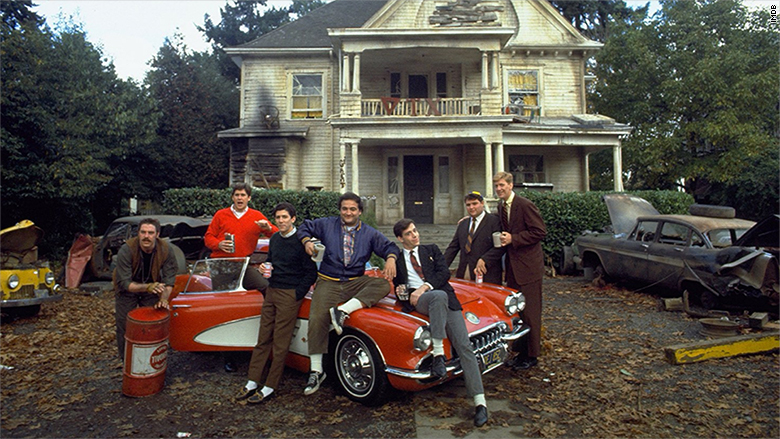
180726143707-animal-house-780x439Who’s who in the Facebook Photo (left to right):

Bruce McGill – “D-Day”; Tim Matheson – “Otter”; Peter Riegart “Boon”; John Belushi – “Bluto”; Tom Hulce – “Pinto”; Stephen Furst – “Flounder”; James Widdoes – “Hoover”