Tag Archive | 1972

Root Beer: an American Original

A Tasty Treat on a Summer afternoon

June 17th
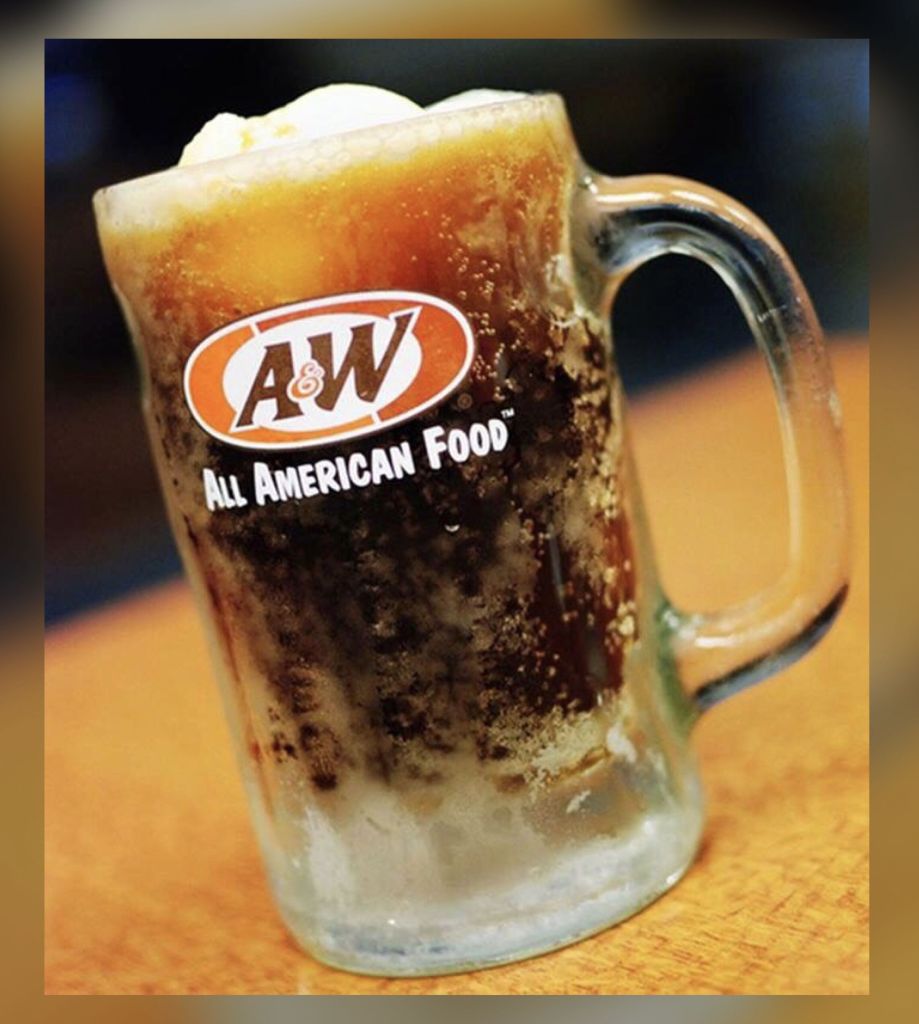
When I think back to the 1960’s and 1970’s, there is not – in my opinion – a better symbol of American culture than the A&W Root Beer stand.

It’s appropriate to write about it this week as June 17th is National Root Beer Day. I’m certain we can have a debate as to ‘which’ root beer brand is best: Hires, Barq’s, A&W, or, perhaps, a newer competitor like Mug. For me, it’s always been A&W. I suppose that is because it was THE root beer which my family always drank.

As expected, the Infallible Wikipedia expounds on the topic of Root Beer:
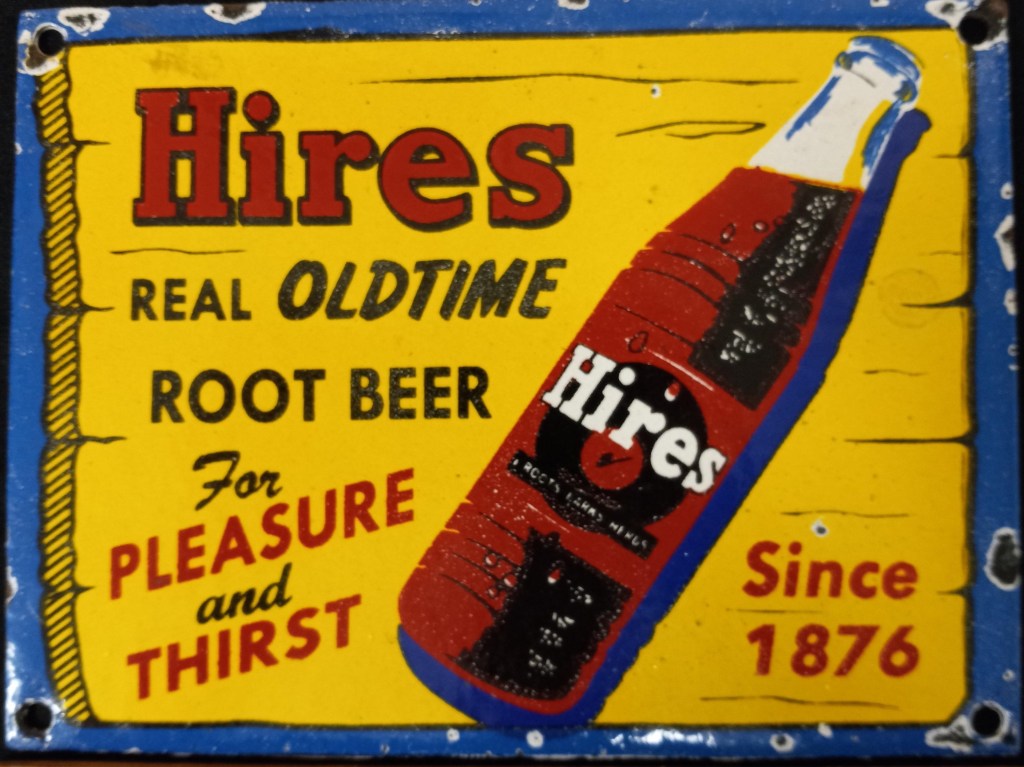
The original commercial root beer was Hires which often advertised its product as a health tonic.

“Root beer has been drunk in the United States since at least the eighteenth century. It has been sold in confectionery stores since at least the 1840s, and written recipes for root beer have been documented since the 1830s. In the nineteenth century, it was often consumed hot and was often used with medicinal intent. It was combined with soda as early as the 1850s; at that time it was sold as a syrup rather than a ready-made beverage.

Beyond its aromatic qualities, the medicinal benefits of sassafras were well known to both Native Americans and Europeans, and druggists began marketing root beer for its medicinal qualities. (Snip)

Safrole, the aromatic oil found in sassafras roots and bark that gave traditional root beer its distinctive flavor, was banned in commercially mass-produced foods and drugs by the FDA in 1960. Laboratory animals that were given oral doses of sassafras tea or sassafras oil that contained large doses of safrole developed permanent liver damage or various types of cancer.”

The article does give more detail about Charles Elmer Hires who was a pioneer in the commercial production and also mention’s Barq’s – developed by the Coca-Cola company.

But it was Roy Allen who opened the first root beer stand in 1919 in Lodi, California. It was a hit and four years later, in 1923, he teamed up with Frank Wright and they opened the first A&W drive-in restaurant in Sacramento. The Infallible Wikipedia tells us:
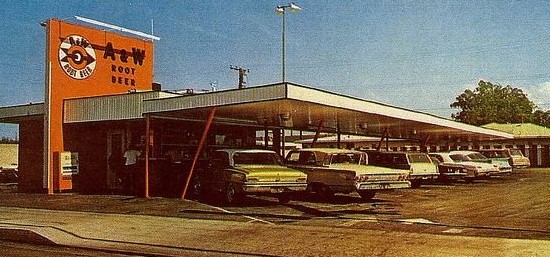
An A&W Root Beer drive in from the late 1950’s/early 1960’s. Not the one in Yakima but ours was similarly laid out.

“Curbside service was provided by tray boys and tray girls. In 1924, Allen purchased Frank Wright’s stake in the business. In 1925, Allen began franchising the root beer, while the franchisee added the other menu items and operated at their discretion. Most of the restaurants that opened under this scheme were on the highways of the Central Valley region, mainly for travelers. This may have arguably been the first successful food-franchising operation.”

Fast forward to the 1960’s, it is at the corner of 10th Avenue and Nob Hill Boulevard in Yakima, Washington, where my family went during those very rare times when we frequented any sort of restaurant – fast food OR sit down. It was always a treat to get to go to A&W and pull into a slot under the shaded carport style ‘drive in.’ Occasionally my parents would buy us food, but mostly it was just for the root beer.

My dad would turn on the head lights of the car and soon a perky teenage girl would be at his window to attach the tray holder. We’d wait with great anticipation until a short time later, she would reappear – the tray laden with the thick frosty mugs of root beer. Soon they were passed around the car and nothing ever tasted so good on a hot summer’s evening.
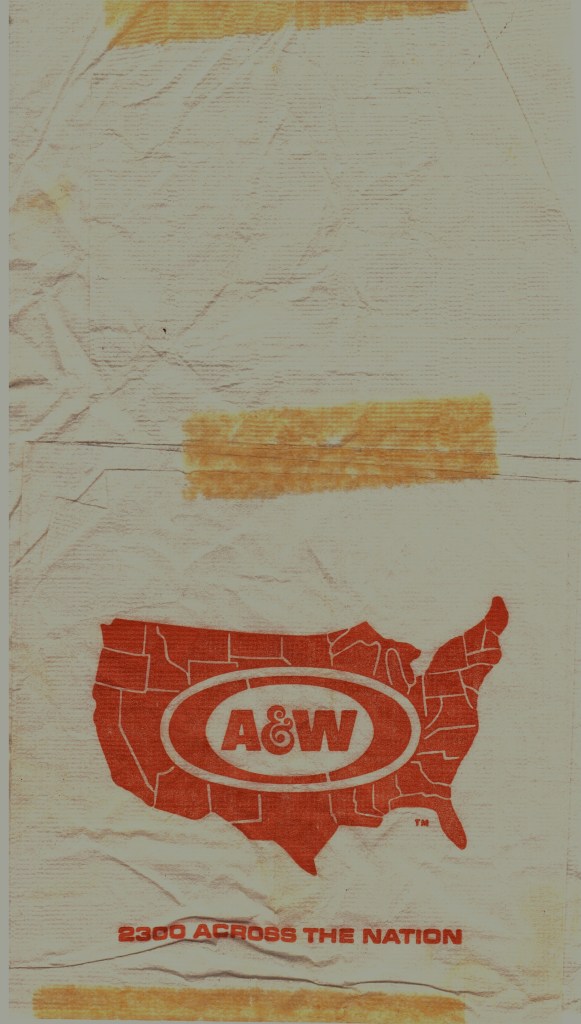
Who actually saves a 1972 napkin from A&W and stows it away in her teenage scrapbook? Oh, yeah, that would be the author. Unbelievable but true.

Sometimes – especially for the Fourth of July – my dad would come home with a giant glass jug full of A&W root beer and a five-gallon tub of vanilla ice cream. When the family was finished with the sparklers, pinwheels, and other small fireworks assortment, it was time for Root Beer floats.

Dad used to bring home a jug of root beer on the 4th of July similar to this one, no doubt.

Those were equally as good and a treat the family looked forward to every Independence Day.

At the time, I did not – of course – appreciate these special moments. It was, after all, what was normal for my family. I believe it was the summer of 1974 when I went to the drive-in on 10th & Nob Hill for the last time.

My brother – age 21 that year – was home from college and it fell to him and me to drive to A&W to buy the requisite jug of root beer for the Fourth of July floats. Being that he was immortal (a belief which tends to most affect young men ages 16 to 25 – a phenomenon the hubby and I refer to as being “nineteen and immortal”) he had purchased a rather fun car to drive and drive fast: a 1974 yellow Fiat X1/9.

Being that I was a teenage girl, there was a thrill to riding in a fast car even if it was with my older – and much cooler than me – brother. I did not think I was immortal but I was willing to take risks.

I climbed into the shotgun seat of his car and away we zipped down Tieton Drive. The roof of the car had been stowed in the forward ‘trunk’, the sun shining, and warm summer air surrounded us. We zipped down the hill to 16th, then a right turn and south to Nob Hill, and then left for the final six blocks east to the family favorite A&W. Soon I had the jug of root beer secured at my feet for the return trip.
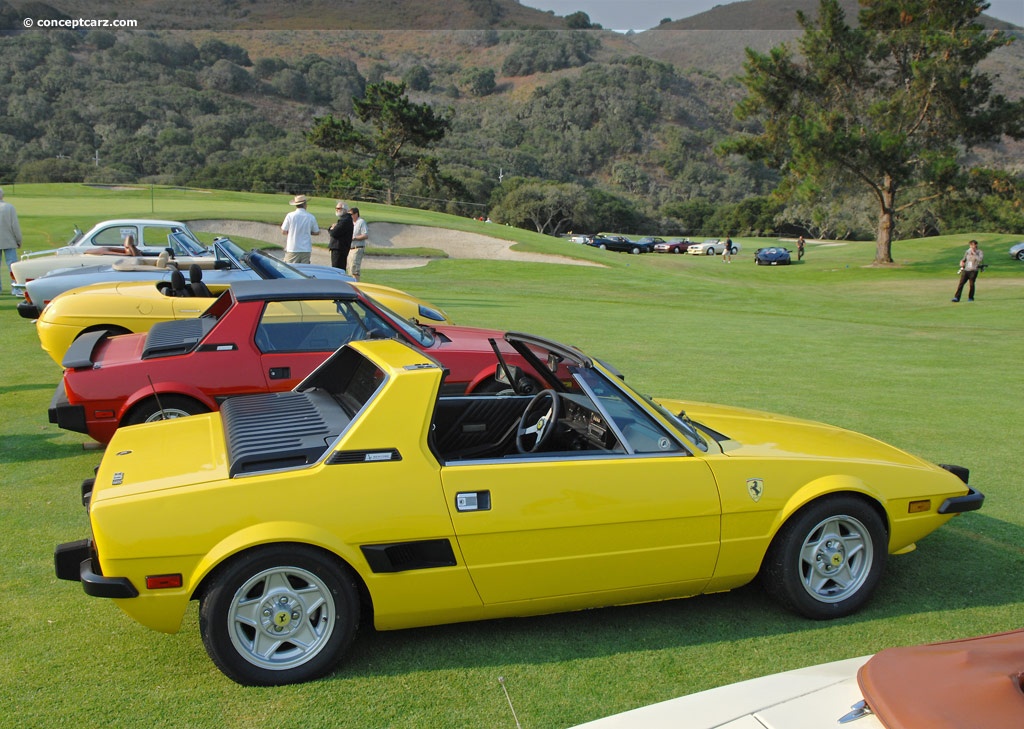
A yellow 1974 Fiat X1/9 like the one my brother owned. The roof was removable and stored in the front compartment as the engine was in the back. Photo from http://www.conceptcarz.com.

We raced home, speeding west up Tieton Drive hill and I swear to this day that my brother never slowed down as the car careened around the corner onto our street. I am certain he hit the gas as we practically flew over the pavement. That moment is etched in my memory, my long blonde hair flying; I’m alternating between laughing and screaming, buckled in for my brother’s version of Mr. Toad’s Wild Ride.

After we were safely parked, I made him carry the root beer into the house as I did not trust my legs, certain they had turned to rubber.

Eventually that A&W location shut down and the era of carhops is all but gone.* Somehow going to a drive-through window just isn’t the same. But even so, when I pour myself a glass of A&W, I’m immediately transported back to a Yakima summer night and I smile when I think about that crazy ride with my crazy brother.

*Burgermaster has five locations in the greater Seattle area and still employs ‘carhops.’

A few links:

https://en.wikipedia.org/wiki/Root_beer

https://en.wikipedia.org/wiki/A%26W_Restaurants

https://en.wikipedia.org/wiki/Fiat_X1/9

American Pie

But what does it mean?

January 25, 2022

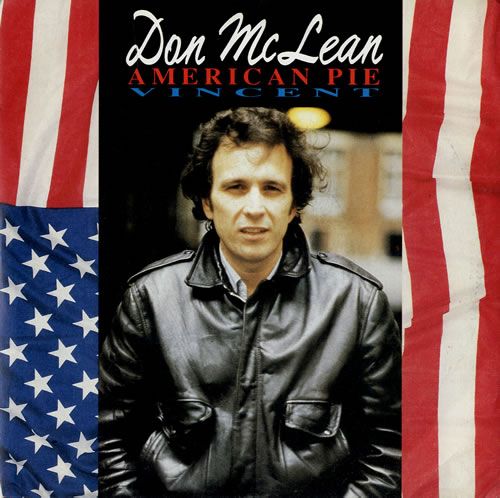
Perhaps no song from the 1970’s has garnered more speculation as to its meaning than Don McLean’s 1972 smash hit American Pie. It was 50 years ago, in January and February 1972, when it sat atop the Billboard charts for four weeks.

From the moment it was released and to this day, no one is entirely certain what the songwriter meant. McLean himself has said this about the song’s lyrics: “They’re beyond analysis. They’re poetry.”

But that declaration has not stopped people from wondering. The memorable tune combined with compelling lyrics imbued the song with staying power. So much so, that the Infallible Wikipedia shares:

“The song was listed as the No. 5 song on the RIAA project Songs of the Century. A truncated version of the song was covered by Madonna in 2000 and reached No. 1 in several countries, including the United Kingdom, Canada, and Australia. At 8 minutes and 42 seconds, McLean’s combined version is the sixth longest song to enter the Billboard Hot 100 (at the time of release it was the longest). The song also held the record for almost 50 years for being the longest song to reach number one before Taylor Swift’s ‘All Too Well (Taylor’s Version)’ broke the record in 2021. Due to its exceptional length, it was initially released as a two-sided 7-inch single. ‘American Pie’ has been described as ‘one of the most successful and debated songs of the 20th century.’”

The song has made seventy six year old McLean wealthy. His net worth estimated at $50 million. If you’re looking to find out what the song means, McLean himself has quipped: “It means I don’t ever have to work again if I don’t want to.” Later, he stated, “You will find many interpretations of my lyrics but none of them by me … Sorry to leave you all on your own like this but long ago I realized that songwriters should make their statements and move on, maintaining a dignified silence.”

When the song became a hit I was 14 years old and – as I’ve written about in other blog posts – a hopelessly romantic, angsty teen. American Pie’s lyrics seemed to speak to my generation on a very personal level. We learned about Buddy Holly, Richie Valance, and The Big Bopper, from the song. There was nothing more tragic than the thought of Holly’s young widow on that fateful February 3, 1959.

But more than that, it was these particular lyrics which seemed to sum up the experience of that time:

Well, I know that you’re in love with him,

 ‘Cause I saw you dancin’ in the gym,

You both kicked off your shoes,

Man, I dig those rhythm and blues

Illustrative of this idea is my diary post of February 11, 1972. The names HAVE been changed to protect the innocent… I think.

“This week went by fast but tonight was awful. I’ve decided that ‘B’ doesn’t like me. We got Yakima’s officers installed. (A reference to a youth group) After, they had a really crudy* dance. We were telling jokes and I was upset. After a while, and ‘B’ was playing the piano, I think he plays it when something is bugging him. But I’ve decided to forget him, for good! Another boy made my day. I think his name is ‘A.’ He said Hi to me but I was crying.”

My 1972 diary entry

Ah, the drama of youth. Eventually, “B” was my boyfriend for a couple of months but, as is true of most such relationships, it was consigned to the dustbin of youthful history. And who knows what caused the tears! Those seemed to be a constant back in the day.

The most ironic thing about American Pie, I think, is the repeated line ‘the day the music died.’ Many have speculated that he was referring to the loss of innocence as well as the death of the three musicians. Perhaps. But ‘the music’ came to life for me in the early 1970’s. I would venture millions of other baby boomers had similar epiphanies in the 60’s and 70’s, thanks to artists like Don McLean and songs like American Pie.

*crudy – derivation of the word ‘crud’ the definition of which, at least how I used it,is: Noun. Slang. ‘something that is worthless, objectionable, or contemptible.’

The links:

https://en.wikipedia.org/wiki/American_Pie_(song)

https://en.wikipedia.org/wiki/Don_McLean

The lyrics are sooooo long, that instead of sharing them in the article, you can read them here

https://www.lyrics.com/lyric/885859/Don+McLean/American+Pie

Memories of Driver’s Ed: Lessons from the 70s

For some it took longer than others!

August 3

At one time this test was an important rite of passage for the American teenager, an indication that they were about to enjoy one of the privileges of adulthood: being able to drive.

For one Mariam Hargrave of Yorkshire, England, no doubt it was an ordeal. It was on August 3, 1970, when the 62 year old finally passed her driving test. Although the Infallible Wikipedia has an article about driver’s tests, they ignore poor Mrs. Hargraves. Instead, I was able to glean this information:

“By April 1970 Mrs. Miriam Hargrave had failed her test thirty-nine times. In the eight preceding years she had received two hundred and twelve driving lessons at a cost of £300. She set the new record while driving triumphantly through a set of red traffic lights in Wakefield, Yorkshire. Disappointingly, she passed at the fortieth attempt (3 August 1970) but eight years later she showed some of her old magic when she was reported as saying that she still didn’t like doing right-hand turns. — Stephen Pile, ‘The Book of Heroic Failures’”

Back in 1970’s Yakima it was a big deal to learn how to drive. By the time I was in high school, they were offering Driver’s Ed classes which involved learning the rules of the road and practicing driving. I doubt there were any braver educators anywhere than those who willingly climbed into a car with a 15 ½ year old, hormone driven, child and allowed them to command a 2,000 pound vehicle on city streets.

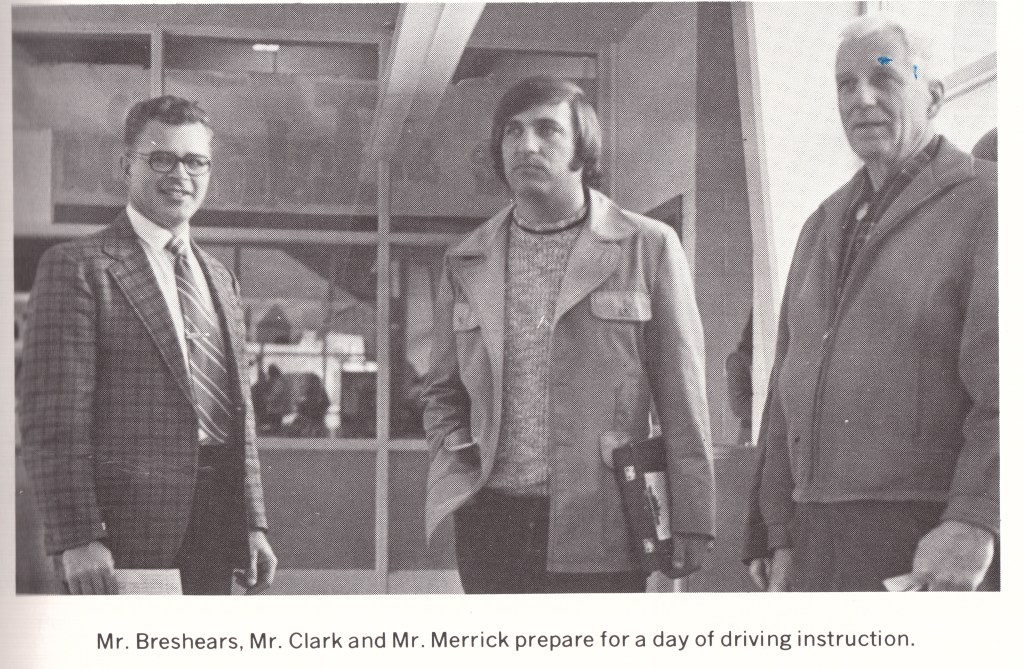
Yet, they did. I seem to recall my Driver’s Ed teacher, Mr. Breshears, always popping antacid tablets. I suppose the only thing which gave the instructors any comfort at all was the fact that the cars were equipped with a set of brakes for the front seat passenger.

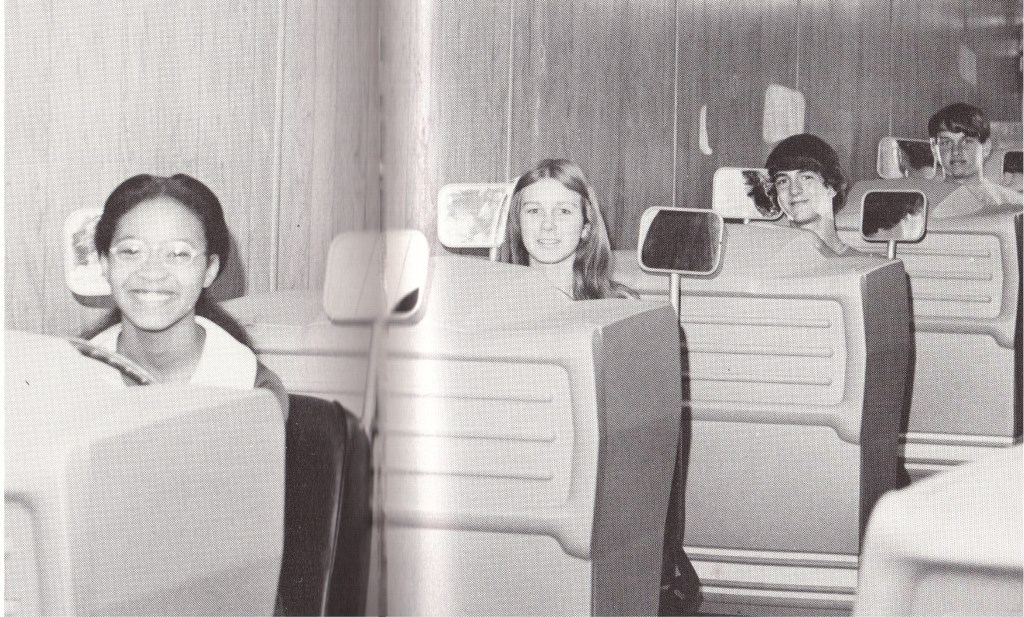
Our simulators looked something like this set up from 1969.

Three students at a time would go drive with the teacher. It was a bit terrifying since not all budding drivers had the benefit of a parent who worked with them after school. There was one student I recall who tested Mr. Breshears patience each time they got behind the wheel. Those instructor brakes got quite the workout.

But the favorite part of Driver’s Ed class was getting to go to the Simulator. It was a windowless trailer which had been equipped with two parallel rows of seats, separated by an aisle sort of like being on a bus, and all faced forward. Each station had a steering wheels, brakes, etc. to look like the driver’s area of a car. At the front of the trailer was a large screen. Once all the students were settled into their places, the lights would be dimmed and the screen would come to life as though one was behind the wheel, driving down the street. It was our job to accelerate in unison with what we saw on the screen. It was also imperative that we hit the brakes at the right time.

From the IKE Reveille year book, 1972

Driver’s training films seemed to mostly consist of tree lined city blocks which, at first, seemed like lovely enclaves of blissful American life. But no. Those streets were every driver’s worst nightmare. Balls of all sorts would suddenly bounce out into the road followed by adorable tikes chasing them. Woe unto those who didn’t hit the brakes in time!

Sophomore class officers from Eisenhower High School, Yakima, pose for a photo for the 1973 annual.

There were dogs and cats; there were other vehicles; things fell off the backs of trucks, branches crashed down. Who knew how truly hazardous things could be in one bucolic town?

Of course, some cheeky student would purposefully ‘run’ over the simulated hazards and a little red light would illuminate on their console, publically shaming them for an egregious infraction. I always wondered if students who ‘ran’ over cats, dogs, and children, failed the course.

Over the years I have learned just how accurate those simulations were as I’ve encountered many of the hazards portrayed. Thankfully, it’s only occasionally that such things happen. The hubby and I, if we are in the car together, will comment in unison ‘Driver’s Training film!’ when something we experienced in the simulator occurs in real life.

This photo is from the Eisenhower High School 1973 annual. The headline above this proclaimed “380 license-hungry students swamp driver education course this year.” Apparently there were a bunch of us who turned 16 in 1973.

The  instruction I received was successful and on my 16th birthday I took the tests – written and driving – and emerged as a licensed driver and, despite losing points for parallel parking, never came close to Mariam Hargrave’s, 212 lessons, eight years of time, and over $700 (US) spent.

The links:

An entertaining look at early simulators:

https://www.dmv-written-test.com/washington/practice-test-1.html?utm_source=bing&utm_medium=cpc&utm_term=%2Bwa%20%2Bstate%20%2Bdriver%27s%20%2Btest%20%2Bpractice&utm_campaign=DMV%20-%20Search%20-%20WA%20-%20EN%20-%20CAR~Driver%20Question%20Test&msclkid=ee5a27bd586710c0735246b5495d31f5# (Can you pass the written test for Washington State?)

https://en.wikipedia.org/wiki/Driving_test

https://en.wikipedia.org/wiki/The_Book_of_Heroic_Failures

Without You

‘The killer song of all times’

February 23, 2021

Paul McCartney once said of this ballad that it is ‘the killer song of all times.’ Pretty high praise from someone who’s written more than a few great songs himself.

Since its release by the group Badfinger on their 1970 album ‘No Dice’, Without You has been recorded by over 180 artists. Of those Harry Nillson’s version was the most successful, sitting atop the Billboard Hot 100 for 4 weeks from February 19 to March 11, 1972.

Tom Evans and Pete Ham

The song was borne through the work of two of Badfinger’s members: Pete Ham and Tom Evans. The Infallible Wikipedia shares how the song was written:

“Pete Ham wrote a song originally titled ‘If It’s Love’, but it had lacked a strong chorus. At the time of writing, the band shared residence with the Mojos at 7 Park Avenue in Golders Green. One evening, in the midst of the parties, songwriting, touring, in Golders Green, Ham and his girlfriend Beverly Tucker were about to go out for the evening. But just as they were leaving Tom Evans said he had an idea for a song – Ham said, ‘Not tonight, I’ve promised Bev.’ But she thought he would be wondering if he had done the right thing later, if he went out, – she told him – ‘Go into the studio, I’m fine about it’ … He said, ‘Your mouth is smiling, but your eyes are sad.’ The song Ham wrote that night was called ‘If it’s Love’ and has the verse ‘Well I can’t forget tomorrow, when I think of all my sorrow, I had you there but then I let you go, and now it’s only fair that I should let you know … if it’s love’. But Ham wasn’t happy with the chorus.

Evans’ relationship with his future wife Marianne influenced his lyrics:

Nillson’s 45 version of the song

One evening he [Evans] went to her [Marianne’s] friend Karen and told Karen, ‘She’s left me. I need her back. I can’t live without her.’ He flew to Bonn to find her – he wrote a song called ‘I Can’t Live’. Its chorus included ‘I can’t live, if living is without you, I can’t live, I can’t give any more.’ And so the merging of the two songs, Ham and Evans created the hit [with] Ham’s verse, ‘warm, sweet, sentimental’ and Evans’ chorus, ‘intense, dramatic, heartbreaking.’

Both Ham and Evans said they did not consider the song to have much potential at the time Badfinger recorded it, and the track was slotted to close the first side of their 1970 album No Dice. Badfinger’s recording of the song, which is more brusque than its successors’ versions, was not released as a single in Europe or North America.”

The lyrics and the melody are an amazing combination of a soulful, unforgettable tune, and lyrics which capture the pain of heartbreak.

In the writing of this article, I ended up listening to the ten most successful versions of the song. It was recorded by several country artists, as well as R&B favorite Ruby Winters and, more recently pop Diva, Mariah Carey. Pop Groups Heart and Air Supply each have versions.

And all, in my opinion – including the original Badfinger rendition – pale in comparison to Nillson’s version; when he sings the song, seems to really mean it. Now, I suppose that my love of that interpretation can be traced back to the fall of 1971 when pop radio was a huge part of my life.

I remember listening to this song as well as hearing it played at the various dances I attended. Who wouldn’t want to dance with that cute guy you had a crush on while the words ‘Can’t live, if living is without you’ seemed the most romantic thing you’d ever heard? Exactly.

For teenagers, it seems, everything is MORE. Feelings are more intense. First love is more intense. First breakup is more intense. Without You captured all of that in one heart-wrenching song.

From the perch of a different time of life, however, one comes to understand that along the way that first love usually fades and others follow. That first breakup – which at the time does seem like the end of the world – starts to be not quite so life ending.

The intense feelings give way to other needs: to eat, to work, to live life. And, for most people, one eventually understands that, as cliché as it may sound, life does go on.

Being a teenager was emotionally exhausting if for no other reason than most teens hold the erroneous belief that NO ONE EVER has felt the same way as them. But it’s simply not true.

If someone had told me this at the time I probably wouldn’t have believed them. Of course no one had ever felt like I felt. In my arrogance I was certain that I had a monopoly on heartache and disappointment.

It was only some decades later that I belatedly came to understand that everyone has problems in life. Or, as I frequently say, Everyone has ‘stuff.’ I might have used a different, not as benign word but, since this is a family friendly blog, I’ll leave it as stuff.

Whatever ‘stuff’ you are facing my friends, I wish you the strength to get through it.

A few links:

https://en.wikipedia.org/wiki/Without_You_(Badfinger_song)

https://en.wikipedia.org/wiki/Harry_Nilsson

Fiddler On The Roof

Tradition!

November 3, 2020

Until November 3, 1971, this musical play could only be viewed on Broadway or in a community or school production. With the release of the movie, however, Fiddler On The Roof, cemented its place as one of the best musicals ever.

The 1971 Movie Poster

Prior to being made into a film Fiddler was a Broadway staple. The Infallible Wikipedia sheds a bright spotlight on its history:

“The original Broadway production of the show, which opened in 1964, had the first musical theatre run in history to surpass 3,000 performances. Fiddler held the record for the longest-running Broadway musical for almost 10 years until Grease surpassed its run. The production was extraordinarily profitable and highly acclaimed. It won nine Tony Awards, including best musical, score, book, direction and choreography. It spawned five Broadway revivals and a highly successful 1971 film adaptation and has enjoyed enduring international popularity.”

What’s so captivating about Fiddler is its unique story. The audience – from the first notes of the fiddle’s haunting tunes – is immersed in the pre-Russian revolution community of Anatevka.

Soon the viewer sees the world through the eyes of Tevye, a Jewish peasant ‘blessed’ with five daughters and no sons. Tevye narrates the entire play through words and song in an often humorous yet bittersweet evaluation of his – and his fellow villager’s – life.

What ties it all together, however, is the incredible music. From the foot tapping lament of If I were A Rich Man, to the witty Matchmaker, and the wistful Sunrise, Sunset, each song expertly captures the feeling of a unique time and place in history.

Fiddler – perhaps more than any other musical to grace the silver screen – is a serious film which explores the foibles of human nature and one’s ability to adapt to change.

I know I saw the film in the theater as a teenager and also a production of it at Eisenhower Sr. High (IKE) in Yakima in the spring of 1972. The IKE production, in fact, was the event which inspired my resolve to be in the choir since you had to be in that group if you wanted to perform in the musical.

I was in my ninth grade year – in junior high – when I wrote this diary entry on March 24, 1972:

“I went to ‘Fiddler on the Roof.’ It was very good, we had front row seats and I felt like the lead was singing to us in some parts. It was really neat.”

First of all, a big thank you to my parents for being first in line and purchasing the front row seats. Second, that is not the most eloquent bit of writing, but I’ll forgive my 14 year old self…at least she captured the moments. I bought a book of Fiddler songs on sheet music and learned to play many of them on the piano. I even sang Matchmaker for a talent competition… I no longer recall WHY I thought this was a good idea (it wasn’t) or the specific event… but I was much more fearless then.

A page from the 1972 IKE yearbook, Reveille, of the Fiddler on The Roof production. I wanted to be just like this group, on stage singing in a musical.

Years later, when my kids got to about ages 8 and 11, I hatched an idea. The hubby and I ordered and installed an 8 foot by 8 foot movie screen. A speaker system was set up to create surround sound and thus we created a part time media center in our living room.

This all coincided with my discovery that the King County Library ‘rented’ to anyone who held a library card films on DVD and VHS. And when I say rent, I mean for free. The catch was that you had to put a hold on the movies you wanted and then wait until the email notice arrived advising that a particular one was ready to be picked up. Much less expensive than Blockbuster and with an element of surprise; we never knew which movie would be the one for any particular Saturday night.

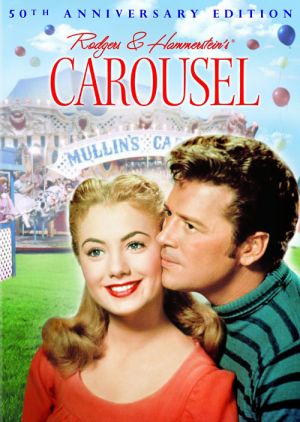
And thus began my mission to introduce my kids to every musical ever produced. My budding film critics soon developed opinions about every selection I brought home. My daughter, for example, declared the musical Carousel as The Worst. Musical. Ever. Personally, I would put it up against The Fantasticks for that title.

The Worst. Musical. Ever.

On the night of Fiddler, the sights and sounds of 1905 Russia filled the room and the whole family was enthralled. For me it was as if visiting with an old friend for a couple of hours. I tamped down my temptation to sing along and once again enjoyed the wonderful story and characters.

Finally, when I had exhausted all the musicals available through the library, I asked my children one day of all those we had watched, which was their favorite? While I don’t recall what my daughter said, my son did not hesitate: Fiddler On The Roof. An opinion he confirmed recently.

As for me and my dream of being in the cast of my high school’s musical… well, that’s a story for next week.

To learn more about the incomparable Fiddler, one needs only to access The Infallible Wikipedia:

https://en.wikipedia.org/wiki/Fiddler_on_the_Roof

https://en.wikipedia.org/wiki/Fiddler_on_the_Roof_(film)

L’Chaim!