Tag Archive | 1970’s

Billy Joel: The Iconic Journey of a Storyteller

The Piano Man

April 8

This song only ever reached number 25 on the Billboard Charts. Yet its one of the most memorable songs of the 1970’s and marked the beginning of one artist’s career which has spanned 50 years.

The song? The iconic “Piano Man.” The artist? Billy Joel.

It was in April of 1974 when “Piano Man” peaked on the charts. It could not even be described as a ‘one-hit wonder’ based on its ranking. By any measure, it should have faded away and been forgotten. Billy Joel, however, possessed the needed ingredients which have defined his long running career: grit, determination, and talent.

Undaunted by the middling success of “Piano Man” he continued to write songs and produce records. Both “Piano Man” and “Captain Jack” – his most successful early 1970’s releases – were an anathema to the music of that era. It was a time when soft rock and bubblegum dominated the pop category. I’m pretty sure no one was quite sure where this storyteller who saw and sang about the seamier side of life fit in.

“The Stranger” album, released in the fall of 1977, changed the public perception of Joel. I attribute it first and foremost to the song “Just the Way You Are.”  Written for his then wife Elizabeth Weber (married in 1974, divorced in 1983), I think it encapsulates a more optimistic look at life and, perhaps, that Joel was in a much happier place at that time as he had hit his stride with his career.

The American public responded. From the Infallible Wikipedia:
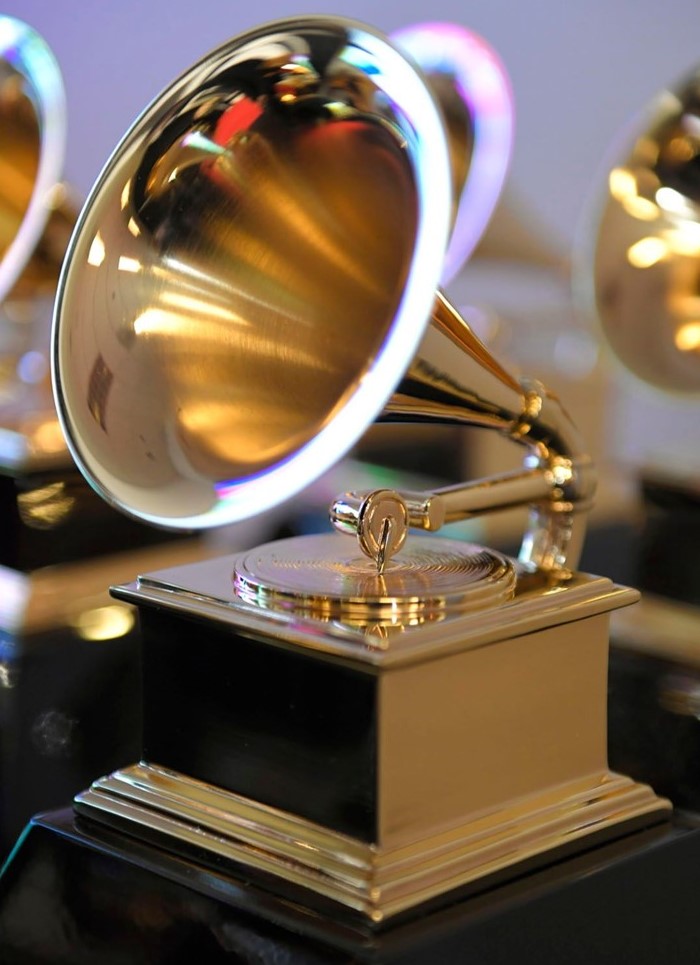
“Spending six weeks at No. 2 on the US Billboard 200 chart, The Stranger was Joel’s critical and commercial breakthrough. Four singles were released in the US, all of which became Top 40 hits on the Billboard Hot 100 chart: ‘Just the Way You Are’ (No. 3), ‘Movin’ Out (Anthony’s Song)’, ‘She’s Always a Woman’ (both No. 17), and ‘Only the Good Die Young’ (No. 24). Other songs, such as ‘Scenes from an Italian Restaurant’ and ‘Vienna’, have become staples of his career and are frequently performed in his live shows. The album won two awards at the 21st Annual Grammy Awards in 1979: Record of the Year and Song of the Year for ‘Just the Way You Are’. It remains his best-selling non-compilation album to date and surpassed Simon & Garfunkel’s Bridge over Troubled Water (1970) to become Columbia’s best-selling album release, with more than 10 million units sold worldwide. Rolling Stone magazine ranked the album number 70 on its 2003 list of the ‘500 Greatest Albums of All Time’, repositioned to number 169 in a 2020 revision. In 2008, The Stranger was inducted into the Grammy Hall of Fame.”
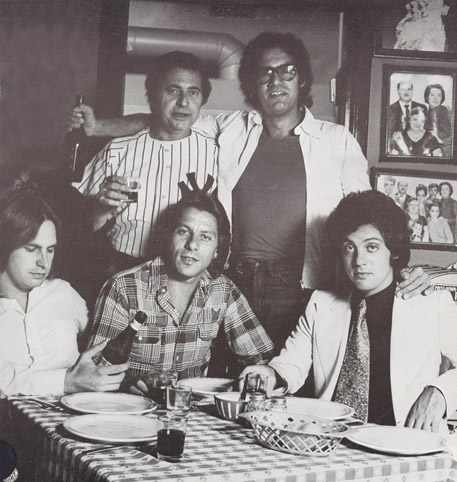
Billy Joel – seated far right – with members of his band at Guidos Italtian Restaurant. This photo was the back cover of the album, The Stranger.

As readers of my blog know, I greatly admire those who can tell a story through song. Joel has done this so very well. Perhaps my favorite of his ‘storytelling’ songs is “Scene’s from an Italian Restaurant.” When I listen to that song, I can visualize a couple of old friends – probably in their early 30’s – meeting up and soon their conversation is reliving the ‘good old days’ with such lyrics as:

Cold beer, hot lights
My sweet romantic teenage nights
.

My favorite part of the song has to be when he starts singing about prom king and queen, Eddie and Brenda, who were once the most popular kids in school. In a few short verses we learn about their marriage, their troubles, their divorce and that:

Brenda and Eddie had it already by the summer of ’75
From the high to the low to the end of the show
For the rest of their lives.

Storytelling at its finest.

It was in May 1984 when I attended my first rock concert. Yes, by then I was in my 20’s. My mother did not approve of rock concerts or anything else which might pollute young and impressionable minds so as a teenager going to such an event was forbidden.

I could have gone to a concert sooner, being that I had been an adult for several years. But after the hubby and I were married in 1980 we didn’t have the resources for such frivolities. Instead, we bought our first house in the spring of 1981 and then lived on rice and beans for the next few years, both of us going to jobs during the day, and fixing the house during the evenings and weekends. Our social life was the hubby playing on recreational soccer team; getting together with friends and family at our home our theirs, and going camping.
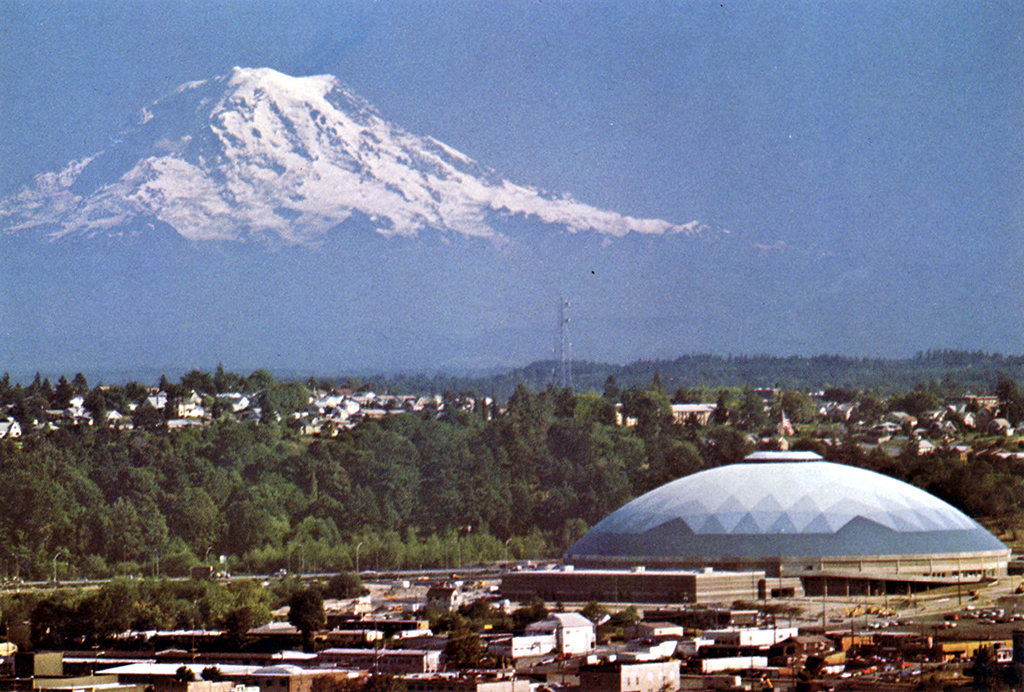
The Tacoma dome circa 1983-84

I can’t say for sure what inspired buying tickets for Billy Joel except that we both liked his music, me probably more than the hubby.

We drove from West Seattle to the Tacoma on Tuesday, May 8th, and joined thousands of our closest friends at the less than one year old Tacoma Dome (Billy Joel was the 9th artist to play there!). When the lights dimmed the arena went silent. In the dark we could see a grand piano slowly turning to the front of the stage, a lone performer sitting at the keyboard.

And then a single chord from the piano in the dark, instantly recognizable as the opening salvo of Joel’s then hit song “Allentown.” The arena erupted in applause. A solo spotlight appeared and shone down on Joel and, in that moment, he captured the room.

For the next couple of hours, we were treated to an energetic concert of old favorites and up and coming hits. It was a magical night and a great first concert.

I felt it was a privilege to have experienced Billy Joel perform live.
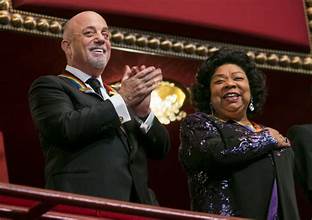
Joel was feted with the Kennedy Center honors in 2013. Pictured here with fellow honoree opera singer Martina Arroyo

Thank you, Billy Joel, for capturing the essence of the American experience through your incredible words and music.

There are soooo many links and so much more information I was not able to share in my self-imposed limited space. So here you go for some of the highlights including links to my three most favorite songs from Joel:

https://en.wikipedia.org/wiki/Billy_Joel

https://en.wikipedia.org/wiki/Piano_Man_(Billy_Joel_album)

https://en.wikipedia.org/wiki/The_Stranger_(album)

https://youtu.be/gxEPV4kolz0?si=TsMKJR-FE_lsLB4B (Piano Man)

https://youtu.be/GkuJJsApACc?si=J8-DxfhF7-e9ELU2 (Just The Way You Are)

https://youtu.be/izzM9LXqP-U?si=xlCLpepQV7n9nV7N (Scenes From an Italian Restaurant)
Exploring Romeo and Juliet: A Timeless Love Story

Perhaps Shakespeare’s most famous play

March 11

To try and take on this play is, I would conjecture, pure folly. Afterall, it is probably the most recognized literary work in the world. It is the story of two young lovers who forsake all else to be together. They risk the disapproval of family and friends and, ultimately, meet their demise all because they chose that which was forbidden.

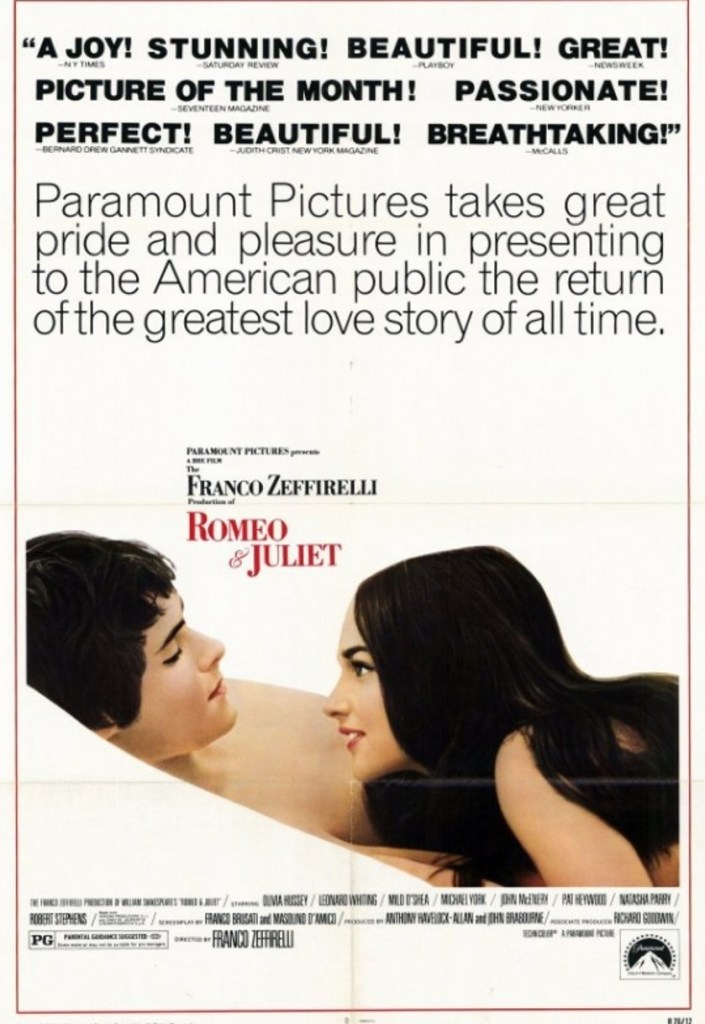
1968 Poster of Romeo and Juliet

“Romeo and Juliet” is William Shakespeare’s most famous works and March 11, 1302, is – according to OnThisDay.com – considered to be the date of the young lover’s marriage.

As is often the case, that is disputed since contextual clues from the play itself place the wedding date as being in mid to late July.

Regardless, today is as good a day as any to feature this iconic work.

For anyone who is unfamiliar with the storyline you can certainly access the Infallible Wikipedia. Which I did only to discover that the article there is 10,604 words long. Egads.

Instead, I found this one paragraph synopsis from the site Shakespeare.org.uk much easier to digest:

“An age-old vendetta between two powerful families erupts into bloodshed. A group of masked Montagues risk further conflict by gatecrashing a Capulet party. A young lovesick Romeo Montague falls instantly in love with Juliet Capulet, who is due to marry her father’s choice, the County Paris. With the help of Juliet’s nurse, the women arrange for the couple to marry the next day, but Romeo’s attempt to halt a street fight leads to the death of Juliet’s own cousin, Tybalt, for which Romeo is banished. In a desperate attempt to be reunited with Romeo, Juliet follows the Friar’s plot and fakes her own death. The message fails to reach Romeo, and believing Juliet dead, he takes his life in her tomb. Juliet wakes to find Romeo’s corpse beside her and kills herself. The grieving family agree to end their feud.”

But, honestly, only if you lived as a hermit in a rock cave on a remote island in the south Pacific would you NOT know about Romeo and Juliet (R&J).

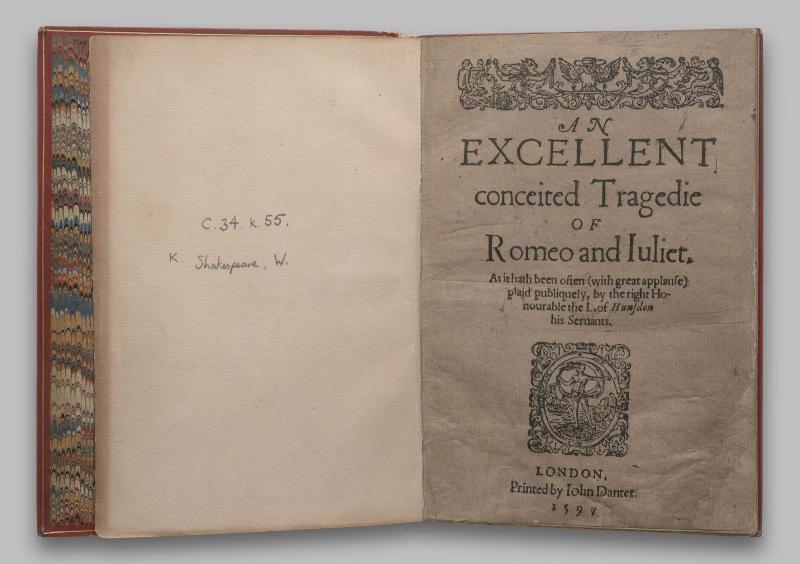
First edition Romeo and Juliet

When I started thinking about R&J, my mind drifted back to the early 1970’s and my experience at Wilson Junior High School in Yakima, Washington.

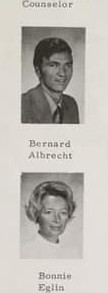
Wilson Junior High teachers 1971

It was there that I was introduced to R&J. At the time I had no appreciation for Shakespearean literature or for the incredible foundation which was given me by a trio of dedicated Jr. High English teachers.  For my entire 8th grade year, my English teacher was Mr. Albrecht. To us students he seemed quite mature. When, in fact, he was the ripe old age of 27 that first year. We respected him because he treated us as intelligent people regardless of our limited years on earth; he rewarded those who worked hard and did their best.

The next year my English class experience was split into two segments. For the fall/winter semester I drew the formidable grammar teacher, Mrs. Eglin. I think she likely made students rip out their hair and cry at times. But, by God, you were going to learn: all the parts of grammar, how to diagram a sentence, and how to construct a proper paragraph. It was in her class that I discovered the evils of dangling participles, all about verbs, adverbs, nouns (both proper and pro-), adjectives, and every other part of speech. In other words, I learned how to write the correct way. She made me think about my writing in ways I’d never considered. I might not have always followed her methods, and I’m not perfect, but not for lack of instruction on Mrs. Eglin’s part.

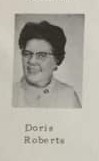
Mrs. Roberts 1971 yearbook photo

In the second half of the year, I had an even more demanding teacher – which I hadn’t thought possible after being with Mrs. Eglin – Mrs. Roberts. First name Doris. Which is telling. No one in my age demographic, or even a few years older, was named Doris. The name had, however, been the 8th most popular name for girls in the 1920’s. Mrs. Roberts was born in 1922 and was an ancient 50 that year. Ah perspective.

Mrs. Roberts assigned us every classical piece of literature she could find and we explored such themes as ‘man’s inhumanity to man’, ethics, morality, death and dying, cruelty, poverty… yes, we read some very dark stories. Like “Flowers for Algernon”, “The Grapes of Wrath”, “Fahrenheit 451”, and “Romeo and Juliet”.

The clever thing which this band of teachers managed to accomplish was to make the course work relevant to the teenagers of the day. Somehow, they convinced the administration that it was educational to load some 250 ninth graders into school busses and send them to the movie theatre to see films based on what we were reading.

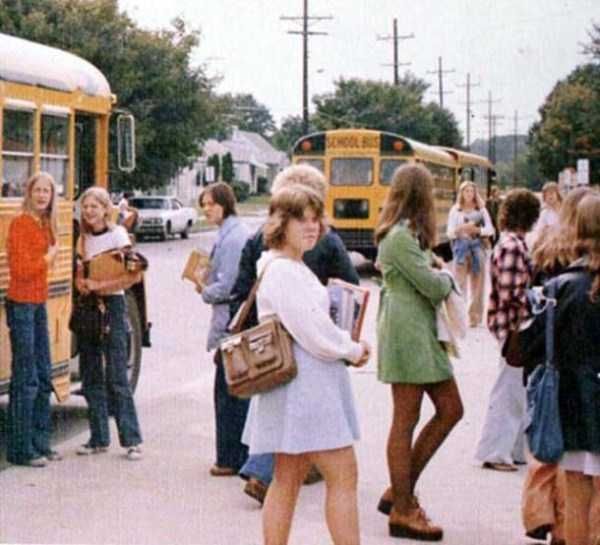
Pretty much how teenagers dressed in 1971-72. Found this photo on Pinterest.

Spoiler alert: it worked.

Of course, we kids thought we’d gotten a free pass for the day. Personally, I returned from those outings thinking about the films but also contemplating the books we read and then writing papers on the theme we thought was the best fit.

Sometime in the fall of 1971 I’m pretty certain we were whisked away in the busses to see the 1968 film version of Romeo and Juliet with Leonard Whiting and Olivia Hussey. Such clever English teachers, using the pop culture of the day to get us to learn. I did find a reference in my 1972 diary for both “Farenheit 451” and “Mary, Queen of Scots.” Sadly, my diary from 1971 does not seem to exist any longer, which surprises me as I was a faithful diary writer.

Now a few fun facts. I was able to find 49 times R&J was made into a movie in the Shakespearean tradition (from 1908-2021); an additional 118 films were produced which adapted the works in modern ways or with odd twists (like the truly bizarre 2011 Gnomeo and Juliet); there are also a few films which utilize R&J’s overarching theme in some new way (like the charming 2019 movie “Letters from Juliet”).

I owe a lot to my Junior High School English teachers for the great foundation they laid. It was the gift that has continued to give and bless me.

As always a few links:

https://www.onthisday.com/weddings/march/11

https://en.wikipedia.org/wiki/Romeo_and_Juliet

https://www.shakespeare.org.uk/explore-shakespeare/shakespedia/shakespeares-plays/romeo-and-juliet/#:~:text=An%20age-old%20vendetta%20between%20two%20powerful%20families%20erupts,to%20marry%20her%20father%E2%80%99s%20choice%2C%20the%20County%20Paris.

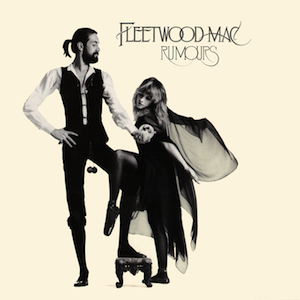
Rumours Have It

The journey of Fleetwood Mac

April 2, 2024

A Tuesday Newsday Classic updated

This album sat atop the Billboard charts for 31 non-consecutive weeks in 1977 and early 1978. Its chart dominance began on April 2, 1977 and, according to one of the principles of the group who recorded it, it was “the most important album we ever made.”

The album was Rumours and the group Fleetwood Mac.

Theirs is a story which shows that finding the right blend of talent, relentless commitment, and a lot of hard work, are necessary to make it in the music industry. The Fleetwood Mac story begins in 1967 as explained in the Infallible Wikipedia:

“Fleetwood Mac was founded by guitarist Peter Green, drummer Mick Fleetwood and guitarist Jeremy Spencer. Bassist John McVie completed the lineup for their self-titled debut album. Danny Kirwan joined as a third guitarist in 1968. Keyboardist Christine Perfect, who contributed as a session musician from the second album, married McVie and joined in 1970. At this time it was primarily a British blues band, scoring a UK number one with ‘Albatross’ and had lesser hits with the singles ‘Oh Well’ and ‘Black Magic Woman’. All three guitarists left in succession during the early 1970s, to be replaced by guitarists Bob Welch and Bob Weston and vocalist Dave Walker. By 1974, all three had either departed or been dismissed, leaving the band without a male lead vocalist or guitarist.”

The group was plagued by skullduggery from their manager, drug and alcohol addictions of some band members, departures of multiple guitarists, and an inability to make it big as a British Blues band. Then, in 1974 the band moved to Los Angeles. It was in that moment the magic began to happen. Also from the Infallible Wikipedia:

“After (Bob) Welch announced that he was leaving the band, Fleetwood began searching for a replacement. While Fleetwood was checking out Sound City Studios in Los Angeles, the house engineer, Keith Olsen, played him a track he had recorded in the studio, ‘Frozen Love’, from the album Buckingham Nicks (1973). Fleetwood liked it and was introduced to the guitarist from the band, Lindsey Buckingham, who was at Sound City that day recording demos. Fleetwood asked him to join Fleetwood Mac and Buckingham agreed, on the condition that his music partner and girlfriend, Stevie Nicks, be included. Buckingham and Nicks joined the band on New Year’s Eve 1974, within four weeks of the previous incarnation splitting.”

With the new members in place, the band took to the studio to record their (second!) self titled album, 1975’s “Fleetwood Mac.” It was a commercial success, selling over 7 million copies and featuring the memorable tracks: Over My Head, Say You Love Me (vocals Christine McVie), Rhiannon,  and Landslide (vocals Stevie Nicks).

In many ways, the two women’s distinctive voices came to define the group’s sound and propel their musical style towards mainstream pop.

With the release of Rumours in January 1977 and its subsequent rise to the top of the Billboard album charts, Fleetwood Mac cemented their spot in the Rock and Roll history books. The Infallible Wikipedia gives the details:

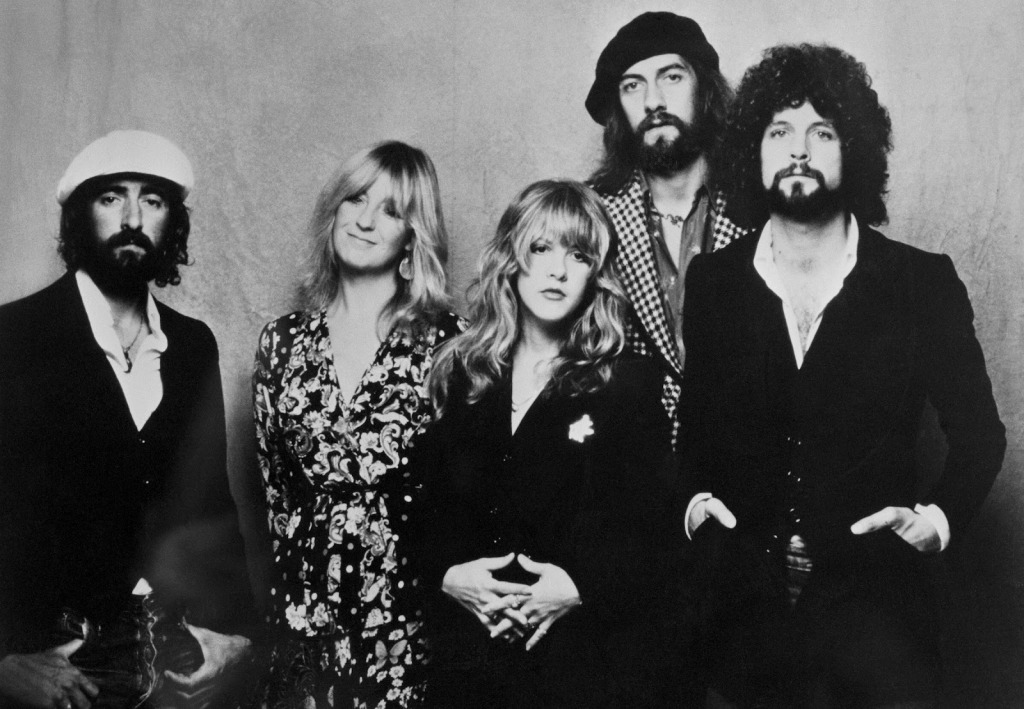
Fleetwood Mac members circa 1975, l to r, John McVie, Christine McVie, Stevie Nicks, Mick Fleetwood and Lindsey Buckingham

“By 1980, 13 million copies of Rumours had been sold worldwide. As of 2013, sales were over 40 million copies. As of May 2016, Rumours has spent 630 weeks in the UK Top 75 album chart and is the 11th best-selling album in UK history and is certified 13× platinum by the British Phonographic Industry, the equivalent of 3.9 million units shipped. The record has received a Diamond Award from the Recording Industry Association of America for a 20× platinum certification or 20 million copies shipped, making it, as of 2012, the joint fifth best-selling album in US history (by number of copies shipped).” (Ed note: it is still, as of 2019, one of the top ten best-selling albums of all time)

Although the group has continued to record and perform over the years, with some members leaving, new ones coming in, and then old ones rejoining, those of us of a certain age no doubt think of Fleetwood Mac as the following five individuals who were the group in 1977: Mick Fleetwood, Christine McVie, John McVie, Stevie Nicks and Lindsey Buckingham.

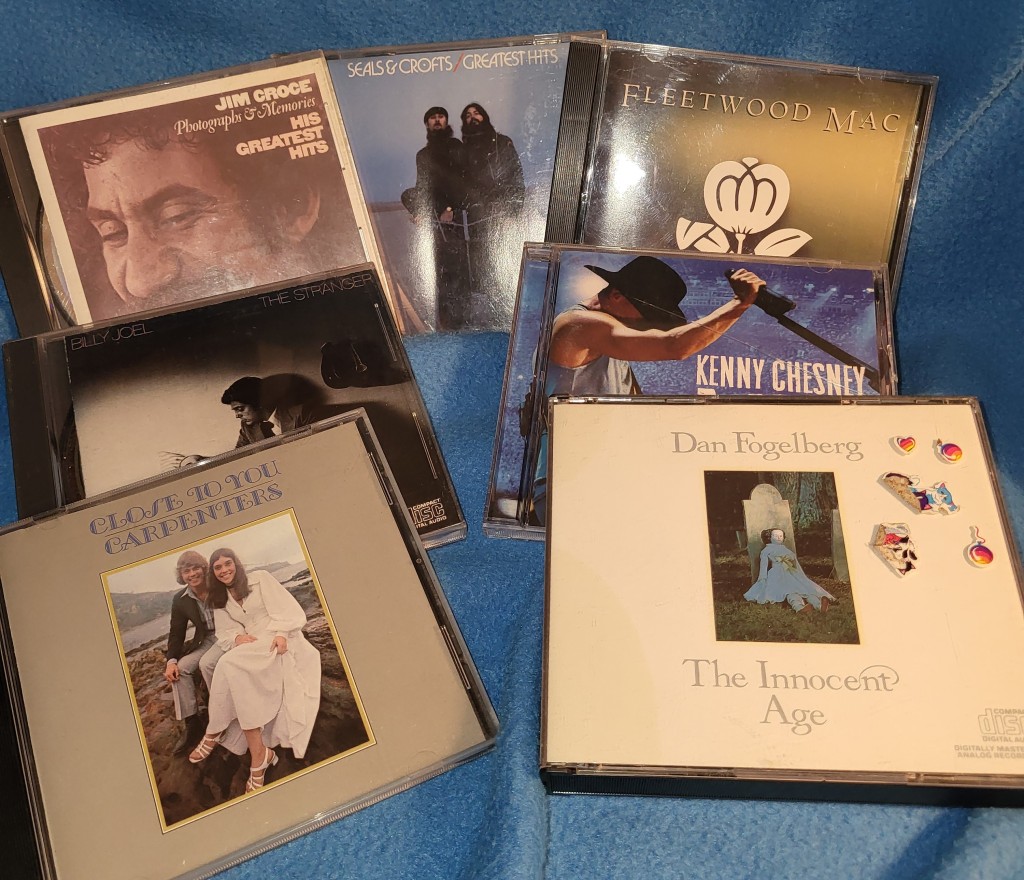
During a foray in to Value Village (a Western Washington thrift store) about a year ago I was – as is my habit – perusing the used CD’s when I spied it: Fleetwood Mac – Greatest Hits. I plucked the CD from the shelf and spirited it home. Last fall when the hubby and I were about to embark on a three week, three thousand mile, road trip, to New Mexico and back, I was forced to reduce down my box of ‘hitchhikers.’ This is what I lovingly dubbed the approximately 25 CD’s which traveled with me to Yakima and back every couple of weeks.

A few of the ‘hitchhikers’ who earned a spot in the box

The purge process involved looking at every CD we own (who knows 100? 150? 200?) and determining which of the entire CD deserved a place in the box and which had a cut or two which needed to be recorded onto a thumb drive. One by one I evaluated with the ‘thumb drive pile’ growing ever higher and the box group getting smaller. “Would I,” I asked myself with each CD, “listen to every song on this?”

There were only a handful which met that standard…  Fleetwood Mac’s Greatest Hits was one of them. Although it was not Rumours, it did have most of my favorites of theirs on it.

 It remained in the box of hitchhikers. When we bought our Hyundai Santa Fe in the summer of 2020 it did not have a CD player. To play my favorites I had to completely switch to the thumb drive.

Six months after this article was published, I lost my dad and the frequent trips to Yakima became a thing of the past. The box of hitchhikers now resides in a cupboard but the thumb drive lives in the center console of the Santa Fe. On the occasional longer trip I often plug it in to spend time with my favorite old friends including, Mick, Christine, Lindsey, and Stevie.

And every so often I peruse the CD collections at Goodwill and Value Village in search of the 1975 self-titled ‘Fleetwood Mac’ CD. Why? Because the song “Landslide” is, sadly, not in my collection and is, by far, my favorite of Fleetwood Mac’s songs. There is still plenty of room on the thumb-drive for a couple more song. Rumours have it.

For those not familiar with “Landslide”, here it is. Enjoy!

The FM story is fascinating and far too much to include in my weekly blog. Thankfully Wikipedia provides exhaustive information for those interested:

https://en.wikipedia.org/wiki/Fleetwood_Mac

https://en.wikipedia.org/wiki/List_of_Billboard_200_number-one_albums_of_1977

https://en.wikipedia.org/wiki/Rumours_(album)

https://en.wikipedia.org/wiki/Landslide_(Fleetwood_Mac_song)

When PONG was King

The original video game

November 29, 2022

Back in the 1970’s life was much simpler. There were no personal computers; no cell phones; no video games. To entertain ourselves, we would tune in to the local radio station and listen to the hits of the day; we might go for a drive – if our parents let us use the car; we’d call our friends on the phone and, perhaps, meet at the local pizza parlor; or we might hang out at the local arcade and drop quarters in a pinball machine.

THIS is what the excitement was all about…

It was on November 29, 1972, when the first hint of the coming electronic age poked its head up out of the ether with the introduction of the earliest of all electronic games: PONG by Atari.

I could attempt to explain to anyone born after 1970 what Pong was, but will let the Infallible Wikipedia do the heavy lifting for me:

“Pong is a two-dimensional sports game that simulates table tennis. The player controls an in-game paddle by moving it vertically across the left or right side of the screen. They can compete against another player controlling a second paddle on the opposing side. Players use the paddles to hit a ball back and forth. The goal is for each player to reach eleven points before the opponent; points are earned when one fails to return the ball to the other.”

Okay, I know, I know. All you Gen-Xers, Millennials, and Gen-Z types are saying: “Really? That’s what you thought was fun back in the 1970’s, Boomer?”

Yes. Yes we did.

The Infallible Wikipedia continues: “The Pong arcade games manufactured by Atari were a great success. The prototype was well received by Andy Capp’s Tavern patrons; people came to the bar solely to play the game. Following its release, Pong consistently earned four times more revenue than other coin-operated machines. (Nolan) Bushnell estimated that the game earned US$35–40 per day (i.e. 140–160 plays daily per console at $0.25 per play), which he described as nothing he’d ever seen before in the coin-operated entertainment industry at the time. The game’s earning power resulted in an increase in the number of orders Atari received. This provided Atari with a steady source of income; the company sold the machines at three times the cost of production. By 1973, the company had filled 2,500 orders, and, at the end of 1974, sold more than 8,000 units.”

1972 Pong Arcade game from pongmuseum.com

I cannot say for sure when Pong first entered my consciousness. My arcade hopping days were a few years later and I can assure you that my mother would not have let me near one anyway. But I did have something which exposed me to the early games: older brothers.

It was likely my eldest brother – nine years my senior – was all agog over Pong. From the earliest days of electronics, he was in to it. Really in to it. No doubt he went to arcades and played Pong, looking to extend a win streak or earn a high score, responsible for giving Nolan Bushnell a bunch of quarters.

When, probably at Christmas 1975, the first home Pong gaming console was released, my brother brought it to the house where we grew up and everyone got a chance to try their hand at the game. All that Christmas there were whoops of joy and cries of dismay as games were won and lost. While I no doubt played Pong, I was never that in to it. I really didn’t get the attraction of moving a little line up and down one side of a screen trying to ‘hit’ a little blinking thing.

By the early 1980’s, the arcade version of Pong became a relic of the past as newer, more involved electronic games like Pac-Man and Donkey Kong took their place. (I wrote about them here: https://barbaradevore.com/2017/10/10/pac-man-fever/)

Similarly, the dedicated ‘at home’ gaming consoles eventually were able to feature multiple games in the form of interchangeable cartridges.

Atari stayed at the top of the heap for a few more years with the introduction of a dedicated gaming console. The Infallible Wikipedia shares:

“The Atari 2600, initially branded as the Atari Video Computer System (Atari VCS) from its release until November 1982, is a home video game console developed and produced by Atari, Inc. Released in September 1977, it popularized microprocessor-based hardware and games stored on swappable ROM cartridges, a format first used with the Fairchild Channel F in 1976. The VCS was bundled with two joystick controllers, a conjoined pair of paddle controllers, and a game cartridge—initially Combat and later Pac-Man.

(snip) The Atari VCS launched in 1977 with nine simple, low-resolution games in 2 KB cartridges. The system’s first killer app was the home conversion of Taito’s arcade game Space Invaders in 1980.”

A ‘gotta have it’ Christmas gift of the 1970’s

My brother, however, did not go with the Atari but invested in the Commodore VIC 20 which was an early home computer system which had a whole bunch of compatible games for it. I have a distinct memory of being at my brother’s  home in Ballard in the early 1980’s and we are all huddled around the TV in their small sitting area, watching as my brother and the hubby battle it out over some game.

I imagine it’s difficult to imagine the thrill of those early games when compared to the sophistication of today’s technology. Yet, it had the power to make us all sit up and notice and be in awe of things we’d never seen before.

As is my custom, I do try to ferret out how I might have been involved with whatever my Tuesday Newsday topic might be. Which led me to my small collection of diary’s from the early to mid-1970’s.  I was rewarded with this gem from December 31, 1973:

The “Upper Valley (DeMolay) New Year’s Eve dance was tonight. It was slow at first. I danced some. Once with Alan, and twice with his friend. Then towards the end Sally and Julie and myself were dancing with Tony, Cory A., and some other guy. It was a fun dance. We went to Pizza Pete’s afterwards but I didn’t eat anything. I played electronic Ping-Pong with Lee L., Kev, Mike K., and beat them. I played Tony and lost.”

Oh, us crazy Boomers. Such wild things! Did we know how to have fun or what!?

Of course, the links:

https://en.wikipedia.org/wiki/Pong

https://en.wikipedia.org/wiki/Atari_2600

https://en.wikipedia.org/wiki/VIC-20

Celebrating National Lava Lamp Day: A 1960s Icon

April 5th

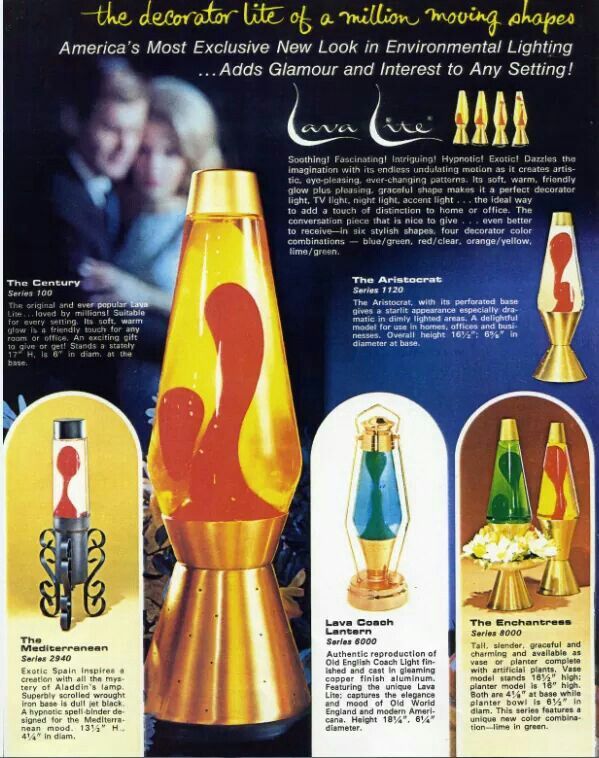
Perhaps one of the most iconic images of the 1960’s, the Lava Lamp was patented on April 4, 1963. Two years later April 5th was declared as National Lava Lamp day.

1960’s ad for lava lamps

Much beloved by baby boomer teens, the lamp – unlike plaid bell bottoms, Nehru jackets, and Twiggy’s haircut – has found new fans in subsequent generations.

The Lava Lamp got its beginnings in the early 1960’s. From the Infallible Wikipedia we learn:

“British entrepreneur Edward Craven Walker had the idea for the lava lamp in 1963 after watching a homemade egg timer, made from a cocktail shaker filled with liquids, as it bubbled on a stovetop in a pub. He hired British inventor David George Smith to develop the device and the chemical formula it required. Smith is credited as the inventor on the original U.S. Patent 3,387,396 for a ‘Display Device’ filed and assigned to Craven-Walker’s company in 1965, and subsequently issued in 1968. Craven Walker’s company, Crestworth, was based in Poole, Dorset, United Kingdom. He named the lamp ‘Astro’ and had variations such as the ‘Astro Mini’ and the ‘Astro Coach’ lantern.” 

For most of us, the details of who invented it are – likely – not of a great deal of interest. But my geeky side IS curious as to the technology behind the lamps. It turns out that it is the combination of two different materials that, when exposed to heat, cause the instantly recognizable function of the lava lamp.

Lava Lamp inventor

The material used to make the colored ‘lava’ originally consisted of mineral oil, paraffin wax, and carbon tetrachloride. This was suspended in water. The difference in how the wax/oil and the water heated is what caused the wax/oil to do what it does. Also from the Infallible Wikipedia:

“Common wax has a density much lower than that of water and would float on top at any temperature. However, carbon tetrachloride is denser than water (also nonflammable and miscible with wax) and is added to the wax to make its density at room temperature slightly higher than that of the water. When heated, the wax mixture becomes less dense than the water, because it expands more than water when both are heated. It also becomes fluid, causing blobs of it to ascend to the top of the lamp. There, they cool, increasing their density relative to that of the water, and descend.  A metallic wire coil in the bottle’s base breaks the cooled blobs’ surface tension, allowing them to recombine.”

Over the years, the wax ingredients have been replaced since one of the early ingredients proved to have toxicity which caused challenges if the glass jar was broken. 

But enough of the geeky details. For those who wish to learn more there is a link below.

I cannot recall the first time I saw a lava lamp. But I do know when I first lived in a place with one. When I moved into the hubby’s apartment after our marriage I became the defacto half owner of a lava lamp. Now, in a custody battle for the lamp I would have, no doubt, lost, since he owned it before we got married. Thankfully that custody battle has been avoided!

But over the years, the lava lamp has gone from being on display in our living room to being in our bedroom to living on a shelf in my office. But that was only until our eldest child discovered the lamp and it soon took up residence in his room. And then another one arrived to live in his room.

Here was this kid, born in the 1990’s, totally enthralled with a throwback product of the 60’s. The lava lamps moved with him to Tennessee, California, and then back to Washington state. He lived for several years in Seattle but then moved out of the city in the fall of 2019. And the lava lamps arrived back in our house. Granted they were in his room, but that meant I could visit them pretty much anytime I wanted.

Our two lava lamps in phase 1

Like me, I think my son was mesmerized by the various phases the lava light goes through when it’s turned on.

Phase 1: the blob sits at the bottom of the lamp, glowing red, blue, yellow (the most common blob colors) for a time.

Phase 2: a tiny little tendril will erupt from the blob and snake its way upward like a plant sprout in springtime, only much faster. 

Late phase 2/early phase 3

Phase 3: more tendrils erupt and then, suddenly, the entire blob seems to explode like a cumulus nimbus cloud in spring, billowing up and out, filling the lamp.

Tiny lava blobs dance in the lamp/phase 5

Phase 4: the heat of the water approaches boiling and the wax mixture starts to form the ‘blobs’ for which the lava lamp got its name.

Phase 5: the numerous and various sized blobs, slowly at first, engage in a mesmerizing dance bouncing off one another, moving around through the lighted water lamp.

Phase 6: the blobs combine with one another, the large absorbing the smaller, until all that’s left is one huge blob. This phase continues until the lamp is turned off and the blob then settles in the base of the jar to cool down.

Phase 6 – large blobs

Each of these phases is interesting in its own way. My favorite, by far, is phase three. In fact, if given the chance, I will wait until the billowing wax looks like clouds… and turn the lamp off. 

My son, as far as I can tell, loves the lava lamp when it’s in phase 5, the multi-blob state. During the time he was living with us and the two lamps resided in his room, I would often go in to visit with him and the lava lamps would be illuminated.

Two years ago he took off for Mexico and, subsequently, decided to move there. Because of the logistics of getting household goods into Mexico was a challenge, the lava lamps had to be left behind. 

I decided to relocate one of the Lava Lamps. Sometimes on dark winter mornings when I am up before sunrise, I will turn on the red lava lamp which now resides on an entryway table across from where I will take up residence to play my daily Wordle and other games. I tend to turn it off after the tendrils, phase 2 and part of phase 3, as that is MY favorite.

https://en.wikipedia.org/wiki/Lava_lamp

Casey Kasem

“Keep your feet on the ground and keep reaching for the stars.”

April 27, 2021

For anyone who was a teenager in the 1970’s, these words were said by the one person who – each week – united millions of baby boomers.

That person was Kasey Kasem, born April 27, 1932.

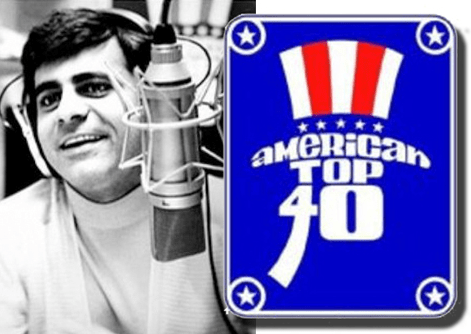
Casey Kasem in the early days of American Top 40

For those who are younger than about 40, you can be forgiven for not knowing WHO Kasey Kasem was. But for the rest of us he was the voice of American Top 40, a weekly radio countdown show which began in the summer of 1970.

Kasem began his career in radio, but branched out to pursue acting. He only found limited success in television and movie roles. It was his distinctive voice, however, which catapulted him to fame.

From the ever Infallible Wikipedia:

“Kasem acted in a number of low-budget movies and radio drama. While hosting “dance hops” on local television, he attracted the attention of Dick Clark, who hired him as co-host of a daily teenage music show called Shebang, starting in 1964. Kasem’s roles on network TV series included Hawaii Five-O and Ironside In 1967, he appeared on The Dating Game, and played the role of “Mouth” in the motorcycle gang film The Glory Stompers. In 1969, he played the role of Knife in the film Wild Wheels, and had a small role in another biker movie, The Cycle Savages, starring Bruce Dern and Melody Patterson, and The Incredible 2-Headed Transplant (also with Dern).

Kasem’s voice was the key to his career. In 1964 during the Beatlemania craze, Kasem had a minor hit single called “Letter from Elaina”, a spoken-word recording that told the story of a girl who met George Harrison after a San Francisco Beatles concert. At the end of the 1960s, he began working as a voice actor. In 1969, he started one of his most famous roles, the voice of Shaggy on Scooby-Doo, Where Are You! He also voiced the drummer Groove from The Cattanooga Cats that year.”

The creation of American Top 40 – which he devised in collaboration with three other individuals – is what made him a household name. He was the on-air voice of the program for the next 18 years.

For many Baby Boomers, Kasem was like a friend we’d never met or an older brother. None of us probably realized he was of our parents’ generation. He seemed to ‘get’ us and our music.

When he left AT40 in 1988 it was due to a contract dispute. He then created a competing countdown known as Kasey’s Top 40.

He later regained an ownership interest in AT40, once again doing the countdown for several years. Additionally, he continued his voice acting work well into his late 70’s.

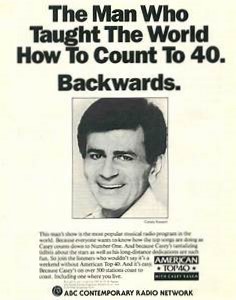
Ad for AT40 in a trade publication

By the fall of 2013, it became known that Kasem was suffering from either Parkinson’s disease or Lewy Body Dementia (it’s unclear which it was). From then until his death in June 2014, a fight over his care erupted between his second wife and his children from his first marriage; the travails of that fight spilled into the pages of the tabloid press for the next six months.

It would have been exactly the sort of story he would have shared on AT40; one filled with conflict and intrigue, definitely tabloid worthy.

I think, perhaps, it was his storytelling ability which was most compelling. He ferreted out interesting facts about the musical artists, the songs, and songwriters and you could tell he was truly interested in what he was sharing. This, to me, is much like writing Tuesday Newsday each week as great part of the enjoyment of writing is in researching and learning new things.

Despite the rather messy situation at the end of his life, I think Kasem filled his years doing what he loved. There is no better way, in my opinion, to live one’s life except to find and pursue the thing which brings you joy and fulfillment. Certainly he faced challenges – just like all of us – but on whole it would seem that his chosen path led him to the top of the charts . We should all be so lucky to live such a life.

The link: https://en.wikipedia.org/wiki/Casey_Kasem

Answer to the Facebook question is for the other three besides the ATF photo, are all voice characters of Casey Kasem: Shaggy, Robin, Cliffjumper

Alan Alda

January 28, 2020

Made His Mark On M.A.S.H.

This actor has been nominated for Emmy Awards 34 times and won 6, the majority for his role as the irreverent realist Hawkeye Pierce in the TV Series M.A.S.H. January 28 marks his 84rd birthday.

ct-wayne-rogers-trapper-john-mash-dead-20151231

A few of M*A*S*H’s original cast members: Alan Alda, Wayne Rogers, and Loretta Swit

Alphonso Joseph D’Abruzzo, aka Alan Alda ,was, for the 11 years M.A.S.H. was on CBS, one of the most popular and recognizable actors of the 1970’s and early 1980’s. Although the series was based on a 1970 movie of the same name which starred Donald Sutherland in the Hawkeye role, Alda embraced the persona and made it his own during the TV shows run. From the Infallible Wikipedia:

“Between long sessions of treating wounded patients, he (Hawkeye) is found making wisecracks, drinking heavily, carousing, womanizing, and pulling pranks on the people around him, especially Frank Burns and “Hot Lips” Houlihan. Although just one of an ensemble of characters in author Richard Hooker’s MASH: A Novel About Three Army Doctors, in the television series Hawkeye became the center of the M*A*S*H unit’s medical activity. In the television series, he becomes the Chief Surgeon of the unit early in the first season.”

Unlike the notorious skirt chaser Hawkeye Pierce, Alda was married in 1957 to Arlene Weiss. Their nearly 63 year marriage produced three daughters and eight grandchildren. In the TV series, Hawkeye never marries but has an unending string of relationships with nurses and enticing female visitors to the 4077th.

One interesting tidbit I learned about Alda – and one which may have contributed to his being able to play his M.A.S.H. role convincingly – is that he spent six months in Korea as part of the US Army Reserve in 1957. The Korean hostilities were long since over, but his experiences in the ROTC followed by a year in the army likely provided him a true understanding as to the ways of military life.

During the M.A.S.H. years, in addition to his role as Hawkeye, Alda gradually became one of the show’s writers, producers, and creative consultants. In all, he either wrote/co-wrote and/or directed 36 of  M.A.S.H.’s episodes. He is also the only actor from the series to appear in all 256 episodes.

Alda, according to firsthand accounts, was not easy to work with. Also from the Infallible Wikipedia:

“For the first three seasons, Alda and his co-stars Wayne Rogers and McLean Stevenson worked well together, but later, tensions increased, particularly as Alda’s role grew in popularity. Rogers and Stevenson both left the show at the end of the third season. At the beginning of the fourth season, Alda and the producers decided to find a replacement actor to play the surrogate parent role formerly taken by Colonel Blake. They eventually found veteran actor and fan of the series, Harry Morgan, who starred as Colonel Sherman T. Potter, becoming another of the show’s protagonists. Mike Farrell was also introduced as Hawkeye’s new roommate BJ Hunnicutt.

In his 1981 autobiography, Jackie Cooper (who directed several early episodes) wrote that Alda concealed a lot of hostility beneath the surface, and that the two of them barely spoke to each other by the time Cooper’s directing of M*A*S*H ended.”

After M.A.S.H., Alda went on to act in a variety of projects which included the TV series West Wing, a number of Broadway plays, and several movies. Despite being diagnosed with Parkinson’s Disease, Alda continues to work and told ExtraTV recently, “”Eighty-three was very nice; I’m trying for 84 now. When I wake up and say, ‘I’m done,’ that will be when I’m already dead.”

M.A.S.H. was, for my family in the 1970’s, one of a handful of ‘must watch TV’ shows. It started as a Sunday night show then moved to Saturday and then Tuesday for its second and third years. Eventually, after back and forth time slots on Friday’s and Tuesday’s, it eventually found its permanent night on Monday.

But none of that mattered to my mother. She loved the show and found it on whatever night it aired.

This 4 minute video is interesting to watch… Alan Alda in his own words reflects on his life and career.

I never really thought much about Alan Alda’s age when M.A.S.H. was popular. In reality he was a contemporary of most of my classmate’s parents, having been born in 1936. Even though my own parents were over a decade older, Alda did such a great job in the role that he became ageless. Part of the reason to tune in each week was to hear his wry and pithy observations on the inconsistencies of human behavior.

It was easy to relate to the character of Hawkeye and see the delicious irony of life – even in a war zone – through his skeptical eyes.

So be sure to raise a toast to Alan Alda and cheer his positive attitude  which, in spite of life’s hurdles, continues to inspire.

A couple of links:

https://en.wikipedia.org/wiki/Alan_Alda

https://extratv.com/2020/01/13/alan-alda-talks-living-with-parkinsons-and-not-giving-up-acting/

Afternoon Delight

July 17, 2018

Starland Vocal Band

There was, perhaps, no other song from the 1970’s which could sum up the true shlockiness of that era of music than the record which was number one on the Billboard 100 for two weeks in mid-July 1976. That song: Afternoon Delight.

bubble gum popBy the middle of the decade, the Beatles were in the rear-view mirror and the hard rock of the late sixties and early seventies had given way to bubblegum and pop.  And could there be any better symbols than two sugary treats to describe this song by a group called The Starland Vocal Band?

For those unfamiliar with the tune, here are a part of the lyrics:

Gonna find my baby, gonna hold her tight
Gonna grab some Afternoon Delight
My motto’s always been “When it’s right, it’s right.”
Why wait until the middle of a cold, dark night?

When everything’s a little clearer in the light of day?
And we know the night is always gonna be here anyway?

 Thinkin ’bout you’s working up my appetite
Lookin’ forward to a little Afternoon Delight
Rubbin’ sticks and stones together makes the sparks ignite
And the thought of rubbin’ you is getting so exciting

Skyrockets in flight!
Afternoon Delight!
Afternoon Delight!
Afternoon Delight!

Actually, I’ll stop there. Truly, how many clichés can be stuffed into one song?

starland-vocal-band-afternoon-delight-rca-victor-4.jpgIn the world of music, Afternoon Delight is what’s known as a ‘One Hit Wonder.’ Although the musicians who made up the group had some success before and after their big song, it was Afternoon Delight which catapulted them to a brief moment of fame.

From the Infallible Wikipedia:

“The group began as Fat City, a husband/wife duo of Bill Danoff and Taffy Nivert.

Danoff and Nivert co-wrote the song ‘I Guess He’d Rather Be in Colorado’ and then, with John Denver, ‘Take Me Home, Country Roads‘ which became a hit single in 1971. The duo recorded two albums as Fat City, and two more as Bill & Taffy, all released from 1969-1974. In the mid 1970s, Starland Vocal Band was formed and subsequently signed to Denver’s label Windsong Records.

Starland Vocal Band was also composed of Jon Carroll (keyboards, guitar, vocals) and Margot Chapman (vocals). Carroll and Chapman married after meeting as members of the group, but later divorced. Their son Ben Carroll is also a musician.

The group’s debut album was the self-titled Starland Vocal Band and included ‘Afternoon Delight’. The song was a US #1 hit and the album also charted. They were nominated for four Grammy Awards and won two: Best Arrangement for Voices and Best New Artist. The song also reached #18 in the UK. The follow-up album, Rear View Mirror, did not fare as well, with 13 weeks on the Billboard 200 and a peak of #104.

The band hosted a variety show, The Starland Vocal Band Show, that ran on CBS for six weeks in the summer of 1977. David Letterman was a writer and regular on the show, which also featured Mark Russell, Jeff Altman, and Proctor and Bergman. April Kelly was a writer for the series.

The band broke up in 1981, unable to match their previous success. Danoff and Nivert divorced shortly afterward. Each of the band members went on to a solo career.

In 1998 the Starland Vocal Band reunited for a few concerts, often featuring the children of the four original members as vocalists. In 2007, they appeared on a 1970s special on the New Jersey Network (NJN), singing ‘Afternoon Delight’.

In 2010 Billboard named ‘Afternoon Delight’ the 20th sexiest song of all time.”

Ice cream afternoon delightAt the time, the lyrics were a little bit shocking, especially to the parents of younger Baby Boomers who had pretty much lost control of their children by then. We, thinking we were hip and edgy, embraced the song with a wink and knowing nod because, well, our generation invented it, after all. What could our parents possibly know?

Recently a high school friend of mine posted something about singing the song Muskrat Love at a Karoake bar. This prompted a brief Facebook discussion as to which song from the 1970’s was the worst. As you all know (and if you don’t, go back and read my post about the Cap’n and Tennile. ) I’ve already called out a couple of schlocky songs from the 1970’s.

This song is on my list of the worst of worst. Be sure to nominate yours but only after listening to Afternoon Delight for a few moments of sugary guilt. Insulin may be needed when you are done.