Mary Poppins

Why is using an umbrella to fly not a thing?

August 27, 2024

A Tuesday Newsday Classic
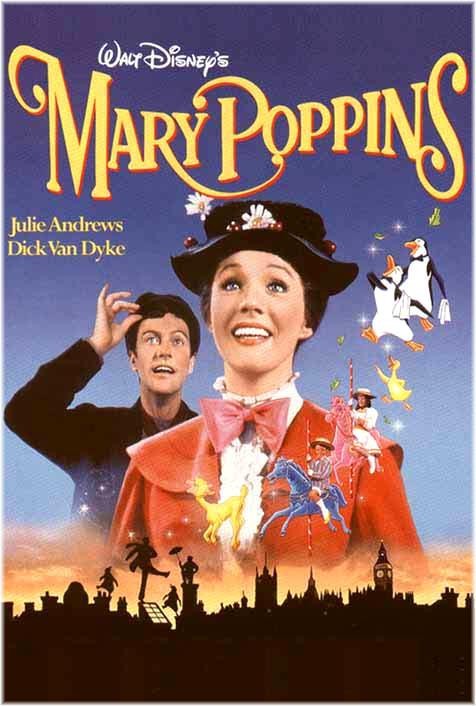
Unlike most of the musical films of the previous decades, this one was aimed at children. It introduced new words into our collective vocabulary and catapulted its two stars into the stratosphere. Children everywhere wanted a nanny just like Mary Poppins and her chimney sweep friend Bert.

Mary Poppins debuted on the silver screen sixty years ago on August 27, 1964, and soon everyone was exclaiming Supercalifragilisticexpialidocious and singing Chim-Chim-Cheree.

The movie was based on a children’s book by P.L. Travers. It was the song writing brothers of Robert and Richard Sherman who created over 30 songs for the movie. Of those, 14 made the final cut.

It was, however, the superb casting, particularly of Julie Andrews and Dick Van Dyke, which provided the magic needed for the story.  Andrews, who was a Broadway actress at the time, transitioned to film and would, the next year, define the iconic Maria Von Trapp in the Sound of Music.

Between the incredible casting, the musical score, and the script, it proved a recipe for success. From the Infallible Wikipedia:

“It received a total of 13 Academy Awards nominations, including Best Picture – a record for any film released by Walt Disney Studios – and won five: Best Actress for Andrews, Best Film Editing, Best Original Music Score, Best Visual Effects, and Best Original Song for ‘Chim Chim Cher-ee’. In 2013, the film was selected for preservation in the United States National Film Registry by the Library of Congress as being ‘culturally, historically, or aesthetically significant’. Mary Poppins is considered Walt Disney’s crowning live-action achievement, and is the only one of his films which earned a Best Picture nomination during his lifetime.”

For a seven-year-old, getting to go to a theater and see a movie was a big deal. Especially when it was the very FIRST movie that seven-year-old had ever seen in a theater.

I have a distinct memory of being dropped off at the Capitol Theater in Yakima along with my older siblings to watch the movie. I doubt my then 15 year old brother was thrilled at being the designated baby sitter for the event. Of course that mattered not to me. I was enthralled from the moment Mary Poppins, umbrella unfurled and carpet bag in hand, floated down to the Banks house.
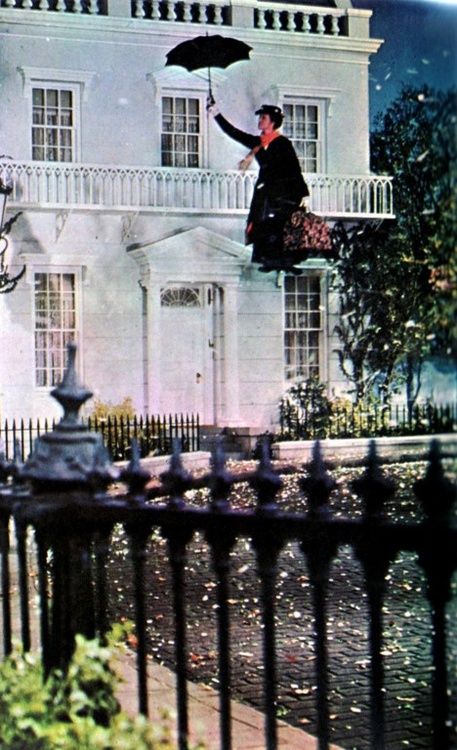
My childhood goal: to fly using an umbrella

In the days, weeks, and months which followed, I strove to be Mary Poppins. If I was outside playing it was with an umbrella in hand, running down the street wishing to be lifted from the ground so that I could float away to magical places. Alas, despite some pretty strong winds at times, my Mary Poppins dreams went unfulfilled although I did manage to get airborne quite often.

After I had children of my own I made it one of my missions to expose them to the cultural phenomenon of Musicals. Although they enjoyed Mary Poppins I do not believe it impacted them quite the same way.

On a trip to Disneyland when my daughter was near the magical age of seven, we were on Main Street early one morning. Across the plaza I spied Mary Poppins. Determined to get her autograph for the daughter’s book, we hurried over.

The daughter proffered the souvenir and asked ‘Mary’ if she would sign it. A nanny’s eye landed on my daughter, said good morning, then proceeded – in character – to instruct the child to stand up straight, feet together, toes turned slightly out, with the admonishment of “spit spot.” Although my daughter was slightly flummoxed by the encounter, I was enchanted.

The whole nanny thing, I decided, might still be a good idea for seven-year-old children although I don’t think it’s a great idea for those same children to take flying leaps into the air in an effort to fly.

 No article is complete without a link to the Infallible Wikipedia:I

https://en.wikipedia.org/wiki/Mary_Poppins_(film)

I suggest you do a search for Mary Poppins “Let’s Go fly a Kite” to see the final scene where Mary flies away. I tried to find a youtube clip but, alas, many are protected. Try these two links: https://youtu.be/BA-g8YYPKVo?si=8lCS4VWswAp0OPvZ
The Rotary Telephone

The only downside was the cord

August 20, 2024

A Tuesday Newsday Classic Updated

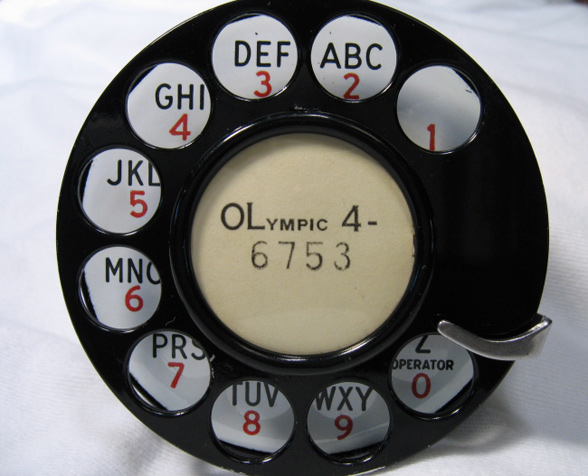
A vintage rotary dial possibly from the state of Washington.

For young people in the 1960’s and 70’s, this device was as essential to teenagers as the smart phones of today.

The difference being that this device was tethered to a specific location and it allowed you to do but one thing: talk.

Nearly every household in middle America had one and, by the early 1960’s, all featured a rotary dial, the patent for which was applied for on August 20, 1896. The device was, of course, the telephone.

It was, however, the addition of the rotary dial which made it possible for the telephone to become a common household essential. As is often the case, controversy surrounded the granting of patents. The first rotary style was developed in 1891. According to the Infallible Wikipedia:

“Almon Brown Strowger was the first to file a patent for a rotary dial on December 21, 1891, which was awarded on November 29, 1892, as U.S. Patent 486,909. The early rotary dials used lugs on a finger plate instead of holes, and the pulse train was generated without the control of spring action or a governor on the forward movement of the wheel, which proved to be difficult to operate correctly.”

It was only a few short years later when three inventors in Kansas – brother’s Charles and Frank Erickson along with their friend Frank Lundquist – provided the refinement needed and the rotary dial with finger holes that we know was invented. Different enough from Strowger’s design, it became the standard. From the historical files of the Kansas Collection:

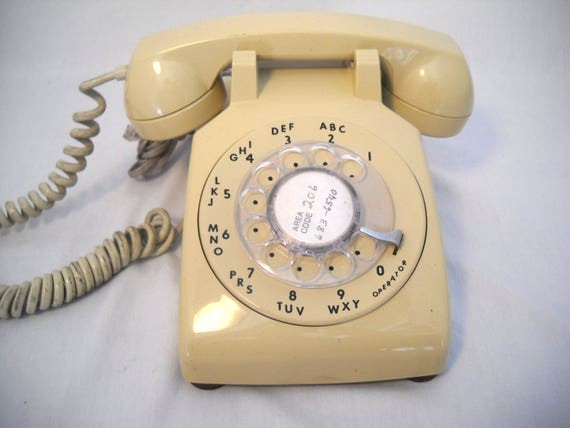
We had a beauty like this one in both the kitchen and my parents bedroom

“The most dramatic contribution of the Ericksons in telephony is associated with the invention and development of the dial telephone. Application for the patent was made by (A.E.) Keith and the Ericksons on August 20, 1896, and Patent No. 597,062 was granted on January 11, 1898. The dial method was based upon a finger wheel dial instead of the push buttons, which were cumbersome and impractical. The dial method, with the switching and trunk systems, provided full access to the vast resources of a telephone exchange. R. B. Hill, an authority in telephony, has described this important development as follows: ‘Dialing a number wound up a spring whose tension, when the finger was withdrawn, caused the dial to return to its normal position. The return rotation was limited to a moderate speed by an escapement mechanism, and, during the return, the required number of circuit interruptions took place to control the movement of the central office apparatus.’”

Telephone numbers in the 1960’s were identified by a combination of letters and numbers. Eight of the finger holes on the phone had 3 letters. My phone number growing up, then, was listed as follows: Glencourt 2-4100, or in its phone book listed form, GL2-4100. Translation for the kids of today: 452-4100. Area Codes were added in 1947 but unlike today were not needed for all calls.

In my household the phone was strategically placed in the kitchen. When it rang, you answered as there was no answering machine. Up until about 1971 the phone was never for me and the conversations were usually brief as the device was a method for setting up an appointment or such other daily business.

With teenagers in the house, however, its use ballooned. My sister used it, especially, for the higher purpose of dialing in to radio stations to make song requests and to try to win things. With transistor radio on one ear and the telephone on the other she’d dial incessantly to be the 10th or 20th or 93rd caller. She seemed to win. A lot.

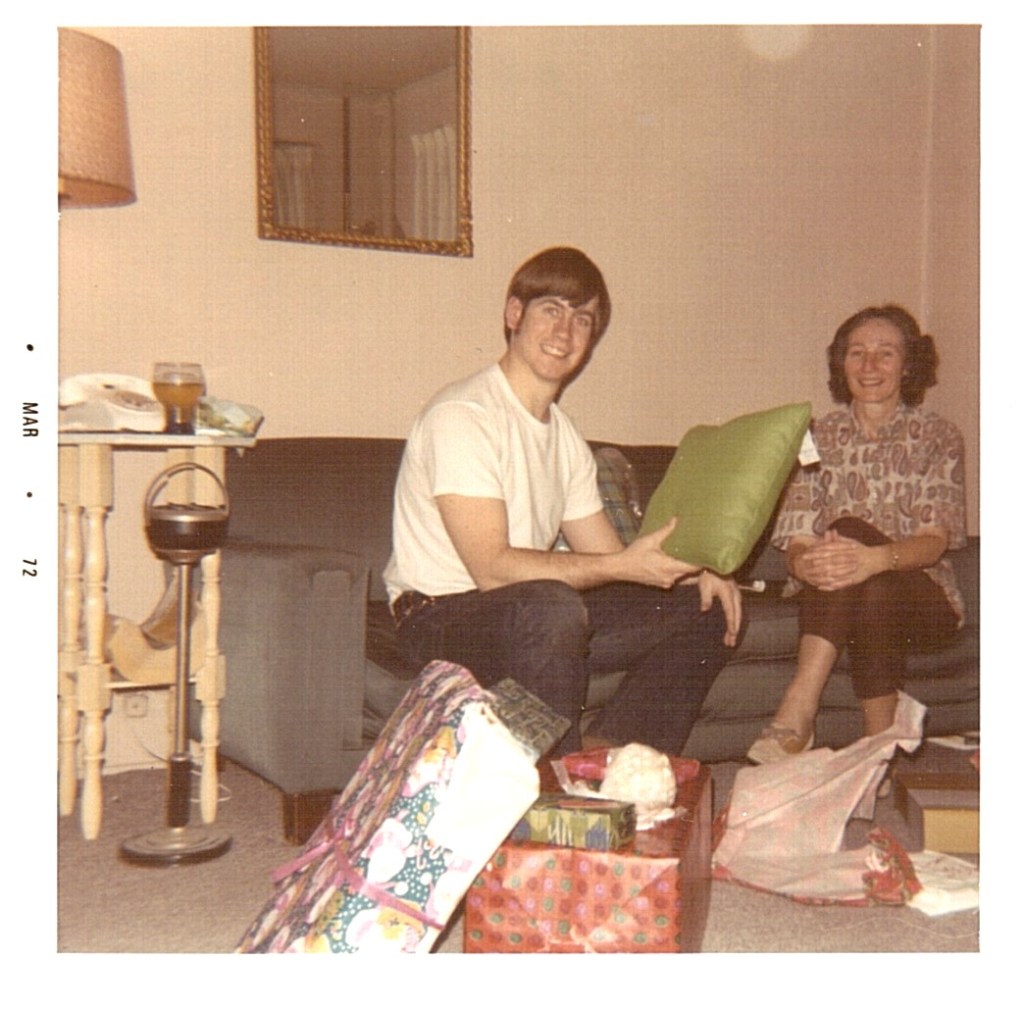
Unlike today, photos of people with phones was uncommon. In going through old photo albums this was the only picture I found with a phone in it. I took this photo at my older brother’s apartment (he was 24) when me and my parents drove to Seattle on December 27, 1971, to bring him Christmas. Mom is on the right. Rotary dial phone is on the left.

My long-suffering parents finally tired of chatty teenagers doing their teenager business in the middle of the family area and a second phone was installed.

This phone was the holy grail of all things teen. Located in my parents’ bedroom it provided the one thing we craved: privacy.

When boys started to call my older sister – and eventually me – we were allowed to use the phone in my parent’s bedroom. There was no chair next to the phone, just the bed and the floor. Many an hour was spent sitting on that floor, back against the bed, talking to the boy of the month… at least until Mom would come in to the room and give us the sign to wrap it up.

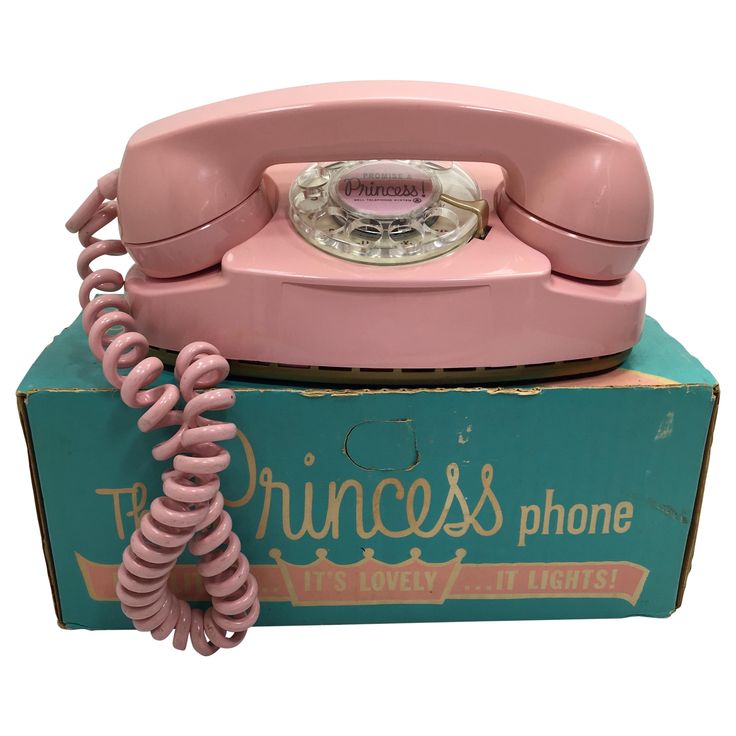
We envied the few friends who had their own phone in their room, usually a princess style and pink or white. What a luxury!

The most envied of all devices: a pink princess phone

When I became a parent and cell phones (before the smart phones took over) were a thing it became very difficult to monitor what the child was doing. No doubt it’s even more difficult now with text messages, unfettered internet access, and apps like Instagram and TikTok. It was much easier for my parents as they could cut the conversation off at any time and when the household went to bed no teen was sneakily talking or texting on the phone.

No doubt my most memorable event with a corded, old-style phone, came in 1992 when my son was two years old. Although cordless phones for use in a house had made some inroads by that time, I found them unreliable and they would often have static and bad reception. So, as a mother with a young child, I had hit on the perfect solution: a phone with a 25-foot-long cord.

It afforded me the ability to talk on the phone while also being able to get to my child anywhere in the kitchen/family room. Which was important since my first born being a VERY curious child required my eternal vigilance as he had a propensity for getting into places and things which he shouldn’t. In fact I discovered, to my great dismay, that there was not a baby lock you could install on a cupboard or drawer which could deter him.

One particular morning, I get a phone call from my best friend in Yakima, Daphne. My son is happily playing and Daphne and I have been chatting for about 10 minutes. I happened to be standing and looking out the window of our dinette area between the kitchen and the family room when all of the sudden the phone line goes dead.

I pull the phone away from my ear and stare at the now silent receiver, wondering what might have happened. Only then did I turn around and standing in front of me, scissors in hand and a cut in half phone cord laying at his feet, is my two-year-old.

A mixture of emotions course through me. Anger at this child who had the audacity to end my phone call but also awe at the problem-solving ability he had just displayed. And, of course, fear at the fact that he had dragged a chair to the kitchen, climbed on it, opened the drawer – with the baby lock on it – and retrieved the tool he understood was needed to complete his mission.

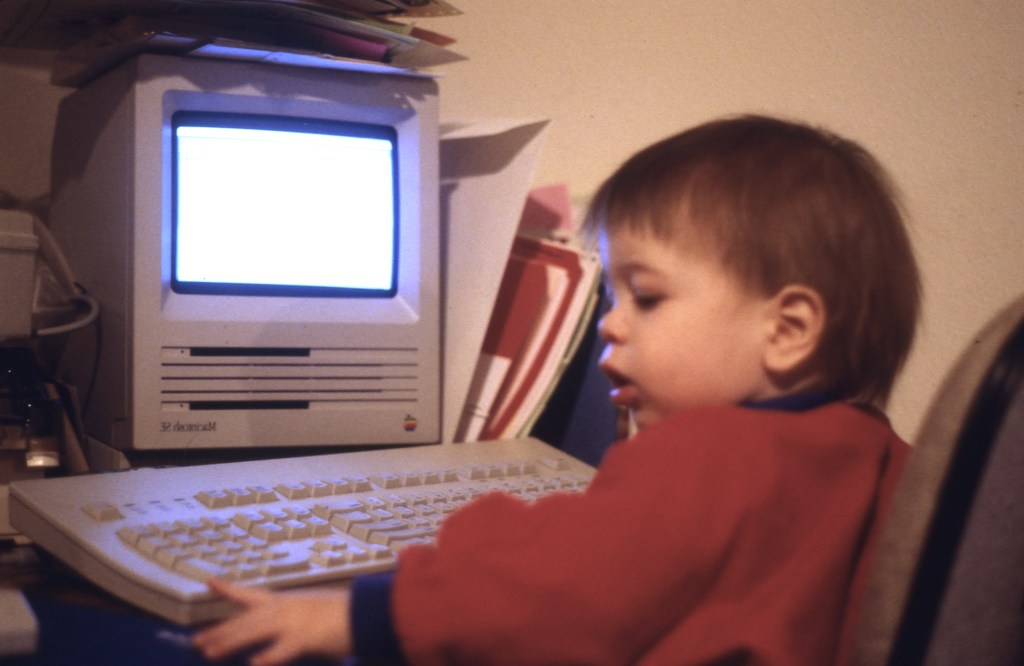
My curious child also learned how to use a computer early when he wasn’t cutting telephone cords.

Trying to reason with a one or two-year old is like trying to reason with a cat and was out of the question so in the end I came down on the side of awe. That was the one and only time he ever cut the phone cord… but there WAS the whole apple incident. That’s a story for another Tuesday Newsday. Eventually the technology improved and the cordless phone became the norm. Nowadays, very few people even have ‘land lines’ and phones are radically different than they were 30 years ago.

But back to the advantage of growing up with a device on which the only thing you could do was talk. I attribute my ability to pick up a phone and call anyone to the training I received as a teenager. Back then the only way anything was going to happen was by grabbing the phone and twisting those 10 little holes to make a call. Ah, the good old days.

A couple of links for those who wish to learn more about phones and the rotary dial:

https://en.wikipedia.org/wiki/Rotary_dial

https://en.wikipedia.org/wiki/Rotary_dial

Dan Fogelberg

A Troubadour for the Ages

August 13, 2024

A Tuesday Newsday Classic

The year was 1979 when this artist entered the American consciousness with a song destined to become a wedding favorite. No doubt he never intended for that to be the case but said of the song, which he wrote while vacationing in Maui, that he was “”lounging in a hammock one night and looking up at the stars. It just seems this song was drifting around the universe, saw me, and decided I’d give it a good home.”

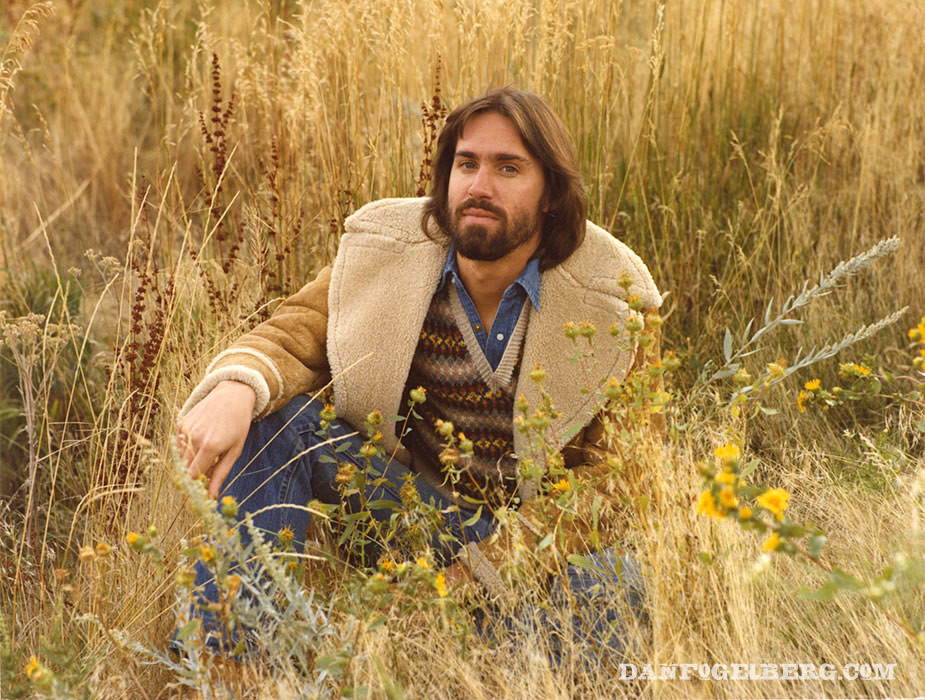
Dan Fogelberg late 1970’s early 1980’s

The song was Longer. The artist Dan Fogelberg, who was born on August 13, 1951.

Although Fogelberg had another hit song, Part of the Plan in 1974, it was the song Longer which was his most commercially successful song. It peaked at number 2 on the Billboard Hot 100 in March 1980 and created a fan base of twenty-something young women.

This was due to a number of factors: first, he was an incredible songwriter. His true gift was as a storyteller who could set his tales to music.  He encapsulated human emotion into concise, memorable lyrics which managed to tug at one’s heartstrings and, often, produced ennui. His voice possessed qualities which carried the listener to another place and time, evoking sentiment and meaning with his rich vocals. And, because so many of his songs were written from personal experience they were believable and relate-able.

In a short time period after Longer – which did top out at number 1 on the Adult Contemporary charts – a series of memorable hits followed.

According the Infallible Wikipedia:

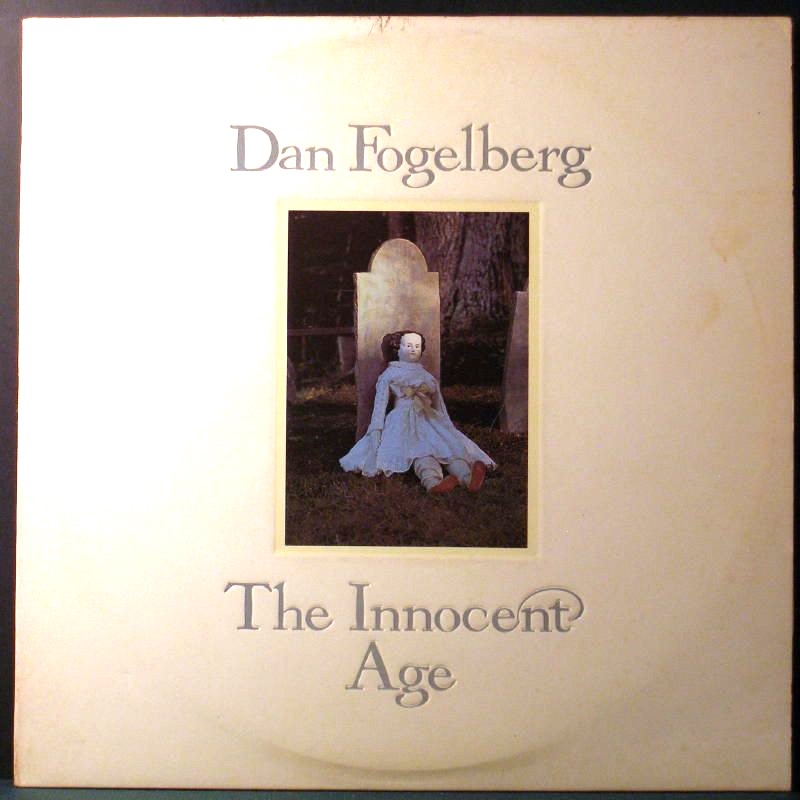
“The Innocent Age, released in October 1981, was Fogelberg’s critical and commercial peak. The double album included four of his biggest hits: “Same Old Lang Syne”, “Hard to Say”, “Leader of the Band”, and “Run for the Roses”. He drew inspiration for The Innocent Age from Thomas Wolfe’s novel Of Time and the River. A 1982 greatest hits album contained two new songs, both of which were released as singles: “Missing You” and “Make Love Stay.” In 1984, he released the album Windows and Walls, containing the singles “The Language of Love” and “Believe in Me.”

While Dan Fogelberg was not a flashy performer, his concerts capitalized on the very qualities I listed above. I was privileged to see him perform live twice. The first time was in 1994 for an acoustic concert at the Paramount in Seattle. It was just Dan and the instruments he played, primarily guitar and piano. He connected with the audience and was passionate about his music but also about his commitment to environmental causes.

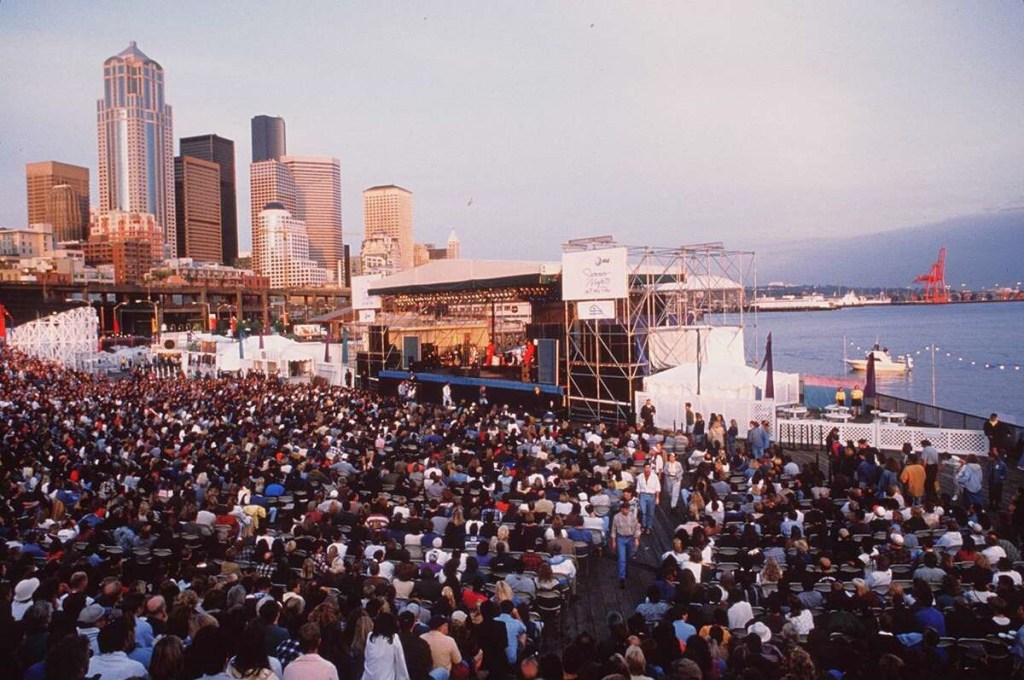
Seattle P-I archive photo of Summer Nights at the Pier in Seattle. Circa 2002

The second time was at a Summer Nights at the Pier concert in the early 2000’s. I’m not entirely sure which year it was as he played there in 2000, 2001, and 2002 from what I’ve been able to research.

What I do know is that the hubby and I experienced a magical Seattle evening on Elliott Bay enjoying Dan Fogelberg as he shared his music.

Sadly, he was diagnosed with advanced prostate cancer in May 2004 and died on December 16, 2007.

But what gifts he shared with the world! He released 16 studio albums and 21 singles. His greatest success was on the Adult Contemporary charts. Of the 21 singles, four went to number one and a total of 12 were top ten hits.

As one of my favorite ‘hitchhikers’ he often kept me company in my frequent treks back and forth across the mountains to care for my parents. There are so many great songs that it’s difficult to pick just one. So I’ll pick two instead.

The first one is easy as it was the song of his I fell in love with and that would be Longer. Despite having friends who suggested that having it sung at our wedding would be too predictable (it charted in March 1980 – I was married in August that year), my sis-in-law did a beautiful rendition and the song will forever have a tender spot in my heart.

The second one is also from his Innocent Age album. It was never released as a single (although it was the B-side of Run For The Roses) and, I would guess, most people have never heard it. It is, however, a gorgeous song which showcases his talent. The song is titled The Sand and the Foam and here’s a YouTube link. No flashy video. Just pure, unadulterated music by my favorite artist.

And a couple of links:

https://en.wikipedia.org/wiki/Dan_Fogelberg

https://www.danfogelberg.com/

Peak DeVore

Who Am I and Where do I come from?

August 6, 2024

A Tuesday Newsday Classic Updated

As someone born into a family with an uncommon last name, I notice whenever I see that name. Several years ago I wrote about my ignorance of Washington State geology when I admitted I did not realize Glacier Peak was this state’s ‘fifth’ volcano. (You can read all about it at https://barbaradevore.com/2018/06/12/glacier-peak-washington/)

DeVore Peak – Glacier Peak Wilderness, North Cascades, Washington State

Fast forward to August 3, 2019… when I receive the following text from the hubby:

“Just saw on King 5 there is a Devore Creek fire near Stehiken. Comes down from Devore Peak.”

What!?

How is it I never knew of this Devore Peak or Creek? Yet, here it has been, hiding out 20 miles northeast of Glacier Peak, undoubtedly since the time the first settlers imparted their names on things.

From the Infallible Wikipedia:

“Devore Peak is an 8,360+ ft (2,550+ m) mountain summit located in the Glacier Peak Wilderness of the North Cascades in Washington State. The mountain is situated in Chelan County, on land managed by Wenatchee National Forest. Its nearest higher peak is Martin Peak, 3.36 mi (5.41 km) to the southwest, and Tupshin Peak lies 1.55 mi (2.49 km) to the north-northeast. Precipitation runoff from the peak drains to nearby Lake Chelan via tributaries of the Stehekin River.”

So it got me thinking… where else are things named Devore (or DeVore as my family spells it) that I do not know about?

Of course I know about DeVore, California although I’ve never been there. The town was a stop on historic Route 66. It has since been incorporated into sprawling, 81 square mile, San Bernardino. Much of the DeVore neighborhood was leveled by a wildfire in 2003, with 904 homes destroyed.

If you travel 1,723 miles to the east you will find a dot-on-the-road community in Indiana also named Devore. Originally named Mill Creek, some interloper relative of mine got a post office located there and probably named it after himself.

Lovely little falls in Devore, Indiana

But back to Devore Peak. Despite my extensive internet research, I cannot find any ancestor or relative after whom the mountain is named although I suppose it could be the Reverend John DeVore. He was the first minister to establish a church north of the Columbia River in Steilacoom. From the Washington State History link site:

Monument in Steilacoom, Washington to Reverend John DeVore and the Methodist Church

“(Lafayette)Balch (Steilacoom’s founder) persuaded Reverend John F. DeVore (1817-1889) and his wife Jane Devore (d. 1860) to relocate to Steilacoom in 1853. DeVore built a two-story Methodist Episcopal church that also served as a school and meeting hall. When the church bell, ordered from the East, arrived with a balance due, residents took up a collection. Afterward the bell became town property, used to signal emergencies and public meetings along with the call to worship.”

When a college student, I drove down there one day from nearby University of Puget Sound (which was founded as a Methodist college) and located the marker for Reverend DeVore. Alas, the Reverend is not a direct ancestor and I was never able to establish any relationship.

But it does make one wonder – unless you have a very common last name – how many others share yours?

I found the following information on https://www.mynamestats.com/Last-Names:

  • DEVORE is ranked as the 3,242nd most popular family name in the United States with an estimated population of 12,319.
  • This name is in the 99th percentile, this means that nearly 0% of all the last names are more popular.
  • There are 3.86 people named DEVORE for every 100,000 Americans.
  • This name is most often used as a last name, 99% of the time.
  • Based on US Census Bureau data the estimated population of people named DEVORE is 13,030, the rank is 3,005 and the proportion per 100k Americans named DEVORE is 4.09.

When you consider that there are some 329 million in the country that’s only .004 percent of all people with the same last name. If I extrapolate that even further and Google both my first and last names, there are 128 other people named Barbara DeVore in the U.S. currently.

Growing up I knew of only one other person with the last name DeVore who was not related to our family. That would be the butcher who worked at the Safeway on 36th and Tieton Drive in Yakima. I was always so very amused when I would go to the store with my mother. If the shopping trip involved a visit to the meat counter inevitably the exchange would go something like this:

Butcher: “Good Afternoon, Mrs. DeVore.”

Mom: “Good Afternoon, Mr. Devoir.”

And then they both would laugh.

Yes, Mr. Devoir the butcher spelled it different. But the two of them obviously enjoyed the inside joke of having the ‘same’ last name.

As I was writing this article, I could not think of a single person I’ve met casually with the last name DeVore. Through my genealogy research and DNA matching, I’ve found quite a number of cousins and have enjoyed getting to know many of them on Facebook.

Occasionally I will have someone ask do you know ‘fill-in-the-blank’ DeVore? Often, I am able to say he/she is my second cousin, once removed. But mostly it doesn’t come up.

I rather like the unique name and the mystery of it all. According to a book about the DeVore families compiled by Betty DeVore Mann in 1992, the history of the name is this:

Chateau de Vore near Remalard, France

“There is a small, stately chateau in Normandy, near Alencon and 3 kilometers from Remalard, named Chateau de Vore. The de Vore family left in the 17th century. Several American Devores have interviewed the 2 remaining de Vores in Paris. They knew very little about their ancestry, because their grandfather was the illegitimate son of a wealthy family and he was sent away when he was very young. He carried his mother’s maiden-name. And so the story goes…”

She also adds “the Huguenot Society tells us that Devore is of Huguenot origin. The Huguenots were the French Protestants who were persecuted and made a mass exodus from France between 1550 and 1780.”

When I first submitted my DNA information it stated that I was 3 percent French. Ancestry, however, frequently updates their estimates based on new DNA submissions to see who matches who and my specific French connection has long since disappeared.

When I looked at my most recent results, it suggested that I was 22 percent from England and northwestern Europe. Curious, I located Chateau de Vore in Remalard, France. It is about 85 miles from the Eiffel tower. When I overlaid my DNA profile to the region included as “northwestern Europe” I discovered that Chateau de Vore was within my DNA range. It is not outside the realm of possibility that the family lore just might be right.

For those interested, I covered the topic of DNA for ancestor searches here: https://barbaradevore.com/2022/07/26/ancestor-hunting-dna/

While the DeVore family history will likely remain hidden in the mists of time, the pursuit of it has dogged me since I became old enough to ask “Who am I? And what am I doing here?”

Who knows, maybe there’s an historical novel in there, the intrigue of an illegitimate child who grows to a man. It is the story of a man who must disavow his country for his religion, never able to claim his true heritage, who must establish a new life in a distant land.

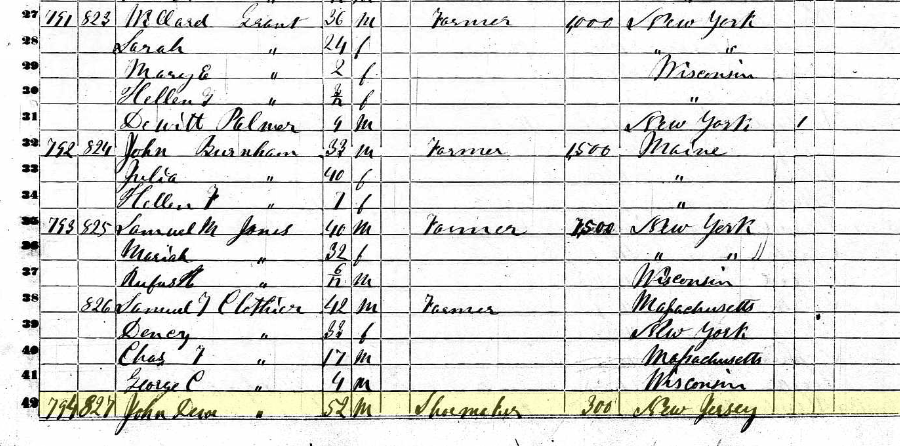
Perhaps not my family’s story… after all I do know that my great-great-great grandfather John DeVore was a shoemaker in Wisconsin in 1850. Not nearly as romantic as a swashbuckling Frenchman, right?

As always, links:

https://en.wikipedia.org/wiki/Devore_Peak

https://en.wikipedia.org/wiki/Devore,_California

https://en.wikipedia.org/wiki/Devore,_Indiana

Close To You

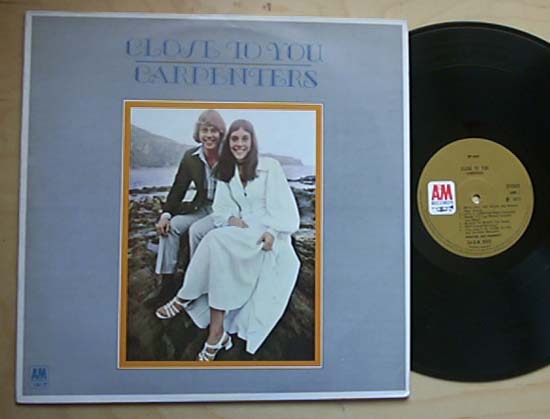
The first hit for the 1970’s duo “The Carpenters”

July 30, 2024

A Tuesday Newsday Classic Updated

The Carpenters 1970 album “Close To You”

In the spring of 1970, there were approximately 17 million Americans between the ages of 12 and 16 and, of those, some 8.5 million were female. It was the height of the teenage Baby Boomer era when AM radio was king and the only place to hear the hits of the day.  It was also the dawn of a musical period dominated by a form of music known as soft rock.

According to the Infallible Wikipedia:

“The Hot 100 and Easy Listening charts became more similar again toward the end of the 1960s and into the early and mid-1970s, when the texture of much of the music played on Top 40 radio once more began to soften. The adult contemporary format began evolving into the sound that later defined it, with rock-oriented acts as ChicagoThe Eagles and Elton John becoming associated with the format. The Carpenters‘ hit version of ‘(They Long to Be) Close to You’ was released in the summer of 1970, followed by Bread‘s ‘Make It with You’, both early examples of a softer sound that was coming to dominate the charts.”

It was during the last week of July 1970 when Close To You topped the Billboard Hot 100 and held the number one position for four weeks. It marked the ascension of The Carpenters as one of the defining musical acts of the early 1970’s.

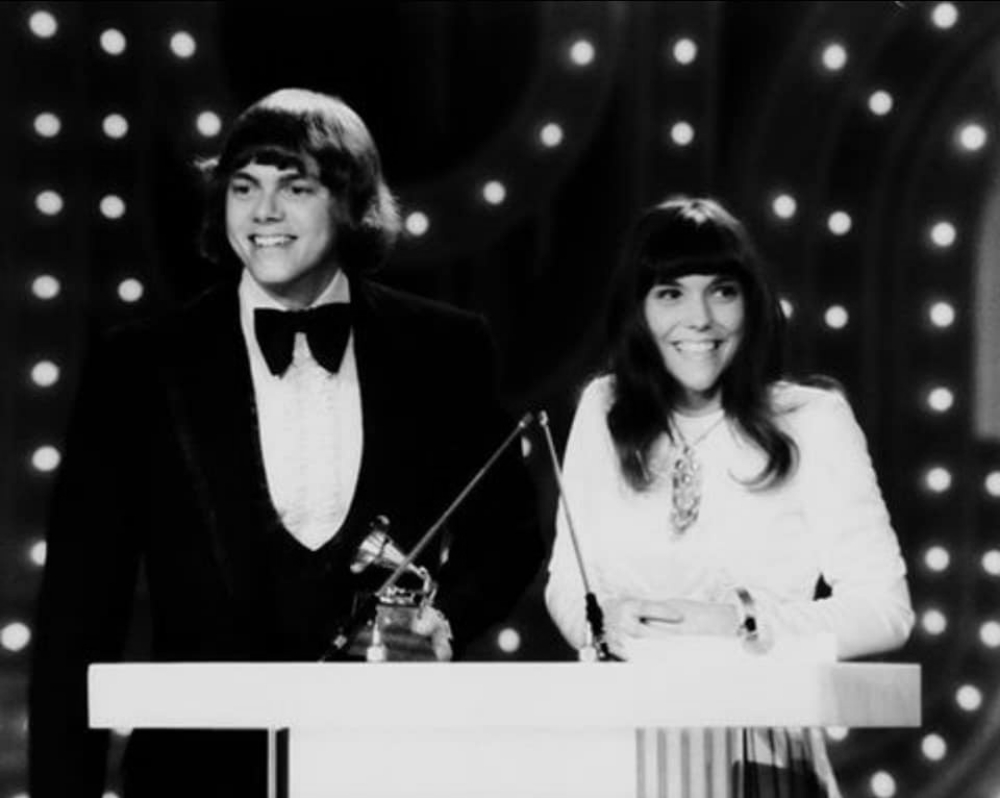
Close to You” was nominated for Record of the Year and Album of the Year at the 1971 Grammy awards. They won for Best New Artist and also for Best Contemporary Vocal Performance by a Duo, Group or Chorus.

Despite the group being derided as saccharin at the time, their musical success is undisputed. Much has been written about Karen Carpenter’s voice, her three-octave range, and soulful interpretations. The Carpenters would not, however, have been the Carpenters without older brother Richard who was the genius behind their ‘sound.’

Love ‘em or hate ‘em, The Carpenters’ style was original and Karen’s talent immense, the combination of which propelled them to the top of the pop charts. Also from the Infallible Wikipedia:

“They produced a distinct soft musical style, combining Karen’s contralto vocals with Richard’s arranging and composition skills. During their 14-year career, the Carpenters recorded ten albums, along with numerous singles and several television specials.”

From 1970 through 1973 they achieved their greatest success, appealing to a demographic who purchased their records and made The Carpenters a household name: females aged 13 to 18.

“Their career together ended in 1983 when Karen died from heart failure brought on by complications of anorexia. Extensive news coverage surrounding these circumstances increased public awareness of eating disorders. Though the Carpenters were criticized for their clean-cut and wholesome conservative image in the 1970s, their music has since been re-evaluated, attracting critical acclaim and continued commercial success.”

When I first published this post in 2019 I reserved the right to blog more about the Carpenters at a later date. Which I have on three more occasions (so far): https://barbaradevore.com/2020/02/04/goodbye-to-love/, https://barbaradevore.com/2021/08/31/wedding-woes/, https://barbaradevore.com/2023/12/05/top-of-the-world/.

No doubt they were the most influential musical group for me during my teen years. But this article is only to focus on their launch and the song Close To You. More than any other song, this one literally marks the moment I became a teenager. The start of its four weeks run on the charts coincided with my 13th birthday.

Back in the 1970’s there was really only one way to ‘blog’ – by keeping a diary. Although I couldn’t put my hands on my 1970 diary, I found a reference to this song at the end of my 1971 diary, noting when it was played on the radio.

I was so obsessed with the song that I would record it from the radio. I actually can still visualize my 13-year-old self sitting motionless and silent on my bed, cassette tape recorder on the bedside table, holding the microphone next to the radio’s speaker, while Close To You played and I captured it on tape. Kids today do NOT know how easy they have it!

Eventually I purchased the single and then the album of the same title. A much easier way to listen to it although I had to use my parents’ stereo system and my mother made me listen to my music via headphones.

My obsession even prompted me to think it was a good idea to do a lip-sync version for a competition where I needed a ‘talent.’ (Singing was out of the question and I really had no other performance talents, BTW) Taken from the pages of my 1971 diary on December 31st, I dutifully reported that “I am going to pantomime Close to You like I’m a chorus girl or something. I’m going to wear Sue’s blue velvet formal and silver shoes. If she’ll let me.”

Yes, my older sister did let me wear the dress and the shoes. Yes, it was a total embarrassment. It may have contributed to why I avoid karaoke and limit my singing to the shower and the car although my dance moves were okay.

What a blessing that Karen Carpenter – who suffered from stage fright – was able to overcome it enough to share her amazing voice with the world. But I’m not so sure the price she paid was worth it.

And a couple of links:

https://en.wikipedia.org/wiki/(They_Long_to_Be)_Close_to_You

https://en.wikipedia.org/wiki/Soft_rock

Tom Hanks

He made a Splash! and his career went Big!

July 9, 2024

A Tuesday Newsday Classic updated

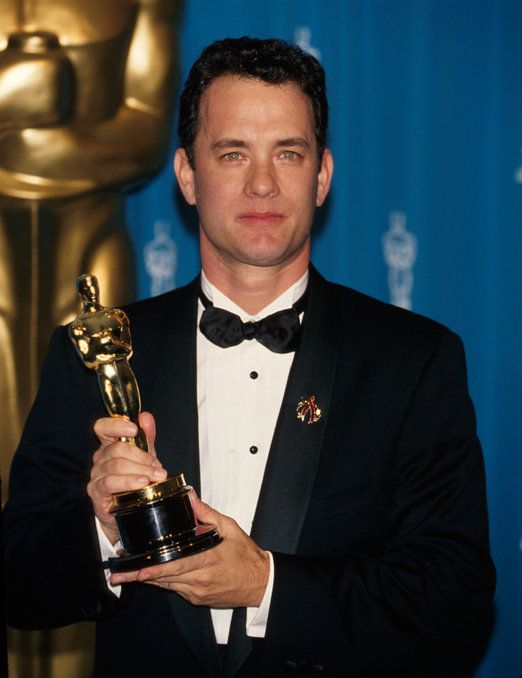
Tom Hanks at the Oscars 1994 for his role in “Philadelphia.” He would win again the next year for “Forrest Gump.”

With two academy awards and five total Best Actor nominations to his name, this performer is considered one of – if not the – best of his generation. Yet, while in school, he was a self-identified geek, extremely shy, unpopular, and average looking. He, however, has more than made up for his rocky start. Happy 68th birthday to Tom Hanks.

Hanks career began like many other actors: performing parts in plays in high school and in college. As connections were in the theater world, those led to television auditions. He landed a role alongside Peter Scolari in the 1981 sitcom Bosom Buddies, a show about two men who disguise themselves as women to secure inexpensive housing. Hanks TV career did not last long. According to the Infallible Wikipedia:

“After landing the role, Hanks moved to Los Angeles. Bosom Buddies ran for two seasons, and, although the ratings were never strong, television critics gave the program high marks. ‘The first day I saw him on the set,’ co-producer Ian Praiser told Rolling Stone, ‘I thought -Too bad he won’t be in television for long- I knew he’d be a movie star in two years.’ However, although Praiser knew it, he was not able to convince Hanks. ‘The television show had come out of nowhere,’ Hanks’ best friend Tom Lizzio told Rolling Stone.”

Hanks role on Bosom Buddies earned him a guest role on the immensely popular TV show Happy Days and drew the attention of up-and-coming director, Ron Howard. Howard encouraged Hank to audition for the role of the wisecracking brother in the 1984 film Splash. Instead, Hanks won the romantic lead role of Allen Bauer, a young man who falls in love with the mermaid (Daryl Hannah).

More leading roles followed. He was nominated for his first Academy Award for his portrayal of a 12-year-old boy who is transformed into an adult in the comedy Big.  The true date of his stardom can be set as 1993 with the blockbuster film Sleepless in Seattle, followed immediately by his performance as a man dying of AIDS in the dramatic movie Philadelphia.

His performance in Philadelphia garnered a second Academy Award nomination and his first win. In 1995, Hanks became only the second actor in history to be awarded the Best Performance by an Actor in a lead role in consecutive years. Forrest Gump also earned the Academy Award for Best Picture, was the highest grossing US film of 1994, and second behind Disney’s The Lion King in the entire world.

“My name is Woody, and this is my spot.” The animated character even resembles Tom Hanks.

In subsequent years Hanks has been involved with innumerable projects both in front of and behind the camera as director and as a voice actor. One of his more memorable and enduring roles is that of Sheriff Woody in Toy Story and its sequels.

His work and legacy continue to the present. According to the Infallible Wikipedia:

“Hanks is ranked as the fourth highest all-time box office star in North America, with a total gross of over $4.5 billion at the North American box office, an average of $100.8 million per film. Worldwide, his films have grossed over $9.0 billion. (snip) As of January 2019, Hanks is currently voted #1 on Ranker’s ‘The Best Actors in Film History.’”

I think I first became aware of Tom Hanks in his role as Josh Baskin in Big. Although I had seen the movie Splash prior to viewing Big, I would not have been able to identify Hanks as the lead! But in Big, his every-man persona really shone through. By the time Sleepless in Seattle hit the big screen I, like so many others, was a fan.

Be careful what you wish for or you might end up just like Josh Baskin – a kid who wakes up and finds himself occupying a man’s body. Hanks embraced the role perfectly.

I find it difficult to identify just one of his performances as my favorite. But I do have a list and at the top of it is the romantic comedy Sleepless in Seattle (is anyone surprised?).  I covered it in a Tuesday Newsday blog several years ago: https://barbaradevore.com/2018/05/01/sleepless-in-seattle/)

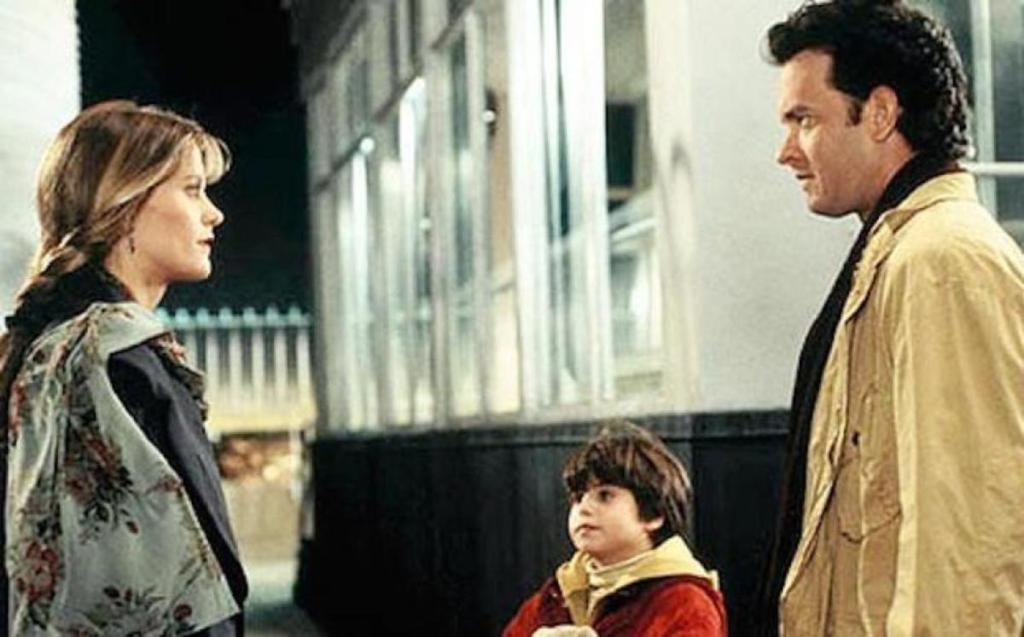
Hanks with “Sleepless in Seattle” co-stars Meg Ryan and Ross Malinger in the scene at the top of the Empire State Building.

This is followed, in order, by BigToy Story, The DaVinci Code, and You’ve Got Mail

I share with you with this quote from Hanks and his philosophy on movies:

 “A story has the opportunity to enlighten us, because as we connect the extraordinary moments on film with the ordinary moments of our lives, we ask ourselves, ‘What am I going to do the next time I’m scared? What would it be like to say goodbye to my family for the last time?’”

As a fiction writer, this is the essence of the process one goes through. I must say, however, that it often involves hours and hours of introspection before the written word springs forth.

So cheers to Tom Hanks and all the fantastic movies he’s created both in front and behind the camera.

You can read all about Hanks long and continuing career here:

https://en.wikipedia.org/wiki/Tom_Hanks

Cherries!

One of summer’s best fruits

July 2, 2024

A Tuesday Newsday Classic Updated

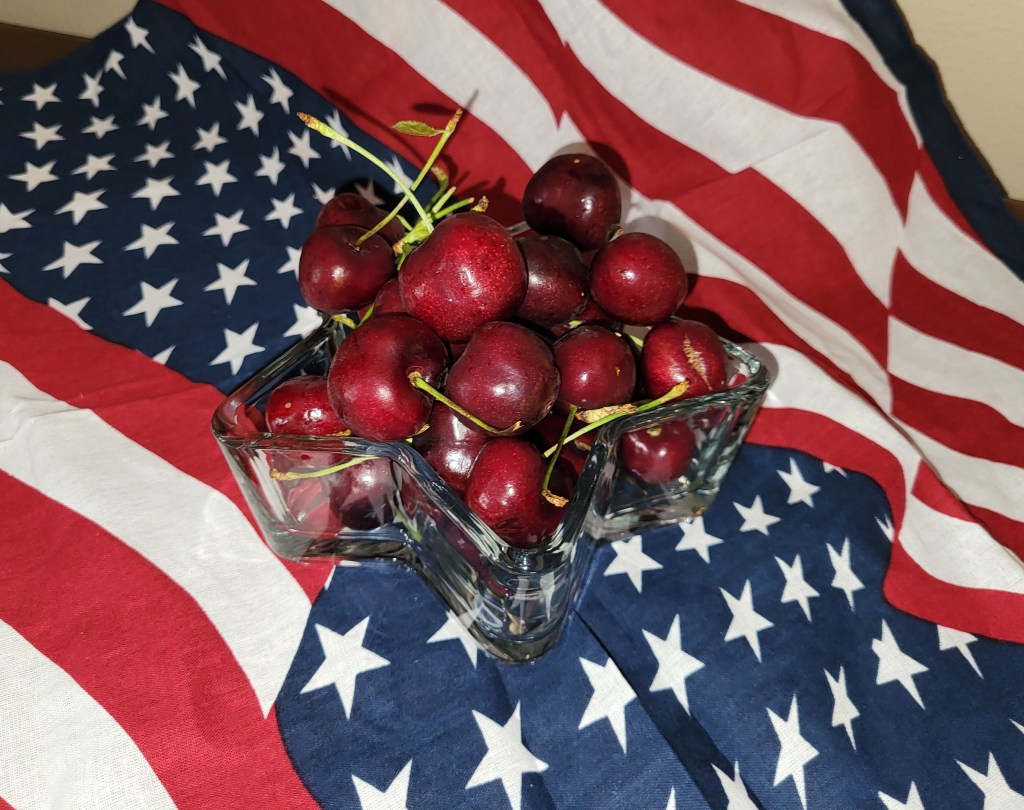
A few cherries purchased, not picked, at Fred Meyer.

The item which caught my attention for this week’s blog is the amusing ‘contest’ of cherry pit spitting. Yes, it’s a thing.

Held annually in Eau Claire, Michigan since 1974, the record ‘spit’ of a cherry pit is 93 ft 6.5 inches. The competition has been dominated by one family with the patriarch, Rick Krause, holding the record for longest spit (over 72 feet) until 1993. Since then, his son, Brian ‘Pellet Gun’ Krause has won 10 times with his record breaking discharge occurring the first week of July in 2003. In recent years Brian’s sons have also competed.

Others have stepped up to put their spitting skills to the test, but the Krause family continues to dominate.

Cherry pit spitter-champion Brian ‘Pellet Gun’ Krause

It is appropriate, therefore, as we celebrate all things red, white, and blue this week, to pay tribute to one of my favorite red things: the cherry.

Every July I can hardly wait for the harvest of this fruit to begin in the Yakima Valley. For there is truly nothing better than picking a cluster of the ruby orbs and (after they’re washed off) biting into the soft, juicy flesh. As a fan of the sweet varieties such as Bing and Sweetheart, an explosion of flavor reminds me how much I’ve missed them since the previous year.

The cherry has a long history of cultivation with evidence that the fruit has been grown since prehistoric times. From the Infallible Wikipedia:

“The English word cherry derives from Old Northern French or Norman cherise from the Latin cerasum, referring to an ancient Greek region, Kerasous (Κερασοῦς) near Giresun, Turkey, from which cherries were first thought to be exported to Europe. The indigenous range of the sweet cherry extends through most of Europe, western Asia, and parts of northern Africa, and the fruit has been consumed throughout its range since prehistoric times. A cultivated cherry is recorded as having been brought to Rome by Lucius Licinius Lucullus from northeastern Anatolia, also known as the Pontus region, in 72 BC.

Cherries were introduced into England at Teynham, near Sittingbourne in Kent, by order of Henry VIII, who had tasted them in Flanders.

Cherries arrived in North America early in the settlement of Brooklyn, New York (then called ‘New Netherland’) when the region was under Dutch sovereignty.”

In the United States, the first record of cherry trees being planted was 1639.

Sweet cherries are grown most successfully in Washington, Oregon, California, Wisconsin, and Michigan (hence the location of the cherry pit spitting contest). Most sour cherry varieties are grown in Michigan, Utah, New York and Washington.

To successfully grow cherries, the climate must have cold winters although varieties have been developed recently which have allowed California to compete in cherry production.

My relationship with the cherry has not always been an enjoyable one. In the 1970’s, my grandfather divested his properties to his two daughters and my father took over managing a cherry orchard. The orchard was repayment to my grandfather – a banker – from a loan gone bad some years earlier.

My Dad had never been a farmer but during the summer – when not a Junior High School history teacher – he was a hands on orchardist. It was natural, then, that my first summer ‘job’ as a teenager was picking cherries.

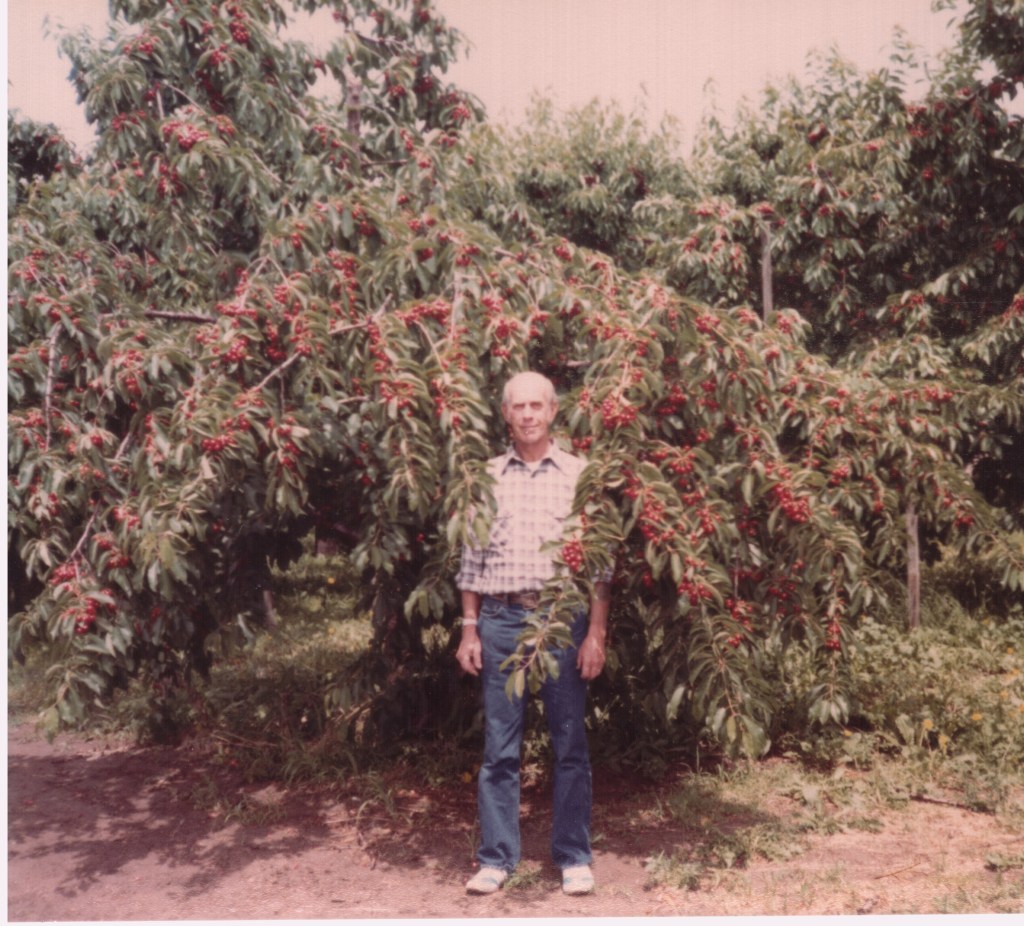
My Dad – schoolteacher turned orchardist – caught by a loaded cherry tree in Selah, Washington, circa 1980.

By early July in Yakima, summer is in full force and the weather usually turns quite warm. It is common for there to be a spate of days when the thermometer inches into the upper 90’s and low 100’s.  It’s then that the cherries ripen and harvest begins. For the pickers, work commences shortly after daybreak while the orchard is still cool.

One early July morning, with my then boyfriend and his younger sister, I arrived – along with all the migrant workers – to begin my job. Each person was assigned a tree, given a ladder and a bucket. Now when I say bucket, we are not talking about a pail like those favored by children at the beach. Nope. The metal buckets I knew held a lot of cherries, some four and half gallons worth. It took FOREVER to fill one up.

Different fruits require being harvested in certain ways. Picking cherries, it turns out, is quite the delicate operation. You must grasp the fruit at the very top of the stem where it is attached to the branch and gently twist so that the stem is removed from the branch without pulling the ‘spur’ off the tree. Then you place – never drop – the fruit into the bucket. Lather, rinse, repeat. My rough estimates are thus: a gallon is about 80 cherries. Multiply 4.5 gallons times 80 which is about 360 cherries for one bucket. For those who have never picked said cherries, it takes a long time to pick 360 cherries. Then there’s the ‘tree’. While about half of the first bucket can be picked while standing under it eventually you have to climb up a ladder – up to heights between 12 to 15 feet – while balancing your bucket of heavy fruit and reaching for the cherries.

A requirement to pick cherries – a tall ladder.

Now what, you may ask, is ‘the spur’?” It’s a flexible knobby growth at the end of a branch or stem and if it’s pulled off, that spot will not produce cherries the next year. My father the orchardist was rather persnickety about those spurs being preserved, so I was careful. And slow.

By noon time – now having been there working since 5 a.m. – the heat would have arrived and I would have picked… drum roll please – seven whole buckets of fruit. That’s 2,420 cherries each day of harvest… and be paid seven whole dollars. So one dollar for a bucket of cherries. Some of the seasonal migrant workers could pick up to 200 buckets a day. I’ve never figured out how.

Yes, the job truly sucked. Although seven bucks went farther in nineteen seventy something than it does today. But it wasn’t a lot of money even then. I was lucky if I could pick for six or seven days and earn in the vicinity of $50.

I will say that a couple of summers as a cherry picker made me appreciate the delicious fruit even more. In the early 1990’s, my sister and her husband took over the reigns of the orchard which meant that each year there were delicious cherries to be had. More than once she brought a bag of the freshly picked delights to me.

A few days ago I broke down and purchased a bag at my local Freddies as I was not willing to wait until a visit to Yakima in a couple of weeks. I jealously guard my cherries, making the bounty last until late July or even early August. As luck would have it they are not the hubby’s favorite fruit.

By the time August rolls around I will have satisfied my craving for the fleshy fruit for another year. Maybe.

But the best part? I didn’t have to pick them!

A couple of links for you:

https://en.wikipedia.org/wiki/Cherry

http://memory.loc.gov/diglib/legacies/loc.afc.afc-legacies.200003151/default.html

American Idol

In 2007 It took over our house…

June 11, 2024

A Tuesday Newsday Classic Updated

“This Is… American Idol!” These four words burst into our collective consciousness on June 11, 2002 and launched one of the most successful reality TV franchises in American History.

The American Idol stage

The show was an instant hit, showcasing the talent of people looking for their big break. Week after week fans tuned in to follow the stories of the lucky few selected to compete in the contest. The premise was, according to the Infallible Wikipedia, this:

The original American Idol judges Randy Jackson, Paula Abdul and Simon Cowell

“Each season premieres with the audition round, taking place in different cities. The audition episodes typically feature a mix of potential finalists, interesting characters and woefully inadequate contestants. Each successful contestant receives a golden ticket to proceed on to the next round in Hollywood. Based on their performances during the Hollywood round (Las Vegas round from the tenth through twelfth seasons), 24 to 36 contestants are selected by the judges to participate in the semifinals. From the semifinals onward the contestants perform their songs live, with the judges making their critiques after each performance. The contestants are voted for by the viewing public, and the outcome of the public votes is then revealed during a results segment. The results segment feature group performances by the contestants as well as guest performers. The Top-three results also feature homecoming events for the Top 3 finalists. The season reaches its climax in a two-hour results finale show, where the winner of the season is revealed.”

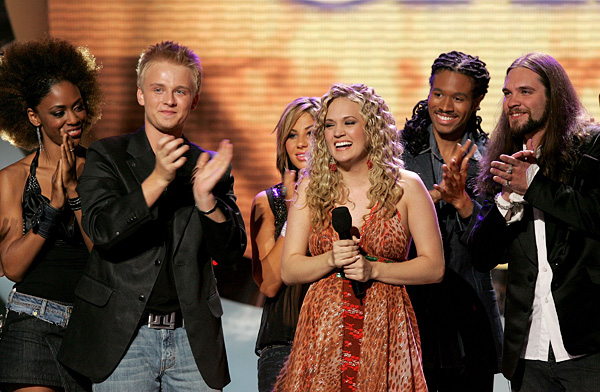
Carrie Underwood as seen during the 2005 American Idol competition

Along with the judges, viewers at home became music critics, repeating such phrases as “that was pitchy,” and “You’re going to Hollywood.” The judge everyone loved to hate, however, was Simon Cowell, who un-apologetically skewered the singing of contestants with such pithy remarks like “It was all a little bit like angry girl in the bedroom screaming on the guitar.”

I would argue that the high-water mark for the show was in 2005 with the crowning of Carrie Underwood as the winner. She has been, by far, the most successful AI alum and her win and subsequent stardom created much excitement and interest in the show. That excitement coalesced into the 2007 season with it being the number one show on TV that year. Also from the Infallible Wikipedia:

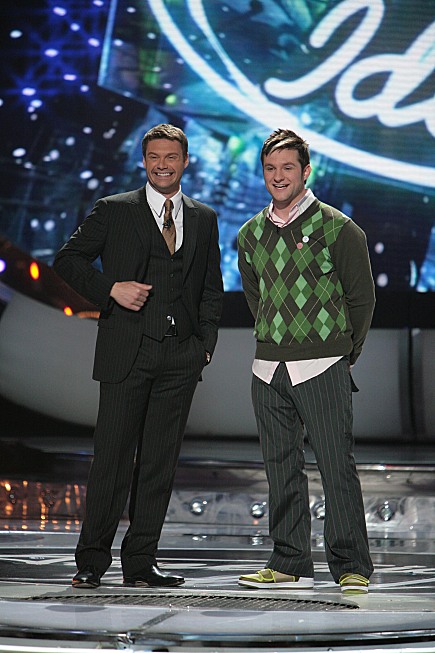
AMERICAN IDOL:  Blake Lewis and Ryan Seacrest at the Kodak Theatre in Hollywood, CA, on Tuesday, May 22 on FOX.1508

“American Idol ended the season as the top show of the 2006–2007 TV season. Its Wednesday episodes ranked first with an average of 30.02 million viewers, followed by the Tuesday episodes which averaged 29.54 million. The premiere episode became the series’ highest rated debut episode, viewed by 37.44 million viewers and receiving a 15.8/36 Nielsen rating in the Adult 18-49 demographic.”

In my household AI fever kicked in to high gear when my teenage daughter became enthralled with it and AI took over our lives. Just before 8 o’clock each evening I’d hear the thunder of her footsteps coming down the stairs and soon we were wrapped up in the drama.

That year there was extra interest as a contestant from Bothell – six miles north of where we lived – was making a name for himself on the show.

Blake Lewis was, at the time, a local Seattle musician whose beat-boxing ability provided enough novelty that he earned a golden ticket to Hollywood. At first, it seemed, the judges viewed him as a one trick pony who would not survive the first round of performances. Week after week, however, Lewis proved that he could sing. He made each song his own with original arrangements, and defied the odds, advancing in each round.

Blake Lewis at the Bothell hometown visit in May 2007

For my 14-year-old daughter and a couple of her friends, Lewis became almost an obsession like the Beatles were in the 1960’s, or David Cassiday in the 1970’s, or the Backstreet Boys in the 1990’s (It’s what 14-year-old girls are known to do!)

Of course, Mom was pulled in to that universe also, as we then had to vote for him every week. And I’m not talking about dialing the phone one time and being done. Oh no. On American Idol they encouraged the viewers to vote many, many times. Hundreds of times. Once the performances were over we’d start dialing and continue until they closed them down.

And Lewis became the last man, literally, standing.

When the contest is down to the final three it’s time for the ‘hometown’ visit. Or, as the cynic in me believes, just another way to market the AI franchise to the public.

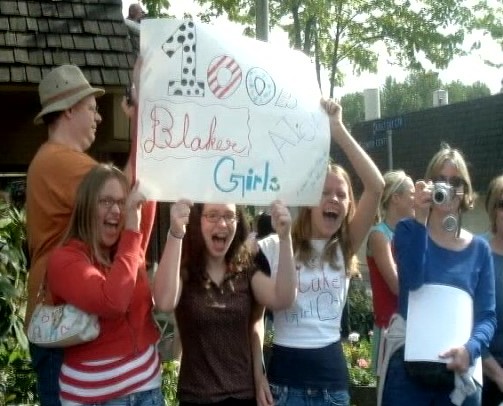
The Blaker Girls trio the afternoon of Lewis’ Hometown visit in Bothell

In the week before Lewis was to arrive in Bothell, my daughter and her friends “L” and “D” spent a couple of afternoons making t-shirts and posters and plotting the big event. Lewis’ female fans called themselves “Blaker Girls.”

During that week I became the ‘cool’ mom. I bought the many supplies and, on a warm, sunny afternoon on May 11, drove the trio of girls to Bothell so they could see ‘their’ American Idol. I figured there would be a crowd so we got there several hours in advance, secured a parking spot and joined the throng of over 7000.

The girls were not disappointed. The fans were amped up for the parade and, after a long wait, there he was… riding on the back of a Mustang convertible, smiling and waving to the crowd.

After the parade, we moved with the hoards down to the park where he was to perform live and receive his hometown hero’s welcome.

From the Seattle Time’s article:

The Bothell crowd of more than 7,000 was growing restless. Where was its American Idol?

Some teens chanted “We want Blake!” Others hoisted “We Ache for Blake” or “Bothell Boy, You Rock!” signs. And then, off in the distance, the twirling lights of police cars, the thundering beats of the Inglemoor Marching Band and Blake Lewis, all smiles and waves and two-fingered kisses, sailing down Main Street in a Mustang convertible with his beaming parents.

It was a highlight in a full day of events for Lewis that started at 8 a.m. at KCPQ/Fox studios for a television performance on the morning newscast. There was a lunchtime “mini-concert” at Seattle’s Westlake Center, a parade through downtown Bothell and another performance at the Park at Bothell Landing in the afternoon.”

Not sure who took this photo but my nephew found it… Mom with the always present camera.

Lewis ended up finishing second the next week, much to our disappointment.

For the next couple of years my daughter faithfully watched American Idol and even went to the American Idol tour with a friend in 2009. For me there has never been a more fun season than that one. I no longer watch the show, but for a few months in the spring of 2007, it was a magic time.

Update 2024: When I first posted this article in 2019, I thought that the photos and video from that day was lost. Then, during the 2020 COVID lockdown I sorted, organized, and sorted again. Lo and behold, video evidence of the visit to Blake’s Hometown parade exists!

https://youtu.be/w3aEW5qnBp8

Many thanks to my nephew Chris, who put together the photos I took that day as well as found at least one I did not take. Not sure who did, but the author appears at the 2:19 mark with camera in hand next to the screaming teens. Enjoy!

Automate This!

The joys of automation in the ladies room

June 4, 2024

A Tuesday Newsday Classic updated

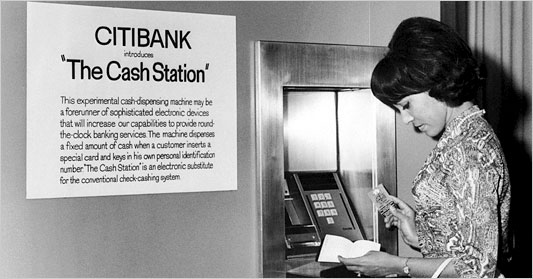
On June 4, 1973, the US patent for the ATM machine was issued to Don Wetzel, Tom Barnes, and George Chastain.

As with many such inventions, it did not spring spontaneously into use as there were others who had conceived of the idea for at least three decades prior. Cash machines were used in both Japan and Great Britain for nearly a decade before they arrived in the United States.

For the purposes of this article, however, we will go with 1973 as the year this form of automation entered our American lives. From the Infallible Wikipedia:

“After looking firsthand at the experiences in Europe, in 1968 the ATM was pioneered in the U.S. by Donald Wetzel, who was a department head at a company called Docutel. Docutel was a subsidiary of Recognition Equipment Inc of Dallas, Texas, which was producing optical scanning equipment and had instructed Docutel to explore automated baggage handling and automated gasoline pumps.

On September 2, 1969, Chemical Bank installed the first ATM in the U.S. at its branch in Rockville Centre, New York. The first ATMs were designed to dispense a fixed amount of cash when a user inserted a specially coded card.  (snip) In 1995, the Smithsonian National Museum of American History recognised Docutel and Wetzel as the inventors of the networked ATM.

By 1974, Docutel had acquired 70 percent of the U.S. market; but as a result of the early 1970s worldwide recession and its reliance on a single product line, Docutel lost its independence and was forced to merge with the U.S. subsidiary of Olivetti.”

Automation, of course, is not limited to the dispensing of money. It’s everywhere in our world. And nowhere is it more frustrating and confusing than in public restrooms.

When one enters such a place it becomes a midway house of horrors as one never knows what is or is not automated. Like the toilet.

auto flush toilet.jpg
Striking fear into the hearts of women in airports everywhere… the self-flushing toilet

Upon entry into the stall I dread seeing the little black or chrome box with the red light attached to the back of the throne. I don’t know if it’s just me but it seems as if the slightest movement will trigger the flushing mechanism and the toilet turns into an unruly bidet, spraying the unsuspecting (me!) customer with a premature shower of love. Sometimes this occurs multiple times sending this user screaming from the stall.

Now I also don’t know about others but I always (ALWAYS!) wash my hands before I leave the restroom. Having survived the automatic flushing toilet, the next gauntlet is the sink. I am never sure if swiping my hands under the faucet will trigger a flow of water or if I must push on the neck of the faucet or, heaven forbid, use an old-fashioned handle. An automatic faucet is a mystery. What is the exact placement of one’s hands to produce the elusive water? Too high or too low and you get nothing, instead looking like a magician swiping your digits back and forth in an attempt to conjure up the desired fluid.

Need soap? The device on the nearby wall never gives any clue as to how its operated. I stare at it and try to guess. My first attempt is yet another magical wave of my hand. If that does not work then I start pressing on what looks like levers and buttons. The mound of gooey gel on the counter below the machine provides evidence that I am not the first to guess incorrectly how to use it.

Now, with soap in hand and an idea of how to get water to flow, I wash and rinse my hands then turn to the scariest step of all: drying.

modern day stocks
With the power of a jumbo jet your hands are certain to be dry with this torture device.

In some restrooms you have a choice between paper towels and, nowadays, the device where you put your hands down into what looks like modern day stocks. The machine springs to life and blasts out a stream of air produced from the engines of a Boeing 747. Despite my reluctance I slip my hands into the device. I watch in fascinated horror as the skin on them wrinkles and moves like the upper arms on Miss Luhman, an infamous teacher at Nob Hill Elementary in Yakima, who – when she was conducting the entire 4th grade each year for the spring music festival – held every child’s rapt attention, all of us mesmerized by the rhythmic swing of her flapping arms as if she was about to take flight.

Or, heaven forbid, it’s an automatic towel dispenser. Usually there are two such devices, side by side, in the restroom which provides the opportunity to do the paper towel dispenser dance (TM). To operate this device I stand a foot away from the silver boxes, extend my arms straight out, and then move my hands simultaneously in a frenetic motion as though doing that 1960’s dance “The Swim.”

At last – if I’m lucky – two inches of blessed brown paper appears. I tear it off, dry three fingers, then start the dance once again. After three or four rounds of wild gyrations, my hands are dry, I’ve gotten the day’s workout, and I escape still slightly wet in a few places, but mostly unscathed.

Ain’t automation grand?

https://en.wikipedia.org/wiki/Automated_teller_machine

Actual footage of me attempting to get a paper towel from an automatic dispenser. I’m the third girl behind Bobby on the left.

The Artichoke

A culinary delight consumed for centuries

May 28, 2024

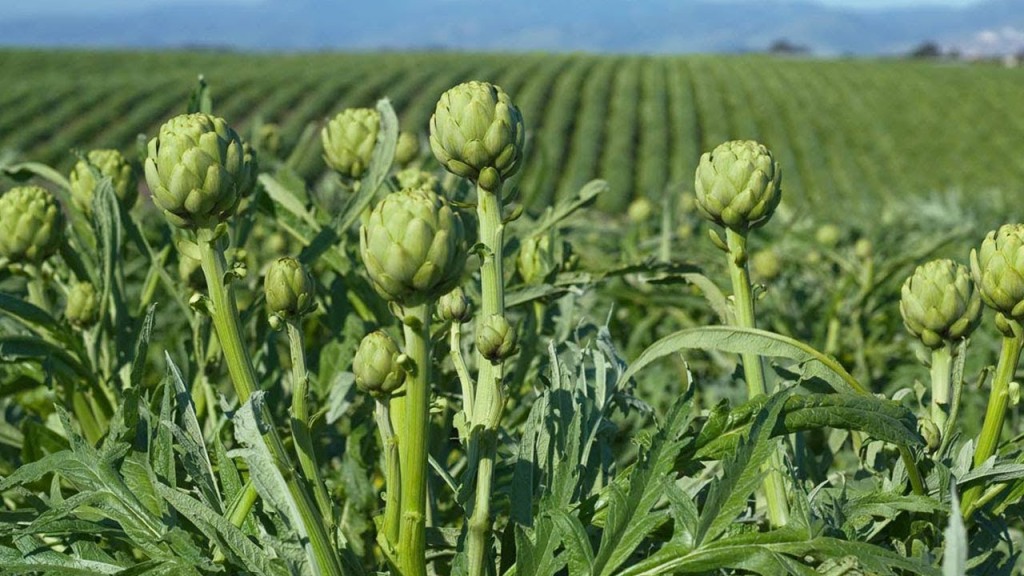
When I think about improbable foods, the artichoke is at the top of my list. Afterall, who would have looked at this thistle and thought, “I wonder if I can eat that without poking holes in my mouth?”

A field of artichokes

Yet, artichokes have been grown and cultivated since at least the eighth century BC.

The Infallible Wikipedia helpfully tells us:

“The (globe) artichoke is a domesticated variety of the wild cardoon (Cynara cardunculus), which is native to the Mediterranean area. There was debate over whether the artichoke was a food among the ancient Greeks and Romans, or whether that cultivar was developed later, with Classical sources referring instead to the wild cardoon. The cardoon is mentioned as a garden plant in the eighth century BCE by Homer and Hesiod.”

Based on further information in the Infallible Wikipedia, I came to the conclusion that the plant was, for centuries, considered a luxury food for royalty and the wealthy. It also developed a reputation as having aphrodisiac qualities.

It was the Dutch who brought them to England where they were successfully grown in Henry VIII’s palace garden in 1530. In the 19th century, immigrants transported the plant to the new world: Louisiana by the French and California by the Spanish.

Despite Henry VIII’s garden, until recently, the artichoke has only been successfully grown in warmer climates. If you look at a latitude map of the world which shows the areas where they cultivated, most are found in about a 350 mile wide band between the 30th and 37th parallels both north and south. Heartier varieties of the plant are being developed with promise of being able to be grown in northern climates.

Also from the Infallible Wikipedia:

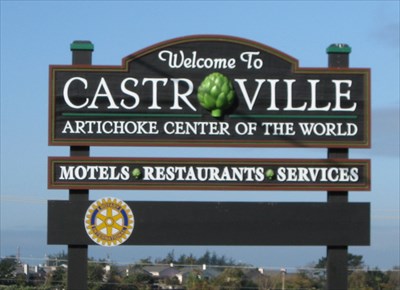
“Cultivation of the globe artichoke is concentrated in the Americas and the countries bordering the Mediterranean basin. The main European producers are Italy, Spain, and France and the main American producers are Argentina, Peru and the United States. In the United States, California provides nearly 100% of the U.S. crop, with about 80% of that being grown in Monterey County; there, Castroville proclaims itself to be “The Artichoke Center of the World” and holds the annual Castroville Artichoke Festival.”

The 2024 poster for the Castroville Artichoke Festival on June 8-9

I’m making a mental note to take in the Artichoke Festival which, apparently, is held the second weekend in June each year. This makes sense since artichoke ‘season’ is from March until June.

My first memory of artichokes is from when I was about six years old. One night when the family (Two parents and four kids ages 6, 8, 10, 15) sat down to dinner and in bowls at my parents’ places – and perhaps my oldest brother’s – were these green vegetable things with prickly ends and tough looking leaves.

Of course it begged the question “What are those?”

“Artichokes,” my mother replied, “but I don’t think you’d like them.”

Now anyone who understands reverse psychology would know that IF she wanted to save money she would have made artichokes for all and forced us to eat them. It likely would have been a one and done. But no. Instead the verbal gauntlet was tossed on the table like an, er, discarded artichoke leaf, and we begged to try the vegetable.

Every one of us liked them. A lot. That might have had something to do with the fact that we were allowed to dip the soft leaf ends in mayonnaise and smother the heart in whatever was left.

Over the years artichokes were a springtime treat for the family. And they still are. I continue to prepare them like my mom did, steamed for up to 40 minutes but instead of mayo, we dip the soft ends and the heart in melted butter.

I also love, love, love, pretty much anything that includes artichokes as an ingredient. Artichokes on pizza, artichokes in dips, or even artichokes preserved in olive oil eaten plain are all favorites.

There was, however, one thing artichoke which wasn’t so great. Back in the 1980’s the hubby and I hosted, for several years, an April Fool’s Day party. We invited family and friends and one main feature of the party was the opportunity for attendees to tell their best joke in hopes of winning the prize.

At the end of the joke telling the judges (that would be me and hubby) would decide – usually based on the groans and reactions from the crowd – as to who had told the ‘best’ joke and who told the ‘worst’ joke. But there was a twist. Since it was April Fool’s Day, the winner of the ‘best’ joke got the worst prize and vice versa.

The competition (it was either 1985 or 1986) was particularly hot this one year and Tom, the younger brother of Paul – who I worked with – came loaded with jokes. Tom told bad joke after bad joke and pretty much earned a lifetime achievement award for his repertoire and the judges decided he was the ‘best’ that night.

Yes, it really exists…

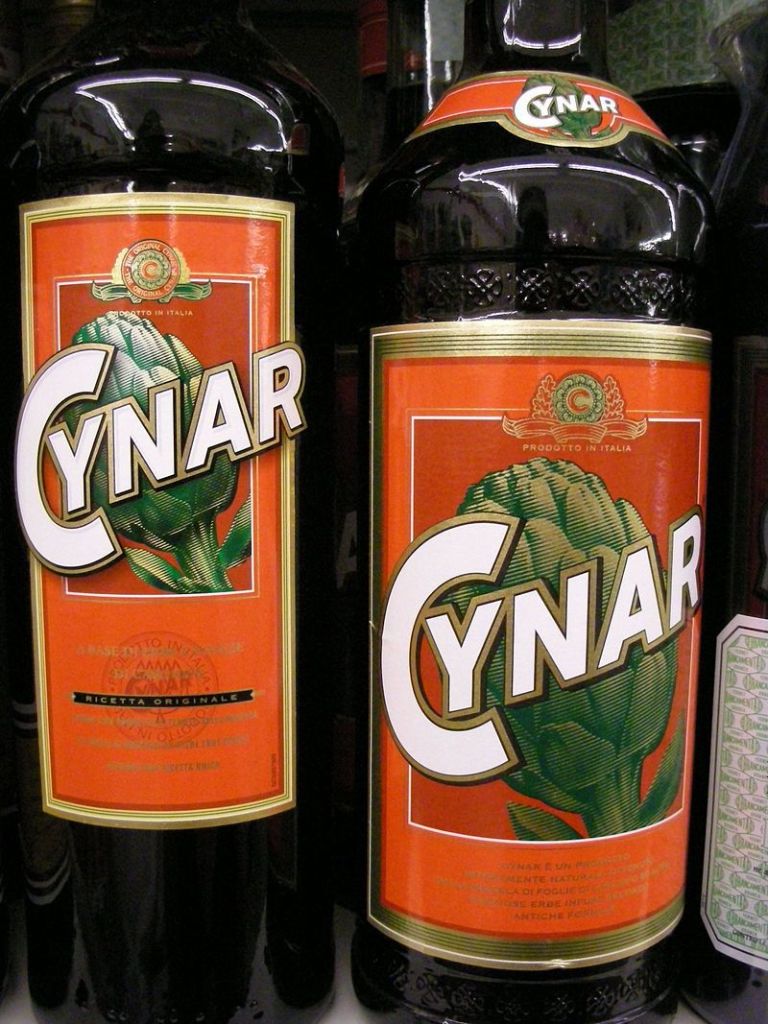
Winner of the worst joke earned a bottle of scotch. Winner of the best joke? A bottle of this exotic liqueur I found called Cynar. For those paying attention you may have seen the word ‘Cynar’ a bit earlier in this article… Cynara cardunculus. Otherwise known as the globe artichoke.

Tom was thrilled to have won and opened his bottle there and then to savor his sweet win. We provided a shot glass and he took a sip… and nearly spit it out. So older brother Paul also tried it, as did several others. All with the same result. Having seen enough I passed on trying Cynar – the artichoke liqueur – and, thankfully, the bottle went home with Tom that night.

When talking with Paul over this past weekend, he reminded me of what happened after. For a time Paul and Tom were roommates and whenever a new, unsuspecting friend would come to their apartment, out would come the bottle of Cynar and they’d lay it on thick. They’d expound on how great it was and they would invite the ‘new guy’ to have some with them. Everyone would get a small glass and then Paul and Tom – and any others who had been previous victims – would raise their glass to drink. But none of them ever did, instead watching the ‘new guy’ take a slug and… nearly spit it out. This was followed with raucous laughter and telling the story of they came to possess the Cynar.

What prompted Paul to share this story with me (He’d shared it years before, but it never gets old) was that he was on a business trip and sitting at a bar recently and happened to look up at the shelf behind the bartender and, lo and behold, there was a bottle of Cynar. I asked him if he ordered a shot but he said he hadn’t. Can’t imagine why.

I suppose one of these days I really should try Cynar. But I think I will look up how, exactly, it should be consumed first. Probably with a whole lot of orange juice or used sparingly in some fruity cocktail.

In honor of the artichoke this week, however, I skipped the Cynar and instead bought a raw one at Freddies for the hubby and me for dinner last night.

As I began preparing it, I thought of my mother and, as I have done hundreds of times, copied how she cooked them: cut them in half, then remove the tiny ‘hairs’ that grow from the heart. I rinsed between the leaves, spreading them out just a bit, then started them to steam in my double boiler pan. Later, as I dipped the tender pieces in butter I gave a salute to the wonderful globe artichoke, always a treat.

And when you are in Castroville be sure to visit the Giant Artichoke…

The links:

https://en.wikipedia.org/wiki/Artichoke

https://en.wikipedia.org/wiki/Castroville,_California

https://en.wikipedia.org/wiki/Cynar

https://www.foodandwine.com/what-is-cynar-6503431