Queen Victoria

“Isn’t this the Queen’s court?”

May 24, 2022

Alexandrina Victoria was born on May 24, 1819, and – until 2015 – had the distinction of being the longest reigning world monarch ever.

Victoria, age 18, when she became Queen of England

We know her as Queen Victoria. She ascended to the British throne, at age 18, through a series of serendipitous occurrences. Despite having three uncles in line for the monarchy before her, their deaths – and the death of her own father when she was less than a year old – put in place the exact circumstances necessary for her to become Queen.

When she was barely 18 years old, King George III – her grandfather – died and she became the heir. She went on to reign for 63 years.

Victoria – along with her husband Prince Albert – seemed to understand the future of the monarchy would be one of ceremonial influence. From the Infallible Wikipedia:

“Through Victoria’s reign, the gradual establishment of a modern constitutional monarchy in Britain continued. Reforms of the voting system increased the power of the House of Commons at the expense of the House of Lords and the monarch. In 1867, Walter Bagehot wrote that the monarch only retained ‘the right to be consulted, the right to encourage, and the right to warn’. As Victoria’s monarchy became more symbolic than political, it placed a strong emphasis on morality and family values, in contrast to the sexual, financial and personal scandals that had been associated with previous members of the House of Hanover and which had discredited the monarchy. The concept of the ‘family monarchy’, with which the burgeoning middle classes could identify, was solidified.”

During her six decades reign, her popularity waxed and waned. After an assassination attempt in 1882, sympathy and approval of the Queen soared. Victoria said – when the-would -be assassin was found not guilty by reason of insanity – it was “worth being shot at—to see how much one is loved.”

Victoria and Albert on their wedding day

Perhaps her greatest influence was on the culture of the day. As the mother of nine children and 42 grandchildren, she came to represent home and hearth.

The Infallible Wikipedia offers this:

“The rise of the middle class during the era had a formative effect on its character; the historian Walter E. Houghton reflects that ‘once the middle class attained political as well as financial eminence, their social influence became decisive. The Victorian frame of mind is largely composed of their characteristic modes of thought and feeling’.

Industrialisation brought with it a rapidly growing middle class whose increase in numbers had a significant effect on the social strata itself: cultural norms, lifestyle, values and morality. Identifiable characteristics came to define the middle-class home and lifestyle. Previously, in town and city, residential space was adjacent to or incorporated into the work site, virtually occupying the same geographical space. The difference between private life and commerce was a fluid one distinguished by an informal demarcation of function. In the Victorian era, English family life increasingly became compartmentalized, the home a self-contained structure housing a nuclear family extended according to need and circumstance to include blood relations. The concept of ‘privacy’ became a hallmark of the middle-class life.”

Victoria has been called the ‘grandmother of Europe’ as her nine children produced 42 grandchildren

For those of us who observe the British Monarchy from a distance, it’s impossible to fathom a system built on a tradition of grandeur and pomp. Yet out of the monarch system – especially true of the Regency and Victorian eras – mountains of fiction have been written.

During the era, novels erupted in popularity, chronicling the time. Even today, the Victorian novel remains popular. A quick search reveals 214 current “Victorian” novels for sale on GoodReads.

Besides the books written by the Bronte sisters, I’d never read many Regency or Victorian novels. But my mother did. She loved the eras and the stories, especially Regency author, Georgette Heyer.

When, in late November 2010, my mother fell ill, she ended up spending 9 days in the hospital as she had contracted the H1N1 flu. It was touch and go, but eventually she no longer required hospitalization and was to be moved to Good Samaritan in Yakima for rehab. Transfer day was scheduled for December 7 and I had driven over the mountains the previous afternoon to be there to facilitate her relocation.

There were patches of snow and ice on the ground. It was cold, gray, and raw. I spent the night at my sister’s house and the next morning made my way to the hospital. Soon Mom was in the aid car and then arrived at her new room at Good Sam.

I spent the afternoon with her as a parade of nurses and caregivers came and went as they got her settled in.

Now, my mother had been suffering with dementia/Alzheimers for at least a few years by then. Nearly two weeks of severe illness had exacerbated the situation.

But the folks at Good Sam didn’t know her and did not realize how extensive the memory issues were.

About 3 p.m., a young woman enters the room and introduces herself as the Occupational Therapist (OT) and wants to talk with Mom. Mom’s bed is parallel to a window which looks out onto an interior courtyard. I’m sitting on a chair right next to Mom, between the bed and the window; the OT is on the other side, closer to the door.

Mom and me snapping green beans at her and my Dad’s home, Thanksgiving Day 2010. Dad was in the hospital THAT day but came home the next afternoon; four days later Mom ended up in the hospital with the H1N1 flu… and was never able to live at home again.

So Mom keeps swiveling her head between us as the OT asks the questions; it’s as if Mom is looking to me for confirmation that she is answering correctly. For my part I am, of course, letting her answer the questions even if the answer is “I don’t know.”

Mom does know her name, her birthday, and the name of the town where she lives. Then the OT asks the following:

“Do you know where you are?”

Silence. Mom looks over at me and clearly does not know for SURE where she is, then turns back to the OT and says “Isn’t this the Queen’s court?”

The OT’s eyes lock on to mine and get very wide. I nod and smile because in that one answer the OT understood quite clearly that rehab for Mom wasn’t going to mean sending her home to resume life as most of us know it.

After the OT left, I stayed with Mom through her dinner and then made my way back to my sister’s for the night.

The next morning, before heading home, I stop in to see how Mom is doing. The first thing I notice is how pretty the snow looks as it gently falls outside the window, the ground now a blanket of white. Mom is awake, propped up in the bed and finishing breakfast. The room is warm and Mom looks comfortable.

With a big smile – she’s obviously glad to see me – exclaims “Oh, you’re back from England!”

Indeed. We had been to the Queen’s Court and back. The nearest to a monarchy I’m ever likely to get.

The links:

https://en.wikipedia.org/wiki/Queen_Victoria

https://en.wikipedia.org/wiki/Victorian_era

https://en.wikipedia.org/wiki/Georgette_Heyer

National Walnut Day

A favorite food for thousands of years

May 17, 2022

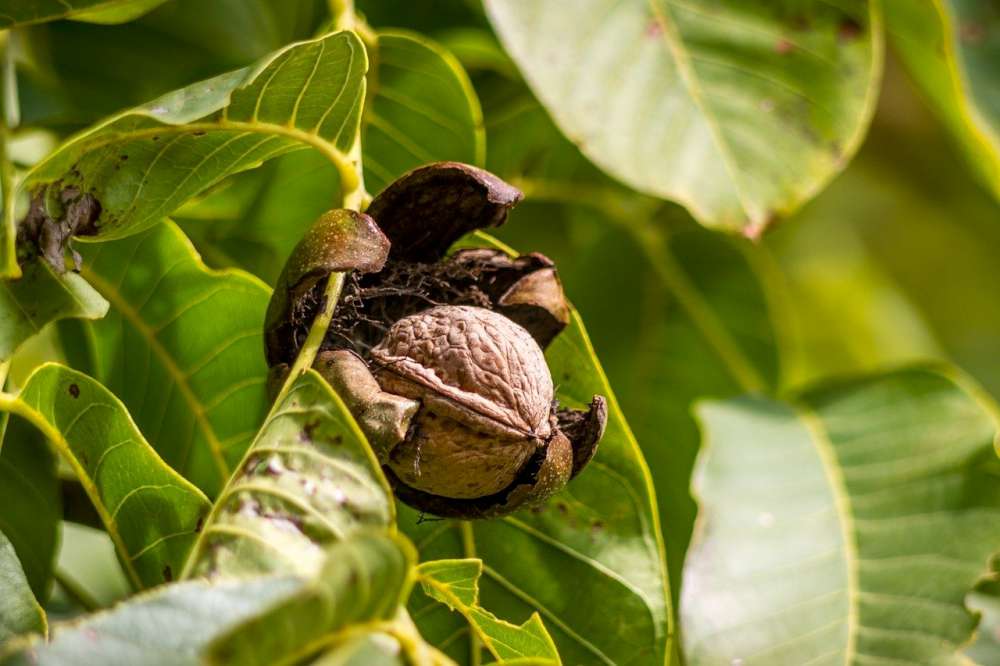
While walnuts are typically double sided, occasionally they can be found with 3 or even 4 sides

It was in 1949 when the walnut got its own “National Day.” While I am certain that a large portion of my readers are thinking “National Walnut Day? Really?” Upon research I arrived at the conclusion that walnuts deserve such an honor. Of course, those who decreed the day might have been a teeny bit self serving. From thereisadayforthat.com we learn:

“National Walnut Day was created to promote the consumption of walnuts and the first National Walnut Day was proclaimed by the Walnut Marketing Board in June 1949.

On March 3rd 1958, a Senate Resolution was introduced by William F Knowland. The Resolution was signed by President Dwight D Eisenhower on the first National Walnut Day which was on May 17th 1958.”

Obviously the US Senate thought it was important enough, right?

Until yesterday I had not given the walnut much thought. Sure, I’ve eaten walnuts my entire life. I like walnuts especially when sprinkled on an ice cream sundae. They are delicious in a variety of other foods also. Like fudge. And walnut bread or banana nut muffins. Candied walnuts are superb. And who can forget what happens when you add them to apples and celery in a Waldorf salad?

The walnut forms inside a thick husk. When ripe, the husk splits open and the nut will fall – or can be shaken – to the ground

It turns out walnuts have been cultivated and eaten for thousands of years and have been enjoyed since at least 7000 B.C. according to thereisadayforthat.com

The Infallible Wikipedia does not let us down and shares the following:

“During the Byzantine era, the walnut was also known by the name ‘royal nut’. An article on walnut tree cultivation in Spain is included in Ibn al-‘Awwam’s 12th-century Book on Agriculture. The walnut was originally known as the Welsh nut, i.e. it came through France and/or Italy to Germanic speakers (German Walnuss, Dutch okkernoot or walnoot, Danish valnød, Swedish valnöt). In Polish orzechy włoskie translates to ‘Italian nuts’ (włoskie being the adjectival form of Włochy).”

The most popular walnut to eat is known as the English walnut despite its origination in Persia (Iran). The black walnut of eastern North America is also popular, but for a different reason. The wood of the tree is highly valued for its fine, straight grained properties. Unfortunately, the black walnut – like the hickory nut – is very difficult to crack.

Probably the best thing I’ve learned about walnuts is that I’ve been storing them all wrong. So very wrong. Walnuts, once shelled, are susceptible to going rancid and becoming moldy. Therefore they are best kept in the fridge.

My research included doing an internet search of the words ‘walnut + recipe’ – which garnered 339,000,000 – yes million – results. I found one recipe I hope to make this week which sounds delicious: https://sallysbakingaddiction.com/unbelievable-walnut-crusted-chicken/

A scrumptious treat is vanilla ice cream, a squirt of whipping cream, Hershey’s Dark chocolate syrup, topped with a maraschino cherry, and sprinkled with walnuts. Yes, it was as delicious as it looks!

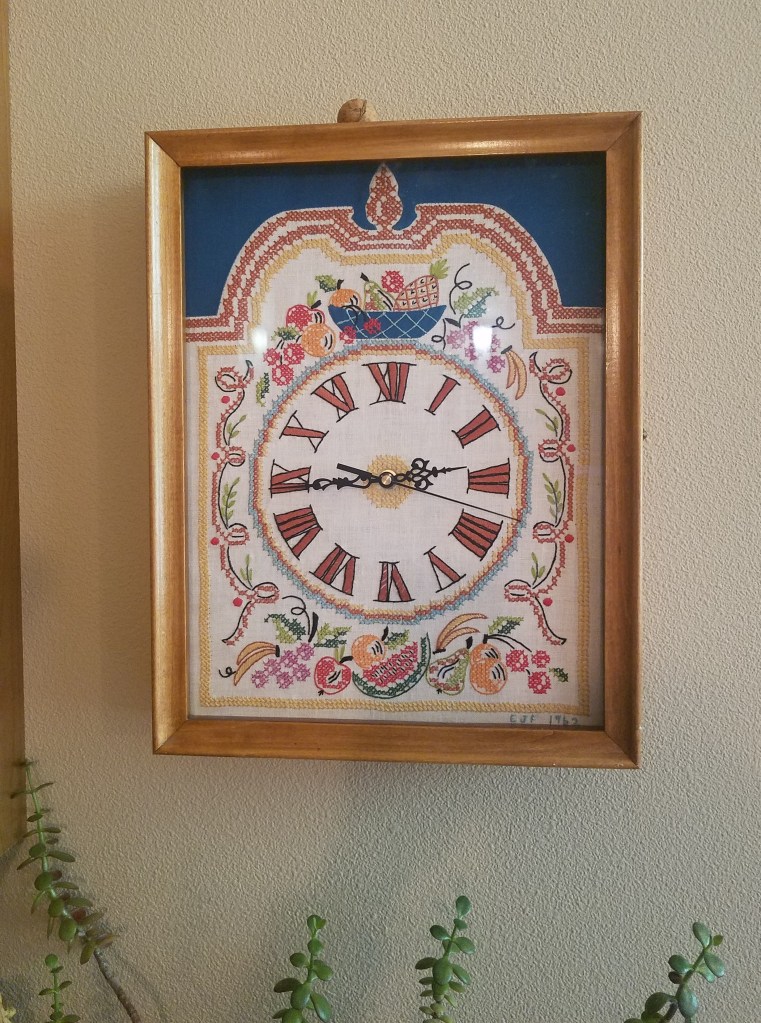
Now on to a fun game which, for my family, involves walnuts. Sometimes those who visit my house will comment on the walnut (or several) which sit unobtrusively on the top of a clock my grandmother made back in the early 1960’s – or others which are seen in other spots.

Inevitably the question will be ‘why do you have a walnut there?’

It’s actually a nod to the game ‘Huckle Buckle Beanstalk’ which the Infallible Wikipedia describes as thus:

“The seekers must cover their eyes and ears or leave the designated game area while the hider hides a small, pre-selected object. When the hider says to come and find it, or after the seekers have counted to a specific number, usually sixty or one-hundred, the seekers come out and attempt to be the first to find the object. When a seeker has the object in hand, he can alert the other players of his success by yelling ‘Huckle Buckle Beanstalk!’ (snip)

The clock my grandmother made in 1962. The face is all embroidered by hand. She made two of these, one for my mother and one for my aunt. My cousin, Tim, has its twin in Yakima.

A variation of the game has the person who finds the object, continue by pretending to look for the object and then call out ‘Huckle Buckle Bean Stalk’ to draw the other seekers attention away from the objects location. As the other seekers find the object, they perform the same deception until all the seekers have found the object. The winners take pride in how quickly they find the object and how much time passes between them and the next player who calls out ‘Huckle Buckle Bean Stalk’.”

I was introduced to the game by my grandmother at her cabin on Highway 12 near Rimrock Lake. As a child, my siblings, cousins, and I would play the game as described in the variation, honing our observation skills and – yes – earning the right to hide the walnut for the next round. A walnut was particularly well suited for hiding at the cabin which had honey colored pine board walls and wood ceilings interspersed with logs. The walnut blended very, very well.

When the cabin was sold in 2020, the Huckle Buckle Beanstalk walnut  which lived there was one of the things I brought to my own house. The other walnuts I have were collected off the ground in Yakima last fall during a ‘dog’ walk with my sister and her hubby.

Huckle Buckle Beanstalk! The main room of the cabin and the hidden walnut.

So, in honor of National Walnut day, be sure to eat a few walnuts or engage in a good old fashioned game of Huckle Buckle Beanstalk.

A few links:

https://www.thereisadayforthat.com/holidays/usa/national-walnut-day

https://en.wikipedia.org/wiki/Walnut

https://en.wikipedia.org/wiki/Huckle_buckle_beanstalk

https://youtu.be/s1JV7rIcJcs (Although this is about Hickory Nuts, it’s hilarious! And they do mention black walnuts which are equally difficult to crack)

The Potato Chip

Bet You Can’t Eat Just One!

May 10, 2022

Whenever I read statements of (fill in the blank) was invented on (fill in the blank) date, I scurry my way over to the Infallible Wikipedia to verify the information. Frequently, I can find zero confirmation of the particular event occurring on that date. And, as with today’s topic, glean new information that suggests that not only is the date incorrect, but the person credited with the invention really was not.

I present for your contemplation the story of how and when the potato chip was invented.

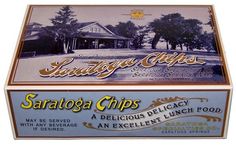
Saratoga Chips package

Now according to legend, it was a chef in Saratoga, New York, who cooked the first potato chip for a customer who complained that his potatoes were too thick/too soggy/too something. The chef – one George Crum (real last name Speck), trying to appease the customer, returned to his kitchen, sliced the potatoes thin and then fried them. Viola! The first potato chips.

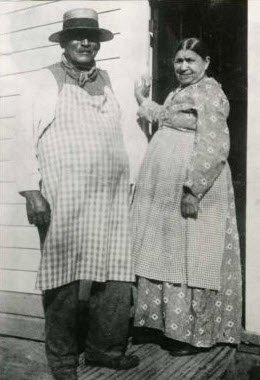
George Crum and, possibly, his sister Kate Wicks who some claim was the real inventor

Upon deeper digging, however, a cookbook from the early 1800’s suggests that Crum was not the first. Yes, The Infallible Wikipedia provides us more information:

“The earliest known recipe for something similar to today’s potato chips is in William Kitchiner’s book The Cook’s Oracle published in 1817, which was a bestseller in the United Kingdom and the United States. The 1822 edition’s recipe for ‘Potatoes fried in Slices or Shavings’ reads ‘peel large potatoes… cut them in shavings round and round, as you would peel a lemon; dry them well in a clean cloth, and fry them in lard or dripping’. An 1825 British book about French cookery calls them ‘Pommes de Terre frites’ (second recipe) and calls for thin slices of potato fried in ‘clarified butter or goose dripping’, drained and sprinkled with salt. Early recipes for potato chips in the US are found in Mary Randolph’s Virginia House-Wife (1824) and in N.K.M. Lee’s Cook’s Own Book (1832), both of which explicitly cite Kitchiner.”

Kitchiner’s recipe for potato chips appeared in the Cook’s Oracle

As usual, there is a wealth of information which shares the exhaustive history of the potato chip from invention to modifications over the years. One need only walk down a grocery store aisle and see the entire length filled with the product to note its popularity.

It was in the 1950’s when the next big step in potato chips occurred: the addition of flavors. The Infallible Wikipedia continues:

“After some trial and error, in 1954, Joe ‘Spud’ Murphy, the owner of the Irish crisps company Tayto, and his employee Seamus Burke, produced the world’s first seasoned chips: Cheese & Onion. Companies worldwide sought to buy the rights to Tayto’s technique. Walkers of Leicester, England produced Cheese & Onion the same year. Golden Wonder (Smith’s main competitor at the time) would also produce Cheese & Onion, and Smith’s countered with Salt & Vinegar (tested first by their north-east England subsidiary Tudor) which launched nationally in 1967, starting a two-decade-long flavour war.

Bert Lahr – who played the cowardly Lion in the Wizard of Oz movie – was the face of Lay’s Potato chips in the 1960’s. I thought he was kind of creepy.

The first flavored chips in the United States, barbecue flavor, were being manufactured and sold by 1954. In 1958, Herr’s was the first company to introduce barbecue-flavored potato chips in Pennsylvania.”

But back to William Kitchiner. Does that sound like a made up name or what?

Back in the early 1800’s in England, the thought of a woman writing a book – even a cookbook – was simply not done. The famous novel Frankenstein was written by a woman, Mary Wollstonecraft Shelly, but published anonymously in 1818.

Which brings us back to the potato chip and ‘who’ really cooked the first ones. My guess is that it was a woman, experimenting in her kitchen. And that William Kitchiner, who could live off his inheritance, took her recipe when he published his cookbook in 1824.

Of course none of that really matters. What matters is that someone DID invent the potato chip, that delicious, can’t eat just one, crunchy and satisfying snack.

A typical display of Lay’s potato chips

But the big question is WHAT is your favorite potato chip flavor? I find myself torn between ‘Sour Cream & Onion’ or ‘Cheddar & Sour Cream’. In my family, my son gravitates towards ‘Salt & Vinegar’, while the daughter prefers ‘Lime’ or ‘Dill Pickle’ (although she really likes Tim’s Sasquatch flavor) Since I’m staying with my sister and brother-in-law for a few days I asked them also and the answer is ‘Barbeque’ for her and either ‘Lime’ or ‘Salt & Vinegar’for him.

But back to the hubby’s response which, I think, speaks for many:

“Salt and vinegar, BBQ, Lay’s original. Now I want chips…”

Whatever your preference, we can cheer for Mr. Crum, or Mr. Kitchiner, or perhaps some unheralded mother, slaving away in her kitchen and experimenting with new ways to cook potatoes for her family. Any way you slice it, the world loves potato chips!

A few links:

https://en.wikipedia.org/wiki/Potato_chip

https://en.wikipedia.org/wiki/William_Kitchiner

https://en.wikipedia.org/wiki/George_Speck

https://en.wikipedia.org/wiki/Lay%27s

https://www.thoughtco.com/george-crum-potato-chip-4165983

Geocaching!

Tupperware Hidden In Nature

May 3, 2022

Astro – a member of Team Wrastro – checks out the Geocaching.com page

This activity has best been described, perhaps, as a global Easter Egg hunt. But rather than having a doting parent direct you to where the ‘egg’ is hidden, those who participate use the Global Positioning System (GPS) and hand held electronic devices to find their location anywhere on earth.

Dubbed Geocaching, the sport was launched on May 3, 2000, just one day after the US Government made it possible for ordinary people to find their location within 3 meters of a specific spot.

We turn to the Infallible Wikipedia for additional information:

“Geocaching was originally similar to the game letterboxing (which originated in 1854), which uses clues and references to landmarks embedded in stories. Geocaching was conceived shortly after the removal of Selective Availability from the Global Positioning System on May 2, 2000 (Blue Switch Day), because the improved accuracy of the system allowed for a small container to be specifically placed and located.

Site of the first geocache in Oregon. We found it the summer of 2005 before it was archived

The first documented placement of a GPS-located cache took place on May 3, 2000, by Dave Ulmer of Beavercreek, Oregon. The location was posted on the Usenet newsgroup sci.geo.satellite-nav at 45°17.460′N 122°24.800′W. Within three days, the cache had been found twice, first by Mike Teague. According to Dave Ulmer’s message, this cache was a black plastic bucket that was partially buried and contained software, videos, books, money, a can of beans, and a slingshot. The Geocache and most of its contents were eventually destroyed by a lawn mower; the can of beans was the only item salvaged and was turned into a trackable item called the ‘Original Can of Beans’. Another Geocache and plaque called the Original Stash Tribute Plaque now sit at the site.

Elroy, George, and Judy – along with our original GPS at Longview, Washington, circa 2005. The cacher on the left, cacher name Nudecacher, was NOT there that day. Jane’s epic editing skills are such that she was able to commemorate Nudecacher’s, er, contributions to the sport.

Perhaps the above description would lead one to believe that it’s easy to walk to a spot and instantly find the Geocache (or, the cache, as we call it). Au Contraire, my friends. Some of the caches can be wickedly difficult due, in great part, to the size and clever placement of the container. Others are challenging because one must solve a puzzle to discover the GPS coordinates.

George, Judy, and Elroy at “Room With a View Cache’ near Long Beach, Washington. One cool aspect of caching is that you sometimes discover places you’ve never been before… such as this one.

While a further reading of the Infallible Wikipedia article states that “A typical cache is a small waterproof container containing a logbook and sometimes a pen or pencil,” after finding just shy of 5,000 caches, our family has discovered that they can range from being as large as a shed to as small as a tiny button.

The first participants tended to be computer geeky types who spent their waking hours on networks like Usenet. But that soon changed as people learned, via word of mouth, about Geocaching. Families discovered that it was a new and unique way to get outdoors and take a hike. For kids, it was fun to open up a cache and see what sort of treasures might be inside.

Additionally, there is an element of stealth involved, as one does not want to reveal a cache location to those outside the Geocaching community who might wish to harm a cache. Non participants have – in the spirit of Harry Potter – been dubbed as ‘Muggles.’

Perhaps one of the greatest achievements of any Cacher is to find a container right under the noses of lots of people without those people knowing it happened. It’s definitely difficult to do so!

Our family began our Geocaching adventure on December 26, 2003. I had heard about the sport from a friend and thought getting the hubby a GPS device (cell phones did not yet have the technology) would be a good Christmas present. The hubby had also heard about the sport. He was thrilled and spent a great deal of time that afternoon reading and learning how to operate the device.

Of course, the first big decision would be what to call ourselves. All Geocachers have to have a ‘handle’ and we decided on ‘Wrastro’ in homage to our White, 1998 Chevy Astro Van bearing vanity plates of the same name. Of course, this led to calling ourselves by the names of the Jetson family: hubby, George; Jane, his wife; Boy Genius, Elroy; and Teenage Daughter, Judy.

George and Elroy caching in the middle of an Eastern Washington dust storm on August 12, 2005. One of our most memorable caching experiences ever. You can read the cache log here: https://www.geocaching.com/seek/log.aspx?LUID=eda7dbb8-14e0-469d-9f98-b2086150ed05

Identities established, out we went the next day to a park in Sammamish with Elroy, age 13 and Judy (not yet a teenager) age 10, to go to the park, walk up to the cache, find some excellent goodies, and then go on to the next one.

Hah! It took us waaaaay longer than it should to find the container which was, I might add, wrapped in a black plastic garbage bag and sitting in the crook of a tree. To us it looked like a random piece of trash!

That week we attempted all sorts of caches but, being newbie’s, made everything much more difficult. The good news is that we got better at it. Soon we could easily identify if something was an LPC or GRC. Or the always dreaded DNF. Don’t know those acronyms? Well, I’d be giving up sacred Geocacher’s secrets if I revealed them to Muggles. Sorry!

At the height of its popularity, Jeep sponsored what’s known as a “Travel Bug”. These are items you find and then move them to another cache for others to find. 5000 Yellow Jeep Travel bugs were released in 2004 and 5000 white ones in 2005. As you might imagine many simply disappeared as they were a coveted item. Here George displays the white one we found on the banks of the Columbia River in 2005

We also became familiar with some of the tricks of the trade and ‘how’ people tended to hide things. This was thanks, particularly, to one Geocacher in Redmond, Washington, who went by the name of Beamin’ Demon (BD). They were a legend as no one knew ‘who’ BD was; no one ever saw BD place a cache – it always seemed to occur in the dark of night; and BD caches tended to be miniscule, containing only a scrap of paper requiring one to bring their own pen. For months, the BD caches would show up and Elroy, especially, wanted to try to earn the coveted ‘First to Find’ bragging rights. So out he and George (usually) or Jane would go to find the smallest, most evilly hidden caches ever.

Elroy even ventured out with his own handle “I Like This Game” and started hiding impossible to find caches. Yes, we were out of control.

Alas, Elroy eventually moved on to other passions, and Judy found the activity irritating. George, however, persisted which is why, 18 years later, he still drags Jane out to find caches. Nowadays, one does not need a special Garmin GPS device to play. Cell phones work just fine.

George has also discovered that having Jane along is good for a couple of reasons. One, Jane can navigate; Two, she knows what to look for with the LPC and GRC’s and can grab those when George inevitably pulls up next to them with HER car door nearest the cache locations; and Three – this is the most important thing to George – he insists that she write up the log for the cache since, as he says, ‘you’re the writer.’ Personally, I think it has more to do with the fact that he has written the majority of the logs over the years and he likes the fresh perspective.

Rosie and Jane at the largest Geocache which Team Wrastro has ever found. Longview, Washington April 22, 2022.

Which leads me to find a way to wrap up this rather long blog post. But, hey, having found 4,882 4,883 finds (as of May 2, 2022), there’s a lot Jane – er, I – can say. Now if you want to read about Team Wrastro’s adventures, all you have to do is go to Geocaching.com and create an account. Then you can filter what you see by typing in the box where it says Found by the name WRASTRO. You’re welcome. Or not.

The Links:

https://www.geocaching.com/play/search

https://en.wikipedia.org/wiki/Geocaching

https://en.wikipedia.org/wiki/The_Jetsons

The Prime Directive

Here’s Mine. What’s Yours?

April 26, 2022

In the original Star Trek TV series, one of the things we learn about is ‘The Prime Directive.’ Rather than try to explain it, I turn to the Infallible Wikipedia which provides this summary:

“In the fictional universe of Star Trek, the Prime Directive (also known as ‘Starfleet General Order 1’, ‘General Order 1’, and the ‘non-interference directive’) is a guiding principle of Starfleet that prohibits its members from interfering with the natural development of alien civilizations. The Prime Directive protects unprepared civilizations from the dangerous tendency of well-intentioned starship crews to introduce advanced technology, knowledge, and values before they are ready. Since its introduction in the first season of the original Star Trek series, the Prime Directive has been a key plot element of many episodes of the various Star Trek series and served as a recurring moral question over how best to establish diplomatic relations with new alien worlds.”

I have written about Star Trek on my blog before: https://barbaradevore.com/2020/09/08/space-the-final-frontier/

 This post is not about Star Trek, but rather the concept of a Prime Directive.

While our species has not, to the best of our collective knowledge, made contact with or interfered with the development of alien civilizations, I do think that we would do well to adopt a prime directive for life.

We all know that we should eat less, exercise more, not smoke, not drink to excess, and – well – do a whole bunch of other things to get or stay healthy. Easier said than done.

The Prime Directive which I have started touting to any who will pay attention is this:

Stay Upright

You would think that this would be relatively easy to achieve but, alas, it is not. According to the CDC, one in four adults over the age of 65 fall each year. While today’s Tuesday Newsday is a bit of a Public Service Announcement, getting into all the statistics is not how I wish to use this space. But you can certainly check out the CDC link below for additional information.

Instead, I have adopted a two pronged approach to my personal Prime Directive.

  1. Whenever I get up and am about to move about, I stop and look at my surroundings. The first thing I do is check the floor for possible items which might cause a fall: a pair of shoes, a blanket which has slipped to the floor, items which have been set down but don’t usually live in that spot.
  2. I hold on to rails and any other handles which are provided since I assume they are there for a reason and then I proceed only after my visual evaluation indicates its safe.

There is a reason for the Prime Directive. Perhaps the first time I recognized the need for a more measured approach to walking was in the spring of 2005. I was at a friend’s house where we were having an event for the Rainbow Girls. I had headed downstairs but failed to turn on a light OR look at the way the steps were laid out. There was one additional step separate from the others and I missed it.

That fall resulted in a badly sprained ankle and a boot cast which I wore for nearly 6 weeks. Chastened, I vowed to do better. And I did until one day in probably 2014 or so when, in a rush, I strode into our spare bedroom, headed for the closet to get wrapping paper. I did not notice that the bedspread had slipped off the bed. (We had houseguests either a night or two before and I had not yet dealt with the bed). Next thing I knew, my right foot was wrapped up in the bedspread and I landed on both knees – the left one taking the brunt of the fall. Which was a good thing since my head ended up inches away from the solid oak of a nightstand.

While that fall did not end up with a doctor visit, my knees hurt for quite a few weeks.

Which brings me to my most recent violation of the Prime Directive. I can take comfort that it’s been at least eight years since I’ve had a violation.

The hubby and I were headed back from an overnight to Kelso, Washington, and stopped to find a Geocache* at a rest area. We were out looking for it near a copse of trees and the grass was quite long. I noticed a huge ant hill with a gazillion ants and was fascinated by this.

In the meantime, the hubby had gone on and was off behind the copse of trees. I turned to go find him when I must have stepped on a branch, hidden in the grass. From what I can recall, when I stepped on the forward part of it with my right foot, the back part popped up and the other end went up into the hem of my jeans on the left leg.

https://youtube.com/shorts/TAtv5zzgAhc?feature=share

I was doomed as the branch, as though it had a life of its own, twisted the pants leg and the next thing I knew I was on the ground. Fortunately all that grass provided a fairly soft landing and I walked away with a bit of a scraped knee, only one ant on me, and a couple days of soreness.

Guess I need to add ‘be aware of and remove all branches which might attack me’ to my Prime Directive.

*Geocaching is a sport which will be featured next Tuesday, on May 3rd,when we mark the 22nd anniversary of its start.

https://en.wikipedia.org/wiki/Prime_Directive

https://www.cdc.gov/falls/facts.html

Glorious Garlic

A pungent necessity in the kitchen

April 19, 2022

As a child, I was only ever aware of two spices being used on food: salt and pepper. In the center of our table sat a five container antique cruet set. Despite there being cut glass receptacles for oil, vinegar, and sugar, the only ones which ever contained anything were the salt and pepper shakers.

A purplish colored hard neck garlic variety

Now, as a child, it never occurred to me that there were other spices. Undoubtedly my mother used a few others, but I was unaware that food could be a delightful adventure since she cooked mostly bland foods.

When I left home I took up an interest in cooking. It was then I discovered what I consider the essential food additive, one which has spawned cookbooks centered on it and an entire town committed to it. We are talking garlic.

April 19 is National Garlic Day, celebrated on this date since the late 19th century.

Technically, garlic is not a herb or a spice, but an allium, a member of the onion family. Like onions, it is known for its pungent aroma and taste.

Yes, the Infallible Wikipedia has a page and provides this information:

“Garlic (Allium sativum) is a species of bulbous flowering plant in the genus Allium. Its close relatives include the onion, shallot, leek, chive, Welsh onion and Chinese onion. It is native to Central Asia and northeastern Iran and has long been used as a seasoning worldwide, with a history of several thousand years of human consumption and use. It was known to ancient Egyptians and has been used as both a food flavoring and a traditional medicine. China produces 76% of the world’s supply of garlic.”

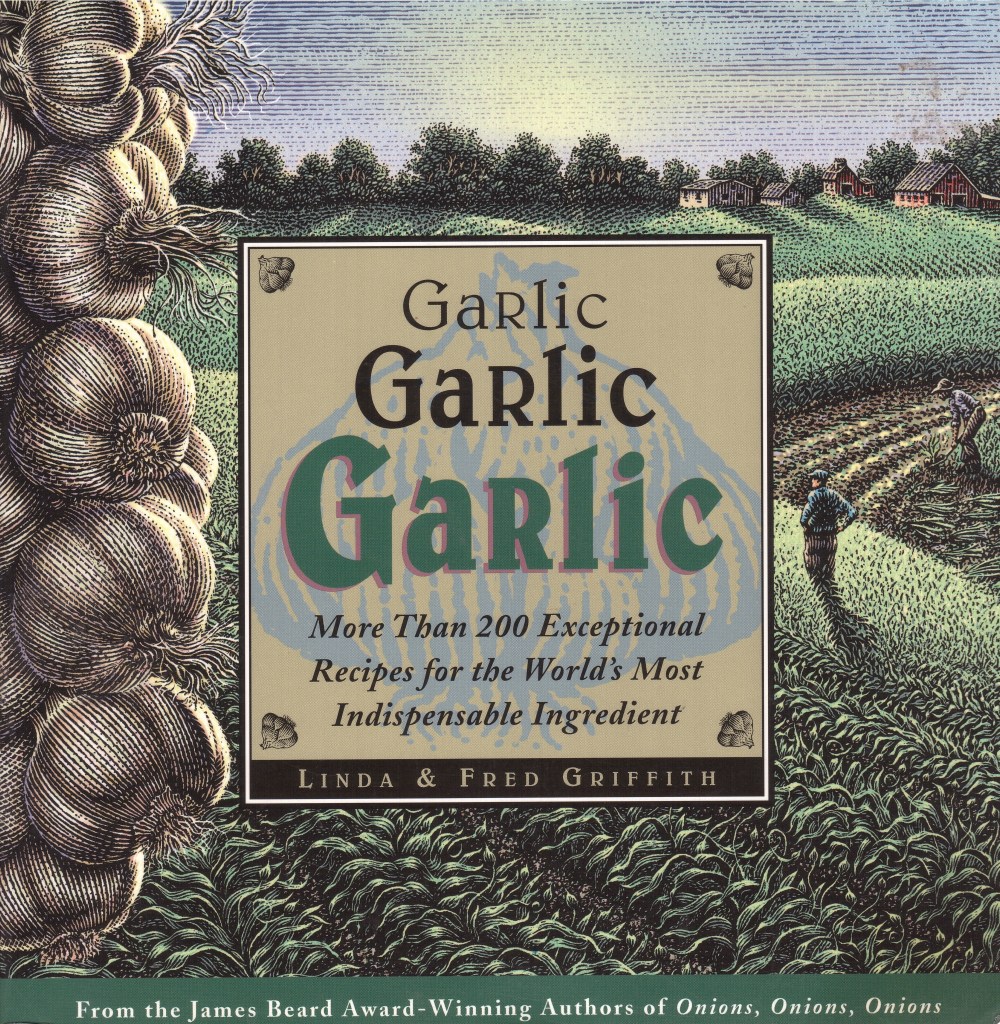
What many people do not realize about garlic, however, is that there are many species; hundreds in fact. While the Infallible Wikipedia does provide a good overview, I find that the cookbook Garlic Garlic Garlic, by Linda and Fred Griffith – in addition to a couple hundred recipes which feature it – offers fascinating historical and anecdotal information on garlic.

For example, there are a couple segments about the legend of how garlic repels vampires. But it’s this gem which would seem to offer a much more practical application:

Personally, anything which can ward off mosquitoes and other pests makes me a fan.

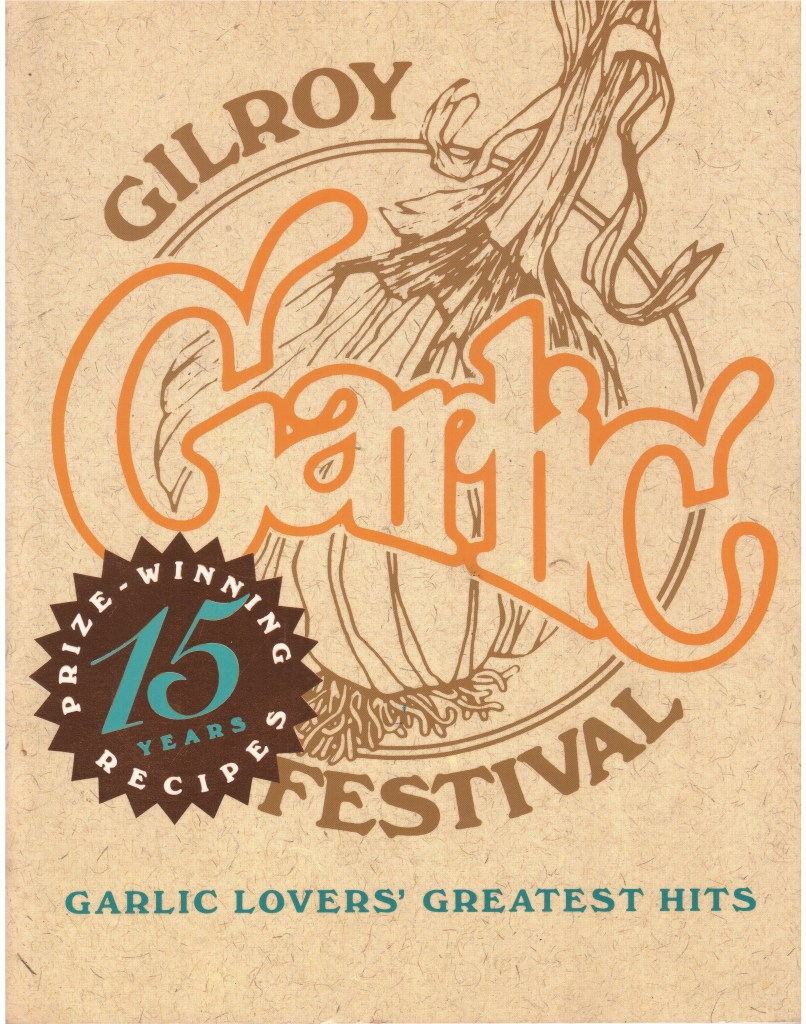
When, in the 1990’s I learned about Gilroy, California – they proclaim themselves Garlic Capital of the World – I added it to my ‘bucket’ list. The last week of July every year they hold the Gilroy Garlic Festival, having done so since 1979. Also from the Infallible Wikipedia:

“An annual three-day event, the Gilroy Garlic Festival is one of the country’s best known food festivals, drawing visitors from across the nation. Located about 30 miles southeast of San Jose, Gilroy is home to about 60,000 people, and the city is a major producer of garlic. The festival is Gilroy’s top fund raiser, staffed with volunteers to raise money for nonprofit groups including clubs and schools.

The Garlic Festival has been held every year since 1979, except 2020 when it was cancelled due to the COVID-19 pandemic. Rudolph J. Malone, then President of Gavilan College in Gilroy, was inspired by a small town in France which hosted an annual garlic festival and claimed to be the ‘Garlic Capital of the World.’ Malone started the festival, which now draws more than hundreds of thousands of paying visitors a year.”

To be fair, the United States ranks a distant seventh in garlic production by country and produces 237,000 tons. The top honors belong to China which dwarfs all others with over 23 MILLION tons of garlic grown annually. Even so, Gilroy is all about garlic, all the time.

I found a Gilroy Garlic festival cookbook in a thrift store one day… of course I bought it!

Sadly, the hubby and I have not yet attended the garlic festival. But we did manage to visit Gilroy in the fall of 2015.

One of the first things you notice as you come across the Diablo Range from the east is the aroma. There is nothing shy about Gilroy! You pass field after field, many – no doubt – planted with the pungent crop.

But it is the town of Gilroy itself which charms. It sports a very late 19th century sort of feel with its buildings and the various shops which line the main drag. It is an inviting place to park your car and peruse the various retail establishments.

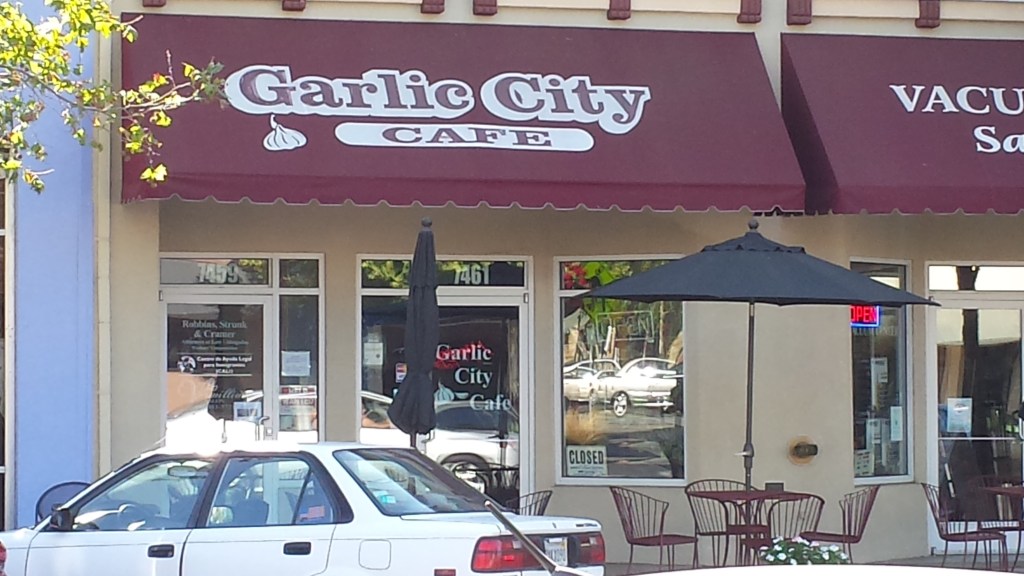
My goal that day, September 2, 2015, was to eat garlic infused food. We ended up at the Garlic City Café which stayed open long enough for us to order and enjoy lunch. Oh my. It was everything I hoped it would be. The chicken dish was topped with mushrooms… and garlic. The French fried potatoes were seasoned with salt… and garlic. It was a gastronomical delight.

The Garlic City Cafe made all my garlic dreams come true

I look forward to a return trip to Gilroy and the opportunity to spend a few days so as to try all sorts of other garlickly delights. Thank goodness the hubby does not mind the smell of garlic!

As always, the links:

Although the photo is a bit blurry, you can see the bits of garlic deliciousness on my lunch

https://en.wikipedia.org/wiki/Garlic

https://en.wikipedia.org/wiki/Gilroy,_California

https://en.wikipedia.org/wiki/Gilroy_Garlic_Festival

The Rules of Easter

It’s all about the Vernal Equinox

April 16, 2019

easter eggs.jpg

Photo from Pixabay

“The first Sunday following the full moon after the vernal equinox.”


You would think something this simple would be without controversy, but as history tells us, it is not.

For Christians throughout the word, Easter marks the day of resurrection. Since as early as 325 AD, with the first council of Nicea, however, the date on which Easter is celebrated has been disputed.

According to the Infallible Wikipedia:

“Easter and the holidays that are related to it are moveable feasts which do not fall on a fixed date in the Gregorian or Julian calendars which follow only the cycle of the sun; rather, its date is offset from the date of Passover and is therefore calculated based on a lunisolar calendar similar to the Hebrew calendar. The First Council of Nicaea (325) established two rules, independence of the Jewish calendar and worldwide uniformity, which were the only rules for Easter explicitly laid down by the council. No details for the computation were specified; these were worked out in practice, a process that took centuries and generated a number of controversies. It has come to be the first Sunday after the ecclesiastical full moon that occurs on or soonest after 21 March, but Pink-Moon-2018-1311105calculations vary.”

One might think that setting out a fairly straight forward calculation would end the debate but, over the centuries, it’s become more confusing.

Things really went sideways when, in 1582, Pope Gregory XIII decreed that the Julian calendar was way off and introduced his own calendar. The Gregorian calendar is the one we still use today.

So what does that have to do with Easter and how to calculate the date? There are people in the world who still – over 400 years later – like the Julian calendar and use it to determine the date Easter is celebrated.

There’s also the whole question of the equinox. Back in the fourth century there was no modern science used to calculate the exact moment of the equinox. Instead it was determined based on the above mentioned lunisolar calendar. Which is a fancy way of saying that the people who use such calendars needed a way to adjust the dates based on what was happening around them. Think of it as the spring equinox begins 14 days AFTER the new moon or, approximately, with the full moon of the season.

According to religious rules about Easter, then, the holiday is not truly based on it being on the first Sunday following the full moon after the vernal equinox. No, the calculation is based on it occurring on the first Sunday following the full moon AFTER March 21.

This year Easter falls on April 21. But should it? The full moon and the vernal equinox both occurred on March 20 – a mere 3 hours and 45 minutes apart- with the equinox crossing the finish line first at 2:58 pm (PDT).  The moon was full at 6:43 p.m. So by scientific calculation, Easter SHOULD have already happened on March 24.

Instead, the rule – for those who follow the Gregorian calendar – is to think of March 21 as the equinox which places Easter on this coming Sunday. In the Infallible Wikipedia article, there’s an interesting table which shows the calculated dates of Easter for each competing calendar.

Year
Full Moon
JewishPassover
Astronomical Easter
GregorianEaster
JulianEaster

2015

4 April

5 April

12 April

2016

23 March

23 April

27 March

1 May

2017

11 April

16 April

2018

31 March

1 April

8 April

2019

21 March

20 April

24 March

21 April

28 April

2020

8 April

9 April

12 April

19 April

2021

28 March

4 April

2 May


Note that they have a column for Astronomical Easter giving this year three different dates from which to choose. The chart is also incorrect as we know the scientific full moon occurred on March 20 and not the 21.

And for the record? The most common date for Easter to occur since the inception of the Gregorian calendar through the year 3000 is April 16.

One of these days I’m certain the whole controversy will be settled. In 1997 a movement was afoot to make a change. Also from the Infallible Wikipedia:

“At a summit in Aleppo, Syria, in 1997, the World Council of Churches (WCC) proposed a reform in the calculation of Easter which would have replaced the present divergent practices of calculating Easter with modern scientific knowledge taking into account actual astronomical instances of the spring equinox and full moon based on the meridian of Jerusalem, while also following the Council of Nicea position of Easter being on the Sunday following the full moon. The recommended World Council of Churches changes would have sidestepped the calendar issues and eliminated the difference in date between the Eastern and Western churches. The reform was proposed for implementation starting in 2001, but it was not ultimately adopted by any member body.”

And so it goes. All I know is that hunting for Easter Eggs is usually much more pleasant the third weekend of April than it is in late March. Plus, for our family, Easter this year coincides with my father’s 96th birthday! It will be the fourth time in his life that Easter is on the same day. The other years were 1935, 1946, and 1957.

The links!

https://en.wikipedia.org/wiki/Easter

https://www.staff.science.uu.nl/~gent0113/easter/easter_text2b.htm

https://en.wikipedia.org/wiki/Lunisolar_calendar


Candy Crush

A tasty treat to play!

April 12, 2022

One of the dangers of devices like the iPhone, Androids, and computers, is that there are, literally, thousands of games and other time-wasting applications just waiting to suck you in.

Tiffi (pictured here) is the main character in Candy Crush. Also pictured are some of the bright colored candies as well as striped, candies, color bombs, and coconut wheels

Such is the case for the game Candy Crush – one of the most popular games ever – which debuted on April 12, 2012.

For the game’s developers, it’s been a dream come true which has, no doubt, made them rich beyond their wildest dreams. For those who get sucked into the game, it’s a way to spend way too much time matching colorful digital ‘candy’, earning ‘rewards’, and – what the developers really want – spending money to purchase in-game boosters.

If you’ve never seen or played Candy Crush, no fear, the Infallible Wikipedia does – of course – have an informative article:

“In the game, players complete levels by swapping colored pieces of candy on a game board to make a match of three or more of the same color, eliminating those candies from the board and replacing them with new ones, which could potentially create further matches. Matches of four or more candies create unique candies that act as power-ups with larger board-clearing abilities. Boards have various goals that must be completed within a fixed number of moves or limited amount of time, such as a certain score or collecting a specific number of a type of candy.

Candy Crush Saga is considered one of the first and most successful uses of a freemium model; while the game can be played completely through without spending money, players can buy special actions to help clear more difficult boards, from which King makes its revenues—at its peak the company was reportedly earning almost $1 million per day.

A screen shot of level 15… it seems so easy and innocuous at this juncture.

Around 2014, over 93 million people were playing Candy Crush Saga, while revenue over a three-month period as reported by King was over $493 million. Five years after its release on mobile, the Candy Crush Saga series has received over 2.7 billion downloads, and the game has been one of the highest-grossing and most-played mobile apps in that time frame.”

I’m positive that pretty much everyone who has a computer or a phone has, at one time or another played a digital game. Whether your thing is a fighting game, solitaire, word games, or Candy Crush, the human animal seems to be hard wired to solve challenges.

Finishing first for an episode – 15 games – earns you 25 gold bars. Which are handy when you encounter a difficult level and need a boost. My longest streak of ‘wins’ is now 25.

Which the creators of Candy Crush figured out in spades, so to speak. The game is a visual feast of rewards. When you match three candies (the color palette of the game is bright shades of blue, purple, green, red, orange, and yellow) they sort of explode. And, when you match FIVE candies at once, special candies are created: striped, wrapped, and – best of all – color bombs. These candies, when activated, literally explode and will clear large swaths of candy from the board. It’s this ‘reward’ feature that all games have in common and that keeps players coming back to play again.

I will warn everyone, if you have not ever played Candy Crush AND if you are trying to avoid getting hooked, DO NOT go check out the game. It was in May 2014 when I made that mistake.

At the end of April that year I got my first Android phone. The main reason was to have a decent phone when driving with my son to Tennessee a couple weeks later. Having an Android became important for things like weather reports and communications with the hubby and daughter. (Be sure to read all about the day we outran the tornado here)

My son – who was moving there – had his truck loaded and I was going along to help with the driving, etc. Mostly I ended up riding shotgun and finding roads, motels, and places to eat on the new phone.

Then it happened. We are tooling along and I’m a little bored with nothing really to do and for those who have driven across Wyoming and the Dakotas, you know what I mean. I am still getting to know the phone and the words of one of my Facebook friends echos in my brain: “I’m surprised you don’t play Candy Crush. It seems like you would really like it.” To which I had replied “I don’t want to try it because I don’t need to waste more time.”

But like a dealer tempting me with his wares, I decide to check it out and play a few games just to pass the time. Big mistake.

Next thing I knew, I had played 15 games and had passed the first level. Then it was 30. Then 45. Soon I had ‘won’ 100 games and had started counting how ‘many’ of my Facebook friends were at a higher level than I was.

My friend Elizabeth was soon sending me extra ‘lives’ since – once you lost five times – your playing was over unless someone sent you them or you purchased them with real money.

Level 1476 is a good level to play when you need to collect certain colored candies or color bombs

I also discovered that every day there were bonuses I could earn that randomly gave me striped, wrapped, and color bomb candies. There were things called coconut wheels which when activated, turned regular candies into striped candies that cleared whole rows. There are little UFO’s which fly around and blow up candy and, best of all, a piñata which explodes and clears the entire board. All of these things can be purchased OR you can use your earned coins to get them. Of course you do have to be prudent in what you ‘purchase’ with your coins.

I would say I have become a Candy Crush expert in the past 8 years. I recently passed level 10,000. As of their 10th anniversary today, there are 11,511 levels in the game. Based on my current level that’s only 945 to go! Time to get back to playing…

As always a couple of links:

https://en.wikipedia.org/wiki/Candy_Crush_Saga

For those who wish to start playing it…

https://www.facebook.com/candycrushsaga

And if you go to your app store on your phone and type in ‘Candy Crush’, then you – like the over 1 BILLION who have downloaded it – can get addicted too.

Celebrating National Lava Lamp Day: A 1960s Icon

April 5th

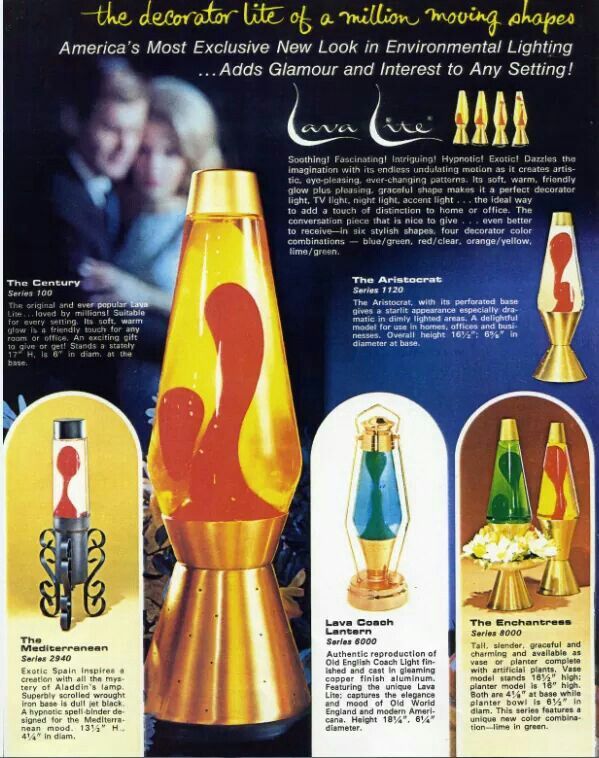
Perhaps one of the most iconic images of the 1960’s, the Lava Lamp was patented on April 4, 1963. Two years later April 5th was declared as National Lava Lamp day.

1960’s ad for lava lamps

Much beloved by baby boomer teens, the lamp – unlike plaid bell bottoms, Nehru jackets, and Twiggy’s haircut – has found new fans in subsequent generations.

The Lava Lamp got its beginnings in the early 1960’s. From the Infallible Wikipedia we learn:

“British entrepreneur Edward Craven Walker had the idea for the lava lamp in 1963 after watching a homemade egg timer, made from a cocktail shaker filled with liquids, as it bubbled on a stovetop in a pub. He hired British inventor David George Smith to develop the device and the chemical formula it required. Smith is credited as the inventor on the original U.S. Patent 3,387,396 for a ‘Display Device’ filed and assigned to Craven-Walker’s company in 1965, and subsequently issued in 1968. Craven Walker’s company, Crestworth, was based in Poole, Dorset, United Kingdom. He named the lamp ‘Astro’ and had variations such as the ‘Astro Mini’ and the ‘Astro Coach’ lantern.” 

For most of us, the details of who invented it are – likely – not of a great deal of interest. But my geeky side IS curious as to the technology behind the lamps. It turns out that it is the combination of two different materials that, when exposed to heat, cause the instantly recognizable function of the lava lamp.

Lava Lamp inventor

The material used to make the colored ‘lava’ originally consisted of mineral oil, paraffin wax, and carbon tetrachloride. This was suspended in water. The difference in how the wax/oil and the water heated is what caused the wax/oil to do what it does. Also from the Infallible Wikipedia:

“Common wax has a density much lower than that of water and would float on top at any temperature. However, carbon tetrachloride is denser than water (also nonflammable and miscible with wax) and is added to the wax to make its density at room temperature slightly higher than that of the water. When heated, the wax mixture becomes less dense than the water, because it expands more than water when both are heated. It also becomes fluid, causing blobs of it to ascend to the top of the lamp. There, they cool, increasing their density relative to that of the water, and descend.  A metallic wire coil in the bottle’s base breaks the cooled blobs’ surface tension, allowing them to recombine.”

Over the years, the wax ingredients have been replaced since one of the early ingredients proved to have toxicity which caused challenges if the glass jar was broken. 

But enough of the geeky details. For those who wish to learn more there is a link below.

I cannot recall the first time I saw a lava lamp. But I do know when I first lived in a place with one. When I moved into the hubby’s apartment after our marriage I became the defacto half owner of a lava lamp. Now, in a custody battle for the lamp I would have, no doubt, lost, since he owned it before we got married. Thankfully that custody battle has been avoided!

But over the years, the lava lamp has gone from being on display in our living room to being in our bedroom to living on a shelf in my office. But that was only until our eldest child discovered the lamp and it soon took up residence in his room. And then another one arrived to live in his room.

Here was this kid, born in the 1990’s, totally enthralled with a throwback product of the 60’s. The lava lamps moved with him to Tennessee, California, and then back to Washington state. He lived for several years in Seattle but then moved out of the city in the fall of 2019. And the lava lamps arrived back in our house. Granted they were in his room, but that meant I could visit them pretty much anytime I wanted.

Our two lava lamps in phase 1

Like me, I think my son was mesmerized by the various phases the lava light goes through when it’s turned on.

Phase 1: the blob sits at the bottom of the lamp, glowing red, blue, yellow (the most common blob colors) for a time.

Phase 2: a tiny little tendril will erupt from the blob and snake its way upward like a plant sprout in springtime, only much faster. 

Late phase 2/early phase 3

Phase 3: more tendrils erupt and then, suddenly, the entire blob seems to explode like a cumulus nimbus cloud in spring, billowing up and out, filling the lamp.

Tiny lava blobs dance in the lamp/phase 5

Phase 4: the heat of the water approaches boiling and the wax mixture starts to form the ‘blobs’ for which the lava lamp got its name.

Phase 5: the numerous and various sized blobs, slowly at first, engage in a mesmerizing dance bouncing off one another, moving around through the lighted water lamp.

Phase 6: the blobs combine with one another, the large absorbing the smaller, until all that’s left is one huge blob. This phase continues until the lamp is turned off and the blob then settles in the base of the jar to cool down.

Phase 6 – large blobs

Each of these phases is interesting in its own way. My favorite, by far, is phase three. In fact, if given the chance, I will wait until the billowing wax looks like clouds… and turn the lamp off. 

My son, as far as I can tell, loves the lava lamp when it’s in phase 5, the multi-blob state. During the time he was living with us and the two lamps resided in his room, I would often go in to visit with him and the lava lamps would be illuminated.

Two years ago he took off for Mexico and, subsequently, decided to move there. Because of the logistics of getting household goods into Mexico was a challenge, the lava lamps had to be left behind. 

I decided to relocate one of the Lava Lamps. Sometimes on dark winter mornings when I am up before sunrise, I will turn on the red lava lamp which now resides on an entryway table across from where I will take up residence to play my daily Wordle and other games. I tend to turn it off after the tendrils, phase 2 and part of phase 3, as that is MY favorite.

https://en.wikipedia.org/wiki/Lava_lamp

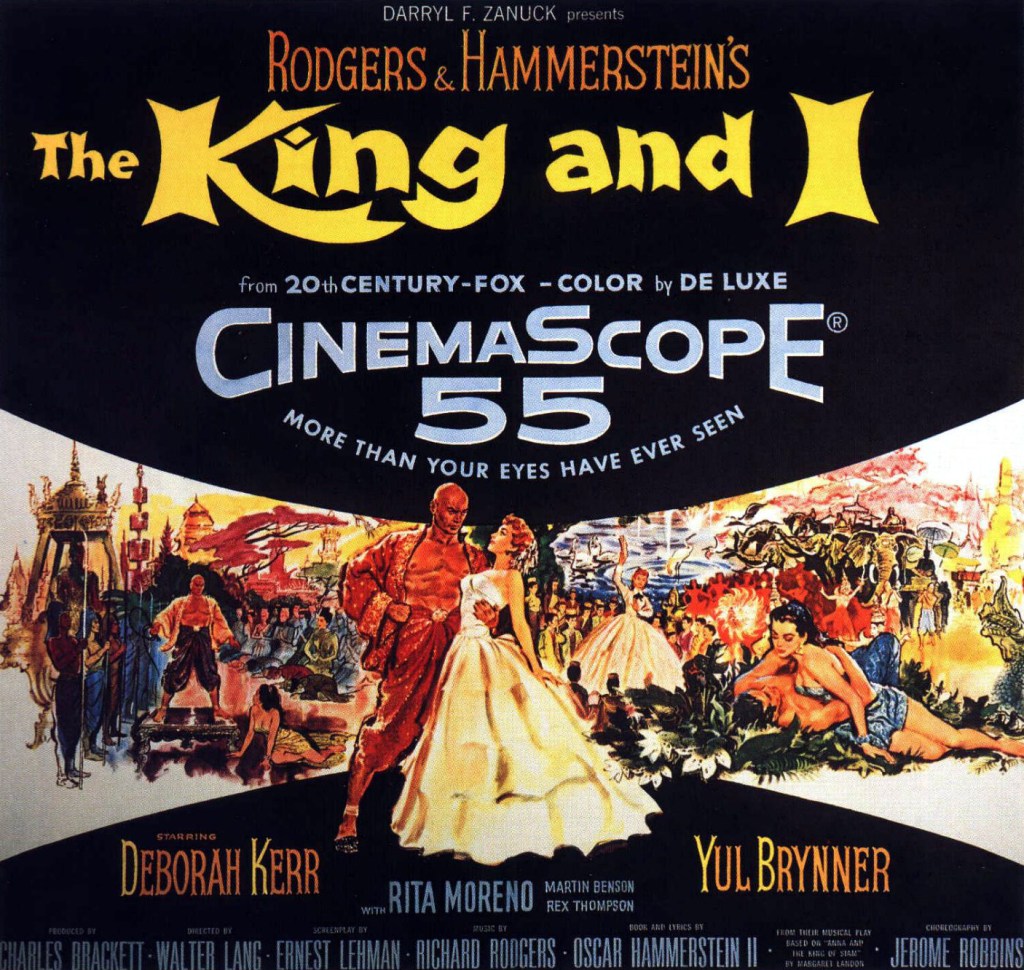
The King and I

Rogers and Hammerstein Hit Musical

March 29, 2022

It is difficult to imagine – in today’s world – this Broadway musical ever being a hit, let alone even being made.

But on March 29, 1951, The King and I opened at the St. James theatre in New York for 1,236 performances. The musical was based on a Civil War era novel which chronicled the travels of widow Anna Leonowens and her two children. From the Infallible Wikipedia:

“In the early 1860s,  (Anna) a widow with two young children, was invited to Siam (now Thailand) by King Mongkut (Rama IV), who wanted her to teach his children and wives the English language and introduce them to British customs. Her experiences during the five years she spent in the country served as the basis for two memoirs, The English Governess at the Siamese Court (1870) and Romance of the Harem (1872).

(Novelist Margaret) Landon took Leonowens’ first-person narratives and added details about the Siamese people and their culture taken from other sources. The book has been translated into dozens of languages and has inspired at least six adaptations into various dramatic media:

  • Anna and the King of Siam (1946 film)
  • The King and I (1951 stage musical)
  • The King and I (1956 film musical)
  • Anna and the King (1972 TV series)
  • The King and I (1999 animated film musical)
  • Anna and the King (1999 film)

At the time of its publication, The New York Times called it ‘an inviting escape into an unfamiliar, exotic past… calculated to transport us instantly.’ The Atlantic Monthly described it as “enchanting” and added that ‘the author wears her scholarship with grace, and the amazing story she has to tell is recounted with humor and understanding.’”

For those of us over a certain age, the iconic actor Yul Brenner will forever be remembered as the epitome of the King of Siam; his blunt manners, assertive personality, and certainty of his God-given right to be the ruler, belonging to a different time and era.

And yet audiences everywhere were charmed by the musical, being drawn into a world that no longer existed, by characters who – in our own time and place – would not exist.

For those unfamiliar with the story, here’s the summary of the musical from The Infallible Wikipedia:

“A widowed schoolteacher, Anna, arrives in Bangkok with her young son, Louis, after being summoned to tutor the many children of King Mongkut. Both are introduced to the intimidating Kralahome, Siam’s prime minister, who escorts them to the Royal Palace, where they will live, although Anna had been promised her own house. The King ignores her objections and introduces her to his head wife, Lady Thiang. Anna also meets a recent concubine, a young Burmese, Tuptim, and the fifteen children she will tutor, including his son and heir, Prince Chulalongkorn. In conversation with the other wives, Anna learns Tuptim is in love with Lun Tha, who brought her to Siam.

Anna still wants her own house and teaches the children about the virtues of home life, to the King’s irritation, who disapproves of the influence of other cultures. She comes across Lun Tha and learns that he has been meeting Tuptim in secret. He asks her to arrange a rendezvous. The lovers meet under cover of darkness, and Lun Tha promises he will one day return to Siam and that they will escape together.

King Mongkut becomes troubled over rumors that the British regard him as a barbaric leader and are sending a delegation, including Anna’s old lover, Sir Edward, possibly to turn Siam into a protectorate. Anna persuades the King to receive them in European style by hosting a banquet with European food and music. In return, the King promises to give Anna her own house.

Sir Edward reminisces with Anna in an attempt to bring her back to British society. The King presents Tuptim’s version of Uncle Tom’s Cabin as a traditional Siamese ballet. However, the King and the Kralahome are not impressed, as the play involves slavery and shows the slaveholding King drowning in the river. During the show, Tuptim left the room to run away with Lun Tha.

After the guests have departed, the king reveals that Tuptim is missing. Anna explains that Tuptim is unhappy because she is just another woman in his eyes. The King retorts that men are entitled to a plenitude of wives, although women must remain faithful. Anna explains the reality of one man loving only one woman and recalls her first dance before she teaches the King how to dance the polka, but the touching moment is shattered when the Kralahome bursts into the room with the news Tuptim has been captured. For her dishonor, the King prepares to whip her despite Anna’s pleas. She implies he is indeed a barbarian. The King then crumples, puts his hand over his heart, and runs out of the room. The Kralahome blames Anna for ruining him as Tuptim is led away in tears after learning Lun Tha was found dead and dumped into the river. That causes Anna to sever all ties as a governess and declare she will leave on the next boat from Siam.

On the night of her departure, Anna learns that the King is dying. Lady Thiang gives Anna his unfinished letter stating his deep gratitude and respect for her, despite their differences. Moments before the ship departs, he gives Anna his ring, as she has always spoken the truth to him, and persuades her and Louis to stay in Bangkok. He passes his title to Prince Chulalongkorn, who then issues a proclamation that ends slavery and states that all subjects will no longer bow down to him. The King dies, satisfied that his kingdom will be all right, and Anna lovingly presses her cheek to his hand.”

I cannot recall if I first saw the musical on TV or if my initial exposure was as an elementary school student during an outing to A.C. Davis High school in the fall of 1968 to see it performed live.

What I do know is that it made an impression on me. A couple of memories stand out. In the fall of 1968 I was in sixth grade. Every fall and spring it was tradition for the elementary school students in the Yakima School District to get to attend the musicals put on by the two high schools: Davis in the autumn and Eisenhower in the spring.

I loved going to Davis for theirs if for no other reason than their building was impressive in a way that Eisenhower’s was not. Davis’ theatre was in a two tiered auditorium with carved columns and an expansive stage that – if you were seated in the balcony – you got to look down on and appreciate the grandeur.

The second reason was, no doubt, due to WHO the choir director was. At the time I did not have an appreciation for what Mrs. (Aletha) Lee Farrell brought to the Yakima community. I do know that my father – by then a teacher at Franklin Junior High – always spoke highly of the woman. What I have learned recently is that Mrs. Farrell was a Julliard trained vocal coach. Yes, Julliard.

A.C. Davis High School productions were always top notch. Due, no doubt, to Lee Farrell’s influence. That particular year she had two female performers who each brought something extra to the stage. The first was a young woman by the name of Nancy Caudill. The other was Oleta Adams. Caudill was the lead as Anna while Adams played the role of the tragic Tuptim.

Both went on to pursue music careers. Nancy in opera and music education and Oleta as a Jazz and Blues singer. Links for both are below.

At the time, of course, it never occurred to me that you don’t have singers of that caliber every year let alone TWO the same year. Whatever Mrs. Farrell was doing at Davis High School she was outstanding at identifying and developing talent.

The two singers in their 1968 yearbook

Which has led me to my musings of today. Somewhat belatedly I’ve come to appreciate the time and society in which I was raised. My generation’s parents and grandparents had a much broader view of what a society should do for its members. Those things involved exposing their children to a more refined culture and elevating such things as music and the arts. Could all of us be outstanding musicians? Of course not. But that was never the point. The Nancy Caudill’s and Oleta Adam’s were the rarity; and while one would likely never experience those sorts of successes, we all benefited by seeing and hearing those whose talent was developed and shared by teachers such as Mrs. Farrell.

I can appreciate the tragic storyline of The King and I and be moved by the Rogers and Hammerstein songs. And I can also appreciate that for one afternoon when I was eleven years old, I got to experience something rich and beautiful; fortunate enough to grow up in a time and place when education immersed us in cultured experiences.

Some links:

https://en.wikipedia.org/wiki/The_King_and_I_(1956_film)

http://www.nancycaudill.com/bio.html

https://en.wikipedia.org/wiki/Oleta_Adams