Archives

The Wizard of Oz

Striking terror into the souls of young children since 1939

August 15, 2017

A Tuesday Newsday Classic Updated
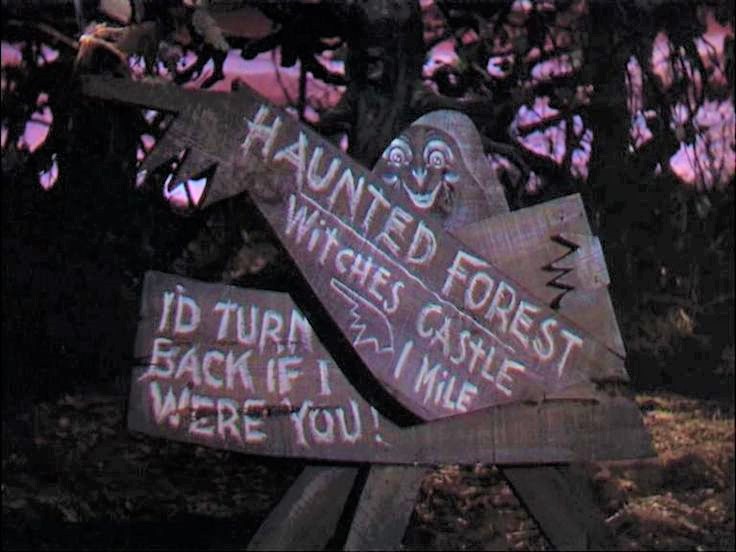
Good advice…

 “I’d turn back if I were you!” – the message printed on the sign of the Haunted Forest in the classic film “The Wizard of Oz” – was, in my opinion, a wise suggestion. More on that in a bit.

It was August 15, 1939 when “The Wizard of Oz” premiered and, despite costing more to produce than it took in during its theatre run, has become a beloved American classic. In fact, it was named by the American Film Institute as the number one fantasy film ever made.

Nominated for six Academy Awards it lost out to “Gone With The Wind” for best picture. It did win two other awards, however, including best song for the instantly recognizable “Over The Rainbow” and for the best Musical score.

One of the iconic scenes from the film “Over The Rainbow.”

The film was heralded from the very beginning. From the Infallible Wikipedia:

“The film received much acclaim upon its release. Frank Nugent considered the film a ‘delightful piece of wonder-working which had the youngsters’ eyes shining and brought a quietly amused gleam to the wiser ones of the oldsters. Not since Disney’s Snow White and the Seven Dwarfs has anything quite so fantastic succeeded half so well.’ Nugent had issues with some of the film’s special effects, writing, ‘with the best of will and ingenuity, they cannot make a Munchkin or a Flying Monkey that will not still suggest, however vaguely, a Singer’s Midget in a Jack Dawn masquerade. Nor can they, without a few betraying jolts and split-screen overlappings, bring down from the sky the great soap bubble in which Glinda rides and roll it smoothly into place.’ According to Nugent, ‘Judy Garland’s Dorothy is a pert and fresh-faced miss with the wonder-lit eyes of a believer in fairy tales, but the Baum fantasy is at its best when the Scarecrow, the Tin Man, and the Lion are on the move.’”

One of my earliest memories is when the film was broadcast just once a year on TV. My family lived in Clarkston, Washington the year I was four and it may have been the first year we had a TV in the house.

While my memories from that young age are limited, I do know that my dad made popcorn and that watching the movie was a highly anticipated and exciting family event. Some of the rest of the activities of that day are fuzzy but it was talked about in subsequent years. Having a TV in your home in 1961was a big deal. In fact, in 1954 about 55 percent of households had a TV. In 1962 that number jumped to 90 percent. So my thinking that it was the early 1960’s when our family got our first television is likely accurate.
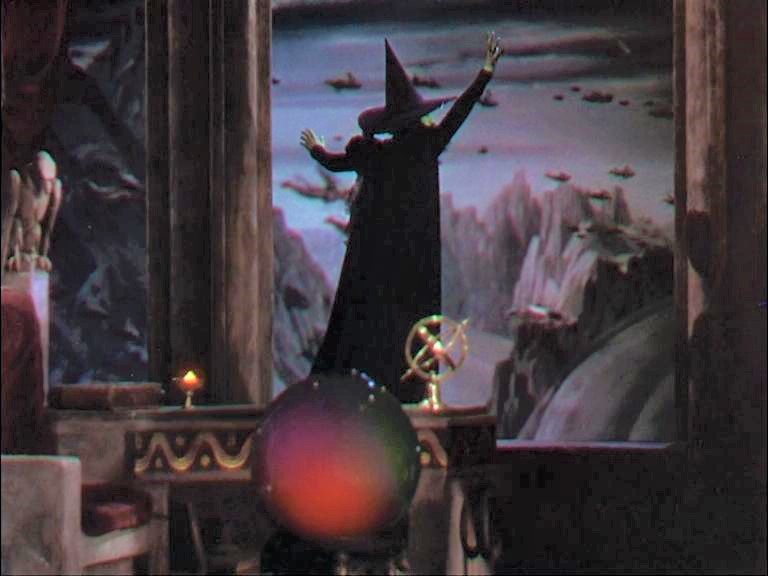
“Now Fly! Fly! Fly!

But not every family had a television including one set of our neighbors. The day of “The Wizard of Oz” showing, the two oldest daughters of that family showed up at our door with hopes of getting to watch the film. My dad, however, had to turn them away as their parents did not approve of TV and they were not allowed to watch TV. Ever. I know my dad always felt bad about that since he would have welcomed all the neighborhood kids in to watch.

But back to four year old me. I was enthralled by the story of a farm girl who gets carried away by a tornado eventually landing in a magical world. Everything went pretty well right up to the point that Dorothy and her entourage enter the Haunted Forest and they encounter the sign which advises, “I’d turn back if I were you.” When, a minute and a half later, the Wicked Witch of the West is standing silhouette in her castle window and screaming “Fly! Fly! Fly!” to her army of flying monkeys I took that advice.

I was so afraid I left the room and didn’t return for the rest of the movie! Of course I did eventually see the entire film many, many times and loved our family’s annual tradition to watch it. I even shared it with my own children despite my fear that they, too, would be traumatized.

Even now, watching the clip of that scene evokes memories of my childhood terror. As a general rule I will not watch Horror* movies… in fact when the movie “Alien” was shown on TV in the early 1980’s, the scene where the Alien is stalking its victims sent me scurrying to the kitchen to make popcorn for those watching. But I never returned. Some things never change.

I’m off to see the wizard!

The whole story of how the movie was made is a good read. https://en.wikipedia.org/wiki/The_Wizard_of_Oz_(1939_film)

*Some folks claim ‘Alien’ is a Sci-Fi film… but when one does a search of the Best Horror films, it’s on the list.

Dark Shadows

My Generation’s version of Twilight

June 27, 2023

  • A Tuesday Newsday Classic – updated
Romantic hero of Dark Shadows, Barnabas Collins

Ask any person of my generation if they know who Barnabas Collins is and you are likely to get an enthusiastic response something to the effect of:

“I made sure I was home by 4 o’clock every day so I wouldn’t miss an episode.”

The aforementioned Barnabas was, by any definition, the romantic hero of the always melodramatic Dark Shadows. One look at his face and you might ask yourself “Really?”

Hold that thought. We’ll get back to his appeal in a bit.

June 27, 1966 marked the date when Dark Shadows premiered on ABC. The show, originally cast in black and white, captured the imaginations of millions of teens and pre-teens and became ‘must watch’ TV. In the course of its five year run, 1,225 episodes were aired. Like other daytime soap operas it featured storylines which took months to resolve and characters that became household names. But unlike any other shows at that time it was centered on vampires and werewolves, time travel and alternate existences.

From the Infallible Wikipedia:

The opening screen of the TV series

“Perhaps one of ABC’s first truly popular daytime series, along with the game show Let’s Make a DealDark Shadows found its demographic niche in teenagers coming home from school in time to watch the show at 4 p.m. Eastern / 3 p.m. Central, where it aired for almost all of its network run, the exception being a 15-month stretch between April 1967 and July 1968, when it aired a half-hour earlier. Originally, it was aired in black-and-white, but the show went into color starting with the August 11, 1967 installment transmission. It became one of ABC’s first daytime shows to actually win its timeslot, leading to the demise of NBC’s original Match Game and Art Linkletter’s long-running House Party on CBS, both in 1969.”

Dark Shadows reached its peak in March 1969. It was in those episodes when Barnabas figured prominently and was romantically involved with Angelique Bouchard. One particular episode stands out.

Barnabas and Angelique… a volatile relationship at work

Barnabas was in love with the blonde beauty and he takes her to his room. Ahem. Barnabas is conflicted as he wants to be with her but is concerned his passion will carry him away and he will ‘bite’ Angelique’s neck, thus killing her and she, too, will become a vampire. An outcome he does not want. I cannot recall if he did or did not bite her but I do recall that the show implied that the two of them engaged sexually. Powerful stuff for a kid of 12.

Barnabas did not have to be young or classically handsome as he was a compelling character and we Dark Shadow’s fans were completely enthralled.

I know that Dark Shadows influenced me as a writer. The power of the show was derived by what was left out; the idea of mysterious forces at work which left much to the imagination. In the late 1960’s and early 1970’s you couldn’t air a program that showed explicit acts and that, I think, was a good thing.

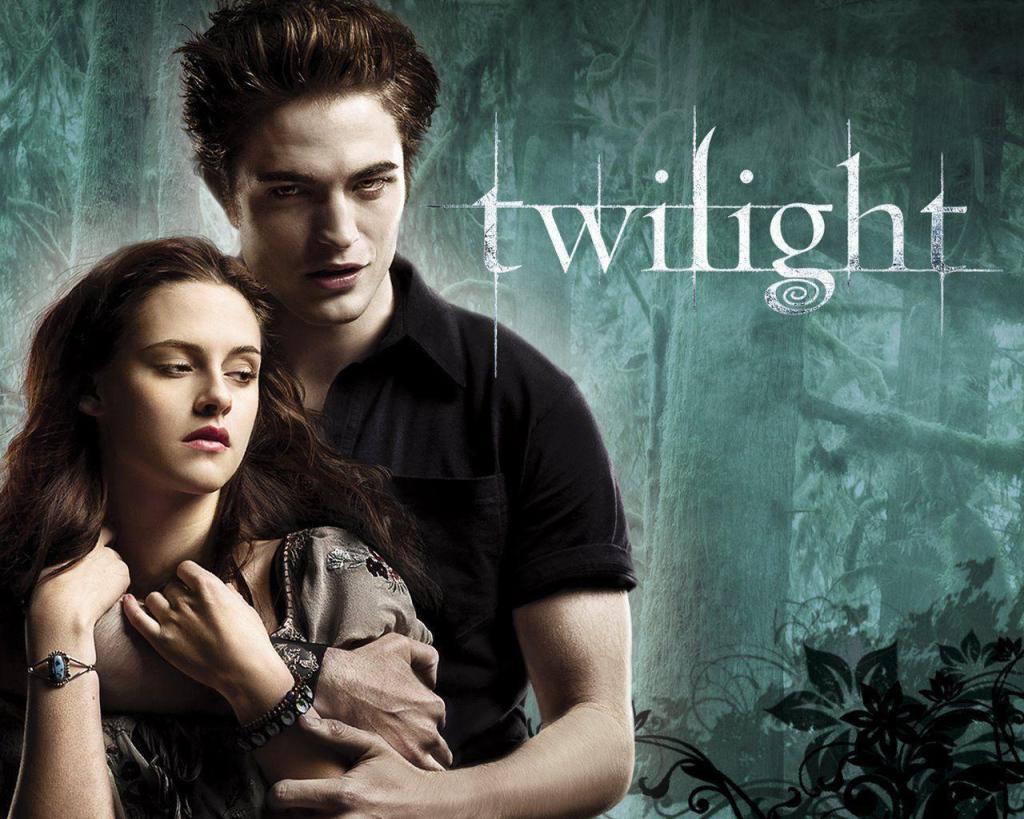
Supernatural themes are not uncommon in literature, film, or television, of course. And each generation seems to have their share of it. The year my own daughter turned twelve, 2005, she got her vampire and supernatural fix from the Twilight series of books. She and her friends were all agog over Bella, Edward, and Jacob, the main characters.

Vampires alive and well in the Twilight series of books and film

Being the ever watchful mother, I attempted to read the first novel so I would know what she was reading, but was put off by the pedestrian writing style and an overabundance of adverbs and gerunds. I never it made it to chapter two.

Somewhere along the way, apparently, I had become a grammar snob with a clear preference for active verbs and richer, more descriptive language.

But my daughter loved the books. And then the movies. I tried to watch one of those also but, alas, they just didn’t appeal to me.

Which brings us full circle to Dark Shadows. I’m certain if I were to watch the old episodes now the mystique would evaporate and I would find the characters and plot lines laughable. Instead, I choose to remember how much I enjoyed them as a pre-teen and let the snippets of a few remembered scenes live in my brain to serve as inspiration.

A couple of Infallible Wikipedia links:

https://en.wikipedia.org/wiki/Dark_Shadows

https://en.wikipedia.org/wiki/Twilight_(novel_series)

Enchanted

Happily Ever Ever After

November 22, 2022

One of the things that Disney is known for are heartwarming and charming movies aimed at children. Of course we think of the animated classics such as Snow White and the Seven Dwarfs. Peter Pan. Lady and the Tramp. Disney has also done films with actual people such as Mary Poppins and Old Yeller.

It was during the third week of November 2007, when Disney turned their formula on its head and created a truly charming movie which mixed animation and live actors to great effect.

Giselle decked out in her white wedding hoop dress and tiara. Lawyer Robert and Prince Edward behind her and the evil queen, Narissa, at top.

Enchanted is the story of several ‘animated’ characters: Giselle, Edward, Pip, and Narissa who, it would seem, will follow the somewhat predictable storyline of the poor young woman who meets and falls in love with the handsome prince. She is aided by a forest full of adorable animals and the only thing to stand in the way of Giselle and Edward’s happiness is the wicked queen, Narissa.

It is a twist in the story, however, which propelled this movie into a different realm when Giselle, dressed in an over the top, white hooped wedding dress, big hair and a tiara to top it all off, finds herself as a ‘human’ and in the middle of modern day New York City.

Giselle is played by Amy Adams who perfectly encapsulates the naiveté and charm one expects from an animated character made human. The Infallible Wikipedia tells us:

“Disguised as an old hag, Narissa intercepts Giselle on her way to the wedding and pushes her into a well, where Giselle is magically transformed into a live-action version of herself and transported to New York’s Times Square in the real reality. Giselle, frightened and confused, quickly becomes lost and homeless. Meanwhile, Robert, a single father and divorce lawyer, prepares to propose to his girlfriend Nancy. Robert and his young daughter Morgan encounter Giselle on their way home, and Robert begrudgingly allows Giselle to stay the night in their apartment at the insistence of Morgan, who believes Giselle is a princess”

Giselle communicating with her animal friend from the animated world, Pip.

I have to say, the Wikipedia account really does not do the movie justice. It is the on screen chemistry between Adams and the somewhat cynical lawyer Robert – portrayed by Patrick Dempsey – where the real magic happens.

While many of my readers might be tempted to dismiss Enchanted as a children’s film, I would suggest one should not. It’s funny for how the writers and producers take the formulaic Disney film and make fun of themselves in a truly charming and original way, right down to the animals which show up to help Giselle in the middle of the city.

My family saw the movie in the theatre during its original release in November 2007. I truly enjoyed every minute of the movie and it landed at least in the Top 20 list of my personal favorites.

At the time, my children were 14 and 17 and the last Disney movie we saw as a family. In fact, up until the early 2000’s the only movies I had seen were pretty much animated Disney movies.

There are times when someone will ask if I’ve ever seen ‘such and such.’ If it’s not familiar to me I will ask, “When did it come out? Was that in the 90’s?”

It pretty much always is. It’s then I admit that I rarely saw a single film or TV show in the 1990’s which wasn’t Disney or a kid’s program. Except for the month of January 1990, I was fully immersed in babies and little kids for the entire decade.

I have discovered, however, that there are some really terrific movies from the 1990’s which I’ve never seen: Saving Private Ryan, Schindler’s List, and Silence of the Lambs to name a few. It was at least a decade after the release of Forrest Gump that I finally saw that movie. One night about two years ago I happened upon the Shawshank Redemption and was hooked in. I’ve now seen that movie a second time and it landed on my top 20 list also.

One of these days I’ll watch the first three I listed and, no doubt, a whole bunch of others from the 1990’s. It’s kind of nice to have lists of new movies to watch on a late fall or winter evening.

But for today, it’s all about Disney and the enchanting Enchanted and a happily Ever Ever After story.

A couple of links:

https://en.wikipedia.org/wiki/Enchanted_(film)

https://parade.com/1214385/samuelmurrian/best-90s-movies/

Postscript: At long last there is a sequel to the original movie, Disenchanted, which was released this past Friday, November 18. The trailer can be found here: https://youtu.be/DY63dfyn7HQ

The Twilight Zone

The Dimension of Imagination

October 4, 2022

By the late 1950’s television programming experienced an explosion of creativity. New and innovative shows were being introduced. It was the first week of October, 1959, when one such show debuted. It went on to leave a huge cultural impact. The show: The Twilight Zone.

The Infallible Wikipedia explains that it “is an American science fiction horror anthology television series created and presented by Rod Serling, which ran for five seasons on CBS from October 2, 1959, to June 19, 1964. Each episode presents a stand-alone story in which characters find themselves dealing with often disturbing or unusual events, an experience described as entering ‘the Twilight Zone,’ often with a surprise ending and a moral. Although predominantly science-fiction, the show’s paranormal and Kafkaesque events leaned the show towards fantasy and horror. The phrase ‘twilight zone,’ inspired by the series, is used to describe surreal experiences.”

The show was truly groundbreaking and, since I was a very small child at the time and my mother forbid us from watching anything on TV she felt we could not handle, I never saw the show live, only a few reruns years later.

But even then, many of the episodes were disturbing. I present for your consideration the case of “Talking Tina,” a doll who seems to come to life. It’s a very creepy episode with a creepy doll. There’s just something about dolls which make them a rich target for horror.

Despite the often macabre nature of The Twilight Zone, it was highly successful and impactful. Also from the Infallible Wikipedia:

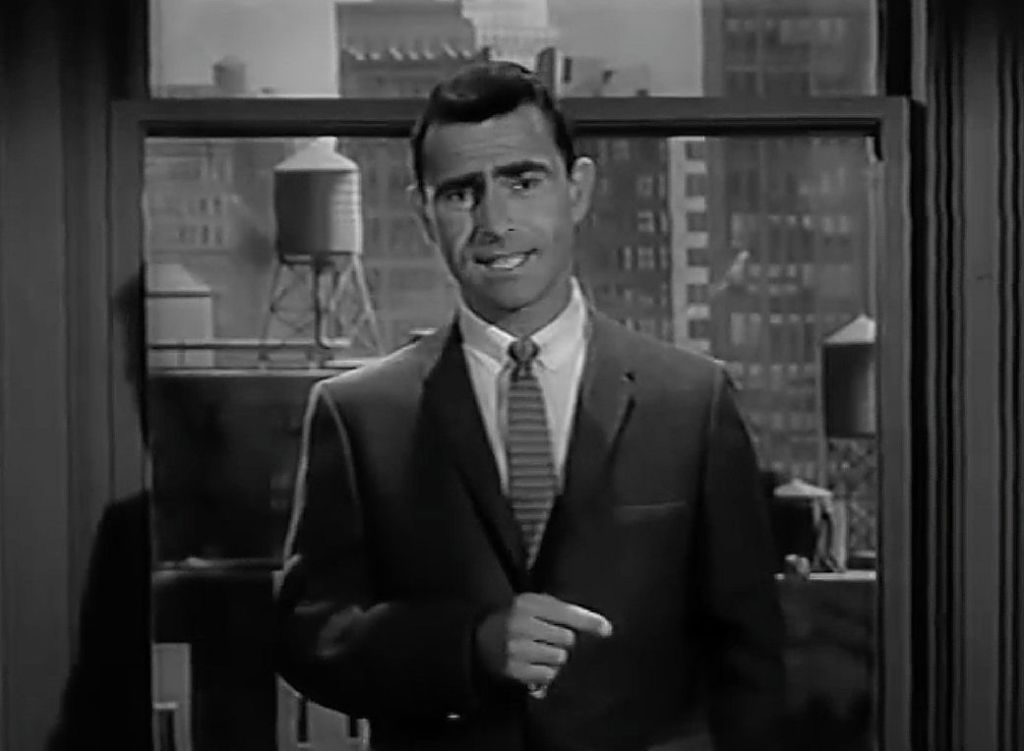
The person most associated with the Twilight Zone: Rod Serling

“The Twilight Zone is widely regarded as one of the greatest television series of all time. In 2002, the series was ranked No. 26 on TV Guide‘s 50 Greatest TV Shows of All Time. In 2004, it was ranked No. 8 on TV Guide’s Top Cult Shows Ever, moving to No. 9 three years later. In 2013, the Writers Guild of America ranked it as the third best-written TV series and TV Guide ranked it as the fourth greatest drama, the second greatest sci-fi show and the fifth greatest show of all time. In 2016, the series was ranked No. 7 on Rolling Stone‘s list of the 100 greatest shows of all time and was ranked No. 12 in 2022.”

One day, in the summer of 2003, I was in Yakima for the Rainbow Girls annual convention. On a whim, I decided to drive by the house where I grew up: 406 South 31st Avenue. I had done this from time to time out of interest as to how the house and neighborhood might look. Now most of us think that the place where we grew up will never change. But on that warm June afternoon I discovered things had changed.

I turned right onto 31st off Tieton Drive. I looked for the Osteopathic hospital where we’d ridden our bikes as kids; the small brick church next door; the Winterringer’s mid-century modern house across the street on the left.

At first, all seemed normal. But then, as I looked right again, something was off. The duplex where Mrs. Shaw lived wasn’t quite how I recalled it. I drove on and looked left. The house I grew up in was similar enough to how it had been when I was a kid to bring me comfort.

The author dressed for Easter? With the Goodhue house – one of the houses moved to a new location in 2003 – in the background. On beyond one can see the five story Memorial Hospital and its smokestack. Circa 1970

But across the street where the Shockley, and then the Goodhue, families lived, was a place I did not recognize. The house – which I had looked at nearly everyday from the time we moved there in 1961 until I moved away in the fall of 1977 – was still there but now it was perched on boards, lifted above the ground by several feet. The yard and plants, which Mr. Goodhue took meticulous care of, were gone. In their place were dirt and a backhoe.

I stopped the car and stared up and down the right side of the street. House after house was in a similar condition: up on boards sitting askew. It continued this way the entire block. The Dohrman’s house. The Bluhm’s. Everything on the right was in a state of disarray. Everything on the left was how I remembered.

Yes, the thought which dominated was that I had, in fact, entered the Twilight Zone. I was in a place I knew, but similar to a dream, the details were wrong. I continued my slow roll up the street and, although still shaken, drove on to my parent’s house where I was meeting them, my sister, my nieces and daughter for swim time.

Only then did I learn that Memorial Hospital, a block to the east, had purchased all of the houses on the right side of the street and that they were being moved, as a group, to a new part of Yakima. I had happened upon the project in the midst of extracting the houses just prior to when the move was to take place.

Photo from the Yakima Herald Republic 2003 of the excavation
One of the houses impacted by the Hospital expansion in the process of being moved. Yakima Herald Republic photo 2003

It took some digging, but I did find photographic evidence of the event in the Yakima Herald Republic newspaper which confirmed that this took place in the summer of 2003. Today, the right side of the street is adorned with an attractive fence and lovely trees and foliage.

Screenshot capture of how the street looks today from Google Maps. The house on the left with the flag is the one I grew up in. Note the lovely foliage on the right.

Except for those of us who, unsuspecting, happened upon it in the summer of 2003, it seems perfectly normal. But I know better. I know that it was once a part of the Twilight Zone.

A few links:

https://en.wikipedia.org/wiki/The_Twilight_Zone_(1959_TV_series)

https://en.wikipedia.org/wiki/List_of_The_Twilight_Zone_(1959_TV_series)_episodes

https://youtu.be/If3SXJeZzMQ (Twilight Zone Opening monologue)

Family Feud

A TV staple since 1976

July 12, 2022

The concept of this game show is fairly simple: two groups of five people – families – compete to see which group can successfully guess the top answers to questions answered by a studio audience.

The Family Feud premiered on July 12, 1976. It has been one of the longest running and most popular game shows on American television.

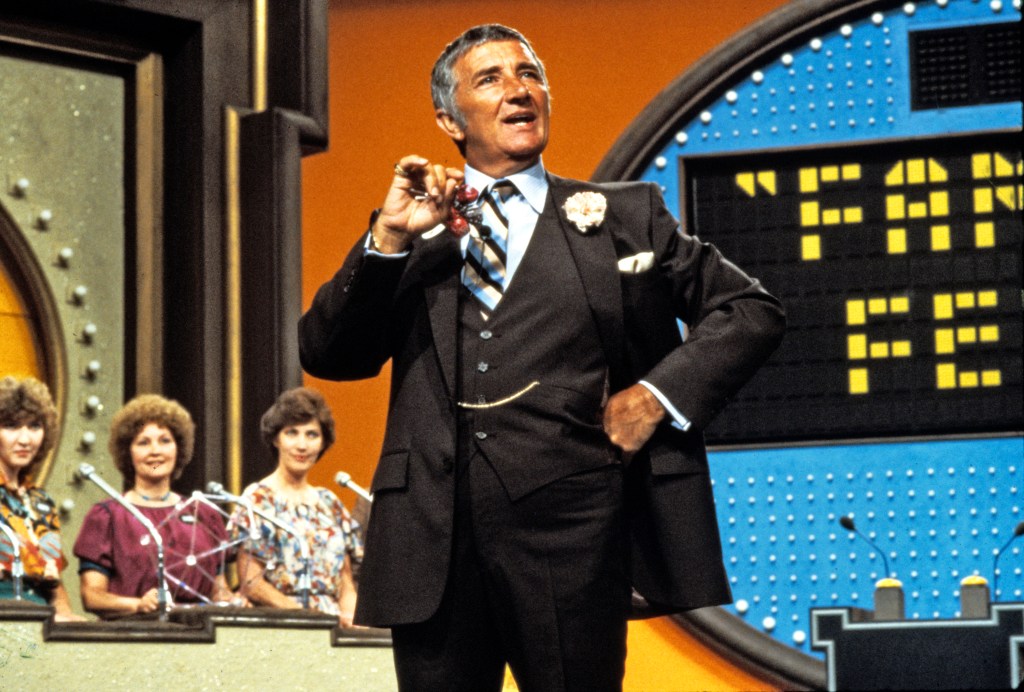
When it first went on the air, it was hosted by Richard Dawson, a British actor made famous as Lieutenant Newkirk on the 1960s sitcom, Hogan’s Heros. When that series ended, Dawson became a regular on The Match Game and was then made the first host of Family Feud.

Dawson was known for his kissing of the female contestants; a practice which drew criticism during the show’s first iteration. For Dawson, however, it seemed to have worked out well. From an article in Good Housekeeping, we learn:

UNITED STATES – APRIL 16: FAMILY FEUD – 4/16/81, Show coverage. Pictured: host Richard Dawson, (Photo by ABC Photo Archives/ABC via Getty Images)

“He allegedly asked viewers to vote on whether or not they would like him to stop. The votes came in 14,600 to 704 in favor of kissing, according to Hogan’s Heroes: The Unofficial Company. The book also reveals that contestants filled out a questionnaire before each game including, “Do you mind if Richard Dawson greets you with a kiss?” Apparently, not many declined.

As controversial as the kissing was, in 1981, Dawson planted a peck on a woman who would eventually become his second wife. Forty-nine-year-old Dawson met 24-year-old Gretchen Johnson when she was a contestant on the show.”

Dawson continued as host for the next nine years but the kissing stopped after he and Gretchen were married.

The show had two subsequent hosts after Dawson but the show – and game shows in particular – had lost popularity with the viewing public.

Dawson with future wife Heather when she was a contestant on the show.

That all changed when, in 2010, they hit upon Steve Harvey, a host who was so relatable that it’s ratings skyrocketed back to the top. The infallible Wikipedia shares:

“The show’s Nielsen ratings were at 1.5, putting it in danger of cancellation once again (as countless affiliates that carried the show from 1999 to 2010 aired it in daytime, graveyard or other low-rated time slots). Since Steve Harvey took over the show, ratings increased by as much as 40%, and within two short years, the show was rated at 4.0, and had become the fifth-most-popular syndicated program. Fox News’ Paulette Cohn argued that Harvey’s ‘relatability,’ or ‘understanding of what the people at home want to know,’ was what saved the show from cancellation; Harvey himself debated, ‘If someone said an answer that was so ridiculous, I knew that the people at home behind the camera had to be going, ‘What did they just say?’ … They gave this answer that doesn’t have a shot in hell of being up there. The fact that I recognize that, that’s comedic genius to me. I think that’s [what made] the difference.’

One of the things which has endeared Steve Harvey to Family Feud fans is his expressive face.

Steve Harvey’s Family Feud has regularly ranked among the top 10 highest-rated programs in all of daytime television programming and third among game shows (behind Wheel of Fortune and Jeopardy!); in February 2014, the show achieved a 6.0 share in the Nielsen ratings, with approximately 8.8 million viewers. In June 2015, Family Feud eclipsed Wheel of Fortune, which had been on top for over 30 years, as the most-watched syndicated game show on television, and consistently began ranking among the top three shows in all of syndication.”

Unlike Dawson, Harvey does not kiss the female contestants. I think the thing which makes him so endearing is that he clearly is having fun as he hosts. You see him laughing along with the contestants and the audience at the ridiculous answers often given.

I had not watched Family Feud since the 1970’s when Dawson was the host. But in early 2012 when my mother landed in one particular care facility, their version of getting the residents up and interactive was to move them to a half circle of recliners set up to watch TV each morning and afternoon.

In my mother’s ‘house’ there were six residents plus one particular twice a day visitor and fixture, also known as my Dad. When I would visit Mom at the facility, Family Feud was often playing on the big TV.

For me, I always enjoyed the show but my dad, well, not so much. Every day there seemed to be a battle over ‘what’ would be watched on the living area TV. Dad consistently angled to get control of the remote and soon Family Feud was gone and Gunsmoke or Gilligan’s Island reruns would be playing.

Sometimes the residents – who seemed to like Family Feud – would complain and one of the staff would switch the TV back to the game show.

That sometimes would prompt Dad to get Mom up and we’d return to her small room to visit there.

After leaving that facility, Mom had a TV in her room at the new Adult Family Home and Dad always had control of the remote when he was there. I can’t say I’ve ever seen Family Feud on TV again.

But there is, of course, the internet. YouTube has, literally, hundreds of clips which provide endless hours to waste, er, research for this topic.

For a more exhaustive look at Family Feud, here are a few links:

https://en.wikipedia.org/wiki/Family_Feud

https://www.goodhousekeeping.com/life/a46188/richard-dawson-kssing-family-feud/

Close Encounters of the Third Kind

This Is Important. It Mean’s Something.

November 16, 2021

Perhaps more than any other element of this Academy Award Nominated (and win in one category) film, is its memorable five note musical sequence.

For those unfamiliar with Close Encounters of the Third Kind, the five notes are how the extraterrestrials who make contact with earth communicate where they are going to set up shop, so to speak.

When this film premiered on November 16, 1977, it launched movie goers into a Science Fiction world which felt quite real.

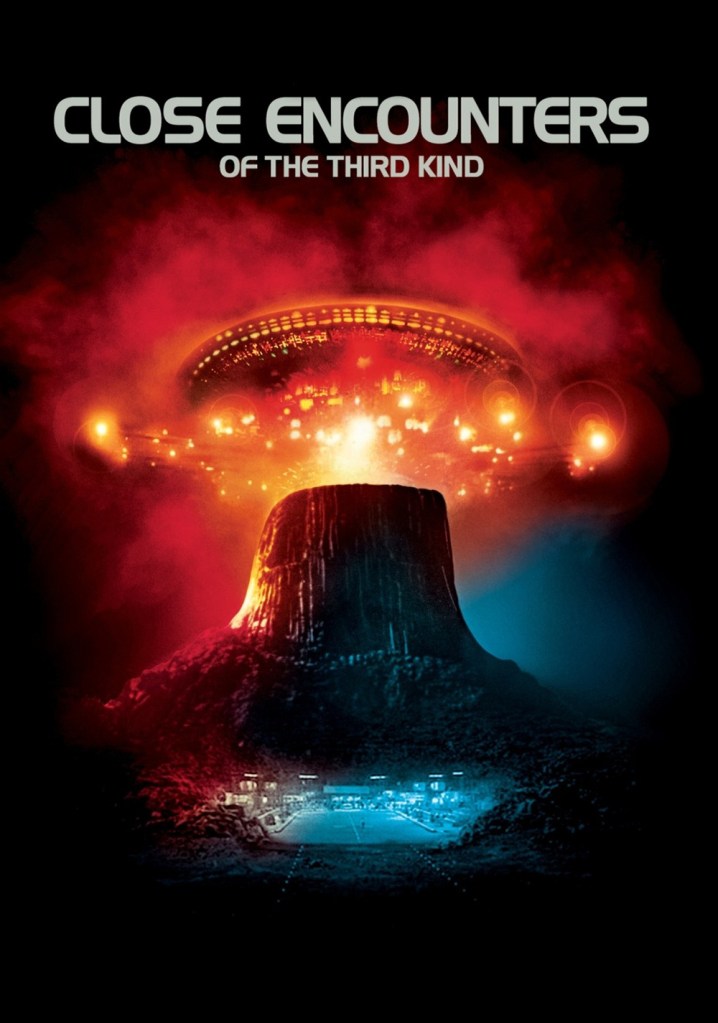
Devil’s Tower looks nothing like this poster portrays it.

The premise of the movie is multi-faceted, but the main protagonist – played by Richard Dreyfuss – is key to telling the story of the arrival of extraterrestrials and humankind’s ‘close encounters of the third kind.’ We go to the Infallible Wikipedia for more information:

“At a rural home (In Indiana), three-year-old Barry Guiler wakes to find his toys operating on their own. He starts to follow something outside, forcing his mother, Jillian, to chase after him. Large-scale power outages begin rolling through the area, forcing electrician Roy Neary (Dreyfuss) to investigate. While he gets his bearings Roy experiences a close encounter with a UFO, and when it flies over his truck it lightly burns the side of his face with its lights. The UFO takes off with three others in the sky, as Roy and three police cars give chase. The spacecrafts fly off into the night sky but the metaphysical experience leaves Roy mesmerized. He becomes fascinated by UFOs to the dismay of his wife, Ronnie, and begins obsessing over subliminal images of a mountain-like shape, often making models of it. Jillian meanwhile also becomes obsessed, sketching the unique mountain image. Soon after, she is terrorized in her home by a UFO which descends from the clouds. She fights off violent attempts by the UFO and unseen beings to enter the home, but in the chaos Barry is abducted. (snip)

 Witnesses in Dharamsala, Northern India report that the UFOs make distinctive sounds: a five-tone musical phrase in a major scale. Scientists broadcast the phrase to outer space, but are mystified by the response: a seemingly meaningless series of numbers (104 44 30 40 36 10) repeated over and over until (scientist David) Laughlin, with his background in cartography, recognizes it as a set of geographical coordinates, which point to Devils Tower near Moorcroft, Wyoming. Lacombe and the U.S. military converge on Wyoming. The United States Army evacuates the area, planting false reports in the media that a train wreck has spilled a toxic nerve gas, all the while preparing a secret landing zone for the UFOs and their occupants.”

Despite the movie being firmly in the category of science fiction, it is Richard Dreyfuss’ character which provides the humanity needed to make the movie compelling and memorable. He does a superb job of portraying someone who has experienced a life altering traumatic event. Neary’s quest to go to Devil’s Tower sets up the dramatic final scenes and left audiences everywhere believing that such an encounter could truly happen.

If you have never seen the movie, it is one which was recognized in 2007 as “‘culturally, historically, or aesthetically significant’ by the United States Library of Congress, and was added to the National Film Registry for preservation. In American Film Institute polls, Close Encounters has been voted the 64th-greatest American film, the 31st-most thrilling, and the 58th-most inspiring. It was also nominated for the top 10 science fiction films in AFI’s 10 Top 10 and the tenth-anniversary edition of the 100 Movies list.The score by John Williams was nominated for AFI’s 100 Years of Film Scores.”

I feel pretty certain I did not see it during its initial release. In the fall of 1977 and early winter of 1978, I was immersed in college life and, being perpetually broke and busy with other social events, it likely never made it to my radar screen.

But when I did eventually see it, the premise intrigued.

I had heard about UFO’s and was somewhat familiar with the legend of their appearance near Mt. Rainier in the late 1940’s. In January of 1980, as a reporter in Eatonville, Washington, I had the opportunity to consider if extraterrestrials could possibly be true and wrote about that experience in one of my blogs from a few years ago: https://barbaradevore.com/2018/03/27/a-blast-from-the-past/

It was in 1989, however, when the hubby and I made it to Devil’s Tower to determine, first hand, if a giant alien ship really could have landed on top of that volcanic plug.

1989 was a ‘camping’ trip vacation and the hubby and I had a tent which we dubbed ‘Darth Vader.’ The reason for this was that the tent – when fully set up with the rain fly over it – looked a lot like the helmet worn by the Star War’s villain. Our first child had not yet arrived in the world although he was in process.

How Devil’s Tower looked during our 1989 trip

Since it was still early in the pregnancy, sleeping on an air mattress in a tent was acceptable. We had camped our way from Seattle to Yellowstone and from there had headed northeast towards Devil’s Tower. Or at least I think that’s what we had done.

The day we arrive it’s getting on toward sunset and it’s windy and a bit stormy. And although WE got our tent set up and firmly secured, it was moments before the wind and rain swept into the campsite. We watched from inside our car as one tent rolled over and over ending up in the river; objects flew past our car.

Fortunately, the squall soon passed and the rest of the night was without incident. The next day we hiked around the base of the tower and learned that, no, the top of the rock looked nothing like the massive spot where the aliens landed in Close Encounters.

Fast forward to 1998. We are now touring in style, towing an 18-ish foot travel trailer complete with kitchen, indoor plumbing, a dining table, and bunks for the kids. The kids are 8 and 5 and we head out to Yellowstone, Mt. Rushmore, and Devil’s Tower. It’s August 1998.

The afternoon we arrive at Devil’s Tower campground it’s hot but that’s to be expected. What’s not to be expected is a repeat of the 1989 trip… yet there we are.

The storm clouds roll in and there’s lightning. The wind picks up. Rumor has it that there are climbers up on Devil’s Tower who, because of the thunderstorm, cannot get down from it.

We had just finished dinner when we see the park ranger approach our campsite. Although I cannot remember his exact message, I will paraphrase:

“We are under a tornado warning (or perhaps it was only a watch?) and it’s recommended that you seek shelter. You can go to the bathrooms or, if not that, buckle yourselves into the seatbelts of your car.”

Oooookay…

I remember looking over at the cinderblock bathrooms and being repulsed by the idea of staying inside the musty cement building for who knows how long.

So we all climbed into the Wrastromobile (1998 White Chevy Astro Van), buckled up and waited for the tornado. My five year old daughter and I were in the back seat. She never let go of my hand, traumatized by the thought that we were going to be pulling a Dorothy and end up soaring up in the funnel, still buckled into our seats. The tornado never arrived.

Obsessed with the imagery of Devil’s Tower, Roy Neary makes models of the mountain out of everything, including mashed potatoes

Eventually, the ranger came back by and said the warning was past. So we exited the van, had a campfire and watched the sunset over Devil’s Tower. The next day we learned that there had been a EF-0 tornado about 20 miles away in Moorcroft.

The next evening, while staying further west in Buffalo, Wyoming, we experienced a high wind event which, although it was not an official tornado, ripped the awning off of our trailer, took down a bunch of branches, removed all the recycled cans from the wire bins in the campground, and generally left the place a mess.

And although we never saw any extraterrestrials landing their ships atop Devil’s Tower, I’m convinced that whatever happens there is important and it means something. But I’m in no hurry to go back and tempt fate with a close encounter a third time.

https://en.wikipedia.org/wiki/Close_Encounters_of_the_Third_Kind

Mork and Mindy

Na-Nu, Na-Nu

September 14, 2021

Na-nu, Na-nu! This phrase – unknown before September 14, 1978 – became a part of the American cultural vernacular thanks to the incomparable Robin Williams in his role as Mork in the sitcom Mork and Mindy.

The show catapulted Williams to fame and fans of the show tuned in every week to see what crazy new thing Mork would do.

The story of Mork began the previous year as a plot line in the popular TV show Happy Days. In one episode Richie encounters Mork – an alien from the planet Ork – who attempts to capture Richie and take him back to his planet for study.

Apparently fans loved the Mork character and the concept. The Infallible Wikipedia tells us:

“Mork appears in the Happy Days season five episode ‘My Favorite Orkan’, which first aired in February 1978 and is a take on the 1960s sitcom My Favorite Martian. The show wanted to feature a spaceman in order to capitalize on the popularity of the then recently released Star Wars film. Williams’ character, Mork, attempts to take Richie Cunningham back to his planet of Ork as a human specimen, but his plan is foiled by Fonzie. In the initial broadcast of this episode, it all turned out to be a dream that Richie had, but when Mork proved so popular, the ending in the syndicated version was re-edited to show Mork erasing the experience from everyone’s minds, thus meaning the event had actually happened and was not a dream.”

The spin off show catapulted to the #3 spot on TV during its inaugural season, leaping ahead of Happy Days in the ratings.

Also from the Infallible Wikipedia:

Mork arrives on earth in an egg

Mork arrives on Earth in an egg-shaped spacecraft. He has been assigned to observe human behavior by Orson, his mostly unseen and long-suffering superior (voiced by Ralph James). Orson has sent Mork to get him off Ork, where humor is not permitted. Attempting to fit in, Mork dresses in an Earth suit, but wears it backwards. Landing in Boulder, Colorado, he encounters 21-year-old Mindy (Pam Dawber), who is upset after an argument with her boyfriend, and offers assistance. Because of his odd garb, she mistakes him for a priest and is taken in by his willingness to listen (in fact, simply observing her behavior). Snip

Culturally, the impact was huge and spawned a variety of toys and games

Storylines usually center on Mork’s attempts to understand human behavior and American culture as Mindy helps him to adjust to life on Earth. It usually ends up frustrating Mindy, as Mork can only do things according to Orkan customs. For example, lying to someone or not informing them it will rain is considered a practical joke (called ‘splinking’) on Ork. At the end of each episode, Mork reports back to Orson on what he has learned about Earth. These end-of-show summaries allow Mork to humorously comment on social norms. Snip

This series was Robin Williams’ first major acting role. Pam Dawber found him so funny that she had to bite her lip in many scenes to avoid breaking up in laughter and ruining the take, often a difficult task with Williams’ talent.”

In the fall of 1978, I was 21 years old and in college so I didn’t see every episode of Mork and Mindy. But the show, specifically Williams’ role, made an impression. My fellow sorority sisters and I loved Mork and soon mimicked some of his outrageous phrases and antics.

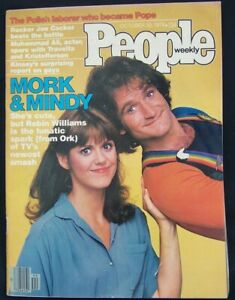
People magazine cover October 1978

We greeted each other with “Na-nu, Na-nu” and the accompanying hand gesture; we used the term “Kay Oh” instead of “Oh Kay.” The crazier male students attempted to ‘sit’ on their heads. In many ways Mork provided a primer on how to be outrageous which, when you are in college, is a goal for many.

Mork and Mindy was like fireworks, bursting onto the television scene, in a soaring arc of sparks and light. Many tuned in just to see what crazy thing Williams would say and do. I can only imagine how exhausting it must have been for Williams to keep it up week after week.

Although the series remained popular in subsequent seasons, nothing quite compared to its meteoric season one.

Occasionally, I still find myself saying “na-nu, na-nu” or “K-O” without even realizing how these terms – so very novel when first uttered – have become a part of American culture. All due to an alien named Mork who conquered the world in September 1978.

The link:

https://en.wikipedia.org/wiki/Mork_%26_Mindy

Answers to the Facebook post: Three’s Company (1976), Mork and Mindy (1978), Taxi (1978), Welcome Back, Kotter (1975), and Laverne and Shirley (1976)

The Lion King

The Circle of Life

June 15, 2021

An often repeated conversation in my household goes like this:

Hubby: “What movie would you like to watch tonight?”

Me (Scrolling through the list showing up on the TV): “How about __________________ (picks some random 1990’s era movie). We haven’t seen that one.”

Hubby: “Yes we have.”

Me: “Maybe you have. I didn’t see any movies in the 1990’s.”

This statement is not, however, entirely true. I did see movies in the 1990’s but most of them were rated “G” or “PG” and the main characters were animated.

On June 15, 1994, when The Lion King was released, I had a four year old and a one year old. It was one of the rare movies we went to the theater to see. More on that in a bit.

The Lion King is the story of Simba – a cub born to parents Mufasa and Sarabi. Mufasa is the king of the lion pride much to the consternation of his younger brother, Scar. Jealous of Mufasa, Scar convinces a pack of hyenas to trap and kill Mufasa but pins his brother’s death onto his young nephew Simba. Simba is driven from the pride and ends up in an unlikely friendship with a warthog and meercat (Pumba and Timon).

Eventually Simba grows up and, with the help of Pumba, Timon, and lioness Nala, battles with Scar. Victorious, Simba assumes his rightful place as the heir to Mufasa’s kingdom, ascending to the top of Pride Rock.

According to the Infallible Wikipedia:

“The Lion King was released on June 15, 1994, to a positive reaction from critics, who praised the film for its music, story, themes, and animation. With an initial worldwide gross of $763 million, it finished its theatrical run as the highest-grossing film of 1994 and the highest-grossing animated film. It is also the highest-grossing traditionally animated film of all time, as well as the best-selling film on home video, having sold over 30 million VHS tapes. (snip) The Lion King garnered two Academy Awards for its achievement in music and the Golden Globe Award for Best Motion Picture – Musical or Comedy. (snip)

In 2016, the film was selected for preservation in the United States National Film Registry by the Library of Congress as being ‘culturally, historically, or aesthetically significant’.  It is, as of December 2019, the only Disney film to have been dubbed in Zulu, the only African language aside from Arabic to have been used for a feature-length Disney dub.”

The film appealed to both children and adults. The script was full of subtle jokes aimed at the grownups and lovable characters to inspire the imaginations of kids.

Soon after its release our family of four went to the theater to see it. Both our children loved the animated Disney movies. Peter Pan and Robin Hood were particular favorites of our four year old son. But as soon as he saw The Lion King, it took over his imagination.

‘Pride Rock’ was in the thick of play time from this March 1995 photo. The evil “Scar” is literally hanging from the edge.

That summer we would drive from our home on the east side of Lake Sammamish clear to the Burger King on 85th in Kirkland. Every week we made the trek in order to collect The Lion King figures from the Kid’s meals. Soon each child had their own Mufasa and Simba and all the rest of the characters. The two lion brothers would frequently engage in battle through the imagination of my child.

When The Lion King was released to VHS on March 3, 1995, the obsession really ramped up.

Our four year old had some other interests as well, of course. Chief among these was to build things. He loved hammers and nails and would spend hours pounding nails into Dad approved boards. The child even had his own workbench with real tools.

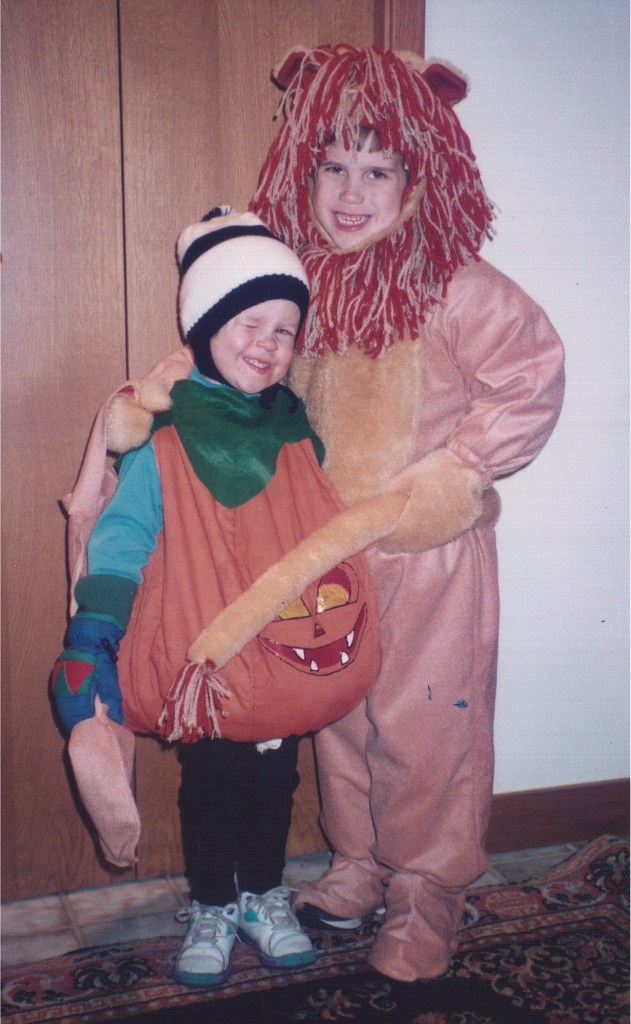
Getting in touch with his inner Simba in a Mom created costume for Halloween 1994

The acquisition of the VHS movie, however, turned into a daily viewing of the film. Soon there were elaborate sets constructed for the Burger King toys including a version of Pride Rock. Of course it really looked nothing like the Pride Rock from the movie. It was about 18 inches tall and built from 2 x 4’s and plywood. But in my son’s eyes it WAS Pride Rock.

I don’t recall when the compulsion ended. What I do know is that I heard the songs so often that I know all the words and can sing every one. Eventually the wooden Pride Rock was disassembled and he moved on to new interests which included, at various times, dinosaurs, rocks, coins, Pokemon trading cards, Legos, and video games, to name a few.

For a parent there is a particularly poignant moment in the movie when Simba – still a cub – is frustrated by having to follow his father’s rules and declares, via song, I Just Can’t Wait to Be King. It is the oft heard child’s lament, in a hurry to grow up, not knowing just how special it is to be a ‘cub’ without real world worries.

For me, I think it was okay to not see the majority of ‘grownup’ TV shows or movies from the 1990’s. It’s one of the best things about having kids – one gets to immerse themselves in the child’s world – and, for a short time, see the world through their eyes. It’s the circle of life.

https://en.wikipedia.org/wiki/The_Lion_King

Star Wars

“I’ve Got a Bad Feeling About This”

May 25, 2021

From the moment these words first scrolled up the movie screen – along with the dramatic opening chords of John William’s soundtrack – moviegoers were immersed in a fictional world full of drama, conflict, intrigue, good vs. evil, and – ultimately – a cliffhanger ending to the first of what was to become, arguably, the most successful franchise in movie history.

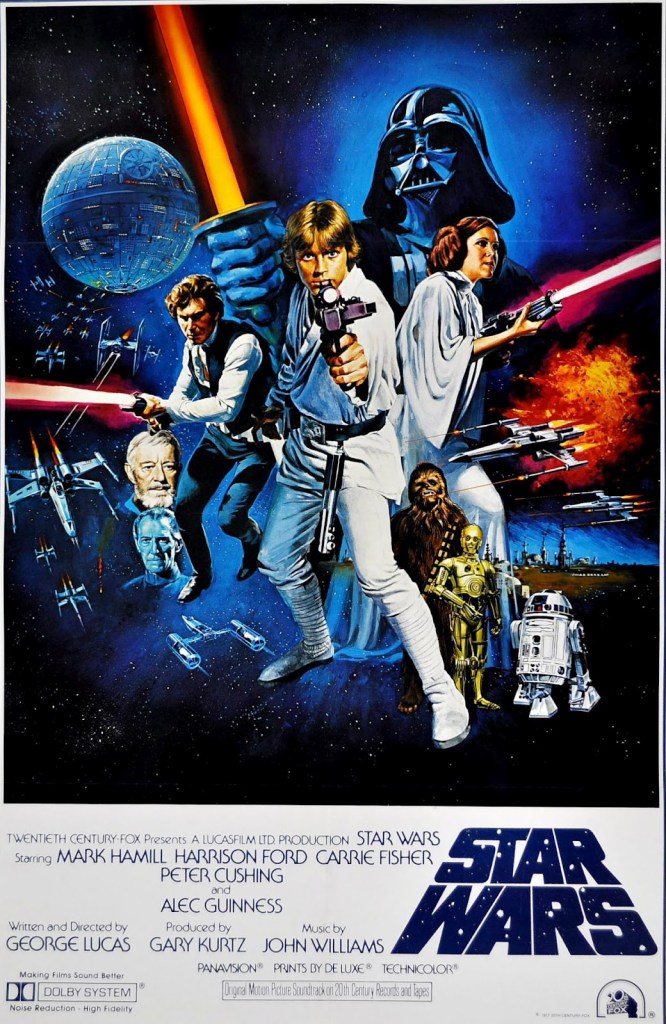
Star Wars: A New Hope was released on May 25, 1977. From the Infallible Wikipedia:

“After a turbulent production, Star Wars was released in a limited number of theaters (snip), and quickly became a blockbuster hit, leading to it being expanded to a much wider release. The film opened to critical acclaim, most notably for its groundbreaking visual effects. It grossed a total of $775 million (over $550 million during its initial run), surpassing Jaws (1975) to become the highest-grossing film at the time until the release of E.T. the Extra-Terrestrial (1982). When adjusted for inflation, Star Wars is the second-highest-grossing film in North America (behind Gone with the Wind) and the fourth-highest-grossing film in the world. It received ten Oscar nominations (including Best Picture), winning seven. In 1989, it became one of the first 25 films that was selected by the U.S. Library of Congress for preservation in the National Film Registry for being ‘culturally, historically, or aesthetically significant’. At the time, it was the most recent film in the registry and the only one chosen from the 1970s. In 2004, its soundtrack was added to the U.S. National Recording Registry, and was additionally listed by the American Film Institute as the best movie score of all time a year later. Today, it is widely regarded by many in the motion picture industry as one of the greatest and most important films in film history.”

It was, in many ways, the quintessential ‘cowboy’ movie but updated for an audience which had watched men land on the moon in 1969. It appealed to, particularly, the male need for adventure. Its heroes were simultaneously recognizable, yet also fresh, characters: Luke Skywalker – still a boy – who chooses to leave his boring home and seek out adventure; Obi-Wan Kenobe, the sage elder who takes Skywalker under his wing and teaches him the ways of the freedom fighting Jedi; Princess Leia who redefines the idea of a damsel in distress; and, especially, the bootlegger Han Solo whose swashbuckling antics left millions of women with serious crushes.

Rather than recount the plot of the movie for those who have never seen it, the Infallible Wikipedia offers a summary (https://en.wikipedia.org/wiki/Star_Wars_(film)) or you can Google ‘Star Wars A New Hope’ which produces 24.9 million results.

Harrison Ford, Peter Mayhew, Mark Hamill, Carrie Fisher in their roles as
Han Solo, Chewbacca, Luke Skywalker, and Princess Leia.

Personally, I think every person should watch at least the 1977 movie through the lens of the classic American cowboy movie. The weapons and horses may be different but the formula is still the same.

I must also admit that I did NOT see the first movie that year. At 19, I thought the movie was for kids. In fact, I cannot say for sure when I did eventually see the film. The second movie, The Empire Strikes Back, arrived in theatres on May 19, 1980 and the third, The Return of the Jedi, on May 25, 1983.

All of this is mentioned for one reason. As far as I’m concerned, episodes IV, V, and VI ARE Star Wars. The original cast, the campiness, and the fun of those movies were not to be replicated.

By early 1983 pretty much everyone had seen the first two movies and eagerly awaited the release of The Return of the Jedi. The hubby and me were no different.

R2D2 and C3PO

Finally the day arrived. Of course it was a Wednesday and with work and jobs we were not going to be a part of a midnight showing. Instead we waited a couple of weeks for when Microsoft reserved the ENTIRE UA150 theatre in Seattle for an exclusive showing for its employees (of which I was one).

That’s when the hubby and I hatched a plan. Across the street from that venue on 6th and Blanchard in downtown Seattle was the UA70 which was showing both of the first two movies. On the day of the event, we arrived that morning – like at 9 a.m. – to view movie number one. We may have been two of only a handful of people present when the place opened. This was followed by the second movie and then, after grabbing a bite to eat, we joined the Microsoft crew for Jedi. Now, we were not quite as crazy as some of the Microsofties who arrived dressed in costume and sporting light sabers. Although some people thought the marathon Star Wars day was kinda nuts.

I still experience the event in my mind when, as soon as the iconic ‘A long time ago, in a galaxy far, far away,’ appeared on the screen a cheer rocked the theatre. For the next hour and half the venue was filled with cheers and gasps and applause as our heroes eventually won the day.

The UA150 in Seattle during the 1980 release of The Empire Strikes Back. From the Seattle Times archives

We loved doing the Star Wars triple and learned a few things: Harrison Ford is much sexier than Mark Hamill; the line ‘I’ve got a bad feeling about this’ repeats multiple times throughout all three movies; the hubby can ‘talk’ like a wookie; and ewoks are cute but totally annoying.

Eventually we purchased VHS, and then DVD, versions of the three movies and introduced our kids to them. We also watched subsequent Star Wars movies in the theaters but, truly, it was never the same. After enduring the obnoxious Jar Jar Binks character we quit watching and were content to revisit the three originals from time to time in that galaxy far, far away from the comfort of our living room.

The answer to the Facebook question is: all three- Han, Leia, and Luke – said it at one time during the three movies.

The Sound of Music

I’ll Sing Once More

May 4, 2021

The 1965 promotional poster

When this film was released in the spring of 1965, I wonder if its creators ever dreamed of the incredible impact it would have on the world.

The Sound of Music was the number one film of that year and spent 29 of 52 weeks at the top of the box office lists; its popularity continued into 1966. In all, it was in the premier slot for a total of 40 weeks and became the highest grossing film of all time – a distinction it held for five years.

Frankly, one would have to have lived in a technology devoid place for their entire life to never have heard of the film.

It began life as a Broadway Musical in 1959 before it was adapted for the silver screen. The story was based on an autobiographical book by Maria Von Trapp who, along with her family, escaped Austria just as WWII was about to begin. The Infallible Wikipedia tells us:

“Based on the 1949 memoir The Story of the Trapp Family Singers by Maria von Trapp, the film is about a young Austrian postulant in Salzburg, Austria, in 1938 who is sent to the villa of a retired naval officer and widower to be governess to his seven children. After bringing love and music into the lives of the family, she marries the officer and, together with the children, finds a way to survive the loss of their homeland to the Nazis.”

The movie is first and foremost a love story

What sets the movie apart is a combination of elements. The story line has so many great themes: two different love stories. Maria and the Captain, of course, but also 16 year old Lisle and the confused Nazi youth, Rolf. There are gut-wrenching decisions to be made as the Von Trapp’s plot their escape from their beloved Austria, forced to give up everything rather than sacrifice their values. But most of all it’s the Rogers and Hammerstein score which has resonated through the years.

The opening scene alone, with the larger than life song Sound of Music being belted out by the heroine Maria on the Austrian mountaintop, pulls the audience in. From there, the music truly tells the story. Maria is a problem to be solved; one must ‘Climb Every Mountain,’ and face life’s difficulties in ‘I Have Confidence.’

The toe tapping tunes continue on: My Favorite Things, Do-Re-Mi, and Sixteen Going on Seventeen.  And so many more.

The movie won multiple awards. Also from the Infallible Wikipedia:

The Sound of Music received five Academy Awards, including Best Picture and Best Director, Wise’s second pair of both awards, the first being from the 1961 film West Side Story. The film also received two Golden Globe Awards, for Best Motion Picture and Best Actress, the Directors Guild of America Award for Outstanding Directorial Achievement, and the Writers Guild of America Award for Best Written American Musical. In 1998, the American Film Institute (AFI) listed The Sound of Music as the fifty-fifth greatest American movie of all time, and the fourth greatest movie musical. In 2001, the United States Library of Congress selected the film for preservation in the National Film Registry, finding it “culturally, historically, or aesthetically significant”.

For Americans in 1965, life was quite different than today. Most of the families I knew rarely went out to eat in a restaurant or to the movies. Going to see The Sound of Music at the Capitol Theatre in Yakima was such a treat and likely only the third film I’d ever seen in a theatre; the first two being Mary Poppins and My Fair Lady from the year before.

In the mid-sixties, women and girls still wore dresses everywhere. Such was the case for when I saw the Sound of Music. I have a distinct memory of wearing a pink dress and, likely my saddle shoes. I was hooked from the first moment.

Soon after seeing the movie, the album arrived in our house and was played over and over – to the point, no doubt, where it developed skips and that crackling sound that comes from a worn out record.

My sister and I acted out the Sound of Music in our bedroom or in the backyard with the neighbor kids. We took on the various roles. I always wanted to be Lisle but the character of Brigitta, her nose always in a book, was more accurate.

Brigitta,, played by Angela Cartwright, was always reading

The year I was 10 I learned that the local Warehouse theatre group was going to produce the stage version of the Sound of Music. I got a wild hair that I needed to try out and get the role of Brigitta. But when I asked my Mom, it was a resounding ‘you don’t want to do that.’ Which when translated meant that SHE didn’t want me to do that.

I was crushed that I wasn’t going to be able to live out my dream of being on stage in the Sound of Music. A girl I knew from school got the role of Brigitta. I don’t believe we ever went to the production.

But even that disappointment did not deter me from my love of the Sound of Music. When they first started broadcasting the film on commercial TV I made sure to watch it every year. This was followed with owning the VHS version and, ultimately, on DVD.

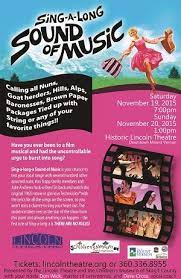
Sing Along Night poster for the Lincoln Theatre

Up until the Covid-19 Pandemic shut down large gatherings, the Lincoln Theatre in Mount Vernon would host an annual Sound of Music viewing and singalong, encouraging attendees to dress as characters from the movie.

I haven’t yet made that event, but it’s on my bucket list. For the record, I no longer identify with Brigitta or Lisle, but to join all the other wannabe Maria’s out there would be the best.
A couple of links:

https://en.wikipedia.org/wiki/The_Sound_of_Music_(film)

https://en.wikipedia.org/wiki/List_of_1965_box_office_number-one_films_in_the_United_States