Archives

Remakes in Hollywood: Why ‘A Star Is Born’ Endures

Retold for each new generation

March 18

Movie remakes are a Hollywood tradition. Films featuring characters such as Dracula, Frankenstein, and Batman, have been redone numerous times. Robin Hood, Wuthering Heights, and King Kong, also come to mind. Pretty much anything originally written by Jane Austen, Charles Dickens, or William Shakespeare have seen multiple iterations.

One story which has been made into a movie four times now is the iconic “A Star Is Born,” with each version being adapted to reflect the culture of the era.
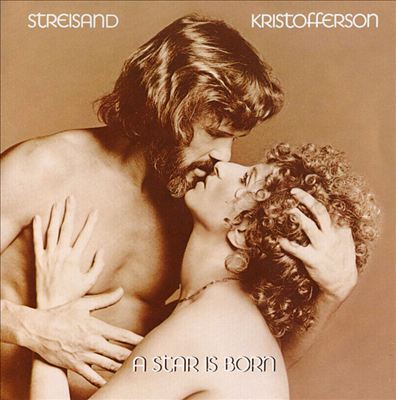
Kristofferson and Streisand December 1976

It was the third week of March 1977 when the song “Evergreen” – from the Barbra Streisand and Kris Kristofferson remake – reached number one on the Billboard Hot 100 charts. It claimed the top spot for three weeks.

The Infallible Wikipedia sheds light on the subject:

“A Star Is Born is a 1976 American musical romantic drama film directed by Frank Pierson, written by Pierson, John Gregory Dunne, and Joan Didion. It stars Barbra Streisand as an unknown singer and Kris Kristofferson as an established rock and roll star. The two fall in love, only to find her career ascending while his goes into decline.

The film premiered at the Mann Village Theater on December 18, 1976, with a wide release by Warner Bros. the following day. A huge box office success, grossing $80 million on a $6 million budget in North America, the film became the 2nd highest-grossing that year. Reviews praised its performances and musical score, but criticized the screenplay and runtime. At the 49th Academy Awards, the film won Best Original Song for its love theme ‘Evergreen’.

The film is a remake of the 1937 original with Janet Gaynor and Fredric March, notably adapted in 1954 as a musical starring Judy Garland and James Mason; and subsequently again in 2018 with Lady Gaga and Bradley Cooper.”

Although I’ve never seen either the 1937 or 1954 films, I did read the plot summaries and then watched a few clips from the Garland/Mason version. And one thing which comes through in that film – and again in the 1976 production – is that both were reflective of the culture of the time. The style of singing and dancing transports one back to the era of vaudeville style productions.
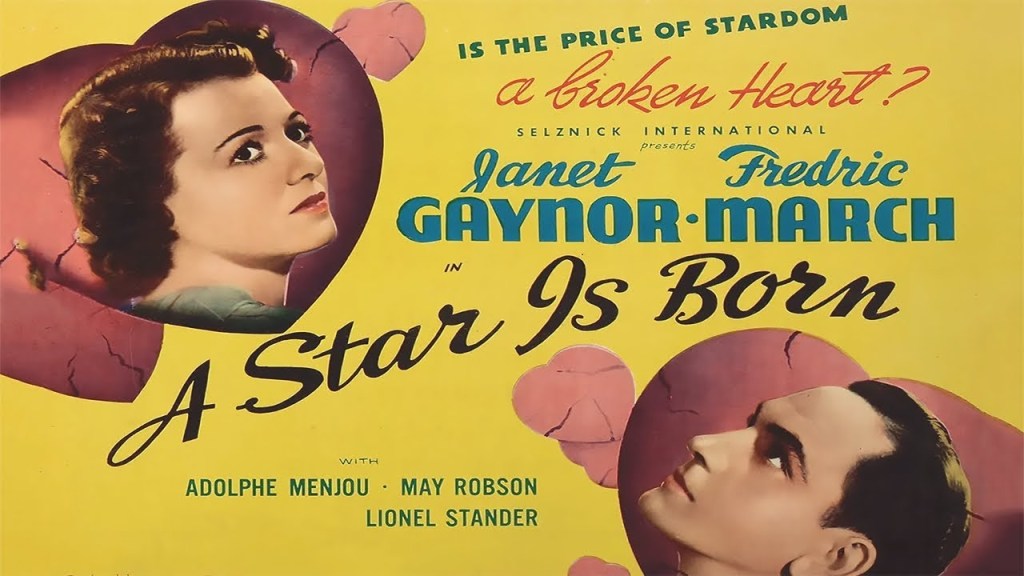
Poster from the original movie. 1937

Regardless, the main character’s names are the same in the first two films: Esther Victoria Blodgett and Norman Maine. For the 1976 film, the female character’s first name is still Esther but the man’s name is now John. Despite these updates the storyline is pretty much the same. By the time we get to 2018, the names Esther and Norman are long since abandoned for the more modern names Ally and Jack.

In deciding between the 1976 and the 2018 versions, I am torn. I was 19 in 1976 and saw the movie in the theatre at Christmas. I was swept up in the tragedy of the storyline; deep stuff when you are contemplating the meaning of life as millions of other baby boomers were also doing at the time. The movie resonated with my generation and was the second highest grossing film that year. It garnered several Oscar nominations, all for the music, with a win for best original song.
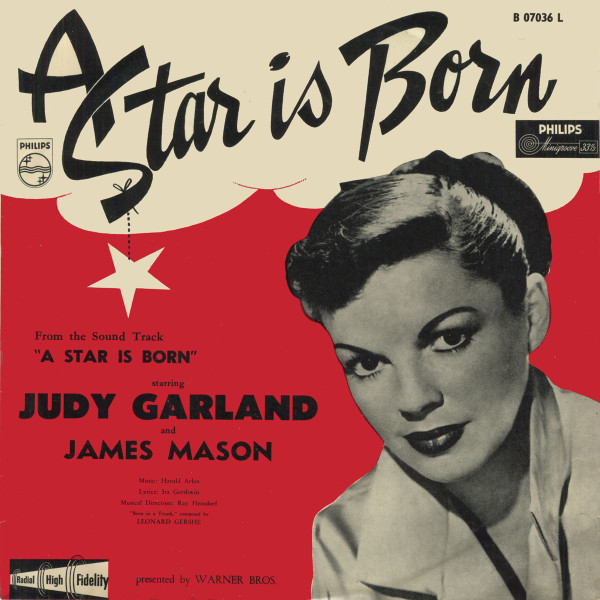
1954 Album cover of the Judy Garland and James Mason movie

Other than that, however, my own attempts to view Barbra Streisand as an ‘up and coming’ star in 1976 was a stretch. She was 34 years old that year and a Bonafide superstar; I’ve never been able to get past that fact.

Fast forward to 2018 and the most recent version of the story. Lady Gaga (aka Stefani Germanotta) at age 32 was somewhat more believable in the leading role. Up until she performed at the 2015 Academy Awards for the Julie Andrews tribute, her undeniable talent had been limited to a younger, edgier population demographic.

In ‘A Star is Born’ I think she successfully shed her over the top ‘Lady Gaga’ persona and her portrayal as a newcomer worked better than it did for either Garland or Streisand. For many people who might have dismissed Lady Gaga, this was their first exposure to Germanotta’s amazing voice.

Regarding age, Janet Gaynor and Judy Garland were 33 and 32 respectively. In Garland’s case she was, like Streisand, a long-established singer, Hollywood star, and a household name.
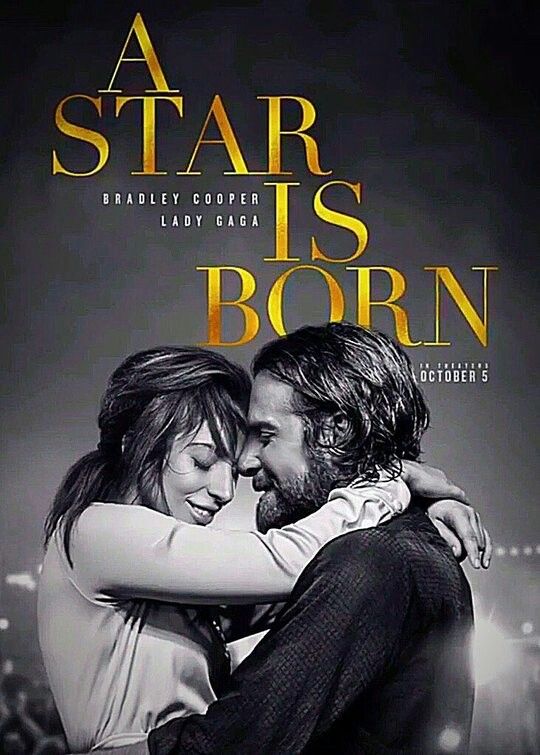
Germanotta and Cooper. 2018

The four male leads ranged in age from 40 to 45.

As a purely academic exercise, if another ‘remake’ of this movie is ever done, it really should feature an unknown actress/singer in her early 20’s. I think that is a much more believable premise for being ‘discovered,’ and that a ‘washed’ up star in his 40’s would keep the plot interesting, being able to portray the power imbalance and how it shifts with her rising star. Any screenwriter worth their salt could really delve deep into the emotional turmoil of each character which, to me, is the essence of great writing and would add a fresh twist to this classic plot line.

Or, perhaps, just let it go. Four times is probably enough remakes of this dark and depressing story.

Massive links today as embedding videos from YouTube never ends well:

https://en.wikipedia.org/wiki/A_Star_Is_Born_(1937_film)

https://en.wikipedia.org/wiki/A_Star_Is_Born_(1954_film)

https://en.wikipedia.org/wiki/A_Star_Is_Born_(1976_film)

https://en.wikipedia.org/wiki/A_Star_Is_Born_(2018_film)

https://youtu.be/I0f1cMYF91A?si=1lDAXyMm-HRtJAsA (Evergreen)

https://youtu.be/7hiVIixor_Q?si=4hjnneNJtWn_-mta (Shallow)

https://youtu.be/gNDu75gEiIo?si=nrRYYOm6OzZJJbFr ( The Man That Got Away)
https://www.businessinsider.com/most-remade-movies-of-all-time#the-first-king-kong-movie-was-released-in-1933-and-a-new-one-is-planned-for-2020-14

Exploring Romeo and Juliet: A Timeless Love Story

Perhaps Shakespeare’s most famous play

March 11

To try and take on this play is, I would conjecture, pure folly. Afterall, it is probably the most recognized literary work in the world. It is the story of two young lovers who forsake all else to be together. They risk the disapproval of family and friends and, ultimately, meet their demise all because they chose that which was forbidden.

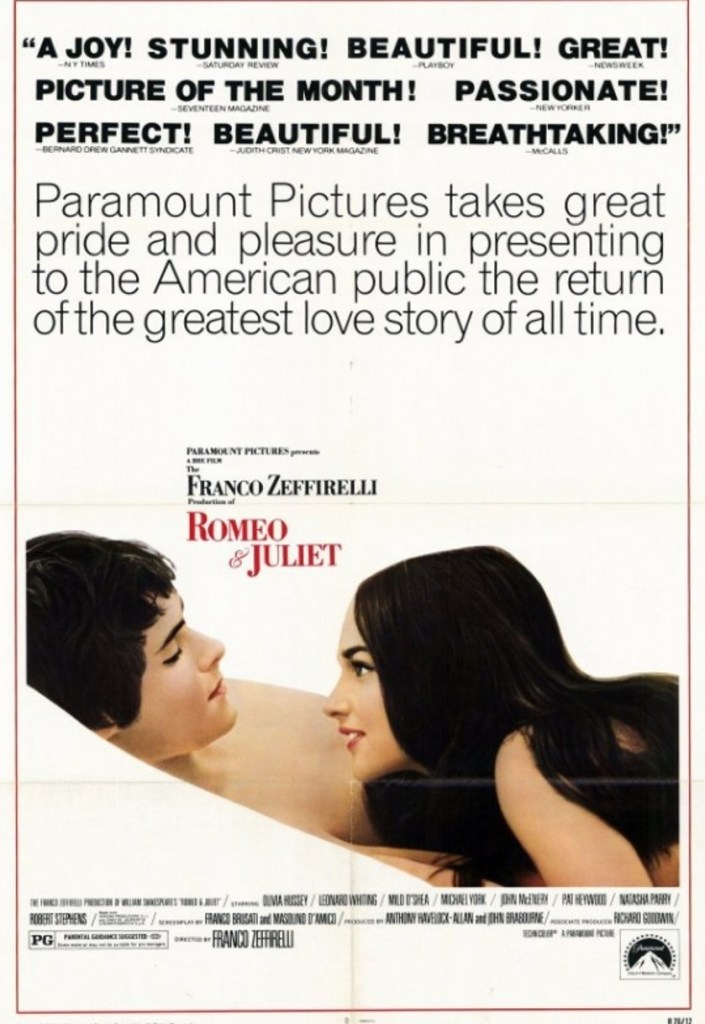
1968 Poster of Romeo and Juliet

“Romeo and Juliet” is William Shakespeare’s most famous works and March 11, 1302, is – according to OnThisDay.com – considered to be the date of the young lover’s marriage.

As is often the case, that is disputed since contextual clues from the play itself place the wedding date as being in mid to late July.

Regardless, today is as good a day as any to feature this iconic work.

For anyone who is unfamiliar with the storyline you can certainly access the Infallible Wikipedia. Which I did only to discover that the article there is 10,604 words long. Egads.

Instead, I found this one paragraph synopsis from the site Shakespeare.org.uk much easier to digest:

“An age-old vendetta between two powerful families erupts into bloodshed. A group of masked Montagues risk further conflict by gatecrashing a Capulet party. A young lovesick Romeo Montague falls instantly in love with Juliet Capulet, who is due to marry her father’s choice, the County Paris. With the help of Juliet’s nurse, the women arrange for the couple to marry the next day, but Romeo’s attempt to halt a street fight leads to the death of Juliet’s own cousin, Tybalt, for which Romeo is banished. In a desperate attempt to be reunited with Romeo, Juliet follows the Friar’s plot and fakes her own death. The message fails to reach Romeo, and believing Juliet dead, he takes his life in her tomb. Juliet wakes to find Romeo’s corpse beside her and kills herself. The grieving family agree to end their feud.”

But, honestly, only if you lived as a hermit in a rock cave on a remote island in the south Pacific would you NOT know about Romeo and Juliet (R&J).

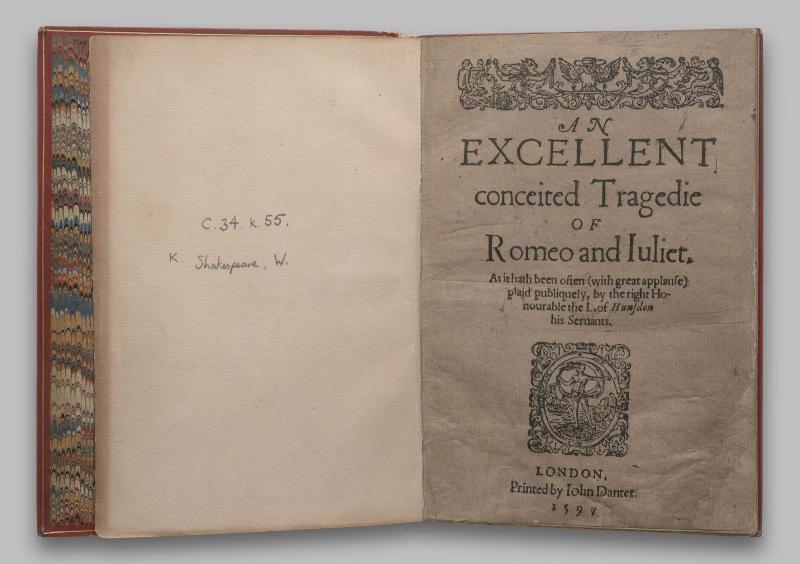
First edition Romeo and Juliet

When I started thinking about R&J, my mind drifted back to the early 1970’s and my experience at Wilson Junior High School in Yakima, Washington.

Wilson Junior High teachers 1971

It was there that I was introduced to R&J. At the time I had no appreciation for Shakespearean literature or for the incredible foundation which was given me by a trio of dedicated Jr. High English teachers.  For my entire 8th grade year, my English teacher was Mr. Albrecht. To us students he seemed quite mature. When, in fact, he was the ripe old age of 27 that first year. We respected him because he treated us as intelligent people regardless of our limited years on earth; he rewarded those who worked hard and did their best.

The next year my English class experience was split into two segments. For the fall/winter semester I drew the formidable grammar teacher, Mrs. Eglin. I think she likely made students rip out their hair and cry at times. But, by God, you were going to learn: all the parts of grammar, how to diagram a sentence, and how to construct a proper paragraph. It was in her class that I discovered the evils of dangling participles, all about verbs, adverbs, nouns (both proper and pro-), adjectives, and every other part of speech. In other words, I learned how to write the correct way. She made me think about my writing in ways I’d never considered. I might not have always followed her methods, and I’m not perfect, but not for lack of instruction on Mrs. Eglin’s part.

Mrs. Roberts 1971 yearbook photo

In the second half of the year, I had an even more demanding teacher – which I hadn’t thought possible after being with Mrs. Eglin – Mrs. Roberts. First name Doris. Which is telling. No one in my age demographic, or even a few years older, was named Doris. The name had, however, been the 8th most popular name for girls in the 1920’s. Mrs. Roberts was born in 1922 and was an ancient 50 that year. Ah perspective.

Mrs. Roberts assigned us every classical piece of literature she could find and we explored such themes as ‘man’s inhumanity to man’, ethics, morality, death and dying, cruelty, poverty… yes, we read some very dark stories. Like “Flowers for Algernon”, “The Grapes of Wrath”, “Fahrenheit 451”, and “Romeo and Juliet”.

The clever thing which this band of teachers managed to accomplish was to make the course work relevant to the teenagers of the day. Somehow, they convinced the administration that it was educational to load some 250 ninth graders into school busses and send them to the movie theatre to see films based on what we were reading.

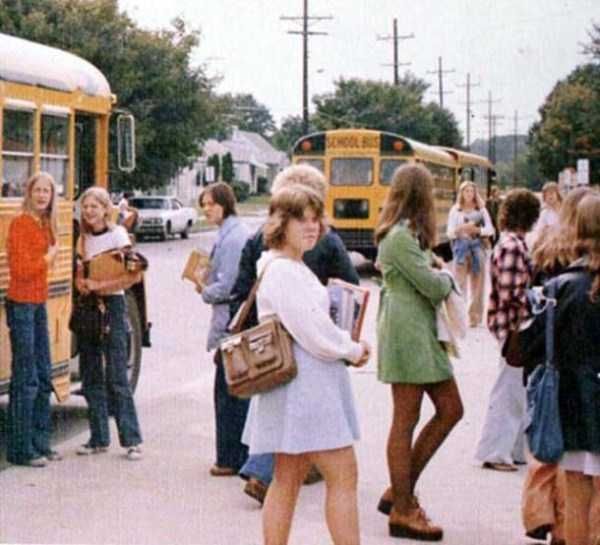
Pretty much how teenagers dressed in 1971-72. Found this photo on Pinterest.

Spoiler alert: it worked.

Of course, we kids thought we’d gotten a free pass for the day. Personally, I returned from those outings thinking about the films but also contemplating the books we read and then writing papers on the theme we thought was the best fit.

Sometime in the fall of 1971 I’m pretty certain we were whisked away in the busses to see the 1968 film version of Romeo and Juliet with Leonard Whiting and Olivia Hussey. Such clever English teachers, using the pop culture of the day to get us to learn. I did find a reference in my 1972 diary for both “Farenheit 451” and “Mary, Queen of Scots.” Sadly, my diary from 1971 does not seem to exist any longer, which surprises me as I was a faithful diary writer.

Now a few fun facts. I was able to find 49 times R&J was made into a movie in the Shakespearean tradition (from 1908-2021); an additional 118 films were produced which adapted the works in modern ways or with odd twists (like the truly bizarre 2011 Gnomeo and Juliet); there are also a few films which utilize R&J’s overarching theme in some new way (like the charming 2019 movie “Letters from Juliet”).

I owe a lot to my Junior High School English teachers for the great foundation they laid. It was the gift that has continued to give and bless me.

As always a few links:

https://www.onthisday.com/weddings/march/11

https://en.wikipedia.org/wiki/Romeo_and_Juliet

https://www.shakespeare.org.uk/explore-shakespeare/shakespedia/shakespeares-plays/romeo-and-juliet/#:~:text=An%20age-old%20vendetta%20between%20two%20powerful%20families%20erupts,to%20marry%20her%20father%E2%80%99s%20choice%2C%20the%20County%20Paris.

Titanic

My Heart Will Go On

February 6, 2024

A Tuesday Newsday Classic Updated

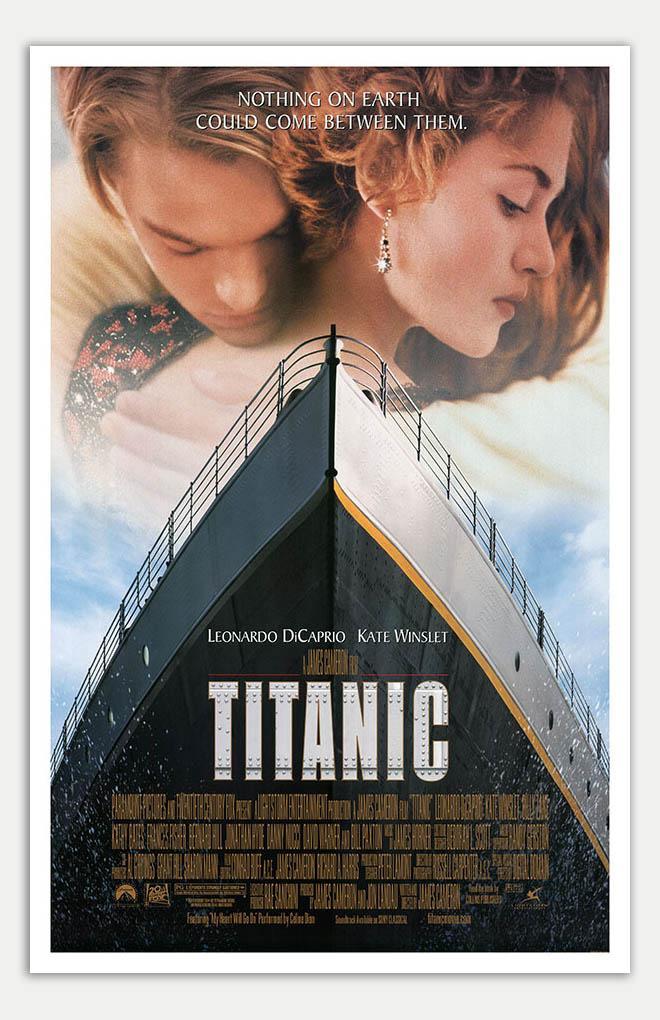
Poster from the 1997 movie

“Upon its release on December 19, 1997,” according to the Infallible Wikipedia, this film “achieved significant critical and commercial success. Nominated for 14 Academy Awards, it tied All About Eve (1950) for the most Oscar nominations, and won 11, including the awards for Best Picture and Best Director, tying Ben-Hur (1959) for the most Oscars won by a single film.”

Titanic, as measured by every metric, lived up to its name. The buzz around the film the third week of December that year had movie-goers flocking to the theater.

For those who have never seen the movie, you really should. It’s a study in ‘how to’ craft a compelling story. The backdrop is, of course, the tragic tale of how the luxury liner Titanic hit an iceberg in the North Atlantic Ocean during its maiden voyage. The ship did not have an adequate number of lifeboats available for the over 2,200 passengers resulting in the death of 1,517 people.

It was the singular vision of screenwriter and producer James Cameron which propelled the entire story. The Infallible Wikipedia summed it up this way:

One of the more famous scenes from the movie as Jack and Rose ‘fly’ at the bow of the ship.

“Cameron felt the Titanic sinking was ‘like a great novel that really happened’, but that the event had become a mere morality tale; the film would give audiences the experience of living the history. The treasure hunter Brock Lovett represented those who never connected with the human element of the tragedy, while the blossoming romance of Jack and Rose, Cameron believed, would be the most engaging part of the story: when their love is finally destroyed, the audience would mourn the loss. He said: ‘All my films are love stories, but in Titanic I finally got the balance right. It’s not a disaster film. It’s a love story with a fastidious overlay of real history.’”

As a Romance writer, it is Rose’s story which I have always found most compelling. She is 17 years old when she boards the Titanic and over the course of the next three and half days, falls in love, breaks off her previous engagement, faces disapproval from family, and then survives, arguably, one of the worst shipwrecks in history.

What Cameron does with Rose is brilliant. We meet her at the very beginning of the movie, a still vibrant 101 year old woman, who is brought to the site of the Titanic’s wreckage to advise a treasure hunting crew looking for a valuable necklace believed to have been on board the ship when it sank. The story is then told through her eyes as she chastises one salvage crew member on his matter-of-fact forensic account of the event. “The experience of it was somewhat different,” she says.

It is her love interest Jack, ultimately, who – as he is literally freezing to death – urges Rose to live life fully. He sacrifices himself for her and she promises him that she will go on without him.

Cameron uses black and white photographs of Rose at the end of the film, ostensibly taken throughout her life, to show the many things she experienced. She does exactly as Jack urged and lives her life to the fullest.

The final scene of Titanic

The reason I chose to feature Titanic today – since December 19th will not fall on Tuesday for two more years – is due to an amazing coincidence.

In 2005 – after a class I took on novel writing concluded – a number of us formed a writer’s critique group. Sometime during those first few months one of our members, Roger, suggested the addition of another writer he knew from a different group. They had taken a class together from the same instructor a year earlier.

Which is how I met the woman who I eventually dubbed ‘the real life Rose.’

To be clear, this ‘Rose’ did NOT survive the sinking of the Titanic. In fact she was not born until 1920, six years after the fact.

Plus, her name is Irene, and not Rose. As I became friends with Irene over the past 15 years I learned much about her life and experiences and, when I would tell people about her, I often referenced Titanic and continued to call her “The real life Rose.”

For the past two December’s our little group celebrated Irene’s 98th and 99th birthdays during our weekly meeting at the Bellevue library. Last year we vowed to do something bigger to fete her on her 100th.

And then the COVID pandemic hit and our method of meeting changed. Five of us, including our ‘Rose’, switched to Zoom. Last week – knowing I planned this as my topic for the blog – I casually asked Irene what the date of her birthday was. Her reply: December 19, 1920. I literally shook my head at the coincidence that Titanic had been released on a December 19th also.

Irene’s story is that of a young woman who met and married a dashing Royal Air Force pilot; he trained at an American AFB run by Irene’s father. It was the height of WWII and the only way she could be with her new husband, was to find a way to get to England. That ticket turned out to be working for the Red Cross. She traveled by ship across the Atlantic, survived air raids, gave aid to soldiers, and worked. The newlywed’s were only able to grab snippets of time together as their assignments took them to opposite locales throughout Great Britain.

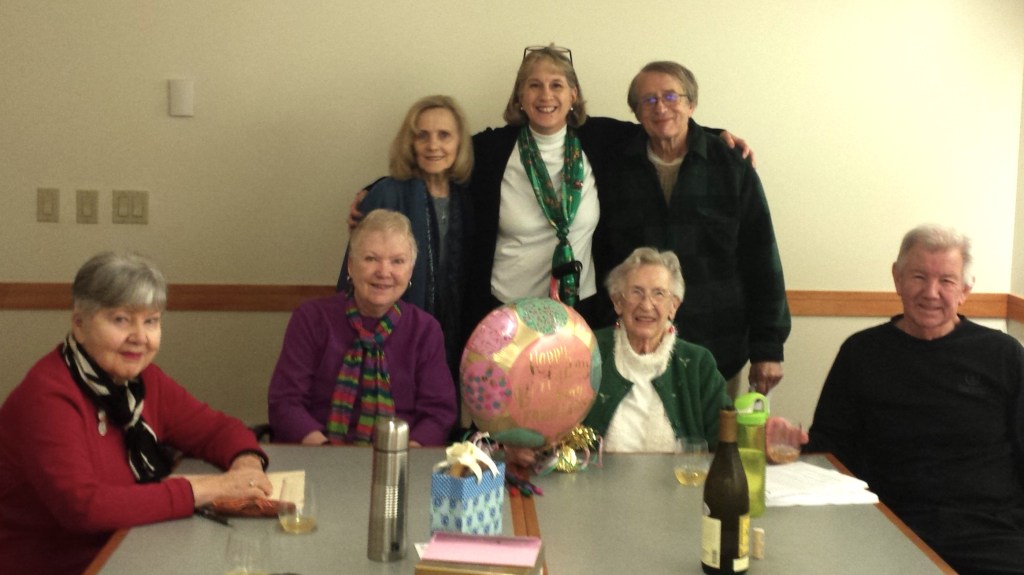
Irene’s 99th birthday celebration with our then writer’s group members: Sitting, left to right, Mae, Daphne , Irene, Roger. Standing, left to right, Jette, Barbara, Steve. Behind the camera is Ward.

Tragedy struck in 1944, however, when his plane was lost, leaving her a young widow, pregnant with their child.

Hence the reason I started calling her the real life ‘Rose.’ And like Rose in Titanic, Irene has embraced life and lived it to its fullest. She’s climbed the Great Pyramids in Egypt, hiked Machu Pichu in the Andes, been on cruises to Panama and Hawaii (and others).

She was a single mother in an era when doing so caused most people to look at you askance. She pursued a career in hospital administration, providing for herself and her family, never falling into the trap of self pity. She’s written multiple novels, dabbled in painting, and holds a wide variety of interests.

As I’ve told her more than once, she’s my role model of how I want to age.

To this she will reply, “Barbara, growing old is a privilege not everyone gets to have.” And then, in her humble way, will say how appreciative she is – despite some of the infirmities that accompany the aging process – that she has been given that privilege.

Irene’s 100th birthday celebration drive-by December 2020 during Covid

This past Saturday (the 19th) her family (son, daughter-in-law, and grandson) arranged for a drive by birthday party. I imagine they were thinking a few friends might come by. It turned into a much bigger parade. I was, unfortunately, late due to some obstacles. But that turned out okay. I got to visit with her for a few minutes and promised that we’d have a proper party next year on her 101st birthday!

While the fictionalized account of her marriage and what occurred in England will likely never garner the same level of interest as Titanic, the story is no less compelling. That she completed and published it in 2015, age 95, is incredible. I feel privileged to have been a part of her writing journey, offering – along with the rest of our group – suggestions each week as the book took shape. It’s available on Amazon. (See link below)

Thank you, Irene, for being an inspiration to me and to so many others. You’re amazing.

Update – December 23, 2021 – Irene celebrated her 101st birthday a few days ago. Sadly, with the world still locked down due to the ongoing Covid pandemic, we did not have a party. With luck it will happen in the spring!

Update – December 23, 2022 – We celebrated Irene’s 102nd birthday via Zoom on Tuesday, December 20th, as all of Western Washington has been gripped in snow and ice.

Update – February 6, 2024 – The sad day finally came when we had to say goodbye to Irene. She passed peacefully with her daughter-in-law and grandson at her side on the morning of January 29 at the age of 103. I spoke with her on January 12th and, despite her physical decline, her mind was as sharp as ever and her sense of humor and love of life came shining through. She asked me to tell our group “how much it has meant to her” to be a part of it and that she “considers everyone as friends.”

No doubt our world is a bit grayer because she is gone but it’s also been enriched with color and joy because she lived. Her inspiration lives on.

A few links: https://www.amazon.com/Long-Time-Passing-J-Fernandes/dp/1508665184/ref=sr_1_5?crid=18E9NS7ZM50F5&keywords=long+time+passing&qid=1707259969&sprefix=long+time+passing%2Caps%2C229&sr=8-5

Irene’s fictionalized autobiography of her time in England as a war bride

Her son preceded her in death in June 2022. A link to Kim’s obituary: https://obituaries.neptunesociety.com/obituaries/lynnwood-wa/kim-fernandes-10816806

https://en.wikipedia.org/wiki/Titanic_(1997_film)

https://en.wikipedia.org/wiki/My_Heart_Will_Go_On

While this article was originally written and posted in December 2020, I decided to repost and provide the update in honor of Irene.

Jaws

Just when you thought it was safe to go back in the water

June 20, 2023

A Tuesday Newsday Classic from 2017 – updated

“We started the film without a script, without a cast, and without a shark.”

As quipped by Richard Dreyfuss on the filming of the classic film, Jaws, which premiered on June 20, 1975. Despite its rocky start, technical problems throughout filming, and costing more than double its budget, Jaws is regarded as one of the best films of all times. From the Infallible Wikipedia:

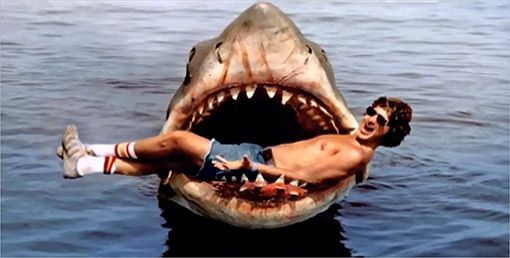
Steven Spielberg getting friendly with ‘Jaws’

“In the years since its release, Jaws has frequently been cited by film critics and industry professionals as one of the greatest movies of all time. It was number 48 on American Film Institute’s 100 Years… 100 Movies, a list of the greatest American films of all time compiled in 1998; it dropped to number 56 on the 10 Year Anniversary list. AFI also ranked the shark at number 18 on its list of the 50 Best Villains. Roy Scheider’s line “You’re gonna need a bigger boat” 35th on a list of top 100 movie quotes, Williams’ score at sixth on a list of 100 Years of Film Scores, and the film as second on a list of 100 most thrilling films, behind only Psycho. In 2003, The New York Times included the film on its list of the best 1,000 movies ever made.”

It took only two weeks for the film to recoup production costs and it is recognized as the first ‘summer blockbuster’ film, setting a template for future filmmakers.

Of course the long term effect was the impact on people’s psyches, preying on our fear of an unknown, unseen killer, lurking in the ocean’s depths. In reality the average number of people killed by great white sharks annually is six. Not exactly an Amity Island level of vicious attacks.

So should we be afraid to go back in the water?

In December 2005 my family and I were about to go snorkeling at a benign looking bay called Kanahena Cove on Maui. It was early in the morning and we were the only four people there: myself, my husband and our son, age 15, and our daughter, age 12. Because we only had two snorkel sets we decided that my husband and son would snorkel first. So my daughter and I were on the lava rocks near where the guys had, a moment earlier, climbed into the water.

This the road where the woman stopped to yell at us. We were on the lava rocks near the trees on the far side. Photo of Kanahena Cove from LookIntoHawaii.com.

Just then, a car drives past on the road, maybe 20 yards away, and screeches to a halt. A woman erupts from the car and launches into a tirade:

“You know, there are sharks in the water,” she yells at us, “and one could take her in a single bite (pointing to my daughter).”

Dumfounded, I stare at the woman, unable to utter a word. She continues her rant:

“The sharks are angry at George Bush for the war in Iraq, which is why there have been increased shark attacks.”

My sister with the two girls braving the non-shark infested waters…

The screed went on for another minute although I don’t recall all she said. What I do know is that my 12 year old daughter WAS then afraid to get in the water. All four of us retain a rather vivid memory of that day.

Personally, I’m skeptical that politics motivate sharks. I would speculate that other factors such as increased human presence, changes in ocean water temperatures, and changes in food sources, are more likely to influence attacks. Even the time of year can affect it.

The daughter and my niece at Kanahena Cove 2006

For the record? In 2015 there were 98 shark attacks worldwide, six of them fatal…and one of those at Kanahena Cove on Maui. Those 98 shark attacks are 40 more than the number of attacks in 2005, nearly double.

But it does beg the question, ‘is it safe to go back in the water?’

I think the answer is that every activity in life involves risk. I read just the other day about several people getting chased and gored by Bison in Yellowstone National Park in 2022. Perhaps those people shouldn’t have been at Yellowstone at all or, more likely, they probably shouldn’t be out walking in the meadow and standing next to a one to two thousand pound animal with horns and mean streak trying to get a selfie.

I sometimes wonder if our era of seeing nature on TV and clips on YouTube has desensitized us to the dangers inherent in life? When watching something on a screen there is no danger.

The hubby says… it’s safe to go back in the water

At Kanahena Cove there is a line of demarcation across which I won’t cross. I snorkel in shallow waters and stay near the edges. The fish are better there in my opinion. And I’m constantly vigilant as to what is around me.

But back to shark attacks. Your chances of being bitten by a shark is 1 in 4.7 million. Maybe it is safe to go back in the water.

For more information about Jaws: https://en.wikipedia.org/wiki/Jaws_(film)

And about the record setting 2015 year: https://www.washingtonpost.com/news/post-nation/wp/2016/02/09/a-record-number-of-people-were-attacked-by-sharks-last-year/?utm_term=.edad50a5906e