Archives

Don’t It Make My Brown Eyes Blue

And a few musings on Blue vs. Brown eyes

June 24th
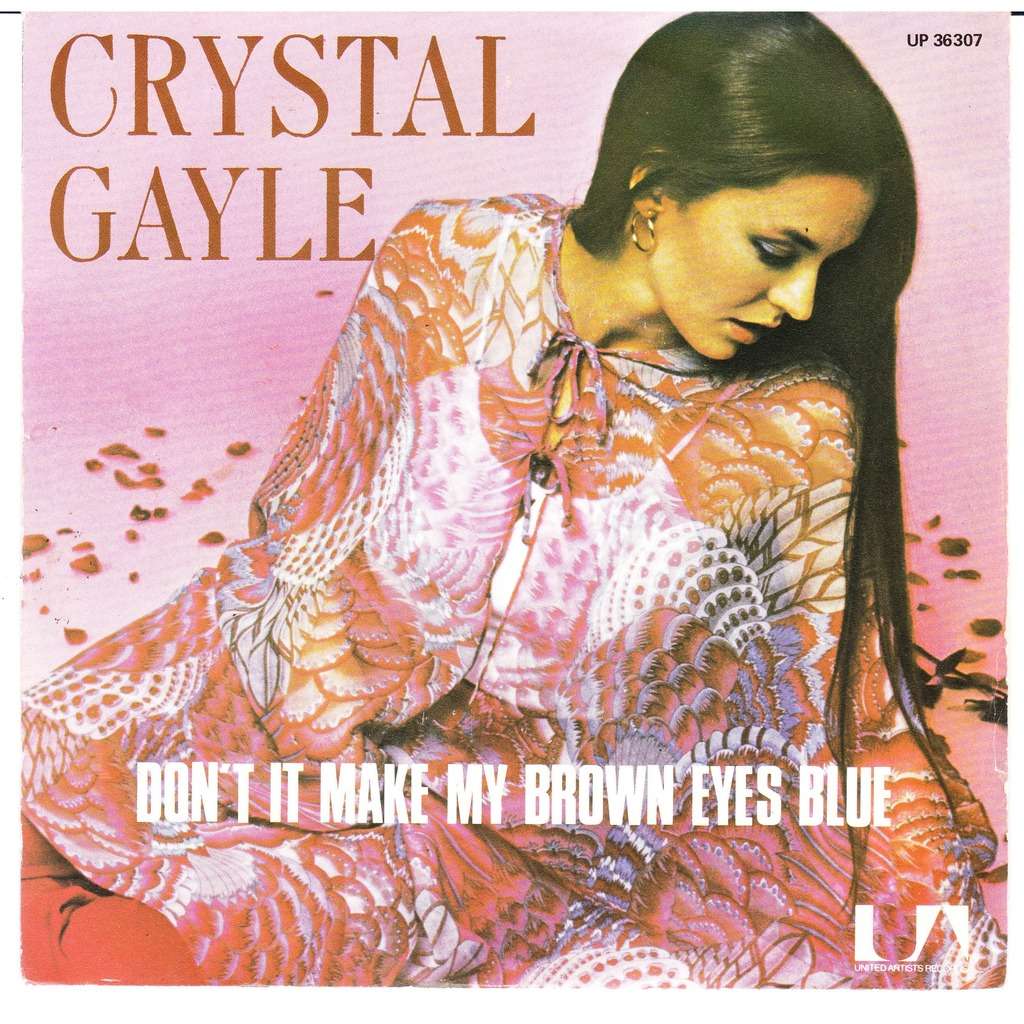
This song, released in June 1977, was one of those rare pieces which successfully crossed over from country to pop. It was number one on the country chart for five weeks in the summer of 1977 and peaked at number two on the Billboard Hot 100 chart in late November 1977. It was kept from the top position by Debby Boone’s You Light Up My Life (YLUML). As I wrote in my blog about that song, there were any number of infinitely better songs during the number one run of YLUML, including this one. https://barbaradevore.com/2024/11/19/you-light-up-my-life-2/

Don’t It Make My Brown Eyes Blue catapulted artist Crystal Gale into stardom and she had a series of commercially successful songs which followed.

The Infallible Wikipedia shares:

“In 1975, ‘Wrong Road Again’ became Gayle’s first major hit. However, it was in 1977 when Gayle achieved her biggest success with ‘Don’t It Make My Brown Eyes Blue’. The single topped the Billboard country chart, crossed over to the top five of the Billboard Hot 100 and became a major international hit.

Gayle continued having success from the late 1970s and through late 1980s. Her biggest hits included ‘Ready for the Times to Get Better’ (1977), ‘Talking in Your Sleep’ (1978), ‘Half the Way’ (1979) and ‘You and I’ (1982).”

Don’t It Make My Brown Eyes Blue is one of those songs which has gained in popularity and critical acclaim over time. Also from the Infallible Wikipedia:

“The song became Gayle’s signature piece throughout her career. In 1978, the song won Gayle a Grammy Award for Best Female Country Vocal Performance. In 1999, the song was recognized by ASCAP as one of the ten most-performed songs of the 20th century. (snip)

In 2024, Rolling Stone ranked the song at #109 on its 200 Greatest Country Songs of All Time ranking.”

I had not intended to feature this as today’s Tuesday Newsday topic. But sometimes things just sort of take a serendipitous route. Yesterday, while on our way to Seattle, the hubby, my son, and me were driving south on I-5 from Mount Vernon and my son – who has been visiting for the past week – commented about the low cloud ceiling and gray skies and how, since it was the first full day of summer, shouldn’t be happening. I think he’s forgotten what it’s like here since he lives in Guadalajara, Mexico, and he’s acclimated to the sunny and hot climate.

Being that it was June 22 and one of the longest days of the year, one might think it should be sunny and bright. But nope. Over the weekend we got a ‘welcome to summer’ soaking from Mother Nature.

As we approach the Stillaguamish River, the cloud cover has now lifted and is several hundred feet higher. Of course I do what any self-respecting, blue-eyed, Western Washingtonian would do, I put on my sunglasses.

Just like my hubby and son did. Or not. Why? Because they do not have blue eyes.

Of course, that sends me down the rabbit hole of mental gymnastics and I start thinking about blue eyes vs. brown eyes and that then led me to start humming today’s featured song. See how easy that was?

But back to the brown vs. blue eyes and the problem blue eyed people have: light sensitivity.

According to Health.com:

“Several studies have found that people with light-colored eyes are more sensitive to the effects of light than people with dark-colored eyes. Researchers speculate this may be due to lower amounts of melanin (pigment) in light-colored eyes. Less melanin in the eyes may increase their susceptibility to the negative effects of sun and light exposure.”
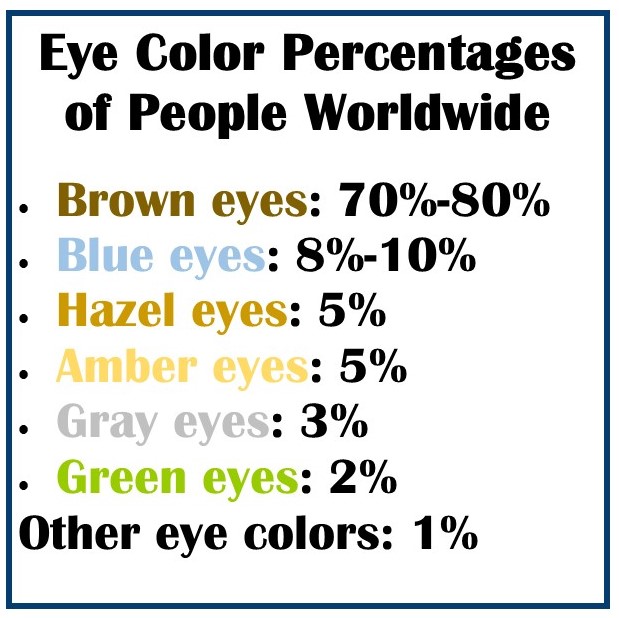
My son has teased me over the years about being a ‘blue-eyed freak.’ He’s not totally wrong. People with blue eyes make up only 8 to 10 percent of the human population as shown in the chart to the right:

Those of us who have blue eyes can trace the majority of our ancestry to northern European and Scandinavian countries. Finland, according to one report I saw, leads the world with a whopping 89 percent of its population boasting blue eyes.

I took a peek at my DNA results and learned that of the top 10 countries with the highest percentage of people with blue eyes, I match to seven of those countries – which makes up 93 percent of my DNA – including Finland with 13 percent of the total.

But back to the light problem. From the time I was a little girl, bright lights have always made me squint or even close my eyes. Bright lights when my eyes have adjusted to the darkness are just downright painful.

The hubby calls me a ‘darkie’ because I often move about the house without turning on lights. The way our lower level is set up is that we have a closet across from the bathroom near our bedroom. That closet has a motion-detecting light that is designed to turn on when one enters the closet. But sometimes, if you fly too close to the sun – er, opening – it will spring to life, flooding the area with blinding light. Okay, maybe that’s a bit hyperbolic.


Eventually we got a reasonable photo… notice the hubby is unfazed by the light.
It took several attempts to get photos that day due to my inability to keep from painful squinting…

But I have learned to be very, very careful how I walk past that doorway when I get up in the mornings so as to not trigger the light and cause painful, but temporary, blindness. I keep as close to the wall opposite as possible and slow my gait as I float past, nearly a ghost in the predawn dark.

It’s either that or wear sunglasses at night. But that’s a whole different song for another Tuesday Newsday.

So, I think my mantra, rather than “Don’t It Make My Brown Eye’s Blue” is really, “Don’t it Make my Blue Eyes Squint.” Somehow that’s not nearly as catchy as Crystal Gayle’s 1977 hit song.

The links:

https://en.wikipedia.org/wiki/Don%27t_It_Make_My_Brown_Eyes_Blue

https://en.wikipedia.org/wiki/Crystal_Gayle

https://en.wikipedia.org/wiki/List_of_Hot_Country_Singles_number_ones_of_1977

https://www.health.com/are-blue-eyes-more-sensitive-to-light-11690558

https://www.insidermonkey.com/blog/top-10-countries-that-have-the-most-blondes-and-blue-eyes-as-a-percentage-of-population-605109/?singlepage=1

https://worldpopulationreview.com/country-rankings/eye-color-percentage-by-country
The Enduring Legacy of the Piano

May 27th

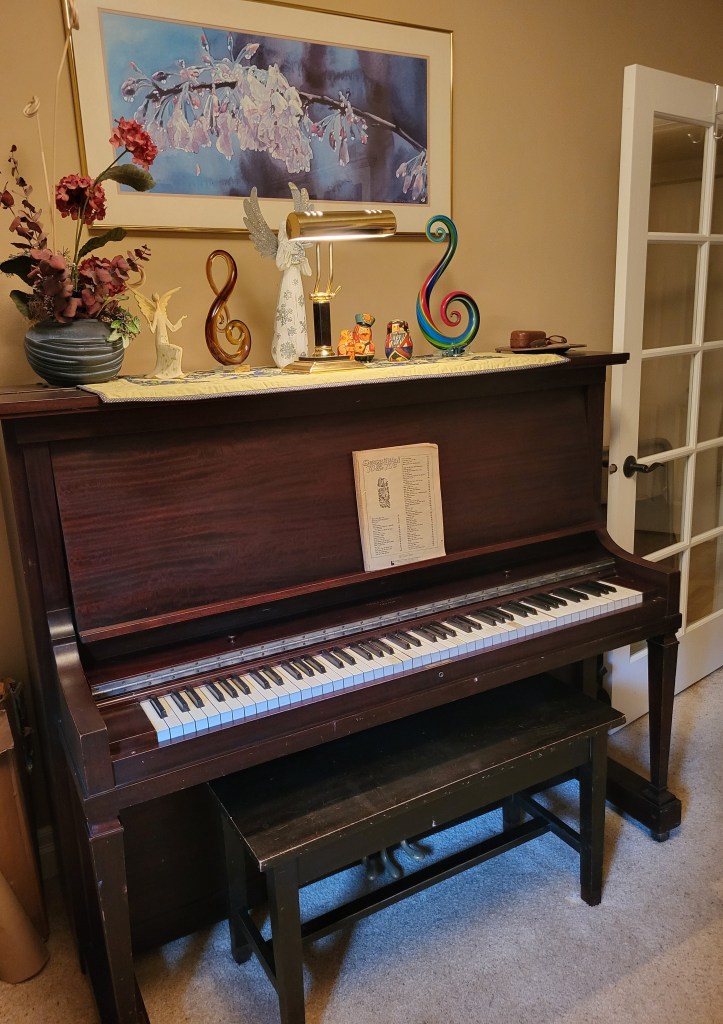
My grandmother’s 1922 Price & Teeple piano – three generations of owners over 103 years

I hate it when I get a nugget of an idea only to have it lead absolutely nowhere. Such was this week’s Tuesday Newsday nugget which, it turns out, led to an unsolvable mystery. And I do love a good mystery.

It was on this date, May 27, 1796, when James Sylvanus McLean – a resident of New Jersey – was awarded a US patent for “an improvement in piano fortes.”

Realizing I’ve never done a Tuesday Newsday about the instrument known as the piano, I decided it was a worthy topic and eagerly typed ‘piano’ into the Infallible Wikipedia only to be bombarded with every last bit of minutiae one can imagine about the origins of this ancient instrument. But Mr. McLean’s improvement? Lost to history when the US patent office burned in December 1836.

Undeterred, I dug further and wondered what improvements were so significant to warrant a patent? Was it the design of what we think of as the modern upright instrument which made the acquisition of a piano available to an average family? Or perhaps the addition of felt ‘hammers’ that were used to strike the metal strings inside the instrument? Maybe it was the use of wood to create the box where the music is made? Or how the wires are strung? We will never know.

Now for those who don’t KNOW what a piano is, here’s the description from The Infallible Wikipedia:

“A piano is a keyboard instrument that produces sound when its keys are depressed, activating an action mechanism where hammers strike strings. Modern pianos have a row of 88 black and white keys, tuned to a chromatic scale in equal temperament. A musician who specializes in piano is called a pianist.

There are two main types of piano: the grand piano and the upright piano. The grand piano offers better sound and more precise key control, making it the preferred choice when space and budget allow. The grand piano is also considered a necessity in venues hosting skilled pianists. The upright piano is more commonly used because of its smaller size and lower cost.

When a key is depressed, the strings inside are struck by felt-coated wooden hammers. The vibrations are transmitted through a bridge to a soundboard that amplifies the sound by coupling the acoustic energy to the air. When the key is released, a damper stops the string’s vibration, ending the sound. Most notes have three strings, except for the bass, which graduates from one to two. Notes can be sustained when the keys are released by the use of pedals at the base of the instrument, which lift the dampers off the strings. The sustain pedal allows pianists to connect and overlay sound, and achieve expressive and colorful sonority.”

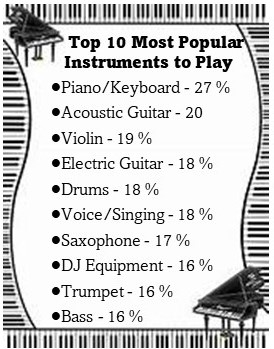
The popularity chart from a 2022 Newsweek article.

Enough of the technical description. What I do know is that the musical instrument we call the piano has been the most popular instrument in the world for centuries, according to multiple articles I found. That said, the debate now rages whether the guitar has overtaken the piano for the top spot. I also found articles to support that conjecture.

But back to the piano. It was sometime in the mid-1960’s when a piano came into my life. Although I was a young child, I remember the day vividly.

My maternal grandmother, Eva, had decided that she no longer wanted the piano which my grandfather, Mike, had bought her when they got married in June 1922. Why this was the case, I don’t know for sure. But once she made her mind up (I attribute that to her ¼ Scottish heritage) it stayed made up.

So my family became the recipients of said piano.

I do recall her being at our house when the instrument arrived and she sat down and reeled off a song from memory! I was awed and knew then that I wanted to play it just like her.

My older brother – in high school at the time – also seemed to have the musical ability and soon he was picking things out on the piano and adding chords, etc. They both made it look so easy.

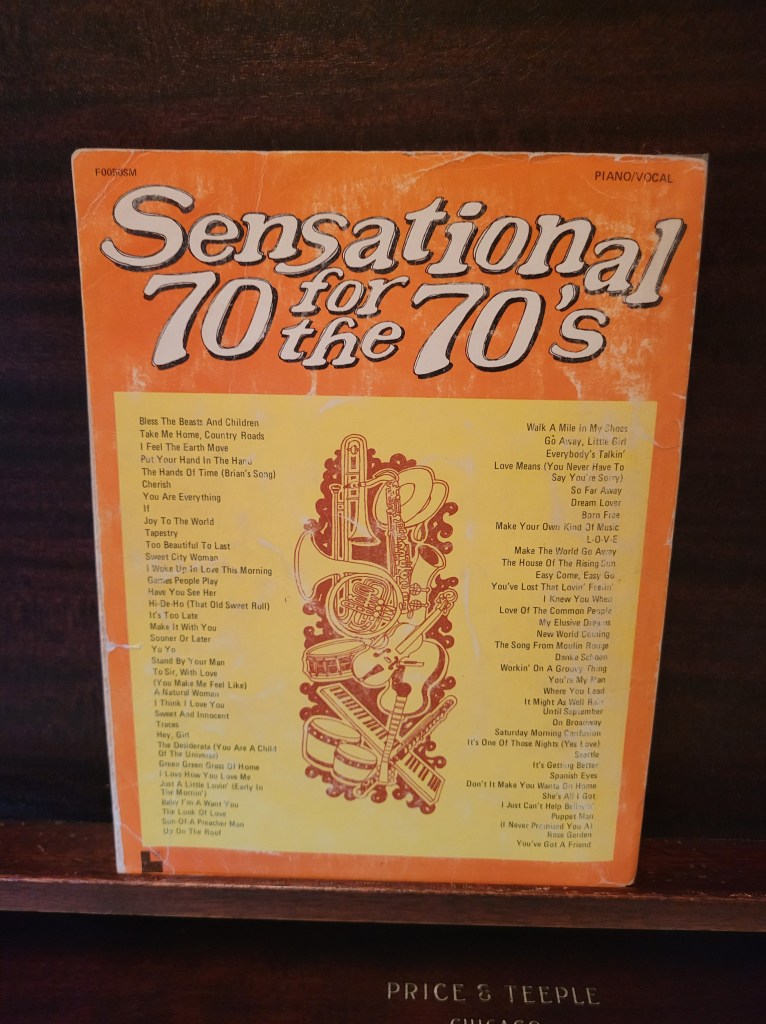
Dog-eared and worn is my Sensational 70 for the 70’s book

Of the four siblings, however, I was the only one who showed the interest and inclination to actually learn how to read music and how to play.

That year my mother signed me up for group lessons which were being taught as summer school classes at Franklin Junior high. I dutifully attended each and every class with one Mr. Lyons, a curmudgeon of a man, who would get so irritated with the ineptitude of the class that, more than once, he’d kick us all out and we’d wander the halls of the building until someone came to pick us up.

This alone would probably deter most 8 and 9-year-olds. But not me. I, apparently, had some of that Scottish stubbornness, and continued to practice and learn.

That fall my mother signed me up for lessons from a good friend of hers, Nancy Mayo. Mrs. Mayo was the pianist for the Bel Canto women’s singing group, a teacher, and a talented musician in her own right. She was the polar opposite of Mr. Lyons, infinitely patient and gentle with her young charges. I know I took lessons from her for a couple of years. I don’t know why I switched to a new teacher, but I did so in Junior high to my final teacher whose name I can no longer recall.

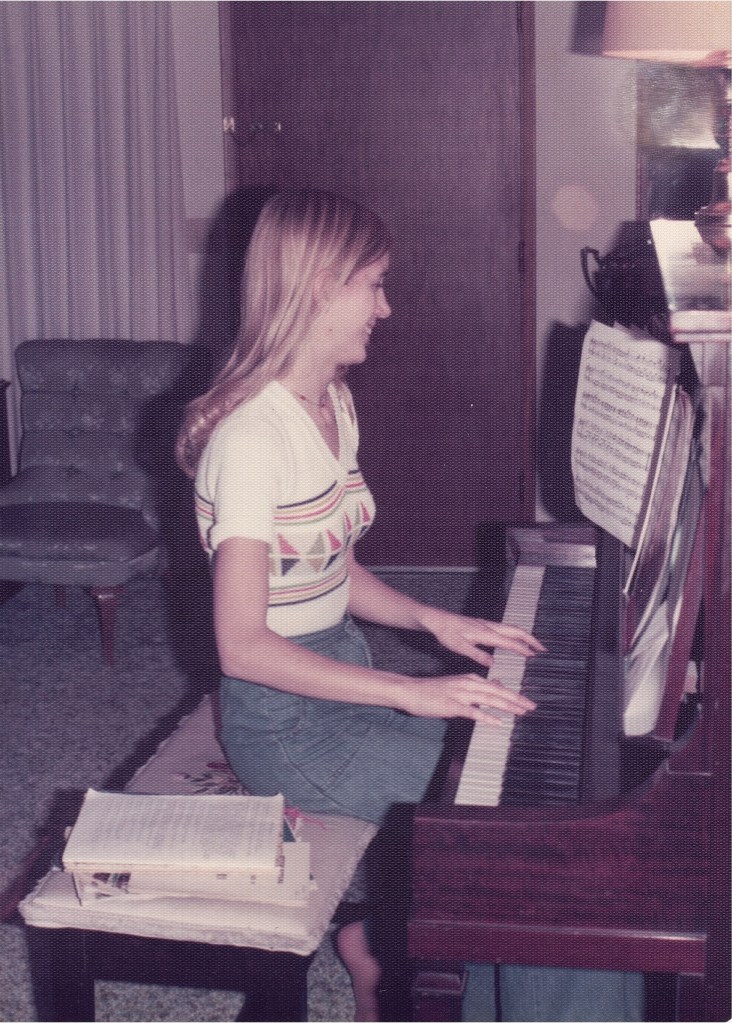
The author about age 16

I took seven years of lessons. When I was in high school, I spent a number of years being the musician for the Yakima Rainbow Girls and actually played in public. I sometimes accompanied people both with voice and other instruments. Somehow I could not memorize a song to save my life. I also was never able to easily change keys as the chords would give me fits. I was a reasonable technician, but a long way from being an artist.

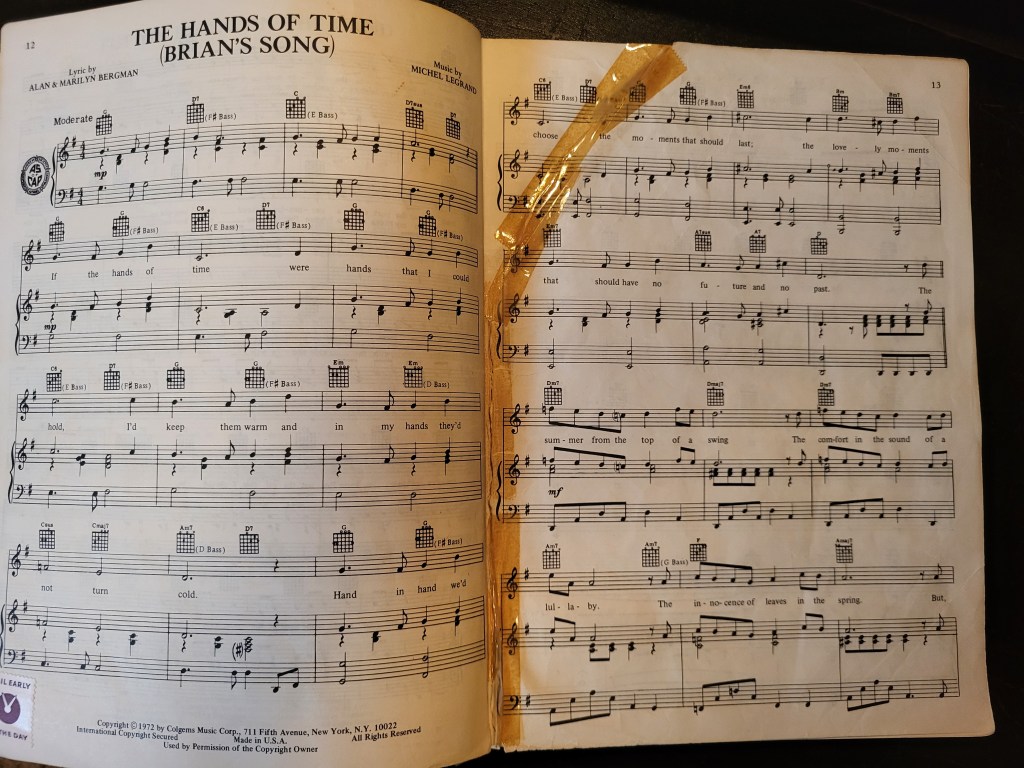
One of my after-school habits, however, was to sit down at the piano and play songs that I loved. I had a song book titled “Sensational 70 for the 70’s’” which had three of my four favorites: The Hands of Time (Brian’s Song), Too Beautiful To Last (Theme from the move Nicholas and Alexandria), and IF (by Bread).

I had a lot of others I played, but those three, plus the love theme from Romeo and Juliet, were always part of my daily concert.

This habit continued through my three years at Eisenhower High School and the two years I lived at home while attending Yakima Valley College. Then, in the fall of 1977, I moved to Tacoma to finish my education at the University of Puget Sound.

Sometime that autumn, when home on a break, I sat down to play the piano and my mother appeared in the living room and said to me that the hardest adjustment for her with me going off to college was the absence of the music in the afternoons.

It was a powerful moment as it was only then that I understood how something I enjoyed as a way for relaxation had become a special thing for my mom; it was how she experienced the empty nest syndrome common once all the children leave home.

No doubt my favorite song of all time to play on the piano as evidenced by the decades old scotch tape holding the pages together

When my parents sold that house in 1984, grandma’s piano came to live at my house. It’s been moved multiple times since and the now 103-year-old instrument definitely needs a tune up. But nowadays, I don’t seem to make the time for playing the piano.

It’s a shame, really. I no longer have delusions of grandeur that I’ll be some fabulous pianist; it’s really more about doing something that would bring me a bit of personal enjoyment.

So here’s to the piano, one of the most enduring and versatile instruments ever invented.

https://en.wikipedia.org/wiki/Piano

https://amis.mircat.org/jamis/1976_005.pdf (The only information I could find on James McLean)

Billy Joel: The Iconic Journey of a Storyteller

The Piano Man

April 8

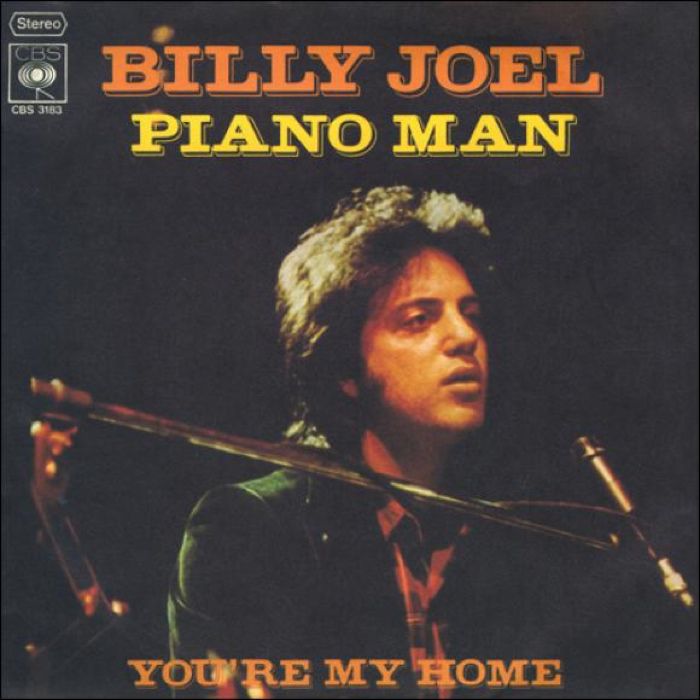
This song only ever reached number 25 on the Billboard Charts. Yet its one of the most memorable songs of the 1970’s and marked the beginning of one artist’s career which has spanned 50 years.

The song? The iconic “Piano Man.” The artist? Billy Joel.

It was in April of 1974 when “Piano Man” peaked on the charts. It could not even be described as a ‘one-hit wonder’ based on its ranking. By any measure, it should have faded away and been forgotten. Billy Joel, however, possessed the needed ingredients which have defined his long running career: grit, determination, and talent.

Undaunted by the middling success of “Piano Man” he continued to write songs and produce records. Both “Piano Man” and “Captain Jack” – his most successful early 1970’s releases – were an anathema to the music of that era. It was a time when soft rock and bubblegum dominated the pop category. I’m pretty sure no one was quite sure where this storyteller who saw and sang about the seamier side of life fit in.

“The Stranger” album, released in the fall of 1977, changed the public perception of Joel. I attribute it first and foremost to the song “Just the Way You Are.”  Written for his then wife Elizabeth Weber (married in 1974, divorced in 1983), I think it encapsulates a more optimistic look at life and, perhaps, that Joel was in a much happier place at that time as he had hit his stride with his career.

The American public responded. From the Infallible Wikipedia:

“Spending six weeks at No. 2 on the US Billboard 200 chart, The Stranger was Joel’s critical and commercial breakthrough. Four singles were released in the US, all of which became Top 40 hits on the Billboard Hot 100 chart: ‘Just the Way You Are’ (No. 3), ‘Movin’ Out (Anthony’s Song)’, ‘She’s Always a Woman’ (both No. 17), and ‘Only the Good Die Young’ (No. 24). Other songs, such as ‘Scenes from an Italian Restaurant’ and ‘Vienna’, have become staples of his career and are frequently performed in his live shows. The album won two awards at the 21st Annual Grammy Awards in 1979: Record of the Year and Song of the Year for ‘Just the Way You Are’. It remains his best-selling non-compilation album to date and surpassed Simon & Garfunkel’s Bridge over Troubled Water (1970) to become Columbia’s best-selling album release, with more than 10 million units sold worldwide. Rolling Stone magazine ranked the album number 70 on its 2003 list of the ‘500 Greatest Albums of All Time’, repositioned to number 169 in a 2020 revision. In 2008, The Stranger was inducted into the Grammy Hall of Fame.”

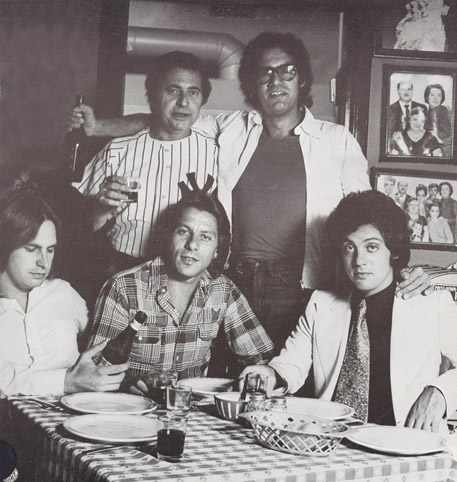
Billy Joel – seated far right – with members of his band at Guidos Italtian Restaurant. This photo was the back cover of the album, The Stranger.

As readers of my blog know, I greatly admire those who can tell a story through song. Joel has done this so very well. Perhaps my favorite of his ‘storytelling’ songs is “Scene’s from an Italian Restaurant.” When I listen to that song, I can visualize a couple of old friends – probably in their early 30’s – meeting up and soon their conversation is reliving the ‘good old days’ with such lyrics as:

Cold beer, hot lights
My sweet romantic teenage nights
.

My favorite part of the song has to be when he starts singing about prom king and queen, Eddie and Brenda, who were once the most popular kids in school. In a few short verses we learn about their marriage, their troubles, their divorce and that:

Brenda and Eddie had it already by the summer of ’75
From the high to the low to the end of the show
For the rest of their lives.

Storytelling at its finest.

It was in May 1984 when I attended my first rock concert. Yes, by then I was in my 20’s. My mother did not approve of rock concerts or anything else which might pollute young and impressionable minds so as a teenager going to such an event was forbidden.

I could have gone to a concert sooner, being that I had been an adult for several years. But after the hubby and I were married in 1980 we didn’t have the resources for such frivolities. Instead, we bought our first house in the spring of 1981 and then lived on rice and beans for the next few years, both of us going to jobs during the day, and fixing the house during the evenings and weekends. Our social life was the hubby playing on recreational soccer team; getting together with friends and family at our home our theirs, and going camping.

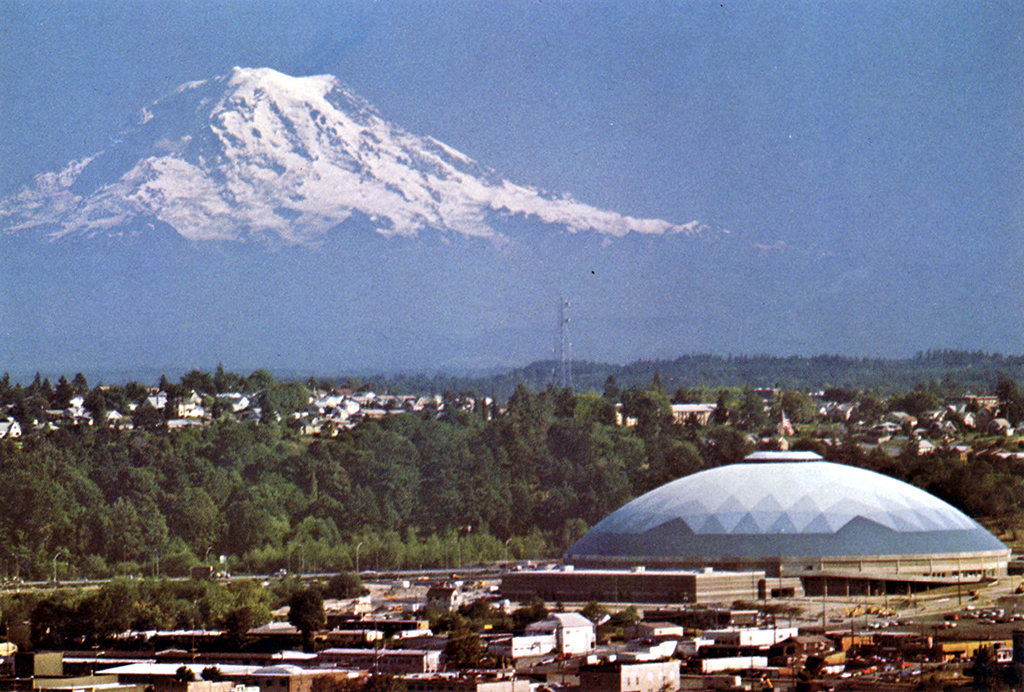
The Tacoma dome circa 1983-84

I can’t say for sure what inspired buying tickets for Billy Joel except that we both liked his music, me probably more than the hubby.

We drove from West Seattle to the Tacoma on Tuesday, May 8th, and joined thousands of our closest friends at the less than one year old Tacoma Dome (Billy Joel was the 9th artist to play there!). When the lights dimmed the arena went silent. In the dark we could see a grand piano slowly turning to the front of the stage, a lone performer sitting at the keyboard.

And then a single chord from the piano in the dark, instantly recognizable as the opening salvo of Joel’s then hit song “Allentown.” The arena erupted in applause. A solo spotlight appeared and shone down on Joel and, in that moment, he captured the room.

For the next couple of hours, we were treated to an energetic concert of old favorites and up and coming hits. It was a magical night and a great first concert.

I felt it was a privilege to have experienced Billy Joel perform live.

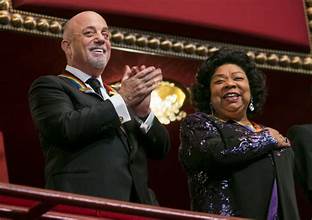
Joel was feted with the Kennedy Center honors in 2013. Pictured here with fellow honoree opera singer Martina Arroyo

Thank you, Billy Joel, for capturing the essence of the American experience through your incredible words and music.

There are soooo many links and so much more information I was not able to share in my self-imposed limited space. So here you go for some of the highlights including links to my three most favorite songs from Joel:

https://en.wikipedia.org/wiki/Billy_Joel

https://en.wikipedia.org/wiki/Piano_Man_(Billy_Joel_album)

https://en.wikipedia.org/wiki/The_Stranger_(album)

https://youtu.be/gxEPV4kolz0?si=TsMKJR-FE_lsLB4B (Piano Man)

https://youtu.be/GkuJJsApACc?si=J8-DxfhF7-e9ELU2 (Just The Way You Are)

https://youtu.be/izzM9LXqP-U?si=xlCLpepQV7n9nV7N (Scenes From an Italian Restaurant)

Remakes in Hollywood: Why ‘A Star Is Born’ Endures

Retold for each new generation

March 18

Movie remakes are a Hollywood tradition. Films featuring characters such as Dracula, Frankenstein, and Batman, have been redone numerous times. Robin Hood, Wuthering Heights, and King Kong, also come to mind. Pretty much anything originally written by Jane Austen, Charles Dickens, or William Shakespeare have seen multiple iterations.

One story which has been made into a movie four times now is the iconic “A Star Is Born,” with each version being adapted to reflect the culture of the era.

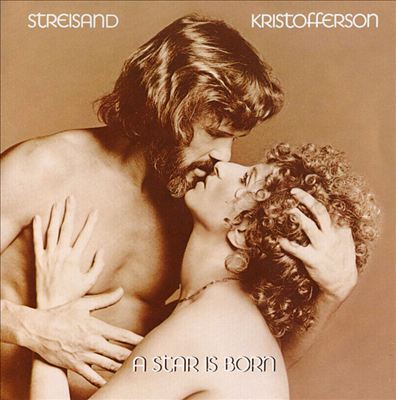
Kristofferson and Streisand December 1976

It was the third week of March 1977 when the song “Evergreen” – from the Barbra Streisand and Kris Kristofferson remake – reached number one on the Billboard Hot 100 charts. It claimed the top spot for three weeks.

The Infallible Wikipedia sheds light on the subject:

“A Star Is Born is a 1976 American musical romantic drama film directed by Frank Pierson, written by Pierson, John Gregory Dunne, and Joan Didion. It stars Barbra Streisand as an unknown singer and Kris Kristofferson as an established rock and roll star. The two fall in love, only to find her career ascending while his goes into decline.

The film premiered at the Mann Village Theater on December 18, 1976, with a wide release by Warner Bros. the following day. A huge box office success, grossing $80 million on a $6 million budget in North America, the film became the 2nd highest-grossing that year. Reviews praised its performances and musical score, but criticized the screenplay and runtime. At the 49th Academy Awards, the film won Best Original Song for its love theme ‘Evergreen’.

The film is a remake of the 1937 original with Janet Gaynor and Fredric March, notably adapted in 1954 as a musical starring Judy Garland and James Mason; and subsequently again in 2018 with Lady Gaga and Bradley Cooper.”

Although I’ve never seen either the 1937 or 1954 films, I did read the plot summaries and then watched a few clips from the Garland/Mason version. And one thing which comes through in that film – and again in the 1976 production – is that both were reflective of the culture of the time. The style of singing and dancing transports one back to the era of vaudeville style productions.

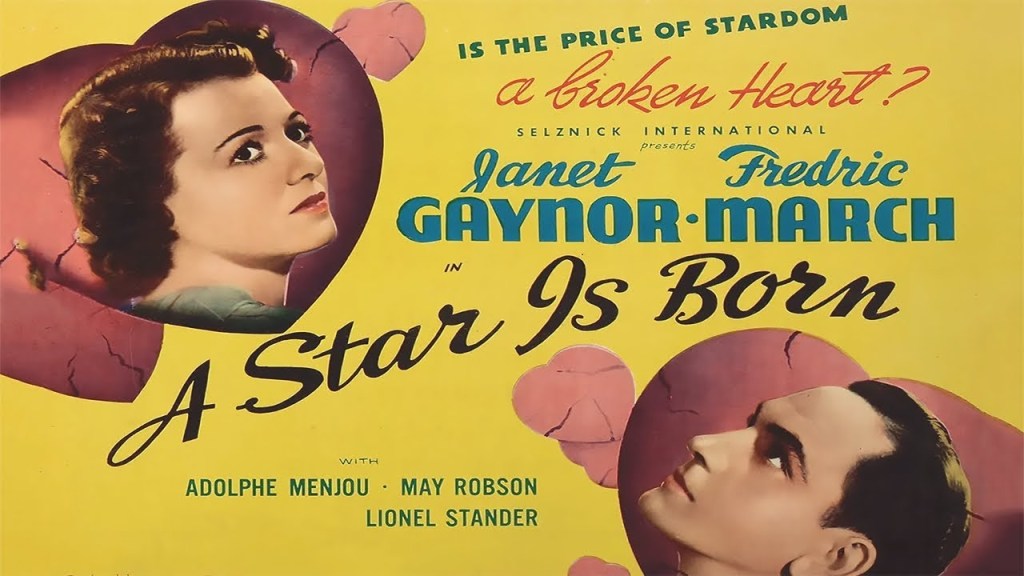
Poster from the original movie. 1937

Regardless, the main character’s names are the same in the first two films: Esther Victoria Blodgett and Norman Maine. For the 1976 film, the female character’s first name is still Esther but the man’s name is now John. Despite these updates the storyline is pretty much the same. By the time we get to 2018, the names Esther and Norman are long since abandoned for the more modern names Ally and Jack.

In deciding between the 1976 and the 2018 versions, I am torn. I was 19 in 1976 and saw the movie in the theatre at Christmas. I was swept up in the tragedy of the storyline; deep stuff when you are contemplating the meaning of life as millions of other baby boomers were also doing at the time. The movie resonated with my generation and was the second highest grossing film that year. It garnered several Oscar nominations, all for the music, with a win for best original song.

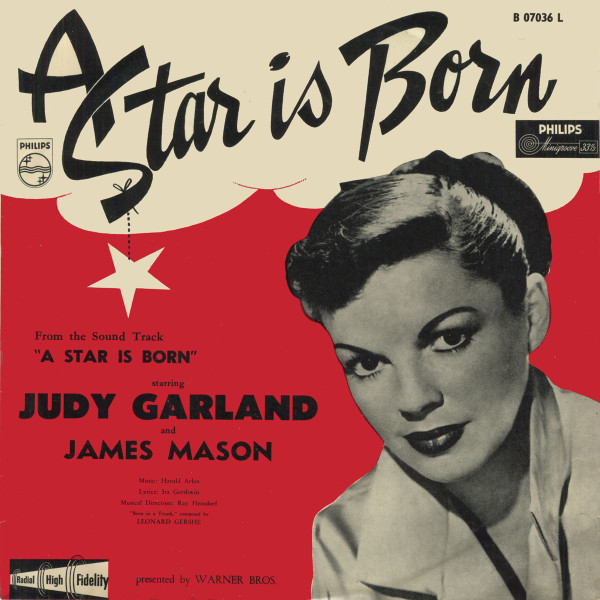
1954 Album cover of the Judy Garland and James Mason movie

Other than that, however, my own attempts to view Barbra Streisand as an ‘up and coming’ star in 1976 was a stretch. She was 34 years old that year and a Bonafide superstar; I’ve never been able to get past that fact.

Fast forward to 2018 and the most recent version of the story. Lady Gaga (aka Stefani Germanotta) at age 32 was somewhat more believable in the leading role. Up until she performed at the 2015 Academy Awards for the Julie Andrews tribute, her undeniable talent had been limited to a younger, edgier population demographic.

In ‘A Star is Born’ I think she successfully shed her over the top ‘Lady Gaga’ persona and her portrayal as a newcomer worked better than it did for either Garland or Streisand. For many people who might have dismissed Lady Gaga, this was their first exposure to Germanotta’s amazing voice.

Regarding age, Janet Gaynor and Judy Garland were 33 and 32 respectively. In Garland’s case she was, like Streisand, a long-established singer, Hollywood star, and a household name.

Germanotta and Cooper. 2018

The four male leads ranged in age from 40 to 45.

As a purely academic exercise, if another ‘remake’ of this movie is ever done, it really should feature an unknown actress/singer in her early 20’s. I think that is a much more believable premise for being ‘discovered,’ and that a ‘washed’ up star in his 40’s would keep the plot interesting, being able to portray the power imbalance and how it shifts with her rising star. Any screenwriter worth their salt could really delve deep into the emotional turmoil of each character which, to me, is the essence of great writing and would add a fresh twist to this classic plot line.

Or, perhaps, just let it go. Four times is probably enough remakes of this dark and depressing story.

Massive links today as embedding videos from YouTube never ends well:

https://en.wikipedia.org/wiki/A_Star_Is_Born_(1937_film)

https://en.wikipedia.org/wiki/A_Star_Is_Born_(1954_film)

https://en.wikipedia.org/wiki/A_Star_Is_Born_(1976_film)

https://en.wikipedia.org/wiki/A_Star_Is_Born_(2018_film)

https://youtu.be/I0f1cMYF91A?si=1lDAXyMm-HRtJAsA (Evergreen)

https://youtu.be/7hiVIixor_Q?si=4hjnneNJtWn_-mta (Shallow)

https://youtu.be/gNDu75gEiIo?si=nrRYYOm6OzZJJbFr ( The Man That Got Away)

https://www.businessinsider.com/most-remade-movies-of-all-time#the-first-king-kong-movie-was-released-in-1933-and-a-new-one-is-planned-for-2020-14

Grandma Got Run Over By A Reindeer

December 3, 2024

A Christmas Classic?

A Tuesday Newsday Classic Updated

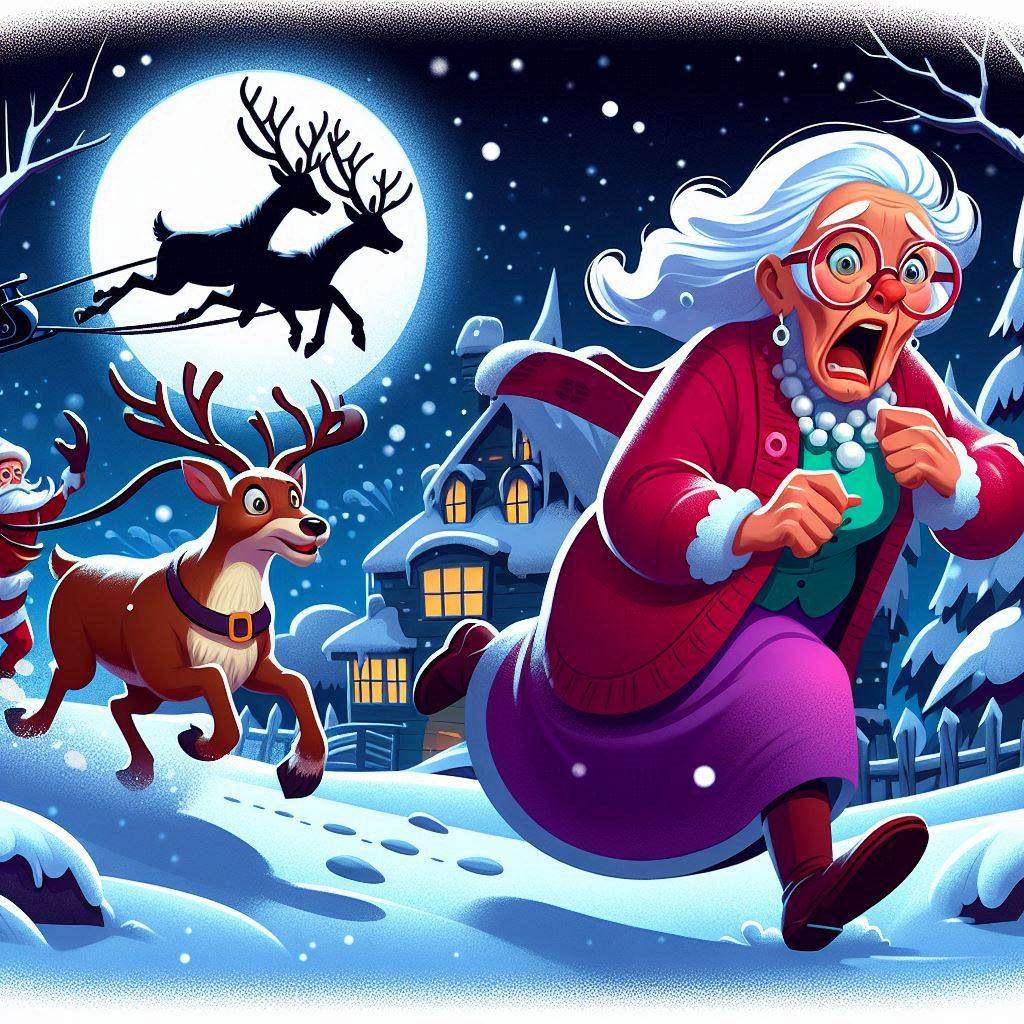
We know that the Christmas season is upon us when the calendar flips to December and those wonderful holiday songs waft nostalgic from the radio. And no song quite embraces the joyful Noel spirit more than… Grandma Got Run Over By a Reindeer.

The wonders of AI Image creation thanks to Bing.


It all began in December 1978 when songwriter/performer Randy Brooks sang the song during a live show at the Hyatt Lake Tahoe with the husband-and-wife duo of Elmo and Patsy Trigg Shropshire. The pair asked for – and received – a tape recording of the song from Brooks after the show. The next year the duo recorded the song and began selling the record during their performances. As much as we can hope this 1979 novelty song will go away it has actually increased in popularity over the years.

From there things spiraled out of control.

By the early 1980’s the song was being played on radio stations during the holiday season. Its popularity on the rise and the records sold out, it has been re-pressed and re-released several times.

The public continues to be split on whether the song is loved or hated. From the Infallible Wikipedia:

“Edison Media Research and Pinnacle Media Worldwide independently survey radio listeners on which Christmas songs they like and dislike. In both surveys, results of which were reported in 2007, the only song that reached the top of both liked and disliked lists was ‘Grandma Got Run Over by a Reindeer.’ Its ‘loved’ ratings in the Edison and Pinnacle polls were relatively high—47 and 32 percent, respectively—but so were the ‘hate’ or ‘dislike’ ratings—17 and 22 percent.

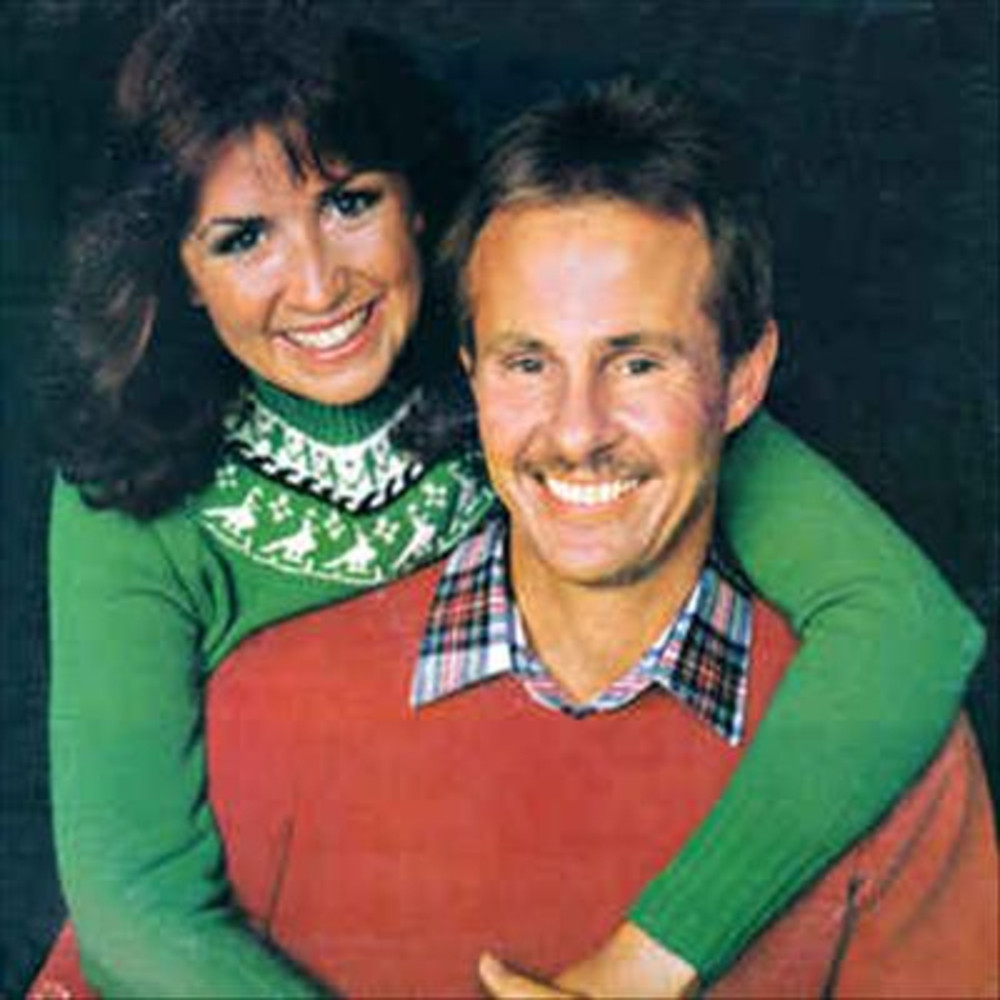
Elmo and Patsy Shropshire

A major Washington, D.C. radio station, WASH (97.1 FM), dropped the song from its playlist. ‘It was too polarizing,’ says Bill Hess, program director. ‘It wasn’t strong, except with a few people, and it had a lot of negatives.’ The song also gained notoriety at Davenport, Iowa radio station WLLR in 1985 when a disc jockey played the song 27 times back-to-back during the morning show before station management was able to stop him. The disc jockey, who was suspended, was reportedly depressed and upset that a co-worker had left employment at the station to work out-of-state.

Shropshire claims it is ‘a beloved holiday favorite.’ The video of the song was ‘a holiday staple on MTV for many seasons.’ It has been ‘incorporated into talking toys and a musical greeting card.’ ‘My royalties are four or five times what they were’ 20 years ago, claims Elmo, who performs the song with his bluegrass group year-round. ‘A lot of younger people say it’s not really Christmas until they hear it.’”

When I first heard it – sometime in the early 80’s – I was amused. It did have a catchy tune and unusual premise. Listening to the lyrics I was appalled by the macabre theme wrapped up in a happy sounding jingle. For me, the song lands firmly in the dislike category and I will switch radio stations whenever it comes on.

For today’s Tuesday Newsday, however, I am taking one for the team so that my loyal readers can know the story behind the worst ‘holiday’ song ever.

Normally, I would put a link to a video up so you can experience the song first hand. Not doing that. Instead, here are the lyrics which do support my supposition that this is NOT a joyful Christmas classic:

Grandma got run over by a reindeer
Walking home from our house Christmas eve
You can say there’s no such thing as Santa
But as for me and grandpa we believe
She’d been drinking too much eggnog
And we begged her not to go
But she forgot her medication
And she staggered out the door into the snow
When we found her Christmas morning
At the scene of the attack
She had hoof-prints on her forehead
And incriminating Claus marks on her back

Chorus: Grandma got run over by a reindeer
Walking home from our house Christmas eve
You can say there’s no such thing as Santa
But as for me and grandpa we believe

Now we’re all so proud of grandpa
He’s been taking this so well
See him in there watching football
Drinking beer and playing cards with cousin Mel
It’s not Christmas without Grandma
All the family’s dressed in black
And we just can’t help but wonder
Should we open up her gifts
Or send them back (send them back)

Chorus

Now the goose is on the table
And the pudding made of fig
And the blue and silver candles
That would just have matched the hair on grandma’s wig
I’ve warned all my friends and neighbors
Better watch out for yourselves
They should never give a license
To a man who drives a sleigh
And plays with elves

Chorus

For those of you who ARE gluttons for punishment and want this ear worm in your head for weeks, here’s the video and, of course, a link to the Infallible Wikipedia article. I’ve also included one about Randy Brooks, the songwriter, as his tales from his childhood and how his family inspired the song is worth a read.

You Light Up My Life

A mega hit for Debbie Boone

November 19, 2024

A Tuesday Newsday Classic updated

On November 19, 1977, this song was in the middle of a 10 week run as the number one song in America. You Light Up My Life was the one and only Top 40 hit from Debbie Boone, daughter of 50’s teen idol Pat Boone. It reached number one on October 15 and stayed in that position through December 23, making it – at the time – the only recording to stay that long in the top spot in Billboard history.

According to the Infallible Wikipedia:

“Besting her chart performance in Billboard, Boone’s ‘You Light Up My Life’ single topped Record World’s Top 100 Singles Chart for an unbroken record of 13 weeks. On Billboard’s chart, Boone was unseated from #1 by the Bee Gees, with ‘How Deep Is Your Love,’ the first of three #1 singles from the ‘Saturday Night Fever’ soundtrack. On Record World’s chart, Boone kept the Bee Gees out of the number-one spot. In Cash Box Magazine, ‘You Light Up My Life’ managed only an eight-week stay at the top of the chart, before being dethroned by Crystal Gayle’s ‘Don’t It Make My Brown Eyes Blue’.

The single, which was certified Platinum by the Recording Industry Association of America (RIAA), also hit #1 on the Adult Contemporary chart and reached #4 on the Country chart. The single peaked at #48 I’m the UK Singles Chart. Boone’s hit single led to her winning the 1978 Grammy Award for Best New Artist, with additional Grammy nominations for Best Pop Vocal Performance, Female and Record of the Year. Boone also won the 1977 American Music Award for Favorite Pop Single.

Decades after its release, the Debby Boone version is still considered one of the top ten Billboard Hot 100 songs of all time. In 2008, it was ranked at #7 on Billboard’s ’Hot 100 All-Time Top Songs’ list (August 1958 – July 2008). An updated version of the all-time list in 2013 ranked the song at #9.

Although it was written by (Joe) Brooks as a love song, the devout Boone interpreted it as inspirational and proclaimed that it was instead God who ‘lit up her life.’”

The song was tainted by controversy, however, as songwriter Brooks apparently did not want to pay the agreed upon amount owed Kasey Cisyk, the artist who sang it for the movie of the same name, and whose version is included on the 1977 soundtrack.

Boone was told, when recording the song for release as a single, exactly how to sing it and her vocals were dubbed onto the original orchestral track.

At the time, I recall that Boone received much derision and the song was labeled as saccharin. In reading what occurred, however, I feel bad for both the women caught up in the controversy. Perhaps Cisyk was denied her shot at a Top 40 career and, perhaps, Boone was lulled into a sense of inevitability that she would become a star like her father. Although in listening to both versions, I think Boone’s is better.

Boone released additional songs into the pop market, but none ever came close to the success of “You Light Up My Life.” Her career eventually led her back to country music – where she had started – and then to work in the Christian music world.

In the fall of 1977, you simply could not avoid the song. It was played hour after hour on the radio. That autumn was one of the most memorable in my life: I was living away from my parents for the first time, having joined the Alpha Phi sorority at the University of Puget Sound. While I did study, I don’t think I was quite as diligent as I should have been. Instead, I was fraternizing with the fraternity boys most every weekend at mixers, and going on dates! I had never in my life garnered quite so much attention from the males of the species.

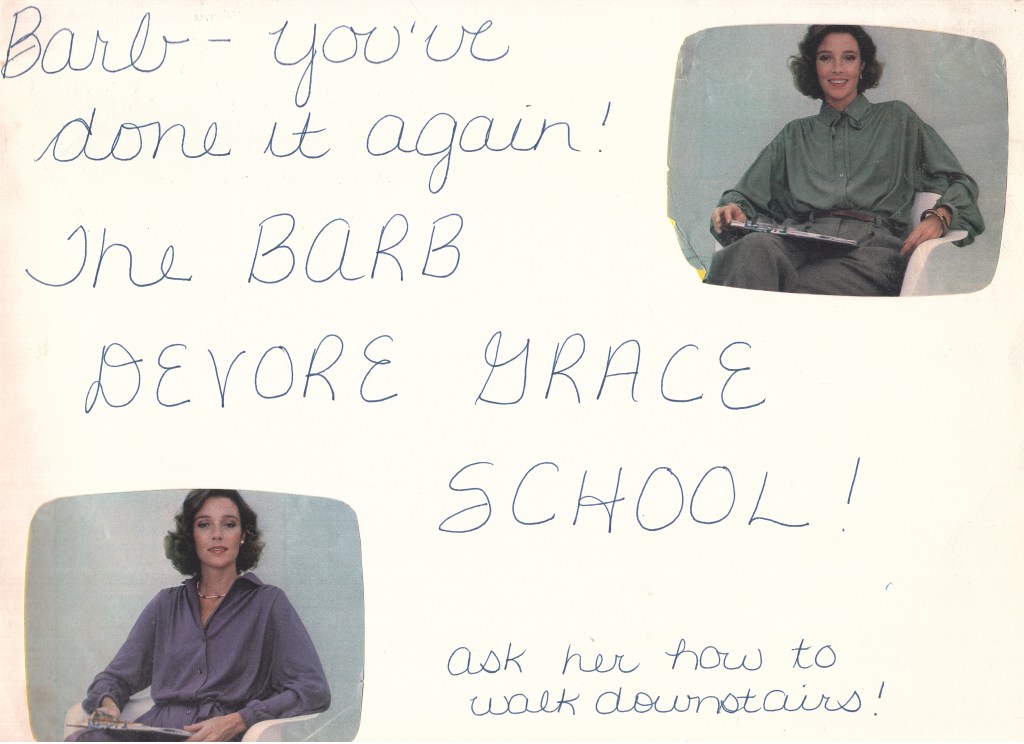
There was one particularly memorable November day when, literally, I had calls or visits from five guys all of whom I had been on a date with in recent weeks. That day, I could not say for sure the exact date, I had been headed down to the ‘tunnels’ to get my dinner and I decided it was a good idea to jump down the two steps from the door. I jumped a wee bit too high and… nearly gave myself a concussion.

The ‘award’ I was given for my epic self inflicted concussion

The next Monday at our weekly sorority chapter meeting, I was recognized for my grace (for the stairs) and my charm (for the plethora of phone calls and visits I had). It was what I came to be known for and received endless ribbing about it. Good times.

That era in my life was punctuated by music and whenever I hear “You Light Up My Life” I’m back in the Alpha Phi house and it’s the fall of 1977. There were a few other songs which, in my opinion, were equally as deserving of that number one spot.

These included Billy Joel’s Just The Way You Are – an infinitely better song; Rita Coolidge’s version of We’re All Alone; Carly Simon’s Nobody Does It Better; and Don’t It Make My Brown Eyes Blue by Crystal Gayle. The list of great songs from that year also included big hits – but never number ones – from a whole lot of great bands: Foreigner, Heart, Fleetwood Mac, Styx, Supertramp, and Steely Dan, among others.

And in case you’d like to hear the Casey Cisyk version and really get the worm stuck in your head (it’s been in mine since I wrote this!) here’s that video also. Note that you are seeing Didi Conn on screen – she is doing a lip-sync to Cisyk’s vocals. Enjoy!

The links:

Dan Fogelberg

A Troubadour for the Ages

August 13, 2024

A Tuesday Newsday Classic

The year was 1979 when this artist entered the American consciousness with a song destined to become a wedding favorite. No doubt he never intended for that to be the case but said of the song, which he wrote while vacationing in Maui, that he was “”lounging in a hammock one night and looking up at the stars. It just seems this song was drifting around the universe, saw me, and decided I’d give it a good home.”

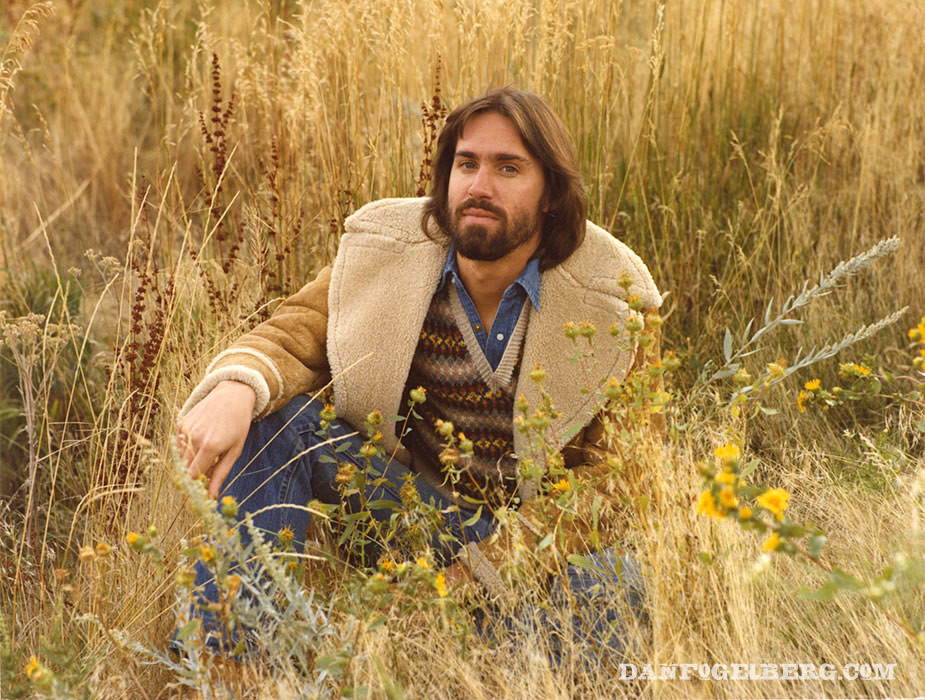
Dan Fogelberg late 1970’s early 1980’s

The song was Longer. The artist Dan Fogelberg, who was born on August 13, 1951.

Although Fogelberg had another hit song, Part of the Plan in 1974, it was the song Longer which was his most commercially successful song. It peaked at number 2 on the Billboard Hot 100 in March 1980 and created a fan base of twenty-something young women.

This was due to a number of factors: first, he was an incredible songwriter. His true gift was as a storyteller who could set his tales to music.  He encapsulated human emotion into concise, memorable lyrics which managed to tug at one’s heartstrings and, often, produced ennui. His voice possessed qualities which carried the listener to another place and time, evoking sentiment and meaning with his rich vocals. And, because so many of his songs were written from personal experience they were believable and relate-able.

In a short time period after Longer – which did top out at number 1 on the Adult Contemporary charts – a series of memorable hits followed.

According the Infallible Wikipedia:

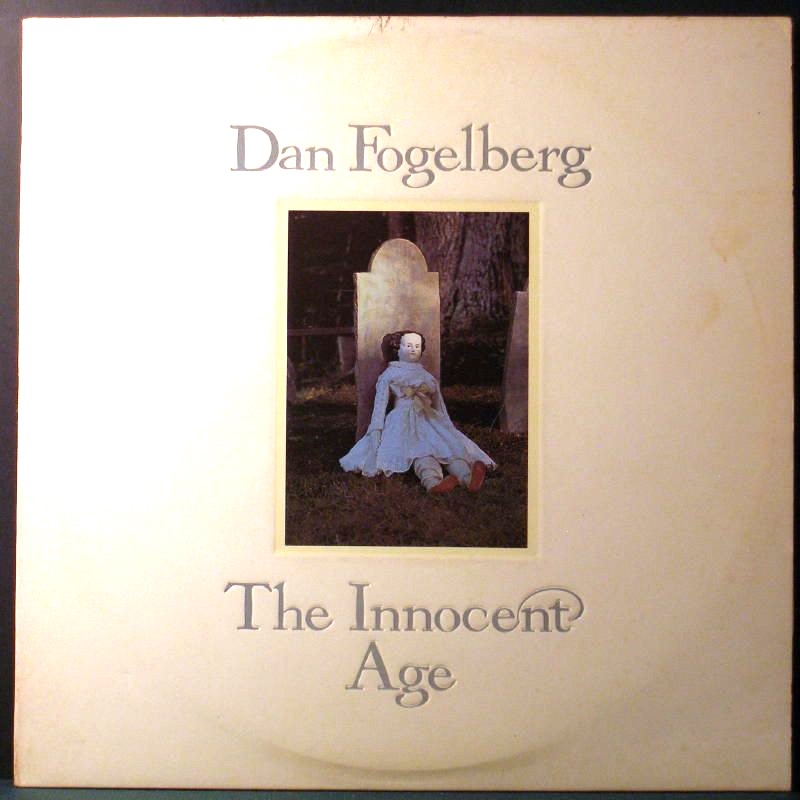
“The Innocent Age, released in October 1981, was Fogelberg’s critical and commercial peak. The double album included four of his biggest hits: “Same Old Lang Syne”, “Hard to Say”, “Leader of the Band”, and “Run for the Roses”. He drew inspiration for The Innocent Age from Thomas Wolfe’s novel Of Time and the River. A 1982 greatest hits album contained two new songs, both of which were released as singles: “Missing You” and “Make Love Stay.” In 1984, he released the album Windows and Walls, containing the singles “The Language of Love” and “Believe in Me.”

While Dan Fogelberg was not a flashy performer, his concerts capitalized on the very qualities I listed above. I was privileged to see him perform live twice. The first time was in 1994 for an acoustic concert at the Paramount in Seattle. It was just Dan and the instruments he played, primarily guitar and piano. He connected with the audience and was passionate about his music but also about his commitment to environmental causes.

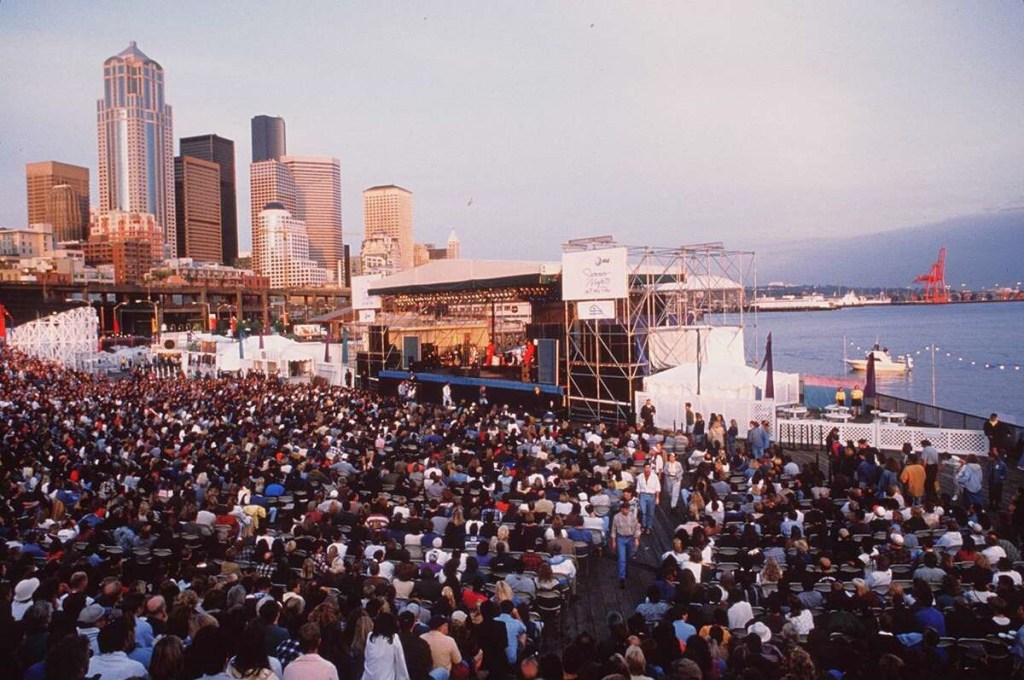
Seattle P-I archive photo of Summer Nights at the Pier in Seattle. Circa 2002

The second time was at a Summer Nights at the Pier concert in the early 2000’s. I’m not entirely sure which year it was as he played there in 2000, 2001, and 2002 from what I’ve been able to research.

What I do know is that the hubby and I experienced a magical Seattle evening on Elliott Bay enjoying Dan Fogelberg as he shared his music.

Sadly, he was diagnosed with advanced prostate cancer in May 2004 and died on December 16, 2007.

But what gifts he shared with the world! He released 16 studio albums and 21 singles. His greatest success was on the Adult Contemporary charts. Of the 21 singles, four went to number one and a total of 12 were top ten hits.

As one of my favorite ‘hitchhikers’ he often kept me company in my frequent treks back and forth across the mountains to care for my parents. There are so many great songs that it’s difficult to pick just one. So I’ll pick two instead.

The first one is easy as it was the song of his I fell in love with and that would be Longer. Despite having friends who suggested that having it sung at our wedding would be too predictable (it charted in March 1980 – I was married in August that year), my sis-in-law did a beautiful rendition and the song will forever have a tender spot in my heart.

The second one is also from his Innocent Age album. It was never released as a single (although it was the B-side of Run For The Roses) and, I would guess, most people have never heard it. It is, however, a gorgeous song which showcases his talent. The song is titled The Sand and the Foam and here’s a YouTube link. No flashy video. Just pure, unadulterated music by my favorite artist.

And a couple of links:

https://en.wikipedia.org/wiki/Dan_Fogelberg

https://www.danfogelberg.com/

Close To You

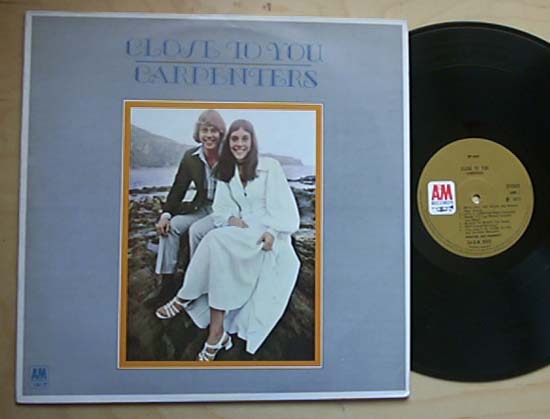
The first hit for the 1970’s duo “The Carpenters”

July 30, 2024

A Tuesday Newsday Classic Updated

The Carpenters 1970 album “Close To You”

In the spring of 1970, there were approximately 17 million Americans between the ages of 12 and 16 and, of those, some 8.5 million were female. It was the height of the teenage Baby Boomer era when AM radio was king and the only place to hear the hits of the day.  It was also the dawn of a musical period dominated by a form of music known as soft rock.

According to the Infallible Wikipedia:

“The Hot 100 and Easy Listening charts became more similar again toward the end of the 1960s and into the early and mid-1970s, when the texture of much of the music played on Top 40 radio once more began to soften. The adult contemporary format began evolving into the sound that later defined it, with rock-oriented acts as ChicagoThe Eagles and Elton John becoming associated with the format. The Carpenters‘ hit version of ‘(They Long to Be) Close to You’ was released in the summer of 1970, followed by Bread‘s ‘Make It with You’, both early examples of a softer sound that was coming to dominate the charts.”

It was during the last week of July 1970 when Close To You topped the Billboard Hot 100 and held the number one position for four weeks. It marked the ascension of The Carpenters as one of the defining musical acts of the early 1970’s.

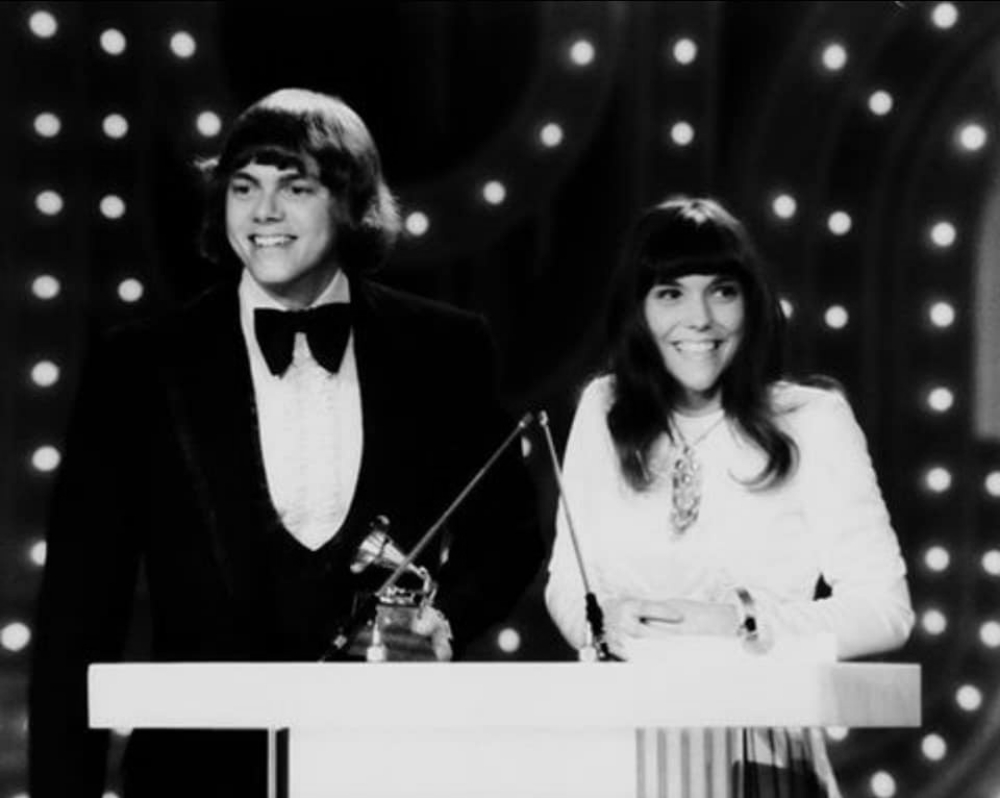
Close to You” was nominated for Record of the Year and Album of the Year at the 1971 Grammy awards. They won for Best New Artist and also for Best Contemporary Vocal Performance by a Duo, Group or Chorus.

Despite the group being derided as saccharin at the time, their musical success is undisputed. Much has been written about Karen Carpenter’s voice, her three-octave range, and soulful interpretations. The Carpenters would not, however, have been the Carpenters without older brother Richard who was the genius behind their ‘sound.’

Love ‘em or hate ‘em, The Carpenters’ style was original and Karen’s talent immense, the combination of which propelled them to the top of the pop charts. Also from the Infallible Wikipedia:

“They produced a distinct soft musical style, combining Karen’s contralto vocals with Richard’s arranging and composition skills. During their 14-year career, the Carpenters recorded ten albums, along with numerous singles and several television specials.”

From 1970 through 1973 they achieved their greatest success, appealing to a demographic who purchased their records and made The Carpenters a household name: females aged 13 to 18.

“Their career together ended in 1983 when Karen died from heart failure brought on by complications of anorexia. Extensive news coverage surrounding these circumstances increased public awareness of eating disorders. Though the Carpenters were criticized for their clean-cut and wholesome conservative image in the 1970s, their music has since been re-evaluated, attracting critical acclaim and continued commercial success.”

When I first published this post in 2019 I reserved the right to blog more about the Carpenters at a later date. Which I have on three more occasions (so far): https://barbaradevore.com/2020/02/04/goodbye-to-love/, https://barbaradevore.com/2021/08/31/wedding-woes/, https://barbaradevore.com/2023/12/05/top-of-the-world/.

No doubt they were the most influential musical group for me during my teen years. But this article is only to focus on their launch and the song Close To You. More than any other song, this one literally marks the moment I became a teenager. The start of its four weeks run on the charts coincided with my 13th birthday.

Back in the 1970’s there was really only one way to ‘blog’ – by keeping a diary. Although I couldn’t put my hands on my 1970 diary, I found a reference to this song at the end of my 1971 diary, noting when it was played on the radio.

I was so obsessed with the song that I would record it from the radio. I actually can still visualize my 13-year-old self sitting motionless and silent on my bed, cassette tape recorder on the bedside table, holding the microphone next to the radio’s speaker, while Close To You played and I captured it on tape. Kids today do NOT know how easy they have it!

Eventually I purchased the single and then the album of the same title. A much easier way to listen to it although I had to use my parents’ stereo system and my mother made me listen to my music via headphones.

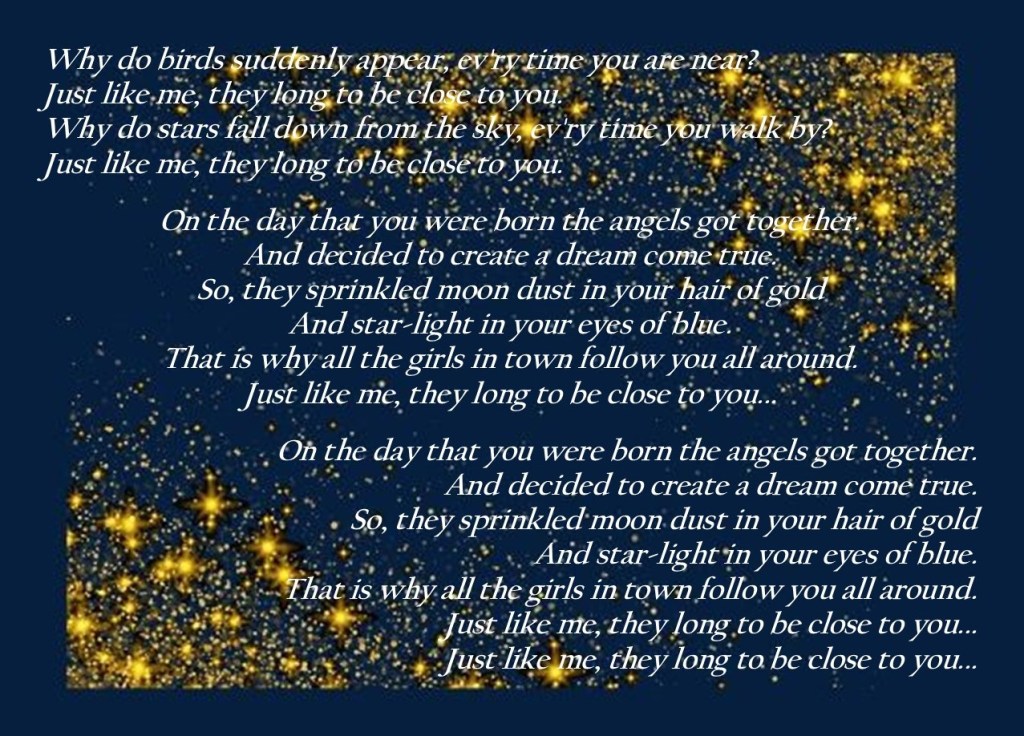
My obsession even prompted me to think it was a good idea to do a lip-sync version for a competition where I needed a ‘talent.’ (Singing was out of the question and I really had no other performance talents, BTW) Taken from the pages of my 1971 diary on December 31st, I dutifully reported that “I am going to pantomime Close to You like I’m a chorus girl or something. I’m going to wear Sue’s blue velvet formal and silver shoes. If she’ll let me.”

Yes, my older sister did let me wear the dress and the shoes. Yes, it was a total embarrassment. It may have contributed to why I avoid karaoke and limit my singing to the shower and the car although my dance moves were okay.

What a blessing that Karen Carpenter – who suffered from stage fright – was able to overcome it enough to share her amazing voice with the world. But I’m not so sure the price she paid was worth it.

And a couple of links:

https://en.wikipedia.org/wiki/(They_Long_to_Be)_Close_to_You

https://en.wikipedia.org/wiki/Soft_rock

Rumours Have It

The journey of Fleetwood Mac

April 2, 2024

A Tuesday Newsday Classic updated

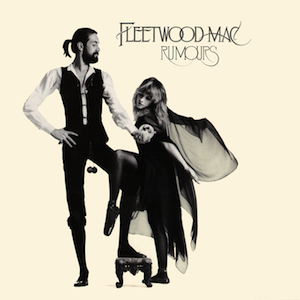
This album sat atop the Billboard charts for 31 non-consecutive weeks in 1977 and early 1978. Its chart dominance began on April 2, 1977 and, according to one of the principles of the group who recorded it, it was “the most important album we ever made.”

The album was Rumours and the group Fleetwood Mac.

Theirs is a story which shows that finding the right blend of talent, relentless commitment, and a lot of hard work, are necessary to make it in the music industry. The Fleetwood Mac story begins in 1967 as explained in the Infallible Wikipedia:

“Fleetwood Mac was founded by guitarist Peter Green, drummer Mick Fleetwood and guitarist Jeremy Spencer. Bassist John McVie completed the lineup for their self-titled debut album. Danny Kirwan joined as a third guitarist in 1968. Keyboardist Christine Perfect, who contributed as a session musician from the second album, married McVie and joined in 1970. At this time it was primarily a British blues band, scoring a UK number one with ‘Albatross’ and had lesser hits with the singles ‘Oh Well’ and ‘Black Magic Woman’. All three guitarists left in succession during the early 1970s, to be replaced by guitarists Bob Welch and Bob Weston and vocalist Dave Walker. By 1974, all three had either departed or been dismissed, leaving the band without a male lead vocalist or guitarist.”

The group was plagued by skullduggery from their manager, drug and alcohol addictions of some band members, departures of multiple guitarists, and an inability to make it big as a British Blues band. Then, in 1974 the band moved to Los Angeles. It was in that moment the magic began to happen. Also from the Infallible Wikipedia:

“After (Bob) Welch announced that he was leaving the band, Fleetwood began searching for a replacement. While Fleetwood was checking out Sound City Studios in Los Angeles, the house engineer, Keith Olsen, played him a track he had recorded in the studio, ‘Frozen Love’, from the album Buckingham Nicks (1973). Fleetwood liked it and was introduced to the guitarist from the band, Lindsey Buckingham, who was at Sound City that day recording demos. Fleetwood asked him to join Fleetwood Mac and Buckingham agreed, on the condition that his music partner and girlfriend, Stevie Nicks, be included. Buckingham and Nicks joined the band on New Year’s Eve 1974, within four weeks of the previous incarnation splitting.”

With the new members in place, the band took to the studio to record their (second!) self titled album, 1975’s “Fleetwood Mac.” It was a commercial success, selling over 7 million copies and featuring the memorable tracks: Over My Head, Say You Love Me (vocals Christine McVie), Rhiannon,  and Landslide (vocals Stevie Nicks).

In many ways, the two women’s distinctive voices came to define the group’s sound and propel their musical style towards mainstream pop.

With the release of Rumours in January 1977 and its subsequent rise to the top of the Billboard album charts, Fleetwood Mac cemented their spot in the Rock and Roll history books. The Infallible Wikipedia gives the details:

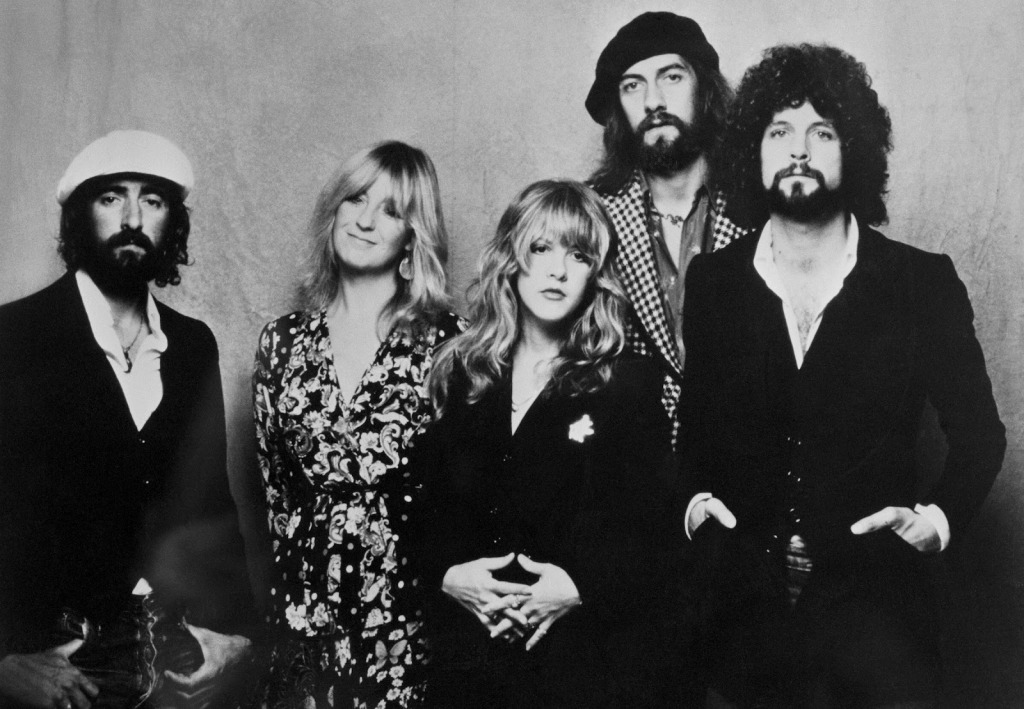
Fleetwood Mac members circa 1975, l to r, John McVie, Christine McVie, Stevie Nicks, Mick Fleetwood and Lindsey Buckingham

“By 1980, 13 million copies of Rumours had been sold worldwide. As of 2013, sales were over 40 million copies. As of May 2016, Rumours has spent 630 weeks in the UK Top 75 album chart and is the 11th best-selling album in UK history and is certified 13× platinum by the British Phonographic Industry, the equivalent of 3.9 million units shipped. The record has received a Diamond Award from the Recording Industry Association of America for a 20× platinum certification or 20 million copies shipped, making it, as of 2012, the joint fifth best-selling album in US history (by number of copies shipped).” (Ed note: it is still, as of 2019, one of the top ten best-selling albums of all time)

Although the group has continued to record and perform over the years, with some members leaving, new ones coming in, and then old ones rejoining, those of us of a certain age no doubt think of Fleetwood Mac as the following five individuals who were the group in 1977: Mick Fleetwood, Christine McVie, John McVie, Stevie Nicks and Lindsey Buckingham.

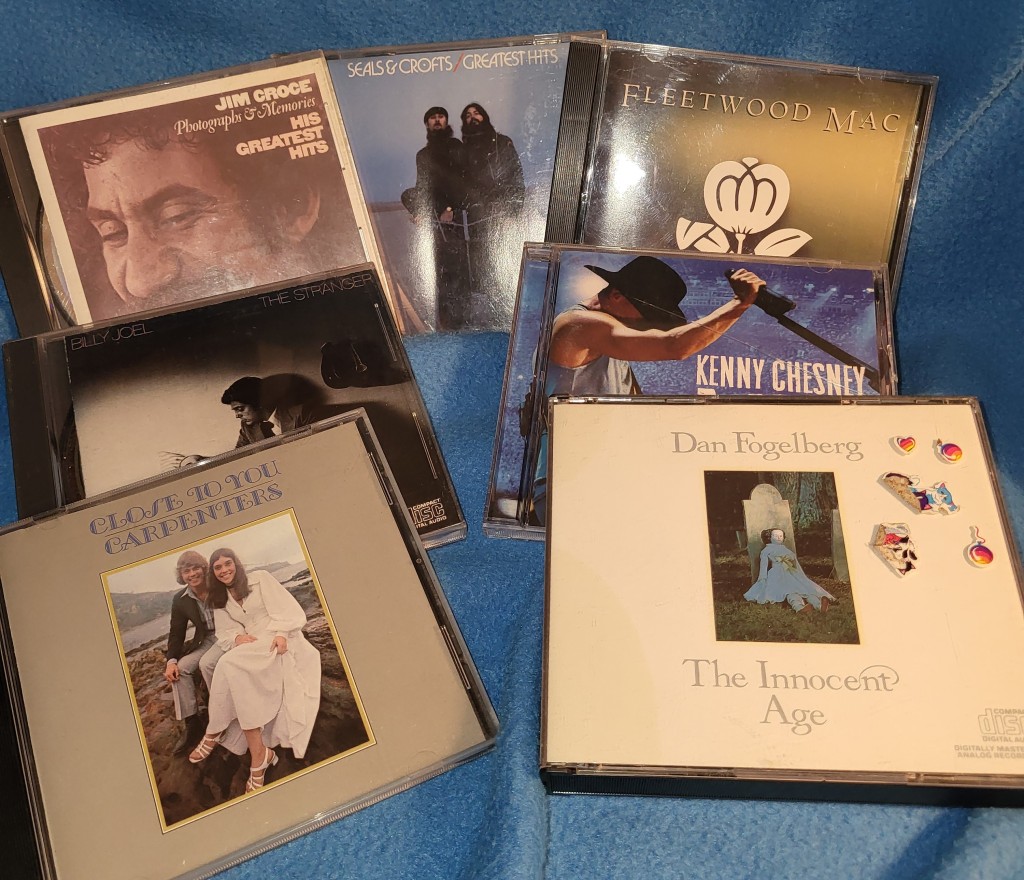
During a foray in to Value Village (a Western Washington thrift store) about a year ago I was – as is my habit – perusing the used CD’s when I spied it: Fleetwood Mac – Greatest Hits. I plucked the CD from the shelf and spirited it home. Last fall when the hubby and I were about to embark on a three week, three thousand mile, road trip, to New Mexico and back, I was forced to reduce down my box of ‘hitchhikers.’ This is what I lovingly dubbed the approximately 25 CD’s which traveled with me to Yakima and back every couple of weeks.

A few of the ‘hitchhikers’ who earned a spot in the box

The purge process involved looking at every CD we own (who knows 100? 150? 200?) and determining which of the entire CD deserved a place in the box and which had a cut or two which needed to be recorded onto a thumb drive. One by one I evaluated with the ‘thumb drive pile’ growing ever higher and the box group getting smaller. “Would I,” I asked myself with each CD, “listen to every song on this?”

There were only a handful which met that standard…  Fleetwood Mac’s Greatest Hits was one of them. Although it was not Rumours, it did have most of my favorites of theirs on it.

 It remained in the box of hitchhikers. When we bought our Hyundai Santa Fe in the summer of 2020 it did not have a CD player. To play my favorites I had to completely switch to the thumb drive.

Six months after this article was published, I lost my dad and the frequent trips to Yakima became a thing of the past. The box of hitchhikers now resides in a cupboard but the thumb drive lives in the center console of the Santa Fe. On the occasional longer trip I often plug it in to spend time with my favorite old friends including, Mick, Christine, Lindsey, and Stevie.

And every so often I peruse the CD collections at Goodwill and Value Village in search of the 1975 self-titled ‘Fleetwood Mac’ CD. Why? Because the song “Landslide” is, sadly, not in my collection and is, by far, my favorite of Fleetwood Mac’s songs. There is still plenty of room on the thumb-drive for a couple more song. Rumours have it.

For those not familiar with “Landslide”, here it is. Enjoy!

The FM story is fascinating and far too much to include in my weekly blog. Thankfully Wikipedia provides exhaustive information for those interested:

https://en.wikipedia.org/wiki/Fleetwood_Mac

https://en.wikipedia.org/wiki/List_of_Billboard_200_number-one_albums_of_1977

https://en.wikipedia.org/wiki/Rumours_(album)

https://en.wikipedia.org/wiki/Landslide_(Fleetwood_Mac_song)

Elton John

“I never knew me a better time, and I guess I never will.”

January 30, 2024

A Tuesday Newsday Classic Updated

In the past 50 years there has not been an artist, more than this one, who has provided the soundtrack for our lives. He embodies the concept of be ‘an original’ and has, since the beginning of his long career, gone his own way. In addition to his commercial success, he’s been recognized by his own country and was knighted on January 30, 1998.

The musician: the one, the only, and never imitated, Elton John.

Although he was born Reginald Dwight, he changed his name to Elton John in 1967, after several years in the music industry. From the Infallible Wikipedia:

“In 1967, Dwight answered an advertisement in the British magazine New Musical Express, placed by Ray Williams, then the A&R manager for Liberty Records. At their first meeting, Williams gave Dwight an unopened envelope of lyrics written by Bernie Taupin, who had answered the same ad. Dwight wrote music for the lyrics, and then mailed it to Taupin, beginning a partnership that still continues. When the two first met in 1967, they recorded what would become the first Elton John/Bernie Taupin song: ‘Scarecrow’. Six months later Dwight was going by the name ‘Elton John’ in homage to two members of Bluesology: saxophonist Elton Dean and vocalist Long John Baldry.”

The list of memorable songs written by the duo – and performed by Elton John – is amazing. From his very first top 40 hit – Your Song – and continuing on with hit after hit through the 1970’s and 1980’s, the songs are memorable and often poignant.

Your Song – easily my favorite of all of his songs

Ironically, Elton did not win a solo Grammy Award until 1995… 24 years after his first nomination. The 1995 award was for Best Male Performance for the Song Can You Feel the Love Tonight? from the Disney hit movie The Lion King. In all, he has been nominated for Grammy’s 33 times and won five times.

He was honored with the Grammy Legend Award in 1999, an honor given to the select few whose lifetime achievements are notable.

As a teenager in the 1970’s you could not turn on the radio without hearing many of Elton John’s songs. One song in particular stands out for me. It was December of 1972 and I was a sophomore in high school. And there was a guy – Ron – who was in my French class. New to my high school, his family had moved to Yakima sometime that fall. We soon became friends, chatting before and after class and we went to several Eisenhower High School basketball games together that December.

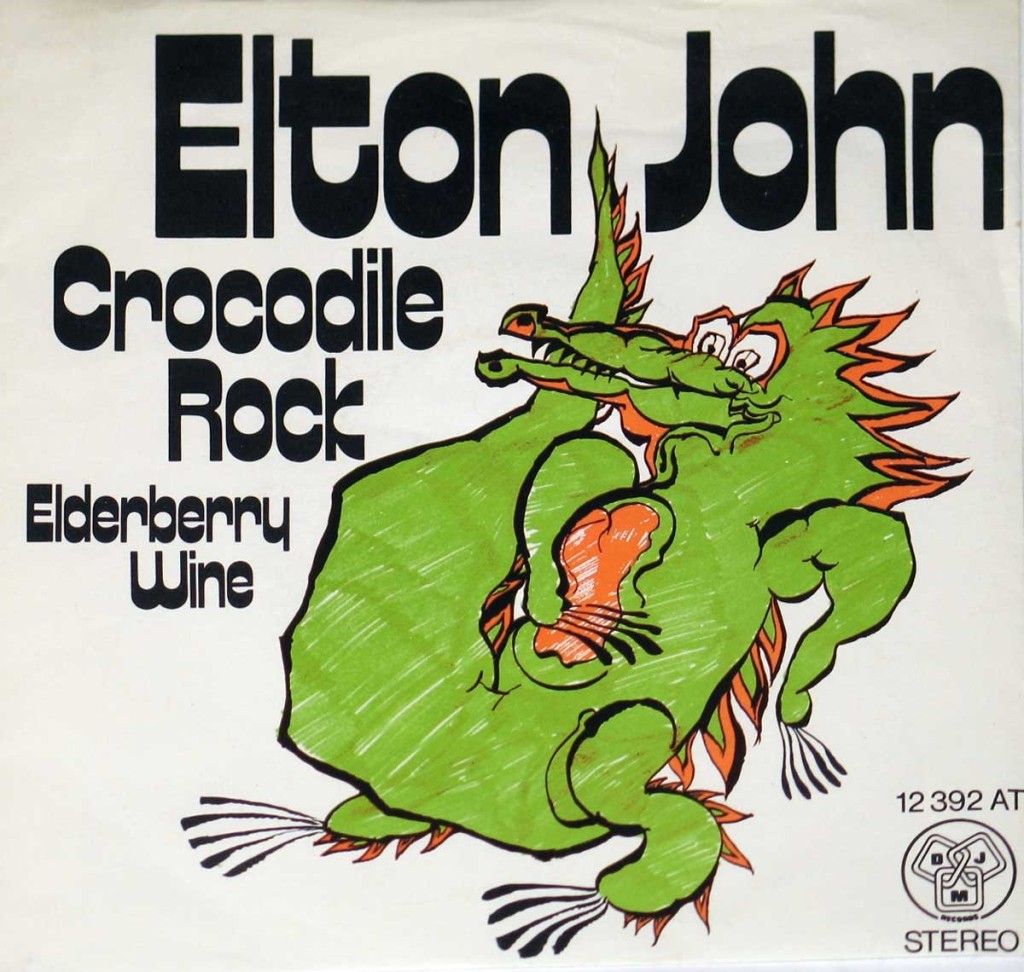
But it was one particular Elton John song which, having been released in the US on November 20, I associate with Ron. Crocodile Rock made the Billboard Hot 100, debuting at number 73. It climbed to #30 by December 18th. Crocodile Rock was Elton John’s first number one hit in the US, staying atop the charts for three consecutive weeks from February 3rd through the 17th in 1973.

To this day, whenever I hear Crocodile Rock I am immediately transported back to December of 1972. Although the song is about an earlier era, for a 15 year old girl garnering male attention for the first time in her life, the song seemed to encapsulate the fun of life: of going to a Friday night basketball game with a guy I liked, talking with him after class and in the library, getting teased by my friends about my new ‘boyfriend,’ and trying -and pretty much failing – to navigate the choppy waters which are teenage romances.

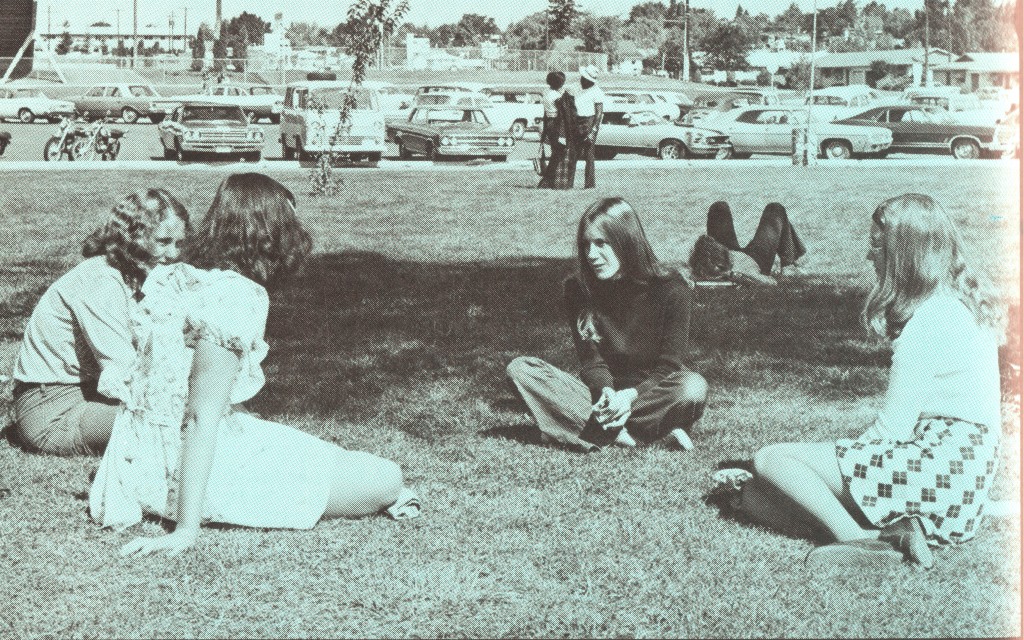
The author (center facing the camera) early fall of 1972 at Eisenhower High school with my friends Cindy, Daphne, and Kathy. This photo appeared on page 8 of the photo essay section of the 1973 annual.

There is a poignancy to the lyrics when one line proclaims “I never knew me a better time, and I guess I never will.” Somehow this song not only laments the slipping away of the rock and roll of the 1950’s and 60’s but speaks to how quickly the teenage years pass us by and how we simply do not appreciate what a unique and special time they are.

Elton John announced in 2018 that he was doing one ‘last’ tour dubbed ‘Farewell Yellow Brick Road’. From the website:

“These dates mark Elton’s last-ever tour, the end of a half a century on the road for one of pop culture’s most enduring performers. The new stage production will take his fans on a musical and highly visual journey spanning a 50-year career of hits like no one has ever seen before.”

True to his word, it WAS his final tour. But he has written a book – ‘Farewell Yellow Brick Road: Memories of My Life on Tour’ – which is scheduled to be released on September 24, 2024.

For more information about Sir Elton, be sure to check out these links:

https://en.wikipedia.org/wiki/Elton_John

https://www.eltonjohn.com/stories/farewell-yellow-brick-road-memories-of-my-life-on-tour-set-for-release

https://en.wikipedia.org/wiki/Elton_John_singles_discography