Perhaps Shakespeare’s most famous play
March 11
To try and take on this play is, I would conjecture, pure folly. Afterall, it is probably the most recognized literary work in the world. It is the story of two young lovers who forsake all else to be together. They risk the disapproval of family and friends and, ultimately, meet their demise all because they chose that which was forbidden.
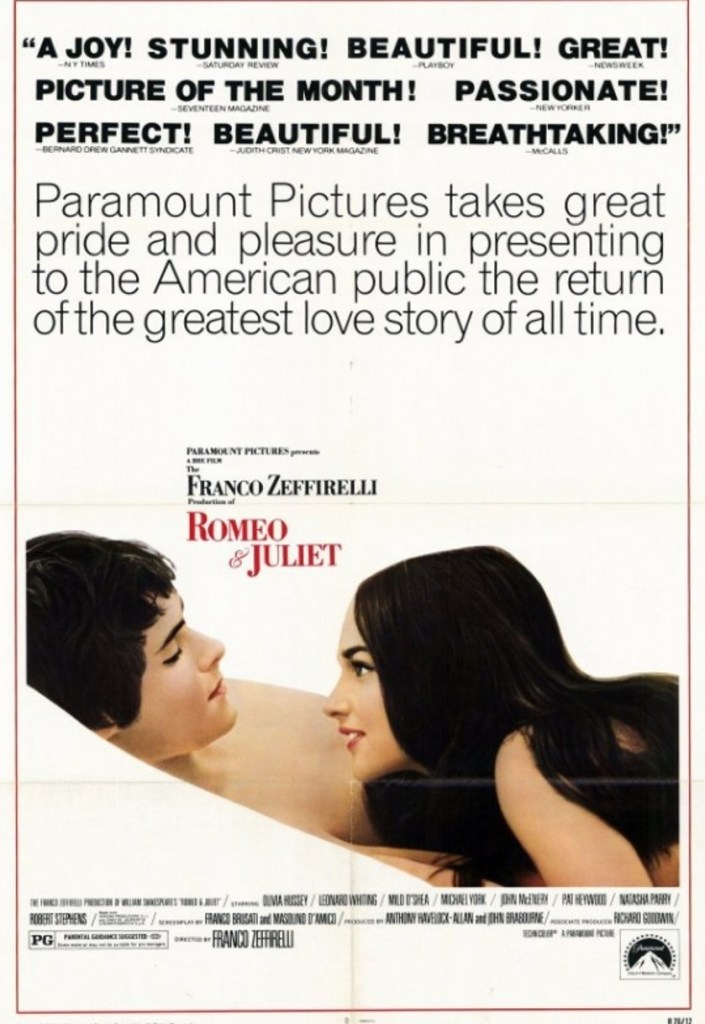
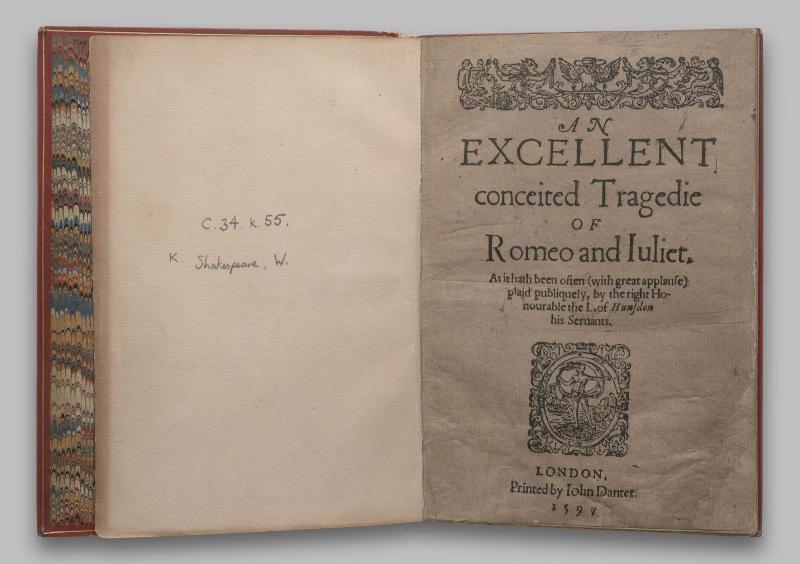
“Romeo and Juliet” is William Shakespeare’s most famous works and March 11, 1302, is – according to OnThisDay.com – considered to be the date of the young lover’s marriage.
As is often the case, that is disputed since contextual clues from the play itself place the wedding date as being in mid to late July.
Regardless, today is as good a day as any to feature this iconic work.
For anyone who is unfamiliar with the storyline you can certainly access the Infallible Wikipedia. Which I did only to discover that the article there is 10,604 words long. Egads.
Instead, I found this one paragraph synopsis from the site Shakespeare.org.uk much easier to digest:
“An age-old vendetta between two powerful families erupts into bloodshed. A group of masked Montagues risk further conflict by gatecrashing a Capulet party. A young lovesick Romeo Montague falls instantly in love with Juliet Capulet, who is due to marry her father’s choice, the County Paris. With the help of Juliet’s nurse, the women arrange for the couple to marry the next day, but Romeo’s attempt to halt a street fight leads to the death of Juliet’s own cousin, Tybalt, for which Romeo is banished. In a desperate attempt to be reunited with Romeo, Juliet follows the Friar’s plot and fakes her own death. The message fails to reach Romeo, and believing Juliet dead, he takes his life in her tomb. Juliet wakes to find Romeo’s corpse beside her and kills herself. The grieving family agree to end their feud.”
But, honestly, only if you lived as a hermit in a rock cave on a remote island in the south Pacific would you NOT know about Romeo and Juliet (R&J).
When I started thinking about R&J, my mind drifted back to the early 1970’s and my experience at Wilson Junior High School in Yakima, Washington.
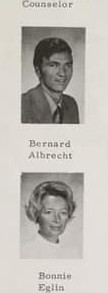
It was there that I was introduced to R&J. At the time I had no appreciation for Shakespearean literature or for the incredible foundation which was given me by a trio of dedicated Jr. High English teachers. For my entire 8th grade year, my English teacher was Mr. Albrecht. To us students he seemed quite mature. When, in fact, he was the ripe old age of 27 that first year. We respected him because he treated us as intelligent people regardless of our limited years on earth; he rewarded those who worked hard and did their best.
The next year my English class experience was split into two segments. For the fall/winter semester I drew the formidable grammar teacher, Mrs. Eglin. I think she likely made students rip out their hair and cry at times. But, by God, you were going to learn: all the parts of grammar, how to diagram a sentence, and how to construct a proper paragraph. It was in her class that I discovered the evils of dangling participles, all about verbs, adverbs, nouns (both proper and pro-), adjectives, and every other part of speech. In other words, I learned how to write the correct way. She made me think about my writing in ways I’d never considered. I might not have always followed her methods, and I’m not perfect, but not for lack of instruction on Mrs. Eglin’s part.
In the second half of the year, I had an even more demanding teacher – which I hadn’t thought possible after being with Mrs. Eglin – Mrs. Roberts. First name Doris. Which is telling. No one in my age demographic, or even a few years older, was named Doris. The name had, however, been the 8th most popular name for girls in the 1920’s. Mrs. Roberts was born in 1922 and was an ancient 50 that year. Ah perspective.
Mrs. Roberts assigned us every classical piece of literature she could find and we explored such themes as ‘man’s inhumanity to man’, ethics, morality, death and dying, cruelty, poverty… yes, we read some very dark stories. Like “Flowers for Algernon”, “The Grapes of Wrath”, “Fahrenheit 451”, and “Romeo and Juliet”.
The clever thing which this band of teachers managed to accomplish was to make the course work relevant to the teenagers of the day. Somehow, they convinced the administration that it was educational to load some 250 ninth graders into school busses and send them to the movie theatre to see films based on what we were reading.

Spoiler alert: it worked.
Of course, we kids thought we’d gotten a free pass for the day. Personally, I returned from those outings thinking about the films but also contemplating the books we read and then writing papers on the theme we thought was the best fit.
Sometime in the fall of 1971 I’m pretty certain we were whisked away in the busses to see the 1968 film version of Romeo and Juliet with Leonard Whiting and Olivia Hussey. Such clever English teachers, using the pop culture of the day to get us to learn. I did find a reference in my 1972 diary for both “Farenheit 451” and “Mary, Queen of Scots.” Sadly, my diary from 1971 does not seem to exist any longer, which surprises me as I was a faithful diary writer.
Now a few fun facts. I was able to find 49 times R&J was made into a movie in the Shakespearean tradition (from 1908-2021); an additional 118 films were produced which adapted the works in modern ways or with odd twists (like the truly bizarre 2011 Gnomeo and Juliet); there are also a few films which utilize R&J’s overarching theme in some new way (like the charming 2019 movie “Letters from Juliet”).
I owe a lot to my Junior High School English teachers for the great foundation they laid. It was the gift that has continued to give and bless me.
As always a few links:
https://www.onthisday.com/weddings/march/11
 barbaradevore.com