An invaluable invention which changed women’s lives
September 10, 2024
A Tuesday Newsday Classic
This invention truly revolutionized American life. The sewing machine was granted a patent on September 10, 1846. While most people associate the name Singer with the sewing machine it was actually an inventor by the name of Elias Howe who conceived of and created the first such machine. From the Infallible Wikipedia:
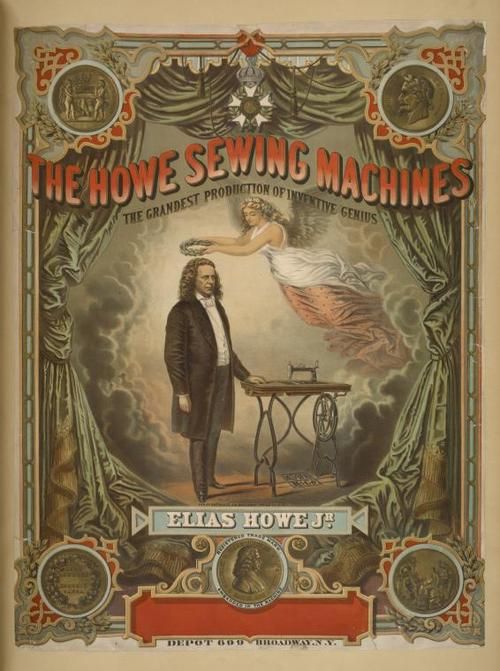
“He almost beggared himself before he discovered where the eye of the needle of the sewing machine should be located. It is probable that there are very few people who know how it came about. His original idea was to follow the model of the ordinary needle, and have the eye at the heel. It never occurred to him that it should be placed near the point, and he might have failed altogether if he had not dreamed he was building a sewing machine for a savage king in a strange country. Just as in his actual working experience, he was perplexed about the needle’s eye. He thought the king gave him twenty-four hours in which to complete the machine and make it sew. If not finished in that time death was to be the punishment. Howe worked and worked, and puzzled, and finally gave it up. Then he thought he was taken out to be executed. He noticed that the warriors carried spears that were pierced near the head. Instantly came the solution of the difficulty, and while the inventor was begging for time, he awoke. It was 4 o’clock in the morning. He jumped out of bed, ran to his workshop, and by 9, a needle with an eye at the point had been rudely modeled. After that it was easy. That is the true story of an important incident in the invention of the sewing machine.”
Alas, Elias Howe had competition in the development of the sewing machine and another, much more recognized name, came to dominate the industry. Also from the Infallible Wikipedia:
“Despite his (Howe) efforts to sell his machine, other entrepreneurs began manufacturing sewing machines. Howe was forced to defend his patent in a court case that lasted from 1849 to 1854 because he found that Isaac Singer with cooperation from Walter Hunt had perfected a facsimile of his machine and was selling it with the same lockstitch that Howe had invented and patented. He won the dispute and earned considerable royalties from Singer and others for sales of his invention.”
Howe, like Singer, ended up a multimillionaire.
Before this society altering machine was invented, it took some 14 hours for a person – usually a woman – laboring at home and sewing each seam by hand to make a shirt. Those hours were invested after all other chores were done: cooking, cleaning, washing, and child care. The sewing machine, which at first was used in factories, eventually made its way to the home allowing women to sew stronger, better garments, and saving hundreds of hours of valuable time.
For me, my relationship with the sewing machine is a love/hate affair. When in Junior High I took Home Economics classes which, at Wilson Junior High in Yakima, were split into two segments. One was to learn all the skills needed to cook. The other was to learn how to sew. I was in eighth grade in the sewing segment when I received my first lessons.
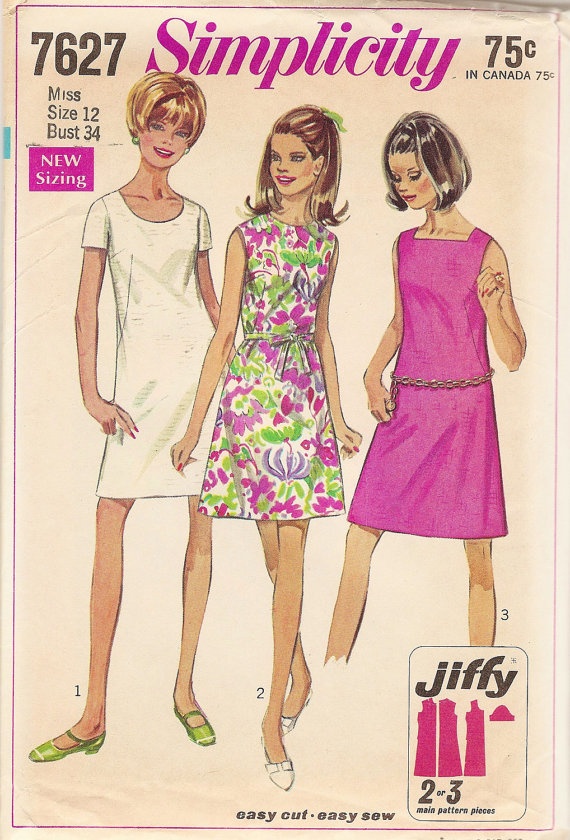
Our initial project was to sew a basic A-line dress. For those unfamiliar with the term, what that meant was a dress of three pieces: front, and two mirror image back pieces with a zipper down the middle. No sleeves, just armholes with armhole facings; darts at the bodice completed the fitting. In all, the pattern consisted of 8 pieces. Five of those pieces were facings around the arms and neck.
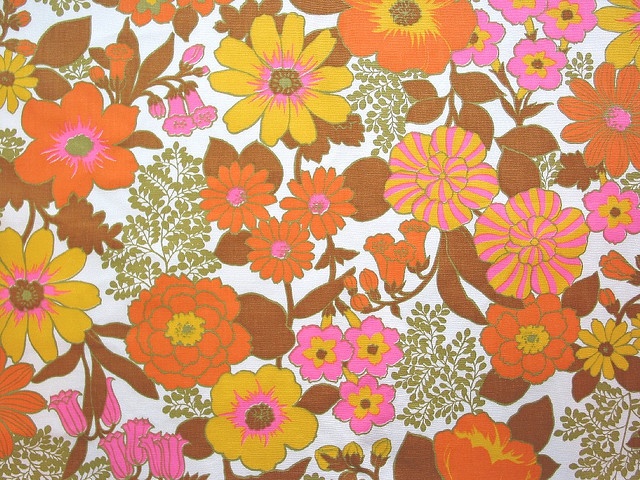
Our teacher sent us out on the mission to purchase material for our dresses. I acquired a very loud, very late 1960’s/early 1970’s fabric, with colorful and bold flowers on a white background. Day by day we labored. One day the pattern pieces had to be carefully laid out and pinned down, paying attention to concepts such as grain lines as we learned how to ‘read’ the pattern. The next step, after our teacher approved our work, was to cut the fabric, making sure to follow the printed lines of the pattern and the little tabs to be matched. Day by day we succeeded in sewing together our creation. We learned the proper way to sew darts (the dress had four of them), install a zipper, finish edges, tack down the facings, and to sew (by hand) a hem.
When my dress was complete that fall I was excited to wear it… only to discover that due to my physical similarity to a long-legged colt, the length of the dress was such that all anyone noticed were my knock-kneed legs extending a mile from the hem to the floor.
This might have been due to the fact that the mini skirt was the dominant fashion in the late 1960’s. Or it might have been that between my 8th and 9th grade years of school I grew, literally, six inches in height. From the time I started the dress to when it was finished, I had gained most of this height.
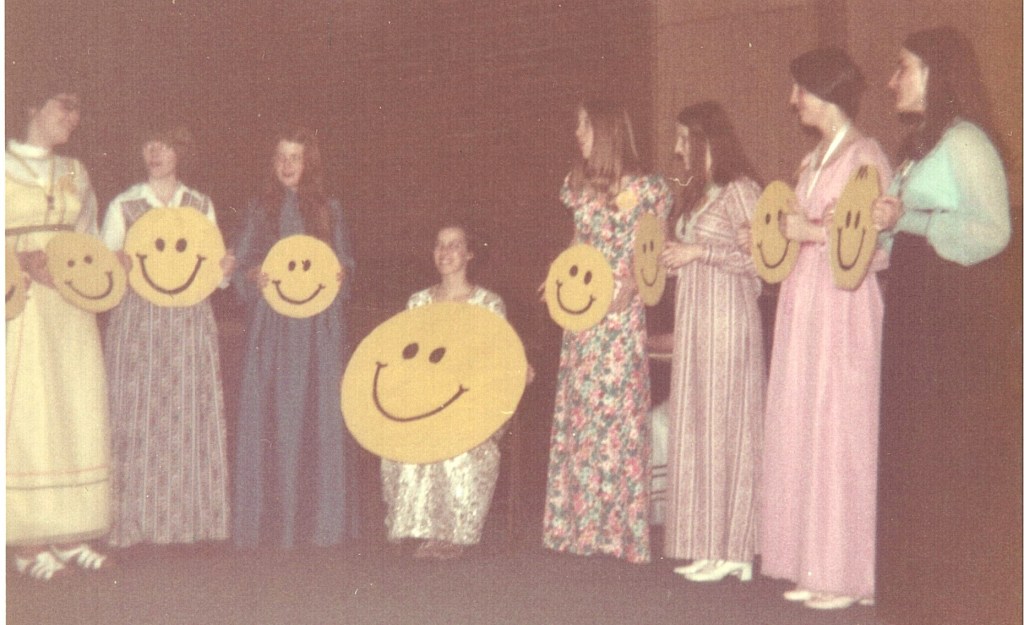
But I was not discouraged as I had discovered I now possessed a valuable ability. Soon I had a bit of a cottage industry going. As a member of the Rainbow Girls the need for custom dresses for its members provided clients. The very first dress I made for someone else was for my friend, Wende, who paid me $15 to sew a dress.
.
Over the years knowing how to sew has come in handy. I can mend pretty much anything and can create clothing. I’ve made costumes for my children, dresses for countless Rainbow girls, and my most recent project (in 2019) of sewing 21 identical aprons for gifts.
The most painful experience occurred, however, in January 2010. Sewing is, despite Mr. Howe’s invention, a time consuming process.
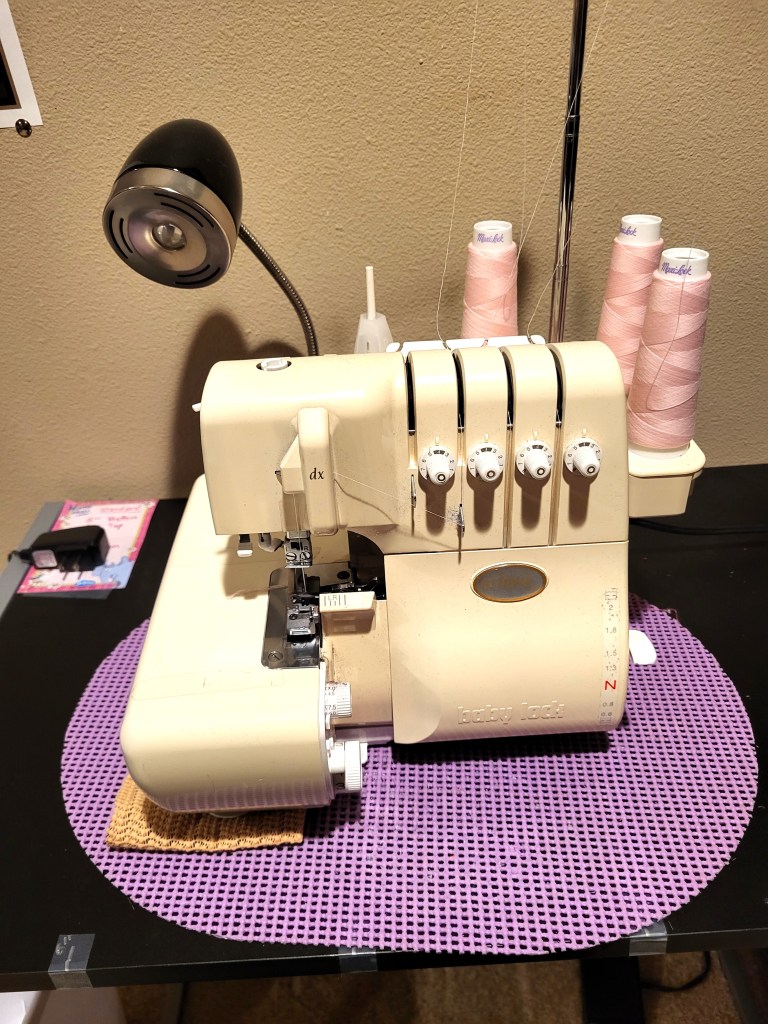
Enter into my world the serger. Improving on the functionality of the sewing machine, a serger completely binds a seam, cutting and simultaneously sewing together two pieces of fabric into a never to be undone union. The addition of the serger was a miracle for me. Seams which before had taken 20 minutes each now required but a few minutes.
Until. Until I was sewing my first project using the serger in January 2010. It was to be a rather delicate and beautiful blue dress using a pattern in the same style as the wedding dress worn by Kate Middleton for her marriage to Prince William. There was lace. There was satin. It was going to be stunning. I was happily serging the seams in anticipation of the dress being completed when my foot slipped on the pedal and the serger went one stitch too far. I looked down at the garment and there, in the nearly completed dress, was a perfect cut into the midriff in the shape of a small upside-down V.
I stared in horror at the incision and wondered how to fix the mistake. Could I bind the edge to repair it? Could I tuck in under?
The reality of the situation hit me. There was no way to ‘fix’ the mistake. The dress would have to be taken apart, a complete new section cut out and replacing the irreparably damaged midriff piece.
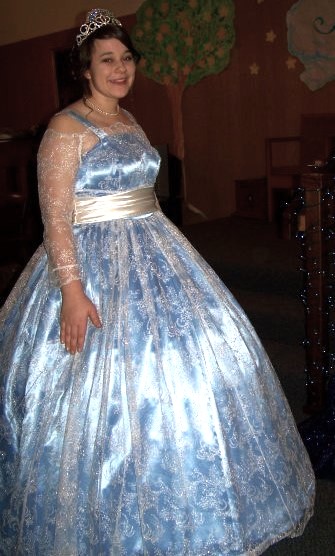
The memory of that day is forever seared into my brain. I continued to study the ruined bodice for what seemed like several minutes. At last I stood. I turned off the machine. I left the dress right where it was, a testament to the old adage “A stitch in time saves nine.” I left my sewing room for the rest of day, literally sick over the fact that I would have to recreate the destroyed section, learning in that moment that a serger was but a tool which, if not used correctly, was no more useful than any other tool in the wrong hands.
The next day I returned to the sewing room, cut out the new section and was able to recreate the damaged piece. My mistake had added a couple of hours to the project. The dress? It turned out beautifully, a true masterpiece on the lovely young woman who wore it. Because I knew that sometimes ‘things happened’, I had enough extra material to fix what had been so easily destroyed.
As for me, sewing is something I do because it serves an end, but it’s not my life’s passion. My passion is this: writing.
I do find, however, that when my brain is tired from the creative process of writing, sewing can provide a comfort in the sheer rote of its methods. Seams are seams. There are only so many ways to put a garment together and once you master that you can make pretty much anything so long as you respect the machines which make it possible.
But writing… well, that taps into my creative mind as I’m always looking for new and different ways to share ancient truths.
So I leave the sewing to those whose passion it is. Artistry comes in many forms. Except for an occasional project, my 10 hour sewing days are behind me and I’ve closed the shop.
I also think it’s time to bring back Home Ec. classes like sewing. We’ve now raised a couple generations of people, the majority of whom seem to lack basic life skills. Being able to sew a seam, and put up a hem is just one example of valuable ability. Cooking, carpentry, and mechanical aptitude should be added to that list also.
So I salute Elias Howe and his vision for the modern sewing machine. It truly changed the life of women.
The Infallible Links:
 barbaradevore.com
I enjoyed your article! Do you hear fr Pete? I think he doesn’t reply to all.Sent from my iPhone
LikeLike