Tag Archive | West Seattle

April 29, 1965: The Day Seattle Shook

April 29th

If you are older than the age of 60 and you have lived in the Pacific Northwest most, if not all, of your life, I simply have to give you this date and time, you will immediately be able to tell me where you were and what you were doing: April 29, 1965, 8:29 a.m.

I can almost hear you exclaiming to your computer: that was the date of the first earthquake you experienced and/or remember.
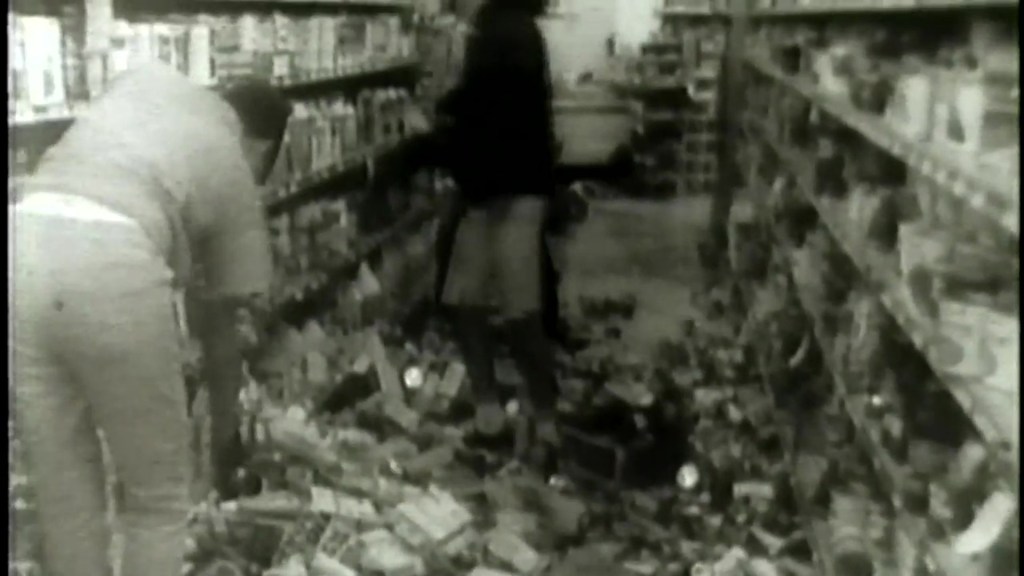
A number of grocery stores were hard hit during the 1965 earthquake

It was, after all, a pretty significant event. At the time it was the third strongest earthquake since the arrival of European settlers into the area. A quake estimated at magnitude 7.3 occurred in 1872 and another magnitude 7.1 in 1949. The 1965 quake registered 6.5 on the Richter scale.

While the Infallible Wikipedia does offer some information, Historylink.org – which has in depth articles about the Pacific Northwest – shares the following:

“The ground shook for about 45 seconds and was felt over a 190,000 square mile area including all of Washington state, northwest Oregon, southwest corner of British Columbia, north Idaho panhandle. The quake’s epicenter was located near Des Moines, Washington, at 47 degrees, 24 minutes North Latitude and 122 degrees, 24 minutes West Longitude. Total damage is estimated at $12,500,000 (approximately $65,000,000 in 1999), most of it in Seattle. In Olympia, the State Capitol Building was temporarily closed and government departments move to nearby motels while buildings are being repaired.”

The nearest I could come to identifying the epicenter of the quake is 202nd Street SW and Marine View Drive in the Normandy Park neighborhood, not far from Burien and Sea-Tac International airport.

Which becomes an important detail. On April 29, 1965, the hubby’s family lived in West Seattle, about 6 miles north of the epicenter.

For years, family gatherings often included discussion of that day and the months and years leading up to it.

If you were to visit West Seattle today, the LUNA apartments are now located at approximately 2751 California Avenue SW. Up until six months before the April 29, 1965 quake there was a house at that address and it belonged to a trio of women: my hubby’s two Great-Great Aunts – Nelly and Ethel – and his Great Grandmother – Queenie Mae. All three were born in the 1880’s.
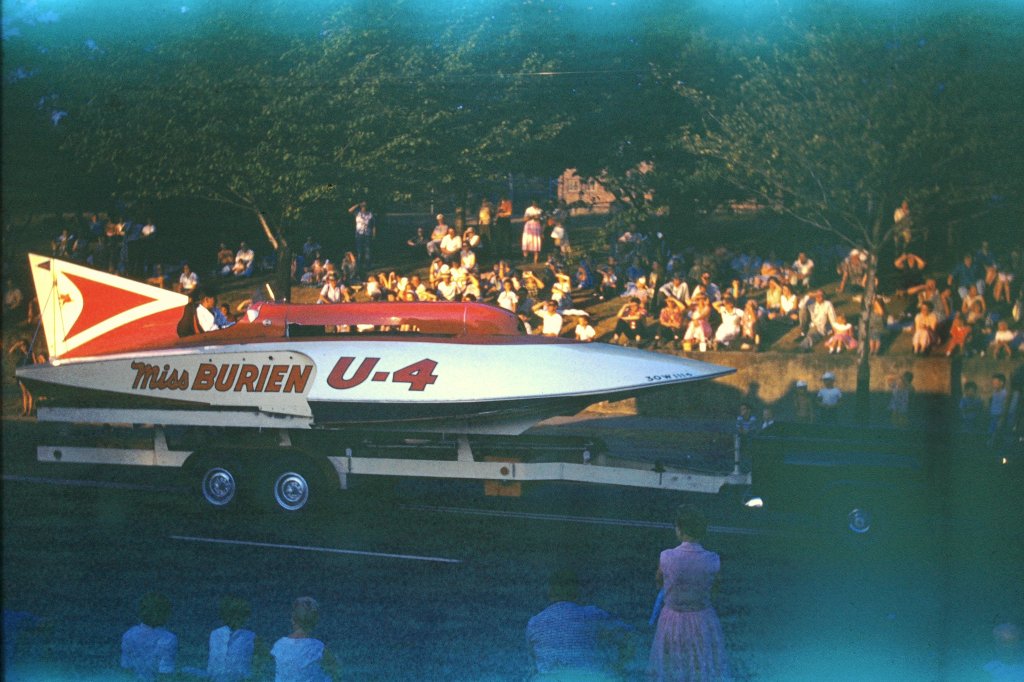
From the families collection is this photo of the Miss Burien limited hydroplane as it looked in the summer of 1960. This photo was taken from the house located at 2751 California Avenue SW, directly across from Hiawatha Park in West Seattle.

In the mid-1960’s, Queenie Mae had been deceased for about 8 years, so only Nellie and Ethel still lived in the house and, since they were now in their 70’s, it was decided to sell it. Which they did in the fall of 1964.

Soon the house was razed and a grocery store was erected and had opened, according to family lore, mere weeks before the earthquake hit. The damage to the store was severe.

The hubby recalls visiting the great aunts at that house as a child and every once in a while, the China dishes and tea cups stored in the display cabinet would ‘tinkle’ as if the earth was moving just a bit. Perhaps it was from traffic on California Avenue but the family always claimed that an earthquake fault ran under that house.

April 29th was a Thursday that year and, less than a mile north, the hubby – age 8 – had just gotten his breakfast and was leaving the kitchen, headed for the dining room table.

He was mid-step when the earthquake started and described what happened next:

“My recollection is that I was in the doorway to the living room holding a plate of scrambled eggs. Aunt Nell, who I think must have cooked the food for me, was sitting in the living room on a daybed we used as a couch. I stopped and was looking at her when the initial jolt bounced her up in the air. To this day, that is what I see.”
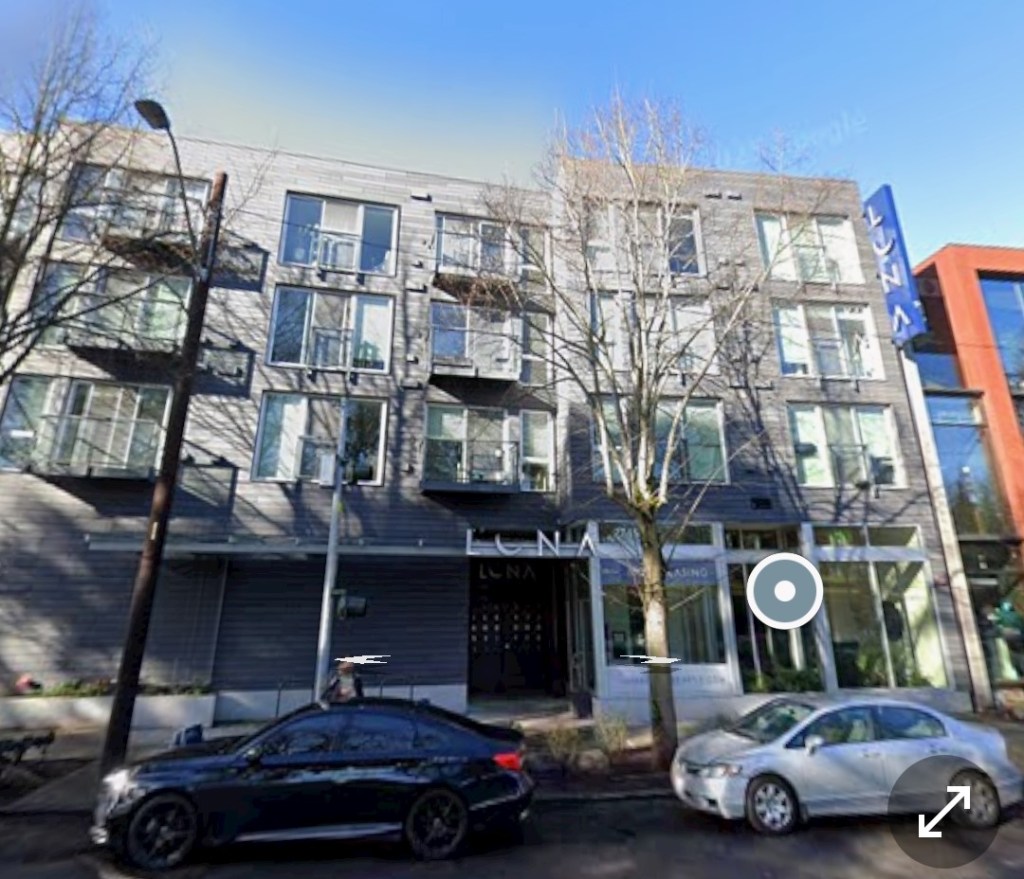
The spot where the house with the ‘tinkling’ china in the cabinet was once located.

Aunt Nell wasn’t the only one who went airborne as the hubby’s younger sister – who was just two weeks shy of her 4th birthday – was sleeping only to wake up on the floor. As she has always said “my bed threw me on the floor.”

The damage in West Seattle that day was extensive. According to Historylink.org, the worst damage was in West Seattle, Harbor Island, Duwamish River Industrial Area, and South Seattle. 

“In West Seattle a survey was made of damaged chimneys. In a portion of West Seattle out of a total of 5,005 chimneys in 188 city blocks, the earthquake damaged 1,712 chimneys (34 percent of the chimneys). At Alki Beach, a part of West Seattle not surveyed, ‘virtually every chimney was down’ (U.S. Earthquakes 1965 p 98).”
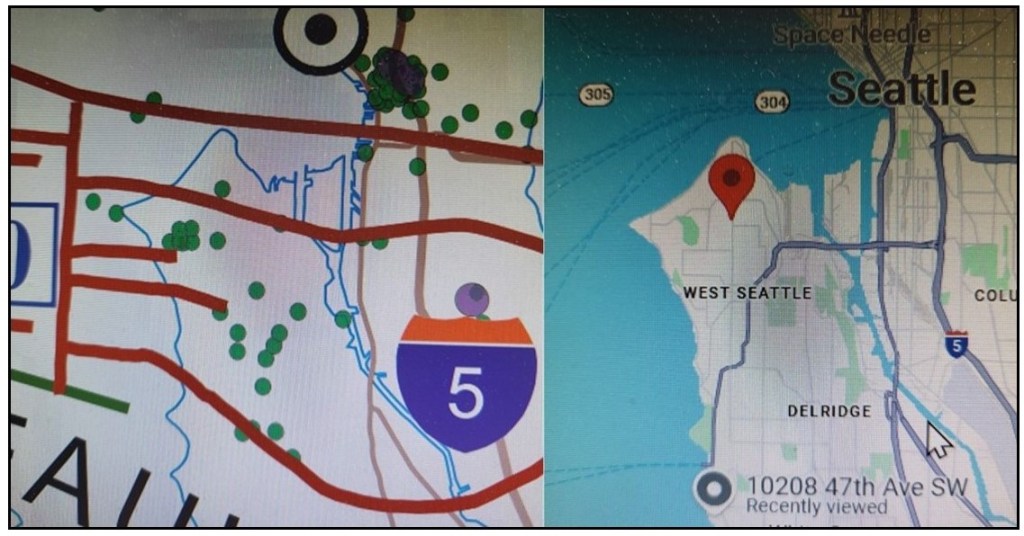
The map on the left shows the fault lines which run under West Seattle. The red marker on the right is the location of the house on California Avenue with the Earthquakes epicenter the gray dot to the south. When the two maps are overlaid, the fault line runs directly under where the house once stood.

The hubby believes he went to school after the earthquake as if nothing significant had just occurred. Oh, how times have changed!

As for the fault line under West Seattle? Yes, it does exist and was mapped in 2014 and when you overlay it onto that location, it runs pretty much under where their house once stood.

So where were you on April 29, 1965? I was in Yakima getting ready for school when that quake struck and our house shook. My mom was brushing my hair and she told me to hang on to the counter. Thankfully, I wasn’t tossed in the air.

The links:

https://www.historylink.org/File/1986

https://en.wikipedia.org/wiki/1965_Puget_Sound_earthquake

https://assets.pnsn.org/HIST_CAT/1965.html

https://www.dnr.wa.gov/publications/ger_ofr2014-05_fault_earthquake_map.pdf?o91ywfh
It’s A Wonderful Life

Angels Among Us

January 7, 2025

A Tuesday Newsday Classic

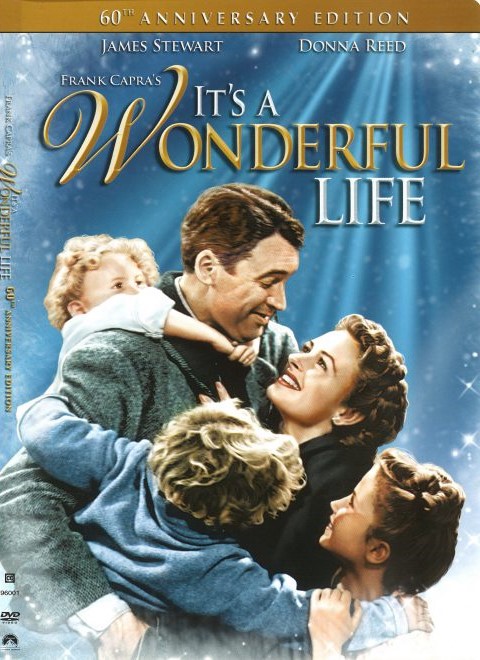
Cover of the 60th Anniversary DVD featuring George and Mary Bailey and three of their children

This film, officially released in theaters on January 7, 1947, was plagued with missteps from the start. Its history of challenges, actually, seem appropriate as it is a film about failure and redemption and has become one of the world’s most beloved Christmas classics. The movie: It’s a Wonderful Life.

Its story begins in 1939 when Philip Van Doren Stern writes a short story he titles The Greatest Gift. Unable to find a publisher, Stern self publishes 200 booklets which he gives as presents to friends during Christmas 1943.

The story ended up being read by Carey Grant who was interested in adapting the story into film with him as the lead. RKO, a movie studio, purchased the rights in April 1944 to do just that.  Work commenced on the screenplay. For whatever reasons, Grant went on to other projects and the partially completed script was eventually sold to Frank Capra’s production company in 1945.

Capra – recognizing the potential in the story – hired a writing team to work on the script. But there were problems. From the Infallible Wikipedia:

“Capra salvaged a few scenes from Odets’ earlier screenplay and worked with writers Frances Goodrich and Albert Hackett, Jo Swerling, Michael Wilson, and Dorothy Parker (brought in to ‘polish’ the script), on many drafts of the screenplay.

It was not a harmonious collaboration. Goodrich called Capra ‘that horrid man’ and recalled, ‘He couldn’t wait to get writing it himself.’ Her husband, Albert Hackett, said, ‘We told him what we were going to do, and he said ‘That sounds fine.’ We were trying to move the story along and work it out, and then somebody told us that [Capra] and Jo Swerling were working on it together, and that sort of took the guts out of it. Jo Swerling was a very close friend of ours, and when we heard he was doing this we felt rather bad about it. We were getting near the end and word came that Capra wanted to know how soon we’d be finished. So my wife said, ‘We’re finished right now.’ We quickly wrote out the last scene and we never saw him again after that. He’s a very arrogant son of a bitch.’

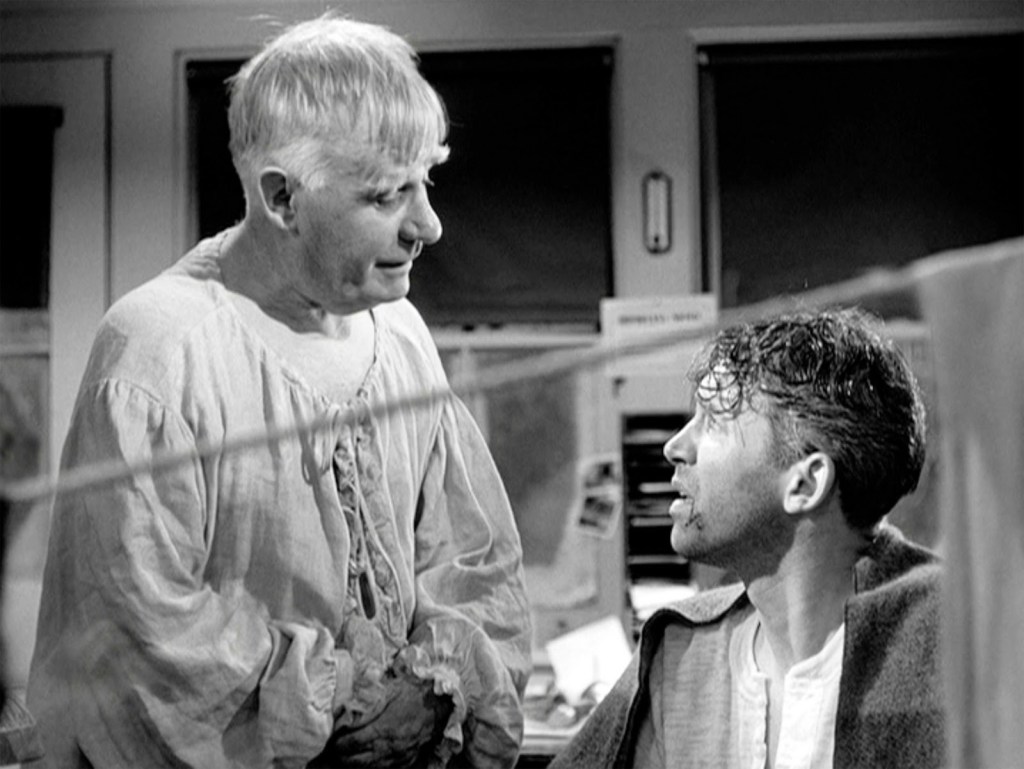
George telling Clarence he wished he’d never been born

Later, a dispute ensued over the writing credits. Capra said, ‘The Screen Writers’ Arbitration committee decided that Hackett and Goodrich, a married writing team, and I should get the credit for the writing. Jo Swerling hasn’t talked to me since. That was five years ago.’ The final screenplay, renamed by Capra It’s a Wonderful Life, was credited to Goodrich, Hackett, and Capra, with ‘additional scenes’ by Jo Swerling.”

In order to make the film ‘Oscar’ eligible it was released at the Globe Theatre in New York on December 20, 1946 rather than wait until early 1947 as originally planned. The change likely cost It’s a Wonderful Life a Best Picture Oscar as the competition for 1946 was much more difficult. Best Picture winner was a movie titled The Lost Weekend, a movie now pretty much lost in time. It’s a Wonderful Life ended up with five nominations including for Best Picture and Best Actor for Jimmy Stewart.

The movie was under water some $525,000 at the box office.

It wasn’t until the late 1970’s when the copyright expired and the movie was ‘discovered.’ Also from the Infallible Wikipedia:

“The film’s elevation to the status of a beloved classic came three decades after its initial release, when it became a television staple during Christmas season in 1976. This came as a welcome surprise to Frank Capra and others involved with its production. ‘It’s the damnedest thing I’ve ever seen’, Capra told The Wall Street Journal in 1984. ‘The film has a life of its own now, and I can look at it like I had nothing to do with it. I’m like a parent whose kid grows up to be President. I’m proud … but it’s the kid who did the work. I didn’t even think of it as a Christmas story when I first ran across it. I just liked the idea.’ In a 1946 interview, Capra described the film’s theme as ‘the individual’s belief in himself’ and that he made it ‘to combat a modern trend toward atheism’.”

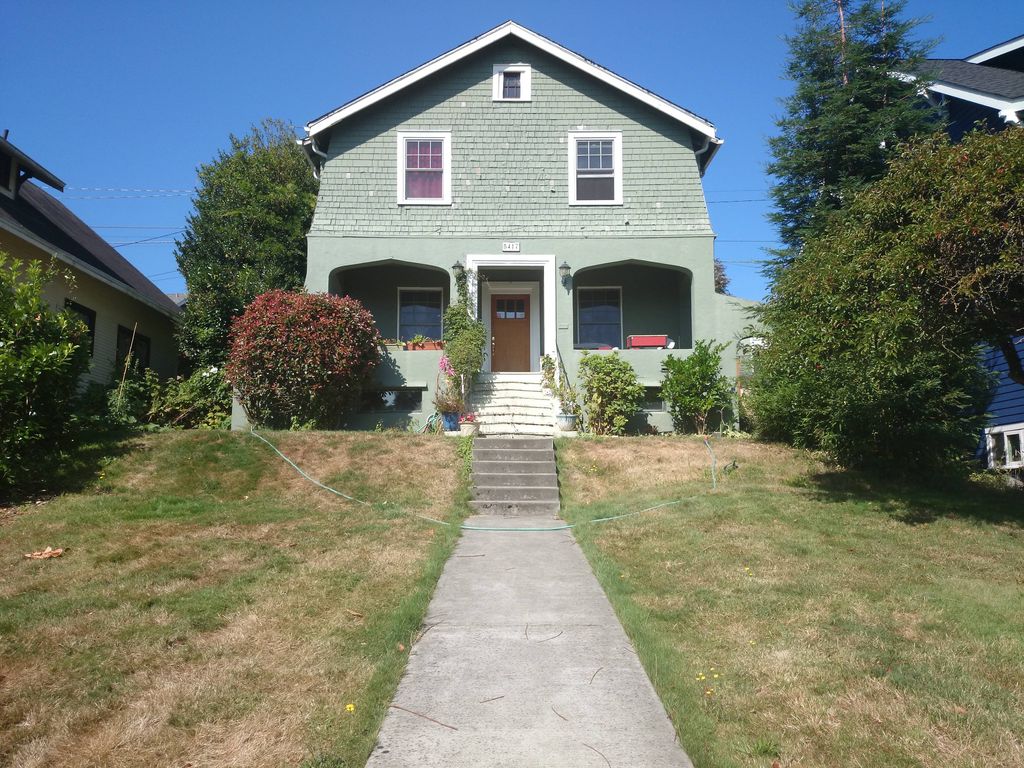
The house at 5417 40th Ave SW in Seattle as it looks now. When we moved there the right side of the yard had been dug out and turned into a driveway that heaven help you if you took a wrong step at the top.
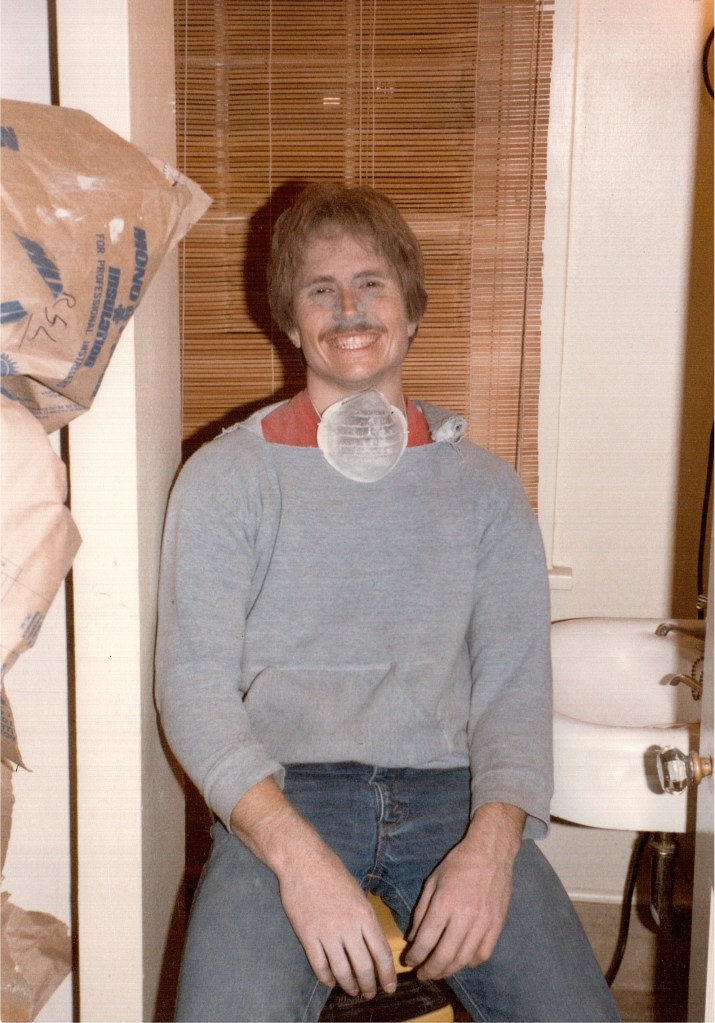
The hubby covered in dust after an evening blowing insulation into the attic

It was in December 1981 when I first saw the movie. The hubby and I had purchased our first house six months earlier. It was a 1910 fixer upper in West Seattle and a hodge-podge of never-ending projects. Our initial weekend in the house involved ripping out pet urine-soaked carpets and removing part of the narrow, with a 90 degree turn staircase, in order to get our queen size bed up to the bedroom.  Behind the 1960’s era kitchen cabinets we unearthed a painted over window with the curtain rod still attached to the wall. Unfortunately, the curtains – mostly rags – also still hung there. The fix list went on and on. During the time we owned that house, it was one critical project after another.

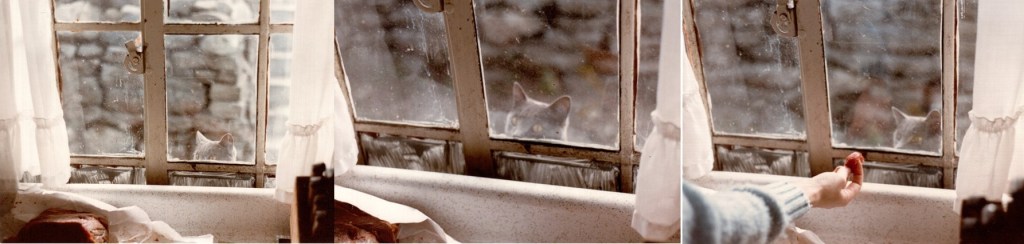
Our cat, Porsche, was peering through the kitchen window watching as I worked with some steak and we inadvertently captured those horrible old windows, painted at the bottom and half covered up by ill-fitting counters.

Forward to the week before Christmas 1981. I was home sick from work with a bad cold, puttering around our drafty old house, doing what I could to get ready for the holiday. I had the TV on to keep me company when this old black and white film appeared.

Within moments I was hooked and soon I gave up my puttering and snuggled up on the couch under a blanket. I watched the whole thing. The already dim afternoon light faded to night just as George Bailey descended into his own winter solstice crisis. There I sat, commiserating with poor George over a house that needed constant fixing and worried about how he was going to find the money that Uncle Billy lost. I could relate as money was tight for a pair of house poor, married barely a year, kids.

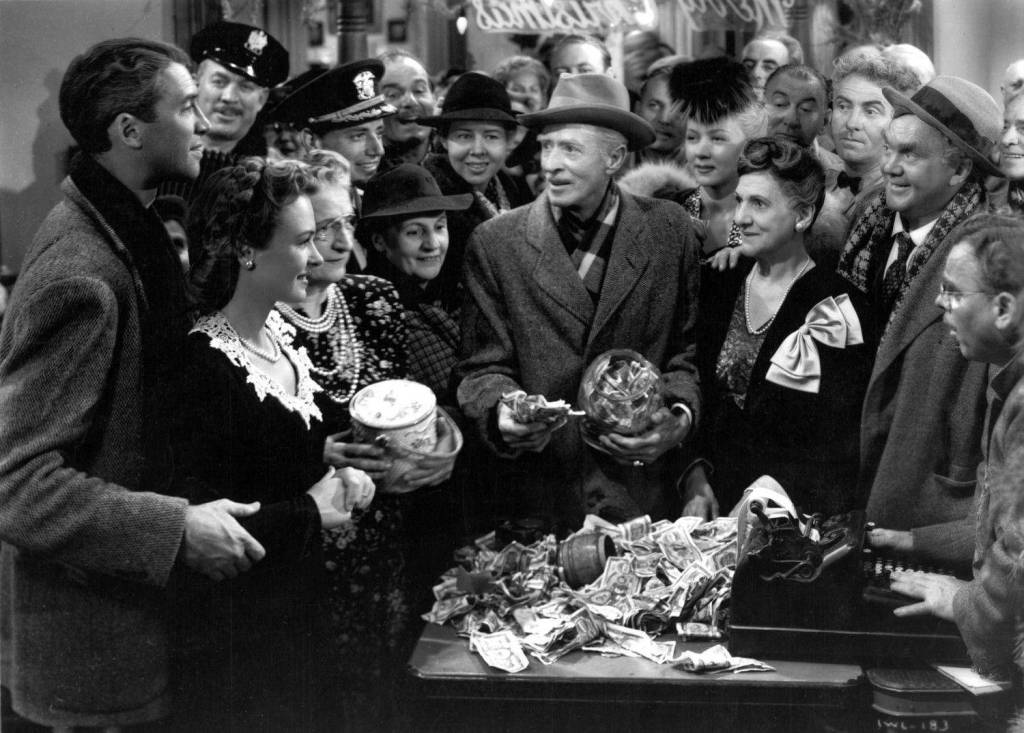
The townspeople of Bedford Falls coming together to help George

There’s a moment in that film which sums it all up. It’s when George arrives back home – alive once again – and hugs the kids but cannot find Mary, his wife. The bank examiners arrive and tell George they are going to arrest him and his response is just the best. He tells them how wonderful it is for no other reason than because he’s alive and that is enough.

Just then, Mary bursts through the door, she and George embrace and he tells her how much he cherishes her. But she has a surprise for him – the community has come to their rescue and raised more than enough money to cover the missing funds.

It’s this scene which had me bawling. What a gift it is to be so loved, so valued, that your friends and family will do anything to ease your burden. Every time I watch It’s A Wonderful Life I hold it together until that scene comes on and George receives a gift from his Guardian Angel, Clarence, with the following sentiment:

“Dear George, remember no man is a failure who has friends. Thanks for the wings, Love Clarence.”

As always – the links: