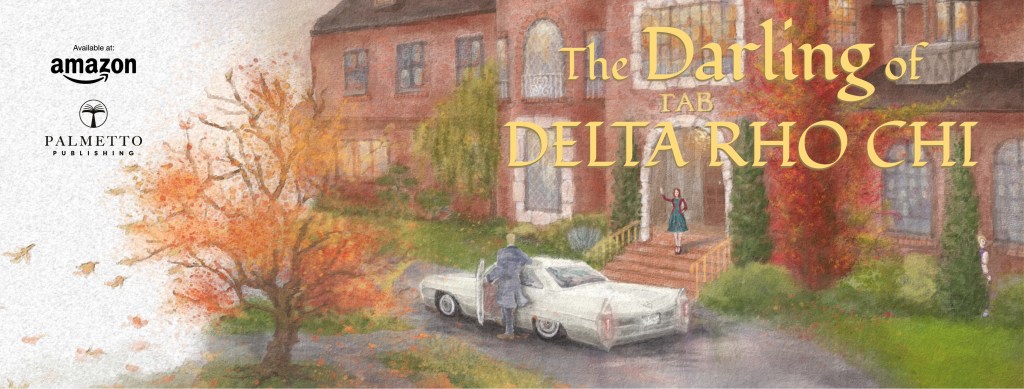
There’s a bit of a thrill to do a search on both Amazon and Barnes & Noble and see one’s novel available for presale… it’s a dream a long time in the making! For more information and the links to both click here: https://barbaradevore.com/the-darling-of-delta-rho-chi/.
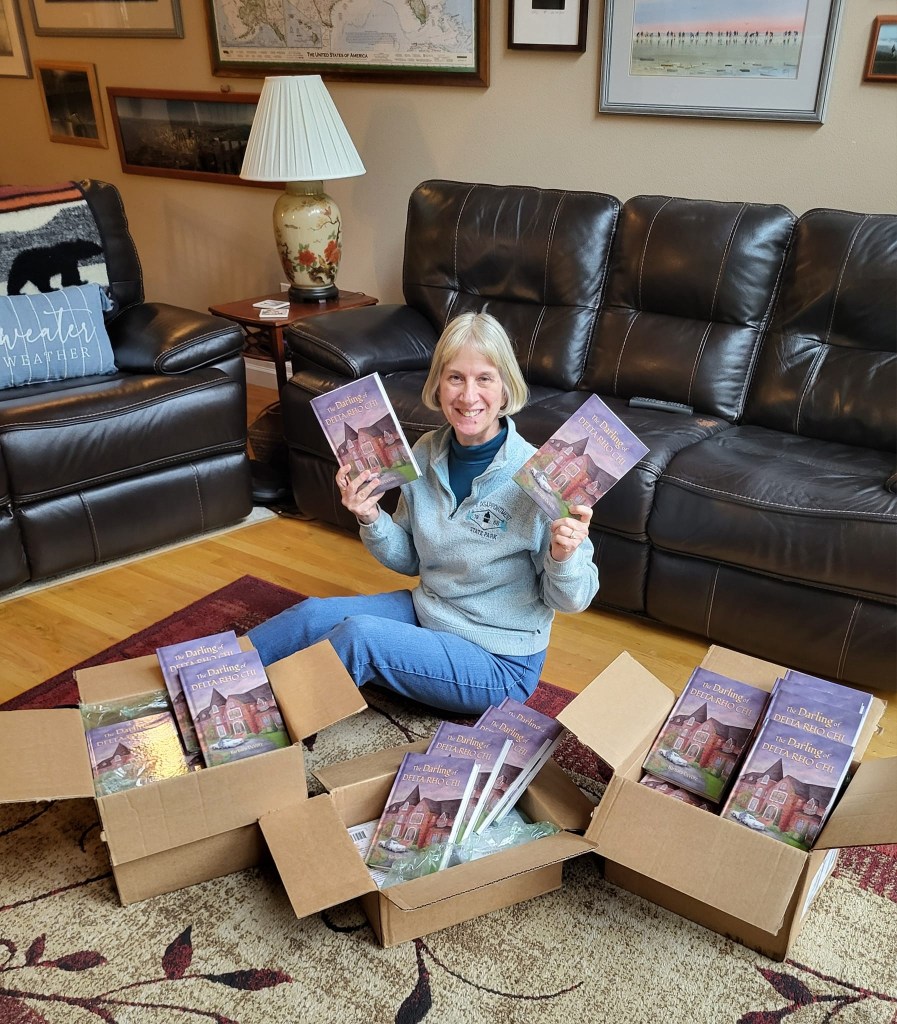
The first order of hardcover books!
November 25, 2024
The long awaited day has arrived! My shipment of hardcover books. One step closer to the launch party.
December 1, 2024
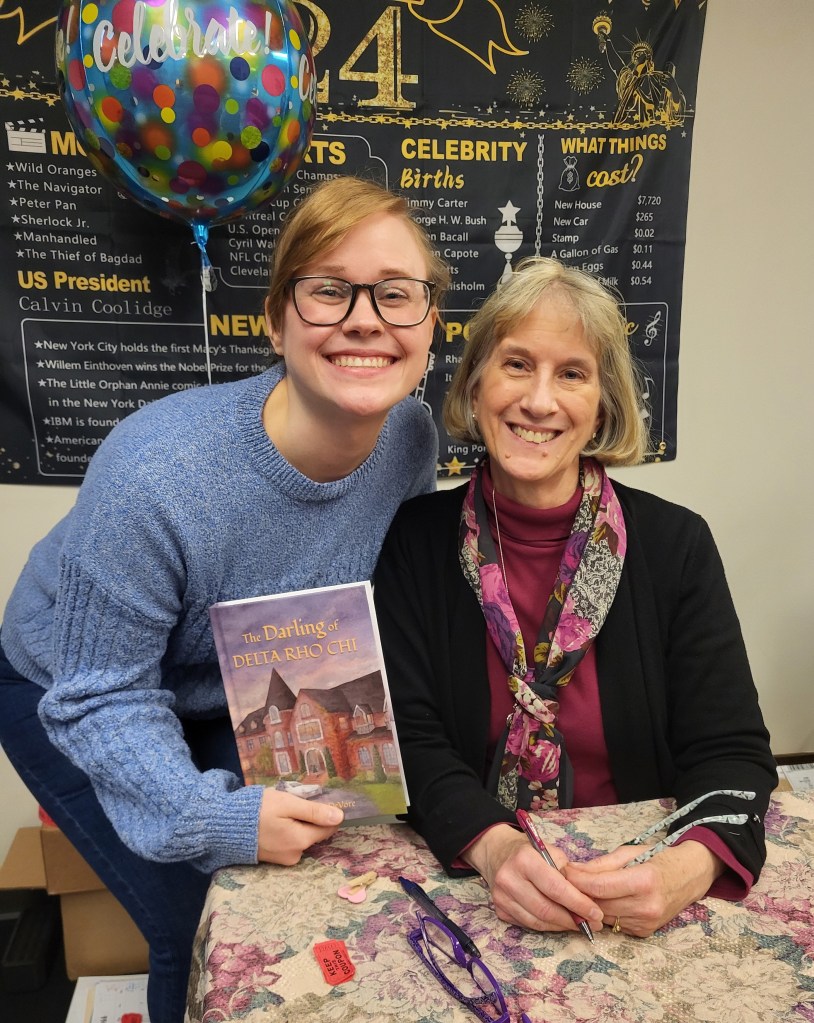
Hosted my Book Launch Party yesterday! Great success. Thank you to all who attended and shared in the celebration. Thank you to all who have purchased books and have left me reviews. My heart swells!
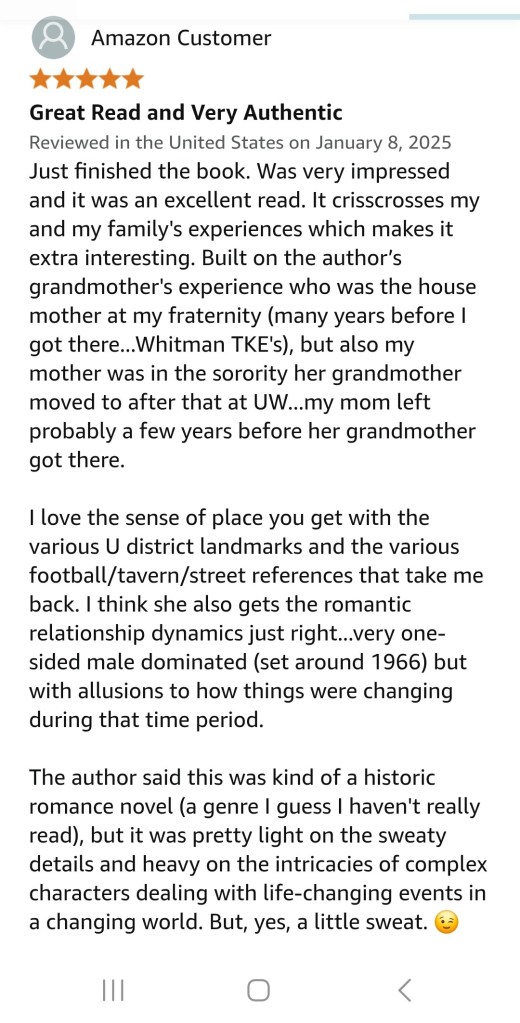
I absolutely adored this two-for-one father/daughter book. It’s the story of Elise and her sorority troubles, as well as her father Jack finding his way to new love and dreams coming true for both. The characters are well developed, and I became invested in what happened to them. I fully appreciated the place and period accurate references to people and places I remember from living in the state. I felt the author nailed the social mores and values of the time period written about. I thoroughly enjoyed this book.”
January 27, 2025
First of all – thank you to EVERYONE who has ordered The Darling of Delta Rho Chi. I had no idea what this journey would look like. It’s been everything I hoped it would be and more. I’m especially appreciative of the conversations with friends who have sought me out to share with me their impressions of the novel.
A couple of favorite verbal comments:
“It’s kinda spicy. I never expected that from you.”
“I stayed up until 2 a.m. finishing it. I never do that.”
“When is the next book coming out?”
And then there was this, the comment which truly floored me:
“Your writing reads a lot like Jodi Picoult.”
For those unfamiliar with Jodi Picoult, I think she is one of the best fiction writers I’ve ever read: carefully crafted characters, compelling story lines, crisp and clean scene setting and descriptions. To be included in the same sentence is humbling, flattering, and brought a lump to my throat.
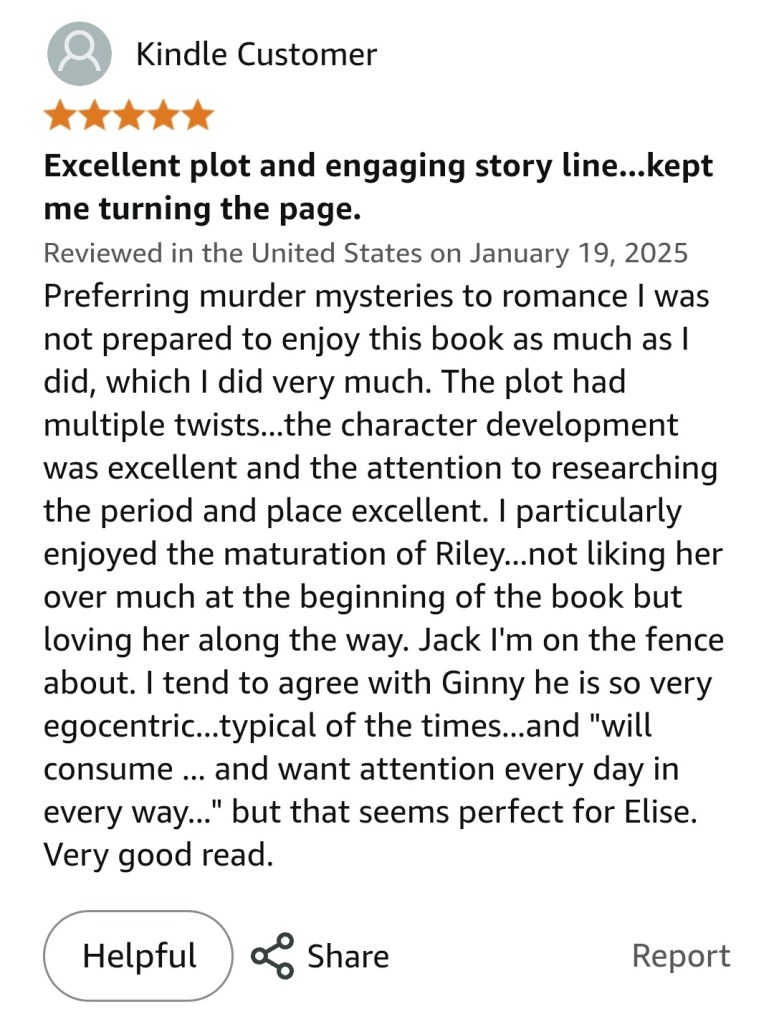
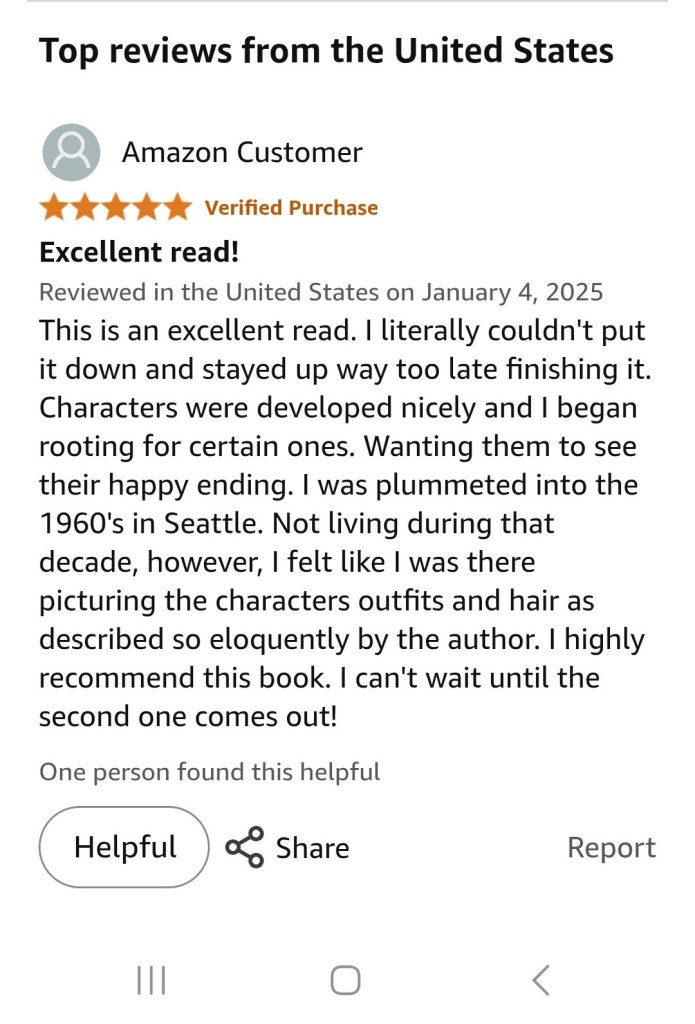
Heartfelt thanks to all who took the time to leave a review, send me a message, or seek me out to tell me what you thought. Here are three recent reviews on Amazon:
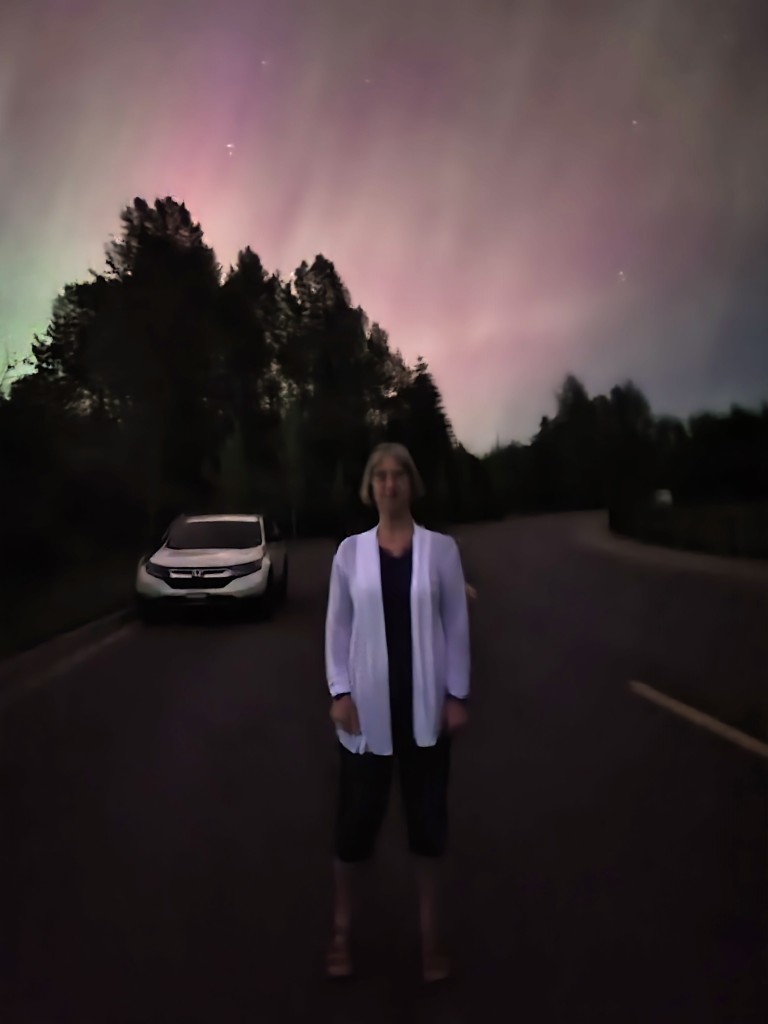
Once in a lifetime event… Eaglemont, Mount Vernon, Washington May 10, 2024. Photo by the author.
Known as the Carrington Event, the solar storm of September 1-2, 1859, was the first time scientists had connected a solar flare with the appearance of the aurora borealis.
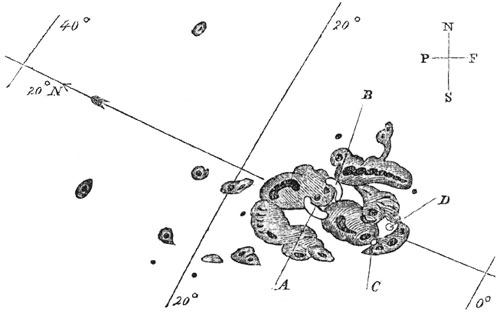
Two British astronomers, Richard Carrington and Richard Hodgson, independently witnessed the huge September 1st solar flare through telescopes and Carrington, after whom the Carrington Event is named, sketched his observations.
Astronomers everywhere were, no doubt, excited by this discovery.
From the Infallible Wikipedia:
“The geomagnetic storm is thought to have been initiated by a major CME (Coronal Mass Ejection) that traveled directly toward Earth, taking 17.6 hours to make the 150-million-kilometre (93-million-mile) journey. Typical CMEs take several days to arrive at Earth, but it is believed that the relatively high speed of this CME was made possible by a prior CME, perhaps the cause of the large aurora event on 29 August that ‘cleared the way’ of ambient solar wind plasma for the Carrington Event.
By Richard Carrington – Page 540 of the Nov-Dec, 2007 issue of American Scientist (volume 95), Public Domain, Link
Just before noon on 1 September 1859, the English amateur astronomers Richard Christopher Carrington and Richard Hodgson independently recorded the earliest observations of a solar flare. Carrington and Hodgson compiled independent reports which were published side by side in Monthly Notices of the Royal Astronomical Society and exhibited their drawings of the event at the November 1859 meeting of the Royal Astronomical Society.
Because of a geomagnetic solar flare effect (a ‘magnetic crochet’) observed in the Kew Observatory magnetometer record by Scottish physicist Balfour Stewart, and a geomagnetic storm observed the following day, Carrington suspected a solar-terrestrial connection. Worldwide reports of the effects of the geomagnetic storm of 1859 were compiled and published by American mathematician Elias Loomis, which support the observations of Carrington and Stewart.”
Up until Friday, May 10, 2024, there had only been ten additional northern light displays which were of a magnitude similar to the 1859 Carrington event. The Infallible Wikipedia continues:
“Another strong solar storm occurred in February 1872. Less severe storms also occurred in 1921 (this was comparable by some measures), 1938, 1941, 1958, 1959 and 1960, when widespread radio disruption was reported. The flares and CMEs of the August 1972 solar storms were similar to the Carrington event in size and magnitude, however unlike the 1859 storms, they did not cause an extreme geomagnetic storm. The March 1989 geomagnetic storm knocked out power across large sections of Quebec, while the 2003 Halloween solar storms registered the most powerful solar explosions ever recorded. On 23 July 2012, a “Carrington-class” solar superstorm (solar flare, CME, solar electromagnetic pulse) was observed, but its trajectory narrowly missed Earth. The May 2024 solar storms are the most recent historic geomagnetic storms, with auroras being sighted as far south as Puerto Rico.”
I cannot recall when, exactly, I first learned that there was such a thing as the Northern Lights. What I do know is that I’ve had a long simmering desire to see them ‘just once’ during my lifetime.
Wings of an angel… Northern Lights May 10, 2024. Photo by the author.
On a trip to Fairbanks, Alaska, in March 2017, I thought for sure that dream would come true. Alas, it did not. There have been other times when there was a possibility but, despite staying up and attempting to see them from time to time, it never happened.
That was true until this past Friday when the weather and solar winds finally aligned.
As a geek who loves anything to do with sciency stuff like stars, eclipses, equinoxes, solstices, snow storms, and windstorms, I’ve covered all of the above in the pages of my Tuesday Newsday blog over the past eight years.
The dancing lights of the Aurora Borealis eluded me but not for lack of paying attention. For years – at least 15 or 20 – I have used Spaceweather.com to follow what’s going on out past this large sphere on which we live.
In the middle of last week, I became aware of a giant sunspot which erupted in several consecutive explosions, hurling CME’s directly at earth. It was, it turned out, the moment I had waited years to occur.
A little before 10 p.m. on May 10th, I checked the Spaceweather.com site and the reports had already begun claiming that people in Florida(!) were seeing the auroras. Even though I had to be up at 5:30 the next morning this was, I was certain, that ‘once in a lifetime’ event.
I am fortunate to live an hour-plus north of the Seattle Metro area and there are dark places not far from my home. I knew where I would go and the hubby and I drove the half mile to the top of Eaglemont Drive in search of the perfect viewing spot.
When we arrived, there was no one else about so we parked next to the golf course driving range and I got out of the car. At first it seemed as if nothing was happening.
Contrary to popular belief, it does NOT rain on the westside of the Cascade mountains every day. May 10th, it turned out, was clear, sunny, and nearly 80 degrees. A truly perfect day in my opinion.
Even the author appears as an apparition with the Auroras erupting behind her.
By ten, of course, the sun had been set for an hour and twenty minutes, so it was dark. Even so, as I looked up I noticed what appeared to be wispy clouds streaking the sky in ribbons from the northeast to the southeast. Since it had been a cloudless day, I wondered, ‘could those clouds be be the solar stream?’
As we looked toward the northeast the sky at the tree line seemed to brighten a bit. My heart quickened. No longer in doubt, I was – finally – seeing the aurora borealis.
It was 10:07 p.m. when I turned on the video on my phone and it captured an almost ghost like apparition of the solar stream as it bounced and danced. At that point the plasma was only gray. A couple minutes later I videoed again and faint pinks and greens now appeared.
Others, having the same idea as me, had started to arrive. Some cars drove past and then, not seeing anything spectacular, would turn and leave. Most parked down by the currently closed clubhouse (as the golf course is up for sale) and we could hear people talking. Around 10:35 another couple pulled up and parked close by and we shared what we knew with them.
The wife said that someone told her to take photos in night mode and that the extra exposure time would bring out the colors. So I did.
If there had been any question before, the photo I got at 10:39 dispelled all doubt that we were witnessing the northern lights.
At 10:45 there was a change in the intensity. As I looked directly overhead there now appeared to be a ‘cross’ in the sky and it was faintly pink, even to the naked eye. The wispy streaks expanded and filled the sky from the middle of the ‘cross’ and then from the eastern horizon to the west and the north to the south.
All the streams seemed to be converging into that one spot, forming a dome over where we stood. Then, at 10:53 pm, the sky overhead exploded into red and green with bright white sheets of light cascading down on all sides. Every inch of sky was bathed in the glow.
It was impossible to capture all of it on video – nor did I want to. Up until that moment I understood the science… but to experience it as a living human being is quite different. Tears pricked at the back of my eyes and I raised my arms towards the heavens and at what looked like an angel whose head was red and green and whose arms and body were draped with great white, shimmering wings, cast down to embrace me, its whole being surrounding me.
I stood there, enraptured, until the lights began to fade, forever changed by the experience, certain that the science behind the Aurora Borealis will never be able to adequately describe being immersed in it. And if I never see them again, I think that’s okay as I will forever hold the memory of the night I was touched by an angel.
At the height of the geomagnetic storm 10:53 p.m. on Friday, May 10, 2024
The era of professional football in the United States was ascendant in the 1950’s and into the early 1960’s. Pretty much every major city in the United States wanted to get in on the action.
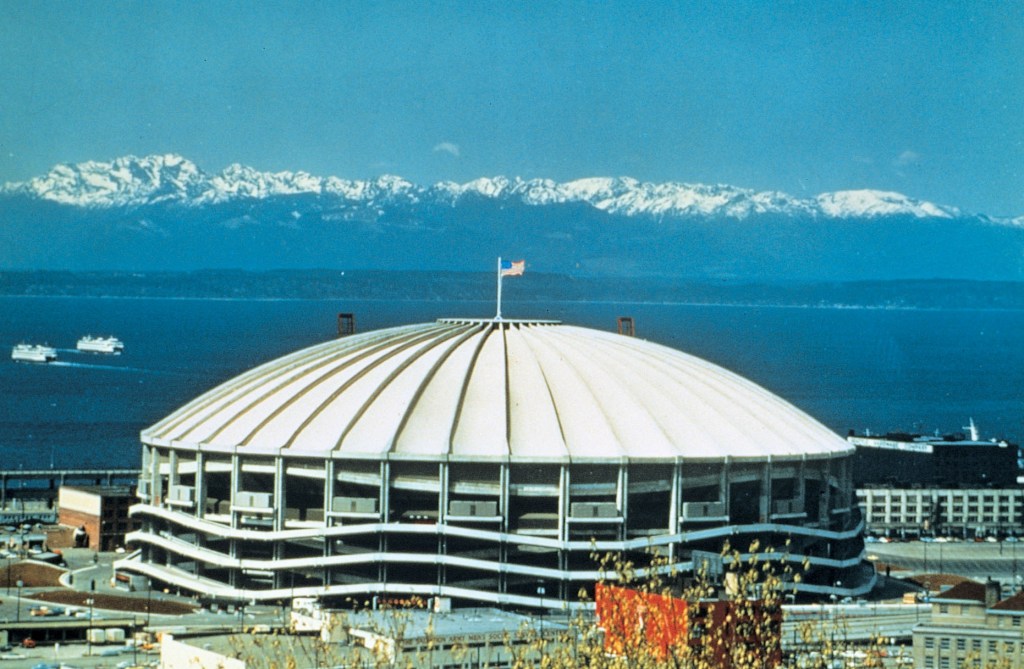
On the day of the Mariner’s last game in the building 1999.
But for many cities, weather was a limiting factor. After all, playing in a foot of snow, blistering heat, or constant rain, was not ideal for the players or the fans. In the 1950’s the dream of indoor stadiums took hold. It was in Houston, in the early 1960’s, when the first such venue – the Astrodome – became a reality. Others followed.
Many in Washington State longed to have a pro-football franchise and believed the rainy climate on the west side of the Cascade Mountains called for an indoor stadium. Thus began the quest to build what would eventually be named “The Kingdome.”
It was in 1959 when the idea was first proposed but it took until 1976 for the vision to become a reality. The Infallible Wikipedia tells us:
“The idea of constructing a covered stadium for a major league football or baseball team was first proposed to Seattle officials in 1959. Voters rejected separate measures to approve public funding for such a stadium in 1960 and 1966, but the outcome was different in 1968; King County voters approved the issue of $40 million in municipal bonds to construct the stadium.
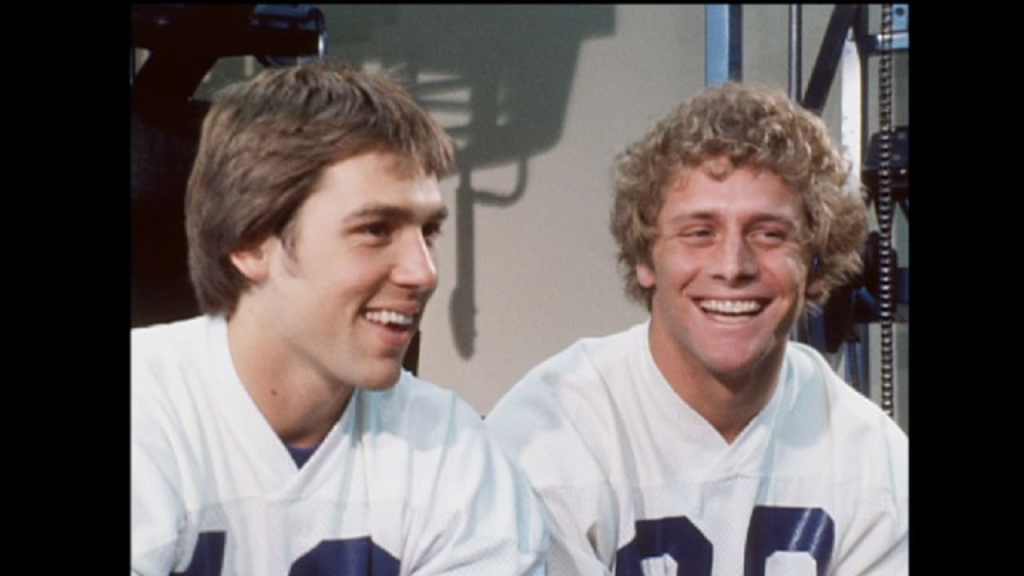
Jim Zorn and Steve Largent in the early days of the Seahawks franchise
Construction began in 1972 and the stadium opened in 1976 as the home of the Sounders and Seahawks. The Mariners moved in the following year, and the SuperSonics moved in the year after that, only to move back to the Seattle Center Coliseum in 1985.”
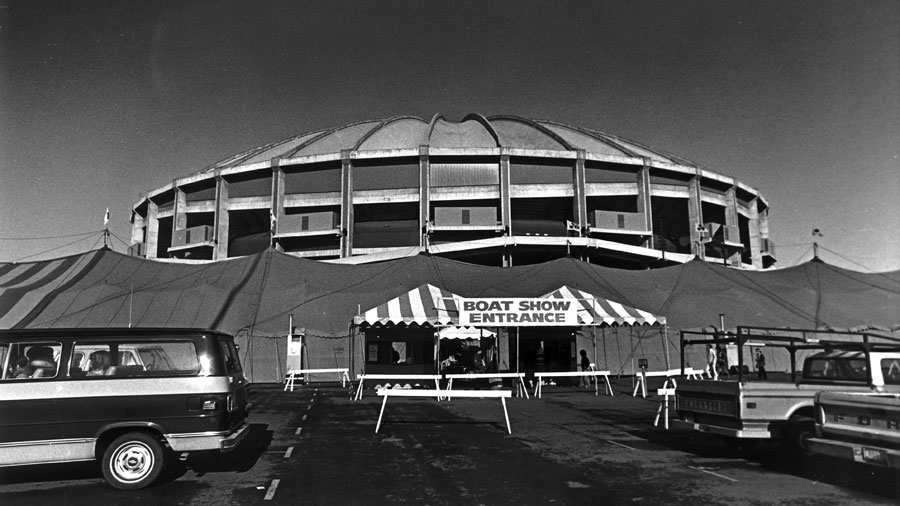
The Kingdome, named as such due to its location in King County, Washington, served the community as a venue not only for the Seahawks and other sports teams, but also as an event center to host large events such as the Seattle Home Show and the Seattle Boat Show as well as many rock concerts over the years.
“In the Seahawks’ heyday, the Kingdome was known as one of the loudest stadiums in the league. Opposing teams were known to practice with jet engine sounds blaring at full blast to prepare for the painfully high decibel levels typical of Seahawks games. It was where Seahawks fans, who were long called “the 12th Man” and led the Seahawks to retire the number 12 in honor of them in 1984, made their reputation as one of the most ravenous fan bases in the NFL, a reputation that has carried over to what is now Lumen Field. The Kingdome’s reputation contributed to the NFL’s 1989 vote in favor of enacting a rule penalizing home teams for excessive crowd noise.”
A view of the Kingdome during one of the Boat Shows
But, if there was one word to describe the Kingdome it would be ‘utilitarian.’ How else to explain the huge gray cement mushroom which lacked any aesthetic appeal? But it did the job and also became infamous among the indoor venues for the noise levels. Also from the Infallible Wikipedia:
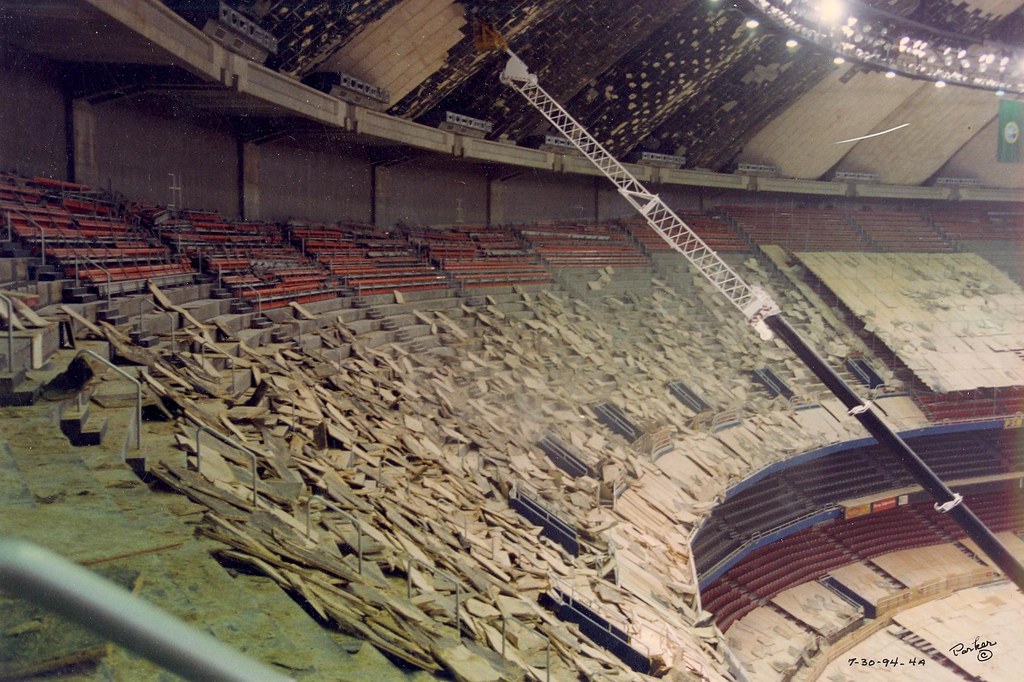
By the 1990’s, the first iteration of domed stadiums had outlived their appeal and useful life. The Kingdome’s roof – problematic from the beginning – had a partial roof collapse in July 1994, and the venue was closed for repairs for nearly four months. But the problems did not end there, threats by then owner, Ken Behring, to move the team out of Seattle – and the Mariners insistence on a new baseball venue – eventually led to the decision to replace the Kingdome.
It was on Sunday, March 26, 2000, when the Kingdome was finally reduced to a pile of rubble, paving the way for the construction of the next generation of a football stadium in Seattle.
The interior of the Kingdome in 1994 during removal of the ceiling tiles.
It was a clear and pleasant day and, of course, all the local TV stations had been covering the story for months as everything from inside the building was removed leaving, at last, the concrete shell. For weeks – who knows maybe it was months – holes were drilled in the walls and a serpentine of detonating cord was laid. Eventually dynamite was inserted into the holes and it was all connected up in anticipation of the implosion which would take down the concrete beast.
At the time, my family was living on the eastside of Lake Sammamish, about 13 miles – as the crow flies – from the Kingdome. We gathered around the TV and watched live as the first sticks of dynamite on the roof sent streaks of sparks down the spines and the chain reaction encircled the building. It was over in a matter of seconds as clouds of dust obliterated the area. Me, the hubby, and our two kids – then ages 10 and 7 – once the main event was over, rushed out to our west facing deck and a few seconds later the sound waves of the Kingdome’s demise reached us.
A recap of King5’s coverage and a bit of history of the Kingdome. We were likely watching this channel that morning.
It was a surreal experience.
In some ways I miss the Kingdome and all it represented. It was Seattle – and Washington States’ – message to the world that we were ready to play with the big boys. The construction of the Kingdome represented a heady era in Seattle as we welcomed the Seahawk celebrities of the era: Jim Zorn, Steve Largent, and Sherman Smith to name a few. We were hometown proud of the Nordstrom family for owning the team and you could find no more loyal fans anywhere.
It was, truly, a bittersweet day when the Kingdome came down. It’s been gone for 24 years now but for those of us who lived in King County in that era, it won’t ever be forgotten.
It’s been the source of much confusion and for those of us from the ‘state’, a source of consternation. When, on December 12, 1800, Congress created the ‘District of Columbia’ I doubt they knew how it would all play out.
The trouble began in 1853 when, by an act of Congress, the territory of Washington was created.
From the infallible Wikipedia:
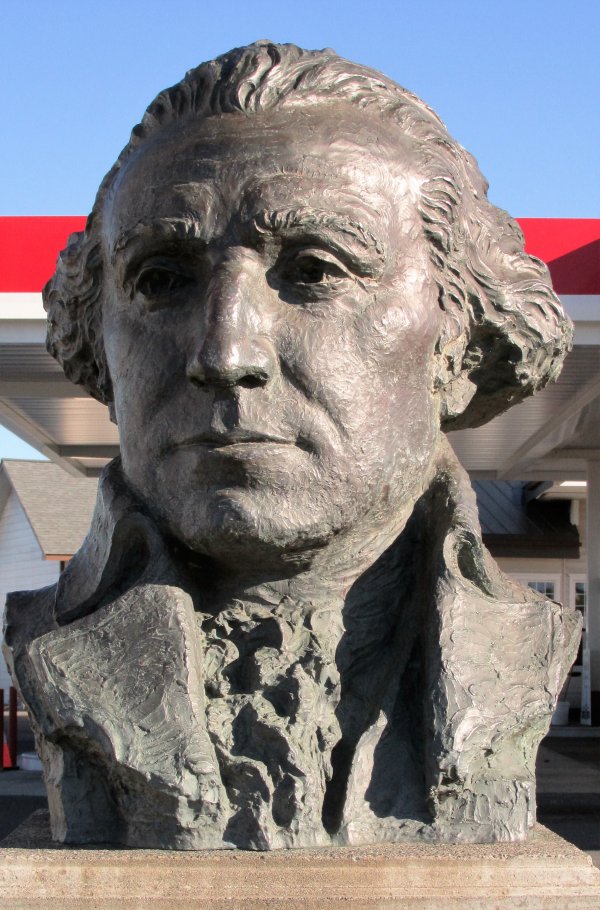
“The territory was originally to be named ‘Columbia’, for the Columbia River and the Columbia District, but Kentucky representative Richard H. Stanton found the name too similar to the District of Columbia (the national capital, itself containing the city of Washington) and proposed naming the new territory after President Washington. Washington is the only U.S. state named after a president.
“Confusion over the state of Washington and the city of Washington, D.C. led to renaming proposals during the statehood process for Washington in 1889, including David Dudley Field II’s suggestion to name the new state ‘Tacoma.’ These proposals failed to garner support. Washington, D.C.’s own statehood movement in the 21st century includes a proposal to use the name ‘State of Washington, Douglass Commonwealth’, which would conflict with the current state of Washington. To distinguish it from the national capital, Washington may be referred to as ‘Washington State’, or, in more formal contexts, as ‘the State of Washington’. Residents of Washington (known as ‘Washingtonians’) and the Pacific Northwest simply refer to the state as ‘Washington’, and the nation’s capital ‘Washington, D.C.’, ‘the other Washington’, or simply ‘D.C.’.”
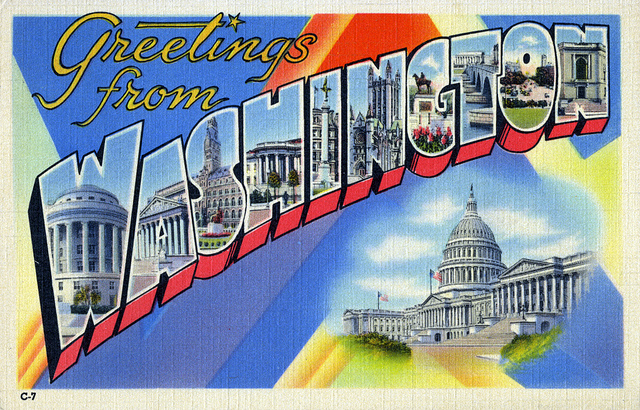
Ironically, had they named our state Columbia there would not be any confusion today over which ‘Columbia’ is being discussed since the entire world pretty much calls the nation’s capital ‘Washington.’
As recently as May 2017 a bill was introduced into the US Senate for precisely the purpose of granting statehood to the District of Columbia. I understand the push for that. But, (my opinion) in the category of stupid ideas it’s also been proposed to call the new entity the “State of Washington, DC.”
Also from the infallible Wikipedia:
“On November 8, 2016, the voters of the District of Columbia voted overwhelmingly in favor of statehood, with 86% of voters voting to advise approving the proposal. Although the proposed state name on the ballot sent to voters appeared as ‘State of New Columbia’, the resolution passed by the D.C. City Council passed in October 2016, weeks before the election, changed the name to ‘State of Washington, D.C.’, in which ‘D.C.’ stands for ‘Douglass Commonwealth’, a reference to African-American abolitionist Frederick Douglass, who lived in Washington, D.C. from 1877 to 1895.”
Talk about muddying the waters. To learn more about this whole mess be sure to check out these links:



 It’s been the source of much confusion and for those of us from the ‘state’, a source of consternation. When, on December 12, 1800, Congress created the ‘District of Columbia’ I doubt they knew how it would all play out.
 Ironically, had they named our state Columbia there would not be any confusion today over which ‘Columbia’ is being discussed since the entire world pretty much calls the nation’s capital ‘Washington.’
 Talk about muddying the waters. To learn more about this whole mess be sure to check out these links:
 barbaradevore.com