May 27th
I hate it when I get a nugget of an idea only to have it lead absolutely nowhere. Such was this week’s Tuesday Newsday nugget which, it turns out, led to an unsolvable mystery. And I do love a good mystery.
It was on this date, May 27, 1796, when James Sylvanus McLean – a resident of New Jersey – was awarded a US patent for “an improvement in piano fortes.”
Realizing I’ve never done a Tuesday Newsday about the instrument known as the piano, I decided it was a worthy topic and eagerly typed ‘piano’ into the Infallible Wikipedia only to be bombarded with every last bit of minutiae one can imagine about the origins of this ancient instrument. But Mr. McLean’s improvement? Lost to history when the US patent office burned in December 1836.
Undeterred, I dug further and wondered what improvements were so significant to warrant a patent? Was it the design of what we think of as the modern upright instrument which made the acquisition of a piano available to an average family? Or perhaps the addition of felt ‘hammers’ that were used to strike the metal strings inside the instrument? Maybe it was the use of wood to create the box where the music is made? Or how the wires are strung? We will never know.
Now for those who don’t KNOW what a piano is, here’s the description from The Infallible Wikipedia:
“A piano is a keyboard instrument that produces sound when its keys are depressed, activating an action mechanism where hammers strike strings. Modern pianos have a row of 88 black and white keys, tuned to a chromatic scale in equal temperament. A musician who specializes in piano is called a pianist.
There are two main types of piano: the grand piano and the upright piano. The grand piano offers better sound and more precise key control, making it the preferred choice when space and budget allow. The grand piano is also considered a necessity in venues hosting skilled pianists. The upright piano is more commonly used because of its smaller size and lower cost.
When a key is depressed, the strings inside are struck by felt-coated wooden hammers. The vibrations are transmitted through a bridge to a soundboard that amplifies the sound by coupling the acoustic energy to the air. When the key is released, a damper stops the string’s vibration, ending the sound. Most notes have three strings, except for the bass, which graduates from one to two. Notes can be sustained when the keys are released by the use of pedals at the base of the instrument, which lift the dampers off the strings. The sustain pedal allows pianists to connect and overlay sound, and achieve expressive and colorful sonority.”
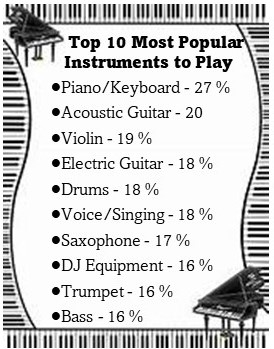
Enough of the technical description. What I do know is that the musical instrument we call the piano has been the most popular instrument in the world for centuries, according to multiple articles I found. That said, the debate now rages whether the guitar has overtaken the piano for the top spot. I also found articles to support that conjecture.
But back to the piano. It was sometime in the mid-1960’s when a piano came into my life. Although I was a young child, I remember the day vividly.
My maternal grandmother, Eva, had decided that she no longer wanted the piano which my grandfather, Mike, had bought her when they got married in June 1922. Why this was the case, I don’t know for sure. But once she made her mind up (I attribute that to her ¼ Scottish heritage) it stayed made up.
So my family became the recipients of said piano.
I do recall her being at our house when the instrument arrived and she sat down and reeled off a song from memory! I was awed and knew then that I wanted to play it just like her.
My older brother – in high school at the time – also seemed to have the musical ability and soon he was picking things out on the piano and adding chords, etc. They both made it look so easy.
Of the four siblings, however, I was the only one who showed the interest and inclination to actually learn how to read music and how to play.
That year my mother signed me up for group lessons which were being taught as summer school classes at Franklin Junior high. I dutifully attended each and every class with one Mr. Lyons, a curmudgeon of a man, who would get so irritated with the ineptitude of the class that, more than once, he’d kick us all out and we’d wander the halls of the building until someone came to pick us up.
This alone would probably deter most 8 and 9-year-olds. But not me. I, apparently, had some of that Scottish stubbornness, and continued to practice and learn.
That fall my mother signed me up for lessons from a good friend of hers, Nancy Mayo. Mrs. Mayo was the pianist for the Bel Canto women’s singing group, a teacher, and a talented musician in her own right. She was the polar opposite of Mr. Lyons, infinitely patient and gentle with her young charges. I know I took lessons from her for a couple of years. I don’t know why I switched to a new teacher, but I did so in Junior high to my final teacher whose name I can no longer recall.
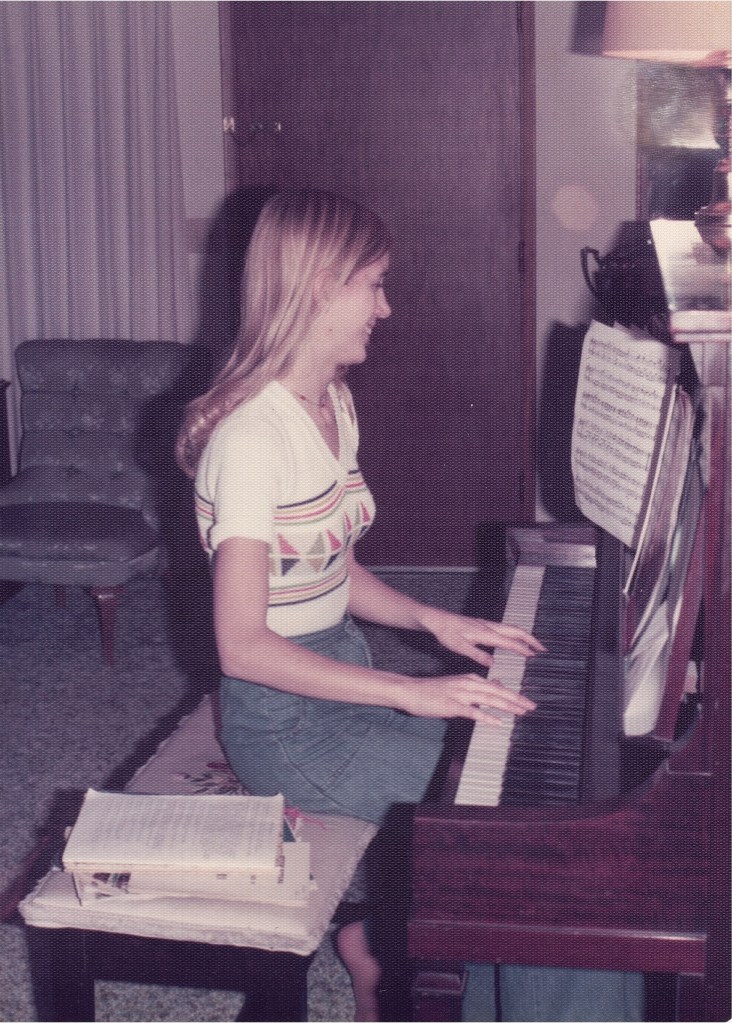
I took seven years of lessons. When I was in high school, I spent a number of years being the musician for the Yakima Rainbow Girls and actually played in public. I sometimes accompanied people both with voice and other instruments. Somehow I could not memorize a song to save my life. I also was never able to easily change keys as the chords would give me fits. I was a reasonable technician, but a long way from being an artist.
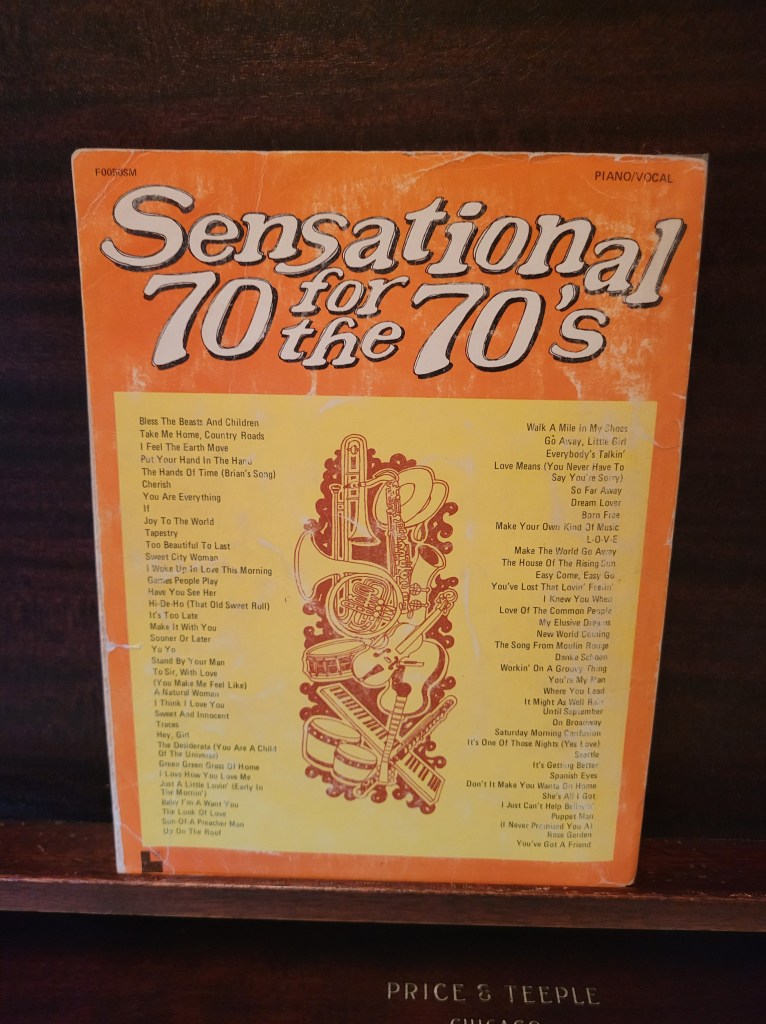
One of my after-school habits, however, was to sit down at the piano and play songs that I loved. I had a song book titled “Sensational 70 for the 70’s’” which had three of my four favorites: The Hands of Time (Brian’s Song), Too Beautiful To Last (Theme from the move Nicholas and Alexandria), and IF (by Bread).
I had a lot of others I played, but those three, plus the love theme from Romeo and Juliet, were always part of my daily concert.
This habit continued through my three years at Eisenhower High School and the two years I lived at home while attending Yakima Valley College. Then, in the fall of 1977, I moved to Tacoma to finish my education at the University of Puget Sound.
Sometime that autumn, when home on a break, I sat down to play the piano and my mother appeared in the living room and said to me that the hardest adjustment for her with me going off to college was the absence of the music in the afternoons.
It was a powerful moment as it was only then that I understood how something I enjoyed as a way for relaxation had become a special thing for my mom; it was how she experienced the empty nest syndrome common once all the children leave home.
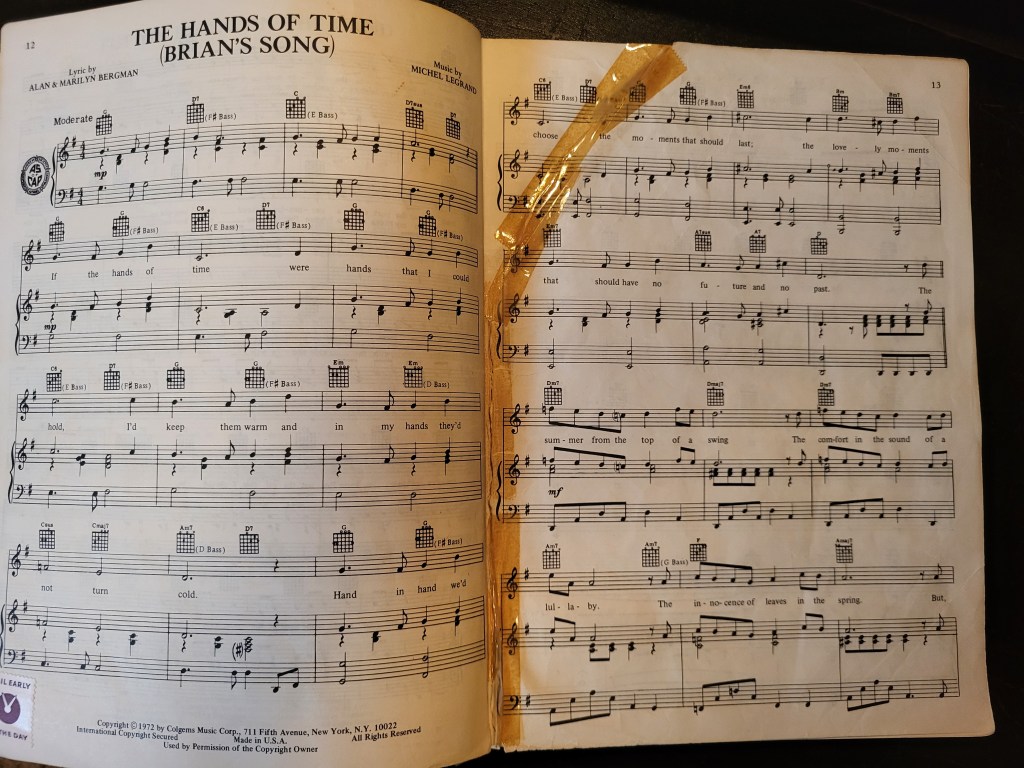
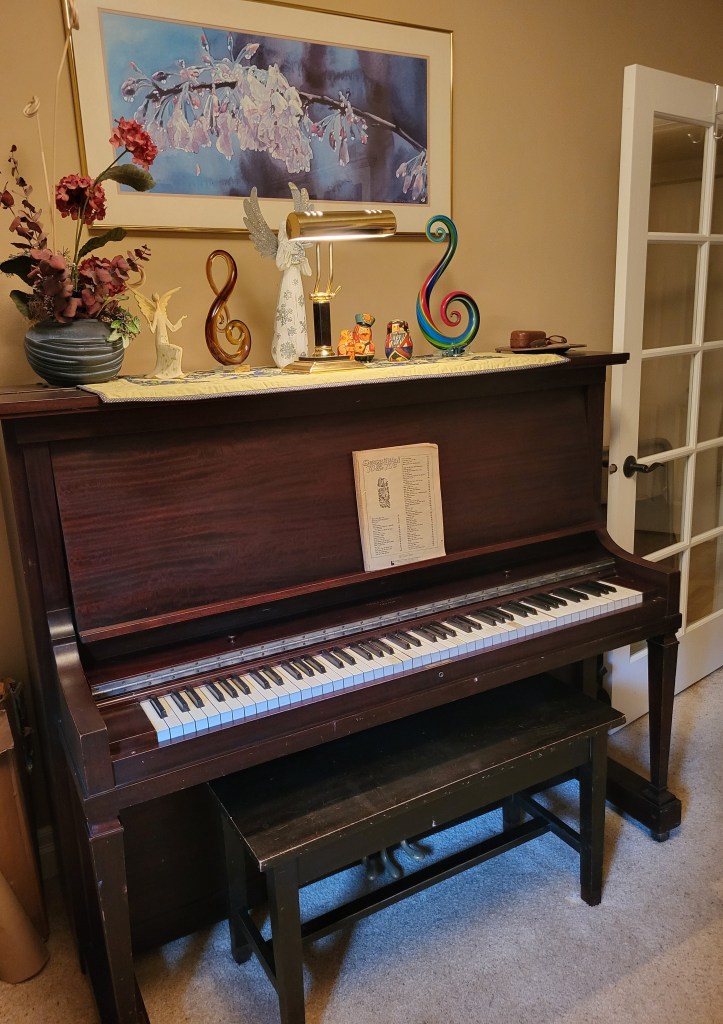
When my parents sold that house in 1984, grandma’s piano came to live at my house. It’s been moved multiple times since and the now 103-year-old instrument definitely needs a tune up. But nowadays, I don’t seem to make the time for playing the piano.
It’s a shame, really. I no longer have delusions of grandeur that I’ll be some fabulous pianist; it’s really more about doing something that would bring me a bit of personal enjoyment.
So here’s to the piano, one of the most enduring and versatile instruments ever invented.
https://en.wikipedia.org/wiki/Piano
https://amis.mircat.org/jamis/1976_005.pdf (The only information I could find on James McLean)
 barbaradevore.com