Tag Archive | New Mexico

Albuquerque Balloon Festival

Celebrating over two centuries of balloon flight

November 21, 2023

A Tuesday Newsday Classic Updated

If you want to see the largest gathering of hot air balloons in the world, mark your calendar for October 2024 and plan to visit the Albuquerque International Balloon Fiesta. From a small gathering of 13 balloons in 1972, the spectacle has grown to become the largest display of balloons in the world. Now, 51 years later, there are about 600 balloons and 700 pilots featured at the annual event.

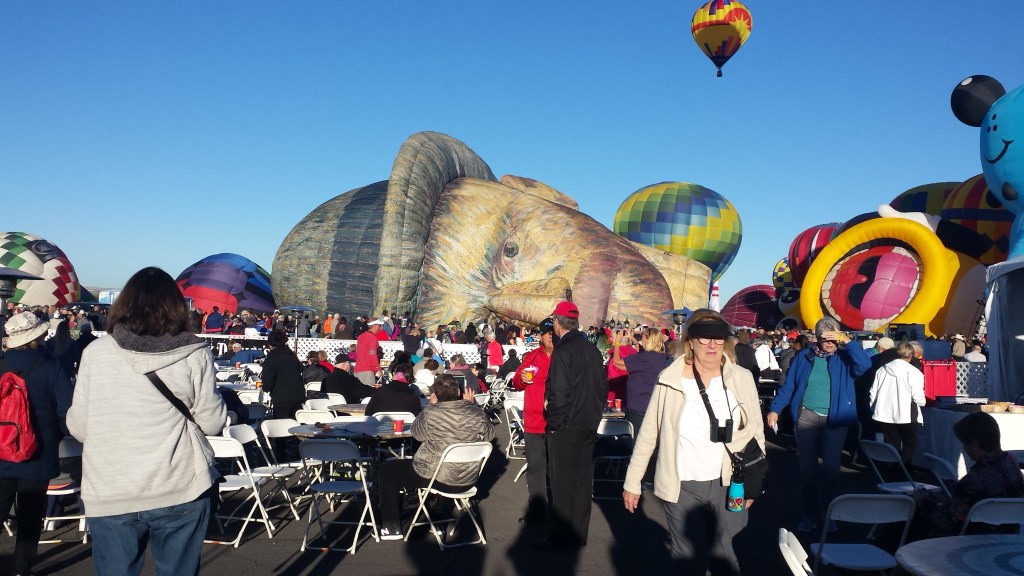
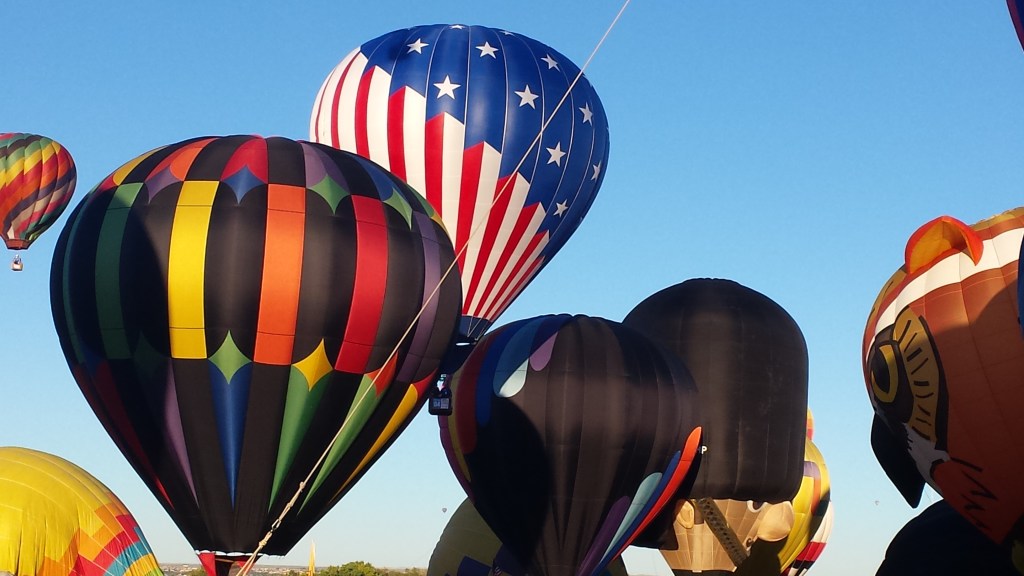
Just a few of the hundreds of balloons and thousands of people at the Albuquerque Balloon Festival 2018

In the world of hot air balloons, November 21, is an important first. It was on this date in 1783 when two Frenchmen, Jean-François Pilâtre deRozier and the Marquis d’Arlandes, became the first humans to travel in a ship through the ‘air.’

From the moment people could harness their imaginations, there has been no greater desire than to be able to soar like birds, high above the ground.

Artwork depicting De Rosier’s November 1783 flight

DeRozier, who can credibly be dubbed the father of flight, made this happen after years of experimenting with gases and how they reacted and interacted; he parlayed his obsession to a career as a teacher and scientist and, as such, opened a museum for nobles to come and witness his experiments.

From the Infallible Wikipedia:

“After several tethered tests to gain some experience of controlling the balloon, DeRozier and d’Arlandes made their first un-tethered flight in a Montgolfier hot air balloon on 21 November 1783, taking off at around 2 p.m. from the garden of the Château de la Muette in the Bois de Boulogne, in the presence of the King. Their 25-minute flight travelled slowly about 5½ miles (some 9 km) to the southeast, attaining an altitude of 3,000 feet, before returning to the ground at the Butte-aux-Cailles, then on the outskirts of Paris.”

By all accounts, DeRozier was fearless and continued his experiments with what we know as ‘hot air balloons.’ Several successful balloon flights followed and, in June 1785, he took on his most ambitious journey which was to travel from France to England across the English Channel. Because of the distance involved, DeRozier determined that using just hot air (powered by stoves set up in the balloon basket!) would not be enough to make the journey. Instead he developed his own balloon – called the DeRozier Balloon – which was powered by use of hydrogen fuel to heat the air. By all accounts it should have worked. But a sudden change in wind direction pushed the balloon back, and caused it to rapidly deflate. It plummeted 1500 feet to the ground, killing DeRozier and the two others onboard.

The accident ended the adventurer’s life and research, but the “modern hybrid gas and hot air balloon is named the Rozière balloon after his pioneering design.”

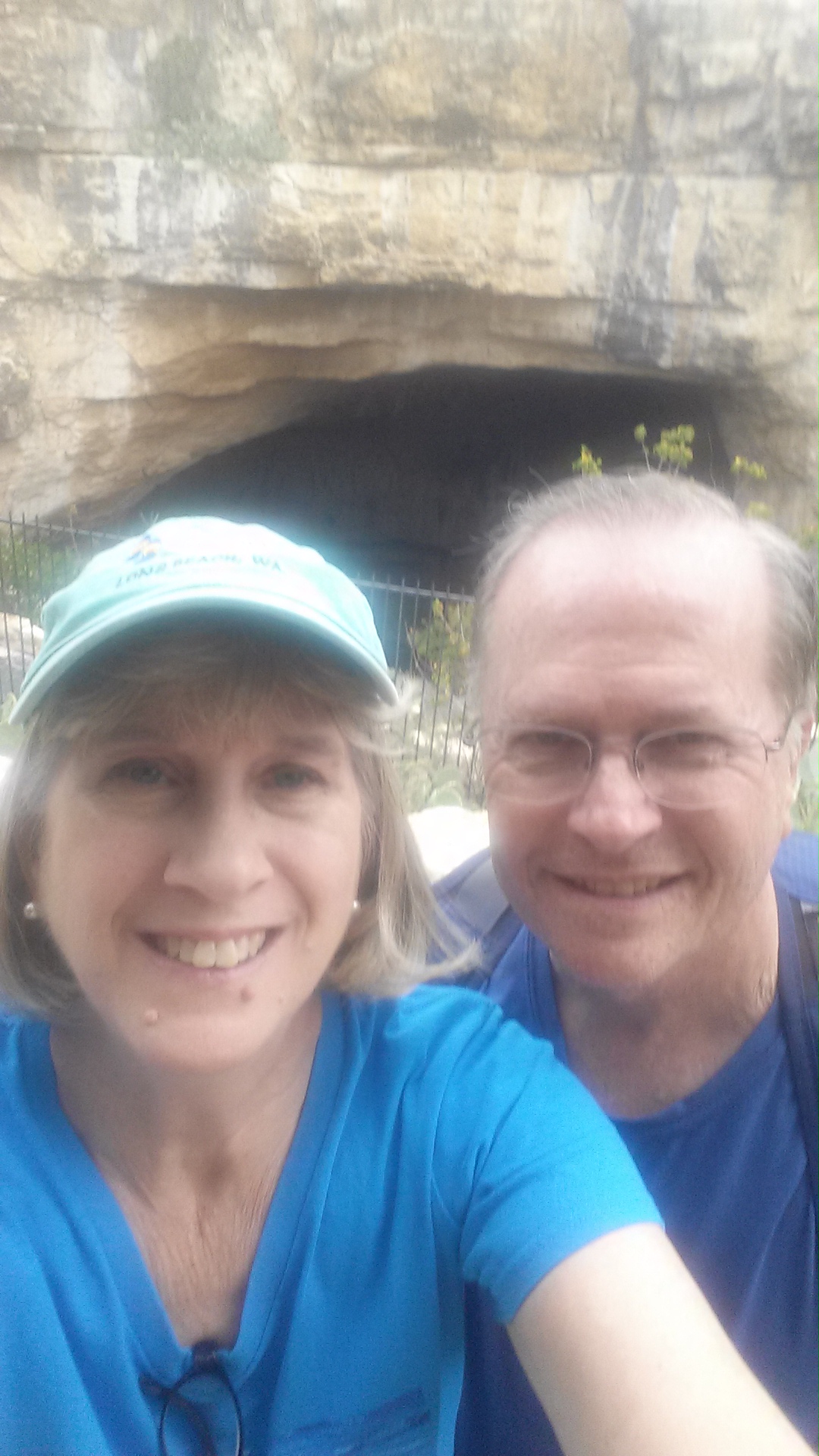
The author and her hubby at the 2018 Festival

When we lived in Redmond, Washington, it was always fun to head to the Sammamish slough and watch the cluster of hot air balloons which would soar over the valley on summer evenings. Then, in 2018, the hubby and I had the opportunity to attend the Albuquerque International Balloon Festival with a group from Washington Eastern Star. What an incredible experience! We left our hotel long before dawn and rode on a tour bus to the venue. The roads were jammed with festival goers. And out the windows of the bus we could see, one by one, the balloons in the distance glow to life in the dark skies, illuminated by the burning gases.
Vincent Van Gogh about to take flight
A kaleidoscope of colorful balloons fill the sky

Although it was after sunrise when our bus finally arrived on site, we feasted on the spectacle of hundreds of colorful balloons. It was fascinating to watch as each balloon grew large, eventually  lifting into the sky. There were all shapes of animals; Balloons from cartoons and movies; geometric designs, patriotic themes, and holidays. There was even one balloon depicting Vincent Van Gogh. I never tired of the colorful variety or the ever changing kaleidoscope of balloons and hope to one day have a return trip to New Mexico’s Balloon Fiesta.

To read more about DeRozier and balloon flight:

https://en.wikipedia.org/wiki/Jean-Fran%C3%A7ois_Pil%C3%A2tre_de_Rozier

A general history of Balloon flight: http://bellestar.org/faq/default.html

A link to the Albuquerque Balloon Fiesta: https://balloonfiesta.com/

To The Bat Cave

Carlsbad Caverns

May 14, 2019

This spectacle occurs at sunset daily from mid-spring until late fall. And if you ever go to Carlsbad Caverns National Park, it’s a sight to behold. What is it? The nightly flight of nearly a half million bats.

20181004_145630.jpg

The flight of the bats is but one thing to recommend a visit to the 20th National Park established on May 14, 1930. The caverns themselves are spectacular with the main event Big Room providing incredible sights around every turn in the path.

From the Infallible Wikipedia:

“Carlsbad Cavern includes a large limestone chamber, named simply the Big Room, which is almost 4,000 feet (1,220 m) long, 625 feet (191 m) wide, and 255 feet (78 m) high at its highest point. The Big Room is the fifth largest chamber in North America and the twenty-eighth largest in the world.”

20181004_103246.jpg

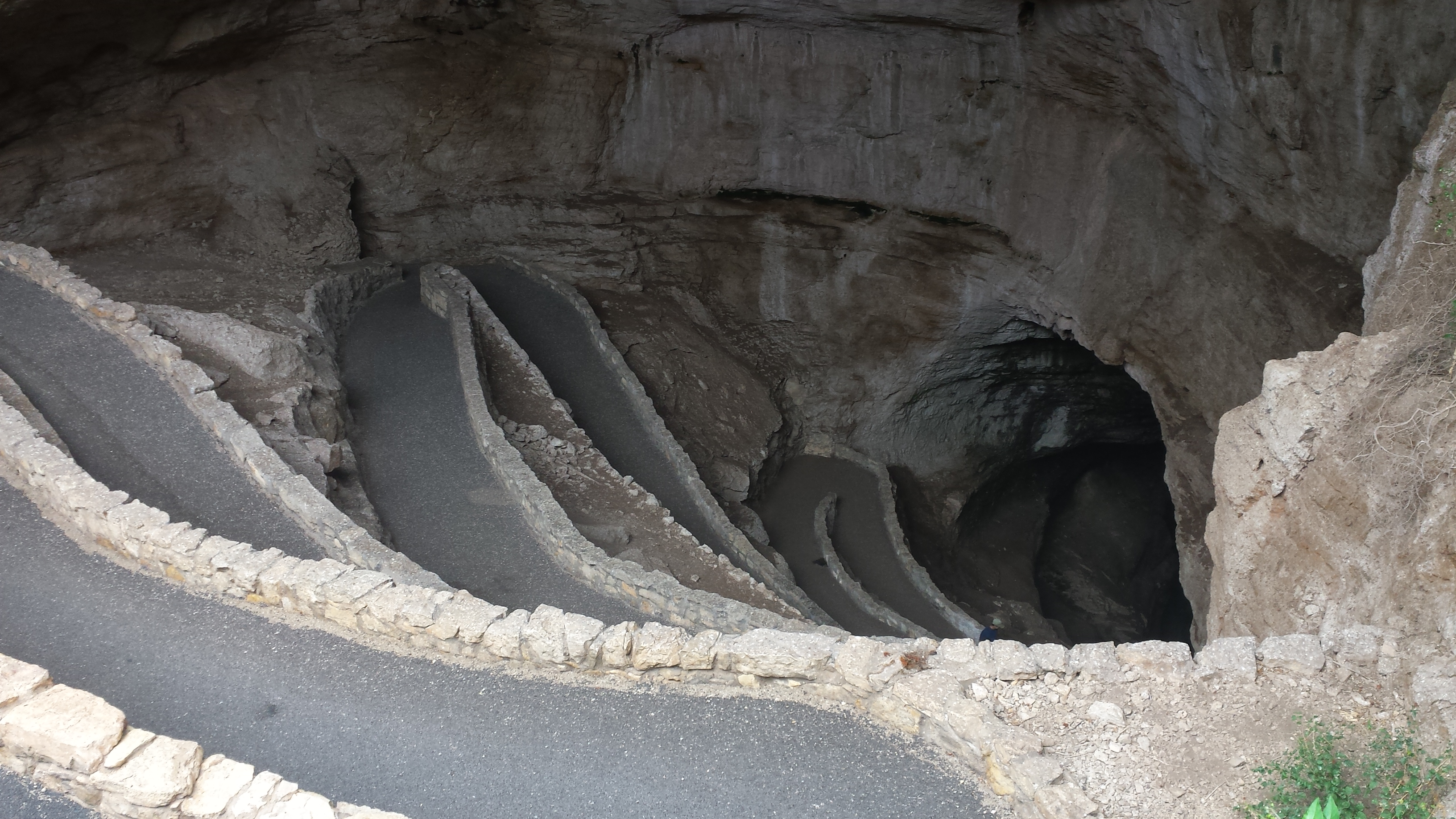
The top of the natural entry way… only 725 to the bottom.

Visitors to the cave have two options for entry. Two years after it opened, elevators were installed to take tourists some 725 feet down to the Big Room. The traditional entry involves hiking down a switchback trail over a mile long and takes well over an hour.

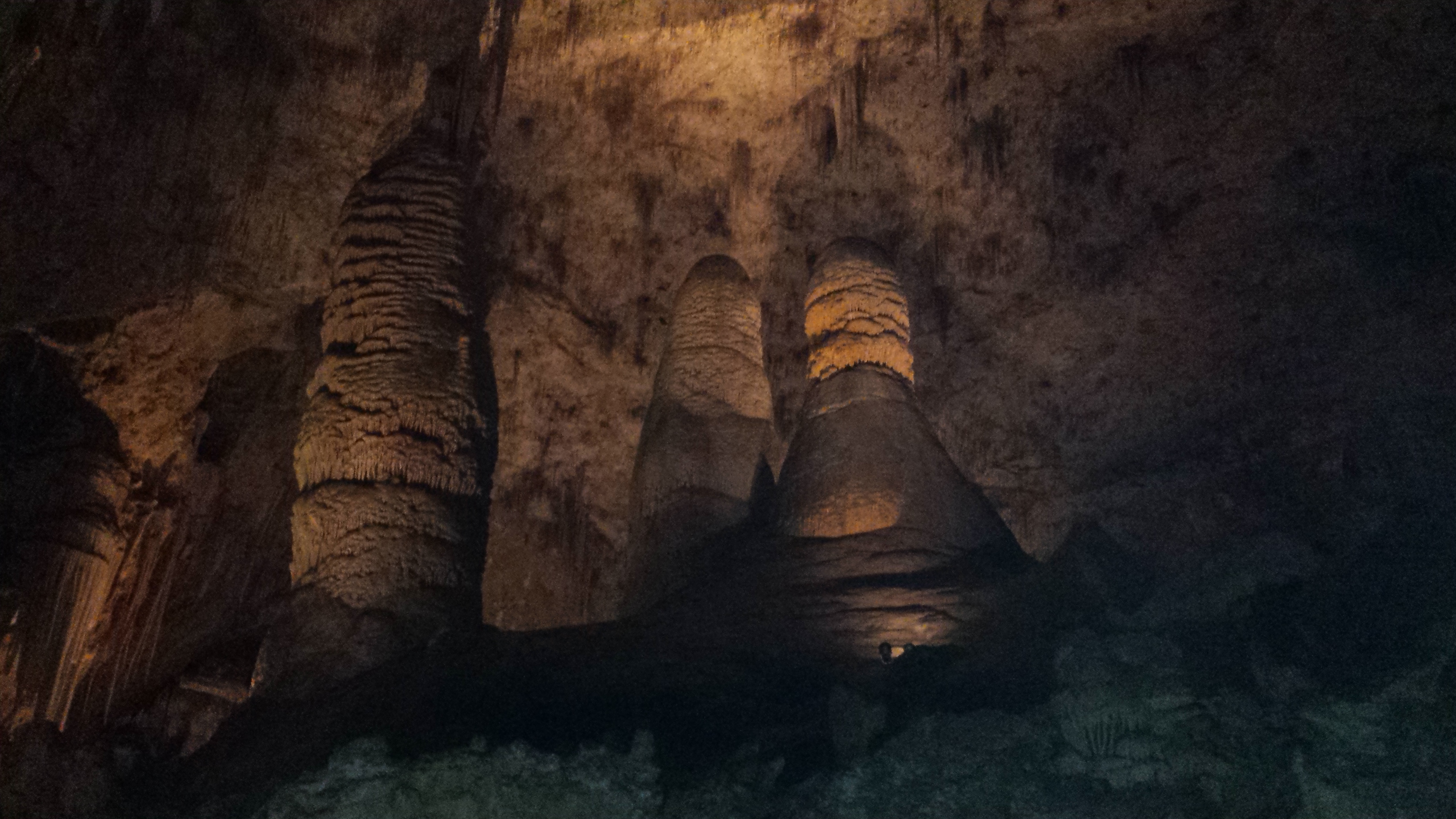
When the hubby and I visited Carlsbad last October we opted for the switchback trail down which, in my opinion, enhanced the experience. By the time we arrived at the Big Room, our appetites were whetted.  It’s impossible to describe how large the space is and, at times, it was easy to forget we were in a cave. The ceiling soared high above our heads and many of the stalagmites and columns were the size of redwoods. In contrast there were also delicate formations known as ‘straws’ – thin tubes of limestone formed by centuries of slowly dripping calcite and ribbons. There were small lakes and ponds and fantastically named features like the Giant Dome and the Bottomless Pit. It took us well over three hours for the descent into and tour of the Big Room.

20181004_121935

A fraction of the spectacular sights to see in Carlsbad.

After our tour we returned to the surface via the elevators and then back to our motel to rest up before returning for the nightly bat flight. If you want to be awed by nature, then this phenomenon will capture your imagination. We arrived at the stone amphitheater near sunset. The ranger on duty explained to the assembled group what was about to happen. We were instructed  to watch the cavern opening – aptly named the bat cave – for the emergence of the bats.

(I did not shoot this video. The night we were there it was our understanding that recording it was not allowed)

The ranger cautioned that he would talk only until the first bats appeared and instructed the audience that when someone saw the bats they were to raise their hand and spin it in a circular motion. A few minutes later several arms shot into the air and the group fell silent. All you could hear and see was the sound of thousands of bat wings whirring and the twilight skies filled with the silhouettes of the tiny creatures as they flew away in search of food.

From the National Park Service:

“What triggers emergence of the bats from the cave at night is something of a mystery. The only scientific correlation found with the emergence of bats is civil twilight (28 minutes past sunset). Bats flying around the roost site can see light entering Bat Cave from Carlsbad Cavern’s second natural entrance. But based on the variability of the bats emergence, civil twilight is not the only explanation.

20181004_122734

Stalactites cling to the ceiling

The out flight can last up to three hours, depending on a variety of factors, including the number of bats in the colony. Bats can begin returning at any time, particularly when they have pups to nurse (in which case they typically head out to feed again before morning). The number of bats returning usually peaks around dawn. When the bats fly over the amphitheater, you can hear their wings and also smell them. The Brazilian (Mexican) free-tail bats have a unique odor—not all bat species have an obvious odor. The bats spiral out of the cave in a counter-clockwise direction. It is not known why they choose to spiral counter-clockwise, but current research suggest a variety of factors play roles. One of these may be an internal ‘compass’ in the bats that is based on the earth’s magnetic poles.”

20181004_103032.jpgWe stayed until it was too dark to really see the bats any longer. Even then we were reluctant to depart. Mark another place off my list of places I’ve always wanted to visit!

A couple of links:

https://www.nps.gov/cave/index.htm

https://en.wikipedia.org/wiki/Carlsbad_Caverns_National_Park