Tag Archive | love

Don’t It Make My Brown Eyes Blue

And a few musings on Blue vs. Brown eyes

June 24th
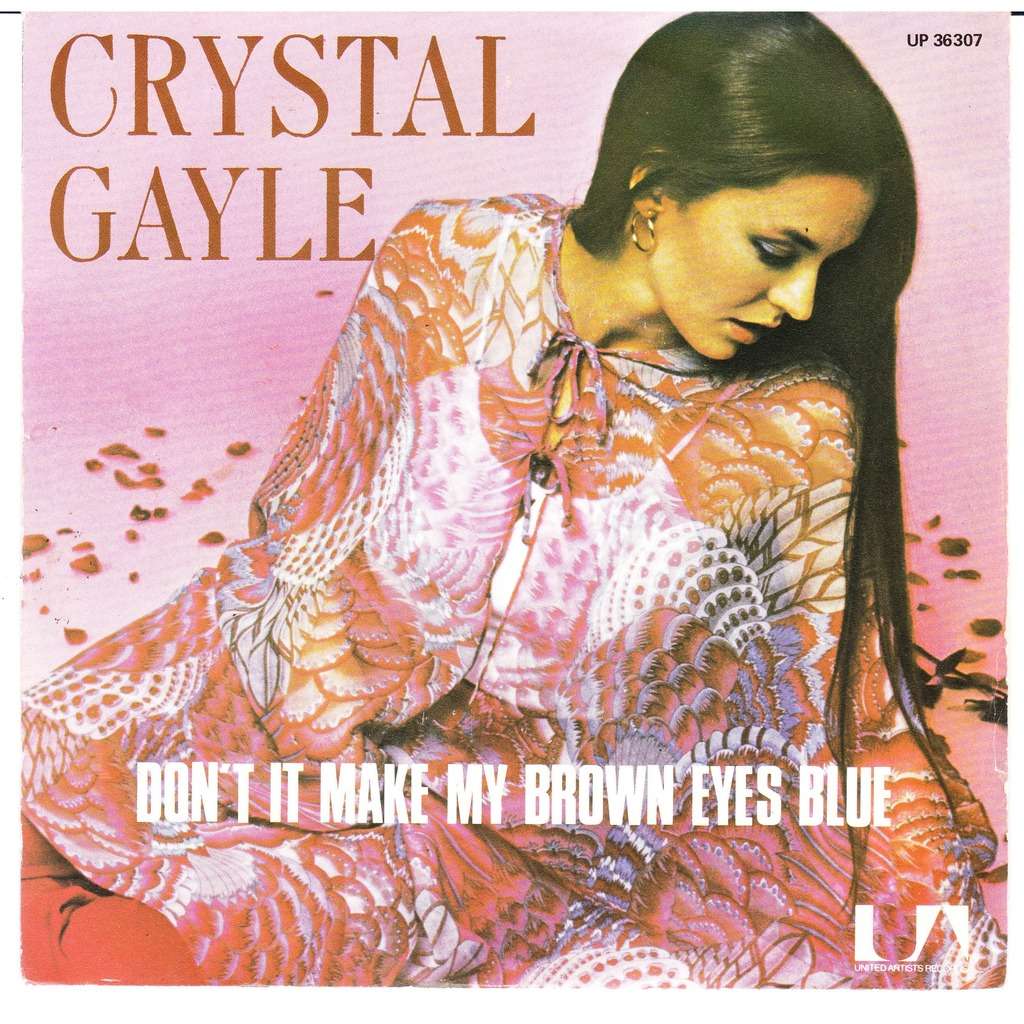
This song, released in June 1977, was one of those rare pieces which successfully crossed over from country to pop. It was number one on the country chart for five weeks in the summer of 1977 and peaked at number two on the Billboard Hot 100 chart in late November 1977. It was kept from the top position by Debby Boone’s You Light Up My Life (YLUML). As I wrote in my blog about that song, there were any number of infinitely better songs during the number one run of YLUML, including this one. https://barbaradevore.com/2024/11/19/you-light-up-my-life-2/

Don’t It Make My Brown Eyes Blue catapulted artist Crystal Gale into stardom and she had a series of commercially successful songs which followed.

The Infallible Wikipedia shares:

“In 1975, ‘Wrong Road Again’ became Gayle’s first major hit. However, it was in 1977 when Gayle achieved her biggest success with ‘Don’t It Make My Brown Eyes Blue’. The single topped the Billboard country chart, crossed over to the top five of the Billboard Hot 100 and became a major international hit.

Gayle continued having success from the late 1970s and through late 1980s. Her biggest hits included ‘Ready for the Times to Get Better’ (1977), ‘Talking in Your Sleep’ (1978), ‘Half the Way’ (1979) and ‘You and I’ (1982).”

Don’t It Make My Brown Eyes Blue is one of those songs which has gained in popularity and critical acclaim over time. Also from the Infallible Wikipedia:

“The song became Gayle’s signature piece throughout her career. In 1978, the song won Gayle a Grammy Award for Best Female Country Vocal Performance. In 1999, the song was recognized by ASCAP as one of the ten most-performed songs of the 20th century. (snip)

In 2024, Rolling Stone ranked the song at #109 on its 200 Greatest Country Songs of All Time ranking.”

I had not intended to feature this as today’s Tuesday Newsday topic. But sometimes things just sort of take a serendipitous route. Yesterday, while on our way to Seattle, the hubby, my son, and me were driving south on I-5 from Mount Vernon and my son – who has been visiting for the past week – commented about the low cloud ceiling and gray skies and how, since it was the first full day of summer, shouldn’t be happening. I think he’s forgotten what it’s like here since he lives in Guadalajara, Mexico, and he’s acclimated to the sunny and hot climate.

Being that it was June 22 and one of the longest days of the year, one might think it should be sunny and bright. But nope. Over the weekend we got a ‘welcome to summer’ soaking from Mother Nature.

As we approach the Stillaguamish River, the cloud cover has now lifted and is several hundred feet higher. Of course I do what any self-respecting, blue-eyed, Western Washingtonian would do, I put on my sunglasses.

Just like my hubby and son did. Or not. Why? Because they do not have blue eyes.

Of course, that sends me down the rabbit hole of mental gymnastics and I start thinking about blue eyes vs. brown eyes and that then led me to start humming today’s featured song. See how easy that was?

But back to the brown vs. blue eyes and the problem blue eyed people have: light sensitivity.

According to Health.com:

“Several studies have found that people with light-colored eyes are more sensitive to the effects of light than people with dark-colored eyes. Researchers speculate this may be due to lower amounts of melanin (pigment) in light-colored eyes. Less melanin in the eyes may increase their susceptibility to the negative effects of sun and light exposure.”
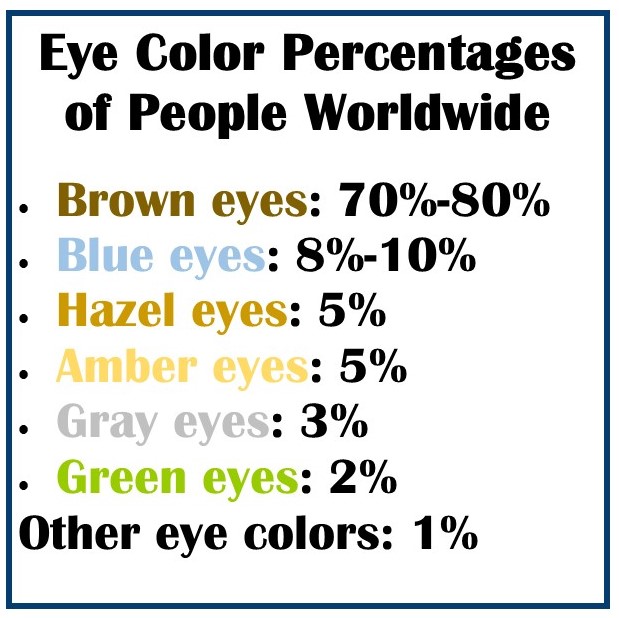
My son has teased me over the years about being a ‘blue-eyed freak.’ He’s not totally wrong. People with blue eyes make up only 8 to 10 percent of the human population as shown in the chart to the right:

Those of us who have blue eyes can trace the majority of our ancestry to northern European and Scandinavian countries. Finland, according to one report I saw, leads the world with a whopping 89 percent of its population boasting blue eyes.

I took a peek at my DNA results and learned that of the top 10 countries with the highest percentage of people with blue eyes, I match to seven of those countries – which makes up 93 percent of my DNA – including Finland with 13 percent of the total.

But back to the light problem. From the time I was a little girl, bright lights have always made me squint or even close my eyes. Bright lights when my eyes have adjusted to the darkness are just downright painful.

The hubby calls me a ‘darkie’ because I often move about the house without turning on lights. The way our lower level is set up is that we have a closet across from the bathroom near our bedroom. That closet has a motion-detecting light that is designed to turn on when one enters the closet. But sometimes, if you fly too close to the sun – er, opening – it will spring to life, flooding the area with blinding light. Okay, maybe that’s a bit hyperbolic.


Eventually we got a reasonable photo… notice the hubby is unfazed by the light.
It took several attempts to get photos that day due to my inability to keep from painful squinting…

But I have learned to be very, very careful how I walk past that doorway when I get up in the mornings so as to not trigger the light and cause painful, but temporary, blindness. I keep as close to the wall opposite as possible and slow my gait as I float past, nearly a ghost in the predawn dark.

It’s either that or wear sunglasses at night. But that’s a whole different song for another Tuesday Newsday.

So, I think my mantra, rather than “Don’t It Make My Brown Eye’s Blue” is really, “Don’t it Make my Blue Eyes Squint.” Somehow that’s not nearly as catchy as Crystal Gayle’s 1977 hit song.

The links:

https://en.wikipedia.org/wiki/Don%27t_It_Make_My_Brown_Eyes_Blue

https://en.wikipedia.org/wiki/Crystal_Gayle

https://en.wikipedia.org/wiki/List_of_Hot_Country_Singles_number_ones_of_1977

https://www.health.com/are-blue-eyes-more-sensitive-to-light-11690558

https://www.insidermonkey.com/blog/top-10-countries-that-have-the-most-blondes-and-blue-eyes-as-a-percentage-of-population-605109/?singlepage=1

https://worldpopulationreview.com/country-rankings/eye-color-percentage-by-country
World’s Most Popular Song? The Story of ‘Happy Birthday’

Everyone’s sung it at least once!

March 4

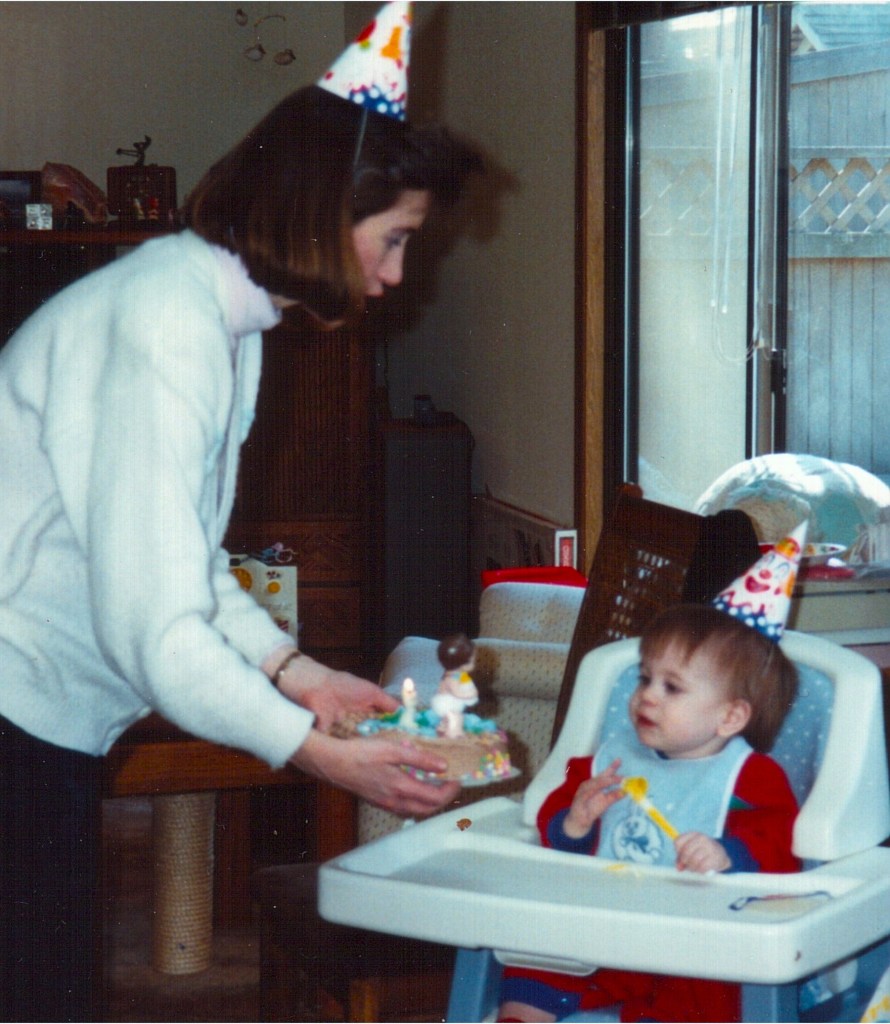
My son’s first birthday… and singing Happy Birthday to You.

This song, arguably the most popular one ever written, never reached number one the Billboard Hot 100 and was never nominated for a Grammy Award. In fact, no one is 100 percent certain as to the origin of the tune or the lyrics. Yet today pretty much every American aged 5 and over has sung it many, many times and it remains a cultural icon.

The song? “Happy Birthday To You.”

It was on March 4, 1924, when the song was published in a songbook by Claydon Sunny (Clayton F. Summy Publications) at the behest of Jessica Hill, the younger sister of kindergarten teachers Patty and Mildred Hill.

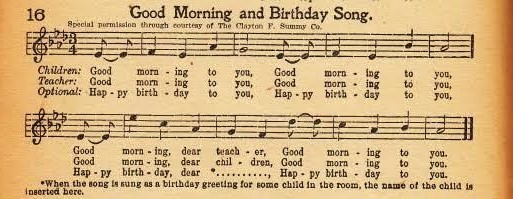
The song has its origins in the late 1800’s when the two sisters composed an easy to learn song for their classroom titled “Good Morning To You.” It is speculated that the sisters put the song together based on several other children’s song melodies, popular at the time.

The lyrics were thus: “Good morning to you, good morning to you, good morning, dear children, good morning to all.”

So far, so good as it was just a couple of Louisville, Kentucky, kindergarten teachers using a cheery song to greet young children each day.

In 1893 the sisters, with their pioneering ideas on early childhood education, published the song in a book titled “Song Stories For Kindergarten.” No one can say for sure ‘when’ the birthday lyrics were substituted but there is evidence that they were first published in 1912. It was, however, Claydon Sunny’s publication which set the song up for copyright challenges which persisted for decades.

As you might expect, the Infallible Wikipedia fills in the details:

“The Summy Company registered a copyright in 1935, crediting authors Preston Ware Orem and Mrs. R. R. Forman. In 1988, Warner/Chappell Music purchased the company owning the copyright for US$25 million, with the value of ‘Happy Birthday’ estimated at US$5 million. Warner claimed that the United States copyright would not expire until 2030 and that unauthorized public performances of the song were illegal unless royalties were paid. In February 2010, the royalty for a single use was US$700. By one estimate, the song is the highest-earning single song in history. In the European Union, the copyright for the song expired on January 1, 2017.

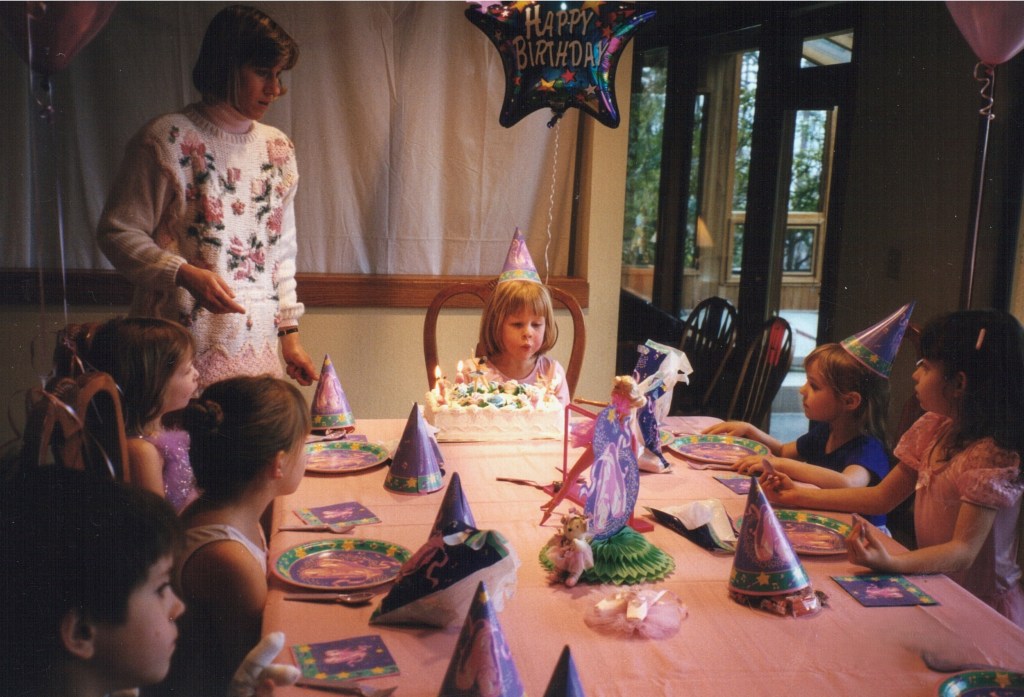
My daughter’s Ballerina themed 5th birthday party

The American copyright status of ‘Happy Birthday to You’ began to draw more attention with the passage of the Copyright Term Extension Act in 1998. The Supreme Court upheld the Act in Eldred v. Ashcroft in 2003, and Associate Justice Stephen Breyer specifically mentioned ‘Happy Birthday to You’ in his dissenting opinion. American law professor Robert Brauneis extensively researched the song and concluded in 2010 ‘it is almost certainly no longer under copyright.’ Good Morning to You Productions sued Warner/Chappell for falsely claiming copyright to the song in 2013. In September 2015, a federal judge declared that the Warner/Chappell copyright claim was invalid, ruling that the copyright registration applied only to a specific piano arrangement of the song and not to its lyrics and melody. In 2016, Warner/Chappell settled for $14 million, and the court declared that ‘Happy Birthday to You’ was in the public domain.”

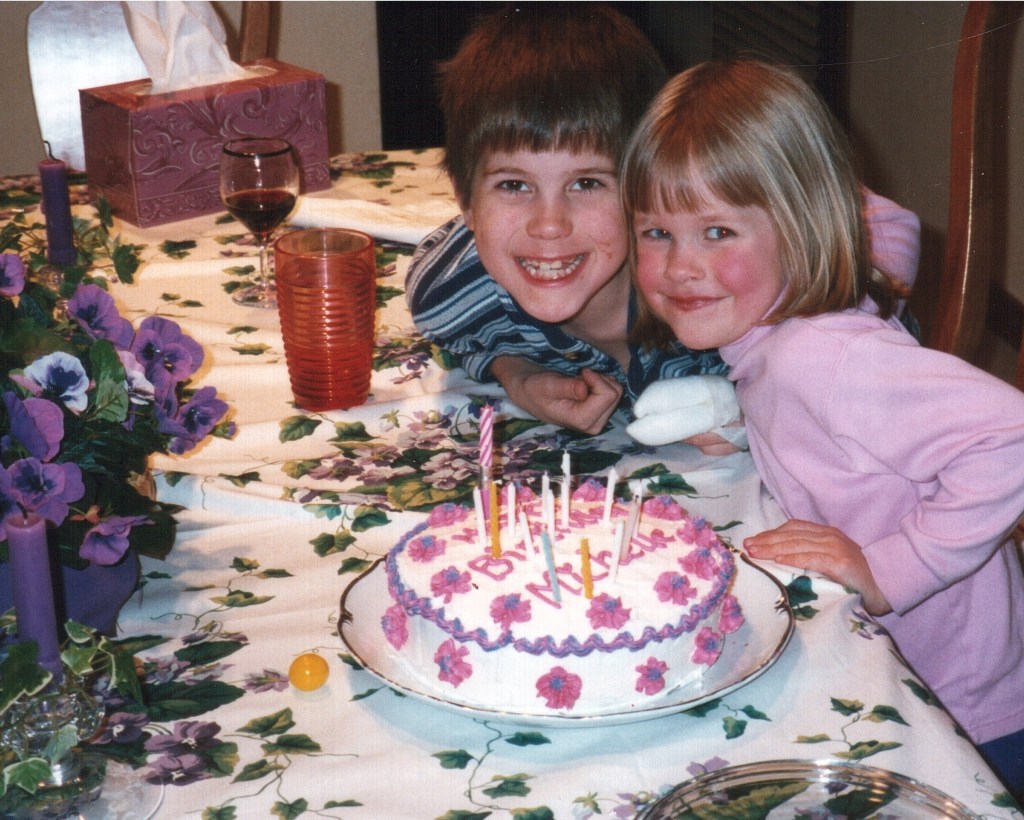
I love this photo of my children taken on my daughter’s birthday circa 1997

Like pretty much everyone reading this, I cannot recall a time when I did NOT know this song. When my family inherited my grandmother’s piano – I was 7 or 8 – and I first sat down to experiment, this was likely the first tune I was able to pick out with the keys.

Some of my earliest memories are of my mother bringing out a birthday cake for one of her four children, candles ablaze, and her leading everyone in singing ‘Happy Birthday To You.” She would enter the dining room from the kitchen, bearing her signature chocolate cake covered in white frosting, with “Happy Birthday” written in either blue or green icing. This was followed by the birthday child blowing out the candles and making a secret wish.

The now 101-year long tradition (or longer) of singing happy birthday has been carried on for generations and, as soon as its discovered that it’s someone’s special day, a group of people will nearly always sing the song.

A moment in time…It was my mother’s 32nd birthday. I’m not quite sure ‘who’ took this photo. Likely my grandmother who often came to help with the four of us. I’m not pictured as I was only three months old at the time. My siblings, ages 9, 4, and 2 are also pictured.

As I was researching for this article, I wandered off into the weeds, perusing various YouTube videos of people singing/playing ‘Happy Birthday.’ And then I saw it. A nine-minute video of pianist Victor Borge having fun with the song in the style of about 10 different classic composers. The link:

https://www.youtube.com/embed/hkkHz8xq7lE?si=UBogXMHjmkPc4qZk

This was familiar, I thought. And then I recalled I had experienced Victor Borge perform at the Capitol Theatre in Yakima when I was a teenager. Sure enough, on March 31, 1973 – together with my parents and my sister – we attended his concert. According to what I wrote in my diary “It was a very good show. I enjoyed it.” Not exactly an expansive review but I was 15 and, perhaps, did not appreciate that moment in time. To this day, however, I can see him on that stage, regaling the audience with his comedic take on classical music. I am positive he performed ‘Happy Birthday’ similarly to what is shown in the attached video.  Enjoy!

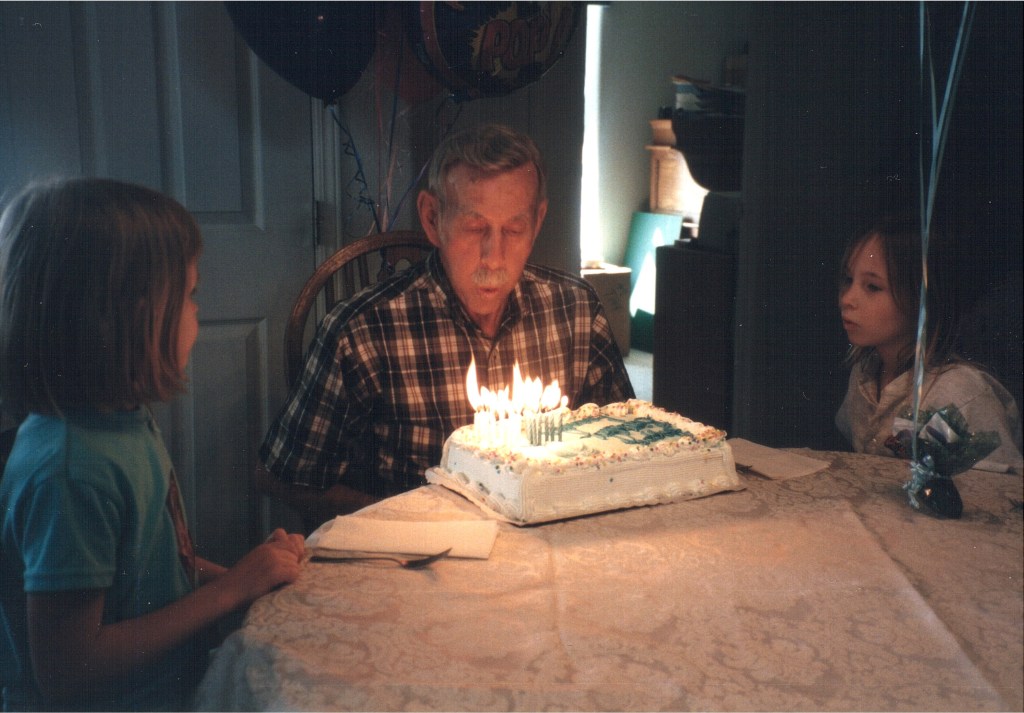
My dad’s birthday circa 1997 pictured with his two youngest granddaughters.

Yet, when I think about “Happy Birthday To You” I am amazed at the cultural reach of such a simple tune and lyrics with humble beginnings.

So, there you have it. No more copyright infringements or companies claiming the song belongs to them. You are free to sing “Happy Birthday to You” anywhere and everywhere without having to worry about paying royalties or getting sued. Ultimately, the song has returned to its roots, as a simple and positive way to give glad tidings and, perhaps, brighten someone’ day if only for a few minutes. Just the way I imagine Patty and Mildred Hill would have wanted it.

A few links:

https://en.wikipedia.org/wiki/Happy_Birthday_to_You

https://en.wikipedia.org/wiki/Victor_Borge

https://en.wikipedia.org/wiki/Capitol_Theatre_(Yakima,_Washington)