The Fourth Thursday In November
November 26, 2024
A Tuesday Newsday Classic
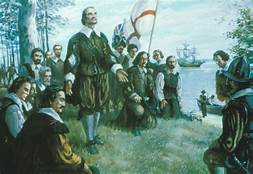
The celebration of harvest by setting aside a day of ‘thanksgiving’ is a tradition long observed by people the world over. Most Americans embrace the idea that the first Thanksgiving was held in Plymouth, Massachusetts, by the pilgrims who settled the wilderness there in 1621.
But a historical look at ‘thanksgiving’ celebrations indicates a more haphazard approach. In fact, colonists in Virginia also held feasts of ‘thanksgiving’ during the early years of European settlements and a number of years before the New England events. In subsequent years such feasts were declared from time to time, occurring whenever it seemed a good idea for a few days of eating and celebration.
It was George Washington, as the first president, who by proclamation made Thursday, November 26, 1789, a ‘National Day of Thanksgiving.’
From the Infallible Wikipedia:

“As President, on October 3, 1789, George Washington made the following proclamation and created the first Thanksgiving Day designated by the national government of the United States of America:
Whereas it is the duty of all Nations to acknowledge the providence of Almighty God, to obey his will, to be grateful for his benefits, and humbly to implore his protection and favor, and whereas both Houses of Congress have by their joint Committee requested me ‘to recommend to the People of the United States a day of public thanksgiving and prayer to be observed by acknowledging with grateful hearts the many signal favors of Almighty God especially by affording them an opportunity peaceably to establish a form of government for their safety and happiness.’
Now therefore I do recommend and assign Thursday the 26th day of November next to be devoted by the People of these States to the service of that great and glorious Being, who is the beneficent Author of all the good that was, that is, or that will be.’”
Although additional ‘days of thanksgiving’ were proclaimed over the years, it was during the Civil War when the last Thursday of November became the traditional celebration date. And, in a coincidence, it was also November 26th for that official celebration.
Controversy arose, however, when – during Franklin Roosevelt’s term as President –there was a ‘fifth’ Thursday. Also from the Infallible Wikipedia:
“On October 6, 1941, both houses of the U.S. Congress passed a joint resolution fixing the traditional last-Thursday date for the holiday beginning in 1942. However, in December of that year the Senate passed an amendment to the resolution that split the difference by requiring that Thanksgiving be observed annually on the fourth Thursday of November, which was usually the last Thursday and sometimes (two years out of seven, on average) the next to last. The amendment also passed the House, and on December 26, 1941, President Roosevelt signed this bill, for the first time making the date of Thanksgiving a matter of federal law and fixing the day as the fourth Thursday of November.
For several years some states continued to observe the last-Thursday date in years with five November Thursdays (the next such year being 1944), with Texas doing so as late as 1956.”
Eventually, however, everyone got on board with the change which, of course, made the planning of parades, retail sales, and football games much easier.
For me, Thanksgiving was always a long-anticipated day. My family moved to Yakima in 1961 and, as a small girl of four years, I had no prior memories of the event. All my recollections are of the two holidays – Thanksgiving and Christmas – being spent at either my family’s house or that of my cousins.
Being that my cousins’ house was a short walk down 31st Avenue, it became tradition that our two families of six each – along with my maternal grandparents – would spend Thanksgiving together.

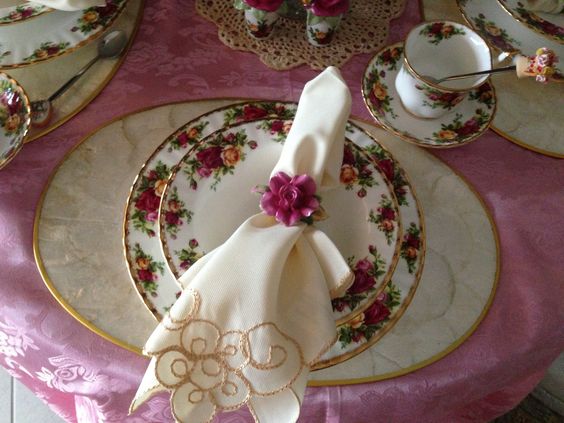
I loved going to their house for the holiday for a number of reasons, the first being that my Aunt Helen set the most gorgeous table. Even as a child I loved china and hers was exquisite. It might have been Royal Doulton Country Roses – or a knockoff – but I recall it was bold, fussy, and beautiful. She had enough place settings to accommodate 14 people but not enough seats at the main table… so the five younger children (2 boys, 3 girls) were relegated to the kitchen table WITH the pocket door closed. It was glorious. Behind that closed door, mischief abounded with my brother – who was four years older than I – the main mischief maker. There were jokes told, inappropriate noises, and much laughter. We thought we were the lucky ones not having to endure the boring adult conversations which seemed to center on who was sick or had died that year.
The third, and my favorite, reason I loved going to the cousins’ house was because of their basement. After dinner (which was ALWAYS served at 1 p.m. and over by 1:45) we were sent downstairs. That basement was the one place in my fastidious Aunt’s house where we could play without concern over too much noise.
Oh, the adventures we had! Like the time we set up the Ouija Board and invoked spirits (of the dead relatives discussed at dinner) only to have the basement window bang open at the exact moment of contact. And the time that my sister and cousin Tim put on a play in the basement, complete with a curtain and props, and a surprise ending. My uncle had an old pump organ down there which fascinated me as I pumped the pedals and pulled on knobs to create different sounds as I ‘played’ the instrument. We never ran out of things to do and I was always sad when the hour grew late and we had to return home.
When I think of my many blessings in life, I’m especially thankful for my childhood and those special holidays I spent with my siblings and cousins. At the time I did not appreciate the transitory nature of life and thought it would always be that way.
I’ve come to cherish Thanksgiving and have to say that it’s truly my favorite holiday. At no other time do we pause to give thanks for all our blessings and the people who make our lives richer and better.
I wish you all a wonderful Thanksgiving.
As always, a link:



 barbaradevore.com