A 4th of July tradition since 1777
July 4, 2023

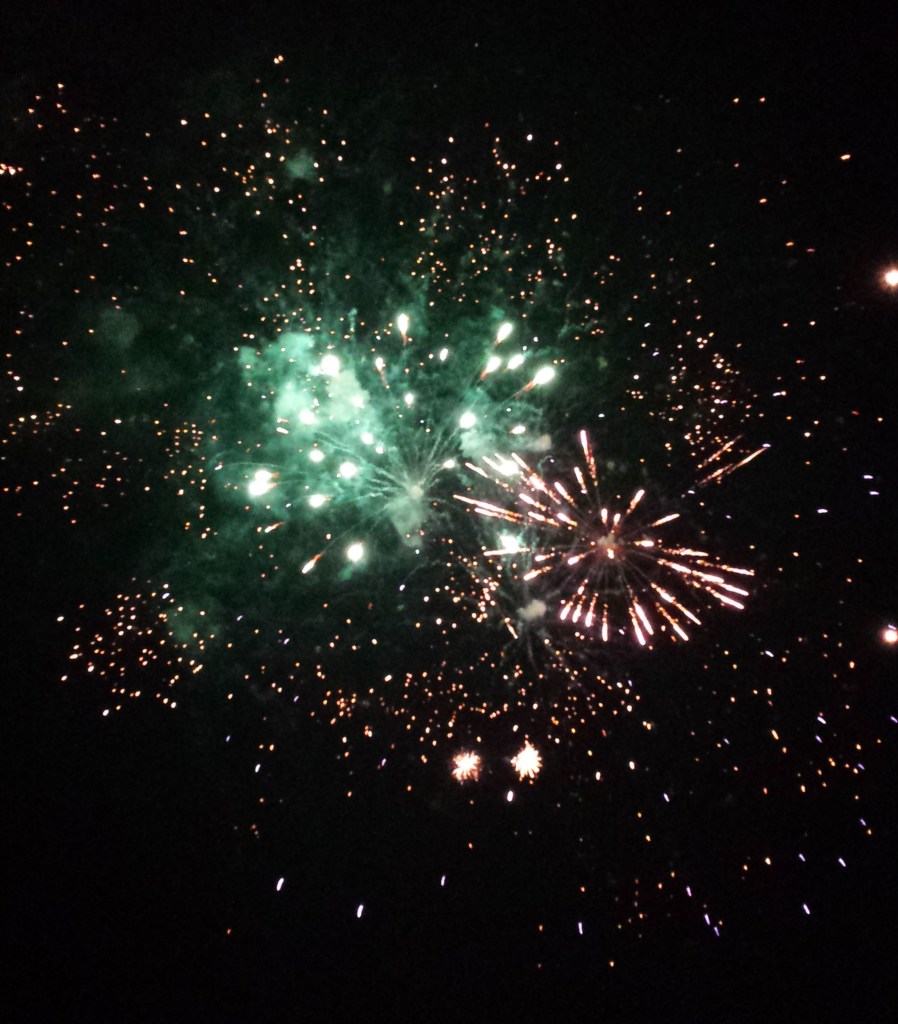
By the time darkness descends on July 4th, the skies of communities across the country will be filled with brilliant bursts of red, white, blue, purple, orange, and green fireworks, a visual feast to behold. Truly, fireworks are the symbol of Independence Day.
The first recorded mention of fireworks for a July 4th celebration was in 1777 to mark the one year anniversary of the signing of the Declaration of Independence.
The Infallible Wikipedia shares this:
“America’s earliest settlers brought their enthusiasm for fireworks to the United States. Fireworks and black ash were used to celebrate important events long before the American Revolutionary War. The very first celebration of Independence Day was in 1777, six years before Americans knew whether or not the new nation would survive the war; fireworks were a part of all festivities.
In 1789, George Washington’s inauguration was accompanied by a fireworks display. George Marshall was an American naval hero during the War of 1812 and other campaigns. He was a Master Gunner and pyrotechnics specialist who wrote Marshall’s Practical Marine Gunnery in 1822. The book outlines chemical formulas for the composition of fireworks. This early fascination with fireworks’ noise and color continues today with fireworks displays commonly included in Independence Day celebrations.”
My earliest memories of 4th of July fireworks are from when I was four years old. Actually, it’s my earliest memory of ANYTHING in life. My family lived in Clarkston, Washington, that summer. I can see in my mind’s eye the fireworks exploding overhead as we sit on a picnic blanket in a park, little bits of debris raining down on us. That night I found a star shaped piece of cardboard lying on the ground after the show. Of course I carried it home as a treasure which, undoubtedly, my mother disposed of a short time later after it was forgotten.

Most years did not involve going to a professional display, but I always went with my Dad to a stand and help pick out those fireworks which our family would set off. My favorites were always the sparklers. There was something exciting and dangerous about holding a metal stick in one’s hand while Dad lit the end and it erupted into tiny exploding sparks. My sister and I would dance around using the sparkler as if it were a colorful pen writing letters across the night sky.
It was in the 1980’s, however, when I was introduced to a completely different level of fireworks mania. My hubby, and his brother Wayne – as kids – were enamored with fireworks, riding their bikes out to the Native American reservations where they would purchase firecrackers and other contraband, often returning with enough to supply every explosion loving kid in their neighborhood.
For Wayne it was a passion he has embraced throughout his life. When I asked him how he got started in the business he did not hesitate: “It would have to be so I could legally play with bigger and better pyrotechnics.”
To do that required him to have pyrotechnics training and certification. The first show he ever helped with, once that certification was obtained, was Salty Sea Days in Everett in 1980.

Wayne has produced 4th of July fireworks shows all over Washington State. He did the City of Yakima show for 15 years in a row; the hubby and son were able to be on site there one year in the late 1990’s for the up close experience, while I stayed with our young daughter and we watched it from a bluff in Selah. Wayne’s shows have taken him all over the state including Blaine, Pasco, Renton, Everett, Omak, and Puyallup.

While most people love seeing the fireworks, few truly understand the time, training, and effort it takes. In 2018, I witnessed what goes in to the set up while the hubby helped Wayne prep the show. The half dozen members of the crew spent hours stringing wires between the tubes where the fireworks were staged; packed sand around the tubes; and had to carefully follow the schematic of what goes where. For my untrained eyes, it all seemed very chaotic for a very meticulous job which requires extreme care so that one does not blow themselves and others up.
Wayne is, perhaps, the most proud of his safety record. In the 44 years in a row doing a 4th of July show, no one on his crew has ever had a fireworks related injury or burn. In fact he made me promise to highlight the dangers of, literally, playing with fire. In the box on the side are his reminders, a defacto Public Service Announcement to all.
It was my understanding that 2023 was the year Wayne was going to retire but when I reached him for this story, he was headed to Yakima with his daughter, my niece. She too has the pyrotechnic bug and had lamented his impending retirement more than once the past few years. But it’s more like a partial retirement. This year he’s going to be on a crew run by one of the women who worked with him on the shows for many years; he’s going as a consultant to, as he said, ‘make sure no one does anything stupid.”

And while there have been some scary moments when something didn’t happen as it should, he waxed poetic about the last year he did the Everett fireworks show in 2017. Everything was set up on a large barge just offshore and the crew, as always, had spent all day getting it organized, making sure all was safe and ready.

That night, when the first ball rocketed into the air, exploding in a shower of sparks, it was the beginning of something special. “The show itself was the most perfect show we’ve ever done,” Wayne said, “Three hundred to four hundred shots and only two shells which did not fire. That’s very rare. It’s not uncommon to have half a dozen or more shells which never fire.” It was also the first show which his daughter, who turned 18 that year, could help with.
So while he’s given up being the guy in charge, he’ll be with a crew all day on the Fourth, embracing his lifelong passion for fireworks and the thrill of getting to play with the bigger and better pyrotechnics. Way cooler than sparklers.
https://en.wikipedia.org/wiki/Fireworks

 barbaradevore.com