Tag Archive | 1960’s

The Monkees

Wildly popular Boy Band of the 1960’s

September 12, 2023

A Tuesday Newsday Classic

The argument could be made that this group – a made for TV boy band – was like the Rodney Dangerfield of rock and roll: “I don’t get no respect.”

The Monkees always performed a couple of songs every week on their TV show

And now, 51 years after their TV program debuted, one could also argue that perhaps there was a bit more to them then the critics said at the time.

I’m talking, of course, about the Monkees. The TV show premiered on September 12, 1966 and, in combination with the release of their first single “Last Train To Clarksville” was an immediate hit with girls of a certain age. That age would have been from about 8 to 14 years old.

But back to the critics and how the group came to be. The idea was to put together an American based band of four guys in an attempt to capitalize on, and compete with, the success of the Beatles. The four (pictured here clockwise starting top left  – Davy Jones, Micky Dolenz, Peter Tork, and Michael Nesmith – were all musicians and actors. All took themselves seriously in their pursuit of a career.  At the time Jones was a somewhat successful actor having played the role of the Artful Dodger in the musical “Oliver” and with his British accent and good looks was already cast for the TV show.  An ad was run in the Hollywood Reporter for the rest of the band.
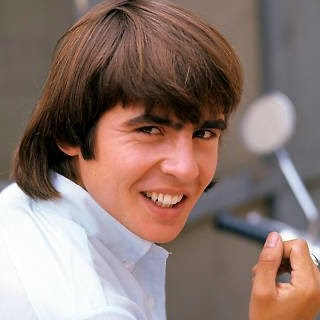
The Dreamy Davy Jones

According to the infallible Wikipedia:

Madness!! Auditions. Folk & Roll Musicians-Singers for acting roles in new TV series. Running Parts for 4 insane boys, age 17-21. Want spirited Ben Frank’s types. Have courage to work. Must come down for interview.
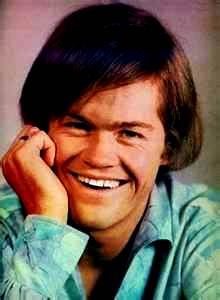
The always smiling Mickey Dolenz

Out of 437 applicants, the other three chosen for the cast of the TV show were Michael Nesmith, Peter Tork and Micky Dolenz. Nesmith had been working as a musician since early 1963 and had been recording and releasing music under various names, including Michael Blessing and ‘Mike & John & Bill’ and had studied drama in college. Of the final four, Nesmith was the only one who actually saw the ad in Daily Variety and The Hollywood Reporter. Tork, the last to be chosen, had been working the Greenwich Village scene as a musician, and had shared the stage with Pete Seeger; he learned of The Monkees from Stephen Stills, whom Rafelson and Schneider had rejected as a songwriter. Dolenz was an actor (his father was veteran character actor George Dolenz) who had starred in the TV series Circus Boy as a child, using the stage name Mickey Braddock, and he had also played guitar and sung in a band called the Missing Links before the Monkees, which had recorded and released a very minor single, ‘Don’t Do It’. By that time he was using his real name; he found out about The Monkees through his agent.”

No doubt the four must have felt as though they hit the jackpot. Their success was almost immediate as their music resonated with the pre-teen group especially, catapulting them to the top of the music charts. As it turned out it was their music – and not the zany TV show – which proved to be the foundation for their success.
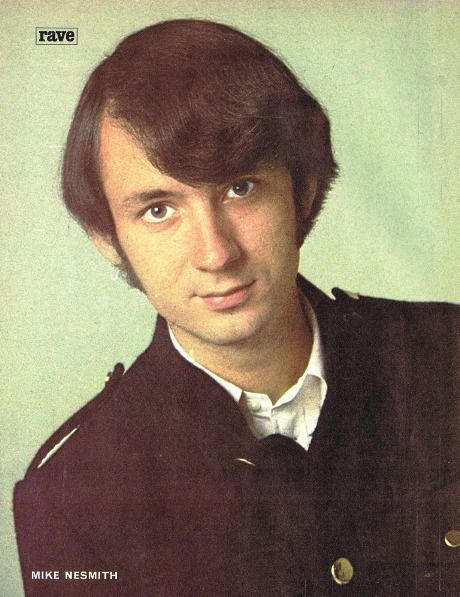
Visionary Mike Nesmith

The entire Wikipedia article is worth a read if for no other reason than to gain a better understanding of the almost unbelievable story of the Monkees and their quest to be taken seriously: https://en.wikipedia.org/wiki/The_Monkees

Monkeemania gripped me when, as a pre-pubescent 9 year old in the fall of 1966, all my friends were enthralled by the group. My mother, however, was appalled and banned my sister and me from watching it. But that didn’t stop us. Somehow we managed to show up at our neighbor Diane’s house at 7:30 p.m. on the appropriate week night to watch the contraband program.

Our little neighborhood group was so gripped by Monkees fever that we even pretended to BE the group. Diane – our ring leader – was Davy Jones; my sister, Susan, wore a stocking cap and assumed the role of Michael Nesmith; our year younger neighbor, Andi, was Micky Dolenz; and, because of my straight blonde hair, I was assigned the role of Peter Tork. I was not thrilled with that assignment as, like most of the girls, wanted to be Davy, THE one we thought was the best. But then again I did get to be a member of the band!

The goofy, yet adorable, Peter Tork

Although the TV show only ran for two seasons, the Monkees music still resonates today. I think you could argue that it was Nesmith who seized the opportunity to make the band more than a silly sitcom. He pushed and fought for legitimacy his entire career. And although there are still naysayers it’s hard to argue with the band’s success:

  • First music artist to win two Emmy Awards.
  • Had seven albums on the Billboard top 200 chart at the same time (six were re-issues during 1986-1987).
  • One of the first artists achieving number-one hits in the United States and United Kingdom simultaneously.
  • The only recording act to have four No. 1 albums in a 12-month span.
  • Held the No. 1 spot on the Billboard album chart for 31 consecutive weeks, 37 weeks total.
  • Held the record for the longest stay at No. 1 for a debut record album until 1982 when Men at Work‘s debut record album Business As Usual broke that record.
  • Received their star on the Hollywood Walk of fame in July 1989. All 4 members were present for the ceremony.
  • In 2008, the Monkees were inducted into the Hit Parade Hall of Fame.
  • In 2014 the Monkees were inducted into America’s Pop Music Hall of Fame.
  • The Music Business Association (Music Biz)honored the Monkees with an Outstanding Achievement Award celebrating their 50th anniversary on May 16, 2016.
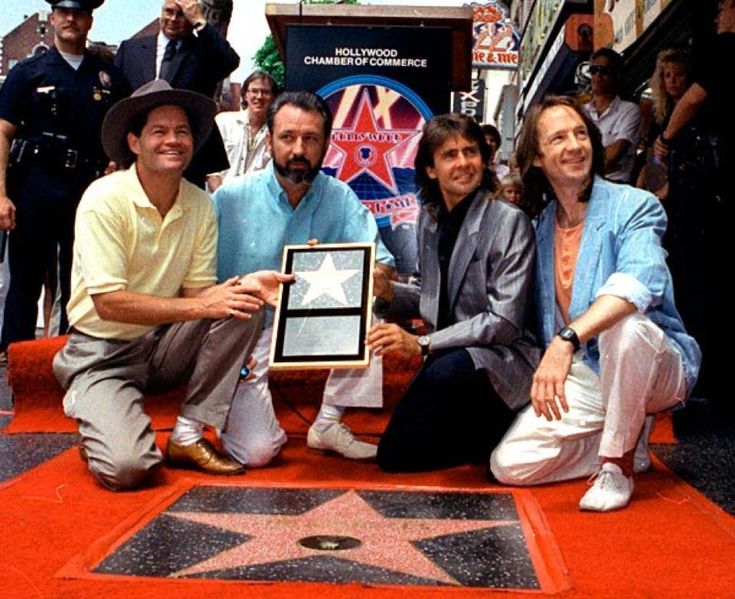
Getting their star on the Holloywood Walk of Fame 1989

As my friend Roger pointed out, the Monkees had great songwriters assigned to the show: Neil Diamond, Tommy Boyce, and Bobby Hart. Like the Monkees, they were under contract and did their part to make sure the music was at the center.

Whatever the combination of talent, it worked, catapulting the Monkees into stardom.

.
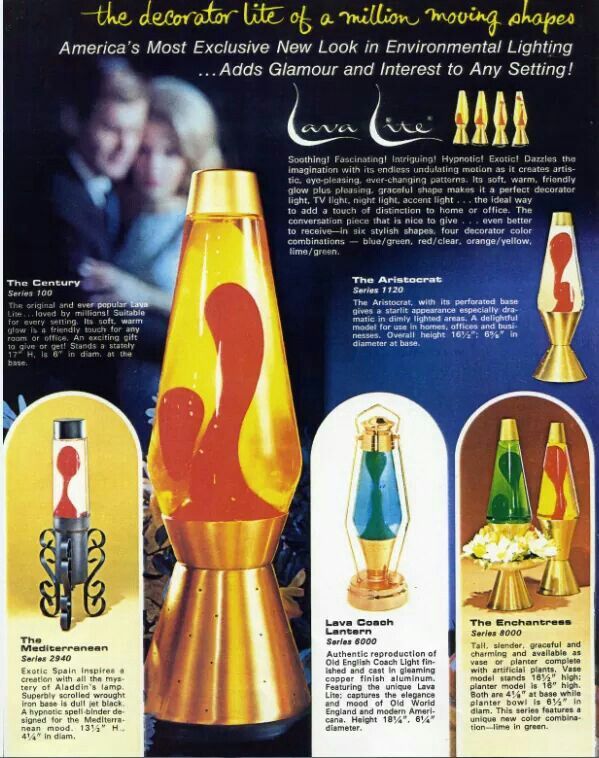
Celebrating National Lava Lamp Day: A 1960s Icon

April 5th

Perhaps one of the most iconic images of the 1960’s, the Lava Lamp was patented on April 4, 1963. Two years later April 5th was declared as National Lava Lamp day.

1960’s ad for lava lamps

Much beloved by baby boomer teens, the lamp – unlike plaid bell bottoms, Nehru jackets, and Twiggy’s haircut – has found new fans in subsequent generations.

The Lava Lamp got its beginnings in the early 1960’s. From the Infallible Wikipedia we learn:

“British entrepreneur Edward Craven Walker had the idea for the lava lamp in 1963 after watching a homemade egg timer, made from a cocktail shaker filled with liquids, as it bubbled on a stovetop in a pub. He hired British inventor David George Smith to develop the device and the chemical formula it required. Smith is credited as the inventor on the original U.S. Patent 3,387,396 for a ‘Display Device’ filed and assigned to Craven-Walker’s company in 1965, and subsequently issued in 1968. Craven Walker’s company, Crestworth, was based in Poole, Dorset, United Kingdom. He named the lamp ‘Astro’ and had variations such as the ‘Astro Mini’ and the ‘Astro Coach’ lantern.” 

For most of us, the details of who invented it are – likely – not of a great deal of interest. But my geeky side IS curious as to the technology behind the lamps. It turns out that it is the combination of two different materials that, when exposed to heat, cause the instantly recognizable function of the lava lamp.

Lava Lamp inventor

The material used to make the colored ‘lava’ originally consisted of mineral oil, paraffin wax, and carbon tetrachloride. This was suspended in water. The difference in how the wax/oil and the water heated is what caused the wax/oil to do what it does. Also from the Infallible Wikipedia:

“Common wax has a density much lower than that of water and would float on top at any temperature. However, carbon tetrachloride is denser than water (also nonflammable and miscible with wax) and is added to the wax to make its density at room temperature slightly higher than that of the water. When heated, the wax mixture becomes less dense than the water, because it expands more than water when both are heated. It also becomes fluid, causing blobs of it to ascend to the top of the lamp. There, they cool, increasing their density relative to that of the water, and descend.  A metallic wire coil in the bottle’s base breaks the cooled blobs’ surface tension, allowing them to recombine.”

Over the years, the wax ingredients have been replaced since one of the early ingredients proved to have toxicity which caused challenges if the glass jar was broken. 

But enough of the geeky details. For those who wish to learn more there is a link below.

I cannot recall the first time I saw a lava lamp. But I do know when I first lived in a place with one. When I moved into the hubby’s apartment after our marriage I became the defacto half owner of a lava lamp. Now, in a custody battle for the lamp I would have, no doubt, lost, since he owned it before we got married. Thankfully that custody battle has been avoided!

But over the years, the lava lamp has gone from being on display in our living room to being in our bedroom to living on a shelf in my office. But that was only until our eldest child discovered the lamp and it soon took up residence in his room. And then another one arrived to live in his room.

Here was this kid, born in the 1990’s, totally enthralled with a throwback product of the 60’s. The lava lamps moved with him to Tennessee, California, and then back to Washington state. He lived for several years in Seattle but then moved out of the city in the fall of 2019. And the lava lamps arrived back in our house. Granted they were in his room, but that meant I could visit them pretty much anytime I wanted.

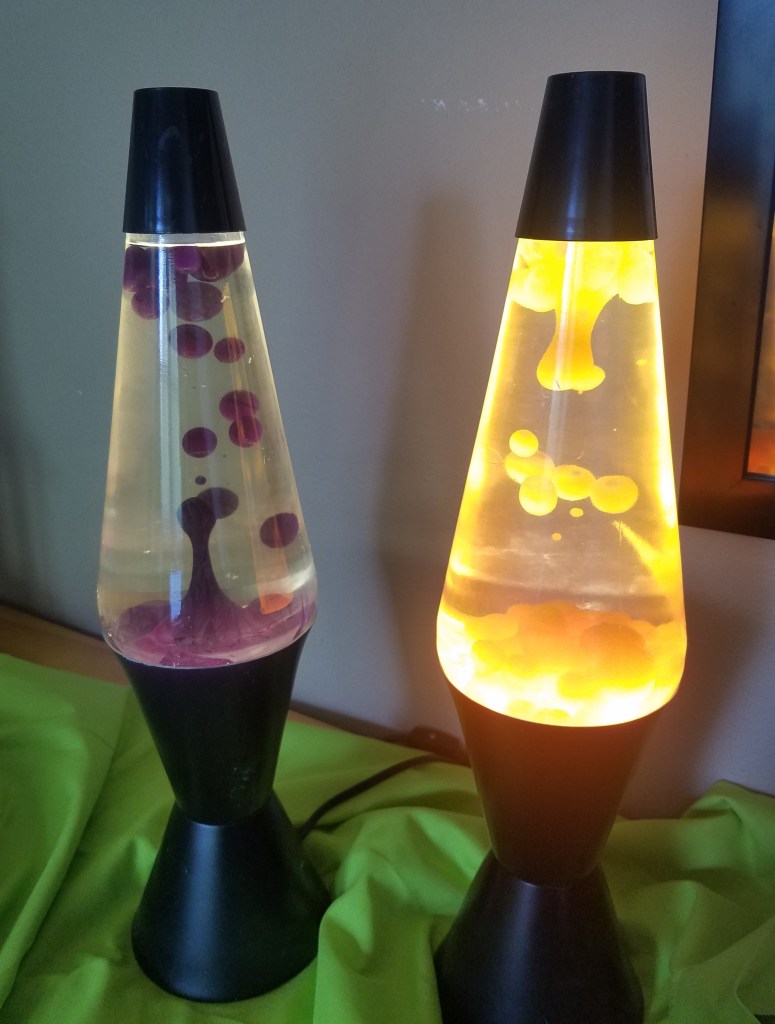
Our two lava lamps in phase 1

Like me, I think my son was mesmerized by the various phases the lava light goes through when it’s turned on.

Phase 1: the blob sits at the bottom of the lamp, glowing red, blue, yellow (the most common blob colors) for a time.

Phase 2: a tiny little tendril will erupt from the blob and snake its way upward like a plant sprout in springtime, only much faster. 

Late phase 2/early phase 3

Phase 3: more tendrils erupt and then, suddenly, the entire blob seems to explode like a cumulus nimbus cloud in spring, billowing up and out, filling the lamp.

Tiny lava blobs dance in the lamp/phase 5

Phase 4: the heat of the water approaches boiling and the wax mixture starts to form the ‘blobs’ for which the lava lamp got its name.

Phase 5: the numerous and various sized blobs, slowly at first, engage in a mesmerizing dance bouncing off one another, moving around through the lighted water lamp.

Phase 6: the blobs combine with one another, the large absorbing the smaller, until all that’s left is one huge blob. This phase continues until the lamp is turned off and the blob then settles in the base of the jar to cool down.

Phase 6 – large blobs

Each of these phases is interesting in its own way. My favorite, by far, is phase three. In fact, if given the chance, I will wait until the billowing wax looks like clouds… and turn the lamp off. 

My son, as far as I can tell, loves the lava lamp when it’s in phase 5, the multi-blob state. During the time he was living with us and the two lamps resided in his room, I would often go in to visit with him and the lava lamps would be illuminated.

Two years ago he took off for Mexico and, subsequently, decided to move there. Because of the logistics of getting household goods into Mexico was a challenge, the lava lamps had to be left behind. 

I decided to relocate one of the Lava Lamps. Sometimes on dark winter mornings when I am up before sunrise, I will turn on the red lava lamp which now resides on an entryway table across from where I will take up residence to play my daily Wordle and other games. I tend to turn it off after the tendrils, phase 2 and part of phase 3, as that is MY favorite.

https://en.wikipedia.org/wiki/Lava_lamp